Search Results: "mak"

26 December 2011

Tanguy Ortolo: GNOME 3 killing interface consistency

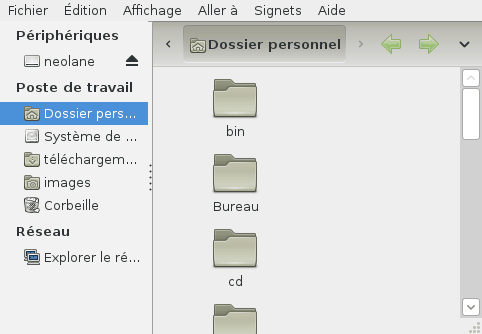
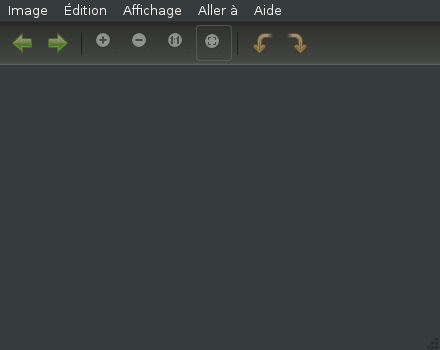
I used to recommend the GNOME desktop for simple users for two main advantages over Windows: Both points are what I call calm advantages, because users will usually enjoy them without noticing. Instead, they will enhance their experience so that they will miss them when they come back to a system which does not provide these features. In fact, being used to that, I do not really consider these points as actual advantages, but rather as a bare minimum for any decent desktop and as very important lacks of some competitors.Well, GNOME 3 already reduced the first point by replacing the menu by a single loooong list of all the available software, although there are still categories at least. Now, with a recent upgrade, it appears that they destroyed the second one, the interface consistency. There used to be a thing called the GTK theme, that the user could choose according to his taste and needs, and all the GTK-based graphical software, including GNOME programs, used to follow that theme. This is no longer the case: now, for instance, Nautilus will look clear, while for some reason Eye of GNOME and Totem will look dark, with no option to make them look like the others.

Nautilus

Eye of GNOME
I used to be a GNOME user, but it has been some time since I stopped using a desktop at all and switched to a window manager that was more efficient according to my usage. However I kept using GNOME software, and I recommended GNOME to new users. Now it seems my arguments for that have reduced to a point where I should really consider recommending Xfce instead.

Russ Allbery: Testing PAM modules

I maintain a couple of PAM modules, pam-afs-session and pam-krb5. I'm also a big fan of test-driven development and automated regression testing, and have been slowly converting all of my software over to using a test suite. But therein lies a challenge, since PAM modules are hard to test. First, Linux PAM doesn't offer a good way to run a module in a test environment. Specifically, it doesn't offer a way to use an alternative PAM configuration other than the system PAM configuration, so that one can load only the module being tested (or it and some glue modules to set things up). One has to resort to dedicated test systems that do things like symlink part of their PAM configuration into a shared build tree. Second, even if this problem were solved, Linux PAM doesn't (rightfully) allow a lot of introspection and digging around in its guts. This makes it harder to test whether data items, environment variables, and so forth are set properly and make sense. It also doesn't provide facilities for intercepting logging output that would otherwise go to syslog. So, about a year and a half ago (and then with substantial improvements a year ago), I wrote a fake PAM library to test pam-afs-session. This library provides all of the PAM API that's called by a PAM module (at least the modules I'm testing), but has a much-simplified interface and allows test cases to look through its internals and be sure the module did things properly. This was great as far as it goes. But writing the wrapper code to invoke a PAM module entry point and then check its return status, its logging, and so forth was complicated, messy, and difficult to understand. It also didn't handle testing prompting and other important aspects of PAM modules. So earlier this fall I wrote the beginnings of a PAM test driver that would move as much of the complexity as possible into shared code and into configuration files, and since then I've been expanding and improving it until it could handle the major testing required for pam-krb5 (which is much more complex than pam-afs-session). Yesterday, I released the results as part of rra-c-util. Here's an example configuration file, this one for a pam-krb5 test that simulates prompting the user for a password and then obtaining credentials (but not creating a ticket cache):
    [options]
        auth    = no_ccache
        account = no_ccache
        session = no_ccache
    [run]
        authenticate  = PAM_SUCCESS
        acct_mgmt     = PAM_SUCCESS
        open_session  = PAM_SUCCESS
        close_session = PAM_SUCCESS
    [prompts]
        echo_off = Password:  %p
    [output]
        INFO user %u authenticated as %u
That's a complete and fairly complex test. The test framework takes care of running the listed entry points, passing them the given PAM configuration, and checking the return status. It provides a conversation function that checks the prompt and its type and replies with the text after . As you can see, it supports some escapes that are replaced by data passed into the test suite driver, in this case the password to use for testing. And it checks the logging output, including the priority level, and similarly supports escapes there. Running simple tests is very easy and is doable with a tiny C program. Here's a complete test program from pam-krb5, one that tests functionality that doesn't require a valid password and hence doesn't need to do much setup:
    #include <config.h>
    #include <portable/system.h>
    #include <tests/fakepam/script.h>
    int
    main(void)
     
        struct script_config config;
        plan_lazy();
        memset(&config, 0, sizeof(config));
        config.user = "root";
        run_script_dir("data/scripts/basic", &config);
        return 0;
     
That's all there is to it. That finds every configuration file like the above in the tests/data/scripts/basic directory in the package source and runs through each one, checking the results, and outputing the results as TAP output (the protocol used for the Perl test suite, and also my C TAP Harness package). There are, of course, other things that it can do: more substitutions, setting the authtok in advance of calling the module, and a callback so that one can inspect PAM state before the PAM session is shut down. I've started writing some documentation, although so far it primarily covers the configuration file syntax and the headers are the best reference for the API. The source code of the pam-krb5 package are the best reference so far. The library itself is part of rra-c-util and, like the rest of that package, is designed to be copied into the package that uses it and built alongside it so that it can be linked easily with the test programs. It's worth noting that there isn't a way to use it to test installed PAM modules that are already bound to the system libpam library. The way one builds test programs currently is to link the test program with the individual objects making up the PAM module and then link with this library and the TAP library, since that ensures the right symbols are called. But it may be possible to do something tricky using LD_PRELOAD if anyone feels inspired.

23 December 2011

Wouter Verhelst: Static program analysis with LLVM and clang

"Static program analysis" is a technique whereby a program is verified for errors without actually running it. Finding bugs manually with a debugger and one's brain is tedious, so every shortcut that can help you avoid having to do so is great. There are some commercial tools available to do such analysis, some of which are rather expensive; but there are also some open source tools available to do similar things. One of these is built into clang, the C compiler of the LLVM project. Using it is fairly simple. Instead of compiling something with 'make', compile it with 'scan-build make'. This will set the CC (and similar) environment variable(s) so that before the compiler is ran, the clang static-analysis checker is run over the very same source code. The output of this checker is an HTML file with your source, but with comments added to explain the bugs which the tool found. What does that mean? well, let's look at an example, shall we? <iframe height="500px" src="http://barbershop.grep.be/~wouter/scan-view-example#LN1493" width="80%"></iframe> The iframe above contains one out of three reports produced by a scan-build run over the nbd source code (if there's no iframe, someone scrubbed some HTML in your RSS reader. Just follow the link just above instead). The other two are 'dead assignments', which might mean that I'm currently depending on some undefined behaviour (which would be bad), or it might mean that I'm being overly cautious (which makes my code future-proof, which would be good), or it might mean something else I still need to investigate. But this one is pretty interesting. In the example, there are eight, numbered, comments in the source code. The first seven show the code path which scan-build took through my code before getting at the eighth comment; and the eighth is where things go bad. In this case, when going through the function as shown, we have a NULL pointer dereference. When looking at the scan-build output, it's important to realize a few things. First, the code path shown may be just one of a number of possible code paths. For instance, the null pointer dereference would still happen if the phase function parameter would not contain the NEG_INIT bit with the client pointer set to NULL. However, clang does not show these other code paths; this is presumably an optimization ("if we've already shown that this kind of bug is possible at a particular location through one code path, don't bother recording future instances of that very same bug at the exact same location through another code path"). This means that sometimes, some of the branches shown may be completely irrelevant to the bug at hand. In this particular case, in fact, it's possible to show the bug with just the eighth comment; the first seven are in fact totally irrelevant. Second, the fact that the clang static analyser found a bug does not mean that it's possible to crash the application. Yet. In this particular case, the negotiate function will never be called with the NEG_INIT or NEG_MODERN bits not set, and with the client parameter set to NULL. That's an implicit assertion; there are a few ways in which this function may be called, but the client parameter may only be NULL if NEG_INIT and NEG_MODERN are both set at the same time. Since nbd-server doesn't currently call the negotiate function in that way, it is not currently possible to crash the server by exploiting this bug. But that doesn't mean it won't ever be possible, nor that there isn't a bug in the code. We may assume that the above rules are true, but we never check it. Adding an assertion to that effect should make sure that no future change to the code will accidentally introduce that error and cause a NULL pointer dereference. Is this a silly and useless precautionary measure? Not really. Usually, bugs happen in code not because someone wasn't thinking straight, but because there's so much going on inside a piece of software that it can be too much for any programmer to remember. If a function assumes that its parameters are within a given subset of all possible states, but does not check that this is in fact true, then when (not if) some future change incorrectly introduces a state that is outside of the assumed states, things will break. And that's Bad(TM).

Keith Packard: calypso

Calypso CalDAV/CardDAV/WebDAV for Android and Evolution Ever since I bought my first Palm Pilot in 1997, I ve relied upon a pocket-able device to carry a copy of my calendar and contacts, and for that same database to be present on my laptop. I went through a long list of Palm-compatible devices, including both the Palm Treo and Palm Centro telephones. I even wrote a number of my own Palm applications. Years ago, it was pretty obvious that I d have to find a new phone, but I was stuck looking for something that could provide the same hot-sync functionality. SyncML on the Series 40 I bought a Series 40 Nokia phone in Shanghai that promised SyncML support. Given that I had seen numerous SyncML implementations for Linux, it seemed like I should be able to get something to work. SyncML on the Series 40 is a disaster the phone couldn t actually store all of my contacts, and it couldn t hold half of the data fields I used. So, that phone landed in the box and back to the Centro I went. SyncML on the N900 Nokia kindly sent me an N900 at some point, so I gave SyncML another try. Given that the N900 runs evolution-data-server, and that I ve had evolution-data-server running on my laptop, it seemed like I should be in business. Well, almost. It took several days of hacking to fix bugs in the evolution SyncML back end, then another several days fussing with opensync. I ended up abandoning direct synchronization as unworkable opensync would sit in an infinite loop, or worse, trash my database completely. I finally found syncml-ds-tool , which is a debugging tool that comes with opensync. This tool simply synchronizes a set of disk files, one per contact or calendar entry, with the phone. That worked for well over a year. And then, a few months ago, Bluetooth on the laptop stopped connecting with the phone s SyncML server. I d get ECONNREFUSED every time I tried to use it. So much for the N900. DUN still worked, mostly, although it too would get ECONNREFUSED at times, but retrying seemed to make it work. However, While the N900 SyncML solution worked, I discovered another thing I wanted contacts and calendar entries stored in individual files and revision controlled with git. This makes it reasonable to delete stale calendar entries and know that they re never really gone, just left behind in an older version of the calendar. And, if you mess up, you can recover by poking at the database with git directly. I switched back to the venerable Palm Centro; it turns out that calendar and contacts are more important to me than being able to surf the web on my phone. Alas, my Centro went swimming in August and has passed on to the great electronics recycling house in the sky. I pulled the SIM out and switched back to the N900. I got my contacts imported on the N900 by copying files over the net work; not a long-term strategy, but at least I had phone numbers again. There was no hope for my calendar. I started looking for a solution in earnest. How about Android? At this point in my story, I m sure you re asking why I didn t just use one of the numerous Android phones that came through my hands. The answer is simple my calendar and contacts are probably some of my most personal data, and I m not willing to store them outside of my direct control, for reasons similar to those which are driving the development of the FreedomBox. When Android first came out, it could only talk to Google services, which didn t meet my hard requirement for personal data storage. One of my co-workers had his Google account suspended for violating the terms-of-service; he asked what he had done, but they wouldn t say. He asked if he could get his data back, and they said no . They invited him to create a new account, but it would not ever get any of the old data. A few days later, he got a nice apologetic email letting him know that they d made a mistake and that he hadn t, in fact, violated any of the terms-of-service, and that his old account was restored with all of his data intact. Wasn t that nice of Google? WebOS? I got a WebOS phone over the summer and discovered that while it had multiple contact/calendar back ends, none of them used standard protocols and so you only had the choice between multiple corporate data centers, which isn t actually a choice at all. Furthermore, the WebOS phone refused route PAN packets over the phone network, even though I have a data plan which allows this. It s not that it couldn t support it, it s that it refused. A couple of weeks after the WebOS phone arrived, HP canceled all of their WebOS hardware products, which made me less interested in trying to solve this problem. Android recovers About the same time the WebOS phone arrived, I discovered that Google had published enough information about the calendar/contacts internals for Marten Gajda to write CalDAV-Sync and CardDAV-Sync. And then, Andrew McMillan wrote aCal, which is a complete replacement for the built-in calendar and contacts applications and supports CalDAV and CardDAV. With two different standards-compliant solutions available, it seemed like it might be time to try Android again. I d love for CardDAV-Sync and CalDAV-Sync to become free software like aCal is. Andrew makes money from aCal by offering it for sale via the Android Market, while still publishing the sources for those who want to build their own copy. CalDAV/CardDAV on Linux I think the most widely known CalDAV server for Linux is probably DAViCal, a huge pile of PHP and SQL sitting on top of Apache. I m sure it s suitable for running on a server and being accessed over the internet, but I m not interested in that, nor am I interested in having my laptop run Apache and PostgreSQL. I found a tiny little CalDAV server, Radicale, which seemed like a lot better fit. It s written in Python and uses the usual Python HTTP server infrastructure, which provides SSL and authentication support along with some fairly convenient APIs for parsing and generating HTML. Before long, I discovered that Radicale was actually too simple for my needs. It stores the whole calendar in a single file, re-parsing it whenever a request is made, so a calendar with just hundreds of entries caused the server to slow down enough that evolution would time-out when talking to it. Also, Radicale doesn t actually parse the calendar entries completely, it has some ad-hoc code that finds various pieces of data, but without dealing with the whole syntax. I started hacking at Radicale to see how far I could get. I changed the storage code to store one event per file, then added hooks to use git for change management. Then, I found a full vcalendar/vcard parsing library in python, vobject, which I used to replace the ad-hoc parsing code. Finally, I added support for VCARD entries as well, allowing the system to store both calendar and contact information. Introducing Calypso, a CardDAV/CalDAV server With this much divergence from the original project, I ve figured I d best rename things to avoid confusion, so I decided to call it calypso , after a brief trip through the dictionary looking for names starting with ca . Calypso works with evolution, iceowl and the Android CalDAV/CardDAV plugins. It does not yet work with aCal; for some reason aCal cannot find any calendars on the server. Calypso also supports importing calendar changes from the command line, allowing you to integrate support into a text-based email application like notmuch or mutt. Calypso is available via git from git://keithp.com/git/calypso and is distributed under the GPL (v3 or later). I still consider it a work derived from Radicale, and so the code retains all of the Radicale copyrights along with my own. Using Calypso Initial setup Calypso runs as a regular user, all data are stored in ~/.config/calypso. To initialize calypso:
$ mkdir ~/.config/calypso ~/.config/calypso/calendars
$ cat > ~/.config/calypso/config << EOF
[server]
ssl=true
certificate=/home/keithp/.config/calypso/ssl/server.crt
key=/home/keithp/.config/calypso/ssl/server.key
[acl]
;type=htpasswd
type=fake
filename=/home/keithp/.config/calypso/passwd
Running calypso Then run calypso:
$ python ./calypso.py
No, I haven t figured out how to install it Creating new calendars To add a new database:
$ mkdir -p ~/.config/calypso/calendars/private/my_calendar
$ cd ~/.config/calypso/calendars/private/my_calendar
$ git init
$ git commit --allow-empty -m'initialize new calendar'
The new calendar should now be visible as https://localhost:5233/private/my_calendar You can add files to the directory at any time; calypso will check the directory mtime at each operation and update its internal state from that on disk automatically when the directory changes. Importing files Given a set of files with VCALENDAR or VCARD entries, you can import them with:
$ calypso --import private/my_calendar <filenames...>
This will update any changed entries and add any new ones. ToDo list for calypso
  1. Document the config file contents.
  2. Make it installable
  3. Figure out what aCal wants
  4. Support calendar creation
More Android info I m running cyanogenmod on my Nexus S as that provides PAN support. With PAN, I can create a network link between laptop and phone which doesn t depend on any local WiFi infrastructure and which gives both phone and laptop static IP addresses, allowing me to configure the sync URLs statically on the phone. I d use mDNS, but Android doesn t bother to support that.

22 December 2011

Jeff Licquia: Time Flies

18 years ago, I carried a baby out of a delivery room. MY baby. What a rush. Looking down on him in the baby warmer, amazement and fear dominated my thoughts, clamoring for my attention. I was a father. What would I do now? My life was REALLY not just my own anymore; I had this little one that was counting on me. Was I up to the challenge? And what about when he wasn t a little one anymore? What would he be like as an adult? Would he be a good person? What would he care about? When he turned 18, what would we do, and what would his plans be for the future? That day was something I thought about often in that nursery all those years ago. And now, that day has arrived. Jon is now a young adult. And looking at the ultimate result of the last 18 years of worry, I feel immeasurably proud. He has made his mistakes, and no doubt will make more mistakes in the future. But he has not let those mistakes dampen his confident optimism, or drag down his sense of what s right. More importantly, he has a heart for others that expresses itself with everyone he s around. Often, the topics of our disagreements center around his fierce protective instinct, and on more than one occasion, he s challenged me to improve myself. I have not been a perfect father. At times, I ve been far from perfect. But I am grateful that I ve been a part of raising a young man I can admire and, yes, even learn from. Happy 18th birthday, Jon. Have an excellent life. I ll cherish the rest of the time you re still at home, miss you when the time comes for you to leave, and always be there for you as long as I live. Your mom and I are your biggest fans; never forget that.

20 December 2011

Craig Small: When a dynamic library and program share functions

This is about making procps have a proper library but it really is a generic sort of question. Say you are making a library and a program that uses that library. Now at times you may have convience type functions; procps has them for things like escaping command names or allocation different sorts of memory. Both the library and the programs use some of these functions. Now, there seems only two approaches to this setup. The first is to have the function stay in the library and for the program to call this function, just like all the other library functions. But this means the library has exposed for all other programs that link to it and that doesn t really make a lot of sense. The second method is to have the functions defined in both places, perhaps in a file that is linked with the program and the library. That seems to be duplicating the code in two different places. Namespace collision could be a problem but that easily fixed with using some unqiue prefix. I really don t think having procfsmalloc, procfscalloc and procfs_strdup are that useful. I m sure this sort of problem has been solved elsewhere. Has anyone else come across this? The functions are simple utility type functions such as malloc a block of memory, if there is a problem print to stderr.

Rapha&#235;l Hertzog: 300 EUR for Debian

It s the amount of the wire transfer that I made to ffis e.V., the German association that works together with Software in the Public Interest to hold Debian s monetary assets. This amount includes the 10% of the benefits of my Debian DVD sales (for a total of 47 USD =~ 36 EUR) and the 15% affiliate revenue that was granted to Debian by some supporters of the Debian Administrator s Handbook crowdfunding campaign (for a total of 259.49 EUR). Thank you everybody, this donation is really yours and not mine! If you want to complement this donation, and make a nice gift to Debian for Christmas, go to this page and follow the instructions.

No comment Liked this article? Click here. My blog is Flattr-enabled.

19 December 2011

Jonathan Wiltshire: Reinstalling at arm s length

Recently I had need to re-purpose a server and for convenience, I decided to do a complete wipe and reinstall since it had previously been used for all sorts of package testing, experiments, dak debugging, the list goes on. I took a careful backup and then cooked up some USB installation media, but it took so long to boot (USB1.1, yay) I ran out of time before the building was locked. Since this box has two hard disks, and not being one to back down from a challenge, I eventually reinstalled it over the weekend with nothing no install media, no reinstall robot or intelligent hands just a reliable internet connection and a healthy dose of courage. Here s how. Target: reinstalled machine with the same network settings, ssh host keys, and other minor configuration ported. The disk layout is to be RAID-1 containing LVM, with separate /var volume and separate /boot partition, also RAID-1.
  1. One disk in the box contained old data, so I cleared that out and wiped it (including the MBR for good measure) and partitioned it.
  2. I set up a degraded RAID-1 array for a small /boot partition, a large RAID-1 array for the LVM and a swap partition.
  3. I mounted the new partitions in the correct layout in /mnt and used debootstrap(8) to get a very basic root set up. I also bind-mounted /sys, /proc, /dev and /dev/pts for now, they can be done properly when the root is a bit more mature.
  4. Next, I copied into the new root /etc/apt/sources.list and chroot(8)ed into it. Now I could apt-get update and tasksel install standard to get an almost fully-functional base system. At this point it is also sensible to install locales, tzdata and console-data and dpkg-reconfigure them, followed by mdadm and lvm2 if required and openssh-server so you can get back in after rebooting. Some or all of these may already be installed by tasksel.
  5. Time to install a kernel before leaving the chroot: apt-get install linux-image-2.6, followed by grub-pc which should detect both installations and set up menu entries for them.
  6. Back in the old system, I copied in the network, hosts, resolv and hostname configuration files, and set up /etc/fstab to my liking.
  7. Install grub to both hard disks if it isn t already so (dpkg-reconfigure grub-pc) and again check that it detects both installations and creates the right menu entries. At this stage, booting from either hard disk will allow the loading of either the new or old installations, which is exactly what we want. It s now time to umount the new installation.
  8. Now I followed the excellent guide for remote kernel upgrades at http://ariekanarie.nl, except in this case we are using the same method to try booting the new system and fall back to the old one if it s a disaster.
  9. Reboot and hope!
At this point I rebooted to find myself back in the old kernel, which was disappointing this means the new kernel has panicked and rebooted, and grub has fallen back to the old system (exactly as planned). It turned out there was nothing in /dev at boot time, and udev doesn t start early enough to populate it before panic. That s easily solved by mounting the installation again and using MAKEDEV as a seed.
  1. With a bit of luck, you re now in the new installation and can dpkg-reconfigure grub-pc again to install grub to both hard disks again. This isn t strictly necessary, but it records this choice in debconf so future upgrades will automatically upgrade the bootloader everywhere it s needed.
  2. Now I could do some tidying up, mount the old installation and copy over all the data I wanted, and after careful checking wipe the first disk clean ready to be added into the RAID arrays.
  3. Finally, add the old disk to the RAID arrays so they are fully redundant.
Sources:
http://www.michael-hammer.at/server_config/debootstrap/
http://d-i.alioth.debian.org/tmp/en.i386/apds03.html
http://www.debian.org/releases/stable/amd64/apds03.html.en
https://wiki.archlinux.org/index.php/Convert_a_single_drive_system_to_RAID
http://ariekanarie.nl/archives/211/remote-kernel-upgrade-with-debianubuntu-and-grub2
Comments
Reinstalling at arm s length is a post from: jwiltshire.org.uk Flattr

Felipe Augusto van de Wiel: 19 Dec 2011

29 and counting
Time flies... and very fast.

There are so many things I'd like to share and tell you about but that would make a long and boring post, so I'll divide it in future entries, so I can keep this diary alive, keep people informed and tell a little bit about my story. Eventually, I may split this diary into a technical and a non-technical blog, but for now, I will stick around mixing topics. :-) Last time I wrote was back in 2009 at DebConf9 in Spain and a lot of things happened that year. Not only for Debian, but also for me.


My last year studying Computer Science was 2009 and that same year I was working full time, I helped organizing a large event for Computer Students (ENECOMP 2009), we had some troubles and side effects with Influenza A (H1N1) in my city (Curitiba, PR) and towards the end of the year I got really sick (not from Influenza) and it took a while to know what was going, during this process I did hurt some people I really love and I'm truly sorry. The past, 2010 went on as busy and unstable as 2009, my laptop's hard disk broke twice (January and October) and I survived thanks to backup and recovery procedures. I took some wrong decisions but fixed it later and learned a lot from my mistakes, decisions and choices.


Then 2011 came, my laptop's hard disk broke again and I lost almost 6 months of emails, I find out that after the second crash in 2010 part of my backup got b0rk3d. Fine, I didn't die, everything seems to be fine, but I'm still catching up with a lot of work and backlog. At different times one of my parents also got really sick and I learned quite a bit on how to deal with it.


Due to the laptop and the different things going on in my life I didn't work for Debian as much as I want and I still feel guilty. :-( But that's fine, this is a kind of public apologize for my peers in Debian (i18n, mirrors, release), I still want to help all of you, but I still have quite a bit of backlog to clean and quite a few things to learn in the process. And in general, I'm really sorry if I didn't (or I couldn't) work for Debian as much as I want.


Although I'm taking the chance to apologize in this post, I still want to make clear that I'm quite happy. This last year was pretty good, I had the opportunity to attend DebConf again and also got to know Sarajevo and Zagreb. New lessons were learned, better work cycles, nicer solutions. Today I'm completing 29 years old. 29. This is quite some time, not a long ride, but for one reason or another, I have high hopes for 2012 and what awaits me. And I do plan to learn more, to help more and whenever possible, to contribute back.

Last time I wrote here I mentioned about my graduation and another post to talk about that, I'll write about it as soon as I get my diploma (because of different printing problems it was delayed for almost 2 years). And I do plan to write more frequently. :-)

John Sullivan: Where Shall I Wander

Google Maps is now mapping the indoors. I saw an ad for this while passing through MSP yesterday (given how much time I spend on the Internet, it's strange and a little embarrassing to learn about new things on the Internet from airport billboards), since one of their initial targets is the infamous Mall of America.
Detailed floor plans automatically appear when you re viewing the map and zoomed in on a building where indoor map data is available. The familiar blue dot icon indicates your location within several meters, and when you move up or down a level in a building with multiple floors, the interface will automatically update to display which floor you re on. All this is achieved by using an approach similar to that of My Location for outdoor spaces, but fine tuned for indoors.
Thoughts about this: Title from John Ashbery

Lars Wirzenius: Like/dislike buttons in free software

It's a perennial problem that authors of free software get little feedback from users. Here's an idea: add "I like this program" and "I don't like this program" buttons to Help/About dialogs. They would send some kind of anonymous signal to the author, probably by making an HTTP call to some server somewhere. This is not a "call home" functionality, which is questionable in many ways. It's completely opt-in, and it's pretty clear to the user what's going on.

Benjamin Mako Hill: The Influence of the Ecstasy of Influence

/copyrighteous/images/andy-warhol-mickey.jpg Back in 2007, Harpers Magazine published The Ecstasy of Influence: a beautiful article by Jonathan Lethem on reuse in art and literature. Like Lewis Hyde in The Gift (quite like Hyde, as readers discover) Lethem blurs the line between plagiarism, remix, and influence and points to his subject at the center of artistic production. Lethem's gimmick, which most readers only discover at the end, is that the article is constructed entirely out of "reused" (i.e., plagiarized) quotations and paraphrases. A couple months ago, I suggested to my friend Andr s Monroy-Hern ndez a very similar project: a literature review on academic work on remixing and remixing communities constructed entirely of text lifted from existing research. After some searching around, Andr s pointed out that Lethem had essentially beaten us to the punch and linked me to his article. Only after I visited the link did I remember that I had read Lethem's article when it was published and loved the idea then. Over time, I'd forgotten I read ever it. Without knowing it, I had read, loved, forgotten, and then -- influenced, if unconsciously -- copied and reproduced the idea myself in slightly modified form. And I suppose that was the point.

18 December 2011

Gregor Herrmann: RC bugs 2011/50

here's my RCBW report for this week. again, nothing spectacular, mostly uploading packages where patches were already in the BTS. thanks to all the patch creators and forwarders!

Nikita Youshchenko: Life after n900

Since post about lost n900 was on the top of this blog for almost a year, I should probably write a few words about what was next. Since I do need mobile phone every day, I had to get some replacement quickly. Given Maemo was dead and Meego device not available, I decided to go Android. Since after n900 hardware keyboard became a must for me, I decided to try HTC Desire Z. That device made me angry every day, both because of hardware (what a silly idea to place volume buttons such that they are below hardware keyboard when it s opened? they got pressed almost every time when I used keyboard!) and Android itself. I think quite a few things are broken in Android, but most annoying is broken multitasking. I can t live with dialog elements content get lost when I switch to other app and back. Please don t tell me that it s app fault: maybe technically it is, however too many apps have it so I have to generalize. I will likely write more about this later. At the same time, exciting things have been happening in Maemo community. It was the time when Community SSU raised, also several mapping applications went out of dark, and more. I was still subscribed to Maemo resources so I read about all that and got more and more frustrated with my new Android device. And on one sunday evening, after reading more exciting news from Maemo side, I decided that enough is enough. And ordered a new n900. Few days later, I ve sold HTC for about 80% of it s original price. That was an emotional solution, and of course it could not play well in the long term. Despite of individual exciting news, Maemo community was becoming weaker. Device itself had major usability issues (e.g. it could occasionally unlock while being in my pocket, and call a random number from address book and I have quite a few addresses abroad so such calls not only bother people, but also are expensive). There was not many applications, and those available had problems. There was a visible difference between my friends who could just take a phone and quickly do something, and myself who had to struggle with incomplete and buggy software. Also skype quality was very bad. Also when I was planning a 2-week trip to location without mobile network, I tried to preload map of planned route, but it preloaded only part and I was unable to make it preload the rest. Also many similar issues. So it became clear that if I want usability, I have to go to a standard platform. And as such, Android still is the only option. I searched for a device that runs more or less modern Android version, has hardware keyboard, and is not HTC Desire Z. There was not much to choose from. I ordered SonyEricsson sk17i. I m already using it for about 4 months. For common use cases, such as locating a business nearby, or routing to a given address, or quickly browsing a web page, it works. However, all Android flaws including broken multitasking and no-undo-in-text-fields are here, causing everyday frustration. My conclusion is that no smartphone-like devices without major usability issues are available today. What is available probably could be used to somehow satisfy immediate communication needs, but nothing above that. Bells and whistles are there, but I m not interested in those. I want a linux-based pocket-sized mobile computer that will handle both my communication needs and other interests. That could be hacked when I want to, but just works at the rest of time. Something like my Debian desktop. Openmoko was a big hope but it failed. Maemo was a big hope but incompetence of Nokia killed it. Meego was dead before it was born. There is still some life around several mobile linux projects (GTA04, Maemo, Meego, some others), but hopes for it to grow into something that could be used without huge hacking are little. :(

Kai Wasserb ch: Miscellaneous stuff #1

This year is in its last throes and a few things, that don't really warrant their own blog post, have piled up here. To get them out of the door before 2012 starts, I'd like to go over them in the next few lines. First: there seem to be a group of rather cheap people who want to have the Humble Indie Bundle #4, but don't like to give at least 0.01 USD. Really guys, you seem to have enough money for a fast-enough computer and a (broadband) internet connection (otherwise downloading the circa 2.8 GB of games won't be a lot of fun), but you don't have the 0.01 USD to spare? If you don't like closed-source games (a sentiment I can truly understand, in fact, that was something I really pondered before buying) then just don't play them. But searching for a torrent for the HIB#4 while it is still being sold to just avoid paying the minimal fee, I can't understand. Now, some might wonder how I know this. The easy answer is, I blogged about buying the HIB#4 and mentioned, that I downloaded the games through a torrent (you can choose between direct downloads and torrents on your "login page") and a lot of people started hitting the blog entry with a referrer from a search engine, showing they'd searched for "humble indie bundle 4 torrent". Please make a decision: don't play the games or if you wish to, then pay something. The people behind those games make it easy and, in comparison to many other game studios, a fair offer. That should be worth something. For those of you who loved Josephine, there is a new awesome piece of art, Creative Commons licensed, by An-U (German homepage). The title (and the drawing) are derived from the equally awesome Katzenjammer song "On the Devil's Back" (in case you're still looking for a present, you might want to consider one of their CDs or a ticket to their next concert near you). Then, I wanted to thank all those people, who donated something over the course of 2011! Thanks a lot, especially for showing me, that you liked my services/work enough to even consider a donation! It means a lot to me, to know this. At year's end everybody is doing statistics and while I won't bore you with long in-depth analysis, I thought I throw out, what the top posts/things where (so far). Maybe you find yourself represented in there or maybe you find something new. In no particular order: I hope your 2011 was a good year and I wish you all the best for 2012! I'm pretty sure Debian will continue to grow, but there is also a lot of work ahead, maybe you can join the effort and make Debian that much more awesome!

17 December 2011

Lior Kaplan: Can t select my country on the Ubuntu installation map

In 1977 Tal Brody said after winning the Euroleague Basketball cup with Maccabi Tel Aviv as sentence which became quite famous in Israel:
We are on the map! And we are staying on the map not only in sports, but in everything.
I found out through Invar Hovav that there s a regression in the Ubuntu installation doesn t believe this is true anymore, as according to lp#905754, you can t select Israel or its major cities, and instead get suggestions for Gaza and Hebron. This is a regression from past installers when you could at least choose Tel Aviv, Jerusalem and Gaza. It used to be hard to pin point each location, but was still possible. This might be part of a bigger problem of selecting close/adjacent cities, but the default behavior in the past was different. From the technical point of view, the Gaza and Hebron TZ files are weird (tzdata version 2011n-1). Both don t have info for 2012 daylight saving time (usually start in late March or early April). Hebron switches twice a year to DST, hopefully nothing critical uses this time zone.
$ zdump -v Asia/Hebron grep 2011
Asia/Hebron Fri Apr 1 10:00:59 2011 UTC = Fri Apr 1 12:00:59 2011 EET isdst=0 gmtoff=7200
Asia/Hebron Fri Apr 1 10:01:00 2011 UTC = Fri Apr 1 13:01:00 2011 EEST isdst=1 gmtoff=10800
Asia/Hebron Sun Jul 31 20:59:59 2011 UTC = Sun Jul 31 23:59:59 2011 EEST isdst=1 gmtoff=10800
Asia/Hebron Sun Jul 31 21:00:00 2011 UTC = Sun Jul 31 23:00:00 2011 EET isdst=0 gmtoff=7200
Asia/Hebron Mon Aug 29 21:59:59 2011 UTC = Mon Aug 29 23:59:59 2011 EET isdst=0 gmtoff=7200
Asia/Hebron Mon Aug 29 22:00:00 2011 UTC = Tue Aug 30 01:00:00 2011 EEST isdst=1 gmtoff=10800
Asia/Hebron Thu Sep 29 23:59:59 2011 UTC = Fri Sep 30 02:59:59 2011 EEST isdst=1 gmtoff=10800
Asia/Hebron Fri Sep 30 00:00:00 2011 UTC = Fri Sep 30 02:00:00 2011 EET isdst=0 gmtoff=7200
And Gaza only have a 3 months daylight saving time, while Israel has 6 and European eastern time has 7 months (all are UTC+2 region).
$ zdump -v Asia/Gaza grep 2011
Asia/Gaza Sat Apr 2 10:00:59 2011 UTC = Sat Apr 2 12:00:59 2011 EET isdst=0 gmtoff=7200
Asia/Gaza Sat Apr 2 10:01:00 2011 UTC = Sat Apr 2 13:01:00 2011 EEST isdst=1 gmtoff=10800
Asia/Gaza Sun Jul 31 20:59:59 2011 UTC = Sun Jul 31 23:59:59 2011 EEST isdst=1 gmtoff=10800
Asia/Gaza Sun Jul 31 21:00:00 2011 UTC = Sun Jul 31 23:00:00 2011 EET isdst=0 gmtoff=7200
p.s.
This isn t a political post, don t make it into one.
Filed under: Debian GNU/Linux, Ubuntu

Russell Coker: Some Notes on DRBD

DRBD is a system for replicating a block device across multiple systems. It s most commonly used for having one system write to the DRBD block device such that all writes are written to a local disk and a remote disk. In the default configuration a write is not complete until it s committed to disk locally and remotely. There is support for having multiple systems write to disk at the same time, but naturally that only works if the filesystem drivers are aware of this. I m installing DRBD on some Debian/Squeeze servers for the purpose of mirroring a mail store across multiple systems. For the virtual machines which run mail queues I m not using DRBD because the failure conditions that I m planning for don t include two disks entirely failing. I m planning for a system having an outage for a while so it s OK to have some inbound and outbound mail delayed but it s not OK for the mail store to be unavailable. Global changes I ve made in /etc/drbd.d/global_common.conf In the common section I changed the protocol from C to B , this means that a write() system call returns after data is committed locally and sent to the other node. This means that if the primary node goes permanently offline AND if the secondary node has a transient power failure or kernel crash causing the buffer contents to be lost then writes can be lost. I don t think that this scenario is likely enough to make it worth choosing protocol C and requiring that all writes go to disk on both nodes before they are considered to be complete. In the net section I added the following: sndbuf-size 512k;
data-integrity-alg sha1; This uses a larger network sending buffer (apparently good for fast local networks although I d have expected that the low delay on a local Gig-E would give a low bandwidth delay product) and to use sha1 hashes on all packets (why does it default to no data integrity). Reserved Numbers The default port number that is used is 7789. I think it s best to use ports below 1024 for system services so I ve setup some systems starting with port 100 and going up from there. I use a different port for every DRBD instance, so if I have two clustered resources on a LAN then I ll use different ports even if they aren t configured to ever run on the same system. You never know when the cluster assignment will change and DRBD port numbers seems like something that could potentially cause real problems if there was a port conflict. Most of the documentation assumes that the DRBD device nodes on a system will start at /dev/drbd0 and increment, but this is not a requirement. I am configuring things such that there will only ever be one /dev/drbd0 on a network. This means that there is no possibility of a cut/paste error in a /etc/fstab file or a Xen configuration file causing data loss. As an aside I recently discovered that a Xen Dom0 can do a read-write mount of a block device that is being used read-write by a Xen DomU, there is some degree of protection against a DomU using a block device that is already being used in the Dom0 but no protection against the Dom0 messing with the DomU s resources. It would be nice if there was an option of using some device name other than /dev/drbdX where X is a number. Using meaningful names would reduce the incidence of doing things to the wrong device. As an aside it would be nice if there was some sort of mount helper for determining which devices shouldn t be mounted locally and which mount options are permitted it MIGHT be OK to do a read-only mount of a DomU s filesystem in the Dom0 but probably all mounting should be prevented. Also a mount helper for such things would ideally be able to change the default mount options, for example it could make the defaults be nosuid,nodev (or even noexec,nodev) when mounting filesystems from removable devices. Initial Synchronisation After a few trials it seems to me that things generally work if you create DRBD on two nodes at the same time and then immediately make one of them primary. If you don t then it will probably refuse to accept one copy of the data as primary as it can t seem to realise that both are inconsistent. I can t understand why it does this in the case where there are two nodes with inconsistent data, you know for sure that there is no good data so there should be an operation to zero both devices and make them equal. Instead there The solution sometimes seems to be to run drbdsetup /dev/drbd0 primary - (where drbd0 is replaced with the appropriate device). This seems to work well and allowed me to create a DRBD installation before I had installed the second server. If the servers have been connected in Inconsistent/Inconsistent state then the solution seems to involve running drbdadm -- --overwrite-data-of-peer primary db0-mysql (for the case of a resource named db0-mysql defined in /etc/drbd.d/db0-mysql.res). Also it seems that some commands can only be run from one node. So if you have a primary node that s in service and another node in Secondary/Unknown state (IE disconnected) with data state Inconsistent/DUnknown then while you would expect to be able to connect from the secondary node is appears that nothing other than a drbdadm connect command run from the primary node will get things going.

Matthew Palmer: Rethtool: How I Learned to Stop Worrying and Love the ioctl

Damn those unshaven yaks I m trying to write a Nagios plugin for work that will comprehensively monitor network interfaces and make sure they re up, passing traffic, all those sorts of things. Of course, I m doing it all in Ruby, because that s how I roll. So, I need to Know Things about the interface. Everyone does that with ethtool. Right? Sure, if your eyeballs are parsing it. But have you ever tried to machine parse it? To put it as eloquently as possible:
# ethtool eth0
Settings for eth0:
 Supported ports: [ TP MII ]
 Supported link modes:   10baseT/Half 10baseT/Full 
                         100baseT/Half 100baseT/Full 
                         1000baseT/Half 1000baseT/Full 
 Supports auto-negotiation: Yes
 Advertised link modes:  10baseT/Half 10baseT/Full 
                         100baseT/Half 100baseT/Full 
                         1000baseT/Half 1000baseT/Full 
 Advertised pause frame use: No
 Advertised auto-negotiation: Yes
 Link partner advertised link modes:  10baseT/Half 10baseT/Full 
                                      100baseT/Half 100baseT/Full 
                                      1000baseT/Half 1000baseT/Full 
 Link partner advertised pause frame use: No
 Link partner advertised auto-negotiation: Yes
 Speed: 1000Mb/s
 Duplex: Full
 Port: MII
 PHYAD: 0
 Transceiver: internal
 Auto-negotiation: on
 Supports Wake-on: pumbg
 Wake-on: g
 Current message level: 0x00000033 (51)
 Link detected: yes
Parse that, bitch!
Or perhaps not. At any rate, I decided that it would be most advantageous if I went straight to the source and twiddle the ioctl until it did my bidding. And thus, about 5 hours later, was Rethtool born. Once I worked out a less-than-entirely-crackful way of dealing with C structs in Ruby (after a bit of digging around, I went with the appallingly-undocumented-but-sufficiently-featureful CStruct), and after I finally worked out I was passing the wrong damned struct to ioctl(SIOCETHTOOL) (speaking of appallingly-undocumented: fuck you, ioctl, and all your twisty-passages children), it was smooth sailing. So, if you re one of the eight or so people on earth who will ever need to get at the grubby internals of your network interfaces using Ruby (and can t do it via some sysfs magic), Rethtool is for you.

16 December 2011

Jamie McClelland: Privilege Separation

What are the biggest security threats to my laptop? Almost all the software I install is vetted and signed by a member of the Debian team. I run reliable virus software on our mail server. My disk is encrypted and xscreensaver locks my screen after a few minutes of inactivity. What else? The two biggest threats I've recently considered are: web browsing and non-free software or software that doesn't come from Debian (I regularly have to use skype and zimbra, for example). To mitigate these risks, I've configured these programs to run as their own users, thus adding a layer of separation between the programs and my primary user account, which has access to my gpg/ssh keys and email. With a program like zimbra it's fairly easy. I created a zimbra user, added my primary account's public ssh key to /home/zimbra/.ssh/authorized_keys, and add the following stanza to ~/.ssh/config:
Host zimbra 
Hostname localhost 
User zimbra 
ForwardX11 yes
Now I can start zimbra with:
ssh zimbra ./zdesktop-launch
Skype was a little harder, since the skype client has to access the audio system. With pulseaudio, though, it's a snap. I copied /etc/pulse/default.pa to ~/.pulse/ and added the line:
load-module module-native-protocol-tcp auth-ip-acl=127.0.0.1
Then, I added /home/skype/.pulse/client.conf with the contents:
default-server = 127.0.0.1
[Note: Jamie Rollins and dkg have pointed out that this arrangement allows any user on my laptop to send arbitrary data to pulseaudio, running as my primay account. They suggested configuring pulseaudio to listen on a unix-domain socket, and then configuring pulseaudio to only permit access to users in a particular group.] iceweasel is the most complicated. In addition to the pulseaudio trick, I had to make two other allowances. First, there are a lot of processes that launch a web browser in a number of different ways (sometimes asking for a new session, other times adding a tab to an existing one, sometimes passing an URL as an argument, etc). The one that I got the most stuck on was mutt. Sometimes I want to see how an HTML message looks in iceweasel. Via mailcap, mutt creates a temp file with the html content and then launches a web browser to view the file. As can be reasonably expected, this temp file is owned by my primary user, and only read-able by the owner. That means my iceweasel user can't read it. Eventually, I decided the easiest way to deal with these various scenarios was to write a simple bash script to launch my web browser (see below). I registered it via update-alternatives, so most reasonable programs that want to launch a web browser will use it. The second issue is that I use the monkeysphere xul plugin to verify TLS certificates, which requires iceweasel to communicate with my monkeysphere validation agent. My agent runs as my primary user and by default only responds to queries from my primary user. Fortunately, monkeysphere is well-designed and can handle this situation. As you can see from my web launcher script, I pass MONKEYSPHEREVALIDATIONAGENTSOCKET=$MONKEYSPHEREVALIDATIONAGENTSOCKET when calling iceweasel. In addition, I added the following before I exec monkeysphere-validation-agent:
export MSVA_ALLOWED_USERS="iceweasel jamie"
With this simple infrastructure setup, it's possible to easily isolate future programs as well. Lastly... here's the script for launching iceweasel.
#!/bin/bash
stdin=
new_session=no
url=
for arg in "$@"; do
  if <span class="createlink"> &#34;&#36;arg&#34; &#61;&#126; &#94;-- </span>; then 
    if [ "$arg" = "--new-session" ]; then
      new_session=yes
    elif [ "$arg" = "--from-stdin" ]; then
      stdin=yes
    fi
  else
    url="$1"
  fi
done
if [ "$stdin" = "yes" ]; then
  temp=$(mktemp)
  while read line; do
    echo "$line" >> "$temp"
  done
  # it must be readable by the iceweasel user
  chmod 755 "$temp"
  url="file:///$temp"
fi
args=
if [ "$new_session" = "yes" ]; then
  args="--no-remote -ProfileManager"
fi
if [ -n "$url" ]; then
  args="$args '$url'"
fi
ssh iceweasel "MONKEYSPHERE_VALIDATION_AGENT_SOCKET=$MONKEYSPHERE_VALIDATION_AGENT_SOCKET iceweasel $args" &
[ -f "$temp" ] && sleep 5 && rm "$temp"
Comments by email... Hi, http://current.workingdirectory.net/posts/2011/privilege-separation/ has good intentions but afaik it does not improve security much. X applications can sniff your passwords and inject commands to your terminal emulators. I personally use xpra to get a similar solution without the hazards of X. I've been using it for two months now both at work and home. There are still bugs but svn version is getting better all the time. See for example my reply to https://grepular.com/ProtectingaLaptopfromSimpleandSophisticated_Attacks Timo

Kai Wasserb ch: Humble Indie Bundle #4 rocks!

Yesterday I bought my copy of the Humble Indie Bundle #4. And while the donation part is a good thing, I directed most of my payment to the developers of the games to allow them to make more games, which run natively on Linux. I haven't played much yet (no time) and just tried out the game for which the Torrent finished first (Bit.Trip.Runner). The nice thing about that game is, it is available as a Debian package, the not-so-nice thing about said package is, that it installs stuff in places where it shouldn't and has tons of wrong file properties like ownership of the files... The Depends line is also more or less pointless, as it just lists the needed packages, but not the minimal versions. Hopefully these things will be fixed in a future package version. Apart from that, the game in its retro look is sort of addictive. Yes, it's "just" simple Jump'n'Run, but it is a lot of fun to play. Partly because you "play" a simple melody, when you clear obstacles and collect the gold and other goodies. Anyway, long story short, if you want a few nice DRM-free games running natively on Linux (in my case with the Mesa3D drivers for my Radeon), I can recommend this bundle. And maybe the games get open-sourced in the future as has been done previously. None of these games are so called AAA titles, but that doesn't mean they can't provide some fun hours. And to top it off you don't need Wine or something else to run them on your Linux system.

Next.

Previous.