Search Results: "ag"

26 March 2016

Gunnar Wolf: Yes! I can confirm that...

I am very very (very very very!) happy to confirm that... This year, and after many years of not being able to, I will cross the Atlantic. To do this, I will take my favorite excuse: Attending DebConf! So, yes, this image I am pasting here is as far as you can imagine from official promotional material. But, having bought my plane tickets, I have to start bragging about it ;-) In case it is of use to others (at least, to people from my general geographic roundabouts), I searched for plane tickets straight from Mexico. I was accepting my lack of luck, facing an over-36-hour trip(!!) and at very high prices. Most routes were Mexico- central_europe -Arab Emirates-South Africa... Great for collecting frequent-flier miles, but terrible for anything else. Of course, requesting a more logical route (say, via Sao Paulo in Brazil) resulted in a price hike to over US$3500. Not good. I found out that Mexico-Argentina tickets for that season were quite agreeable at US$800, so I booked our family vacation to visit the relatives, and will fly from there at US$1400. So, yes, in a 48-hr timespan I will do MEX-GRU-ROS, then (by land) Rosario to Buenos Aires, then AEP-GRU-JNB-CPT. But while I am at DebConf, Regina and the kids will be at home with the grandparents and family and friends. In the end, win-win with just an extra bit of jetlag for me ;-) I *really* expect flights to be saner for USians, Europeans, and those coming from further far away. But we have grown to have many Latin Americans, and I hope we can all meet in CPT for the most intense weeks of the year! See you all in South Africa!

25 March 2016

Daniel Pocock: With Facebook, everybody can betray Jesus

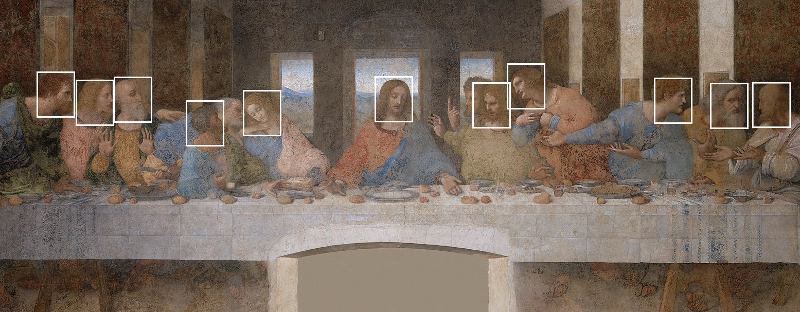
It's Easter time again and many of those who are Christian will be familiar with the story of the Last Supper and the subsequent betrayal of Jesus by his friend Judas. If Jesus was around today and didn't immediately die from a heart attack after hearing about the Bishop of Bling (who spent $500,000 just renovating his closet and flew first class to visit the poor in India), how many more of his disciples would betray him and each other by tagging him in selfies on Facebook? Why do people put the short term indulgence of social media ahead of protecting privacy in the long term? Is this how you treat your friends?

Jonathan Carter: DebConf 16 Updates

debconf16-blogRegistration now open DebConf 16 is taking place in Cape Town, South Africa. For more information read the registration opening announcement. Quick summary Call for talk proposals open If you have a proposal for a session at DC16, please read the full call for proposals announcement. Quick info Video team If you re on the video team, or are planning to get involved then you might want to join the video team mailing list and #debconf-video IRC channel on oftc. Meetings are kicking off soon, if you re planning to join an IRC meeting, you can mark your availability on Framadate. Sponsoring DebConf 16 We have some great sponsors for DebConf 16 already, but sadly we don t have any local sponsors yet. Sponsorship is open to all, but if you know of a South African company in particular who might be interested, then feel free to send them a copy of the DebConf 16 Sponsorship Brochure which contains all the options and how to get in touch with the sponsorship team. Sponsoring DebConf has never been more accessible to South African companies so if you d like to get your company name on the Debian map and get some great exposure, then this is the perfect opportunity!

Guido G nther: More sandboxing

More sandboxing When working on untrusted code or data it's impossible to predict what happens when one does a:
bundle install --path=vendor
or
npm install
Does this phone out your private SSH and GPG keys? Does a
evince Downloads/justdownloaded.pdf
try to exploit the PDF viewer? While you can run stuff in separate virtual machines this can get cumbersome. libvirt-sandbox to the rescue! It allows to sandbox applications using libvirt's virtualization drivers. It took us a couple of years (The ITP is from 2012) but we finally have it in Debian's NEW queue. When libvirt-sandbox creates a sandbox it uses your root filesystem mounted read only by default so you have access to all installed programs (this can be changed with the --root option though). It can use either libvirt's QEMU or LXC drivers. We're using the later in the examples below: So in order to make sure the above bundler call has no access to your $HOME you can use:
sudo virt-sandbox \
   -m ram:/tmp=10M \
   -m ram:$HOME=10M \
   -m ram:/var/run/screen=1M \
   -m host-bind:/path/to/your/ruby-stuff=/path/to/your/ruby-stuff \
   -c lxc:/// \
   -S $USER \
   -n rubydev-sandbox \
   -N dhcp,source=default \
   /bin/bash
This will make your $HOME unaccessible by mounting a tmpfs over it and using separate network, ipc, mount, pid and utc namespaces allowing you to invoke bundler with less worries. /path/to/your/ruby-stuff is bind mounted read-write into the sandbox so you can change files there. Bundler can fetch new gems using libvirt's default network connection. And for the PDF case:
sudo virt-sandbox \
  -m ram:$HOME=10M \
  -m ram:/dev/shm=10M \
  -m host-bind:$HOME/Downloads=$HOME/Downloads \
  -c lxc:/// \
  -S $USER \
  -n evince-sandbox \
  --env="DISPLAY=:0" \
  --env="XAUTHORITY=$XAUTHORITY" \
  /usr/bin/evince Downloads/justdownloaded.pdf
Note that the above example shares /tmp with the sandbox in order to give it access to the X11 socket. A better isolation can probably be achieved using xpra or xvnc but I haven't looked into this yet. Besides the command line program virt-sandbox there's also the library libvirt-sandbox which makes it simpler to build new sandboxing applications. We're not yet shipping virt-sandbox-service (a tool to provision sandboxed system services) in the Debian packages since it's RPM distro specific. Help on porting this to Debian is greatly appreciated.

24 March 2016

Holger Levsen: 20160320-Debian-at-LibrePlanet

Debian folks at LibrePlanet Happy hacking! With apologies to those Debian folks who were at LibrePlanet but didn't make it on this picture

Bits from Debian: DebConf16: Call for Proposals

The DebConf Content team is pleased to announce the Call for Proposals for the DebConf16 conference, to be held in Cape Town, South Africa from 2 through 9 July 2016. Submitting an Event In order to submit an event, go to "Submit a talk" on your profile page in the DebConf16 website and describe your proposal. Please note, events are not limited to traditional presentations or informal sessions (BoFs). We welcome submissions of tutorials, performances, art installations, debates, or any other format of event that you think would be beneficial to the Debian community. Please include a short title, suitable for a compact schedule, and an engaging description of the event. You should use the field "Notes" to provide us information such as additional speakers, scheduling restrictions, or any special requirements we should consider for your event. Regular sessions may either be 20 or 45 minutes long (including time for questions), other kinds of sessions (like workshops) could have different durations. Please choose the most suitable duration for your event and explain any special requests. Timeline The first batch of accepted proposals will be announced in April. If you depend on having your proposal accepted in order to attend the conference, please submit it as soon as possible so that it can be considered during this first evaluation period. All proposals must be submitted before Sunday 1 May 2016 to be evaluated for the official schedule. Topics and Tracks Though we invite proposals on any Debian or FLOSS related subject, we have some broad topics on which we encourage people to submit proposals, including: Video Coverage Providing video of sessions amplifies DebConf achievements and is one of the conference goals. Unless speakers opt-out, official events will be streamed live over the Internet to promote remote participation. Recordings will be published later under the DebConf license, as well as presentation slides and papers whenever available. Contact and Thanks to Sponsors DebConf would not be possible without the generous support of all our sponsors, especially our platinum sponsor HPE. DebConf16 is still accepting sponsors; if you are interested, please get in touch! You are welcome to contact the Content Team with any concerns about your event, or with any ideas or questions about DebConf events in general. You can reach us at content@debconf.org. Registration Reminder Registration for DebConf is open. Please log into the DebConf16 website and register from your profile page. To request bursaries (sponsorship) for food, accommodation, or travel, you must be registered by Sunday, 10 April 2016. After this date, registrations will still be accepted in any of the basic, professional, and corporate categories. However, accommodation on the campus will no longer be guaranteed, and requests for sponsorship will no longer be accepted. Even if you are not certain you will be able to attend, we recommend registering now. You can always cancel your registration, before the deadline. We do suggest that attendees begin making travel arrangements as soon as possible, of course. We hope to see you all in Cape Town!

Jaldhar Vyas: Security Wontfix

I'm going to loudly sing John Lennon's "Imagine" until Bug #818652 resolves itself.

23 March 2016

John Goerzen: Free cars, sunsets, and Kansas

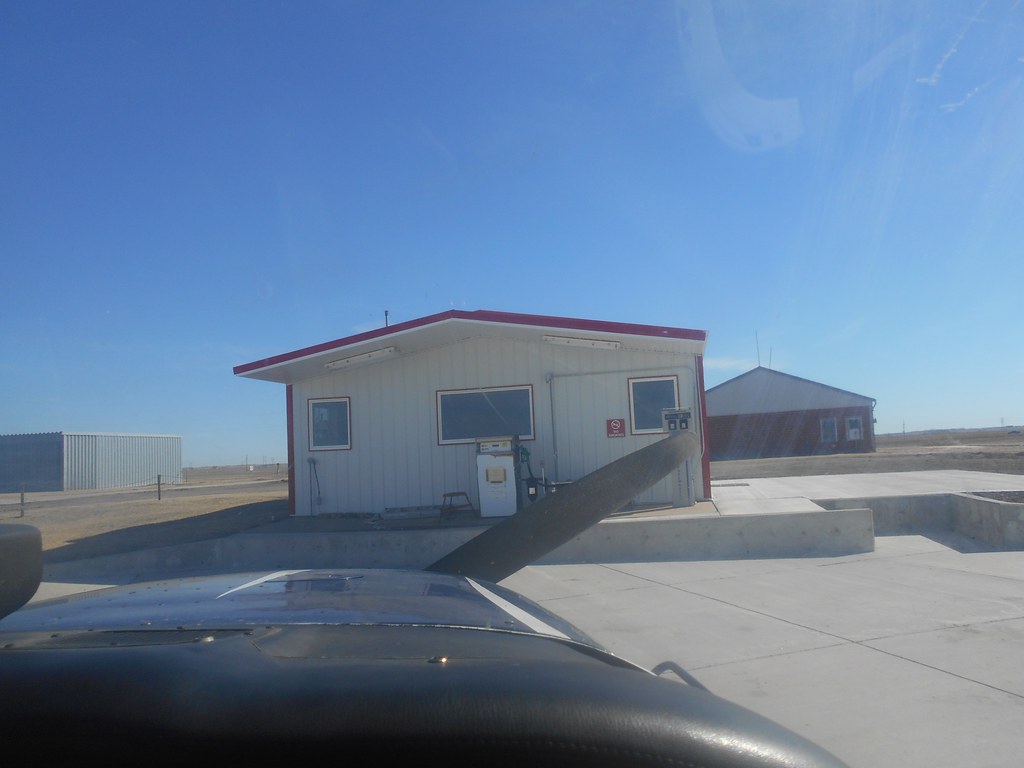
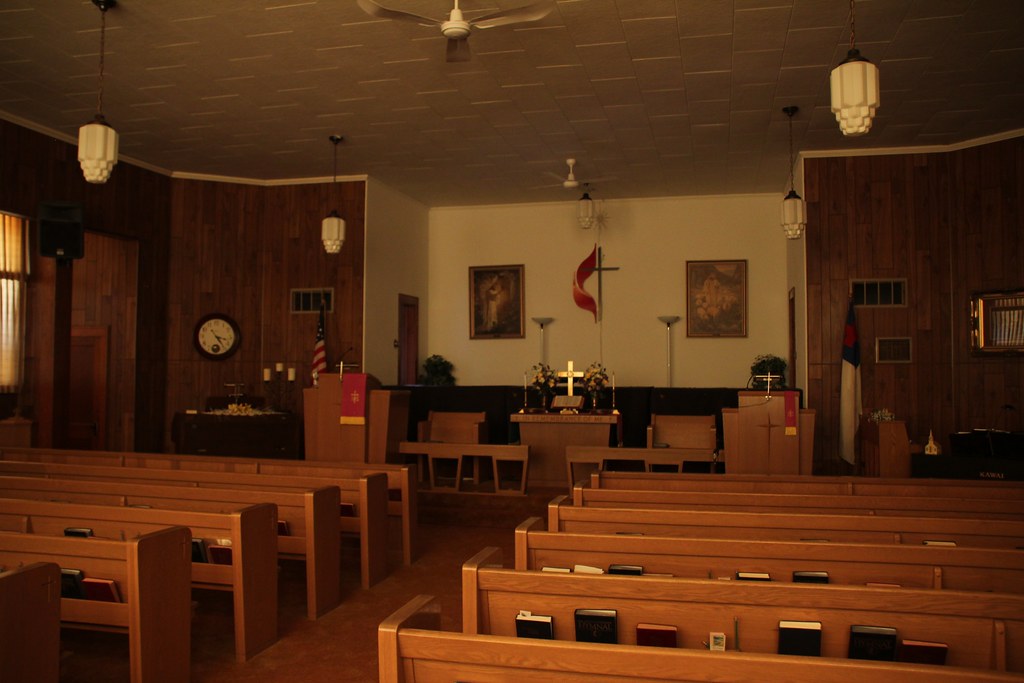
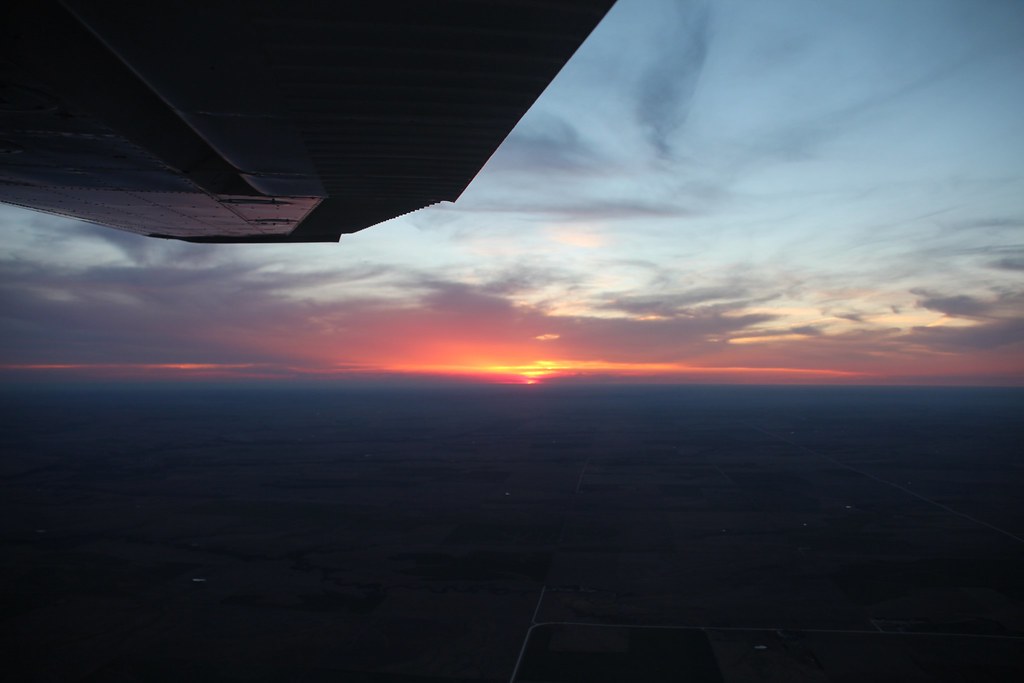
Will you have a car I can borrow? I asked. Sure. No charge. There s a sign telling you where to find the key. It is pretty common for small airports to have a car for a pilot to borrow when flying in. This lets a person go into town for lunch, or visit friends. And it s usually free, with a can to donate a few bucks or a polite request to fill up the tank when you re done. Still, when I had called ahead to ask about flying into the airport in a small town in north-central Kansas, I hadn t expected to be told to just waltz into the place and take the key. But they had no staff at the airport most of the time. So, to me another person from a small town it made perfect sense. Somehow, because of that phone call, this town I had visited once, maybe 25 years ago, seemed instantly familiar. My mom grew up in a small town near there. She wanted me to see where she grew up, to meet some people that meant a lot to her. As it s quite a distance from home, I offered to fly her there. So, Laura, mom, and I climbed into a Cessna one morning for the flight northwest. We touched down at the airport, and I pulled the plane up to the little terminal building. Smith Center, KS airport terminal After I took care of parking the plane, I went to find the car. Except the car was missing. Some other pilot had flown in the same day and was using it, according to the logbook on the desk. I called the number on a sign which rang to the sheriff s office and they confirmed it. According to the logbook, this was only the third time that car had been driven since Thanksgiving. Were we stuck at the airport a few miles out of down? Nope. Mom called the people we were going to meet, a wonderful couple in their upper 80s. They drove out to pick us up. I m rather glad the car was gone, because I had such a great time visiting with them. Norris told me about the days when the state highways were gravel how they d have to re-blade them every few days due to all the traffic. I heard about what happened when the people in that community heard of some folks in Africa in need of car equipment they modified a tractor to fit in a shipping container and shipped it to Africa, along with a lot of books, blankets, supplies, and anything else needed to fill up a huge shipping container. Sounds like something people around here would do. We drove around a couple of the small towns. The town my mom grew up in has seen better days. Its schools closed years ago, the old hotel whose owner gave her piano lessons is condemned, and many houses have been lost. But the town lives on. A new community center was built a few years ago. The grain elevator is expanding. Every time a business on Main Street closes, the grocery store expands a little bit: it s now a grocery store with a little hardware store and a little restaurant mixed in. The mall , as the locals jokingly call it. And, of course, two beautiful small churches still meet every Sunday. Here s the one my mom attended as a child. IMG_7085 We drove past the marker at the geographic center of the contiguous United States. Norris saw some other visitors, rolled down his windows, and treated them and us to an unexpected story of the time thousands of people banded together to completely build a house in a single day, just down the road. Smiles all around. So here I was, nearly 200 miles from home, in an unfamiliar town but one where I could just feel the goodness. After spending a few hours with these people, I felt like they were old friends. As I flew us home, I spotted one of my favorite Kansas sights: a beautiful sunset. From the plane, it almost looks like the land at the horizon turns blue like the ocean, and above it the last hint of sun paints the canvas-sky. In this week of controversy, politics, and reports of violence, it reminds me that we all get the privilege of sharing this beautiful Earth. I didn t ask anybody on that trip about their politics, religion, or opinions on any of the divisive issues of the day. Whether they agree with me on those things or not is irrelevant. I got to spend a day with good-hearted and delightful people, so I flew back with a smile. IMG_7099

Petter Reinholdtsen: Full battery stats collector is now available in Debian

Since this morning, the battery-stats package in Debian include an extended collector that will collect the complete battery history for later processing and graphing. The original collector store the battery level as percentage of last full level, while the new collector also record battery vendor, model, serial number, design full level, last full level and current battery level. This make it possible to predict the lifetime of the battery as well as visualise the energy flow when the battery is charging or discharging. The new tools are available in /usr/share/battery-stats/ in the version 0.5.1 package in unstable. Get the new battery level graph and lifetime prediction by running:
/usr/share/battery-stats/battery-stats-graph /var/log/battery-stats.csv
Or select the 'Battery Level Graph' from your application menu. The flow in/out of the battery can be seen by running (no menu entry yet):
/usr/share/battery-stats/battery-stats-graph-flow
I'm not quite happy with the way the data is visualised, at least when there are few data points. The graphs look a bit better with a few years of data. A while back one important feature I use in the battery stats collector broke in Debian. The scripts in /usr/lib/pm-utils/power.d/ were no longer executed. I suspect it happened when Jessie started using systemd, but I do not know. The issue is reported as bug #818649 against pm-utils. I managed to work around it by adding an udev rule to call the collector script every time the power connector is connected and disconnected. With this fix in place it was finally time to make a new release of the package, and get it into Debian. If you are interested in how your laptop battery is doing, please check out the battery-stats in Debian unstable, or rebuild it on Jessie to get it working on Debian stable. :) The upstream source is available from github. As always, patches are very welcome.

Ingo Juergensmann: Xen randomly crashing server

It's a long story... an oddessey of almost two years... But to start from the beginning: Back then I rented a server at Hetzner until they decided to bill for every IP address you got from them. I got a /26 in the past and so I would have to pay for every IP address of that subnet in addition to the server rent of 79.- EUR/month. That would have meant nearly doubling the monthly costs. So I moved with my server from Hetzner to rrbone Net, which offered me a /26 on a rented Cisco C200 M2 server for a competitve price. After migrating the VMs from Hetzner to rrbone with the same setup that was running just fine at Hetzner I experienced spontaneous reboots of the server, sometimes several times per day and in short time frame. The hosting provider was very, very helpful in debugging this like exchanging the memory, setting up a remote logging service for the CIMC and such. But in the end we found no root cause for this. The CIMC logs showed that the OS was rebooting the machine. Anyway, I then bought my own server and exchanged the Cisco C200 by my own hardware, but the reboots still happen as before. Sometimes the servers runs for weeks, sometimes the server crashes 4-6 times a day, but usually it's like a pattern: when it crashes and reboots, it will do that again within a few hours and after the second reboot the chances are high that the server will run for several days without a reboot - or even weeks. The strange thing is, that there are absolutely no hints in the logs, neither syslog or in the Xen logs, so I assume that's something quite deep in the kernel that causes the reboot. Another hint is, that the reboots fairly often happened, when I used my Squid proxy on one of the VMs to access the net. I'm connecting for example by SSH with portforwarding to one VM, whereas the proxy runs on another VM, which led to network traffic between the VMs. Sometimes the server crashed on the very firsts proxy requests. So, I exchanged Squid by tinyproxy or other proxies, moved the proxy from one VM to that VM I connect to using SSH, because I thought that the inter-VM traffic may cause the machine to reboot. Moving the proxy to another virtual server I rented at another hosting provider to host my secondary nameserver did help a little bit, but with no real hard proof and statistics, just an impression of mine. I moved from xm toolstack to xl toolstack as well, but didn't help either. The reboots are still happening and in the last few days very frequent. Even with the new server I exchanged the memory, used memory mirroring as well, because I thought that it might be a faulty memory module or something, but still rebooting out of the blue. During the last weekend I configured grub to include "noreboot" command line and then got my first proof that somehow the Xen network stack is causing the reboots: This is a screenshot of the IPMI console, so it's not showing the full information of that kernel oops, but as you can see, there are most likely such parts involved like bridge, netif, xenvif and the physical igb NIC. Here's another screenshot of a crash from this night: Slightly different information, but still somehow network involved as you can see in the first line (net_rx_action). So the big question is: is this a bug Xen or with my setup? I'm using xl toolstack, the xl.conf is basically the default, I think:
## Global XL config file ##

# automatically balloon down dom0 when xen doesn't have enough free
# memory to create a domain
autoballoon=0

# full path of the lockfile used by xl during domain creation
#lockfile="/var/lock/xl"

# default vif script
#vif.default.script="vif-bridge"
With this the default network scripts of the distribution (i.e. Debian stable) should be used. The network setup consists of two brdiges:
auto xenbr0
iface xenbr0 inet static
address 31.172.31.193
netmask 255.255.255.192
gateway 31.172.31.254
bridge_ports eth0
pre-up brctl addbr xenbr0 auto xenbr1
iface xenbr1 inet static
address 192.168.254.254
netmask 255.255.255.0
pre-up brctl addbr xenbr1
There are some more lines to that config like setting up some iptables rules with up commands and such. But as you can see my eth0 NIC is part of the "main" xen bridge with all the IP addresses that are reachable from the outside. The second bridge is used for internal networking like database connections and such. I would rather like to use a netconsole to capture the full debug output in case of a new crash, but unfortunately this only works until the bridge is brought up and in place:
[ 0.000000] Command line: placeholder root=UUID=c3....22 ro debug ignore_loglevel loglevel=7 netconsole=port@31.172.31.193/eth0,514@5.45.x.y/e0:ac:f1:4c:y:x
[ 32.565624] netpoll: netconsole: local port $port
[ 32.565683] netpoll: netconsole: local IPv4 address 31.172.31.193
[ 32.565742] netpoll: netconsole: interface 'eth0'
[ 32.565799] netpoll: netconsole: remote port 514
[ 32.565855] netpoll: netconsole: remote IPv4 address 5.45.x.y
[ 32.565914] netpoll: netconsole: remote ethernet address e0:ac:f1:4c:y:x
[ 32.565982] netpoll: netconsole: device eth0 not up yet, forcing it
[ 36.126294] netconsole: network logging started
[ 49.802600] netconsole: network logging stopped on interface eth0 as it is joining a master device
So, the first question is: how to use netconsole with an interface that is used on a bridge? The second question is: is the setup with two bridges with Xen ok? I've been using this setup for years now and it worked fairly well on the Hetzner server as well, although I used there xm toolstack with a mix of bridge and routed setup, because Hetzner didn't like to see the MAC addresses of the other VMs on the switch and shut the port down if that happens.
Kategorie:

Daniel Pocock: GSoC 2016 opportunities for Voice, Video and Chat Communication

I've advertised a GSoC project under Debian for improving voice, video and chat communication with free software. Replacing Skype, Viber and WhatsApp is a big task, however, it is quite achievable by breaking it down into small chunks of work. I've been cataloguing many of the key improvements needed to make Free RTC products work together. Many of these chunks are within the scope of a GSoC project. If you can refer any students, if you would like to help as a mentor or if you are a student, please come and introduce yourself on the FreeRTC mailing list. If additional mentors volunteer, there is a good chance we can have more than one student funded to work on this topic. The deadline is Friday, 25 March 2016 The student application deadline is 25 March 2016 19:00 UTC. This is a hard deadline for students. Mentors can still join after the deadline, during the phase where student applications are evaluated. The Google site can be very busy in the hours before the deadline so it is recommended to try and complete the application at least 8 hours before the final deadline. Action items for students:
  • Register yourself on the Google Site and submit an application. You can submit applications to multiple organizations. For example, if you wish to focus on the DruCall module for Drupal, you can apply to both Debian and Drupal.
  • Join the FreeRTC mailing list and send a message introducing yourself. Tell us which topics you are interested in, which programming languages your are most confident with and which organizations you applied to through the Google site.
  • Create an application wiki page on the Debian wiki. You are permitted to edit the page after the 25 March deadline, so if you are applying at the last minute, just create a basic list of things you will work on and expand it over the following 2-3 days
Introducing yourself and making a strong application When completing the application form for Google, the wiki page and writing the email to introduce yourself, consider including the following details:
  • Link to any public profile you have on sites like Github or bug trackers
  • Tell us about your programming language skills, list the top three programming languages you are comfortable with and tell us how many years you have used each
  • other skills you have or courses you have completed
  • any talks you have given at conferences
  • any papers you have had published
  • any conferences you have attended or would like to attend
  • where you are located and where you study, including timezone
  • any work experience you already have
  • any courses, exams or employment commitments you have between 22 May and 24 August
  • anybody from your local free software community or university who may be willing to help as an additional mentor
Further reading Please also see my other project idea, for ham radio / SDR projects and my blog Want to be selected for Google Summer of Code 2016?. If you are not selected in 2016 We try to make contact with all students who apply and give some feedback, in particular, we will try to let you know what to do to increase your chances of selection in the next year, 2017. Applying for GSoC and being interviewed by mentors is a great way to practice for applying for other internships and jobs.

22 March 2016

Ben Hutchings: I'm super, thanks for asking!

Some of you (but though probably not many) will know that I've suffered from depression at times. It has made it very difficult for me to do my job, to keep my home in order, even to have real conversations. Many important tasks seemed to require more energy than I had, and every setback left me feeling hopeless. I have sought treatment on several occasions, with very limited results. Certainly I would get better eventually, but it was hard to tell whether this had anything to do with the medication or therapy I received. And even while I felt better, I still didn't feel particularly happy or hopeful except when going to my favourite social events like DebConf. As I was recovering from the 'flu a weeks ago, I realised that I was feeling enthusiastic and energetic for no particular reason. Obviously I was recovering from physical illness, but that was brief. I had also just started a new project at work, but it isn't that exciting (at this stage) and I'm already aware of plenty of problems with it. So nothing external seemed to have changed to make me feel better, and yet my mood was so high that I worried that my illness could have changed to bipolar disorder and that I was entering a manic phase. Thankfully, I'm not behaving manically. I have been doing a lot more shopping than usual, but almost the first purchase was a whiteboard to maintain the to-do list that I had been keeping rather unreliably in my head, and mostly I've been buying things off that list - that I've intended to get for months or years. It's just been so long since I could feel generally positive and optimistic about my life - outside of any special event - that I didn't immediately recognise this state of mind as normality. It's now been two three weeks since my recovery, and I still feel so much better: As I feel better in myself I also find myself less self-centred and more able to focus on other people's needs, particularly my wife Nattie. Frankly I've been an asshole pretty often while I was depressed, so I apologise to those who've been the brunt of that. I hope you'll find me more pleasant to deal with from now on. There's lots more I could write, but I'll end this entry now and maybe say more at a later date.

21 March 2016

Lunar: Reproducible builds: week 47 in Stretch cycle

What happened in the reproducible builds effort between March 13th and March 19th 2016:

Toolchain fixes
  • Petter Reinholdtsen uploaded naturaldocs/1.51-1.1 which makes the output reproducible. Original patch by Chris Lamb.
  • Damyan Ivanov uploaded libpdf-api2-perl/2.025-2 which will make internal font ID reproducible.
  • Christian Hofstaedtler uploaded ruby2.3/2.3.0-5 which sets gzip embedded mtime field to fixed value for rdoc-generated compressed javascript data.

Packages fixed The following packages have become reproducible due to changes in their build dependencies: diction, doublecmd, ruby-hiredis, vdr-plugin-epgsearch. The following packages became reproducible after getting fixed: Some uploads fixed some reproducibility issues, but not all of them: Patches submitted which have not made their way to the archive yet:
  • #818128 on nethack by Reiner Herrmann: implement support for SOURCE_DATE_EPOCH, set LC_ALL to C, and ensure deterministic build order when running parallel builds.
  • #818111 on debian-keyring by Satyam Zode: fix the order of files in md5sums.
  • #818067 on ncurses by Niels Thykier: strip trailing whitespaces introduced when using dash as system shell.
  • #818230 on aircrack-ng by Reiner Herrmann: build assembly code as a separate .o file.
  • #818419 on mutt by Daniel Shahaf: use C locale when listing files to be put in README.Patches.
  • #818430 on ruby-coveralls by Dhole: ensure UTC is used as the timezone when generating the documentation.
  • #818686 on littlewizard by Reiner Herrmann: use the C locale in the script for iterating over the files.
  • #818704 on strigi by Reiner Herrmann: sort keys when traversing hashes in makecode.pl.

Package reviews 44 reviews have been removed, 40 added and 5 updated in the previous week. Chris Lamb has reported 16 FTBFS.

Russ Allbery: Term::ANSIColor 4.05

This Perl (core) module provides a variety of functions and tools for manipulating ANSI color and text style escape sequences. The primary change in this release is a few internal tweaks to reduce memory usage, which apparently had ballooned by 70% since Perl 5.14. Unfortunately, that also meant dropping support for non-ASCII characters in color aliases, which I think previously would have theoretically worked (not that it was ever documented or tested). I have mixed feelings, but since the memory usage was reported as a bug (and this is the sort of module that one might legitimately want to use in some space-constrainted situations as part of core), and no one ever mentioned non-ASCII color aliases, I decided to apply this patch. Yell at me if this broke something. I also cleaned up the metadata management following all the work that others helped me with for podlators. You can get the latest release from the Term::ANSIColor distribution page.

Russ Allbery: podlators 4.07

This is a minor bug fix release of the Perl POD translators for text and man pages. It fixes a warning about use of uninitialized variables when run on a Perl module in the current directory, cleans up a confusing warning during the Perl core build, and fixes a long-standing bug in turning off italic font in =item tags in a C<> block. You can get the latest release form the podlators distribution page.

20 March 2016

Jose M. Calhariz: at daemon, now with proper support for --without-selinux

Thanks to Wenzong Fan, now the configure flag --without-selinux works properly. So here is a new release at 3.1.19. Please test it.

Sean Whitton: Spring Break in San Francisco

Last night I got back from spending around 5 days in the Bay Area for Spring Break. I stayed in a hostel in downtown SF for three nights and then I stayed with a friend who is doing a PhD at Stanford. When initially planning this trip my aim was just to visit somewhere interesting on the west coast of the continental United States. I chose the Bay Area because I wanted to get my PGP key signed by some Debian Developers and that area has a high concentration of DDs, and because I wanted to see my friend at Stanford. But in the end I liked San Francisco a lot more than expected to and am very glad that I had an opportunity to visit. The first thing that I liked was how easy it seemed to be to find people interested in the same kind of tech stuff that I am. I spent my first afternoon in the city exploring the famous Mission district, and at one point while sitting in the original Philz Coffee I found that the person sitting next to me was running Debian on her laptop and blogs about data privacy. We had an discussion about how viable OpenPGP is as a component of a technically unsophisticated user s attempts to stay safe online. Later that same day while riding the subway train, someone next to me fired up Emacs on their laptop. And over the course of my trip I met five Debian Developers doing all sorts of different kinds of work both in and outside of Debian, and some Debian users including one of Stanford s UNIX sysadmins. This is a far cry from my day-to-day life down in the Sonoran Desert where new releases of iOS are all anyone seems to be interested in. Perhaps I should have expected this before my trip, but I think I had assumed that most of the work being done in San Francisco was writing web apps, so I was pleased to find people working on the same kind of things that I am currently putting time into. And in saying the above, I don t mean to demean the interests of the people around me in Arizona for a moment (nor those writing web apps; I d like to learn how to write good ones at some point). I m very grateful to be able to discuss my philosophical interests with the other graduate students. It s just that I miss being able to discuss tech stuff. I guess you can t have everything you want! One particular encouraging meeting I had was with a Debian Developer employed by Google and working on Git. While my maths background sets me up with the right thinking skills to write programs, I don t have knowledge typically gained from an education in computer science that enables one to work on the most interesting software. In particular, low-level programming in C is something that I had thought it wouldn t be possible for me to get started with. So it was encouraging to meet the DD working on Git at Google because his situation was similar: his undergraduate background is in maths and he was able to learn how to code in C by himself and is now working on a exciting project at a company that it is hard to get hired by. I don t mean that doing exactly what he s doing is something that I aiming for, just that it is very encouraging to know the field is more open to me than I had thought. I was also reminded of how fortunate I am to have the Internet to learn from and projects like Debian to get involved with. Moving on from tech, I enjoyed the streets of San Francisco, and the Stanford campus. San Francisco is fantastically multicultural though with clear class and wealth divisions. A very few minutes walk from the Twitter headquarters with its tech bros , as the maths PhD students I met at Stanford call them, are legions of the un- and barely-employed passing their time on the concrete. I enjoyed riding one of the old cable cars through the aesthetically revealing and stark combination of a west coast grid system on some very steep hills. I was fortunate to be able to walk across the Golden Gate Bridge on a perfectly clear and mist-free day. Meeting people involved with Debian and meeting my old friend at Stanford had me reflecting on and questioning my life in the desert even more than usual. I try to remind myself that there is an end date in sight and I will regret spending my time here just thinking about leaving. I sometimes worry that I could easily find myself moving to the big city London, San Francisco or elsewhere and letting myself be carried by the imagined self-importance of that, sidelining and procrastinating things that I should prize more highly. I should remember that the world of writing software in big cities isn t going away and my time in the desert is an opportunity to prepare myself better for that, building my resistance to being swept away by the tides of fashion.

Norbert Preining: Debian/TeX Live 2015.20160320-1 and biber 2.4-1

About one month has passed and here is the usual updated of TeX Live packages for Debian, this time also with an update to biber to accompany the updated version of biblatex. This will be (probably) the last upload before TeX Live 2015 gets frozen in preparation for 2016. After the freeze there will be some time of piece, and updates will got to experimental with the new binaries. Debian - TeX Live 2015 From the list of updated and new packages I want to mention that biblatex has been updated together with biber, and most biblatex styles should already by updated to work with the new biblatex, too. From the new packages one has in particular caught my attention: prooftrees. As I am writing a lot of proofs in my research, I am happy to see new package dealing with this, especially because this package is built on top of the excellent package forest (which in turn uses tikz), allowing for very compact proofs. Updated packages aastex, abntex2, academicons, acro, amsmath, animate, archaeologie, asciilist, babel, babel-french, babel-friulan, babel-russian, babel-spanish, beamertheme-metropolis, bibexport, biblatex, biblatex-apa, biblatex-bookinarticle, biblatex-caspervector, biblatex-chem, biblatex-fiwi, biblatex-gost, biblatex-manuscripts-philology, biblatex-nature, biblatex-philosophy, biblatex-phys, biblatex-publist, biblatex-realauthor, biblatex-science, bxjscls, cabin, caption, cbfonts-fd, celtic, chemmacros, computational-complexity, crimson, csplain, datetime2-english, diagbox, disser, droit-fr, dtk, dvips, ejpecp, emisa, factura, fibeamer, fithesis, forest, gost, hobby, hyperxmp, inconsolata, lualatex-math, mandi, mcf2graph, media9, nameauth, ocgx2, parades, pdftex, pkuthss, poetrytex, ptex, reledmac, roundrect, showhyphens, siunitx, spath3, splitindex, suftesi, tcolorbox, tetex, tex4ht, texinfo, texlive-scripts, thuthesis, titlesec, turabian-formatting, unicode-data, uptex, velthuis, venndiagram, xassoccnt, xint, xsavebox. New packages beamercolorthemeowl, bibletext, cochineal, formation-latex-ul, gobble, keyvaltable, lroundrect, luatex85, mathpartir, miama, multidef, parades, pgfornament, prooftrees, visualpstricks, visualtikz, xsavebox, ycbook. Enjoy.

Gunnar Wolf: Busy with the worthy things...

My online activity, in most if not all of the projects I most care about, has dropped to a lifelong minimum. But that is not necessarily a bad thing Yes, I want to be more involved again in everything. And yes, I am in a permanent crisis of lack of time (and/or sleep). I didn't even remember to blog about this on time... but never mind... A little over a year after the single, most important moment I have lived, we are not only enjoying, but deeply understanding the true meaning of life.

19 March 2016

Petter Reinholdtsen: UsingQR - "Electronic" paper invoices using JSON and QR codes

Back in 2013 I proposed a way to make paper and PDF invoices easier to process electronically by adding a QR code with the key information about the invoice. I suggested using vCard field definition, to get some standard format for name and address, but any format would work. I did not do anything about the proposal, but hoped someone one day would make something like it. It would make it possible to efficiently send machine readable invoices directly between seller and buyer. This was the background when I came across a proposal and specification from the web based accounting and invoicing supplier Visma in Sweden called UsingQR. Their PDF invoices contain a QR code with the key information of the invoice in JSON format. This is the typical content of a QR code following the UsingQR specification (based on a real world example, some numbers replaced to get a more bogus entry). I've reformatted the JSON to make it easier to read. Normally this is all on one long line:

 
 "vh":500.00,
 "vm":0,
 "vl":0,
 "uqr":1,
 "tp":1,
 "nme":"Din Leverand r",
 "cc":"NO",
 "cid":"997912345 MVA",
 "iref":"12300001",
 "idt":"20151022",
 "ddt":"20151105",
 "due":2500.0000,
 "cur":"NOK",
 "pt":"BBAN",
 "acc":"17202612345",
 "bc":"BIENNOK1",
 "adr":"0313 OSLO"
 
The interpretation of the fields can be found in the format specification (revision 2 from june 2014). The format seem to have most of the information needed to handle accounting and payment of invoices, at least the fields I have needed so far here in Norway. Unfortunately, the site and document do not mention anything about the patent, trademark and copyright status of the format and the specification. Because of this, I asked the people behind it back in November to clarify. Ann-Christine Savlid (ann-christine.savlid (at) visma.com) replied that Visma had not applied for patent or trademark protection for this format, and that there were no copyright based usage limitations for the format. I urged her to make sure this was explicitly written on the web pages and in the specification, but unfortunately this has not happened yet. So I guess if there is submarine patents, hidden trademarks or a will to sue for copyright infringements, those starting to use the UsingQR format might be at risk, but if this happen there is some legal defense in the fact that the people behind the format claimed it was safe to do so. At least with patents, there is always a chance of getting sued... I also asked if they planned to maintain the format in an independent standard organization to give others more confidence that they would participate in the standardization process on equal terms with Visma, but they had no immediate plans for this. Their plan was to work with banks to try to get more users of the format, and evaluate the way forward if the format proved to be popular. I hope they conclude that using an open standard organisation like IETF is the correct place to maintain such specification. Update 2016-03-20: Via Twitter I became aware of some comments about this blog post that had several useful links and references to similar systems. In the Czech republic, the Czech Banking Association standard #26, with short name SPAYD, uses QR codes with payment information. More information is available from the Wikipedia page on Short Payment Descriptor. And in Germany, there is a system named BezahlCode, (specification v1.8 2013-12-05 available as PDF), which uses QR codes with URL-like formatting using "bank:" as the URI schema/protocol to provide the payment information. There is also the ZUGFeRD file format that perhaps could be transfered using QR codes, but I am not sure if it is done already. Last, in Bolivia there are reports that tax information since november 2014 need to be printed in QR format on invoices. I have not been able to track down a specification for this format, because of my limited language skill sets.

Next.

Previous.