James McCoy: neovim-enters-stretch
 Last we heard from our fearless hero, Neovim, it was just entering the NEW
queue. Well, a few days later it landed in experimental and 8 months, to the
day, since then it is now in Stretch.
Enjoy the fish!
Last we heard from our fearless hero, Neovim, it was just entering the NEW
queue. Well, a few days later it landed in experimental and 8 months, to the
day, since then it is now in Stretch.
Enjoy the fish!


 After a month of development, keysafe 0.20160922 is released,
and ready for beta testing. And it needs servers.
With this release, the whole process of backing up and restoring a gpg
secret key to keysafe servers is implemented. Keysafe is started at desktop
login, and will notice when a gpg secret key has been created, and prompt
to see if it should back it up.
At this point, I recommend only using keysafe for lower-value secret keys,
for several reasons:
 This year, I mentored a student in Google Summer of Code 2016.
I have been involved as a mentor in the Netfilter project, working
with nftables and the translation layer between iptables and nft.
The nftables framework is ready to use. I myself plan to deploy several
production firewalls during upcoming months.
Google just send me some goodies, a tshirt and a sticker.
Thanks! :-)
 Finally, I decided it was time to switch from blogger to jekyllrb hosted at
github pages.
My old blog at http://ral-arturo.blogspot.com.es will
still be online as an archive, since I don t plan to migrate the content
from there to here.
 Next week our friends at Igalia will be hosting this year s Web Engines Hackfest. Collabora will be there! We are gold sponsors, and have three developers attending. It will also be an opportunity to celebrate Igalia s 15th birthday \o/. Looking forward to meet you there! =)
Carlos Garcia has recently released WebKitGTK+ 2.14, the latest stable release. This is a great release that brings a lot of improvements and works much better on Wayland, which is becoming mature enough to be used by default. In particular, it fixes the clipboard, which was one of the main missing features, thanks to Carlos Garnacho! We have also been able to contribute a bit to this release =)
One of the biggest changes this cycle is the threaded compositor, which was implemented by Igalia s Gwang Yoon Hwang. This work improves performance by not stalling other web engine features while compositing. Earlier this year we contributed fixes to make the threaded compositor work with the web inspector and fixed elements, helping with the goal of enabling it by default for this release.
Wayland was also lacking an accelerated compositing implementation. There was a patch to add a nested Wayland compositor to the UIProcess, with the WebProcesses connecting to it as Wayland clients to share the final rendering so that it can be shown to screen. It was not ready though and there were questions as to whether that was the way to go and alternative proposals were floating around on how to best implement it.
At last year s hackfest we had discussions about what the best path for that would be where collaborans Emanuele Aina and Daniel Stone (proxied by Emanuele) contributed quite a bit on figuring out how to implement it in a way that was both efficient and platform agnostic.
We later picked up the old patchset, rebased on the then-current master and made it run efficiently as proof of concept for the Apertis project on an i.MX6 board. This was done using the fancy GL support that landed in GTK+ in the meantime, with some API additions and shortcuts to sidestep performance issues. The work was sponsored by Robert Bosch Car Multimedia.
Igalia managed to improve and land a very well designed patch that implements the nested compositor, though it was still not as efficient as it could be, as it was using glReadPixels to get the final rendering of the page to the GTK+ widget through cairo. I have improved that code by ensuring we do not waste memory when using HiDPI.
As part of our proof of concept investigation, we got this WebGL car visualizer running quite well on our sabrelite imx6 boards. Some of it went into the upstream patches or proposals mentioned below, but we have a bunch of potential improvements still in store that we hope to turn into upstreamable patches and advance during next week s hackfest.
One of the improvements that already landed was an alternate code path that leverages GTK+ s recent GL super powers to render using gdk_cairo_draw_from_gl(), avoiding the expensive copying of pixels from the GPU to the CPU and making it go faster. That improvement exposed a weird bug in GTK+ that causes a black patch to appear when shrinking the window, which I have a tentative fix for.
We originally proposed to add a new gdk_cairo_draw_from_egl() to use an EGLImage instead of a GL texture or renderbuffer. On our proof of concept we noticed it is even more efficient than the texturing currently used by GTK+, and could give us even better performance for WebKitGTK+. Emanuele Bassi thinks it might be better to add EGLImage as another code branch inside from_gl() though, so we will look into that.
Another very interesting igalian addition to this release is support for the MemoryPressureHandler even on systems with no cgroups set up. The memory pressure handler is a WebKit feature which flushes caches and frees resources that are not being used when the operating system notifies it memory is scarce.
We worked with the Raspberry Pi Foundation to add support for that feature to the Raspberry Pi browser and contributed it upstream back in 2014, when Collabora was trying to squeeze as much as possible from the hardware. We had to add a cgroups setup to wrap Epiphany in, back then, so that it would actually benefit from the feature.
With this improvement, it will benefit even without the custom cgroups setups as well, by having the UIProcess monitor memory usage and notify each WebProcess when memory is tight.
Some of these improvements were achieved by developers getting together at the Web Engines Hackfest last year and laying out the ground work or ideas that ended up in the code base. I look forward to another great few days of hackfest next week! See you there o/
 Tried creating a GCE control panel for myself.
GCP GCE control panel takes about 20 seconds for me to load, CPU is busy loading the page. It does so many things and it's very complex.
I've noticed that the API isn't that slow, so I used OAuth to let me do what I want usually; list the hosts and start/stop the instance, and list the IPs.
Takes 500ms to do it instead of 20 seconds.
I've put the service on AppEngine.
The hardest part was figuring out how this OAuth2 dance was supposed to work, and
all the python documentation I have seen were somewhat outdated and rewriting then to a workable state.
document was outdated but
sample code was fixed.
I had to read up on vendoring and PIP and other stuff in order to get all the dependencies installed. I guess my python appengine skills are too rusty now.
 There's a story going round that Lenovo have signed an agreement with Microsoft that prevents installing free operating systems. This is sensationalist, untrue and distracts from a genuine problem.
This system has a Signature Edition of Windows 10 Home installed. It is locked per our agreement with Microsoft.It's unclear what this is meant to mean. Microsoft could be insisting that Signature Edition systems ship in "RAID" mode in order to ensure that users get a good power management experience. Or it could be a misunderstanding regarding UEFI Secure Boot - Microsoft do require that Secure Boot be enabled on all Windows 10 systems, but (a) the user must be able to manage the key database and (b) there are several free operating systems that support UEFI Secure Boot and have appropriate signatures. Neither interpretation indicates that there's a deliberate attempt to prevent users from installing their choice of operating system.
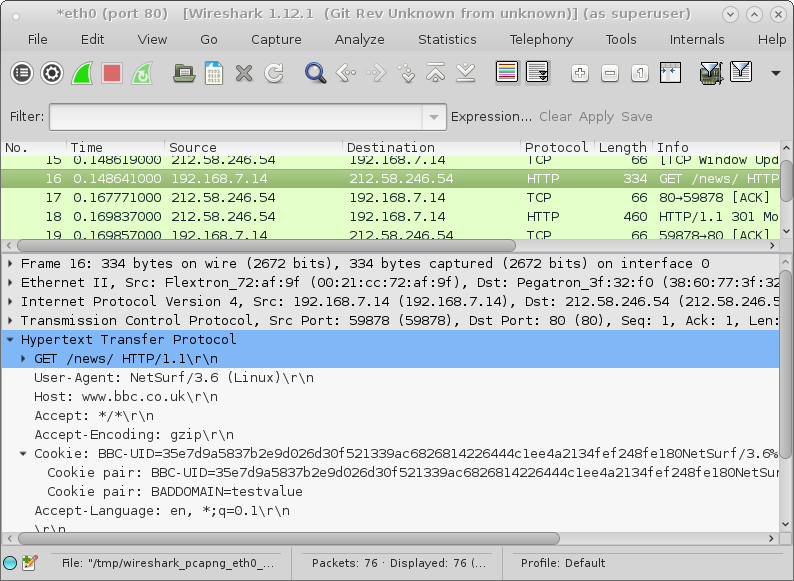
 The HTTP cookie is simply a way for a website to identify a connecting browser session so that state can be kept between retrieving pages. Due to shortcomings in the design of cookies and implementation details in browsers this has lead to a selection of unwanted side effects. The specific issue that I am talking about here is the supercookie where the super prefix in this context has similar connotations as to when applied to the word villain.
 There is no way to generate the correct set of top level domains with an algorithm so a database is required and is called the Public Suffix List (PSL). This database is a simple text formatted list with wildcard and inversion syntax and is at time of writing around 180Kb of text including comments which compresses down to 60Kb or so with deflate.
struct pnode
    uint16_t label_index; /* index into string table of label */
    uint16_t label_length; /* length of label */
    uint16_t child_node_index; /* index of first child node */
    uint16_t child_node_count; /* number of child nodes */
 ;
union pnode
    struct
        uint16_t index; /* index into string table of label */
        uint8_t length; /* length of label */
        uint8_t has_children; /* the next table entry is a child node */
      label;
    struct
        uint16_t node_index; /* index of first child node */
        uint16_t node_count; /* number of child nodes */
      child;
 ;

static const union pnode pnodes[8580] =
    /* root entry */
      .label =   0, 0, 1    ,   .child =   2, 1553    ,
    /* entries 2 to 1794 */
      .label =  37, 2, 1    ,   .child =   1795, 6    ,

...

    /* entries 8577 to 8578 */
      .label =  31820, 6, 1    ,   .child =   8579, 1    ,
    /* entry 8579 */
      .label =  0, 1, 0    ,

 ;
 For the non-Debian people among my readers: The following post presents bits of the decision-taking process in the Debian project. You might find it interesting, or terribly dull and boring :-) Proceed at your own risk.
My reason for posting this entry is to get more people to read the accompanying options for my proposed General Resolution (GR), and have as full a ballot as possible.
Almost three weeks ago, I sent a mail to the debian-vote mailing list. I'm quoting it here in full:
Some weeks ago, Nicolas Dandrimont proposed a GR for declassifying
debian-private[1]. In the course of the following discussion, he
accepted[2] Don Armstrong's amendment[3], which intended to clarify the
meaning and implementation regarding the work of our delegates and the
powers of the DPL, and recognizing the historical value that could lie
within said list.
[1] https://www.debian.org/vote/2016/vote_002
[2] https://lists.debian.org/debian-vote/2016/07/msg00108.html
[3] https://lists.debian.org/debian-vote/2016/07/msg00078.html
In the process of the discussion, several people objected to the
amended wording, particularly to the fact that "sufficient time and
opportunity" might not be sufficiently bound and defined.
I am, as some of its initial seconders, a strong believer in Nicolas'
original proposal; repealing a GR that was never implemented in the
slightest way basically means the Debian project should stop lying,
both to itself and to the whole free software community within which
it exists, about something that would be nice but is effectively not
implementable.
While Don's proposal is a good contribution, given that in the
aforementioned GR "Further Discussion" won 134 votes against 118, I
hereby propose the following General Resolution:
=== BEGIN GR TEXT ===
Title: Acknowledge that the debian-private list will remain private.
1. The 2005 General Resolution titled "Declassification of debian-private
   list archives" is repealed.
2. In keeping with paragraph 3 of the Debian Social Contract, Debian
   Developers are strongly encouraged to use the debian-private mailing
   list only for discussions that should not be disclosed.
=== END GR TEXT ===
Thanks for your consideration,
--
Gunnar Wolf
(with thanks to Nicolas for writing the entirety of the GR text ;-) )
Yesterday, I spoke with the Debian project secretary, who confirmed my proposal has reached enough Seconds (that is, we have reached five people wanting the vote to happen), so I could now formally do a call for votes. Thing is, there are two other proposals I feel are interesting, and should be part of the same ballot, and both address part of the reasons why the GR initially proposed by Nicolas didn't succeed:
 wlc 0.6, a command line utility for Weblate, has been just released. There have been some minor fixes, but the most important news is that Windows and OS X are now supported platforms as well.
Full list of changes:
Filed under: Debian English SUSE Weblate 0 comments
60 was
uploaded to unstable by Mattia
Rizzolo. It included
contributions
from:
0.027-1 and 0.028-1 were uploaded to
unstable by Chris Lamb. It included
contributions
from:
0.5.1 was
uploaded to unstable by Chris
Lamb. It included
contributions
from:
Copyright (c) 2002 Robert Jan Versluis, Rocrail.net
All rights reserved.
Commercial usage needs permission.
commit cfee35f3ae5973e97a3d4b178f20eb69a916203e
Author: Rob Versluis <r.j.versluis@rocrail.net>
Date:   Fri Jul 17 16:09:45 2015 +0200
    update copyrights
commit df399d9d4be05799d4ae27984746c8b600adb20b
Author: Rob Versluis <r.j.versluis@rocrail.net>
Date:   Wed Jul 8 14:49:12 2015 +0200
    update licence
commit 0daffa4b8d3dc13df95ef47e0bdd52e1c2c58443
Author: Rob Versluis <r.j.versluis@rocrail.net>
Date:   Wed Jul 8 10:17:13 2015 +0200
    update
Hi Rob,
I just stumbled over this post [3] [link reference adapted for this
blog post), which probably is the one you have referred to above.
It seems that Rocrail contains features that require a key or such
for permanent activation.  Basically, this is allowed and possible
even with the GPL-3+ (although Free Software activists will  not
appreciate that). As the GPL states that people can share the source
code, programmers can  easily deactivate license key checks (and
such) in the code and re-distribute that patchset as they  like.
Furthermore, the current COPYING file is really non-protective at
all. It does not really protect   you as copyright holder of the
code. Meaning, if people crash their trains with your software, you
could actually be legally prosecuted for that. In theory. Or in the
U.S. ( ;-) ). Main reason for  having a long long license text is to
protect you as the author in case your software causes t trouble to
other people. You do not have any warranty disclaimer in your COPYING
file or elsewhere. Really not a good idea.
In that referenced post above, someone also writes about the nuisance
of license discussions in  this forum. I have seen various cases
where people produced software and did not really care for
licensing. Some ended with a letter from a lawyer, some with some BIG
company using their code  under their copyright holdership and their
own commercial licensing scheme. This is not paranoia,  this is what
happens in the Free Software world from time to time.
A model that might be much more appropriate (and more protective to
you as the author), maybe, is a  dual release scheme for the code. A
possible approach could be to split Rocrail into two editions:
Community Edition and Professional/Commercial Edition. The Community
Edition must be licensed in a  way that it allows re-using the code
in a closed-source, non-free version of Rocrail (e.g.   MIT/Expat
License or Apache2.0 License). Thus, the code base belonging to the
community edition  would be licensed, say..., as Apache-2.0 and for
the extra features in the Commercial Edition, you  may use any
non-free license you want (but please not that COPYING file you have
now, it really  does not protect your copyright holdership).
The reason for releasing (a reduced set of features of a) software as
Free Software is to extend  the user base. The honey jar effect, as
practise by many huge FLOSS projects (e.g. Owncloud,  GitLab, etc.).
If people could install Rocrail from the Debian / Ubuntu archives
directly, I am  sure that the user base of Rocrail will increase.
There may also be developers popping up showing  an interest in
Rocrail (e.g. like me). However, I know many FLOSS developers (e.g.
like me) that  won't waste their free time on working for a non-free
piece of software (without being paid).
If you follow (or want to follow) a business model with Rocrail, then
keep some interesting  features in the Commercial Edition and don't
ship that source code. People with deep interest may  opt for that.
Furthermore, another option could be dual licensing the code. As the
copyright holder of Rocrail  you are free to juggle with licenses and
apply any license to a release you want. For example, this  can be
interesing for a free-again Rocrail being shipped via Apple's iStore.
Last but not least, as you ship the complete source code with all
previous changes as a Git project  to those who request GitBlit
access, it is possible to obtain all earlier versions of Rocrail. In
the mail I received with my GitBlit credentials, there was some text
that  prohibits publishing the  code. Fine. But: (in theory) it is
not forbidden to share the code with a friend, for local usage.  This
friend finds the COPYING file, frowns and rewinds back to 2015 where
the license was still  GPL-3+. GPL-3+ code can be shared with anyone
and also published, so this friend could upload the  2015-version of
Rocrail to Github or such and start to work on a free fork. You also
may not want  this.
Thanks for working on this piece of software! It is highly
interesing, and I am still sad, that it  does not come with a free
license anymore. I won't continue this discussion and move on, unless
you  are interested in any of the above information and ask for more
expertise. Ping me here or directly  via mail, if needed. If the
expertise leads to parts of Rocrail becoming Free Software again, the
expertise is offered free of charge ;-).
light+love
Mike
Mike,
I think its not a good idea to point out a way to get the sources back to the GPL periode.
Therefore I deleted your posting.
 we're not running out of (perl-related) RC bugs. here's my list for this
week:
 While setting up my new network at my house, I figured I d do things right and set up an IPSec VPN (and a few other fancy bits). One thing that became annoying when I wasn t on my LAN was I d have to fiddle with the DNS Resolver to resolve names of machines on the LAN.
Since I hate fiddling with options when I need things to just work, the easiest way out was to make the DNS names actually resolve on the public internet.
A day or two later, some Golang glue, and AWS Route 53, and I wrote code that would sit on my
dnsmasq.leases, watch inotify for IN_MODIFY signals, and sync the records to AWS Route 53.
I pushed it up to my GitHub as DNSync.
PRs welcome!
 In the last week I played a bit with UDD (Ultimate Debian Database). After some experiments I did a script to generate a daily report about source packages in Debian. This report is useful to choose a package that needs help.
The daily report has six sections:
Next.
 Looks like I was missing qemu-kvm.


