Reproducible builds folks: Improving the process for testing build reproducibility
Author: ceridwen
Hi! I'm Ceridwen. I'm going to be one of the
Outreachy interns working on
Reproducible Builds for
the summer of 2016. My project is to create a tool, tentatively named
reprotest, to make the process of verifying that a build is
reproducible easier.
The current
tools
and the Reproducible Builds
site have limits on what they
can test, and they're not very user friendly. (For instance, I ended
up needing to edit the
rebuild.sh script to run it on my system.)
Reprotest will automate some of the busywork involved and make it
easier for maintainers to test reproducibility without detailed
knowledge of the process involved. A session during the Athens
meeting
outlines some of the functionality and command-line and configuration
file API goals for reprotest. I also intend to use some ideas, and
command-line and config processing boilerplate, from
autopkgtest.
Reprotest, like autopkgtest, should be able to interface with more
build environments, such as schroot and qemu. Both autopkgtest and
diffoscope, the program that the
Reproducible Builds project uses to check binaries for differences,
are written in Python, and as Python is the scripting language I'm
most familiar with, I will be writing reprotest in Python too.
One of my major goals is to get a usable prototype released in the
first three to four weeks. At that point, I want to try to solicit
feedback (and any contributions anyone wants to make!). One
experience I've had in open source software is that connecting people
with software they might want to use is often the hardest part of a
project. I've reimplemented existing functionality myself because I
simply didn't know that someone else had already written something
equivalent, and seen many other people do the same. Once I have the
skeleton fleshed out, I'm going to be trying to find and reach out to
any other communities, outside the Debian Reproducible Builds project
itself, who might find reprotest useful.

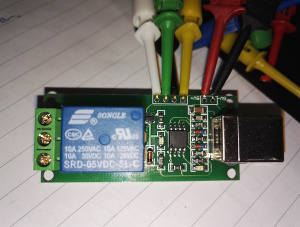
 A few months back I was looking over a lot of different object-storage systems, giving them mini-reviews, and trying them out in turn.
While many were overly complex, some were simple. Simplicity is always appealing, providing it works.
My
 I spent last night in San Francisco on my way from Tucson to Seoul.
This morning as I headed to the airport, I caught the end of a shouted
conversation between a down-and-out and a couple of middle school-aged
girls, who ran away back to the Asian Art museum as the conversation
ended. A security guard told the man that he needed him to go away.
The wealth divide so visible here just isn t something you really see
around Tucson.
I m working on a new module for Propellor that s complicated enough
that I need to think carefully about the Haskell in order to write
produce a flexible and maintainable module. I ve only been doing an
hour or so of work on it per day, but the past few days I wake up each
day with an idea for restructuring yesterday s code. These ideas
aren t anything new to me: I think I m just dredging up the
understanding of Haskell I developed last year when I was studying it
more actively. Hopefully this summer I can learn some new things
about Haskell.
Riding on the Bay Area Rapid Transit (BART) feels like stepping back
in time to the years of Microsoft s ascendency, before we had a tech
world dominated by Google and Facebook: the platform announcements are
in a computerised voice that sounds like it was developed in the
nineties. They ll eventually replace the old trains apparently some
new ones are coming in 2017 so I feel privileged to have been able
to ride the older ones. I feel the same about the Tube in London.
I really appreciate old but supremely reliable and effective public
transport. It reminds me of the Debian toolchain: a bit creaky, but
maintained over a sufficiently long period that it serves everyone a
lot better than newer offerings, which tend to be produced with
ulterior corporate motives.

 Like
 I recently acquired an
 at least what Tokyo Shinjuku ward belives. They have put out a very nice brochure about how to behave as a foreigner in Japan:
 Now what is so strange on that? And if you have never lived in Japan you will probably not understand. But reading through this pamphlet I felt like a criminal from the first page on. If you don t want to read through it, here a short summary:

 The fifth update in the 0.12.* series of
 Today it's fifteen years from my first contribution to free software. I've changed several jobs since that time, all of them involved quite a lot of free software and now I'm
 In the ARM world, to which I am still mostly a newcomer (although I've been already playing with ARM machines for over two years, I am a complete newbie compared to my Debian friends who live and breathe that architecture), the most common way to distribute operating systems is to distribute complete, already-installed images. I have
 The biggest changes are with Luatex, where APIs were changed fundamentally and practically each package using luatex specific code needs to be adjusted. Most of the package authors have already uploaded fixed versions to
