Search Results: "ron"

1 June 2009

Gustavo Noronha Silva: My first patch to WebKitGTK+ committed!

Well, not really my first patch. But the first thing I tried to mess with when I first started looking at WebKitGTK+ was the WebKitNetworkRequest object, because I was fancing the idea of writing stuff such as HTTP transactions monitoring, and things like that. So I wrote a big patch which exposed the internal WebCore object (ResourceRequest) fully through our own object. That was back in early 2008. We have come a long way since, and through all these months I got a broader perception of what kind of APIs we need, and how WebCore works. We also decided on going soup-only, which had a huge impact on what the final patch actually looks like. The patch which finally got committed this week is, how can I put it, VERY different from what I had originally written. You can take a look at the long discussions about it in the bug report I used to track progress. I think I should point out that Marco Barisione and Christian Dywan were crucial in helping me get going with my contribution to WebKit at that time. What this change gives us is basically the fact that a WebKitNetworkRequest now carries more than just the URI for the request (it actually carries with it a reference to the SoupMessage that will be used later in the request processing, which we are planning to expose in the near future), meaning that when WebKit API gives you a request, and you use it to cause a new load (for, say, opening in a new tab), you still get all the headers that were supposed to go with the request, so you don t lose things such as, for instance, Referer. So, now, after more than 5 years, the bug that complained that Epiphany did not set Referer (and Galeon before that) for new tabs is finally closed. By the way, this problem has been fixed for Mozilla s browser back in 2002, but the embedding API is still buggy up to now. There is still hope, since there s an attached patch that fixes the issue to be reviewed, and landed. If anyone is reading, it might be a good oportunity to get this fixed in there as well, so that users of applications that use Gecko s embedding API can also benefit!

31 May 2009

Erich Schubert: Fun with Wolfram Alpha

Wolfram Alpha was often hyped as the latest and greatest search engine.I wouldn't call it so. It's just a very minimalistic search frontend to a nice database with lots of numerical facts.Yes, it can give you the height of the eiffel tower (because that's a fact in its databases). It can even compute for you what Pi times the height of the eiffel tower is. But that is about as far as you can go in combining. In my tests, I wasn't able to compare the temperature in Munich with the temperature in Berlin (both of which WA will visualize you with a pretty graph, so these are facts in WA) - their query parser just doesn't get my question.The funniest reply so far however was to the question:
How many cars in Germany?
The answer of WA (which btw is copyrighted by WA):
No
Seriously, I doubt that there are no cars in Germany.At least it also offers an explanation why it comes to this conclusion:Cars is a town in south-western France (which as you might guess currently is not a part of Germany. :-) ) - so for WA, there are at least cars somewhere in Europe, but not in Germany!

Wouter Verhelst: COBOL

According to The Registry, COBOL is now slightly over 50 years old. I wish I could say I never wrote a single line of COBOL, but I can't. In college, I was taught COBOL for three long years. Even though I've managed to purge most of that knowledge from my brain (good riddance), I still have nightmares about the horrible way in which one writes COBOL. I wish I could say COBOL is dying, but it isn't. People still write new COBOL today. I mean, seriously, there's a standard called 'COBOL 2002. 'Nuff said. I wish I could say COBOL isn't a problem, but it's the sole source of most of the Y2K issues way back when. Its features invite many of the kind of horribly wrong coding styles which cause bugs; Y2K is just one. I wish I could say COBOL code is pretty, but it isn't. Just to give one example: the first 7 characters of every line of code in each and every COBOL program are 0x20. That is, space. Nothing. Utterly useless. There is no reason for this in modern environments, yet it's still there. Note why I dislike significant whitespace. Another example is the fact that you can't just say 'foo = 1 + 1'. Instead, you have to say 'MOVE 1 TO FOO', and then add a second statement that says 'ADD 1 TO FOO'. I'll just use english if I want to write a novel, thank you. I wish I could say I didn't care about COBOL anymore, but for some weird reason, I do. And just in case you were confused: no, I do not have warm, fuzzy feelings for COBOL. If there was a button that would nuke all the COBOL code on the planet, would I push it? Probably not immediately. I'm sure it would take time for me to recover from the sheer joy of knowing that this button actually exists, before I'll be physically capable of keeping my hands steady for the amount of time required for me to actually be able to push it. COBOL is proof of either the absense of any deity, or the existence of the devil. Given the chance, no sane person, let alone a sane deity, would allow the creation of such an abomination. At least I don't have to deal with it anymore. That part is not going to change. Ever.

Russell Coker: LG U990 Viewty

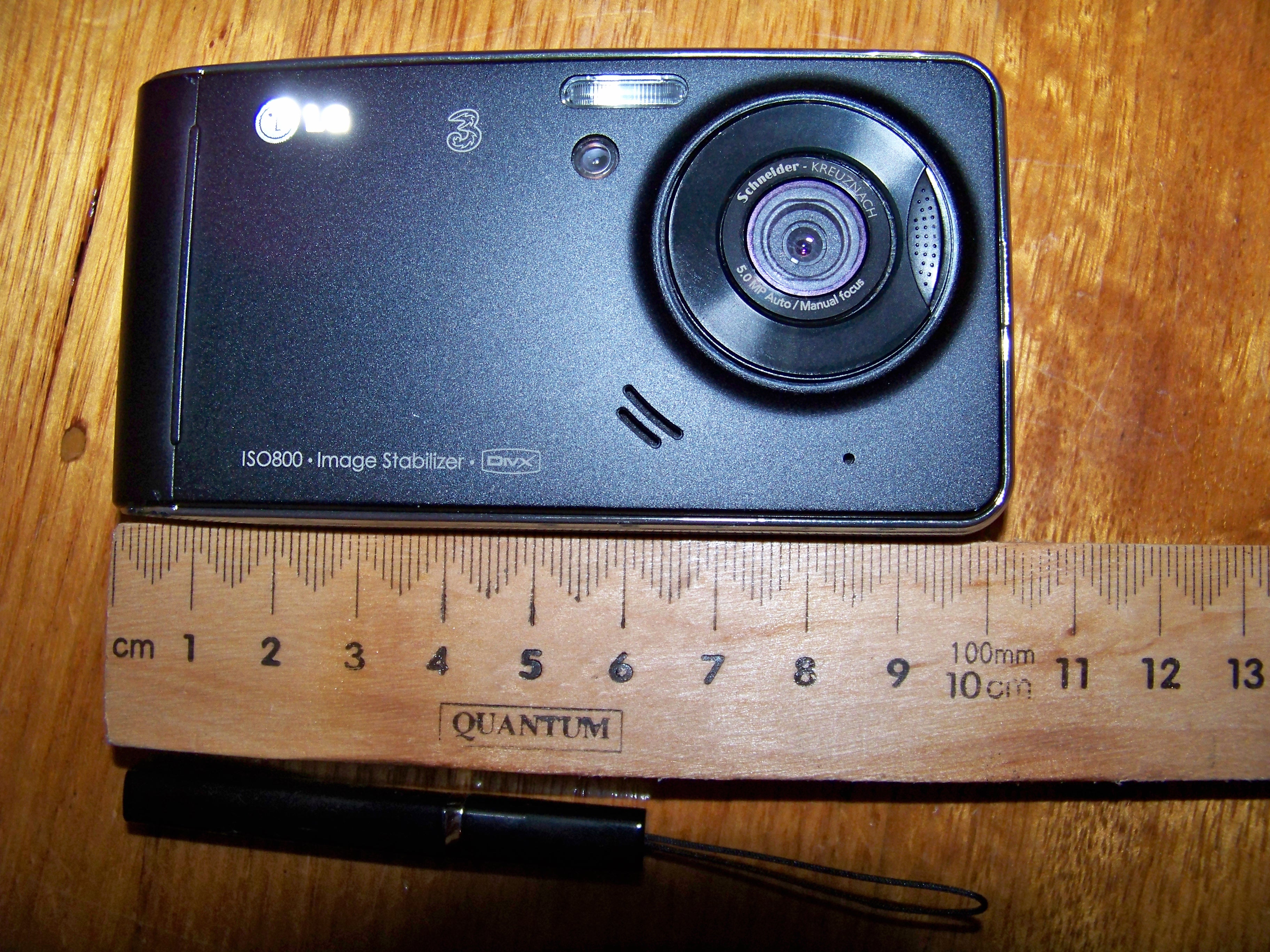
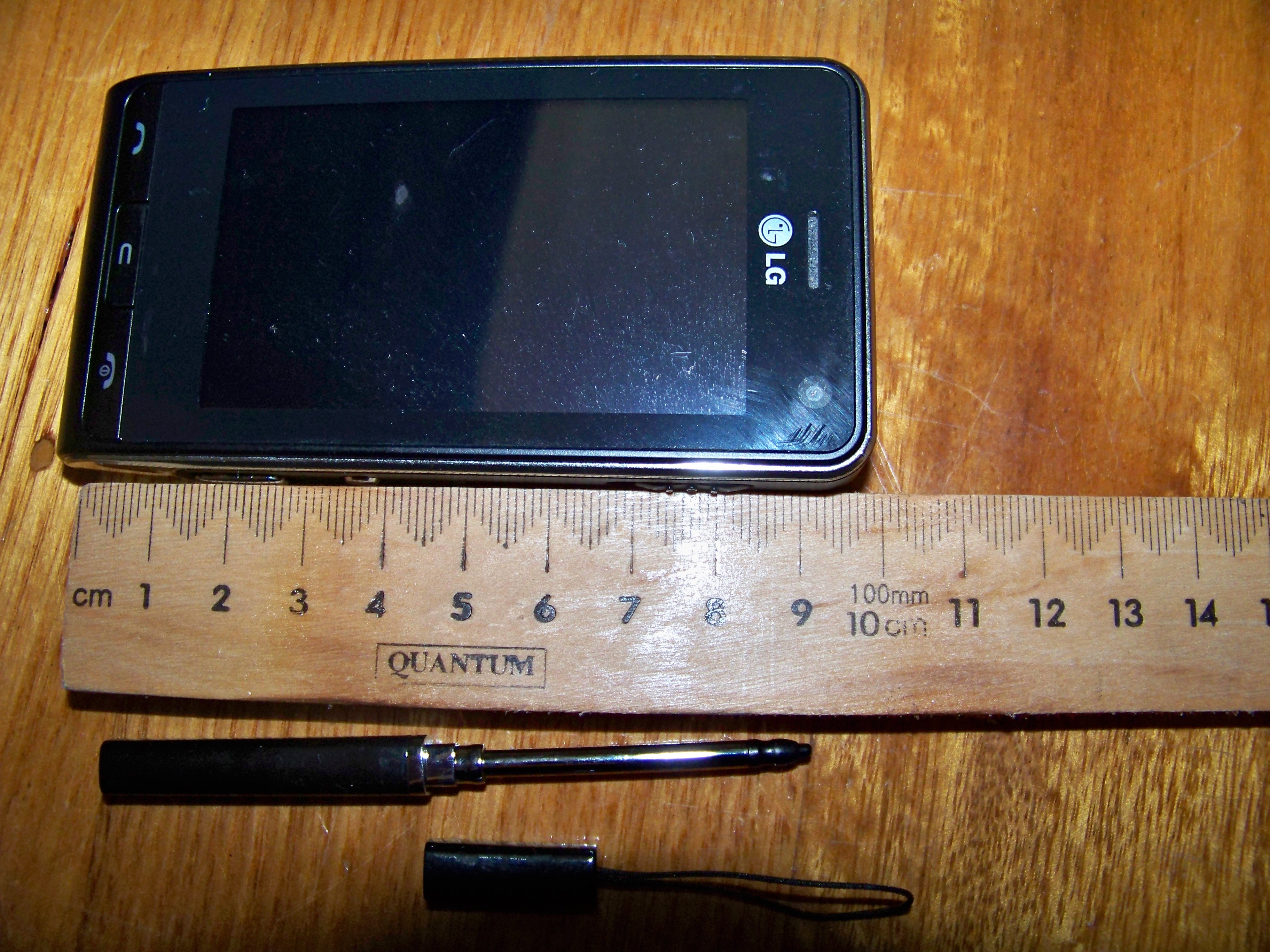
I have just got a LG U990 Viewty mobile phone [1]. It s a 3G phone and came free on the $29 monthly cap plan from Three (minimum monthly spend is $29 - but this is free if you use $29 per month). My previous plan was the $29 cap but had a minimum spend of $20 per month, as I never happened to use less than $29 per month I am not paying more. For a modern mobile phone the actual phone functionality is a sideline. If a device was strictly designed to be a phone then I think it would be very similar to the Nokia phones that were available 5+ years ago - the Nokia I had in 1999 performed every phone function that I desired of it. Like most modern phones the LG U990 Viewty suffers in it s phone functionality from the desire to make it do non-phone tasks and from the desire to cripple it to meet the desires of the carriers (not the desires of the users). For example the home screen will always have at least two buttons for paid Three services and I have no configuration option to remove them. Replacing them with speed dial options for a couple of numbers that I regularly call would be handy. As the main screen is a touch-screen there is no excuse for this, they should allow the software to be reconfigured with more useful options. Eventually the Android will kill most of the other phones and this problem of phones being designed to suit the telephone companies instead of the users will be solved. One of the most annoying mis-features of the phone is that it doesn t properly handle address book entries with multiple phone numbers. One of my friends turns his mobile off when he is at home, so I regularly call his mobile and then immediately call his home number if the mobile is unavailable. With my previous two mobile phones I could press the dial button to bring up the list of previous calls and then use the arrow buttons to select from the other numbers that are attached to the same address-book entry, so with three button presses I would be dialing his other number. With the Viewty I have to go back to the address book. The compelling feature of the Viewty is the camera and display. It has a 5MP camera which makes it the second highest resolution camera-phone offered by Three - the LG Renoir (KC910) has 8MP but needs a $99 plan for it to be free. It also has a 240*320 resolution touch-screen display (in a quick search in January when I bought my phone the best resolution display I could find on a phone is 240*400 in the LG Renoir). While the camera is documented as being 5mp there are no specs available about the resolution of the CCD. I want to use the native resolution of the CCD for pictures (I think interpolation is a waste of space). The CCD might actually be 5mp, a picture of the 1400*1050 resolution screen on my Thinkpad allows me to read all the text even when small fonts are in use, so the CCD resolution must be significantly greater than 1400*1050. This is a really important feature as the Viewty will work well for making screen-shots for bug reports about crashed computers (several of my clients have expressed interest in getting one after seeing such a demonstration). One annoying problem is that the camera software takes a while to load, my trusty Sony digital camera starts a lot faster and the LG U890 phone I used for the past two years is also a lot faster and more convenient. This won t work well for photographing unexpected events. When I am traveling by public transport I will photograph the relevant pages of my street directory as I can zoom in to photos of the maps and read the street names, it saves some weight when traveling. The 2G micro-SD card (which incidentally cost $10 from OfficeWorks) will allow me to store a lot of maps. One interesting feature is the video recording capabilities. It can do 640*480 resolution at 30fps (which is pretty good) and 320*240 resolution at 120fps (they claim that you can film a balloon popping). In my quick tests the standard 640*480*30fps mode works well, but the 120fps mode requires much brighter light than most of my test environments, so I have not yet got it working properly. The phone has a reasonable voice recording function, it can record considerably more than 34 hours of audio and the quality is reasonably good if you use an external microphone. It is however quite poor if you use the built-in microphone for a dictaphone function, it seems that quality is poor at any distance. I had wanted to record my LCA mini-conf talks with my phone but unfortunately forgot to bring the adapter for the external microphone. It s a pity that the phone doesn t have a standard microphone socket as I have misplaced my Viewty microphone, when designing the phone they should assume that misplacing attachments is a common occurrence and design it to use common parts. I recently spoke to a journalist who uses his mobile phone to record interviews. He said that his phone supported phone calls, voice recording, and taking pictures - all the essential tasks for his work. It seems that the Viewty would be better than most phones for journalistic work apart from the issue of low quality voice recording when you have misplaced your external microphone. The text editor is unfriendly in the keyboard mode (I have not tried hand-writing recognition), one thing I don t like is the fact that the letters jump when you press them. This does allow changing a letter by moving the stylus before releasing the press (some people consider this a great feature). There are no cursor control keys (which is a serious omission), and the keyboard doesn t resemble a real keyboard. My iPaQ is far better for writing (I once wrote a full-length magazine article on an iPaQ). The stylus is quite strange and interesting. In the picture of the front of the phone the stylus is compacted with it s lid on. In the picture of the back of the phone the stylus is extended with the lid off. The end of the stylus clips in to the lid so that removing the lid drags the central part out of the body. It s an interesting design and with the string on the lid allows the stylus to be attached to the phone when it s not being used. But I have never used it. Even with an iPaQ (which had a proper stylus that attached firmly inside the body of the device) I often used a fingernail on the touch screen. I have not felt the need to ever use a stylus with my Viewty. One final noteworthy thing is the support for Google services. It seems to have client support for YouTube, Google Maps, GMail, and Blogger. This seems to be a major win for Google, the Viewty is one of the most popular phones at the moment and I expect that lots of people who buy them will now have an incentive to use the Google services. Between these sorts of deals and the Android I think that it will be necessary to have some sort of anti-trust action against Google. Google are generally doing good things for the users. I have been quite satisfied to use Google search, Google advertising on my blog, and Gmail. Also I have been moderately happy with Blogger (it was good when I started blogging) and Google Maps is useful on occasion. So generally I am happy with Google, but monopolies are bad for the users so I think that if things continue on their current trend then Google may have to be split into several little Googlets some time in the next few years.

30 May 2009

Michael Prokop: Directory specific shell configuration with Zsh

Now being an official Debian developer I ve the possibility to use $DEBEMAIL=mika@debian.org for my Debian packages. But whereas I want to use that for all my official Debian packages I still want to use $DEBEMAIL=mika@grml.org for my grml related packages. I m a lazy sysadmin and don t want to manually adjust my changelogs depending on the type of package (especially since this might be error-prone) so I needed a generic solution. Grml s Zsh configuration (Debian package grml-etc-core >=0.3.71) provides a solution for Zsh (version 4.3.3 or later): based on directories you can set your own profiles. Demonstration:
% cd /grml/git-grml
chpwd(): Switching to profile: grml
% echo $DEBEMAIL
mika@grml.org
% cd /grml/git-debian
chpwd(): Switching to profile: debian
% echo $DEBEMAIL
mika@debian.org
The configuration is pretty simple:
# define profiles based on directories:
zstyle ':chpwd:profiles:/grml/git-grml( / /*)'       profile grml
zstyle ':chpwd:profiles:/grml/git-debian( / /*)'     profile debian
zstyle ':chpwd:profiles:/home/mika/Customers( / /*)' profile customers
# configuration for profile 'grml':
chpwd_profile_grml()
 
  [[ $ profile  == $ CHPWD_PROFILE  ]] && return 1
  print "chpwd(): Switching to profile: $profile"
  export DEBEMAIL=mika@grml.org
  export GIT_AUTHOR_EMAIL="mika@grml.org"
  export GIT_COMMITTER_EMAIL="mika@grml.org"
 
# configuration for profile 'debian':
chpwd_profile_debian()
 
  [[ $ profile  == $ CHPWD_PROFILE  ]] && return 1
  print "chpwd(): Switching to profile: $profile"
  export DEBEMAIL=mika@debian.org
  export GIT_AUTHOR_EMAIL="mika@debian.org"
  export GIT_COMMITTER_EMAIL="mika@debian.org"
 
# configuration for profile 'customers':
chpwd_profile_customers()
 
  [[ $ profile  == $ CHPWD_PROFILE  ]] && return 1
  print "chpwd(): Switching to profile: $profile"
  export TELEPHONE=[...]
  export MAIL=[...]
 
Kudos to Frank for implementing this lovely feature in grml s zshrc. Look for chpwd_profiles() in grml s zsh config for further documentation on this feature.

Marc 'Zugschlus' Haber: The grub drama

This is a rant. A rant which goes to the grub maintainers, and one that could go nearly identically to many people in the KDE environment or many other open source projects. I really like grub. I really like grub 0.97 despite that it s been unmaintained for years and not booting on two of my important machines. I should like grub 2 because its configuration looks more straightforward and for its better features - direct booting of .iso images, from LVM and RAID. But actually, I have learned to hate grub 2 since it is not finished and badly documented, and that its existence is already being used as an excuse for grub 0 s development having stopped years ago (and it being renamed to grub-legacy to clearly show that it s the unloved child) - and things looks like this is not going to change any time soon. grub 0.97 is the de facto standard in booting Linux, its most prevalent advantages probably being its capability of reading filesystems and its command shell, which allows booting kernels and other software that one wasn t planning to boot when the system was shut down. There is a small fraction of people who still use lilo despite its disadvantages, for example on achitectures that are not supported by grub, if one wants to have the boot FS on LVM, if one just prefers lilo for non-technical reasons or on systems that grub doesn t work on. The last three systems, by the way, that I still run lilo on are Pyramid pizzaboxes with supermicro-made mainboards from 2002, which just refuse to boot if grub is used and the vendor just says that grub 0.97 is still beta and that they do not support grub on their systems: Use Lilo. Grub s last upstream release, 0.97, dates back to 2005, and upstream has stopped developing this grub release years ago. grub 2, the new way to go, had its first release in 2003, and the last stable release that people are supposed to use dates back to februar 2008. grub 2 is clearly a step in the right direction, but there are still bugs, and the most prevalent show stopper against grub 2 is the almost complete absence of any documentation. I have, for example, not yet found good documentation about the new config file format, which is a completely different deal from what we are used to with grub 0. The commands manual pages do little more than list the (obvious!) command line options without giving much more information about what the actually do, let alone usage examples. The documentation (which used to be really excellent for grub 0), has been moved to a wiki, which has some useful content but cannot keep up with the excellent documentation that grub 0 used to have. Additionally, grub2 does not seem to have a grub shell which can be called from within the host system, which makes installing grub 2 in exotic situations much harder than it used to be with grub 0. I am also quite disappointed that despite the grub upstream web pages claiming that grub 2 is under active development, the last release is more than fifteen months in the past while there are still so many shortcomings. The Debian maintainers of grub 2 are regularly packaging grub 2 subversion snapshots, which is a good idea in face of upstream s release policy which is quite different from what s being told in the wiki. I am, however, reluctant to rely on a development snapshot of a software to boot productive systems. Guys, you cannot declare a widely used, well-documented software legacy when the replacement is still in a nearly unuseable shape and the docs are hidden in the helpful files named .c and .h. This is simply unacceptable. It s a drama that the docs are still in such a pitiful shape fifteen months after your last release. But, grub is not the only free software project that so blatantly scores developer fun over the needs of the end user. I know that it is a boring task to fix bugs and to work around design shortcomings in the existing version of software, and that it is much more fun to hack away on new designs and new code, but dropping old versions before the new version is up to par with the old one is annoying the users and driving people away to other software packages. This applies to grub, a quite low-level program, but also to larger and more complex projects like KDE who has recently pulled the same stunt by dropping development and support for KDE 3.5 while KDE 4 is still missing many many features and KDE 3.5 s stablity, thus driving people (back) to GNOME or alternative desktop environments. This we give a damn about people who actually use our software, our compilers run without users as well attitude is a show of disrespect for the user base and makes me very sad as this does indeed show that free software is in no way superior to its commercial counterparts. Sadly, I do not have a solution for this issue since I know that free software developers are usually volunteers who do not have to report to anybody, and that they do not need to care for their user base. But I hope that people begin to reconsider their attitude and think about what kind of horrible damage is being done to the user base and to free software s reputation.

Christian Perrier: Yet another silly name change for a country

After Venezuela changed its official "short" name from "Venezuela" to "Venezuela, Bolivarian Republic of", it's now the turn of Bolivia to take the same silly decision. From now, Bolivia's "short" name is "Bolivia, Plurinational state of". Don't take me wrong. I'm fine with such changes in official country names...when it comes at the official long name of the country. Most long names have some kind of political meaning. For Bolivia, the change is meant to reflect the consideration of the current government of the country for all "minorities" of Bolivia. That's for sure definitely any country's decision. But, for $ DEITY 's sake, why change the *short* name? For everybody, Bolivia is "Bolivia" and Venezuela is "Venezuela" and not some funky long and politically correct (or incorrect) name! So, once again, the iso-codes package maintainers will use a new "common name" for another country so that lists of countries that display in various places do not show ridiculously long names for some countries while others have the name...everybody uses. Remember "Taiwan" back in 2004?

29 May 2009

Biella Coleman: My return

After a fairly tiring (though exciting) semester of teaching, I have packed my books, lots of files, and other things I Can t Live Without, and shipped myself via Jet Blue to Puerto Rico where I will spend my summer. My reason for being here is simple: I want to see my mother who continues to live in a state of minimalism at a nursing home with Alzheimers. Coming home is never easy. Seeing her for the first time after an absence of months is especially hard and expect will continue to be as such, so long as I have periods away from her like I do. I never imagined that I would live between two cities as I do, but in general I am grateful I have a job that allows me to bridge these two places. When I am in NYC, I am so ridiculously busy (being an assistant professor is not unlike being a medical resident and doctor except the tempo slows down during our summers, at least to some extent) that I don t for better or for worse have my mother always perched on my mind. But being here is a different story. Not only do I have to structure my own time (so my mind can wander easily into those nether regions), but the house I stay in is nothing but filled with memories of my mom, most especially from the last 4 years she spent here with Alzheimers Along with visiting my mom, most of my time will be occupied in front of the computer working on the first draft of my book manuscript, which is due on September 15, 2009, 2 days before my birthday. I think I can hack it given that I have lots of time on my hands and when I get into work mode I can get a lot done. But the first month or so is going to be really really rough. I always find the transition into stare at your monitor mode for the entire day sort of tough. Puerto Rico also has a host of magnetic distractions like the garden and the beach, which I don t love but in fact adore. I also don t really associate the tropics/this house/the summer with mental work, but I will spend the next few weeks reversing that association or else I will be in deep trouble! Right now I am setting up the office, struggling to find the right a/c unit for the space, and in a few days I hope to be writing away

28 May 2009

Michael Prokop: Debian.Developer->add_member( mika )

Since 2009-05-28 I m an official Debian Developer. Thanks to all involved people. Special thanks to Gerfried Rhonda Fuchs for being my advocate and a helpful package sponsor, to Alexander formorer Wirt for being a helpful package sponsor, to Christoph Myon Berg and Bernd bzed Zeimetz from the frontdesk and to Marc he Brockschmidt for being a great Application Manager.

27 May 2009

Stephan Peijnik: update-manager weekly update #0

It has been more than a month since I last wrote about my work on update-manager during this year s Google Summer Of Code and I am somewhat ashamed I wasn t able to provide you with updates more regularly. So first of all, yes, I did do some work and yes, there has been quite some progress. Basically both private and university stuff have kept me from writing and that s why I d like to start with this series of weekly updates today.
This series are meant to summarize what has happened during a week of writing code and give you an overview of what s happening. This first issue however will sum up the past month. So let me begin explaining what has happened since my last post. update-manager bazaar repository All code I have written so far is available through a public bazaar branch on launchpad.net. My branch s page can be found here and provides you with its history and of course instructions on how to obtain the code. The location is only temporary though, as I am going to move hosting over to alioth.debian.org. This is on my task list for next week. modular design I have ripped apart nearly all of update-manager and put it together in a more modular way, which should implementing new frontends or backends more easy, whilst also simplifying code maintenance. The new design consists of four major parts: backend implementation When I started working on update-manager it heavily relied on synaptic and used it to do the dirty-work. However, together with my mentor, mvo, I decided to drop synaptic support and rather concentrate on using python-apt. This means that the only backend implementation right now is a python-apt backend. The python-apt backend is currently a work in progress, but already includes some basic functionality. Right now it can (re-)load the package cache and package lists and is able to provide a list of packages which are upgradable to the frontend.
Whilst implementing these functions I noticed some shortcomings of python-apt itself, fixed those and got mvo included in his python-apt branch at launchpad. frontend implementation I started re-implementing the Gtk frontend as provided through current update-manager and right now it visualizes the package cache reloading process and provides users with a list of upgradable packages. However, that s pretty much all of the functionality it includes right now, which is why implementing more functions is pretty much on the top of my todo list. Additionally I have ported the text frontend, as included in Ubuntu, to the new modular system, and this frontend s code really shows how easy adding a frontend with the new modular design is. This frontend contains the same functionality as the Gtk frontend. distribution specific code The core described above does not include any distribution specific code anymore, which is the main focus of this project. The implementations of distribution-specific functionality contains classifiers for update categories for both Debian and Ubuntu, whilst I focused on getting things right with the Debian implementation for now. These classifiers allow the frontend to let the user know which kind of update they are about to install, like a security update, a recommended upgrade or a third-party (unofficial) upgrade. documentation As update-manager was poorly (read: hardly at all) documented I started documenting the API using sphinx. However, right now the generated documentation cannot be found anywhere yet. This should change as soon as an alioth project for update-manager has been created. next week s tasks I would also like to provide you with my task list for the coming week. The list, ordered by priority, is: As you can see this list is rather short. This can mainly be attributed to a few university assignments, and instead of providing a long list of tasks which I probably won t be able to finish I rather keep the list short and hopefully get things not on this list done too.

Adeodato Sim : Meritocracy and entitlement

Via Planet Bazaar, this paragraph from a post by Paul Hummer caught my attention (emphasis mine):
Finally, I wrote an open ended question to myself to think about, and thought that maybe I d throw it out here as well. For context, Jono Bacon was talking about community (y know, plugging his book and all that :), and I wrote Open source thrives on a meritocracy - how can we prevent feelings of entitlement? I see this a lot in open source communities: people earn their commit rights and then start behaving like everyone owes them something. Collaboration is about peers, not about hierarchies.
Now I m reposting that here because, although I m not very keen on philosophizing myself, something in that thought was of immediate appeal to me.

David Welton: Objective C vs Cocoa

I've been adding a few things to LangPop.com, specifically ColdFusion (it's not something I'm interested in, but I've had a lot of requests for it...) and Objective C, which is quite popular indeed, thanks to Apple. Indeed, it is Objective C that is a bit problematic: "Cocoa" is more widely used than the name of the language itself! On http://search.yahoo.com, Cocoa programming turns up a lot more hits than Objective C programming:
  • "objective c programming: 71,300
  • "cocoa programming" : 608,000
That's an order of magnitude! Now, on one hand, I aim to measure popularity of the language itself, not of libraries. I simply can't add every popular library, toolkit or framework for every language - it would be a huge task, and would likely only really make the results worse. However, it might not be entirely fair to leave that many actual users uncounted just because they all use Objective C in one particular environment. And just to further complicate things, while most people using Cocoa are writing Objective C code, there are other bindings for it... My inclination, for simplicity's sake, is still to simply go with Objective C. What do you think?

Michael Casadevall: UDS Day 3 & KDE involvement

Hola all,
So this is my first blog post since UDS started (although I have been doing some work microblogging this session around (I find that if I treat it like multicast IRC using gwibber, it suddenly makes more sense to me). We're now three days into UDS, and working hard on defining what Ubuntu karmic will be, and I must say I am excited with the way things are shaping up to UNR discussions, to the Android Execution Environment (and if anyone has any questions on it, please direct those emails to Michael Frey and Debbie Beliveau as they are the people behind it, despite Slashdot's reports on the subject).

There are loads going on, including Moblin (which you'll see this afternoon), Android (same), ports kernel handling, and loads of other cool things come up. I'll comment on some of the more interesting things as time goes on.

In other news, as of late last night, I'm officially an upstream KDE developer with SVN commit writes. I've written an email detailing my plans for working on KDE to kde-core-deveonl, where is it is happily stuck in a moderation queue, so hopefully those involved in upstream KDE development will soon learn of my intentions :-).

I'll write more later,
Michael

24 May 2009

Neil Williams: enjoying the refreshed SF file release system

Many people have moaned about SF and the hassle of making a release - if you're in that category and haven't checked with the current file release system at SF, you could be in for a pleasant surprise.

SF has added lots more ways to upload files and has a nice simple interface - I'm just using:
$ scp foo-ver.tar.gz sf-release:uploads

Copy and paste the NEWS and Changelog content into the release announcement and I'm done. It's no harder than Alioth (which was my strong preference before this change at SF).

(This also serves as an announcement that gpe-expenses and pilot-qof have been updated with upstream releases as well as supporting the recent QOF transition.)

Christian Perrier: News from the samba packaging team

Some (not so) short news from the samba packaging team... Recent package uploads: Other things are coming, such as the work on having samba3 and samba4 packages coexist. Jelmer Vernooij prepared everything after our discussions at the SambaXP conference and it should be uploaded "soon". A few patches we have should be integrated upstream as well, therefore making the Debian diff smaller and smaller. Also, Luk Claes joined the maintenance team and helped setting up the unofficial repository for backports. The bug count is going up again these days as I don't spend much time triaging the bugs and some are very tricky to reproduce. As usual, help would be welcomed. I'm fairly sure that several of these are user errors but I often lack time to prove this enough for closing the bug. We should go to to 50-60 bugs or so.

23 May 2009

Joey Hess: website backup RFC

So, I'm considering a backup system that has as its goal to let you backup all your data from third party websites, easily. The idea I have for its UI is you enter in the urls for all the sites you use, or feed it a bookmark file. By examining the URLs, it determines if it knows how to export data from each site, and prompts for any necessary login info. The result would be a list of sites, and their backup status. I think it's important that you be able to enter websites that the system doesn't know how to handle yet; backup of such sites will show as failed, which is accurate. It seems to almost be appropriate to have a web interface, although command-line setup and cron should also be supported. For the actual data collection, there would be a plugin system. Some plugins could handle fairly generic things, like any site with an RSS feed. Other plugins would have site-specific logic, or would run third-party programs that already exist for specific sites. There are some subtle issues: Just because a plugin manages to suck an RSS feed or FOAF file off a site does not mean all the relevant info for that site is being backed up. More than one plugin might be able to back up parts of a site using different methods. Some methods will be much too expensive to run often. As far as storing the backup, dumping it to a directory as files in whatever formats are provided might seem cheap, but then you can check it into git, or let your regular backup system (which you have, right?) handle it.
Thoughts, comments, prior art, cute program idea names (my idea is "?unsilo"), or am I wasting my time thinking about this?

Ben Armstrong: Bits from the Eee PC team, Spring 2009

Lenny well supported We re pleased that Lenny released with good support for the Eee PC and are now turning our efforts to make Squeeze even better, while continuing to provide support for our Lenny user base. The standard Lenny installer can install Debian on all models of Eee and our custom installer provides the ability to install over wireless for almost every model (more about this later) from a very small image. The latter continues to be our recommended install method, since in addition to being wireless-ready, the custom installer also handles a few other small eee-specific configuration chores to make as much as possible just work right after the install. Solid mainstream support We ve made good on our promise to make Debian work on the Eee PC, not a derivative, many of which use a custom kernel instead of the stock kernel as we do and use a special desktop instead of our users favourites. While we agree that some intriguing things can be done in these areas, it is no substitute for mainstream support. Our users are better served by a solid foundation than specialised modifications that limit their choices. We want them to be able to enjoy the freedom to mold Debian, the universal OS, into whatever suits them best. Squeeze support started Work is well underway on supporting all Eee models in Squeeze. For months, several team members have been experimenting with new kernels, producing support for them in eeepc-acpi-scripts. The current release of this key package (version 1.1.0) supports Linux 2.6.29 and contains enhancements for wifi, sound hotkeys, bluetooth, external displays and OSD. Squeeze will support wired & wifi on all current models With the appearance of 2.6.29 in Sid, all ethernet and wifi cards used in all models of Eee today are supportable without the need for out-of-kernel or non-free drivers. Madwifi is replaced by the free ath5k driver, the non-free rt2860 package is replaced by mainstream kernel support, (though it still requires non-free firmware provided separately,) rtl8187se is included, making it possible now for us to support the model 701SD, and ath9k is included, making full support for newer models such as the 1000HE possible. Lenny backports and live demo All of these changes can be enjoyed today by Lenny users. Just add Daniel Baumann s Lenny kernel backport repository and then install the 2.6.29 kernel and an updated acpid. See our upgrade howto for details. You can try a small (less than 256M) demo of this configuration by downloading beta 2 of our Live USB image. Accessibility Late last year, we discussed how to make it easier for the blind to install Debian unassisted on their Eee PCs. As it was a simple change, we now include brltty in the custom installer, but we understand that some users also need software synthesized text-to-speech, something for which there is no support yet in the standard Debian-installer. We understand this isn t an easy thing to fix, but hope someone will rise to the challenge. Growing team of developers We welcome Darren Salt and Raphael Geissert to the team this year. Both have been actively making contributions to the eeepc-acpi-scripts package over the past months, fixing some outstanding bugs and readying it to handle changes in more recent kernel releases. Moved eeepc.debian.net to new hosting Nico Golde, who hosted eeepc.debian.net for the first year development, has turned his focus to other areas of Debian. Glenn Saberton has stepped in to provide a new home for it. We thank them both for their efforts and for a smooth, uneventful transition from one host to the other. Size of user community Speaking of the move, earlier this year, Glenn shared with us some interesting archive traffic statistics that give us a rough idea how many users we have. For the months of December and January, after factoring out bot hits, we were seeing about 300,000 hits from 15,000 unique users per month. The site handles roughly 60G of traffic per month, most of that from thousands of downloads of our custom installer image. It s hard to draw any firm conclusions about the size of our user base from these stats, as many users may be on dynamic IP numbers, inflating the numbers, but we can conservatively say we have at least 5000 users. Other interesting statistics are that we have anywhere up to 80 users at any given time on our irc channel and over 250 users on the mailing list. Help wanted The Asus Eee PC line continues to expand, with 24 models listed so far. It is a challenge to keep up support for all of them. We re encouraged to see Asus choose a new b/g/n wifi chipset for their 1002HA that is supported by a DFSG free driver ath9k in this case. It appears that the new Atom N280-based 1000HE uses the same chipset as well (though be careful: I know of at least one user who bought a 1000HE in Argentina expecting it to have this chipset and was disappointed to find it had the Ralink chipset instead, we guess because of availability). If this trend continues, we ll be that much closer to our goal of full support for Squeeze main. As it stands, we re already as close as we can get given the state of rt2860 and no prospect on the horizon for replacing the non-free firmware. If you would like to help us out in any way, whether by testing, debugging, patching, or improving our documentation, get in touch with our team. We rely on your feedback to keep Lenny in good shape and work towards making Squeeze even better for all users of Debian on the Eee PC.

John Goerzen: Review: In The Beginning. . . Was The Command Line

A few dud universes can really clutter up your basement. - Neal Stephenson, In The Beginning. . . was the Command Line
What a fun read. It s about technology, sure, but more about culture. Neal takes a good look at operating systems, why we get emotionally involved with them, and why Windows is still so popular. He does this with a grand detour to Disneyland, and a hefty dose of humor. The above quote was from near the end of the book, where he imagines hackers creating big bangs from the command line. He starts out the book from some anecdotes from the early 1970s, when he had his first computer class in high school. His school didn t have a computer, but they did have a teletype (the physical kind that used paper) with a modem link to some university s system. But time on that system was so expensive that they couldn t just dial in and run things interactively. The teletype had a paper tape device. You d type your commands in advance, and it would punch them out on the tape. Then when you dial in, it would replay the tape at high speed . Neal liked this because the stuff punched out of the tape were, actually, bits in both the literal and the mathematical sense. This, of course, led to a scene at the end of the schoolyear where a classmate dumped the bin of bits on the teacher, and Neal witnessed megabytes falling to the floor. Although the book was written in 1999, and needs an update in some ways, it still speaks with a strong voice today and is now also an interesting look at what computing was like 10 years ago. He had an analogy of car dealerships to operating systems. Microsoft had the big shiny dealership selling station wagons. Their image was all wrapped up in people feeling good about their purchase like they got something for their money. And he said that the Linux folks were selling tanks, illustrated with this exchange:
Hacker with bullhorn: Save your money! Accept one of our free tanks! It is invulnerable, and can drive across rocks and swamps at ninety miles an hour while getting a hundred miles to the gallon! Prospective station wagon buyer: I know what you say is true but er I don t know how to maintain a tank! Bullhorn: You don t know how to maintain a station wagon either! Buyer: But this dealership has mechanics on staff. If something goes wrong with my station wagon, I can take a day off work, bring it here, and pay them to work on it while I sit in the waiting room for hours, listening to elevator music. Bullhorn: But if you accept one of our free tanks we will send volunteers to your house to fix it for free while you sleep! Buyer: Stay away from my house, you freak! Bullhorn: But Buyer: Can t you see that everyone is buying station wagons?
That doesn t mean that Stephenson is just a Linux apologetic. He points out that the CLI has its place, and has a true love-hate relationship with the text-based config files (remember XF86Config before the days of automatic modelines? Back when you had to get out a calculator and work some things out with pencil and paper, or else risk burning out your monitor?) He points out that some people want to just have the thing work reasonably well. They don t want control in fact, would gladly give it up if offered something reasonably pretty and reasonably functional. He speaks to running Linux at times:
Sometimes when you finish working with a program and shut it down, you find that it has left behind a series of mild warnings and low-grade error messages in the command-line interface window from which you launched it. As if the software were chatting to you about how it was doing the whole time you were working with it.
Even if the application is imploding like a damaged submarine, it can still usually eke out a little S.O.S. message.
Or about booting Linux the first time, and noticing all sorts of cryptic messages on the console:
This is slightly alarming the first time you see it, but completely harmless.
I use emacs, which might be thought of as a thermonuclear word processor. . . Microsoft Word, were devoted to features like mail merge, and the ability to embed feature-length motion pictures in corporate memoranda, were, in the case of emacs, focused with maniacal intensity on the deceptively simple-seeming problem of editing text. If you are a professional writer i.e., if someone else is getting paid to worry about how your words are formatted and printed emacs outshines all other editing software in approximately the same way that the noonday sun does the stars. It is not just bigger and brighter; it simply makes everything else vanish. For page layout and printing you can use TeX: a vast corpus of typesetting lore written in C and also available on the Net for free.
I love these vivid descriptions: programs secretly chatting with us, TeX being a corpus of typesetting lore rather than a program. Or how about this one: Unix. . . is not so much a product as it is a painstakingly compiled oral history of the hacker subculture. It is our Gilgamesh epic. Yes, my operating system is an oral history project, thankyouverymuch. The book feels like a weird (but well-executed and well-written) cross between Douglas Adams and Cory Doctorow. Which makes is so indescribably awesome that I can t help but ending this review with a few more quotes.
Because Linux is not commercial because it is, in fact, free, as well as rather difficult to obtain, install, and operate it does not have to maintain any pretensions as to its reliability. Consequently, it is much more reliable.
what really sold me on it [Debian] was its phenomenal bug database (http://www.debian.org/Bugs), which is a sort of interactive Doomsday Book of error, fallibility, and redemption. It is simplicity itself. When had a problem with Debian in early January of 1997, I sent in a message describing the problem to submit@bugs.debian.org. My problem was promptly assigned a bug report number (#6518) and a severity level (the available choices being critical, grave, important, normal, fixed, and wishlist) and forwarded to mailing lists where Debian people hang out.
That should be our new slogan for bugs.debian.org: Debian s interactive Doomsday Book of error, fallibility, and redemption.
Unix is hard to learn. The process of learning it is one of multiple small epiphanies. Typically you are just on the verge of inventing some necessary tool or utility when you realize that someone else has already invented it, and built it in, and this explains some odd file or directory or command that you have noticed but never really understood before.
I ve been THERE countless times.
Note the obsessive use of abbreviations and avoidance of capital letters; this is a system invented by people to whom repetitive stress disorder is what black lung is to miners. Long names get worn down to three-letter nubbins, like stones smoothed by a river.
It is obvious, to everyone outside of the United States, that our arch-buzzwords, multiculturalism and diversity, are false fronts that are being used (in many cases unwittingly) to conceal a global trend to eradicate cultural differences. The basic tenet of multiculturalism (or honoring diversity or whatever you want to call it) is that people need to stop judging each other-to stop asserting (and, eventually, to stop believing ) that this is right and that is wrong, this true and that false, one thing ugly and another thing beautiful, that God exists and has this or that set of qualities.
The stone tablets bearing the Ten Commandments carved in immutable stone the original command-line interface
Apparently this actually works to some degree, for police in many lands are now complaining that local arrestees are insisting on having their Miranda rights read to them, just like perps in American TV cop shows. When it s explained to them that they are in a different country, where those rights do not exist, they become outraged. Starsky and Hutch reruns, dubbed into diverse languages, may turn out, in the long run, to be a greater force for human rights than the Declaration of Independence.
Unix has always lurked provocatively in the background of the operating system wars, like the Russian Army.
Available for free online, or as a 160-page book from Amazon.

21 May 2009

Frans Pop: Fighting Debian Mailing List Spam

As a past member of the listmaster team, this is a goal I have to support. I did some work myself a few years ago to clean out at least the most offensive images from the archive. And I can tell you there were a number of really gross ones. This was mostly manual work, replacing the spams by placeholder messages. Since then the listmaster team has implemented an excellent toolset for nominating messages as spam, reviewing the nominations and removing confirmed spam from the archive. My current contribution is twofold: Plug-in that allows reporting new list spam from KMail It's not actually a plug-in, but just uses the filter functionality of KMail. I've documented two alternative filters developed for KMail 1.9.9 (from KDE 3.5). Possibly they can also be (adapted to be) used with KMail from KDE 4, but that has not been tested. There are plug-ins available for several Mail User Agents (MUAs), with a few still to be developed. Spam cleaning campaign for the debian-boot list A few weeks ago I sent out a request for help to clean "our" archive. The response has been great. The work is [tracked on a Wiki page[(http://wiki.debian.org/DebianInstaller/SpamClean) and has already resulted in the removal of 676 spams. By the end of this week I expect that number to be doubled. If you'd like to start a similar project for your own favorite list, I'd suggest you start by reading through the thread linked above.
Update: I was wrong, the number was almost tripled: from 676 to 1801!

Next.

Previous.