Search Results: "ag"

18 April 2016

Petter Reinholdtsen: NUUG contests Norwegian police DNS seizure of popcorn-time.no

It is days like today I am really happy to be a member of the Norwegian Unix User group, a member association for those of us believing in free software, open standards and unix-like operating systems. NUUG announced today it will try to bring the seizure of the DNS domain popcorn-time.no as unlawful, to stand up for the principle that writing about a controversial topic is not infringing copyrights, and censuring web pages by hijacking DNS domain should be decided by the courts, not the police. The DNS domain was seized by the Norwegian National Authority for Investigation and Prosecution of Economic and Environmental Crime a month ago. I hope this bring more paying members to NUUG to give the association the financial muscle needed to bring this case as far as it must go to stop this kind of DNS hijacking.

Dirk Eddelbuettel: RcppCCTZ 0.0.4

A few days ago a new upstream version "2.0" of CCTZ was released. See here for the corresponding post on the Google OpenSource Blog. CCTZ is a C++ library for translating between absolute and civil times using the rules of a time zone. It requires only a proper C++11 compiler and the standard IANA time zone data base which standard Unix, Linux, OS X, ... computers tend to have in /usr/share/zoneinfo. RcppCCTZ connects this library to R by relying on Rcpp. This new version adds more support to the notion of civil time representation -- i.e. independent of timezones -- which can then be mapped to different time zone representations. Changes in this version are summarized here:
Changes in version 0.0.4 (2016-04-17)
  • Synchronized with CCTZ v2 upstream.
  • Updated examples.cpp accordingly
A quick example is provided here where we look at the time when Neil Armstrong first stepped on the moon as an absolute ("civil") time and two local representations:
// from examples/hello.cc
// 
// [[Rcpp::export]]
int helloMoon()  
    cctz::time_zone syd;
    if (!cctz::load_time_zone("Australia/Sydney", &syd)) return -1;
    // Neil Armstrong first walks on the moon
    const auto tp1 = cctz::convert(cctz::civil_second(1969, 7, 21, 12, 56, 0), syd);
    const std::string s = cctz::format("%F %T %z", tp1, syd);
    Rcpp::Rcout << s << "\n";
    cctz::time_zone nyc;
    cctz::load_time_zone("America/New_York", &nyc);
    const auto tp2 = cctz::convert(cctz::civil_second(1969, 7, 20, 22, 56, 0), nyc);
    return tp2 == tp1 ? 0 : 1;
 
We can call this from R, and get the expected result (of equivalence between the dates):
R> library(RcppCCTZ)
R> helloMoon()
1969-07-21 12:56:00 +1000
[1] 0
R>
We also have a diff to the previous version thanks to CRANberries. More details, issue tickets etc at the GitHub repository.

This post by Dirk Eddelbuettel originated on his Thinking inside the box blog. Please report excessive re-aggregation in third-party for-profit settings.

Norbert Preining: TeX Live 2016 pretest and Debian packages

Preparation for the release of TeX Live 2016 have started some time ago with the freeze of updates in TeX Live 2015. Yesterday we announced the official start of the pretest period. That means that we invite people to test the new release and help fixing bugs. At the same time I have uploaded the first set of packages of TeX Live 2016 for Debian to the experimental suite. texlive-2016-debian-pretest Concerning the binaries we do expect a few further changes, but hopefully nothing drastic. The most invasive change on the tlmgr side is that cryptographic signatures are now verified to guarantee authenticity of the packages downloaded, but this is rather irrelevant for Debian users (though I will look into how that works in user mode). Other than that, many packages have been updated or added since the last Debian packages, here is the unified list: acro, animate, appendixnumberbeamer, arabluatex, asapsym, asciilist, babel-belarusian, bibarts, biblatex-bookinarticle, biblatex-bookinother, biblatex-caspervector, biblatex-chicago, biblatex-gost, biblatex-ieee, biblatex-morenames, biblatex-opcit-booktitle, bibtexperllibs, bxdvidriver, bxenclose, bxjscls, bxnewfont, bxpapersize, chemnum, cjk-ko, cochineal, csplain, cstex, datetime2-finnish, denisbdoc, dtx, dvipdfmx-def, ejpecp, emisa, fithesis, fnpct, font-change-xetex, forest, formation-latex-ul, gregoriotex, gzt, hausarbeit-jura, hyperxmp, imakeidx, jacow, l3, l3kernel, l3packages, latex2e, latex2e-help-texinfo-fr, latex-bib2-ex, libertinust1math, lollipop, lt3graph, lua-check-hyphen, lualibs, luamplib, luatexja, mathalfa, mathastext, mcf2graph, media9, metrix, nameauth, ndsu-thesis, newtx, normalcolor, noto, nucleardata, nwejm, ocgx2, pdfcomment, pdfpages, pkuthss, polyglossia, proposal, qcircuit, reledmac, rmathbr, savetrees, scanpages, stex, suftesi, svrsymbols, teubner, tex4ebook, tex-ini-files, tikzmark, tikzsymbols, titlesec, tudscr, typed-checklist, ulthese, visualtikz, xespotcolor, xetex-def, xetexko, ycbook, yinit-otf. Enjoy.

Matthew Garrett: One more attempt at SATA power management

Around a year ago I wrote some patches in an attempt to improve power management on Haswell and Broadwell systems by configuring Serial ATA power management appropriately. I got a couple of reports of them triggering SATA errors for some users, couldn't reproduce them myself and so didn't have a lot of confidence in them. Time passed.

I've been working on power management stuff again this week, so it seemed like a good opportunity to revisit these. I've made a few changes and pushed a couple of trees - one against master and one against 4.5.

First, these probably only have relevance to users of mobile Intel parts in the U or S range (/proc/cpuinfo will tell you - you're looking for a four-digit number that starts with 4 (Haswell), 5 (Broadwell) or 6 (Skylake) and ends with U or S), and won't do anything unless you have SATA drives (including PCI-based SATA). To test them, first disable anything like TLP that might alter your SATA link power management policy. Then check powertop - you should only be getting to PC3 at best. Build a kernel with these patches and boot it. /sys/class/scsi_host/*/link_power_management_policy should read "firmware". Check powertop and see whether you're getting into deeper PC states. Now run your system for a while and check the kernel log for any SATA errors that you didn't see before.

Let me know if you see SATA errors and are willing to help debug this, and leave a comment if you don't see any improvement in PC states.

comment count unavailable comments

17 April 2016

Bits from Debian: DPL elections 2016, congratulations Mehdi Dogguy!

The Debian Project Leader elections finished yesterday and the winner is Mehdi Dogguy! Of a total of 1023 developers, 282 developers voted using the Condorcet method. More information about the result is available in the Debian Project Leader Elections 2016 page. The new term for the project leader starts today April 17th and expire on April 17th 2017.

Sean Whitton: Mail expiring out of the postfix mail queue

On my Debian machines I run stunnel to create an secure connection to my e-mail provider s SMTP gateway. Postfix sends mail through that TLS tunnel. Recently I stopped receiving e-mail from rss2email and I discovered tonight that the reason was that the tunnel has caved in on the machine which rss2email was running on. Unfortunately, some mail was permanently discarded from the postfix queue because it turns out that postfix will by default keep mail in the queue for a maximum of only 5 days. Since the connection to the gateway was down, postfix couldn t return the mail to its sender (i.e. me). Fortunately, I m not smart enough to have any log rotation going on, so I could easily find the message that were lost:
grep "status=expired, returned to sender" /var/log/mail.log \
      awk ' print $6 ' \
      while read id; do grep "$id" -m1 /var/log/mail.log; done
The first grep determines the queue id of the messages that were expired, and then the second grep finds the first entry in the mail log for that message, which provides the time the message was sent. Replacing -m1 with -m4 gave me the message-id of the messages and the intended recipient of the messages. This allowed me to restore them from backups or bounce them from my sent mail folder for those that I tried to send myself. To prevent this from happening again, I ve extended the maximum lifetime of messages in the queue from 5 days to 10:
postconf -e maximal_queue_lifetime=10d
I ve incorporated a check for clogged mail queues on my machines into my weekly backup routine.

16 April 2016

Scott Kitterman: Future of secure systems in the US

As a rule, I avoid writing publicly on political topics, but I m making an exception. In case you haven t been following it, the senior Republican and the senior Democrat on the Senate Intelligence Committee recently announced a legislative proposal misleadingly called the Compliance with Court Orders Act of 2016. The full text of the draft can be found here. It would effectively ban devices and software in the United States that the manufacturer cannot retrieve data from. Here is a good analysis of the breadth of the proposal and a good analysis of the bill itself. While complying with court orders might sound great in theory, in practice this means these devices and software will be insecure by design. While that s probably reasonably obvious to most normal readers here, don t just take my word for it, take Bruce Schneier s. In my opinion, policy makers (and it s not just in the United States) are suffering from a perception gap about security and how technically hard it is to get right. It seems to me that they are convinced that technologists could just do security right while still allowing some level of extraordinary access for law enforcement if they only wanted to. We ve tried this before and the story never seems to end well. This isn t a complaint from wide eyed radicals that such extraordinary access is morally wrong or inappropriate. It s hard core technologists saying it can t be done. I don t know how to get the message across. Here s President Obama, in my opinion, completely missing the point when he equates a desire for security with fetishizing our phones above every other value. Here are some very smart people trying very hard to be reasonable about some mythical middle ground. As Riana Pfefferkorn s analysis that I linked in the first paragraph discusses, this middle ground doesn t exist and all the arm waving in the world by policy makers won t create it. Coincidentally, this same week, the White House announced a new Commission on Enhancing National Cybersecurity . Cybersecurity is certainly something we could use more of, unfortunately Congress seems to be heading off in the opposite direction and no one from the executive branch has spoken out against it. Security and privacy are important to many people. Given the personal and financial importance of data stored in computers (traditional or mobile), users don t want criminals to get a hold of it. Companies know this, which is why both Apple IOS and Google Android both encrypt their local file systems by default now. If a bill anything like what s been proposed becomes law, users that care about security are going to go elsewhere. That may end up being non-US companies products or US companies may shift operations to localities more friendly to secure design. Either way, the US tech sector loses. A more accurate title would have been Technology Jobs Off-Shoring Act of 2016. EDIT: Fixed a typo.

Tollef Fog Heen: Blog moved, new tech

I moved my blog around a bit and it appears that static pages are now in favour, so I switched to that, by way of Hugo. CSS and such needs more tweaking, but it ll make do for now. As part of this, RSS feeds and such changed, if you want to subscribe to this (very seldomly updated) blog, use https://err.no/personal/blog/index.xml

Ryan Kavanagh: Specifying a custom MTA path in caff

I recently had to sign someone s GPG key. I ve long used the caff tool from the signing-party package to help me with this. Unfortunately, I m using a new laptop and hadn t yet configured caff on it. Moreover, caff uses the system MTA by default, normally found at /usr/sbin/sendmail, and I hadn t yet properly configured it to send mail to the outside world. Since I have multiple email accounts and use mutt as my mail client, I use msmtp as my SMTP client / sendmail drop-in. This post describes how to configure caff to use msmtp. Reading the caff man page, one sees the following tantalising hint, which leads you to believe it s completely trivial to specify your own MTA:
$CONFIG 'mailer-send'  = [ 'sendmail', '-f', $CONFIG 'email' , '-it' ];
Unfortunately, substituting in a custom path, e.g., /home/rak/bin/msmtp/msmtp-default, for sendmail in the above line results in a long sequence of errors when caff tries to mail the signed keys:
Bareword "home" not allowed while "strict subs" in use at (eval 218) line 1.
Bareword "rak" not allowed while "strict subs" in use at (eval 218) line 1.
Bareword "bin" not allowed while "strict subs" in use at (eval 218) line 1.
Bareword "msmtp" not allowed while "strict subs" in use at (eval 218) line 1.
Bareword "default" not allowed while "strict subs" in use at (eval 218) line 1.
Fortunately, it s still straightforward to accomplish after reading the perldoc for Mail::Mailer. In my case, it was sufficient to add the following to my ~/.caffrc:
$ENV 'PERL_MAILERS'  = 'sendmail:'.$ENV 'HOME' .'/bin/msmtp/msmtp-default';
$CONFIG 'mailer-send'  = [ 'sendmail' ];
To specify alternate paths to your sendmail-style MTA, simply modify the value of $ENV 'PERL_MAILERS' after the initial sendmail: bit. If you re using stock msmtp, I believe the following pair of lines will work, though I haven t tested it:
$ENV 'PERL_MAILERS'  = 'sendmail:/usr/bin/msmtp';
$CONFIG 'mailer-send'  = [ 'sendmail' ];
If there s a more elegant way to accomplish this, I d be happy to hear about it!

Matthias Klumpp: Introducing AppStream-Generator

AppStream GeneratorSince mid-2015 we were using the dep11-generator in Debian to build AppStream metadata about available software components in the distribution. Getting rid of dep11-generator Unfortunately, the old Python-based dep11-generator was hitting some hard limits pretty soon. For example, using multiprocessing with Python was a pain, since it resulted in some very hard-to-track bugs. Also, the multiprocessing approach (as opposed to multithreading) made it impossible to use the underlying LMDB database properly (it was basically closed and reopened in each forked off process, since pickling the Python LMDB object caused some really funny bugs, which usually manifested themselves in the application hanging forever without any information on what was going on). Additionally to that, the Python-based generator forced me to maintain two implementations of the AppStream YAML spec, one in C and one in Python, which consumes quite some time. There were also some other issues (e.g. no unit-tests) in the implementation, which made me think about rewriting the generator. Adventures in Go / Rust / D Since I didn t want to write this new piece of software in C (or basically, writing it in C was my last option  ), I explored Go and Rust for this purpose and also did a small prototype in the D programming language, when I was starting to feel really adventurous. And while I never intended to write the new generator in D (I was pretty fixated on Go ), this is what happened. The strong points for D for this particular project were its close relation to C (and ease of using existing C code), its super-flat learning curve for someone who knows and likes C and C++ and its pretty powerful implementations of the concurrent and parallel programming paradigms. That being said, not all is great in D and there are some pretty dark spots too, mainly when it comes to the standard library and compilers. I will dive into my experiences with D in a separate blogpost. What good to expect from appstream-generator? So, what can the new appstream-generator do for you? Basically, the same as the old dep11-generator: It will extract metadata from a distribution s package archive, download and resize screenshots, search for icons and size them properly and generate reports in JSON and HTML of found metadata and issues. LibAppStream-based parsing, generation of YAML or XML, multi-distro support, As opposed to the old generator, the new generator utilizes the metadata parsers and writers of libappstream. This allows it to return the extracted metadata as AppStream YAML (for Debian) or XML (everyone else) It is also written in a distribution-agnostic way, so if someone wants to use it in a different distribution than Debian, this is possible now. It just requires a very small distribution-specific backend to be written, all of the details of the metadata extraction are abstracted away (just two interfaces need to be implemented). While I do not expect anyone except Debian to use this in the near future (most distros have found a solution to generate metadata already), the frontend-backend split is a much cleaner design than what was available in the previous code. It also allows to unit-test the code properly, without providing a Debian archive in the testsuite. Feature Flags, Optipng, The new generator also allows to enable and disable certain sets of features in a standardized way. E.g. Ubuntu uses a language-pack system for translations, which Debian doesn t use. Features like this can be implemented as disableable separate modules in the generator. We use this at time to e.g. allow descriptions from packages to be used as AppStream descriptions, or for running optipng on the generated PNG images and icons. No more Contents file dependency Another issue the old generator had was that it used the Contents file from the Debian archive to find matching icons for an application. We could never be sure whether the contents in the Contents file actually matched the contents of the package we were currently dealing with. What made things worse is that at Ubuntu, the archive software is only updating the Contents file weekly daily (while the generator might run multiple times a day), which has lead to software being ignored in the metadata, because icons could not yet be found. Even on Debian, with its quickly-updated Contents file, we could immediately see the effects of an out-of-date Contents file when updating it failed once. In the new generator, we read the contents of each package ourselves now and store them in a LMDB database, bypassing the Contents file and removing the whole class of problems resulting from missing or wrong contents-data. It can t all be good, right? That is true, there are also some known issues the new generator has: Large amounts of RAM required The better speed of the new generator comes at the cost of holding more stuff in RAM. Much more. When processing data from 5 architectures initially on Debian, the amount of required RAM might lie above 4GB, with the OOM killer sometimes being quicker than the garbage collector That being said, on subsequent runs the amount of required memory is much lower. Still, this is something I am working on to improve. What are symbolic links? To be faster, the appstream-generator will read the md5sum file in .deb packages instead of extracting the payload archive and reading its contents. Since the md5sums file does not list symbolic links, symlinks basically don t exist for the new generator. This is a problem for software symlinking icons or even .desktop files around, like e.g. LibreOffice does. I am still investigating how widespread the use of symlinks for icons and .desktop files is, but it looks like fixing packages (making them not-symlink stuff and rather move the files) might be the better approach than investing additional computing power to find symlinks or even switch back to parsing the Contents file. Input on this is welcome! Deploying asgen I finished the last pieces of the appstream-generator (together with doing lots of other cool things and talking to great people) at the GNOME Software Hackfest in London last week (detailed blogposts about things that happened there will follow many thanks once again for the Ubuntu community for sponsoring my attendance!). Since today, the new generator is running on the Debian infrastructure. If bigger issues are found, we can still roll back to the old code. I decided to deploy this faster, so we can get some good testing done before the Stretch release. Please report any issues you may find!

John Goerzen: A Year of Flight

Dad-o, I m so glad you re a pilot! My 9-year-old son Jacob has been saying that, always with a big hug and his fond nickname for me ( dad-o ). It has now been a year since the first time I sat in the pilot s seat of a plane, taking my first step towards exploring the world from the sky. And now, one year after I first sat in the pilot s seat of an airborne plane, it s prompted me to think back to my own memories. vlcsnap-2015-07-24-20h35m16s96_1

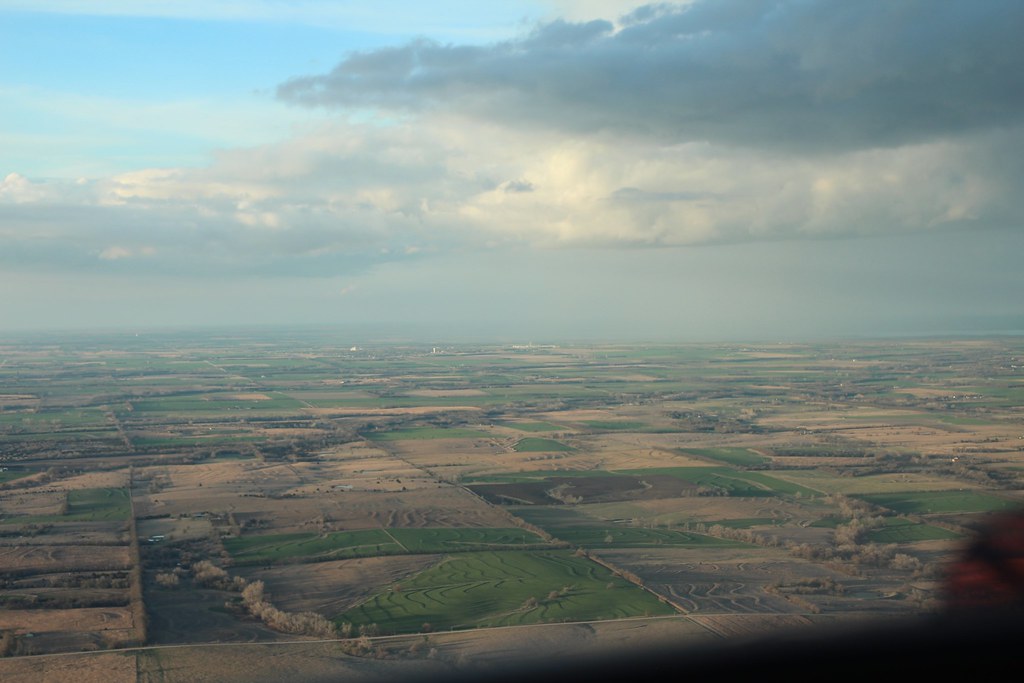
Flying over the airport at Moundridge, KS Memories Back when I was a child, maybe about the age my children are now, I d be outside in the evening and see this orange plane flying overhead. Our neighbor Don had a small ultralight plane and a grass landing strip next to his house. I remember longing to be up in the sky with Don, exploring the world from up there. At that age, I didn t know all the details of why that wouldn t work I just knew I wanted to ride in it. It wasn t until I was about 11 that I flew for the first time. I still remember that TWA flight with my grandma, taking off early in the morning and flying just a little ways above the puffy clouds lit up all yellow and orange by the sunrise. Even 25 years later, that memory still holds as one of the most beautiful scenes I have ever seen. Exploring I have always been an explorer. When I go past something interesting, I love to go see what it looks like inside. I enjoy driving around Kansas with Laura, finding hidden waterfalls, old county courthouses, ghost towns, beautiful old churches, even small-town restaurants. I explore things around me, too once taking apart a lawnmower engine as a child, nowadays building HF antennas in my treetops or writing code for Linux. If there is little to learn about something, it becomes less interesting to me. I see this starting to build in my children, too. Since before they could walk, if we were waiting for something in a large building, we d go exploring. IMG_7231

A patch of rain over Hillsboro, KS The New World A pilot once told me, Nobody can become a pilot without it changing the way they see the world and then, changing their life. I doubted that. But it was true. One of the most poetic sights I know is flying a couple thousand feet above an interstate highway at night, following it to my destination. All those red and white lights, those metal capsules of thousands of lives and thousands of stories, stretching out as far as the eye can see in either direction. IMG_7099

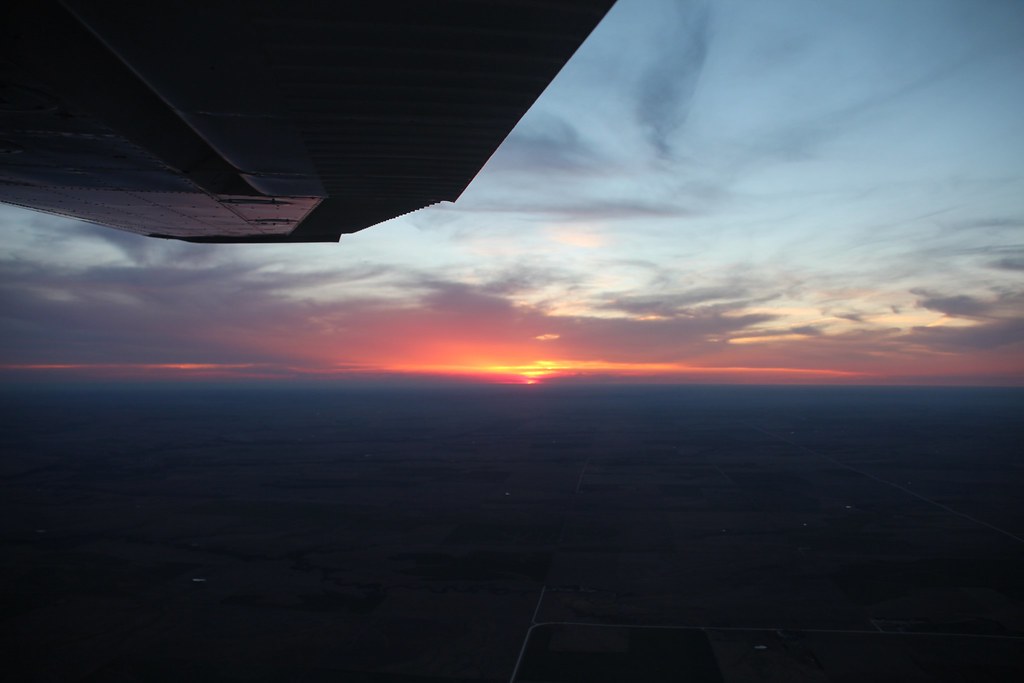
Kansas sunset from the plane When you re in a plane, that small town nowhere near a freeway that always seemed so far away suddenly is only a 15-minute flight away, not even enough time to climb up to a high cruise altitude. Two minutes after takeoff, any number of cities that are an hour s drive away are visible simultaneously, their unique features already recognizable: a grain elevator, oil refinery, college campus, lake, whatever. And all the houses you fly over each with people in them. Some pretty similar to you, some apparently not. But pretty soon you realize that we all are humans, and we aren t all that different. You can t tell a liberal from a conservative from the sky, nor a person s race or religion, nor even see the border between states. Towns and cities are often nameless from the sky, unless you re really low; only your navigation will tell you where you are. I ve had the privilege to fly to small out-of-the-way airports, the kind that have a car that pilots can use for free to go into town and get lunch, and leave the key out for them. There I ve met many friendly people. I ve also landed my little Cessna at a big commercial airport where I probably used only 1/10th of the runway, on a grass runway that was barely maintained at all. I ve flown to towns I d driven to or through many times, discovering the friendly folks at the small airport out of town. I ve flown to parts of Kansas I ve never been to before, discovered charming old downtowns and rolling hills, little bursts of rain and beautiful sunsets that seem to turn into a sea. Smith Center, KS airport terminal

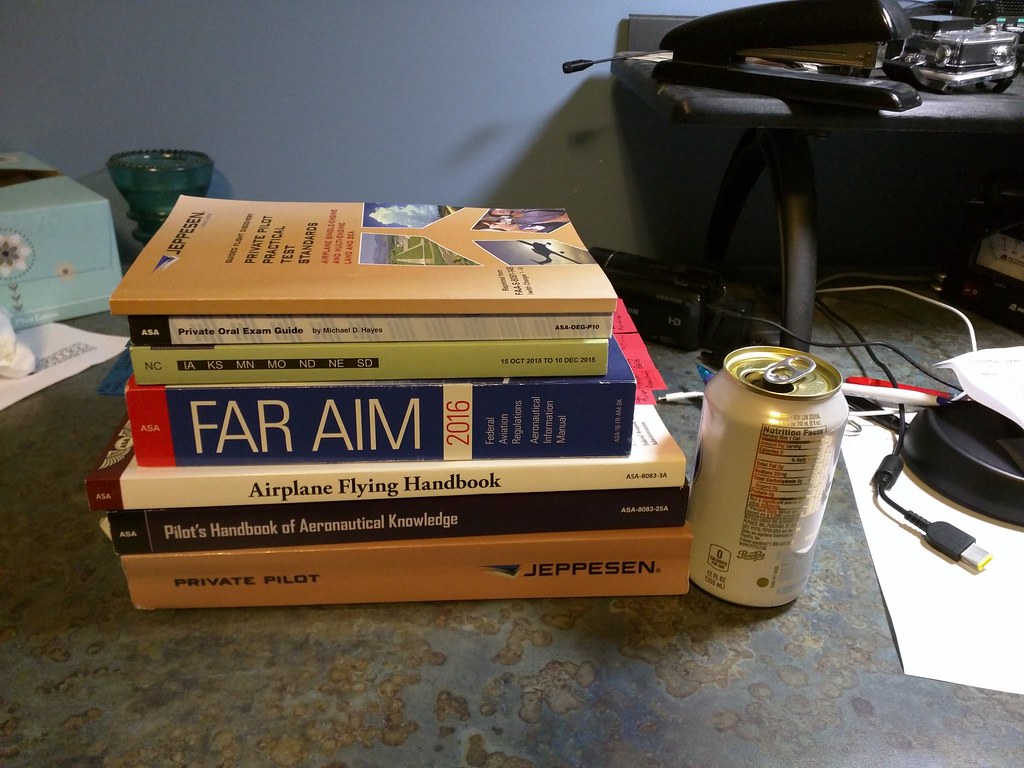
Parked at the Smith Center, KS airport terminal, about to meet some wonderful people For a guy that loves exploring the nooks and crannies of the world that everyone else drives by on their way to a major destination, being a pilot has meant many soul-filling moments. Hard Work I knew becoming a pilot would be a lot of hard work, and thankfully I remembered stories like that when I finally concluded it would be worth it. I found that I had an aptitude for a lot of things that many find difficult about being a pilot: my experience with amateur radio made me a natural at talking to ATC, my fascination with maps and navigation meant I already knew how to read aviation sectional maps before I even started my training and knew how to process that information in the cockpit, my years as a system administrator and programmer trained me with a careful and methodical decision-making process. And, much to the surprise of my flight instructor, I couldn t wait to begin the part of training about navigating using VORs (VHF radio beacons). I guess he, like many student pilots, had struggled with that, but I was fascinated by this pre-GPS technology (which I still routinely use in my flight planning, as a backup in case the GPS constellation or a GPS receiver fails). So that left the reflexes of flight, the art of it, as the parts I had to work on the hardest. The exam with the FAA is not like getting your driver s license. It s a multi-stage and difficult process. So when the FAA Designated Pilot Examiner said congratulations, pilot! and later told my flight instructor that you did a really good job with this one, I felt a true sense of accomplishment. IMG_20151021_193137

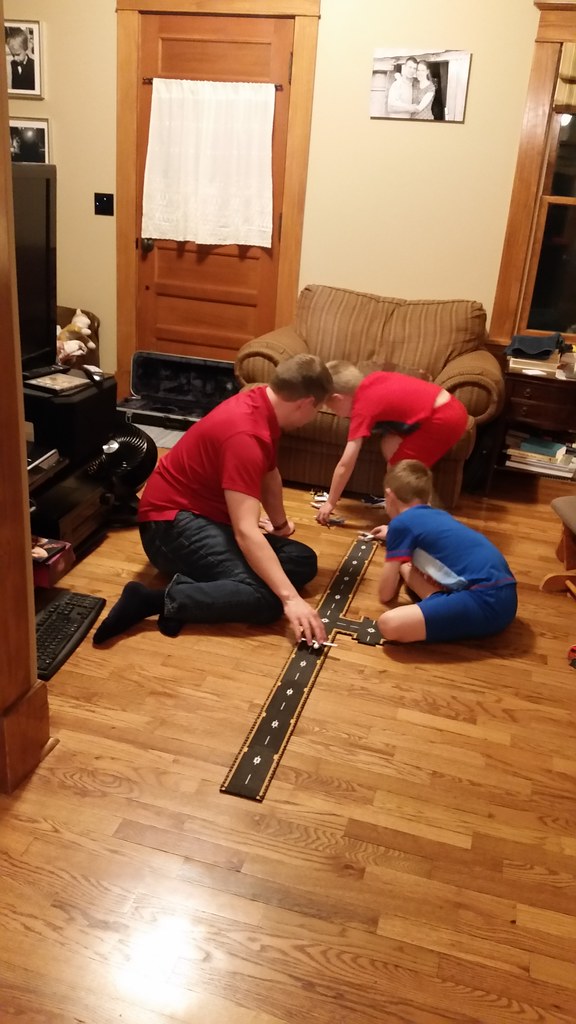
Some of my prep materials Worth It Passengers in a small plane can usually hear all the radio conversations going on. My family has heard me talking to air traffic control, to small and big planes. My 6-year-old son Oliver was playing yesterday, and I saw him pick up a plane and say this: Two-four-niner-golf requesting to land on runway one-seven . Two-four-niner-golf back-taxi on one-seven Two-four-niner-golf ready to takeoff on runway one-seven! That was a surprisingly accurate representation of some communication a pilot might have (right down to the made-up tailnumber with the spelling alphabet!) 20160408_203110

It just got more involved from there! Jacob and Oliver love model train shows. I couldn t take them to one near us, but there was one in Joplin, MO. So the day before Easter, while Laura was working on her Easter sermon, two excited boys and I (frankly also excited) climbed into a plane and flew to Joplin. We had a great time at the train show, discovered a restaurant specializing in various kinds of hot dogs (of course they both wanted to eat there), played in a park, explored the city, and they enjoyed the free cookies at the general aviation terminal building while I traded tips on fun places to fly with other pilots. When it comes right down to it, the smiles of the people I fly with are the most beautiful thing in the air. IMG_20151205_183440

Jacob after his first father-son flight with me

15 April 2016

Tanguy Ortolo: Let's Encrypt: threat or opportunity to other certificate authorities?

Let's Encrypt is a certificate authority (CA) that just left beta stage, that provides domain name-validated (DV) X.509 certificates for free and in an automated way: users just have to run a piece of software on their server to get and install a certificate, resulting in a valid TLS setup. A threat to other certificate authorities By providing certificates for free and automatically, Let's Encrypt is probably a threat a other CAs, a least for part of their activity. Indeed, for people that are satisfied with DV certificates, there are not many reasons to pay a commercial CA to get certificates in a non-automated way. For the CAcert non-commercial CA, that may mean a slow death, as this is their main activity . For people that want organization-validated (OV) or extended validation (EV) certificates, Let's Encrypt is not suitable, so it will not change anything regarding that. An opportunity for the most reactive The entrance of Let's Encrypt is also a significant opportunity for the certificate authorities that will be reactive enough to take advantage of their innovation. Indeed, they introduced automation in both domain name validation and certificate issuance (and revocation), by defining an open protocol that is meant to become an Internet standard. That protocol, named ACME, is not tied to Let's Encrypt and has several free software implementations, so it could be used for the same purpose by commercial CAs. A certification authority could, for instance: Such processes may require or benefit from improvements of the ACME protocol, which is the very reason Internet standards are defined in an open way. The first certification authority that would implement such a process could gain an advantage over its competitors, as it would greatly simplify getting and renewing certificates. I think even Let's Encrypt people would be happy to see that happen, as it would serve their goal, that is basically to help securing the Internet! Personally, I could buy such a service (assuming it is not restricted to juridical persons, according to a quite common (and detestable) sale discrimination against natural persons ). Notes
  1. CAcert is an unrecognised certificate authority, that provides an identity validation through a web of trust, and issues DV server certificates that do not include the validated identity. Now that Let's Encrypt can issue valid DV certificates, CAcert is no longer relevant for that activity. It also issues personal certificates, that do include the validated identity, and that can be used for encryption (e.g. S/MIME), signing (e.g. code signing) or authentication, which is an activity Let's Encrypt does not compete with.
  2. Yes, the Organization field of a certificate is probably not relevant to indicate a physical person's name, but the CommonName field is. Yes, that field is usually abused to store the domain name, but a proper use would be to put the owner's name in the CommonName field, and the domain names in the subjectAltName field.

Matthew Garrett: David MacKay

The first time I was paid to do software development came as something of a surprise to me. I was working as a sysadmin in a computational physics research group when a friend asked me if I'd be willing to talk to her PhD supervisor. I had nothing better to do, so said yes. And that was how I started the evening having dinner with David MacKay, and ended the evening better fed, a little drunker and having agreed in principle to be paid to write free software.

I'd been hired to work on Dasher, an information-efficient text entry system. It had been developed by one of David's students as a practical demonstration of arithmetic encoding after David had realised that presenting a visualisation of an effective compression algorithm allowed you to compose text without having to enter as much information into the system. At first this was merely a neat toy, but it soon became clear that the benefits of Dasher had a great deal of overlap with good accessibility software. It required much less precision of input, it made it easy to correct mistakes (you merely had to reverse direction in order to start zooming back out of the text you had entered) and it worked with a variety of input technologies from mice to eye tracking to breathing. My job was to take this codebase and turn it into a project that would be interesting to external developers.

In the year I worked with David, we turned Dasher from a research project into a well-integrated component of Gnome, improved its support for Windows, accepted code from an external contributor who ported it to OS X (using an OpenGL canvas!) and wrote ports for a range of handheld devices. We added code that allowed Dasher to directly control the UI of other applications, making it possible for people to drive word processors without having to leave Dasher. We taught Dasher to speak. We strove to avoid the mistakes present in so many other pieces of accessibility software, such as configuration that could only be managed by an (expensive!) external consultant. And we visited Dasher users and learned how they used it and what more they needed, then went back home and did what we could to provide that.

Working on Dasher was an incredible opportunity. I was involved in the development of exciting code. I spoke on it at multiple conferences. I became part of the Gnome community. I visited the USA for the first time. I entered people's homes and taught them how to use Dasher and experienced their joy as they realised that they could now communicate up to an order of magnitude more quickly. I wrote software that had a meaningful impact on the lives of other people.

Working with David was certainly not easy. Our weekly design meetings were, charitably, intense. He had an astonishing number of ideas, and my job was to figure out how to implement them while (a) not making the application overly complicated and (b) convincing David that it still did everything he wanted. One memorable meeting involved me gradually arguing him down from wanting five new checkboxes to agreeing that there were only two combinations that actually made sense (and hence a single checkbox) - and then admitting that this was broadly equivalent to an existing UI element, so we could just change the behaviour of that slightly without adding anything. I took the opportunity to delete an additional menu item in the process.

I was already aware of the importance of free software in terms of developers, but working with David made it clear to me how important it was to users as well. A community formed around Dasher, helping us improve it and allowing us to develop support for new use cases that made the difference between someone being able to type at two words per minute and being able to manage twenty. David saw that this collaborative development would be vital to creating something bigger than his original ideas, and it succeeded in ways he couldn't have hoped for.

I spent a year in the group and then went back to biology. David went on to channel his strong feelings about social responsibility into issues such as sustainable energy, writing a freely available book on the topic. He served as chief adviser to the UK Department of Energy and Climate Change for five years. And earlier this year he was awarded a knighthood for his services to scientific outreach.

David died yesterday. It's unlikely that I'll ever come close to what he accomplished, but he provided me with much of the inspiration to try to do so anyway. The world is already a less fascinating place without him.

comment count unavailable comments

Rapha&#235;l Hertzog: Freexian s report about Debian Long Term Support, March 2016

A Debian LTS logoLike each month, here comes a report about the work of paid contributors to Debian LTS. Individual reports In February, 111.75 work hours have been dispatched among 10 paid contributors. Their reports are available: Evolution of the situation The number of sponsored hours started to increase for April (116.75 hours, thanks to Sonus Networks) and should increase even further for May (with a new Gold sponsor currently joining us, Babiel GmbH). Hopefully the trend will continue so that we can reach our objective of funding the equivalent of a full-time position. At the end of the month the LTS team will be fully responsible of all Debian 7 Wheezy updates. For now paid contributors are still helping the security team by fixing packages that were fixed in squeeze already but that are still outstanding in wheezy. They are also looking for ways to ensure that some of the most complicated packages can be supported over the wheezy LTS timeframe. It is likely that we will seek external help (possibly from credativ which is already handling support of PostgreSQL) for the maintenance of Xen and that some other packages (like libav, vlc, maybe qemu?) will be upgraded to newer versions which are still maintained (either upstream or in Debian Jessie by the Debian maintainers). Thanks to our sponsors New sponsors are in bold.

No comment Liked this article? Click here. My blog is Flattr-enabled.

14 April 2016

Ritesh Raj Sarraf: apt-offline backports for Debian Jessie

For Debian Jessie, the version of apt-offline available is: 1.5.1. This version has had some issues. My very 1st backports is available in the form of apt-offline 1.7 for Debian Jessie Backports. For Debian Jessie users, this should fix most of the issues.

Categories:

Keywords:

Like:

13 April 2016

Mike Gabriel: IPv6: Broken by Design; Digital Ocean - How are we doing?

Recently, Digital Ocean (which I am a customer of) asked me "how they were doing". Well, yet another survey... Let's ignore this one for now... I thought some days ago. And then yesterday, I added IPv6 support to my main mail server (which runs at Hetzner, Germany). All my hosted/rented/whatever systems report back to this main mailserver. Now that that main mail server finally has its AAAA record and its own IPv6 address, all associated systems try to reach this main mail server via IPv6. Of course. Crippling IPv6 support by adding Port Blocks But, then, I see messages like these in my syslog files on droplets hosted at Digital Ocean:
Apr 13 10:10:59 <do-droplet> postfix/smtp[23469]: connect to mail.<mydomain>[<ipv6-address>]:25: Connection timed out
After some more research [1], I realized that the folks out there at DO really apply some port blockings to IPv6 networks, but not to IPv4 networks. Pardon me? From my DO droplets, I can nmap any port on my mail server (25,80,143,443, 465, 587, etc.) via the IPv4 connection, but not over the IPv6 connection. Wait, not fully true: ports 80 and 443 are not blocked, but the other aforementioned ports are definitely blocked. Is Digital Ocean a professional ISP or a WiFi hotspot provider at my nearest coffee place? (This really makes me scratch my head...). Routing only the first 16 addresses of allocated /64 prefixes The above was the second IPv6 brokeness I learned about DO, recently. An earlier issue with DO's IPv6 support, I encountered while I was deploying an IPv6 capable OpenVPN internet gateway via a droplet hosted at DO. Digital Ocean assigns full IPv6 /64 prefixes to each individual droplet (which is great), but only properly routes the first 16 IP addresses of such a /64 prefix [2]. Urgh? I had to work around this flaw by adding an IPv6-over-IPv4 tunnel and attaching an IPv6 /56 prefix obtained from Hurricane Electrics' tunnel broker service [3] to the OpenVPN server. Thanks, Digital Ocean, for reminding me about giving feedback So, today, I luckily received a reminder mail about DO's yet-another-survey survey. My opportunity!!! Here is the feedback, I gave:
DO service is basically good.
BUT: You as a provider SUCK when it comes to IPv6.
(1) http://pixelschatten.net/blocked-ipv6-ports/
-> SMTP/IMAP traffic blocked over IPv6, but not over IPv4... WTF?). I normally have all my systems report back to my main mail server. I expect this to work as it is the default on all Linux hosts nowadays, and that is: prefer IPv6 over IPv4.
(2) https://digitalocean.uservoice.com/forums/136585-digitalocean/suggestion...
-> Droplets get a full /64 prefix assigned, but only the first 16 addresses (or such) get routed properly. WTF?
Please do your homework on IPv6 and don't cripple your service by offering crippled IPv6 support.
I tell people, DO is great, but their IPv6 support is broken-by-design. Let me know, once this is about to change.
Mike Gabriel (aka sunweaver at debian dot org, Debian Developer)
Apology for the tone of the wording Now reading the feedback given, I realize that my tone has been quite impolite. I am sorry about this. However, the experienced IPv6 issues are indeed annoying. So please excuse me for having expressed my annoyance with such harsh words. And... I am still annoyed about myself paying an ISP for such a crippled IPv6 support. (I need to consider migrating the VMs to another hoster, unless there will be some dynamics observable in the near future). @Digital Ocean: Keep up the good work that you do in the realm of VM hosting. Evolve and grow up in the realm of IPv6 networking. Thank you! light+love
Mike [1] http://pixelschatten.net/blocked-ipv6-ports/
[2] https://digitalocean.uservoice.com/forums/136585-digitalocean/suggestion...
[3] https://tunnelbroker.net/

Matthew Garrett: Skylake's power management under Linux is dreadful and you shouldn't buy one until it's fixed

(Edit to add: this issue is restricted to the mobile SKUs. Desktop parts have very different power management behaviour)

Linux 4.5 seems to have got Intel's Skylake platform (ie, 6th-generation Core CPUs) to the point where graphics work pretty reliably, which is great progress (4.4 tended to lose all my windows every so often, especially over suspend/resume). I'm even running Wayland happily. Unfortunately one of the reasons I have a laptop is that I want to be able to do things like use it on battery, and power consumption's an important part of that. Skylake continues the trend from Haswell of moving to an SoC-type model where clock and power domains are shared between components that were previously entirely independent, and so you can't enter deep power saving states unless multiple components all have the correct power management configuration. On Haswell/Broadwell this manifested in the form of Serial ATA link power management being involved in preventing the package from going into deep power saving states - setting that up correctly resulted in a reduction in full-system power consumption of about 40%[1].

I've now got a Skylake platform with a nice shiny NVMe device, so Serial ATA policy isn't relevant (the platform doesn't even expose a SATA controller). The deepest power saving state I can get into is PC3, despite Skylake supporting PC8 - so I'm probably consuming about 40% more power than I should be. And nobody seems to know what needs to be done to fix this. I've found no public documentation on the power management dependencies on Skylake. Turning on everything in Powertop doesn't improve anything. My battery life is pretty poor and the system is pretty warm.

The best thing about this is the following statement from page 64 of the 6th Generation Intel Processor Datasheet for U-Platforms:

Caution: Long term reliability cannot be assured unless all the Low-Power Idle States are enabled.

which is pretty concerning. Without support for states deeper than PC3, Linux is running in a configuration that Intel imply may trigger premature failure. That's obviously not good. Until this situation is improved, you probably shouldn't buy any Skylake systems if you're planning on running Linux.

[1] These patches never went upstream. Someone reported that they resulted in their SSD throwing errors and I couldn't find anybody with deeper levels of SATA experience who was interested in working on the problem. Intel's AHCI drivers for Windows do the right thing, but I couldn't find anybody at Intel who could get any information from their Windows driver team.

comment count unavailable comments

Petter Reinholdtsen: I.F. Stone - an inspiration for us all

I first got to know I.F. Stone when I came across an article by Jon Schwarz on The Intercept about his extraordinary contribution to investigative journalism in USA. The article is about a new documentary in two parts (part one is 12 minutes and part two is 30 minutes), and I found both truly fascinating. It is amazing what he was able to find by digging up public sources and government papers. He documented lots of government abuse and cover ups, and I find his weekly news letters inspiring to read even today.
All governments are run by liars and nothing they say should be believed.
- I. F. Stone
His starting point was that reporters should not assume governments and corporations are telling the truth, but verify all their claims as much as possible. I wonder how many Norwegian reporters can be said to follow the principles of I. F. Stone. They are definitely in short supply. If you, like me half a year ago, have never heard of him, check him out.

Jonathan McDowell: Software in the Public Interest contributing members: Check your activity status!

That s a longer title than I d like, but I want to try and catch the attention of anyone who might have missed more directed notifications about this. If you re not an SPI contributing member there s probably nothing to see here Although I decided not to stand for re-election at the Software in the Public Interest (SPI) board elections last July, I haven t stopped my involvement with the organisation. In particular I ve spent some time working on an overhaul of the members website and rolling it out. One of the things this has enabled is implementation of 2009-11-04.jmd.1: Contributing membership expiry, by tracking activity in elections and providing an easy way for a member to indicate they consider themselves active even if they haven t voted. The plan is that this will run at some point after the completion of every board election. A first pass of cleanups was completed nearly a month ago, contacting all contributing members who d never been seen to vote and asking them to update their status if they were still active. A second round, of people who didn t vote in the last board election (in 2014), is currently under way. Affected members will have been emailed directly and there was a mail to spi-announce, but I m aware people often overlook these things or filter mail off somewhere that doesn t get read often. If you are an SPI Contributing member who considers themselves an active member I strongly recommend you login to the SPI Members Website and check the Last active date displayed is after 2014-07-14 (i.e. post the start of the last board election). If it s not, click on the Update link beside the date. The updated date will be shown once you ve done so. Why does pruning inactive members matter? The 2015 X.Org election results provide at least one indication of why ensuring you have an engaged membership is important - they failed to make a by-laws change that a vast majority of votes were in favour of, due to failing to make quorum. (If you re an X.org member, go vote!)

Jonathan McDowell: Software in the Public Interest contributing members: Check your activity status!

That s a longer title than I d like, but I want to try and catch the attention of anyone who might have missed more directed notifications about this. If you re not an SPI contributing member there s probably nothing to see here Although I decided not to stand for re-election at the Software in the Public Interest (SPI) board elections last July, I haven t stopped my involvement with the organisation. In particular I ve spent some time working on an overhaul of the members website and rolling it out. One of the things this has enabled is implementation of 2009-11-04.jmd.1: Contributing membership expiry, by tracking activity in elections and providing an easy way for a member to indicate they consider themselves active even if they haven t voted. The plan is that this will run at some point after the completion of every board election. A first pass of cleanups was completed nearly a month ago, contacting all contributing members who d never been seen to vote and asking them to update their status if they were still active. A second round, of people who didn t vote in the last board election (in 2014), is currently under way. Affected members will have been emailed directly and there was a mail to spi-announce, but I m aware people often overlook these things or filter mail off somewhere that doesn t get read often. If you are an SPI Contributing member who considers themselves an active member I strongly recommend you login to the SPI Members Website and check the Last active date displayed is after 2014-07-14 (i.e. post the start of the last board election). If it s not, click on the Update link beside the date. The updated date will be shown once you ve done so. Why does pruning inactive members matter? The 2015 X.Org election results provide at least one indication of why ensuring you have an engaged membership is important - they failed to make a by-laws change that a vast majority of votes were in favour of, due to failing to make quorum. (If you re an X.org member, go vote!)

Next.

Previous.