Search Results: "reg"

2 February 2024

Ian Jackson: UPS, the Useless Parcel Service; VAT and fees

I recently had the most astonishingly bad experience with UPS, the courier company. They severely damaged my parcels, and were very bad about UK import VAT, ultimately ending up harassing me on autopilot. The only thing that got their attention was my draft Particulars of Claim for intended legal action. Surprisingly, I got them to admit in writing that the disbursement fee they charge recipients alongside the actual VAT, is just something they made up with no legal basis. What happened Autumn last year I ordered some furniture from a company in Germany. This was to be shipped by them to me by courier. The supplier chose UPS. UPS misrouted one of the three parcels to Denmark. When everything arrived, it had been sat on by elephants. The supplier had to replace most of it, with considerable inconvenience and delay to me, and of course a loss to the supplier. But this post isn t mostly about that. This post is about VAT. You see, import VAT was due, because of fucking Brexit. UPS made a complete hash of collecting that VAT. Their computers can t issue coherent documents, their email helpdesk is completely useless, and their automated debt collection systems run along uninfluenced by any external input. The crazy, including legal threats and escalating late payment fees, continued even after I paid the VAT discrepancy (which I did despite them not yet having provided any coherent calculation for it). This kind of behaviour is a very small and mild version of the kind of things British Gas did to Lisa Ferguson, who eventually won substantial damages for harassment, plus 10K of costs. Having tried asking nicely, and sending stiff letters, I too threatened litigation. I would have actually started a court claim, but it would have included a claim under the Protection from Harassment Act. Those have to be filed under the Part 8 procedure , which involves sending all of the written evidence you re going to use along with the claim form. Collating all that would be a good deal of work, especially since UPS and ControlAccount didn t engage with me at all, so I had no idea which things they might actually dispute. So I decided that before issuing proceedings, I d send them a copy of my draft Particulars of Claim, along with an offer to settle if they would pay me a modest sum and stop being evil robots at me. Rather than me typing the whole tale in again, you can read the full gory details in the PDF of my draft Particulars of Claim. (I ve redacted the reference numbers). Outcome The draft Particulars finally got their attention. UPS sent me an offer: they agreed to pay me 50, in full and final settlement. That was close enough to my offer that I accepted it. I mostly wanted them to stop, and they do seem to have done so. And I ve received the 50. VAT calculation They also finally included an actual explanation of the VAT calculation. It s absurd, but it s not UPS s absurd:
The clearance was entered initially with estimated import charges of 400.03, consisting of 387.83 VAT, and 12.20 disbursement fee. This original entry regrettably did not include the freight cost for calculating the VAT, and as such when submitted for final entry the VAT value was adjusted to include this and an amended invoice was issued for an additional 39.84. HMRC calculate the amount against which VAT is raised using the value of goods, insurance and freight, however they also may apply a VAT adjustment figure. The VAT Adjustment is based on many factors (Incidental costs in regards to a shipment), which includes charge for currency conversion if the invoice does not list values in Sterling, but the main is due to the inland freight from airport of destination to the final delivery point, as this charge varies, for example, from EMA to Edinburgh would be 150, from EMA to Derby would be 1, so each year UPS must supply HMRC with all values incurred for entry build up and they give an average which UPS have to use on the entry build up as the VAT Adjustment. The correct calculation for the import charges is therefore as follows: Goods value divided by exchange rate 2,489.53 EUR / 1.1683 = 2,130.89 GBP Duty: Goods value plus freight (%) 2,130.89 GBP + 5% = 2,237.43 GBP. That total times the duty rate. X 0 % = 0 GBP VAT: Goods value plus freight (100%) 2,130.89 GBP + 0 = 2,130.89 GBP That total plus duty and VAT adjustment 2,130.89 GBP + 0 GBP + 7.49 GBP = 2,348.08 GBP. That total times 20% VAT = 427.67 GBP As detailed above we must confirm that the final VAT charges applied to the shipment were correct, and that no refund of this is therefore due.
This looks very like HMRC-originated nonsense. If only they had put it on the original bills! It s completely ridiculous that it took four months and near-litigation to obtain it. Disbursement fee One more thing. UPS billed me a 12 disbursement fee . When you import something, there s often tax to pay. The courier company pays that to the government, and the consignee pays it to the courier. Usually the courier demands it before final delivery, since otherwise they end up having to chase it as a debt. It is common for parcel companies to add a random fee of their own. As I note in my Particulars, there isn t any legal basis for this. In my own offer of settlement I proposed that UPS should:
State under what principle of English law (such as, what enactment or principle of Common Law), you levy the disbursement fee (or refund it).
To my surprise they actually responded to this in their own settlement letter. (They didn t, for example, mention the harassment at all.) They said (emphasis mine):
A disbursement fee is a fee for amounts paid or processed on behalf of a client. It is an established category of charge used by legal firms, amongst other companies, for billing of various ancillary costs which may be incurred in completion of service. Disbursement fees are not covered by a specific law, nor are they legally prohibited. Regarding UPS disbursement fee this is an administrative charge levied for the use of UPS deferment account to prepay import charges for clearance through CDS. This charge would therefore be billed to the party that is responsible for the import charges, normally the consignee or receiver of the shipment in question. The disbursement fee as applied is legitimate, and as you have stated is a commonly used and recognised charge throughout the courier industry, and I can confirm that this was charged correctly in this instance.
On UPS s analysis, they can just make up whatever fee they like. That is clearly not right (and I don t even need to refer to consumer protection law, which would also make it obviously unlawful). And, that everyone does it doesn t make it lawful. There are so many things that are ubiquitous but unlawful, especially nowadays when much of the legal system - especially consumer protection regulators - has been underfunded to beyond the point of collapse. Next time this comes up I might have a go at getting the fee back. (Obviously I ll have to pay it first, to get my parcel.) ParcelForce and Royal Mail I think this analysis doesn t apply to ParcelForce and (probably) Royal Mail. I looked into this in 2009, and I found that Parcelforce had been given the ability to write their own private laws: Schemes made under section 89 of the Postal Services Act 2000. This is obviously ridiculous but I think it was the law in 2009. I doubt the intervening governments have fixed it. Furniture Oh, yes, the actual furniture. The replacements arrived intact and are great :-).

comment count unavailable comments

Dirk Eddelbuettel: RQuantLib 0.4.21 on CRAN: Maintenance

A new minor release 0.4.21 of RQuantLib arrived at CRAN this afternoon, and has already been uploaded to Debian as well. QuantLib is a rather comprehensice free/open-source library for quantitative finance. RQuantLib connects (some parts of) it to the R environment and language, and has been part of CRAN for more than twenty years (!!) as it was one of the first packages I uploaded there. This release of RQuantLib benefits from some kind attention that Jeroen has been paying to how we build (especially at CRAN) on both macOS and Windows. So the build processes are a little better now, and no internal code changed. QuantLib 1.33 built unchanged.

Changes in RQuantLib version 0.4.21 (2024-02-01)
  • Generalize macOS build to universal build (Jeroen in #179)
  • Generalize Windows build to arm64 (Jeroen in #181)
  • Generalize version string use to support cmake use (Jeroen in #181 fixing #180)
  • Minor update to 'ci.yaml' github action (Dirk)

Courtesy of my CRANberries, there is also a diffstat report for the this release. As always, more detailed information is on the RQuantLib page. Questions, comments etc should go to the rquantlib-devel mailing list. Issue tickets can be filed at the GitHub repo. If you like this or other open-source work I do, you can now sponsor me at GitHub.

This post by Dirk Eddelbuettel originated on his Thinking inside the box blog. Please report excessive re-aggregation in third-party for-profit settings.

31 January 2024

Dirk Eddelbuettel: dtts 0.1.2 on CRAN: Maintenance

Leonardo and I are happy to announce the release of a very minor maintenance release 0.1.2 of our dtts package which has been on CRAN for a little under two years now. dtts builds upon our nanotime package as well as the beloved data.table to bring high-performance and high-resolution indexing at the nanosecond level to data frames. dtts aims to offers the time-series indexing versatility of xts (and zoo) to the immense power of data.table while supporting highest nanosecond resolution. This release follows yesterday s long-awaited release of data.table version 1.5.0 which had been some time in the making as the first new major.minor release since Matt drifted into being less active and the forefront. The release also renamed the one C-level API accessor to data.table (which was added, if memory serves, by Leonardo with our use in mind). So we have to catch up to the renamed identifier; this release does that, and adds a versioned imports statement on data.table. The short list of changes follows.

Changes in version 0.1.2 (2024-01-31)
  • Update the one exported C-level identifier from data.table following its 1.5.0 release and a renaming
  • Routine continuous integration updates

Courtesy of my CRANberries, there is also a report with diffstat for this release. Questions, comments, issue tickets can be brought to the GitHub repo. If you like this or other open-source work I do, you can now sponsor me at GitHub.

This post by Dirk Eddelbuettel originated on his Thinking inside the box blog. Please report excessive re-aggregation in third-party for-profit settings.

Valhalla's Things: Macrame Bookbag

Posted on January 31, 2024
Tags: madeof:atoms, craft:macrame
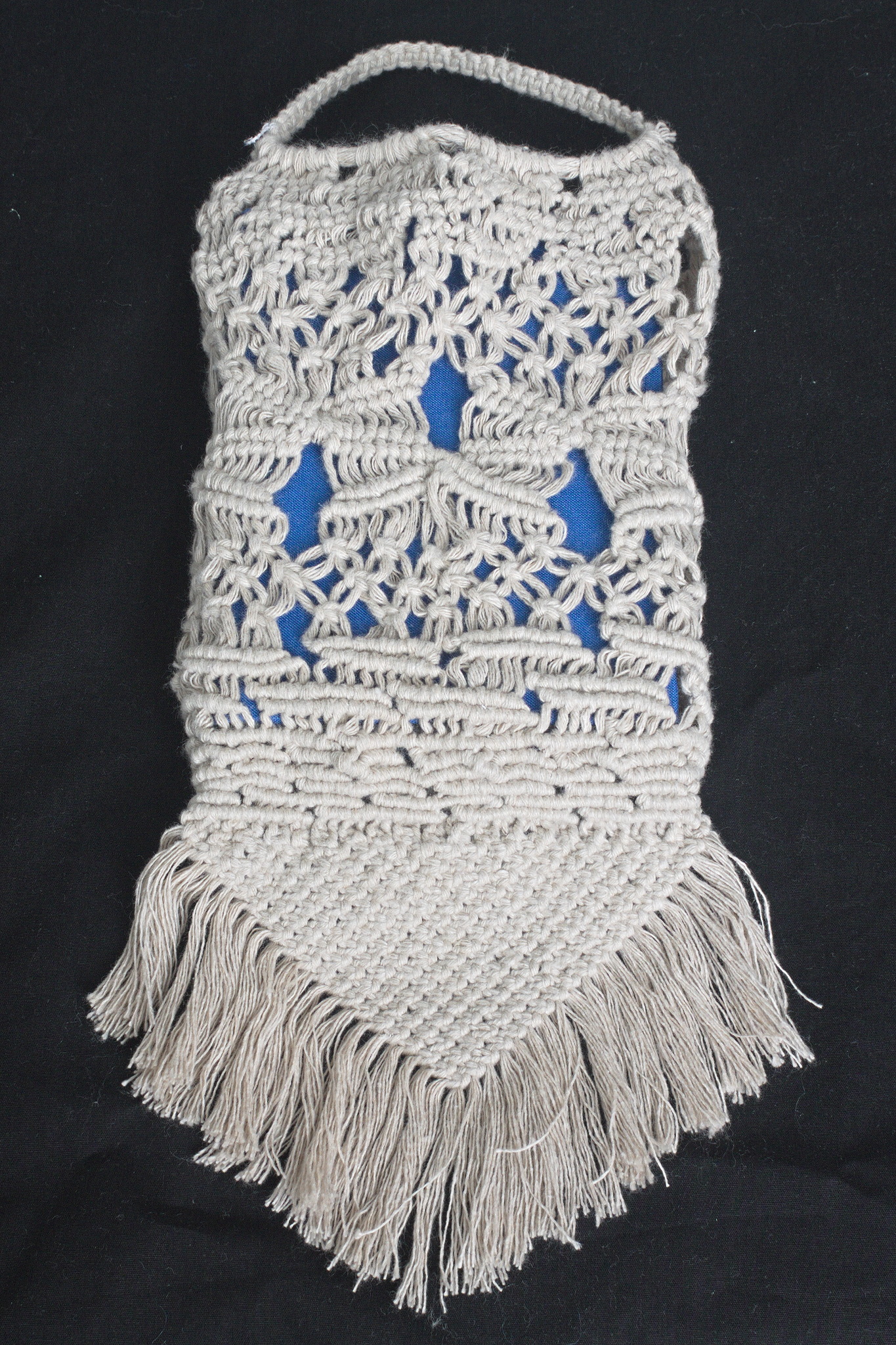
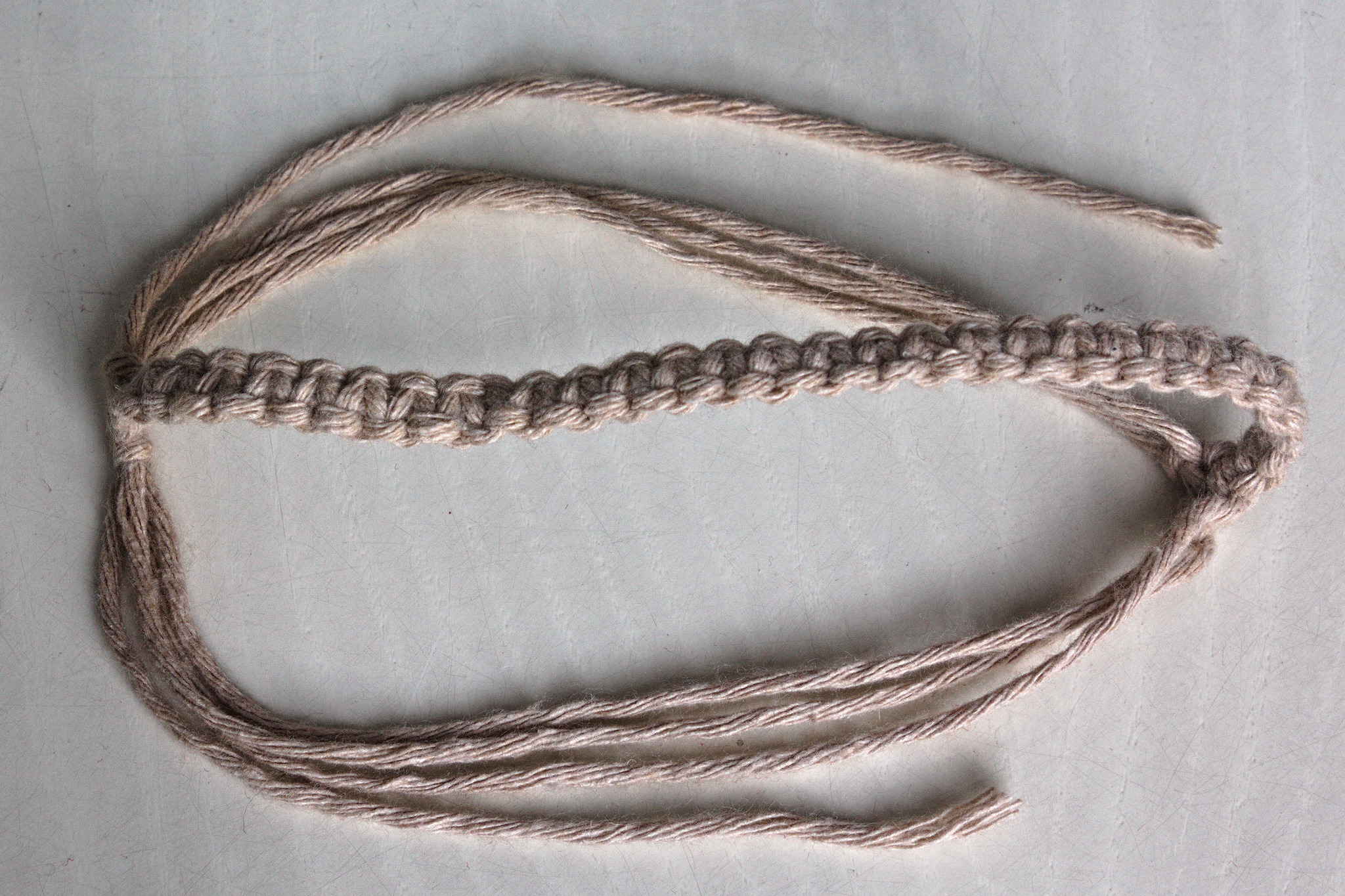
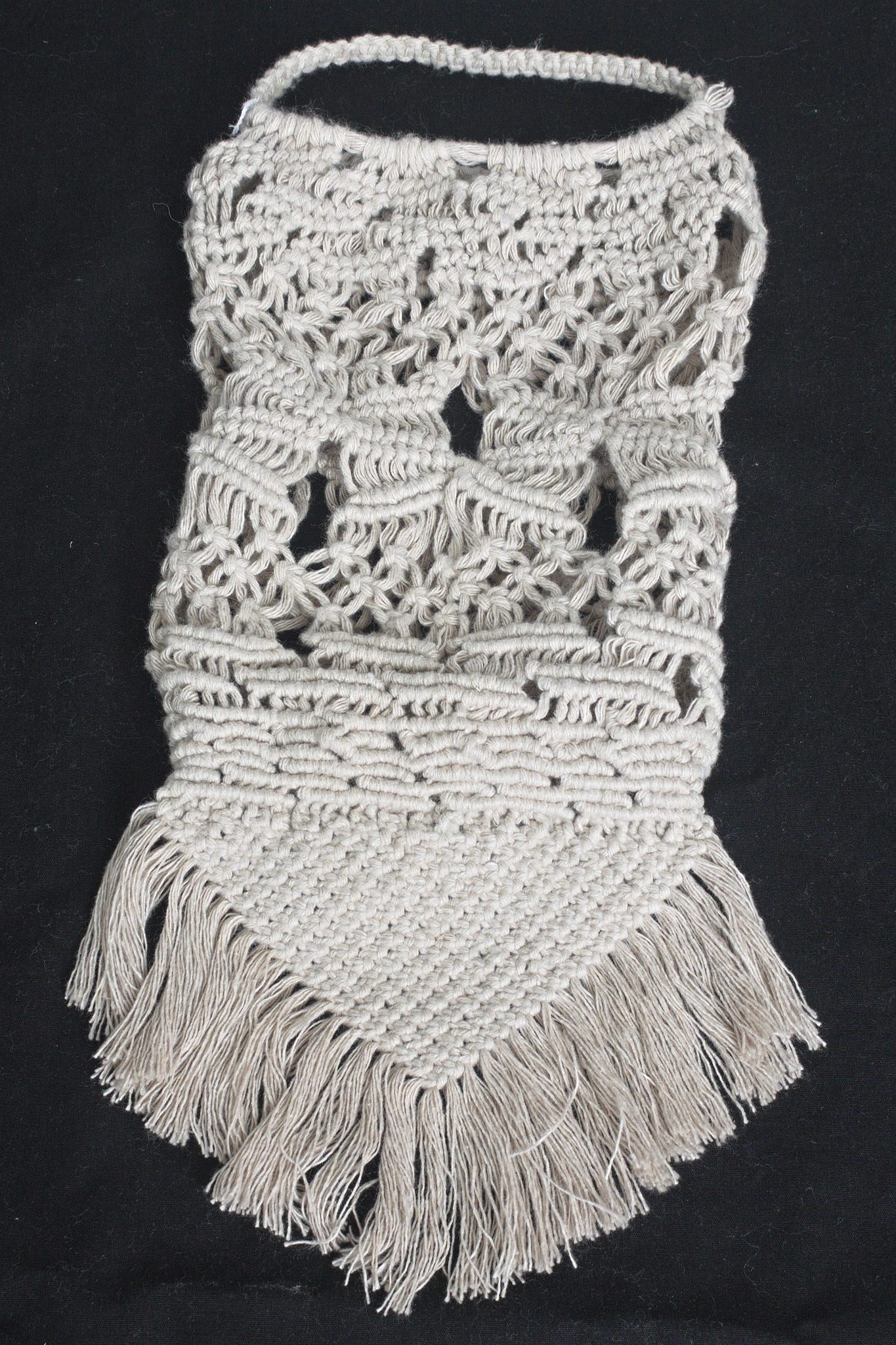
a macrame bag in ~3 mm ecru yarn, with very irregular knots of different types, holding a book with a blue cover. The bottom part has a rigid single layer triangle and a fringe. In late 2022 I prepared a batch of drawstring backpacks in cotton as reusable wrappers for Christmas gifts; however I didn t know what cord to use, didn t want to use paracord, and couldn t find anything that looked right in the local shops. With Christmas getting dangerously closer, I visited a craft materials website for unrelated reasons, found out that they sold macrame cords, and panic-bought a few types in the hope that at least one would work for the backpacks. I got lucky, and my first choice fitted just fine, and I was able to finish the backpacks in time for the holidays. And then I had a box full of macrame cords in various sizes and types that weren t the best match for the drawstring in a backpack, and no real use for them. I don t think I had ever done macrame, but I have made friendship bracelets in primary school, and a few Friendship Bracelets, But For Real Men So We Call Them Survival Bracelets(TM) more recently, so I didn t bother reading instructions or tutorials online, I just grabbed the Ashley Book of Knots to refresh myself on the knots used, and decided to make myself a small bag for an A6 book. I choose one of the thin, ~3 mm cords, Tre Sfere Macram Barbante, of which there was plenty, so that I could stumble around with no real plan. A loop of four cords, with a handle made of square knots that keeps it together. I started by looping 5 m of cord, making iirc 2 rounds of a loop about the right size to go around the book with a bit of ease, then used the ends as filler cords for a handle, wrapped them around the loop and worked square knots all over them to make a handle. Then I cut the rest of the cord into 40 pieces, each 4 m long, because I had no idea how much I was going to need (spoiler: I successfully got it wrong :D ) I joined the cords to the handle with lark head knots, 20 per side, and then I started knotting without a plan or anything, alternating between hitches and square knots, sometimes close together and sometimes leaving some free cord between them. And apparently I also completely forgot to take in-progress pictures. I kept working on this for a few months, knotting a row or two now and then, until the bag was long enough for the book, then I closed the bottom by taking one cord from the front and the corresponding on the back, knotting them together (I don t remember how) and finally I made a rigid triangle of tight square knots with all of the cords, progressively leaving out a cord from each side, and cutting it in a fringe. I then measured the remaining cords, and saw that the shortest ones were about a meter long, but the longest ones were up to 3 meters, I could have cut them much shorter at the beginning (and maybe added a couple more cords). The leftovers will be used, in some way. And then I postponed taking pictures of the finished object for a few months. The same bag, empty and showing how the sides aren't straight. Now the result is functional, but I have to admit it is somewhat ugly: not as much for the lack of a pattern (that I think came out quite fine) but because of how irregular the knots are; I m not confident that the next time I will be happy with their regularity, either, but I hope I will improve, and that s one important thing. And the other important thing is: I enjoyed making this, even if I kept interrupting the work, and I think that there may be some other macrame in my future.
30 January 2024

Antoine Beaupr : router archeology: the Soekris net5001

Roadkiller was a Soekris net5501 router I used as my main gateway between 2010 and 2016 (for r seau and t l phone). It was upgraded to FreeBSD 8.4-p12 (2014-06-06) and pkgng. It was retired in favor of octavia around 2016. Roughly 10 years later (2024-01-24), I found it in a drawer and, to my surprised, it booted. After wrangling with a RS-232 USB adapter, a null modem cable, and bit rates, I even logged in:
comBIOS ver. 1.33  20070103  Copyright (C) 2000-2007 Soekris Engineering.
net5501
0512 Mbyte Memory                        CPU Geode LX 500 Mhz 
Pri Mas  WDC WD800VE-00HDT0              LBA Xlt 1024-255-63  78 Gbyte
Slot   Vend Dev  ClassRev Cmd  Stat CL LT HT  Base1    Base2   Int 
-------------------------------------------------------------------
0:01:2 1022 2082 10100000 0006 0220 08 00 00 A0000000 00000000 10
0:06:0 1106 3053 02000096 0117 0210 08 40 00 0000E101 A0004000 11
0:07:0 1106 3053 02000096 0117 0210 08 40 00 0000E201 A0004100 05
0:08:0 1106 3053 02000096 0117 0210 08 40 00 0000E301 A0004200 09
0:09:0 1106 3053 02000096 0117 0210 08 40 00 0000E401 A0004300 12
0:20:0 1022 2090 06010003 0009 02A0 08 40 80 00006001 00006101 
0:20:2 1022 209A 01018001 0005 02A0 08 00 00 00000000 00000000 
0:21:0 1022 2094 0C031002 0006 0230 08 00 80 A0005000 00000000 15
0:21:1 1022 2095 0C032002 0006 0230 08 00 00 A0006000 00000000 15
 4 Seconds to automatic boot.   Press Ctrl-P for entering Monitor.
 
                                            
                                                  ______
                                                    ____  __ ___  ___ 
            Welcome to FreeBSD!                     __   '__/ _ \/ _ \
                                                    __       __/  __/
                                                                      
    1. Boot FreeBSD [default]                     _     _   \___ \___ 
    2. Boot FreeBSD with ACPI enabled             ____   _____ _____
    3. Boot FreeBSD in Safe Mode                    _ \ / ____   __ \
    4. Boot FreeBSD in single user mode             _)   (___         
    5. Boot FreeBSD with verbose logging            _ < \___ \        
    6. Escape to loader prompt                      _)  ____)    __   
    7. Reboot                                                         
                                                  ____/ _____/ _____/


    Select option, [Enter] for default      
    or [Space] to pause timer  5            
  
Copyright (c) 1992-2013 The FreeBSD Project.
Copyright (c) 1979, 1980, 1983, 1986, 1988, 1989, 1991, 1992, 1993, 1994
        The Regents of the University of California. All rights reserved.
FreeBSD is a registered trademark of The FreeBSD Foundation.
FreeBSD 8.4-RELEASE-p12 #5: Fri Jun  6 02:43:23 EDT 2014
    root@roadkiller.anarc.at:/usr/obj/usr/src/sys/ROADKILL i386
gcc version 4.2.2 20070831 prerelease [FreeBSD]
Timecounter "i8254" frequency 1193182 Hz quality 0
CPU: Geode(TM) Integrated Processor by AMD PCS (499.90-MHz 586-class CPU)
  Origin = "AuthenticAMD"  Id = 0x5a2  Family = 5  Model = a  Stepping = 2
  Features=0x88a93d<FPU,DE,PSE,TSC,MSR,CX8,SEP,PGE,CMOV,CLFLUSH,MMX>
  AMD Features=0xc0400000<MMX+,3DNow!+,3DNow!>
real memory  = 536870912 (512 MB)
avail memory = 506445824 (482 MB)
kbd1 at kbdmux0
K6-family MTRR support enabled (2 registers)
ACPI Error: A valid RSDP was not found (20101013/tbxfroot-309)
ACPI: Table initialisation failed: AE_NOT_FOUND
ACPI: Try disabling either ACPI or apic support.
cryptosoft0: <software crypto> on motherboard
pcib0 pcibus 0 on motherboard
pci0: <PCI bus> on pcib0
Geode LX: Soekris net5501 comBIOS ver. 1.33 20070103 Copyright (C) 2000-2007
pci0: <encrypt/decrypt, entertainment crypto> at device 1.2 (no driver attached)
vr0: <VIA VT6105M Rhine III 10/100BaseTX> port 0xe100-0xe1ff mem 0xa0004000-0xa00040ff irq 11 at device 6.0 on pci0
vr0: Quirks: 0x2
vr0: Revision: 0x96
miibus0: <MII bus> on vr0
ukphy0: <Generic IEEE 802.3u media interface> PHY 1 on miibus0
ukphy0:  none, 10baseT, 10baseT-FDX, 100baseTX, 100baseTX-FDX, auto, auto-flow
vr0: Ethernet address: 00:00:24:cc:93:44
vr0: [ITHREAD]
vr1: <VIA VT6105M Rhine III 10/100BaseTX> port 0xe200-0xe2ff mem 0xa0004100-0xa00041ff irq 5 at device 7.0 on pci0
vr1: Quirks: 0x2
vr1: Revision: 0x96
miibus1: <MII bus> on vr1
ukphy1: <Generic IEEE 802.3u media interface> PHY 1 on miibus1
ukphy1:  none, 10baseT, 10baseT-FDX, 100baseTX, 100baseTX-FDX, auto, auto-flow
vr1: Ethernet address: 00:00:24:cc:93:45
vr1: [ITHREAD]
vr2: <VIA VT6105M Rhine III 10/100BaseTX> port 0xe300-0xe3ff mem 0xa0004200-0xa00042ff irq 9 at device 8.0 on pci0
vr2: Quirks: 0x2
vr2: Revision: 0x96
miibus2: <MII bus> on vr2
ukphy2: <Generic IEEE 802.3u media interface> PHY 1 on miibus2
ukphy2:  none, 10baseT, 10baseT-FDX, 100baseTX, 100baseTX-FDX, auto, auto-flow
vr2: Ethernet address: 00:00:24:cc:93:46
vr2: [ITHREAD]
vr3: <VIA VT6105M Rhine III 10/100BaseTX> port 0xe400-0xe4ff mem 0xa0004300-0xa00043ff irq 12 at device 9.0 on pci0
vr3: Quirks: 0x2
vr3: Revision: 0x96
miibus3: <MII bus> on vr3
ukphy3: <Generic IEEE 802.3u media interface> PHY 1 on miibus3
ukphy3:  none, 10baseT, 10baseT-FDX, 100baseTX, 100baseTX-FDX, auto, auto-flow
vr3: Ethernet address: 00:00:24:cc:93:47
vr3: [ITHREAD]
isab0: <PCI-ISA bridge> at device 20.0 on pci0
isa0: <ISA bus> on isab0
atapci0: <AMD CS5536 UDMA100 controller> port 0x1f0-0x1f7,0x3f6,0x170-0x177,0x376,0xe000-0xe00f at device 20.2 on pci0
ata0: <ATA channel> at channel 0 on atapci0
ata0: [ITHREAD]
ata1: <ATA channel> at channel 1 on atapci0
ata1: [ITHREAD]
ohci0: <OHCI (generic) USB controller> mem 0xa0005000-0xa0005fff irq 15 at device 21.0 on pci0
ohci0: [ITHREAD]
usbus0 on ohci0
ehci0: <AMD CS5536 (Geode) USB 2.0 controller> mem 0xa0006000-0xa0006fff irq 15 at device 21.1 on pci0
ehci0: [ITHREAD]
usbus1: EHCI version 1.0
usbus1 on ehci0
cpu0 on motherboard
pmtimer0 on isa0
orm0: <ISA Option ROM> at iomem 0xc8000-0xd27ff pnpid ORM0000 on isa0
atkbdc0: <Keyboard controller (i8042)> at port 0x60,0x64 on isa0
atkbd0: <AT Keyboard> irq 1 on atkbdc0
kbd0 at atkbd0
atkbd0: [GIANT-LOCKED]
atkbd0: [ITHREAD]
atrtc0: <AT Real Time Clock> at port 0x70 irq 8 on isa0
ppc0: parallel port not found.
uart0: <16550 or compatible> at port 0x3f8-0x3ff irq 4 flags 0x10 on isa0
uart0: [FILTER]
uart0: console (19200,n,8,1)
uart1: <16550 or compatible> at port 0x2f8-0x2ff irq 3 on isa0
uart1: [FILTER]
Timecounter "TSC" frequency 499903982 Hz quality 800
Timecounters tick every 1.000 msec
IPsec: Initialized Security Association Processing.
usbus0: 12Mbps Full Speed USB v1.0
usbus1: 480Mbps High Speed USB v2.0
ad0: 76319MB <WDC WD800VE-00HDT0 09.07D09> at ata0-master UDMA100 
ugen0.1: <AMD> at usbus0
uhub0: <AMD OHCI root HUB, class 9/0, rev 1.00/1.00, addr 1> on usbus0
ugen1.1: <AMD> at usbus1
uhub1: <AMD EHCI root HUB, class 9/0, rev 2.00/1.00, addr 1> on usbus1
GEOM: ad0s1: geometry does not match label (255h,63s != 16h,63s).
uhub0: 4 ports with 4 removable, self powered
Root mount waiting for: usbus1
uhub1: 4 ports with 4 removable, self powered
Trying to mount root from ufs:/dev/ad0s1a
The last log rotation is from 2016:
[root@roadkiller /var/log]# stat /var/log/wtmp      
65 61783 -rw-r--r-- 1 root wheel 208219 1056 "Nov  1 05:00:01 2016" "Jan 18 22:29:16 2017" "Jan 18 22:29:16 2017" "Nov  1 05:00:01 2016" 16384 4 0 /var/log/wtmp
Interestingly, I switched between eicat and teksavvy on December 11th. Which year? Who knows!
Dec 11 16:38:40 roadkiller mpd: [eicatL0] LCP: authorization successful
Dec 11 16:41:15 roadkiller mpd: [teksavvyL0] LCP: authorization successful
Never realized those good old logs had a "oh dear forgot the year" issue (that's something like Y2K except just "Y", I guess). That was probably 2015, because the log dates from 2017, and the last entry is from November of the year after the above:
[root@roadkiller /var/log]# stat mpd.log 
65 47113 -rw-r--r-- 1 root wheel 193008 71939195 "Jan 18 22:39:18 2017" "Jan 18 22:39:59 2017" "Jan 18 22:39:59 2017" "Apr  2 10:41:37 2013" 16384 140640 0 mpd.log
It looks like the system was installed in 2010:
[root@roadkiller /var/log]# stat /
63 2 drwxr-xr-x 21 root wheel 2120 512 "Jan 18 22:34:43 2017" "Jan 18 22:28:12 2017" "Jan 18 22:28:12 2017" "Jul 18 22:25:00 2010" 16384 4 0 /
... so it lived for about 6 years, but still works after almost 14 years, which I find utterly amazing. Another amazing thing is that there's tuptime installed on that server! That is a software I thought I discovered later and then sponsored in Debian, but turns out I was already using it then!
[root@roadkiller /var]# tuptime 
System startups:        19   since   21:20:16 11/07/15
System shutdowns:       0 ok   -   18 bad
System uptime:          85.93 %   -   1 year, 11 days, 10 hours, 3 minutes and 36 seconds
System downtime:        14.07 %   -   61 days, 15 hours, 22 minutes and 45 seconds
System life:            1 year, 73 days, 1 hour, 26 minutes and 20 seconds
Largest uptime:         122 days, 9 hours, 17 minutes and 6 seconds   from   08:17:56 02/02/16
Shortest uptime:        5 minutes and 4 seconds   from   21:55:00 01/18/17
Average uptime:         19 days, 19 hours, 28 minutes and 37 seconds
Largest downtime:       57 days, 1 hour, 9 minutes and 59 seconds   from   20:45:01 11/22/16
Shortest downtime:      -1 years, 364 days, 23 hours, 58 minutes and 12 seconds   from   22:30:01 01/18/17
Average downtime:       3 days, 5 hours, 51 minutes and 43 seconds
Current uptime:         18 minutes and 23 seconds   since   22:28:13 01/18/17
Actual up/down times:
[root@roadkiller /var]# tuptime -t
No.        Startup Date                                         Uptime       Shutdown Date   End                                                  Downtime
1     21:20:16 11/07/15      1 day, 0 hours, 40 minutes and 12 seconds   22:00:28 11/08/15   BAD                                  2 minutes and 37 seconds
2     22:03:05 11/08/15      1 day, 9 hours, 41 minutes and 57 seconds   07:45:02 11/10/15   BAD                                  3 minutes and 24 seconds
3     07:48:26 11/10/15    20 days, 2 hours, 41 minutes and 34 seconds   10:30:00 11/30/15   BAD                        4 hours, 50 minutes and 21 seconds
4     15:20:21 11/30/15                      19 minutes and 40 seconds   15:40:01 11/30/15   BAD                                   6 minutes and 5 seconds
5     15:46:06 11/30/15                      53 minutes and 55 seconds   16:40:01 11/30/15   BAD                           1 hour, 1 minute and 38 seconds
6     17:41:39 11/30/15     6 days, 16 hours, 3 minutes and 22 seconds   09:45:01 12/07/15   BAD                4 days, 6 hours, 53 minutes and 11 seconds
7     16:38:12 12/11/15   50 days, 17 hours, 56 minutes and 49 seconds   10:35:01 01/31/16   BAD                                 10 minutes and 52 seconds
8     10:45:53 01/31/16     1 day, 21 hours, 28 minutes and 16 seconds   08:14:09 02/02/16   BAD                                  3 minutes and 48 seconds
9     08:17:56 02/02/16    122 days, 9 hours, 17 minutes and 6 seconds   18:35:02 06/03/16   BAD                                 10 minutes and 16 seconds
10    18:45:18 06/03/16   29 days, 17 hours, 14 minutes and 43 seconds   12:00:01 07/03/16   BAD                                 12 minutes and 34 seconds
11    12:12:35 07/03/16   31 days, 17 hours, 17 minutes and 26 seconds   05:30:01 08/04/16   BAD                                 14 minutes and 25 seconds
12    05:44:26 08/04/16     15 days, 1 hour, 55 minutes and 35 seconds   07:40:01 08/19/16   BAD                                  6 minutes and 51 seconds
13    07:46:52 08/19/16     7 days, 5 hours, 23 minutes and 10 seconds   13:10:02 08/26/16   BAD                                  3 minutes and 45 seconds
14    13:13:47 08/26/16   27 days, 21 hours, 36 minutes and 14 seconds   10:50:01 09/23/16   BAD                                  2 minutes and 14 seconds
15    10:52:15 09/23/16   60 days, 10 hours, 52 minutes and 46 seconds   20:45:01 11/22/16   BAD                 57 days, 1 hour, 9 minutes and 59 seconds
16    21:55:00 01/18/17                        5 minutes and 4 seconds   22:00:04 01/18/17   BAD                                 11 minutes and 15 seconds
17    22:11:19 01/18/17                       8 minutes and 42 seconds   22:20:01 01/18/17   BAD                                   1 minute and 20 seconds
18    22:21:21 01/18/17                       8 minutes and 40 seconds   22:30:01 01/18/17   BAD   -1 years, 364 days, 23 hours, 58 minutes and 12 seconds
19    22:28:13 01/18/17                      20 minutes and 17 seconds
The last few entries are actually the tests I'm running now, it seems this machine thinks we're now on 2017-01-18 at ~22:00, while we're actually 2024-01-24 at ~12:00 local:
Wed Jan 18 23:05:38 EST 2017
FreeBSD/i386 (roadkiller.anarc.at) (ttyu0)
login: root
Password:
Jan 18 23:07:10 roadkiller login: ROOT LOGIN (root) ON ttyu0
Last login: Wed Jan 18 22:29:16 on ttyu0
Copyright (c) 1992-2013 The FreeBSD Project.
Copyright (c) 1979, 1980, 1983, 1986, 1988, 1989, 1991, 1992, 1993, 1994
        The Regents of the University of California. All rights reserved.
FreeBSD 8.4-RELEASE-p12 (ROADKILL) #5: Fri Jun  6 02:43:23 EDT 2014
Reminders:
 * commit stuff in /etc
 * reload firewall (in screen!):
    pfctl -f /etc/pf.conf ; sleep 1
 * vim + syn on makes pf.conf more readable
 * monitoring the PPPoE uplink:
   tail -f /var/log/mpd.log
Current problems:
 * sometimes pf doesn't start properly on boot, if pppoe failed to come up, use
   this to resume:
     /etc/rc.d/pf start
   it will kill your shell, but fix NAT (2012-08-10)
 * babel fails to start on boot (2013-06-15):
     babeld -D -g 33123 tap0 vr3
 * DNS often fails, tried messing with unbound.conf (2014-10-05) and updating
   named.root (2016-01-28) and performance tweaks (ee63689)
 * asterisk and mpd4 are deprecated and should be uninstalled when we're sure
   their replacements (voipms + ata and mpd5) are working (2015-01-13)
 * if IPv6 fails, it's because netblocks are not being routed upstream. DHCPcd
   should do this, but doesn't start properly, use this to resume (2015-12-21):
     /usr/local/sbin/dhcpcd -6 --persistent --background --timeout 0 -C resolv.conf ng0
This machine is doomed to be replaced with the new omnia router, Indiegogo
campaign should ship in april 2016: http://igg.me/at/turris-omnia/x
(I really like the motd I left myself there. In theory, I guess this could just start connecting to the internet again if I still had the same PPPoE/ADSL link I had almost a decade ago; obviously, I do not.) Not sure how the system figured the 2017 time: the onboard clock itself believes we're in 1980, so clearly the CMOS battery has (understandably) failed:
> ?
comBIOS Monitor Commands
boot [drive][:partition] INT19 Boot
reboot                   cold boot
download                 download a file using XMODEM/CRC
flashupdate              update flash BIOS with downloaded file
time [HH:MM:SS]          show or set time
date [YYYY/MM/DD]        show or set date
d[b w d] [adr]           dump memory bytes/words/dwords
e[b w d] adr value [...] enter bytes/words/dwords
i[b w d] port            input from 8/16/32-bit port
o[b w d] port value      output to 8/16/32-bit port
run adr                  execute code at adr
cmosread [adr]           read CMOS RAM data
cmoswrite adr byte [...] write CMOS RAM data
cmoschecksum             update CMOS RAM Checksum
set parameter=value      set system parameter to value
show [parameter]         show one or all system parameters
?/help                   show this help
> show
ConSpeed = 19200
ConLock = Enabled
ConMute = Disabled
BIOSentry = Enabled
PCIROMS = Enabled
PXEBoot = Enabled
FLASH = Primary
BootDelay = 5
FastBoot = Disabled
BootPartition = Disabled
BootDrive = 80 81 F0 FF 
ShowPCI = Enabled
Reset = Hard
CpuSpeed = Default
> time
Current Date and Time is: 1980/01/01 00:56:47
Another bit of archeology: I had documented various outages with my ISP... back in 2003!
[root@roadkiller ~/bin]# cat ppp_stats/downtimes.txt
11/03/2003 18:24:49 218
12/03/2003 09:10:49 118
12/03/2003 10:05:57 680
12/03/2003 10:14:50 106
12/03/2003 10:16:53 6
12/03/2003 10:35:28 146
12/03/2003 10:57:26 393
12/03/2003 11:16:35 5
12/03/2003 11:16:54 11
13/03/2003 06:15:57 18928
13/03/2003 09:43:36 9730
13/03/2003 10:47:10 23
13/03/2003 10:58:35 5
16/03/2003 01:32:36 338
16/03/2003 02:00:33 120
16/03/2003 11:14:31 14007
19/03/2003 00:56:27 11179
19/03/2003 00:56:43 5
19/03/2003 00:56:53 0
19/03/2003 00:56:55 1
19/03/2003 00:57:09 1
19/03/2003 00:57:10 1
19/03/2003 00:57:24 1
19/03/2003 00:57:25 1
19/03/2003 00:57:39 1
19/03/2003 00:57:40 1
19/03/2003 00:57:44 3
19/03/2003 00:57:53 0
19/03/2003 00:57:55 0
19/03/2003 00:58:08 0
19/03/2003 00:58:10 0
19/03/2003 00:58:23 0
19/03/2003 00:58:25 0
19/03/2003 00:58:39 1
19/03/2003 00:58:42 2
19/03/2003 00:58:58 5
19/03/2003 00:59:35 2
19/03/2003 00:59:47 3
19/03/2003 01:00:34 3
19/03/2003 01:00:39 0
19/03/2003 01:00:54 0
19/03/2003 01:01:11 2
19/03/2003 01:01:25 1
19/03/2003 01:01:48 1
19/03/2003 01:02:03 1
19/03/2003 01:02:10 2
19/03/2003 01:02:20 3
19/03/2003 01:02:44 3
19/03/2003 01:03:45 3
19/03/2003 01:04:39 2
19/03/2003 01:05:40 2
19/03/2003 01:06:35 2
19/03/2003 01:07:36 2
19/03/2003 01:08:31 2
19/03/2003 01:08:38 2
19/03/2003 01:10:07 3
19/03/2003 01:11:05 2
19/03/2003 01:12:03 3
19/03/2003 01:13:01 3
19/03/2003 01:13:58 2
19/03/2003 01:14:59 5
19/03/2003 01:15:54 2
19/03/2003 01:16:55 2
19/03/2003 01:17:50 2
19/03/2003 01:18:51 3
19/03/2003 01:19:46 2
19/03/2003 01:20:46 2
19/03/2003 01:21:42 3
19/03/2003 01:22:42 3
19/03/2003 01:23:37 2
19/03/2003 01:24:38 3
19/03/2003 01:25:33 2
19/03/2003 01:26:33 2
19/03/2003 01:27:30 3
19/03/2003 01:28:55 2
19/03/2003 01:29:56 2
19/03/2003 01:30:50 2
19/03/2003 01:31:42 3
19/03/2003 01:32:36 3
19/03/2003 01:33:27 2
19/03/2003 01:34:21 2
19/03/2003 01:35:22 2
19/03/2003 01:36:17 3
19/03/2003 01:37:18 2
19/03/2003 01:38:13 3
19/03/2003 01:39:39 2
19/03/2003 01:40:39 2
19/03/2003 01:41:35 3
19/03/2003 01:42:35 3
19/03/2003 01:43:31 3
19/03/2003 01:44:31 3
19/03/2003 01:45:53 3
19/03/2003 01:46:48 3
19/03/2003 01:47:48 2
19/03/2003 01:48:44 3
19/03/2003 01:49:44 2
19/03/2003 01:50:40 3
19/03/2003 01:51:39 1
19/03/2003 11:04:33 19   
19/03/2003 18:39:36 2833 
19/03/2003 18:54:05 825  
19/03/2003 19:04:00 454  
19/03/2003 19:08:11 210  
19/03/2003 19:41:44 272  
19/03/2003 21:18:41 208  
24/03/2003 04:51:16 6
27/03/2003 04:51:20 5
30/03/2003 04:51:25 5
31/03/2003 08:30:31 255  
03/04/2003 08:30:36 5
06/04/2003 01:16:00 621  
06/04/2003 22:18:08 17   
06/04/2003 22:32:44 13   
09/04/2003 22:33:12 28   
12/04/2003 22:33:17 6
15/04/2003 22:33:22 5
17/04/2003 15:03:43 18   
20/04/2003 15:03:48 5
23/04/2003 15:04:04 16   
23/04/2003 21:08:30 339  
23/04/2003 21:18:08 13   
23/04/2003 23:34:20 253  
26/04/2003 23:34:45 25   
29/04/2003 23:34:49 5
02/05/2003 13:10:01 185  
05/05/2003 13:10:06 5
08/05/2003 13:10:11 5
09/05/2003 14:00:36 63928
09/05/2003 16:58:52 2
11/05/2003 23:08:48 2
14/05/2003 23:08:53 6
17/05/2003 23:08:58 5
20/05/2003 23:09:03 5
23/05/2003 23:09:08 5
26/05/2003 23:09:14 5
29/05/2003 23:00:10 3
29/05/2003 23:03:01 10   
01/06/2003 23:03:05 4
04/06/2003 23:03:10 5
07/06/2003 23:03:38 28   
10/06/2003 23:03:50 12   
13/06/2003 23:03:55 6
14/06/2003 07:42:20 3
14/06/2003 14:37:08 3
15/06/2003 20:08:34 3
18/06/2003 20:08:39 6
21/06/2003 20:08:45 6
22/06/2003 03:05:19 138  
22/06/2003 04:06:28 3
25/06/2003 04:06:58 31   
28/06/2003 04:07:02 4
01/07/2003 04:07:06 4
04/07/2003 04:07:11 5
07/07/2003 04:07:16 5
12/07/2003 04:55:20 6
12/07/2003 19:09:51 1158 
12/07/2003 22:14:49 8025 
15/07/2003 22:14:54 6
16/07/2003 05:43:06 18   
19/07/2003 05:43:12 6
22/07/2003 05:43:17 5
23/07/2003 18:18:55 183  
23/07/2003 18:19:55 9
23/07/2003 18:29:15 158  
23/07/2003 19:48:44 4604 
23/07/2003 20:16:27 3
23/07/2003 20:37:29 1079 
23/07/2003 20:43:12 342  
23/07/2003 22:25:51 6158
Fascinating. I suspect the (IDE!) hard drive might be failing as I saw two new files created in /var that I didn't remember seeing before:
-rw-r--r--   1 root    wheel        0 Jan 18 22:55 3@T3
-rw-r--r--   1 root    wheel        0 Jan 18 22:55 DY5
So I shutdown the machine, possibly for the last time:
Waiting (max 60 seconds) for system process  bufdaemon' to stop...done
Waiting (max 60 seconds) for system process  syncer' to stop...
Syncing disks, vnodes remaining...3 3 0 1 1 0 0 done
All buffers synced.
Uptime: 36m43s
usbus0: Controller shutdown
uhub0: at usbus0, port 1, addr 1 (disconnected)
usbus0: Controller shutdown complete
usbus1: Controller shutdown
uhub1: at usbus1, port 1, addr 1 (disconnected)
usbus1: Controller shutdown complete
The operating system has halted.
Please press any key to reboot.
I'll finally note this was the last FreeBSD server I personally operated. I also used FreeBSD to setup the core routers at Koumbit but those were replaced with Debian recently as well. Thanks Soekris, that was some sturdy hardware. Hopefully this new Protectli router will live up to that "decade plus" challenge. Not sure what the fate of this device will be: I'll bring it to the next Montreal Debian & Stuff to see if anyone's interested, contact me if you can't show up and want this thing.

Matthew Palmer: Why Certificate Lifecycle Automation Matters

If you ve perused the ActivityPub feed of certificates whose keys are known to be compromised, and clicked on the Show More button to see the name of the certificate issuer, you may have noticed that some issuers seem to come up again and again. This might make sense after all, if a CA is issuing a large volume of certificates, they ll be seen more often in a list of compromised certificates. In an attempt to see if there is anything that we can learn from this data, though, I did a bit of digging, and came up with some illuminating results.

The Procedure I started off by finding all the unexpired certificates logged in Certificate Transparency (CT) logs that have a key that is in the pwnedkeys database as having been publicly disclosed. From this list of certificates, I removed duplicates by matching up issuer/serial number tuples, and then reduced the set by counting the number of unique certificates by their issuer. This gave me a list of the issuers of these certificates, which looks a bit like this:
/C=BE/O=GlobalSign nv-sa/CN=AlphaSSL CA - SHA256 - G4
/C=GB/ST=Greater Manchester/L=Salford/O=Sectigo Limited/CN=Sectigo RSA Domain Validation Secure Server CA
/C=GB/ST=Greater Manchester/L=Salford/O=Sectigo Limited/CN=Sectigo RSA Organization Validation Secure Server CA
/C=US/ST=Arizona/L=Scottsdale/O=GoDaddy.com, Inc./OU=http://certs.godaddy.com/repository//CN=Go Daddy Secure Certificate Authority - G2
/C=US/ST=Arizona/L=Scottsdale/O=Starfield Technologies, Inc./OU=http://certs.starfieldtech.com/repository//CN=Starfield Secure Certificate Authority - G2
/C=AT/O=ZeroSSL/CN=ZeroSSL RSA Domain Secure Site CA
/C=BE/O=GlobalSign nv-sa/CN=GlobalSign GCC R3 DV TLS CA 2020
Rather than try to work with raw issuers (because, as Andrew Ayer says, The SSL Certificate Issuer Field is a Lie), I mapped these issuers to the organisations that manage them, and summed the counts for those grouped issuers together.

The Data
Lieutenant Commander Data from Star Trek: The Next Generation Insert obligatory "not THAT data" comment here
The end result of this work is the following table, sorted by the count of certificates which have been compromised by exposing their private key:
IssuerCompromised Count
Sectigo170
ISRG (Let's Encrypt)161
GoDaddy141
DigiCert81
GlobalSign46
Entrust3
SSL.com1
If you re familiar with the CA ecosystem, you ll probably recognise that the organisations with large numbers of compromised certificates are also those who issue a lot of certificates. So far, nothing particularly surprising, then. Let s look more closely at the relationships, though, to see if we can get more useful insights.

Volume Control Using the issuance volume report from crt.sh, we can compare issuance volumes to compromise counts, to come up with a compromise rate . I m using the Unexpired Precertificates colume from the issuance volume report, as I feel that s the number that best matches the certificate population I m examining to find compromised certificates. To maintain parity with the previous table, this one is still sorted by the count of certificates that have been compromised.
IssuerIssuance VolumeCompromised CountCompromise Rate
Sectigo88,323,0681701 in 519,547
ISRG (Let's Encrypt)315,476,4021611 in 1,959,480
GoDaddy56,121,4291411 in 398,024
DigiCert144,713,475811 in 1,786,586
GlobalSign1,438,485461 in 31,271
Entrust23,16631 in 7,722
SSL.com171,81611 in 171,816
If we now sort this table by compromise rate, we can see which organisations have the most (and least) leakiness going on from their customers:
IssuerIssuance VolumeCompromised CountCompromise Rate
Entrust23,16631 in 7,722
GlobalSign1,438,485461 in 31,271
SSL.com171,81611 in 171,816
GoDaddy56,121,4291411 in 398,024
Sectigo88,323,0681701 in 519,547
DigiCert144,713,475811 in 1,786,586
ISRG (Let's Encrypt)315,476,4021611 in 1,959,480
By grouping by order-of-magnitude in the compromise rate, we can identify three bands :
  • The Super Leakers: Customers of Entrust and GlobalSign seem to love to lose control of their private keys. For Entrust, at least, though, the small volumes involved make the numbers somewhat untrustworthy. The three compromised certificates could very well belong to just one customer, for instance. I m not aware of anything that GlobalSign does that would make them such an outlier, either, so I m inclined to think they just got unlucky with one or two customers, but as CAs don t include customer IDs in the certificates they issue, it s not possible to say whether that s the actual cause or not.
  • The Regular Leakers: Customers of SSL.com, GoDaddy, and Sectigo all have compromise rates in the 1-in-hundreds-of-thousands range. Again, the low volumes of SSL.com make the numbers somewhat unreliable, but the other two organisations in this group have large enough numbers that we can rely on that data fairly well, I think.
  • The Low Leakers: Customers of DigiCert and Let s Encrypt are at least three times less likely than customers of the regular leakers to lose control of their private keys. Good for them!
Now we have some useful insights we can think about.

Why Is It So?
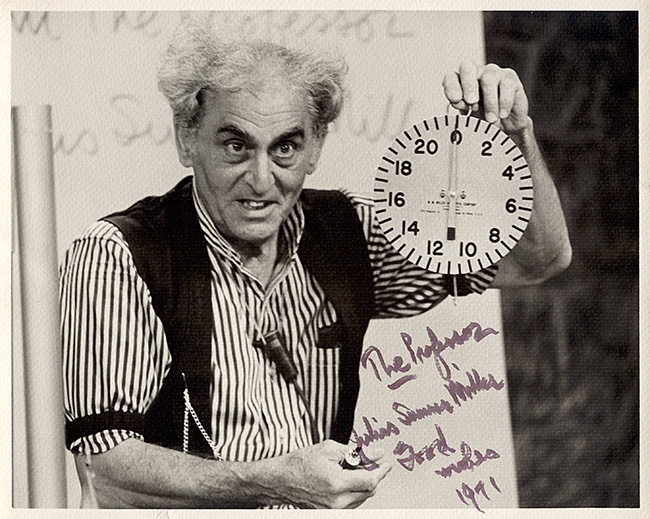
Professor Julius Sumner Miller If you don't know who Professor Julius Sumner Miller is, I highly recommend finding out

All of the organisations on the list, with the exception of Let s Encrypt, are what one might term traditional CAs. To a first approximation, it s reasonable to assume that the vast majority of the customers of these traditional CAs probably manage their certificates the same way they have for the past two decades or more. That is, they generate a key and CSR, upload the CSR to the CA to get a certificate, then copy the cert and key somewhere. Since humans are handling the keys, there s a higher risk of the humans using either risky practices, or making a mistake, and exposing the private key to the world. Let s Encrypt, on the other hand, issues all of its certificates using the ACME (Automatic Certificate Management Environment) protocol, and all of the Let s Encrypt documentation encourages the use of software tools to generate keys, issue certificates, and install them for use. Given that Let s Encrypt has 161 compromised certificates currently in the wild, it s clear that the automation in use is far from perfect, but the significantly lower compromise rate suggests to me that lifecycle automation at least reduces the rate of key compromise, even though it doesn t eliminate it completely.

Explaining the Outlier The difference in presumed issuance practices would seem to explain the significant difference in compromise rates between Let s Encrypt and the other organisations, if it weren t for one outlier. This is a largely traditional CA, with the manual-handling issues that implies, but with a compromise rate close to that of Let s Encrypt. We are, of course, talking about DigiCert. The thing about DigiCert, that doesn t show up in the raw numbers from crt.sh, is that DigiCert manages the issuance of certificates for several of the biggest hosted TLS providers, such as CloudFlare and AWS. When these services obtain a certificate from DigiCert on their customer s behalf, the private key is kept locked away, and no human can (we hope) get access to the private key. This is supported by the fact that no certificates identifiably issued to either CloudFlare or AWS appear in the set of certificates with compromised keys. When we ask for all certificates issued by DigiCert , we get both the certificates issued to these big providers, which are very good at keeping their keys under control, as well as the certificates issued to everyone else, whose key handling practices may not be quite so stringent. It s possible, though not trivial, to account for certificates issued to these hosted TLS providers, because the certificates they use are issued from intermediates branded to those companies. With the crt.sh psql interface we can run this query to get the total number of unexpired precertificates issued to these managed services:
SELECT SUM(sub.NUM_ISSUED[2] - sub.NUM_EXPIRED[2])
  FROM (
    SELECT ca.name, max(coalesce(coalesce(nullif(trim(cc.SUBORDINATE_CA_OWNER), ''), nullif(trim(cc.CA_OWNER), '')), cc.INCLUDED_CERTIFICATE_OWNER)) as OWNER,
           ca.NUM_ISSUED, ca.NUM_EXPIRED
      FROM ccadb_certificate cc, ca_certificate cac, ca
     WHERE cc.CERTIFICATE_ID = cac.CERTIFICATE_ID
       AND cac.CA_ID = ca.ID
  GROUP BY ca.ID
  ) sub
 WHERE sub.name ILIKE '%Amazon%' OR sub.name ILIKE '%CloudFlare%' AND sub.owner = 'DigiCert';
The number I get from running that query is 104,316,112, which should be subtracted from DigiCert s total issuance figures to get a more accurate view of what DigiCert s regular customers do with their private keys. When I do this, the compromise rates table, sorted by the compromise rate, looks like this:
IssuerIssuance VolumeCompromised CountCompromise Rate
Entrust23,16631 in 7,722
GlobalSign1,438,485461 in 31,271
SSL.com171,81611 in 171,816
GoDaddy56,121,4291411 in 398,024
"Regular" DigiCert40,397,363811 in 498,732
Sectigo88,323,0681701 in 519,547
All DigiCert144,713,475811 in 1,786,586
ISRG (Let's Encrypt)315,476,4021611 in 1,959,480
In short, it appears that DigiCert s regular customers are just as likely as GoDaddy or Sectigo customers to expose their private keys.

What Does It All Mean? The takeaway from all this is fairly straightforward, and not overly surprising, I believe.

The less humans have to do with certificate issuance, the less likely they are to compromise that certificate by exposing the private key. While it may not be surprising, it is nice to have some empirical evidence to back up the common wisdom. Fully-managed TLS providers, such as CloudFlare, AWS Certificate Manager, and whatever Azure s thing is called, is the platonic ideal of this principle: never give humans any opportunity to expose a private key. I m not saying you should use one of these providers, but the security approach they have adopted appears to be the optimal one, and should be emulated universally. The ACME protocol is the next best, in that there are a variety of standardised tools widely available that allow humans to take themselves out of the loop, but it s still possible for humans to handle (and mistakenly expose) key material if they try hard enough. Legacy issuance methods, which either cannot be automated, or require custom, per-provider automation to be developed, appear to be at least four times less helpful to the goal of avoiding compromise of the private key associated with a certificate.

Humans Are, Of Course, The Problem
Bender, the robot from Futurama, asking if we'd like to kill all humans No thanks, Bender, I'm busy tonight
This observation that if you don t let humans near keys, they don t get leaked is further supported by considering the biggest issuers by volume who have not issued any certificates whose keys have been compromised: Google Trust Services (fourth largest issuer overall, with 57,084,529 unexpired precertificates), and Microsoft Corporation (sixth largest issuer overall, with 22,852,468 unexpired precertificates). It appears that somewhere between most and basically all of the certificates these organisations issue are to customers of their public clouds, and my understanding is that the keys for these certificates are managed in same manner as CloudFlare and AWS the keys are locked away where humans can t get to them. It should, of course, go without saying that if a human can never have access to a private key, it makes it rather difficult for a human to expose it. More broadly, if you are building something that handles sensitive or secret data, the more you can do to keep humans out of the loop, the better everything will be.

Your Support is Appreciated If you d like to see more analysis of how key compromise happens, and the lessons we can learn from examining billions of certificates, please show your support by buying me a refreshing beverage. Trawling CT logs is thirsty work.

Appendix: Methodology Limitations In the interests of clarity, I feel it s important to describe ways in which my research might be flawed. Here are the things I know of that may have impacted the accuracy, that I couldn t feasibly account for.
  • Time Periods: Because time never stops, there is likely to be some slight mismatches in the numbers obtained from the various data sources, because they weren t collected at exactly the same moment.
  • Issuer-to-Organisation Mapping: It s possible that the way I mapped issuers to organisations doesn t match exactly with how crt.sh does it, meaning that counts might be skewed. I tried to minimise that by using the same data sources (the CCADB AllCertificates report) that I believe that crt.sh uses for its mapping, but I cannot be certain of a perfect match.
  • Unwarranted Grouping: I ve drawn some conclusions about the practices of the various organisations based on their general approach to certificate issuance. If a particular subordinate CA that I ve grouped into the parent organisation is managed in some unusual way, that might cause my conclusions to be erroneous. I was able to fairly easily separate out CloudFlare, AWS, and Azure, but there are almost certainly others that I didn t spot, because hoo boy there are a lot of intermediate CAs out there.

29 January 2024

Russell Coker: Thinkpad X1 Yoga Gen3

I just bought myself a Thinkpad X1 Yoga Gen3 for $359.10. I have been quite happy with the Thinkpad X1 Carbon Gen5 I ve had for just over a year (apart from my mistake in buying one with lost password) [1] and I normally try to get more use out of a computer than that. If I divide total cost by the time that I ve had it working that comes out to about $1.30 per day. I would pay more than that for a laptop and I have paid much more than that for laptops in the past, but I prefer not to. I was initially tempted to buy a new Thinkpad by the prices of high end X1 devices dropping, this new Yoga has 16G of RAM and a 2560*1440 screen that s a good upgrade from 8G with 1920*1080. The CPU of my new Thinkpad is a quad core i5-8350U that rates 6226 [2] and is a decent upgrade from the dual core i5-6300U that rates 3239 [3] although that wasn t a factor as I found the old CPU fast enough. The Yoga Gen3 has a minimum weight of 1.4Kg and mine might not be the lightest model in the range while the old Carbon weighs 1.14Kg. I can really feel the difference. It s also slightly larger but fortunately still fits in the pocket of my Scottware jacket. The higher resolution screen and more RAM were not sufficient to make me want to spend some money. The deciding factor is that as I m working on phones with touch screens it is a benefit to use a laptop with a touch screen so I can do more testing. The Yoga I bought was going cheap because the touch part of the touch screen is broken but the stylus still works, this is apparently a common failure mode of the Yoga. The Yoga has a brighter screen than the Carbon and seems to have better contrast. I think Lenovo had some newer technology for that generation of laptops or maybe my Carbon is slightly defective in that regard. It s a hazard of buying second hand that if something basically works but isn t quite as good as it should be then you will never know. I m happy with this purchase and I recommend that everyone who buys laptops secondhand the way I do only get 1440p or better displays. I ve currently got the Kitty terminal emulator [4] setup with 9 windows that each have 103 or 104 columns and 26 or 28 rows of text. That s a lot of terminals on a laptop screen!

Russ Allbery: Review: Bluebird

Review: Bluebird, by Ciel Pierlot
Publisher: Angry Robot
Copyright: 2022
ISBN: 0-85766-967-2
Format: Kindle
Pages: 458
Bluebird is a stand-alone far-future science fiction adventure. Ten thousand years ago, a star fell into the galaxy carrying three factions of humanity. The Ascetics, the Ossuary, and the Pyrites each believe that only their god survived and the other two factions are heretics. Between them, they have conquered the rest of the galaxy and its non-human species. The only thing the factions hate worse than each other are those who attempt to stay outside the faction system. Rig used to be a Pyrite weapon designer before she set fire to her office and escaped with her greatest invention. Now she's a Nightbird, a member of an outlaw band that tries to help refugees and protect her fellow Kashrini against Pyrite genocide. On her side, she has her girlfriend, an Ascetic librarian; her ship, Bluebird; and her guns, Panache and Pizzazz. And now, perhaps, the mysterious Ginka, a Zazra empath and remarkably capable fighter who helps Rig escape from an ambush by Pyrite soldiers. Rig wants to stay alive, help her people, and defy the factions. Pyrite wants Rig's secrets and, as leverage, has her sister. What Ginka wants is not entirely clear even to Ginka. This book is absurd, but I still had fun with it. It's dangerous for me to compare things to anime given how little anime that I've watched, but Bluebird had that vibe for me: anime, or maybe Japanese RPGs or superhero comics. The storytelling is very visual, combat-oriented, and not particularly realistic. Rig is a pistol sharpshooter and Ginka is the type of undefined deadly acrobatic fighter so often seen in that type of media. In addition to her ship, Rig has a gorgeous hand-maintained racing hoverbike with a beautiful paint job. It's that sort of book. It's also the sort of book where the characters obey cinematic logic designed to maximize dramatic physical confrontations, even if their actions make no logical sense. There is no facial recognition or screening, and it's bizarrely easy for the protagonists to end up in same physical location as high-up bad guys. One of the weapon systems that's critical to the plot makes no sense whatsoever. At critical moments, the bad guys behave more like final bosses in a video game, picking up weapons to deal with the protagonists directly instead of using their supposedly vast armies of agents. There is supposedly a whole galaxy full of civilizations with capital worlds covered in planet-spanning cities, but politics barely exist and the faction leaders get directly involved in the plot. If you are looking for a realistic projection of technology or society, I cannot stress enough that this is not the book that you're looking for. You probably figured that out when I mentioned ten thousand years of war, but that will only be the beginning of the suspension of disbelief problems. You need to turn off your brain and enjoy the action sequences and melodrama. I'm normally good at that, and I admit I still struggled because the plot logic is such a mismatch with the typical novels I read. There are several points where the characters do something that seems so monumentally dumb that I was sure Pierlot was setting them up for a fall, and then I got wrong-footed because their plan worked fine, or exploded for unrelated reasons. I think this type of story, heavy on dramatic eye-candy and emotional moments with swelling soundtracks, is a lot easier to pull off in visual media where all the pretty pictures distract your brain. In a novel, there's a lot of time to think about the strategy, technology, and government structure, which for this book is not a good idea. If you can get past that, though, Rig is entertainingly snarky and Ginka, who turns out to be the emotional heart of the book, is an enjoyable character with a real growth arc. Her background is a bit simplistic and the villains are the sort of pure evil that you might expect from this type of cinematic plot, but I cared about the outcome of her story. Some parts of the plot dragged and I think the editing could have been tighter, but there was enough competence porn and banter to pull me through. I would recommend Bluebird only cautiously, since you're going to need to turn off large portions of your brain and be in the right mood for nonsensically dramatic confrontations, but I don't regret reading it. It's mostly in primary colors and the emotional conflicts are not what anyone would call subtle, but it delivers a character arc and a somewhat satisfying ending. Content warning: There is a lot of serious physical injury in this book, including surgical maiming. If that's going to bother you, you may want to give this one a pass. Rating: 6 out of 10

25 January 2024

Dirk Eddelbuettel: qlcal 0.0.10 on CRAN: Calendar Updates

The tenth release of the qlcal package arrivied at CRAN today. qlcal delivers the calendaring parts of QuantLib. It is provided (for the R package) as a set of included files, so the package is self-contained and does not depend on an external QuantLib library (which can be demanding to build). qlcal covers over sixty country / market calendars and can compute holiday lists, its complement (i.e. business day lists) and much more. Examples are in the README at the repository, the package page, and course at the CRAN package page. This releases synchronizes qlcal with the QuantLib release 1.33 and its updates to 2024 calendars.

Changes in version 0.0.10 (2024-01-24)
  • Synchronized with QuantLib 1.33

Courtesy of my CRANberries, there is a diffstat report for this release. See the project page and package documentation for more details, and more examples. If you like this or other open-source work I do, you can now sponsor me at GitHub.

This post by Dirk Eddelbuettel originated on his Thinking inside the box blog. Please report excessive re-aggregation in third-party for-profit settings.

24 January 2024

Dirk Eddelbuettel: RApiDatetime 0.0.9 on CRAN: Maintenance

A new maintenance release of our RApiDatetime package is now on CRAN RApiDatetime provides a number of entry points for C-level functions of the R API for Date and Datetime calculations. The functions asPOSIXlt and asPOSIXct convert between long and compact datetime representation, formatPOSIXlt and Rstrptime convert to and from character strings, and POSIXlt2D and D2POSIXlt convert between Date and POSIXlt datetime. Lastly, asDatePOSIXct converts to a date type. All these functions are rather useful, but were not previously exported by R for C-level use by other packages. Which this package aims to change. This release responds to a CRAN request to clean up empty macros and sections in Rd files. Moreover, because the windows portion of the corresponding R-internal code underwent some changes, our (#ifdef conditional) coverage here is a little behind and created a warning under the newer UCRT setup. So starting with this release we are back to OS_type: unix meaning there will not be any Windows builds at CRAN. If you would like that to change, and ideally can work in the Windows portion, do not hesitate to get in touch. Details of the release follow based on the NEWS file.

Changes in RApiDatetime version 0.0.9 (2024-01-23)
  • Replace auto-generated stale RApitDatetime-package.Rd with macro-filled stanza to satisfy CRAN request.

Courtesy of my CRANberries, there is also a diffstat report for this release. If you like this or other open-source work I do, you can sponsor me at GitHub.

This post by Dirk Eddelbuettel originated on his Thinking inside the box blog. Please report excessive re-aggregation in third-party for-profit settings.

Dirk Eddelbuettel: RcppAnnoy 0.0.22 on CRAN: Maintenance

annoy image A very minor maintenance release, now at version 0.0.22, of RcppAnnoy has arrived on CRAN. RcppAnnoy is the Rcpp-based R integration of the nifty Annoy library by Erik Bernhardsson. Annoy is a small and lightweight C++ template header library for very fast approximate nearest neighbours originally developed to drive the Spotify music discovery algorithm. It had all the buzzwords already a decade ago: it is one of the algorithms behind (drum roll ) vector search as it finds approximate matches very quickly and also allows to persist the data. This release responds to a CRAN request to clean up empty macros and sections in Rd files. Details of the release follow based on the NEWS file.

Changes in version 0.0.22 (2024-01-23)
  • Replace empty examples macro to satisfy CRAN request.

Courtesy of my CRANberries, there is also a diffstat report for this release. If you like this or other open-source work I do, you can sponsor me at GitHub.

This post by Dirk Eddelbuettel originated on his Thinking inside the box blog. Please report excessive re-aggregation in third-party for-profit settings.

22 January 2024

Dirk Eddelbuettel: x13binary 1.1.60 on CRAN: Upstream Update, Updated Build

The x13binary team is thrilled to share the availability of Release 1.1.60-1 of the x13binary package providing the X-13ARIMA-SEATS program by the US Census Bureau which arrived on CRAN earlier today. This release brings the package up to speed with the most current release by the Census Bureau. More importantly, we finally made good on an old promise to ourselves and now install the binary by compiling from its Fortran sources! No more pre-made binaries. This required some work by Kirill, Michael, and Jeroen to finalize matter because, as we all know, the CRAN build processes and tool chains can be a little byzantine in their details. Use on platforms not covered by binaries from CRAN (or r-universe) should just work too as the demands on the (Fortran) compiler are fairly standard. All in all the build is fairly lightweight and quick even when rebuilding from source. Courtesy of my CRANberries, there is also a diffstat report for this release showing changes to the previous release. If you like this or other open-source work I do, you can sponsor me at GitHub.

This post by Dirk Eddelbuettel originated on his Thinking inside the box blog. Please report excessive re-aggregation in third-party for-profit settings.

Dirk Eddelbuettel: RProtoBuf 0.4.22 on CRAN: Updated Windows Support!

A new maintenance release 0.4.22 of RProtoBuf arrived on CRAN earlier today. RProtoBuf provides R with bindings for the Google Protocol Buffers ( ProtoBuf ) data encoding and serialization library used and released by Google, and deployed very widely in numerous projects as a language and operating-system agnostic protocol. This release matches the recent 0.4.21 release which enabled use of the package with newer ProtoBuf releases. Tomas has been updating the Windows / rtools side of things, and supplied us with simple PR that will enable building with those updated versions once finalised. The following section from the NEWS.Rd file has full details.

Changes in RProtoBuf version 0.4.22 (2022-12-13)
  • Apply patch by Tomas Kalibera to support updated rtools to build with newer ProtoBuf releases on windows

Thanks to my CRANberries, there is a diff to the previous release. The RProtoBuf page has copies of the (older) package vignette, the quick overview vignette, and the pre-print of our JSS paper. Questions, comments etc should go to the GitHub issue tracker off the GitHub repo. If you like this or other open-source work I do, you can sponsor me at GitHub.

This post by Dirk Eddelbuettel originated on his Thinking inside the box blog. Please report excessive re-aggregation in third-party for-profit settings.

20 January 2024

Gunnar Wolf: Ruffle helps bring back my family history

Probably a trait of my family s origins as migrants from East Europe, probably part of the collective trauma of jews throughout the world or probably because that s just who I turned out to be, I hold in high regard the preservation of memory of my family s photos, movies and such items. And it s a trait shared by many people in my familiar group. Shortly after my grandmother died 24 years ago, my mother did a large, loving work of digitalization and restoration of my grandparent s photos. Sadly, the higher resolution copies of said photos is lost but she took the work of not just scanning the photos, but assembling them in presentations, telling a story, introducing my older relatives, many of them missing 40 or more years before my birth. But said presentations were built using Flash. Right, not my choice of tool, and I told her back in the day but given I wasn t around to do the work in what I d chosen (a standards-abiding format, naturally), and given my graphic design skills are nonexistant Several years ago, when Adobe pulled the plug on the Flash format, we realized they would no longer be accessible. I managed to get the photos out of the preentations, but lost the narration, that is a great part of the work. Three days ago, however, I read a post on https://www.osnews.com that made me jump to action: https://www.osnews.com/story/138350/ruffle-an-open-source-flash-player-emulator/. Ruffle is an open source Flash Player emulator, written in Rust and compiled to WASM. Even though several OSnews readers report it to be buggy to play some Flash games they long for, it worked just fine for a simple slideshow presentator. So I managed to bring it back to life! Yes, I d like to make a better index page, but that will come later I am now happy and proud to share with you:

Acariciando la ausencia: Familia Iszaevich Fajerstein, 1900 2000 (which would be roughly translated as Caressing the absence: Iszaevich Fajerstein family, 1900-2000).

Niels Thykier: Making debputy: Writing declarative parsing logic

In this blog post, I will cover how debputy parses its manifest and the conceptual improvements I did to make parsing of the manifest easier. All instructions to debputy are provided via the debian/debputy.manifest file and said manifest is written in the YAML format. After the YAML parser has read the basic file structure, debputy does another pass over the data to extract the information from the basic structure. As an example, the following YAML file:
manifest-version: "0.1"
installations:
  - install:
      source: foo
      dest-dir: usr/bin
would be transformed by the YAML parser into a structure resembling:
 
  "manifest-version": "0.1",
  "installations": [
      
       "install":  
         "source": "foo",
         "dest-dir": "usr/bin",
        
      
  ]
 
This structure is then what debputy does a pass on to translate this into an even higher level format where the "install" part is translated into an InstallRule. In the original prototype of debputy, I would hand-write functions to extract the data that should be transformed into the internal in-memory high level format. However, it was quite tedious. Especially because I wanted to catch every possible error condition and report "You are missing the required field X at Y" rather than the opaque KeyError: X message that would have been the default. Beyond being tedious, it was also quite error prone. As an example, in debputy/0.1.4 I added support for the install rule and you should allegedly have been able to add a dest-dir: or an as: inside it. Except I crewed up the code and debputy was attempting to look up these keywords from a dict that could never have them. Hand-writing these parsers were so annoying that it demotivated me from making manifest related changes to debputy simply because I did not want to code the parsing logic. When I got this realization, I figured I had to solve this problem better. While reflecting on this, I also considered that I eventually wanted plugins to be able to add vocabulary to the manifest. If the API was "provide a callback to extract the details of whatever the user provided here", then the result would be bad.
  1. Most plugins would probably throw KeyError: X or ValueError style errors for quite a while. Worst case, they would end on my table because the user would have a hard time telling where debputy ends and where the plugins starts. "Best" case, I would teach debputy to say "This poor error message was brought to you by plugin foo. Go complain to them". Either way, it would be a bad user experience.
  2. This even assumes plugin providers would actually bother writing manifest parsing code. If it is that difficult, then just providing a custom file in debian might tempt plugin providers and that would undermine the idea of having the manifest be the sole input for debputy.
So beyond me being unsatisfied with the current situation, it was also clear to me that I needed to come up with a better solution if I wanted externally provided plugins for debputy. To put a bit more perspective on what I expected from the end result:
  1. It had to cover as many parsing errors as possible. An error case this code would handle for you, would be an error where I could ensure it sufficient degree of detail and context for the user.
  2. It should be type-safe / provide typing support such that IDEs/mypy could help you when you work on the parsed result.
  3. It had to support "normalization" of the input, such as
           # User provides
           - install: "foo"
           # Which is normalized into:
           - install:
               source: "foo"
4) It must be simple to tell  debputy  what input you expected.
At this point, I remembered that I had seen a Python (PYPI) package where you could give it a TypedDict and an arbitrary input (Sadly, I do not remember the name). The package would then validate the said input against the TypedDict. If the match was successful, you would get the result back casted as the TypedDict. If the match was unsuccessful, the code would raise an error for you. Conceptually, this seemed to be a good starting point for where I wanted to be. Then I looked a bit on the normalization requirement (point 3). What is really going on here is that you have two "schemas" for the input. One is what the programmer will see (the normalized form) and the other is what the user can input (the manifest form). The problem is providing an automatic normalization from the user input to the simplified programmer structure. To expand a bit on the following example:
# User provides
- install: "foo"
# Which is normalized into:
- install:
    source: "foo"
Given that install has the attributes source, sources, dest-dir, as, into, and when, how exactly would you automatically normalize "foo" (str) into source: "foo"? Even if the code filtered by "type" for these attributes, you would end up with at least source, dest-dir, and as as candidates. Turns out that TypedDict actually got this covered. But the Python package was not going in this direction, so I parked it here and started looking into doing my own. At this point, I had a general idea of what I wanted. When defining an extension to the manifest, the plugin would provide debputy with one or two definitions of TypedDict. The first one would be the "parsed" or "target" format, which would be the normalized form that plugin provider wanted to work on. For this example, lets look at an earlier version of the install-examples rule:
# Example input matching this typed dict.
#    
#       "source": ["foo"]
#       "into": ["pkg"]
#    
class InstallExamplesTargetFormat(TypedDict):
    # Which source files to install (dest-dir is fixed)
    sources: List[str]
    # Which package(s) that should have these files installed.
    into: NotRequired[List[str]]
In this form, the install-examples has two attributes - both are list of strings. On the flip side, what the user can input would look something like this:
# Example input matching this typed dict.
#    
#       "source": "foo"
#       "into": "pkg"
#    
#
class InstallExamplesManifestFormat(TypedDict):
    # Note that sources here is split into source (str) vs. sources (List[str])
    sources: NotRequired[List[str]]
    source: NotRequired[str]
    # We allow the user to write  into: foo  in addition to  into: [foo] 
    into: Union[str, List[str]]
FullInstallExamplesManifestFormat = Union[
    InstallExamplesManifestFormat,
    List[str],
    str,
]
The idea was that the plugin provider would use these two definitions to tell debputy how to parse install-examples. Pseudo-registration code could look something like:
def _handler(
    normalized_form: InstallExamplesTargetFormat,
) -> InstallRule:
    ...  # Do something with the normalized form and return an InstallRule.
concept_debputy_api.add_install_rule(
  keyword="install-examples",
  target_form=InstallExamplesTargetFormat,
  manifest_form=FullInstallExamplesManifestFormat,
  handler=_handler,
)
This was my conceptual target and while the current actual API ended up being slightly different, the core concept remains the same.
From concept to basic implementation Building this code is kind like swallowing an elephant. There was no way I would just sit down and write it from one end to the other. So the first prototype of this did not have all the features it has now. Spoiler warning, these next couple of sections will contain some Python typing details. When reading this, it might be helpful to know things such as Union[str, List[str]] being the Python type for either a str (string) or a List[str] (list of strings). If typing makes your head spin, these sections might less interesting for you. To build this required a lot of playing around with Python's introspection and typing APIs. My very first draft only had one "schema" (the normalized form) and had the following features:
  • Read TypedDict.__required_attributes__ and TypedDict.__optional_attributes__ to determine which attributes where present and which were required. This was used for reporting errors when the input did not match.
  • Read the types of the provided TypedDict, strip the Required / NotRequired markers and use basic isinstance checks based on the resulting type for str and List[str]. Again, used for reporting errors when the input did not match.
This prototype did not take a long (I remember it being within a day) and worked surprisingly well though with some poor error messages here and there. Now came the first challenge, adding the manifest format schema plus relevant normalization rules. The very first normalization I did was transforming into: Union[str, List[str]] into into: List[str]. At that time, source was not a separate attribute. Instead, sources was a Union[str, List[str]], so it was the only normalization I needed for all my use-cases at the time. There are two problems when writing a normalization. First is determining what the "source" type is, what the target type is and how they relate. The second is providing a runtime rule for normalizing from the manifest format into the target format. Keeping it simple, the runtime normalizer for Union[str, List[str]] -> List[str] was written as:
def normalize_into_list(x: Union[str, List[str]]) -> List[str]:
    return x if isinstance(x, list) else [x]
This basic form basically works for all types (assuming none of the types will have List[List[...]]). The logic for determining when this rule is applicable is slightly more involved. My current code is about 100 lines of Python code that would probably lose most of the casual readers. For the interested, you are looking for _union_narrowing in declarative_parser.py With this, when the manifest format had Union[str, List[str]] and the target format had List[str] the generated parser would silently map a string into a list of strings for the plugin provider. But with that in place, I had covered the basics of what I needed to get started. I was quite excited about this milestone of having my first keyword parsed without handwriting the parser logic (at the expense of writing a more generic parse-generator framework).
Adding the first parse hint With the basic implementation done, I looked at what to do next. As mentioned, at the time sources in the manifest format was Union[str, List[str]] and I considered to split into a source: str and a sources: List[str] on the manifest side while keeping the normalized form as sources: List[str]. I ended up committing to this change and that meant I had to solve the problem getting my parser generator to understand the situation:
# Map from
class InstallExamplesManifestFormat(TypedDict):
    # Note that sources here is split into source (str) vs. sources (List[str])
    sources: NotRequired[List[str]]
    source: NotRequired[str]
    # We allow the user to write  into: foo  in addition to  into: [foo] 
    into: Union[str, List[str]]
# ... into
class InstallExamplesTargetFormat(TypedDict):
    # Which source files to install (dest-dir is fixed)
    sources: List[str]
    # Which package(s) that should have these files installed.
    into: NotRequired[List[str]]
There are two related problems to solve here:
  1. How will the parser generator understand that source should be normalized and then mapped into sources?
  2. Once that is solved, the parser generator has to understand that while source and sources are declared as NotRequired, they are part of a exactly one of rule (since sources in the target form is Required). This mainly came down to extra book keeping and an extra layer of validation once the previous step is solved.
While working on all of this type introspection for Python, I had noted the Annotated[X, ...] type. It is basically a fake type that enables you to attach metadata into the type system. A very random example:
# For all intents and purposes,  foo  is a string despite all the  Annotated  stuff.
foo: Annotated[str, "hello world"] = "my string here"
The exciting thing is that you can put arbitrary details into the type field and read it out again in your introspection code. Which meant, I could add "parse hints" into the type. Some "quick" prototyping later (a day or so), I got the following to work:
# Map from
#      
#        "source": "foo"  # (or "sources": ["foo"])
#        "into": "pkg"
#      
class InstallExamplesManifestFormat(TypedDict):
    # Note that sources here is split into source (str) vs. sources (List[str])
    sources: NotRequired[List[str]]
    source: NotRequired[
        Annotated[
            str,
            DebputyParseHint.target_attribute("sources")
        ]
    ]
    # We allow the user to write  into: foo  in addition to  into: [foo] 
    into: Union[str, List[str]]
# ... into
#      
#        "source": ["foo"]
#        "into": ["pkg"]
#      
class InstallExamplesTargetFormat(TypedDict):
    # Which source files to install (dest-dir is fixed)
    sources: List[str]
    # Which package(s) that should have these files installed.
    into: NotRequired[List[str]]
Without me (as a plugin provider) writing a line of code, I can have debputy rename or "merge" attributes from the manifest form into the normalized form. Obviously, this required me (as the debputy maintainer) to write a lot code so other me and future plugin providers did not have to write it.
High level typing At this point, basic normalization between one mapping to another mapping form worked. But one thing irked me with these install rules. The into was a list of strings when the parser handed them over to me. However, I needed to map them to the actual BinaryPackage (for technical reasons). While I felt I was careful with my manual mapping, I knew this was exactly the kind of case where a busy programmer would skip the "is this a known package name" check and some user would typo their package resulting in an opaque KeyError: foo. Side note: "Some user" was me today and I was super glad to see debputy tell me that I had typoed a package name (I would have been more happy if I had remembered to use debputy check-manifest, so I did not have to wait through the upstream part of the build that happened before debhelper passed control to debputy...) I thought adding this feature would be simple enough. It basically needs two things:
  1. Conversion table where the parser generator can tell that BinaryPackage requires an input of str and a callback to map from str to BinaryPackage. (That is probably lie. I think the conversion table came later, but honestly I do remember and I am not digging into the git history for this one)
  2. At runtime, said callback needed access to the list of known packages, so it could resolve the provided string.
It was not super difficult given the existing infrastructure, but it did take some hours of coding and debugging. Additionally, I added a parse hint to support making the into conditional based on whether it was a single binary package. With this done, you could now write something like:
# Map from
class InstallExamplesManifestFormat(TypedDict):
    # Note that sources here is split into source (str) vs. sources (List[str])
    sources: NotRequired[List[str]]
    source: NotRequired[
        Annotated[
            str,
            DebputyParseHint.target_attribute("sources")
        ]
    ]
    # We allow the user to write  into: foo  in addition to  into: [foo] 
    into: Union[BinaryPackage, List[BinaryPackage]]
# ... into
class InstallExamplesTargetFormat(TypedDict):
    # Which source files to install (dest-dir is fixed)
    sources: List[str]
    # Which package(s) that should have these files installed.
    into: NotRequired[
        Annotated[
            List[BinaryPackage],
            DebputyParseHint.required_when_multi_binary()
        ]
    ]
Code-wise, I still had to check for into being absent and providing a default for that case (that is still true in the current codebase - I will hopefully fix that eventually). But I now had less room for mistakes and a standardized error message when you misspell the package name, which was a plus.
The added side-effect - Introspection A lovely side-effect of all the parsing logic being provided to debputy in a declarative form was that the generated parser snippets had fields containing all expected attributes with their types, which attributes were required, etc. This meant that adding an introspection feature where you can ask debputy "What does an install rule look like?" was quite easy. The code base already knew all of this, so the "hard" part was resolving the input the to concrete rule and then rendering it to the user. I added this feature recently along with the ability to provide online documentation for parser rules. I covered that in more details in my blog post Providing online reference documentation for debputy in case you are interested. :)
Wrapping it up This was a short insight into how debputy parses your input. With this declarative technique:
  • The parser engine handles most of the error reporting meaning users get most of the errors in a standard format without the plugin provider having to spend any effort on it. There will be some effort in more complex cases. But the common cases are done for you.
  • It is easy to provide flexibility to users while avoiding having to write code to normalize the user input into a simplified programmer oriented format.
  • The parser handles mapping from basic types into higher forms for you. These days, we have high level types like FileSystemMode (either an octal or a symbolic mode), different kind of file system matches depending on whether globs should be performed, etc. These types includes their own validation and parsing rules that debputy handles for you.
  • Introspection and support for providing online reference documentation. Also, debputy checks that the provided attribute documentation covers all the attributes in the manifest form. If you add a new attribute, debputy will remind you if you forget to document it as well. :)
In this way everybody wins. Yes, writing this parser generator code was more enjoyable than writing the ad-hoc manual parsers it replaced. :)

19 January 2024

Russell Coker: 2.5Gbit Ethernet

I just decided to upgrade the core of my home network from 1Gbit to 2.5Gbit. I didn t really need to do this, it was only about 5 years ago that I upgrade from 100Mbit to 1Gbit. but it s cheap and seemed interesting. I decided to do it because a 2.5Gbit switch was listed as cheap on Ozbargain Computing [1], that was $40.94 delivered. If you are in Australia and like computers then Ozbargain is a site worth polling, every day there s interesting things at low prices. The seller of the switch is KeeplinkStore [2] who distinguished themselves by phoning me from China to inform me that I had ordered a switch with a UK plug for delivery to Australia and suggesting that I cancel the order and make a new order with an Australian plug. It wouldn t have been a big deal if I had received a UK plug as I ve got a collection of adaptors but it was still nice of them to make it convenient for me. The switch basically does what it s expected to do and has no fan so it s quiet. I got a single port 2.5Gbit PCIe card for $18.77 and a dual port card for $34.07. Those cards are a little expensive when compared to 1Gbit cards but very cheap when compared to the computers they are installed in. These cards use the Realtek RTL8125 chipset and work well. I got a USB-3 2.5Gbit device for $17.43. I deliberately didn t get USB-C because I still use laptops without USB-C and most of the laptops with USB-C only have a single USB-C port which is used for power. I don t plan to stop using my 100Mbit USB ethernet device because most of the time I don t need a lot of speed. But sometimes I do things like testing auto-install on laptops and then having something faster than Gigabit is good. This card worked at 1Gbit speed on a 1Gbit network when used with a system running Debian/Bookworm with kernel 6.1 and worked at 2.5Gbit speed when connected to my LicheePi RISC-V system running Linux 5.10, but it would only do 100Mbit on my laptop running Debian/Unstable with kernel 6.6 (Debian Bug #1061095) [3]. It s a little disappointing but not many people have such hardware so it probably doesn t get a lot of testing. For the moment I plan to just use a 1Gbit USB Ethernet device most of the time and if I really need the speed I ll just use an older kernel. I did some tests with wget and curl to see if I could get decent speeds. When using wget 1.21.3 on Debian/Bookworm I got transfer speeds of 103MB/s and 18.8s of system CPU time out of 23.6s of elapsed time. Curl on Debian/Bookworm did 203MB/s and took 10.7s of system CPU time out of 11.8s elapsed time. The difference is that curl was using 100KB read buffers and a mix of 12K and 4K write buffers while wget was using 8KB read buffers and 4KB write buffers. On Debian/Unstable wget 1.21.4 uses 64K read buffers and a mix of 4K and 60K write buffers and gets a speed of 208MB/s. As an experiment I changed the read buffer size for wget to 256K and that got the speed up to around 220MB/s but it was difficult to measure as the occasional packet loss slowed things down. The pattern of writing 4K and then writing the rest continued, it seemed related to fwrite() buffering. For anyone else who wants to experiment with the code, the wget code is simpler (due to less features) and the package builds a lot faster (due to fewer tests) so that s the one to work on. The client machine for these tests has a E5-2696 v3 CPU, this doesn t compare well to some of the recent AMD CPUs on single-core performance but is still a decently powerful system. Getting good performance at Gigabit speeds on an ARM or RISC-V system is probably going to be a lot harder than getting good performance at 2.5Gbit speeds on this system. In conclusion 2.5Gbit basically works apart from a problem with new kernels and a problem with the old version of wget. I expect that when Debian/Trixie is released (probably mid 2025) things will work well. For good transfer rates use wget version 1.21.4 or newer or use curl. As an aside I use a 1500byte MTU because I have some 100baseT systems on my LAN and the settings regarding TCP acceleration etc are all the defaults.

18 January 2024

Russell Coker: LicheePi 4A (RISC-V) First Look

I Just bought a LicheePi 4A RISC-V embedded computer (like a RaspberryPi but with a RISC-V CPU) for $322.68 from Aliexpress (the official site for buying LicheePi devices). Here is the Sipheed web page about it and their other recent offerings [1]. I got the version with 16G of RAM and 128G of storage, I probably don t need that much storage (I can use NFS or USB) but 16G of RAM is good for VMs. Here is the Wiki about this board [2]. Configuration When you get one of these devices you should make setting up ssh server your first priority. I found the HDMI output to be very unreliable. The first monitor I tried was a Samsung 4K monitor dating from when 4K was a new thing, the LicheePi initially refused to operate at a resolution higher than 1024*768 but later on switched to 4K resolution when resuming from screen-blank for no apparent reason (and the window manager didn t support this properly). On the Dell 4K monitor I use on my main workstation it sometimes refused to talk to it and occasionally worked. I got it running at 1920*1080 without problems and then switched it to 4K and it lost video sync and never talked to that monitor again. On my Desklab portabable 4K monitor I got it to display in 4K resolution but only the top left 1/4 of the screen displayed. The issues with HDMI monitor support greatly limit the immediate potential for using this as a workstation. It doesn t make it impossible but would be fiddly at best. It s quite likely that a future OS update will fix this. But at the moment it s best used as a server. The LicheePi has a custom Linux distribution based on Ubuntu so you want too put something like the following in /etc/network/interfaces to make it automatically connect to the ethernet when plugged in:
auto end0
iface end0 inet dhcp
Then to get sshd to start you have to run the following commands to generate ssh host keys that aren t zero bytes long:
rm /etc/ssh/ssh_host_*
systemctl restart ssh.service
It appears to have wifi hardware but the OS doesn t recognise it. This isn t a priority for me as I mostly want to use it as a server. Performance For the first test of performance I created a 100MB file from /dev/urandom and then tried compressing it on various systems. With zstd -9 it took 16.893 user seconds on the LicheePi4A, 0.428s on my Thinkpad X1 Carbon Gen5 with a i5-6300U CPU (Debian/Unstable), 1.288s on my E5-2696 v3 workstation (Debian/Bookworm), 0.467s on the E5-2696 v3 running Debian/Unstable, 2.067s on a E3-1271 v3 server, and 7.179s on the E3-1271 v3 system emulating a RISC-V system via QEMU running Debian/Unstable. It s very impressive that the QEMU emulation is fast enough that emulating a different CPU architecture is only 3.5* slower for this test (or maybe 10* slower if it was running Debian/Unstable on the AMD64 code)! The emulated RISC-V is also more than twice as fast as real RISC-V hardware and probably of comparable speed to real RISC-V hardware when running the same versions (and might be slightly slower if running the same version of zstd) which is a tribute to the quality of emulation. One performance issue that most people don t notice is the time taken to negotiate ssh sessions. It s usually not noticed because the common CPUs have got faster at about the same rate as the algorithms for encryption and authentication have become more complex. On my i5-6300U laptop it takes 0m0.384s to run ssh -i ~/.ssh/id_ed25519 localhost id with the below server settings (taken from advice on ssh-audit.com [3] for a secure ssh configuration). On the E3-1271 v3 server it is 0.336s, on the QMU system it is 28.022s, and on the LicheePi it is 0.592s. By this metric the LicheePi is about 80% slower than decent x86 systems and the QEMU emulation of RISC-V is 73* slower than the x86 system it runs on. Does crypto depend on instructions that are difficult to emulate?
HostKey /etc/ssh/ssh_host_ed25519_key
KexAlgorithms -ecdh-sha2-nistp256,ecdh-sha2-nistp384,ecdh-sha2-nistp521,diffie-hellman-group14-sha256
MACs -umac-64-etm@openssh.com,hmac-sha1-etm@openssh.com,umac-64@openssh.com,umac-128@openssh.com,hmac-sha2-256,hmac-sha2-512,hmac-sha1
I haven t yet tested the performance of Ethernet (what routing speed can you get through the 2 gigabit ports?), emmc storage, and USB. At the moment I ve been focused on using RISC-V as a test and development platform. My conclusion is that I m glad I don t plan to compile many kernels or anything large like LibreOffice. But that for typical development that I do it will be quite adequate. The speed of Chromium seems adequate in basic tests, but the video output hasn t worked reliably enough to do advanced tests. Hardware Features Having two Gigabit Ethernet ports, 4 USB-3 ports, and Wifi on board gives some great options for using this as a router. It s disappointing that they didn t go with 2.5Gbit as everyone seems to be doing that nowadays but Gigabit is enough for most things. Having only a single HDMI port and not supporting USB-C docks (the USB-C port appears to be power only) limits what can be done for workstation use and for controlling displays. I know of people using small ARM computers attached to the back of large TVs for advertising purposes and that isn t going to be a great option for this. The CPU and RAM apparently uses a lot of power (which is relative the entire system draws up to 2A at 5V so the CPU would be something below 5W). To get this working a cooling fan has to be stuck to the CPU and RAM chips via a layer of thermal stuff that resembles a fine sheet of blu-tack in both color and stickyness. I am disappointed that there isn t any more solid form of construction, to mount this on a wall or ceiling some extra hardware would be needed to secure this. Also if they just had a really big copper heatsink I think that would be better. 80386 CPUs with similar TDP were able to run without a fan. I wonder how things would work with all USB ports in use. It s expected that a USB port can supply a minimum of 2.5W which means that all the ports could require 10W if they were active. Presumably something significantly less than 5W is available for the USB ports. Other Devices Sipheed has a range of other devices in the works. They currently sell the LicheeCluster4A which support 7 compute modules for a cluster in a box. This has some interesting potential for testing and demonstrating cluster software but you could probably buy an AMD64 system with more compute power for less money. The Lichee Console 4A is a tiny laptop which could be useful for people who like the 7 laptop form factor, unfortunately it only has a 1280*800 display if it had the same resolution display as a typical 7 phone I would have bought one. The next device that appeals to me is the soon to be released Lichee Pad 4A which is a 10.1 tablet with 1920*1200 display, Wifi6, Bluetooth 5.4, and 16G of RAM. It also has 1 USB-C connection, 2*USB-3 sockets, and support for an external card with 2*Gigabit ethernet. It s a tablet as a laptop without keyboard instead of the more common larger phone design model. They are also about to release the LicheePadMax4A which is similar to the other tablet but with a 14 2240*1400 display and which ships with a keyboard to make it essentially a laptop with detachable keyboard. Conclusion At this time I wouldn t recommend that this device be used as a workstation or laptop, although the people who want to do such things will probably do it anyway regardless of my recommendations. I think it will be very useful as a test system for RISC-V development. I have some friends who are interested in this sort of thing and I can give them VMs. It is a bit expensive. The Sipheed web site boasts about the LicheePi4 being faster than the RaspberryPi4, but it s not a lot faster and the RaspberryPi4 is much cheaper ($127 or $129 for one with 8G of RAM). The RaspberryPi4 has two HDMI ports but a limit of 8G of RAM while the LicheePi has up to 16G of RAM and two Gigabit Ethernet ports but only a single HDMI port. It seems that the RaspberryPi4 might win if you want a cheap low power desktop system. At this time I think the reason for this device is testing out RISC-V as an alternative to the AMD64 and ARM64 architectures. An open CPU architecture goes well with free software, but it isn t just people who are into FOSS who are testing such things. I know some corporations are trying out RISC-V as a way of getting other options for embedded systems that don t involve paying monopolists. The Lichee Console 4A is probably a usable tiny laptop if the resolution is sufficient for your needs. As an aside I predict that the tiny laptop or pocket computer segment will take off in the near future. There are some AMD64 systems the size of a phone but thicker that run Windows and go for reasonable prices on AliExpress. Hopefully in the near future this device will have better video drivers and be usable as a small and quiet workstation. I won t rule out the possibility of making this my main workstation in the not too distant future, all it needs is reliable 4K display and the ability to decode 4K video. It s performance for web browsing and as an ssh client seems adequate, and that s what matters for my workstation use. But for the moment it s just for server use.

17 January 2024

Colin Watson: Task management

Now that I m freelancing, I need to actually track my time, which is something I ve had the luxury of not having to do before. That meant something of a rethink of the way I ve been keeping track of my to-do list. Up to now that was a combination of things like the bug lists for the projects I m working on at the moment, whatever task tracking system Canonical was using at the moment (Jira when I left), and a giant flat text file in which I recorded logbook-style notes of what I d done each day plus a few extra notes at the bottom to remind myself of particularly urgent tasks. I could have started manually adding times to each logbook entry, but ugh, let s not. In general, I had the following goals (which were a bit reminiscent of my address book): I didn t do an elaborate evaluation of multiple options, because I m not trying to come up with the best possible solution for a client here. Also, there are a bazillion to-do list trackers out there and if I tried to evaluate them all I d never do anything else. I just wanted something that works well enough for me. Since it came up on Mastodon: a bunch of people swear by Org mode, which I know can do at least some of this sort of thing. However, I don t use Emacs and don t plan to use Emacs. nvim-orgmode does have some support for time tracking, but when I ve tried vim-based versions of Org mode in the past I ve found they haven t really fitted my brain very well. Taskwarrior and Timewarrior One of the other Freexian collaborators mentioned Taskwarrior and Timewarrior, so I had a look at those. The basic idea of Taskwarrior is that you have a task command that tracks each task as a blob of JSON and provides subcommands to let you add, modify, and remove tasks with a minimum of friction. task add adds a task, and you can add metadata like project:Personal (I always make sure every task has a project, for ease of filtering). Just running task shows you a task list sorted by Taskwarrior s idea of urgency, with an ID for each task, and there are various other reports with different filtering and verbosity. task <id> annotate lets you attach more information to a task. task <id> done marks it as done. So far so good, so a redacted version of my to-do list looks like this:
$ task ls
ID A Project     Tags                 Description
17   Freexian                         Add Incus support to autopkgtest [2]
 7   Columbiform                      Figure out Lloyds online banking [1]
 2   Debian                           Fix troffcvt for groff 1.23.0 [1]
11   Personal                         Replace living room curtain rail
Once I got comfortable with it, this was already a big improvement. I haven t bothered to learn all the filtering gadgets yet, but it was easy enough to see that I could do something like task all project:Personal and it d show me both pending and completed tasks in that project, and that all the data was stored in ~/.task - though I have to say that there are enough reporting bells and whistles that I haven t needed to poke around manually. In combination with the regular backups that I do anyway (you do too, right?), this gave me enough confidence to abandon my previous text-file logbook approach. Next was time tracking. Timewarrior integrates with Taskwarrior, albeit in an only semi-packaged way, and it was easy enough to set that up. Now I can do:
$ task 25 start
Starting task 00a9516f 'Write blog post about task tracking'.
Started 1 task.
Note: '"Write blog post about task tracking"' is a new tag.
Tracking Columbiform "Write blog post about task tracking"
  Started 2024-01-10T11:28:38
  Current                  38
  Total               0:00:00
You have more urgent tasks.
Project 'Columbiform' is 25% complete (3 of 4 tasks remaining).
When I stop work on something, I do task active to find the ID, then task <id> stop. Timewarrior does the tedious stopwatch business for me, and I can manually enter times if I forget to start/stop a task. Then the really useful bit: I can do something like timew summary :month <name-of-client> and it tells me how much to bill that client for this month. Perfect. I also started using VIT to simplify the day-to-day flow a little, which means I m normally just using one or two keystrokes rather than typing longer commands. That isn t really necessary from my point of view, but it does save some time. Android integration I left Android integration for a bit later since it wasn t essential. When I got round to it, I have to say that it felt a bit clumsy, but it did eventually work. The first step was to set up a taskserver. Most of the setup procedure was OK, but I wanted to use Let s Encrypt to minimize the amount of messing around with CAs I had to do. Getting this to work involved hitting things with sticks a bit, and there s still a local CA involved for client certificates. What I ended up with was a certbot setup with the webroot authenticator and a custom deploy hook as follows (with cert_name replaced by a DNS name in my house domain):
#! /bin/sh
set -eu
cert_name=taskd.example.org
found=false
for domain in $RENEWED_DOMAINS; do
    case "$domain" in
        $cert_name)
            found=:
            ;;
    esac
done
$found   exit 0
install -m 644 "/etc/letsencrypt/live/$cert_name/fullchain.pem" \
    /var/lib/taskd/pki/fullchain.pem
install -m 640 -g Debian-taskd "/etc/letsencrypt/live/$cert_name/privkey.pem" \
    /var/lib/taskd/pki/privkey.pem
systemctl restart taskd.service
I could then set this in /etc/taskd/config (server.crl.pem and ca.cert.pem were generated using the documented taskserver setup procedure):
server.key=/var/lib/taskd/pki/privkey.pem
server.cert=/var/lib/taskd/pki/fullchain.pem
server.crl=/var/lib/taskd/pki/server.crl.pem
ca.cert=/var/lib/taskd/pki/ca.cert.pem
Then I could set taskd.ca on my laptop to /usr/share/ca-certificates/mozilla/ISRG_Root_X1.crt and otherwise follow the client setup instructions, run task sync init to get things started, and then task sync every so often to sync changes between my laptop and the taskserver. I used TaskWarrior Mobile as the client. I have to say I wouldn t want to use that client as my primary task tracking interface: the setup procedure is clunky even beyond the necessity of copying a client certificate around, it expects you to give it a .taskrc rather than having a proper settings interface for that, and it only seems to let you add a task if you specify a due date for it. It also lacks Timewarrior integration, so I can only really use it when I don t care about time tracking, e.g. personal tasks. But that s really all I need, so it meets my minimum requirements. Next? Considering this is literally the first thing I tried, I have to say I m pretty happy with it. There are a bunch of optional extras I haven t tried yet, but in general it kind of has the vim nature for me: if I need something it s very likely to exist or easy enough to build, but the features I don t use don t get in my way. I wouldn t recommend any of this to somebody who didn t already spend most of their time in a terminal - but I do. I m glad people have gone to all the effort to build this so I didn t have to.

16 January 2024

Russ Allbery: Review: Making Money

Review: Making Money, by Terry Pratchett
Series: Discworld #36
Publisher: Harper
Copyright: October 2007
Printing: November 2014
ISBN: 0-06-233499-9
Format: Mass market
Pages: 473
Making Money is the 36th Discworld novel, the second Moist von Lipwig book, and a direct sequel to Going Postal. You could start the series with Going Postal, but I would not start here. The post office is running like a well-oiled machine, Adora Belle is out of town, and Moist von Lipwig is getting bored. It's the sort of boredom that has him picking his own locks, taking up Extreme Sneezing, and climbing buildings at night. He may not realize it, but he needs something more dangerous to do. Vetinari has just the thing. The Royal Bank of Ankh-Morpork, unlike the post office before Moist got to it, is still working. It is a stolid, boring institution doing stolid, boring things for rich people. It is also the battleground for the Lavish family past-time: suing each other and fighting over money. The Lavishes are old money, the kind of money carefully entangled in trusts and investments designed to ensure the family will always have money regardless of how stupid their children are. Control of the bank is temporarily in the grasp of Joshua Lavish's widow Topsy, who is not a true Lavish, but the vultures are circling. Meanwhile, Vetinari has grand city infrastructure plans, and to carry them out he needs financing. That means he needs a functional bank, and preferably one that is much less conservative. Moist is dubious about running a bank, and even more reluctant when Topsy Lavish sees him for exactly the con artist he is. His hand is forced when she dies, and Moist discovers he has inherited her dog, Mr. Fusspot. A dog that now owns 51% of the Royal Bank and therefore is the chairman of the bank's board of directors. A dog whose safety is tied to Moist's own by way of an expensive assassination contract. Pratchett knew he had a good story with Going Postal, so here he runs the same formula again. And yes, I was happy to read it again. Moist knows very little about banking but quite a lot about pretending something will work until it does, which has more to do with banking than it does with running a post office. The bank employs an expert, Mr. Bent, who is fanatically devoted to the gold standard and the correctness of the books and has very little patience for Moist. There are golem-related hijinks. The best part of this book is Vetinari, who is masterfully manipulating everyone in the story and who gets in some great lines about politics.
"We are not going to have another wretched empire while I am Patrician. We've only just got over the last one."
Also, Vetinari processing dead letters in the post office was an absolute delight. Making Money does have the recurring Pratchett problem of having a fairly thin plot surrounded by random... stuff. Moist's attempts to reform the city currency while staying ahead of the Lavishes is only vaguely related to Mr. Bent's plot arc. The golems are unrelated to the rest of the plot other than providing a convenient deus ex machina. There is an economist making water models in the bank basement with an Igor, which is a great gag but has essentially nothing to do with the rest of the book. One of the golems has been subjected to well-meaning older ladies and 1950s etiquette manuals, which I thought was considerably less funny (and somewhat creepier) than Pratchett did. There are (sigh) clowns, which continue to be my least favorite Ankh-Morpork world-building element. At least the dog was considerably less annoying than I was afraid it was going to be. This grab-bag randomness is a shame, since I think there was room here for a more substantial plot that engaged fully with the high weirdness of finance. Unfortunately, this was a bit like the post office in Going Postal: Pratchett dives into the subject just enough to make a few wry observations and a few funny quips, and then resolves the deeper issues off-camera. Moist tries to invent fiat currency, because of course he does, and Pratchett almost takes on the gold standard, only to veer away at the last minute into vigorous hand-waving. I suspect part of the problem is that I know a little bit too much about finance, so I kept expecting Pratchett to take the humorous social commentary a couple of levels deeper. On a similar note, the villains have great potential that Pratchett undermines by adding too much over-the-top weirdness. I wish Cosmo Lavish had been closer to what he appears to be at the start of the book: a very wealthy and vindictive man (and a reference to Cosimo de Medici) who doesn't have Moist's ability to come up with wildly risky gambits but who knows considerably more than he does about how banking works. Instead, Pratchett gives him a weird obsession that slowly makes him less sinister and more pathetic, which robs the book of a competent antagonist for Moist. The net result is still a fun book, and a solid Discworld entry, but it lacks the core of the best series entries. It felt more like a skit comedy show than a novel, but it's an excellent skit comedy show with the normal assortment of memorable Pratchettisms. Certainly if you've read this far, or even if you've only read Going Postal, you'll want to read Making Money as well. Followed by Unseen Academicals. The next Moist von Lipwig book is Raising Steam. Rating: 8 out of 10

15 January 2024

Russ Allbery: Review: The Library of Broken Worlds

Review: The Library of Broken Worlds, by Alaya Dawn Johnson
Publisher: Scholastic Press
Copyright: June 2023
ISBN: 1-338-29064-9
Format: Kindle
Pages: 446
The Library of Broken Worlds is a young-adult far-future science fantasy. So far as I can tell, it's stand-alone, although more on that later in the review. Freida is the adopted daughter of Nadi, the Head Librarian, and her greatest wish is to become a librarian herself. When the book opens, she's a teenager in highly competitive training. Freida is low-wetware, without the advanced and expensive enhancements of many of the other students competing for rare and prized librarian positions, which she makes up for by being the most audacious. She doesn't need wetware to commune with the library material gods. If one ventures deep into their tunnels and consumes their crystals, direct physical communion is possible. The library tunnels are Freida's second home, in part because that's where she was born. She was created by the Library, and specifically by Iemaja, the youngest of the material gods. Precisely why is a mystery. To Nadi, Freida is her daughter. To Quinn, Nadi's main political rival within the library, Freida is a thing, a piece of the library, a secondary and possibly rogue AI. A disruptive annoyance. The Library of Broken Worlds is the sort of science fiction where figuring out what is going on is an integral part of the reading experience. It opens with a frame story of an unnamed girl (clearly Freida) waking the god Nameren and identifying herself as designed for deicide. She provokes Nameren's curiosity and offers an Arabian Nights bargain: if he wants to hear her story, he has to refrain from killing her for long enough for her to tell it. As one might expect, the main narrative doesn't catch up to the frame story until the very end of the book. The Library is indeed some type of library that librarians can search for knowledge that isn't available from more mundane sources, but Freida's personal experience of it is almost wholly religious and oracular. The library's material gods are identified as AIs, but good luck making sense of the story through a science fiction frame, even with a healthy allowance for sufficiently advanced technology being indistinguishable from magic. The symbolism and tone is entirely fantasy, and late in the book it becomes clear that whatever the material gods are, they're not simple technological AIs in the vein of, say, Banks's Ship Minds. Also, the Library is not solely a repository of knowledge. It is the keeper of an interstellar peace. The Library was founded after the Great War, to prevent a recurrence. It functions as a sort of legal system and grand tribunal in ways that are never fully explained. As you might expect, that peace is based more on stability than fairness. Five of the players in this far future of humanity are the Awilu, the most advanced society and the first to leave Earth (or Tierra as it's called here); the Mah m, who possess the material war god Nameren of the frame story; the Lunars and Martians, who dominate the Sol system; and the surviving Tierrans, residents of a polluted and struggling planet that is ruthlessly exploited by the Lunars. The problem facing Freida and her friends at the start of the book is a petition brought by a young Tierran against Lunar exploitation of his homeland. His name is Joshua, and Freida is more than half in love with him. Joshua's legal argument involves interpretation of the freedom node of the treaty that ended the Great War, a node that precedent says gives the Lunars the freedom to exploit Tierra, but which Joshua claims has a still-valid originalist meaning granting Tierrans freedom from exploitation. There is, in short, a lot going on in this book, and "never fully explained" is something of a theme. Freida is telling a story to Nameren and only explains things Nameren may not already know. The reader has to puzzle out the rest from the occasional hint. This is made more difficult by the tendency of the material gods to communicate only in visions or guided hallucinations, full of symbolism that the characters only partly explain to the reader. Nonetheless, this did mostly work, at least for me. I started this book very confused, but by about the midpoint it felt like the background was coming together. I'm still not sure I understand the aurochs, baobab, and cicada symbolism that's so central to the framing story, but it's the pleasant sort of stretchy confusion that gives my brain a good workout. I wish Johnson had explained a few more things plainly, particularly near the end of the book, but my remaining level of confusion was within my tolerances. Unfortunately, the ending did not work for me. The first time I read it, I had no idea what it meant. Lots of baffling, symbolic things happened and then the book just stopped. After re-reading the last 10%, I think all the pieces of an ending and a bit of an explanation are there, but it's absurdly abbreviated. This is another book where the author appears to have been finished with the story before I was. This keeps happening to me, so this probably says something more about me than it says about books, but I want books to have an ending. If the characters have fought and suffered through the plot, I want them to have some space to be happy and to see how their sacrifices play out, with more detail than just a few vague promises. If much of the book has been puzzling out the nature of the world, I would like some concrete confirmation of at least some of my guesswork. And if you're going to end the book on radical transformation, I want to see the results of that transformation. Johnson does an excellent job showing how brutal the peace of the powerful can be, and is willing to light more things on fire over the course of this book than most authors would, but then doesn't offer the reader much in the way of payoff. For once, I wish this stand-alone turned out to be a series. I think an additional book could be written in the aftermath of this ending, and I would definitely read that novel. Johnson has me caring deeply about these characters and fascinated by the world background, and I'd happily spend another 450 pages finding out what happens next. But, frustratingly, I think this ending was indeed intended to wrap up the story. I think this book may fall between a few stools. Science fiction readers who want mysterious future worlds to be explained by the end of the book are going to be frustrated by the amount of symbolism, allusion, and poetic description. Literary fantasy readers, who have a higher tolerance for that style, are going to wish for more focused and polished writing. A lot of the story is firmly YA: trying and failing to fit in, developing one's identity, coming into power, relationship drama, great betrayals and regrets, overcoming trauma and abuse, and unraveling lies that adults tell you. But this is definitely not a straight-forward YA plot or world background. It demands a lot from the reader, and while I am confident many teenage readers would rise to that challenge, it seems like an awkward fit for the YA marketing category. About 75% of the way in, I would have told you this book was great and you should read it. The ending was a let-down and I'm still grumpy about it. I still think it's worth your attention if you're in the mood for a sink-or-swim type of reading experience. Just be warned that when the ride ends, I felt unceremoniously dumped on the pavement. Content warnings: Rape, torture, genocide. Rating: 7 out of 10

Next.

Previous.