Search Results: "pini"

19 September 2010

Andreas Metzler: What I hated about my sqeeeze upgrade experience - udev

Rant follows. I have upgraded my PC to squeeze this weekend. While this generally worked fine, udev (version 160-1) made my day. As usual I had not read the release notes previously and was hit by
Please upgrade your kernel before or while upgrading udev.

AT YOUR OWN RISK, you can force the installation of this version of udev WHICH DOES NOT WORK WITH YOUR RUNNING KERNEL AND WILL BREAK YOUR SYSTEM
dpkg to the rescue:
dpkg -i /var/cache/apt/archives/linux-base_2.6.32-21_all.deb 
dpkg -i /var/cache/apt/archives/linux-image-2.6.32-5-amd64_2.6.32-21_i386.deb  /var/cache/apt/archives/linux-image-2.6-amd64_2.6.32+28_i386.deb 
reboot
Afterwards the upgrade succeded. (For reference: The correct solution would probably have been to run apt-get install linux-image-2.6-amd64 and rebooting, before starting the dist-upgrade.) udev was not finished with me, though, the syntax for udev rules has changed again. ("NAME="%k" is ignored, because it breaks kernel supplied names", "SYSFS = will be removed in a future udev version, please use ATTR =", "BUS= will be removed in a future udev version, please use SUBSYSTEM=", etc.) So I started googling and rewriting my custom rules for USB-sticks and USB cardreader. After many reboots (the only way to test these rules nowadays), thing were still not working. My cardreader is not an exotic but a common one, i.e. it does not report media changes. (The guide for writing udev rules shares this opinion.) Previously I had:
BUS=="scsi", KERNEL=="sd*", SYSFS model =="Compact Flash",SYSFS vendor =="Generic-",NAME all_partitions ="cardreader/cf"
which caused udev to generate /dev/cardreader/cf1, /dev/cardreader/cf2, etc. on bootup (without media present), enabling me to configure /etc/fstab to allow mounting of /dev/cardreader/cf1 without superuser privileges. After googling I ended up with this new rule:
SUBSYSTEMS=="scsi", KERNEL=="sd*", DRIVERS=="sd", ATTRS vendor =="Generic-", ATTRS model =="SD/MMC          ", SYMLINK+="cardreader/sd%n", OPTIONS+="all_partitions"
and while I get ...
argenau:~# ls -l /dev/cardreader/sd
lrwxrwxrwx 1 root root 6 Sep 19 14:42 /dev/cardreader/sd -> ../sdd
... there is still no /dev/cardreader/sd1 (unless I insert a card and run fdisk -l /dev/cardreader/sd as superuser). Looks like OPTIONS+="all_partitions" is ignored. And indeed I find this in udev's changelog:
udev 152
[...]
The option "all_partitions" was removed from udev. This should not be needed for usual hardware. Udev can not safely make assumptions about non-existing partition major/minor numbers, and therefore no longer provide this unreliable and unsafe option.

Joy. Thanks udev for telling me consumer devices have been fixed overnight, USB cardreaders have suddenly started reporting media change events.

Russ Allbery: eyrie.org now with IPv6

I've now enabled IPv6 for both eyrie.org systems and have published corresponding DNS records (although DNS as always may take some time to update). Panix mentioned a while back that they now supported IPv6 (with, as usual, a great admin console interface that made it trivial to turn it on and set up proper reverse DNS), but I knew there were going to be some issues with setting it up so I put it off. Amusingly, it was Debian that finally pushed me into configuring it: I kept getting the AAAA record for security.debian.org first and waiting for the connection to time out before connecting to the IPv4 address, and I got tired of waiting. For the most part, I just had to turn it on and everything simply worked. There were only a couple bits of weirdness:

15 September 2010

Gunnar Wolf: On enjoying history, opposed to what happens around me

Portadas de los discos de Diana Uribe I have always liked learning and understanding history. Since I discovered him, for a couple of years already I always try to catch Javier Garciadiego's program Conversaciones sobre historia, Saturday 9AM in the Horizonte 108 radio station (can be listened to online). This program started by going over the events just before the beginning of the 1910 revolution in Mexico - and along slightly over five years, one hour per week and following different threads, the program has reached the end of the Cristiada, in the early 1930s. Garciadiego has a very nice, followable, amenable way of telling history, and I have recommended his program to many friends. This last June, I spent some days in Guatemala City, for DrupalCamp Centroam rica. I stayed with my good Colombian friend, Dilson, and at his house he had framed a poster of the History of the Civilizations. Of course, I got my nose close to it, guessing as many faces as possible in the lot. And he showed me his last Christmas present: Two books, each of them with 6 CDs. One is Historia de las Civilizaciones, the second one is Historia de las independencias. They are made by Colombia's very well known and well regarded historian Diana Uribe. I copied the CDs in order to listen to them later And wow, was I impressed! Diana Uribe makes a great narrative about topics that to some people would seem boring and dry. As I said, I have always found passion in understanding the human processes that have shaped civilization and brought us all the way to where we stand now. Well, Diana Uribe manages to bring more "normal" people to this passion. While looking for information on her to share in this blog post, I found so many places offering download of her disks, with apparently young people talking about how she has got them all so excited and interested in history... That's, I think, the best "thank you" any academician can get: having non-specialists say how her work has opened up the passion of one of the world's least sexy professions to them. And yes there are so many "thank you" and "I want" commentaries, so much of what I would call "fan mail", that it took me a bit to find an online library carrying both works. And yes, at ~US$50 each, I do intend to buy them. Now, why am I writing this today? Well, yes, because I finished listening to the series today, but besides During this year, most of Latin American countries conmemorate their 200 years of existence. Most of the independentist struggles in the continent started in 1809-1810. And today is the "partying" day in Mexico Says the legend that in the night between September 15 and 16, 1810, a priest who is always painted as old and charismatic called on his small town urging the people to rise and fight for independence, and as a result of that, only 11 years later Mexico was a fully independent country, spanning from Costa Rica to California, and... well, a nice and very idealized myth. A century later, in 1910, after a very long stability and growth period (attained mostly through repression, the same abstract thing named as "the people" rose against the dictator Porfirio D az, who had been Mexico's president for 30 years. The revolution deeply changed the social face of the country, but politically... After ~15 years of fighting, the result was that a 30 year long dictatorship was replaced by a 70 year long one... And our political system still has not evolved beyond that model. Now, comparing what has not improved nor even stayed the same but went backwards... A century ago, the festivities of the hundred years of independence were a time for showing pride, for showing to the guests from more "civilized" countries how ours was by then a modern, thriving country worth believing in, worth investing in: Besides the important, majestic and well built monuments that were erected and still stand today (i.e. the Column of the Independence or Hemiciclo a Ju rez, many institutions that would socially shape the next century even after D az's death, even after he had been declared not the role model we wanted after all were born: The National University (nowadays the most important university in Latin America), the National School for Professors, the Railroad Technical School and many others (see Javier Aranda's note for some more details)... The celebration was well-thought and planned. Of course, it didn't go into some darker corners, the country was as uneven and unfair as it can be for the poorer indigenous population (which back then was a majority), and what not. But this year? Well, we are expecting an impressive show tonight (which I won't see, even though I'd like to, as I no longer have a TV and even if I had wanted to go downtown for the celebration, different government branches are insisting we should just sit and watch it by TV at home as it can be too crowded... so not even that was well thought out Of course not every Mexican can go to the same square and see the same de-facto president do the ritual, but some more redundancy could be thought, spreading acts through all of the city instead of concentrating the festivities all along Reforma. But anyway Leaving aside our current de-facto ruler's inabilities to do anything worthy, which are already well known and documented... I took this opportunity to listen to a great work, and am most happy to do it, and to be able to share it with you.

12 September 2010

Alastair McKinstry: Exoclimes: the diversity of planetary scientists

I'm just back from ExoClimes 2010: Exploring the Diversity of Planetary Atmospheres. An excellent conference: the PDFs of the talks and posters are now online, and they are putting the videos of the talks up soon. But in particular the organizers deserves thanks for bringing exoplanetary scientists and observers together with climate modelers doing Earth (and Mars, Titan, Venus, ...) models.
Model complexity graph Peter Cox on model complexity
The last talk on Friday was by Peter Cox on Climate change and exoplanet sciences that was far better than expected for the "graveyard shift". One theme of the conference was the need for a 'heirarchy' of models, from simple energy-balance models to full circulation (GCM) models: using progressively more complex models to understand more bits of whats going on. Exoplanet workers mostly use simpler models, progressing now to GCMs, while Earth modellers are moving beyond GCMs to "Earth system" models including biology, etc. Peter pointed out the two styles of work: the exoplanet modelers are short of data, and risk being too speculative. We know little of what the planets are like, and concentrate on implementing physics in the models to see what they might be like. Earth modelers on the other hand are if anything swamped with data: the tendency here is to make the model fit the data, by adjusting parameters until it does so. The danger of this approach is that the model will then not work away from current present-Earth conditions. Tim Lenton pointed out some work that was done with the Met Office model, where they took the radiative transfer part of the model and tested it for other planets, and paleo-Earth conditions. The model blew up : it wasn't capable of x2 or x4 current CO2 levels. (This has since been corrected). Over dinner there were interesting discussions on the different styles within the communities. While the underlying GCMs used come from the Earth sciences, its quite common within the exoplanetary community for a researcher to work on all parts of the model: dynamics one day, radiative transfer the next. In Earth climate work people have become more specialized and someone is a 'radiative transfer' person, and won't touch other parts of the code (even if they can follow them in the huge codes we have today!). On the other hand, there is a greater tradition of model inter-comparison in Earth sciences, where we compare the model outputs to each other for some known test cases ( Held & Suarez, the CMIP5 project, etc.) Apart from some initial work by Emily Rauscher, little has been done on this in exoplanetary models; it was agreed more of this would be a good idea. Radiative transfer (the interaction of 'sunlight' with the atmosphere, where it gets absorbed, scattered and re-radiated) in particular seems to be an area that could benefit from this. In this middle ground Francois Forget showed the work on the LMDZ model and applying GCMs to terrestrial planets. They've successfully applied this model to Mars, Titan, and partially to Venus (a much tougher problem, due to its heavy clouds giving a long radiative timescale). There are problems with correctly explaining super-rotation though. This is where the atmosphere rotates faster than the planet: on Venus for example the planet rotates every 243 days, while the clouds rotate around the planet every 4 days. Sebastian Lebonnois described the possible mechanisms for Venus and Titan; Johnathan Mitchell so did some interesting work on this recently. Different regimes are involved for different rotation rates of the planet. Ralph Lorenz pointed out the lack of "real paleo-Earth" climate work at the moment. While geology has inspired a lot of work on the atmospheric composition, what with the different gas mixtures (meaning earth-model radiative transfer codes don't work) and the faster dynamics meaning super-rotation could apply (Earth's day was about 8 hours long in the Archean era), we don't have a model of the climate yet. It looks like we should treat Earth as an exoplanet. Tags , , ,

10 September 2010

Bernd Zeimetz: refactoring the guruplug server plus

As mentioned in my last blog post the GuruPlug Server Plus needs some major refactoring before it can be used. Not doing so will make you end up with a fried brick. There are various stories in the forums about cooling it properly, so you might want to have a look first instead of following mine blindly. And of course - whatever you do - it is your fault when you end up with a brick, not mine!.

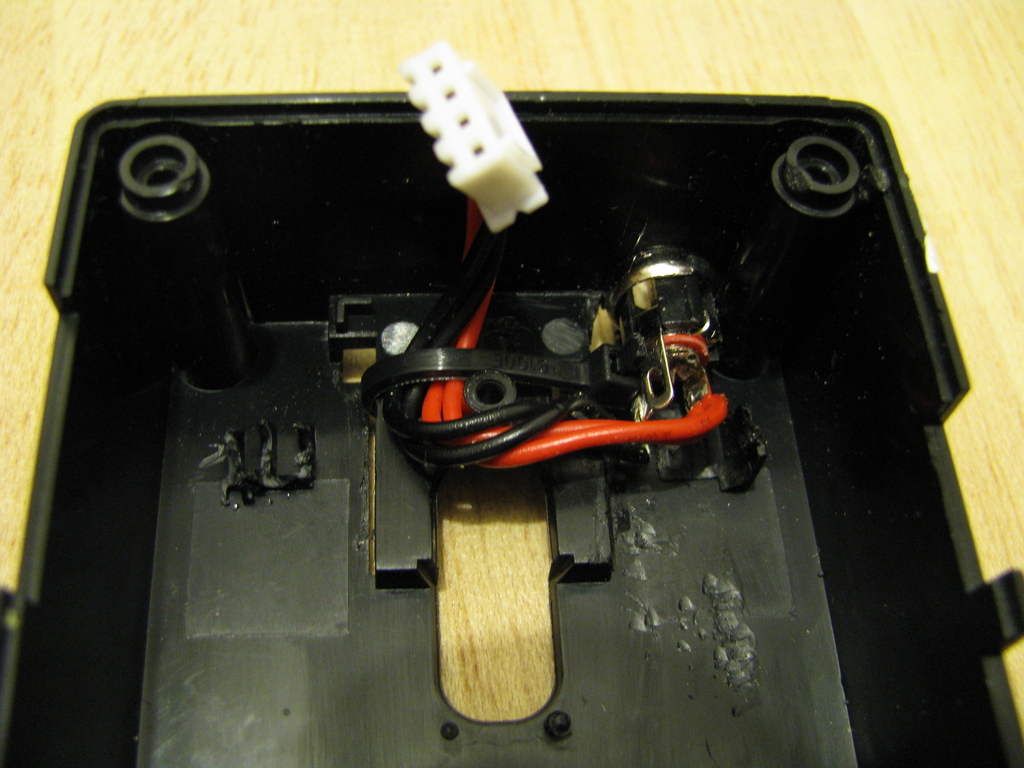
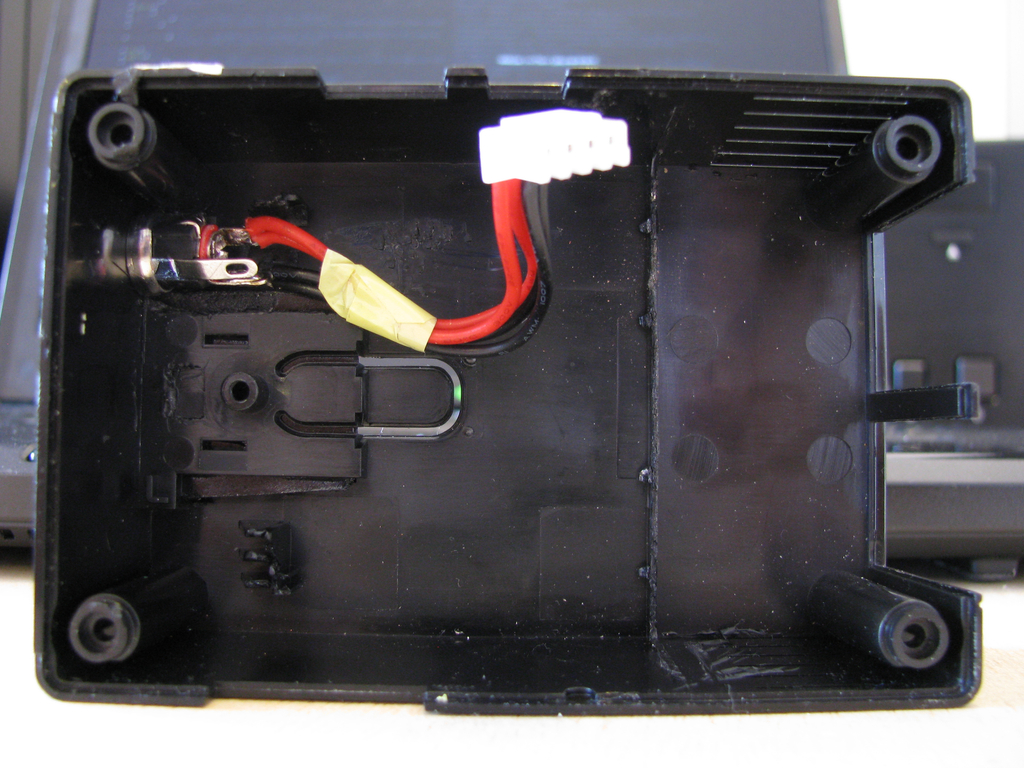
Replacing the power supply As I would never ever trust the PSU (see my last blog post for the gory details) and some additional free space in the case is necessary, it is time to rip it out. As replacement I've ordered an external 5V/20W PSU. To connect it to the plug I've drilled a hole into the case and added a proper connector after soldering the original cable from the old PSU to it. Make sure to add some retainer to stop the cable from touching the CPU/memory heat sinks later. GuruPlug Server Plus PSU replacement GuruPlug Server Plus PSU cabling

Proper heatsinks One of the biggest problems in the original GuruPlug design is the heat spreading and collecting piece of alloy, which probably makes things even worse than better. After some discussion in #debian-devel the idea came up, that the board should be able to run fine without a heatsink - at least when idling. That is the case, indeed. So let's get rid of that piece of alloy, together with the holders and springs. Unfortunately heat things are necessary to handle some work load. To mount them make sure you get some good thermal glue as you don't want to insulate the chips from their heat sinks. I've used Arctic Silver II thermal glue - not cheap, but working well. Make sure to clean the heat sinks and chips properly with alcohol (2-Propanol is my favourite for that), so there is no fat and dust left. When you use the glue be careful to read the documentation properly and make sure you apply only as much as necessary - a thin coating is enough. After applying the glue and mounting the heat sink you need a clamp to put some pressure on it while the glue dries.

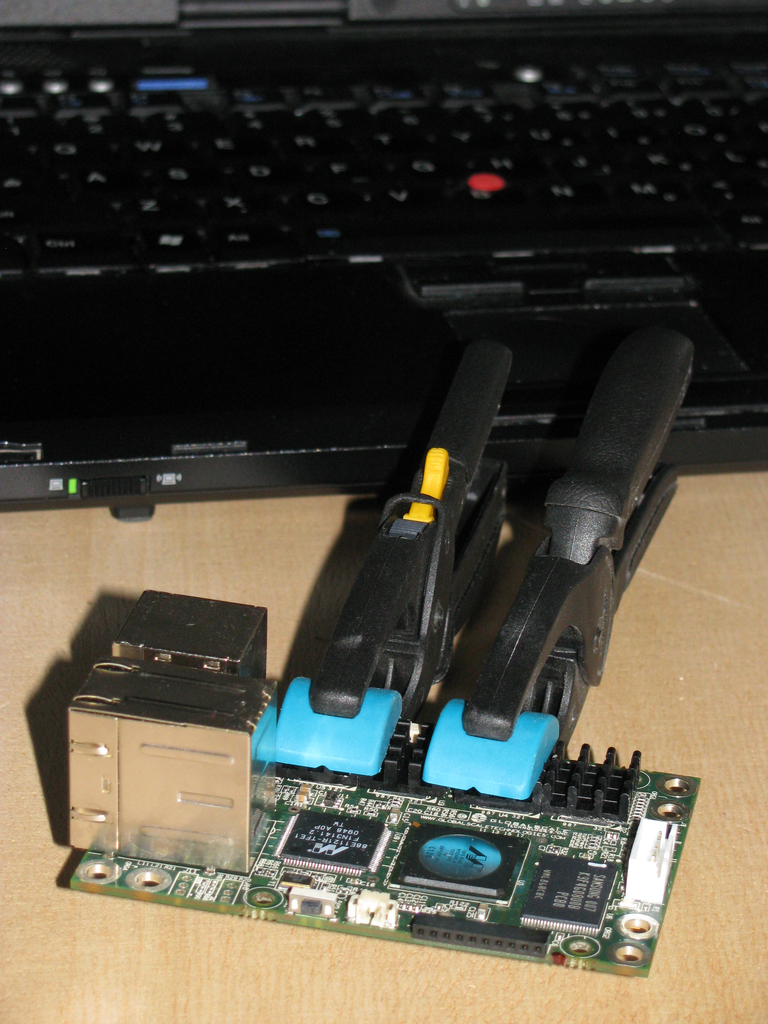
Heat sinks for the memory As there is a lot of space around the memory chips, I've got some 14x14x6mm heat sinks. Luckily there are only small parts on the other side of the board, so it was not hard to attach clamps to ensure the glue is able to dry properly. In case largish amounts of glue are squeezing out between heat sink and chip you probably want to start from scratch and clean everything (quickly!) with alcohol again. GuruPlug Server Plus memory heat sink clamping

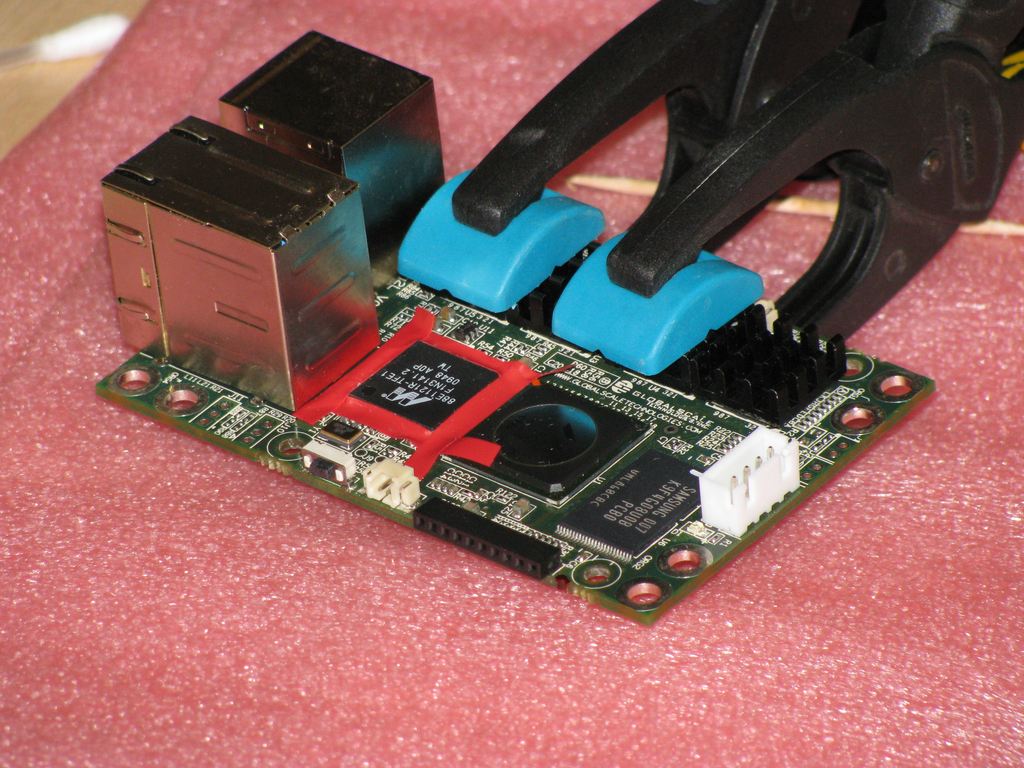
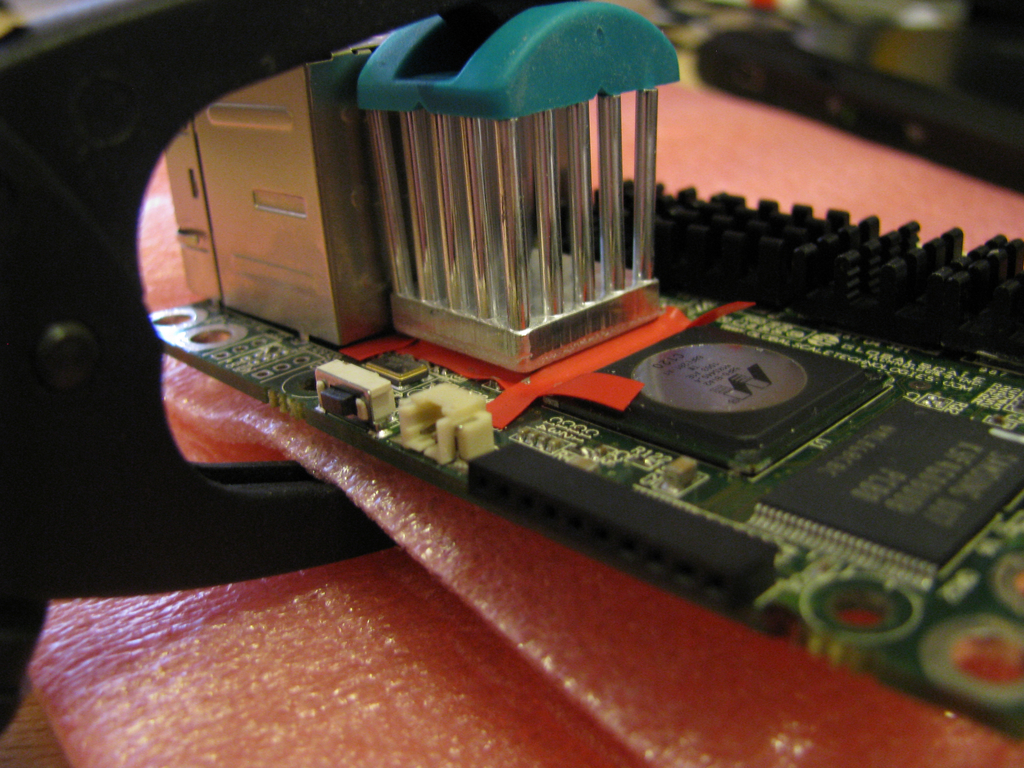
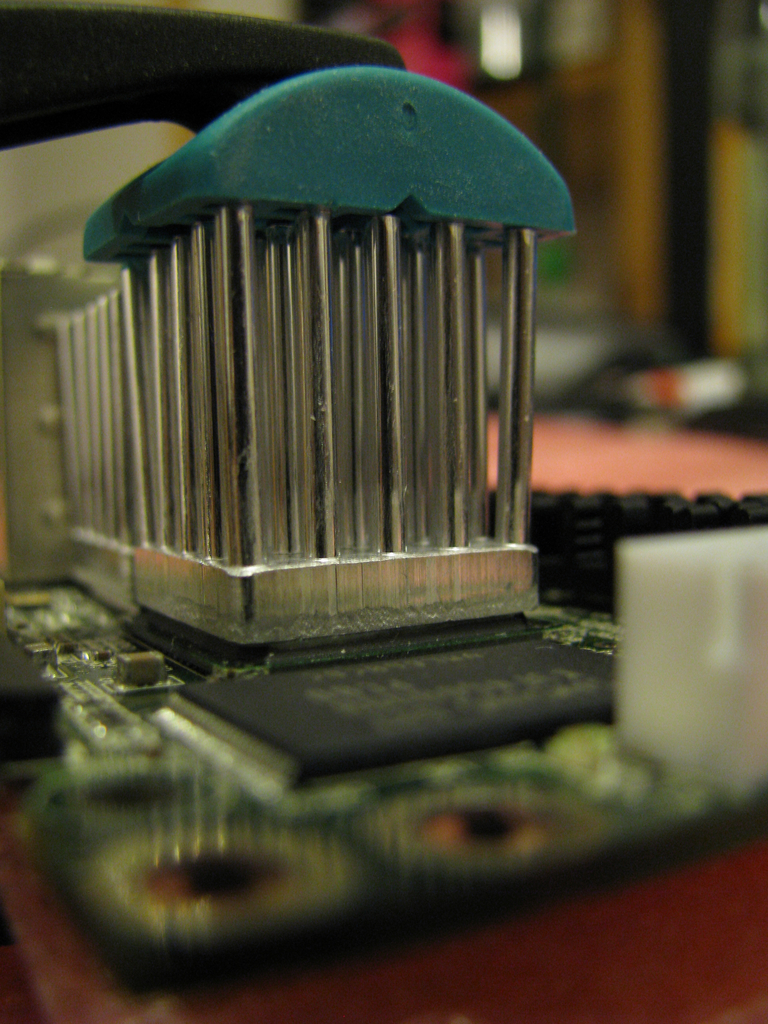
Gigabit Ethernet PHY and CPU heatsinks PHY and CPU need proper heatsinks as they're becoming pretty hot under load. Due to space limitations I had to stick with a 17x17x20mm heat sink for the PHY. I've tried to get a largish heat sink with BGA mount for the CPU, but I was not able to find one in short time and without ordering 1000 of them. So I've got another one of the 17x17x20mm model for the CPU. Later I found two other heat sinks which might fit on the GuruPlug's CPU: Malico 19x19x25mm or a Advanced Thermal Solutions Maxigrip. But for now the smaller one will have to do the job, also I'm scared to removed it without destroying the CPU. To mount the heat sink on the PHY a bit of preparation is necessary to ensure that the glue doesn't result in short cuts on the IC's pins. The arctic silver documentation recommends to use silicone on the pins to stop the glue. As I neither had the proper silicone nor did I want to make such a mess, I've decided to get a sticky insulating tape and some tooth picks to mount it properly on the IC pins. Make sure to do a proper job here! With good clamps you can work on the PHY while the memory heat sink glue is still drying. GuruPlug Server Plus - preparing the PHY The other problem on this side of the board is that some higher parts are mounted on the lower side of the board, so make sure to get some foam to protect them from your clamps. Except of the size of the heat sinks there is no real difference to the small ones: add glue, mount the heat sink and fix it with a clamp. GuruPlug Server Plus - mounting the PHY heatsink Before the glue dries completely make sure you remove the duct tape strips again. Be careful not to wipe any excess glue onto the IC pins. If you manage to do so you might want to remove and clean everything properly. So just be careful and everything should be fine. GuruPlug Server Plus - mounting the PHY heatsink 3 Mounting the heat sink on the CPU is easier as the CPU is a nice BGA package. No need to protect pins an there are none. GuruPlug Server Plus - mounting the CPU heatsink

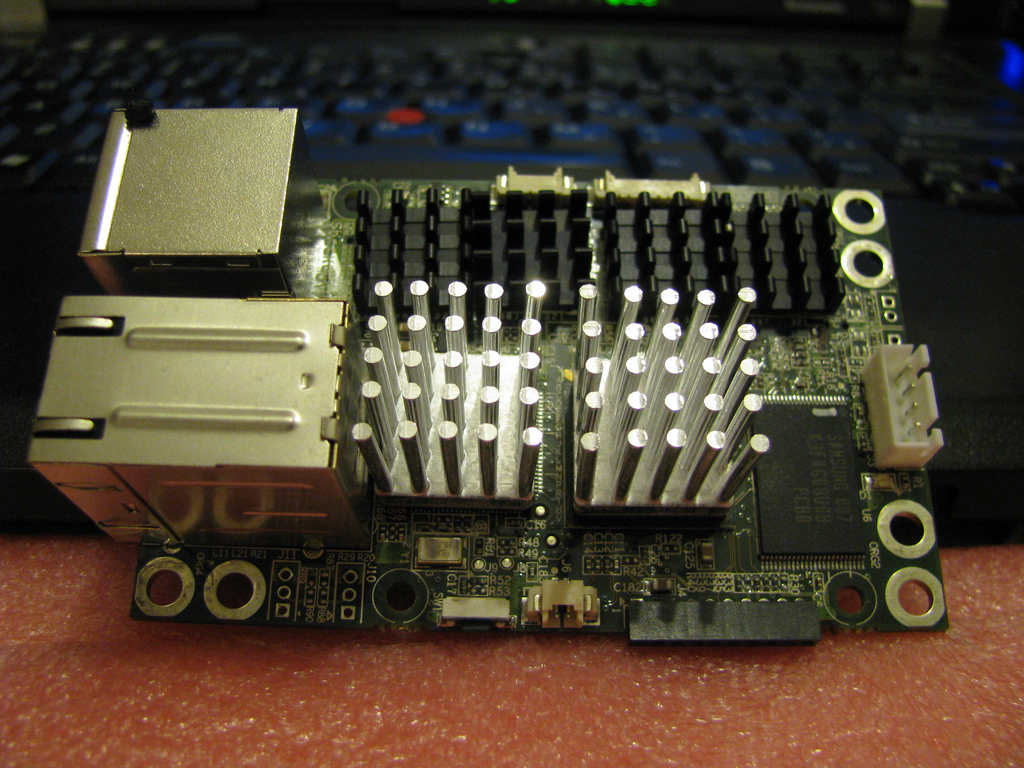
Finished As you're able to see on the photo I did not the very perfect job, but fine enough to work properly. GuruPlug Server Plus - heatsinks

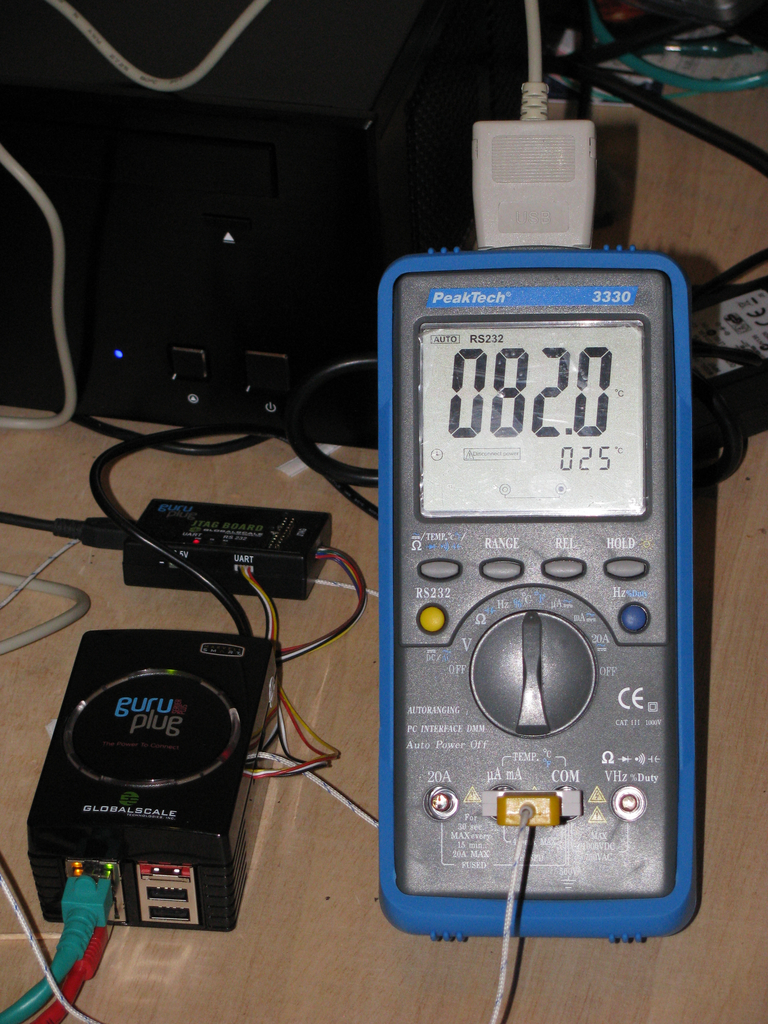
First tests with the new heatsinks Some tests with stress and some heavy network traffic showed quickly that the heat sinks are working well! But not well enough to be able to mount them into the original closed case (how the hell was this supposed to work before!?). Without any air to breath the temperature on the CPU heat sink went up to 85 deg C quickly. So on the CPU's die are > 100 deg C, which is at least close to the max allowed temperature. GuruPlug Server Plus - still too hot

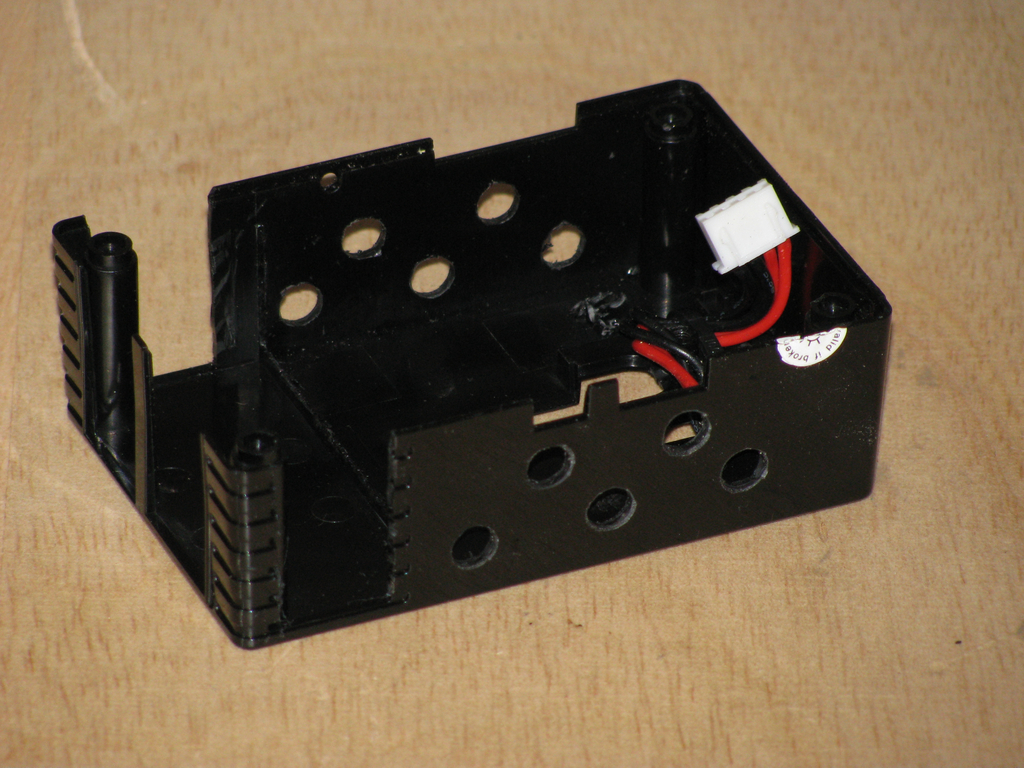
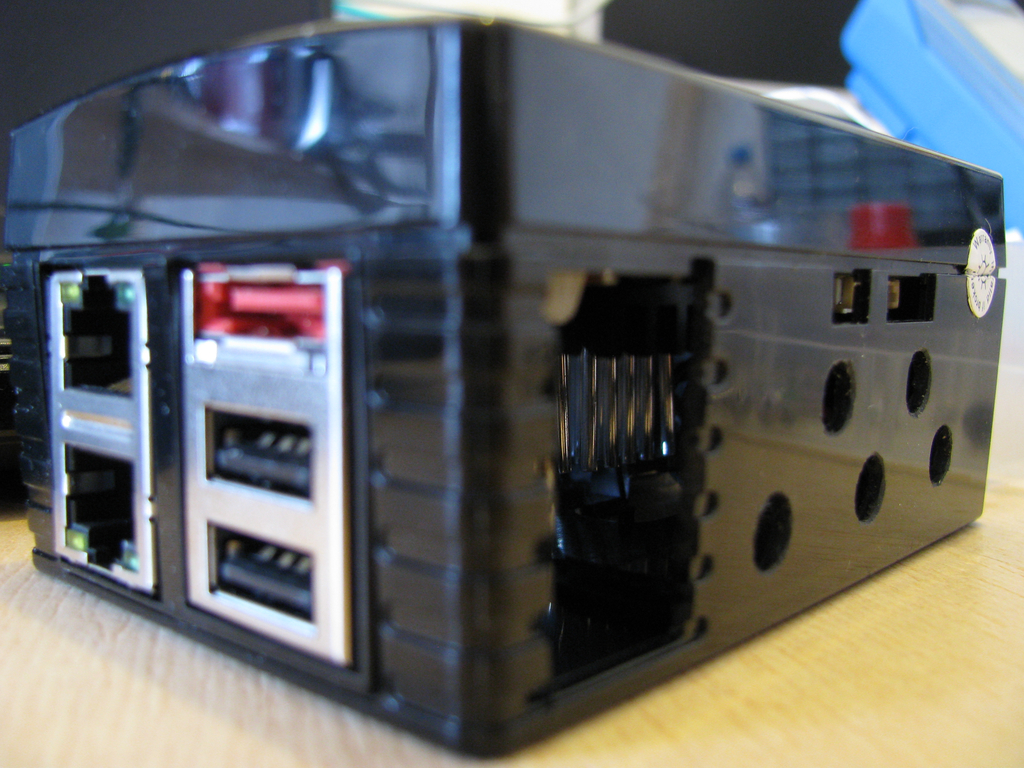
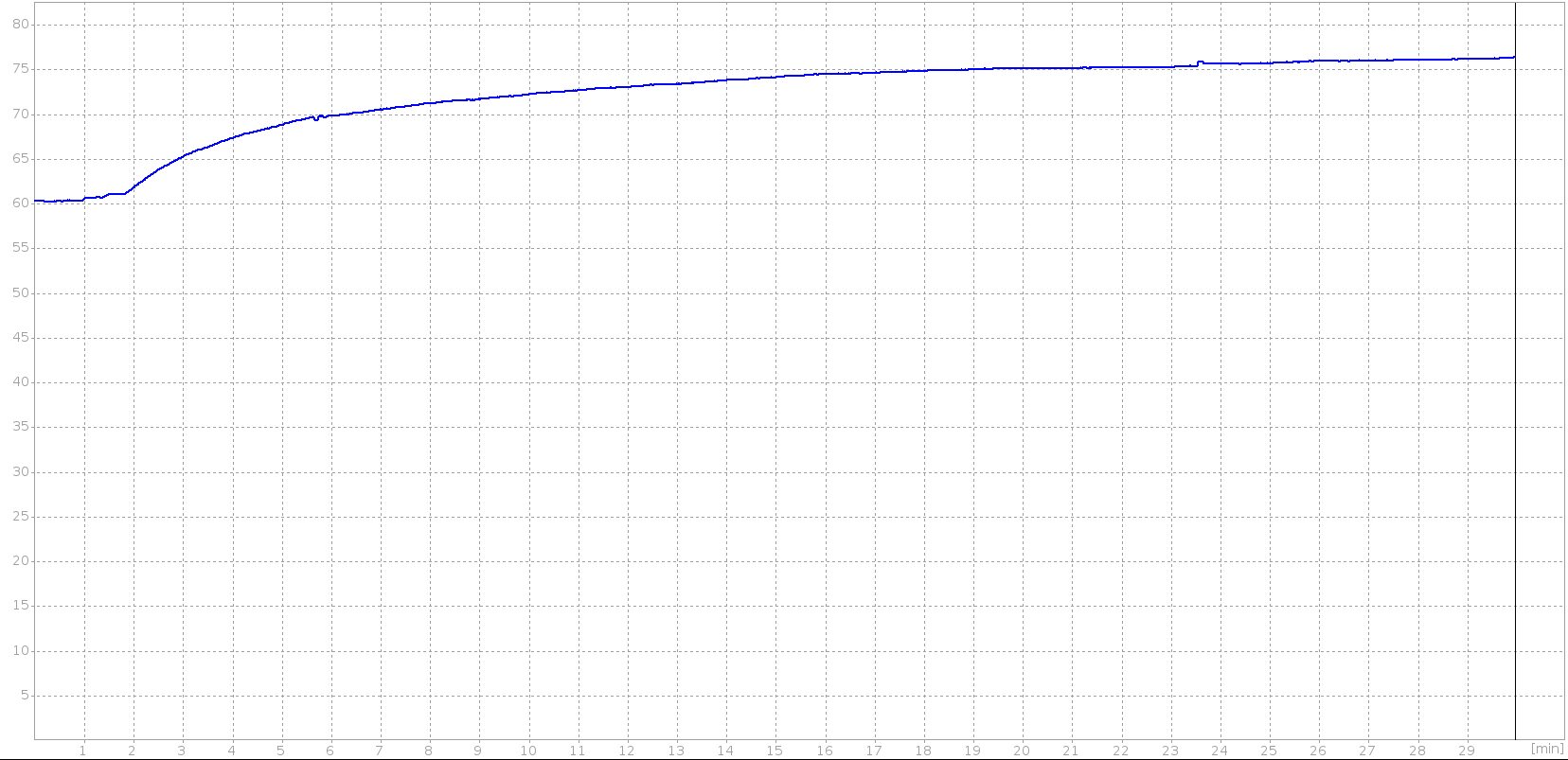
Adding air holes Obviously some additional air holes are necessary. After meeting my drill and cutter, the original case looks a bit like a piece of cheese now. GuruPlug Server Plus - case with air holes 1 GuruPlug Server Plus - case with air holes 2 Some more tests show that the temperature sticks around 76 deg C under heavy load now. That is still pretty hot, especially when the temperature in the room becomes hotter in summer. As I'm not going to run a lot of traffic trough it (my cable connection is limited to 20 MBit/s anyway), I guess it will work. Below is a graph I've recorded with my multimeter and qtdmm. It shows that the temperature rises to ~76 deg C and stays there. GuruPlug Server Plus - temperature curve Not sure if I could introuce some more load, the CPU had a load of 6 running stress. Network traffic was around 2x100MBit/s again. I could imagine with 2xGBit the CPU and PHY would become much hotter (no idea if it would be able to handle it at all, though). The PHY was usually a bit cooler than the CPU, so I didn't spend time to measure the temperature properly.

Conclusion My opinion is still the the original design of the plug is an insane QA and design failure. There is no way that it could ever work as shipped originally. If I'd have to design a new case for it, it should have a single insulated compartment for a PSU to ensure that no contact with high voltage is possible. The case around all other parts should be made of alloy with a lot of air holes. So the case could be used as heat sink (properly done, not with these insulating duct tape strips) and at the same time allow air circulation and a nice view on the LEDs on the board. Of course the case would be much more expensive than, but I'm sure it would work properly and would be worth the money. And if done peoperly, it would look much better than this blinking plastic thing. I could imagine it would sell well! So at the end I'm wondering what GlobalScale Technologies will do. I doubt it will be possible to create the 'professional upgrade kit' as they had announced before. Replacing all units is the only proper way. We'll see what happens. At least my GuruPlug is working well now and it will be used as replacement for my OpenWRT router soon. WiFi is not working, but that will be handled by my media center anyway. GuruPlug Server Plus - running plug

Sylvain Le Gall: Dirty fix for omlet vim extension

omlet (or here) is a vim extension for writing OCaml code. In my opinion, it has a better indentation than the standard OCaml vim support. Unfortunately, it has a cost: the indentation vim code is more complex. And it has a few bugs :-( The main bug is that it doesn't like unbalanced comment opening "(*" and closing "*)" tags. From time to time, it enters an infinite (or very long) loop when there such a tag left in your file. It can be very far away from the point you are editing. It isn't too problematic, because unbalanced tags are a syntax error. But the problem is that it matches these tags inside strings also. So whenever you start using regular expression like "(.*)" the whole indentation fails. But there is a very ugly solution to this problem! Problematic code:
 let parse_rgxp =
   Pcre.regexp ~flags:[ CASELESS] 
     "^(?<license>[A-Z0-9\\-]*[A-Z0-9]+)\
      (?<version>-[0-9\\.]+)?(?<later>\\+)?\
      ( *with *(?<exception>.*) *exception)?$"
Solution, add ignore"(*":
 let parse_rgxp =
   ignore "(*";
   Pcre.regexp ~flags:[ CASELESS] 
     "^(?<license>[A-Z0-9\\-]*[A-Z0-9]+)\
      (?<version>-[0-9\\.]+)?(?<later>\\+)?\
      ( *with *(?<exception>.*) *exception)?$"
Very very ugly coder: you balance comment tags in dead code -- very very bad ;-) ps: another solution when the plugin enters the infinite loop, hit Ctrl-C. This will stop it and let you define your own indentation.

9 September 2010

Rapha&#235;l Hertzog: Can Debian achieve world domination without being on Facebook?

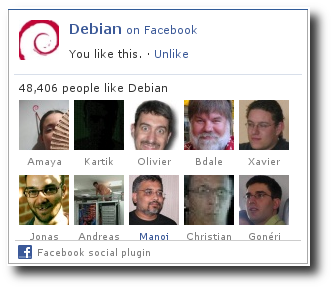
Debian Developers who like Debian on FacebookFacebook is not very popular among free software hackers. When I announced my Facebook page on identi.ca (see here) I got a few replies suggesting it was odd for me to use Facebook. Indeed there are many good reasons why Facebook should be avoided: it is a centralized and proprietary service that is not very privacy-friendly. But the truth is that lots of people are using it (even Debian developers, can you recognize them on the picture?) and some are using their Facebook news feed as their main source of news. You might wonder how many persons that represents, so here are the figures: the Debian Facebook page has 48,361 fans and the Ubuntu one has 247,932 fans. That s right, an announce put on the Debian facebook page would reach more persons than the most popular announce list that Debian is currently running (debian-announce@lists.debian.org has about 29,000 subscribers). Unfortunately that Debian Facebook page is empty and I don t even know who the administrator is. The Ubuntu page on the contrary is properly configured to relay news from The Fridge and Jono Bacon is posting some custom updates from time to time. Debian contributors regularly mention world domination as the ultimate goal of the universal operating system (I even feature this in my blog header banner! :-) ). But working towards world domination means in my opinion that we should communicate our ideals of freedom to as many people as possible, even if they are using a service that we don t want to promote. The Debian social contract acknowledges that some users have to use non-free software and we provide the non-free section for them. In the same spirit, I believe we must have a presence on Facebook. That does not mean that we endorse Facebook, and we should surely promote Joindiaspora once it s usable. But in the mean time we should reach out to Facebook users and allow them to follow us with the platform of their choice. That s the choice I recently made when I decided to setup a public facebook page featuring my free software work, my blog and my book. So if you are a Facebook user, click here to visit my page and click on Like if you want to follow this blog in your Facebook news feed. I also share interesting Debian or Ubuntu related articles that I discover while reading my RSS subscriptions. Below are the usual facebook widgets for the 3 pages quoted in this article (they might not show up if you read this article through an RSS feed):
<iframe allowtransparency="true" frameborder="0" scrolling="no" src="http://www.facebook.com/plugins/likebox.php?id=103161013077063&amp;width=292&amp;connections=0&amp;stream=false&amp;header=false&amp;height=62" style="border:none; overflow:hidden; width:292px; height:62px;"></iframe>
<iframe allowtransparency="true" frameborder="0" scrolling="no" src="http://www.facebook.com/plugins/likebox.php?id=9801962186&amp;width=292&amp;connections=0&amp;stream=false&amp;header=false&amp;height=62" style="border:none; overflow:hidden; width:292px; height:62px;"></iframe>
<iframe allowtransparency="true" frameborder="0" scrolling="no" src="http://www.facebook.com/plugins/likebox.php?id=6723083591&amp;width=292&amp;connections=0&amp;stream=false&amp;header=false&amp;height=62" style="border:none; overflow:hidden; width:292px; height:62px;"></iframe> Flattr this Share/Bookmark 14 comments Support my work

1 September 2010

Gunnar Wolf: Cycling, cycling everywhere!

I have been wanting to post for several days already, at least since this last Sunday. I have repeatedly bragged about taking part in the Ciclot n: The last Sunday every month, the city's government closes to automotive transit a ~33Km circuit, for cyclists to enjoy. And by cyclists, I mean people from all expertise ranges Well, the very elite bikers will not take part of such a massive thing, but there are people pedalling a couple of blocks, people taking their small kids to drive a bit, and I recognized an amazingly large proportion of people doing the whole route. Well, this last Sunday one lap was not enough for me I did two laps, ~65Km. (oh, and just for keeping the complaint current: After all, SportsTracker did release a version of thier software for the N95... But it requires Flash for using the webpage at all. I have several pointers at other applications... but am time-starved right now to start reviewing :-/ ) Anyway, I decided to do this double ciclot n in order to train for next week. If you are anywhere near Mexico City, you are invited - this is meant to be a large group ride, and looks very fun! Doble Marat n Ciclista Urbano del Bicentenario We are two weeks away from the 200 year conmemoration of the beginning of the Independence War in Mexico. A group of cyclists came up with the idea to organize a Double Marathon to celebrate! 84Km of biking in Mexico City: For some reason, the distance numbers in that map were made... in miles :-P Anyway, the planned route will be:
  1. Jardin de los periodistas ilustres (Delegaci n Venustiano Carranza)
  2. Aeropuerto Internacional de la Ciudad de M xico
  3. Circuito Bicentenario ( antes circuito interior )
  4. Monumento a La Raza - Hospital La Raza
  5. R o San Joaquin
  6. Viaducto Bicentenario ( carril confinado sin interrumpir la circulacion )
  7. Torres de Sat lite 50 aniversario
  8. Presidencia municipal de Tlalnepantla
  9. Presidencia municipal de Naucalpan
  10. Anillo Periferico Sur
  11. Secretar a de la Defensa
  12. Bosque de Chapultepec 1 y 2 secci n
  13. Segundo Piso del Distrito Federal
  14. Ciudad Universitaria patrimonio cultural de la humanidad
  15. Insurgentes Sur
  16. Miguel ngel de Quevedo
  17. Calzada de Tlapan
  18. Z calo centro historico del distrito federal
  19. Calle 16 de septiembre fin del recorrido
It looks very fun. Besides, although it is not that flat, it is one of the flattest long distance routes you will ever have. The toughest part will be IMO the Northern part of Circuito Bicentenario and possibly some bits of Perif rico towards Naucalpan. Then, a long flat stretch, with one long but not steep way up in Segundo Piso (near Las Flores), and a little stretch towards Ciudad Universitaria. Other than that, it looks very doable if you are in a moderately decent condition. And taking part in such a thing is very very worthy! As a final note... This same Sunday, it has been somewhat publicized the first D a Nacional de la Bicicleta (Bycicling National Day) will be held all over the country, kickstarting the National Cycling Crusade. Sounds nice, right? Even impressive? Yeah, but... If you look at the published information (in the page I just linked), you will see several cities are opening cyclist circuits. For one day only, which means, it does not build awareness among the population on how easy, how convenient and how fun it is to use the bicycle as means of transportation. And not only that The cyclist routes clearly make a point that cycling is a good way, at most, to have fun... But not a general habit we should all embrace. Lets see, as an example, the distances offered (only for the cities quoting route length): ...And so it goes. As you can see, several very important cities (i.e. Monterrey, Chilpancingo, Cuernavaca) put only a 2km route. 2Km by bike is... Nothing. 2Km is done at a leisurely pace in less than 15 minutes (I often sustain 20Km/h, which would mean 2Km in 6 minutes). And, in this short sample (the linked page has the information for several other states, but the pattern holds), most states are only making this in the largest city or two, completely forgetting the bulk of their territories. In my opinion, this "effort" was done backwardsly, and ends up delivering the exact opposite message to what should be done.

29 August 2010

Bernd Zeimetz: the guruplug server plus - major design and qa fail

As a lot of people are coming to my blog to read the installing instructions for Debian on the GuruPlug Server Plus, I shall not hide my opinion about it: It is a major design and QA fail. Don't waste your money on it.

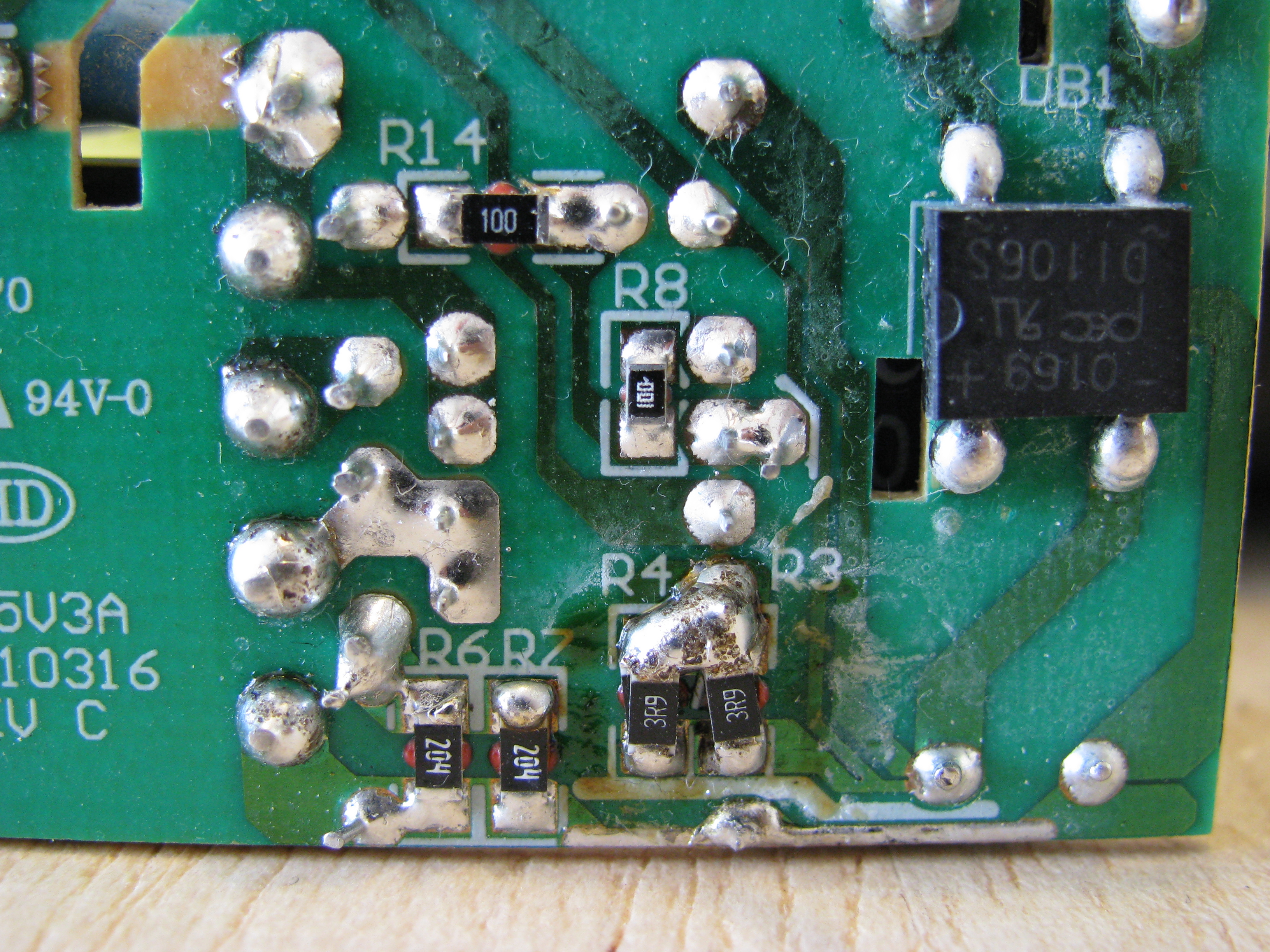
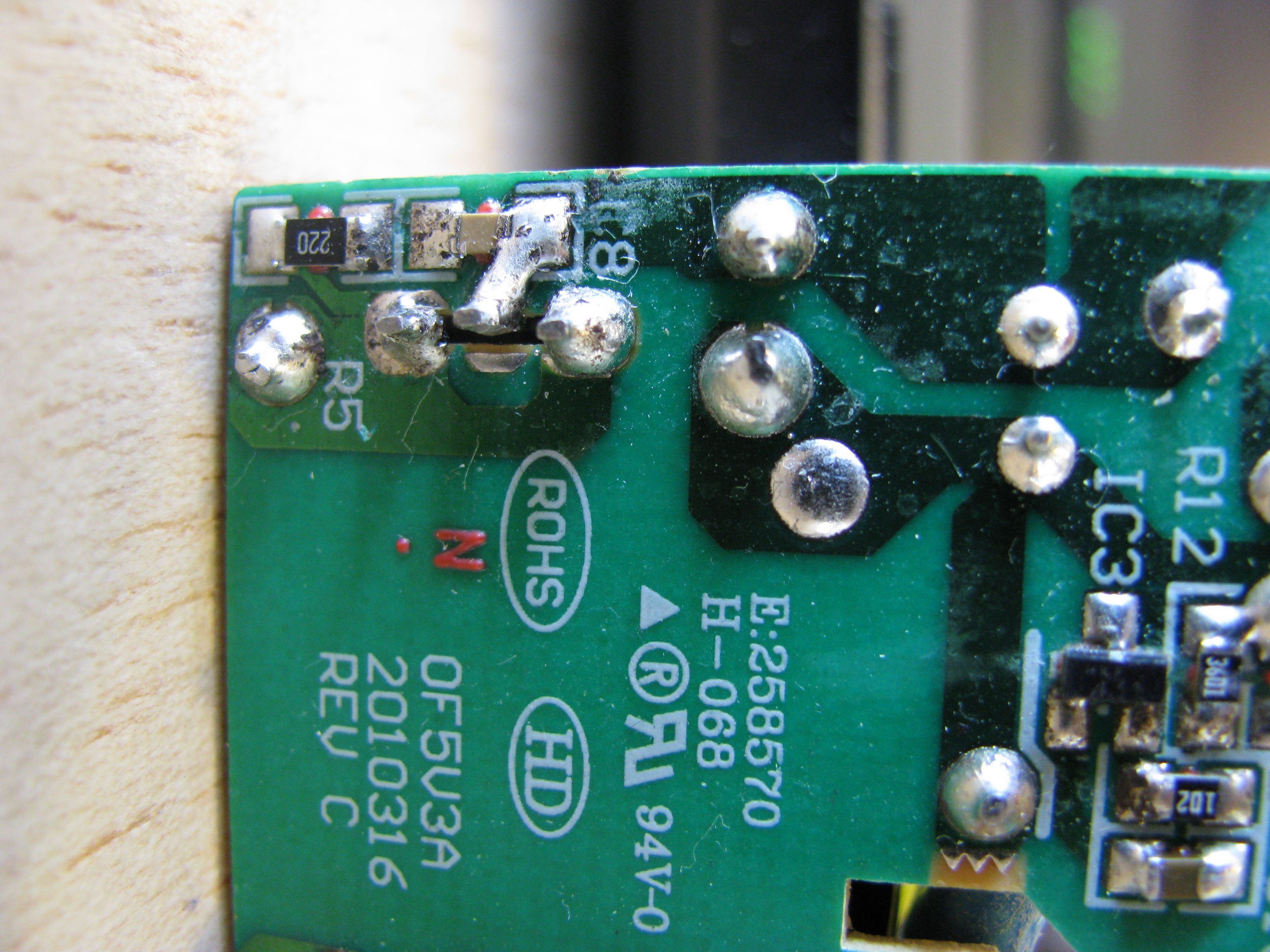
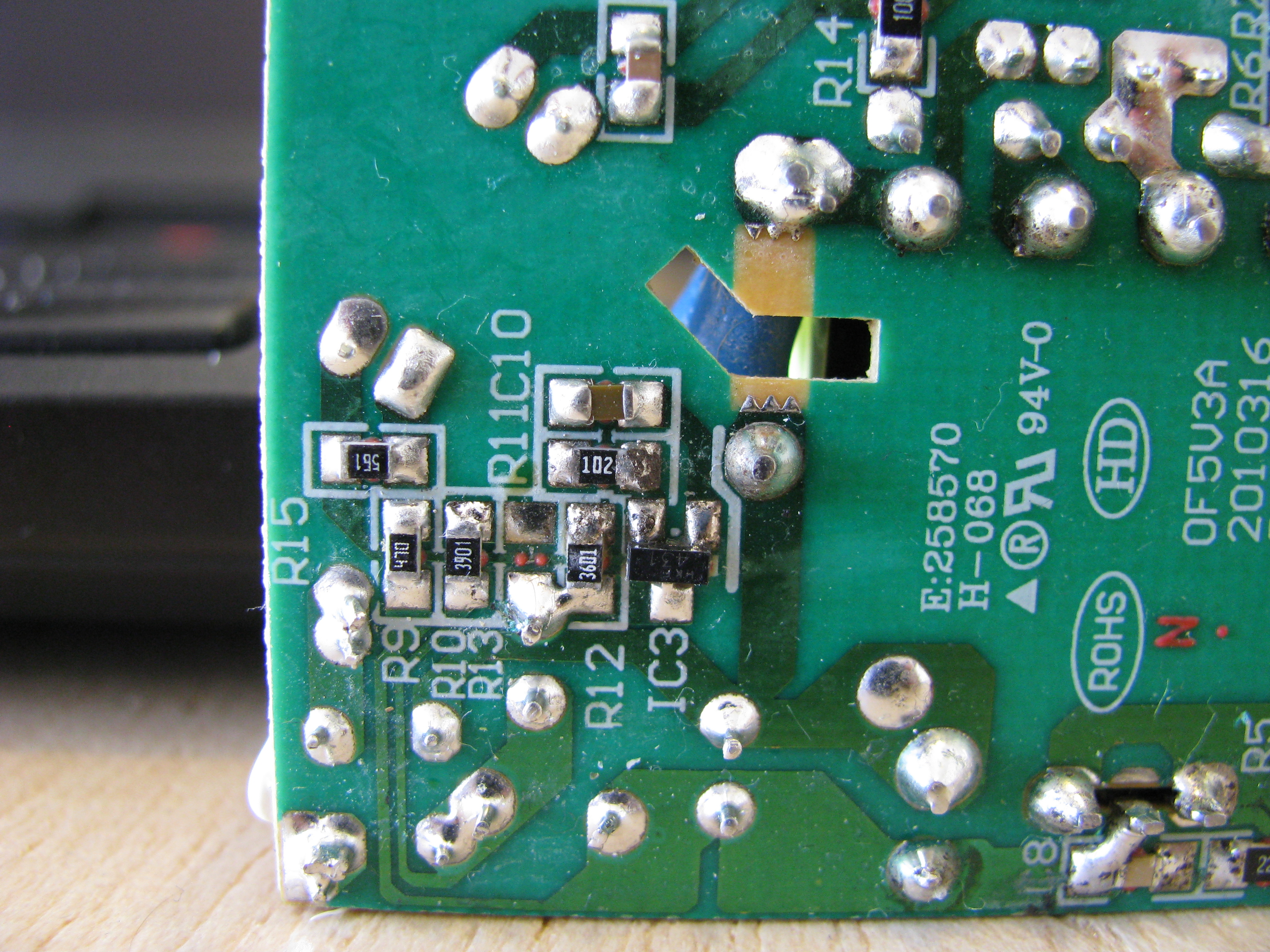
The power supply Although I've ordered the Guruplug pretty early with the promise, that I'd have it in April, it arrived at the end of May due to QA issues with the power supply. While I appreciate that they didn't deliver broken power supplies, I would have preferred not to receive one which was "fixed" by somebody who uses the soldering iron like an axe. Here are some macro photos to show the gory details: GuruPlug Server Plus PSU 1 GuruPlug Server Plus PSU 2 GuruPlug Server Plus PSU 3

Software issues The version of UBoot which shipped with the device was only able to boot from NAND and network. Booting from USB failed and ext2 support was missing, too. Didn't have a look if the community came up with a fixed UBoot version yet, but in my opinion a piece of hardware for >100 EUR should not have such flaws.

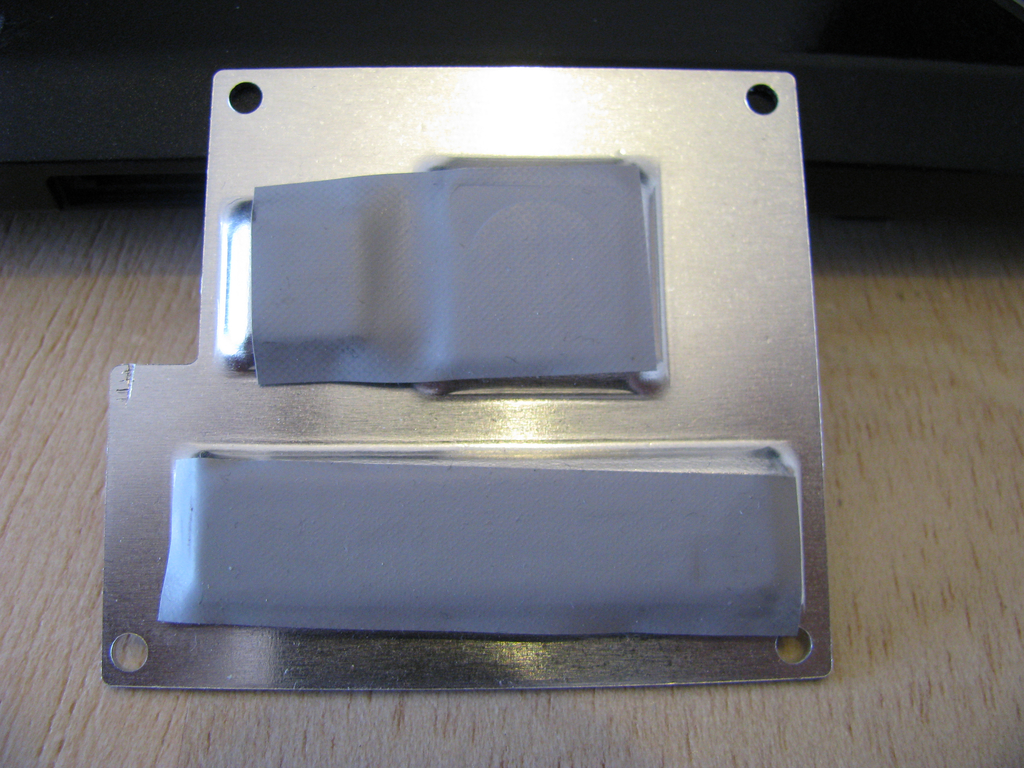
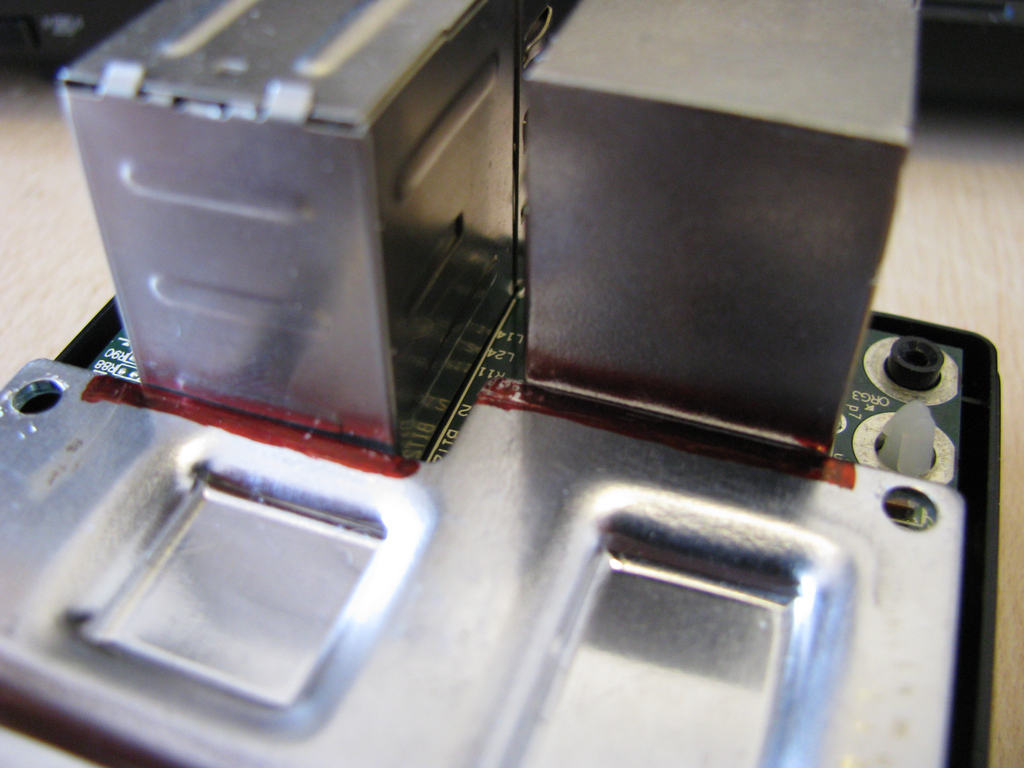
Thermal issues Using the Guruplug with more than one 100 MBit/s connection is just not possible, as it would toast itself to death. For the details have a look at this discussion in the NewIT forum, it links to a lot of interesting photos and postings. This issue is a major design and QA failure. Even without knowing what the datasheets say, it is easy to imagine that a thin piece of alloy is not the proper way to cool a CPU and network chip. Especially not when it is mounted with cheapish pads instead of a proper paste. GuruPlug Server Plus Cooling 1 As it seems the plan was to send the heat to the shielding of the network/USB/eSata ports (the area is marked red as my first plan was to remove that part of the alloy and reuse the heat-spreader), a strong indication for that is that this is the only area with holes for air circulation. I could imagine that it was not possible to have these holes next to the PSU, which was mounted above the heat-spreader, to avoid electrical shocks. GuruPlug Server Plus Cooling 2 As there was no other opening for the heat to leave the case, even the microSD card became pretty hot - I've measured temperatures around 60 deg. C next to the card - while CPU and 100MB/s network were idling. The official information from GlobalScale Technologies is that only 10/100MBit/s should be used as workaround to avoid overheating until a "Professional Upgrade Kit" is released. As mentioned here the upgrade kit announcement was removed silently from GST's website. To be honest, this doesn't make me wonder. There is no way to fix the Guruplug with an external fan or any other external magic as the only way to fix it is to cool the CPU and networking chip properly. There are various workarounds for the cooling issues posted to the forums. I've decided to rip out the power supply and heat spreader out of the case and get a nice external PSU. The new connector is mounted, ready to supply the GuruPlug's board with power. GuruPlug Server Plus power connector Currently I'm waiting for the new heat sinks and glue to arrive. Then I'll give it a try to mount eveything in the small case again, probably with some additional air holes. As soon as I have a workign solution, I'll blog about it again.

Bernd Zeimetz: the guruplug server plug - major design and qa fail

As a lot of people are coming to my blog to read the installing instructions for Debian on the GuruPlug Server Plus, I shall not hide my opinion about the Guruplug Server Plus: It is a major design and QA fail. Don't waste your money on it.

The power supply Although I've ordered the Guruplug pretty early with the promise, that I'd have it in April, it arrived at the end of March due to QA issues with the power supply. While I appreciate that they didn't deliver broken power supplies, I would have preferred not to receive one which was "fixed" by somebody who uses the soldering iron like an axe. Here are some macro photos to show the gory details: GuruPlug Server Plus PSU 1 GuruPlug Server Plus PSU 2 GuruPlug Server Plus PSU 3

Software issues The version of UBoot which shipped with the device was only able to boot from NAND and network. Booting from USB failed and ext2 support was missing, too. Didn't have a look if the community came up with a fixed UBoot version yet, but in my opinion a piece of hardware for >100 EUR should not have such flaws.

Thermal issues Using the Guruplug with more than one 100 MBit/s connection is just not possible, as it would toast itself to death. For the details have a look at this discussion in the NewIT forum, it links to a lot of interesting photos and postings. This issue is a major design and QA failure. Even without knowing what the datasheets say, it is easy to imagine that a thin piece of alloy is not the proper way to cool a CPU and network chip. Especially not when it is mounted with cheapish pads instead of a proper paste. GuruPlug Server Plus Cooling 1 As it seems the plan was to send the heat to the shielding of the network/USB/eSata ports (the area is marked red as my first plan was to remove that part of the alloy and reuse the heat-spreader), a strong indication for that is that this is the only area with holes for air circulation. I could imagine that it was not possible to have these holes next to the PSU, which was mounted above the heat-spreader, to avoid electrical shocks. GuruPlug Server Plus Cooling 2 As there was no other opening for the heat to leave the case, even the microSD card became pretty hot - I've measured temperatures around 60 deg. C next to the card - while CPU and 100MB/s network were idling. The official information from GlobalScale Technologies is that only 10/100MBit/s should be used as workaround to avoid overheating until a "Professional Upgrade Kit" is released. As mentioned here the upgrade kit announcement was removed silently from GST's website. To be honest, this doesn't make me wonder. There is no way to fix the Guruplug with an external fan or any other external magic as the only way to fix it is to cool the CPU and networking chip properly. There are various workarounds for the cooling issues posted to the forums. I've decided to rip out the power supply and heat spreader out of the case and get a nice external PSU. The new connector is mounted, ready to supply the GuruPlug's board with power. GuruPlug Server Plus power connector Currently I'm waiting for the new heat sinks and glue to arrive. Then I'll give it a try to mount eveything in the small case again, probably with some additional air holes. As soon as I have a workign solution, I'll blog about it again.

27 August 2010

Russell Coker: Links August 2010

Urban Honking has an insightful article about the Arduino and suggests that it is one of the most important factors for the development of the computer industry in the near future [1]. It compares the Arduino to the Altair. Wired has an interesting article about a company that provides a satellite kit and a launch into low Earth orbit for $8000 [2]. Arduino in space? Linux Journal has an interesting article by David Rowe about the Mesh Potato which is a Wifi mesh router that also runs VOIP [3]. One particularly interesting aspect of this article is the explanation of the way they designed and tested it. Susan Shaw gave an informative TED talk about the toxic effects of the attempts to clean up the oil spill in the Gulf of Mexico [4]. It seems that trying to disperse the oil just makes it worse, and the chemical companies are refusing to disclose the chemicals that are being used. The New York Times has an interesting article by David Leonhardt about the value of pre-school teachers [5]. Some research on the difference that good teachers can make in economic terms suggests that the make an economic difference to the children to the value of $320,000 per annum (IE a class of 16 children who were taught for a year would on average each receive a benefit of $20,000 over their lifetime). Also there are social benefits which aren t counted by that study. While I can t imagine pre-school teachers getting paid $320,000 any time soon, it does seem obvious that good teachers deserve significantly better pay. Of course one problem is how to determine which teachers are good, better test results are not a reliable indication. Paul Krugman describes America as being on the unlit, unpaved road to nowhere due to the policies of saving money by cutting funding for schools, street-lights, and roads [6]. The Chive has an amusing post about how to quit a bad job [7]. It would be good if someone really did this, I m sure that there are enough creative people who don t like their job. Hell Pizza in New Zealand published a zombie themed choose your own adventure on Youtube [8]. Unfortunately the options to choose the next segment don t work on HTML5 with Chromium so if you don t have flash you miss out. AskThePilot.com has an informative essay about airline security written by a commercial pilot [9]. The anecdote about the pilot not being allowed to take the type of knife that is issued to first and business class passengers is rather amusing. FredOnEverything.net has an interesting analysis of Wikileaks and why the Pentagon and Fox News hate it [10]. Fred is a very skillful writer, while he s not the first person to say some of these things he may have said it best. The Wikipedia page on Borosilicate glass (which is best known under the trademark Pyrex) is really interesting [11]. Borsilicate glass was formerly known as Duran and it s main characteristic that makes it suitable for lab use is resistance to Thermal Shock, but it s also harder and has a higher melting point. Apparently you can get Pyrex drinking glasses, I want some! Eben Moglen gave an interesting talk Freedom in the Cloud about the development of free servers to manage personal data and replace Facebook etc (among many other things) [12]. The Debian Wiki has an articla about designing such a system [13]. The APNIC published an interesting paper on IPv4 background radiation [14]. Apparently some /24 s receive so much random traffic (from broken applications and viruses) that they can t be delegated. IPv6 will solve this problem by making it infeasible to scan all IP addresses. Also it s interesting to note the excessive amounts of traffic to 1.0.168.192 which is from applications too broken to correctly send data to 192.168.0.1 which have been installed by sysadmins who are too incompetent to watch what is being sent out of their network.

25 August 2010

Matt Zimmerman: DebConf 10: Last day and retrospective

DebConf continued until Saturday, but Friday the 6th was my last day as I left New York that evening. I m a bit late in getting this summary written up. Making Debian Rule, Again (Margarita Manterola) Marga took a bold look at the challenges facing Debian today. She says that Debian is perceived to be less innovative, out of date, difficult to use, and shrinking as a community. She called out Ubuntu as the elephant in the room , which is taking away from Debian. She insists that she is not opposed to Ubuntu, but that nonetheless Ubuntu is to some extent displacing Debian as a focal point for newcomers (both users and contributors). Marga points out that Debian s work is still meaningful, because many users still prefer Debian, and it is perceived to be of higher quality, as well as being the essential basis for derivatives like Ubuntu. She conducted a survey (about 40 respondents) to ask what Debian s problems are, and grouped them into categories like motivation and communication (tied for the #1 spot), visibility (#3, meaning public awareness and perception of Debian) and so on. She went on to make some suggestions about how to address these problems. On the topic of communication, she proposed changing Debian culture by: This stimulated a lot of discussion, and most of the remaining time was taken up by comments from the audience. The video has been published, and offers a lot of insight into how Debian developers perceive each other and the project. She also made suggestions for the problems of visibility and motivation. These are crucial issues for Debian devotees to be considering, and I applaud Marga for her fortitude in drawing attention to them. This session was one of the highlights of this DebConf, and catalyzed a lot of discussion of vital issues in Debian. Following her talk, there was a further discussion in the hallway which included many of the people who commented during the session, mostly about how to deal with problematic behavior in Debian. Although I agreed with much of what was said, I found it a bit painful to watch, because (ironically) this discussion displayed several of the characteristic people problems that Debian seems to have: These same patterns are easily observed on Debian mailing lists for the past 10+ years. I exhibited them myself when I was active on these lists. This kind of cultural norm, once established, is difficult to intentionally change. It requires a fairly radical approach, which will inevitably mean coping with loss. In the case of a community, this can mean losing volunteer contributors cannot let go of this norm, and that is an emotionally difficult experience. However, it is nonetheless necessary to move forward, and I think that Debian as a community is capable of moving beyond it. Juxtaposition Given my history with both Debian and Ubuntu, I couldn t help but take a comparative view of some of this. These problems are not new to Debian, and indeed they inspired many of the key decisions we made when founding the Ubuntu project in 2004. We particularly wanted to foster a culture which was supportive, encouraging and welcoming to potential contributors, something Debian has struggled with. Ubuntu has been, quite deliberately, an experiment in finding solutions to problems such as these. We ve learned a lot from this experiment, and I ve always hoped that this would help to find solutions for Debian as well. Unfortunately, I don t think Debian has benefited from these Ubuntu experiments as much as we might have hoped. A common example of this is the Ubuntu Code of Conduct. The idea of a project code of conduct predates Ubuntu, of course, but we did help to popularize it within the free software community, and this is now a common (and successful) practice used by many free software projects. The idea of behavioral standards for Debian has been raised in various forms for years now, but never seems to get traction. Hearing people talk about it at DebConf, it sometimes seemed almost as if the idea was dismissed out of hand because it was too closely associated with Ubuntu. I learned from Marga s talk that Enrico Zini drafted a set of Debian Community Guidelines over four years ago in 2006. It is perhaps a bit longand structured, but is basically excellent. Enrico has done a great job of compiling best practices for participating in an open community project. However, his document seems to be purely informational, without any official standing in the Debian project, and Debian community leaders have hesitated to make it something more. Perhaps Ubuntu leaders (myself included) could have done more to nurture these ideas in Debian. At least in my experience, though, I found that my affiliation with Ubuntu almost immediately labeled me an outsider in Debian, even when I was still active as a developer, and this made it very difficult to make such proposals. Perhaps this is because Debian is proud of its independence, and does not want to be unduly influenced by external forces. Perhaps the initial growing pains of the Debian/Ubuntu relationship got in the way. Nonetheless, I think that Debian could be stronger by learning from Ubuntu, just as Ubuntu has learned so much from Debian. Closing thoughts I enjoyed this DebConf very much. This was the first DebConf to be hosted in the US, and there were many familiar faces that I hadn t seen in some time. Columbia University offered an excellent location, and the presentation content was thought-provoking. There seemed to be a positive attitude toward Ubuntu, which was very good to see. Although there is always more work to do, it feels like we re making progress in improving cooperation between Debian and Ubuntu. I was a bit sad to leave, but was fortunate enough to meet up with Debian folk during my subsequent stay in the Boston area as well. It felt good to reconnect with this circle of friends again, and I hope to see you again soon. Looking forward to next year s DebConf in Bosnia

Eddy Petri&#537;or: [content:lang:ro] I wrote to my representative

This post concerns Romanian politics, internal affairs and improper direction of public funding for new hideous churches in spite of education, culture, health, technic development and old monuments. Thus I will write this in Romanian. Curious foreigners can try to read the text via Google's translation.


Din cauz c suntem n secolul XXI i consider c e o prostie imens s b g m bani n biserici n detrimentul educa iei, culturii, s n t ii, dezvolt rii tehnice i a vechilor monumente, iar politicul din Rom nia pare dornic s dea bani cultelor, am ajuns la concluzia c este cazul s -i scriu reprezntantului meu (teoretic) n Parlament, Deputatul Florin Iordache. Am aflat de ce colegiu apar in uit ndu-m aici i apoi n lista oficial cu deputa ii.


I-am trimis textul de mai jos:

M numesc Petri or Eddy i sunt unul dintre cei pe care i reprezenta i n Parlamentul Rom niei. Este pentru prima dat c nd scriu unui parlamentar care m reprezint n conducerea statului rom n i o fac pentru a-mi exprima n mod clar i r spicat ideile i opinia n ceea ce prive te subiectul pe care l voi discuta mai jos. Am 30 de ani, sunt programator, am muncit i mi-am pl tit taxele de c nd am fost angajat, din anul 4 de facultate p n n prezent, adic de vreo 6-7 ani. Nu, acest mesaj nu este un strig t de ajutor, nu a tept pomeni, nu am milogit niciodat , mereu am muncit de i v d c pentru unii parazitismul fiscal a devenit un mod de via . Din acest motiv sunt revoltat.

Sunt revoltat pentru c :
- de i pl tesc taxe i impozite care ajung la peste 60% din venitul brut, nu primesc n schimb nici un fel de servicii, nici un fel de infrastructur , nici un fel de respect, nici un fel de eficien
- de i lucrez de ceva timp, am observat c pe unde am lucrat competen a i performa a erau o necesitate; n aparatul de stat nu este cazul
- de i sunt destui ca mine care pl tesc taxe i impozite, vocile noastre sunt ignorate i banii no tri sunt arunca i pe fereastr de cei ce administreaz fondurile colectate.

Domnule deputat sunt revoltat c de 15 ani de zile dispar n medie aproximativ 4 coli zilnic i apare, tot n medie, o biseric la fiecare 2 zile, iar asta se nt mpl cu accep iunea aparatului politic. Spitalul din Caracal, ca orice alt spital din Rom nia, e prost dotat, nu exist personal suficient, nu are fonduri pentru medica ie pentru pacien i, pe scurt, este un dezastru care e pe cale s se nt mple. i cu toate astea, banii se duc spre biserici. Se fac dona ii de coli i terenuri c tre biseric , n mod ilegal i abuziv chiar n jude ul Olt.

Ultima perioad n care religia a condus lumea s-a numit Evul Mediu i cred c orice om care a tr it m car 5 ani n secolul XXI poate s observe c nu religia ne-a adus mari beneficii, ci tiin a i tehnologia. n Evul Mediu tratamentul se f cea prin s nger ri , t ieri sub limb , scoaterea argintului viu i tot felul de alte supersti ii f r nici un efect pozitiv sau chair cu efecte negative.

ntre timp umanitatea a progresat i am descoperit medicina, curentul electric, am explorat universul, am aterizat pe Lun , am pus zeci de sateli i artificiali pe orbit , am aflat foarte multe despre univers i lumea care ne nconjoar , am inventat noi materiale (plasticul, p nzele impermeabile, kevlarul), am investigat lumea f r idei preconcepute dup metoda tiin ific , iar lucrul acesta ne-a mbun t it via a n toate aspectele ei. Sperant de via a crescut de la aproximativ 30-40 de ani n Evul Mediu, la 70-80 de ani n prezent, totul datorit tiin ei aplicate. Datorit tehnologiei i tiin ei pot s v scriu aceste cuvinte i tiu c vor ajunge la dumneavoastr , nu datorit unor incanta ii sau ritualuri, nu datorit telepatiei, de i mediul sta de transmisie se apropie foarte mult de ceea ce define te ca fiind telepatie :-) . Cu toate astea, unii consider c religia trebuie finan at pentru c e religie, nici m car pentru c ar avea programe sociale, contribu ii cuantificabile reale, nu, doar pentru c este religie.


Am citit foarte multe articole din pres , articole bine documentate, i am senza ia c tr iesc ntr-o lume incon tient c nd v d cum banii care ar trebui s ajung n drumuri, coli, spitale, cercetare, medicamente, programe sociale cu real impact, ajung n noi i noi biserici de beton n timp ce monumentele istorice, bisericile din lemn, m n stirile cu adev rat valoroase sunt l sate n paragin . Asist cu o senza ie de dezgust continuu la felul n care ne batem joc de cei ce ne salveaz vie ile, medicii, de cei ce ar trebui s ne fac educa ia, profesorii, de cei ce ne sting casele dac iau foc, pompierii, i, de felul n care ridic m misticismul religios la rang de virtute. Este de-a dreptul jignitor i aberant ca alfabetizarea tiin ific n secolul XXI s fie at t de joas nc t s avem 42% din popula ie care cred c Terra este centrul universului, s avem oameni care cred c astrologia este tiin ific , s NU avem nici m car o universitate n top 500 n lume, este jignitor s fim n permanen n coada tuturor clasamentelor pozitive i n fruntea tuturor celor negative.

Recent money.ro a publicat un articol n care esitma foarte conservator c averea Bisericii Ortodoxe Rom ne se nv rte la peste 3 miliarde de euro, are scutiri de impozite, are zeci de afaceri i cu toate acestea, statul continu s scuteasc cultele de impozite, ba chiar le ofer bani ntr-una. La o asemenea avere nu cred c mai poate fi vorba de necesitatea finan rii de c tre stat. Oamenii pot decide s doneze direct c tre bisericile lor bani i nici nu mai implic pierderile inerente ce apar datorit administr rii fondurilor de c tre stat.


Statul nu este un organ aparte, statul trebuie s munceasc pentru mine, cet eanul, iar eu sunt mpotriva acestui tip de batjocorire i napoiere voluntar a noastr ndreptat mpotriva noastr . Alexandru Ioan Cuza a secularizat averile m n stirilor nchinate celor de la muntele Athos, deci unor ter i extreni rii, a a cum afl m din scrierile istoricului A.D. Xenopol, deci nu exist nici o obliga ie a statului s finan eze o institu ie anacronistic :

A.D. Xenopol Domnia lui Cuza Vod Vol.I , CAP. VIII. AI doile minister Cogalniceanu Secularizarea , pagina 291:
Nu vom atinge de c t mprejur rile care au condus la redob ndirea averilor, ajunse n st p nirea c lug rilor str ini, ating nd chestiunea nchin rei m n stirilor p n ntene c tre acele din R s rit, numai ntru c t va fi de nevoie, spre a n alege m sura seculariz rei nsu i.


Din aceste motive i multe altele, deoarece sunte i i reprezentantul meu n Parlamentul Rom niei, v cer ca s vota i pentru proiectul de lege ini iat de domnul Prigoan n ceea ce prive te t ierea finan rii personalui clerical de c tre stat i c t i a altor legi care ar putea duce la eliminarea privilegiilor pe care le au cultele, n condi iile n care singurul motiv real i corect pentru care o entitate ar putea beneficia de scutiri de taxe sau privilegii fiscale sunt doar cele ce nu urm resc interesul financiar i, totodat , au un impact social cuantificabil n mod clar.


Dac dori i, a fi bucuros s v r spund la eventualele ntreb ri sau neclarit i n ceea ce am scris, dac este nevoie.

V mul umesc anticipat!


L-am trimis joi, nc n-am primit r spuns de nici un fel. Pasul doi e s sun. M car s nnebuneasc dac tot sunt nesim i i. A a c , pute i afla de ce colegiu apar ine i i apoi pute i identifica pe cel/cea ce v reprezint n Parlament. Scrie i-le, suna i-i, a venit momentul m car s se enerveze, dac nu s - i fac m car o poleial de datorie.

24 August 2010

Richard Darst: The DebConf selection process

Selecting a DebConf location hard, and can certainly get intense at times. This is an area where the DebConf team and the Debian project can work to improve our processes. There is a wiki page to collect our thoughts in preparation for a discussion later, as planned during the DebConf&Debian BOF.
First off, there is a time at DebConfN-2 for interested localteams to describe their rough plans. These are videoed, and you can view the events online if you would like: for dc11 at dc9, for dc12 at dc10 .There has been a nominal deadline of December 31, 20XX-2 for submitting a bid (not finalizing), but this has been bent in the past.While teams are preparing their bids, they should look at the location checklist. This summarize what past organizers know to look for in a location. There are questions sorted by category and priority.To organize their information so that people can understand, teams prepare bid documents on the wiki (DC10, DC11, here are the winning bid documents: DC10-New York City, DC11-Banja Luka). These start off by just answering all of the questions in the location checklist, but then get a lot of work to make the pages clear and complete. Anyone can browse the pages and ask questions of the teams anytime.There are several mini-meetings where teams describe their progress, and organizers and other interested people can ask questions. In these meetings, the channel is not moderated. Questions tend to be about the location checklist criteria related things.In February/March, there is a big selection meeting. This is the only DebConf meeting where the channel is moderated and only voiced people can speak. The voiced people historically are two moderators who keep things moving, two other past DebConf organizers to ask questions and relay questions from the audience discussion channel. (These facilitators have been self-selected in the past, usually in the minutes leading up to the meeting.) Then, there are two people per location whom are voiced. There is a audience channel for everyone else to discuss, and the moderators/helpers will look there for questions and relay them to the main channel. There have been unvoiced Q&A periods and periods which are designated for relaying questions from the discussion channel.These meetings are logged (dc10 selection, dc11 selection)Teams are rated based on the priority list. There has been a simple point list the last two years, -1 to +1 for each point on that list. For each item, there are debates on how many points each location should get. Points are added up, and a result appears. In the past, this has been a simple arithmetic sum, so all items are weighted the same (despite nominally having different weights). In the case of a tie or close call, there is more discussion. For DC10, there was a tie, and NYC won after opening the meeting to the audience and getting their opinions. I didn't pay enough attention to the DC11 selection process to be able to say how that close call was resolved.While this isn't really part of the selection process, local teams can give presentations at DebConfN-1 about their location and encourage attendance: dc10 at dc9, dc11 at dc10
So, there it is. Overall, there is a lot of openness in the process, but the exact rating schemes in the decision meeting could use discussion. The criteria are established, but can be refined each year based on what we learn.If you would like to comment on how to improve this in the future, please use the selection process wiki page (first person create it). We can follow up with a list discussion after our ideas have been fleshed out.Tags: debconf

23 August 2010

Richard Darst: What is the DebConf team?

Now that I've mentioned the general timeline of a DebConf, let's talk about the "global team", "local team", and decision processes.Who is the "global team"? Basically, it is the active people on the debconf-team IRC channel and mailing list. Anyone can contribute, but we know who is who. Those with the most moral authority tend to be those who have organized a past DebConf or been involved for many years, and their opinions always have a high weight. Many of them are still around.So then how are decisions made? It's a combination of consensus-based and "whoever want to, do it". We discuss ideas based on what experienced people have seen work/not work, what new people want to try, and perhaps most importantly, who can make it happen. (this is where you fit in). There aren't necessarily leaders picked beforehand, instead leaders develop themselves. Overall, this is similar to any other team in Debian.There aren't formal gatekeepers who can veto anything, but if someone sees a problem, they should speak up and get critical mass of people to fix things. Those who hold the money (SPI, FFIS, the DPL) of course will monitor our processes and would intervene if someone started going off course.Typical global team tasks are fundraising, travel sponsorship selection, talks, registration.The local team starts out as the winning bid team. They started out figuring out local logistics for their venue, and up until arrival, they are the ones who are handling the local tasks (venue, food, accommodation, entertainment, day trip, Debian Day outreach). They should keep the global team updated on their status and what they are arranging, so that the experienced ones on the global team can give feedback. Global people will, of course, get involved here where they see fit and can help.The local team shouldn't exist in isolation though, anyone local is highly encouraged to get involved in "global team" tasks. The more coordination and bi-directional help we have, the better.It isn't the job of the local team to put on all of DebConf themselves. They aren't selected and left with free reign, they should integrate with and understand the history of DebConf, and then work on whatever improvements they want, whether they are local or global.
So in short, there are the names "global team" and "local team", but really, it's all one big Debian team. Those who are interested work and make things happen through a consensus-driven process. Things aren't always perfect: we have conflict, disorganization, leadership turn-over, lack of volunteers, lack of time, all the usual things that happen in volunteer organizations. I think most people want to work towards this ideal, and we hope that this series of posts will help us to improve. Most importantly, when you see something you'd like to work on, you can get involved.Tags: debconf

15 August 2010

Tim Retout: SmoothWall Express on Debian

SmoothWall Express is a GNU/Linux distribution geared towards firewalling, with an installer, a web interface, and some common software like squid that can be useful when running a small business router. It is theoretically the basis for the corporate products of SmoothWall Ltd., who happen to employ me; but all opinions here are my own, and I'm not speaking for them. Unfortunately, the SmoothWall Express kernel is somewhat "stable", which leads to problems installing the distro on modern hardware. There is a new version of Express in the works, but I'm afraid SmoothWall Ltd. currently has a bit of a "code dump" mentality with respect to delivering updates to their community, because they don't recall seeing any significant contributions from outsiders. At DebConf I created proof-of-concept Debian packages of two components of Express 3.0: the swe3 web interface, and the smoothd daemon which executes privileged commands. Currently these can show a basic web interface; some of the less complicated bits will even run, and I can shut down my laptop using the "shutdown" button via smoothd. (Note that I still need to add boring stuff like debian/copyright files, but I plan to release these as soon as I can.) In the near future, hopefully I can implement some of the more important features (like, er, firewalling), and add some other components like the traffic shaping and IM filtering daemon. I'm working towards a demonstration Debian Pure Blend that can show off some of the advantages of working with a third-party distribution as a base. If anyone would like to help me... send me patches. :) I expect I'll be blogging my progress occasionally.

12 August 2010

Gerfried Fuchs: Why new Design isn't deployed yet

This blog post is actually a response to a talk that was given at the debconf last week. It was marga's talk about Making Debian Rule, again. Now that the beta versions of the talks are available for download I'm able to proper quote what I want to respond to: Is there a reason why we haven't yet updated the website?, perhaps someone can answer. I feel the need to respond to this as I am the main person driving that effort. Unfortunately the question was asked in a talk with no-one involved in that work around instead of addressing those people directly, and the question wasn't brought to my attention before the talk so that I could have provided an answer to offer in the presentation already. Also, as disclaimer, this is my personal story for it and doesn't need to get shared by the other people involved. I hope it can be seen as an answer anyway. As a little of background, Kalle's proposal went a long path before even I found out about it. I was simply in awe in several ways about it because it wasn't just a great mockup of the page (which it actually is, IMHO) but was accompanied by thoughts about not only the main site but also about several sub sites. Also, it was accompanied by patches, so it was seemingly ready to get deployed right ahead. I started working on it, got accused of being discouraging while doing that, got told that it would require a proper vote for a decision and can't happen just as, but those are just the Debian way of communication. I nevertheless did set up several test sites for some over the time to play with it. Some did work out better (like the git one, though this one came last and Kalle improved the CSS over time a fair bit), some weren't ready yet (like wiki, missing e.g. the coloring for the version diff, or the packages one where the separation between the different sections isn't that visible yet). Time passed, other things demanded their attention too. Like the thing where our system administrators did send me a request along about a new www-master server that needs to get set up from scratch. Given that the documentation about the required packages for the website was lacking a fair bit (to say the least) it did require a lot of attention, especially when doing things from scratch the wish to document the dependencies properly is just natural. There are still some issues with that as can e.g. be seen on this page in the empty table at the bottom. The same issue also appears on my testsite for the new design. The last part though is currently the biggest blocking issue for both efforts. There is no way to move forward with either without having that addressed. Simon Paillard did a great job on helping the move along so far, keeping the thread about the server move requirements that I started on the debian-www mailinglist updated with information about what's still pending. Unfortunately Kalle, Simon and me are also facing some private time constraints (amongst other duties that require attention) which weren't helping to move forward at a bigger pace. Unfortunately not very many people actually has shown interest in helping out neither, after all it's easier to go and ask questions about why it's not done yet to the completely wrong audience. My plan is to switch many sites at the same time instead of one after the other simply for the effect but also for less distraction for our users, including less people repeatedly pestering about when this or that site gets done, too. At least we need a final discussion on what should go into the header links and what should be at the bottom before a switch can be made anyway. And for some there is still the opinion that such a switch is nothing that we are rightfully allowed to decide without a vote, so that's also part of the reason to not just deploy it. I hope this answers the question to some extend and like said, if only I would had been addressed about this before the talk was given an answer to it would had been ready for presentation right ahead instead of having a pretty terse statement getting relayed through IRC (thanks, Yoe!) because I was fortunate enough to be around and watching the talk at that time. Feel free to discuss it further or offer your help on debian-www, especially if you are familiar with working on CSS files.

/debian permanent link Comments: 3 Flattr this

David Moreno: DebConf 10

I was in New York for three full weeks, before, during and after DebConf 10 took place. Unfortunately, I wasn't able to attend talks or go hang out with folks as much as I would've wanted. Most of the time I was busy at the office with a new product launch we have been preparing for the last few months. However, I was able to come and say hi to a few people, attend the C&W party and talk with friends and ran into. I was, however, following all conversations on IRC so I was pretty informed of all of what was going on. Some random thoughts: DebConf 10 rocked and I appreciate everybody's participation in it. See you in Banja Luka, next year!

31 July 2010

Wouter Verhelst: Wouter Verhelst, Tourist

So for one day a few days ago, I wasn't Wouter Verhelst, Debian Developer, but rather the above. I'm not usually very much interested in doing touristy things, but then on the other hand I'm of the opinion that you can't really claim to have been somewhere if all you've seen is the inside of a certain specific university campus. So, well, touristy things. I took the subway to about 10 blocks away from the very south of Manhattan, and then walked. I passed by city hall and what used to be the world trade center, but there wasn't much to see there construction sites are the same everywhere in the world. I moved on to "the battery", the south tip of Manhattan, and had an... interesting look at the Statue of Liberty in the distance. I thought about going there, but the tickets were sold out, so scratch that. Wall Street from Trinity Church Instead, I walked on to the Brooklyn Bridge (passing by Wall Street on the way), spent some time looking for the pedestrian's entrance to that bridge (which was slightly harder than would've thought it to be), and walked partway up the bridge. I wasn't interested in crossing over to Brooklyn, but it's an interesting bridge to walk on, and I had an interesting time. Brooklyn Bridge When I left the bridge again, it started raining. I don't mind a few drips on a warm day like that day, but this was more than that, and it started to bother me. So, rather than walking to the Empire State building, as I'd been planning, I decided to take the subway there. This did mean I missed out on the SOHO area, which I would've liked to see, but well, you can't have it all. dsc_6639 The Empire State building is something you grow up hearing about, and I'd seen pictures of it. It has a somewhat distinctive silhouette, shown on several comparative graphics of high-profile skyscrapers. But none of that is even close to the real thing. Not that it's higher than I expected; on the contrary. But it does look different; its color is much lighter than I thought, and the distinctive silhouette isn't as distinctive once you're standing right next to the building. But, well, going up the building clearly shows that it is the tallest building of New York. There are other skyscrapers, but most of those seem to be little dwarves in comparison. The view is nice, up there, and I took some interesting pictures. The tickets aren't very cheap ($20), but not insanely expensive either. I don't regret doing this. Going down... (in case you were wondering: yes, the above picture is in the point of view of the one above that, and vice versa) By that time it was around 4 pm already, and I thought about going back to the Columbia campus. As I checked out my map for the most efficient route, I found that it probably would've been easier to walk to Times Square and take the number 1 train there which stops right in front of Columbia (but below the surface, obviously). So since I was going to have to go there, I figured I could just visit Times Square while I was at it. Times "Square" I must say I'm not very impressed by it. For starters, Times Square isn't actually a square, at least not as I'm used to that word. Broadway and 7th avenue happen to cross at a, for Manhattan, uncharacteristically sharp angle, which results in more space between buildings than usual. But it's still fairly small as a "square". They've fenced off a part of that space and put a bunch of chairs and tables there. This would be a cosy and inviting, "gezellig" place, if not for the very audible noise of the traffic still going on all around it, and the fact that everywhere you see, there's three layers of brustling and visually noisy adverts. It could have been a relaxing oasis in the middle of the city, but instead it's just as busy as everywhere else in Manhattan. But then, I guess that's what New York City is all about. At any rate, after spending about half an hour or so there, I walked over to the subway to get back to the venue just in time for dinner. The end of a nice, touristy, day.

25 July 2010

Russell Coker: Links July 2010

David Byrne gave an interesting TED talk about how changes to architecture drove changes to musical styles [1]. I think he does stretch the point a little. To a certain extent people develop the most complex instruments and the largest music halls that can be supported by the level of technology in their society people with a hunter-gatherer civilisation play drums because they can build them and can carry them. The NY Times has an interesting article about paternity leave in Sweden [2]. The Swedish government pays for a total of 13 months leave that can be split between parents for every child. Of those 13 months 2 months can only be taken by the father and that is likely to increase to a minimum of 4 months of paternity leave after the next election. Dan Meyer gave an interesting TEDX talk about how the current math curriculum in the US (as well as Australia and lots of other countries that do the same thing) is totally wrong [3]. His main point is that maths problems should be based on real-world use cases where not all needed data is immediately available and there is also useless data that must be discarded. He believes that the most important thing is developing mathematical problem solving skills basically the things that I did for fun when I was in primary school are skills that need to be taught to high-school students The Atlantic magazine has an amusing article by Daniel Byman and Christine Fair about the incompetent Islamic terrorists [4]. In Afghanistan half the suicide bombers kill only themselves and the US government has a lot of evidence of Taliban soldiers practicing bestiality and collecting porn. Islamic extremist groups are staffed by people who are bad soldiers and bad Muslims. Jon Masters wrote an interesting post titled What Would Jesus Buy about ethical purchasing decisions [5]. Jon references The Church of Stop Shopping which isn t a real religious organisation but a street theatre activist group. ZeroHedga has an insightful article comparing corporations and the US government to street gangs [6]. The conclusion is that when gangs take over a neighbourhood everyone has to join a gang for their own protection. Hillel Cooperman gave an interesting TED talk about being obsessed with Lego [7]. He compares Lego fans to Furries and makes a good case for this comparison. Marian Bantjes gave an interesting TED talk about her graphic art / graphic design work [8]. I ve never seen anything quite like this. Business Insider has an interesting article about oil cleanup, it seems that most people who worked on the Exxon Valdez disaster are now dead [9], s opposed to most people who worked in almost every other occupation at that time who are either still working or enjoying their retirement. The current gulf disaster is bigger, will require more workers for the cleanup, and can be expected to have a higher death toll. Some people claim that measures to reduce oil efficiency will impact the economy, how will millions of people who are chronically ill for the rest of their lives impact the economy? The NY Times has an interesting article on circle lenses [10], contact lenses designed to make the eyes look larger. It s illegal to sell contact lenses in the US without a prescription, but the latest trend is for women to buy them online in a variety of colors. The FDA should probably approve them, it would be better to have the quality controls you expect from a medical supply company instead of having people rely on Malaysian mail-order companies for the safety of their eyes. Don Marti has written an interesting article about the economic decline in the US, he suggests making pension funds invest in local jobs [11]. Companies are supposed to act on behalf of their stock-holders, but US companies often have the majority of their stock owned by the pension funds of workers but they act on behalf of a small number of rich people who own a minority of the stock. Don s article was inspired by Andy Grove s article in Bloomberg about the stagnation in technological development that has been caused by off-shoring the manufacturing [12]. Neil Brown has completed a test release of a new Linux software RAID feature for arrays with multiple redundancy that have bad sectors [13]. When a disk gets a bad sector the current behavior is to kick it out of the array, if you have two such errors on a 3 disk RAID-1 or a RAID-6 array then you lose all redundancy and are at risk of catastrophic failure even though in most cases both disks will still mostly work. With this patch some regions of the disk may be excluded but it can provide redundancy for other stripes. Thanks Neil for your great work here, and all your previous work over the last 10+ years! The RSPCA has a new campaign titled Close the Puppy Factories [14]. Dogs are kept in very poor conditions and forced to churn out puppies for their entire lives to supply pet stores. The RSPCA recommends that people buy puppies from registered dog breeders (not registered dog breeding companies ) and ask to see the dog s parents. They also recommend not buying from classified adverts or pet stores. Animal shelters have to euthenise huge numbers of unwanted animals, you can buy a pet dog or cat from an animal shelter for a small fee that covers the expenses related to housing and spaying it and save that animal from being euthenised! Maureen Dowd criticises the Catholic Church properly in an article for the New York Times [15]. The Catholic Church officially regards ordaining a woman and raping a child to be equally bad offenses. Frank Rich wrote an interesting column for the New York Times about Mel Gibson [16]. He describes the destruction of Mel Gibson s reputation as a symptom of changes in the culture in the US and also links it to the fall of Ted Haggard (who supported Gibson s most notorious movie The Passion of the Christ).

Next.

Previous.