Search Results: "evo"

19 April 2015

Patrick Schoenfeld: Resources about writing puppet types and providers

When doing a lot of devops stuff with Puppet, you might get to a point, where the existing types are not enough. That point is usually reached, when a task at hand becomes extraordinary complex when trying to achieve it with the Puppet DSL. One example of such a case could be if you need to interact with a system binary a lot. In this case, writing your own puppet type might be handy. Now where to start, if you want to write your own type? Overview: modeling and providing types First thing that you should know about puppet types (if you do not already): a puppet resource type consists of a type and one or more providers. The type is a model of the resource and describes which properties (e.g. the uid of a user resource) and parameters (like the managehome parameter) a resource has. It s a good idea to start with a rough idea of what properties you ll be manage with your resource and what values they will accept, since the type also does the job of validation. What actually needs to be done on the target system is what the provider is up to. There can be different providers for different implementations (e.g. a native ruby implementation or an implementation using a certain utility), different operating systems and other conditions. A combination of a type and a matching provider is what forms a (custom) resource type. Resources Next I ll show you some resources about puppet provider development, that I found useful: Official documentation: Actually types and resources is quiet well documented in the official documentation, although it might not get to much in the details: Blog posts:
A hands-on tutorial in multiple parts with good explanations are the blog posts by Gary Larizza: Books:
The probably most complete information, including explanations of the puppet resource model and it s resource abstraction layer (RAL), can be found in the book Puppet Types and providers by Dan Bode and Nan Liu. The puppet source:
Last but not least, it s always worth a peek at how others did it. The puppet source contains all providers of the official puppet release, as well as the base libraries for puppet types and providers with their api documentation: https://github.com/puppetlabs/puppet/

17 April 2015

EvolvisForge blog: Tricks for using Googlemail at work

For these who similarily suffer from having to use Googlemail at work. If anyone else has more of these, please do share. Deactivate the spamfilter The site admins can do that. Otherwise, you will have work-relevant eMails, for example from your own OTRS system, end up in Spam (where you don t see it, as their IMAP sucks) and deleted without asking 30 days later. (AIUI, the only way to get eMails actually deleted from Google ) Do not use their SMTP service Use your own outgoing MTA. This brings back the, well, not feature but should-have-been-granted-but-Google-doesn t-do-it-anyway that, when you write to a mailing list, you also get your own messages into your own INBOX. Calendars I have no solutions for this. I stopped using the Googlemail calendars because they didn t think it a problem that, when I accept an invitation in Kontact (KDEPIM as packaged in Debian sid), the organiser of the calendar item in the sender s calendar (for which I do not have write permissions) changes to me (so the actual meeting organiser cannot change anything afterwards) and/or calendar items get doubled. I now run a local uw-imapd (forward-ported to sid by means of a binNMU) for sent-mail folders etc. and a local iCalendar directory for calendars.

15 April 2015

Petter Reinholdtsen: Debian Edu interview: Shirish Agarwal

It was a surprise to me to learn that project to create a complete computer system for schools I've involved in, Debian Edu / Skolelinux, was being used in India. But apparently it is, and I managed to get an interview with one of the friends of the project there, Shirish Agarwal. Who are you, and how do you spend your days? My name is Shirish Agarwal. Based out of the educational and historical city of Pune, from the western state of Maharashtra, India. My bread comes from giving training, giving policy tips, installations on free software to mom and pop shops in different fields from Desktop publishing to retail shops as well as work with few software start-ups as well. How did you get in contact with the Skolelinux / Debian Edu project? It started innocently enough. I have been using Debian for a few years and in one local minidebconf / debutsav I was asked if there was anything for schools or education. I had worked / played with free educational softwares such as Gcompris and Stellarium for my many nieces and nephews so researched and found Debian Edu or Skolelinux as it was known then. Since then I have started using the various education meta-packages provided by the project. What do you see as the advantages of Skolelinux / Debian Edu? It's closest I have seen where a package full of educational software are packed, which are free and open (both literally and figuratively). Even if I take the simplest software which is gcompris, the number of activities therein are amazing. Another one of the softwares that I have liked for a long time is stellarium. Even pysycache is cool except for couple of issues I encountered #781841 and #781842. I prefer software installed on the system over web based solutions, as a web site can disappear any time but the software on disk has the possibility of a larger life span. Of course with both it's more a question if it has enough users who make it fun or sustainable or both for the developer per-se. What do you see as the disadvantages of Skolelinux / Debian Edu? I do see that the Debian Edu team seems to be short-handed and I think more efforts should be made to make it popular and ask and take help from people and the larger community wherever possible. I don't see any disadvantage to use Skolelinux apart from the fact that most apps. are generic which is good or bad how you see it. However, saying that I do acknowledge the fact that the canvas is pretty big and there are lot of interesting ideas that could be done but for reasons not known not done or if done I don't know about them. Let me share some of the ideas (these are more upstream based but still) I have had for a long time : 1. Classical maths question of two trains in opposing directions each running @x kmph/mph at y distance, when they will meet and how far would each travel and similar questions like these. The computer is a fantastic system where questions like these can be drawn, animated and the methodology and answers teased out in interactive manner. While sites such as the Ask Dr. Math FAQ on The Two Trains problem (as an example or point of inspiration) can be used there is lot more that can be done. I dunno if there is a free software which does something like this. The idea being a blend of objects + animation + interaction which does this. The whole interaction could be gamified with points or sounds or colourful celebration whenever the user gets even part of the question or/and methodology right. That would help reinforce good behaviour. This understanding could be used to share/showcase everything from how the first wheel came to be, to evolution to how astronomy started, psychics and everything in-between. One specific idea in the train part was having the Linux mascot on one train and the BSD or GNU mascot on the other train and they meeting somewhere in-between. Characters from blender movies could also be used. 2. Loads of crossword-puzzles with reference to subjects: We have enormous data sets in Wikipedia and Wikitionary. I don't think it should be a big job to design crossword puzzles. Using categories and sub-categories it should be doable to have Q&A single word answers from the existing data-sets. What would make it easy or hard could be the length of the word + existence of many or few vowels depending on the user's input. 3. Jigsaw puzzles - We already have a great software called palapeli with number of slicers making it pretty interesting. What needs to be done is to download large number of public domain and copyleft images, tease and use IPTC tags to categorise them into nature, history etc. and let it loose. This could turn to be really huge collection of images. One source could be taken from commons.wikimedia.org, others could be huge collection of royalty-free stock photos. Potential is immense. Apart from this, free software suffers in two directions, we lag both in development (of using new features per-se) and maintenance a lot. This is more so in educational software as these applications need to be timely and the opportunity cost of missing deadlines is immense. If we are able to solve issues of funding for development and maintenance of such software I don't see any big difficulties. I know of few start-ups in and around India who would love to develop and maintain such software if funding issues could be solved. Which free software do you use daily? That would be huge list. Some of the softwares are obviously apt, aptitude, debdelta, leafpad, the shell of course (zsh nowadays), quassel for IRC. In games I use shisen-sho while card-games are evenly between kpat and Aiselriot. In desktops it's a tie between gnome-flashback and mate. Which strategy do you believe is the right one to use to get schools to use free software? I think it should first start with using specific FOSS apps. in whatever environment they are. If it's MS-Windows or Mac so be it. Once they are habitual with the apps. and there is buy-in from the school management then it could be installed anywhere. Most of the people now understand the concept of a repository because of the various online stores so it isn't hard to convince on that front. What is harder is having enough people with technical skills and passion to service them. If you get buy-in from one or two teachers then ideas like above could also be asked to be done as a project as well. I think where we fall short more than anything is in marketing. For instance, Debian has this whole range of fonts in its archive but there isn't even a page where all those different fonts in the La Ipsum format could be tried out for newcomers. One of the issues faced constantly in installations is with updates and upgrades. People have this myth that each update and upgrade means the user interface will / has to change. I have seen this innumerable times. That perhaps is one of the reasons which browsers like Iceweasel / Firefox change user interfaces so much, not because it might be needed or be functional but because people believe that changed user interfaces are better. This, can easily be pointed with the user interfaces changed with almost every MS-Windows and Mac OS releases. The problems with Debian Edu for deployment are many. The biggest is the huge gap between what is taught in schools and what Debian Edu is aimed at. Me and my friends did teach on week-ends in a government school for around 2 years, and gathered some experience there. Some of the things we learnt/discovered there was :
  1. Most of the teachers are very territorial about their subjects and they do not want you to teach anything out of the portion/syllabus given.
  2. They want any activity on the system in accordance to whatever is in the syllabus.
  3. There are huge barriers both with the English language and at times with objects or whatever. An example, let's say in gcompris you have objects falling down and you have to name them and let's say the falling object is a hat or a fedora hat, this would not be as recognizable as say a Puneri Pagdi so there is need to inject local objects, words wherever possible. Especially for word-games there are so many hindi words which have become part of english vocabulary (for instance in parley), those could be made into a hinglish collection or something but that is something for upstream to do.

14 April 2015

Raphaël Hertzog: Freexian s report about Debian Long Term Support, March 2015

A Debian LTS logoLike each month, here comes a report about the work of paid contributors to Debian LTS. Individual reports In February, 61 work hours have been equally split among 4 paid contributors. Their reports are available: The remaining hours of Ben and Holger have been redispatched to other contributors for April (during which Mike Gabriel joins the set of paid contributors). BTW, if you want to join the team of paid contributors, read this and apply! Evolution of the situation April has seen no change in terms of sponsored hours but we have two new sponsors in the pipe and May should hopefully have a few more sponsored hours. For the need of a LTS presentation I gave during the Mini-DebConf Lyon I prepared a small graph showing the evolution of the hours sponsored through Freexian:
freexian-hours The growth is rather slow and it will take years to reach our goal of funding the equivalent a full time position (176 hours per month). Even the intermediary goal of funding the equivalent of a half-time position (88h/month) is more than 6 months away given the current growth rate. But the perspective of Wheezy-LTS should help us to convince more organizations and hopefully we will reach that goal sooner. If you want to sponsor the project, check out this page. In terms of security updates waiting to be handled, the situation looks similar to last month: the dla-needed.txt file lists 40 packages awaiting an update (exactly like last month), the list of open vulnerabilities in Squeeze shows about 56 affected packages in total (2 less than last month). Thanks to our sponsors The new sponsors of the month are in bold (none this month).

No comment Liked this article? Click here. My blog is Flattr-enabled.

13 April 2015

Mehdi Dogguy: DPL campaign 2015

This year's DPL campaign is over and voting period is also almost over. Many did not vote yet and they really should consider doing so. This is meant as a reminder for them. If you didn't have time to dig into debian-vote's archives and read questions/answers, here is the list with links to candidates' replies:
Compared to past years, we had a comparable number of questions. All questions did not start big threads as it used to be the case sometimes in the past :-) The good side of this is that we are trolling DPL candidates less than we used to do :-P

Now, if you still didn't vote, it is really time to do so. The voting period ends on Tuesday, April 14th, 23:59:59 UTC, 2015. You have only a few hours left!

7 April 2015

Thorsten Glaser: exciting news, or so

I implemented <? support (including <?php ) script embedding support for *.inc in MirWebseite today; the specific syntax was explicitely requested by Natureshadow. Ugh. My own hacking activities are progressing, even if slowly. I do some other interesting, funny, social, beneficial, etc. stuff in between, though. I ll even have to get some of my DD buddies to sponsor me some QA uploads of packages I formerly maintained, whereever changes are queued up such as better old-format repo compatibility in cvs(GNU) Though some of the stuff I do at work is currently done only there sorry. Also: prepare to be fully enlightened about just what evil (nice picture) Docker is. I especially liked the comparison of containers to a herd of cattle, mere numbers, replaceable, whereas VMs are cats, each with their individual name, lovely petted each day, etc. ObHint: Some may have noticed I do have a Twitter account now. I do not really use it much. I got it because I wanted to rant at someone who only gave Twitter as means to contact them (a European company running a lottery for USA citizens only). But I found one nice thing: @HourlyCats (though @FacesPics and @BahnAnsagen are funny too, and the Postillon anyway). The internet is there for cat content, anyway.
Ahem. Do not contact me there, use IRC, more specifically, the Freenode network, and possibly memoserv to mirabilos instead, I can t fit things into 140 chars, that s just ridiculous. Also, don t follow me. It may contain rants, it s NSFW, and I m not censoring there. As I said: I do not use it. So should you. (But kudos for having a mostly functional fallback site (the mobile one), which even works in PocketIE (Windows Mobile) and Opera 9, though not so much lynx(1) ) odc (from #!/bin/mksh on IRC) is hacking support to use mksh instead of GNU bash for bootstrapping pkgsrc (e.g. on Solaris). Nice! Good luck! propos mksh(1), dear Debian armel and armhf buildd maintainer colleagues, pretty please with strawberries and chocolate ice on top (I just had that on waffles at my favourite ice salon, so I may be biased), do like s390x and update your chroots and wanna-build give-back mksh, as we requested, so the privacy fix makes it into jessie. Thanks in advance! Oh, and Y_Plentyn and I both have been putting more and updated packages into my APT repository. XTaran held a talk at CLT 2015 mentioning it maybe I should write up some docs about how to use it for which purposes (e.g. how to avoid systemd but not get the other packages from it, or how to use it with systemd (trivial but has to be stated, it s freedom of choice after all), etc.)? Besides decent fanfiction (the stories in the Uzumaki Naruto universe seem, on average, to be much longer than those in the Harry Potter one), the weather is becoming good, so I ve already been enjoying going out for some geocaching and will have the bike fixed at the shop RSN (it suffers a bit each winter, as it stands outside, since our basement is mouldy, which is worse than a bit of rust IMHO) to get more activity in. Also planning to head to the GPS Maze in Mainz and, besides what time FrOSCon (including preparation) allows, heading to DebConf for a while. mirabilos  Waypoints

31 March 2015

Zlatan Todori : Interviews with FLOSS developers: Francesca Ciceri

Debian and FLOSS community don't only occupy coding developers. They occupy people who write news, who talk about FLOSS, who help on booths and conferences, who create artistic forms of the community and so many others that contribute in countless ways. A lady, that is doing many of that is Francesca Ciceri, known in Debian as MadameZou. She is non-packaging Debian Developer, a fearless warrior for diversity and a zombie fan. Although it sounds intimidating, she is deep caring and great human being. So, what has MadaZou to tell us? Picture of MadameZou Who are you? My name is Francesca and I'm totally flattered by your intro. The fearless warrior part may be a bit exaggerated, though. What have you done and what are you currently working on in FLOSS world? I've been a Debian contributor since late 2009. My journey in Debian has touched several non-coding areas: from translation to publicity, from videoteam to www. I've been one of the www.debian.org webmasters for a while, a press officer for the Project as well as an editor for DPN. I've dabbled a bit in font packaging, and nowadays I'm mostly working as a Front Desk member. Setup of your main machine? Wow, that's an intimate question! Lenovo Thinkpad, Debian testing. Describe your current most memorable situation as FLOSS member? Oh, there are a few. One awesome, tiring and very satisfying moment was during the release of Squeeze: I was member of the publicity and the www teams at the time, and we had to pull a 10 hours of team work to put everything in place. It was terrible and exciting at the same time. I shudder to think at the amount of work required from ftpmaster and release team during the release. Another awesome moment was my first Debconf: I was so overwhelmed by the sense of belonging in finally meeting all these people I've been worked remotely for so long, and embarassed by my poor English skills, and overall happy for just being there... If you are a Debian contributor I really encourage you to participate to Debian events, be they small and local or as big as DebConf: it really is like finally meeting family. Some memorable moments from Debian conferences? During DC11, the late nights with the "corridor cabal" in the hotel, chatting about everything. A group expedition to watch shooting stars in the middle of nowhere, during DC13. And a very memorable videoteam session: it was my first time directing and everything that could go wrong, went wrong (including the speaker deciding to take a walk outside the room, to demonstrate something, out of the cameras range). It was a disaster, but also fun: at the end of it, all the video crew was literally in stitches. But there are many awesome moments, almost too many to recall. Each conference is precious on that regard: for me the socializing part is extremely important, it's what cements relationships and help remote work go smoothly, and gives you motivation to volunteer in tasks that sometimes are not exactly fun. You are known as Front Desk member for DebConf's - what work does it occupy and why do you enjoy doing it? I'm not really a member of the team: just one of Nattie's minions! You had been also part of DebConf Video team - care to share insights into video team work and benefits it provides to Debian Project? The video team work is extremely important: it makes possible for people not attending to follow the conference, providing both live streaming and recording of all talks. I may be biased, but I think that DebConf video coverage and the high quality of the final recordings are unrivaled among FLOSS conferences - especially since it's all volunteer work and most of us aren't professional in the field. During the conference we take shifts in filming the various talks - for each talk we need approximately 4 volunteers: two camera operators, a sound mixer and the director. After the recording, comes the boring part: reviewing, cutting and sometimes editing the videos. It's a long process and during the conference, you can sometimes spot the videoteam members doing it at night in the hacklab, exhausted after a full day of filming. And then, the videos are finally ready to be uploaded, for your viewing pleasure. During the last years this process has become faster thanks to the commitment of many volunteers, so that now you have to wait only few days, sometimes a week, after the end of the conference to be able to watch the videos. I personally love to contribute to the videoteam: you get to play with all that awesome gear and you actually make a difference for all the people who cannot attend in person. You are also non-packaging Debian Developer - how does that feel like? Feels awesome! The mere fact that the Debian Project decided - in 2009 via a GR - to recognize the many volunteers who contribute without doing packaging work is a great show of inclusiveness, in my opinion. In a big project like Debian just packaging software is not enough: the final result relies heavily on translators, sysadmins, webmasters, publicity people, event organizers and volunteers, graphic artists, etc. It's only fair that these contributions are deemed as valuable as the packaging, and to give an official status to those people. I was one of the firsts non-uploading DD, four years ago, and for a long time it was just really an handful of us. In the last year I've seen many others applying for the role and that makes me really happy: it means that finally the contributors have realized that they deserve to be an official part of Debian and to have "citizenship rights" in the project. You were the leading energy on Debian's diversity statement - what gave you the energy to drive into it? It seemed the logical conclusion of the extremely important work that Debian Women had done in the past. When I first joined Debian, in 2009, as a contributor, I was really surprised to find a friendly community and to not be discriminated on account of my gender or my lack of coding skills. I may have been just lucky, landing in particularly friendly teams, but my impression is that the project has been slowly but unequivocally changed by the work of Debian Women, who raised first the need for inclusiveness and the awareness about the gender problem in Debian. I don't remember exactly how I stumbled upon the fact that Debian didn't have a Diversity Statement, but at first I was very surprised by it. I asked zack (Stefano Zacchiroli), who was DPL at the time, and he encouraged me to start a public discussion about it, sending out a draft - and helped me all the way along the process. It took some back and forth in the debian-project mailing list, but the only thing needed was actually just someone to start the process and try to poke the discussion when it stalled - the main blocker was actually about the wording of the statement. I learned a great deal from that experience, and I think it changed completely my approach in things like online discussions and general communication within the project. At the end of the day, what I took from that is a deep respect for who participated and the realization that constructive criticism does require certainly a lot of work for all parts involved, but can happen. As for the statement in itself: these things are as good as you keep them alive with best practices, but I think that are better stated explicitly rather than being left unsaid. You are involved also with another Front Desk, the Debian's one which is involved with Debian's New Members process - what are tasks of that FD and how rewarding is the work on it? The Debian Front Desk is the team that runs the New Members process: we receive the applications, we assign the applicant a manager, and we verify the final report. In the last years the workflow has been simplified a lot by the re-design of the nm.debian.org website, but it's important to keep things running smoothly so that applicants don't have too lenghty processes or to wait too much before being assigned a manager. I've been doing it for a less more than a month, but it's really satisfying to usher people toward DDship! So this is how I feel everytime I send a report over to DAM for an applicant to be accepted as new Debian Developer: Crazy pic How do you see future of Debian development? Difficult to say. What I can say is that I'm pretty sure that, whatever the technical direction we'll take, Debian will remain focused on excellence and freedom. What are your future plans in Debian, what would you like to work on? Definetely bug wrangling: it's one of the thing I do best and I've not had a chance to do that extensively for Debian yet. Why should developers and users join Debian community? What makes Debian a great and happy place? We are awesome, that's why. We are strongly committed to our Social Contract and to users freedom, we are steadily improving our communication style and trying to be as inclusive as possible. Most of the people I know in Debian are perfectionists and outright brilliant in what they do. Joining Debian means working hard on something you believe, identifying with a whole project, meeting lots of wonderful people and learning new things. It ca be at times frustrating and exhausting, but it's totally worth it. You have been involved in Mozilla as part of OPW - care to share insights into Mozilla, what have you done and compare it to Debian? That has been a very good experience: it meant have the chance to peek into another community, learn about their tools and workflow and contribute in different ways. I was an intern for the Firefox QA team and their work span from setting up specific test and automated checks on the three version of Firefox (Stable, Aurora, Nightly) to general bug triaging. My main job was bug wrangling and I loved the fact that I was a sort of intermediary between developers and users, someone who spoke both languages and could help them work together. As for the comparison, Mozilla is surely more diverse than Debian: both in contributors and users. I'm not only talking demographic, here, but also what tools and systems are used, what kind of skills people have, etc. That meant reach some compromises with myself over little things: like having to install a proprietary tool used for the team meetings (and getting crazy in order to make it work with Debian) or communicating more on IRC than on mailing lists. But those are pretty much the challenges you have to face whenever you go out of your comfort zone . You are also volunteer of the Organization for Transformative Works - what is it, what work do you do and care to share some interesting stuff? OTW is a non profit organization to preserve fan history and cultures, created by fans. Its work range from legal advocacy and lobbying for fair use and copyright related issues, developing and maintaining AO3 -- a huge fanwork archive based on open-source software --, to the production of a peer-reviewed academic journal about fanworks. I'm an avid fanfiction reader and writer, and joining the OTW volunteers seemed a good way to give back to the community - in true Debian fashion . As a volunteer, I work for the Translation Committee: we are more than a hundred people - divided in several language teams - translating the OTW website, the interface of AO3 archive, newsletter, announcements and news posts. We have a orga-wide diversity statement, training for recruits, an ever growing set of procedures to smooth our workflow, monthly meetings and movie nights. It's an awesome group to work with. I'm deeply invested in this kind of work: both for the awesomeness of OTW people and for the big role that fandom and fanworks have in my life. What I find amazing is that the same concept we - as in the FLOSS ecosystem - apply to software can be applied to cultural production: taking a piece of art you love and expand, remix, explore it. Just for the fun of it. Protect and encourage the right to play in this cultural sandbox is IMO essential for our society. Most of the participants in the fandom come from marginalised group or minorities whose point of view is usually not part of the mainstream narratives. This makes the act of writing, remixing and re-interpreting a story not only a creative exercise but a revolutionary one. As Elizabeth Minkel says: "My preferred explanation is the idea that the vast majority of what we watch is from the male perspective authored, directed, and filmed by men, and mostly straight white men at that. Fan fiction gives women and other marginalised groups the chance to subvert that perspective, to fracture a story and recast it in her own way." In other words, "fandom is about putting debate and conversation back into an artistic process". On a personal side - you do a lot of DIY, handmade works. What have you done, what joy does it bring to you and share with us a picture of it? I like to think that the hacker in me morphs in a maker whenever I can actually manipulate stuff. The urge to explore ways of doing things, of create and change is probably the same. I've been blessed with curiousity and craftiness and I love to learn new DIY techniques: I cannot describe it, really, but if I don't make something for a while I actually feel antsy. I need to create stuff. Nowadays, I'm mostly designing and sewing clothes - preferably reproductions of dresses from the 40s and the 50s - and I'm trying to make a living of that. It's a nice challenge: there's a lot of research involved, as I always try to be historically accurate in design, sewing tecniques and material, and many hours of careful attention to details. I'm right in the process of make photoshoots for most of my period stuff, so I'll share with you something different: a t-shirt refashion done with the DebConf11 t-shirt! (here's the tutorial) T-shirt pic

Dirk Eddelbuettel: R / Finance 2015 Open for Registration

The annoucement below just went to the R-SIG-Finance list. More information is as usual at the R / Finance page.
Registration for R/Finance 2015 is now open! The conference will take place on May 29 and 30, at UIC in Chicago. Building on the success of the previous conferences in 2009-2014, we expect more than 250 attendees from around the world. R users from industry, academia, and government will joining 30+ presenters covering all areas of finance with R. We are very excited about the four keynote presentations given by Emanuel Derman, Louis Marascio, Alexander McNeil, and Rishi Narang.
The conference agenda (currently) includes 18 full presentations and 19 shorter "lightning talks". As in previous years, several (optional) pre-conference seminars are offered on Friday morning. There is also an (optional) conference dinner at The Terrace at Trump Hotel. Overlooking the Chicago river and skyline, it is a perfect venue to continue conversations while dining and drinking. Registration information and agenda details can be found on the conference website as they are being finalized.
Registration is also available directly at the registration page. We would to thank our 2015 sponsors for the continued support enabling us to host such an exciting conference: International Center for Futures and Derivatives at UIC Revolution Analytics
MS-Computational Finance and Risk Management at University of Washington Ketchum Trading
OneMarketData
RStudio
SYMMS On behalf of the committee and sponsors, we look forward to seeing you in Chicago! For the program committee:
Gib Bassett, Peter Carl, Dirk Eddelbuettel, Brian Peterson,
Dale Rosenthal, Jeffrey Ryan, Joshua Ulrich
See you in Chicago in May!

This post by Dirk Eddelbuettel originated on his Thinking inside the box blog. Please report excessive re-aggregation in third-party for-profit settings.

20 March 2015

Zlatan Todori : My journey into Debian

Notice: There were several requests for me to more elaborate on my path to Debian and impact on life so here it is. It's going to be a bit long so anyone who isn't interested in my personal Debian journey should skip it. :) In 2007. I enrolled into Faculty of Mechanical Engineering (at first at Department of Industrial Management and later transfered to Department of Mechatronics - this was possible because first 3 semesters are same for both departments). By the end of same year I was finishing my tasks (consisting primarily of calculations, some small graphical designs and write-ups) when famous virus, called by users "RECYCLER", sent my Windows XP machine into oblivion. Not only it took control over machine and just spawned so many processes that system would crash itself, it actually deleted all from hard-disk before it killed the system entirely. I raged - my month old work, full of precise calculations and a lot of design details, was just gone. I started cursing which was always continued with weeping: "Why isn't there an OS that can whithstand all of viruses, even if it looks like old DOS!". At that time, my roommate was my cousin who had used Kubuntu in past and currently was having SUSE dual-booted on his laptop. He called me over, started talking about this thing called Linux and how it's different but de facto has no viruses. Well, show me this Linux and my thought was, it's probably so ancient and not used that it probably looks like from pre Windows 3.1 era, but when SUSE booted up it had so much more beautiful UI look (it was KDE, and compared to XP it looked like the most professional OS ever). So I was thrilled, installed openSUSE, found some rough edges (I knew immediately that my work with professional CAD systems will not be possible on Linux machines) but overall I was bought. After that he even talked to me about distros. Wait, WTF distros?! So, he showed me distrowatch.com. I was amazed. There is not only a better OS then Windows - there where dozens, hundreds of them. After some poking around I installed Debian KDE - and it felt great, working better then openSUSE but now I was as most newbies, on fire to try more distros. So I was going around with Fedora, Mandriva, CentOS, Ubuntu, Mint, PCLinuxOS and in beginning of 2008 I stumbled upon Debian docs which where talking about GNU and GNU Manifesto. To be clear, I was always as a high-school kid very much attached to idea of freedom but started loosing faith by faculty time (Internet was still not taking too much of time here, youth still spent most of the day outside). So the GNU Manifesto was really a big thing for me and Debian is a social bastion of freedom. Debian (now with GNOME2) was being installed on my machine. As all that hackerdom in Debian was around I started trying to dig up some code. I never ever read a book on coding (until this day I still didn't start and finish one) so after a few days I decided to code tetris in C++ with thought that I will finish it in two days at most (the feeling that you are powerful and very bright person) - I ended it after one month in much pain. So instead I learned about keeping Debian system going on, and exploring some new packages. I got thrilled over radiotray, slimvolley (even held a tournament in my dorm room), started helping on #debian, was very active in conversation with others about Debian and even installed it on few laptops (I became de facto technical support for users of those laptops :D ). Then came 2010 which with negative flow that came in second half of 2009, started to crush me badly. I was promised to go to Norway, getting my studies on robotics and professor lied (that same professor is still on faculty even after he was caught in big corruption scandal over buying robots - he bought 15 years old robots from UK, although he got money from Norway to buy new ones). My relationship came to hard end and had big emotional impact on me. I fell a year on faculty. My father stopped financing me and stopped talking to me. My depression came back. Alcohol took over me. I was drunk every day just not to feel anything. Then came the end of 2010, I somehow got to the information that DebConf will be in Banja Luka. WHAT?! DebConf in city where I live. I got into #debconf and in December 2010/January 2011 I became part of the famous "local local organizers". I was still getting hammered by alcohol but at least I was getting out of depression. IIRC I met Holger and Moray in May, had a great day (a drop of rakia that was too much for all of us) and by their way of behaving there was something strange. Beatiful but strange. Both were sending unique energy of liberty although I am not sure they were aware of it. Later, during DebConf I felt that energy from almost all Debian people, which I can't explain. I don't feel it today - not because it's not there, it's because I think I integrated so much into Debian community that it's now a natural feeling which people here, that are close to me are saying that they feel it when I talk about Debian. DebConf time in Banja Luka was awesome - firstly I met Phil Hands and Andrew McMillan which were a crazy team, local local team was working hard (I even threw up during the work in Banski Dvor because of all heat and probably not much of sleep due to excitement), met also crazy Mexican Gunnar (aren't all Mexicans crazy?), played Mao (never again, thank you), was hanging around smart but crazy people (love all) from which I must notice Nattie (a bastion of positive energy), Christian Perrier (which had coordinated our Serbian translation effort), Steve Langasek (which asked me to find physiotherapist for his co-worker Mathias Klose, IIRC), Zach (not at all important guy at that time), Luca Capello (who gifted me a swirl on my birthday) and so many others that this would be a post for itself just naming them. During DebConf it was also a bit of hard time - my grandfather died on 6th July and I couldn't attend the funeral so I was still having that sadness in my heart, and Darjan Prtic, a local team member that came from Vienna, committed suicide on my birthday (23 July). But DebConf as conference was great, but more importantly the Debian community felt like a family and Meike Reichle told me that it was. The night it finished, me and Vedran Novakovic cried. A lot. Even days after, I was getting up in the morning having the feeling I need something to do for DebConf. After a long time I felt alive. By the end of year, I adopted package from Clint Adams and Moray became my sponsor. In last quarter of 2011 and beginning of 2012, I (as part of LUG) held talks about Linux, had Linux installation in Computer Center for the first time ever, and installed Debian on more machines. Now fast forwarding with some details - I was also on DebConf13 in Switzerland, met some great new friends such as Tincho and Santiago (and many many more), Santiago was also my roommate in Portland on the previous DebConf. In Switzerland I had really great and awesome time. Year 2014 - I was also at DebConf14, maintain a bit more packages and have applied for DD, met some new friends among which I must put out Apollon Oikonomopoulos and Costas Drogos which friendship is already deep for such a short time and I already know that they are life-long friends. Also thanks to Steve Langasek, because without his help I wouldn't be in Portland with my family and he also gave me Arduino. :) 2015. - I am currently at my village residence, have a 5 years of working experince as developer due to Debian and still a lot to go, learn and do but my love towards Debian community is by magnitude bigger then when I thought I love it at most. I am also going through my personal evolution and people from Debian showed me to fight for what you care, so I plan to do so. I can't write all and name all the people that I met, and believe me when I say that I remember most and all of you impacted my life for which I am eternally grateful. Debian, and it's community effect literally saved my life, spring new energy into me and changed me for better. Debian social impact is far bigger then technical, and when you know that Debian is a bastion of technical excellence - you can maybe picture the greatness of Debian. Some of greatest minds are in Debian but most important isn't the sheer amount of knowledge but the enormous empathy. I just hope I can in future show to more people what Debian is and to find all lost souls as me to give them the hope, to show them that we can make world a better place and that everyone is capable to live and do what they love. P.S. I am still hoping and waiting to see Bdale writing a book about Debian's history to this day - in which I think many of us would admire the work done by project members, laugh about many situations and have fun reading a book about project that was having nothing to do but fail and yet it stands stronger then ever with roots deep into our minds.

Steve McIntyre: Tour of Australia

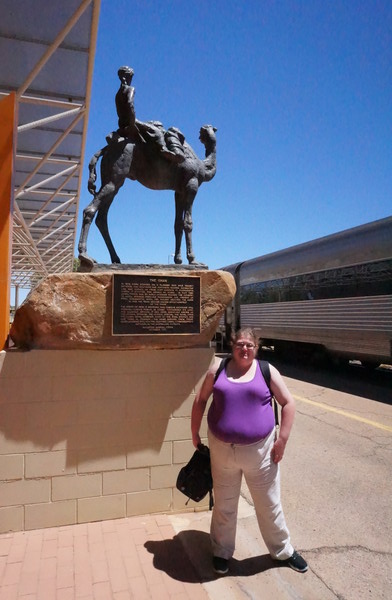
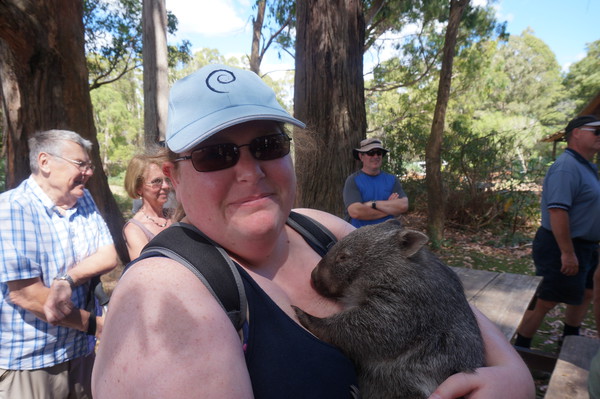
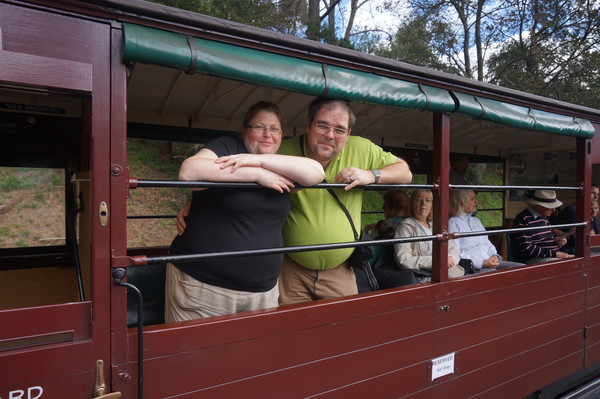
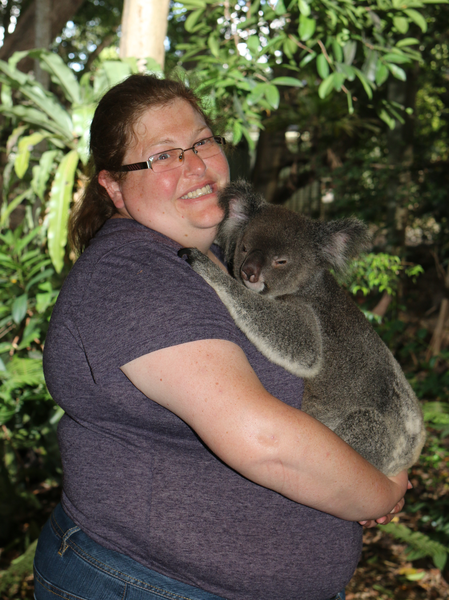
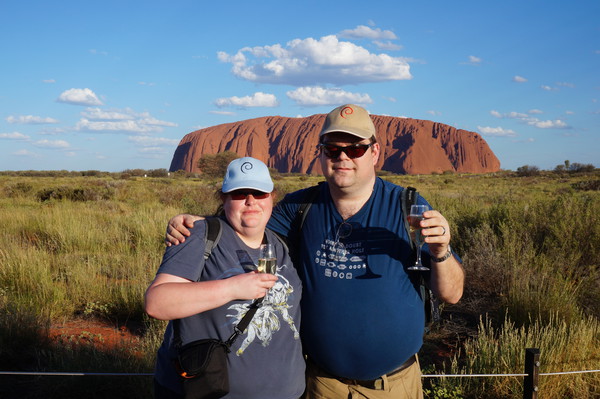
Jo and I just got back from our massive holiday in Australia. We had an awesome time overall, fitting in lots of stuff in 4 weeks. Time for a quick write-up and some photos! Ayers Rock We flew into Sydney, then straight onto Uluru for the obligatory sunset and sunrise viewings. We didn't climb the Rock, both for sensitivity reasons and (to be more honest!) it looked way too much like hard work in 40-plus degree heat. Ghan train Coach over to Alice Springs, where we had a very quick look around before taking the Ghan train down to Adelaide. The train was fun for a day, and we got to see a lot of desert. In Adelaide, we had a look around the city (lovely colonial feel!) and got a couple of evenings in fun comedy shows at the Fringe. Great fun! Cuddling a sleepy wombat! On to Tasmania, where we did a quick (3 days) run around the island by car: into Hobart, up the east coast. Stopped in Swansea (a nice version!) for some heavenly Devonshire teas, then on up to Grindelwald near Launceston. Visited Trowunna Wildlife Park to see (and cuddle!) lots of local animals, which was amazing - Jo's favourite day of the holiday. Then on to Queenstown and drive back down to Hobart past some impossibly beautiful views around Cradle Mountain. Tassie's gorgeous - like the best bits of Scotland, Wales and Cornwall but with even fewer people and better weather. Sydney Opera House Next, on to Sydney for Harry and Cath's wedding. We stayed up in Chatswood. Not knowing anything about the area beforehand, we were a little surprised to basically find ourselves back in Hong Kong! We spent most of the weekend catching up with friends from the wedding group, and the wedding itself was at Quarantine Station, overlooking the harbour. It couldn't have been a more perfect location / weather / view for our friends' big day! We squeezed in a couple of the open-top bus tours of Sydney on the Sunday, but got caught in the horrendous storm that hit and ended up sheltering downstairs under cover on the bus. I'm told Bondi is lovely, but it all looked grey from the bus. :-P Puffing Billy, Yarra Valley Down to Melbourne on the train (bit of a wasted day, in hindsight), where we wandered around the city quite a bit. Caught up with an old friend who lives there for a day, and we did a wine tour up the Yarra Valley which was fun too. Snorkelling at the Reef - all OK! Up to Port Douglas, where we headed out to the Reef for my highlight of the holiday: a snorkelling tour with some local marine experts who showed us the local flora and fauna. We also visited a local Aboriginal cultural centre, skyrail and scenic railway around Kuranda village. Koala! :-) Down to Hervey Bay and a 1-day tour of Fraser Island - an amazing place in combination with quite a thrill-ride experience just being driven around on the sand tracks. Finally, down to Brisbane where we wandered around and visited both the Lone Pine Koala Sanctuary (more cuddles!) and the Gold Coast. Then the long flights home. Whew! We're knackered now. We knew we could't fit everything in, but we're glad we travelled all over and got tastes of almost everything. Now we can work out where we want to spend more time on our future visit(s). We'll definitely want to head over and see Perth and some of WA next time, and definitely more time in Tasmania, Sydney and Adelaide.
18 March 2015

Mario Lang: Call for Help: BMC -- Braille Music Compiler

Since 2009, I am persuing a personal programming project. As I am not a professional programmer, I have spent quite a lot of that time exploring options. I have thrown out about three or four prototype implementations already. My last implementation seems to contain enough accumulated wisdom to be actually useful. I am far from finished, but the path I am walking now seems relatively sound. So, what is this project about? I have set myself a rather ambitious goal: I am trying to implement a two-way bridge between visual music notation and braille music code. It is called BMC (Braille Music Compiler). My problem: I am, as some of you might remember, 100% blind. So I am trying to write a translator between something I will never see directly, and its counterpart representation in a tactile encoding I had to learn from scratch to be able to work on this project. Braille music code is probably the most cryptic thing I have ever tried to learn. It basically is a method to represent a 2-dimensional structure like staff-notation as a stream of characters encoded in 6-dot braille. As the goal above states, I am ultimately trying to implement a converter that works both ways. One of my prototypes already implemented reading digital staff notation (MusicXML) and transcribing it to Braille. However, to be able to actually understand all the concepts involved, I ended up starting from the other end of the spectrum with my new implementation: parsing braille music code and emitting digital staff notation (LilyPond and MusicXML). This is a rather unique feature, since while there is commercial (and very expensive) software out there to convert MusicXML to braille music code, there is, as far as I know, no system that allows to input un-annotated braille music code and have it automatically converted to sighted music notation. So the current state of things is, that we are able to read certain braille music code formats, and output either reformatted (to new line-width) braille music code, LilyPond or MusicXML. The ultimate goal is to also implement a MusicXML reader, and convert the data to something that can be output as braille music code. While the initial description might not sound very hard, there are a lot of complications arising from how braille music code works, which make this quite a programming challenge. For one, braille music note and rest values are ambigious. A braille music note or rest that looks like a whole can mean a whole or 16th. A braille music note or rest that looks like a half can mean a half or a 32nd. And so on. So each braille music code value can have two meanings. The actual value can be caluclated with a recursive algorithm that I have worked out from scratch over the years. The original implementation was inspired by Samuel Thibault (thanks!) and has since then evolved into something that does what we need, while trying to do that very fast. Most input documents can be processed in almost no time, however, time signatures with a value > 1 (such as 12/8) tend to make the number of possible choices exploed quite heavily. I have found so far one piece from J.S. Bach (BWV988 Variation 3) which takes about 1.5s on my 3GHz AMD (and the code is already using several CPU cores). Additionally, braille music code supports a form of "micro"-repetitions which are not present in visual staff notation which effectively allow certain musical patterns to be compressed if represented in braille. Another algorithmically interesting part of BMC that I have started to taclke just recently is the linebreaking problem. Braille music code has some peculiar rules when it comes to breaking a measure of musical material into several lines. I ended up adapting Donald E. Knuth's algorithm from Breaking Paragraphs into Lines for fixed-width text. In other words, I am ignoring the stretch/shrink factors, while making use of different penalty values to find the perfect solution for the problem of breaking a paragraph of braille music code into several lines. One thing that I have learnt from my perivous prototype (which was apparently useful enough to already acquire some users) is that it is not enough to just transcribe one format to another. I ultimately want to store meta information about the braille that is presented to the user such that I can implement interactive querying and editing features. Braille music code is complicated, and one of the original motivations to work on software to deal with it was to ease the learning curve. A user of BMC should be able to ask the system for a description of a character at a certain position. The user interface (not implemented yet) should allow to play a certain note interactively, or play the measure under the cursor, or play the whole document, and if possible, have the cursor scroll along while playback plays notes. These features are not implemented in BMC yet, but they have been impleemnted in the previous prototype and their usefulness is apparent. Also, when viewing a MusicXML document in braille music code, certain non-structural changes like adding/removing fingering annotations should be possible while preserving unhandled features of the original MusicXML document. This also has been implemented in the previous prototype, and is a goal for BMC.
I need your help The reason why I am explaining all of this here is that I need your help for this project to succeed. Helping the blind to more easily work with traditional music notation is a worthwhile goal to persue. There is no free system around that really tries to adhere to the braille music code standard, and aims to cover converting both ways. I have reached a level of conformance that surpasses every implementation of the same problem that I have seen so far on the net. However, the primary audience of this software is going to be using Windows. We desperately need a port to that OS, and a user interface resembling NotePad with a lot fewer menu entires. We also need a GTK interface that does the same thing on Linux. wxWindows is unfortunately out of question, since it does not provide the same level of Accessibility on all the platforms it supports. Ideally, we'd also have a Cocoa interface for OS X. I am afraid there is no platform independent GUI framework that offers the same level of Accessibility on all supported platforms. And since much of our audience is going to rely on working Accessibility, it looks like we need to implement three user interfaces to achieve this goal :-(. I also desperately need code reviews and inspiration from fellow programmers. BMC is a C++11 project heavily making use of Boost. If you are into one of these things, please give it a whirl, and emit pull requests, no matter how small they are. While I have learnt a lot in the last years, I am sure there are many places that could use some fresh winds of thought by people that are not me. I am suffering from what I call "the lone coder syndrome". I also need (technical) writers to help me complete the pieces of documentation that are already lying around. I have started to write a braille music tutorial based on the underlying capabilities of BMC. In other words, the tutorial includes examples which are being typeset in braille and staff notation, using LilyPond as a rendering engine. However, something like a user manual is missing, basically, because the user interface is missing. BMC is currently "just" a command-line tool (well enough for me) that transcribes input files to STDOUT. This is very good for testing the backend, which is all that has been important to me in the last years. However, BMC has reached a stage now where its functionality is likely useful enough to be exposed to users. While I try to improve things steadily as I can, I realize that I really need to put out this call for help to make any useful progress in a foreseeable time. If you think it is a worthwhile goal to help the blind to more easily work with music notation, and also enable communication between blind and sighted musicians in both ways, please take the time and consider how you could help this project to advance. My email address can be found on my GitHub page. Oh, and while you are over at GitHub, make sure to star BMC if you think it is a nice project. It would be nice if we could produce a end-user oriented release before the end of this year.

17 March 2015

Rapha&#235;l Hertzog: Freexian s report about Debian Long Term Support, February 2015

Like each month, here comes a report about the work of paid contributors to Debian LTS. Individual reports In February, 58 work hours have been equally split among 4 paid contributors. Their reports are available: Evolution of the situation During the last month, we gained 3 paid work hours: we re now at 61 hours per month sponsored by 28 organizations and we have one supplementary sponsor in the pipe that should bring 4 more hours. The increase is not very quick but seems to be steady. Hopefully at some point, we will have enough resources to do a more exhaustive job. For now, the paid contributors handle in priority the most popular packages used by the sponsors and there are some packages in the end of the queue which have open security issues for months already (example: CVE-2012-6685 on libnokogiri-ruby). So, as usual, we are looking for more sponsors. In terms of security updates waiting to be handled, the situation looks a little bit worse than last month: the dla-needed.txt file lists 40 packages awaiting an update (3 more than last month), the list of open vulnerabilities in Squeeze shows about 58 affected packages in total (5 less than last month). We are getting a bit more effective with CVE triage. A logo for the LTS project? Every time that I write an LTS report, I remember that it would be nice if my LTS related articles could feature a nice picture/logo that reminds people of the LTS team/initiative. Is there anyone up for the challenge of creating that logo? :-) Thanks to our sponsors The new sponsors of the month are in bold.

No comment Liked this article? Click here. My blog is Flattr-enabled.

12 March 2015

Erich Schubert: The sad state of sysadmin in the age of containers

System administration is in a sad state. It in a mess.
I'm not complaining about old-school sysadmins. They know how to keep systems running, manage update and upgrade paths.
This rant is about containers, prebuilt VMs, and the incredible mess they cause because their concept lacks notions of "trust" and "upgrades".
Consider for example Hadoop. Nobody seems to know how to build Hadoop from scratch. It's an incredible mess of dependencies, version requirements and build tools.
None of these "fancy" tools still builds by a traditional make command. Every tool has to come up with their own, incomptaible, and non-portable "method of the day" of building.
And since nobody is still able to compile things from scratch, everybody just downloads precompiled binaries from random websites. Often without any authentication or signature.
NSA and virus heaven. You don't need to exploit any security hole anymore. Just make an "app" or "VM" or "Docker" image, and have people load your malicious binary to their network.
The Hadoop Wiki Page of Debian is a typical example. Essentially, people have given up in 2010 to be able build Hadoop from source for Debian and offer nice packages.
To build Apache Bigtop, you apparently first have to install puppet3. Let it download magic data from the internet. Then it tries to run sudo puppet to enable the NSA backdoors (for example, it will download and install an outdated precompiled JDK, because it considers you too stupid to install Java.) And then hope the gradle build doesn't throw a 200 line useless backtrace.
I am not joking. It will try to execute commands such as e.g.
/bin/bash -c "wget http://www.scala-lang.org/files/archive/scala-2.10.3.deb ; dpkg -x ./scala-2.10.3.deb /"
Note that it doesn't even install the package properly, but extracts it to your root directory. The download does not check any signature, not even SSL certificates. (Source: Bigtop puppet manifests)
Even if your build would work, it will involve Maven downloading unsigned binary code from the internet, and use that for building.
Instead of writing clean, modular architecture, everything these days morphs into a huge mess of interlocked dependencies. Last I checked, the Hadoop classpath was already over 100 jars. I bet it is now 150, without even using any of the HBaseGiraphFlumeCrunchPigHiveMahoutSolrSparkElasticsearch (or any other of the Apache chaos) mess yet.
Stack is the new term for "I have no idea what I'm actually using".
Maven, ivy and sbt are the go-to tools for having your system download unsigned binary data from the internet and run it on your computer.
And with containers, this mess gets even worse.
Ever tried to security update a container?
Essentially, the Docker approach boils down to downloading an unsigned binary, running it, and hoping it doesn't contain any backdoor into your companies network.
Feels like downloading Windows shareware in the 90s to me.
When will the first docker image appear which contains the Ask toolbar? The first internet worm spreading via flawed docker images?

Back then, years ago, Linux distributions were trying to provide you with a safe operating system. With signed packages, built from a web of trust. Some even work on reproducible builds.
But then, everything got Windows-ized. "Apps" were the rage, which you download and run, without being concerned about security, or the ability to upgrade the application to the next version. Because "you only live once".
Update: it was pointed out that this started way before Docker: Docker is the new 'curl sudo bash' . That's right, but it's now pretty much mainstream to download and run untrusted software in your "datacenter". That is bad, really bad. Before, admins would try hard to prevent security holes, now they call themselves "devops" and happily introduce them to the network themselves!

8 March 2015

Hideki Yamane: community booth @ "developers summit 2015" in Tokyo (19th&20th Feb)

I'm back to Developers Summit at (Meguro Gajoen), Tokyo. I was an attendee 2 years ago, and I'm at community booth this year :)

We were at booth "Debian JP Project" (Japanese local Debian community) and other distro people (Ubuntu Japanese Team, openSUSE, VineLinux)


Its conference mostly focuses "development style" in companies, not FLOSS -Keyword: Agile (Scrum), DevOps, using cloud infrastructure, IoT, etc. So, we're a bit stranger but enjoyed chat with some people.

6 March 2015

Rapha&#235;l Hertzog: My Free Software Activities in February 2015

My monthly report covers a large part of what I have been doing in the free software world. I write it for my donators (thanks to them!) but also for the wider Debian community because it can give ideas to newcomers and it s one of the best ways to find volunteers to work with me on projects that matter to me. Debian LTS This month I have been paid to work 14.5 hours on Debian LTS. I worked mostly on CVE triage (41 commits in the security tracker) and organizational issues. One maintainer complained that he had not been kept in the loop for an LTS update of his package. After some discussion, I decided to change the way I did CVE triage so that any time that I add a package to our list of packages needing an update, I also send a mail to the maintainer, thus offering him the opportunity to step in. To make this sustainable, I wrote a small helper script that will generate a mail out of a template. And to kickstart the process I mailed all maintainers of packages that were already listed in our queue of packages to update. To improve the email generated, I requested a JSON export of the security tracker data (see discussions in #761859). In the mean time, Holger worked on this already and after a few iterations we did converge on an output format that will be really useful both for my needs in terms of CVE triage but also for the Package Tracker to be able to display the list of security vulnerabilities affecting each release (see #761730). Last but not least, I don t want to be the only one doing CVE triage for our LTS release so I documented the process in our wiki page. As a side note, I sponsored an e2fsprogs update prepared by Nguyen Cong and I sent the DLA for the embargoed samba update that had been prepared by Ivo de Decker (thanks to both of them!). Tryton Like last month, I invested again a copious amount of time on Tryton, fixing some bugs that were affecting me and improving the French chart of accounts to properly manage purchases and sales within the European Union. Here are some links for more details: Debian I did some work on Distro Tracker, I fixed #777453 (password reset not working because the generated email was using an invalid From email) and #779247 (obsolete build reproducibility action items were not dropped). I also started to work on restructuring the mail handling in distro-tracker (cf #754913) but it s not public yet. While I have no plans to stop contributing to Debian (it s part of my day job!), I reduced my non-work related involvement by officially recognizing that I was no longer properly assuming some of my responsibilities and that I was following too many mailing lists and RSS feeds. The most notable changes are that I removed myself from the maintenance of dpkg, developers-reference, quilt, sql-ledger, and a few perl/python modules. Misc Voting software. Part of the reason why I m reducing my involvement in Debian is that I got more involved in Nouvelle Donne (a French political party) and in particular in the handling of its digital infrastructure (currently running on Ubuntu, doh!). As part of this, I was looking for free software to handle secure votes and elections (and if possible adhering to the principles of liquid democracy). There s no perfect solution and no clear winner. That said I started following the evolution of AgoraVoting because it seems to have a good momentum and has some interesting features (it already supports votes with ranked choices, supports good crypto, has been used for elections involving large numbers of voters in the context of Podemos in Spain). But it still has some ways to go to establish itself as a truly international and community-backed project. GDM bug. Due to my work on Kali, I filed a bug against GDM (this one has been quickly fixed upstream, it s still open in Debian) and another one against accountsservice to request the possibility to define the default graphical session. Dirvish formula for Salt. I contributed another formula to manage backups with dirvish. Thanks See you next month for a new summary of my activities.

One comment Liked this article? Click here. My blog is Flattr-enabled.

5 March 2015

EvolvisForge blog: I have to give you that one

After seeing what the Wildfly (formerly JBoss AS) and Liferay combo does to /tmp, and somewhat attempting to fix it, I saw JVM_TMP in the Debian tomcat7 init script and thought, oh no, not another one. Is that even safe, what they do here, or is that a possibility to instantly pwn? The net is full of literature for how to obtain temporary files and directories, but there is nothing about how to reliably obtain paths under /tmp or, more generally, directories not just writable for one single user (think the g+w thing that got FusionForge CVE-2013-1423). The scenario here is: I am root, and I want to start something as another user, and pass it a stable path, such as /tmp/liferay. So I can just mkdir /tmp/liferay die; chown thatuser /tmp/liferay and, in the stop process, rm -rf /tmp/liferay, right? (Of course not. Also, bad example, as the liferay thing can also be started as thatuser, and our devs regularily need to do that, the init script is there just for the admin convenience and reboot-safety. But I still am interested if there is a secure way to achieve this.) The tomcat7 scenario is trivial : on That Other Init System , it would just get its private /tmp declared in the .service file, and good is, no more hassle. That s one I have to give you. (No idea if this is actually shipped in jessie. Our production systems run wheezy anyway, so there is not even the slightest bit of temptation. Plus, it would not solve the liferay issue, see above. Still, a point for going into the right direction.) The idea here is the same. It creates a directory on start and tears it down on stop. If there was nothing to do on start, the init script could just use mktemp -d. Heck, maybe it still should, but it would need to note down, and communicate to the stop instance, the actual name used. What a drag This is something I see popping up from time to time. I want to use stable paths for SSH session multiplexing control sockets in my ssh_config(5) file, but have them on tmpfs (Linux) or mfs (BSD) so they get properly removed on reboot. No Unix traditionally has per-user temporary directories that are clean and created after reboot. (Adjusting the paths is trivial once you have them.) Android has it worse, what with not having a world-writable tmp directory, which the shell needs e.g. for here documents; there are two components here, to have a directory the current user can write to, and to know its location. Some fail at the first, some at the second, some at both, and the classic /tmp is not the cure, as we have seen. (But if you ever see mksh erroring out due to lack of write permissions somewhere (including /sqlite_stmt_journals which used to be it) as non-root on Android, or even as root, set TMPDIR to something writable; it s tracked, so the change gets active immediately.)

26 February 2015

EvolvisForge blog: tomcat7 log encoding

TIL: the encoding of the catalina.out file is dependent on the system locale, using standard Debian wheezy tomcat7 package. Fix for ? instead of umlauts in it:
cat >>/etc/default/tomcat7 <<EOF
LC_CTYPE=C.UTF-8
export LC_CTYPE
EOF
My problem here is that I have the system locale be the C locale, to get predictable behaviour; applications that need it can set a locale by themselves. (Many don t bother with POSIX locales and use different/separate means of determining especially encoding, but possibly also i18n/l10n. But it seems the POSIX locales are getting more and more used.) Update: There is also adding -Dfile.encoding=UTF-8 to $JAVA_OPTS which seems to be more promising: no fiddling with locales, no breakage if someone defined LC_ALL already, and it sets precisely what it should set (the encoding) and nothing else (since the encoding does not need to correlate to any locale setting, why should it).

EvolvisForge blog: tomcat7 init script is asynchronous

TIL: the init script of tomcat7 in Debian is asynchronous. For some piece of software, our rollout (install and upgrade) process works like this: The first tomcat7 start here is just to unzip the *.war files. For some reason, people like to let tomcat7 do that. This failed today; there were two webapps. Manually unzipping it also did not work for some reason. Re-doing it, inserting a sleep 30 after the here , made it work. In a perfect world, initscripts only return when the service is running, so that the next one started in a nice sequential (not parallel!) init or manual start sequence can do what it needs to, assuming the previous command has fully finished. In this perfect world, those who do wish for faster startup times use a different init system, one that starts things in parallel, for example. Even there, dependencies will wish for the depended-on service to be fully running when they are started; even more so, since the delays between starting things seem to be less for that other init system. So, this is not about the init system, but about the init script; a change that would be a win-win for users of both init schemes. Update: Someone already contacted me with feedback: they suggested to wait until the shutdown port is listened on by tomcat7. We ll look at this later. In the meantime, we re trying to also get rid of the config (and logs) in webapps/ part
PS: If someone is interested in an init script (Debian/LSB sysvinit, I made the effort to finally learn that some months before the other system came) that starts Wildfly (formerly known as JBoss AS) synchronously, waiting until all *.?ar files are fully deployed before returning (though with a timeout in case it won t ever finish), just ask (maybe it will become a dialogue, in which we can improve it together). (We have two versions of it, the more actively maintained one is in a secret internal project though, so I d have to merge it and ready it for publication though, plus the older one is AGPLv3, the newer one was relicenced to a BSDish licence.)

24 February 2015

EvolvisForge blog: Java , logging and the locale

A coworker and I debugged a fascinating problem today. They had a tomcat7 installation with a couple of webapps, and one of the bundled libraries was logging in German. Everything else was logging in English (the webapps themselves, and the things the other bundled libraries did). We searched around a bit, and eventually found that the wrongly-logging library (something jaxb/jax-ws) was using, after unravelling another few layers of library bundling another library as convenience copy (gah, Java!), com.sun.xml.ws.resources.WsservletMessages which contains quite a few com.sun.istack.localization.Localizable members. Looking at the other classes in that package, in particular Localizer, showed that it defaults to the java.util.Locale.getDefault() value for the language. Which is set from the environment. Looking at /proc/pid-of-JVM-running-tomcat7/environ showed nothing, of course . The system locale was, properly, set to English. (We mostly use en_GB.UTF-8 for better paper sizes and the metric system (unless the person requesting the machine, or the admin creating it, still likes the system to speak German *shudder*), but that one still had en_US.UTF-8.) Browsing the documentation for java.util.Locale proved more fruitful: it also contains a setDefault method, which sets the new default locale JVM-wide. Turns out another of the webapps used that for some sort of internal localisation. Clearly, the containment of tomcat7 is incomplete in this case. Documenting for the larger net, in case someone else runs into this. It s not as if things like this would be showing up in the USA, where the majority of development appears to happen.

Sven Hoexter: just because

That inevitable led to this on the office wall.

Next.

Previous.