Review: Through Struggle, The Stars, by John J. Lumpkin
Series:
Human Reach #1
Publisher:
John J. Lumpkin
Copyright:
July 2011
ISBN:
1-4611-9544-6
Format:
Kindle
Pages:
429
Never let it be said that I don't read military SF. However, it can be
said that I read books and then get hellishly busy and don't review them
for months. So we'll see if I can remember this well enough to review it
properly.
In Lumpkin's future world, mankind has spread to the stars using gate
technology, colonizing multiple worlds. However, unlike most science
fiction futures of this type, it's not all about the United States, or
even the United States and Russia. The great human powers are China and
Japan, with the United States relegated to a distant third. The US mostly
maintains its independence from either, and joins the other lesser nations
and UN coalitions to try to pick up a few colonies of its own. That's the
context in which Neil and Rand join the armed services: the former as a
pilot in training, and the latter as an army grunt.
This is military SF, so of course a war breaks out. But it's a war
between Japan and China: improved starship technology and the most
sophisticated manufacturing in the world against a much larger economy
with more resources and a larger starting military. For reasons that are
not immediately clear, and become a plot point later on, the United States
president immediately takes an aggressive tone towards China and pushes
the country towards joining the war on the side of Japan.
Most of this book is told from Neil's perspective, following his military
career during the outbreak of war. His plans to become a pilot get
derailed as he gets entangled with US intelligence agents (and a bad
supervisor). The US forces are not in a good place against China,
struggling when they get into ship-to-ship combat, and Neil's ship goes on
a covert mission to attempt to complicate the war with political factors.
Meanwhile, Rand tries to help fight off a Chinese invasion of one of the
rare US colony worlds.
Through Struggle, The Stars does not move quickly. It's over 400
pages, and it's a bit surprising how little happens. What it does instead
is focus on how the military world and the war feels to Neil: the
psychological experience of wanting to serve your country but questioning
its decisions, the struggle of working with people who aren't always
competent but who you can't just make go away, the complexities of
choosing a career path when all the choices are fraught with politics that
you didn't expect to be involved in, and the sheer amount of luck and
random events involved in the progression of one's career. I found this
surprisingly engrossing despite the slow pace, mostly because of how true
to life it feels. War is not a never-ending set of battles. Life in a
military ship has moments when everything is happening far too quickly,
but other moments when not much happens for a long time. Lumpkin does a
great job of reflecting that.
Unfortunately, I thought there were two significant flaws, one of which
means I probably won't seek out further books in this series.
First, one middle portion of the book switches away from Neil to follow
Rand instead. The first part of that involves the details of fighting
orbiting ships with ground-based lasers, which was moderately interesting.
(All the technological details of space combat are interesting and
thoughtfully handled, although I'm not the sort of reader who will notice
more subtle flaws. But David Weber this isn't, thankfully.) But then it
turns into a fairly generic armed resistance story, which I found rather
boring.
It also ties into the second and more serious flaw: the villain. The
overall story is constructed such that it doesn't need a personal
villain. It's about the intersection of the military and politics, and a
war that may be ill-conceived but that is being fought anyway. That's
plenty of conflict for the story, at least in my opinion. But Lumpkin
chose to introduce a specific, named Chinese character in the villain
role, and the characterization is... well.
After he's humiliated early in the story by the protagonists, Li Xiao
develops an obsession with killing them, for his honor, and then pursues
them throughout the book in ways that are sometimes destructive to the
Chinese war efforts. It's badly unrealistic compared to the tone of
realism taken by the rest of the story. Even if someone did become this
deranged, it's bizarre that a professional military (and China's forces
are otherwise portrayed as fairly professional) would allow this. Li
reads like pure caricature, and despite being moderately competent apart
from his inexplicable (but constantly repeated) obsession, is cast in a
mustache-twirling role of personal villainy. This is weirdly out of place
in the novel, and started irritating me enough that it took me out of the
story.
Through Struggle, The Stars is the first book of a series, and does
not resolve much by the end of the novel. That plus its length makes the
story somewhat unsatisfying. I liked Neil's development, and liked him as
a character, and those who like the details of combat mixed with
front-lines speculation about politics may enjoy this. But a
badly-simplified mustache-twirling victim and some extended, uninteresting
bits mar the book enough that I probably won't seek out the sequels.
Followed by The Desert of Stars.
Rating: 6 out of 10
A new version of RcppGSL just arrived on CRAN. The RcppGSL package provides an interface from R to the GNU GSL using our Rcpp package.
Following on the heels of an update last month we updated the package (and its vignette) further. One of the key additions concern memory management: Given that our proxy classes around the GSL vector and matrix types are real C++ object, we can monitor their scope and automagically call free() on them rather then insisting on the user doing it. This renders code much simpler as illustrated below. Dan Dillon added const correctness over a series on pull request which allows us to write more standard (and simply nicer) function interfaces. Lastly, a few new typedef declaration further simply the use of the (most common) double and int vectors and matrices.
Maybe a code example will help. RcppGSL contains a full and complete example package illustrating how to write a package using the RcppGSL facilities. It contains an example of computing a column norm -- which we blogged about before when announcing an much earlier version. In its full glory, it looks like this:
#include <RcppGSL.h>#include <gsl/gsl_matrix.h>#include <gsl/gsl_blas.h>extern"C" SEXP colNorm(SEXP sM)
try
RcppGSL::matrix<double> M = sM; // create gsl data structures from SEXPint k = M.ncol();
Rcpp::NumericVector n(k); // to store resultsfor (int j = 0; j < k; j++)
RcppGSL::vector_view<double> colview = gsl_matrix_column (M, j);
n[j] = gsl_blas_dnrm2(colview);
M.free() ;
return n; // return vectorcatch( std::exception &ex )
forward_exception_to_r( ex );
catch(...)
::Rf_error( "c++ exception (unknown reason)" );
return R_NilValue; // -Wall
We manually translate the SEXP coming from R, manually cover the try and catch exception handling, manually free the memory etc pp.
Well in the current version, the example is written as follows:
This takes full advantage of Rcpp Attributes automagically creating the interface and exception handler (as per the previous release), adds a const & interface, does away with the tedious and error-pronce free() and uses the shorter-typedef forms for RcppGSL::Matrix and RcppGSL::VectorViews using double variables. Now the function is short and concise and hence easier to read and maintain. The package vignette has more details on using RcppGSL.
The NEWS file entries follows below:
Changes in version 0.3.0 (2015-08-30)
The RcppGSL matrix and vector class now keep track of object allocation and can therefore automatically free allocated object in the destructor. Explicit x.free() use is still supported.
The matrix and vector classes now support const reference semantics in the interfaces (thanks to PR #7 by Dan Dillon)
The matrix_view and vector_view classes are reorganized to better support const arguments (thanks to PR #8 and #9 by Dan Dillon)
Shorthand forms such as Rcpp::Matrix have been added for double and int vectors and matrices including views.
Examples such as fastLm can now be written in a much cleaner and shorter way as GSL objects can appear in the function signature and without requiring explicit .free() calls at the end.
The included examples, as well as the introductory vignette, have been updated accordingly.
For at least the last six years, it's not been surprising news that the
relationship between the average person and the US financial system is
tense at best, and downright exploitative at worst. The collapse of the
housing bubble revealed a morass of predatory lending practices,
spectacularly poor (or spectacularly cynical) investment decisions, and
out-of-control personal debt coupled with erosion of bankruptcy law.
Despite this, there's always a second story in all discussions of the
finances of the US population: the problem isn't with financial structures
and products, but with us. We're too stupid, or naive, or emotional, or
uninformed, or greedy, or unprincipled, or impatient. Finances are
complicated, yes, but that just means we have to be more thoughtful. All
of these complex financial products could have been used properly.
Helaine Olen's Pound Foolish is a systemtic, biting,
well-researched, and pointed counter to that second story. The short
summary of this book is that it's not us. We're being set up for failure,
and there is a large and lucrative industry profiting off of that failure.
And many (although not all) people in that industry know exactly what
they're doing.
Pound Foolish is one of my favorite forms of non-fiction: long-form
journalism. This is an investigative essay into the personal finance and
investment industry, developed to book length. Readers of Michael Lewis
will feel right at home. Olen doesn't have Lewis's skill with
characterization and biography, but she makes up for it in big-picture
clarity. She takes a wealth of individual facts about who is involved in
personal finance, how they make money, what they recommend, and who
profits, and develops it into a clear and coherent overview.
If you have paid any attention to US financial issues, you'll know some of
this already. Frontline has done a great job of covering
administrative fees in mutual funds. Lots of people have warned about
annuities. The spectacular collapse of the home mortgage is old news now.
But Olen does a great job of finding the connections between these
elements and adding some less familiar ones, including an insightful and
damning analysis of financial literacy campaigns and the widespread belief
that these problems are caused by lack of consumer understanding. I've
read and watched a lot of related material, including several full-book
treatments of the mortgage crisis, so I think it's telling that I never
got bored in the middle of Olen's treatment.
I find the deep US belief in the power of personal improvement
fascinating. It feels like one of the defining characteristics of US
culture, for both good and for ill. We're very good at writing compelling
narratives of personal improvement, and sometimes act on them. We believe
that everyone can and should improve themselves. But that comes coupled
to a dislike and distrust of expertise, even when it is legitimate and
earned (Hofstadter's Anti-Intellectualism
in American Life develops this idea at length). And I believe we
significantly overestimate the ability of individuals to act despite
systems that are stacked against us, and significantly overestimate our
responsibility for the inevitable results.
This was the main message I took from Pound Foolish: we desperately
want to believe in the myth of personal control. We want to believe that
our financial troubles are something we can fix through personal
education, more will power, better decisions, or just the right
investment. And so, we turn to gurus like Suze Orman and buy their mix of
muddled financial advice and "tough love" that completely ignores broader
social factors. We're easy marks for psychologically-trained investment
sellers who mix fear, pressure, and a fantasy of inside knowledge and
personal control. We're fooled by a narrative of empowerment and stand by
while a working retirement system (guaranteed benefit pensions) is
undermined and destroyed in favor of much riskier investment
schemes... riskier for us, at least, but loaded with guaranteed profits
for the people who "advise" us. And we cling to financial literacy
campaigns that are funded by exactly the same credit card companies who
fight tooth and nail against regulations that would require they provide
simple, comprehensible descriptions of loan terms. One wonders if they
support them precisely because they know they don't work.
Olen mentions, in passing, the Stanford marshmallow experiment, which is
often used as a foundation for arguments about personal responsibility for
financial outcomes, but she doesn't do a detailed critique. I wish she
had, since I think it's such a good example of the theme of this book.
The Stanford marshmallow experiment was a psychological experiment from
the late 1960s and early 1970s in delayed gratification. Children were
put in a room in front of some treat (marshmallows, cookies, pretzels) and
told that they could eat it if they wished. But if they didn't eat the
treat before the monitor came back, they would get two of the treat
instead. Long-term follow-up studies found that the children who
refrained from eating the treat and got the reward had better life
outcomes along multiple metrics: SAT scores, educational attainment, and
others.
On the surface, this seems to support everything US culture loves to
believe about the power of self-control, self-improvement, and the
Protestant work ethic. People who can delay gratification and save for a
future reward do better in the world. (The darker interpretation, also
common since the experiment was performed on children, is that the ability
to delay gratification has a genetic component, and some people are just
doomed to make poor decisions due to their inability to exercise
self-control.)
However, I can call the traditional interpretation into question with one
simple question that the experimenters appeared not to ask: under what
circumstances would taking the treat immediately be the rational and best
choice?
One answer, of course, is when one does not trust the adult to produce the
promised reward. If the adult might come back, take the treat away, and
not give any treat, it's to the child's advantage to take the treat
immediately. Even if the adult left the treat but wouldn't actually
double it, it's to the child's advantage to take the treat immediately.
The traditional interpretation assumes the child trusts the adults
performing the experiment a logical assumption for those of us whose
childhood experience was that adults could generally be trusted and that
promised rewards would materialize. If the child instead came from a
chaotic family where adults weren't reliable, or just one where frequent
unexpected money problems meant that promised treats often didn't
materialize, the most logical assumption may be much different. One has
to ask if such a background may have more to do with the measured
long-term life outcomes than the child's unwillingness to trust in a
future reward.
And this is one of the major themes of this book. Problems the personal
finance industry attributes to our personal shortcomings (which they're
happy to take our money to remedy) are often systematic, or at least
largely outside of our control. We may already be making the most logical
choices given our personal situations. We're in worse financial shape
because we're making less money. Our retirements are in danger because
our retirement systems were dismantled and replaced with risky and
expensive alternatives. And where problems are attributed to our poor
choices, one can find entire industries that focus on undermining our
ability to make good choices: scaring us, confusing us, hiding vital
information, and exploiting known weaknesses of human psychology to route
our money to them.
These are not problems that can be solved by watching Suze Orman yell at
us to stop buying things. These are systematic social problems that
demand a sweeping discussion about regulation, automatic savings systems,
and social insurance programs to spread risk and minimize the weaknesses
of human psychology. Exactly the kind of discussion that the personal
finance industry doesn't want us to have.
Those who are well-read in these topics probably won't find a lot new
here. Those who aren't in the US will shake their heads at some of the
ways that the US fails its citizens, although many of Olen's points apply
even to countries with stronger social safety nets. But if you're
interested in solid long-form journalism on this topic, backed by lots of
data on just how badly a focus on personal accountability is working for
us, I recommend Pound Foolish.
Rating: 8 out of 10
It's 2004 and I'm in Oldenburg DE, working on the Debian Installer. Colin and I
pair program on partman, its new partitioner, to get it into shape. We've
somewhat reluctantly decided to use it. Partman is in some ways a beautful
piece of work, a mass of semi-object-oriented, super extensible shell code that
sprang fully formed from the brow of Anton. And in many ways, it's mad, full of
sector alignment twiddling math implemented in tens of thousands of lines of
shell script scattered amoung hundreds of tiny files that are impossible to keep
straight. In the tiny Oldenburg Developers Meeting, full of obscure hardware
and crazy intensity of ideas like porting Debian to VAXen, we hack late into
the night, night after night, and crash on the floor.
It's 2015 and I'm at a Chinese bakery, then at the Berkeley pier, then in a SF
food truck lot, catching half an hour here and there in my vacation to add some
features to Propellor. Mostly writing down data types for things like
filesystem formats, partition layouts, and then some small amount of haskell
code to use them in generic ways. Putting these peices together and reusing
stuff already in Propellor (like chroot creation).
Before long I have this, which is only 2 undefined functions away from
(probably) working:
This is at least a replication of vmdebootstrap, generating a bootable disk
image from that config and 400 lines of code, with enormous customizability
of the disk image contents, using all the abilities of Propellor. But is also,
effectively, a replication of everything partman is used for (aside from UI and
RAID/LVM).
What a difference a decade and better choices of architecture make! In many
ways, this is the loosely coupled, extensible, highly configurable system
partman aspired to be. Plus elegance. And I'm writing it on a lark, because I
have some spare half hours in my vacation.
Past Debian Installer team lead Tollef stops by for lunch, I show him
the code, and we have the conversation old d-i developers always have about
partman.
I can't say that partman was a failure, because it's been used by millions to
install Debian and Ubuntu and etc for a decade. Anything that deletes that many
Windows partitions is a success. But it's been an unhappy success. Nobody has
ever had a good time writing partman recipes; the code has grown duplication
and unmaintainability.
I can't say that these extensions to Propellor will be a success; there's no
plan here to replace Debian Installer (although with a few hundred more lines
of code, propellor is d-i 2.0); indeed I'm just adding generic useful stuff
and building further stuff out of it without any particular end goal. Perhaps
that's the real difference.
I ve just uploaded an update version of my puppet ssh module to the forge.
The module aims at being a generic module to manage of ssh server and clients, including key generation and known_hosts management. It provides a mechanism to generate and deploy ssh keys without the need of storeconfig or PuppetDB but a server-side cache instead. This is neat, if you want to remain ssh keys during a reprovisioning of a host.
Updates
The update is mostly to push out some patches I ve received from contributors via pull requests in the last few months. It adds:
Support for the AllowUsers, AllowGroups and DenyUsers aswell as DenyGroups parameters in the default sshd_config template. Thanks to cachaldora for the patches.
Support for multiple ports in the default sshd template. Thanks to Arnd Hannemann for that patch.
Fixes in the template for it to work with newer puppet versions. Untested by me, but this probably fixes compatibility with puppet 4. For that contribution my thanks go to Daine Danielson.Apart from this changes I ve added a couple of beaker tests.If the module is of any use for you, I d be happy for ratings at puppetforge. The same is true for critical feedback, bug reports or (even better pull requests.
A question that I'm asked repeatedly recently is why I chose not to
use an existing library for serialising data structures in Obnam.
This blog post is the answer.
Obnam is a backup program, and it needs to store various data about
files. This includes stat(2) information about each file in the
live data, as well as data Obnam needs to keep track of everything. At
run-time, Obnam keeps this data in memory data structures, such as
Python dicts. For storage, these data structures need to be converted,
serialised, to and from streams of bytes.
The are a variety of libraries for doing this, designed for different
purposes and with their own constraints and pitfalls. Python's
standard library comes with the cPickle library, for example, but its
serialisation format is not guaranteed to be compatible with any other
version of Python.
For Obnam, I need something that will last a long time. I do not want
to have to deal with a library changing its serialisation format, as
that would mean either that Obnam can't handle old backups, or that I
need to start maintaining the old version of the library.
A way to look at this is that any dependencies your software have a
cost, and that cost should be smaller than the benefit you get from
them.
For example, Obnam depends on the paramiko library to implement the
SSH protocol. This library has some cost, and I've run into one or two
bugs in it that have been rather unfortunate. However, the benefit it
brings is huge: I don't have to implement SSH myself. I'm happy to
have Obnam depend on paramiko.
For the serialisation thing, I wrote my own library, after a small
about of research into existing ones. Research time is a cost, too.
Mine is somewhat Obnam specific, in that it can make some assumptions
about the data to be serialised, and this allows a simpler library. A
generic library would have to handle a number of special cases that
mine can ignore.
It took me less than an hour to write this twice. I first wrote a
quick prototype and a little microbenchmark to see if my approach
would be feasible. Then I deleted that code, and started from scratch,
TDD style, to make sure the code was reliable. The cost of writing my
own serialisation code was less than the cost of finding, let alone
evaluating existing libraries.
It may be that my own library turns out to be inadequate. Then, and
only then, is when I start researching other libraries. Until then,
I'll avoid the cost of research to find a suitable library, the cost
of learning the chosen one, the cost of integrating it into Obnam, the
cost to porters of Obnam of dealing with a new dependency, and the
risk of the library changing in ways that are unsuitable for Obnam.
Obviously, writing your own code has costs, too. Designing and
implementing a library is a cost, as is maintaining it (debugging,
changes in requirements, etc).
Write your own or use existing code? It's a cost/benefit analysis.
There's no clear one answer that's always correct.
QEMU 2.4.0 has just been released, and among many other things it comes with some of the stuff I have been working on lately. In this blog post I am going to talk about disk I/O limits and the new feature to group several disks together.
Disk I/O limits
Disk I/O limits allow us to control the amount of I/O that a guest can perform. This is useful for example if we have several VMs in the same host and we want to reduce the impact they have on each other if the disk usage is very high.
The I/O limits can be set using the QMP command block_set_io_throttle, or with the command line using the throttling.* options for the -drive parameter (in brackets in the examples below). Both the throughput and the number of I/O operations can be limited. For a more fine-grained control, the limits of each one of them can be set on read operations, write operations, or the combination of both:
bps (throttling.bps-total): Total throughput limit (in bytes/second).
In addition to that, it is also possible to configure the maximum burst size, which defines a pool of I/O that the guest can perform without being limited:
bps_max (throttling.bps-total-max): Total maximum (in bytes).
One additional parameter named iops_size allows us to deal with the case where big I/O operations can be used to bypass the limits we have set. In this case, if a particular I/O operation is bigger than iops_size then it is counted several times when it comes to calculating the I/O limits. So a 128KB request will be counted as 4 requests if iops_size is 32KB.
iops_size (throttling.iops-size): Size of an I/O request (in bytes).
Group throttling
All of these parameters I ve just described operate on individual disk drives and have been available for a while. Since QEMU 2.4 however, it is also possible to have several drives share the same limits. This is configured using the new group parameter.
The way it works is that each disk with I/O limits is member of a throttle group, and the limits apply to the combined I/O of all group members using a round-robin algorithm. The way to put several disks together is just to use the group parameter with all of them using the same group name. Once the group is set, there s no need to pass the parameter to block_set_io_throttle anymore unless we want to move the drive to a different group. Since the I/O limits apply to all group members, it is enough to use block_set_io_throttle in just one of them.
Here s an example of how to set groups using the command line:
In this example, hd1, hd2 and hd4 are all members of a group named foo with a combined IOPS limit of 6000, and hd3 and hd5 are members of bar. hd6 is left alone (technically it is part of a 1-member group).
Next steps
I am currently working on providing more I/O statistics for disk drives, including latencies and average queue depth on a user-defined interval. The code is almost ready. Next week I will be in Seattle for the KVM Forum where I will hopefully be able to finish the remaining bits.
I will also attend LinuxCon North America. Igalia is sponsoring the event and we have a booth there. Come if you want to talk to us or see our latest demos with WebKit for Wayland.
See you in Seattle!
The UK has just woken up to the fact that retailers at airports have been playing the VAT system.
The focus of the media coverage has been on the VAT money, failing to give much emphasis to the fact this is also a sophisticated and coordinated attack on personal privacy.
This situation has been obvious to me for years and it doesn't just occur in the UK. Whenever one of these retailers asks me for a boarding pass, I always refuse. Sometimes they lie to me and tell me that it is mandatory to let them scan my boarding pass: I tell them that a travel companion has the boarding passes and at this point they usually find some way to complete the transaction without further comment.
It is only necessary to pay the correct amount
With the rise of payment cards, people seem to be forgetting that you can pay for things in cash. If I have the right change to pay for something in this scenario, I typically put it on the counter and walk away. Why should I have to waste my time helping a poorly trained cashier understand VAT? I already deal with enough computer problems in the job I'm paid to do, why should I lose my time when on vacation explaining to a cashier that their computer is failing to correctly deduct 20% VAT?
Whenever showing a boarding pass or passport
It is far too common for people to try and scan or copy documents these days. When somebody in an airport shop or hotel asks to see a document, I don't let it out of my hands. It is not hard to cover the barcode with your fingers too. This prevents them making an unauthorized copy or using a barcode scanner to extract personal data. Some of these staff literally try to snatch the documents out of people's hands and drop them onto a scanner next to their till. In some countries hotels are obliged to look at your passport and make a record of the name but they often have no obligation to photocopy or scan it and it is often a huge risk if they do.
If the airports are genuinely concerned about the security of passengers, they would be just as thorough in protecting data as they are in the hunt for terrorists. For example, they could give VAT-free passengers colour-coded boarding passes or some other vouchers without any personal information on them.
VAT diversion funds customer data grab
Shops pocket an extra 20% of the price of a product and they condition everybody, staff and customers, to having all customer data expropriated from the boarding pass at the point of sale, even the customers not eligible for a tax refund are unnecessarily having their data hoovered up in this way. The VAT money diverted away from both the tax man and the customer is rolled back into the system to fund the data grab. UK law promises customers significant protection from unlawful use of personal data, so how can these retailers lie to passengers and tell them that scanning the boarding pass is mandatory? Why not ask the Information Commission's Office to check up on this?
Paying the correct amount and walking away
It is not hard for people to add up the amount of VAT included in a price, deduct it themselves, give the correct and exact amount of cash to the cashier and walk away. Just type the price into your smart phone, divide by 1.2 and you can see the amount to pay. For example, if a product costs 24.95, just type 24.95 1.2 into the calculator on your phone and you find that you have to pay 20.79.
It may only be necessary to show a boarding pass or ID for purchasing duty-free alcohol or tobacco.
Not just for airports
Carrying a correct amount of cash doesn't just help navigate the data grab in airports. Consider some of the other scenarios:
A long queue at the cashier in a petrol station, typically on a Sunday afternoon. Did you ever notice somebody who just walks past the queue and puts the exact change (or a cheque) on the counter and drives away while everybody else is waiting to pay with some payment card and scan their loyalty card?
Restaurant in a tourist spot, you receive a bill and notice they have added VAT and service charges or something you didn't ask for like bread. In European countries and Australia, the price next to each dish on the menu is the only price you have to pay, just like the price on the shelf in a shop or the price on a web page. If you have the right change you can just pay that amount and walk away without a discussion. In the US the taxes are added later and some tourist hot spots in Europe try this with English speaking customers, thinking that if they are American they won't complain.
Hotel tries to insist on a currency conversion when charging your credit card. Maybe you've already realized that dynamic currency conversion (DCC) used by retailers often adds at least 3% to a purchase but some hotels try to go way beyond this. The booking confirmation page you printed from their web site gives you a total price in one currency, perhaps USD or EUR and they use some arbitrary exchange rate, with a whopping 30% margin or more, to convert to the local currency and ask you to insert your PIN number or sign a credit card authorization. The best answer to this practice is usually to carry banknotes in the currency used for the booking, paying that exact amount in cash and if they try to argue, just keep counting out the bank notes to prove it matches the confirmation page. Hotels only get away with this trick because few people check the rate, even fewer carry sufficient cash and you may not be able to use local cash machines to get the currency specified in your booking. This is a situation I've encountered in eastern Europe and South America where it is common to quote in EUR and USD even if that isn't the domestic currency.
Joachim Breitner uploaded haskell-devscripts/0.9.11 which ads support for UTF-8 encoded debian/control file with all locales. Original patch by Chris Lamb.
reproducible.debian.net
Four armhf build hosts were provided by Vagrant Cascadian and have been configured to be used by jenkins.debian.net. Work on including armhf builds in the reproducible.debian.net webpages has begun. So far the repository comparison page just shows us which armhf binary packages are currently missing in our repo. (h01ger)
The scheduler has been changed to re-schedule more packages from stretch than sid, as the gcc5 transition has started This mostly affects build log age. (h01ger)
A new depwait status has been introduced for packages which can't be built because of missing build dependencies. (Mattia Rizzolo)
debbindiff development
Finally, on August 31st, Lunar released debbindiff 27 containing a complete overhaul of the code for the comparison stage. The new architecture is more versatile and extensible while minimizing code duplication. libarchive is now used to handle cpio archives and iso9660 images through the newly packaged python-libarchive-c. This should also help support a couple other archive formats in the future. Symlinks and devices are now properly compared. Text files are compared as Unicode after being decoded, and encoding differences are reported. Support for Sqlite3 and Mono/.NET executables has been added. Thanks to Valentin Lorentz, the test suite should now run on more systems. A small defiency in unquashfs has been identified in the process. A long standing optimization is now performed on Debian package: based on the content of the md5sums control file, we skip comparing files with matching hashes. This makes debbindiff usable on packages with many files. Fuzzy-matching is now performed for files in the same container (like a tarball) to handle renames. Also, for Debian .changes, listed files are now compared without looking the embedded version number. This makes debbindiff a lot more useful when comparing different versions of the same package.
Based on the rearchitecturing work has been done to allow parallel processing. The branch now seems to work most of the time. More test needs to be done before it can be merged.
The current fuzzy-matching algorithm, ssdeep, has showed disappointing results. One important use case is being able to properly compare debug symbols. Their path is made using the Build ID. As this identifier is made with a checksum of the binary content, finding things like CPP macros is much easier when a diff of the debug symbols is available. Good news is that TLSH, another fuzzy-matching algorithm, has been tested with much better results. A package is waiting in NEW and the code is ready for it to become available.
A follow-up release 28 was made on August 2nd fixing content label used for gzip2, bzip2 and xz files and an error on text files only differing in their encoding. It also contains a small code improvement on how comments on Difference object are handled.
This is the last release name debbindiff. A new name has been chosen to better reflect that it is not a Debian specific tool. Stay tuned!
Documentation update
Valentin Lorentz updated the patch submission template to suggest to write the kind of issue in the bug subject.
Small progress have been made on the Reproducible Builds HOWTO while preparing the related CCCamp15 talk.
Package reviews
235 obsolete
reviews have
been removed, 47 added and 113 updated this week.
42 reports for packages failing to build from source have been made by Chris West (Faux).
New issue added this week: haskell_devscripts_locale_substvars.
Misc.
Valentin Lorentz wrote a script to report packages tested as unreproducible installed on a system. We encourage everyone to run it on their systems and give feedback!
Princess Katya Nar Umbriel is publicly a bored, womanizing, and difficult
daughter to the rulers of Farraday. It's all an act, though, with the
full knowledge of her parents. As the second child, she's the leader of
the Order of Vestra: the equivalent of the Secret Service, devoted to
protecting the royal family and, by extension, the kingdom, particularly
against magical attacks.
Starbride is new to court and entirely out of place. From a northern
neighboring country, and far more comfortable in practical clothing than
the frilled court dresses that her mother wants her to wear, she has been
sent to court to make contacts. Her people are getting the bad side of
various trade contracts and desperately need some political maneuvering
space of their own. Starbride's best hope for this is to study law in the
palace library when she can manage to avoid the other courtiers. But then
she and Katya stumble across each other, outside of the roles they're
playing, and might have an opportunity for a deeper connection. One that
neither of them want to entangle in their personal worries.
This is the last of a set of books I picked up while looking for lesbian
romance with fantasy or science fiction elements. On the romance front,
it's one of the better entries in that set. Both Katya and Starbride are
likeable, in large part due to their mutual exasperation with the
trappings of the court. (Making the protagonists more serious,
thoughtful, and intelligent than the surrounding characters is an old
trick, but it works.) Wright has a good ear for banter, particularly the
kind when two people of good will are carefully feeling each other out.
And despite Katya's need to keep a deep secret from Starbride for some of
the book, The Pyramid Waltz mostly avoids irritating communication
failures as a plot driver.
The fantasy portion and the plot drivers, alas, are weaker. The world
building is not exactly bad, but it's just not that interesting. There
are a couple of moderately good ideas, in the form of pyramid magic and
secret (and dangerous) magical powers that run in the royal family, but
they're not well-developed. Pyramid magic turns out to look much like any
other generic fantasy magic system, with training scenes that could have
come from a Valdemar or Wheel of Time novel (and without as much dramatic
tension). And the royal family's secret, while better-developed and
integral to the plot, still felt rather generic and one-sided.
Maybe that's something Wright develops better in future novels in this
series, but that was another problem: the ending of The Pyramid
Waltz was rather weak. Partly, I think, this is because the cast is too
large and not well-developed. I cared about Katya and Starbird, and to a
lesser extent their servants and one of the Order members. (Wright has a
moderately interesting bit of worldbuilding about how servants work in
Starbride's culture, which I wish we'd seen more of.) But there are a
bunch of other Order of Vesta members, Katya's family, and various other
bits of history and hinted world views, none of which seemed to get much
depth. The ending climax involved a lot of revelations and twists that
primarily concerned characters I didn't care about. It lost something in
the process.
This book is clearly set up for a sequel. There is an ending, but it's
not entirely satisfying. Unfortunately, despite liking Katya and Starbird
a lot, the rest of the story wasn't compelling enough to make me want to
buy it, particularly since the series apparently goes through another
three books before reaching a real ending.
I enjoyed parts of this book, particularly Katya and Starbird feeling each
other out and discovering similarities in their outlook. Katya teasing
Starbird, and Starbird teasing herself, over her mother's choice of her
clothing was probably the best part. It's not bad for what it's trying to
do, but I think it's a bit too generic and not satisfying enough to really
recommend.
Followed by For Want of a Fiend.
Rating: 6 out of 10
So we're in Finland, and the differences start out immediately.
We're renting a flat, in building ten, on a street. You'd think "10
Streetname" was a single building, but no. It is a pair of buildings: 10A, and 10B.
Both of the buildings have 12 flats in them, with 10A having 1-12, and 10B having 13-24.
There's a keypad at the main entrance, which I assumed was to let you press a button and talk to the people inside "Hello I'm the postmaster", but no. There is no intercom system, instead you type in a magic number and the door opens.
The magic number? Sounds like you want to keep that secret, since it lets people into the common-area? No. Everybody has it. The postman, the cleaners, the DHL delivery man, and all the ex-tenants. We invited somebody over recently and gave it out in advance so that they could knock on our flat-door.
Talking of cleaners: In the UK I lived in a flat and once a fortnight somebody would come and sweep the stair-well, since we didn't ever agree to do it ourselves. Here somebody turns up every day, be it to cut the grass, polish the hand-rail, clean the glass on the front-door, or mop the floors of the common area. Sounds awesome. But they cut the grass, right outside our window, at 7:30AM. On the dot. (Or use a leaf-blower, or something equally noisy.)
All this communal-care is paid for by the building-association, of which all flat-owners own shares. Sounds like something we see in England, or even like Americas idea of a Home-Owners-Association. (In Scotland you own your own flat, you don't own shares of an entity which owns the complete building. I guess there are pros and cons to both approaches.)
Moving onwards other things are often the same, but the differences when you spot them are odd. I'm struggling to think of them right now, somebody woke me up by cutting our grass for the second time this week (!)
Anyway I'm registered now with the Finnish government, and have a citizen-number, which will be useful, I've got an appointment booked to register with the police - which is something I had to do as a foreigner within the first three months - and today I've got an appointment with a local bank so that I can have a euro-bank-account.
Happily I did find a gym to join, the owner came over one Sunday to
give me a tiny-tour, and then gave me a list of other gyms to try if
his wasn't good enough - which was a nice touch - I joined a couple of
days later, his gym is awesome.
(I'm getting paid in UK-pounds, to a UK-bank, so right now I'm getting local money by transferring to my wifes account here, but I want to do that to my own, and open a shared account for paying for rent, electricity, internet, water, & etc).
My flat back home is still not rented, because the nice property management company lost my keys. Yeah you can't make that up can you? With a bit of luck the second set of keys I mailed them will arrive soon and the damn thing can be occupied, while I'm not relying on that income I do wish to have it.
#792673 on bup by use date from debian/changelog when generating version strings.
#792684 on cain by Chris Lamb: ensure stable permissions when creating source tarball.
#792709 on dict-jargon by Dhole: set timestamp in archive using the latest entry of debian/changelog.
#792727 on libaqbanking by Micha Lenk (upstream): sort source files in documentation.
#792763 on docbook-dsssl by Chris Lamb: sort input files when creating changelog.
#792770 on lynx-cur by Reiner Herrmann: use C locale when sorting configuration files.
#792771 on mu-cade by Reiner Herrmann: use C locale when sorting source files.
#792772 on titanion by Reiner Herrmann: use C locale when sorting source files.
#792783 on linuxlogo by Reiner Herrmann: use C locale when sorting source files.
#792821 on pkg-config by Juan Picca: use C locale when sorting source files.
#792828 on tiger by Daniel Kahn Gillmor: use C locale when listing soure files.
reproducible.debian.net
The statistics on the main page of reproducible.debian.net are now updated every five minutes. A random unreviewed package is suggested in the look at a package form on every build. (h01ger)
A new package set based new on the Core Internet Infrastructure census has been added. (h01ger)
Testing of FreeBSD has started, though no results yet. More details have been posted to the freebsd-hackers mailing list. The build is run on a new virtual machine running FreeBSD 10.1 with 3 cores and 6 GB of RAM, also sponsored by Profitbricks.
strip-nondeterminism development
Andrew Ayer released version 0.009 of strip-nondeterminism. The new version will strip locales from Javadoc, include the name of files causing errors, and ignore unhandled (but rare) zip64 archives.
debbindiff development
Lunar continued its major refactoring to enhance code reuse and pave the way to fuzzy-matching and parallel processing. Most file comparators have now been converted to the new class hierarchy.
In order to support for archive formats, work has started on packaging Python bindings for libarchive. While getting support for more archive formats with a common interface is very nice, libarchive is a stream oriented library and might have bad performance with how debbindiff currently works. Time will tell if better solutions need to be found.
Documentation update
Lunar started a Reproducible builds HOWTO intended to explain the different aspects of making software build reproducibly to the different audiences that might have to get involved like software authors, producers of binary packages, and distributors.
Package reviews
17 obsolete
reviews have
been removed, 212 added and 46 updated this week.
15 new bugs for packages failing to build from sources have been reported by Chris West (Faux), and Mattia Rizzolo.
Presentations
Lunar presented Debian efforts and some recipes on making software build reproducibly at Libre Software Meeting 2015. Slides and a video recording are available.
Misc.
h01ger, dkg, and Lunar attended a Core Infrastructure Initiative meeting. The progress and tools mode for the Debian efforts were shown. Several discussions also helped getting a better understanding of the needs of other free software projects regarding reproducible builds. The idea of a global append only log, similar to the logs used for Certificate Transparency, came up on multiple occasions. Using such append only logs for keeping records of sources and build results has gotten the name Binary Transparency Logs . They would at least help identifying a compromised software signing key. Whether the benefits in using such logs justify the costs need more research.
When working with OpenSCAD to generate models for 3D printing, I find it convenient to be able to build .stl and .gcode files from the command line, expecially in batch, so I've started writing a Makefile, improving it and making it more generic in subsequent iterations; I've added a page on my website http://www.trueelena.org/computers/howto/makefile_for_openscad_projects.html to hosts my current version.
Most of my projects use the following directory structure.
my_project/src/object1.scad, my_project/src/object2.scad models that will be exported
my_projects/src/lib/library1.scad, my_projects/src/lib/library2.scad OpenSCAD files that don't correnspond to a single object, included / used in the files above.
Running make will generate stl files for all of the models; make gcode adds .gcode files using slic3r; make build/object1.stl and make build/object1.gcode also work, when just one model is needed.
# Copyright 2015 Elena Grandi # This work is free. You can redistribute it and/or modify it under the # terms of the Do What The Fuck You Want To Public License, Version 2, # as published by Sam Hocevar. See http://www.wtfpl.net/ for more details.
DO WHAT THE FUCK YOU WANT TO PUBLIC LICENSE Version 2, December 2004
Copyright (C) 2004 Sam Hocevar <sam@hocevar.net>
Everyone is permitted to copy and distribute verbatim or modified copies of this license document, and changing it is allowed as long as the name is changed.
DO WHAT THE FUCK YOU WANT TO PUBLIC LICENSE TERMS AND CONDITIONS FOR COPYING, DISTRIBUTION AND MODIFICATION
Well this has been an interesting project.
It all started with a need to get better password storage at work. We wound up looking heavily at a GPG-based solution. This prompted the question: how can we make it even more secure?
Well, perhaps, smartcards. The theory is this: a smartcard holds your private keys in a highly-secure piece of hardware. The PC can never actually access the private keys. Signing and decrypting operations are done directly on the card to prevent the need to export the private key material to the PC. There are lots of standards to choose from (PKCS#11, PKCS#15, and OpenPGP card specs) that are relevant here. And there are ways to use SSH and OpenVPN with some of these keys too. Access to the card is protected by a passphrase (called a PIN in smartcard lingo, even though it need not be numeric). These smartcards might be USB sticks, or cards you pop into a reader. In any case, you can pop them out when not needed, pop them in to use them, and well, pretty nice, eh?
So that s the theory. Let s talk a bit of reality.
First of all, it is hard for a person like me to evaluate how secure my data is in hardware. There was a high-profile bug in the OpenPGP JavaCard applet used by Yubico that caused the potential to use keys without a PIN, for instance. And how well protected is the key in the physical hardware? Granted, in most of these cards you re talking serious hardware skill to compromise them, but still, this is unknown in absolute terms.
Here s the bigger problem: compatibility. There are all sorts of card readers, but compatibility with pcsc-tools and pcscd on Linux seems pretty good. But the cards themselves oh my. PKCS#11 defines an interface API, but each vendor would provide their own .so or .dll file to interface. Some cards (for instance, the ACOS5-64 mentioned on the Debian wiki!) are made by vendors that charge $50 for the privilege of getting the drivers needed to make them work and they re closed-source proprietary drivers at that.
Some attempts
I ordered several cards to evaluate: the OpenPGP card, specifically designed to support GPG; the ACOS5-64 card, the JavaCOS A22, the Yubikey Neo, and a simple reader listed on the GPG smartcard howto.
The OpenPGP card and ACOS5-64 are the only ones in the list that support 4096-bit RSA keys due to the computational demands of them. The others all support 2048-bit RSA keys.
The JavaCOS requires the user to install a JavaCard applet to the card to make it useable. The Yubico OpenPGP applet works here, along with GlobalPlatform to install it. I am not sure just how solid it is. The Yubikey Neo has yet to arrive; it integrates some interesting OAUTH and TOTP capabilities as well.
I found that Debian s wiki page for smartcards lists a bunch of them that are not really useable using the tools in main. The ACOS5-64 was such a dud. But I got the JavaCOS A22 working quite nicely. It s also NFC-enabled and works perfectly with OpenKeyChain on Android (looking like a Yubikey Neo to it, once the OpenPGP applet is installed). I m impressed! Here s a way to be secure with my smartphone without revealing everything all the time.
Really the large amount of time is put into figuring out how all this stuff fits together. I m getting there, but I ve got a ways to go yet.
Update: Corrected to read signing and decrypting rather than signing and encrypting operations are being done on the card. Thanks to Beno t Allard for catching this error.
A new version of RcppGSL arrived on CRAN a couple of days ago. This package provides an interface from R to the GNU GSL using our Rcpp package.
In the course of preparation for the higher-performance R via C++ course I gave in Zuerich last month, I overhauled this package, its embedded package (!!) showing how to build a package which uses R, C++ and the GSL (and which can serve as a fine example of how to build and R and C++ package using an external library), and also overhauled the vignette which discusses all these aspect. All examples now consistently use Rcpp Attributes.
The NEWS file entries follows below:
Changes in version 0.2.5 (2015-07-05)
The colnorm function in the included example package was rewritten to use Rcpp Attributes, the example package was updated and its version number increased to 0.0.3.
The unit tests also use the updated version of the example package.
The package, and the included example package, were updated throughout to conform to the current R CMD check standards.
The RcppGSL-intro vignette was updated throughout.
The Travis CI integration now uses r-cran-* packages which leads to faster tests.
#789396 on libsidplayfp by akira: set HTML_TIMESTAMP=NO in Doxygen configuration.
#789399 on psocksxx by akira: set HTML_TIMESTAMP=NO in Doxygen configuration.
#789405 on qdjango by akira: set HTML_TIMESTAMP=NO in Doxygen configuration.
#789406 on qof by akira: set HTML_TIMESTAMP=NO in Doxygen configuration.
#789428 on qsapecng by akira: pass HTML_TIMESTAMP=NO to Doxygen.
reproducible.debian.net
Bugs with the ftbfs usertag are now visible on the bug graphs. This explain the recent spike. (h01ger)
Andreas Beckmann suggested a way to test building packages using the funny paths that one can get when they contain the full Debian package version string.
debbindiff development
Lunar started an important refactoring introducing abstactions for containers and files in order to make file type identification more flexible, enabling fuzzy matching, and allowing parallel processing.
Documentation update
Ximin Luo detailed the proposal to standardize environment variables to pass a reference source date to tools that needs one (e.g. documentation generator).
Package reviews
41 obsolete
reviews have
been removed, 168 added and 36 updated this week.
Some more issues affecting packages failing to build from source have been identified.
Meetings
Minutes
have been posted for Tuesday June 16th meeting.
The next meeting is
scheduled Tuesday June 23rd at 17:00 UTC.
Presentations
Lunar presented the project in French during Pas Sage en Seine in Paris. Video and slides are available.
The recent AWS introduction of the Elastic File System gives you an automatic grow-and-shrink capability as an NFS mount, an exciting option that takes away the previous overhead in creating shared block file systems for EC2 instances.
However it should be noted that the same auto-management of capacity is not true in the EC2 instance s Elastic Block Store (EBS) block storage disks; sizing (and resizing) is left to the customer. With current 2015 EBS, one cannot simply increase the size of an EBS Volume as the storage becomes full; (as at June 2015) an EBS volume, once created, has fixed size. For many applications, that lack of resize function on its local EBS disks is not a problem; many server instances come into existence for a brief period, process some data and then get Terminated, so long term managment is not needed.
However for a long term data store on an instance (instead of S3, which I would recommend looking closely at from a durability and pricing fit), and where I want to harness the capacity to grow (or shrink) disk for my data, then I will need to leverage some slightly more advanced disk management. And just to make life interesting, I wish to do all this while the data is live and in-use, if possible.
Enter: Logical Volume Management, or LVM. It s been around for a long, long time: LVM 2 made a debut around 2002-2003 (2.00.09 was Mar 2004) and LVM 1 was many years before that so it s pretty mature now. It s a powerful layer that sits between your raw storage block devices (as seen by the operating system), and the partitions and file systems you would normally put on them.
In this post, I ll walk through the process of getting set up with LVM on Debian in the AWS EC2 environment, and how you d do some basic maintenance to add and remove (where possible) storage with minimal interruption.
Getting Started
First a little prep work for a new Debian instance with LVM.
As I d like to give the instance its own ability to manage its storage, I ll want to provision an IAM Role for EC2 Instances for this host. In the AWS console, visit IAM, Roles, and I ll create a new Role I ll name EC2-MyServer (or similar), and at this point I ll skip giving it any actual privileges (later we ll update this). As at this date, we can only associate an instance role/profile at instance launch time.
Now I launch a base image Debian EC2 instance launched with this IAM Role/Profile; the root file system is an EBS Volume. I am going to put data that I ll be managing on a separate disk from the root file system.
First, I need to get the LVM utilities installed. It s a simple package to install: the lvm2 package. From my EC2 instance I need to get root privileges (sudo -i) and run:
apt update && apt install lvm2
After a few moments, the package is installed. I ll choose a location that I want my data to live in, such as /opt/. I want a separate disk for this task for a number of reasons:
Root EBS volumes cannot currently be encrypted using Amazon s Encrypted EBS Volumes at this point in time. If I want to also use AWS encryption option, it ll have to be on a non-root disk. Note that instance-size restrictions also exist for EBS Encrypted Volumes.
It s possibly not worth make a snapshot of the Operating System at the same time as the user content data I am saving. The OS install (except the /etc/ folder) can almost entirely be recreated from a fresh install. so why snapshot that as well (unless that s your strategy for preserving /etc, /home, etc).
The type of EBS volume that you require may be different for different data: today (Apr 2015) there is a choice of Magnetic, General Purpose 2 (GP2) SSD, and Provisioned IO/s (PIOPS) SSD, each with different costs; and depending on our volume, we may want to select one for our root volume (operating system), and something else for our data storage.
I may want to use EBS snapshots to clone the disk to another host, without the base OS bundled in with the data I am cloning.
I will create this extra volume in the AWS console and present it to this host. I ll start by using a web browser (we ll use CLI later) with the EC2 console.
The first piece of information we need to know is where my EC2 instance is running. Specifically, the AWS Region and Availability Zone (AZ). EBS Volumes only exist within the one designated AZ. If I accidentally make the volume(s) in the wrong AZ, then I won t be able to connect them to my instance. It s not a huge issue, as I would just delete the volume and try again.
I navigate to the Instances panel of the EC2 Console, and find my instance in the list:
A (redacted) list of instance from the EC2 console.
Here I can see I have located an instance and it s running in US-East-1A: that s AZ A in Region US-East-1. I can also grab this with a wget from my running Debian instance by asking the MetaData server:
The returned text is simply: us-east-1a .
Time to navigate to Elastic Block Store , choose Volumes and click Create :
Creating a volume in AWS EC2: ensure the AZ is the same as your instance
You ll see I selected that I wanted AWS to encrypt this and as noted above, at this time that doesn t include the t2 family. However, you have an option of using encryption with LVM where the customer looks after the encryption key see LUKS.
What s nice is that I can do both have AWS Encrypted Volumes, and then use encryption on top of this, but I have to manage my own keys with LUKS, and should I lose them, then I can keep all the cyphertext!
I deselected this for my example (with a t2.micro), and continue; I could see the new volume in the list as creating , and then shortly afterwards as available . Time to attach it: select the disk, and either right-click and choose Attach , or from the menu at the top of the list, chose Actions -> Attach (both do the same thing).
Attaching a volume to an instance: you ll be prompted for the compatible instances in the same AZ.
At this point in time your EC2 instance will now notice a new disk; you can confirm this with dmesg tail , and you ll see something like:
[1994151.231815] xvdg: unknown partition table
(Note the time-stamp in square brackets will be different).
Previously at this juncture you would format the entire disk with your favourite file system, mount it in the desired location, and be done. But we re adding in LVM here between this raw device, and the filesystem we are yet to make .
Marking the block device for LVM
Our first operation with LVM is to put a marker on the volume to indicate it s being use for LVM so that when we scan the block device, we know what it s for. It s a really simple command:
pvcreate /dev/xvdg
The device name above (/dev/xvdg) should correspond to the one we saw from the dmesg output above. The output of the above is rather straight forward:
Physical volume "/dev/xvdg" successfully created
Checking our EBS Volume
We can check on the EBS volume which LVM sees as a Physical Volume using the pvs command.
Here we see the entire disk is currently unused.
Creating our First Volume Group
Next step, we need to make an initial LVM Volume Group which will use our Physical volume (xvdg). The Volume Group will then contain one (or more) Logical Volumes that we ll format and use. Again, a simple command to create a volume group by giving it its first physical device that it will use:
# vgcreate  OptVG /dev/xvdg
  Volume group "OptVG" successfully created
And likewise we can check our set of Volume Groups with vgs :
The Attribute flags here indicate this is writable, resizable, and allocating extents in normal mode. Lets proceed to make our (first) Logical Volume in this Volume Group:
# lvcreate -n OptLV -L 4.9G OptVG
  Rounding up size to full physical extent 4.90 GiB
  Logical volume "OptLV" created
You ll note that I have created our Logical Volume as almost the same size as the entire Volume Group (which is currently one disk) but I left some space unused: the reason for this comes down to keeping some space available for any jobs that LVM may want to use on the disk and this will be used later when we want to move data between raw disk devices.
If I wanted to use LVM for Snapshots, then I d want to leave more space free (unallocated) again.
We can check on our Logical Volume:
The attribytes indicating that the Logical Volume is writeable, is allocating its data to the disk in inherit mode (ie, as the Volume Group is doing), and that it is active. At this stage you may also discover we have a device /dev/OptVG/OptLV, and this is what we re going to format and mount. But before we do, we should review what file system we ll use.
Filesystems
Popular Linux file systems
Name
Shrink
Grow
Journal
Max File Sz
Max Vol Sz
btrfs
Y
Y
N
16 EB
16 EB
ext3
Y off-line
Y
Y
2 TB
32 TB
ext4
Y off-line
Y
Y
16 TB
1 EB
xfs
N
Y
Y
8 EB
8 EB
zfs*
N
Y
Y
16 EB
256 ZB
For more details see Wikipedia comparison. Note that ZFS requires 3rd party kernel module of FUSE layer, so I ll discount that here. BTRFS only went stable with Linux kernel 3.10, so with Debian Jessie that s a possibility; but for tried and trusted, I ll use ext4.
The selection of ext4 also means that I ll only be able to shrink this file system off-line (unmounted).
I ll make the filesystem:
# mkfs.ext4 /dev/OptVG/OptLV
mke2fs 1.42.12 (29-Aug-2014)
Creating filesystem with 1285120 4k blocks and 321280 inodes
Filesystem UUID: 4f831d17-2b80-495f-8113-580bd74389dd
Superblock backups stored on blocks:
  32768, 98304, 163840, 229376, 294912, 819200, 884736
Allocating group tables: done
Writing inode tables: done
Creating journal (32768 blocks): done
Writing superblocks and filesystem accounting information: done
And now mount this volume and check it out:
# mount /dev/OptVG/OptLV /opt/
# df -HT /opt
Filesystem  Type  Size  Used Avail Use% Mounted on
/dev/mapper/OptVG-OptLV ext4  5.1G  11M  4.8G  1% /opt
Lastly, we want this to be mounted next time we reboot, so edit /etc/fstab and add the line:
/dev/OptVG/OptLV /opt ext4 noatime,nodiratime 0 0
With this in place, we can now start using this disk. I selected here not to update the filesystem every time I access a file or folder updates get logged as normal but access time is just ignored.
Time to expand
After some time, our 5 GB /opt/ disk is rather full, and we need to make it bigger, but we wish to do so without any downtime. Amazon EBS doesn t support resizing volumes, so our strategy is to add a new larger volume, and remove the older one that no longer suits us; LVM and ext4 s online resize ability will allow us to do this transparently.
For this example, we ll decide that we want a 10 GB volume. It can be a different type of EBS volume to our original we re going to online-migrate all our data from one to the other.
As when we created the original 5 GB EBS volume above, create a new one in the same AZ and attach it to the host (perhaps a /dev/xvdh this time). We can check the new volume is visible with dmesg again:
[1999786.341602] xvdh: unknown partition table
And now we initalise this as a Physical volume for LVM:
# pvcreate /dev/xvdh
  Physical volume "/dev/xvdh" successfully created
And then add this disk to our existing OptVG Volume Group:
# vgextend OptVG /dev/xvdh
  Volume group "OptVG" successfully extended
We can now review our Volume group with vgs, and see our physical volumes with pvs:
There are now 2 Physical Volumes we have a 4.9 GB filesystem taking up space, so 10.09 GB of unallocated space in the VG.
Now its time to stop using the /dev/xvgd volume for any new requests:
# pvchange -x n /dev/xvdg
  Physical volume "/dev/xvdg" changed
  1 physical volume changed / 0 physical volumes not changed
At this time, our existing data is on the old disk, and our new data is on the new one. Its now that I d recommend running GNU screen (or similar) so you can detach from this shell session and reconnect, as the process of migrating the existing data can take some time (hours for large volumes):
During the move, checking the Monitoring tab in the AWS EC2 Console for the two volumes should show one with a large data Read metric, and one with a large data Write metric clearly data should be flowing off the old disk, and on to the new.
A note on disk throughput
The above move was a pretty small, and empty volume. Larger disks will take longer, naturally, so getting some speed out of the process maybe key. There s a few things we can do to tweak this:
EBS Optimised: a launch-time option that reserves network throughput from certain instance types back to the EBS service within the AZ. Depending on the size of the instance this is 500 MB/sec up to 4GB/sec. Note that for the c4 family of instances, EBS Optimised is on by default.
Size of GP2 disk: the larger the disk, the longer it can sustain high IO throughput but read this for details.
Size and speed of PIOPs disk: if consistent high IO is required, then moving to Provisioned IO disk may be useful. Looking at the (2 weeks) history of Cloudwatch logs for the old volume will give me some idea of the duty cycle of the disk IO.
Back to the move
Upon completion I can see that the disk in use is the new disk and not the old one, using pvs again:
So all 5 GB is now unused (compare to above, where only 96 MB was PFree). With that disk not containing data, I can tell LVM to remove the disk from the Volume Group:
# vgreduce OptVG /dev/xvdg
  Removed "/dev/xvdg" from volume group "OptVG"
Then I cleanly wipe the labels from the volume:
# pvremove /dev/xvdg
  Labels on physical volume "/dev/xvdg" successfully wiped
If I really want to clean the disk, I could choose to use shred(1) on the disk to overwrite with random data. This can take a lng time
Now the disk is completely unused and disassociated from the VG, I can return to the AWS EC2 Console, and detach the disk:
Detach an EBS volume from an EC2 instance
Wait for a few seconds, and the disk is then shown as available ; I then chose to delete the disk in the EC2 console (and stop paying for it).
Back to the Logical Volume it s still 4.9 GB, so I add 4.5 GB to it:
# lvresize -L +4.5G /dev/OptVG/OptLV
  Size of logical volume OptVG/OptLV changed from 4.90 GiB (1255 extents) to 9.40 GiB (2407 extents).
  Logical volume OptLV successfully resized
We now have 0.6GB free space on the physical volume (pvs confirms this).
Finally, its time to expand out ext4 file system:
# resize2fs /dev/OptVG/OptLV
resize2fs 1.42.12 (29-Aug-2014)
Filesystem at /dev/OptVG/OptLV is mounted on /opt; on-line resizing required
old_desc_blocks = 1, new_desc_blocks = 1
The filesystem on /dev/OptVG/OptLV is now 2464768 (4k) blocks long.
And with df we can now see:
# df -HT /opt/
Filesystem  Type  Size  Used Avail Use% Mounted on
/dev/mapper/OptVG-OptLV ext4  9.9G  12M  9.4G  1% /opt
Automating this
The IAM Role I made at the beginning of this post is now going to be useful. I ll start by adding an IAM Policy to the Role to permit me to List Volumes, Create Volumes, Attach Volumes and Detach Volumes to my instance-id. Lets start with creating a volume, with a policy like this:
This policy puts some restrictions on the volumes that this instance can create: only within the given Availability Zone (matching our instance), only GP2 SSD (no PIOPs volumes), and size no more than 250 GB. I ll add another policy to permit this instance role to tag volumes in this AZ that don t yet have a tag called InstanceId:
Now that I can create (and then tag) volumes, this becomes a simple procedure as to what else I can do to this volume. Deleting and creating snapshots of this volume are two obvious options, and the corresponding policy:
Of course it would be lovely if I could use a variable inside the policy condition instead of the literal string of the instance ID, but that s not currently possible.
Clearly some of the more important actions I want to take are to attach and detach a volume to my instance:
Now with this in place, we can start to fire up the AWS CLI we spoke of. We ll let the CLI inherit its credentials form the IAM Instance Role and the polices we just defined.
and at this stage, the above manipulation of the raw block device with LVM can begin. Likewise you can then use the CLI to detach and destroy any unwanted volumes if you are migrating off old block devices.
Last weekend Hermann Zapf, one of the greatest font designers and typographers of our times, has passed away at the age of 96. Much has been written about his life, his immense sphere of influence, his excellent typefaces, and some of the links to other obituaries can be found here at the end. There is nothing of value I can contribute, but let Hermann Zapf speak for himself with a few images from two books by or dedicated to him.
The books I have taken these photos from are:
Manuale Zapficum Typographic arrangements of words by and about the work of Hermann Zapf & Gudrun Zapf von Hesse. Cary Graphic Arts Press, Rochester 2008 (shown on the right below).
Alphabetgeschichten Eine Chronik technischer Entwicklungen von Hermann Zapf. Mergenthaler Edition, Linotype GmbH. Cary Graphic Arts Press, Rochester 2007 (shown on the left below).
In his long life, Hermann Zapf has created a wide range of typefaces, some if which have become the main staple in the printing business, most notably Palatino, Janson, Optima, and Zapf Dingbats. But there are many more:
While probably not as popular anymore as some years (decades?) ago, Palatino still is one of my favorite typefaces. I often wished to have the freedom to choose my own fonts for publications, but normally that doesn t happen. Palatino has found many offspring (or imitations?), and there are excellent renderings for use with (La)TeX, too.
Hermann Zapf also had connections with Don Knuth and the AMS (American Mathematical Society), and he designed for the AMS the Euler typeface, using Knuth s MetaFont program.
Last weekend, when I heard of Hermann Zapf s death, I was at a conference at Tsukuba University. What a coincidence that all the signs in the building (floor numbers, indications, etc) were set in another of his great typefaces, the Optima. I had a strange feeling, and reset my presentation in Optima/Euler in honor of Hermann Zapf s great life.
Although I never met Hermann Zapf personally I missed the TeX conferences where he participated it was to a great extent his influence that years ago I got started in typography. Living a life like he did, dedicating himself to the beauty and expressiveness of letters, design, calligraphy, seems like a dream for me. But beauty can be found even in the strangest equation in mathematics, the queerest theorem in logic. While not all of us are as gifted as Hermann Zapf in creating beauty, we should strive to increase our ability to appreciate the beauty.
The beauty of letters is subtle, evasive, and needs training, that is practice, to be appreciated. Hermann Zapf taught us how even self-training can lead to excellence. His letters, which I meet every day, are a permanent reminder to strive for beauty and clarity, and never relent in our exercise.
Thanks Hermann Zapf.
Links to tributes around the world
English
Linotype (Type foundry where Zapf started working) Bigelow and Holmes (Type designers) New York Times (Newspaper) Type Drawers Quarz (News magazine) Kaveh Bazargan (next president of TUG) TeX Overflow (Q&A website concerning TeX)
German
FontShop (Type foundry and internet shop) Deutschland Funk (News station) S ddeutsche (Newspaper) Echo (Newspaper) Heise (Techology News page)
What happened about the reproducible
builds effort for this week:
Presentations
On May 26th,Holger Levsen presented reproducible builds in Debian at CCC Berlin for the Datengarten 52. The presentation was in German and the slides in English. Audio and video recordings are available.
Toolchain fixes
Dmitry Shachnev uploaded pyqt5/5.4.1+dfsg-3 which makes pyuic output imports in stable order. Original patch by Reiner Herrmann.
Lunar uploaded mozilla-devscripts/0.41 which uses the UTC timezone when calling zip or unzip.
Patches submitted which did not make their way to the archive yet:
#787327 on vim by Reiner Herrmann: set a constant user and set modified-by option.
#787650 on lush by Daniel Kahn Gillmor: remove __DATE__ and __TIME__ macros from source.
#787669 on cloc by Daniel Kahn Gillmor: use time of latest debian/changelog entry in manpage.
#787675 on ricochet by Daniel Kahn Gillmor: patch configure to allow an external build date and set it to the time of latest debian/changelog entry.
#787804 on clipper by akira: set HTML_TIMESTAMP to NO in Doxygen configuration.
#787829 on colobot by akira: set HTML_TIMESTAMP to NO in Doxygen configuration.
#787865 on fastjet by akira: call Doxygen with HTML_TIMESTAMP set to NO.
#787916 on cal3d by akira: remove $datetime from the file api_footer.html.
#787918 on dime by akira: remove $datetime from the file footer.html.
Daniel Kahn Gilmor also started discussions for emacs24 and the unsorted lists in generated .el files, the recording of a PID number in lush, and the reproducibility of ISO images in grub2.
reproducible.debian.net
Notifications are now sent when the build environment for a package has changed between two builds. This is a first step before automatically building the package once more. (Holger Levsen)
jenkins.debian.net was upgraded to Debian Jessie. (Holger Levsen)
A new variation is now being tested: $PATH. The second build will be done with a /i/capture/the/path added. (Holger Levsen)
Holger Levsen with the help of Alexander Couzens wrote extra job to test the reproducibility of coreboot. Thanks James McCoy for helping with certificate issues.
Mattia Rizollo made some more internal improvements.
strip-nondeterminism development
Andrew Ayer released strip-nondeterminism/0.008-1. This new version fixes the gzip handler so that it now skip adding a predetermined timestamp when there was none.
Holger Levsen sponsored the upload.
Documentation update
The pages about timestamps in manpages generated by Doxygen, GHC .hi files, and Jar files have been updated to reflect their status in upstream.
Markus Koschany documented an easy way to prevent Doxygen to write timestamps in HTML output.
Package reviews
83 obsolete
reviews have
been removed, 71 added and 48 updated this week.
Meetings
A meeting was held on 2015-06-03. Minutes and full logs are available.
It was agreed to hold such a meeting every two weeks for the time being. The time of the next meeting should be announced soon.
I recently obtained the newest Dell's Ubuntu developer offering, XPS 13 (2015, model 9343). I opted in for FullHD non-touch display, mostly because of better battery life, the actual no need for higher resolution, and matte screen which is great outside. Touch would have been "nice-to-have", but in my work I don't really need it.
The other specifications include i7-5600U CPU, 8GB RAM, 256GB SSD [edit: lshw], and of course Ubuntu 14.04 LTS pre-installed as OEM specific installation. It was not possible to directly order it from Dell site, as Finland is reportedly not online market for Dell... The wholesale company however managed to get two models on their lists and so it's now possible to order via retailers. [edit: here are some country specific direct web order links however US, DE, FR, SE, NL]
In this blog post I give a quick look on how I started up using it, and do a few observations on the pre-installed Ubuntu included. I personally was interested in using the pre-installed Ubuntu like a non-Debian/Ubuntu developer would use it, but Dell has also provided instructions for Ubuntu 15.04, Debian 7.0 and Debian 8.0 advanced users among else. Even if not using the pre-installed Ubuntu, the benefit from buying an Ubuntu laptop is obviously smaller cost and on the other hand contributing to free software (by paying for the hardware enablement engineering done by or purchased by Dell). Unboxing
The Black Box. (and white cat)
Opened box.
First time lid opened, no dust here yet!
First time boot up, transitioning from the boot logo to a first time Ubuntu video.
A small clip from the end of the welcoming video.
First time setup. Language, Dell EULA, connecting to WiFi, location, keyboard, user+password.
Creating recovery media. I opted not to do this as I had happened to read that it's highly recommended to install upgrades first, including to this tool.
Finalizing setup.
Ready to log in!
It's alive!
Not so recent 14.04 LTS image... lots of updates.
Problems in the First BatchUnfortunately the first batch of XPS 13:s with Ubuntu are going to ship with some problems. They're easy to fix if you know how to, but it's sad that they're there to begin with in the factory image. There is no knowledge when a fixed batch will start shipping - July maybe?
First of all, installing software upgrades stops. You need to run the following command via Dash Terminal once: sudo apt-get install -f (it suggests upgrading libc-dev-bin, libc6-dbg, libc6-dev and udev). After that you can continue running Software Updater as usual, maybe rebooting in between.
Secondly, the fixed touchpad driver is included but not enabled by default. You need to enable the only non-enabled Additional Driver as seen in the picture below or instructed in Youtube.
Dialog enabling the touchpad driver.
Clarification: you can safely ignore the two paragraphs below, they're just for advanced users like me who want to play with upgraded driver stacks.
Optionally, since I'm interested in the latest graphics drivers especially in case of a brand new hardware like Intel Broadwell, I upgraded my Ubuntu to use the 14.04.2 Hardware Enablement stack (matches 14.10 hardware support): sudo apt install --install-recommends libgles2-mesa-lts-utopic libglapi-mesa-lts-utopic linux-generic-lts-utopic xserver-xorg-lts-utopic libgl1-mesa-dri-lts-utopic libegl1-mesa-drivers-lts-utopic libgl1-mesa-glx-lts-utopic:i386
Even though it's much better than a normal Ubuntu 14.10 would be since many of the Dell fixes continue to be in use, some functionality might become worse compared to the pre-installed stack. The only thing I have noticed though is the internal microphone not working anymore out-of-the-box, requiring a kernel patch as mentioned in Dell's notes. This is not a surprise since the real eventual upstream support involves switching from HDA to I2S and during 14.10 kernel work that was not nearly done. If you're excited about new drivers, I'd recommend waiting until August when the 15.04 based 14.04.3 stack is available (same package names, but 'vivid' instead of 'utopic'). [edit: I couldn't resist myself when I saw linux-generic-lts-vivid (3.19 kernel) is already in the archives. 14.04.2 + that gives me working microphone again!] ConclusionDell XPS 13 Developer Edition with Ubuntu 14.04 LTS is an extremely capable laptop + OS combination nearing perfection, but not quite there because of the software problems in the launch pre-install image. The laptop looks great, feels like a quality product should and is very compact for the screen size.
I've moved over all my work onto it and everything so far is working smoothly in my day-to-day tasks. I'm staying at Ubuntu 14.04 LTS and using my previous LXC configuration to run the latest Ubuntu and Debian development versions. I've also done some interesting changes already like LUKS In-Place Conversion, converting the pre-installed Ubuntu into whole disk encrypted one (not recommended for the faint hearted, GRUB reconfiguration is a bit of a pain).
I look happily forward to working a few productive years with this one!
 A new version of
 It's 2004 and I'm in Oldenburg DE, working on the Debian Installer. Colin and I
pair program on partman, its new partitioner, to get it into shape. We've
somewhat reluctantly decided to use it. Partman is in some ways a beautful
piece of work, a mass of semi-object-oriented, super extensible shell code that
sprang fully formed from the brow of Anton. And in many ways, it's mad, full of
sector alignment twiddling math implemented in tens of thousands of lines of
shell script scattered amoung hundreds of tiny files that are impossible to keep
straight. In the tiny Oldenburg Developers Meeting, full of obscure hardware
and crazy intensity of ideas like porting Debian to VAXen, we hack late into
the night, night after night, and crash on the floor.


 pull requests.
 A question that I'm asked repeatedly recently is why I chose not to
use an existing library for serialising data structures in
 QEMU


 What happened in the
 So we're in Finland, and the differences start out immediately.
We're renting a flat, in building ten, on a street. You'd think "10
Streetname" was a single building, but no. It is a pair of buildings: 10A, and 10B.
Both of the buildings have 12 flats in them, with 10A having 1-12, and 10B having 13-24.
There's a keypad at the main entrance, which I assumed was to let you press a button and talk to the people inside "Hello I'm the postmaster", but no. There is no intercom system, instead you type in a magic number and the door opens.
The magic number? Sounds like you want to keep that secret, since it lets people into the common-area? No. Everybody has it. The postman, the cleaners, the DHL delivery man, and all the ex-tenants. We invited somebody over recently and gave it out in advance so that they could knock on our flat-door.
Talking of cleaners: In the UK I lived in a flat and once a fortnight somebody would come and sweep the stair-well, since we didn't ever agree to do it ourselves. Here somebody turns up every day, be it to cut the grass, polish the hand-rail, clean the glass on the front-door, or mop the floors of the common area. Sounds awesome. But they cut the grass, right outside our window, at 7:30AM. On the dot. (Or use a leaf-blower, or something equally noisy.)
All this communal-care is paid for by the building-association, of which all flat-owners own shares. Sounds like something we see in England, or even like Americas idea of a Home-Owners-Association. (In Scotland you own your own flat, you don't own shares of an entity which owns the complete building. I guess there are pros and cons to both approaches.)
Moving onwards other things are often the same, but the differences when you spot them are odd. I'm struggling to think of them right now, somebody woke me up by cutting our grass for the second time this week (!)
Anyway I'm registered now with the Finnish government, and have a citizen-number, which will be useful, I've got an appointment booked to register with the police - which is something I had to do as a foreigner within the first three months - and today I've got an appointment with a local bank so that I can have a euro-bank-account.
Happily I did find a gym to join, the owner came over one Sunday to
give me a tiny-tour, and then gave me a list of other gyms to try if
his wasn't good enough - which was a nice touch - I joined a couple of
days later, his gym is awesome.
(I'm getting paid in UK-pounds, to a UK-bank, so right now I'm getting local money by transferring to my wifes account here, but I want to do that to my own, and open a shared account for paying for rent, electricity, internet, water, & etc).
My flat back home is still not rented, because the nice property management company lost my keys. Yeah you can't make that up can you? With a bit of luck the second set of keys I mailed them will arrive soon and the damn thing can be occupied, while I'm not relying on that income I do wish to have it.
 The recent
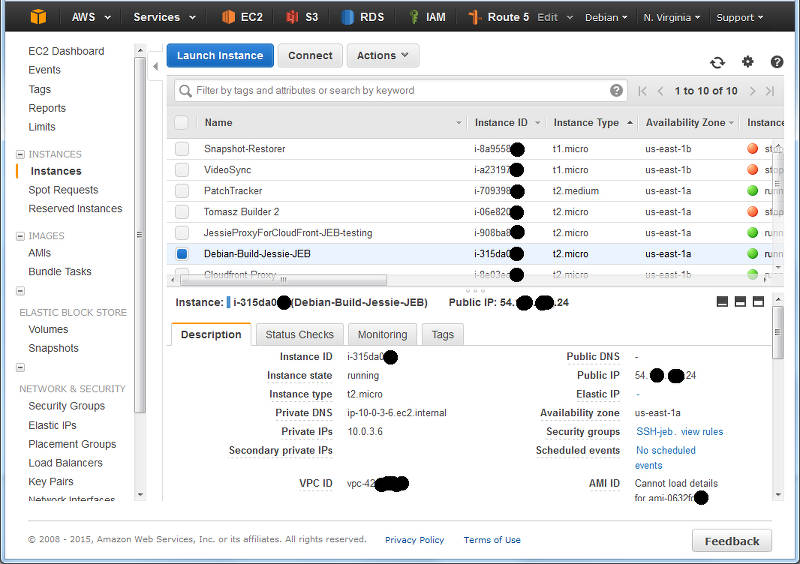
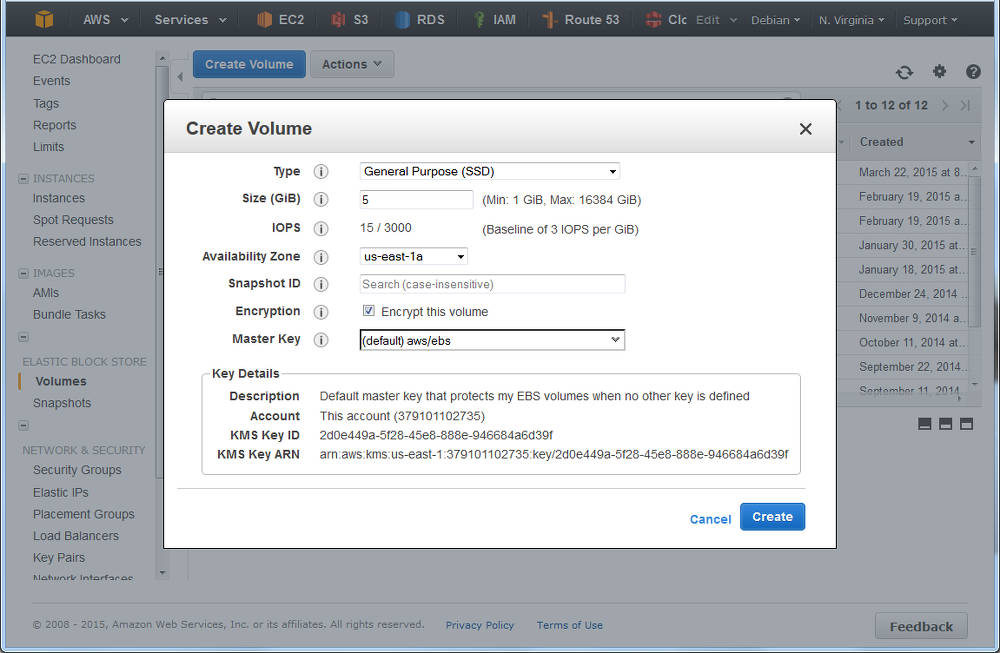
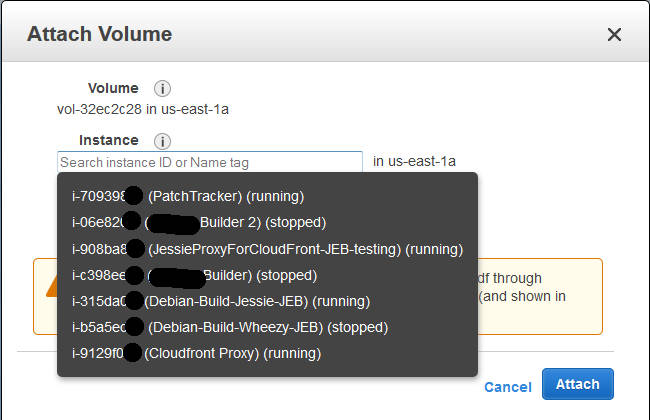
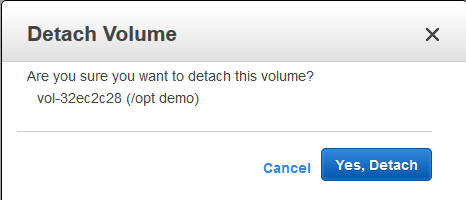
 Last weekend

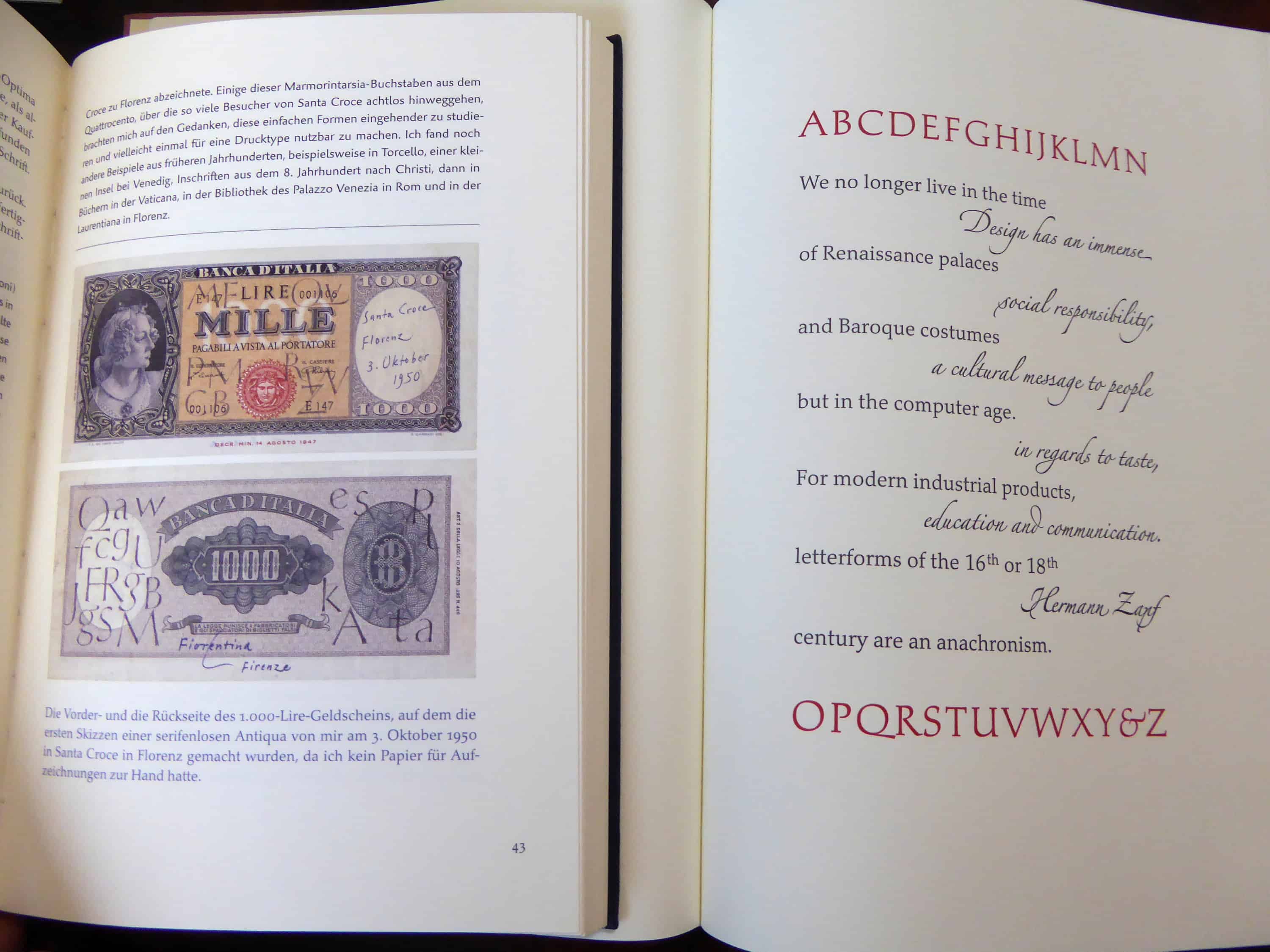


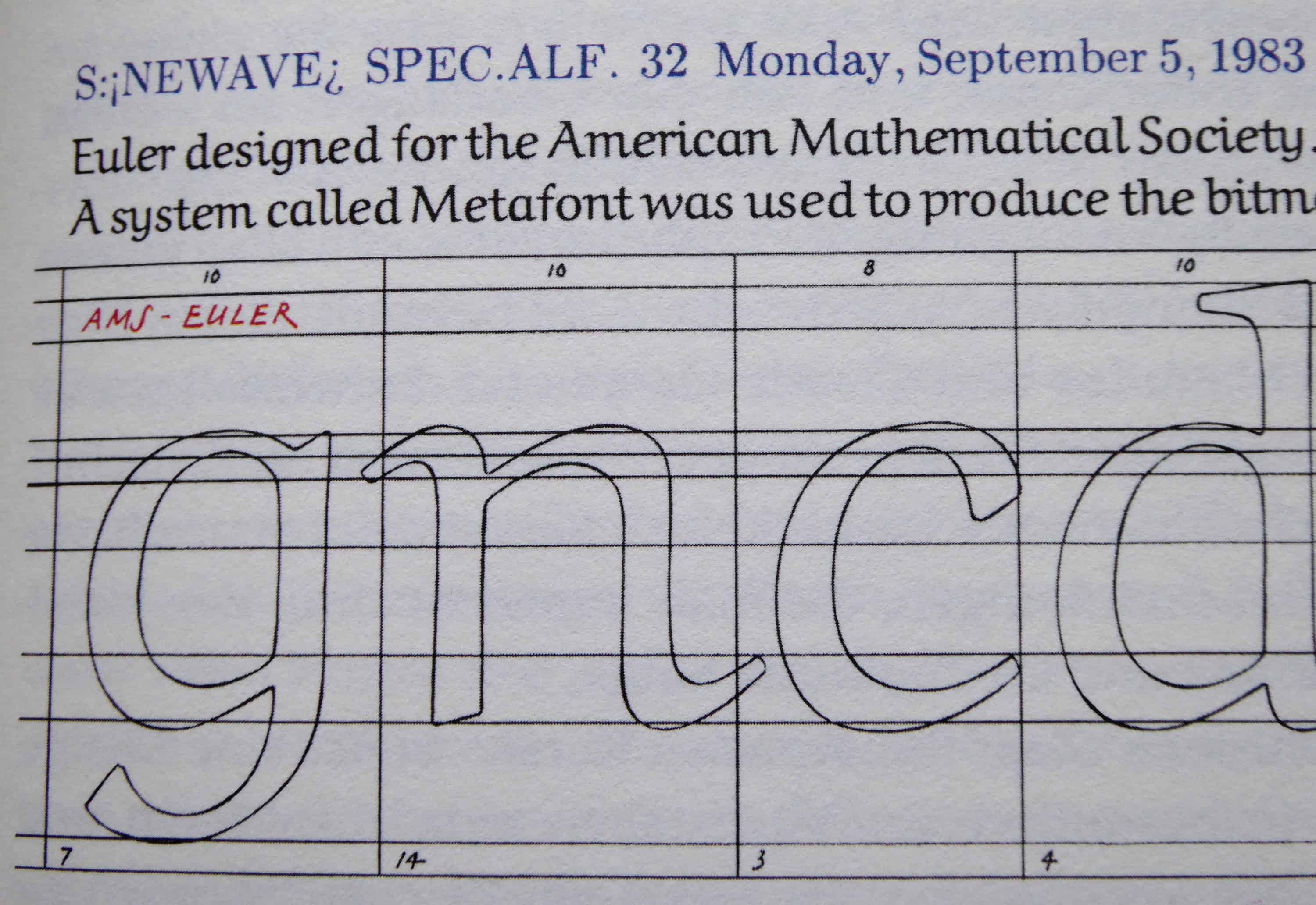


 I recently obtained the newest Dell's Ubuntu developer offering, XPS 13 (2015, model 9343). I opted in for FullHD non-touch display, mostly because of better battery life, the actual no need for higher resolution, and matte screen which is great outside. Touch would have been "nice-to-have", but in my work I don't really need it.