I had been thinking of doing a blog post on RCEP which China signed with 14 countries a week and a day back but this new story has broken and is being viraled a bit on the interwebs, especially twitter and is pretty much in our domain so thought would be better to do a blog post about it. Also, there is quite a lot packed so quite a bit of unpacking to do.
Whitehat, Greyhat and Blackhat
For those of you who may not, there are actually three terms especially in computer science that one comes across. Those are white hats, grey hats and black hats. Now clinically white hats are like the fiery angels or the good guys who basically take permissions to try and find out weakness in an application, program, website, organization and so on and so forth. A somewhat dated reference to hacker could be Sandra Bullock (The Net 1995) , Sneakers (1992), Live Free or Die Hard (2007) . Of the three one could argue that Sandra was actually into viruses which are part of computer security but still she showed some bad-ass skills, but then that is what actors are paid to do Sneakers was much more interesting for me because in that you got the best key which can unlock any lock, something like quantum computing is supposed to do. One could equate both the first movies in either as a White hat or a Grey hat . A Grey hat is more flexible in his/her moral values, and they are plenty of such people. For e.g. Julius Assange could be described as a Grey hat, but as you can see and understand those are moral issues.
A black hat on the other hand is one who does things for profit even if it harms the others. The easiest fictitious examples are all Die Hard series, all of them except the 4th one, all had bad guys or black hats. The 4th also had but is the odd one out as it had Matthew Farell (Justin Long) as a Grey hat hacker. In real life Kevin Mitnick, Kevin Poulsen, Robert Tappan Morris, George Hotz, Gary McKinnon are some examples of hackers, most of whom were black hats, most of them reformed into white hats and security specialists. There are many other groups and names but that perhaps is best for another day altogether.
Now why am I sharing this. Because in all of the above, the people who are using and working with the systems have better than average understanding of systems and they arguably would be better than most people at securing their networks, systems etc. but as we shall see in this case there has been lots of issues in the company.
WhiteHat Jr. and 300 Million Dollars
Before I start this, I would like to share that for me this suit in many ways seems to be similar to the suit filed against Krishnaraj Rao . Although the difference is that Krishnaraj Rao s case/suit is that it was in real estate while this one is in education although many things are similar to those cases but also differ in some obvious ways. For e.g. in the suit against Krishnaraj Rao, the plaintiff s first approached the High Court and then the Supreme Court. Of course Krishnaraj Rao won in the High Court and then in the SC plaintiff s agreed to Krishnaraj Rao s demands as they knew they could not win in SC. In that case, a compromise was reached by the plaintiff just before judgement was to be delivered.
In this case, the plaintiff have directly approached the Delhi High Court. The charges against Mr. Poonia (the defendant in this case) are very much similar to those which were made in Krishnaraj Rao s suit hence won t be going into those details. They have claimed defamation and filed a 20 crore suit. The idea is basically to silence any whistle-blowers.
Fictional Character Wolf Gupta
The first issue in this case or perhaps one of the most famous or infamous character is an unknown. While he has been reportedly hired by Google India, BJYU, Chandigarh. This has been reported by Yahoo News. I did a cursory search on LinkedIn to see if there indeed is a wolf gupta but wasn t able to find any person with such a name. I am not even talking the amount of money/salary the fictitious gentleman is supposed to have got and the various variations on the salary figures at different times and the different ads.
If I wanted to, I could have asked few of the kind souls whom I know are working in Google to see if they can find such a person using their own credentials but it probably would have been a waste of time. When you show a LinkedIn profile in your social media, it should come up in the results, in this case it doesn t. I also tried to find out if somehow BJYU was a partner to Google and came up empty there as well. There is another story done by Kan India but as I m not a subscriber, I don t know what they have written but the beginning of the story itself does not bode well.
While I can understand marketing, there is a line between marketing something and being misleading. At least to me, all of the references shared seems misleading at least to me.
Taking down dissent
One of the big no-nos at least from what I perceive, you cannot and should not take down dissent or critique. Indians, like most people elsewhere around the world, critique and criticize day and night. Social media like twitter, mastodon and many others would not exist in the place if criticisms are not there. In fact, one could argue that Twitter and most social media is used to drive engagements to a person, brand etc. It is even an official policy in Twitter. Now you can t drive engagements without also being open to critique and this is true of all the web, including of WordPress and me . What has been happening is that whitehatjr with help of bjyu have been taking out content of people citing copyright violation which seems laughable.
When citizens critique anything, we are obviously going to take the name of the product otherwise people would have to start using new names similar to how Tom Riddle was known as Dark Lord , Voldemort and He who shall not be named . There have been quite a few takedowns, I just provide one for reference, the rest of the takedowns would probably come in the ongoing suit/case.
Whitehat Jr. ad showing investors fighting Now a brief synopsis of what the ad. is about. The ad is about a kid named Chintu who makes an app. The app. Is so good that investors come to his house and right in the lawn and start fighting each other. The parents are enjoying looking at the fight and to add to the whole thing there is also a nosy neighbor who has his own observations. Simply speaking, it is a juvenile ad but it works as most parents in India, as elsewhere are insecure.
Jihan critiquing the whitehatjr ad
Before starting, let me assure that I asked Jihan s parents if it s ok to share his ad on my blog and they agreed. What he has done is broken down the ad and showed how juvenile the ad is and using logic and humor as a template for the same. He does make sure to state that he does not know how the product is as he hasn t used it. His critique was about the ad and not the product as he hasn t used that.
The Website
If you look at the website, sadly, most of the site only talks about itself rather than giving examples that people can look in detail. For e.g. they say they have few apps. on Google play-store but no link to confirm the same. The same is true of quite a few other things. In another ad a Paralympic star says don t get into sports and get into coding. Which athlete in their right mind would say that? And it isn t that we (India) are brimming with athletes at the international level. In the last outing which was had in 2016, India sent a stunning 117 athletes but that was an exception as we had the women s hockey squad which was of 16 women, and even then they were overshadowed in numbers by the bureaucratic and support staff. There was criticism about the staff bit but that is probably a story for another date.
Most of the site doesn t really give much value and the point seems to be driving sales to their courses. This is pressurizing small kids as well as teenagers and better who are in the second and third year science-engineering whose parents don t get that it is advertising and it is fake and think that their kids are incompetent. So this pressurizes both small kids as well as those who are learning, doing in whatever college or educational institution . The teenagers more often than not are unable to tell/share with them that this is advertising and fake. Also most of us have been on a a good diet of ads. Fair and lovely still sells even though we know it doesn t work.
This does remind me of a similar fake academy which used very much similar symptoms and now nobody remembers them today. There used to be an academy called Wings Academy or some similar name. They used to advertise that you come to us and we will make you into a pilot or an airhostess and it was only much later that it was found out that most kids were doing laundry work in hotels and other such work. Many had taken loans, went bankrupt and even committed suicide because they were unable to pay off the loans due to the dreams given by the company and the harsh realities that awaited them. They were sued in court but dunno what happened but soon they were off the radar so we never came to know what happened to those million of kids whose life dreams were shattered.
Security
Now comes the security part. They have alleged that Mr. Poonia broke into their systems. While this may be true, what I find funny is that with the name Whitehat, how can they justify it? If you are saying you are white hat you are supposed to be much better than this. And while I have not tried to penetrate their systems, I did find it laughable that the site is using an expired https:// certificate. I could have tried further to figure out the systems but I chose not to. How they could not have an automated script to get the certificate fixed is beyond me, this is known as certificate outage and is very well understood in the industry. There are tools like Let s Encrypt and Certbot (both EFF) and many others. But that is their concern, not mine.
Comparison
A similar offering would be unacademy but as can be seen they neither try to push you in any way and nor do they make any ridiculous claims. In fact how genuine unacademy is can be gauged from the fact that many of its learning resources are available to people to see on YT and if they have tools they can also download it. Now, does this mean that every educational website should have their content for free, of course not. But when a channel has 80% 90% of it YT content as ads and testimonials then they surely should give a reason to pause both for parents and students alike. But if parents had done that much research, then things would not be where they are now.
Allegations
Just to complete, there are allegations by Mr. Poonia with some screenshots which show the company has been doing a lot of bad things. For e.g. they were harassing an employee at night 2 a.m. who was frustrated and working in the company at the time. Many of the company staff routinely made sexist and offensive, sexual abusive remarks privately between themselves for prospective women who came to interview via webcam (due to the pandemic). There also seems to be a bit of porn on the web/mobile server of the company as well. There also have been allegations that while the company says refund is done next day, many parents who have demanded those refunds have not got it. Now while Mr. Poonia has shared some quotations of the staff while hiding the identities of both the victims and the perpetrators, the language being used in itself tells a lot. I am in two minds whether to share those photos or not hence atm choosing not to. Poonia has also contended that all teachers do not know programming, and they are given scripts to share. There have been some people who did share that experience with him
Suruchi Sethi
From the company s side they are alleging he has hacked the company servers and would probably be using the Fruit of the poisonous tree argument which we have seen have been used in many arguments.
Conclusion
Now that lies in the eyes of the Court whether the single bench chooses the literal meaning or use the spirit of the law or the genuine concerns of the people concerned. While in today s hearing while the company asked for a complete sweeping injunction they were unable to get it. Whatever may happen, we may hope to see some fireworks in the second hearing which is slated to be on 6.01.2021 where all of this plays out. Till later.
In some ways it is sad and interesting to see how personal liberty is viewed in India. And how it differs from those having the highest fame and power can get a different kind of justice then the rest cannot.
Arnab Goswami
This particular gentleman is a class apart. He is the editor as well as Republic TV, a right-leaning channel which demonizes the minority, women whatever is antithesis to the Central Govt. of India. As a result there have been a spate of cases against him in the past few months. But surprisingly, in each of them he got hearing the day after the suit was filed. This is unique in Indian legal history so much so that a popular legal site which publishes on-going cases put up a post sharing how he was getting prompt hearings. That post itself needs to be updated as there have been 3 more hearings which have been done back to back for him. This is unusual as there have been so many cases pending for the SC attention, some arguably more important than this gentleman . So many precedents have been set which will send a wrong message. The biggest one, that even though a trial is taking place in the sessions court (below High Court) the SC can interject on matters. What this will do to the morale of both lawyers as well as judges of the various Sessions Court is a matter of speculation and yet as shared unprecedented. The saddest part was when Justice Chandrachud said
Justice Chandrachud If you don t like a channel then don t watch it. 11th November 2020 .
This is basically giving a free rope to hate speech. How can a SC say like that ? And this is the Same Supreme Court which could not take two tweets from Shri Prashant Bhushan when he made remarks against the judiciary .
J&K pleas in Supreme Court pending since August 2019 (Abrogation 370)
After abrogation of 370, citizens of Jammu and Kashmir, the population of which is 13.6 million people including 4 million Hindus have been stuck with reduced rights and their land being taken away due to new laws. Many of the Hindus which regionally are a minority now rue the fact that they supported the abrogation of 370A . Imagine, a whole state whose answers and prayers have not been heard by the Supreme Court and the people need to move a prayer stating the same.
100 Journalists, activists languishing in Jail without even a hearing
55 Journalists alone have been threatened, booked and in jail for reporting of pandemic . Their fault, they were bring the irregularities, corruption made during the pandemic early months. Activists such as Sudha Bharadwaj, who giving up her American citizenship and settling to fight for tribals is in jail for 2 years without any charges. There are many like her, There are several more petitions lying in the Supreme Court, for e.g. Varavara Rao, not a single hearing from last couple of years, even though he has taken part in so many national movements including the emergency as well as part-responsible for creation of Telengana state out of Andhra Pradesh .
Then there is Devangana kalita who works for gender rights. Similar to Sudha Bharadwaj, she had an opportunity to go to UK and settle here. She did her master s and came back. And now she is in jail for the things that she studied. While she took part in Anti-CAA sittings, none of her speeches were incendiary but she still is locked up under UAPA (Unlawful Practises Act) . I could go on and on but at the moment these should suffice.
Petitions for Hate Speech which resulted in riots in Delhi are pending, Citizen s Amendment Act (controversial) no hearings till date. All of the best has been explained in a newspaper article which articulates perhaps all that I wanted to articulate and more. It is and was amazing to see how in certain cases Article 32 is valid and in many it is not. Also a fair reading of Justice Bobde s article tells you a lot how the SC is functioning. I would like to point out that barandbench along with livelawindia makes it easier for never non-lawyers and public to know how arguments are done in court, what evidences are taken as well as give some clue about judicial orders and judgements. Both of these resources are providing an invaluable service and more often than not, free of charge.
Student Suicide and High Cost of Education
For quite sometime now, the cost of education has been shooting up. While I have visited this topic earlier as well, recently a young girl committed suicide because she was unable to pay the fees as well as additional costs due to pandemic. Further investigations show that this is the case with many of the students who are unable to buy laptops. Now while one could think it is limited to one college then it would be wrong. It is almost across all India and this will continue for months and years. People do know that the pandemic is going to last a significant time and it would be a long time before R value becomes zero . Even the promising vaccine from Pfizer need constant refrigeration which is sort of next to impossible in India. It is going to make things very costly.
Last Nail on Indian Media
Just today the last nail on India has been put. Thankfully Freedom Gazette India did a much better job so just pasting that
Information and Broadcasting Ministry bringing OTT services as well as news within its ambit.
With this, projects like Scam 1992, The Harshad Mehta Story or Bad Boy Billionaires:India, Test Case, Delhi Crime, Laakhon Mein Ek etc. etc. such kind of series, investigative journalism would be still-births. Many of these web-series also shared tales of woman empowerment while at the same time showed some of the hard choices that women had to contend to live with.
Even western media may be censored where it finds the political discourse not to its liking. There had been so many accounts of Mr. Ravish Kumar, the winner of Ramon Magsaysay, how in his shows the electricity was cut in many places. I too have been the victim when the BJP governed in Maharashtra as almost all Puneities experienced it. Light would go for just half or 45 minutes at the exact time.
There is another aspect to it. The U.S. elections showed how independent media was able to counter Mr. Trump s various falsehoods and give rise to alternative ideas which lead the team of Bernie Sanders, Joe Biden and Kamala Harris, Biden now being the President-elect while Kamala Harris being the vice-president elect. Although the journey to the white house seems as tough as before. Let s see what happens.
Hopefully 2021 will bring in some good news.
Update On 27th November 2020 Martin who runs the planet got an e-mail/notice by a Mr. Nikhil Sethi who runs the wikibio.com property. Mr. Sethi asked to remove the link pointing Devangana Kalita from my blog post to his site as he has used the no follow link. On inquiring further, the gentleman stated that it is an Updated mandate (his exact quote) from Google algorithm. To further understand the issue, I went to SERP as they are one of the more known ones on the subject. I also looked it up on Google as well. Found that the gentleman was BSing the whole time. The page basically talks about weightage of a page/site and authoritativeness which is known and yet highly contested ideas. In any case, the point for me was for whatever reason (could be fear, could be something else entirely), Mr. Sethi did not want me to link the content. Hence, I have complied above. I could have dragged it out but I do not wish Mr. Sethi any ill-being or/and further harm unduly and unintentionally caused by me. Hence, have taken down the link.
Like each month, here comes a report about the work of paid contributors to Debian LTS.
Individual reports
In October, 221.50 work hours have been dispatched among 13 paid contributors. Their reports are available:
Abhijith PA did 16.0h (out of 14h assigned and 2h from September).
Adrian Bunk did 7h (out of 20.75h assigned and 5.75h from September), thus carrying over 19.5h to November.
Ben Hutchings did 11.5h (out of 6.25h assigned and 9.75h from September), thus carrying over 4.5h to November.
Evolution of the situation
October was a regular LTS month with a LTS team meeting done via video chat
thus there s no log to be shared.
After more than five years of contributing to LTS (and ELTS), Mike Gabriel announced
that he founded a new company called Frei(e)
Software GmbH and thus would leave us to concentrate on this new endeavor.
Best of luck with that, Mike!
So, once again, this is a good moment to remind that we are constantly looking
for new contributors. Please contact Holger
if you are interested!
The security tracker currently lists 42 packages with a known CVE and the dla-needed.txt file has 39 packages needing an update.
Thanks to our sponsors
Sponsors that joined recently are in bold.
Welcome to the October 2020 report from the Reproducible Builds project.
In our monthly reports, we outline the major things that we have been up to over the past month. As a brief reminder, the motivation behind the Reproducible Builds effort is to ensure flaws have not been introduced in the binaries we install on our systems. If you are interested in contributing to the project, please visit our main website.
The previous year has seen great progress in Arch Linux to get reproducible builds in the hands of the users and developers. In this talk we will explore the current tooling that allows users to reproduce packages, the rebuilder software that has been written to check packages and the current issues in this space.
GNU Mes rebuild is definitely an application of [Diverse Double-Compiling]. [..] This is an awesome application of DDC, and I believe it s the first publicly acknowledged use of DDC on a binary
Debian-related work
In August, Lucas Nussbaum performed an archive-wide rebuild of packages to test enabling the reproducible=+fixfilepath Debian build flag by default. Enabling this fixfilepath feature will likely fix reproducibility issues in an estimated 500-700 packages. However, this month Vagrant Cascadian posted to the debian-devel mailing list:
It would be great to see the reproducible=+fixfilepath feature enabled by default in dpkg-buildflags, and we would like to proceed forward with this soon unless we hear any major concerns or other outstanding issues. [ ] We would like to move forward with this change soon, so please raise any concerns or issues not covered already.
Debian Developer Stuart Prescott has been improving python-debian, a Python library that is used to parse Debian-specific files such as changelogs, .dscs, etc. In particular, Stuart is working on adding support for .buildinfo files used for recording reproducibility-related build metadata:
This can mostly be a very thin layer around the existing Deb822 types, using the existing Changes code for the file listings, the existing PkgRelations code for the package listing and gpg_* functions for signature handling.
Bernhard M. Wiedemann also reported three issues against bison, ibus and postgresql12.
Tools
diffoscope is our in-depth and content-aware diff utility. Not only could you locate and diagnose reproducibility issues, it provides human-readable diffs of all kinds too. This month, Chris Lamb uploaded version 161 to Debian (later backported by Mattia Rizzolo), as well as made the following changes:
Move test_ocaml to the assert_diff helper. []
Update tests to support OCaml version 4.11.1. Thanks to Sebastian Ramacher for the report. (#972518)
Bump minimum version of the Black source code formatter to 20.8b1. (#972518)
In addition, Jean-Romain Garnier temporarily updated the dependency on radare2 to ensure our test pipelines continue to work [], and for the GNU Guix distribution Vagrant Cascadian diffoscope to version 161 [].
In related development, trydiffoscope is the web-based version of diffoscope. This month, Chris Lamb made the following changes:
Mark a --help-only test as being a superficial test. (#971506)
Add a real, albeit flaky, test that interacts with the try.diffoscope.org service. []
Bump debhelper compatibility level to 13 [] and bump Standards-Version to 4.5.0 [].
Lastly, disorderfs version 0.5.10-2 was uploaded to Debian unstable by Holger Levsen, which enabled security hardening via DEB_BUILD_MAINT_OPTIONS [] and dropped debian/disorderfs.lintian-overrides [].
Add a citation link to the academic article regarding dettrace [], and added yet another supply-chain security attack publication [].
Reformatted the Jekyll s Liquid templating language and CSS formatting to be consistent [] as well as expand a number of tab characters [].
Used relative_url to fix missing translation icon on various pages. []
Published two announcement blog posts regarding the restarting of our IRC meetings. [][]
Added an explicit note regarding the lack of an in-person summit in 2020 to our events page. []
Testing framework
The Reproducible Builds project operates a Jenkins-based testing framework that powers tests.reproducible-builds.org. This month, Holger Levsen made the following changes:
Make a number of updates to reflect that our sponsor Profitbricks has renamed itself to IONOS. [][][][]
Run a F-Droid maintenance routine twice a month to utilise its cleanup features. []
Fix the target name in OpenWrt builds to ath79 from ath97. []
Add a missing Postfix configuration for a node. []
Temporarily disable Arch Linux builds until a core node is back. []
Make a number of changes to our thanks page. [][][]
Build node maintenance was performed by both Holger Levsen [][] and Vagrant Cascadian [][][], Vagrant Cascadian also updated the page listing the variations made when testing to reflect changes for in build paths [] and Hans-Christoph Steiner made a number of changes for F-Droid, the free software app repository for Android devices, including:
Do not fail reproducibility jobs when their cleanup tasks fail. []
Skip libvirt-related sudo command if we are not actually running libvirt. []
Use direct URLs in order to eliminate a useless HTTP redirect. []
If you are interested in contributing to the Reproducible Builds project, please visit the Contribute page on our website. However, you can also get in touch with us via:
FTP master
This month I accepted 208 packages and rejected 29. The overall number of packages that got accepted was 563, so yeah, I was not alone this month :-).
Anyway, this month marked another milestone in my NEW package handling. My overall number of ACCEPTed package exceeded the magic number of 20000 packages. This is almost 30% of all packages accepted in Debian. I am a bit proud of this achievement.
Debian LTS
This was my seventy-sixth month that I did some work for the Debian LTS initiative, started by Raphael Hertzog at Freexian.
This month my all in all workload has been 20.75h. During that time I did LTS uploads of:
[DLA 2415-1] freetype security update for one CVE
[DLA 2419-1] dompurify.js security update for two CVEs
[DLA 2418-1] libsndfile security update for eight CVEs
[DLA 2421-1] cimg security update for eight CVEs
I also started to work on golang-1.7 and golang-1.8
Last but not least I did some days of frontdesk duties.
Debian ELTS
This month was the twenty eighth ELTS month.
During my allocated time I uploaded:
ELA-289-2 for python3.4
ELA-304-1 for freetype
ELA-305-1 for libsndfile
The first upload of python3.4, last month, did not build on armel, so I had to reupload an improved package this month. For amd64 and i386 the ELTS packages are built in native mode, whereas the packages on armel are cross-built. There is some magic in debian/rules of python to detect in which mode the package is built. This is important as some tests of the testsuite are not really working in cross-build-mode. Unfortunately I had to learn this the hard way
The upload of libsndfile now aligns the number of fixed CVEs in all releases.
Last but not least I did some days of frontdesk duties.
Other stuff
Despite my NEW-handling and LTS/ELTS stuff I hadn t much fun with Debian packages this month. Given the approaching freeze, I hope this will change again in November.
Over the summer I decided to migrate my backups from rdiff-backup to borg,
which offers some significant advantages, in particular de-duplication, but
comes at a cost of complexity, and a corresponding sense of unease about how
sound my backup strategy might be. I've now hit the Point Of No Return: my
second external backup drive is overdue being synced with my NAS, which will
delete the last copy of the older rdiff-backup backups.
Whilst I hesitate over this last action to commit to borg, something else
happened. My wife wanted to put a copy of her iTunes music library on her
new phone, and I couldn't find it: not only could I not find it on any of
our computers, I also couldn't find a copy on the NAS, or in backups, or even
in old DVD-Rs. This has further knocked my confidence in our family data
management, and makes me even more nervous to commit to borg. I'm now wondering
about stashing the contents of the second external backup disk on some cloud
service as a fail-safe.
There was one known-good copy of Sarah's music: on her ancient iPod Nano.
Apple have gone to varying lengths to prevent you from copying music from an
iPod. When Music is copied to an iPod, the files are stripped of all their
metadata (artist, title, album, etc.) and renamed to something non-identifying
(e.g. F01/MNRL.m4a), and the metadata (and correlation to the obscure file
name) is saved in separate database files. The partition of the flash drive
containing all this is also marked as "hidden" to prevent it appearing on macOS
and Windows systems. We are lucky that the iPod is so old, because Apple went
even further in more recent models, adding a layer of encryption.
To get the music off the iPod, one has to undo all of these steps.
Luckily, other fine folks have worked out reversing all these steps and
implemented it in software such as libgpod and its frontend, GtkPod, which
is still currently available as a Debian package. It mostly worked, and I got
back 95% of the tracks. (It would have been nice if GtkPod had reported the
tracks it hadn't recovered, it was aware they existed based on the errors
it did print. But you can't have everything.)
GtkPod is a quirky, erratic piece of software, that is only useful for old
Apple equipment
that is long out of production,
prior to the introduction of the encryption.
The upstream homepage is dead, and I suspect it is unmaintained.
The Debian package is orphaned. It's been removed from testing, because
it won't build with GCC 10. On the other hand, my experience shows that it
worked, and was useful for a real problem that someone had today.
I'm in two minds about GtkPod's fate. On the one hand, I think Debian has far
too many packages, with a corresponding burden of maintenance responsibility
(for the whole project, not just the individual package maintainers), and
there's a quality problem: once upon a time, if software had been packaged in
a distribution like Debian, that was a mark of quality, a vote of confidence,
and you could have some hope that the software would work and integrate well
with the rest of the system. That is no longer true, and hasn't been in my
experience for many years. If we were more discerning about what software we
included in the distribution, and what we kept, perhaps we could be a leaner
distribution, faster to adapt to the changing needs in the world, and of a
higher quality.
On the other hand, this story about GtkPod is just one of many similar stories.
Real problems have been solved in open source software, and computing
historians, vintage computer enthusiasts, researchers etc. can still benefit
from that software long into the future. Throwing out all this stuff in the
name of "progress", could be misguided. I'm especially sad when I see the glee
which people have expressed when ditching libraries like Qt4 from the archive.
Some software will not be ported on to Qt5 (or Gtk3, Qt6, Gtk4, Qt7, etc., in
perpetuity). Such software might be all of: unmaintained, "finished", and
useful for some purpose (however niche), all at the same time.
Recently, I have been gathering some old hardware at my parents
house, notably PC extension cards, as they don t take much room and
can be converted to a nice display item. Unfortunately, I was not very
concerned about keeping stuff around. Compared to all the hardware I
have acquired over the years, only a few pieces remain.
Tseng Labs ET4000AX (1989)
This SVGA graphics card was installed into a PC powered by a 386SX CPU
running at 16 MHz. This was a good card at the time as it was pretty
fast. It didn t feature 2D acceleration, unlike the later ET4000/W32.
This version only features 512 KB of RAM. It can display 1024 768
images with 16 colors or 800 600 with 256 colors. It was also
compatible with CGA, EGA, VGA, MDA, and Hercules modes. No
contemporary games were using the SVGA modes but the higher
resolutions were useful with Windows 3. This card was manufactured
directly by Tseng Labs.
Tseng Labs ET4000 AX ISA card
AdLib clone (1992)
My first sound card was an AdLib. My parents bought it in Canada
during the summer holidays in 1992. It uses a Yamaha OPL2 chip to
produce sound via FM synthesis. The first game I have tried is
Indiana Jones and the Last Crusade.
I think I gave this AdLib to a friend once I upgraded my PC with a
Sound Blaster Pro 2. Recently, I needed one for a side project, but
they are rare and expensive on eBay. Someone mentioned a cheap clone
on Vogons, so I bought it. It was sold by Sun Moon Star in 1992
and shipped with a CD-ROM of Doom shareware.
Sound Blaster Pro 2 (1992)
Later, I switched the AdLib sound card with a Sound Blaster Pro 2. It
features an OPL3 chip and was also able to output digital samples. At
the time, this was a welcome addition, but not as important as the FM
synthesis introduced earlier by the AdLib.
Sound Blaster Pro 2 ISA card
Promise EIDE 2300 Plus (1995)
I bought this card mostly for the serial port. I was using a 486DX2
running at 66 MHz with a Creatix LC 288 FC external modem. The serial
port was driven by an 8250 UART with no buffer. Thanks to
Terminate, I was able to connect to BBSes with DOS, but this
was not possible with Windows 3 or OS/2. I needed one of these fancy
new cards with a 16550 UART, featuring a 16-byte buffer. At the time,
this was quite difficult to find in France. During a holiday trip, I
convinced my parent to make a short detour from Los Angeles to San
Diego to buy this Promise EIDE 2300 Plus controller card at a shop I
located through an advertisement in a local magazine!
The card also features an EIDE controller with multi-word DMA mode 2
support. In contrast with the older PIO modes, the CPU didn t have to
copy data from disk to memory.
Promise EIDE 2300 Plus VLB card
3dfx Voodoo2 Magic 3D II (1998)
The 3dfx Voodoo2 was one of the first add-in graphics cards
implementing hardware acceleration of 3D graphics. I bought it from a
friend along with his Pentium II box in 1999. It was a big
evolutionary step in PC gaming, as games became more beautiful and
fluid. A traditional video controller was still required for 2D. A
pass-through VGA cable daisy-chained the video controller to the
Voodoo, which was itself connected to the monitor.
3dfx Voodoo2 Magic 3D II PCI card
3Com 3C905C-TX-M Tornado (1999)
In the early 2000s, in college, the Internet connection on the campus
was provided by a student association through a 100 Mbps Ethernet
cable. If you wanted to reach the maximum speed, the 3Com
3C905C-TX-M PCI network adapter, nicknamed Tornado , was the card
you needed. We would buy it second-hand by the dozen and sell them to
other students for around 30 .
In another of my frequent late-night bouts with insomnia, I started thinking about the intersection of a number of different issues facing Debian today, both from a user point of view and a developer point of view.
Debian has a reputation for shipping stale software. Versions in the stable branch are often significantly behind the latest development upstream. Debian s policy here has been that this is fine, our goal is to ship something stable, not something bleeding edge. Unofficially, our response to users is: If you need bleeding edge software, Debian may not be for you. Officially, we have no response to users who want fresher software.
Debian also has a problem with a lack of manpower. I believe that part of why we have a hard time attracting contributors is our reputation for stale software. It might be worth it for us to consider changes to our approach to releases.
What about running testing?
People who want newer software often look to Debian s testing branch as a possible solution. It s tempting, as it s a dynamically generated release based on unstable, so it should be quite current. In practice, it s not at all uncommon to find people running testing, and in fact I m running it right now on the ThinkPad on which this is being typed. However, testing comes with a glaring issue: a lack of timely security support. Security updates must still propagate through unstable, and this can take some time. They can be held up by dependencies, library transitions, or other factors. Nearly every list of best practices for computer security lists keeping software up-to-date at or near the top of most important steps to take to safely use networked computer. Debian s testing branch makes this very difficult, especially when faced with a zero-day with potential for real-world exploit.
What about stable-backports?
Stable backports is both better and worse than testing. It s better in that it allows you to run a system comprised mainly of packages from the stable branch, which receive updates from the security team in a timely manner. However, it s worse in that the packages from the backports repository incur an additional delay. The expectation around backports is that a package migrates naturally from unstable to testing, and then requires a maintainer to upload a new package based on the version in testing specifically targeted at stable backports. The migration can potentially be bypassed, and we used to have a mechanism for announcing the availability of security updates for the stable backports archive, but it has gone unused for several years now. The documentation describes a workflow for posting security updates that involves creating a ticket in Debian s RT system, which is going to be quite foreign to most people. News from mid 2019 suggests that this process might change, but nothing appears to have come of this in over a year, and we still haven t seen a proper security advisory for stable backports in years.
Looking to LTS for ideas
The Long-Term Support project is an alternative branch of Debian, maintained outside the normal stable release infrastructure. It s stable, and expected to behave that way, but it s not supported by the stable security team or release team. LTS provides a framework for providing security updates via targeted uploads by a team of interested individuals working outside the structure of the existing stable releases. This project seems to be quite active (how much of this is because at least some members are being paid?), and as of this writing has actually published more security advisories in the past month than the stable security team has published for the current stable branch. This is also interesting in that the software in LTS is quite old, first appearing in a Debian stable release in 2017.
LTS is particularly interesting here as it s an example an initiative within the Debian community taken specifically to address user needs. For some of our users, remaining on an old release is a perfectly valid thing for them to do, and we recognize this and support them in doing so.
Debian Short-Term Support
So, what would it take to create an LTS-like initiative in the other direction? Instead of providing ongoing support for ancient versions of software that previously comprised a stable release, could we build a distribution branch based on something that hasn t yet reached stable? What would that look like? How would it fit in the existing unstable testing migration process? What impact would it have on the size of the archive? Would we want a rolling release, or discrete releases? If the latter, how many would we want between proper stable releases?
The security tracker already tracks outstanding issues in unstable and testing, and can even show issues that have been fixed in unstable but haven t yet propagated to testing.
If we want a rolling release, maybe we could just open up the testing-security repository more broadly? There was once a testing security team, which IIRC was chartered to publish updated packages directly to testing security, along with associated security advisory. Based on the mailing list history, that effort seems to have shut down around the time of the squeeze (Debian 6.0) release in early 2011. Would it be worth resurrecting it? We ve probably got much of the infrastructure required in place already, since it previously existed.
Personally I m not really a fan of a pure rolling release. I d rather see a light-weight release. Maybe a snapshot of testing that gets just a date, not a Toy Story codename. Probably skip building a dedicated installer for it. Upgrade from stable or use a d-i snapshot from testing if needed. This mini release is supported until the next one comes out, maybe 6 or 8 months later. By supported, I mean that the Short Term Release team is responsible for it. They can upload security or other critical bug fixes directly to a dedicated repository. When the next STS snapshot is released, packages in the updates repository are either archived, if they re a lower version than the one in the new mini release, or rebuilt against the new mini release and preserved.
Using some of the same mechanisms as the LTS release, we d need
Something to take the place of oldstable, that is the base release against which updates are released. This could be something that effectively maps to a date snapshot served by http://snapshot.debian.org/. (Snapshot itself could not currently handle the increased load, as I understand it, but conceptually it s similar.)
Something to take the place of the dist/updates apt repository that hosts the packages that are updated.
In theory, if the infrastructure could support hose things, then we could in effect generate a mini release at any time based on a snapshot. I wonder if this could start as something totally unofficial; mirror an arbitrary testing snapshot and provide a place for interested people to publish package updates.
Not a proposal, nor a criticism
To be clear, I don t really intend this as a proposal; It s really half-baked. Maybe these ideas have already been considered and dismissed. I don t know if people would be interested in working on such a project, and I m not nearly familiar enough with the Debian archive tooling to even make a guess as to how hard it would be to implement much of it. I m just posting some ideas that I came up with while pondering something that, from my perspective, is an area where Debian is clearly failing to meet the needs of some of our users. We know Debian is a popular and respected Linux distribution, and we know people value our stability. However, we also know that people like running Fedora and Ubuntu s non-LTS releases. People like Arch Linux. Not just end-users , but also the people developing the software shipped by the distros themselves. There are a lot of potential contributors to Debian who are kept away by our unwillingness to provide a distro offering both fresh software and security support. I think that we could attract more people to the Debian community if we could provide a solution for these people, and that would ultimately be good for everybody.
Also, please don t interpret this as being critical of the release team, the stable security team, or any other team or individual in Debian. I m sharing this because I think there are opportunities for Debian to improve how we serve our users, not because I think anybody is doing anything wrong.
With all that said, though, let me know if you find the ideas interesting. If you think they re crazy, you can tell me that, too. I ll probably agree with you.
In July I finished my Bachelor s Degree in IT Security at the University of
Applied Sciences in St. Poelten. During the studies I did some elective
courses, one of which was about Data Analysis using Python, Pandas and Jupyter
Notebooks. I found it very interesting to do calculations on different data
sets and to visualize them. Towards the end of the Bachelor I had to find a
topic for my Bachelor Thesis and as a long time user of OpenPGP I thought it
would be interesting to do an analysis of the collection of OpenPGP keys that
are available on the keyservers of the SKS keyserver network.
So in June 2019 I fetched a copy of one of the key dumps of the one of the
keyservers (some keyserver publish these copies of their key database so people
who want to join the SKS keyserver network can do an initial import). At that
time the copy of the key database contained 5,499,675 keys and was around 12GB.
Using the hockeypuck keyserver
software I imported the
keys into an PostgreSQL database.
Hockeypuck uses a table called keys to store the keys and in there the column
doc stores the OpenPGP keys in JSON format (always with a data field
containing the original unparsed data).
For the thesis I split the analysis in three parts, first looking at the Public
Key packets, then analysing the User ID packets and finally studying the
Signature Packets. To analyse the respective packets I used SQL to export the
data to CSV files and then used the pandas read_csv
method
to create a dataframe of the values. In a couple of cases I did some parsing
before converting to a DataFrame to make the analysis step faster. The parsing
was done using the pgpdump python
library.
Together with my advisor I decided to submit the thesis for a journal, so we
revised and compressed the whole paper and the outcome was now
PUBLISHED
in the Journal of
Wireless Mobile Networks, Ubiquitous Computing, and Dependable Applications
(JoWUA).
I think the work gives some valuable insight in the development of the use of
OpenPGP in the last 30 years. Looking at the public key packets we were able to
compare the different public key algorithms and for example visualize how DSA
was the most used algorithm until around 2010 when it was replaced by RSA.
When looking at the less used algorithms a trend towards ECC based crytography is
visible.
What we also noticed was an increase of RSA keys with algorithm ID 3 (RSA Sign-Only),
which are deprecated. When
we took a deeper look at those keys we realized that most of those keys used a
specific User ID string in the User ID packets which allowed us to attribute
those keys to two software projects both using the Bouncy Castle Java
Cryptographic API (resp. the Spongy
Castle version for Android). We also stumbled over a tutorial on how to create
RSA keys with
Bouncycastle
which also describes how to create RSA keys with code that produces RSA
Sign-Only keys. In one of those projects, this was then
fixed.
By looking at the User ID packets we did some statistics about the most used
email providers used by OpenPGP users. One domain stood out, because it is not
the domain of an email provider: tellfinder.com is a domain used in around
45,000 keys. Tellfinder is a
Big Data analysis software and the UID of all but two of those keys is
TellFinder Page Archiver- Signing Key <support@tellfinder.com>.
We also looked at the comments used in OpenPGP User ID fields. In 2013 Daniel
Kahn Gillmor published a blog post titled OpenPGP User ID Comments considered
harmful in which he
pointed out that most of the comments in the User ID field of OpenPGP keys are
duplicating information that is already present somewhere in the User ID or the
key itself. In our dataset 3,133 comments were exactly the same as the name,
3,346 were the same as the domain and 18,246 comments were similar to the local
part of the email address
Last but not least we looked at the signature subpackets and the development of
some of the preferences (Preferred Symmetric
Algorithm, Preferred
Hash Algorithm) that are
being published using signature packets.
Analysing this huge dataset of cryptographic keys of the last 20 to 30 years
was very interesting and I learned a lot about the history of PGP resp.
OpenPGP and the evolution of cryptography overall. I think it
would be interesting to look at even more properties of OpenPGP keys and I also
think it would be valuable for the OpenPGP ecosystem if these kinds analysis
could be done regularly. An approach like Tor
Metrics could lead to interesting findings and
could also help to back decisions regarding future developments of the OpenPGP
standard.
To start off, let me say it again: I hate light pollution. I really, really hate it. I love the night sky where you look up and see thousands of stars, and constellations besides Ursa Major. As somebody said once, You haven t lived until you ve seen your shadow by the light of the Milky Way .
But, ahem, I live in a large city, and despite my attempts using star trackers, special filters, etc. you simply can t escape it. So, whenever we go on vacation in the mountains, I m trying to think if I can do a bit of astro-photography (not that I m good at it).
Which bring me to our recent vacation up in the mountains. I was looking forward to it, until in the week before, when the weather prognosis was switching between snow, rain and overcast for the entire week. No actual day or night with clear skies, so I didn t take a tripod, I didn t take a wide lens, and put night photography out of my mind.
Vacation itself was good, especially the quietness of the place, so I usually went to be early-ish and didn t look outside. The weather was as forecasted - no new snow (but there was enough up in the mountains), but heavy clouds all the time, and the sun only showed itself for a few minutes at a time.
One night I was up a bit longer than usual, working on the laptop and being very annoyed by a buzzing sound. At first I thought maybe I was imagining it, but from time to time it was stopping briefly, so it was a real noise; I started hunting for the source. Not my laptop, not the fridge, not the TV but it was getting stronger near the window. I open the door to the balcony, and bam! Very loud noise, from the hotel nearby, where at midnight the pool was being cleaned. I look at the people doing the work, trying to estimate how long it ll be until they finish, but it was looking like a long time.
Fortunately with the door closed the noise was not bad enough to impact my sleep, so I debate getting angry or just resigned, and since it was late, I just sigh, roll my eyes not metaphorically, but actually roll my eyes and look up, and I can t believe my eyes. Completely clear sky, no trace of clouds anywhere, and stars. Lots of starts. I sit there, looking at the sky and enjoying the view, and I think to myself that it won t look that nice on the camera, for sure. Especially without a real trip, and without a fast lens.
Nevertheless, I grab my camera and just for kicks take one handheld picture. To my surprise (and almost disbelief), blurry pixels aside, the photo does look like what I was seeing, so I grab my tiny tripod that I carried along, and (with only a 24-70 zoom lens), grab a photo. And another, and another and then I realise that if I can make the composition work, and find a good shutter speed, this can turn out a good picture.
I didn t have a remote release, the tripod was not very stable and it cannot point the camera upwards (it s basically an emergency tripod), so it was quite sub-optimal; still, I try multiple shots (different compositions, different shutter speeds); they look on the camera screen and on the phone pretty good, so just for safety I take a few more, and, very happy, go to bed.
Coming back from vacation, on the large monitor, it turns out that the first 28 out of the 30 pictures were either blurry or not well focused (as I was focusing manually), and the 29th was almost OK but still not very good. Only the last, the really last picture, was technically good and also composition-wise OK. Luck? Foresight? Don t know, but it was worth deleting 28 pictures to get this one. One of my best night shots, despite being so unprepared
Stars! Lots of stars! And mountains
Of course, compared to other people s pictures, this is not special. But for me, it will be a keepsake of how a real night sky should look like.
If you want to zoom in, higher resolution on flickr.
Technically, the challenges for the picture were two-fold:
fighting the shutter speed; the light was not the problem, but rather the tripod and lack of remote release: a short shutter speed will magnify tripod issues/movement from the release (although I was using delayed release on the camera), but will prevent star trails, and a long shutter speed will do the exact opposite; in the end, at the focal length I was using, I settled on a 5 second shutter speed.
composition: due to the presence of the mountains (which I couldn t avoid by tilting the camera fully up), this was for me a difficult thing, since it s more on the artistic side, which is very subjective; in the end, this turned out fine (I think), but mostly because I took pictures from many different perspectives.
Next time when travelling by car, I ll surely take a proper tripod
Until next time, clear and dark skies
Like each month, here comes a report about the work of paid contributors to Debian LTS.
Individual reports
In September, 208.25 work hours have been dispatched among 13 paid contributors. Their reports are available:
Abhijith PA did 12.0h (out of 14h assigned), thus carrying over 2h to October.
Adrian Bunk did 14h (out of 19.75h assigned), thus carrying over 5.75h to October.
Ben Hutchings did 8.25h (out of 16h assigned and 9.75h from August), but gave back 7.75h, thus carrying over 9.75h to October.
Utkarsh Gupta did 8.75h (out of 19.75h assigned), while he already anticipated the remaining 11h in August.
Evolution of the situation
September was a regular LTS month with an
IRC meeting.
The security tracker currently lists 45 packages with a known CVE and the dla-needed.txt file has 48 packages needing an update.
Thanks to our sponsors
Sponsors that joined recently are in bold.
The first time Linda Tirado came to the viral attention of the Internet
was in 2013 when she responded to a forum question: "Why do poor people do
things that seem so self-destructive?" Here are some excerpts from her
virally popular five-page response, which is included in the first
chapter:
I know how to cook. I had to take Home Ec. to graduate high school.
Most people on my level didn't. Broccoli is intimidating. You have
to have a working stove, and pots, and spices, and you'll have to do
the dishes no matter how tired you are or they'll attract bugs. It is
a huge new skill for a lot of people. That's not great, but it's
true. And if you fuck it up, you could make your family sick. We
have learned not to try too hard to be middle class. It never works
out well and always makes you feel worse for having tried and failed
yet again. Better not to try. It makes more sense to get food that
you know will be palatable and cheap and that keeps well. Junk food
is a pleasure that we are allowed to have; why would we give that up?
We have very few of them.
and
I smoke. It's expensive. It's also the best option. You see, I am
always, always exhausted. It's a stimulant. When I am too tired to
walk one more step, I can smoke and go for another hour. When I am
enraged and beaten down and incapable of accomplishing one more thing,
I can smoke and I feel a little better, just for a minute. It is the
only relaxation I am allowed. It is not a good decision, but it is
the only one that I have access to. It is the only thing I have found
that keeps me from collapsing or exploding.
This book is an expansion on that essay. It's an entry in a growing genre
of examinations of what it means to be poor in the United States in the
21st century. Unlike most of those examinations, it isn't written by an
outsider performing essentially anthropological field work. It's one of
the rare books written by someone who is herself poor and had the
combination of skill and viral fame required to get an opportunity to talk
about it in her own words.
I haven't had it worse than anyone else, and actually, that's kind of
the point. This is just what life is for roughly a third of the
country. We all handle it in our own ways, but we all work in the
same jobs, live in the same places, feel the same sense of never quite
catching up. We're not any happier about the exploding welfare rolls
than anyone else is, believe me. It's not like everyone grows up and
dreams of working two essentially meaningless part-time jobs while
collecting food stamps. It's just that there aren't many other
options for a lot of people.
I didn't find this book back in 2014 when it was published. I found it in
2020 during Tirado's second round of Internet fame: when the police shot
out her eye with "non-lethal" rounds while she was covering the George
Floyd protests as a photojournalist. In characteristic fashion, she
subsequently reached out to the other people who had been blinded by the
police, used her temporary fame to organize crowdfunded support for
others, and is planning on having "try again" tattooed over the scar.
That will give you a feel for the style of this book. Tirado is blunt,
opinionated, honest, and full speed ahead. It feels weird to call this
book delightful since it's fundamentally about the degree to which the
United States is failing a huge group of its citizens and making their
lives miserable, but there is something so refreshing and clear-headed
about Tirado's willingness to tell you the straight truth about her life.
It's empathy delivered with the subtlety of a brick, but also with about
as much self-pity as a brick. Tirado is not interested in making you feel
sorry for her; she's interested in you paying attention.
I don't get much of my own time, and I am vicious about protecting
it. For the most part, I am paid to pretend that I am inhuman, paid
to cater to both the reasonable and unreasonable demands of the
general public. So when I'm off work, feel free to go fuck yourself.
The times that I am off work, awake, and not taking care of life's
details are few and far between. It's the only time I have any
autonomy. I do not choose to waste that precious time worrying about
how you feel. Worrying about you is something they pay me for; I
don't work for free.
If you've read other books on this topic (Emily Guendelsberger's
On the Clock is still the best of those
I've read), you probably won't get many new facts from Hand to
Mouth. I think this book is less important for the policy specifics than
it is for who is writing it (someone who is living that life and can be
honest about it) and the depth of emotional specifics that Tirado brings
to the description. If you have never been poor, you will learn the
details of what life is like, but more significantly you'll get a feel for
how Tirado feels about it, and while this is one individual perspective
(as Tirado stresses, including the fact that, as a white person, there are
other aspects of poverty she's not experienced), I think that perspective
is incredibly valuable.
That said, Hand to Mouth provides even more reinforcement of the
importance of universal medical care, the absurdity of not including
dental care in even some of the more progressive policy proposals, and the
difficulties in the way of universal medical care even if we solve the
basic coverage problem. Tirado has significant dental problems due to
unrepaired damage from a car accident, and her account reinforces my
belief that we woefully underestimate how important good dental care is to
quality of life. But providing universal insurance or access is only the
start of the problem.
There is a price point for good health in America, and I have rarely
been able to meet it. I choose not to pursue treatment if it will
cost me more than it will gain me, and my cost-benefit is done in more
than dollars. I have to think of whether I can afford any potential
treatment emotionally, financially, and timewise. I have to sort out
whether I can afford to change my life enough to make any treatment
worth it I've been told by more than one therapist that I'd be fine
if I simply reduced the amount of stress in my life. It's true,
albeit unhelpful. Doctors are fans of telling you to sleep and eat
properly, as though that were a thing one can simply do.
That excerpt also illustrates one of the best qualities of this book. So
much writing about "the poor" treats them as an abstract problem that the
implicitly not-poor audience needs to solve, and this leads rather
directly to the endless moralizing as "we" attempt to solve that problem
by telling poor people what they need to do. Tirado is unremitting in
fighting for her own agency. She has a shitty set of options, but within
those options she makes her own decisions. She wants better options and
more space in which to choose them, which I think is a much more
productive way to frame the moral argument than the endless hand-wringing
over how to help "those poor people."
This is so much of why I support universal basic income. Just give people
money. It's not all of the solution UBI doesn't solve the problem of
universal medical care, and we desperately need to find a way to make work
less awful but it's the most effective thing we can do immediately.
Poor people are, if anything, much better at making consequential
financial decisions than rich people because they have so much more
practice. Bad decisions are less often due to bad decision-making than
bad options and the balancing of objectives that those of us who are not
poor don't understand.
Hand to Mouth is short, clear, refreshing, bracing, and, as you
might have noticed, very quotable. I think there are other books in this
genre that offer more breadth or policy insight, but none that have the
same feel of someone cutting through the bullshit of lazy beliefs and
laying down some truth. If any of the above excerpts sound like the sort
of book you would enjoy reading, pick this one up.
Rating: 8 out of 10
I don t have to mention that 2020 is a special year, so all the normal race plan was out the window, and I was very happy and fortunate to be able to do even one race. And only delayed 3 weeks to write this race report :/ So, here s the story
Preparing for the race
Because it was a special year, and everything was crazy, I actually managed to do more sports than usual, at least up to end of July. So my fitness, and even body weight, was relatively fine, so I subscribed to the mid-distance race (official numbers: 78km distance, 1570 meters altitude), and then off it went to a proper summer vacation in a hotel, even.
And while I did do some bike rides during that vacation, from then on my training regime went just off? I did train, I did ride, I did get significant PRs, but it didn t click anymore. Plus, due to well, actually not sure what, work or coffee or something my sleep regime also got completely ruined
On top of that, I didn t think about the fact that the race was going to be mid-September, and that high up in the mountains, the weather could have be bad enough (I mean, in 2018 the weather was really bad even in August ) such that I d need to seriously think about clothing.
Race week
I arrive in Scuol two days before the race, very tired (I think I got only 6 hours of sleep the night before), and definitely not in a good shape. I was feeling bad enough that I was not quite sure I was going to race. At least weather was OK, such that normal summer clothing would suffice. But the race info was mentioning dangerous segments, to be very careful, etc. etc. so I was quite anxious.
Note 1: my wife says, this was not the first time, and likely not the last time that two days before the race I feel like quitting. And as I m currently on-and-off reading the interesting The Brave Athlete: Calm the Fuck Down and Rise to the Occasion book (by Lesley Paterson and Simon Marshall; it s an interesting book, not sure if I recommend it or not), I am beginning to think that this is my reaction to races where I have overshot my usual distance. Or, in general, races where I fear the altitude gain. Not quite sure, but I think it is indeed the actual cause.
So I spend Thursday evening feeling unwell, and thinking I ll see how Friday goes. Friday comes, and having slept reasonably well entire night, I pick up my race number, then I take another nap in the afternoon - in total, I ve slept around 13 hours that day. So I felt much better, and was looking forward to the race.
Saturday morning comes, I manage to wake up early, and get ready in time; almost didn t panic at all that I m going to be late.
Note 2: my wife also says that this is the usual way I behave. Hence, it must be most of it a mental issue, rather than real physical one
Race
I reach the train station in time, I get on the train, and by the time the train reached Zernez, I fully calm down. There was am entire hour wait though before the race, and it was quite chilly. Of course I didn t bring anything beside what I was wearing, relying on temperature getting better later in the day.
During the wait, there were two interesting things happening.
First, we actually got there (in Zernez) before the first people from the long distance passed by, both men and women. Seeing them pass by was cool, thinking they already had ~1 200m altitude in just 30-ish kilometres.
The second thing was, as this was the middle and not the shortest distance, the people in the group looked differently than in previous years. More precisely, they were looking very fit, and I was feeling fat. Well, I am overweight, so it was expected, but I was feeling it even more than usual. I think only one or two in ten people were looking as fit as me or less And of course, the pictures post-race show me even less fit-looking than I thought. Ah, self-deception is a sweet thing
And yes, we all had to wear masks, up until the last minute. It was interesting, but not actually annoying - and small enough price for being able to race!
Then the race starts, and as opposed to many other years, it starts slow. I didn t feel that rush of people starting fast, it was reasonable?
First part of the race (good)
Thus started the first part of the race, on a new route that I was unfamiliar with. There was not too much climbing, to be honest, and there was some tricky single-trail through the woods, with lots of the roots. I actually had to get off the bike and push it, since it was too difficult to pedal uphill on that path. Other than that, I was managing so far to adjust my efforts well enough that my usual problems related to climbing (lower back pain) didn t yet appear, even as the overall climbed meters were increasing. I was quite happy at that, and had lots of reserves. To my (pleasant) surprise, two positive things happened:
I was never alone, a sign that I wasn t too far back.
I was passing/being passed by people, both on climbs but also on descents! It s rare, but I did overtake a few people on a difficult trail downhill.
With all the back and forth, a few people became familiar (or at least their kit), and it was fun seeing who is better uphill vs. downhill.
And second part (not so good)
I finally get to (around) S-chanf, on a very nice but small descent, and on flat roads, and start the normal route for the short race. Something was off though - I knew from past years that these last ~47km have around 700-800m altitude, but I had already done around 1000m. So the promised 1571m were likely to be off, by at least 100-150m. I set myself a new target of 1700m, and adjust my efforts based on that.
And then, like clockwork on the 3:00:00 mark, the route exited the forest, the sun got out of the clouds, and the temperature started to increase from 16-17 C to 26 +, with peaks of 31 C. I m not joking: at 2:58:43, temp was 16 , at 3:00:00, it was 18 , at 3:05:45, it was 26 . Heat and climbing are my two nemeses, and after having a pretty good race for the first 3 hours and almost exactly 1200m of climbing, I started feeling quite miserable.
Well, it was not all bad. There were some nice stretches of flat, where I knew I can pedal strongly and keep up with other people, until my chain dropped, so I had to stop, re-set it, and lose 2 minutes. Sigh.
But, at least, I was familiar with this race, or so I thought. I completely mis-remembered the last ~20km as a two-punch climb, Guarda and Ftan, whereas it is actually a three-punch one: Guarda, Ardez, and only then Ftan. Doesn t help that Ardez has the nice ruins that I was remembering and which threw me off.
The saddest part of the day was here, on one of the last climbs - not sure if to Guarda or to Arddez, where a guy overtakes me, and tells me he s glad he finally caught up with me, he almost got me five or six times (!), but I always managed to break off. Always, until now. Now, this was sad (I was huffing and puffing like a steam locomotive now), but also positive, as I never had that before. One good, one bad?
And of course, it was more than 1 700m altitude, it was 1 816m. And the descent to Scuol shorter and it didn t end as usual with the small but sharp climb which I just love, due to Covid changes.
But, I finished, and without any actual issues, and no dangerous segments as far as I saw. I was anxious for no good reason
Conclusion (or confusion?)
So this race was interesting: three hours (to the minute) in which I went 43.5km, climbed 1200m, felt great, and was able to push and push. And then the second part, only ~32km, climbed only 600m, but which felt quite miserable.
I don t know if it was mainly heat, mainly my body giving up after that much climbing (or time?), or both. But it s clear that I can t reliably race for more than around these numbers: 3 hours, ~1000+m altitude, in >20 C temperature.
One thing that I managed to achieve though: except due to the technically complex trail at the beginning where I pushed the bike, I did not ever stop and push the bike uphill because I was too tired. Instead, I managed (badly) to do the switch sitting/standing as much as I could motivate myself, and thus continue pushing uphill. This is an achievement for me, since mentally it s oh so easy to stop and push the bike, so I was quite glad.
As to the race results, they were quite atrocious:
age category (men), 38 out of 52 finishers, 4h54m, with first finisher doing 3h09m, so 50% slower (!)
overall (men), 138 out of 173 finishers, with first finisher 2h53m.
These results clearly don t align with my feeling of a good first half of the race, so either it was purely subjective, or maybe in this special year, only really strong people registered for the race, or something else
One positive aspect though, compared to most other years, was the consistency of my placement (age and overall):
Zuoz: 38 / 141
S-Chanf: 39 / 141
Zernez: 39 / 141
Guarda: 38 / 138
Ftan: 38 / 138
( next - whatever this is): 38 / 138
Finish: 38 / 138
So despite all my ranting above, and all the stats I m pulling out of my own race, it looks like my position in the race was fully settled in the really first part, and I didn t gain nor lose practically anything afterwards. I did dip one place but then gained it back (on the climb to Guarda, even).
The split times (per-segment rankings) are a bit more variable, and show that I was actually fast on the climbs but losing speed on the descents, which I really don t understand anymore:
Zernez-Zuoz (unclear type): 38 / 141
Zuoz-S-Chanf (unclear type): 40 / 141
S-Chanf-Zernez (mostly downhill): 39 / 143
Zernez-Guarda (mostly uphill): 37 / 136
Guarda-Ftan (mostly uphill): 37 / 131
Ftan-Scuol (mostly downhill): 43 / 156
The difference at the end is striking. I m visually matching the map positions to km and then use VeloViewer for computing the altitude gain, but Zernez to Guarda is 420m altitude, and Guarda to Ftan is 200m altitude gain, and yet on both, I was faster than my final place, and by quite a few places on overall, only to lose that on the descent (Ftan-Scuol), and by a large margin.
So, amongst all the confusion here, I think the story overall is:
indeed I was quite fit for me, so the climbs were better than my place in the race (if that makes sense).
however, I m not actually good at climbing nor fit (watts/kg), so I m still way back in the pack (oops!).
and I do suck at descending, both me (skills) and possible my bike setup as well (too high tyre pressure, etc.) so I lose even more time here
As usual, the final take-away points are: lose the extra weight that is not needed, get better skills, get better core to be better at climbing.
I ll finish here with one pic, taken in Guarda (4 hours into the race, more or less):
Climbing in Guarda
Until next year!
Welcome to the September 2020 report from the Reproducible Builds project. In our monthly reports, we attempt to summarise the things that we have been up to over the past month, but if you are interested in contributing to the project, please visit our main website.
This month, the Reproducible Builds project was pleased to announce a donation from Amateur Radio Digital Communications (ARDC) in support of its goals. ARDC s contribution will propel the Reproducible Builds project s efforts in ensuring the future health, security and sustainability of our increasingly digital society. Amateur Radio Digital Communications (ARDC) is a non-profit which was formed to further research and experimentation with digital communications using radio, with a goal of advancing the state of the art of amateur radio and to educate radio operators in these techniques. You can view the full announcement as well as more information about ARDC on their website.
In August s report, we announced that Jennifer Helsby (redshiftzero) launched a new reproduciblewheels.com website to address the lack of reproducibility of Python wheels . This month, Kushal Das posted a brief follow-up to provide an update on reproducible sources as well.
The Threema privacy and security-oriented messaging application announced that within the next months , their apps will become fully open source, supporting reproducible builds :
This is to say that anyone will be able to independently review Threema s security and verify that the published source code corresponds to the downloaded app.
The previous year has seen great progress in Arch Linux to get reproducible builds in the hands of the users and developers. In this talk we will explore the current tooling that allows users to reproduce packages, the rebuilder software that has been written to check packages and the current issues in this space.
During the Reproducible Builds summit in Marrakesh, GNU Guix, NixOS and Debian were able to produce a bit-for-bit identical binary when building GNU Mes, despite using three different major versions of GCC. Since the summit, additional work resulted in a bit-for-bit identical Mes binary using tcc and this month, a fuller update was posted by the individuals involved.
diffoscopediffoscope is our in-depth and content-aware diff utility that can not only locate and diagnose reproducibility issues, it provides human-readable diffs of all kinds too.
In September, Chris Lamb made the following changes to diffoscope, including preparing and uploading versions 159 and 160 to Debian:
New features:
Show ordering differences only in strings(1) output by applying the ordering check to all differences across the codebase. []
Bug fixes:
Mark some PGP tests that they require pgpdump, and check that the associated binary is actually installed before attempting to run it. (#969753)
Don t raise exceptions when cleaning up after guestfs cleanup failure. []
Ensure we check FALLBACK_FILE_EXTENSION_SUFFIX, otherwise we run pgpdump against all files that are recognised by file(1) as data. []
Codebase improvements:
Add some documentation for the EXTERNAL_TOOLS dictionary. []
Abstract out a variable we use a couple of times. []
Improve the documentation on how to signup to Salsa. []
Add some more links to academic papers. []
Also include the general news in our RSS feed [] and drop including weekly reports from the RSS feed (they are never shown now that we have over 10 items) [].
Update ordering and location of various news and links to tarballs, etc. [][][]
In addition, Holger Levsen re-added the documentation link to the top-level navigation [] and documented that the jekyll-polyglot package is required []. Lastly, diffoscope.org and reproducible-builds.org were transferred to Software Freedom Conservancy. Many thanks to Brett Smith from Conservancy, J r my Bobbio (lunar) and Holger Levsen for their help with transferring and to Mattia Rizzolo for initiating this.
Upstream patches
The Reproducible Builds project detects, dissects and attempts to fix as many currently-unreproducible packages as possible. We endeavour to send all of our patches upstream where appropriate. This month, we wrote a large number of these patches, including:
Testing framework
The Reproducible Builds project operates a Jenkins-based testing framework to power tests.reproducible-builds.org. This month, Holger Levsen made the following changes:
Highlight important bad conditions in colour. [][]
Add support for detecting more problems, including Jenkins shutdown issues [], failure to upgrade Arch Linux packages [], kernels with wrong permissions [], etc.
Misc:
Delete old schroot sessions after 2 days, not 3. []
In addition, stefan0xC fixed a query for unknown results in the handling of Arch Linux packages [] and Mattia Rizzolo updated the template that notifies maintainers by email of their newly-unreproducible packages to ensure that it did not get caught in junk/spam folders []. Finally, build node maintenance was performed by Holger Levsen [][][][], Mattia Rizzolo [][] and Vagrant Cascadian [][][].
If you are interested in contributing to the Reproducible Builds project, please visit our Contribute page on our website. However, you can get in touch with us via:
Curiosity
I guess this would be common to most of us.
While I grew up, right from the childhood itself, the sky was always an intriguing view. The Stars, the Moon, the Eclipses; were all fascinating.
As a child, in my region, religion and culture; the mythology also built up stories around it. Lunar Eclipses have a story of its own. During Solar Eclipses, parents still insist that we do not go out. And to be done with the food eating before/after the eclipse.
Then there s the Hindu Astrology part, which claims its own theories and drags in mythology along. For example, you ll still find the Hindu Astrology making recommendations to follow certain practices with the planets, to get auspicious personal results. As far as I know, other religions too have similar beliefs about the planets.
As a child, we are told the Moon to be addressed as an Uncle ( ). There s also a rhyme around it, that many of us must have heard.
And if you look at our god, Lord Mahadev, he s got a crescent on his head
Lord Mahadev
Reality
Fast-forward to today, as I grew, so did some of my understanding. It is fascinating how mankind has achieved so much understanding of our surrounding. You could go through the documentaries on Mars Exploration, for example; to see how the rovers are providing invaluable data.
As a mere individual, there s a limit to what one can achieve. But the questions flow in free.
Is there life beyond us
What s out there in the sky
Why is all this the way it is
Hobby
The very first step, for me, for every such curiosity, has been to do the ground work, with the resources I have. To study on the subject. I have done this all my life. For example, I started into the Software domain as: A curiosity => A Hobby => A profession
Same was the case with some of the other hobbies, equally difficult as Astronomy, that I developed a liking for. Just did the ground work, studied on those topics and then applied the knowledge to further improve it and build up some experience.
And star gazing came in no different. As a complete noob, had to start with the A B C on the subject of Astronomy. Familiarize myself with the usual terms. As so on
PS: Do keep in mind that not all hobbies have a successful end. For example, I always craved to be good with graphic designing, image processing and the likes, where I ve always failed. Never was able to keep myself motivated enough. Similar was my experience when trying to learn playing a musical instrument. Just didn t work out for me, then.
There s also a phase in it, where you fail and then learn from the failures and proceed further, and then eventually succeed. But we all like to talk about the successes. :-)
Astronomy
So far, my impression has been that this topic/domain will not suit most of the people. While the initial attraction may be strong, given the complexity and perseverance that Astronomy requires, most people would lose interest in it very soon.
Then there s the realization factor. If one goes with an expectation to get quick results, they may get disappointed. It isn t like a point and shoot device that d give you results on the spot.
There s also the expectation side of things. If you are a person more accustomed to taking pretty selfies, which always come right because the phone manufacturer does heavy processing on the images to ensure that you get to see the pretty fake self, for the most of the times; then star gazing with telescopes could be a frustrating experience altogether. What you get to see in the images on the internet will be very different than what you d be able to see with your eyes and your basic telescope.
There s also the cost aspect. The more powerful (and expensive) your telescope, the better your view.
And all things aside, it still may get you lose interest, after you ve done all the ground work and spent a good chunk of money on it. Simply because the object you are gazing at is more a still image, which can quickly get boring for many.
On the other hand, if none of the things obstruct, then the domain of Astronomy can be quite fascinating. It is a continuous learning domain (reminds me of CI in our software field these days). It is just the beginning for us here, and we hope to have a lasting experience in it.
The Internet
I have been indebted to the internet right from the beginning. The internet is what helped me be able to achieve all I wanted. It is one field with no boundaries. If there is a will, there is a way; and often times, the internet is the way.
I learnt computers over the internet.
Learnt more about gardening and plants over the internet
Learnt more about fish care-taking over the internet
And many many more things.
Some of the communities over the internet are a great way to participation. They bridge the age gap, the regional gap and many more.
For my Astronomy need, I was glad to see so many active communities, with great participants, on the internet.
Telescope
While there are multiple options to start star gazing, I chose to start with a telescope. But as someone completely new to this domain, there was a long way to go. And to add to that, the real life: work + family
I spent a good 12+ months reading up on the different types of telescopes, what they are, their differences, their costs, their practical availability etc.
The good thing is that the market has offerings for everything. From a very basic binocular to a fully automatic Maksutov-Cassegrain scope. It all would depend on your budget.
Automatic vs Manual
To make it easy for the users, the market has multiple options in the offering. One could opt-in for a cheap, basic and manually operated telescope; which would require the user to do a lot of ground study. On the other hand, users also have the option of automatic telescopes which do the hard work of locating and tracking the planetary objects.
Either option aside, the end result of how much you ll be able to observe the sky, still depends on many many more factors: Enthusiasm over time, Light Pollution, Clear Skies, Timing etc.
PS: The planetary objects move at a steady pace. Objects you lock into your view now will be gone out of the FOV in just a matter of minutes.
My Telescope
After spending so much of the time reading up on types of telescopes, my conclusion was that a scope with high aperture and focal length was the way to go forward. This made me shorten the list to Dobsonians. But the Dobsonians aren t a very cheap telescope, whether manual or automatic.
My final decision made me acquire a 6" Dobsonian Telescope. It is a Newtonian Reflecting Telescope with a 1200mm focal length and 150mm diameter.
Another thing about this subject is that most of the stuff you do in Astronomy; right from the telescope selection, to installation, to star gazing; most of it is DIY, so your mileage may vary with the end result and experience.
For me, installation wasn t very difficult. I was able to assemble the base Dobsonian mount and the scope in around 2 hours. But the installation manual, I had been provided with, was very brief. I ended up with one module in the mount wrongly fit, which I was able to fix later, with the help of online forums.
Dobsonian Mount
In this image you can see that the side facing out, where the handle will go, is wrong. If fit this way, the handle will not withstand any weight at all.
Correct Panel Side
The right fix of the handle base board. In this image, the handle is on the other side that I m holding. Because the initial fit put in some damage to the engineered wood, I fixed it up by sealing with some adhesive.
With that, this is what my final telescope looks like.
Final Telescope
Clear Skies
While the telescope was ready, the skies were not. For almost next 10 days, we had no clear skies at all. All I could do was wait. Wait so much that I had forgotten to check on the skies. Luckily, my wife noticed clear skies this week for a single day. Clear enough that we could try out our telescope for the very first time.
Me posing for a shot
Telescope
As I said earlier, in my opinion, it takes a lot of patience and perseverance on this subject. And most of the things here are DIY.
To start with, we targeted the Moon. Because it is easy. I pointed the scope to the moon, then looked into the finder scope to center it, and then looked through the eyepiece. And blank. Nothing out there. Turns out, the finder scope and the viewer s angle weren t aligned. This is common and the first DIY step, when you plan to use your telescope for viewing.
Since our first attempt was unplanned and just random because we luckily spotted that the skies were clear, we weren t prepared for this. Lucky enough, mapping the difference in the alignment, in the head, is not very difficult.
After a couple of minutes, I could make out the point in the finder scope, where the object if projected, would show proper in the viewer.
With that done, it was just mesmerizing to see the Moon, in a bit more detail, than what I ve seen all these years of my life.
Moon
Moon
Moon
Moon
The images are not exactly what we saw with our eyes. The view was much more vivid than these pictures. But as a first timer, I really wanted to capture this first moment of a closer view of the Moon.
In the whole process; that of ground work studying about telescopes, installation of the telescope, astronomy basics and many other things; the most difficult part in this entire journey, was to point my phone to the viewing eyepiece, to get a shot of the object. This requirement just introduced me to astrophotography.
And then, Dobsonians aren t the best model for astrophotography, to what I ve learnt so far. Hopefully, I ll find my ways to do some DIY astrophotography with the tools I have. Or extend my arsenal over time.
But overall, we ve been very pleased with the subject of Astronomy. It is a different feel altogether and we re glad to have forayed into it.
Before and during FOSDEM 2020, I agreed with the people (developers, supporters, managers) of the UBports Foundation to package the Unity8 Operating Environment for Debian. Since 27th Feb 2020, Unity8 has now become Lomiri.
Recent Uploads to Debian related to Lomiri
Over the past 4 months I worked on the following bits and pieces regarding Lomiri in Debian:
Work on lomiri-app-launch (Debian packaging, upstream work, upload to Debian)
Fork lomiri-url-dispatcher from url-dispatcher (upstream work)
Upload lomiri-url-dispatcher to Debian
Fork out suru-icon-theme and make it its own upstream project
Package and upload suru-icon-theme to Debian
First glance at lomiri-ui-toolkit (currently FTBFS, needs to be revisited)
Update of Mir (1.7.0 -> 1.8.0) in Debian
Fix net-cpp FTBFS in Debian
Fix FTBFS in gsettings-qt.
Fix FTBFS in mir (support of binary-only and arch-indep-only builds)
Coordinate with Marius Gripsgard and Robert Tari on shift over from Ubuntu Indicator to Ayatana Indicators
Upload ayatana-indicator-* (and libraries) to Debian (new upstream releases)
Package and upload to Debian: qmenumodel (still in Debian's NEW queue)
Package and upload to Debian: ayatana-indicator-sound
Symbol-Updates (various packages) for non-standard architectures
Fix FTBFS of qtpim-opensource-src in Debian since Qt5.14 had landed in unstable
Fix FTBFS on non-standard architectures of qtsystems, qtpim and qtfeedback
Fix wlcs in Debian (for non-standard architectures), more Symbol-Updates (esp. for the mir DEB package)
Symbol-Updates (mir, fix upstream tinkering with debian/libmiral3.symbols)
Fix FTBFS in lomiri-url-dispatcher against Debian unstable, file merge request upstream
Upstream release of qtmir 0.6.1 (via merge request)
Improve check_whitespace.py script as used in lomiri-api to ignore debian/ subfolder
Upstream release of lomiri-api 0.1.1 and upload to Debian unstable.
The next two big projects / packages ahead are lomiri-ui-toolkit and qtmir.
Credits
Many big thanks go to Marius and Dalton for their work on the UBports project and being always available for questions, feedback, etc.
Thanks to Ratchanan Srirattanamet for providing some of his time for debugging some non-thread safe unit tests (currently unsure, what package we actually looked at...).
Thanks for Florian Leeber for being my point of contact for topcis regarding my cooperation with the UBports Foundation.
Previous Posts about my Debian UBports Team Efforts
We're working our way through some of the CD/DVD/Blu-Ray media images, doing test installs, noting failures and so on. It's repetitive work but vital if we're going to provide some assurance that folk can install from the images we make. There's always the few things that catch us out and there's always something to note for next time. Schweer has joined us and is busy chasing down debian-edu/Skolelinux installs from Germany. We're getting there, one way and another, and significantly ahead of where we were last time around when the gremlins got in and delayed us. All good :)
 I had been thinking of doing a blog post on RCEP which China signed with 14 countries a week and a day back but this new story has broken and is being viraled a bit on the interwebs, especially twitter and is pretty much in our domain so thought would be better to do a blog post about it. Also, there is quite a lot packed so quite a bit of unpacking to do.
 Sneakers was much more interesting for me because in that you got the best key which can unlock any lock, something like quantum computing is supposed to do. One could equate both the first movies in either as a White hat or a Grey hat . A Grey hat is more flexible in his/her moral values, and they are plenty of such people. For e.g. Julius Assange could be described as a Grey hat, but as you can see and understand those are moral issues.
 Suruchi Sethi

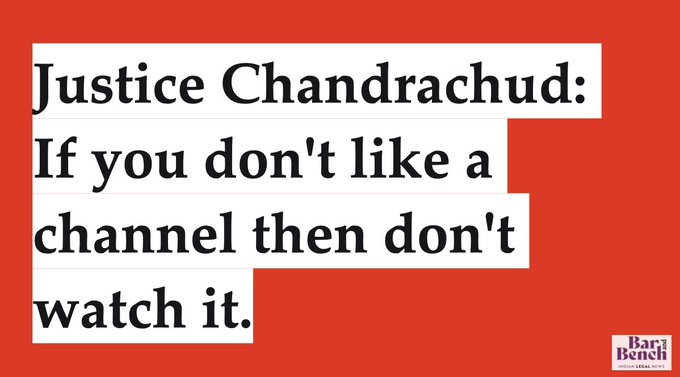 Justice Chandrachud If you don t like a channel then don t watch it. 11th November 2020 .
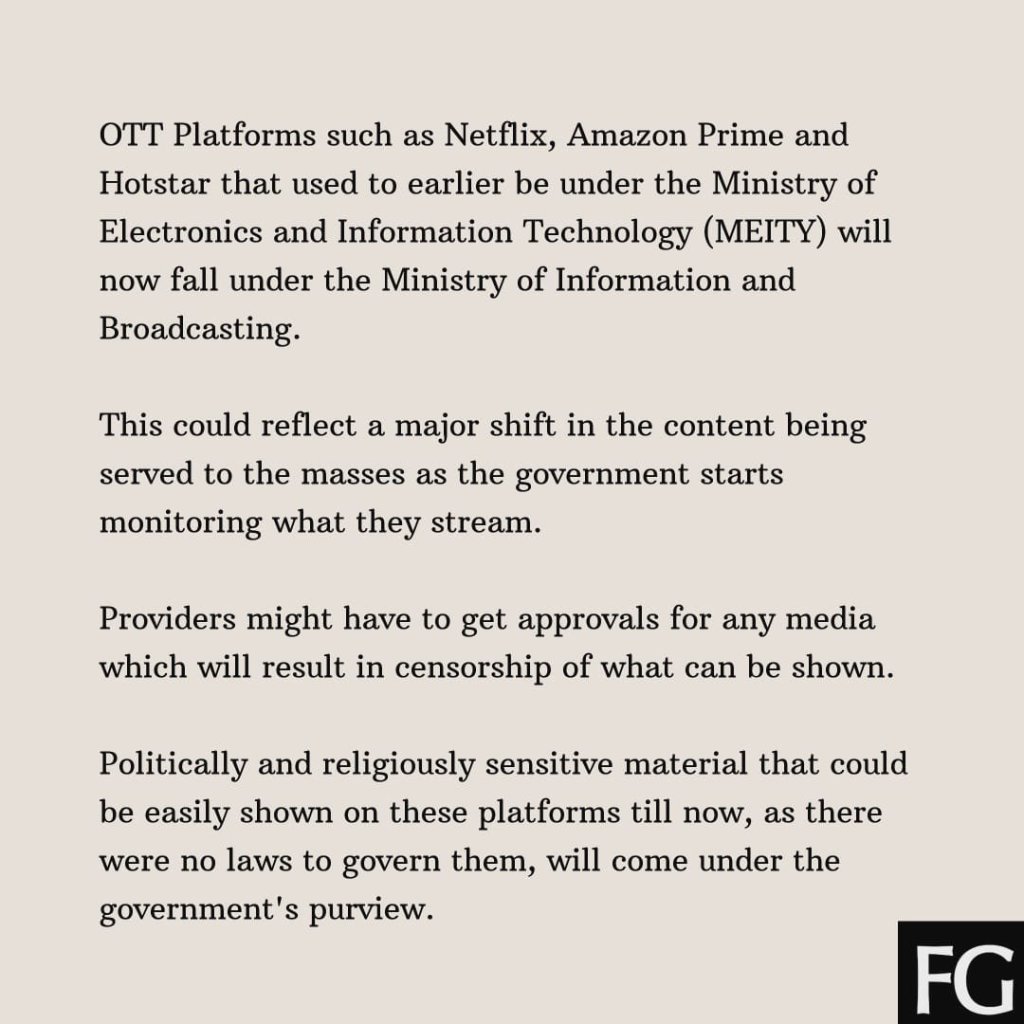 Information and Broadcasting Ministry bringing OTT services as well as news within its ambit.

 Like

 The following contributors got their Debian Developer accounts in the last two months:


 This month, the Reproducible Builds project restarted our IRC meetings, managing to convene twice: the first time on October 12th (





 Over the summer I decided to migrate my backups from rdiff-backup to borg,
which offers some significant advantages, in particular de-duplication, but
comes at a cost of complexity, and a corresponding sense of unease about how
sound my backup strategy might be. I've now hit the Point Of No Return: my
second external backup drive is overdue being synced with my NAS, which will
delete the last copy of the older rdiff-backup backups.
Whilst I hesitate over this last action to commit to borg, something else
happened. My wife wanted to put a copy of her iTunes music library on her
new phone, and I couldn't find it: not only could I not find it on any of
our computers, I also couldn't find a copy on the NAS, or in backups, or even
in old DVD-Rs. This has further knocked my confidence in our family data
management, and makes me even more nervous to commit to borg. I'm now wondering
about stashing the contents of the second external backup disk on some cloud
service as a fail-safe.
There was one known-good copy of Sarah's music: on her ancient iPod Nano.
Apple have gone to varying lengths to prevent you from copying music from an
iPod. When Music is copied to an iPod, the files are stripped of all their
metadata (artist, title, album, etc.) and renamed to something non-identifying
(e.g.


 Another month, another bunch of uploads. The freeze for Debian 11 (bullseye) is edging closer, so I ve been trying to get my package list in better shape ahead of that. Thanks to those who worked on fixing lintian.debian.org and the lintian reports on the QA pages, those are immensely useful and it s great to have that back!
2020-10-04: Upload package gnome-shell-extension-draw-on-your-screen (8-1) to Debian unstable.
2020-10-05: Sponsor package flask-restful (0.3.8-4) for Debian unstable (Python Team request).
2020-10-05: Sponsor package python-potr (1.0.2-3) for Debian unstable (Python Team request).
2020-10-06: Sponsor package python-pyld (2.0.3-1) for Debian unstable (Python Team request).
2020-10-06: Sponsor package flask-openid (1.2.5+dfsg-4) for Debian unstable (Python Team request).
2020-10-06: Sponsor package qosmic (1.6.0-4) for Debian unstable (E-mail request).
2020-10-07: File removal for gnome-shell-extension-workspace-to-dock (RC Buggy, no longer maintained:
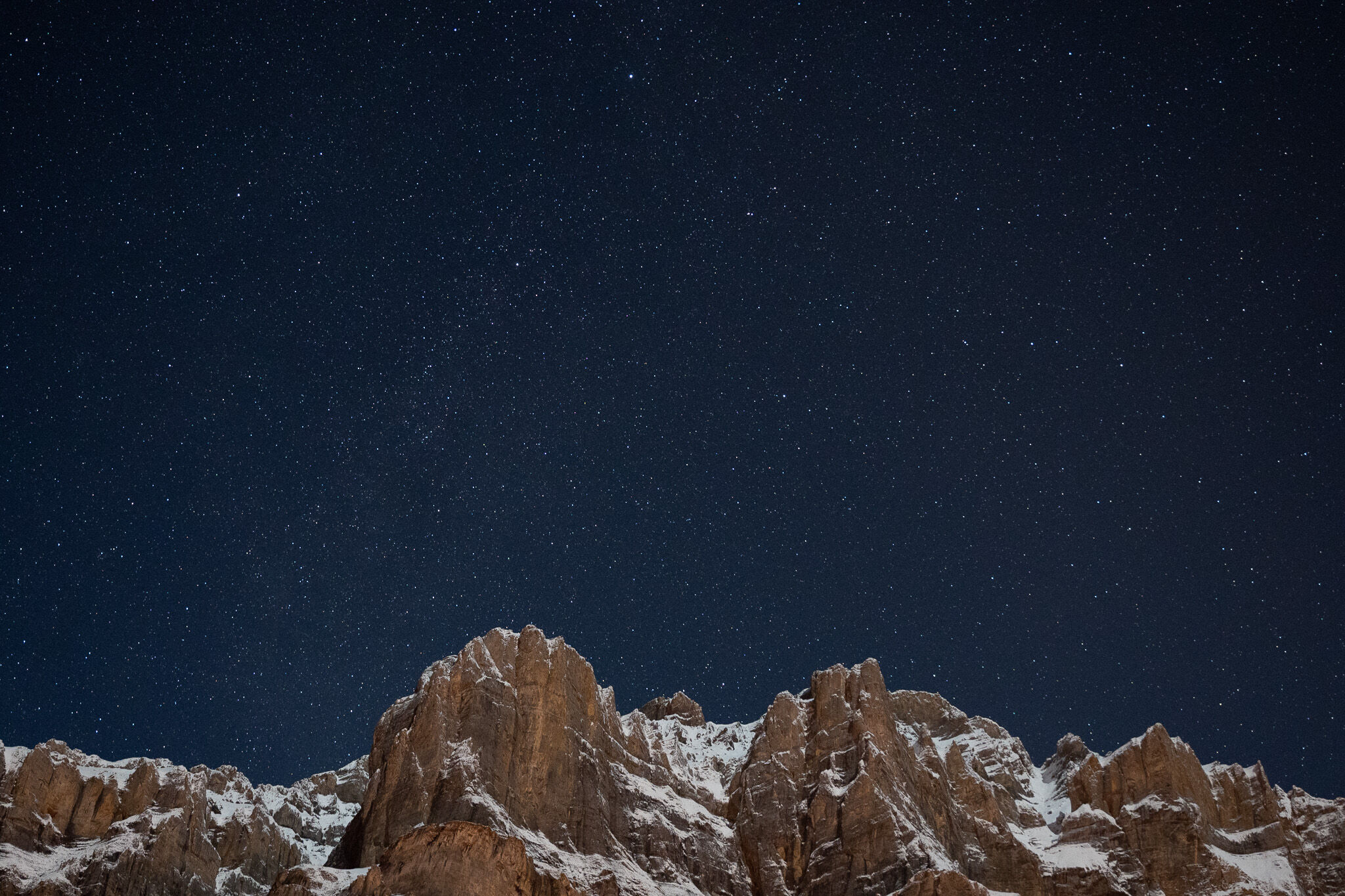
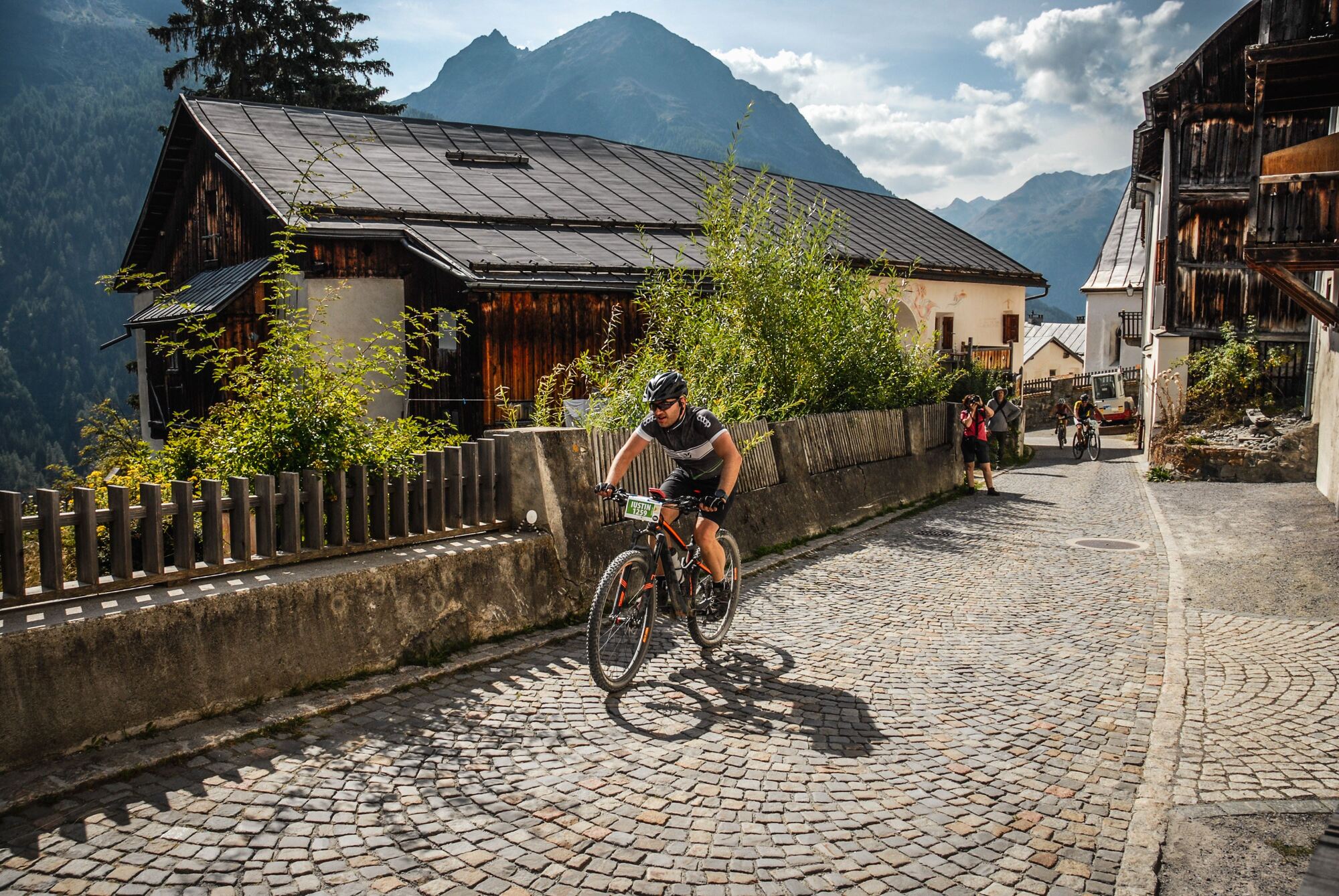








 Before and during FOSDEM 2020, I agreed with the people (developers, supporters, managers) of the UBports Foundation to package the Unity8 Operating Environment for Debian. Since 27th Feb 2020, Unity8 has now become Lomiri.
Recent Uploads to Debian related to Lomiri
Over the past 4 months I worked on the following bits and pieces regarding Lomiri in Debian: