Search Results: "ina"

28 June 2012

DebConf team: DebConf12 schedule ready! (Posted by Gunnar Wolf)

The DebConf12 schedule is finally available! As usual, the DebConf conference can only be finalized a couple of days before DebConf itself starts. But hey Take a look at it, and start planning your activities! Not final, never final Remember that, even now that the conference schedule is announced, you can still submit talks to DebConf, following what we call ad-hoc talks. What are the steps to do it?
  1. Check the schedule and find the timeslot (day, hour and room) you want to talk in
  2. Register your event in Pentabarf, and note the generated event ID (the last number in the URL after the submission is accepted)
  3. Send a mail to schedule@debconf.org detailing the event ID, title (just to confirm it), and the requested timeslot
  4. All requests _must_ be received at least 24hr before the requested event for the scheduling team to act accordingly and for the video team to be able to plan on resources to cover the requested session
  5. Video team coverage (event recording plus streaming on a best-effort basis) will be given to activities scheduled on the Aula Magna and Roberto Ter n auditoriums.
  6. We will try to grant requests on a first-come-first-serve basis. If two events are requested for the same timeslot, the first will have precedence, and we will schedule the second as close as possible to it. We will notify the submitters if this happens, of course.
Conference tracks In DebConf12, many talks are organized around the following tracks:
DebianDay
This track is meant for the local (Nicaraguan/Central American) community to be attracted to Debian. It does not usually have technically minded talks; the DebConf general audience is, of course, invited to take part in it, as there will surely be interesting angles on how Debian is used in different use-cases, and there will be interesting Q&A session with the audience.
Getting involved in Debian
Central America is a very special region. It has vibrant Free Software user groups and communities, among which there is an important interest to get involved in Debian.
This track will have some talks in Spanish, some talks in English, explaining different Debian processes and tools, aiming at attracting locals to contribute to Debian.
Debian for the cloud
All about virtualization. Management infrastructure, details on virtual machine engines, insight on how to tweak your kernel for optimum virtualized performance, and of course how to get it all humming perfectly with your Debian packages.
Building and porting
With an every day stronger transit to mobile computing, we are seeing a renaissance of porting. At the same time, we finally have multiarch as part of Debian. And were that not to be enough, we finally have more than one compiler that can be used for most of the software in the archive. Put all this together, and you will have a very interesting track.
Social activities
DebConf is as much about technical stuff as it is about building closer ties within the members of its community. Eating cheese+wine, going on a trip to the guts of a volcano, having a nice banquet Do you want to add an activity to this pseudo-track?
Skills exchange
Knowledge can also be built by all of us putting our grain of sand. We first had explicit skills exchange sessions in Bosnia last year, and they were very well received. Feel free to propose similar sessions!
And Well, three days to DebCamp and counting. See you Real Soon Now in Managua!

Antonio Terceiro: Wheezy is Coming

The original image (in wallpaper resolution) was made^Whacked by my friend Aur lio .

Sorina Sandu: Status update

Hello!

First of all: I'm going to DebConf :D and I really want to say a big "Thank you!" to every one who made this possible.


So, here's what I've done recently:

I spent some time putting everything in order for the departure to Nicaragua, things like finding a plane ticket through a route that does not require a Visa, making a new Passport, now all is in order.

I've integrated the changes for listing available ESSIDs, in order to close #637128 [0] into a separate branch , which can be found here [1].

The plan is to have only one new template which lists the available networks and which has a option for entering the ESSID manualy. In order to do so, a simple scan is performed on the wireless interface, and the configuration for a particular network resulted after the scan is kept if that one is chosen. The enter manually situation is treated exactly as it was before.

Furthermore, last week (or the week before) I've done some coding style fixes again in a separate branch [2], nothing very fancy, just trimming trailing white spaces and changing some tabs to spaces, where spaces were mostly used. I've also noticed some inconsistencies, regarding white spaces between functions names and the parenthesis. However I think I'm overreacting a little, those matters are not really that relevant, but when I'll have some free time I'll get to this as well.


Next in line: Issues

Testing is still giving me some troubles, the show essids part is not yet fully tested, so I couldn't say for sure if everything works as planned.

Apart from the classical: write the image to an USB and reboot method, I'm using Virtual Box for testing. I've managed to create a passthrough for the wireless interface, but now I have troubles with some firmware. Hopefully I'll solve this as soon as possible since it would really make my life easier.


Future plans:

I've realized that I've underestimated a little what the project implies and the amount of information that is new to me. I feel that I have learned a lot and that there is still a lot to learn and I'm very happy that it is so. I've now started documenting regarding IPv6, beginning with this [3]. We haven't decided yet what the next task will be exactly.


[0] http://bugs.debian.org/cgi-bin/bugreport.cgi?bug=637128
[1] http://anonscm.debian.org/gitweb/?p=d-i/netcfg.git;a=shortlog;h=refs/heads/people/sorina/show_essids
[2] http://anonscm.debian.org/gitweb/?p=d-i/netcfg.git;a=shortlog;h=refs/heads/people/sorina/coding_style
[3] http://tldp.org/HOWTO/Linux+IPv6-HOWTO/

26 June 2012

Neil McGovern: Digital Economy Act And so it begins

Today, OFCOM issued a press release entitled "New measures to protect online copyright and inform consumers". According to the announcement, internet users will be encouraged to download music and films through legal channels under the measures. Ofcom has published a draft code for consultation that would require large internet service providers (ISPs) to inform customers of allegations that their internet connection has been used to infringe copyright. There does seem to have been a number of concessions made, which is welcome, but I do still have a number of concerns. The code 'only' covers ISPs with more than 400k fixed lines - BT, Everything Everywhere, O2, Sky, TalkTalk Group and Virgin Media. This covers about 93% of the UK retail market. If an allegation of copyright infringement is made, the ISP would need to write to the customer with notice that an infringement has occurred, and in a new change, the number of copyright infringement reports connected to their account. If more than three letters are received in a year, anonymous information may be provided on request to copyright owners showing them which infringement reports are linked to that customer s account. The copyright owner may then seek a court order requiring the ISP to reveal the identity of the customer. Two more changes have been implemented: Obviously the former of these will require further scrutiny, but I'm happier that this is not with the vested interest themselves. As for the latter, this gets a bit interesting. The Act states that
an appeal on any grounds must be determined in favour of the subscriber unless the copyright owner or internet service provider shows that a) the apparent infringement was an infringement of copyright, and b) the report relates to the subscriber s IP address at the time of that infringement.
This is good as it puts the burden of proof on the copyright owner, although it still uses IP addresses which is problematic. For example, New York Judge Gary Brown has ruled IP addresses are insufficient evidence to identify pirates, and has provided a lengthy and thoughtful explanation in his ruling. There has also been a consultation published on the how to share costs costs. The suggestion is fairly simple:
"Copyright Owners should bear all of the costs incurred by Ofcom, the majority of costs incurred by the appeals body, and 75% of the costs efficiently and reasonably incurred by Qualifying ISPs in carrying out their obligations."
This has the risk of driving up internet access prices as ISPs have to recover the costs of these notifications. Additionally:
"Under the Order, subscribers will have to pay a 20 fee to make an appeal against a report of infringement, which will be refunded in the event the appeal succeeds; the remaining costs of determining an appeal will be met by the Copyright Owner who submitted the CIR which has been appealed."
I disagree with the concept of having to pay for an appeal in this way. If accused, someone should be able to refute the argument without cost. This will introduce a barrier to entry, and even if it is refundable is something I believe should be avoided. Finally, the exact costs of implementing this have been set out. It looks like the Copyright Owners would have to pay 60p per letter (with the ISPs shouldering the remaining 20p), a similar split around capital costs - which are the ones that are actually significant. Taking the above, it seems that in total that content owners will have to shell out 15M to use the DEA scheme. The cost seems to be more or less fixed which could encourage content owners to send out frivolous accusations. There's an iterative process which will run to determine the estimated number of notifications, and if eventually the Content Owners don't agree with the pricing, they will have elected not to take advantage of the provisions of the Initial Obligations Code, as they have not been able to make binding commitments to fund CIR processing. So, in summary, this is something to keep an eye on. It certainly hasn't gone away, it's due to start in March 2014. The revised draft code and consultation, which closes on 26 July 2012, can be found here, and the sharing of costs consultation runs until 18th September 2012, found here.

Petter Reinholdtsen: Debian Edu interview: Jos Luis Redrejo Rodr guez

I've been too busy at home, but finally I found time to wrap up another interview with the people behind Debian Edu and Skolelinux. This time we get to know Jos Luis Redrejo Rodr guez, one of our great helpers from Spain. His effort was the reason we added support for several desktop types (KDE, Gnome and most recently LXDE) in Debian Edu, and have all of these available in the recently published Debian Edu Squeeze version. Who are you, and how do you spend your days? I'm a father, teacher and engineer who is working for the Education ministry of the Region of Extremadura (Spain) in the implementation of ICT in schools How did you get in contact with the Skolelinux/Debian Edu project? At 2006, I verified that both, we in Extremadura and Skolelinux project, had been working in parallel for some years, doing very similar things, using very similar tools and with similar targets, so I decided it was time to join forces as much as possible. What do you see as the advantages of Skolelinux/Debian Edu? A community of highly skilled experts working together, with a really open schema of collaboration and work. I really love the concepts of Do-ocracy and Merit-ocracy and the way these concepts are been used everyday inside Debian Edu. What do you see as the disadvantages of Skolelinux/Debian Edu? Sometimes the differences in the implementations, laws or economical and technical resources in the different countries don't allow us to agree in the same solution for all of us, and several approaches are needed, what is a waste of effort. Also, there is a lack of more man power to be able to follow the fast evolution of the technologies in school. Which free software do you use daily? Debian, of course, and due to my kind of job I am most of my time between Iceweasel, Geany and Terminator. Which strategy do you believe is the right one to use to get schools to use free software? I think there is not a single strategy because there are very different scenarios: schools with mixed proprietary and free environments, schools using only workstations, other schools using laptops, netbooks, tablets, interactive white-boards, etc. Also the range of ages of the students is very broad and you can not use the same solutions for primary schools and secondary or even universities. So different strategies are needed. But, looking at these differences, and looking back to the things we've done and implemented, and the places were we have spent most of our forces, I think we should focus as much as possible in free multi-platform environments, using only standards tools, and moving more and more to Internet or network solutions that could be deployed using wireless. I think we'll see more and more personal devices in the schools, devices the students and teachers will take home with them, so the solutions must be able to be taken at home and continue working there.

Russ Allbery: Review: Quiet

Review: Quiet, by Susan Cain
Publisher: Crown
Copyright: 2012
ISBN: 0-307-45220-4
Format: Kindle
Pages: 263
I've always been an introvert. This is something that surprises some people when they first meet me since they equate introversion with shyness, and I'm not at all shy. It surprises others because I'm quite vocal and outspoken in meetings, but introversion also doesn't imply a lack of self-confidence. I can run meetings, give presentations, and argue my perspective in front of just about anyone, but I don't like parties, I crave time by myself, and I could happily go for weeks without seeing another human being. I'm an introvert because I find people draining rather than invigorating, written communication far easier and more comfortable than spoken, and superficial social contact more irritating and frustrating than enjoyable. If you think think that means there may be something wrong with me, or that I would be happier if "drawn out of my shell," I wish you would read this book. But I suspect its core audience will be people like me: those who are tired of being pushed to conform with extrovert beliefs about social interaction, those who are deeply disgusted by the word "antisocial" or feel pangs of irrational guilt when hearing it, or those who just want to read an examination of interpersonal interactions that, for once, is written by and about people who like quiet and solitude just like they do. I first encountered Susan Cain via her TED talk, which I think is both the best possible summary of this book and the best advertisement for it. If you've not already seen it, watch it; it's one of the best TED talks I've seen, good enough that I've watched it three times. If you then want more of the same, buy Quiet. Quiet has, I think, three messages. First, it's a tour of the science: what is introversion and extroversion? Is there evidence that these are real physiological differences? (Spoiler: yes.) What do we know about introversion? How do we know those things what experiments have been done and what methods have been used? Here, it's a good general introduction, although Cain is careful to point out that it only scratches the surface and there's much more scientific depth. For example, she touches on the connections between introversion and sensitivity to stimulus and points out that they're two separate, if related, categorizations, but doesn't have the space here to clarify the distinctions and tease them apart. But she lays a reasonable foundation, particularly in defense of introversion as a natural, physiologically grounded, scientifically analyzable, common, and healthy way of interacting with the world. (For those who are curious about the distinctions between introversion and sensitivity, and the argument that most of what Cain says here about introversion is actually about sensitivity, see the blog post by Elaine Aron.) The second message, the one that resonated with me the most, was Cain's passionate defense of introversion. Business culture (at least in the United States, which is what both Cain and I know) is strongly biased towards extroversion; at least faking extroversion seems to be required for some career advancement. Extrovert culture dominates politics and most public discourse. It's common to find people who consider introversion, particularly in children, to be a sign of unhappiness, poor social adjustment, psychological problems, or other issues that should be "cured" or changed. Cain's gentle but firm passion in defense of introversion is a breath of fresh air. She attacks open plan offices, the current obsession with group learning and social school settings, and the modern group-think bias towards collaboration over solitude and concentration, and she does that with a combination of polite frustration and the conclusions of multiple studies. Introverts will be cheering as she constructs solid arguments and musters evidence against things that we've always found miserable and then been told we were wrong, short-sighted, or socially inept for finding miserable. I am so utterly on her side in this argument that I have no way of knowing how persuasive it will be, but it's lovely just to hear someone put into words what I feel. This defense does skew the book. Quiet is not, and does not purport to be, an even-handed presentation of introversion and extroversion. It's written proudly and unabashedly from the introvert's point of view. I'm fine with that: I, like Cain, think the US is saturated in extrovert perspectives and extrovert advice, particularly in the business world, and could use some balancing by activism from the other perspective. But be aware that this is not the book to look to for an objective study of all angles of the introvert/extrovert dichotomy, and I'm not sure her descriptions of extroversion are entirely fair or analogous to those of introversion. The extroversion described here seems somewhat extreme to me. I'm dubious how many extroverts would recognize themselves in it, which partly undermines the argument. The third message of the book, once Cain has won the introvert's heart, is some advice on how to be a proud introvert, to make the space and find the quiet that one desires, and to balance that against places where one may want and need to act like an extrovert for a while. Cain thankfully does not try to make this too much of the book, nor does she hold up any particular approach as The Answer. All the answers are going to be individual. But she does offer some food for thought, particularly around how to be conscious of and make delibrate choices about one's energy expenditures and one's recharge space. She also captures beautifully something that I've not seen explained this well before: the relief that an introvert can feel in the company of an extrovert who helps navigate social situations, make conversation, and keep discussions going until they can reach the depth and comfort level where the introvert can engage. I wish anyone in a position of authority over social situations would read this book, or at least watch the TED talk and be aware of the issues. Particularly managers, since (at least in my relatively limited experience) workplace culture is so far skewed towards extroversion that it can be toxic to introverts. Many of the techniques used by extrovert managers, and the goals and advice they give their employees, are simply wrong for introverts, and even damaging. Cain speaks well to the difficulties of empathy between people with very different interaction preferences, such as the problems with extroverts trying to "draw out" introverts who have hit social overload (or sensitive people who have hit stimulus overload). She also discusses something that I'd previously not thought about, namely how the pressure towards extroversion leads people to act extroverted even when naturally introverted, and how it's therefore very difficult to tell from behavior (and sometimes even to tell internally!) what one's natural interaction style is. But mostly I recommend this book if you're an introvert, if the TED talk linked above speaks to you. Even if we can't convince the world to respect introversion more, or at least stop treating it as abnormal, it's a lovely feeling to read a book from someone who gets it. Who understands. Who fills a book with great stories about introverts and how they construct their worlds and create quiet space in which to be themselves. Rating: 9 out of 10

24 June 2012

Joey Hess: trying obnam

Obnam 1.0 was released during several months when I had no well-connected server to use for backups. Yesterday I installed a terabyte disk in a basement with a fiber optic network connection, so my backupless time is over. Now, granted, I have a very multi-layered approach to backups; all my data is stored in git, most of it with dozens of copies automatically maintained, and with archival data managed by git-annex. But I still like to have a "real" backup system underneath, to catch anything else. And to back up those parts of my user's data that I have not given them tools to put into git yet... My backup server is not my basement, so I need to securely encrypt the backups stored there. Encrypting your offsite backups is such a good idea that I've always been surprised at the paucity of tools to do it. I got by with duplicity for years, but it's increasingly creaky, and the few times I've needed to restore, it's been a terrific pain. So I'm excited to be trying Obnam today. So far I quite like it. The only real problem is that it can be slow, when there's a transatlantic link between the client and the server. Each file backed up requires several TCP round-trips, and the latency kills the bandwidth. Large files are still sent fast, and obnam uses little resources on either the client or server while running. And this mostly only affects the initial, full backup. But the encryption and ease of use more than make up for this. The real killer feature with Obnam's encryption isn't that it's industry-standard encryption with gpg, that can be trivially enabled with a single option (--encrypt-with=DEADBEEF). No, the great thing about it is its key management. I generate a new gpg key for each system I back up. This prevents systems reading each other's backups. But that means you have to backup the backup keys.. or when a system is lost, the backup would be inaccessible. With Obnam, I can instead just grant my personal gpg key access to the repository: obnam add-key --keyid 2512E3C7. Now both the machine's key and my gpg key can access the data. Great system; can't revoke access, but otherwise perfect. I liked this so much I stole the design and used it in git-annex too. :) I'm also pleased I can lock down .ssh/authorized_keys on my backup server, to prevent clients running arbitrary commands. Duplicity runs ad-hoc commands over ssh, which defeated me from ever locking it down. Obnam can be easily locked down, like this: command="/usr/lib/openssh/sftp-server" This could still be improved, since clients can still read the whole filesystem with sftp. I'd like to have something like git-annex's git-annex-shell, which can limit access to only a specific repository. Hmm, if Obnam had its own server-side program like this, it could stream backup data to it using a protocol that avoids the roundtrips needed by the SFTP protocol, and fix the latency issue too. Lars, I know you've been looking for a Haskell starter project ... perhaps this is it? :)

Gregor Herrmann: RC bugs 2012/25

good news of the RCBW week: more & more patches from people I haven't seen before in the BTS. keep them coming!

Petter Reinholdtsen: Song book for Computer Scientists

Many years ago, while studying Computer Science at the University of Troms , I started collecting computer related songs for use at parties. The original version was written in LaTeX, but a few years ago I got help from H kon W. Lie, one of the inventors of W3C CSS, to convert it to HTML while keeping the ability to create a nice book in PDF format. I have not had time to maintain the book for a while now, and guess I should put it up on some public version control repository where others can help me extend and update the book. If anyone is volunteering to help me with this, send me an email. Also let me know if there are songs missing in my book. I have not mentioned the book on my blog so far, and it occured to me today that I really should let all my readers share the joys of singing out load about programming, computers and computer networks. Especially now that Debconf 12 is about to start (and I am not going). Want to sing? Check out Petter's Computer Science Songbook.

22 June 2012

Michael Casadevall: Announcement of Calxeda Highbank Images for Quantal

Hello all,

As many of you are aware, Canonical, in coordination with Calxeda and others have been working to bring Ubuntu to this new class of high-performance cluster yet low power-consumption computers built around ARM processors. Many of you who were in attendance at UDS in Oakland may remember seeing Calxeda's talks and demonstration live, and the exciting news that this represents. The full presentation is available here.

In line of this work, I'm am extremely pleased to announce that the initial images for the Calxeda Highbank platform are now available for download, with installation instructions available here. Please remember that Quantal is still in alpha development, and is not currently recommended for use in a production environment. As development of 12.10 continues, we will continue to refine these images, and our tools to fully embrace MAAS on ARM, and make 12.10 to be our best release yet.


As an additional note, Highbank support for Ubuntu 12.04 LTS will be released as part of the 12.04.1 update in mid-August and will join our support for ArmadaXP from Marvell, which was released as part of 12.04.

---
Michael Casadevall
ARM Server Tech Lead
Professional Engineering and Services, Canonical
michael.casadevall@canonical.com

Tanguy Ortolo: We need you for the NTP pool!

Ferdinand Berthoud's marine clock #2 You already know NTP, the protocol that allows your computers to keep an accurate clock. Thanks to a global pool of time servers, it is available to everyone on the Internet. This public pool is constituted by volunteers' servers and it needs more.So, if you you should consider joining the pool. It is actually quite easy:
  1. install NTP;
  2. configure it to use five good servers from your region;
  3. register your server.

21 June 2012

Raphael Geissert: Introducing http.debian.net, Debian's mirrors redirector

You've been there: you are about to install a package, upgrade, or get the source package, and the mirror fails. It is offline, it is out of date, etc. Whatever the reason, you couldn't do it.

That's only one of the issues that http.debian.net attempts to address. In a nutshell: it works as an http-only content distribution network. It uses the network and geographic location to select the best online and up-to-date mirrors.

APT's sources.list one liner:
deb http://http.debian.net/debian stable main

Use /debian-backports for backports, and /debian-archive for archive.debian.org.

Originally introduced to the Debian mirrors community back in January, the code on the server and client sides has improved since. All is needed is squeeze's APT (or aptitude), but wheezy's and sid's will perform better.

Advantages and more details are discussed at the Debian mirrors redirector's website.

(Thanks to the early testers, everyone who has provided feedback, my friends at PuffinHost, and all the mirrors-related people, obviously including those who sponsor them!)

Michal Čihař: Slovakia trip

To continue in photography blog posts, let's document part of our last week trip around Slovakia. We've visited many nice places, starting at Mura sk planina, going trhough Slovensk r j and ending in Nizke Tatry. All pictures are taken in Slovensk r j (Slovakian paradise), where I've really enjoyed taking photos of waterfalls and wonderful streams: Such  Biel Sokolia dolina Sokolia dolina Piecky Piecky

Filed under: English Photography Travelling 2 comments Flattr this!

John Goerzen: I introduced my 5-year-old and 2-year-old to startx and xmonad. They re DELIGHTED!

Two years ago, Jacob (then 3) and I built his first computer together. I installed Debian on it, but never put a GUI on the thing. It s command-line, and has provided lots of enjoyment off and on over the last couple of years. I ve written extensively about what our boys like to do, and the delight they have at learning things on the command line. The looks of shock I get from people when I explain, as if it s perfectly natural, that my child has been able to log in by himself to a Linux shell since age 3, are amusing and astounding. Especially considering that it is really not that hard. Instead of learning how to run an Xbox, he s learned how to run bash. I like that. Lately, Jacob (now 5) hasn t been spending much time with it. He isn t really at a stage where he wants to push his limits too far, I think, but yet also gets bored with the familiar. So I thought it was time to introduce a GUI in a limited fashion, perhaps to let him download photos and video from his Vtech toy camera (that takes real low-res photos and videos which can be downloaded over a USB1 link). He s familiar with the concept, at least somewhat, having seen GUIs on Terah s computer (Gnome 2) and mine (xfce4 + xmonad). So last night, Oliver (age 2) and I went down to the basement on a mouse-finding expedition. Sure enough, I had an old PS/2 mouse down there that would work fine. The boys both helped string it through the desk up on our play room, and were tremendously excited to see the red light underneath it when the computer came on. Barely able to contain the excitement, really. A bit like I remember being when I got my first mouse (at a bit of an older age, I suppose.) I helped him them in as root for the very first time. (Jacob typed root , and I typed the password, and provided the explanation for why we were telling the computer we were root .) Jacob and Oliver alternated typing bits of some apt-get command lines. Then while we waited for software to download, I had to answer repeated questions of how soon will the mouse work? and what does install mean? Finally it was there, and I told Jacob to type startx. I intentionally did not install a display manager; more on that later. He pressed Enter, the screen went blank for about 5 seconds, and then X appeared. Excited can t begin to describe how they acted. They took turns playing with the mouse. They loved how the trash can icon (I started with XFCE) showed trash IN the trash can. But they are just learning the mouse, and there s a lot about a typical GUI that is unfriendly to someone that isn t yet proficient with a mouse. The close buttons are disappointingly small, things can be too easily dragged on and off the panel and menus. When I sat down to think about it, the typical GUI design does not present a very good it always works the same interface that would be good for a child. And then it occurred to me: the perfect GUI for a child would be simply xmonad (a tiling window manager that can be controlled almost entirely by keyboard and has no need for mouse movements in most cases.) No desktop environment, no file manager in the root window. Just a window manager in the classic X way. Of course! So after the boys were in bed, I installed xmonad. I gave Jacob s account a simple .xsession that starts a terminal and xmonad. Today, Jacob informed me that he wanted his computer to look just like yours. Playing right into my hands, that was! But when he excitedly typed startx, he said it wasn t just like mine. Uh oh. Turns out he wanted the same wallpaper as my computer uses. Whew. We found it, I figured out that xli(1) loads it in the root window, and so I added a third line to .xsession. More delight unlocked! Jacob mastered the basics of xmonad really quickly. Alt-Shift-C to close a window. Alt-Shift-Q to quit back to the big black screen . Alt-Shift-Enter to get a terminal window. We launched thunar (the XFCE file manager) and plugged in his camera. He had a good deal of fun looking at photos and videos from it. But then I dropped the true highlight of the day for him: I offered to install Tuxpaint for him. That s probably his favorite program of all time. He watched impatiently as apt-get counted down 1m30s for tuxpaint and its libraries. Then we launched it, and he wanted to skip supper so he could keep playing Tuxpaint on my VERY OWN COMPUTER! I d been debating how to introduce GUIs for a very long time. It has not escaped my attention that children that used Commodores or TRS-80s or DOS knew a lot more about how their computers worked, on average, than those of the same age that use Windows or MacOS. I didn t want our boys to skip an entire phase of learning how their technology works. I am pleased with this solution; they still run commands to launch things, yet get to play with more than text-based programs. At bedtime, Jacob asked me, very seriously: Dad, how do I start tuxpaint again? First you log in and type startx. Then you can use the mouse. Jacob nods, a contemplative look on his face.. Then, I continue, you type tuxpaint in the terminal, and it comes right up. Jacob nodded very seriously a second time, as if committing this very important information to long-term memory. Then gave a single excited clap, yelled Great! , and dashed off.

20 June 2012

DebConf team: Call for DebConf14 venues! (Posted by Gunnar Wolf)

2000, Bordeaux, France. 2001, Bordeaux, France. 2002, Ottawa, Canada. 2003, Oslo, Norway. 2004, Porto Alegre, Brazil. 2005, Helsinki, Finland. 2006, Oaxtepec, Mexico. 2007, Edinburgh, United Kingdom. 2008, Mar del Plata, Argentina. 2009, C ceres, Spain. 2010, New York, United States. 2011, Banja Luka, Bosnia and Herzegovina. 2012, Managua, Nicaragua. 2013, Vaumarcus, Switzerland. We have gone to all different latitudes (although not yet longitudes!). We have had very hot and very cold weather. Great cities and small villages have hosted us. What will be the next addition to this great list? As we approach DebConf12 (10 days to DebCamp and counting, yay!), we should keep the future in mind. So, as every year in recent history, we will once again have a DebConf session presenting possible venues for the next year. Organizing DebConf in your city means a lot of hard work. It also means one of the greatest personal experiences you can imagine. And it is a great way to contribute to Debian. The decision process for every DebConf venue starts two years before, with presentations during DebConf(n-2). That means, if you consider presenting a bid for DebConf14, now is the moment to act! Do you have to be present at Managua to propose your bid? No. You can proxy via somebody I d suggest to do it via somebody who knows the location you are suggesting, but basically, choose a friend that you trust that trusts you. Of course, you can participate in the presentation session via IRC. Do you have to be a Debian Developer to propose a bid? No. For DebConf9, none of the C ceres guys was a DD; for DebConf10, some of the people most involved from the local New Yorkers were not DDs. For DC11, none of our hosts in Bosnia are DDs. And for DC12, the dear and overworked Nicaraguan crew is also made from people interested in getting closer to the Debian project, but not DDs. Do you have to decide now? No. This is just a call for a first presentation, but the decision regarding DC14 will be taken probably around March 2013. However, giving a nice presentation at DebConf helps a lot, gives you visibility, and will get the ball rolling. Is there a geographical bias? Slight. So far, and since the second DebConf, we have kept the tradition not to repeat continents on two successive DebConfs. This is not a hard condition, however! While there is some probability that DebConf14 will be somewhere in America (the continent, of course), it depends on the proposals more than on any pseudo-rule. What do you need to start thinking about? Go visit our prospective location checklist. You can also look at what other teams have historically presented. And of course, go to the DebConf14 wiki planning page Register there, even if you are just in the early phases of finding data.

Andrew Pollock: [life] On running, Android apps, personal area networks and fund raising

Sarah and I are running in the 5K Packard Summer Scamper on Saturday. Sarah's been working on her fitness for a few months now, and I belatedly started working on mine about a 6 weeks ago. (Sarah's fund raising, so if you'd like to sponsor her, her page is here) I've been using the Couch to 5K program to get my fitness up, but I haven't managed to stick to it exactly, due to a combination of injury and wet weather. I have still managed to get myself to the point where I can run for 28 minutes solidly, which is close to 5K (I'm doing my last training run tomorrow, so I'll see what the distance comes out to). I've been doing up to three runs a week at lunchtime around the Shoreline Amphitheatre area, using my Galaxy Nexus and some Bluetooth headphones, and I've got a pretty nice little setup. I'm using Pandora for some music to listen to, C25K Pro for the actual running intervals. It has voice prompts that tell me when to run, or to start a walk interval. Finally, I'm using Strava Run for recording the run and getting some additional statistics during the run (kilometre markers, split times and time elapsed). These also come through as voice prompts. I'm not currently wearing a watch, and I want to keep track of the wall time, so I've also found Audio Clock, which verbally announces the time (I've set it to do it every 15 minutes that a Bluetooth headset is connected). What I really like about all of this is that I get spoken voice prompts and information, seamlessly mixed in with the music from Pandora, all while I'm running. I've got my phone strapped to my arm, and I don't have to look at it during the run, and there's no wires. I'm a huge personal metrics junkie, and that was why I previously eschewed running outdoors. I wanted that information on the treadmill display so I could push myself that little bit further. Sure, I'm not getting the constant information as much as if I had a treadmill display in front of me the whole time, but I'll settle for running in the great outdoors and getting some feedback every kilometre (if I get really desperate, Strava will do it every half kilometre). Not to diss optical augmented reality efforts too much, but I'd rather go for a combination of discreet audio announcements through a Bluetooth earpiece, perhaps complemented with something I choose to look at like a Pebble watch, than an in-your-face pair of glasses. My Bluetooth headphones are the around the back of the head variety that aren't going to bounce off during a run. I've really enjoyed doing the runs during the week, and when I was doing the full 3 runs a week of a given week of the Couch to 5K program, I'd really notice a difference by run number 3. I'm currently planning on sticking with doing a 5K run hopefully at least twice a week after this weekend. It's certainly done wonders for my waistline.

Michal Čihař: Rome in May

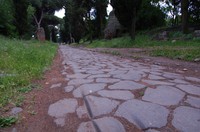
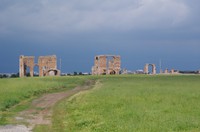
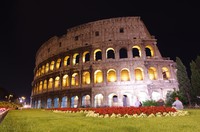
Finally I've found time to look back at vacation in Rome and post some pictures. It has been great time there and I've really enjoyed that. I would like to thank to Luigi Gangitano for showing us some interesting places in the city. And now back to pictures: Monumento a Vittorio Emanuale Spanish Steps Piramide Via Appia Antica Villa del Quintilli Castel Sant' Angello Arco di Constantino Colloseum

Filed under: English Photography Travelling 0 comments Flattr this!

19 June 2012

Neil Williams: subversion 1.7.5 insane upgrade requirement wasting days and days of effort

Upgrading the local version of subversion against a large subversion repository has so far taken three DAYS. It goes through this multi-gigabyte repository in no perceivable order, it goes through every single directory in every single tag and every single branch and refuses to run in any sub-directory. (Even after clearing out some older tags, the tags/ directory is still nearly 8Gb and that doesn't include any binary files.) Each tag within tags/ is 500Mb and contains nearly 6000 sub-directories. Yes, it's large but svn upgrade should still be able to handle it without crippling every machine.

I can't image how svn is going to manage when the server finally gets upgraded. Probably be quicker to dump the entire repo and reimport it.

When I finally give up the will to proceed or simply need to use this LAPTOP for something else, I have to interrupt it with Ctrl-C at which point is starts all over again!

This isn't a slow machine, it's a i5 quad-core T410 with 8Gb of RAM and 1Tb of storage - and svn has made it crawl for days. The only way to pair down the working copy is to delete every tag and branch which means losing data like old build logs and old packages. The repository is this large because it's tracking the development of multiple commercial products which share common code but which also have numerous releases and release updates.

I can't even use svn st on this repo without this completing - I haven't been able to work on this repo since this started. Absolutely insane.

Pondering filing an RC bug on the basis of unjustifiable data loss. We have many machines at work with this repository checked out and if we ever migrate to Wheezy, it's going to mean a WEEK of lost work!!

subversion                    1.7.5-1


So, a warning for anyone else using subversion 1.7.5 with a very large repository: DELETE ALL TAGS and BRANCHES and any other directory anywhere in every single working copy tree on every machine which ever wants to use that copy again before even thinking about upgrading to 1.7.5.

The tags directories don't even need to be upgraded because we only use those to rebuild the code as it was in chroots.

Unspeakably furious about such a completely dumb tool being thrown into the mix DAYS before the Wheezy freeze. Now I have to kill it AGAIN just so that I can suspend the laptop. IDIOTS.

Joey Hess: I work for The Internet now

I have an interesting problem: How do I shoehorn "hired by The Internet for a full year to work on Free Software" into my resume? Yes, the git-annex Kickstarter went well. :) I had asked for enough to get by for three months. Multiple people thought I should instead work on it for a full year and really do the idea justice. Jason Scott was especially enthusiastic about this idea. So I added new goals and eventually it got there. graph: up and to the right, to 800% funded Don Marti thinks the success of my Kickstarter validates crowdfunding for Free Software. Hard to say; this is not the first Free Software to be funded on Kickstarter. Remember Diaspora? Here's what I think worked to make this a success: I've already put two weeks work into developing the git-annex assistant. I'm blogging about my progress every day on its development blog. The first new feature, a git annex watch command that automatically commits changes to git, will be in the next release of git-annex. I can already tell this is going to be a year of hard work, difficult problems, and great results. Thank you for helping make it happen.

Sorina Sandu: Birthday present

Hello!

Yesterday was my birthday, I am 21 years old now :D

Here's what my friends got me as a gift:


One alternative explanation that I have received for this, apart from working on unstable, is that... women are generally unstable :P

Next.

Previous.