Search Results: "ms"

30 July 2013

Bits from Debian: Martin Michlmayr gets the O'Reilly Open Source Award

Longtime Debian Developer Martin Michlmayr was named as one of 6 winners of the 2013 O Reilly Open Source Awards. This Award recognize individual contributors who have demonstrated exceptional leadership, creativity, and collaboration in the development of Open Source Software. Martin received the award for his investment in Debian where he served as Debian Project Leader for two terms between 2003 and 2005. Alt Martin Michlmayr gets the O'Reilly Open Source Award Congratulations tbm!

Daniel Pocock: Switzerland's scariest railway (video)

Although promoted as a funicular railway, the Gelmerbahn funicular has the appearance of a giant roller coaster and all of the fun too. For all those still having nightmares about recent rail tragedies in the age of non-stop surveillance and on-line replays, the 108 degree ascent (or descent) may not be your thing. On the other hand, for those who experience the London Underground each morning, "mind the gap" takes on a whole new meaning as you see your feet hanging out the bottom of the train and the tracks descending vertically into the valley below. <video controls="" height="340" poster="http://danielpocock.com/sites/danielpocock.com/files/gbahn-preview.jpg" width="560">

<source src="http://video.danielpocock.com/Gelmerbahn.webm" type="video/webm"></source>
Click to access video on original page
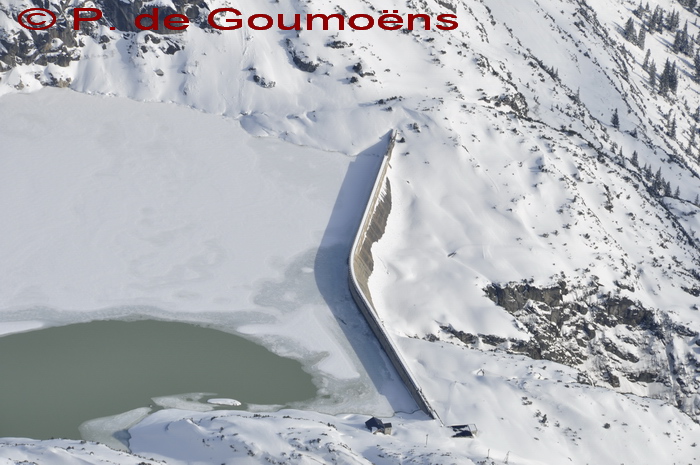
</video> and here are download links for those who prefer to download now and watch later (about 160MB): At the top At the top, there is a scenic two hour walk around Lake Gelmer, the path takes you across the top of a dam built for hydro-electric power generation. Lake Gelmer - hydro-electric dam Getting there from DebConf13 and the Debian 20th birthday For those coming to Switzerland for DebConf13 next month, the Gelmerbahn is probably a little bit too far for a day trip but makes an excellent place to stop during a 2 or 3 day tour around Switzerland. It is accessible using the all-day bus pass for the tour of 3 or 4 mountain passes or by train to Innertkirchen and then a short ride on the bus. The busses are irregular, use sbb.ch to plan the journey. Walking down the mountain from the lake to the bus stop takes about 90 minutes and for those who choose this option, the ticket is cheaper. More Swiss travel blogs Please click here to access some of my previous blogs about Swiss travel with videos and useful ideas for day trips.

29 July 2013

Gergely Nagy: HOWTO: JSON processing with syslog-ng

Continuing my HOWTO series, in this article, I will explore how to set up syslog-ng to process JSON in various scenarios. We will touch the subject of interoperability, and have a look at multiple scenarios, in the hope that readers will find something similar to their own needs. There are many different ways in which one can plug JSON into their logging system, and it is very likely that I will not be able to cover it all within this HOWTO. However, I will explain the basics, and how to plug the pieces together, which should at least be a useful foundation to build even more complex systems onto.In essence, we will look at the following scenarios: raw JSON transport, JSON over syslog, JSON and syslog payload in the same stream. The documentation will cover both syslog-ng 3.4 and 3.5, where the 3.5 parts will be clearly marked as such. The 3.3 series do not have a JSON parser, and as such, is insufficient for most needs explored in this guide.In the default setting, the JSON parser will parse the MESSAGE part of an incoming log event, and place every key into a macro of the same name. If the incoming JSON is structured, it the keys will be converted to dot notation format:
"deeper": "level": "very much so"
In this case, one can access the value as $ deeper.level within a syslog-ng template.The parsed keys can be prefixed using the prefix() option of the json-parser. One can also change what the parser will receive as input by using the template() option.See the documentation for more information on these.Transporting raw JSONThe simplest scenario is to take a transport like TCP, and simply push raw JSON structures through, one each line, and have syslog-ng parse that to its internal representation. One can do all kinds of things with the data then: transport it further as JSON, store it in files, in a database - the possibilities are endless, but we will explore two scenarios.JSON on TCP, using syslog field namesThe first one is receiving JSON on TCP, using syslog field names, store the parsed stuff in a file (using the conventional format), and in mongodb.
source s_tcp_json   tcp(port(10514) flags(no-parse));  ;
parser p_json   json-parser();  ;
destination d_file   file("/var/log/remote.log");  ;
destination d_mongodb   mongodb(collection("remote_log"));  ;
log  
 source(s_tcp_json);
 parser(p_json);
 destination(d_file);
 destination(d_mongodb);
 ;
This needs a bit of an explanation: we use the no-parse flag on the source, because by default, the tcp() source expects a message that conforms to the old syslog protocol. We have raw JSON, and we need to tell the source that. The other elements should be self explanatory, I believe, with the exception of json-parser(): we give it no parameters, so it will not modify the keys in the JSON it receives, keeping them intact, as-is.For this reason, incoming messages need to have the same keys as syslog-ng normally would use internally: DATE, HOST, MESSAGE, and so on, like in the following example:
"PROGRAM":"prg00000","PRIORITY":"info","PID":"1234","MESSAGE":"seq: 0000000000, thread: 0000, runid: 1374490607, stamp: 2013-07-22T12:56:47 MESSAGE...","HOST":"localhost","FACILITY":"auth","DATE":"Jul 22 12:56:47"
JSON on TCP, custom field namesA more likely scenario is when we receive JSON, but not in a layout syslog-ng uses internally. In this case, we need to rewrite the message a little, and possibly use templates, depending on what kind of output we wish to use.Lets assume the incoming JSON has these fields:
"app":"prg00000","prio":"info","id":"1234","msg":"seq: 0000000000, thread: 0000, runid: 1374490607, stamp: 2013-07-22T12:56:47 MESSAGE...","source":"localhost","timestamp":"Jul 22 12:56:47"
As you can see, this has similar fields, but not quite, and FACILITY is missing too.In this case, we'll use a different configuration:
source s_tcp_json   tcp(port(10514) flags(no-parse));  ;
parser p_json   json-parser(prefix(".json."));  ;
destination d_file   file("/var/log/remote.log"
                          template("$ .json.timestamp  $ .json.source  $ .json.app [$ .json.id ]: $ .json.msg \n"));  ;
destination d_mongodb   mongodb(collection("remote_log")
                                value-pairs(
                                  pair("PROGRAM" "$ .json.app ")
                                  pair("HOST" "$ .json.source ")
                                  pair("PID" "$ .json.id ")
                                  pair("MESSAGE" "$ .json.msg ")
                                  pair("DATE" "$ .json.timestamp ")
                                  pair("PRIORITY" "$ .json.prio ")
                                  pair("FACILITY" "auth")
                                ));  ;
log  
 source(s_tcp_json);
 parser(p_json);
 destination(d_file);
 destination(d_mongodb);
 ;
We use the prefix() option of json-parser(), to avoid collisions with the default syslog-ng namespace. Then, we use a template for the file destination, and value-pairs() for the MongoDB one. Doing all this, we get similar results as we did in the first scenario.JSON over syslogAn even likelier scenario is when we have JSON payload in the message part of a normal syslog message. This is useful because the logs themselves remain syslog compatible, and can be transported through devices that know no better.Thankfully, if we do not tell syslog-ng that we do not want any parsing on the input, the json-parser will receive the MESSAGE part of the log, so if we have JSON payload there, things will just work:
source s_tcp_json_payload   tcp();  ;
parser p_json   json-parser();  ;
destination d_file   file("/var/log/remote.log");  ;
destination d_mongodb   mongodb(collection("remote_log"));  ;
log  
 source(s_tcp_json_payload);
 parser(p_json);
 destination(d_file);
 destination(d_mongodb);
 ;
Again, this assumes that the JSON payloads uses field names compatible with syslog-ng's defaults. Adapting it to use templates or value-pairs can of course be made, as shown in an example above.As an example, here's how a syslog message with JSON payload would look like:
<38>2013-07-22T13:45:54 localhost prg00000[1234]:  "MESSAGE": "foo", "PROGRAM": "bar" 
This would, of course, override the MESSAGE and PROGRAM fields, but the rest would be kept intact.Mixed JSON and syslog streamIn order to parse JSON that is intermingled with normal syslog streams, we can use a new feature of syslog-ng 3.4: junctions. These allow us to create branches, and tell syslog-ng something along these lines:
If there's an incoming message, that begins with @json:, parse it as JSON, otherwise treat it as a normal syslog message.
We can, of course, skip the part that mandates an in-stream marker, and things will just work, but in that case, for each JSON message, an error will get logged too, which is undesirable. Therefore, if one wants to intermingle JSON and syslog traffic on the same wire, it's best to do so with the JSON having a marker prefix. The marker, however, is not going to be part of the string the json parser receives, so setting it to an opening curly bracket will not work, unless the template is modified accordingly.The config to do this looks like this:
block parser mixed-json-parser()  
 channel  
  junction  
   channel  
    parser   json-parser(marker("@json:"));  ;
    rewrite   set-tag(".json");  ;
    flags(final);
    ;
   channel  
    flags(final);
    ;
   ;
  ;
 ;
source s_mixed  
 tcp();
 parser   mixed-json-parser();  ;
 ;
A more elaborate example can be found in a post by Bazsi.Closing thoughtsThat covers most of the use cases I saw for the JSON parser, if there are cases uncovered, or questions unanswered, I can be reached via twitter, email and a whole host of other ways, and I will happily expand this tutorial if there's enough demand for more.

EvolvisForge blog: SSD

Following the Wiki I put discard entries into my fstab(5) for swap (but not / as it s suggested to use fstrim instead, and I had noatime for /boot and relatime for / already) and changed the scheduler. What wasn t written there was to set vm.swappiness=0 in sysctl.d/local.conf *shrug* but it helps. What they also didn t mention: mount -t tmpfs swap /var/cache/apt/archives And in sid, which my dayjob-laptop is running, APT _finally_ creates the missing partial/ subdirectory itself. Thanks! I had the filesystems already created, so I changed the ext options with tune2fs: tune2fs -E stride=1024,stripe_width=1024 /dev/sda2 # 1 KiB blocks: /boot
tune2fs -E stride=256,stripe_width=256 /dev/sda4 # 4 KiB blocks: /
I wonder how well that works. I also did _not_ manage to find out my device s flash block size (search engine fodder: erase block size), so I assumed 1 MiB (also used for partition alignment already) as worst-case scenario. Input welcome on how to find *that* out.

28 July 2013

Daniel Pocock: This blog was slashdotted

My earlier blog about rigged elections was slashdotted over the weekend. I had an email from the slashdot team giving me advance warning, having heard the stories about other sites getting knocked offline, I immediately logged into my Ganglia console to start the tsunami watch. I then set about enabling a reverse proxy using Squid to accelerate web server performance. This took about 30 minutes to set up. I chose Squid 3 so I could use a logging format similar to Apache. The wave hits A few hours after the warning email, details appeared on slashdot and sure enough, thousands of visitors started coming to this site. As detailed previously, the site is running on Debian servers with XCP. The web site is managed by Drupal/Apache/MySQL. Everything held together very well. Ganglia demonstrated an initial surge lasting about 10 minutes. From there, traffic has tapered off gradually over 24 hours, although it still remains well above average. slashdot comments One of the most interesting things about the slashdot community are the comments. Given that nobody really wanted to defend the indefensible and nothing in my blog surpasses some of what has been in the news recently (150 charges of fraud against a single MP), most of the discussion quickly turned to a comparison of broadband policies. For those not already aware of it, the Australian Government (Labor Party) is currently rolling out fibre to the home. The project is expected to take about 10 years, although it was delivered very quickly in certain areas where the Government needs votes. Opinions are divided: people who got it first think it is great, some people feel it is too expensive (it's much more expensive than a similar service in Switzerland, for example), some people feel it will be too slow when the final stages are completed in 10 years. It appears technically stronger than the solution proposed by the alternative party.

Hideki Yamane: now dpkg-deb uses xz for compression by default

from dpkg 1.17.0 's changelog

 dpkg (1.17.0) unstable; urgency=low
.
[ Guillem Jover ]
(snip)
* Switch dpkg-deb default compressor from gzip to xz. Build dpkg.deb using
gzip to make debootstrap life easier on non-Debian based systems.
Hallelujah, thanks! It'll reduce archive size and cut traffic, download time, too :-)

Then, I hope that dpkg would support "package delta" feature like yum's presto.

Francois Marier: FISL for foreigners HOWTO

FISL (pronounced FIZZ lay by the locals) is a large Free and Open Source software gathering in Porto Alegre, Brazil. While the primary audience of that conference is the Latin America "libre software" community, a number of overseas speakers also participate in that conference. This is my contribution to them: a short guide for international guests visiting the F rum Internacional do Software Livre.

Planning Before you fly out, make sure you look up the visa requirements for your country of citizenship. Many western countries will require a visa and you will need to visit the local Brazillian embassy ahead of time to get one. Next, have a look at the list of recommended immunizations. As with most destinations, it is recommended that your routine immunizations be up to date, but there are also other specialized ones such as Yellow Fever that are recommended by the Brazillian government. You should therefore visit a travel clinic a few weeks ahead of time. Other than that, I suggest reading up on the country and keeping an eye on the various travel advisories.

Arrival You will be flying at the Porto Alegre airport. If you need to exchange overseas money for Brazilian Reals, you can do that there. You'll probably also want to pick up a power adapter at the airport if you intend to charge your laptop while you're in the country :) Brazil has both 127V and 220V outlets using Type N sockets. Privacy note: using the free airport wifi will require giving your Passport details as part of the registration process.

Language If you don't speak Portuguese, expect a few challenges since most of the people you'll meet (including taxi drivers, many airport workers, some hotel staff) won't speak English. I highly recommend getting a phrase book before you leave and printing paper maps of where you are planning to go (to show to taxi drivers when you get lost). Native Spanish speakers seem to get by speaking Spanish to Portuguese speakers and understanding enough Portuguese to hold a conversation. I wouldn't count on it unless your Spanish is quite good though. Also, the official conference blog posts get eventually translated to English, but there is a delay, so you may want to subscribe to the Portuguese feed and use Google Translate to keep up with FISL news before you get there.

The conference FISL is a large conference and it has a very "decentralized" feel to it. From the outside, it looks like it's organized by an army of volunteers where everyone is taking care of some portion of it without a whole lot of top-down direction. It seems to work quite well! What this means for you as a foreign speaker however is that you're unlikely to be provided with a lot of information or help finding your way around the conference (i.e. no "speaker liaison"). There is a separate registration desk for speakers but that's about all of the attention you'll receive before you deliver your talk. So make sure you know where to go and show up in your assigned room early to speak with the person introducing you. If your talk is in English, it will be live-transated by an interpreter. It's therefore a good idea to speak a bit more slowly and to pause a bit more. Other than that, the organizers make an effort to schedule an English talk in each timeslot so non-Portuguese speakers should still be able to get a lot out of the conference. FISL was a lot of fun for me and I hope that some of these tips will help you enjoy the biggest FLOSS gathering in the southern hemisphere!

27 July 2013

Julien Danjou: OpenStack Ceilometer Havana-2 milestone released

Last week, the second milestone of the Havana developement branch of Ceilometer has been released and is now available for testing and download. This means the first half of the OpenStack Havana development has passed! New features Ten blueprints have been implemented as you can see on the release page. I'm going to talk through some of them here, that are the most interesting for users.
The Ceilometer API now returns all the samples sorted by timestamp. This blueprint is the first one implemented by Terri Yu, our OPW intern! In the same spirit, I've added the ability to limit the number of samples returned. On the alarming front, things evolved a lot. I've implemented the notifier system that will be used to run actions when alarms are triggered. To trigger these alarms, Eoghan Glynn (RedHat) worked on the alarm evaluation system that will use the Ceilometer API to check for alarm states. I've reworked the publisher system so it now uses URL formatted target for publication. That now allows to publish different meters to different target using the same publishing protocol (e.g. via UDP toward different hosts). Sandy Walsh (RackSpace) have been working on the StackTach like functionality and added the ability for the collector to optionally store the notification events received. Finally, Mehdi Abaakouk (eNovance) implemented a TTL system for the database, so you're now able to expire your data whenever you like. Bug fixes Thirty-five bugs were fixed, though most of them might not interest you so I won't elaborate too much on that. Go read the list if you are curious. Toward Havana 3 We now have 30 blueprints targeting the Ceilometer's third Havana milestone, with some of them are already started.I'll try to make sure we'll get there without too much trouble for the 6th September 2013. Stay tuned!

Christian Perrier: [life] Running update July 27th 2013: Bubulle now runs in moutains

My last running update was sent after I had a great April month with two successful trail races (35km then 44km). The next target was Mont-Blanc marathon in Chamonix valley in early July, so it's time for me to send a new update before summer. May and June was mostly training. Huge training. Very long distances with 375km in May and over 430 in June (breaking my former monthly record by over 50 kilometers). Yes, that means over 14 kilometers every day..:-) I indeed achieved that with my "go to work partly by running" habits, which are now deeply included in my daily schedule. Much more convenient than bus ride (with the typical random schedules of RATP, which French people translate by "Rentre Avec Tes Pieds" or "Come back home by walking"....which is exactly what I'm doing). With such training (sometimes including extra rides in the forests, with short but steep ups and downs)....I was well prepared for THE early summer goal : Marathon du Mont-Blanc in Chamonix (not Ultra Trail du Mont-blanc : this one, I'm not ready for....yet).. My first mountain trail race, and what race! Imagine 42km in the moutain lovers heaven, namely the Chamonix Valley, with the Mont-Blanc, Aiguille Verte, Aiguille du Midi, Aiguilles Rouges, etc. above your head. Of course, not only in the valley but goind up and down "slightly"....in short 2200 meters positive climb..:-) I ran it with a female friend of mine, who I met in local races and through runners web forums. Sabine has about the same running skills than me and we developed a good and nice friendship, sharing our love for running in the nature. So, during May and June, we decided to run this race together as we were both registered for it. A first trial in a local 35km trail race two weeks before the MMB was very successful. We ended up in 3h40 and Sabine was ranked 5th female runner. And, moreover, we had a tremendous pleasure by crossing the finishing line together. So, we did it again in Chamonix. And, hell, we did it well: I had set the goal to 6 hours and 30 minutes and we completed the race in..... 6 hours and 34 minutes. Much much better than I and she would have expected. And, believe me, crossing the finishing line was again a special moment, particularly because the crowd at the end of this race make it look like l'Alpe d'Huez on the Tour de France. And, this on a wonderful sunny day, arriving at Planpraz, facing the Mont-Blanc. If you've ever been to Chamonix, you know what I mean. So, first moutain trail and, hell, not the last one! For those of you who can read French...or just want to see some pictures of a running bubulle, here is the link to the story. And these 42 kilometers were indeed so well done that the day after, while coming down from the famous Aiguille du Midi with Elisabeth (who came with me to Chamonix, of course)...I decided to run down from the cable car intermediate stop (2300m altitude) to Chamonix (1050m). Over 1200 meters down in 48 minutes... :-). Just a bit slower than the cable car....:) The remaining of July saw me again running back and forth to work and I'm indeed about to break my monthly record, eventually reaching 450 kilometers in one month and only two days NOT running in the whole month. Yeah, crazy. The upcoming Sunday, August 4th, just before going to Debconf 13, I'll spend a few days in Lanslebourg and will be running the EDF Cenis Tour trail, for 50 kilometers and 2600 meters positive climb. This time, a very "small" race, with no more than 150 runners. So, that will be another experience by running nearly entirely alone between 1400 and 2700 meters altitude. I'll post the outcome (or you'll probably hear about it at DC13....). See you, hopefully not in 3 months, for another update about running Bubulle.

26 July 2013

Ian Wienand: Converting an American propane appliance to Australian gas bottles

Here's something I just spent too much time figuring out... If you have an Australian "gas" or "LPG bottle"; the type you'd pick-up at any "service" or "petrol" station in Australia, it has a female POL connector. I'm not sure what POL stands for; possibly related to some company who made connectors long ago and it became standard. If you have an American "propane" device such as a grill, turkey fryer or smoker, or indeed something that plugs into a "propane bottle" you would pick-up at a "gas station" -- it will have a "Type 1", "ACME", "ACME Type 1", "QCC", "QCC1" or "QCC Type 1" connector (each seems to be an interchangeable term for the other). The appliance side of this has a big (usually black) plastic nut that is apparently safer or something. Once you have figured this out, you can buy something like the "Grillpro Model 11051 Universal Fit Propane Tank Adapter" and I can attest, based upon empirical evidence, that things will "just work". Of course your other choice might be just to replace the regulator, hoses, etc.; however if everything seems super-glued together the adapter is much easier. In other empirical evidence you won't find anywhere else on the internet : the Vizio M3D550KD LCD television works just fine on 240V, despite not being rated for it on the back.

Justus Winter: Bootstrapping the Hurd

Due to popular demand this weeks report contains another awesome ascii screenshot. I added some lines to /etc/hurd/runsystem.sysv to inspect the environment very early in the boot process:
start ext2fs: Hurd server bootstrap: ext2fs[device:hd0s1] exec init proc auth
[...]
+ echo my pid is 1
my pid is 1
+ ps Ax
+ head
USER       PID TT STAT     TIME COMMAND
-            0  ? R<mo  0:00.01 /hurd/proc
root         1  - Sslow 0:00.02 /bin/sh /etc/hurd/runsystem
-            2  - Sp    0:00.00 /hurd/init root=device:hd0s1 console=com0
-            3  ? D<p   0:00.01 root=device:hd0s1 console=com0
-            4  - S<o   0:00.18 ext2fs --readonly --multiboot-command-line=root
-            5  - S<o   0:00.02 /hurd/exec
-            6  - S<o   0:00.00 /hurd/auth
root         7  - S<o   0:00.04 /hurd/term /dev/console device console
root         8  - S<o   0:00.00 /hurd/pflocal
+ pstree -p
sh(1)-+-init(2)-+-auth(6)
                 -ext2fs(4)-+-exec(5)
                             -pflocal(8)
                             -procfs(12)
                             -term(7)
       -pstree(11)
       -root=device:hd0s1(3)
Those who are familiar with the Hurd might note that /etc/hurd/runsystem.sysv runs as PID 1. At the end of this script /sbin/init is exec(2)uted, so sysvinit gets run as PID 1. This is the result of a fairly small patch series. It still took me like two days to come up with it since bootstrapping a Hurd system (or any microkernel OS, or like bootstrapping in general) is complicated. If you look at the screenshot above you will note the /hurd/pflocal process running with PID 8. This is the server providing pipe(2)s and Unix sockets. Before that server is started, one cannot use pipes to connect two processes with pipes like I did with ps and head (I actually lied a little here, because the way Debian/Hurd is set up, the pflocal server is started on demand courtesy of a Hurd feature called "passive translators", very similar to what the cool kids call "socket activation" today). Process 0 is the /hurd/proc server. It maps Mach tasks to the concept of Unix processes. Before that server is started, the notion of a process does not even exist. Pid 4 is the root filesystem. Without that, no other server can be read from the disk. But if the root filesystem is to be started first, it cannot be registered as a Unix process at the proc server, because that has not been started yet. So the first few processes are started in a weird way and order, and since they need to talk to each other, they need to register at each other. No Unix concepts exist yet, only Mach concepts like tasks and messages can be used. The boot sequence is roughly this (the numbers in parenthesis are the PIDs):
  1. Grub loads GNU Mach(3), the statically linked root filesystem translator (4) and the /hurd/exec (5) server (the exec server loads executables into Mach tasks, implementing most parts of execve(2)).
  2. The rootfs translator is started.
  3. The rootfs initiates the Hurd server bootstrap by starting /hurd/exec and /hurd/init (2).
  4. /hurd/init starts /hurd/proc (0) and /hurd/auth (6).
  5. The translators perform several rendezvouses to introduce themselves to each other.
  6. The proc servers state with respect to the already running processes is fixed.
  7. /hurd/init starts /etc/hurd/runsystem (1) which starts the pager (that pages out memory to disk) and later execs /sbin/init.
  8. From this point on the initialization of Debian/Hurd is no different from Debian/Linux.
Besides the pid one issue I spent my time on: Next week I hope to fully address the killall5 issue and to clean up, polish and submit my patch series for sysvinit. I will then revise my mtab translator prototype which is currently in its third iteration. As always, if there is time left, I will look at the network related issues.

25 July 2013

DebConf team: DebConf13 preliminary schedule available (Posted by Talks team)

We are happy to announce that the schedule for the upcoming DebConf13 in Vaumarcus, Switzerland, is available! It is still possible for some changes to occur, as we always try to accept new proposals, even those submitted during the conference. DebConf13 talks will mostly happen in two rooms simultaneously, except for a few plenaries which will be presented in the main room with no parallel event. A third room will be available for discussion groups and ad-hoc sessions. As usual, we ve tried to cluster related activities in sequence, even though it was not always possible. Besides that there will be many tracks covering specific topics, which are: There will also be two special tracks, since DebConf is not only about hacking, talks and discussions: As in previous years, we provide various ways to access the schedule: the DebConf team

Evgeni Golov: Say hello to Mister Hubert!

Some days ago I got myself a new shiny Samsung 840 Pro 256GB SSD for my laptop. The old 80GB Intel was just too damn small. Instead of just doing a pvmove from the old to the new, I decided to set up the system from scratch. That is an awesome way to get rid of old and unused stuff or at least move it to some lower class storage (read: backup). One of the things I did not bother to copy from the old disk were my ~/Debian, ~/Grml and ~/Devel folders. I mean, hey, it s all in some kind of VCS, right? I can just clone it new, if I really want. Neither I copied much of my dotfiles, these are neatly gitted with the help of RichiH s awesome vcsh and a bit of human brains (no private keys on GitHub, yada yada). After cloning a couple of my personal repos from GitHub to ~/Devel, I realized I was doing a pretty dumb job, a machine could do for me. As I already was using Joey s mr for my vcsh repositories, generating a mr config and letting mr do the actual job was the most natural thing to do. So was using Python Requests and GitHub s JSON API. And here is Mister Hubert, aka mrhub: github.com/evgeni/MisterHubert. Just call it with your GitHub username and you get a nice mr config dumped to stdout. Same applies for organizations. As usual, I hope this is useful :)

Bartosz Fe&#324;ski: looking for a specific FUSE based filesystem

Dear lazy web, Friend of mine ask me for help to find out bottleneck of performance problems he s dealing with.
Basically it looks like the most problematic are I/O operations and main reason for that are thousands of read/write operations on directory having about 150k files. Solution is easy right? Spread those files among some hashed subdirectories and we re fine.
But it is not so easy. There are about 200 bash/perl scripts operating on those files.
So it s not so simple as mv aaaaaaaaaaaaa.txt a/aa/aaaaaaaaaaaaaa.txt and so on.
Those scripts were developed for the past 10 or more years so yes noone really knows how and why do they work. So I m thinking about another approach which should be much easier and cheaper than rewriting hundreds of scripts. Something like proxy filesystem between those scripts and files.
So we could still move those files to hashed subdirectories but show them as they are in single directory for the scripts. Anyone knows about such filesystem? Or is it something that has to be written? And another question is it worth to go this way? Is there a chance that some kind of FUSE proxy filesystem with really fast hashed subdirectories will be faster than filesystem with one directory with a lot of files? Anyone tried such approach?

John Goerzen: Development Freedom in New Platforms

I started writing code when I was somewhere around 1st grade, hacking some rudimentary BASIC on a TRS-80. Since then, I ve used more programming languages than I can count; everything from C to Prolog, Python to Haskell, and probably a dozen others. I enjoy diversity in programming languages and tools. I ve had an interest in both web and mobile development for some time, but have done little with either. Reflecting on that lately, I realize that both platforms severely restrict my freedom to use the tools I choose. Even on an old x86 with 640K of RAM, I had choices; BASIC, Pascal, and C would work under DOS. (Plus assembler, but I had yet to learn that at the time.) On Android, my choices are Java or Java. (OK, or something that compiles to Java, but those selections are still limited.) Plus it seems like I d have to use Eclipse, which seems to have taken the kitchen sync crown from Emacs long ago, and not in a good way. On iOS, the choices are Objective C. And on the web, it s JavaScript. The problem with all this is that there s little room for language innovation on those platforms. If predictions about the decline of development on the PC pan out, how will the next advance in programming languages gain traction if the hot spots for development are locked down to three main languages? Will we find ourselves only willing to consider languages that can compile to Java/Dalvik bytecode? And won t that put limits on the possible space for innovation to occur within? Yes, I know about things like Mono and the Android Scripting Environment, which offer some potential for hope, but I think it s still safe to say that these platforms are pretty closed to development in unofficial languages. I don t know of major apps in the Android market written in Python, for instance. I know of efforts such as Ubuntu s, but even they simply lock down development to a different toolkit. There is no choice there of GTK vs. Qt, or such things. Sadly, I don t think it has to be this way. My phone has way more power than my computer did just a few years ago, and that computer was capable of not just executing, but even compiling, code written in all sorts of different languages. But I don t know if there s much we can do to change things. Even with native code on Android, plenty still has to go through Dalvik (at least that s my understanding). If you wanted to write a Python app with a full graphical touch interface on Android, I don t think this would be all that easy of a task.

John Goerzen: Spring Always Comes

There will come a time when you believe everything is finished. That will be the beginning. Louis L Amour
Last year, I wrote about the difficult times in my life and hope for future, but never really explained why. I have written little since, because there is little I can write without a bit of explanation. It is partly because of the complexity of the task of telling my story without telling too much of others stories. But it is important I tell this story. So often on the Internet, we hear only the brave face, the positive things that happen. This story involves tears and difficulty. And also we often see only anger and bitterness. This story involves joy and celebration. One afternoon last year, I was working as usual (I work from home) when two sheriff deputies arrived on my doorstep. They gave me paperwork showing that my now ex-wife had filed for divorce, had asked them to serve me the paperwork, and that she had been given temporary possession of the house. I had 2 hours to gather up clothes and a little computer equipment (there was a list) and leave the house. Thus began the most difficult time in my life. I went from reading a bedtime story and singing a bedtime song to my young boys every night to seeing them only a little, from living in the house my grandparents and dad had lived in to having no particular plan for where I d sleep that night, from thinking I had a good idea of what the future held to not knowing when, if ever, I d ever be back home. I worried about how the boys would fare (they have done well so far). And it was incomprehensible; I couldn t find answers to why? . In the time since, the divorce became final, I did return home, the boys spend more time with me, and a new normal emerged. At the time, it seemed like a sudden, deep winter blizzard. I couldn t see very far down the road, spring seemed far off, and I couldn t see very well either forward or backward. But I was determined to find positives in the situation. It started almost immediately; I had never been a person to talk about pain, but just a few hours after the divorce was filed, I knew I needed to talk to someone about it, and did. A week later, I shared about it in church. Amazing friends, locally and all over the world, provided support and encouragement. I had less total time with the boys than before the divorce, but more time with just the three of us, and we used it to play together at home, spend days in town, and even take a train trip to Santa Fe, where none of us had ever been before. I realized how much I could forgive, and that my ex-wife probably did the best she could with the persistent legacy of difficult life events that happened to her long before she met me. I understood this, and was never angry, just sad, for everyone. I have always known nobody is perfect, myself included, but can be hard on myself when I m less than perfect. I forgave myself, too, realizing that I did my best to help in the most unfamiliar of waters, and although I sometimes didn t get it right, my conscience is clear because my heart was in the right place and I tried, very hard. Most incredibly, I became a person with a deep sense of inner peace. I always tried to work hard to set life on a good path; I got good grades in school, am a good employee, and have a strong set of values. But where courts are involved, there s a strong sense of powerlessness. At times, there was nothing I could do to make life better for my boys or for me. I finally had to let go of taking on responsibility for all that on my own shoulders. I simply knew that things would be OK, and in fact were OK, and that there is nothing in life that really deserves worries. That doesn t mean worries are never present, but that mostly they are subdued, like a radio quietly playing in another room. When they aren t, I can sit down at the piano, play my penny whistle, sing, walk to my creek, talk to friends, or any of so many things that let them melt away. I stopped searching for happiness and peace, and let those things find me. In religious terms, my faith became not just an intellectual one, but also a spiritual one. An atheist friend asked me, Just what does religion mean to you anyway? My answer: The certainty that spring always comes, for everyone that understands this.
People speak of misfortunes and sufferings, remarked Pierre, but if at this moment I were asked: Would you rather be what you were before you were taken prisoner, or go through all this again? then for heaven s sake let me again have captivity and horseflesh! We imagine that when we are thrown out of our usual ruts all is lost, but it is only then that what is new and good begins. While there is life there is happiness. There is much, much before us. Tolstoy, War and Peace
By Thanksgiving, I had much to be thankful for. Some of it under my nose waiting to be rediscovered after years of distraction, such as the glorious Kansas sunrises. Some things were new, such as roasting a turkey all by myself (or, rather, with Jacob and Oliver) for the first time, and having it come out absolutely perfectly. And some were just the things of everyday life: that I lived in my own house again, that I could walk out to the creek at the edge of my property whenever I wanted, that I could play piano, that the sounds of laughter and little running feet again could often be heard on my wood floors. That s not to say everything was easy; the courts sometimes made decisions sometimes I didn t think were in the boys best interests, legal things dragged on and on, but in the end, peace endured. Happiness endured. I found myself thinking at Thanksgiving that it was the best Thanksgiving ever. Not much later, I considered myself happier than I ve ever been. I was focusing on the daily gifts of life, marveling at the sunrises, looking forward to life s next adventure, confident that it would be far better than the last. And then, to my complete surprise, I found myself in a relationship again. On top of all the wonderful things happening in my life, I met Laura. I never could have imagined a friend so wonderful, a relationship so loving and joyful, something to treasure so deeply. I can look back at events and shake my head in amazement and wonder, that I found myself happier than I d ever been, and then this wonderful relationship on top of that. I have been blessed to have the life I do, and feel almost embarrassingly lucky. I share this story because friends that had been through divorce years ago shared their stories. They gave me hope. And if I didn t share this story in this public way, I would be squandering an opportunity to find more positives from what happened. I hope that this helps, somehow, someone that is in pain know that there is beauty in the valley, and spring always comes, every single year. And I share it because happiness like this can t be repressed for long. Tolstoy was right. While there is life, there is happiness. I ll end with a story from last Thanksgiving. It was 6:10AM that weekend. I was still asleep, and heard this: Jacob, yelling from his room: Dad? Dad! Me, groggy: Yes, Jacob? Jacob: Can I go down and look at the Christmas tree? Me: Sure, and you can turn it on too. Jacob: Great! At that point, I could have gone back to sleep. I was really short on sleep that morning, and Jacob would have been fine. But I gave him a couple of minutes, then I went downstairs too. He was curled up on the piano bench, looking at the tree. I quietly turned up the downstairs thermostat, got a chair, put it next to the piano bench, and sat down by the tree too. Jacob crawled over onto my lap and snuggled up for awhile. Neither of us said anything. Then: Dad? Yes? This is the best Thanksgiving ever. And he gave me a big hug. And he was right. Yes, he was RIGHT! That will be the beginning. Spring comes!

24 July 2013

Gergely Nagy: My git tagging convention

Zigo posted an article earlier, one which I disagree with strongly. First of all, something that has been in use ever since git was invented is hardly a new fashion. Something that is used by the very same person who invented git and by git itself, is hardly surprising to be found so widespread. Especially not when it is used as an example in git's very own documentation! Writing it off as something silly, because of the way GitHub works, without even trying to understand the reason behind it is just plain wrong. Just because GitHub names tarballs the way it does, does not mean that we should change the way we tag.For example, cgit (used by, among others, kernel.org), uses the tag name as-is for its tarballs, unlike GitHub which prepends the project name, so one will have to mangle the filename in a debian/watch file anyway, when downloading from a host that is not GitHub, therefore his arguments for a raw version-only tag are bogus, unless your upstream is using GitHub.But I do not want to criticise only, rather, to provide a reason why a prefix is used, and why I chose the "worst" prefix: the project name itself.One very strong reason to use a prefix, either v or any other prefix is to ease tab completion. If you have a tag that is a bare number, you type the first, press tab, and get a mixture of commits and tags. You can't easily tell your completion system that you want commits or tags. With a prefix outside of the hex range, which v is, you can do that, and that makes working with it a lot easier.Is it for convenience? Yes. But ask yourself this: how many times do you have to write a debian/watch file? Once per package. How much time do you spend looking for a tag, or a commit? A lot more. So which one is most important? The convenience of someone who has to work around the tarball naming of the hosting service once, or the developer who works with the software daily? Obviously the latter!But that is not all. I'm an advocate of prefixing the tag with the project name, actually, and I've been doing that for all new projects for a while now, and I'm not going to change that, because it serves a very practical purpose: if you have a parent repository, with a lot of submodules, if git tag tells you the project name too, that makes it much easier to navigate. I don't have to bake submodule support into my shell prompt (that would be costy), and I won't find it surprising that if I enter a subdirectory, git tag fails to list the version I know I'm working on. Just because I happened to end up in a submodule, which is something I end up doing often, as I have many repositories that have submodules, which in turn have other submodules, and so on and so forth through many layers.A raw version number as a tag name is insufficient for my needs, simple as that. And I, as upstream, don't care that whoever packages my thing, will have to add a line to a watch file. That only needs to be done once, while I work with tags and commits daily.I'm sorry, but calling this naming convention a disease just because GitHub's tarball naming is what it is, without even considering that there may be other reasons behind it than legacy, and that there are hosting sites outside of GitHub, is a mistake. Dear package maintainers, please do not annoy us upstreams with requests to cripple our daily work. Thank you.

Thomas Goirand: The v sikness is spreading

It seems to be a new fashion. Instead of tagging software with a normal version number, many upstream adds a one letter prefix. Instead of version 0.1.2, it becomes version v0.1.2. This sickness has spread all around in Github (to tell only about the biggest one), from one repository to the next, from one author to the next. It has consequences, because Github (and others) conveniently provides tarballs out of Git tags. Then the tarball names becomes packagename-v0.1.2.tar.gz instead of package packagename-0.1.2.tar.gz. I ve even seen worse, like tags called packagename-0.1.2. Then the tarball becomes packagename-packagename-0.1.2. Consequently, we have to go around a lot of problems like mangling in our debian/watch files and so on (probably the debian/gbp.conf if you use that ). This is particularly truth when upstream doesn t make tarball and only provides tags on github (which is really fine to me, but then tags have to be made in a logical way). Worse: I ve seen this v-prefixing disease as examples in some howtos. What s wrong with you guys? From where is coming this v sickness? Have you guys watch too much the v 2009 series on TV, and you are a fan of the visitors? How come a version number isn t just made of numbers? Or is this just a v like the virus of prefixing release names with a v ? So, if you are an upstream author, reading debian planet, with your software packaged in Debian, and caught the bad virus of prefixing your version numbers with a v, please give-up on that. Adding a v to your tags is meaningless anyway, and it s just annoying us downstream. Edit: Some people pointed to me some (IMO wrong) reasons why to prefix version numbers. My original post was only half serious, and responding with facts and common sense breaks the fun! :) Anyway, the most silly one being that Linus has been using it. I wont comment on that one, it s obvious that it s not a solid argumentation. Then the second one is for tab completion. Well, if your bash-completion script is broken, fix it so that it does what you need, rather than going around the problem by polluting your tags. Then the 3rd argument was if you were merging 2 repositories. First this never happened to me to merge 2 completely different repos, and I very much doubt that this is an operation that you have to do often. Second, if you merge the repositories, the tags are loosing all meanings, and I don t really think you will need them anyway. Then the last one would be working with submodules. I haven t done it, and that might be the only case where it makes sense, though this has nothing to do with prefixing with v (you would need a much smarter approach, like prefixing with project names, which in that case makes sense). So I stand by my post: prefixing with v makes no sense.

Mart&iacute;n Ferrari: Of Grafton street and Hanbury lane

It finally happened, I'm at the boarding gate 423, about to get into the plane that will take me out of Dublin. It seems I didn't get convinced by this article. Still, I've tried to see most of the things on that list, and see a fair bit of the island. I am not sad, I was expecting myself to break down and make a big Greek drama, but nothing like that happened. In the end, Dublin is the one place (with Buenos Aires) where I'll be coming back often. Still, this song has been in my head for days.
<object data="http://www.youtube.com/v/aMxKggsz0fM&amp;fs=1&amp;border=1" height="364" width="445"> <param name="allowFullScreen" value="true"> <param name="allowscriptaccess" value="always"> <param name="movie" value="http://www.youtube.com/v/aMxKggsz0fM&amp;fs=1&amp;border=1"> </object>

Wouter Verhelst: Crowdsourcing the search for prior art in software patents

On IRC, someone pointed out this blog post by Joel Spolsky, wherein he talks of 'Ask Patents', a Stack Exchange site set up after a change of law to allow the public to submit prior art for patent applications. It's not a perfect solution. If the patent office can't find enough people willing to do this kind of boring search work while being paid for it, I'm not sure they'll find enough people willing to do this kind of boring search work in their free time. But it's certainly a step in the right direction.

Next.

Previous.