Search Results: "ag"

27 April 2016

Stig Sandbeck Mathisen: Using LLDP on Linux. What's on the other side?

On any given server, or workstation, knowing what is at the other end of the network cable is often very useful. There s a protocol for that: LLDP. This is a link layer protocol, so it is not routed. Each end transmits information about itself periodically. You can typically see the type of equipment, the server or switch name, and the network port name of the other end, although there are lots of other bits of information available, too. This is often used between switches and routers in a server centre, but it is useful to enable on server hardware as well. There are a few different packages available. I ve looked at a few of them available for the RedHat OS family (Red Hat Enterprise Linux, CentOS, ) as well as the Debian OS family (Debian, Ubuntu, ) (Updated 2016-04-29, added more recent information about lldpd, and gathered the switch output at the end.)

ladvd A simple daemon, with no configuration needed. This runs as a privilege-separated daemon, and has a command line control utility. You invoke it with a list of interfaces as command line arguments to restrict the interfaces it should use. ladvd is not available on RedHat, but is available on Debian. Install the ladvd package, and run ladvdc to query the daemon for information.
root@turbotape:~# ladvdc
Capability Codes:
    r - Repeater, B - Bridge, H - Host, R - Router, S - Switch,
    W - WLAN Access Point, C - DOCSIS Device, T - Telephone, O - Other
Device ID        Local Intf Proto Hold-time Capability Port ID
office1-switch23 eno1       LLDP  98        B          42
Even better, it has output that can be parsed for scripting:
root@turbotape:~# ladvdc -b eno1
INTERFACE_0='eno1'
HOSTNAME_0='office1-switch23'
PORTNAME_0='42'
PORTDESCR_0='42'
PROTOCOL_0='LLDP'
ADDR_INET4_0=''
ADDR_INET6_0=''
ADDR_802_0='00:11:22:33:44:55
VLAN_ID_0=''
CAPABILITIES_0='B'
TTL_0='120'
HOLDTIME_0='103'
my new favourite :)

lldpd Another package is lldpd , which is also simple to configure and use. lldpd is not available on RedHat, but it is present on Debian. It features a command line interface, lldpcli , which can show output with different level of detail, and on different formats, as well as configure the running daemon.
root@turbotape:~# lldpcli show neighbors
-------------------------------------------------------------------------------
LLDP neighbors:
-------------------------------------------------------------------------------
Interface:    eno1, via: LLDP, RID: 1, Time: 0 day, 00:00:59
  Chassis:
    ChassisID:    mac 00:11:22:33:44:55
    SysName:      office1-switch23
    SysDescr:     ProCurve J9280A Switch 2510G-48, revision Y.11.12, ROM N.10.02 (/sw/code/build/cod(cod11))
    Capability:   Bridge, on
  Port:
    PortID:       local 42
    PortDescr:    42
-------------------------------------------------------------------------------
Among the output formats are json , which is easy to re-use elsewhere.
root@turbotape:~# lldpcli -f json show neighbors
 
  "lldp":  
    "interface":  
      "eno1":  
        "chassis":  
          "office1-switch23":  
            "descr": "ProCurve J9280A Switch 2510G-48, revision Y.11.12, ROM N.10.02 (/sw/code/build/cod(cod11))",
            "id":  
              "type": "mac",
              "value": "00:11:22:33:44:55"
             ,
            "capability":  
              "type": "Bridge",
              "enabled": true
             
           
         ,
        "via": "LLDP",
        "rid": "1",
        "age": "0 day, 00:53:23",
        "port":  
          "descr": "42",
          "id":  
            "type": "local",
            "value": "42"


lldpad A much more featureful LLDP daemon, available for both the Debian and RedHat OS families. This has lots of features, but is less trivial to set up.

Configure lldp for each interface
#!/bin/sh
find /sys/class/net/ -maxdepth 1 -name 'en*'  
    while read device; do
        basename "$device"
    done  
    while read interface; do
         
            lldptool set-lldp -i "$interface" adminStatus=rxtx
            for item in sysName portDesc sysDesc sysCap mngAddr; do
                lldptool set-tlv -i "$interface" -V "$item" enableTx=yes  
                    sed -e "s/^/$item /"
            done
           
            sed -e "s/^/$interface /"
    done

Show LLDP neighbor information
#!/bin/sh
find /sys/class/net/ -maxdepth 1 -name 'en*'  
    while read device; do
        basename "$device"
    done  
    while read interface; do
        printf "%s\n" "$interface"
        ethtool $interface   grep -q 'Link detected: yes'    
            echo "  down"
            echo
            continue
         
        lldptool get-tlv -n -i "$interface"   sed -e "s/^/  /"
        echo
    done
[...]
enp3s0f0
  Chassis ID TLV
    MAC: 01:23:45:67:89:ab
  Port ID TLV
    Local: 588
  Time to Live TLV
    120
  System Name TLV
    site3-row2-rack1
  System Description TLV
    Juniper Networks, Inc. ex2200-48t-4g , version 12.3R12.4 Build date: 2016-01-20 05:03:06 UTC
  System Capabilities TLV
    System capabilities:  Bridge, Router
    Enabled capabilities: Bridge, Router
  Management Address TLV
    IPv4: 10.21.0.40
    Ifindex: 36
    OID: $
  Port Description TLV
    some important server, port 4
  MAC/PHY Configuration Status TLV
    Auto-negotiation supported and enabled
    PMD auto-negotiation capabilities: 0x0001
    MAU type: Unknown [0x0000]
  Link Aggregation TLV
    Aggregation capable
    Currently aggregated
    Aggregated Port ID: 600
  Maximum Frame Size TLV
    9216
  Port VLAN ID TLV
    PVID: 2000
  VLAN Name TLV
    VID 2000: Name bumblebee
  VLAN Name TLV
    VID 2001: Name stumblebee
  VLAN Name TLV
    VID 2002: Name fumblebee
  LLDP-MED Capabilities TLV
    Device Type:  netcon
    Capabilities: LLDP-MED, Network Policy, Location Identification, Extended Power via MDI-PSE
  End of LLDPDU TLV
enp3s0f1
[...]

on the switch side On the switch, it is a bit easier to see what s connected to each interface:

office switch On the switch side, this system looks like:
office1-switch23# show lldp info remote-device
 LLDP Remote Devices Information
  LocalPort   ChassisId                 PortId PortDescr SysName
  --------- + ------------------------- ------ --------- ----------------------
  [...]
  42          22 33 44 55 66 77         eno1   Intel ... turbotape.example.com
  [...]
office1-switch23# show lldp info remote-device 42
 LLDP Remote Device Information Detail
  Local Port   : 42
  ChassisType  : mac-address
  ChassisId    : 00 11 22 33 33 55
  PortType     : interface-name
  PortId       : eno1
  SysName      : turbotape.example.com
  System Descr : Debian GNU/Linux testing (stretch) Linux 4.5.0-1-amd64 #1...
  PortDescr    : Intel Corporation Ethernet Connection I217-LM
  System Capabilities Supported  : bridge, router
  System Capabilities Enabled    : bridge, router
  Remote Management Address
     Type    : ipv4
     Address : 192.0.2.93
     Type    : ipv6
     Address : 20 01 0d b8 00 00 00 00 00 00 00 00 00 00 00 01
     Type    : all802
     Address : 22 33 44 55 66 77

datacenter switch
ssm@site3-row2-rack1> show lldp neighbors
Local Interface    Parent Interface    Chassis Id          Port info          System Name
[...]
ge-0/0/38.0        ae1.0               01:23:45:67:89:58   Interface   2 as enp3s0f0 server.example.com
ge-1/0/38.0        ae1.0               01:23:45:67:89:58   Interface   3 as enp3s0f1 server.example.com
[...]
ssm@site3-row2-rack1> show lldp neighbors interface ge-0/0/38
LLDP Neighbor Information:
Local Information:
Index: 157 Time to live: 120 Time mark: Fri Apr 29 13:00:19 2016 Age: 24 secs
Local Interface    : ge-0/0/38.0
Parent Interface   : ae1.0
Local Port ID      : 588
Ageout Count       : 0
Neighbour Information:
Chassis type       : Mac address
Chassis ID         : 01:23:45:67:89:58
Port type          : Mac address
Port ID            : 01:23:45:67:89:58
Port description   : Interface   2 as enp3s0f0
System name        : server.example.com
System Description : Linux server.example.com 3.10.0-327.13.1.el7.x86_64 #1 SMP Thu Mar 4
System capabilities
        Supported  : Station Only
        Enabled    : Station Only
Management Info
        Type              : IPv6
        Address           : 2001:0db8:0000:0000:0000:dead:beef:cafe
        Port ID           : 2
        Subtype           : 2
        Interface Subtype : ifIndex(2)
        OID               : 1.3.6.1.2.1.31.1.1.1.1.2

Joey Hess: my Shuttleworth Foundation flash grant

Six months ago I received a small grant from the Shuttleworth Foundation with no strings attached other than I should write this blog post about it. That was a nice surprise. The main thing that ended up being supported by the grant was work on Propellor, my configuration management system that is configured by writing Haskell code. I made 11 releases of Propellor in the grant period, with some improvements from me, and lots more from other contributors. The biggest feature that I added to Propellor was LetsEncrypt support. More important than features is making Propellor prevent more classes of mistakes, by creative use of the type system. The biggest improvement in this area was type checking the OSes of Propellor properties, so Propellor can reject host configurations that combine eg, Linux-only and FreeBSD-only properties. Turns out that the same groundwork needed for that is also what's needed to get Propellor to do type-level port conflict detection. I have a branch underway that does that, although it's not quite done yet. The grant also funded some of my work on git-annex. My main funding for git-annex doesn't cover development of the git-annex assistant, so the grant filled in that gap, particularly in updating the assistant to support the git-annex v6 repo format. I've very happy to have received this grant, and with the things it enabled me to work on.

Niels Thykier: auto-decrufter in top 5 after 10 months

About 10 months ago, we enabled an auto-decrufter in dak. Then after 3 months it had become the top 11th remover . Today, there are only 3 humans left that have removed more packages than the auto-decrufter impressively enough, one of them is not even an active FTP-master (anymore). The current score board:
 5371 Luca Falavigna
 5121 Alexander Reichle-Schmehl
 4401 Ansgar Burchardt
 3928 DAK's auto-decrufter
 3257 Scott Kitterman
 2225 Joerg Jaspert
 1983 James Troup
 1793 Torsten Werner
 1025 Jeroen van Wolffelaar
  763 Ryan Murray
For comparison, here is the number removals by year for the past 6 years:
 5103 2011
 2765 2012
 3342 2013
 3394 2014
 3766 2015  (1842 removed by auto-decrufter)
 2845 2016  (2086 removed by auto-decrufter)
Which tells us that in 2015, the FTP masters and the decrufter performed on average over 10 removals a day. And by the looks of it, 2016 will surpass that. Of course, the auto-decrufter has a tendency to increase the number of removed items since it is an advocate of remove early, remove often! .:) Data is from https://ftp-master.debian.org/removals-full.txt. Scoreboard computed as:
  grep ftpmaster: removals-full.txt   \
   perl -pe 's/.*ftpmaster:\s+//; s/\]$//;'   \
   sort   uniq -c   sort --numeric --reverse   head -n10
Removals by year computed as:
 grep ftpmaster: removals-full.txt   \
   perl -pe 's/.* (\d 4 ) \d 2 :\d 2 :\d 2 .*/$1/'   uniq -c   tail -n6
(yes, both could be done with fewer commands)
Filed under: Debian

Michal Čihař: motranslator 1.0

After two months since it's announcement I think it's good time to release 1.0 version of motranslator. This release doesn't bring any major changes, it's more to indicate that the library is stable :-). The motranslator is a translation library used in current phpMyAdmin master (upcoming 4.7.0) with focus on speed and memory usage. It uses Gettext MO files to load the translations. It also comes with testsuite (100% coverage) and basic documentation. Recommended way to install it is using composer from Packagist repository:
composer require phpmyadmin/motranslator
The Debian package will be available probably at point phpMyAdmin 4.7.0 will be out, but if you see need to have it earlier, just let me know.

Filed under: English phpMyAdmin 0 comments

26 April 2016

Jonathan McDowell: Notes on Kodi + IR remotes

This post is largely to remind myself of the details next time I hit something similar; I found bits of relevant information all over the place, but not in one single location. I love Kodi. These days the Debian packages give me a nice out of the box experience that is easy to use. The problem comes in dealing with remote controls and making best use of the available buttons. In particular I want to upgrade the VDR setup my parents have to a more modern machine that s capable of running Kodi. In this instance an AMD E350 nettop, which isn t recent but does have sufficient hardware acceleration of video decoding to do the job. Plus it has a built in fintek CIR setup. First step was finding a decent remote. The fintek is a proper IR receiver supported by the in-kernel decoding options, so I had a lot of flexibility. As it happened I ended up with a surplus to requirements Virgin V Box HD remote (URC174000-04R01). This has the advantage of looking exactly like a STB remote, because it is one. Pointed it at the box, saw that the fintek_cir module was already installed and fired up irrecord. Failed to get it to actually record properly. Googled lots. Found ir-keytable. Fired up ir-keytable -t and managed to get sensible output with the RC-5 decoder. Used irrecord -l to get a list of valid button names and proceed to construct a vboxhd file which I dropped in /etc/rc_keymaps/. I then added a
fintek-cir * vboxhd
line to /etc/rc_maps.cfg to force my new keymap to be loaded on boot. That got my remote working, but then came the issue of dealing with the fact that some keys worked fine in Kodi and others didn t. This seems to be an issue with scancodes above 0xff. I could have remapped the remote not to use any of these, but instead I went down the inputlirc approach (which is already in use on the existing VDR box). For this I needed a stable device file to point it at; the /dev/input/eventN file wasn t stable and as a platform device it didn t end up with a useful entry in /dev/input/by-id. A quick
udevadm info -a -p $(udevadm info -q path -n /dev/input/eventN)
provided me with the PNP id (FIT0002) allowing me to create /etc/udev/rules.d/70-remote-control.rules containing
KERNEL=="event*",ATTRS id =="FIT0002",SYMLINK="input/remote"
Bingo, a /dev/input/remote symlink. /etc/defaults/inputlirc ended up containing:
EVENTS="/dev/input/remote"
OPTIONS="-g -m 0"
The options tell it to grab the device for its own exclusive use, and to take all scancodes rather than letting the keyboard ones through to the normal keyboard layer. I didn t want anything other than things specifically configured to use the remote to get the key presses. At this point Kodi refused to actually do anything with the key presses. Looking at ~kodi/.kodi/temp/kodi.log I could see them getting seen, but not understood. Further searching led me to construct an Lircmap.xml - in particular the piece I needed was the <remote device="/dev/input/remote"> bit. The existing /usr/share/kodi/system/Lircmap.xml provided a good starting point for what I wanted and I dropped my generated file in ~kodi/.kodi/userdata/. (Sadly it turns out I got lucky with the remote; it seems to be using the RC-5x variant which was broken in 3.17; works fine with the 3.16 kernel in Debian 8 (jessie) but nothing later. I ve narrowed down the offending commit and raised #117221.) Helpful pages included:

Pau Garcia i Quiles: Is KDE the right place for Thunderbird?

For years, Mozilla has been saying they are no longer focused on Thunderbird and its place is outside of Mozilla. Now it seems they are going to act on what they said: Mozilla seeks new home for e-mail client Thunderbird. The candidates they are exploring are the Software Freedom Conservancy, The Document Foundation, and I expect at least the Apache Software Foundation to be a serious candidate, and Gnome to propose. Some voices in KDE say we should also propose the KDE eV as a candidate hosting organization. What follows is my opinion, not the official opinion of the eV or the board s, or the KDE Community s opinion. Take it with a grain (or more) of salt. I am not so sure. I am trying to think what the KDE eV can offer to Mozilla to be appealing to them and if my analysis is correct, we are too far and Thunderbird would pose many risks to the other projects in KDE. (I am blurring the lines between KDE eV , KDE community , KDE Frameworks , etc as it has no relevance for the discussion) Thunderbird is an open source project/product with a lot of commercial users and has (still has?) many paid contributors. IMHO what Mozilla is looking for is an organization with a well-oiled funding machine, able to campaign for money (even if in a tight circle, something like ours Patron program), and accept and process funds in a way that directly benefits Thunderbird. I e. hiring developers to implement X or Y, or work on some area full-time, or at least, half-time. KDE does not work like that. KDE has few commercial users (other than distros, if you want to count them as commercial users). Other than Blue Systems, I don t think we have any developer working for KDE. Also, the eV is not exactly a well-oiled funding machine. We have been talking about that for years. And we do not hire developers directly to work on X or Y (at most, we pay for part of the expenses of sprints). All of that makes me think we are not the right host for Thunderbird. But it does not stop there! Let s say Thunderbird comes to KDE and suddenly we are offered USD 1 M from several organizations who want to be Patrons of Thunderbird , or influence Thunderbird, or whatever. First problem: do we allow funds to go to a specific project rather than the eV deciding how to distribute them? AFAIK we do not allow that and at least one KDE sub-project has had trouble with that in the past. Then there is the thing about Patrons of Thunderbird : no such thing. Either you are a Patron of KDE, including Plasma Mobile, OwnCloud, and whatnot, or you are nothing. You cannot be a Patron of Partial KDE, namely Thunderbird . Influencing, did I say? The eV is by its own rules not an influencer on KDE s direction, just an entity to provide legal and economic support. Quite the opposite from what Mozilla does today for Thunderbird. Even if funders would not mind all that, there is the huge risk this poses for all the other projects. With as little as USD 200K donated towards Thunderbird (and USD 200K is not much for a product with so many commercial users, which means a healthy ecosystem of companies making money on support, development, etc, and thus donating to somehow influence or be perceived as important players), Thunderbird becomes the most important project in KDE. How would we manage this? In any sensible organization, Thunderbird would become the main focus and all the other KDE projects would be relegated. Even if we decide not to, external PR would make that look like it happened. For all those reasons, I think KDE is not the right place for Thunderbird at the moment. It would require a big change in what the eV can do and how it operates. And that change may be for good but it s not there now and it will not be by the time Mozilla has to decide if KDE is the right place. All that, and I have not even talked about technology and what any sensible Thunderbird customer would think today: what is the medium and long-term roadmap? Migrate Thunderbird users to Kontact/KDE PIM? Port Thunderbird to Qt + KF5, maybe including moving to QtWebEngine? Will Windows support be deteriorated by that change? Or maybe the plan is to cancel KMail and Akregator? Those are second-thoughts, unimportant right now. Update If you want to contribute to the discussion, please join the KDE-Community mailing list.

Niels Thykier: Putting Debian packages in labelled boxes

Lintian 2.5.44 was released the other day and (to most) the most significant bug fix was probably that Lintian learned about Policy 3.9.8. I would like to thank Axel Beckert for doing that. Notably it also made me update the test suite so to make future policy releases less painful. For others, it might be the fact that Lintian now accepts (valid) versioned provides (which seemed prudent now that Britney accepts them as well). Newcomers might appreciate that we are giving a much more sensible warning when they have extra spaces in their changelog sign off line (rather than pretending it is an improper NMU). But I digress What I am here to talk about is that Lintian 2.5.44 started classifying packages based on various facts or properties , we can determine. Therefore: Here are some of the labelled boxes your packages will be put into[0]: The tags themselves are (as mentioned) mere classifications and their primary purpose is to classify or measure certain properties. With them any body can download the data set and come with some bold statement about Debian packages (hopefully without relying too much on lies, damned lies and statistics ). Lets try that immediately! In the next release, we will also add tracking of auto-generated snippets from dh_*-tools. Currently unversioned, but I hope to add versioning to that so we can find and rebuild packages that have been built with buggy autoscripts (like #788098) If you want to see the classification tags for your package, please run lintian with like this:
# Add classification tags
$ lintian -L +classification <pkg-or-changes>
# Or if you want only classification tags$ lintian -L =classification <pkg-or-changes>
Please keep in mind that classification tags ( C ) are not issues in themselves. Lintian is simply attempting to add a visible indicator about a given fact or property in the package nothing more, nothing less. Future work help (read: patches) welcome: [0] Mind you, the reporting framework s handling of these tags could certainly be improved. [1] Please note how it distinguishes 1.0 into native and non-native based on whether the package has a diff.gz. Presumably that can be exploited somehow [2] Disclaimer: At the time of writing, only ~80% of the archive have been processed. This is computed as: NS / (NS + WS), where NS and WS are the number of unique packages with the tags no-ctrl-scripts and ctrl-script respectively. [3] or maybe not, but we got two packages classified as using both CDBS and the dh-sequencer. I have not looked at it in detail. For the curious: libmecab-java and ctioga2.
Filed under: Debian, Lintian

Matthias Klumpp: Why are AppStream metainfo files XML data?

This is a question raised quite quite often, the last time in a blogpost by Thomas, so I thought it is a good idea to give a slightly longer explanation (and also create an article to link to ). There are basically three reasons for using XML as the default format for metainfo files: 1. XML is easily forward/backward compatible, while YAML is not This is a matter of extending the AppStream metainfo files with new entries, or adapt existing entries to new needs. Take this example XML line for defining an icon for an application:
<icon type="cached">foobar.png</icon>
and now the equivalent YAML:
Icons:
  cached: foobar.png
Now consider we want to add a width and height property to the icons, because we started to allow more than one icon size. Easy for the XML:
<icon type="cached" width="128" height="128">foobar.png</icon>
This line of XML can be read correctly by both old parsers, which will just see the icon as before without reading the size information, and new parsers, which can make use of the additional information if they want. The change is both forward and backward compatible. This looks differently with the YAML file. The foobar.png is a string-type, and parsers will expect a string as value for the cached key, while we would need a dictionary there to include the additional width/height information:
Icons:
  cached: name: foobar.png
          width: 128
          height: 128
The change shown above will break existing parsers though. Of course, we could add a cached2 key, but that would require people to write two entries, to keep compatibility with older parsers:
Icons:
  cached: foobar.png
  cached2: name: foobar.png
          width: 128
          height: 128
Less than ideal. While there are ways to break compatibility in XML documents too, as well as ways to design YAML documents in a way which minimizes the risk of breaking compatibility later, keeping the format future-proof is far easier with XML compared to YAML (and sometimes simply not possible with YAML documents). This makes XML a good choice for this usecase, since we can not do transitions with thousands of independent upstream projects easily, and need to care about backwards compatibility. 2. Translating YAML is not much fun A property of AppStream metainfo files is that they can be easily translated into multiple languages. For that, tools like intltool and itstool exist to aid with translating XML using Gettext files. This can be done at project build-time, keeping a clean, minimal XML file, or before, storing the translated strings directly in the XML document. Generally, YAML files can be translated too. Take the following example (shamelessly copied from Dolphin):
<summary>File Manager</summary>
<summary xml:lang="bs">Upravitelj datoteka</summary>
<summary xml:lang="cs">Spr vce soubor </summary>
<summary xml:lang="da">Filh ndtering</summary>
This would become something like this in YAML:
Summary:
  C: File Manager
  bs: Upravitelj datoteka
  cs: Spr vce soubor 
  da: Filh ndtering
Looks manageable, right? Now, AppStream also covers long descriptions, where individual paragraphs can be translated by the translators. This looks like this in XML:
<description>
  <p>Dolphin is a lightweight file manager. It has been designed with ease of use and simplicity in mind, while still allowing flexibility and customisation. This means that you can do your file management exactly the way you want to do it.</p>
  <p xml:lang="de">Dolphin ist ein schlankes Programm zur Dateiverwaltung. Es wurde mit dem Ziel entwickelt, einfach in der Anwendung, dabei aber auch flexibel und anpassungsf hig zu sein. Sie k nnen daher Ihre Dateiverwaltungsaufgaben genau nach Ihren Bed rfnissen ausf hren.</p>
  <p>Features:</p>
  <p xml:lang="de">Funktionen:</p>
  <p xml:lang="es">Caracter sticas:</p>
  <ul>
  <li>Navigation (or breadcrumb) bar for URLs, allowing you to quickly navigate through the hierarchy of files and folders.</li>
  <li xml:lang="de">Navigationsleiste f r Adressen (auch editierbar), mit der Sie schnell durch die Hierarchie der Dateien und Ordner navigieren k nnen.</li>
  <li xml:lang="es">barra de navegaci n (o de ruta completa) para URL que permite navegar r pidamente a trav s de la jerarqu a de archivos y carpetas.</li>
  <li>Supports several different kinds of view styles and properties and allows you to configure the view exactly how you want it.</li>
  ....
  </ul>
</description>
Now, how would you represent this in YAML? Since we need to preserve the paragraph and enumeration markup somehow, and creating a large chain of YAML dictionaries is not really a sane option, the only choices would be: In both cases, we would loose the ability to translate individual paragraphs, which also means that as soon as the developer changes the original text in YAML, translators would need to translate the whole bunch again, which is inconvenient. On top of that, there are no tools to translate YAML properly that I am aware of, so we would need to write those too. 3. Allowing XML and YAML makes a confusing story and adds complexity While adding YAML as a format would not be too hard, given that we already support it for DEP-11 distro metadata (Debian uses this), it would make the business of creating metainfo files more confusing. At time, we have a clear story: Write the XML, store it in /usr/share/metainfo, use standard tools to translate the translatable entries. Adding YAML to the mix adds an additional choice that needs to be supported for eternity and also has the problems mentioned above. I wanted to add YAML as format for AppStream, and we discussed this at the hackfest as well, but in the end I think it isn t worth the pain of supporting it for upstream projects (remember, someone needs to maintain the parsers and specification too and keep XML and YAML in sync and updated). Don t get me wrong, I love YAML, but for translated metadata which needs a guarantee on format stability it is not the ideal choice. So yeah, XML isn t fun to write by hand. But for this case, XML is a good choice.

Michal &#268;iha&#345;: Weekly phpMyAdmin contributions 2016-W16

Last week was again focused on bug fixing due to increased amount of received bug reports on 4.6.0 release. Fortunately most of the annoying bugs are already fixed in git and will be soon released as 4.6.1. Another bigger task which was started last week was wiki migration. So far we've been using own wiki running MediaWiki and we're migrating it to GitHub wiki. The wiki on GitHub is way simpler, but it seems as better choice for us. During the migration all user documentation will be merged into our documentation, so that it's all in one place and wiki will be targeted on developers. Handled issues:

Filed under: English phpMyAdmin 2 comments

Reproducible builds folks: Reproducible builds: week 52 in Stretch cycle

What happened in the Reproducible Builds effort between April 17th and April 23rd 2016: Toolchain fixes Thomas Weber uploaded lcms2/2.7-1 which will not write uninitialized memory when writing color names. Original patch by Lunar. The GCC 7 development phase has just begun, so Dhole reworked his patch to make gcc use SOURCE_DATE_EPOCH if set which prompted interesting feedback, but it has not been merged yet. Alexis Bienven e submitted a patch for sphinx to strip Python object memory addresses from the generated documentation. Packages fixed The following packages have become reproducible due to changes in their build dependencies: cobertura, commons-pool, easymock, eclipselink, excalibur-logkit, gap-radiroot, gluegen2, jabref, java3d, jcifs, jline, jmock2, josql, jtharness, libfann, libgroboutils-java, libjemmy2-java, libjgoodies-binding-java, libjgrapht0.8-java, libjtds-java, liboptions-java, libpal-java, libzeus-jscl-java, node-transformers, octave-msh, octave-secs2d, openmama, rkward. The following packages have become reproducible after being fixed: Patches submitted that have not made their way to the archive yet: tests.reproducible-builds.org diffoscope development diffoscope 52 was released with changes from Mattia Rizzolo, h01ger, Satyam Zode and Reiner Herrmann, who also did the release. Notable changes included: As usual, diffoscope 52 is available on Debian, Archlinux and PyPI, other distributions will hopefully soon update. Package reviews 28 reviews have been added, 11 have been updated and 94 have been removed in this week. 14 FTBFS bugs were reported by Chris Lamb (one being was a duplicate of a bug filed by Sebastian Ramacher an hour earlier). Misc. This week's edition was written by Lunar, Holger 'h01ger' Levsen and Chris Lamb and reviewed by a bunch of Reproducible builds folks on IRC.

Steinar H. Gunderson: Full stack

As I'm nearing the point where Nageru, my live video mixer, can produce a stream directly that is actually suitable to streaming directly to clients (without a transcoding layer in the chain), it struck me the other day how much of the chain I've actually had to touch: In my test setup, the signal comes into a Blackmagic Intensity Shuttle. At some point, I found what I believe is a bug in the card's firmware; I couldn't fix it, but a workaround was applied in the Linux kernel. (I also have some of their PCI cards, in which I haven't found any bugs, but I have found bugs in their drivers.) From there, it goes into bmusb, a driver I wrote myself. bmusb uses libusb-1.0 to drive the USB card from userspace but for performance and stability reasons, I patched libusb to use the new usbfs zerocopy support in the Linux kernel. (The patch is still pending review.) Said zerocopy support wasn't written by me, but I did the work to clean up the support and push it upstream (it's in the 4.6-rc* series). Once safely through bmusb, it goes of course into Nageru, which I wrote myself. Nageru uses Movit for pixel processing, which I also wrote myself. Movit in turn uses OpenGL; I've found bugs in all three major driver implementations, and fixed a Nageru-related one in Mesa (and in the process of debugging that, found bugs in apitrace, a most useful OpenGL debugger). Sound goes through zita-resampler to stretch it ever so gently (in case audio and video clocks are out of sync), which I didn't wrote, but patched to get SSE support (patch pending upstream). So now Nageru chews a bit on it, and then encodes the video using x264 (that's the new part in 1.3.0 of course, you need a fast CPU to do that as opposed to using Quick Sync). I didn't write x264, but I had to redo parts of the speedcontrol patch (not part of upstream; awaiting review semi-upstream) because of bugs and outdated timings, but I also found a bug in x264 proper (fixed by upstream, pending inclusion). Muxing is done through ffmpeg, where I actually found multiple bugs in the muxer (some of which are still pending fixes). Once the stream is safely encoded and hopefully reasonably standards-conforming (that took me quite a while), it goes to Cubemap, which I wrote, for reflection to clients. For low-bitrate clients, it takes a detour through VLC to get a re-encode on a faster machine to lower bitrate I've found multiple bugs in VLC's streaming support in the past (and also fixed some of them, plus written the code that interacts with Cubemap). From there it goes to any of several clients, usually a browser. I didn't write any browsers (thank goodness!), but I wrote the client-side JavaScript that picks the closest relay, and the code for sending it to a Chromecast. I also found a bug in Chrome for Android (will be fixed in version 50 or 51, although the fix was just about turning on something that was already in the works), and one in Firefox for Linux (fixed by patching GStreamer's MP4 demuxer, although they've since switched away from that to something less crappy). IE/Edge also broke at some point, but unfortunately I don't have a way to report bugs to Microsoft. There's also at least one VLC bug involved on the client side (it starts decoding frames too late if they come with certain irregular timestamps, which causes them to drop), but I want to verify that they still persist even after the muxer is fixed before I go deep on that. Moral of the story: If anyone wants to write a multimedia application and says I'll just use <framework, language or library XYZ>, and I'll get everything for free; I just need to click things together! , they simply don't know what they're talking about and are in for a rude awakening. Multimedia is hard, an amazing amount of things can go wrong, complex systems have subtle bugs, and there is no silver bullet.

Matthias Klumpp: A GNOME Software Hackfest report

Two weeks ago was the GNOME Software hackfest in London, and I ve been there! And I just now found the time to blog about it, but better do it late than never  . Arriving in London and finding the Red Hat offices After being stuck in trains for the weekend, but fortunately arriving at the airport in time, I finally made it to London with quite some delay due to the slow bus transfer from Stansted Airport. After finding the hotel, the next issue was to get food and a place which accepted my credit card, which was surprisingly hard in defence of London I must say though, that it was a Sunday, 7 p.m. and my card is somewhat special (in Canada, it managed to crash some card readers, so they needed a hard-reset). While searching for food, I also found the Red Hat offices where the hackfest was starting the next day by accident. My hotel, the office and the tower bridge were really close, which was awesome! I have been to London in 2008 the last time, and only for a day, so being that close to the city center was great. The hackfest didn t leave any time to visit the city much, but by being close to the center, one could hardly avoid the London experience  . Cool people working on great stuff towerbridge2016That s basically the summary for the hackfest  . It was awesome to meet with Richard Hughes again, since we haven t seen each other in person since 2011, but work on lots of stuff together. This was especially important, since we managed to solve quite some disagreements we had over stuff Richard even almost managed to make me give in to adding <kudos/> to the AppStream spec, something which I was pretty against supporting (it didn t make it yet, but I am no longer against the idea of having that the remaining issues are solvable). Meeting Iain Lane again (after FOSDEM) was also very nice, and also seeing other people I ve only worked with over IRC or bug reports (e.g. William, Kalev, ) was great. Also lots of new people were there, like guys from Endless, who build their low-budget computer for developing/emerging countries on top of GNOME and Linux technologies. It s pretty cool stuff they do, you should check out their website! (they also build their distribution on top of Debian, which is even more awesome, and something I didn t know before (because many Endless people I met before were associated with GNOME or Fedora, I kind of implicitly assumed the system was based on Fedora  )). The incarnation of GNOME Software used by endless looks pretty different from what the normal GNOME user sees, since it s adjusted for a different audience and input method. But it looks great, and is a good example for how versatile GS already is! And for upstream GNOME, we ve seen some pretty great mockups done by Endless too I hope those will make it into production somehow.

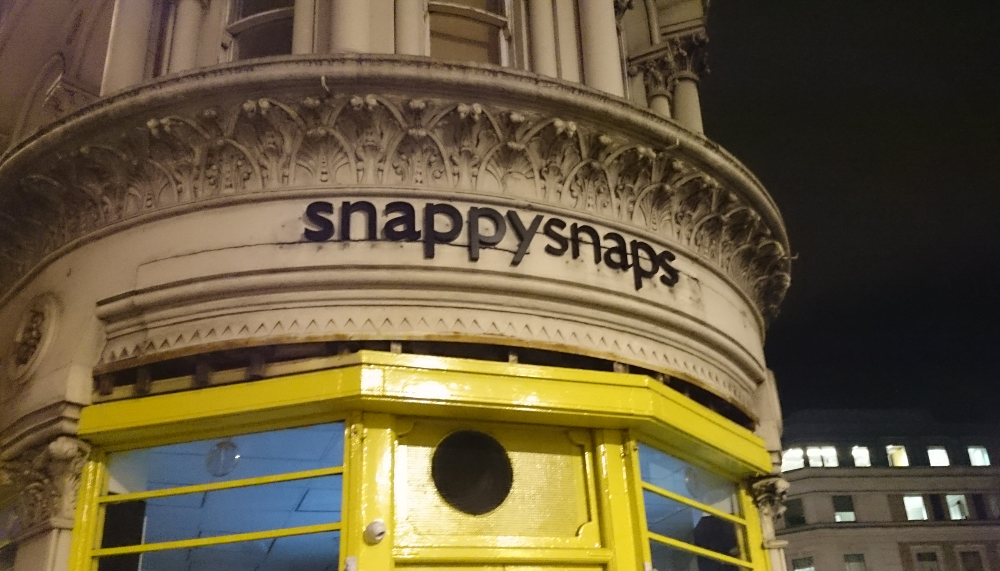
Ironically, a "snapstore" was close to the office ;-)

Ironically, a snapstore was close to the office ;-)

XdgApp and sandboxing of apps was also a big topic, aside from Ubuntu and Endless integration. Fortunately, Alexander Larsson was also there to answer all the sandboxing and XdgApp-questions. I used the time to follow up on a conversation with Alexander we started at FOSDEM this year, about the Limba vs. XdgApp bundling issue. While we are in-line on the sandboxing approach, the way how software is distributed is implemented differently in Limba and XdgApp, and it is bad to have too many bundling systems around (doesn t make for a good story where we can just tell developers ship as this bundling format, and it will be supported everywhere ). Talking with Alex about this was very nice, and I think there is a way out of the too-many-solutions dilemma, at least for Limba and XdgApp I will blog about that separately soon. On the Ubuntu side, a lot of bugs and issues were squashed and changes upstreamed to GNOME, and people were generally doing their best to reduce Richard s bus-factor on the project a little  . I mainly worked on AppStream issues, finishing up the last pieces of appstream-generator and running it against some sample package sets (and later that week against the whole Debian archive). I also started to implement support for showing AppStream issues in the Debian PTS (this work is not finished yet). I also managed to solve a few bugs in the old DEP-11 generator and prepare another release for Ubuntu. We also enjoyed some good Japanese food, and some incredibly great, but also suddenly very expensive Indian food (but that s a different story  ). The most important thing for me though was to get together with people actually using AppStream metadata in software centers and also more specialized places. This yielded some useful findings, e.g. that localized screenshots are not something weird, but actually a wanted feature of Endless for their curated AppStore. So localized screenshots will be part of the next AppStream spec. Also, there seems to be a general need to ship curation information for software centers somehow (which apps are featured? how are they styled? added special banners for some featured apps, app of the day features, etc.). This problem hasn t been solved, since it s highly implementation-specific, and AppStream should be distro-agnostic. But it is something we might be able to address in a generic way sooner or later (I need to talk to people at KDE and Elementary about it). In summary It was a great event! Going to conferences and hackfests always makes me feel like it moves projects leaps ahead, even if you do little coding. Sorting out issues together with people you see in person (rather than communicating with them via text messages or video chat), is IMHO always the most productive way to move forward (yeah, unless you do this every week, but I think you get my point  ). For me, being the only (and youngest ^^) developer at the hackfest who was not employed by any company in the FLOSS business, the hackfest was also motivating to continue to invest spare time into working on these projects. So, the only thing left to do is a huge shout out of THANK YOU to the Ubuntu Community Fund and therefore the Ubuntu community for sponsoring me! You rock! Also huge thanks to Canonical for organizing the sponsoring really quickly, so I didn t get into trouble with paying my flights.

Laney and attente walking on the Millennium Bridge after we walked the distance between Red Hat and Canonical's offices.

Laney and attente on the Millennium Bridge after we walked the distance between Red Hat and Canonical s offices.

To worried KDE people: No, I didn t leave the blue side I just generally work on cross-desktop stuff, and would like all desktops to work as well as possible

Francois Marier: Using DNSSEC and DNSCrypt in Debian

While there is real progress being made towards eliminating insecure HTTP traffic, DNS is a fundamental Internet service that still usually relies on unauthenticated cleartext. There are however a few efforts to try and fix this problem. Here is the setup I use on my Debian laptop to make use of both DNSSEC and DNSCrypt.

DNSCrypt DNSCrypt was created to enable end-users to encrypt the traffic between themselves and their chosen DNS resolver. To switch away from your ISP's default DNS resolver to a DNSCrypt resolver, simply install the dnscrypt-proxy package and then set it as the default resolver either in /etc/resolv.conf:
nameserver 127.0.2.1
if you are using a static network configuration or in /etc/dhcp/dhclient.conf:
supersede domain-name-servers 127.0.2.1;
if you rely on dynamic network configuration via DHCP. There are two things you might want to keep in mind when choosing your DNSCrypt resolver:
  • whether or not they keep any logs of the DNS traffic
  • whether or not they support DNSSEC
I have personally selected a resolver located in Iceland by setting the following in /etc/default/dnscrypt-proxy:
DNSCRYPT_PROXY_RESOLVER_NAME=ns0.dnscrypt.is

DNSSEC While DNSCrypt protects the confidentiality of our DNS queries, it doesn't give us any assurance that the results of such queries are the right ones. In order to authenticate results in that way and prevent DNS poisoning, a hierarchical cryptographic system was created: DNSSEC. In order to enable it, I have setup a local unbound DNSSEC resolver on my machine and pointed /etc/resolv.conf (or /etc/dhcp/dhclient.conf) to my unbound installation at 127.0.0.1. Then I put the following in /etc/unbound/unbound.conf.d/dnscrypt.conf:
server:
    # Remove localhost from the donotquery list
    do-not-query-localhost: no
forward-zone:
    name: "."
    forward-addr: 127.0.2.1@53
to stop unbound from resolving DNS directly and to instead go through the encrypted DNSCrypt proxy.

Reliability In my experience, unbound and dnscrypt-proxy are fairly reliable but they eventually get confused (presumably) by network changes and start returning errors. The ugly but dependable work-around I have found is to create a cronjob at /etc/cron.d/restart-dns.conf that restarts both services once a day:
0 3 * * *    root    /usr/sbin/service dnscrypt-proxy restart
1 3 * * *    root    /usr/sbin/service unbound restart

Captive portals The one remaining problem I need to solve has to do with captive portals. This can be quite annoying when travelling because it requires me to use the portal's DNS resolver in order to connect to the splash screen that unlocks the wifi connection. The dnssec-trigger package looked promising but when I tried it on my jessie laptop, it wasn't particularly reliable. My temporary work-around is to comment out this line in /etc/dhcp/dhclient.conf whenever I need to connect to such annoying wifi networks:
#supersede domain-name-servers 127.0.0.1;
If you've found a better solution to this problem, please leave a comment!

Dirk Eddelbuettel: RcppMgsPack 0.1.0

Over the last few months, I have been working casually on a new package to integrate MessagePack with R. What is MessagePack, you ask? To quote its website, "It's like JSON, but fast and small." Or in more extended terms:
MessagePack is an efficient binary serialization format. It lets you exchange data among multiple languages like JSON. But it's faster and smaller. Small integers are encoded into a single byte, and typical short strings require only one extra byte in addition to the strings themselves.
Now, serialization formats are a dime a dozen: JSON, BSON, Protocol Buffers, CaptnProto, Flatbuffer. The list goes on and on. So why another? In a nutshell: "software ecosystems". I happen to like working with Redis, and within the world of Redis, MessagePack is a first-class citizen supported by things close to the core like the embedded Lua interpreter, as well as fancy external add-ons such as the Redis Desktop Manager GUI. So nothing overly fundamentalist here, but a fairly pragmatic choice based on what happens to fit my needs. Plus, having worked on and off with Protocol Buffers for close to a decade, the chance of working with something not requiring a friggin' schema compiler seemed appealing for a chance. So far, we have been encoding a bunch of data streams at work via MessagePack into Redis (and of course back). It works really well---header-only C++11 libraries for the win. I'll provide an updated RcppRedis which uses this (if present) in due course. For now and the foreseeable future, this RcppMsgPack package will live only on the ghrr drat repository. To make RcppMsgPack work, I currently have to include the MessagePack 1.4.0 headers. A matching package for this version of the headers is in Debian but so far only in experimental. Once this hits the mainline repository I can depend on it, and upload a (lighter, smaller) RcppMsgPack to CRAN. Until then, please just do
## install drat if not present
if (!require(drat)) install.packages("drat")
## use drat to select ghrr repo
drat::addRepo("ghrr")
## install RcppMsgPack
install.packages("RcppMsgPack")
More details, issue tickets etc are at the GitHub repository.

This post by Dirk Eddelbuettel originated on his Thinking inside the box blog. Please report excessive re-aggregation in third-party for-profit settings.

25 April 2016

Antoine Beaupr : My free software activities, April 2016

Debian Long Term Support (LTS) This is my 5th month working on Debian LTS, started by Raphael Hertzog at Freexian. This is my largest month so far, in which I worked on completing the Xen and NSS packages updates from last month, but also spent a significant amount of time working on phpMyAdmin and libidn.

Updates to NSS and Xen completed This basically consisted on following up on the reviews from other security people. I basically continued building up on Brian's work and tested the package on a test server at Koumbit, which seems to have survived well the upgrade. The details are in this post to the debian-lts mailing list. As for NSS, the package was mostly complete, but I forgot to ship the tests for some reason, so I added them back. I also wrote the release team to see if it was possible to update NSS to the same version in all suites. Unfortunately, this issue is still pending, but I still hope we can find better ways of managing that package in the long term.

IDN and phpMyAdmin Most of my time this month was spent working on IDN and phpMyAdmin. Unfortunately, it turns out that someone else had worked on the libidn package. This is partly my fault: I forgot to check in the dsa-needed.txt file for assignment before working on the package. But considering how in flux the workflow currently is with the switch between the main security team and the LTS team for the wheezy maintenance, I don't feel too bad. Still, I prepared a package which was a bit more painful than it should have been because of GNUlib. I didn't even know about GNUlib before, oddly enough, and after that experience, I feel that it should just not exist at all anymore. I have filed a bug to remove that dependency at the very least, but I do not clearly see how such a tool is necessary on Debian at this point in time. But phpMyAdmin, no one had worked on that. And I understand why: even though it's a very popular package, there were quite a few outstanding issues (8!) in Wheezy, with 10-15 patches to be ported. Plus, it's ... well, PHP. And old PHP at that, with parts of it with modern autoloader classes, and other with mixed HTML and PHP content, require (and not require_once) and all sorts of nasty things you still find in the PHP universe. I nevertheless managed to produce a new Debian package for wheezy and test it on Koumbit's test servers. Hopefully, that can land into Wheezy soon.

Long term software support I am a little worried that we are, both in Jessie and Wheezy sitting in between stable releases for phpMyAdmin, something that is a recurring issue for a lot of packages in Debian stable or LTS. Sometimes, it just happens that the version that happens to be in Debian testing when it is released as stable is just not a supported release upstream. It's the case for phpMyAdmin in Jessie (4.3, whereas 4.0 and 4.4 are supported) and Wheezy (3.4, although it's unclear how long that was supported upstream). But even if the next Debian stable (Stretch), would pick a stable release upstream, there is actually no phpMyAdmin release that has a support window as long as Debian stable (roughly 3 years), let alone as long as Debian LTS (5 years). This is a similar problem with NSS: upstream is simply not supporting their product in the long term, or at least not in the terms we are used to in the Debian community (ie. only security fixes or regressions). This is, in my opinion, a real concern for the reliability and sustainability of the computing infrastructure we are creating. While some developers are of the opinion that software older than 18 months is too old, here we are shipping hardware and software in space or we have Solaris, which is supported for 16 years! Now that is a serious commitment and something we can rely on. 18 months is really, really, a tiny short time in the history of our civilization. I know computer programmers and engineers like to think of themselves in elitist terms, that they are changing the world every other year. But the truth is that things have not changed much in the last 4 decades where computing has existed, both in terms of security or functionality. Two quotes from my little quotes collection come to mind here:
Software gets slower faster than hardware gets faster. - Wirth's law The future is already here it's just not very evenly distributed. - William Gibson
Because of course, the response to my claims that computing is not really advancing is "but look! we have supercomputers in our pockets now!" Yes, of course, we do have those fancy phones and they are super-connected, but they are a threat to our fundamental rights and freedom. And those glittering advances always pale in comparison to what could be done if we wouldn't be wasting our time rewriting the same software over and over again on different, often proprietary, platforms, simply because of the megalomaniac fantasies of egoistic programmers. It would be great to build something that lasts, for a while. Software that does not need to be updated every 16 months. You'd think that something as basic as a screensaver release could survive what is basically the range of human infancy. Yet it seems we like to run mindlessly in the minefield of software development, one generation following the other without questioning the underlying assumption of infinite growth that permeates our dying civilization. I have talked about this before of course, but working with the LTS project just unnerves me so bad that I just needed to let out another rant. (For the record, I really have a lot of respect for JWZ and all the work he has done in the free software world. I frequently refer to his "no-bullshit" backup guide and use Xscreensaver daily. But I do think he was wrong in this case: asking Debian to remove Xscreensaver is just too much. The response from the maintainer was exemplary of how to handle such issues in the future. I restarted Xscreensaver after the stable update, and the message is gone, and things are still all fine. Thanks JWZ and Tormod for keeping things rolling.)

Other free software work With that in mind, I obviously didn't stop doing other computing work this month. In fact, I did a lot of work to try to generally fix the internet, that endless and not-quite-gratifying hobby so many of us are destroying our bodies to accomplish.

Build tools I have experimented a bit more with different build tools. I got worried because at some point cowbuilder got orphaned and I figured I could refresh the way I build packages for LTS. I looked into sbuild, but that ended up not bringing much improvements over my current cowbuilder setup (which I really need to document better). I was asked by the new maintainer to open a bug report to make such setups easier by guessing the basepath better, so we'll see how that goes. I did enjoy the simplicity of gitpkg and discovered cowpoke which made it about 2 times faster to build packages because I could use another server to build larger packages. I also found that gitpkg doesn't use -n by default when calling gzip, which makes it harder to reproduce tarballs when they are themselves built reproducibly, which is the case for Github tarballs (really nice of them). So I filed bug #820842 about that. It would be pretty awesome if such buildds would be available for Debian Developers to do their daily tasks. It could simply be a machine that would spin up a chroot with cowbuilder or it could even be a full, temporary VM although that would take way more resources than a simple VM with a cowbuilder setup. In the meantime, I should probably look at whalebuilder as an alternative to cowbuilder. It is a tool that supports building packages within a Docker chroot, which means that packages are built from a clean environment like pbuilder, and using COW optimisations but also without privileges or network access, which is a huge plus especially when you build untrusted packages.

Ikiwiki admonitions I have done some work to implement Moinmoin-like admonitions in Ikiwiki, something I am quite happy about since it's something I was really missing about Moinmoin. Admonitions bring a really nice way to outline certain blocks with varying severity levels and distinct styles. For example:
Admonitions are great!
This was done with a macro, but basically, since Markdown allows more or less arbitrary HTML, this can also be done with the <div> tag. I like that we don't have a new weird markup here. Yet, I still liked the sub-parser feature of MoinMoin, something that can be implemented in Ikiwiki, but it's a little more clunky. Normally, you'd probably do this with the inline macro and subpages, but it's certainly less intuitive that directly inlined content.

Ereader I got a new e-reader! I was hesitant between the Kobo Aura H20 and the Kobo Glo HD, which were the ones available at Bestbuy. So I bought both and figured I would return the other. That was a painful decision! In the end, both machines are pretty nice:
  • Aura H2O
    • Pros:
      • waterproof
      • larger screen (makes it easier to see web pages and better for the eyes)
      • naturally drawn to it
    • Cons:
      • heavier
      • larger (fits in outside pocket though)
      • port cover finicky
      • more expensive (180$) - prices may go down in future
  • Aura Glo HD
    • Pros
      • smaller (fits in inside pocket of both coats)
      • better resolution in theory (can't notice in practice)
      • cheaper (100$)
      • may be less common on the future (larger models more common? just a guess)
    • Cons
      • no SD card
      • smaller screen
      • power button in the middle
... but in the end, I ended up settling down on the Glo, mostly for the price. Heck, I saved around 100$, so for that amount, I could have gotten two machines so that if one breaks I would still have the other. I have ordered a cover for it on Deal Extreme about two weeks ago, and it still hasn't arrived. I suspect it's going to take a few more months to get there, by which point I may have changed e-reader again. Note that both e-readers needed an update to calibre, so I started working on a calibre backport (#818309) which I will complete soon. So anyways, I looked into better ways of transferring articles from the web to the e-reader, something which I do quite a bit to avoid spending too much time on the computer. Since the bookmark manager I use (Bookie) is pretty much dead, I started looking at other alternatives. And partly inspired by Framasoft's choice of Wallabag for their bookmarking service (Framabag), I started to look into that software, especially since my friend who currently runs the Bookie instance is thinking of switching to Wallabag as well. It seems the simplest way to browse articles remotely through a standard protocol is by implementing OPDS support in Wallabag. OPDS is a standard developed in part by the Internet Archive and it allows for browsing book collections and downloading them. Articles and bookmarks would then be presented as individual books that would be accessible from any OPDS-compatible device. Unfortunately, the Kobo e-readers don't support OPDS out of the box: you need to setup some OPDS-compatible reader like Koreader. And that I found nearly impossible to do: I was able to setup KSM (the "start menu", not to be confused with that KSM), but not Koreader in KSM. Besides, I do not want a separate OS running here on the tablet: I just want to start Koreader every once in a while. KSM just starts another system when you reboot the e-reader, something which is not really convenient on the Kobo. Basically, I just want to add Koreader as a tile in the home screen on the e-reader. I found the documentation on that topic to be sparse and hard to follow. It is often dispersed across multiple forum threads and involves uploading random binaries, often proprietary, to the e-reader. It had been a long time since I was asked to "register my software" frenetically, and I hadn't missed that one bit. So I decided to stay away from this until that solution and its documentation matures a bit.

Streaming re-established I have worked a bit on my home radio stream. I simply turned the Liquidsoap stream back online, and did a few tweaks to the documentation that I had built back then. All that experimenting led me to do two NMUs. One was for gmpc-plugins to fix a FTBFS (bug #807735) and to properly kill the shout streamer when completing the playback (bug #820908). The other was to fix the ezstream manpage (bug #573928), a patch that had been sitting there for 5 years! This was to try to find an easy way to stream random audio (say from a microphone) to the Icecast server, something which is surprisingly difficult, consider how basic that functionality is. I was surprised to see that Darkice just completely fails to start (bug #821040) and I had to fallback to the simplest ices2 software to stream the audio. I am still having issues with Liquidsoap: it's really unstable! As a server, I would expect it to keep running for days if not years. Unfortunately, there's always something that makes it crash. I had assertion failed (bug #821112) and I keep seeing it crash after 2-3 days fairly reliably, a bug I reported 3 years ago and that is still not fixed (bug #727307). Switching back the stream to Vorbis (because I was having problems with the commandline mp3 players and ogg123 is much more lightweight) created another set of problems too, this time with the phone. It seems that Android cannot stream Vorbis at all, something that is even worse in Cyanogenmod... I also had to tweak my MPD config to make the Android client be able to load the larger playlists (see dmix buffer is full).

Android apps So I have also done quite a bit of work again on my phone. I finally was told how to access from Termux from adb shell which is pretty cool because now I can start a screen on my phone and then, when I'm tired of tapping to type, I can just reconnect to it when I plug in a USB cable on my laptop. I sent a pull request to fix the documentation regarding that. I also tried to see how my SMS and Signal situation could be improved. Right now, I have two different apps to do SMS on my phone: I use both Signal and the VoIP.ms SMS client, because I do not have a contract or SIM card in my phone. Both work well independently, but it's somewhat annoying to have to switch between the two. (In fact, I feel that Signal itself has an issue with how it depends on the network to send encrypted messages: I often have to "ping" people in clear text (and therefore in the other app) so that they connect to their data plan to fetch my "secure" signal messages...) Anyways, I figured it would be nice if at least there would be a SMS fallback in Signal that would allow me to send regular text messages from signal through Voip.MS. That was dismissed really fast. Moxie even closed the conversation completely, something I had never experienced before, and doesn't feel exactly pleasant. The Voip.MS side was of course not impressed and basically shrugged it off because Signal was not receptive. I also tried to clear up the Libresignal confusion: there are 3 different projects named "Libresignal", and I am not sure I figured out the right thing, even though the issue is now closed and there's a FAQ that is supposed to make all that clear. Nevertheless, I opened two distinct feature requests to try to steer the conversation into a more productive direction: GCM-less calls and GCM support. But I'm not sure neither will go anywhere. In the meantime, I am using the official signal client, which I downloaded using gplaycli and which I keep up to date with Aptoide. Even though the reliability of that site is definitely questionable, it seems that once you have a trusted version, it is safe to upgrade, regardless of the source because there is a trust path between you and the developer. I also filed a few issues with varying levels of success/response from the community:

Random background radiation And then there's of course the monthly background noise of all the projects I happened to not only stumble on, but also file bugs or patches against:

Gunnar Wolf: Passover / Pesaj, a secular viewpoint, a different viewpoint... And slowly becoming history!

As many of you know (where "you" is "people reading this who actually know who I am), I come from a secular Jewish family. Although we have some religious (even very religious) relatives, neither my parents nor my grandparents were religious ever. Not that spirituality wasn't important to them My grandparents both went deep into understanding by and for themselves the different spiritual issues that came to their mind, and that's one of the traits I most remember about them while I was growing up. But formal, organized religion was never much welcome in the family; again, each of us had their own ways to concile our needs and fears with what we thought, read and understood. This week is the Jewish celebration of Passover, or Pesaj as we call it (for which Passover is a direct translation, as Pesaj refers to the act of the angel of death passing over the houses of the sons of Israel during the tenth plague in Egypt; in Spanish, the name would be Pascua, which rather refers to the ritual sacrifice of a lamb that was done in the days of the great temple)... Anyway, I like giving context to what I write, but it always takes me off the main topic I want to share. Back to my family. I am a third-generation member of the Hashomer Hatzair zionist socialist youth movement; my grandmother was among the early Hashomer Hatzair members in Poland in the 1920s, both my parents were active in the Mexico ken in the 1950s-1960s (in fact, they met and first interacted there), and I was a member from 1984 until 1996. It was also thanks to Hashomer that my wife and I met, and if my children get to have any kind of Jewish contact in their lifes, I hope it will be through Hashomer as well. Hashomer is a secular, nationalist movement. A youth movement with over a century of history might seem like a contradiction. Over the years, of course, it has changed many details, but as far as I know, the essence is still there, and I hope it will continue to be so for good: Helping shape integral people, with identification with Judaism as a nation and not as a religion; keeping our cultural traits, but interpreting them liberally, and aligned with a view towards the common good Socialism, no matter how the concept seems pass nowadays. Colectivism. Inclusion. Peaceful coexistence with our neighbours. Acceptance of the different. I could write pages on how I learnt about each of them during my years in Hashomer, how such concepts striked me as completely different as what the broader Jewish community I grew up in understood and related to them... But again, I am steering off the topic I want to pursue. Every year, we used to have a third Seder (that is, a third Passover ceremony) at Hashomer. A third one, because as tradition mandates two ceremonies to be held outside Israel, and a movement comprised of people aged between 7 and 21, having a seder competing with the familiar one would not be too successful, we held a celebration on a following day. But it would never be the same as the "formal" Pesaj: For the Seder, the Jewish tradition mandates following the Hagada The Seder always follows a predetermined order (literally, Seder means order), and the Hagad (which means both legend and a story that is spoken; you can find full Hagadot online if you want to see what rites are followed; I found a seemingly well done, modern, Hebrew and English version, a more traditional one, in Hebrew and Spanish, and Wikipedia has a description including its parts and rites) is, quite understandably, full with religious words, praises for God, and... Well, many things that are not in line with Hashomer's values. How could we be a secular movement and have a big celebration full with praises for God? How could we yearn for life in the kibbutz distance from the true agricultural meaning of the celebration? The members of Hashomer Hatzair repeatedly took on the task (or, as many would see it, the heresy) of adapting the Hagada to follow their worldview, updated it for the twentieth century, had it more palatable for our peculiarities. Yesterday, when we had our Seder, I saw my father still has together with the other, more traditional Hagadot we use two copies of the Hagad he used at Hashomer Hatzair's third Seder. And they are not only beautiful works showing what they, as very young activists thought and made solemn, but over time, they are becoming historic items by themselves (one when my parents were still young janijim, in 1956, and one when they were starting to have responsabilities and were non-formal teachers or path-showers, madrijim, in 1959). He also had a copy of the Hagad we used in the 1980s when I was at Hashomer; this last one was (sadly?) not done by us as members of Hashomer, but prepared by a larger group between Hashomer Hatzair and the Mexican friends of Israeli's associated left wing party, Mapam. This last one, I don't know which year it was prepared and published on, but I remember following it in our ceremony. So, I asked him to borrow me the three little books, almost leaflets, and scanned them to be put online. Of course, there is no formal licensing information in them, much less explicit authorship information, but they are meant to be shared So I took the liberty of uploading them to the Internet Archive, tagging them as CC-0 licensed. And if you are interested in them, flowing over and back between Spanish and Hebrew, with many beautiful texts adapted for them from various sources, illustrated by our own with the usual heroic, socialist-inspired style, and lovingly hand-reproduced using the adequate technology for their day... Here they are: I really enjoyed the time I took scanning and forming them, reading some passages, imagining ourselves and my parents as youngsters, remembering the beautiful work we did at such a great organization. I hope this brings this joy to others like it did to me. , . Once shomer, always shomer.

Ricardo Mones: Maximum number of clients reached Error: Can't open display: :0

Today it happened again: you try to open some program and nothing happens. Go to an open terminal, try again and it answers with the above message. Other days I used to reboot the session, but that's something I don't really think should be necessary.

First thought about X gone mad, but this one seems pretty well behaved:

$ lsof -p  pidof Xorg    wc -l
5

Then noticed I had a long running chromium process (a jQuery page monitoring a remote service) so tried this one as well:

$ for a in  pidof chromium ; do echo "$a " lsof -p $a   wc -l ; done
27914 5
26462 5
25350 5
24693 5
23378 5
22723 5
22165 5
21476 222
21474 1176
21443 5
21441 204
21435 546
11644 5
11626 5
11587 5
11461 5
11361 5
9833 5
9726 5

Wow, I'd bet you can guess next command ;-)

$ kill -9 21435 21441 21474 21476

This of course wiped out all chromium processes, but also fixed the problem. Suggestions for selective chromium killing welcome! But I'd better like to know why those files are not properly closed. Just relaunching chromium to write this post yields:

$ for a in  pidof chromium ; do echo "$a " lsof -p $a   wc -l ; done
11919 5
11848 222
11841 432
11815 5
11813 204
11807 398

Which looks a bit exaggerated to me :-(

Norbert Preining: G del and Daemons an excursion into literature

Explaining G del s theorems to students is a pain. Period. How can those poor creatures crank their mind around a Completeness and an Incompleteness Proof I understand that. But then, there are brave souls using G del s theorems to explain the world of demons to writers, in particular to answer the question:

You can control a Demon by knowing its True Name, but why?
goedel-glabrezu Very impressive. Found at worldbuilding.stackexchange.com, pointed to me by a good friend. I dare to full quote author Cort Ammon (nothing more is known), to preserve this masterpiece. Thanks!!!!
Use of their name forces them to be aware of the one truth they can never know. Tl/Dr: If demons seek permanent power but trust no one, they put themselves in a strange position where mathematical truisms paint them into a corner which leaves their soul small and frail holding all the strings. Use of their name suggests you might know how to tug at those strings and unravel them wholesale, from the inside out! Being a demon is tough work. If you think facing down a 4000lb Glabrezu without their name is difficult, try keeping that much muscle in shape in the gym! Never mind how many manicurists you go through keeping the claws in shape! I don t know how creative such demons truly are, but the easy route towards the perfect French tip that can withstand the rigors of going to the gym and benching ten thousand pounds is magic. Such a demon might learn a manicure spell from the nearby resident succubi. However, such spells are often temporary. No demon worth their salt is going to admit in front of a hero that they need a moment to refresh their mani before they can fight. The hero would just laugh at them. No, if a demon is going to do something, they re going to do it right, and permanently. Not just nice french tips with a clear lacquer over the top, but razor sharp claws that resharpen themselves if they are blunted and can extend or retract at will! In fact, come to think of it, why even go to the gym to maintain one s physique? Why not just cast a magic spell which permanently makes you into the glorious Hanz (or Franz) that the trainer keeps telling you is inside you, just waiting to break free. Just get the spell right once, and think of the savings you could have on gym memberships. Demons that wish to become more powerful, permanently, must be careful. If fairy tales have anything to teach is, it s that one of the most dangerous things you can do is wish for something forever, and have it granted. Forever is a very long time, and every spell has its price. The demon is going to have to make sure the price is not greater than the perks. It would be a real waste to have a manicure spell create the perfect claws, only to find that they come with a peculiar perchance to curve towards one s own heart in an attempt to free themselves from the demon that cast them. So we need proofs. We need proofs that each spell is a good idea, before we cast it. Then, once we cast it, we need proof that the spell actually worked intended. Otherwise, who knows if the next spell will layer on top perfectly or not. Mathematics to the rescue! The world of First Order Logic (FOL, or herefter simply logic ) is designed to offer these guarantees. With a few strokes of a pen, pencil, or even brush, it can write down a set of symbols which prove, without a shadow of a doubt, that not only will the spell work as intended, but that the side effects are manageable. How? So long as the demon can prove that they can cast a negation spell to undo their previous spell, the permanency can be reverted by the demon. With a few more fancy symbols, the demon can also prove that nobody else outside of the demon can undo their permanency. It s a simple thing for mathematics really. Mathematics has an amazing spell called reductio ad infinitum which does unbelievable things. However, there is a catch. There is always a catch with magic, even when that magic is being done through mathematics. In 1931, Kurt G del published his Incompleteness Theorems. These are 3 fascinating works of mathematical art which invoke the true names of First Order Logic and Set Theory. G del was able to prove that any system which is powerful enough to prove out all of algebra (1 + 1 = 2, 2 + 1 = 3, 3 * 5 = 15, etc.), could not prove its own validity. The self referential nature of proving itself crossed a line that First Order Logic simply could not return from. He proved that any system which tries must pick up one of these five traits: If the demon wants itself to be able to cancel the spell, his proof is going to have to include his own abilities, creating just the kind of self referential effects needed to invoke G del s incompleteness theorems. After a few thousand years, the demon may realize that this is folly. A fascinating solution the demon might choose is to explore the incomplete solution to G del s challenge. What if the demon permits the spell to change itself slightly, but in an unpredictable way. If the demon was a harddrive, perhaps he lets a single byte get changed by the spell in a way he cannot expect. This is actually enough to sidestep G del s work, by introducing incompleteness. However, now we have to deal with pesky laws of physic and magics. We can t just create something out of nothing, so if we re going to let the spell change a single byte of us, there must be a single byte of information, its dual, that is unleashed into the world. Trying to break such conservation laws opens up a whole can of worms. Better to let that little bit go free into the world. Well, almost. If you repeat this process a whole bunch of times, layering spells like a Matryoska doll, you re eventually left with a soul that is nothing but the leftover bits of your spells that you simply don t know enough about to use. If someone were collecting those bits and pieces, they might have the undoing of your entire self. You can t prove it, of course, but its possible that those pieces that you sent out into the world have the keys to undo your many layers of armor, and then you know they are the bits that can nullify your soul if they get there. So what do you do? You hide them. You cast your spells only on the darkest of nights, deep in a cave where no one can see you. If you need assistants, you make sure to ritualistically slaughter them all, lest one of them know your secret and whisper it to a bundle of reeds, The king has horns, if you are familiar with the old fairy tale. Make it as hard as possible for the secret to escape, and hope that it withers away to nothingness before someone discovers it, leaving you invincible. Now we come back to the name. The demon is going to have a name it uses to describe its whole self, including all of the layers of spellcraft it has acquired. This will be a great name like Abraxis, the Unbegotten Father or Satan, lord of the underworld. However, they also need to keep track of their smaller self, their soul. Failure to keep track of this might leave them open to an attack if they had missed a detail when casting their spells, and someone uncovered something to destroy them. This would be their true name, potentially something less pompous, like Gaylord Focker or Slartybartfarst. They would never use this name in company. Why draw attention to the only part of them that has the potential to be weak. So when the hero calls out for Slartybartfarst, the demon truly must pay attention. If they know the name the demon has given over the remains of their tattered soul, might they know how to undo the demon entirely? Fear would grip their inner self, like a child, having to once again consider that they might be mortal. Surely they would wish to destroy the hero that spoke the name, but any attempt runs the risk of falling into a trap and exposing a weakness (surely their mind is racing, trying to enumerate all possible weaknesses they have). It is surely better for them to play along with you, once you use their true name, until they understand you well enough to confidently destroy you without destroying themselves. So you ask for answers which are plausible. This one needs no magic at all. None of the rules are invalid in our world today. Granted finding a spell of perfect manicures might be difficult (believe me, some women have spent their whole life searching), but the rules are simply those of math. We can see this math in non-demonic parts of society as well. Consider encryption. An AES-256 key is so hard to brute force that it is currently believed it is impossible to break it without consuming 3/4 of the energy in the Milky Way Galaxy (no joke!). However, know the key, and decryption is easy. Worse, early implementations of AES took shortcuts. They actually left the signature of the path they took through the encryption in their accesses to memory. The caches on the CPU were like the reeds from the old fable. Merely observing how long it took to read data was sufficient to gather those reeds, make a flute, and play a song that unveils the encryption key (which is clearly either The king has horns or 1-2-3-4-5 depending on how secure you think your luggage combination is). Observing the true inner self of the AES encryption implementations was enough to completely dismantle them. Of course, not every implementation fell victim to this. You had to know the name of the implementation to determine which vulnerabilities it had, and how to strike at them. Or, more literally, consider the work of Alfred Whitehead, Principia Mathematica. Principia Mathematica was to be a proof that you could prove all of the truths in arithmetic using purely procedural means. In Principia Mathematica, there was no manipulation based on semantics, everything he did was based on syntax manipulating the actual symbols on the paper. G del s Incompleteness Theorem caught Principia Mathematica by the tail, proving that its own rules were sufficient to demonstrate that it could never accomplish its goals. Principia Mathematica went down as the greatest Tower of Babel of modern mathematical history. Whitehead is no longer remembered for his mathematical work. He actually left the field of mathematics shortly afterwards, and became a philosopher and peace advocate, making a new name for himself there. (by Cort Ammon)

24 April 2016

Bits from Debian: Debian welcomes its 2016 summer interns

GSoC 2016 logo Outreachy logo We're excited to announce that Debian has selected 29 interns to work with us this summer: 4 in Outreachy, and 25 in the Google Summer of Code. Here is the list of projects and the interns who will work on them: Android SDK tools in Debian: APT - dpkg communications rework: Continuous Integration for Debian-Med packages: Extending the Debian Developer Horizon: Improving and extending AppRecommender: Improving the debsources frontend: Improving voice, video and chat communication with Free Software: MIPS and MIPSEL ports improvements: Reproducible Builds for Debian and Free Software: Support for KLEE in Debile: The Google Summer of Code and Outreachy programs are possible in Debian thanks to the effort of Debian developers and contributors that dedicate part of their free time to mentor students and outreach tasks. Join us and help extend Debian! You can follow the students weekly reports on the debian-outreach mailing-list, chat with us on our IRC channel or on each project's team mailing lists. Congratulations to all of them!

Dominique Dumont: Automount usb devices with systemd

Hello Ever since udisk-glue was obsoleted with udisk (the first generation), I ve been struggling to find a solution to automatically mount a usb drive when such a device is connected to a kodi based home cinema PC. I wanted to avoid writing dedicated scripts or udev rules. Systemd is quite powerful and I thought that a simple solution should be possible using systemd configuration. Actually, auto-mount notion covers 2 scenario :
  1. A device is mounted after being plugged in
  2. An already available device is mounted when a process accesses its mount point
The first case is the one that is needed with Kodi. The second may be usefull so is also documented in this post. For the first case, add a line like the following in /etc/fstab:
/dev/sr0 /mnt/br auto defaults,noatime,auto,nofail 0 2
and reload systemd configuration:
sudo systemctl daemon-reload
The important parameters are auto and nofail : with auto , systemd mounts the filesystem as soon as the device is available. This behavior is different from sysvinit where auto is taken into account only when mount -a is run by init scripts. nofail ensures that boot does not fail when the device is not available. The second case is handled by a line like the following one (even if the line is split here to improve readability):
/dev/sr0 /mnt/br auto defaults,x-systemd.automount,\
   x-systemd.device-timeout=5,noatime,noauto 0 2
With the line above in /etc/fstab, the file system is mounted when user does (for instance) ls /mnt/br (actually, the first ls fails and triggers the mount. A second ls gives the expected result. There s probably a way to improve this behavior, but I ve not found it ) x-systemd.* parameters are documented in systemd.mount(5). Last but not least, using a plain device file (like /dev/sr0) works fine to automount optical devices. But it is difficult to predict the name of a device file created for a usb drive, so a LABEL or a UUID should be used in /etc/fstab instead of a plain device file. I.e. something like:
LABEL=my_usb_drive /mnt/my-drive auto defaults,auto,nofail 0 2
All the best
Tagged: kodi, systemd

Next.

Previous.