Search Results: "nic"

25 November 2009

Biella Coleman: Ninja Mind Tactics

Over the years far too many years I have occasionally chronicled the slow death of my mother, a death of mind, personality, really person that comes with Alzheimers. She has officially had the illness for 7 years now but had symptoms prior to this time, in the form of perceptual disturbances that are the defining feature of the rare type of Alzheimers she has, Benson s syndrome. As her illness progressed and we saw her doctors they would always ask: what other illnesses or health problems does Vera have? And I would answer none. Without fail and almost immediately, the inquiring doctor would respond back none? often with a slightly raised eyebrow, the one word uttered not to challenge the veracity of my answer, but used instead to convey another meaning, often bathed in some mixture of compassion and pity. It was an acknowledgement of the future that awaited us, basically stating with no other illness, this is going to be on heck of long and difficult haul of a life experience, which has indeed been the case. However, after nearly two years of being bed bound in a nursing home, physical health problems are now creeping in and my mother is descending into different type of hell, especially since she can no longer communicate the physical pain she might be in. The words she knows are few: no and a few other words (she likes to tell people they are loco and indeed I can only imagine how true this accusation of crazy is given that we are keeping her alive against her wishes). Her consistent and persistent wailing, agitation and crying do of course communicate the depth of suffering this being the hardest thing to bear witness to. She does have periods of calm, coaxed in part by the drugs she is given but these are not enough to override the pain she and we feel. About two months ago, her body started to give, the first problem being a fracture that led to significant internal bleeding and required a blood transfusion and a brace she is still wearing. A few weeks ago when I was visiting her, she basically developed these black and red welts on the bottom of her feet in a manner of two days, so instead of boarding a plane to NYC, I took her to the emergency room and stayed a full week while she was pumped with intravenous antibiotics. At first, doctors thought it might be gangrene, which was mortifying mostly because of all the associations that come with it. The doctors determined that it was not in fact gangrene but that she has a bone infection technically called osteomyelitis a tricky condition to treat that requires at minimum 45 days of IV antibiotics. The hospital/doctors who had originally determined she would stay there for her treatment, changed their mind unexpectedly and announced their intention to ship her to a long-term care facility, which in theory we were not opposed to, except for the fact that it is very far from where my sister lives, and also it is a facility we had not verified for ourselves. On top of it, we knew she had a legal right stay in the hospital (though some doctors informed us otherwise). We preferred the hospital because it is so close to our house, we would be able to hire someone to visit her when my sister is at work, and we suspect that she will have additional complications from 45 days of IV abx so why not stick around and receive treatment and care from the same internist who had been nothing but a great doctor. The story took a turn toward the surreal when the infectious disease doctor decided to release her to her nursing home with a treatment of oral antibiotics, even though every single doctor we saw from the emergency room doctor to the weekend internist who subs for her regular doctor, repeatedly informed us the only treatment is IV antibiotics for at least 45 days, possibly more (which is the normal treatment protocol).
Since so many people don t know how to maneuver complaints and take action in hospitals, doctors and other staff can exploit this to make medically dogdy decisions (which happened in fact when a feeding tube was put into my mom, but that is another long story I don t think I ever wrote about here). I am sure also that some doctor s are less willing to take questionable action with certain patients depending on the class and background of their family members but I bet the first impression I give off to doctors, to invoke Erving Goffman s work on self-presentation, is not someone willing to take swift action. In the hospital, I have the sense that most doctors don t take me all that seriously, probably thinking that I am 5 foot slacker/artistic type that I admittedly do look like as I dress in jeans, a hoodie and a winter cap because the hospitals are so effing, ridiculously cold in PR (and I can t help my height nor the fact that I look 24 or so). So it usually comes as a surprise when I bring out my mind ninja tactics developed over years of being and thinking like an academic, whose craft is research, whose passion is arguing, and for some of us who are politically inclined, who love the challenge of righting wrongs. So when this happened I contacted lawyer-friends, talked to the social worker and promptly complained to the head of client services/ombudsperson and made a stink but of a very particular sort: it was packaged in massive tact. I was very deferential (especially since those folks have nothing to do with the mess, they are there to help and are your allies), repeatedly pointed out how the doctor s decision amounts to medical negligence, and made it clear that I was willing to take action, leave my work if need be and get my ass down there, and casually mention how in the 5 hours between their decision and my phone calls, I have already taken action (how I have contacted lawyers on the island, etc). Needless to say, the hospital decided that my mom is staying put in the hospital and I am relieved. But this solace is only of the tiniest sort. I am still reeling from the absurdity of her condition and her suffering. She is only alive because of a feeding tube that I am opposed to, her state of being a modern day zombie that in reality, or at least from my perspective perpetuates her suffering. For this reason, truth be told and at one level relieved that her body is finally failing, that there is a chance, a light at the end of this lonely, now horrific tunnel that her life will end sooner than later. This, however, makes it no easier emotionally nor ethically as it is my mother who must journey alone through significant pain and suffering as her body now goes elsewhere a journey we can watch in person yet are powerless in its face.

Russell Coker: Computer Security and Political Censorship

I ve just been disappointed to read about the DNI (Defence in the National Interest) web site closing down [1]. The final blog post says In the meantime, I ll leave everything up unless we start having more security problems , but unfortunately they have had a number of security problems in the past. I doubt the ability of a Wordpress installation to remain unscathed on the Internet if it s not upgraded regularly. So I think it s only a matter of time before a new bad Wordpress bug is discovered and DNI goes offline for good. In the past I did idly consider volunteering to help them run their site, but apart from a lack of spare time there is the issue that a number of their policy positions are things that I strongly disagree with. I can agree with paleo-cons on a number of issues, but there are also significant areas of disagreement. So it seems that the combination of a lack of skilled system administrators and a lack of good security in their software is reducing their ability to spread their message. While the site content is going to be mirrored on other sites the URLs will break and Google will give it a lower rank. In many ways losing Google ranking is a way of being silenced. I wonder whether the apparent lack of moderate-right political expression on the Internet is partly due to that demographic having less IT skills than the groups who have centrist to left-wing political views and those who have extreme-right views. Naturally anyone can pay to have someone run their web site, but having to pay raises the barrier to entry and eliminates some of the potential contributors. I think it s a bad thing for democracy if the only people who get their voices heard are those who have significant amounts of money or technical skill. One of my hopes for the SE Linux project was that it would increase the longevity of servers while also decreasing the amount of money required to run them. But of course if you have buggy PHP code then there s not much SE Linux can do to help you.

24 November 2009

Jordi Mallach: Ten years as a Debian Maintainer

On the 24th of November of 1999, the Debian ftpmasters processed the NEW package wmbiff, which got installed in the potato distribution. This sponsored upload by Fernando S nchez was the first of my packages to hit the official Debian archive, thus officially making me a Debian maintainer. So, in short, today is my tenth anniversary as a Debian contributor! I actually started a few days before, and soon after that upload, many other ITPs and uploads followed. I will always be thankful to fer for his patience with my upload sponsoring until I became a Debian developer with full rights and was able to upload myself. During these years, I've been involved in many teams and different tasks, with my activity and dedication probably peaking around 2001 or 2002, when I apparently was doing a crazy amount of different stuff. I started doing plain packaging work of software packages, some of which also have come a long way (thanks for that, Chris!), but soon started to contribute in other Debian tasks. I think it's safe to say that the task that has ended up having more impact in the people that surround me was bootstrapping the Debian Catalan community and starting the Catalan translation of Debian's website, which soon after triggered the creation of a formal Debian Catalan translation project. I've also spent a lot of time giving back to the NM team which helped me get a Debian account through the still experimental new New Maintainer process, and the QA team helping as I could with the never ending release cycles of potato and woody. At some point I got engaged in the GNOME packaging tasks and the creation of the Debian GNOME team, and picked up the Catalan translation of GNOME 1.5.x releases, which eventually opened me the doors of Softcatal , a Catalan non-profit devoted to the promotion of the Catalan language in technology. I've believed in Debian's values since my classmate Ulisses Alonso prodded me to install Debian on my desktop back in 1997. Even if getting X up and running on bo was a real pain in the ass, knowing that the system I was running had all been written by people driven by altruism was enlightening; months later it was time to give back. Of course, I've not been able to keep my motivation or output as high as I'd like. Debian as a collective has sometimes taken some decisions which were not so easy to understand from my point of view. The outcome of the non-free votes was a bit appalling, and having debian-devel becoming more and more a battleground instead of a civilised mailing list certainly did not help at some point (unsubscribing from it made my life a lot simpler!). Joining a triathlon club, having a girlfriend and suddenly rediscovering my neglected social life didn't help either. The result is that my dedication has been wanning noticeably since 2005 or so, but I still do my best to keep up with most of duties, even if I'm aware I'm clearly neglecting a few of them. I am very proud of having been a part of an incredible project like Debian, and hope to be around for at least ten more years. Not only because I love and believe in Free Software; thanks to my involvement, I've been able to work on Debian-related jobs for all of my professional career, but above all I've been very lucky to make lots of real friends. Today's has been a nice day full of remembering and mailbox digging. Thank you, Debian!

Russell Coker: Car Drivers vs Mechanics and Free Software

In a comment on my post about Designing Unsafe Cars [1] Noel said If you don t know how to make a surgery, you don t do it. If you don t know how to drive, don t drive. And if you don t know how to use a computer, don t expect anybody fix your disasters, trojans and viruses. Later he advocates using a taxi. Now I agree about surgery apart from corner cases such as medical emergencies in remote places and large-scale disasters. I also agree that it s good to avoid driving if you aren t very good at it (that would be much better than the current fad of sub-standard drivers buying large 4WD vehicles). But I don t think that people who lack computer skills should avoid using computers. When cars were first invented everyone who owned one was either a mechanic or employed one. Driving a car often involved being well out of range of anyone else who might know how to fix it, so either the car owner or their chauffeur had to be able to fix almost any problem. As the car industry evolved the level of mechanical knowledge required to own and operate a car has steadily decreased. I expect that a significant portion of drivers don t know how to top up the oil or radiator water in their car and probably don t know what is the correct pressure for air in their tires. To a large extent I don t think this is a problem, owning a car involves regularly taking it to be serviced where professionals will (or at least should) check every aspect of the car that is likely to fail. If I used my windscreen-washer less frequently I could probably avoid opening the bonnet of the car between scheduled services! When budgeting for car ownership you just have to include regularly spending a few hundred dollars to pay for an expert to find problems and fix them with of course the occasional large expense for when something big breaks. When the computer industry matures I expect that the same practice will occur. Most people will buy computers and plan to spend small amounts of money regularly to pay people to maintain it. Currently most older people seem to plan to have a young relative take care of their PC for them essentially free mechanic services. The quality of such work will vary of course, and poorly designed OSs that are vulnerable to attack may require more support than can be provided for free. Due to deficiencies in city design it is almost essential to drive a car in most parts of the US and Australia as opposed to countries such as the Netherlands where you can survive quite well without ever driving. When a service is essential it has to be usable by people who have little skill in that area. It would be good if driving wasn t necessary, I would be happy if I never drove a car again. The need to use computers however will continue to increase. So we need to make them more available to users and to support users who can t disinfect computers etc. The only skill requirements for using a computer should be the ability to use a keyboard and a mouse! This requires a new industry in supporting PCs. Geek Squad in the US [2] seems to be the organisation that is most known for this. I expect that there will be multiple companies competing for such work in every region in the near future, just as there are currently many companies competing for the business of servicing cars. We need support for free software from such companies. Maybe existing free software companies such as Red Hat and Canonical can get into this business. One advantage of having such companies supporting software is that they would have a strong commercial incentive to avoid having it break unlike proprietary software vendors who have little incentive to do things right. The next issue is the taxi analogy. Will software as a service with Google subsidising our use of their systems [3] take over any significant part of the market? Of course the car analogy breaks down when it comes to privacy, no-one does anything remotely private in a taxi while lots of secret data is stored on a typical home computer. Google is already doing some impressive security development work which will lead towards low maintenance systems [4] as well as protecting the privacy of the users to the extent that you can trust whoever runs the servers. My parents use their computer for reading email, browsing the web, and some basic wordprocessing and spreadsheet work. The mail is on my IMAP server so all I need is to have some way to store their office documents on a server and they will pretty much have a dataless workstation. Moving their collection of photos and videos of their friends and relatives to a server will be a problem, transferring multiple gigabytes of data on a cheap Australian Internet access plan is a problem.

Lucas Nussbaum: UDS Lucid

I m back from Dallas, where I was invited at the Ubuntu Developer Summit for Lucid. I spent a great week there ; the event was extremely well organized (by organizing them every 6 months, you are probably able to gather a lot of experience!). Of course, after all I had heard about people hugging each other all the time in the Ubuntu community, I was a bit worried, especially with the flu spreading! But there are lots of fantastic people around Ubuntu, and it was a very nice opportunity to be able to meet them all. Since it was my first UDS (I was at FOSSCAMP in Prague a few years ago, but didn t stay for UDS back then), I was not really sure of what to expect. I was very pleasantly surprised. UDS vs Debconf UDS is very different from Debconf. In Debconf, we do three different kind of things: In UDS, the main focus is on the third point: most of the sessions are about discussing what will be implemented for the next release. All of the relevant developers are in the same room to discuss possible problems, and the outcome of each session is usually a detailed plan, with a list of action items. It s a very nice way to ensure that changes are well thought, and allows making large-scale changes in Ubuntu very easily (you don t spend weeks arguing about them on mailing lists). Of course, it s probably also helped by the fact that there s a company behind Ubuntu, with a set of large teams (kernel, foundations, desktop, etc), which helps transfering trust (not everybody feel like they have to participate in each discussion, even when they affect the whole distribution: the team in charge is trusted by the rest of the project). On the other hand (yeah, let s be negative for a while) it doesn t really help spreading information between Ubuntu developers: it s often a bit difficult to get the global view of what is happening inside Ubuntu, especially since lots of things are discussed on IRC. Collaboration between Debian and Ubuntu During the week, I mainly was interested on collaboration between Debian and Ubuntu. There s a strong focus on doing the right thing wrt Debian (and also other upstreams). Then, of course, Ubuntu also has an agenda, which sometimes requires moving very fast on some things, or making compromises between technical purity and pragmatism. But the willingness to have common foundations between Debian Squeeze and Ubuntu Lucid will surely benefit both distros. Quality Assurance On the QA front, I am planning to do archive rebuilds for Ubuntu as well (fixing FTBFS is an easy way to start contributing to Ubuntu or Debian, and having those bugs fixed in Lucid would benefit Debian as well, by having patches already prepared). I also had a session with the QA team, where I gave an overview of what we are doing in the Debian QA group, to discuss opportunities for collaboration. The Ubuntu QA team focuses more on testing (with automated or manual testing) and bug triaging than archive quality that part is left to the MOTUs and the release managers. (About MOTUs, I liked how what they do was described as long-tail maintenance, landscape gardening or terraforming. That gives a good idea of what it s about). Ultimate Debian Database On the Ultimate Debian Database front, I did a plenary talk to try to demonstrate how UDD could be useful to Ubuntu as well, and, with Jorge Castro, we examined some metrics of Ubuntu s giving back to Debian. I also talked with the Launchpad team to try to resolve my long standing pretty please provide an export of Ubuntu bugs, so I can easily import them in UDD! issue. Ubuntu and ARM ARM netbooks and smartbooks (mix between netbooks and smartphones) are coming, and Ubuntu is clearly very well positioned to play an important role on that market. There was a whole track about ARM support, with lots of changes that will be done for Lucid. Let s all hope that Ubuntu-powered ARM netbooks win that market, so we don t reproduce the failures of the non-ARM netbooks. Distributed Development James Westby has been working on a set of tools to be able to work on Ubuntu packaging using bzr. The point is not to store the canonical source for Ubuntu packages in bzr (well, at least it s not the plan yet), but to provide a set of branches to make it easier to merge or cherry-pick from Debian. The resulting workflow looks extremely nice, with lots of syntaxic sugar. And even better, he assured me that his code is portable to Git ;)
Using his work, merging Ubuntu-specific changes in a new version of a Debian package basically means pulling from lp:ubuntu/foopkg, merging from lp:debian/sid/foopkg, and you are done!
As a bonus, we (Debian) would get bzr branches with the history of packages (kind of bzr-powered snapshots.debian.org).
James project is not completely ready yet, but should be very soon. It s already basically usable, apparently. Conclusion Ubuntu has clearly gone a very long way since 2004. Everything looks very well organized and polished, and gives the impression of a big machine that nothing can stop. With Cloud Computing and now ARM netbooks, Ubuntu has proven to be able to adapt to the current trends and attract a lot of visibility. It is great news for Free Software, but also proposes an interesting challenge to Debian: of course, it s nice that a Debian-based distro is in that position, but will Debian manage to stay relevant, or are we just going to be the technically-pure distro without many users that serves as a package supermarket for Ubuntu?

23 November 2009

Uwe Hermann: Note to self: Missing lvm2 and cryptsetup packages lead to non-working initrd very, very soon

I recently almost died from a heart attack because after a really horrible crash (don't ask), Debian unstable on my laptop wouldn't boot anymore. The system hung at "Waiting for root filesystem...", and I was in panic mode as I feared I lost all my data (and as usual my backups were waaay too old). At first I was suspecting that something actually got erased or mangled due to the crash, either at the dm-crypt layer, or the LVM layer, or the ext3 filesystem on top of those. After various hours of messing with live CDs, cryptsetup, lvm commands (such as pvscan, pvs, vgchange, vgs, vgck) and finally fsck I still had not managed to successfully boot my laptop. I finally was able to boot by changing the initrd from initrd.img-2.6.30-2-686 to initrd.img-2.6.30-2-686.bak in the GRUB2 menu (at boot-time), at which point it was clear that something was wrong with my current initrd. A bit of debugging and some initrd comparisons revealed the cause: Both, the cryptsetup and lvm2 packages were no longer installed on my laptop, which made all update-initramfs invokations (e.g. upon kernel package updates) create initrds which did not contain the proper dm-crypt and lvm functionality support. Hence, no booting for me. I only noticed because of the crash, as I usually do not reboot the laptop very often (two or three times per year maybe). Now, as to why those packages were removed I have absolutely no idea. I did not remove them knowingly, so I suspect some dist-upgrade did it and I didn't notice (but I do carefully check which packages dist-upgrade tries to remove, usually)...

Joachim Breitner: arbtt now in Debian

The Automatic Rule Based Time Tracker that I have created some weeks ago is now available in Debian unstable, so if if you were reluctant to use it because you did not want to figure out how to compile the Haskell code, you can just do apt-get install arbtt.Although it s such a young project, it already has a fork: Andreas Kl ckner was very impatient with a feature request (sensible merging of logs from different hosts), so we went ahead and re-implemented arbtt in python, named whatup. Although I prefer contributions to arbtt, it shows that the principle of arbtt is useful. And I won t be shy to copy nice ideas from him, as well :-)

Simon McVittie: RC Bugs of W47

I've been intermittently prodding at the Debian release-critical bug list for some time, but inspired by Zack and Tim I've decided to start keeping track, if only for my own interest. In general I've been trying to avoid resurrecting packages that I don't think should be in the archive, even if the fix is trivial. I'm not sure whether that applies to spider; according to popcon, it still has a substantial number of users, so it may be worth keeping even if there are no upstream releases (also, it amused me to convert such an old package to Debhelper 7 and dpkg source format v3). In the process I've discovered that git-buildpackage makes a great NMU tool. I'll probably be putting all future NMU diffs in my users/smcv directory on git.debian.org (at least until the maintainer acknowledges or rejects the NMU), just because it's a convenient way to give the maintainer a nice queue of individual changes rather than a monolithic diff; if any maintainers decide they'll use git as a result, that's a bonus :-)

Martín Ferrari: Movies

Just wanted to share comments on some movies I've watched recently. Tags: Planet Lugfi, Planet Debian

22 November 2009

Joey Hess: building a day

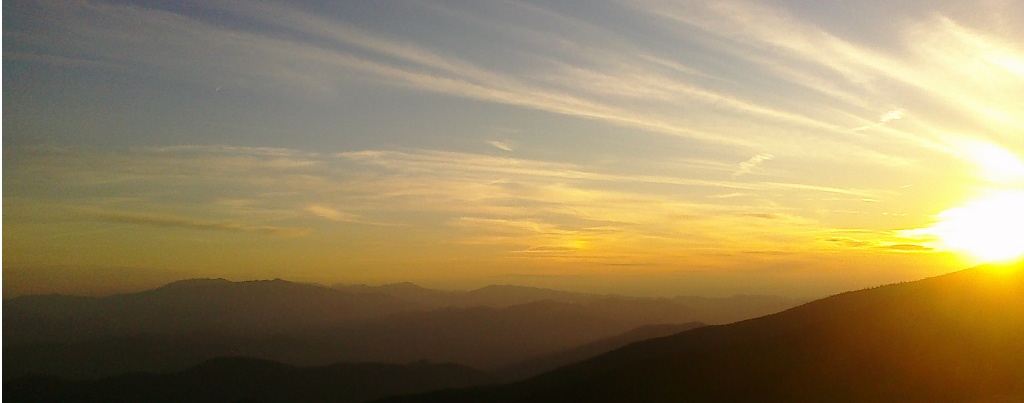
The difficulty with living on the Joey sleep schedule as the year wanes is finding enough daylight to have a satisfying day. The plan was to hike in the mountains, but my inbox said otherwise. Ugly new debhelper bugs. Looking at the hard one, I felt as if someone from 30 years ago was trying to take my day away. Why does make(1) not provide a way to discover which targets exist in a makefile? My hack to workaround that historical oversight was breaking, and make was nearly fork-bombing the system in the process. This seemed likely to eat my weekend -- I was very glad to find a quick, ugly workaround. By then it was 2:00. I'd not get to the mountain pass til after 3:00, which was pushing it. Almost stayed home, but it was such a nice sunny day, perfect weather. So I headed out. Spent half an hour along the way talking with an old woman about a well (long story), but reached the Roan with nearly two hours of daylight. And it was sublime. I realized I'd never stayed up there for sunset, so I hunkered down on a rock, finished checking my email (left over from the earlier hurry), and then spent half an hour chatting on the phone with my dad, as the sun inched down a finger at a time. When it went behind the other peak, and mist crept up the valleys below, it got cold and I hurried down. Reached the car in deep dusk, and coasted down the mountian while listening to a BBS nostalgia piece on the radio. On the way home, pulled in at the Ridgewood BBQ, and am sitting on the porch in the cold with about 50 other people, waiting for a seat (hopefully before it closes), and blogging. I accomplished everything I wanted to today, including getting something significant done, hiking, and spending quiet time on top of the world. Though only just, and feeling I was running late the whole time. Nice thing about the Joey schedule though, is I will have seven more hours of quiet time before sleep.
21 November 2009

Sandro Tosi: Goodbye MIA team

I can't simply put up any longer with all the shit thrown on the face being unable to do punish such bad behavior. There are just so many other things that increase my anger (like, for example, "WTH is python2.6 still not in unstable?!") that I don't need another one.

For sure, I don't advocate or encourage anyone to join the MIA team, and I'm speaking with a lot of experience... There is a proposal, from zack, to restructure how MIA works (another bright example of collaboration...): when will it be implemented? nobody knows. will it help? I don't think so (much).

My work (MIA work in general) was almost invisible, like invisible were all the harsh and aggressive replies I got. The nice part is that those replies came from people with the worst situation. Something like:
and several other non-sense replies doesn't leave anything but a huge frustration in you.

And when you got really pissed off, and want to see some sort of reaction on such bad and unmotivated attacks and ask the "People with Powers", what do you got? "sorry, we can't do anything to help you, it's your problem". Something should be done to protect people from fuckheads, make them behave, or else kick them out of the project as far away as we can. But what we got is nothing (and nothing seems to be changing on this side).

Well, now it's not my problem anymore, it's someone else: in perfect Debian-style.

20 November 2009

Antti-Juhani Kaijanaho: Socialized vaccination a narrative

Such was the scene I arrived at on Wednesday last week at the municipal health center at Kyll , Jyv skyl , Finland. A queue extended a hundred meters beyond the door. It was not hard to guess what it was about, as it had been announced that the pandemic influenza A/H1N1 vaccine would be administered there to people in specific risk groups from 10 am to 3:30 pm. I should explain here the Finnish health care setup. There are three parallel systems a comprehensive public health care system maintained by the municipalities to standards set by the state, a network of private for-profit health care providers, and a national foundation dedicated to university student health care. Employers are required by law to provide a minimal level of health care to their employees, and most of them also provide, free of charge to the employees, access to near-comprehensive general-practice-level care; most employers buy this service from the for-profit providers. The public system suffers from resource starvation at the general-practice level but provides excellent care in the central hospitals that handle the difficult cases. Anyway, the H1N1 vaccine is only available through the public system and through the foundation free of charge if you qualify for the vaccine, and no amount of money buys it for you in this country if you don t. Thus, I and many others, normally cared by the employee services, found ourselves queuing up at a public health care institute. And clearly, the public health care system was overwhelmed on that first day. When I entered the queue, its tail was a traffic hazard. Fortunately, the queue moved faster than new people arrived thereafter, and the hazard ended. The queue moved surprisingly fast it took me one hour to advance the 100 meters to the door. Even so, this was a failure in the system there is no good reason to have people with underlying illnesses (and we all had them, to qualify for the vaccine) stand around in freezing cold weather for an hour! Once, a nurse came and asked us if any of us was 63 years old or older. Apparently no-one was, since no-one was asked to leave (they will be vaccinated later). Later, another nurse asked everyone in the queue outside to show their KELA cards KELA is the national health insurance system, and its card carries information about extra coverage one qualifies for due to underlying illnesses. Eventually, I reached the door. Two guards stopped anyone who tried to enter directly, sidestepping the queue, and let in only those who had legitimate business other than vaccination. The main hall was full of people, and I quickly realized that the queue took a full circle inside the hall to reach the multiplexing point. It took me another hour to slowly advance my way though the hall. At the multiplexing point, I was asked to wait a bit, and then I was assigned a vaccination room and a waiting number. Some twenty minutes later I was called in. The vaccination room I was assigned to was a nurse s office. Two nurses were there, one who would administer the vaccine, and another at the computer, to keep a record. I gave them my KELA card, and shed my coat and my outer shirt, and bared my left shoulder. I was quickly given the pandemic vaccine; there was no question I was qualified for it, not with my obesity being obvious. Then they asked what my diagnosis was. Prmarily I m here because of my obesity, I said. But I also have paroxysmal atrial fibrillation. That s not what your KELA card says, accused the nurse at the computer. The diagnosis is so new, I countered. There has been no time to do the paperwork for KELA. (And indeed, I later learned, it would come up in my next checkup in the spring.) They stared at each other. I can show you my prescriptions, I said, making no move for them. Stares. I stared back. Do you want the seasonal vaccine or not? asked the nurse with the injectors. I lauged briefly. I might as well. It had, honestly, never crossed my mind that I might qualify. She injected me on my right shoulder. You should stay in out there for ten minutes. I picked up my clothes and found the cafeteria with coffee and pastry. Then the real fun started. Next day, I woke with horrible upper back pain. The thermometer showed mild fever; but since i didn t have any respiratory symptoms, I decided to go to work. In the evening, turning in bed was excruciatingly painful. It took days for the pain to subside. I left the building three hours after I arrived at the end of the queue. What? You think that s excessive? So do I and many others; queuing feels so Soviet Union! But honestly, while it did take time, it worked. I am vaccinated; are you?

Gunnar Wolf: EDUSOL almost over - Some highlights

Whew! Is it karma or what? What makes me get involved in two horribly complex, two-week-long conferences, year after year? Of course, both (DebConf and EDUSOL) are great fun to be part of, and both have greatly influenced both my skills and interests. Anyway, this is the fifth year we hold EDUSOL. Tomorrow we will bring the two weeks of activities to an end, hold the last two videoconferences, and finally declare it a done deal. I must anticipate the facts and call it a success, as it clearly will be recognized as such. One of the most visible although we insist, not the core activities of the Encounter are the videoconferences. They are certainly among the most complex. And the videoconferences' value is greatly enhanced because, even if they are naturally a synchronous activity (it takes place at a given point in time), they live on after they are held: I do my best effort to publish them as soon as possible (less than one day off), and they are posted to their node, from where comments can continue. This was the reason, i.e., why we decided to move at the last minute tomorrow's conference: Due to a misunderstanding, Beatriz Busaniche (a good friend of ours and a very reknown Argentinian Free Software promotor, from Via Libre) thought her talk would be held today, and we had programmed her for tomorrow. No worries - We held it today, and it is already online for whoever wants to take part :-) So, I don't want to hold this any longer (I will link to the two conferences that I'm still missing from this same entry). Here is the list of (and links to) videoconferences we have held.

Tuesday 2009-11-17
Wednesday 2009-11-18
Thursday 2009-11-19
Friday 2009-11-20
As two last notes: Regarding the IRC interaction photos I recently talked about, we did a very kewl thing: Take over 2000 consecutive photos and put them together on a stack. Flip them one at a time. What do you get? But of course A very fun to view and interesting interaction video! We have to hand-update it and it is a bit old right now, but nevertheless, it is very interesting as it is. Finally... I must publicly say I can be quite an asshole. And yes, I know I talked this over privately with the affected people and they hold no grudge against me... But still - yesterday we had an IRC talk about NING Latin American Moodlers, by Luc a Osuna (Venezuela) and Maryel Mendiola (Mexico). One of the points they raised was they were working towards (and promoting) a Moodle certification. And... Yes, I recognize I cannot hear the mention of the certification word without jumping and saying certifications are overrated. Well, but being tired, and not being really thoughtful... I should have known where to stop, where it was enough of a point made. I ended up making Maryel and Luc a feel attacked during their own presentation, and that should have never happened. A public and heartfelt apology to them :-(

Clint Adams: Ripped from the BTSlines

[The following story is fictional and does not depict any actual person or event, just like in Law & Order.] James filed an RC bug on a package, complaining that it attempted to execute an illegal instruction on a Netwinder, running Linux 2.6.xx. This was sort of an ironic hipster tribute to the olden times when buildd admins would actually do their jobs, keeping chroots clean and current, reviewing buildd logs, and filing FTBFS bugs where appropriate, except that he didn't actually do any of those things. 18 minutes later, Aurelien replied, asking for more information in order to debug the problem. Teh-oh said James, but nobody could hear him because he was talking to his Raggedy Ann doll. Stephen suggested that Aurelien contact Vince or Steve to get access to different Netwinders, and Aurelien tried to reproduce the problem on other ARM machines unsuccessfully. Could you tell me the exact kernel version on this Netwinder, and the one on europa, which seems to have the same problem? Aurelien asked James. Aaagh, they're trying to steal my precious bodily fluids! hissed James, but nobody could hear him because he was talking to his inflatable astronut. Also, the contents of /proc/cpuinfo would be nice. Aurelien added. We hates them, Clive Oven! James announced, but nobody could hear him because he was talking to his EASY-BAKE REAL MEAL Oven. The Netwinder you were talking about is europa, wasn't it? Could you tell us the kernel versions on europa and elara? There's no problem on other Netwinders, so it's probably a kernel issue. THE MARTIANS ARE COMING! James cried, but nobody could hear him because he was talking to a small band of subservient deaf-mute milkmen. It's been more than a week since this bug has been filed, and there has been no useful information provided at all. Can anybody help? asked Peter. HELLO. IS THIS THING ON? Could you have the elementary courtesy to follow up to the bugs you report? asked Pierre. Bromeliads.. I'll buy you some bromeliads, James muttered, but no one could hear him because he was talking to his ficus plant. Lo c looked around, slipped into a cave, sprinted through a maze of tunnels, and sped in a small nuclear-powered submarine to James's secret undersea lair. Rapping on the bulkhead three times, he uttered the code phrase and James let him in. After a conversation that took place strictly through pantomime, Lo c departed and James said, For fuck's sake, but no one could hear him because he was talking to a broken sonar antenna. Yo, James is busy, but he said that it's okay to downgrade the bug since it's not a problem with other Netwinders, reported Lo c. I never said that! I don't even know who that guy is! I'm going to convert him into a kangaroo! James sang, but no one could hear him since he was alone on a beach in Normandy. A month later, Riku wrote to Woody, Hey, we have this bug. Could you take a look? Sure, replied Woody, and he gave Aurelien access, and Aurelien debugged the problem in under an hour. Now everyone knows that europa and elara were running Linux 2.6.11. This is a breach of national security! declared James, but nobody could hear him because he was talking to the crushed skull of a kitten who had recently been sunning himself.

Ian Wienand: Go L4!

By now everybody has now heard about Go, Google's expressive, concurrent, garbage collecting language. One big, glaring thing stuck out at me when I was reading the documentation:
Do not communicate by sharing memory; instead, share memory by communicating.
One of the examples given is a semaphore using a channel, which I'll copy here for posterity.
var sem = make(chan int, MaxOutstanding)
func handle(r *Request)  
    sem <- 1;    // Wait for active queue to drain.
    process(r);  // May take a long time.
    <-sem;       // Done; enable next request to run.
 
func Serve(queue chan *Request)  
    for  
        req := <-queue;
        go handle(req);  // Don't wait for handle to finish.
     
 
Here is a little illustration of that in operation. Semaphores with Google Go Serve creates goroutines via the go keyword; each of which tries to get a slot in the channel. In the example there are only 3 slots, so it acts like a semaphore of count 3. When done, each thread returns its slot to the channel, which allows anyone blocked to be woken and continued. This instantly reminded me of the very first thing you need to do if you ever want to pass Advanced Operating Systems -- write a semaphore server to provide synchronisation within your OS. In L4, threads communicate with each other via inter-process communication (IPC). IPC messages have a fixed format - you specify a target thread, bundle some data into the available slots in the IPC format and fire it off. By default you block waiting for a reply -- this all happens within a single call for efficiency. On the other side, you can write servers who are listening for remote IPC connections, where everything happens in reverse. Here's another illustration the of the trivial semaphore server concept Shehjar and I implemented. L4 semaphore server example Look familiar? Instead of a blocking push of a number into a slot into a channel, you make a blocking IPC call to a remote server. My point here is that both take the approach of sharing memory via communication. When using IPC, you bundle up all your information into the available slots in the IPC message and send it. When using a channel, you bundle your information into an entry in the channel and call your goroutine. Receiving the IPC is the same as draining a channel - both result in you getting the information that was bundled into it by the caller.
IPCGo
Start threadStart goroutine
New thread blocks listening for IPC messageGoroutine blocks draining empty channel
Bundle information into IPC messageBundle data into type of your channel
Send IPC to new threadPush data into channel
Remote thread unbundles IPCgoroutine drains channel and gets data
Whenever you mention the word "microkernel", people go off the deep-end and one thing they seem to forget about is the inherent advantages of sharing state only via communication. As soon as you do that, you've broken open an amazing new tool for concurrency, which is now implicitly implied. By communicating via messages/channels rather than shared global state, it doesn't matter where you run! One of those threads in the example could be running on another computer in your cloud, marshalling up it's IPC messages/channel entries and sending them over TCP/IP -- nobody would care! At any rate, do not communicate by sharing memory; instead, share memory by communicating is certainly an idea whose time has come.

19 November 2009

Bdale Garbee: TeleMetrum Progress

Keith and I have been pretty quiet about TeleMetrum for a while... but that doesn't mean we've been idle! In recent weeks, I've built up several more flight units and two more ground station boards, as noted in my production log. We're both trusting rockets solely to our boards and Keith's firmware at this point. In fact, we've accumulated a significant number of succesful flights, including a cool drag-race between 4" airframes at NCR Oktoberfest where we both put brand-new, nearly identical rockets fully at risk flying only TeleMetrum boards, and a flight by Keith the same weekend on a full-K Loki K350W moon-burner in which he set a new personal altitude record! I've also flown a board with 100-g accelerometer installed successfully in a flight that peaked at 52.8 g! We're now hard at work on a "next version" of the hardware, incorporating everything we've learned so far. There are a number of significant changes planned: To make all this fit, I'm stretching the board an extra 1/4 inch to a total outline of 1 by 2.75 inches. We're also moving all the connectors, the GPS patch antenna, and the beeper to the "back side" of the PC board. This is a win on several levels... it will allow us to have silk-screen labels for the connectors, will help protect the baro sensor from sunlight and the various surface mount parts from physical damage during rocket prep, and opens up more board surface area for component placement and routing on the "top side" of the board. In practice, this means that boards will be mounted on standoffs with all the active components facing "down" and the connectors facing "up." Before we'll be ready to build some of these, we need to get in some more flights to test the various changes we're making. In particular, the change in ejection charge circuit, and the GPS receiver chip and antenna choices we're now favoring. Unfortunately, Keith and I are now both into the time of year where launch opportunities come less frequently, even before we consider the weather. Meanwhile, Keith's firmware and ground station software are now doing nearly everything we've envisioned wanting from this project. It seems entirely likely that he'll be ready to declare "version 1.0" soon after we obtain and verify the functionality of our next version of the hardware... In the meantime, our friends at Woot have posted a really funny video combining material from a couple launches this summer of my 10-inch Goblin, on one of which we flew some of their screaming flying monkey dolls... Enjoy!

Erich Schubert: If you are in Bavaria, sign up for the smoking ban vote!

Starting 01/01/2008, Bavaria had introduced a quite hard smoking ban, which also included bars and restaurants. It however contained a backdoor by excluding non-public locations, which led to the creation of 'smoker clubs' where you had to become a member to be admitted. At some point, most clubs were of this kind.In August 2009, however, the law was changed to exclude beer tents (Oktoberfest ...) and small bars. Many people belive that this was to get votes on the elections in september 2009 (which ended up in a minus of 6-7% compared to the previous election and a historical low for the biggest party).This caused several organizations to call for a public vote on restoring the smoking ban to the 2008 state (without the 'smokers club' backdoor). In order to force a public vote on a law (without the governments support!), we need 10% of the voters to register as supporters for the vote. You have to register at your registered home town. For Bavaria, this means about 940.000 supporters.If you are registered voter in Bavaria, please drop by your municipality and sign up. You need an ID and 5 Minutes, that's all. 940.000 supporters is an incredible lot of people to get to the offices, take along your friends!When we get enough supporters, the Bavarian government has two options: accepting the changes as proposed (and thus making the initative obsolete), or conducting a public vote on it, offering an alternative (e.g. the current law, no change) and have the voters decide (which is quite expensive, so if many many people sign up, they might save that money and just pass the proposed change themselves).For more information (german only), check the Nichtraucherschutz Bayern Website, including the sign up office locations.P.S. In other European countries, the introduction of a strong smoking ban has led to a 10-15% decrease in heart attacks (20% for non-smokers). The german constitutional court has also already ruled that the protection of non-smokers and employees from passive smoke weights stronger than the individual's freedom to smoke in enclosed spaces.

Josselin Mouette: Why python2.6 is still not in unstable

Getting python2.6 as the default ASAP is currently the #1 priority for the Python modules team. I also consider it very important and tried to help with it, but it is starting to get depressing. The plan is to fix all packages in unstable to be compatible with python2.6 first. This would be easy if there hadn t been a very badly planned change in the installation paths that came together. Because of it, quite a number of packages have to be fixed. Two months ago, I filed a lot of bugs in that order. I missed a number of issues, but overall, almost all packages have been fixed, thanks to Kumar Appaiah, Bastian Venthur and everyone else who sent patches and NMUs. One of the biggest issues, though, comes from python-central. Since it doesn t handle some of the new paths that were introduced (which is somehow ironic, since the python-central maintainer, Matthias Klose, is also the python maintainer who did this change), a large number of packages FTBFS when built against python2.6. In Ubuntu, it turned out to be a giant mess, most packages using python-central needing changes, and we wanted to avoid that. This is why Piotr O arowski sent a NMU for python-central that fixes these issues for good. Guess what happened? Matthias Klose uploaded a new version that does not include the python2.6 fixes, completely discarding the work that has been done. And of course, making the upload of python2.6 to unstable, which was ready to be done in a few days, impossible. I think it s fine if Ubuntu maintainers don t have the time to handle their packages in Debian. But it is clearly not acceptable to hold back development in Debian, nor to treat it as a garbage dumpster where you can send all the crappy software solutions that were badly designed in Ubuntu to duplicate them in Debian. This is what Matthias has been doing for several years. For how long are we going to tolerate such behavior? For how long will we leave such a critical package in the hands of a single person with no interest in Debian?

18 November 2009

Jan Wagner: dkms rocks or how to get the Intel 82576 GBit NIC running on Lenny

We ordered a couple of the new HP DL160 G6, cause they can be equipped with a lot of RAM. Unfortunately it s always the same with HP and the bandnew ProLiant 100 series the driver for the NICs is missing/too old in the latest stable debian release. The DL160 G6 is shipped with a Intel 82576 GBit NIC, which isn t recognized by Lenny, see also #522922.
I installed the system with another NIC installed (not really, but this is a way it works :) and wanted to get free the PCI-X slot again. So I did backport dkms and downloaded the latest igb driver. A short look into /usr/share/doc/dkms/HOWTO.Debian did advice me the way to create the DKMS driver package. Just after a couple of minutes I did roll out the igb-dkms_2.0.6_all.deb to the target maschine(s).
On the target systems I just installed dkms, the DKMS package and appropriate linux-headers and sim, salabim there was the interfaces. :)

17 November 2009

Torsten Werner: dak dominate will dodadoda the Debian archive soon


This blog post is about fixing the bug #246992: 'arch all package available before arch any dependancy'. What does that mean: we will keep multiple versions of arch all and source packages per suite as long as older arch 'any' package are still available because maybe newer versions haven't been built by the buildds yet. That means that packages from the unstable suite will always be installable in the future.

The old code in make_suite_file_list.py has been replaced by generate_filelist.py and dominate.py. The first one is generating the file lists for apt-ftparchive and the second one removes obsolete packages from the database. The code in make_suite_file_list.py has been written by people that are no longer members of the ftpteam. Its main control function has a nice name: do_da_do_da(). The new script dominate.py still ships with a small function doDaDoDa() as a reminiscence to our forefathers.

My code has been merged into dak and will be activated on ftp-master.debian.org soon. It can't re-add packages that have already been removed in the past but is will make the archive more friendly in the future. Unfortunately it will leave more cruft in the archive that cannot be cleaned fully automatically. We will need your help to find such corner cases. Please report any errors in the archive as a bug report against the virtual package 'ftp.debian.org'.

More information about the topic can be found in ftpteam's wiki.

Next.

Previous.
