Search Results: "ina"

28 July 2012

Vincent Bernat: Switching to the awesome window manager

I have happily used FVWM as my window manager for more than 10 years. However, I recently got tired of manually arranging windows and using the mouse so much. A window manager is one of the handful pieces of software getting in your way at every moment which explains why there are so many of them and why we might put so much time in it. I decided to try a tiling window manager. While i3 seemed pretty hot and powerful (watch the screencast!), I really wanted something configurable and extensible with some language. So far, the common choices are: I chose awesome, despite the fact that StumpWM vote for Lisp seemed a better fit (but it is more minimalist). I hope there is some parallel universe where I enjoy StumpWM. Visually, here is what I got so far: awesome dual screen setup

Awesome configuration Without a configuration file, awesome does nothing. It does not come with any hard-coded behavior: everything needs to be configured through its Lua configuration file. Of course, a default one is provided but you can also start from scratch. If you like to control your window manager, this is somewhat wonderful. awesome is well documented. The wiki provides a FAQ, a good introduction and the API reference is concise enough to be read from the top to the bottom. Knowing Lua is not mandatory since it is quite easy to dive into such a language. I have posted my configuration on GitHub. It should not be used as is but some snippets may be worth to be stolen and adapted into your own configuration. The following sections put light on some notable points.

Keybindings Ten years ago was the epoch of scavanger hunts to recover IBM Model M keyboards from waste containers. They were great to type on and they did not feature the infamous Windows keys. Nowadays, this is harder to get such a keyboard. All my keyboards now have Windows keys. This is a major change with respect to configure a window manager: the left Windows key is mapped to Mod4 and is usually unused by most applications and can therefore be dedicated to the window manager. The main problem with the ability to define many keybindings is to remember the less frequently used one. I have monkey-patched awful.key module to be able to attach a documentation string to a keybinding. I have documented the whole process on the awesome wiki. awesome online help

Quake console A Quake console is a drop-down terminal which can be toggled with some key. I was heavily relying on it in FVWM. I think this is still a useful addition to any awesome configuration. There are several possible solutions documented in the awesome wiki. I have added my own1 which works great for me. Quake console

XRandR XRandR is an extension which allows to dynamically reconfigure outputs: you plug an external screen to your laptop and you issue some command to enable it:
$ xrandr --output VGA-1 --auto --left-of LVDS-1
awesome detects the change and will restart automatically. Laptops usually come with a special key to enable/disable an external screen. Nowadays, this key does nothing unless configured appropriately. Out of the box, it is mapped to XF86Display symbol. I have associated this key to a function that will cycle through possible configurations depending on the plugged screens. For example, if I plug an external screen to my laptop, I can cycle through the following configurations:
  • only the internal screen,
  • only the external screen,
  • internal screen on the left, external screen on the right,
  • external screen on the left, internal screen on the right,
  • no change.
The proposed configuration is displayed using naughty, the notification system integrated in awesome. Notification of screen reconfiguration

Widgets I was previously using Conky to display various system-related information, like free space, CPU usage and network usage. awesome comes with widgets that can fit the same use. I am relying on vicious, a contributed widget manager, to manage most of them. It allows one to attach a function whose task is to fetch values to be displayed. This is quite powerful. Here is an example with a volume widget:
local volwidget = widget(  type = "textbox"  )
vicious.register(volwidget, vicious.widgets.volume,
         '<span font="Terminus 8">$2 $1%</span>',
        2, "Master")
volwidget:buttons(awful.util.table.join(
             awful.button(   , 1, volume.mixer),
             awful.button(   , 3, volume.toggle),
             awful.button(   , 4, volume.increase),
             awful.button(   , 5, volume.decrease)))
You can also use a function to format the text as you wish. For example, you can display a value in red if it is too low. Have a look at my battery widget for an example. Various widgets

Miscellaneous While I was working on my awesome configuration, I also changed some other desktop-related bits.

Keyboard configuration I happen to setup all my keyboards to use the QWERTY layout. I use a compose key to input special characters like . I have also recently use Caps Lock as a Control key. All this is perfectly supported since ages by X11 I am also mapping the Pause key to XF86ScreenSaver key symbol which will in turn be bound to a function that will trigger xautolock to lock the screen. Thanks to a great article about extending the X keyboard map with xkb, I discovered that X was able to switch from one layout to another using groups2. I finally opted for this simple configuration:
$ setxkbmap us,fr '' compose:rwin ctrl:nocaps grp:rctrl_rshift_toggle
$ xmodmap -e 'keysym Pause = XF86ScreenSaver'
I switch from us to fr by pressing both left Control and left Shift keys.

Getting rid of most GNOME stuff Less than one year ago, to take a step forward to the future, I started to heavily rely on some GNOME components like GNOME Display Manager, GNOME Power Manager, the screen saver, gnome-session, gnome-settings-daemon and others. I had numerous problems when I tried to setup everything without pulling the whole GNOME stack. At each GNOME update, something was broken: the screensaver didn t start automatically anymore until a full session restart or some keybindings were randomly hijacked by gnome-settings-daemon. Therefore, I have decided to get rid of most of those components. I have replaced GNOME Power Manager with system-level tools like sleepd and the PM utilities. I replaced the GNOME screensaver with i3lock and xautolock. GDM has been replaced by SLiM which now features ConsoleKit support3. I use ~/.gtkrc-2.0 and ~/.config/gtk-3.0/settings.ini to configure GTK+. The future will wait.

Terminal color scheme I am using rxvt-unicode as my terminal with a black background (and some light transparency). The default color scheme is suboptimal on the readability front. Sharing terminal color schemes seems a popular activity. I finally opted for the derp color scheme which brings a major improvement over the default configuration. Comparison of terminal color schemes I have also switched to Xft for font rendering using DejaVu Sans Mono as my default font (instead of fixed) with the following configuration in ~/.Xresources:
Xft.antialias: true
Xft.hinting: true
Xft.hintstyle: hintlight
Xft.rgba: rgb
URxvt.font: xft:DejaVu Sans Mono-8
URxvt.letterSpace: -1
The result is less crisp but seems a bit more readable. I may switch back in the future. Comparison of terminal fonts

Next steps My reliance to the mouse has been greatly reduced. However, I still need it for casual browsing. I am looking at luakit a WebKit-based browser extensible with Lua for this purpose.

  1. The console gets its own unique name. This allows awesome to reliably detect when it is spawned, even on restart. It is how the Quake console works in the mod of FVWM I was using.
  2. However, the layout is global, not per-window. If you are interested by a per-window layout, take a look at kbdd.
  3. Nowadays, you cannot really survive without ConsoleKit. Many PolicyKit policies do not rely on groups any more to grant access to your devices.

Jon Dowland: books

I'm forty pages into a battered copy of "Complicity" by Iain Banks. I picked this copy up for the princely sum of 90p at Barter Books last weekend. For the uninitiated, Barter Books is a grand old bookshop situated in a disused train station in Alnwick, Northumberland. It has the dubious pleasure of being the originator of the "keep calm and carry on" fad. At the time that I bought it, I wasn't sure whether it was already in my swollen reading pile, but 90p wasn't a great loss if so. I could leave it in the book pile at my next hotel. (it was, and that's a sorry indictment of the state of my reading pile.) This gnarled paperback has character. There's a faded price sticker on the back revealing a first-hand price in Australian Dollars. The book started its post-sale life on the other side of the world. Where else has it been? I take some small pleasure in planning the next step in its future. To imagine this book with a long tail of readers having a free market value of 90p, or roughly the price of a posh chocolate bar, I'm struck by both wondering how publishers and writers like Mr Banks make a living (and yet they do) but also how the pricing of ebooks, completely lacking in this character I've written about and non-transferable, seems over inflated to the end user. I've been struggling to short list a selection of books to take on holiday. Most of my friends have responded "buy a kindle", with a complete lack of sympathy for my predicament. I'm borrowing one which means I can finally find out whether I'll "take" to it. I'm concerned I'll not be able to get sucked into a story in the same way I can with a paper book. I certainly won't rely on just the kindle for my reading needs. I don't want to prejudge my experiment too much but I suspect I won't be convinced. Where I can see technology supporting my reading is in addition to the paper book: particularly for non fiction, technical books, academic papers, more graphical-oriented things (photo books, graphic novels). I do have a small but growing collection of old, rare-in-print texts that I've only been able to source as PDFs. I think something like the Google Nexus 7 would do the job for these and fit into my life more readily than the kindle.

Alberto Garc a: GUADEC 2012

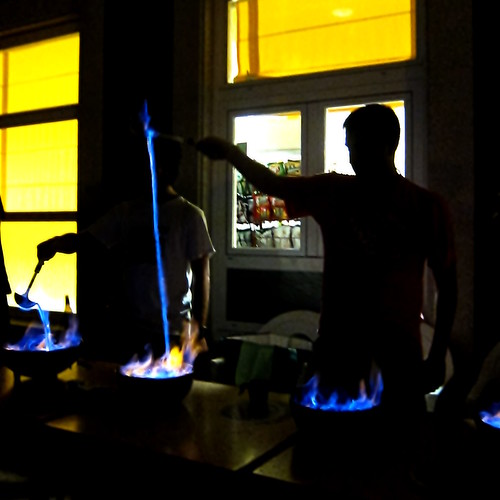
Third day of GUADEC already. And in Coru a! Coru a This is a very special city for me. I came here in 1996 to study Computer Science. Here I discovered UNIX for the first time, and spent hours learning how to use it. It s funny to see now those old UNIX servers being displayed in a small museum in the auditorium where the main track takes place. It was also here where I learnt about free software, installed my first Debian system, helped creating the local LUG and met the awesome people that founded Igalia with me. Then we went international, but our headquarters and many of our people are still here so I guess we can still call this home. So, needless to say, we are very happy to have GUADEC here this time. I hope you all are enjoying the conference as much as we are. I m quite satisfied with how it s been going so far, the local team has done a good job organising everything and taking care of lots of details to make the life of all attendees easier. I especially want to stress all the effort put into the network infrastructure, one of the best that I remember in a GUADEC conference. At Igalia we ve been very busy lately. We re putting lots of effort in making WebKit better, but our work is not limited to that. Our talks this year show some of the things we ve been doing: We are also coordinating 4 BOFs (a11y, GNOME OS, WebKit and Grilo) and hosted a UX hackfest in our offices before the conference. And we have a booth next to the info desk where you can get some merchandising and see our interactivity demos. WebKitGTK+ In case you missed the conference this year, all talks are being recorded and the videos are expected to be published really soon (before the end of the conference). So enjoy the remaining days of GUADEC, and enjoy Coru a! And of course if you re staying after the conference and want to know more about the city or about Galicia, don t hesitate to ask me or anyone from the local team, we ll be glad to help you. Queimada

26 July 2012

Michal &#268;iha&#345;: Weblate hacking #4

Fourth day of Hackweek VIII was for me again mostly spent on Weblate. This time there are no new nice features, but rather general improvements to the code. First task was to add support for django-registration 0.8. Originally my plan was to support both 0.7 and 0.8, but that proven to be too complicated so Weblate now requires 0.8, which brings quite a lot of differences in API. Later I've installed django-debug-toolbar and looked at some bottlenecks in some hot paths. This resulted in few optimizations of translations merging and new caching for translation stats. This turned out to be too expensive for bigger translations and caching these can save few seconds on page load. I will probably focus more on performance tuning tomorrow as I don't plan to add any new features to 1.2 release.

Filed under: English Suse Weblate 0 comments Flattr this!

NOKUBI Takatsugu: Some Debian events in Japan recently

In June 23, Grand Unification Debian seminar had held in Kyoto University. The participiants were about 70 people. And in July 21, The 90th Tokyo area Debian seminar had held in Ogikubo, Tokyo. It holds every month, so the participiants are not so many, but there ware about 15 people. There were good experience to me, especially key-signing party was good. But I forgot to bring my new 4096R key CurrentlyI use 1024D key and it is not so strtong, so I consider to switch the new key.

NOKUBI Takatsugu: Hello, again.

I had an old English blog with bloxsum, but it is hard to maintainance so I created a new site with wordpress.

25 July 2012

Vincent Sanders: Fowlers Delight?

Fowler published his paper on Continuous Integration (CI) way back in 2000. Personally at the time I was a much more naive developer, I was not really an adherent to the whole XP community and had worked for a series of companies where the idea of a release build was of a month long process and the concept that the whole codebase could be built and tested on every commit was a comical notion at best.

By the time the time the 2006 edition of the paper came out however I was convinced. Ever since then I have tried to make the projects I worked on have as many CI features as possible. It is one reason I ran the ARM Kernel autobuilder for years as an attempt to provide at least build coverage.

I especially like the way these concepts mean that releases are much less "scary" events and release anxiety is reduced to a minimum. When every commit produces something that is of release quality a project really is doing it right.

The reason I mention any of this is I have recently set up the NetSurf projects CI server. The heavy lifting is being done by a Jenkins instance running on a VPS fulfilling the "Every Commit Should Build the Mainline on an Integration Machine" part of the Fowler guidelines.

Setting up Jenkins was much less trouble than many of the previous systems I have used. I have been a little underwhelmed by the support for plain old make based projects which you have to resort to shell scripts for, but leaving that aside the rest was straightforward. The documentation could do with a purge pass for the old hudson name and the error reporting (especially under memory pressure) is not great.

And there lies my one real issue with the tool, memory. The VPS has 512MByte RAM and runs nothing beyond a web server, jenkins and the C compiler to build the project components. One would hope that was plenty of memory, doing the builds by hand it did seem gcc is happy in that space, alas Jenkins is a Java application and guzzles RAM (over 60% of RSS right now) and causes itself out of memory exceptions with distressing frequency.

The project is left with the choices:
It is such a pity too, aside from the RAM issues it is all going well and it has already encouraged us to get the toolchains for the less commonly built targets (ppc amiga and windows for a start) working.

Diego Escalante Urrelo: A Coru a, d a uno

You can follow the latest GUADEC updates from @guadec and @diegoe.

Isa, Alejo, Laura, and Germ n stealing a mug.

GUADEC just started. Or at least, the arrangements for GUADEC.

The local team is hard at work at the GUADEC HQ of the Facultade de Inform tica, they are really working really hard to make sure that there is a proper wired network setup (yes, you read that right!), a great video setup to record all the talks and publish them as soon as possible and setting up the final details of rooms, info desk, accommodation

If you are staying at the Rialta, you can take the hourly bus to the Facultade (just ask the driver). The bus departs from the frontis of Block 3. Ask the driver to let you know when to get off the bus. He is aware of GUADEC so your gringo-spanish should suffice.

We will be holding a pre-registration party tonight at 21:00 (9pm) just outside the Rialta cafeteria. If you are already here drop by for the Queimada by Alejo, our galician wizard.

Vincent Sanders: A sad state of affairs

Surprisingly my previous post on my Debconf trip has gathered more queries over its title than anything else.

Mostly my blog titles are, if I can manage it, relevant quotes or book titles. For the last post I used the title of a collection of Mark Twain scripts surrounding his trip through Nicaragua in 1866.

I have not been able to read the publication myself beyond the quoted excerpts in more modern articles because, somehow, almost 150 years after the words were written the only access to these words is to buy a very expensive and rare 1940 publication.

This appears to stem from the fact the original Clements scripts were simply not published before 1940 and hence appear to gain copyright from that date (IANAL I might be wrong here is the source I used) and thanks to the US government effectively making copyrighted works published after 1922 be "protected" forever I may never read it at all.

Rather sad really, but if you do have a copy I could borrow...oh no that is probably illegal too? better just let the words fade to dust eh?

24 July 2012

Gunnar Wolf: Ten theses in favor of free download of cultural goods on the Internet (by Enrique G. Gallegos)

This is one of the days where reading my everyday newspaper was worth more than just getting bitter at the news. I found this text in La Jornada, my usual newspaper. I liked it very much, and decided to translate it for a wider audience. Of course, if you can read Spanish, do yourself a favor and go to the original. It is not that the text is so easy to translate. And, after all, I'm not a native English writer. I'm trying to do a literal translation, even when disagreeing with the author. Ten theses in favor of free download of cultural goods on the Internet Enrique G. Gallegos Poet and philosopher. Currently a researcher in Universidad Aut noma Metropolitana-C
  1. Historical legacy. Criticists who promote the persecution of piracy and free downloads of cultural works from the Internet argue that the patrimonial rights have been wronged; they start off suposing that a cultural work is formed from a historical void, as if there was a "nothing" to begin with, and then a "something" appeared. Nothing more fallacious: All cultural products has its precedents, and thanks to these it generates part of its best forces.
  2. Opening towards the future. Human beings are projected into the future. As the main philosophies of the 20th century have explored, one of the singular characteristics of mankind is the ability to think and imagine the future. Products of culture are the best ways to think and project society, politics, love, hope, needs, failures A song, a poem, an essay, can trigger imaginary worlds with a transformative potential. To deny this to humanity with "patrimonial damage" as an argument is to mutilate man's temporal nature.
  3. Recognition of the present. Cultural works generate moments of reflection, criticism and pleasure; they can trigger actions demanding commitment, solidarity and strong indignation against injustice. If every cultural work is adscribed in some way to a historic tradition, and if cultural products anre necessary to imagine other possible worlds and open our future, it's not less true that they also allow us to recognize our present by making us more sensitive to others' ideas, sensations and emotions. Without culture, there is no present nor others' presence.
  4. Divulgation of the cultural heritage. If culture is "heritage of mankind", it should be also spread by any possible way. But not just spread, but actively sought for the biggest number of people to be able to effectively have access to it. In a potentially interconnected world, Internet is the most adequate world for it (despite its limitations). Therefore, penalizing free downloads means avoiding spreading it and restricting access to those groups who don't have enough economic resources.
  5. Preserving cultural heritage. If we agree that cultural works are heritage of mankind, we need to take every action needed to preserve them. But preserving culture does not only mean keeping the products in museums, galleries or never-polluted drawers; it rather means to keep them in the collective memory and in the flow of constant interpretations and appropiations. Said in other words, the genuine way to preserve culture is to allow universal access to cultural goods. That's why, holding that free copies and downloads of books, music, videos, etc. over the Internet are harmful, is an incompatible argument with the obligation to preserve cultural heritage.
  6. They are not goods. Cultural works are material and spiritual manifestations of mankind, concretions of its historicity; they are, also, expressions of emotions, ideas and projections of other lives and other worlds. That's why they cannot be equated to goods or inserted in patrimonialist logic. The market might want to cheat by giving a certain price to a painting by Orozco or auctioning a Baudelaire manuscript, but it will never be able to aprehend their true meaning as cultural works. And it's not that culture is not faluable, but taht its estimation criteria do not follow the rules of market, but those of the imponderable and unlimited.
  7. Price disproportion. Assuming we accept the possibility that intermediaries charge for the services they perform, the value of a book, record or movie should never exceed the daily wage of a worker or employee. But this ellection would only be one more option within the effective possibility that people opt to download or freely copy the cultural work. The final decision as to which media to go to should be a sovereign resolution of the culture-interested person.
  8. The principle of the most benefit. Even when copies and free downloads over Internet could generate a patrimonial "wrong" to third parties, the cultural benefit obtained by it will always be greater in as much that it carries out intensely the principle to foster, spread and access the cultural heritage of mankind. To think otherwise is to privilege the few over the many.
  9. The real evil is elsewhere. Murder, women- and children-trade, poverty and misery are the real evils that ache mankind. According to the United Nations, in 2010 there were 468 thousand murders in the world; the estimation is that 3500 million people live in poverty; in their 2009 inform, the UN found over 2400 victims of "people trade", kidnapped as sex slaves; in some regions in Africa, close to 30% of children suffer acute malnutrition and six people (between children and adults) die every day from hunger. That's why pretending that free download of cultural works is an evil is clearly a tricky and deceptive speech
  10. Against the intermediary-salesman. Culture does not need intermedieries that reduce cultural works to goods. Culture is too important to leavie it in the hands of salespeople that simplistly equate cultural goods with cakes. An intermediary of this kind will never understand the difference between a work of art and a disposable razor blade. What the world needs is more support from the government from every country to artists, creators and poets, as well as ensuring the conditions for the absolute mobility freedom for cultural works.

Julien Danjou: Emacs configuration published

I've finally published my Emacs configuration. This took me a while, since I had personal information inside (like passwords). Recently, I've been able to move them away and can now publish everything in my Git repository. It's probably not yet usable from scratch, since I didn't include the bootstrap code for el-get. But you can at least lurk and grab some ideas or lines of code. And do not hesitate to ask me anything about it! Note that I'm using Emacs development version (trunk), so it's possible that some things do not work with (old) released Emacs versions.

Martin Pitt: PyGObject hackfest @ GUADEC: Agenda

I started to collect some easy PyGObject bugs which are appropriate for the PyGObject hackfest at GUADEC on July 30th. These are bugs which do not need a lot of previous knowlege and are excellent starters for new contributors, such as adding overrides, fixing build system issues, etc. I also created an initial idea pool/agenda/coordination page, where participants can add or signup for things to work on. Feel free to add your own topics! I m really looking forward to GUADEC and the hackfest, see you there! GUADEC 2012

22 July 2012

Vasudev Kamath: Compiling Harfbuzz on Debian

Harfbuzz (more correctly harfbuzz-ng) is a Text Layout/shaping engine. Mostly supporting rendering of Text including complex scripts. A quote taken from Wikipedia which describes harfbuzz
HarfBuzz (in Persian: ) is a layout/shaping engine for OpenType fonts. Its purpose is to standardize text layout in FOSS; its code originally started as part of the FreeType project, was then developed separately in Qt and Pango, and finally merged back into a common repository. Both Qt and Pango currently use HarfBuzz; other standalone users include Firefox and Chromium, the open source project behind Google Chrome.
Coming directly to the point. You can get Harfbuzz from its Git repository hosted on Freedesktop. It requires following library and binary compilation
    1. ragel: Finite state machine code compiler
    2. libglib2.0-dev: Glib Development files
    3. libcairo2-dev : Cairo 2D graphics library development files
    4. libicu-dev: Development components for International components for Unicode
    5. libgraphite2-dev: Development files for libgraphite2
    6. libfreetype6-dev: Freetype 2 library development files
Once you install all the above package. Follow following commands to build the harfbuzz.
./autogen.sh
./configure --prefix=/usr
make
sudo make install
You can skip make install if you don't like it to be installed on system.I actually wanted to work on the Debian package of Harfbuzz but since there is some one already working on it. Probably I will wait till the guy completes package. I will write on testing the text rendering of your language using harfbuzz in my next post. Till then Cya.

21 July 2012

Enrico Zini: Giving away distromatch

Giving away distromatch at last year's Fosdem I tried to inject a lot of energy into distromatch but shortly afterwards I've had to urgently rewrite the nm.debian.org website. After Lars Wirzenius GTDFH talks in Bologna and Varese I wrote a tool which, among other things, is able to scan my home dir and list how many projects I'm working on. The output was scary. Like, they are too many. Like, I couldn't even recite the list out of memory. And since I couldn't do that, I had no idea there were so many. And I kept being stressful because I couldn't manage to take care of them all properly. Now that I became conscious of the situation, it's time to deal with it like a grown up, and politely back off from some of my irresponsible responsibilities. Distromatch is one of them. It had just started as a proof of concept prototype, and I had the vision that it could be the basis for a fantastic culture of sharing and exchange of information across distributions. I need to distinguish the vision from the responsibility. I still have that vision for distromatch, but I cannot take responsibility for making it happen. So I am giving it up to anyone who has the time and resources to pick up that responsibility. Current status It works well enough as a prototype. I believe it can successfully map a large enough slice of packages, that one can prototype stuff based on it. I have for example used it to export the Debtags categories for other distros, and the resulting file looked big enough to be used for prototyping category-based features on distributions that don't have them yet. I think it also works well enough to support a few common use cases, like sharing screenshots, or doing most of the work of converting dependency lists from a distro to another. And finally, anyone can deploy it, and work on it. Existing data sources Everything I index in the Debian distromatch deployment is available at http://dde.debian.net/exports/distromatch/. The rpm-based data in there comes from an export script I wrote that runs on Sophie, but which I cannot maintain properly. This is an experimental export of Fedora and OpenSUSE data: http://tmp.vuntz.net/misc/distromatch/distromatch-opensuse-fedora.tar All existing export scripts are found in distromatch git repo on gitorious. Contacts I gathered at Fosdem At Fosdem I devoted quite some work to get contacts from all possible distributions and software repositories, so that distromatch could be hooked into them. Here is a dump of what I have collected: Some of those contacts may have "expired" in the meantime: I wouldn't assume all of them still remember talking with me, although most probably still do. My commitment for the time being I am happy to commit, at the moment, to maintaining a working data export for Debian data. I can take responsibility for making it so that the Debian data for it stays up to date, and to fix it asap if it isn't the case. I hope that now someone can take distromatch over from me, and make it grow to achieve its great potential.

Andrew Pollock: [life] Sarah sans gallbladder

I can't remember exactly when, it was either pre-Zoe heart-related diagnostic imaging or during her pregnancy with Zoe, that it became apparent that Sarah had gall stones. Apparently it's not uncommon for women to develop them after pregnancy, and it turns out that Sarah is slightly more genetically predisposed to getting them to boot. So it wasn't terribly surprising when she started having some pain recently. She had another ultrasound to confirm it, and went off to see a surgeon. Apparently they care more about the symptoms than the number of stones in the gallbladder, and they don't bother removing the stones and keeping the gallbladder, so she was booked in for a cholecystectomy last Thursday. It was a pretty straightforward procedure, she was out of the operating room in just under an hour, and awake a bit over an hour after that. I've had a few friends need to have a cholecystectomy, and the photos on Wikipedia have always fascinated me, particularly this one. It seems so freaky to have a gallbladder full of that much gravel. It can't be comfortable. We're going to be able to pick up Sarah's stones on Monday, so it'll be interesting to see what they look like. Sarah's recovering now. It's one of the few surgeries she's had under general anaesthesia where she hasn't been sick afterwards, so that was a good start. The procedure was done laparoscopically, using four incisions, and to give themselves room to work, they inflate the body with carbon dioxide gas, which then has to work its way out of her body over the following days. So she's dealing with some bloating, bruising and swelling at the moment, but not doing too badly. Apparently if you're vertical for too long, the gas can work its way up to your diaphragm, which causes some shoulder pain, so the trick has been to walk around a bit, then lie down for a bit, and then rinse and repeat. She's not allowed to lift Zoe for 3-4 weeks, which presents a few challenges for us, but nothing insurmountable (hopefully). We converted Zoe's crib to a toddler bed a week before the surgery, and Zoe thought that was just the best thing ever, and has taken to it really well. I'm around at home for breakfast and dinner, so I can take care of the lifting into and out of the high chair for those meals, and Zoe can eat lunch at her little table. Zoe's also pretty good about getting into and out of the car by herself (not that Sarah can drive until she's off the painkillers) and she's normally in daycare two days a week. She's in daycare again on Monday, so Sarah won't have to deal with Zoe on her own until Tuesday, and we have backup daycare arrangements we can fall back on if need be. Zoe's been very good about Sarah not being able to pick her up, and been very gentle. It helped with the explanation that Sarah could show her all of her "owwies". The surgeon was saying that only 1 in 400 people need to alter their diet after removing their gallbladder, so we're hopeful that Sarah will do just fine without it. She'll certainly be more comfortable in the long run.

Andrew Pollock: [debian] New audit package in experimental

Various security folks at work have been keen on a newer version of audit be in Ubuntu (preferably 12.04), but unfortunately the Debian maintainer has been too busy to package it for Debian, so I finally carved out some time recently to do an upload to experimental, with his permission. It would have been really nice to land it in unstable before Wheezy froze, but as it involved a library transition, and I didn't get a chance to talk to the release team about it until very close to the freeze, they said it was too late. That meant the grand plan of getting it into Ubuntu 12.10 and then trying to get it into precise-backports went up in smoke as well. Oh well. It was a fair bit of work to package. A lot of the patches were no longer relevant, and the remaining ones all needed to be refitted. It was also my first attempt at touching a library package where a SONAME bump was involved. I think I did everything correctly.

Siegfried Gevatter: A gentle introduction to Zeitgeist s Python API

In this post I ll make a quick introduction by example on how to use Zeitgeist s Python API for good and profit. If you re interested in using Zeitgeist from C instead, see the libzeitgeist examples; to use it with C++/Qt, Trever s a web browser in 4 steps may be of interest. First things first In case you re not familiar with Zeitgeist, it may prove helpful to first read Mikkel s introduction to Zeitgeist post. If that s too much to read, just should know that Zeitgeist is an event log. Like the history in your browser, it keeps track of what websites you open at which point in time. It also keeps track of when you close them, and of what browser you used, since it s a system-wide service. Furthermore, it does the same for files, conversations, e-mails, and anything else you want to insert into it. So Zeitgeist is a database of events, and an event can be pretty much anything. But what does it look like? It s main attributes are the following: Additionally, each event has one or more subjects, which have the following attributes: Retrieving recent data Okay, so let s say you want to know the last song you ve listened to (if you have a Zeitgeist-enabled music player). It s a simple as:
from zeitgeist.client import ZeitgeistClient
from zeitgeist.datamodel import *
 
zeitgeist = ZeitgeistClient()
 
def on_events_received(events):
    if events:
        song = events[0]
        print "Last song: %s" % song.subjects[0].uri
    else:
        print "You haven't listened to any songs."
 
template = Event.new_for_values(subject_interpretation=Interpretation.AUDIO)
zeitgeist.find_events_for_template(template, on_events_received, num_events=1)
 
# Start a mainloop - note: the Qt mainloop also works
from gi.repository import GLib
GLib.MainLoop().run()
This may need some explaining. We start by importing the Zeitgeist client and some associated data structures (such as Event and Interpretation), and create an instance of the client. The ZeitgeistClient class is a wrapper around Zeitgeist s D-Bus API which not only makes it much nicer to use, but also makes it easy to install monitors (as we will see later) and provides convenient functionality such as automatic reconnection if the connection to the engine is lost. To query for the most recent song, we just need to create a template with the restrictions we want to impose and submit it to Zeitgeist using the find_events_for_template call. If you haven t read Mikkel s post yet, please do so, as it introduces the structure of events and subjects (in short: an event has a timestamp, some other properties, and one or more subjects representing the resources -files, websites, people - involved in the event). The Python API is inherently asynchronous (if for some reason you need a synchronous API, you may still use the lower level ZeitgeistDBusInterface class), so we need to define a callback function to handle the results we receive from the Zeitgeist engine. Finally, we need to create a main loop so the asynchronous functions can run.
Now this was a pretty simple example. Let s make it more interesting. One song isn t much, so let s get the 5 most recent songs. Also, now we want both songs and videos. The first part is pretty easy, we just need to change the num_events parameter. For the second extension, we have to change the event template. In fact, now we need two different event templates and the find_events_for_templates function, which takes an arbitrary number of event templates and ORs them. The result is as follows:
from zeitgeist.client import ZeitgeistClient
from zeitgeist.datamodel import *
 
zeitgeist = ZeitgeistClient()
 
def on_events_received(events):
    for event in events:
        print "- %s" % event.subjects[0].uri
 
tmpl1 = Event.new_for_values(subject_interpretation=Interpretation.AUDIO)
tmpl2 = Event.new_for_values(subject_interpretation=Interpretation.VIDEO)
zeitgeist.find_events_for_templates([tmpl1, tmpl2],
                                    on_events_received, num_events=5)
 
# Start a mainloop
from gi.repository import GLib
GLib.MainLoop().run()
This will work, but unless you re lucky you re likely to get some duplicate line. Why is this? Well, other than that you may have used the same file twice, don t forget that what you are requesting are actually events. If you ve started playing a given song, you probably also stopped playing it, so that s actually two of them (an AccessEvent and a LeaveEvent). Since this isn t what we want, we ll change the query a bit:
zeitgeist.find_events_for_templates(
    [tmpl1, tmpl2],
    on_events_received,
    num_events=5,
    result_type=ResultType.MostRecentSubjects,
    storage_state=StorageState.Available)
By requesting the most recent subjects, vs. the most recent events, we can filter out events with duplicate URI. See the ResultType documentation for other modes you can use. Note particularly the MostPopularSubjects result type. I also used the chance to introduce the storage_state parameter. This one will filter out events for files Zeitgeist knows aren t available (this mostly means online resources won t be shown if you don t have a network connnection; there s also support for handling external storage media, but because of problems with GIO this is currently disabled). Last but not least, the find_events_for_* methods also accept a timerange parameter. It defaults to TimeRange.until_now(), but you may change it to TimeRange.always() (if for some reason you re working with events in the future) or to any other time range of your choice. Here it s important to note that Zeitgeist s timestamps use millisecond precision.
For more advanced queries, you can use more complex combinations of events and subject templates. The rule to keep in mind here is that events are OR d and subjects are ANDed. Additionally, some field (actor, origin, mimetype, uri and current_uri) may be prefixed with an exclamation mark ( ! ) for NOT, or you may append an asterisc ( * ) to them for prefix search. You can even combine the two operators together. Here s an example of a template you could build:
subj1 = Subject.new_for_values(interpretation=Interpretation.SOURCE_CODE,
                               uri="file:///home/rainct/Development/*")
subj2 = Subject.new_for_values(uri="!file:///home/rainct/Development/zeitgeist/*")
tmpl1 = Event.new_for_values(interpretation=Interpretation.MODIFY_EVENT,
                             subjects=[subj1, subj2])
templates = [tmpl1]
In my case, this template would fetch a list of the source code files I modified most recently but excluding those related to the Zeitgeist project. Working with big sets of data In case you re trying to do something crazy, you may end up with a Zeitgeist query complaining that it exceeded the memory limit. You re not supposed to do that. Instead, we provide some methods for working with large collections of events.
from zeitgeist.client import ZeitgeistClient
from zeitgeist.datamodel import *
 
zeitgeist = ZeitgeistClient()
 
def on_events_received(events):
    for event in events:
        print '- %s' % event.subjects[0].uri
 
def on_ids_received(event_ids):
    print 'A total of %d source code files were found.' % len(event_ids)
    print 'Fetching the first 100...'
    zeitgeist.get_events(event_ids[:100], on_events_received)
 
tmpl = Event.new_for_values(subject_interpretation=Interpretation.SOURCE_CODE)
zeitgeist.find_event_ids_for_templates(
    [tmpl],
    on_ids_received,
    num_events=10000, # you can use 0 for "all events", but do you really need to?
    timerange=TimeRange.from_seconds_ago(3600*24*30*3),
    result_type=ResultType.MostPopularSubjects)
 
# Start a mainloop
from gi.repository import GLib
GLib.MainLoop().run()
And there you have the source code files you worked with during the last 3 months, ordered from most to least popular (popularity is measured counting the number of events; for more precision, maybe you could limit the results to events with interpretation AccessEvent). Why do we provide this mechanism instead of querying with a simple offset? Well, this avoids problems when the log changes (events are inserted or deleted). Have you ever been exploring the latest posts in some website, and as you change to the next page some of the results from the previous page show up again (because new posts have been added in the meantime)? With Zeitgeist this won t happen. Receiving information in real time At this point you re an expert at requesting all sorts of data from Zeitgeist, but now you want to show a list of the last kitten images you ve viewed, updated in real time. Don t worry, Zeitgeist can provide for this:
from zeitgeist.client import ZeitgeistClient
from zeitgeist.datamodel import *
 
zeitgeist = ZeitgeistClient()
 
def on_insert(time_range, events):
    # do awesome stuff with the events here
    print events
 
def on_delete(time_range, event_ids):
    # a previously inserted event was deleted
    print event_ids
 
templates = [Event.new_for_values(subject_uri='file:///home/user/kittens/*',
                                  subject_interpretation=Interpretation.IMAGE)]
zeitgeist.install_monitor(TimeRange.always(), templates, on_insert, on_delete)
 
# Start a mainloop
from gi.repository import GLib
GLib.MainLoop().run()
It s important to note that on_delete won t be called when an image is deleted (that d be a newly inserted event with interpretation=DELETE_EVENT); rather, it s called when a previously inserted event is deleted (for example, using the forget recent history option in Activity Log Manager). In case you re curious: for best performance, this doesn t actually use D-Bus signals. Instead, this little call will setup a D-Bus object behind the scenes and register it with the Zeitgeist engine, so it can notify said object when (and only when) an event of its interest is registered. To stop receiving notifications for a template, you ll need the save the object returned by the install_monitor call:
m = zeitgeist.install_monitor(TimeRange.always(), templates, on_insert, on_delete)
zeitgeist.remove_monitor(m)
Pro Tip: You can use the Zeitgeist Explorer GUI to quickly try out different queries (note: it s still work in progress, so much funcionality is missing, but it does work somewhat). Contextual awesomeness: finding related events By now you re familiar with retrieving events and keeping them up to date. Now it s time for a little secret:
import time
from zeitgeist.client import ZeitgeistClient
from zeitgeist.datamodel import *
 
zeitgeist = ZeitgeistClient()
 
def on_related_received(uris):
    print 'Related URIs:'
    for uri in uris:
        print ' - %s' % uri
 
query_templates = [Event.new_for_values(
    subject_interpretation=Interpretation.SOURCE_CODE,
    subject_uri='file:///home/rainct/Development/zeitgeist/*',
    subject_mimetype="text/x-vala")]
 
result_templates = [Event.new_for_values(
    subject_interpretation=Interpretation.WEBSITE,
    subject_manifestation=Manifestation.WEB_DATA_OBJECT)]
 
now = time.time()*1000
zeitgeist.find_related_uris_for_events(
    query_templates,
    on_related_received,
    time_range=TimeRange(now - 1000*3600*24*30*6, now),
    result_event_templates=result_templates,
    num_events=10)
 
# Start a mainloop
from gi.repository import GLib
GLib.MainLoop().run()
This little query example will return up to 10 websites I used at the same time as the Vala files inside my Zeitgeist directory, considering only data from the last 6 months. Nice, huh? This is an experimental feature, and it doesn t work well when operating on big inputs, so it s usually better to use the find_related_uris_for_uris variant (which replaces the first query_templates parameter with a list of URIs). Advanced searching: the FTS extension Some people think prefix searches aren t good enough for them, and this is why the Zeitgeist engine ships by default with a FTS (Full Text Search) extension. Using the methods provided by this extension you can perform more advanced queries against subjects current_uri and text properties (unlike the name may suggest, the FTS extension doesn t index the content of the files, but just the information in the event). This is exposed as zeitgeist_index_search in libzeitgeist (the C library), but unfortunately isn t currently available in the Python API. If you still need it, you ll have to fallback to pretty much using the D-Bus interface (you still get reconnection support, though). Here s an example:
from zeitgeist.client import ZeitgeistClient
from zeitgeist.datamodel import *
 
zeitgeist = ZeitgeistClient()
index = zeitgeist._iface.get_extension('Index', 'index/activity')
 
query            = 'hello' # search query
time_range       = TimeRange.always()
event_templates  = []
offset           = 0
num_events       = 10
result_type      = 100 # magic number for "relevancy" (ResultType.* also work)
 
def on_reply(events, num_estimated_matches):
    print 'Got %d out of ~%d results.' % (len(events), num_estimated_matches)
    events = map(Event, events)
    for event in events:
        print ' - %s' % event.subjects[0].uri
 
def on_error(exception):
    print 'Error from FTS:', exception
 
index.Search(query, time_range, event_templates,
             offset, num_events, result_type,
             reply_handler=on_reply, error_handler=on_error)
 
# Start a mainloop
from gi.repository import GLib
GLib.MainLoop().run()
The most interesting thing here is the query parameter. Quoting from the C documentation:
The default boolean operator is AND. Thus the query foo bar will
be interpreted as foo AND bar. To exclude a term from the result
set prepend it with a minus sign - eg foo -bar. Phrase queries
can be done by double quoting the string "foo is a bar". You can
truncate terms by appending a *.
There are a few keys you can prefix to a term or phrase to search
within a specific set of metadata. They are used like key:value.
The keys name and title search strictly within the text field of
the event subjects. The key app searches within the application
name or description that is found in the actor attribute of the
events. Lastly you can use the site key to search within the
domain name of the subject URIs.
You can also control the results with the boolean operators AND
and OR and you may use brackets, ( and ), to control the operator
precedence.
Modifying the log So far we ve only queried Zeitgeist for information, let s get a bit more active. You can delete events from Zeitgeist with the following query:
from zeitgeist.client import ZeitgeistClient
 
zeitgeist = ZeitgeistClient()
 
def on_deleted(timerange):
    print 'Deleted events going from %s to %s' % (timerange[0], timerange[1])
 
event_ids = [50] # put the IDs of the events you want to delete here
 
zeitgeist.delete_events(event_ids, on_deleted)
 
# Start a mainloop
from gi.repository import GLib
GLib.MainLoop().run()
The confirmation callback will receive a timerange going from the first to the last event. If no events were deleted (because they didn t exist), you ll get (-1, -1).
And now for the interesting part. If your application involves resources (files, websites, contacts, etc.) of any sort, you ll probably want to let Zeitgeist know that you re using them. It s time that you write a data-source! We start by registering the data-source. Here we go:
import time
from gi.repository import GLib
from zeitgeist.client import ZeitgeistClient
from zeitgeist.datamodel import *
 
zeitgeist = ZeitgeistClient()
 
def on_status_changed_callback(enabled):
    """ This method will be called whenever someone enables or disables
        the data-source. """
    if enabled:
        print 'Data-source enabled and ready to send events!'
    else:
        print 'Data-source disabled; don\'t send event, they\'ll be ignored.'
 
def register():
    # Always use the same unique_id. Name and description can change
    # freely.
    unique_id = 'com.example.your.data.source'
    name = 'user visible name (may be translated)'
    description = 'user visible description (may be translated)'
 
    # Describe what sort of events will be inserted (optional)
    subject_template = Subject()
    subject_template.interpretation = Interpretation.PLAIN_TEXT_DOCUMENT
    subject_template.manifestation = Manifestation.FILE_DATA_OBJECT
    templates = []
    for interp in (Interpretation.ACCESS_EVENT, Interpretation.LEAVE_EVENT):
        event_template = Event()
        event_template.interpretation = interp
        event_template.manifestation = Manifestation.USER_ACTIVITY
        event_template.append_subject(subject_template)
        templates.append(event_template)
 
    zeitgeist.register_data_source(unique_id, name, description, templates,
                                   on_status_changed_callback)
Once that s done (and if it is enabled), we are free to send our events:
def log(title, uri, opened):
    subject = Subject.new_for_values(
        uri=uri,
        interpretation=Interpretation.PLAIN_TEXT_DOCUMENT,
        manifestation=Manifestation.FILE_DATA_OBJECT,
        origin=GLib.path_get_dirname(uri),
        mimetype='text/plain',
        text=title)
    event = Event.new_for_values(
        timestamp=time.time()*1000,
        manifestation=Manifestation.USER_ACTIVITY,
        actor='application://your_application_name.desktop',
        subjects=[subject])
    if opened:
        event.interpretation = Interpretation.ACCESS_EVENT
    else:
        event.interpretation = Interpretation.LEAVE_EVENT
 
    def on_id_received(event_ids):
        print 'Logged %s (%d) with event id %d.' % (title, opened, event_ids[0])
 
    zeitgeist.insert_events([event], on_id_received)
 
if __name__ == '__main__':
    register()
 
    log('test.txt', 'file:///tmp/test.txt', opened=True)
    log('another_file.txt', 'file:///tmp/another_file.txt', opened=True)
    log('another_file.txt', 'file:///tmp/another_file.txt', opened=False)
    log('test.txt', 'file:///tmp/test.txt', opened=False)
 
    # Start a mainloop
    GLib.MainLoop().run()
If you don t know what interpretation and manifestation your subject should have, you can use the following utility methods:
from zeitgeist.mimetypes import *
 
print get_interpretation_for_mimetype('text/plain')
print get_manifestation_for_uri('file:///tmp/test.txt')
Event better, with Zeitgeist 0.9 you can just leave the subject (but not event!) interpretation and manifestation fields empty, and they ll be guessed the same way as if you used those utility methods. Pro Tip: You can examine all registered data-sources and toggle whether they are enabled or not using the zeitgeist-data-sources-gtk.py tool. Conclusion Wow, I m impressed if you ve got this far. By now you should have quite a good idea on how to use the Zeitgeist API, and I m looking forward to seeing what you do with it in your next awesome project. If you have any problem with Zeitgeist, feel free to visit us on IRC (#zeitgeist on irc.freenode.net), or join our mailing list. We ll also be at GUADEC next week, so if you re there make sure to say hi! In case you missed them, here are some useful links:
No comments
Siegfried-Angel Gevatter Pujals, 2012. Permalink License Post tags: ,
flattr this!

20 July 2012

John Goerzen: A Linux-Based RFID Thing Finder

Sometimes I have things nicely organized. Power adapters for radios in one drawer, for cameras in the next. And sometimes not so much. Sometimes I m not sure if things are in the basement or the attic. It seems like technology should be able to help solve this problem, but as far as I can tell, no such solution exists yet. So I m planning to build one. Here s my general idea. Feedback, of course, is welcome. Each item to be tracked can have an RFID tag of some sort attached to it. These tags can be read by an RFID reader at a distance of somewhere between 1ft and 1m in typical conditions. The reader could then act as a proximity alert to an object being searched for a you re close beep, for instance. That helps, but is only part of the battle. It doesn t help if you don t even know which room to look in. So the second part of the plan is that the RFID reader is constantly talking to an object database. Besides the obvious association between RFID tag IDs and object descriptions, the database will also capture background reads of RFID tags. Logged with accurate timestamps, we can then conjecture that RFID reads that occurred within a few seconds of each other are probably physically nearby. If boxes have RFID tags on them, then I can probably get a reasonable idea, down to a box or two, of which box that elusive book is in. If I further put tags on certain immovable physical locations in the house, such as every few feet along shelving, then these will also be captured in the background and hopefully associated with objects nearby, giving a good physical idea of where things are. What s more, the simple act of looking for things using the RFID reader would help keep the proximity tables up-to-date, since it could of course log the RFID tags it sees on the way. The only discipline required to keep this info current is to periodically hover nearby storage areas when moving things around. I like this concept a lot. That doesn t mean it s necessarily simple. Implementation requirements Software side I m envisioning the software being split into two components. One would run on an embedded system with the RFID reader. Its job is simple transmitting of scanned RFIDs to the server, receiving instructions from the server, and generating a tone if it s in search mode and the item being searched is nearby. On the server lies a database. The database would contain descriptions for the objects that are tagged (so that the tag ID can be looked up). It would also contain the timestamped scan logs. I envision a simple CGI-based frontend to it that is mobile-friendly, so a laptop, phone, tablet, etc. could be the user interface for the thing saving the cost of a display and input device by reusing what most people already have. This is the part I feel most qualified to work on already. Hardware The first question is what kind of RFID tags to use. Optimizing for cost per tag, the 800/900MHz UHF tags (EPC gen 2) seem ideal. I have found them in costs approaching $0.10 per tag when bought in rolls of 500 or 1000 Avery RFID labels. That s reasonable. The RFID reader is the more complicated part. UHF RFID readers are a lot more costly than their HF or LF counterparts. So far, the cheapest solution I have found started with a post about an Arduino UHF reader. It used a SolidDigi UHF reader board with UART interface for $177. That same board is also available with a USB interface at the same cost. There is also the need for an antenna. There is a small 5dBi one rated 0-50cm for $8, or a $100 8dBi version rated 1-6m designed for wall mounting. They sell these in kit form that include power adapter, USB cables, etc. as well. The kit with the small antenna runs $192, including reader board. Next is the compute platform. A DreamPlug might work for this at $160, though both the cost and the power consumption (5VDC 3A) are high. A Raspberry Pi seems perfect, though for whatever reason seem to be backordered by months everywhere and don t include wifi. The Pi is $35, and the USB wifi is another $30, plus a cheap SD card, so we re around $80 of computing. The running total of the project, then, is at least $272. Add on provisions for batteries, some sort of case, etc. and we re probably past the $300 mark. That s a lot cheaper than the $1000 for handheld RFID readers. The final item is tags. Bulk tags can be found in the $100 to $200 range, making the total cost of the project $400 to $500. Higher than I d like, but providing some valuable experience building something. Risks There are a few major risks to the project. First among them is read distance. If it s not long enough, the usefulness of the project will be low. Fortunately, $100 gets a more high-gain antenna and I d only be out the $8 if the cheaper one doesn t pan out. But that s something of a cold comfort, as it s another, well, $100. Having a bunch of RFID hardware can be used for all sorts of other interesting things, though, so it could perhaps be reused or repurposed. Another risk is that RFID collisions wouldn t be handled as intelligently as I d like, meaning that the read range required to be useful would activate so many tags that collision algorithms break down. I don t know enough about RFID collision algorithms to know if this is a serious councern.

19 July 2012

Michal &#268;iha&#345;: Sponsoring phpMyAdmin

We've decided to accept sponsorships of phpMyAdmin in more official way. So if you or your company want to financially support this software, you now have great chance to do that. Time to time we've received offers for sponsoring, but we never got to point where we could easily handle these. In the past we were limited by sf.net requirements for no advertisement on website, but it got leveraged over the time and we did not change our policy much. For now the only benefit we are providing to our sponsors (besides good feeling that they are supporting good project) is logo and link on our website. In the future we might add some more, but at first we want to see how it works in this scale. Anyway if you are interested in sponsoring phpMyAdmin, you can do that on our website.

Filed under: English Phpmyadmin 0 comments Flattr this!

18 July 2012

Peter Eisentraut: Tracing shell scripts with time stamps

A random tip for shell script hackers. You know that with set -x you can turn on tracing, so that every command is printed before being executed. In bash, you can also customize the output prefix by setting the PS4 variable. The default is PS4='+ '. Here is an example. I wanted to "profile" a deployment script, to see why it took so long. Ordinarily, I might have sprinkled it with date calls. Instead, I merely added
set -x
PS4='+\t '
near the top. \t stands for time stamp. (The script was already using bash explicitly, as opposed to /bin/sh.) That way, every line is prefixed by a time stamp, and the logs could easily be analyzed to find a possible performance bottleneck.

Next.

Previous.