Multithreading continues to be hard (although the alternatives are not really
a lot better). While debugging a user issue in
Nageru, I found and fixed a few races
(mostly harmless in practice, though) in my own code, but also
two
issues
that I filed patches for in Mesa. But that's not enough, it seems; there are
still issues that are
too subtle for me to figure out on-the-fly. But at least with those patches,
I can use interlaced video sources in Nageru on Intel GPUs without
segfaulting pretty much immediately. My laptop's GPU isn't fast enough to actually run the YADIF
interlacer realtime in 1080p60, though, but it's nice at least not take the
program down. (These things are super-sensitive to timing, of course, which is
probably why I didn't see them when developing the feature a year or so ago.)
As usual, NVIDIA's proprietary drivers seem to be near-flawless in this
regard. I'm starting to think maybe it's about massive amounts of QA
resources.
| Series: | Thessaly #1 |
| Publisher: | Tor |
| Copyright: | 2014 |
| Printing: | January 2015 |
| ISBN: | 0-7653-3266-3 |
| Format: | Hardcover |
| Pages: | 368 |
Two Everett citizens were killed and a score wounded, several seriously, this afternoon when the steamer Verona drew up to the City dock and attempted to land its crowd of almost 200 I. W. W. Sheriff McRae tried to parley with them. A shot was fired from the boat at the sheriff and a general battle followed. The Verona backed away from the wharf and returned to Seattle. On arrival there the I.W.W. crowd was arrested, five were found to be dead and about 30 wounded.
gpg2 --gen-key. Create an additional signing subkey.
gpg2 --refresh-keys is parcimonie, which uses tor and refreshes keys one at a time.
.gnupg/random_seed
gpg2 --gen-key. Create an additional signing subkey.
gpg2 --refresh-keys is parcimonie, which uses tor and refreshes keys one at a time.
.gnupg/random_seed
Slightly behind schedule (it should have been released in October), Weblate 2.9 is out today. This release brings Subversion support or improved zen mode.
Full list of changes:
demo account using demo password or register your own user. Weblate is also being used on https://hosted.weblate.org/ as official translating service for phpMyAdmin, OsmAnd, Aptoide, FreedomBox, Weblate itself and many other projects.
Should you be looking for hosting of translations for your project, I'm happy to host them for you or help with setting it up on your infrastructure.
Further development of Weblate would not be possible without people providing donations, thanks to everybody who have helped so far! The roadmap for next release is just being prepared, you can influence this by expressing support for individual issues either by comments or by providing bounty for them.
Filed under: Debian English phpMyAdmin SUSE Weblate 4 comments
Because I lack the infrared sensor used to control the robot in the
design from HiTechnic, I had to comment out the last task
(taskControl). I simply placed /* and */ around it get the program
working without that sensor present. Now it balances just fine until
the battery status run low:
Now we would like to teach it how to follow a line and take remote control instructions using the included Bluetooth receiver in the NXT. If you, like me, love LEGO and want to make sure we find the tools they need to work with LEGO in Debian and all our derivative distributions like Ubuntu, check out the LEGO designers project page and join the Debian LEGO team. Personally I own a RCX and NXT controller (no EV3), and would like to make sure the Debian tools needed to program the systems I own work as they should.
This post is cross-posted on the MAMI Project blog
here.
In today s Internet we see an increasing deployment of middleboxes. While
middleboxes provide in-network functionality that is necessary to keep networks
manageable and economically viable, any packet mangling whether essential for
the needed functionality or accidental as an unwanted side effect makes it
more and more difficult to deploy new protocols or extensions of existing
protocols.
For the evolution of the protocol stack, it is important to know which network
impairments exist and potentially need to be worked around. While classical
network measurement tools are often focused on absolute performance values,
PATHspider performs A/B testing between two different protocols or different
protocol extensions to perform controlled experiments of protocol-dependent
connectivity problems as well as differential treatment.
PATHspider 1.0.1 has been released today and is now available from GitHub, PyPI and Debian unstable. This is
a small stable update containing a documentation fix for the example
plugin.
PATHspider now contains 3 built-in plugins for measuring path transparency to
explicit congestion notification, DiffServ code points and TCP Fast Open. It s
easy to write your own plugins, and if they re good enough, they may be
included in the PATHspider distribution at the next feature release.
We have a GitHub
repository you can fork that has a premade directory structure for new
plugins. You ll need to implement logic for performing the two connections, for
the A and the B tests. Once you ve verified your connection logic is working
with Wireshark, you can move on to writing Observer functions to analyse the
connections made in real time as PATHspider runs. The final step is to merge
the results of the connection logic (e.g. did the operating system report a
timeout?) with the results of your observer functions (e.g. was ECN
successfully negotiated?) and write out the final result.
We have dedicated a section of the
manual to the development of plugins and we really see plugins as
first-class citizens in the PATHspider ecosystem. While future releases of
PATHspider may contain new plugins, we re also making it easier to write
plugins by providing reusable library functions such as the tcp_connect()
function of the SynchronisedSpider that allows for easy A/B testing of TCP
connections with any globally configured state set. We also provide reusable
observer functions for simple tasks such as determining if a 3-way handshake
completed or if there was an ICMP unreachable message received.
Before proceeding, here is some context: When building new things, it is usually better to use the Elliptic Curve technology algorithm Ed25519 instead of RSA. There is also ECDSA which has had a comparatively slow uptake, for a number of reasons that is widely available and is a reasonable choice when Ed25519 is not available. There are also post-quantum algorithms, but they are newer and adopting them today requires a careful cost-benefit analysis.
First some background. RSA is an asymmetric public-key scheme, and relies on generating private keys which are the product of distinct prime numbers (typically two). The size of the resulting product, called the modulus n, is usually expressed in bit length and forms the key size. Historically RSA key sizes used to be a couple of hundred bits, then 512 bits settled as a commonly used size. With better understanding of RSA security levels, the common key size evolved into 768, 1024, and later 2048. Today s recommendations (see keylength.com) suggest that 2048 is on the weak side for long-term keys (5+ years), so there has been a trend to jump to 4096. The performance of RSA private-key operations starts to suffer at 4096, and the bandwidth requirements is causing issues in some protocols. Today 2048 and 4096 are the most common choices.
My preference for non-2048/4096 RSA key sizes is based on the simple and na ve observation that if I would build a RSA key cracker, there is some likelihood that I would need to optimize the implementation for a particular key size in order to get good performance. Since 2048 and 4096 are dominant today, and 1024 were dominent some years ago, it may be feasible to build optimized versions for these three key sizes.
My observation is a conservative decision based on speculation, and speculation on several levels. First I assume that there is an attack on RSA that we don t know about. Then I assume that this attack is not as efficient for some key sizes than others, either on a theoretical level, at implementation level (optimized libraries for certain characteristics), or at an economic/human level (decision to focus on common key sizes). Then I assume that by avoiding the efficient key sizes I can increase the difficulty to a sufficient level.
Before analyzing whether those assumptions even remotely may make sense, it is useful to understand what is lost by selecting uncommon key sizes. This is to understand the cost of the trade-off.
A significant burden would be if implementations didn t allow selecting unusual key sizes. In my experience, enough common applications support uncommon key sizes, for example GnuPG, OpenSSL, OpenSSH, FireFox, and Chrome. Some applications limit the permitted choices; this appears to be rare, but I have encountered it once. Some environments also restrict permitted choices, for example I have experienced that LetsEncrypt has introduced a requirement for RSA key sizes to be a multiples of 8. I noticed this since I chose a RSA key size of 3925 for my blog and received a certificate from LetsEncrypt in December 2015 however during renewal in 2016 it lead to an error message about the RSA key size. Some commercial CAs that I have used before restrict the RSA key size to one of 1024, 2048 or 4096 only. Some smart-cards also restrict the key sizes, sadly the YubiKey has this limitation. So it is not always possible, but possible often enough for me to be worthwhile.
Another cost is that RSA signature operations are slowed down. This is because the exponentiation function is faster than multiplication, and if the bit pattern of the RSA key is a 1 followed by several 0 s, it is quicker to compute. I have not done benchmarks, but I have not experienced that this is a practical problem for me. I don t notice RSA operations in the flurry of all of other operations (network, IO) that is usually involved in my daily life. Deploying this on a large scale may have effects, of course, so benchmarks would be interesting.
Back to the speculation that leads me to this choice. The first assumption is that there is an attack on RSA that we don t know about. In my mind, until there are proofs that the currently known attacks (GNFS-based attacks) are the best that can be found, or at least some heuristic argument that we can t do better than the current attacks, the probability for an unknown RSA attack is therefor, as strange as it may sound, 100%.
The second assumption is that the unknown attack(s) are not as efficient for some key sizes than others. That statement can also be expressed like this: the cost to mount the attack is higher for some key sizes compared to others.
At the implementation level, it seems reasonable to assume that implementing a RSA cracker for arbitrary key sizes could be more difficult and costlier than focusing on particular key sizes. Focusing on some key sizes allows optimization and less complex code.
At the mathematical level, the assumption that the attack would be costlier for certain types of RSA key sizes appears dubious. It depends on the kind of algorithm the unknown attack is. For something similar to GNFS attacks, I believe the same algorithm applies equally for a RSA key size of 2048, 2730 and 4096 and that the running time depends mostly on the key size. Other algorithms that could crack RSA, such as some approximation algorithms, does not seem likely to be thwarted by using non-standard RSA key sizes either. I am not a mathematician though.
At the economical or human level, it seems reasonable to say that if you can crack 95% of all keys out there (sizes 1024, 2048, 4096) then that is good enough and cracking the last 5% is just diminishing returns of the investment. Here I am making up the 95% number. Currently, I would guess that more than 95% of all RSA key sizes on the Internet are 1024, 2048 or 4096 though. So this aspect holds as long as people behave as they have done.
The final assumption is that by using non-standard key sizes I raise the bar sufficiently high to make an attack impossible. To be honest, this scenario appears unlikely. However it might increase the cost somewhat, by a factor or two or five. Which might make someone target a lower hanging fruit instead.
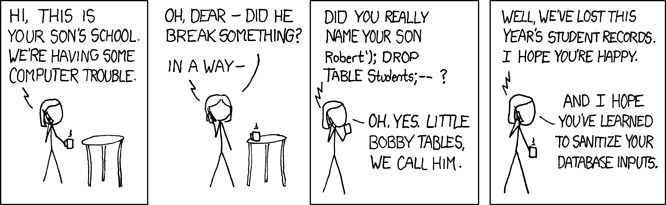
Putting my argument together, I have 1) identified some downsides of using non-standard RSA Key sizes and discussed their costs and implications, and 2) mentioned some speculative upsides of using non-standard key sizes. I am not aware of any argument that the odds of my speculation is 0% likely to be true. It appears there is some remote chance, higher than 0%, that my speculation is true. Therefor, my personal conservative approach is to hedge against this unlikely, but still possible, attack scenario by paying the moderate cost to use non-standard RSA key sizes. Of course, the QA engineer in me also likes to break things by not doing what everyone else does, so I end this with an ObXKCD.
Debian LTS
October marked the eighteenth month I contributed to Debian LTS under the
Freexian umbrella. I spent 10 hours (out of allocated 9)
This month s update falls onto a national holiday in Japan. My recent start as a normal company employee in Japan doesn t leave me enough time during normal days to work on Debian, so things have to wait for holidays. There have been a few notable changes in the current packages, and above all I wanted to fix an RC bug and on the way fixed also several other (sometimes rather old) bugs.

From the list of new packages I want to pick apxproof: I have written something myself for one of my rather long papers (with proofs about 60pp), where at times I had to factor out the proofs into an appendix. I did this my own way, but I would have preferred to have a nice package!
Another interesting change is the upstream merge of collection-mathextra (which translated to the Debian package texlive-math-extra) and collection-science (Debian: texlive-science) into a new collection collection-mathscience. Since introducing new packages and phasing out old ones is generally a pain in Debian, I decided to digress from the upstream naming convention and use texlive-science for the new collection-mathscience. In the end Mathematics is the most important science of all
Finally also a word about removals: Several ConTeXt packages have been removed due to the fact that they are outdated. These removals will find their way in an update of the Debian ConTeXt package in near future. The TeX Live packages lost voss-mathmode, which was retracted by the author due to various reasons. He is working on an updated version that will hopeful reappear in both TeX Live and Debian in near future.

Well, that s it for now. Here now the full list with links. Enjoy.
New packages
apxproof, bangorexam, biblatex-gb7714-2015, biblatex-lni, biblatex-sbl, context-cmscbf, context-cmttbf, context-inifile, context-layout, delimset, latex2nemeth, latexbangla, latex-papersize, ling-macros, notex-bst, platex-tools, testidx, uppunctlm, wtref, xcolor-material.
Removed packages
voss-mathmode.
Updated packages
apa6, autoaligne, babel-german, biblatex-abnt, biblatex-anonymous, biblatex-apa, biblatex-manuscripts-philology, biblatex-nature, biblatex-realauthor, bibtex, bidi, boondox, bxcjkjatype, chickenize, churchslavonic, cjk-gs-integrate, context-filter, cooking-units, ctex, denisbdoc, dvips, europasscv, fixme, glossaries, gzt, handout, imakeidx, ipaex-type1, jsclasses, jslectureplanner, kpathsea, l3build, l3experimental, l3kernel, l3packages, latexindent, latexmk, listofitems, luatexja, marginnote, mcf2graph, minted, multirow, nameauth, newpx, newtx, noto, nucleardata, optidef, overlays, pdflatexpicscale, pst-eucl, reledmac, repere, scanpages, semantic-markup, tableaux, tcolorbox, tetex, texlive-scripts, ticket, todonotes, tracklang, tudscr, turabian-formatting, updmap-map, uspace, visualtikz, xassoccnt, xecjk, yathesis.
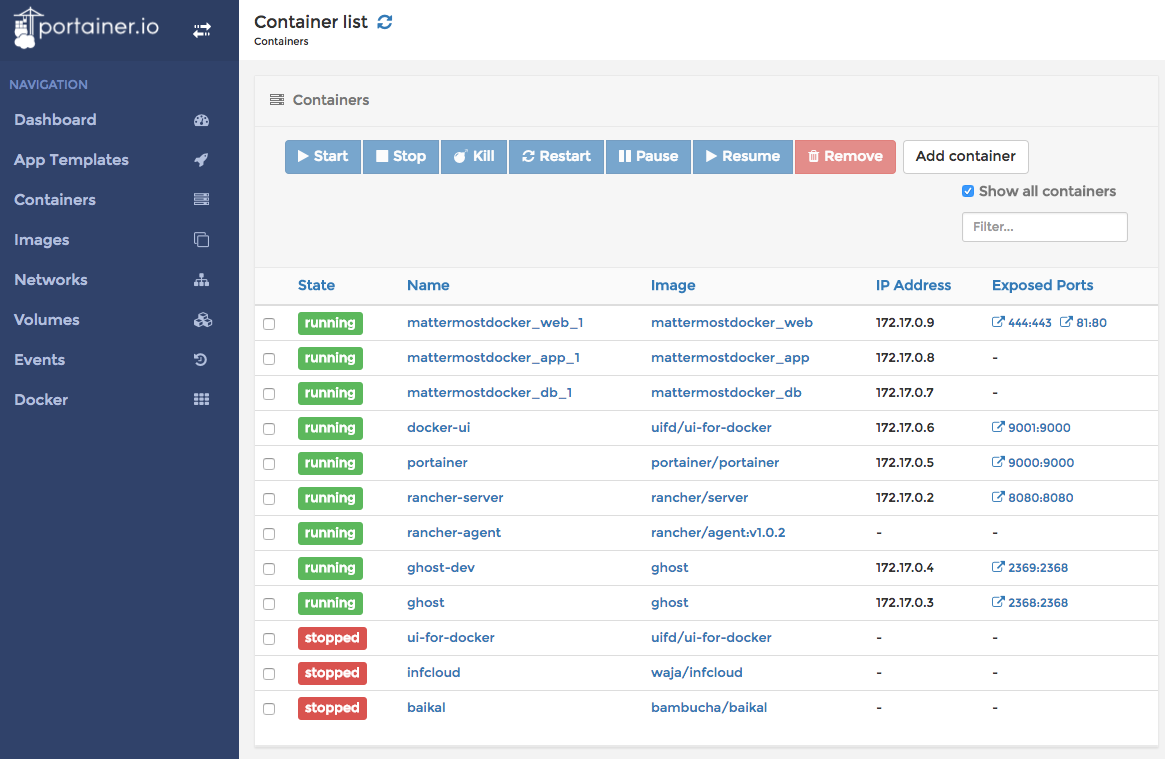
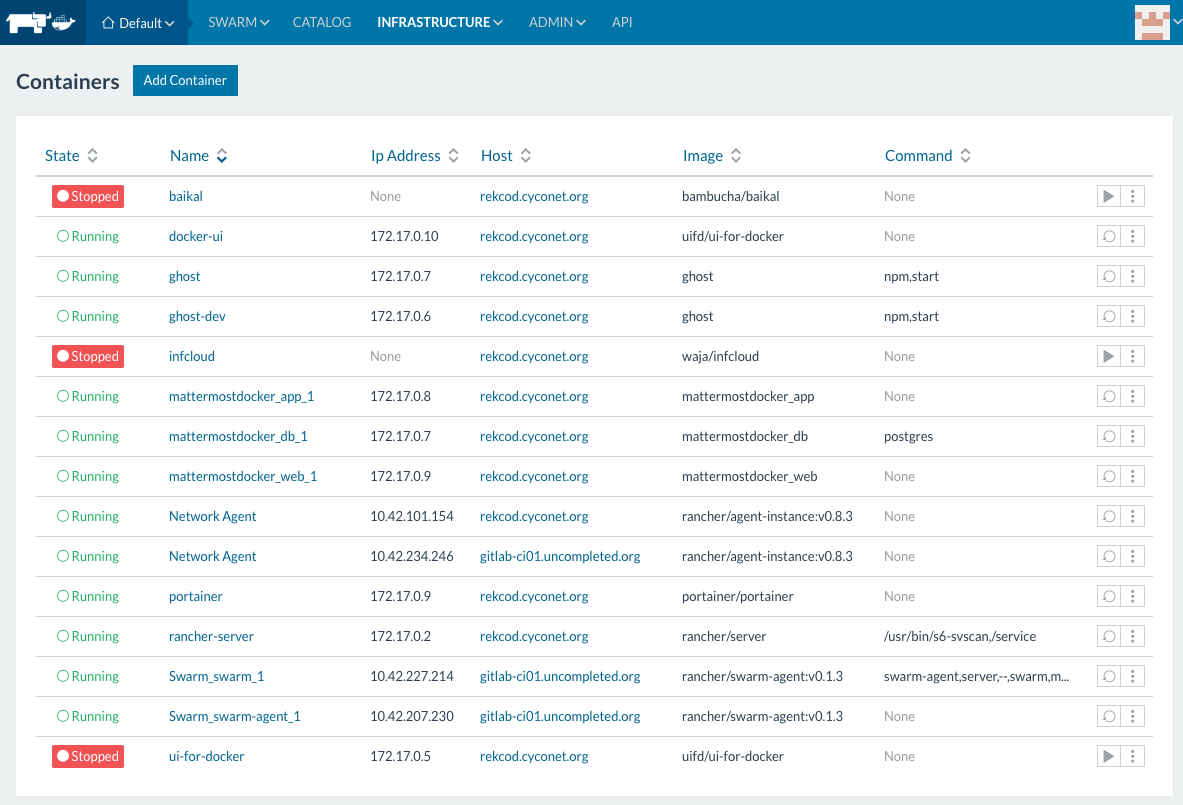
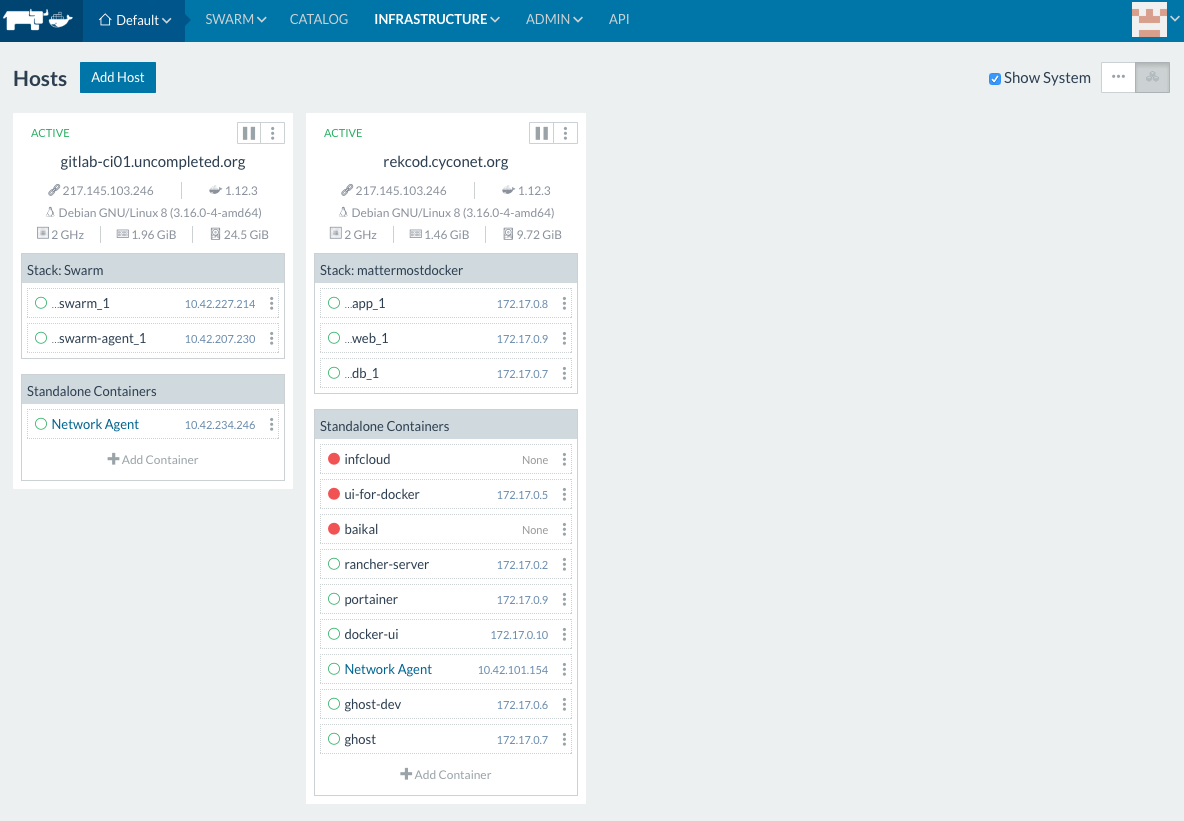
Since some time everybody (read developer) want to run his new microservice stacks in containers. I can understand that building and testing an application is important for developers. docker command line client is something you can do, but there you leave the gap between dev and ops.
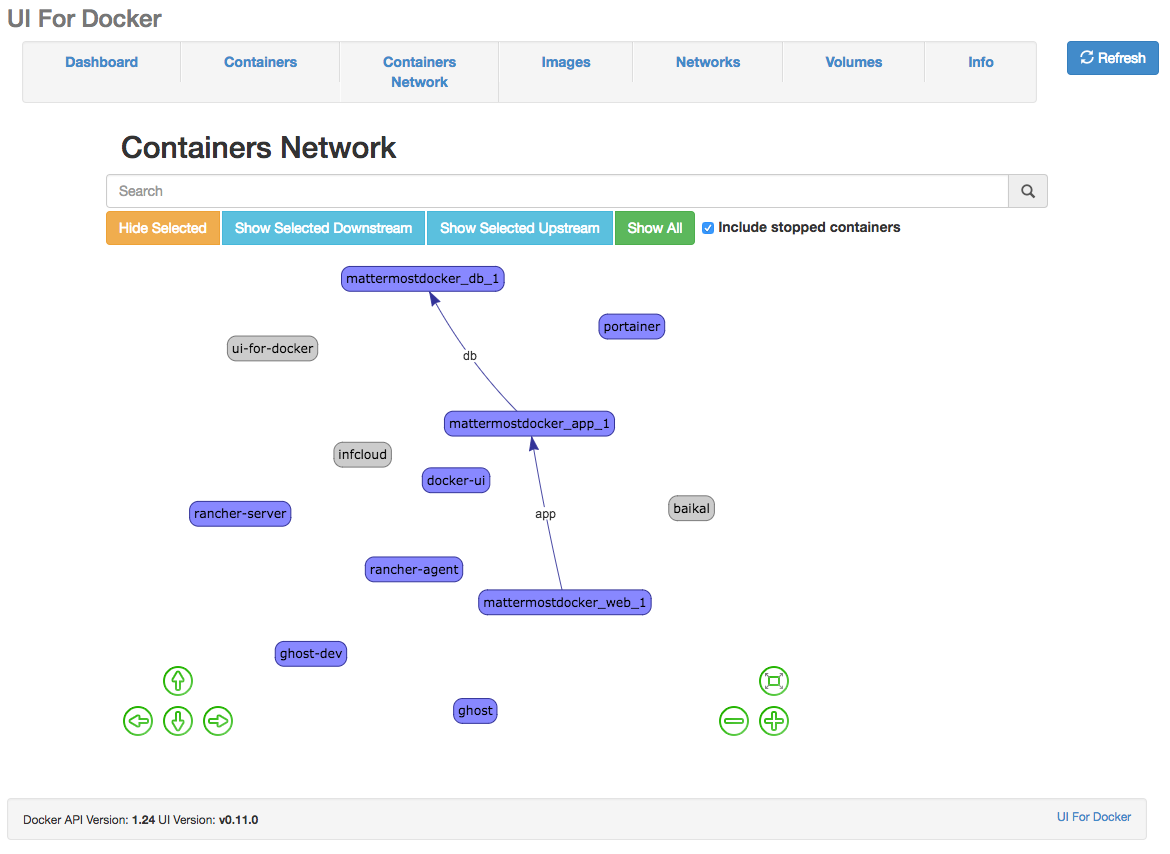
For the use cases, we are facing, Kubernetes and Mesos seems both like bloated beasts. Usman Ismail has written a really good comparison of Orchestration Engine options which goes into details.
To implement a patch, update the base image and then rebuild the application image. This will require systems and development teams to work closely together.So patching security issues in the container world changes workflow significant. In the old world operation teams mostly rolled security fixes for the base systems independent from development teams.
Surprisingly it is already November.
SOURCE_PREFIX_MAP instead of the older
proposal SOURCE_ROOT_DIR. This would be similar to GCC's existing
-fdebug-prefix-map option, which allows for better disambiguation between
paths from different packages.
mandoc's makewhatis is now
reproducible.
It is used by all the BSDs, including
FreeBSD, as well as Alpine
Linux and Void Linux.
Packages reviewed and fixed, and bugs filed
Chris Lamb:
schroot_type: jessie
in your variables.
You can install this locally as connection_plugins/schroot.py.
# Based on chroot.py (c) 2013, Maykel Moya <mmoya@speedyrails.com> # Based on chroot.py (c) 2015, Toshio Kuratomi <tkuratomi@ansible.com> # (c) 2016, Enrico Zini <enrico@debian.org> # # This is free software: you can redistribute it and/or modify # it under the terms of the GNU General Public License as published by # the Free Software Foundation, either version 3 of the License, or # (at your option) any later version. # # Ansible is distributed in the hope that it will be useful, # but WITHOUT ANY WARRANTY; without even the implied warranty of # MERCHANTABILITY or FITNESS FOR A PARTICULAR PURPOSE. See the # GNU General Public License for more details. # # You should have received a copy of the GNU General Public License # along with Ansible. If not, see <http://www.gnu.org/licenses/>. from __future__ import (absolute_import, division, print_function) __metaclass__ = type import distutils.spawn import os import os.path import pipes import subprocess import traceback from ansible import constants as C from ansible.errors import AnsibleError from ansible.plugins.connection import ConnectionBase, BUFSIZE from ansible.module_utils.basic import is_executable from ansible.utils.unicode import to_bytes try: from __main__ import display except ImportError: from ansible.utils.display import Display display = Display() class Connection(ConnectionBase): ''' Local chroot based connections ''' transport = 'schroot' has_pipelining = True # su currently has an undiagnosed issue with calculating the file # checksums (so copy, for instance, doesn't work right) # Have to look into that before re-enabling this become_methods = frozenset(C.BECOME_METHODS).difference(('su',)) def __init__(self, play_context, new_stdin, *args, **kwargs): super(Connection, self).__init__(play_context, new_stdin, *args, **kwargs) self.chroot = self._play_context.remote_addr #if os.geteuid() != 0: #raise AnsibleError("chroot connection requires running as root") # we're running as root on the local system so do some # trivial checks for ensuring 'host' is actually a chroot'able dir #if not os.path.isdir(self.chroot): # raise AnsibleError("%s is not a directory" % self.chroot) #chrootsh = os.path.join(self.chroot, 'bin/sh') ## Want to check for a usable bourne shell inside the chroot. ## is_executable() == True is sufficient. For symlinks it ## gets really complicated really fast. So we punt on finding that ## out. As long as it's a symlink we assume that it will work #if not (is_executable(chrootsh) or (os.path.lexists(chrootsh) and os.path.islink(chrootsh))): # raise AnsibleError("%s does not look like a chrootable dir (/bin/sh missing)" % self.chroot) self.chroot_cmd = distutils.spawn.find_executable('schroot') if not self.chroot_cmd: raise AnsibleError("chroot command not found in PATH") self.chroot_id = "session:" + self.chroot self.chroot_type = "stable" existing = subprocess.check_output([self.chroot_cmd, "--list", "--all"]) self.chroot_exists = False for line in existing.splitlines(): if line == self.chroot_id: self.chroot_exists = True def set_host_overrides(self, host, hostvars=None): super(Connection, self).set_host_overrides(host, hostvars) self.chroot_type = hostvars.get("schroot_type", self.chroot_type) def _connect(self): ''' connect to the chroot; nothing to do here ''' super(Connection, self)._connect() if not self._connected: if not self.chroot_exists: self.chroot_id = subprocess.check_output([self.chroot_cmd, "-b", "-c", self.chroot_type, "-n", self.chroot]).strip() subprocess.check_call([self.chroot_cmd, "-r", "-c", self.chroot_id, "-u", "root", "--", "apt-get", "update"]) subprocess.check_call([self.chroot_cmd, "-r", "-c", self.chroot_id, "-u", "root", "--", "apt-get", "-y", "install", "python"]) display.vvv("THIS IS A LOCAL CHROOT DIR", host=self.chroot) self._connected = True def _buffered_exec_command(self, cmd, stdin=subprocess.PIPE): ''' run a command on the chroot. This is only needed for implementing put_file() get_file() so that we don't have to read the whole file into memory. compared to exec_command() it looses some niceties like being able to return the process's exit code immediately. ''' executable = C.DEFAULT_EXECUTABLE.split()[0] if C.DEFAULT_EXECUTABLE else '/bin/sh' local_cmd = [self.chroot_cmd, "-r", "-c", self.chroot_id, "-u", "root", "--", executable, '-c', cmd] display.vvv("EXEC %s" % (local_cmd), host=self.chroot) local_cmd = [to_bytes(i, errors='strict') for i in local_cmd] p = subprocess.Popen(local_cmd, shell=False, stdin=stdin, stdout=subprocess.PIPE, stderr=subprocess.PIPE) return p def exec_command(self, cmd, in_data=None, sudoable=False): ''' run a command on the chroot ''' super(Connection, self).exec_command(cmd, in_data=in_data, sudoable=sudoable) p = self._buffered_exec_command(cmd) stdout, stderr = p.communicate(in_data) return (p.returncode, stdout, stderr) def _prefix_login_path(self, remote_path): ''' Make sure that we put files into a standard path If a path is relative, then we need to choose where to put it. ssh chooses $HOME but we aren't guaranteed that a home dir will exist in any given chroot. So for now we're choosing "/" instead. This also happens to be the former default. Can revisit using $HOME instead if it's a problem ''' if not remote_path.startswith(os.path.sep): remote_path = os.path.join(os.path.sep, remote_path) return os.path.normpath(remote_path) def put_file(self, in_path, out_path): ''' transfer a file from local to chroot ''' super(Connection, self).put_file(in_path, out_path) display.vvv("PUT %s TO %s" % (in_path, out_path), host=self.chroot) out_path = pipes.quote(self._prefix_login_path(out_path)) try: with open(to_bytes(in_path, errors='strict'), 'rb') as in_file: try: p = self._buffered_exec_command('dd of=%s bs=%s' % (out_path, BUFSIZE), stdin=in_file) except OSError: raise AnsibleError("chroot connection requires dd command in the chroot") try: stdout, stderr = p.communicate() except: traceback.print_exc() raise AnsibleError("failed to transfer file %s to %s" % (in_path, out_path)) if p.returncode != 0: raise AnsibleError("failed to transfer file %s to %s:\n%s\n%s" % (in_path, out_path, stdout, stderr)) except IOError: raise AnsibleError("file or module does not exist at: %s" % in_path) def fetch_file(self, in_path, out_path): ''' fetch a file from chroot to local ''' super(Connection, self).fetch_file(in_path, out_path) display.vvv("FETCH %s TO %s" % (in_path, out_path), host=self.chroot) in_path = pipes.quote(self._prefix_login_path(in_path)) try: p = self._buffered_exec_command('dd if=%s bs=%s' % (in_path, BUFSIZE)) except OSError: raise AnsibleError("chroot connection requires dd command in the chroot") with open(to_bytes(out_path, errors='strict'), 'wb+') as out_file: try: chunk = p.stdout.read(BUFSIZE) while chunk: out_file.write(chunk) chunk = p.stdout.read(BUFSIZE) except: traceback.print_exc() raise AnsibleError("failed to transfer file %s to %s" % (in_path, out_path)) stdout, stderr = p.communicate() if p.returncode != 0: raise AnsibleError("failed to transfer file %s to %s:\n%s\n%s" % (in_path, out_path, stdout, stderr)) def close(self): ''' terminate the connection; nothing to do here ''' super(Connection, self).close() #subprocess.check_command([self.chroot_cmd, "-e", "-c", self.chroot_id]) self._connected = False
Welcome to gambaru.de. Here is my monthly report that covers what I have been doing for Debian. If you re interested in Android, Java, Games and LTS topics, this might be interesting for you.
Debian Android
Next.