Search Results: "nic"

23 December 2009

Gunnar Wolf: Preparing for the geeky holidays with suitable wine

Preparing for the geeky holidays with suitable wine
Quoting The Klezmatics: It's everybody-else's annual end-of-the-year-time holiday, the name of which respectfully we do not choose to say, but that does not prohibit us in any concievable way from wishing you a very merry everybody-else's end-of-the-year-time holiday!
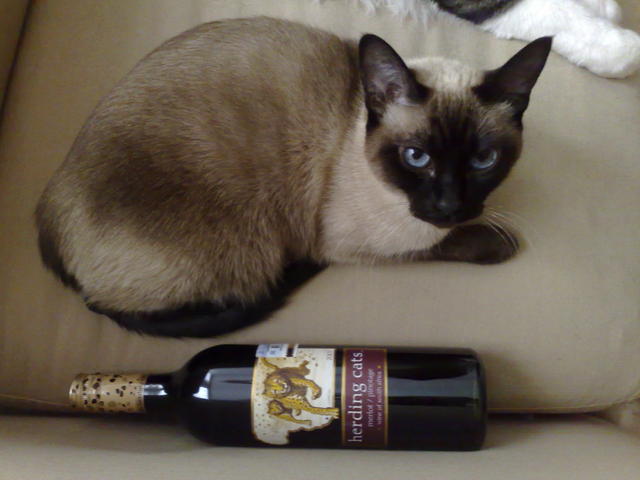
In order to properly welcome this 2010 in a geeky fashion, I got the following wines to share with my friends: Happy $ joyful_ocassion !

Gunnar Wolf: Now with "Siamese" theming

Now with "Siamese" theming
A nice, non-aggressive, brown-colored theme suitable for your siamese herding cats, courtesy of South African people trying to bring a better life to this world.

Gerfried Fuchs: Merry Season Greetings

This poem is only in German language, but I hope you can forgive me to run it in my English language feed nevertheless. I send you the best season greetings, have a nice time, use it well, relax and think about it. :)

Weihnachtsgedicht 2009

Vor ungef hr zweitausend Jahren
glaubt man, wurde ein Mann geboren
glaubt man, dass es Gottes Sohn gewesen ist
glaubt man, der uns alle erl sen sollte

Irgendwann sp ter
dachte man, das w re ein Grund, daran zu denken
dachte man, es w re ein Grund, in sich zu kehren
dachte man, es w re eine besinnliche Zeit

Heute jedoch
stresst man, um nur ja Geschenke f r alle zu finden
stresst man, weil jeder berall mit einem feiern will
stresst man, um sich besonders g tig zu zeigen

Ich w nsche mir, dass
wir helfen, uns zur ck zu erinnern
wir helfen, uns zur ck zu besinnen
wir helfen, wieder ruhiger zu werden

Ich w nsche euch ein erl stes, besinnliches,
g tiges und ruhiges Weihnachtsfest!

Robert Collins: bzr selftest uses testtools


the emperor has new clothes bzr has just changed the base class for its test suite from unittest.TestCase to testtools.TestCase . This change has cleaned up a bunch of test logic, deleted a significant amount of code (much of which was redundant with Python unittest) and added some useful and important features. bzr has only been able to make this change due to testtools expanding its mission from a simple aggregation of proven unittest extensions into one where new extensions that *make unittest more extensible*. My deepest thanks to Jonathan for permitting me to use testtools as the vehicle to put these extension-enabling-extensions (and for his patience in reviewing said changes!). The change was pretty easy: The bulk of the changes were in bzrlib.tests and bzrlib.tests.test_selftest. I chose to cleanup an ugly API at the same time which added a little scattershot across a number of tests. And there are more changes that can be done to take better advantage of testtools the amount of deleted and cleaned up code isn t complete. Even so, its a pretty clear win:
18 files changed, 228 insertions(+), 496 deletions(-)
What went? bzr had an implementation of TestCase.run. This function is the main workhorse of Python s unittest module, and yet sadly it has to be replaced to change the exceptions that can be raised(to signal new outcomes), or to improve on test cleanup. Testtools provides an API to permit registering new exception types and handlers for them. Like python 2.7 testtools also provides the TestCase.addCleanup API, and these two things combined mean that bzr no longer needs to reimplement the run method. For expected failures, bzr uses a helper method TestCase.expectFailure to perform an existing assertion and convert the test into an expected failure if that assertion does not trigger. This was another feature testtools already provides and thus got deleted. All the custom code for skipping and expected failures got deleted, and the other outcomes bzr uses turned into extensions (as per the run discussion above). In bzr test cases generate a log (because bzr generates a log) and previously the TestResult in bzrlib inspected each test that had been executed to extract the log. This was made simpler by using the details API that testtools provides (see testtools.TestCase.addDetail), which permits tests to add arbitrary data in a semi-structured fashion. This is supported by subunit and a long standing bug with bzr selftest --parallel was fixed as a result logs from tests run in other processes are now carried across the process barrier intact and are presented cleanly. Some other minor cleanups are in unittest compatibility code, where bzr would degrade gracefully with unittest runners, and testtools provides such logic comprehensively, so all that got deleted too. Whats new? I think the most significant new facility that testtools offers bzrlib is assertThat. This assertion is inspired by the very nice assertThat in JUnit (which has changed substantially since Python s unittest was written based on it). This assertion separates the two concerns of raise an exception and decide if an exception should be raised . The separation allows for better reuse of custom checking code, because it permits composition in a cleaner way than extra assertion methods permit. Testtools does not include many matchers as yet, but matchers are easy to write, and if one were to write a small adapter to the hamcrest library, there are a bunch of ready made matchers there (though they have a very Java feel such as is not meaning is which is why Testtools did not use that library). Secondly, the addDetail API referenced above, in combination with testtools.TestCase.addOnException will permit capturing the entire working area when a test fails, something that developers currently have to fiddle about with breakpoints to achieve. This hasn t been done, but is a straight forward patch I hope to do in the new year. Lastly, Testtools offers testtools.TestCase.getUniqueInteger and testtools.TestCase.getUniqueString, which are not as yet used in bzr tests, but we may start using them soon. Beyond that, the other features of testtools are already present in bzrlib, and we simply need to find and delete more duplicated code.

Benjamin Mako Hill: What's in a name?

Over the summer, there was a bit of a tussle at the highest level of Ubuntu governance over whether or not Canonical Ltd., the company that funds the majority of work done directly in Ubuntu, should name its file syncing and backup service Ubuntu One. Canonical's service involved a freely licensed client included in the Ubuntu distribution but, as a network service running on Canonical servers, it was not clearly a part of Ubuntu (the GNU/Linux distribution) or Ubuntu (the community) in the way the term was usually used within the community. Although the network service itself was not Franklin Street Statement free, this was not the most important issue for everyone who objected to the name. The major issue for many seemed to boil down to the fact that, free or not, Ubuntu One is a service run entirely by Canonical outside the reaches of the Ubuntu governance structures. Decisions were made and not everybody -- and maybe not anybody -- was absolutely happy with the outcome. My goal is not try to revive old arguments here. As far as I'm concerned, the issues are settled and the service is called Ubuntu One. That said, the questions raised during the episode are fundamental to Ubuntu and to other firm-sponsored FLOSS projects. Now that the dust has settled, they are worth reflecting on. From a legal perspective, there never was any ambiguity. Canonical "owns" the Ubuntu trademark. In this important sense, "Ubuntu" means whatever Canonical says it means. This is hardly new. As just one example, the Official Ubuntu Book (of which I am an author) was written by community members but became official because Canonical blessed it. But despite the fact that they don't need to, Canonical has often consulted with the community and its governance structures about trademark licensing policy. This was also not a case of Canonical not listening to the community. Canonical employees approached the Ubuntu Community Council (Ubuntu's highest governance board of which I am a member), listened carefully to concerns, and responded thoughtfully. The question was not even about a clash between what Canonical and the CC thought about the issue. An unambiguous majority of the board, including all the Canonical employees and several of the community members, supported the idea of Canonical using the trademark. The question was one about who gets to make the decisions about the Ubuntu name and about what role the community and Canonical would each play. Despite the fact that a majority of the Ubuntu community council was likely to support the proposed name, the CC was told by Canonical CEO Mark Shuttleworth that a vote was irrelevant. Canonical made it clear that decisions about the Ubuntu trademark were simply not in the CC's purview. The decision on how the name was to be used was something that Canonical was not willing to delegate to an "outside" (the firm) governance body. Few businesses would. And although I don't agree with the decision as a community representative, I might have even made the same call from Canonical's shoes. In traditional firms, it's usually pretty clear where the organization's boundary lies. In FLOSS projects -- and especially in FLOSS project like Ubuntu who are sponsored in very large part by a single for-profit company -- boundaries are fuzzier. The conversation about "Ubuntu One" can be seen as a fight over what "Ubuntu" refers to, and, more importantly, who gets to answer that question. In deciding whether to call a service "Ubuntu", a decision is made on what Ubuntu is. Names are powerful. Is Ubuntu just a Canonical project? Are Ubuntu's contributors really just Canonical contributors by proxy? I think the answer to both questions is "no" but the boundary issues involved are complicated and under constant negotiation. Every time Canonical uses the Ubuntu name itself or grants others the ability to do so, these boundary issues are negotiated, one way or another. This boundary setting work reveals an important tension that firms releasing FLOSS must all struggle with. To what extent and in what ways do communities get to decide what a FLOSS project is and to what extent do sponsoring firms get to do so? How should projects and firms do this most effectively? What should we even be optimizing for? I think that any resulting balance has a huge effect on whether a FLOSS project is, on one hand, released under a free license but run like any old corporate project or, on the other, a true "bazaar" style project where no single firm dominates -- or where they fall on that spectrum. Names and trademarks are one way that projects define their own identities and act as an important frontier in this balancing act. As every firm/project negotiates their own answers to questions of names and boundaries, there are important implications for the project's ability to attract volunteers, solicit contributions from other firms, and more. The confusion around conversations about Ubuntu One shows that we still have a lot to learn.

Peter Eisentraut: Patience

Occasionally, there are concerns expressed about the adoption rate of Python 3. Now that PostgreSQL 8.5alpha3 is released with Python 3 support in PL/Python, let's see what the schedule might be until this hits real use.

Python 3.0 was released in December 2008 and was admitted to be somewhat experimental. At that point, PostgreSQL 8.4 was already in some kind of freeze, so adding a feature as signicant as Python 3 support was not feasible at that point.

In fact, we opted to do two significant rounds of fixing/enhancing/refactoring of PL/Python before tackling Python 3 support: fixed byte string (bytea) support and Unicode support. Both of those benefit Python 2 users, and they made the eventual port to Python 3 quite simple.

PostgreSQL 8.5 might release around May 2010. Debian squeeze is currently in testing and doesn't even contain Python 2.6 or Python 3.1 yet, due to some technical problems and a bit of infighting. Debian freezes in March 2010, which means without PostgreSQL 8.5 but hopefully with Python 2.6 and 3.1. The final release of squeeze should then be later in 2010, which means the earliest that a significant number of Debian users are going to look into moving any of their code at all nearer to Python 3 (via 2.6) is going to be late 2010. (Other operating system distributions will have other schedules, of course.)

The next Debian release (squeeze+1), which will presumably include PostgreSQL 8.5 or later and a solid Python 3.x environment, will then not be released before January 2012, if we believe the current 18-months-plus-slip cycle of Debian. So it will be mid-2012 until significant numbers have upgraded Debian and PostgreSQL to the then-current versions. If you are sticking to a stable and supported operating system environment, this is the earliest time you actually have the option to migrate to the Python 3 variant of PL/Python across the board for your applications. Of course in practice this is not going to be the first thing you are going to do, so by the time you actually port everything, it might be late 2012 or even 2013. Also, if you are heavily invested in PL/Python, you are probably not going to upgrade much your other Python code before PL/Python is ready.

This will then be 3 years after the PL/Python 3 code is written and 4 years after the release of Python 3.0. And 2 years before Python 2.x is expected to go out of maintenance in 2015.

So, to all users and developers: patience.

Incidentally, I fully expect to still be using IPv4 by then. ;-)

Jose Luis Rivas Contreras: It s Google testing us?

I use Firefox and Chrome on parallel so must webs I visit on Chrome I do it as well on Firefox and today Google looks so SO different! On Firefox the layout has blue buttons, the search layout is so different (and nice but), weird at the beginning but with so much logic after you use all the features. It has something with dates ranges that s very nice. It s better using Google on Firefox than Chrome now :-) Here s screenshots on Firefox and Chrome.

22 December 2009

Lucas Nussbaum: Doctor Capello!

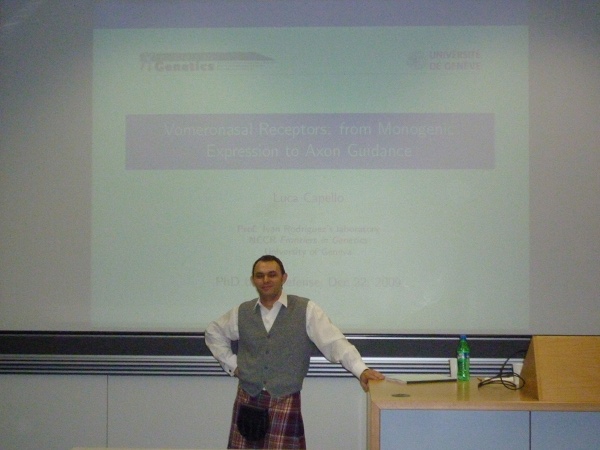
He might too shy to tell everybody, but the world must know. Luca Capello successfully defended his PhD thesis today at Universit de Gen ve, getting a Tr s Bien mention. I must admit that my last biology lesson was 13 years ago, so I m not sure I can really comment on his work on Vomeronasal Receptors: from Monogenic Expression to Axon Guidance. But I was very impressed by the quality of the experimental process, especially compared to what we do in computer science. Debian was well represented at the defense, since Axel Beckert, Didier Raboud and the Debian kilt were also there. Welcome to the list of Debian Developers holding PhD degrees, Luca!

Luca waiting at the door (again).
luca1
Luca ready to start.

Gustavo Noronha Silva: WebKitGTK+ HackFest!

The WebKit hackfest is now over, and I think it was a very productive week. Thank you very much to all who attended, to Igalia for organizing the hackfest, and hosting us so well, to Collabora for having sponsored the event, and allowed me to spend the week working on it, and to the GNOME foundation for having payed all of my costs!
Xan blogged about day 0, and also a summary of all that was done, so I ll focus on the stuff he forgot to mention ;D. The hackfest, for me, started on day -1 with me not allowing Xan to go sleep before he had reviewed a couple patches of mine to fix DOM context menu handling. It always bothered me that Epiphany failed to open right-click menus in some pages, or let pages handle the right click. Well, this is fixed now, and Zimbra users can now have their right click menus, and WoW players can remove talent points from their calculators =P. It turns out that many of the attendees don t like pages messing with their context menus, though, and they had some good points to back up their positions (like pages making it hard to save images, for instance), so I implemented a way to force openning the custom menu: Ctrl-rightclick. We wanted to use a GtkInfoBar to display questions regarding the form saving - our initial implementation always saved all credentials, but that didn t sound good enough. Xan and I thought it would be very complicated to make this work, because there were assumptions in the code regarding which widget contains which, but it turned out to be quite trivial - making EphyEmbed a descendant of GtkVBox instead of GtkScrolledWindow, fixing a small number of assumptions, and that was it. The passwords are saved in the GNOME Keyring. It s interesting to point out that GNOME Keyring seems to be unhappy with the number of passwords a browser stores - Xan s daemon was hanging, crashing, and spawning a large number of threads. My daemon decided to take up some 300MB of RAM at one point. It s somewhat funny to see how much a browser pushes the limits of our platform. We are hoping this will improve with the new keyring APIs, and the rewrite that is ongoing. It s nice to see my browser form passwords in seahorse, though, and be able to manage them like any other. One more thing worth of notice, although this post is already a bit too big: one of the main concerns people had during the Hackfest was on making build time smaller. Touching a single file in WebCore causes a debug build of 10 minutes on my laptop. Evan Martin and Benjamin Otte made a push at removing unnecessary includes from WebCore, and WebKitGTK+ files, which brough the build time down a bit. They end up inspiring Aroben, from Apple, to go even further into this, and remove many includes from files all over WebKit. Evan was also able to bring linking time down by making it possible to link libwebkit without having to build all the intermediate libraries, which brought build time down to 1 minute, when touching a single file in WebCore. Behdad and I also started looking into breaking WebCore up into lots of shared libraries for Debug builds, since we don t care too much about speed penalties in those. None of these experiments got committed yet, but I am hoping we will be having a better time hacking on WebKitGTK+ in the near future. It was awesome meeting everyone, by the way! See you around =).

21 December 2009

Martin-Éric Racine: Wanted: a coherent, sane Finnish political party

In more than 11 years in Finland, I've been politically involved in a couple of political parties on the Right side of the spectrum - mainly because those parties tend to favor a free market economy and a work-oriented immigration. In one case, I was invited by fellow immigrants to attend the meetings of their favorite party's English section, because of my expertise on Immigration legislation and common practices. In an other case, a member of the Finnish parliament invited me to participate in his party's immigrant workgroup, which resulted in my getting involved in a number of proactive initiatives and eventually joining that party as a card-carrying member. Simultaneously, I was approached by no less than 4 Finnish political parties to become a candidate in the municipal elections (in Finland, foreigners who have lived at least 2 years on an A-status residence permit can vote and stand as a candidate in municipal elections). Despite this, I've come to the conclusion that none of these Finnish political parties is genuine: On one hand, there's politicians who claim to know everything about the Immigration question and yet their speeches tell an entirely different story than what immigrants experience. On the other hand, there's politicians who complain about the immigrants' lack of participation in political life, but who quickly add that their personal group of supporters is all they're interested in hearing from. Correlating these facts, it's been found by many politically-involved immigrants that Finnish political parties don't genuinely want to involve immigrants; all they are interested in is acquiring a few extra votes from the immigrant population and in transferring those votes to their party's star Finnish candidate, who often is someone favored by the party's old-timers but disavowed by the majority of grassroot members. In a few more extreme cases, party brasses will sheepishly admit that all they want is a couple of niggers in the candidate list to show a vague sense of adhesion to the multicultural agenda - despite the assurances they have given to often naive immigrant candidates that they "genuinely" hope that they'll be elected. As it turns out, many immigrants are actively involved at the grassroot level and receiving the praises of their Finnish colleagues for their innovative and proactive initiatives. As a result, genuinely interested Finns have joined forces with active immigrants to launch various initiatives for improving Finland's competitive position in the global economy through a thriving cosmopolitanism and a stronger culture of entrepreneurship. For instance, I am personally involved at several public and private sector initiatives. Nonetheless, grassroot initiatives can only ever accomplish so much; without the unflinching support of Finland's significant political players, several key elements of these innovative solutions cannot be implemented. However, given the grassroot's frustrating experiences of the political scene, one cannot help but wonder: Is there any Finnish political party whose actions are coherent with its stated political agenda and in sync with the grassroot initiatives being put forward by the immigrants and their Finnish associates?

20 December 2009

Gregor Herrmann: RC bugs 2009/51

after attending the Munich BSP 3 weeks ago (thanks for inviting me, & thanks especially to Stefan for hosting me) I've tasted blood & started to look at our RC bugs more often. I'm still far from zack's RCBW frequency; but I thought I'd give a short overview anyway; maybe it motivates others to chime in? So here's a list of RC bugs I've touched in the last weeks (not counting some merges in the BTS): remarks:

Russell Coker: I Bought the Bose QC-15

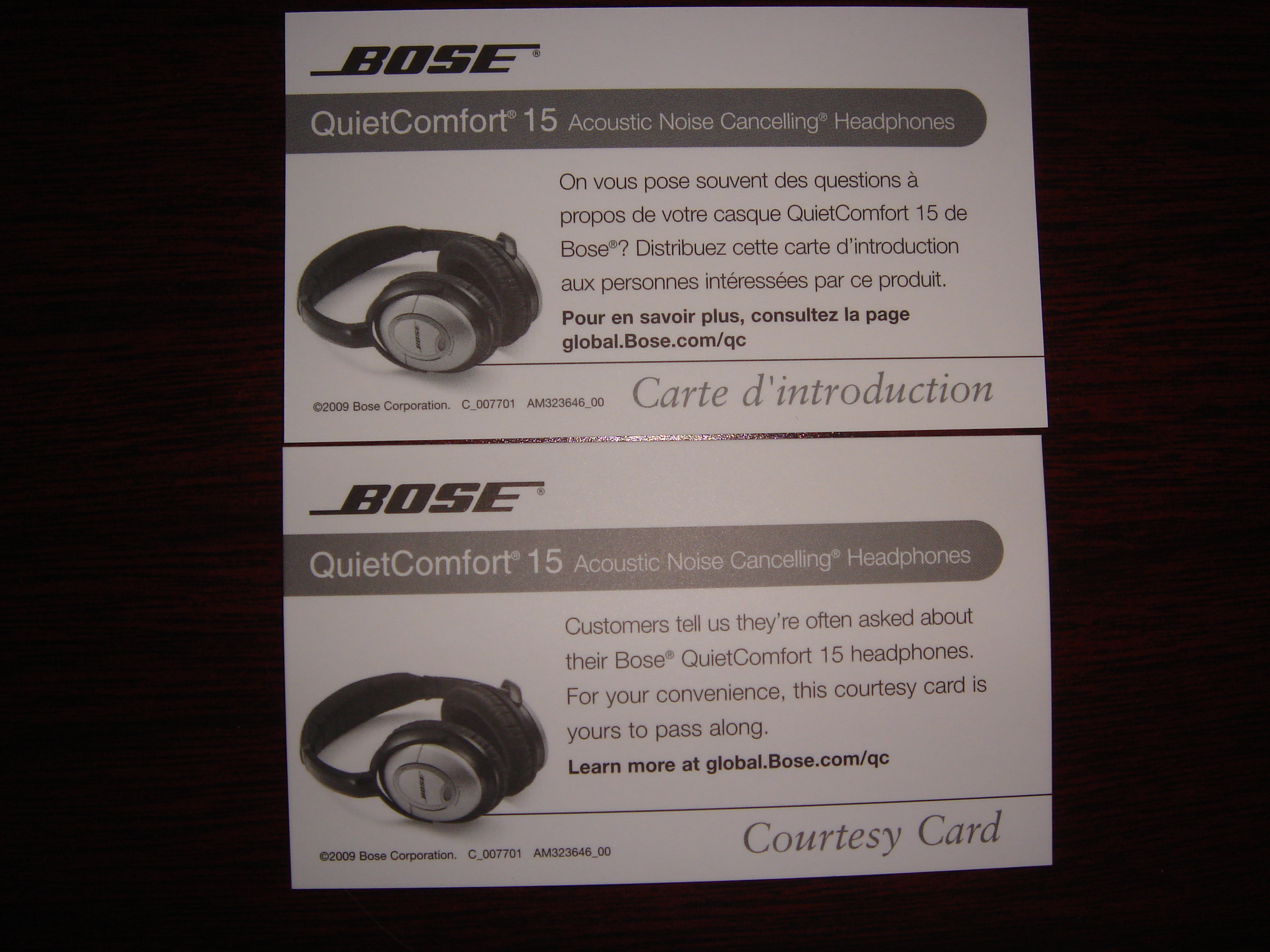
I bought the Bose QC15 noise canceling headphones for my trip back from the US. See my previous posts about Noise Canceling Headphones [1] and Testing Noise Canceling Headphones [2] for the details of my search. I first tried my new headphones in my hotel room and they worked really well at blocking the noise from the nearby road (El Camino Real in Menlo Park) as well as the noise from the heater in my room. At the airport they entirely blocked the sound of the airport air conditioning system (which was surprisingly loud I didn t realise how loud until I tried the headphones). On the flight the headphones worked really well. I used them for hours when they weren t plugged in to any source, just stopping the noise was a huge benefit. I was also able to listen to music (both MP3s on my laptop and the plane sound system) at a relatively low volume with an apparent high quality. The Bose store I visited in Stanford mall has a sound system set up to emulate the noise you experience inside a jet to demonstrate what the headset can do. It really lives up to this demonstration! I recommend them to anyone who wants over-ear noise canceling headphones and can afford $US300 + tax. But one thing to note is that not everyone likes such things my wife didn t like the sound that they generate (the least bad way to describe it is as a soft hiss). This is definitely not something you would want to buy based on reviews alone, it must be tested in-store. The main technical suggestion I can make for improvement to the QC-15 is for it to have slightly softer and thicker padding where it contacts the sides of the wearer s head. I find that my glasses prevent it from making as good contact as I would like, and that when wearing it while eating the contact is significantly broken with every jaw movement which is really annoying. A minor suggestion is that every pair of headphones should have the left and right ear pieces clearly marked, I really shouldn t have to read an instruction manual to discover which way to wear it. One thing that surprised me was the inclusion of business cards for the headset! Here is a picture:

The picture links to a larger picture that also shows the French version of the same text on the other side. I was astonished by this, encouraging happy customers to help sell your products is a reasonable and effective form of product promotion (really this is what I m doing for Bose with this blog post). But giving customers business cards is going too far anyone who wants me to hand out their business cards can offer to pay me to do so (and I probably won t accept). But if such things are considered to be a good idea then here are a few suggestions for other things that they could do:
  1. Create a Bose dating site where one can meet people who like music and traveling (this does sound appealing). In about 10 years the children of people who meet that way would start buying audio gear
  2. Start a Bose fan club.
  3. Create a template that be used by a tattoo parlor to make a Bose tattoo.
  4. Sell Bose fan t-shirts to people who aren t dedicated enough to get a tattoo.
  5. Register Bose as a religion, that gets tax free status among other benefits.
It s a pity that Bose doesn t make any water-proof noise canceling headphones. It would be something for their marketing people to wear while jumping over a shark on water skis [3]. But seriously the best thing that Bose could do to have their products promoted would be to start by printing the web site for each product on the item, my headset has two patent numbers listed which seem unlikely to provide any benefit for anyone, in that space they could have printed the global.bose.com/qc URL that is on the business card. Of course providing the URL really doesn t do any good when the URL actually is useless. It starts by giving me a page asking which country I am in the correct thing to do is to use geoip to determine the country and then give the user the option of selecting another country if that one is not ideal. Then after I select a country it doesn t take me to a specific page for the product! I could have typed in www.bose.com and got the same result (in terms of US shopping at least) while typing six fewer characters! Next like most corporate web sites the Bose site doesn t appear to be configured for longevity of URLs URLs which are clearly designed for the computer rather than humans are expected to change without warning. This discourages linking to any page that one might discover through web searches or navigating the site, and causes them to lose a lot of potential links. Having specific URLs for all the products (including the obsolete ones) that are designed firstly for humans to read and write would be a good idea. It would be really useful to be able to compare the features of new products with the ones that are going cheap on eBay. For someone who is considering buying a new product now the purchase decision would be easier if they knew that the company would provide resources to help them get a better price on eBay in a few years if they want to upgrade to a newer model. One thing to keep in mind is the fact that the reputation of a company (which makes a dramatic impact on the prices customers are prepared to pay) depends largely on a long history of making quality products. Telling customers about those historic products is one of the most sensible things that most corporations fail to do on the Internet.

Julien Danjou: Teething troubles

It's not that often that I start something from scratch. It's an amazing feeling to start a new project, to start writing something new. I like that. It's creation, it's an artistic part of our computing stuff. I feel like a code artist. And what I like even more is that little feeling that you are going in an unknown land. Some area in this tech world where nobody ever came before you, or only a few pioneers. That the sensation I got starting to using Cython, Python 3 and various other tools. I just spent half of my time trying to fix problems, rather than working on *my* code. Problems in autoconf macro not knowing Python 2.6 or Python 3.1. Problems and limitations in Cython. And problem in Python. That last one was a hard one. I'm still a beginner in the Python world: I barely know anything. And I was trying to use something nobody never did: building an embedded Python with a set of built-in modules. I spent hours trying to find why one type of module importing was badly failing. I finally found the answer thanks to a guy. who has the same problem A guy ? No. A pioneer. What do I say? A hero. He's been my week-hero! Thank you Miguel Lobo because you found the bug I chased for hours and because you even reported it as issue 1644818, including a patch! How not damn wonderful is that? I will not bore you with the technical details of that bug, since nobody cares. Nobody cares, even the Python guys, since that bug has been opened for 3 years, and nobody even reviewed in that time. I found an old thread about that bug where some guys were wanking about how they should do the review, because Miguel pushed for several weeks to have a review, back in 2007. But that bug was in my way. I had to do something. So I prepared my mail reader, mounted my web browser and here I was for a uniq quest: getting a Python bug fixed. At that point, if you did not stop reading earlier, you might get very excited. Don't be, spoiler, it's still not fixed. You'll have to wait the end of the season and see all the episodes I'll have to write to get the end of the story! Let's continue. I had to create an account on the Python bug tracking system. That was a trivial task for a man like me (you bet). Then, I launched a verbal attack, something you rarely see in a bug tracking system. Something I knew would awake any developer caring about their software.
Julien Danjou: Is there any chance to see this *bug* fixed someday?
I had the deep feeling that my quest was starting here. How many days would I have to wait until I get an answer? Time was passing. Minutes were ticking while I was waiting, sat in a comfortable sofa in a softly lighted room. It seemed like all my life was shorter than the delay I had to wait to get an answer. After waiting for hours, suddenly, and only 15 minutes later, I got an answer:
Martin v. L wis: Please ask on python-dev. I may be willing to revive my five-for-one offer.
Martin? Don't know that guy. Who is he? Who is he like? Will he fix that bug? What is this offer? So many question without an answer. But he asked to ask on python-dev, and I said: challenged accepted! I will write a mail to python-dev to get that bug fixed. Which I did. I sent a short (but well written you know, I made efforts) "WTF?" to pyhon-dev. And then the guy asked me to review 5 bugs so he will review and fix this one. And this is how I said that he was pissing me off for blackmailing me to fix a bug that was its "duty". Therefore, this is the end of the story so far. Will that bug be fixed some day? There's a hope, because another guy jumped in and took the bug assignment. To be continued. My conclusion about all that story: that is a little rude to start something new, with new tools, and get quickly into teething troubles. It's even more harsh to enter a community because you just found bugs, and be not very well received when you ask to apply a 10 lines long fix somebody wrote 3 years ago to fix it. I'll probably still use Python :-), but I get a darker image of its community now.

Jose Luis Rivas Contreras: Collecta, searching on real-time

Real-time search on Collecta of xscreensaver

I haven t read of it, and it seems it has been around since a good time. Collecta is a search engine for things in real-time. It searchs on Twitter, Identi.ca, Youtube, Flickr, Blogs, Ustream and shows you what people is saying. It s like a meta-searcher, I guess using API s from those services. But it has it s own API so it will be great for someone that s into web2.x and wants information on real-time from everywhere with just one API. There s a lot of people doing this already and there s a gallery about their development. Maybe tomorrow I will get a little into it, it looks really nice. BTW, it s what powers search.identi.ca

19 December 2009

Frans Pop: debmirror IV

The Debian FTP-masters recently changed the way gzipped meta files are compressed in order to make them more efficient to update using the rsync option. This was done by adding the --rsyncable option when calling gzip. Consequence was however that when debmirror compressed Packages, Sources and Contents files after updating them by applying diffs, the md5sum of the gzipped file created by debmirror no longer matched the md5sum listed in the Release file (because debmirror did not use --rsyncable). Result was that debmirror would also download the full gzipped Packages, Sources and Contents files from the parent mirror, something the diffs are meant to avoid. Not nice. Anyway, this has been fixed in debmirror 2.4 which now by default also uses --rsyncable when gzipping the updated meta files. I've also uploaded a fixed version for Lenny (20070123lenny1), which should soon be available from proposed-updates and will be included in the next stable point release. For archives that also provide diffs (most archives don't have them) but do not have rsyncable gzipped files, the default options used when calling gzip can be overruled using the new option --gzip-options (only in version 2.4). Tip: if you are using the rsync method to download files, using --diff=none may well be more efficient now that the archive has rsyncable gzipped meta files. Version 2.4 also has a few other improvements and fixes. If you're currently using version 2.3.x an update to the new version is probably a good idea.

Michael Banck: 19 Dec 2009

Tutorials at the Garching Debian Stammtisch Munich traditionally used to have a lot of Debian Developers, but over the last couple of years quite a few of us who used to be students graduated and moved elsewhere or became very busy with their day jobs. We still meet for having a beer and a chat, but not as much as some years ago. We used to meet about once a month, but in 2009 we only managed to meet four times (however, we organized a Bug Squashing Party in November and had a special meeting as Lenny Release Party in February) As the meetings are really rather informal and not necessarily very Debian related, it is difficult to attract new people this way. So Johannes Wiedersich and I decided to try a more hands-on approach by having a second meeting in Garching, in the student-run bar on the campus of the Technische Universit t M nchen (TUM). The idea was to get more of the local science, mathematics and computer science students (as well as possibly interested faculty members) involved. We tried a first time about a year ago, but after two or three meeting in late 2008 and early 2009, we lost momentum. However, we began organizing the meetings again with the start of the winter term, and had two rather successful meetings so far. For the first meeting, we basically handed out some information on how to get involved locally (the Debian-Munich list, its subscription address, the wiki etc.) and discussed Debian in general and Debconf11 in Munich in particular. About half a dozen people showed up, and two of these attended the Bug Squashing Party later that month, and another one (a faculty member) got very active in Debconf11 organization. Thus, I was quite happy with the outcame of that meeting. Some days ago, we had another meeting, and this time I was doing a live-tutorial on Debian package building. As Johannes was ill, we did not manage to announce or publicize the meeting well in advance, so only three people showed up. Still, I think it went rather OK, and we will be doing another Debian package-building tutorial for the next meeting, and possibly other turorials/workshops afterwards (ideas so far include library maintenance, Debconf, how the Debian community is organized and how to get involved in it). As doing a live-tutorial on one notebook is a bit difficult if you both have to type on it and people should see what happens, we will either use some extra hardware next time, or move to some nearby seminar room with a projector, this will be announced in advance. So if you are on Garching campus or nearby and interested in Debian development (and Debian package-building in particular), come to the next meeting on January 13th! We decided to meet on the second Wednesday of each month, at 18h. Subscribe to the Debian-Munich list to get the invitation or watch out for the flyers on the campus.

Robert Collins: Debianising with bzr-builddeb


Bzr build-deb is very nice, but it can be very tricky to get started. I recently did a fresh debianisation of a project that is in bzr upstream, and I thought I d record the recipe to make it work (at least until the various bugs making it hard re fixed). Assuming that the upstream uses bzr, it goes like this:
  1. Start with a branch that is close to the code you want to Debianise. E.g. if the release was off trunk, 3 commits back: bzr branch trunk -r -3 debian
  2. Debianise as normal: put the tarball with the right name in the parent dir, add a debian directory and fiddle until you build a package you re happy with. Don t commit while doing this.
  3. Build a source package- debuild -S, or bzr builddeb -S
  4. Revert your changes bzr revert.
  5. Import the dsc bzr import-dsc ../*.dsc
  6. Now, you may find that some dot files, such as .bzrignore have been discarded inappropriately (there is a bug open on this). If that happened, keep going. Otherwise, you re done: you can now use merge-upstream on future upstream releases, and debcommit etc.
  7. bzr uncommit
  8. bzr revert .bzrignore (and any other files that you want to get back)
  9. debcommit
  10. All done, see point 6 for details.
Hope-this-helps

18 December 2009

Asheesh Laroia: Diversity in Free Software: South Asians as an example

As someone born in India, I sometimes look around and wonder, Where are the Indians (and other South Asians) in Free Software? (I don't mean to exclude South Asians from other countries, so I will lump us together. I believe that we are more similar than we are different, although I know more about India than about the rest of South Asia.) There is no shortage of Indians performing information technology jobs in the United States. The same is true in academia; the Computing Research Association uses National Science Foundation data to show about 15% of computer science bacholor's degrees are awarded to "Asians or Pacific Islanders." These are not precise numbers targeted at South Asians in particular, but they confirm a general feeling that plenty of technologists in the United States are from that part of the world. South Asia is quite a populous region, coming in at over one billion people. It, too, has plenty of technology workers. So much FLOSS conversation happens in English, and India is well-suited to handle this; English is an "official language". Indian academia reports that there are 350 million English users and about 90 million English speakers. So let's visually compare the Debian developers map for South Asia (over one billion people) and that of New Zealand, a country of four million. India: New Zealand: These two countries have about the same number of Debian developers (at least, who have marked their location in the Debian LDAP database). About four. South Asians comprise about one sixth of the world's population. There are about one thousand Debian developers; we represent at best 1% of that. These numbers are comparable to the under-representation of women in Free Software, especially when you compare the figure to South Asians' over-representation in the rest of information technology. That makes me sad. Take a look at the Debian developer map again. You'll see that Debian is certainly not an Americans-only project, or even an English-speakers-only project. South America has a respectable dotting of developers, and Western- to Central-Europe are packed. I have strong feelings about Free Software. It emerges from an ethos of personal empowerment, and with open source it has become a dominant force in computing. Yet there are plenty of sharp people -- at least women and South Asians -- who, somehow, become culturally excluded from participating.

Why care about diversity? Consider the diversity of contributors we already have. Some contribute to Free Software because of particular business needs, such as what caused Avi Kivity to write KVM, the new leader in Linux-based virtualization. Everaldo's art background gave us the "Crystal" icon set that set the standard for sharp-looking icons on the Free Desktop for years. Josh Coalson knew about compressing sound, and his Free Lossless Audio Codec is now the standard in high quality audio. We already have a great deal of diversity. We should be celebrating! Back in 2001, FLAC's users were celebrating. In that year, I decided to ditch proprietary operating systems because I felt I could achieve all my computing needs in the Free world. A happy user of FLAC myself, I lurked on the mailing list as I watched grateful people thank Josh for the great software he wrote. Different contributions will excite different sorts of users. The more different people we have improving FLOSS, the more happy users we can make. Happy users of FLOSS are Free users. Happy users can become contributors, putting forth code, documentation, translations, and word-of-mouth marketing. The first reason to improve diversity in FLOSS is to better suit our users' needs. The more diversity we have in our contributors, the more chance we have of tickling our users in the ways that please them the most. I wish to see an end to software that restricts users' freedom, so I want to see us build the tools that users want. One thing that pleases me is when I see other people contributing who seem similar to me. When I went to Debconf, I was thrilled to be surrounded by people who cared about software freedom and technical excellence. I had even more fun being social, chatting about rainforests, mutual friends, websites, and music. I might have had the most fun playing the card game Mao. A second reason, then, to improve diversity in FLOSS is to increase contributor retention by increasing joy. Mao was an example of a cultural bond I happened to share with a handful of Debianites. The more diversity we have, the more frequent these sorts of coincidences will be. The final, most obvious, reason to reach out to groups of people who do not typically contribute is that we can increase our numbers. That by itself is so valuable. Ubuntu sees 100 new bugs per week, even after the bug squad's efforts. If we can do a better job of recruiting new contributors, the raw numbers give us more strength in creating and maintaining world-class software as well as letting the world know about it.

Changing the balance I believe that there are plenty of South Asians quite capable of contributing to FLOSS. I believe the same of women. I believe the same of men. Back to the topic at hand. Why do the South Asians vanish when we look at Free Software, not tech in general? There are plenty of reasons I can dream up, based on my experience with Indians.
  • Plenty of South Asian parents urge their children to make low-risk career choices.
  • My mother reports that schools in India focus on memorization instead of creativity. This can leave little room for extracurricular pursuits.
It's tough for FLOSS advocates to work directly on these distant issues. But I think we can focus some problems we can help solve. Crucially, awareness of Free Software spreads best by social circles. I learned about Linux from a friend at a summer camp. I'll repeat that:
  • Awareness of Free Software spreads best by social networks.
So if you want to spread that awareness, try to be a bridge. If you meet someone from an unusual background for open source who needs support or mentorship, try to help. That is an investment in the diversity and growth of Free Software. Those people can now unlock more "open source minorities."

What success looks like Google Summer of Code helps some new contributors get started and provides that mentorship. Rachel McCreary was invited to the SciPy conference after a successful summer. Her father left a comment explaining how her sisters participated in FLOSS via Google's Highly Open Participation (GHOP) Contest:
Rachel was inspired and motivated by BOTH of her little sisters, each completing six GHOP tasks (if memory serves).
GHOP and GSOC has been a game-changer for these girls. Rachel's younger sister is applying to schools such as MIT with an interest in a science major. The youngest daughter now has a Caltech poster on her wall with the intent to eventually attend.
Their proud Dad
Soon, these stories will be commonplace. Until then, we have work to do. (I'm still researching these topics. If you can help me find any sort of data to help me learn more about diversity in FLOSS, even if it seems like I wouldn't like it, leave a comment.)

16 December 2009

Gintautas Miliauskas: Android apps

I've recently gotten myself an Android phone. The Android app market is not as mature as iPhone's App Store, but there is a lot of applications, and plenty of chaff to separate the wheat from. I found most of the apps I use by browsing "top Android apps" lists on the web, so I am putting up a similar list here in case someone finds it useful.

MJ Ray: Thunderbird 3 Introduces Reply-To List

I ve kept a page of email clients that support mailing lists for a while and it s been a bit disappointing that I couldn t suggest Mozilla Thunderbird or its freer derivatives (IceDove?) as good clients. They work fine in most other ways and it s nice having something good that we can suggest to users on MacOS and Windows, but there was a long-standing bug requesting support for the List-Post header. In an email discussion on ALUG s main list, a couple of people mentioned that Thunderbird 3 was released last week with a working reply to list command. This is excellent news, removing the need for the Reply To List add-on. I hope we ll see it in IceDove soon. Fantastic work. I wish it was in the release notes so we d spotted it sooner. Now there is even less excuse for MUNGing the Reply-To header, even on lists where Windows users are present.

Next.

Previous.