Ritesh Raj Sarraf: SAN Updates for Debian Stretch

Now that we prepare for the next Debian Stable release (Stretch), it is time to provide some updates on what the current state of some of the (storage related) packages in Debian is. This is not an update on the complete list of packages related to storage, but it does cover some of them.
REMOVALS
- iscsitarget - The iscsitarget stood as a great SCSI target for the Linux kernel. It seems to have had a good user base not just in Linux but also with VMWare users. But this storage target was always out-of-tree. With LIO having gotten merged as the default in-kernel SCSI Target, development on iscsitarget seems to have stalled. In Debian, for Stretch, there will be no iscsitarget. The package is already removed from Debian Testing and Debian Unstable, and nobody has volunteered to take over it.
- system-storage-manager - This tool intended to be a simple unified storage tool, through which one could work with various storage technologies like LVM, BTRFS, cryptsetup, SCSI etc. But the upstream development hasn't really been much lately. For Debian Stable, it shouldn't be part of it, given it has some bugs.
- libstoragemgmt - libstoragemgmt is a universal storage client-side library to talk to remote Storage Arrays. The project is active upstream. For Debian, the package is out-of-date and, now, also needs a maintainer. Unless someone picks up this package, it will not be part of Debian Stretch.
- open-iscsi - This is the default iSCSI Initiator for Linux distributions. After a long slow development, upstream recently did a new release. This new release accomplished an important milestone; Hardware Offloading for QLogic cards. A special thanks to Frank Fegert, who helped with many aspects of the new iscsiuio package. And thanks to Christian Seiler, who is now co-maintaining the package, it is in great shape. We have fixed some long outstanding bugs and open-iscsi now has much much better integration with the whole system. For Jessie too, we have the up-to-date open-iscsi pacakges (including the new iscsiuio package, with iSCSI Offload) available through jessie-packports
- open-isns - iSNS is the Naming Service for Storage. This is a new package in Debian Stretch. For users on Debian Jessie, Christian's efforts have made the open-isns package available in jessie-backports too.
- multipath-tools - After years of slow development, multipath-tools too saw some active development this year, thanks to Xose and Christophe. The Debian version is up-to-date with the latest upstream release. For Debian Stretch, multipath-tools should have good integration with systemd.
- sg3-utils - sg3 provides simple tools to query, using SCSI commands. The package is up-to-date and in good shape for Debian Stretch.
- LIO Target - This is going to be the big entry for Debian Stretch. LIO is the in-kernel SCSI Target for Linux. For various reasons, we did not have LIO in Jessie. For Stretch, thanks to Christian Seiler and Christophe Vu-Brugier, we now have the well maintained -fb fork into Debian, which will replace the initial packages from the pre-fork upstream. The -fb fork is maintained by Andy Grover, and now, seems to have users from many other distributions and the kernel community. And given that LIO -fb branch is also part of the RHEL product family, we hope to see a well maintained project and an active upstream. The older packages: targetcli, python-rtslib and python-configshell shall be removed from the archive soon.
 I am a incorrigibly in picking non-mainstream, open smartphones, and then struggling hard. Back then in 2008, I tried to
 No man pages, but almost
The AWS Command Line Interface, which is available in Debian,
provides no man page. Instead, that tool has an integrated help system,
which allows you to run commands such as
 I spent a few days in Cambridge for a minidebconf. This is a tiny
version of the full annual Debconf. We had a couple of days for
hacking, and another two days for talks.
I spent my hacking time on thinking about vmdebootstrap (my tool for
generating disk images with an installed Debian), and came to the
conclusion I need to atone my sins for writing such crappy code by
rewriting it from scratch to be nicer to use. I gave a talk about
this, too. The
 I don't often write on this blog, and when I do, it's either tech related,
or light life stuff.
Over the next few weeks, it's going to get a lot more political. If you
currently follow this blog for its technical content, you may be tempted to
tune out. I would encourage you to stay and listen. I'm passionate about
the technology that I work on; but the greatest problems facing our world
today are not ones that will be solved with software.
American democracy is in bad shape, and it's because of what we're doing to
it. This is not a problem of the Right or of the Left; it is not a problem
that began with the election of Donald Trump, and it's not a problem that
will go away at the end of his term. It is partly a structural problem with
the way our elections work, but more than that it's a problem of how we're
splitting into separate tribes, isolating ourselves from those who don't
agree with us.
As


 Like I wrote before,
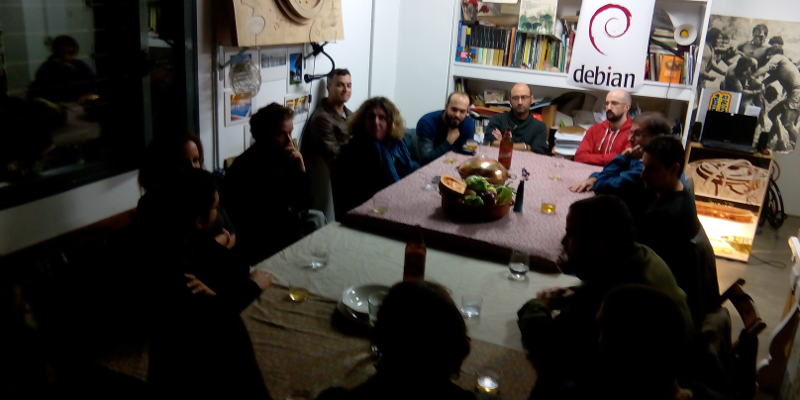 Last week we had an interesting Debian meeting in Seville, Spain. This has
been the third time (in recent years) the local community meets around Debian.
We met at about 20:00 at
 I run a couple of different sites that allow users to sign-up and use various
services. In each of these sites I have some minimal rules in place to detect bad signups, but these are a little ad hoc, because the nature of "badness" varies on a per-site basis.
I've worked in a couple of places where there are in-house tests of bad signups, and these usually boil down to some naive, and overly-broad, rules:
 Even though the
 The
 Updates to Altos Lisp
I
 At the beginning of this year,
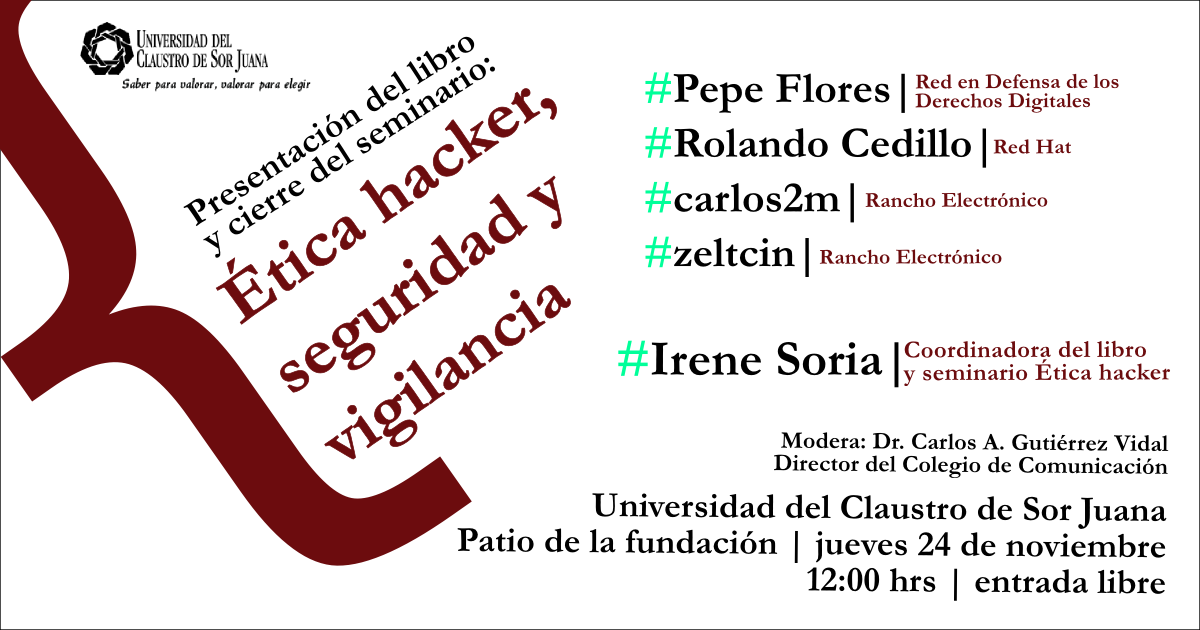 I know, not everybody following my posts (that means... Only those at or near Mexico City) will be able to join. But the good news: The book, as soon as it is presented, will be published under a CC BY-SA license. Of course, I will notify when it is ready.



 This morning I gave a guest lecture to students at the