Search Results: "pini"

10 December 2010

Petter Reinholdtsen: Now accepting bitcoins - anonymous and distributed p2p crypto-money

With this weeks lawless governmental attacks on Wikileak and free speech, it has become obvious that PayPal, visa and mastercard can not be trusted to handle money transactions. A blog post from Simon Phipps on bitcoin reminded me about a project that a friend of mine mentioned earlier. I decided to follow Simon's example, and get involved with BitCoin. I got some help from my friend to get it all running, and he even handed me some bitcoins to get started. I even donated a few bitcoins to Simon for helping me remember BitCoin. So, what is bitcoins, you probably wonder? It is a digital crypto-currency, decentralised and handled using peer-to-peer networks. It allows anonymous transactions and prohibits central control over the transactions, making it impossible for governments and companies alike to block donations and other transactions. The source is free software, and while the key dependency wxWidgets 2.9 for the graphical user interface is missing in Debian, the command line client builds just fine. Hopefully Jonas will get the package into Debian soon. Bitcoins can be converted to other currencies, like USD and EUR. There are companies accepting bitcoins when selling services and goods, and there are even currency "stock" markets where the exchange rate is decided. There are not many users so far, but the concept seems promising. If you want to get started and lack a friend with any bitcoins to spare, you can even get some for free (0.05 bitcoin at the time of writing). Use BitcoinWatch to keep an eye on the current exchange rates. As an experiment, I have decided to set up bitcoind on one of my machines. If you want to support my activity, please send Bitcoin donations to the address 15oWEoG9dUPovwmUL9KWAnYRtNJEkP1u1b. Thank you!

8 December 2010

Raphaël Hertzog: What s annoying with Flattr buttons on Planet Debian?

Dear Planet Debian readers, a significant number of people have expressed concerns over the presence of Flattr buttons on Planet Debian. The concerns were expressed in a thread on the debian-project mailing list and they were quite diverse. While the discussion brought some of the issues into light, it s not really possible to find out whether a specific concern is widely shared or not. That s why I set up a poll on selectricity.org. Please take a few minutes and rank the various options: put the most important concern first in the list, and sort the others by decreasing importance. If there are concerns that you do not agree with, put them below the entry named Special: I don t share the concerns quoted below . And to prove that you have read through all the options before voting, put the other special entry last (it s named Special: I know how condorcet voting works and thus I put this item last ). Click here to go to the poll. You need only one minute to vote and no login is required. PS: The discussion on debian-project is the reason why I changed the footer in my RSS feed to contain only plain text (in a smaller font). I also improved the wording to be more neutral.

27 comments Liked this article? Click here. My blog is Flattr-enabled.

6 December 2010

Lars Wirzenius: On showing respect

On a private mailing list there was some discussion, and I had an outburst. Summarising very roughly, someone said bad things about their competitor, without (at first) offering any justification. Here's a version of my outburst, edited to remove references to the actual topic and identifyable people. I thought it might amuse me in fifty years or so to see how full of myself I was.

Oh dear. I have no experience with this service. Or the person saying bad things about them. I am entirely ignorant about everything.[0] I am not biased towards or against any of them. There's another point I would like to raise. Or rather, an opinion I would like to express. I feel very strongly about this. There are two reasons to not show respect. The proper reason is because the target has thoroughly proven themselves to not deserve it, by their words and action, or lack of them. The wrong reason is anything related to anyone else than the target: your own low self-esteem, your fears, your evil schemes, your own bad day. Even when the right reason exists, it is a sign of respect to the audience to be respectful towards someone who does not need it: it avoids shoving the discussion down the drain. Showing respect, even when undeserved, indicates strength and moral high ground. (Please note the difference between showing respect to and agreeing with or approving of the other party.) To me, as a total outsider, these remarks about the service give a bad impression, but not of the service. It may well be that they are a scammy corporation that gives lousy service. However, nothing in this discussion has given me a reason to think so. They may be well-known in your circle. They may be well-known for their bad quality and bad service. But the rest of us don't know that. When you denigrate them, you just look like a whiner[1]. Especially someone who wants to promote their own service over that of a competitor, looks bad, because they're saying bad things about them, without giving any reasons. If you're going to be criticising your competition, you need to be very careful of how you do it, or you'll look bad instead. Or also, since it's easy to make everyone in a discussion look bad. If you'd like promote your company you can explain its virtues and benefits and the good deals it provides. You don't need to denigrate anyone else. If you'd like to get people to avoid your competitor, because they are bad or evil, then show why they are bad, or evil, with examples and references. [0] This is a true statement in every context. [1] After decades of experience as a whiner, I have a finely tuned sensor for detecting fellow whiners.

1 December 2010

Pietro Abate: bypassing the apt-get solver

Here at mancoosi we have been working for quite a while to promote and advance solver technology for FOSS distributions. We are almost at the end of the project and it is important to make the mancoosi technology relevant for the community. On goal of the project is to provide a prototype that uses part of the results of mancoosi that can based to install/remove/upgrade packages on a user machine. We certainly don't want to create yet another meta installer. This would be very time consuming and certainly going beyond the scope of the project. The idea is to create a prototype, that can work as an apt-get drop in replacement that will allow everybody to play with different solvers and installation criteria. A very first integration step is a small shell script apt-mancoosi that tries to put together different tools that we have implemented during the project. Roberto wrote extensively about his experience with apt-mancoosi a while ago showing that somehow the mancoosi tools are already usable, as proof of concept, to experiment with all solvers participating to the Misc competition. On notable obstacle we encountered with apt-mancoosi is how to pipe the result of an external solver to apt-get to effectively install the packages proposed as solution. Apt-mancoosi fails to be a drop-in replacement for apt-get exactly for this reason. The "problem" is quite simple : The idea at the beginning was to pass to apt-get, on the command line, a request that effectively represents a complete solution. We expected that, since this was already a locked-down solution, apt-get would have just installed all packages without any further modification to the proposed installation set. Of course, since apt-get is designed to satisfy a user request, and not just to install packages, we quickly realized that our evil plan was doomed to failure. The only option left, was to use libapt directly, but the idea of programming in c++ quickly made me to desist. After a bit of research (not that much after all), I finally found a viable solution to our problems in ''python-apt'' that is a low level and wrapper around libapt. This definitely made my day. Now the juicy details. the problem was to convince apt to completely bypass the solver part and just call the installer. First a small intro. python-apt has an extensive documentation with a couple of tutorials. Using python-apt is actually pretty easy (some snippet from the python-apt doco) :
import apt

# First of all, open the cache
cache = apt.Cache()
# Now, lets update the package list
cache.update()
here we open the cache (apt.Cache is a wrapper around the low level binding in the apt_pkg module), then we update the package list. This is equivalent to apt-get update . Installing a package is equally easy :
import apt
cache = apt.Cache()
pkg = cache['python-apt']

# Mark python-apt for install
pkg.mark_install()

# Now, really install it
cache.commit()
Now, the method mark_install of the module package will effectively run the solver to resolve and mark all the dependencies of the package python-apt. This is the default behavior when apt-get is used on the command line. This method has however three optional arguments that are just what I was looking for, that is autoFix, autoInst and fromUser . The explanation from the python-apt doco is quite clear.
mark_install(*args, **kwds)
Mark a package for install.
If autoFix is True, the resolver will be run, trying to fix broken packages. This is the default.
If autoInst is True, the dependencies of the packages will be installed automatically. This is the default.
If fromUser is True, this package will not be marked as automatically installed. This is the default. Set it to False if you want to be able to automatically remove the package at a later stage when no other package depends on it.
What we want is to set autoFix and autoInst to false to completely bypass the solver. So imagine that an external solver can give use a string of the form : bash+ dash=1.4 baobab- that basically asks to install bash to the newest version, dash at version 1.4 and remove baobab. Suppose also that this is a complete solution, that is, all dependencies are satisfied and there are no conflicts. The work flow of mpm (mancoosi package manager) is as follows : We already have a first prototype on the mancoosi svn. It's not released yet as we are waiting to do more testing, add more options and make it stable enough for testing. Maybe one day, this will be uploaded to debian. This is the trace of a successful installation of a package in a lenny chroot. The solver used here is the p2 solver
dev:~/mpm# ./mpm.py -c apt.conf install baobab
Running p2cudf-paranoid-1.6 solver ...
Validate solution ...
loading CUDF ...
loading solution ...
Summary of proposed changes:
new: 30
removed: 0
replaced: 0
upgraded: 0
downgraded: 0
unsatisfied recommends:: 8
changed: 30
uptodate: 322
notuptodate: 116

New packages: baobab (2.30.0-2) dbus-x11 (1.2.24-3) gconf2 (2.28.1-5)
gconf2-common (2.28.1-5) gnome-utils-common (2.30.0-2)
libatk1.0-0 (1.30.0-1) libcairo2 (1.8.10-6) libdatrie1 (0.2.4-1)
libdbus-glib-1-2 (0.88-2) libgconf2-4 (2.28.1-5) libgtk2.0-0 (2.20.1-2)
libgtk2.0-common (2.20.1-2) libgtop2-7 (2.28.1-1) libgtop2-common (2.28.1-1)
libidl0 (0.8.14-0.1) libjasper1 (1.900.1-7+b1) liborbit2 (1:2.14.18-0.1)
libpango1.0-0 (1.28.3-1) libpango1.0-common (1.28.3-1)
libpixman-1-0 (0.16.4-1) libthai-data (0.1.14-2) libthai0 (0.1.14-2)
libtiff4 (3.9.4-5) libxcb-render-util0 (0.3.6-1) libxcb-render0 (1.6-1)
libxcomposite1 (1:0.4.2-1) libxcursor1 (1:1.1.10-2) libxrandr2 (2:1.3.0-3)
psmisc (22.11-1) shared-mime-info (0.71-3)
Removed packages:
Replaced packages:
Upgraded packages:

Selecting previously deselected package libatk1.0-0.
(Reading database ... 28065 files and directories currently installed.)
Unpacking libatk1.0-0 (from .../libatk1.0-0_1.30.0-1_i386.deb) ...
Selecting previously deselected package libpixman-1-0.
Unpacking libpixman-1-0 (from .../libpixman-1-0_0.16.4-1_i386.deb) ...
Selecting previously deselected package libxcb-render0.
Unpacking libxcb-render0 (from .../libxcb-render0_1.6-1_i386.deb) ...
Selecting previously deselected package libxcb-render-util0.
Unpacking libxcb-render-util0 (from .../libxcb-render-util0_0.3.6-1_i386.deb) ...
Selecting previously deselected package libcairo2.
Unpacking libcairo2 (from .../libcairo2_1.8.10-6_i386.deb) ...
Selecting previously deselected package libdbus-glib-1-2.
Unpacking libdbus-glib-1-2 (from .../libdbus-glib-1-2_0.88-2_i386.deb) ...
Selecting previously deselected package libidl0.
Unpacking libidl0 (from .../libidl0_0.8.14-0.1_i386.deb) ...
Selecting previously deselected package liborbit2.
Unpacking liborbit2 (from .../liborbit2_1%3a2.14.18-0.1_i386.deb) ...
Selecting previously deselected package gconf2-common.
Unpacking gconf2-common (from .../gconf2-common_2.28.1-5_all.deb) ...
Selecting previously deselected package libgconf2-4.
Unpacking libgconf2-4 (from .../libgconf2-4_2.28.1-5_i386.deb) ...
Selecting previously deselected package libgtk2.0-common.
Unpacking libgtk2.0-common (from .../libgtk2.0-common_2.20.1-2_all.deb) ...
Selecting previously deselected package libjasper1.
Unpacking libjasper1 (from .../libjasper1_1.900.1-7+b1_i386.deb) ...
Selecting previously deselected package libpango1.0-common.
Unpacking libpango1.0-common (from .../libpango1.0-common_1.28.3-1_all.deb) ...
Selecting previously deselected package libdatrie1.
Unpacking libdatrie1 (from .../libdatrie1_0.2.4-1_i386.deb) ...
Selecting previously deselected package libthai-data.
Unpacking libthai-data (from .../libthai-data_0.1.14-2_all.deb) ...
Selecting previously deselected package libthai0.
Unpacking libthai0 (from .../libthai0_0.1.14-2_i386.deb) ...
Selecting previously deselected package libpango1.0-0.
Unpacking libpango1.0-0 (from .../libpango1.0-0_1.28.3-1_i386.deb) ...
Selecting previously deselected package libtiff4.
Unpacking libtiff4 (from .../libtiff4_3.9.4-5_i386.deb) ...
Selecting previously deselected package libxcomposite1.
Unpacking libxcomposite1 (from .../libxcomposite1_1%3a0.4.2-1_i386.deb) ...
Selecting previously deselected package libxcursor1.
Selecting previously deselected package libxrandr2.
Unpacking libxrandr2 (from .../libxrandr2_2%3a1.3.0-3_i386.deb) ...
Selecting previously deselected package shared-mime-info.
Unpacking shared-mime-info (from .../shared-mime-info_0.71-3_i386.deb) ...
Selecting previously deselected package libgtk2.0-0.
Unpacking libgtk2.0-0 (from .../libgtk2.0-0_2.20.1-2_i386.deb) ...
Selecting previously deselected package libgtop2-common.
Unpacking libgtop2-common (from .../libgtop2-common_2.28.1-1_all.deb) ...
Selecting previously deselected package libgtop2-7.
Unpacking libgtop2-7 (from .../libgtop2-7_2.28.1-1_i386.deb) ...
Selecting previously deselected package psmisc.
Unpacking psmisc (from .../psmisc_22.11-1_i386.deb) ...
Selecting previously deselected package dbus-x11.
Unpacking dbus-x11 (from .../dbus-x11_1.2.24-3_i386.deb) ...
Selecting previously deselected package gconf2.
Unpacking gconf2 (from .../gconf2_2.28.1-5_i386.deb) ...
Selecting previously deselected package gnome-utils-common.
Unpacking gnome-utils-common (from .../gnome-utils-common_2.30.0-2_all.deb) ...
Selecting previously deselected package baobab.
Unpacking baobab (from .../baobab_2.30.0-2_i386.deb) ...
Processing triggers for man-db ...
Setting up libatk1.0-0 (1.30.0-1) ...
Setting up libpixman-1-0 (0.16.4-1) ...
Setting up libxcb-render0 (1.6-1) ...
Setting up libxcb-render-util0 (0.3.6-1) ...
Setting up libcairo2 (1.8.10-6) ...
Setting up libdbus-glib-1-2 (0.88-2) ...
Setting up libidl0 (0.8.14-0.1) ...
Setting up liborbit2 (1:2.14.18-0.1) ...
Setting up gconf2-common (2.28.1-5) ...

Creating config file /etc/gconf/2/path with new version
Setting up libgconf2-4 (2.28.1-5) ...
Setting up libgtk2.0-common (2.20.1-2) ...
Setting up libjasper1 (1.900.1-7+b1) ...
Setting up libpango1.0-common (1.28.3-1) ...
Cleaning up font configuration of pango...
Updating font configuration of pango...
Cleaning up category xfont..
Updating category xfont..
Setting up libdatrie1 (0.2.4-1) ...
Setting up libthai-data (0.1.14-2) ...
Setting up libthai0 (0.1.14-2) ...
Setting up libpango1.0-0 (1.28.3-1) ...
Setting up libtiff4 (3.9.4-5) ...
Setting up libxcomposite1 (1:0.4.2-1) ...
Setting up libxcursor1 (1:1.1.10-2) ...
Setting up libxrandr2 (2:1.3.0-3) ...
Setting up shared-mime-info (0.71-3) ...
Setting up libgtk2.0-0 (2.20.1-2) ...
Setting up libgtop2-common (2.28.1-1) ...
Setting up libgtop2-7 (2.28.1-1) ...
Setting up psmisc (22.11-1) ...
Setting up dbus-x11 (1.2.24-3) ...
Setting up gconf2 (2.28.1-5) ...
update-alternatives: using /usr/bin/gconftool-2 to provide /usr/bin/gconftool (gconftool) in auto mode.
Setting up gnome-utils-common (2.30.0-2) ...
Setting up baobab (2.30.0-2) ...
Broken: 0
InstCount: 30
DelCount: 0
dev:~/mpm#
I think we'll keep working on this python prototype for a while, but this is not certainly what we want to propose to the community. The mancoosi package manager is probably going to be written in Ocaml and integrated with dose3 and libcudf. This will allow us to gain speed and have a solid language to develop with (nothing against python, but we don't feel that a scripting language is suitable for an essential component as a package manager). Time will tell. For the moment this is just vapor-ware ...

27 November 2010

Russell Coker: Open Respect

On the 5th of November Jono Bacon wrote a blog post titled MAKING OUR WORLD MORE RESPECTFUL [1]. He then registered the domain OpenRespect.org for his manifesto [2].Aaron Siego supports the general concept of being more respectful while listing some of the practical problems that occur in a multi-cultural world [3]. If you read nothing else about this issue I recommend reading Aaron s post (which I summarised very poorly, I can t think of a good one-sentence explanation).Sam Varghese wrote an article suggesting that it was an attempt to deflect criticism from Ubuntu [4]. I think that Ubuntu receives a lot of unfair criticism, but don t think it s really relevant to the issue at hand. Sam criticises some of the Open Respect supporters for failing to show respect in the past.Jono wrote a follow-up blog post titled REFLECTIONS ON RESPECT [5], in that post he said Sometimes we were disrespectful, and frankly, sometimes we were also inadvertently assholes. We never set out to be assholes, but we did set out to be edgy in a satirical way, but we sometimes went too far and I apologize for that. But you know what, we all grow and mature in different parts of our lives about his past LugRadio work. Maybe instead of focusing on being respectful of others it would give more benefit to focus on how to apologise, back down, and move on after being disrespectful. It seems that the situations of epic disrespect tend not to be one-off incidents but are instead arguments of greatly expanded scope that arose from someone refusing to admit any error after doing something that is considered to be offensive. [Someone has registered OpenApology.org, just in case you were wondering.]Maybe advocating Rogerian Argument would be another way of reducing some of the problems in the community.Finally Kirrily wrote an insightful post about the ineffectiveness of discussing offensive things [6]. In terms of issues such as Feminism (which Kirrily uses as an example and which is also a matter of significant interest for her) discussions about offense apparently tend to end up being about the person who was offended rather than the person who might be described as acting in an offensive manner. She suggests using terms such as marginalised, belittled, stereotyped, frustrated, humiliated, threatened, patronised, silenced, intimidated, misrepresented, etc instead. It seems to me that there may be a similar issue with respect . Objective claims about people being dismissed, ignored, patronised, etc can be evaluated more easily than a claim about being disrespected.

25 November 2010

Axel Beckert: Useful but Unknown Unix Commandline Options: touch -d

You may wonder how I manage to write one Useful but Unknown Unix Something blog posting per day. Well, I don t. I write them in bursts, but don t want to flood Planet Debian and Planet Symlink with more than one such posting a day. The first bunch of postings were mostly slides (or part of a slide plus what I tell while showing the slide) from my Unknown but Useful Unix Tools talk and written somewhen last week. And this blog posting and yesterday s blog posting were written in a row, too. What does that have to do with Unix commandline tools? Well I use Blosxom as blogging engine and it s based on simple text files lounging around in some directories, and the last modification time stamp is the posting s date which is cached after first time seen by the entries_index plugin so that I can fix typos without resetting the posting s release date. Postings with a modification date in the future won t be shown before that time. So how do you set the last modification date to a date in the future? With touch from GNU Coreutils of course. Like date , touch also knows the option -d to explicity set a date and time instead of using the current date and time. Now in my humble opinion the cool feature is that you can easily describe dates by giving touch values like now + 1 hour , 12:00 tomorrow or so:
$ touch bla
$ ls -l
total 0
-rw-r--r-- 1 abe abe 0 2010-11-23 22:59 bla
$ touch -d 'now + 1 day + 23 hours - 42 minutes' bla
$ ls -l
total 0
-rw-r--r-- 1 abe abe 0 2010-11-25 21:17 bla
$
To see all the possibilities you have to describe relative dates with touch , date , and maybe other GNU Coreutils tools, check that you have info installed and call:
$ info '(coreutils.info.gz)Relative items in date strings'
Oh, and this whole story about setting modification dates manually to arbitrary values also means that the Tattletale Statistics: Blogtimes November 2010 image in my blog s side bar is absolute nonsense, at least this month. Well, never trust any statistic you haven t faked yourself. ;-) But on the other hand, the dates in the example may give a hint when I really wrote that blog posting. Or not. ;-) And I wonder what my backup tools think about last modification times in the future. Well, they probably only check for modification dates newer than last backup and therefore should be fine. *phew*

23 November 2010

Russell Coker: Links November 2010

Guy Deutscher wrote an interesting article for the New York Times about how language shapes how we think [1]. The example of people who have no language construct for self-sentered directions and how they describe things is particularly interesting.TED published an interesting interview with Shaffi Mather the founder of India s first organised ambulance service (with differential pricing based on ability to pay) [2]. He also talks about founding schools in small towns and his BribeBusters.com company.World Changing has an interesting article about a legislative change in California that allows car-sharing of personal vehicles [3]. The concept is that if you own a car that you don t use most of the time (as is usually the case) then you can contract with a car-share company to share it to others when you don t need it. This saves the car share company from the capital expense of owning cars and thus allows them to place cars in remote locations that wouldn t otherwise be financially viable (IE the street in front of random people who sign up). The person who owns the car may get about $2 per hour for the time when it s rented. The car owner gets to specify when the car may be available.Charles Stross wrote an entertaining and informative rant about Steam-Punk [4]. He cites Michael Moorcock s informative essay about Starship Troopers and other right-wing apologist themes in sci-fi [5] as well as China Mieville s essay about politics and The Lord of the Rings [6].Glenn Greenwald wrote an informative article about the New York Times defending torture by the US military [7]. I have unsubscrubed from the @Times mailout and will avoid citing NYT articles wherever possible. I sent the URL for Glenn s article to the NYT feedback address but I don t expect them to take any notice.Fate Of the World is a new computer game that s in beta where you have a simulation of the next 200 years of climate change [8]. It s currently in beta for Windows only, they hope to have a Mac version in March and have no stated plans for Linux support.Cory Doctorow wrote an interesting article for Locus about Sci-Fi fans and cosmopolitanism taking the best option after consideration rather than doing what s locally fashionable [9]. He uses the term Martian to refer to some of the viewpoints, but it seems to me that Vulcan would be more appropriate.The Wall St Journal has an interesting article about people who manufacture drugs that aren t yet illegal, every time one drug gets banned they market a new one [10]. This is yet another example of the War on Drugs doing more harm than good, instead of taking drugs which have well known effects (that can be treated by hospitals) people are taking weird new drugs and no-one knows what will happen to them.Mieke Meijer in the Netherlands has invented a new product known as newspaper wood [11], it involves gluing paper together to create a form of chip-board that keeps the layers of paper distinct to give a result like wood grain. The World Changing commentary suggests that this could give a heirloom quality to objects made with it, while I m dubious about that I think that the surface would be pleasing to look at in a kitchen or office environment.Ze Frank gave an interesting TED talk about unusual social projects that he s run on the Internet [12]. This includes an attempt to reconcile Red and Blue voters after the 2008 US presidential election, the creation of inspirational songs, and remixing the Whip Somebody s Ass song. This is really worth watching!The Chronicle Review has an interesting article by someone who is paid to complete academic assignments for other people [13]. The scope of cheating that is claimed is profound. Naturally we have to take claims by someone who admits acting unethically with a grain of salt, but if there is any truth to this then it s a serious matter. I m surprised that no-one has made a serious attempt to catch the customers of such people.David Brin (the famous sci-fi author) gave an interesting short lecture about the future of humanity [14]. He promotes the Lifeboat Foundation (of which he is a director) and describes his concern about the Fermi Paradox.Shimon Schocken gave an inspiring TED talk about his work rehabilitating juvenile prisoners through taking them mountain-bike riding [15]. This shows that anyone can do great things to help other people, he got this idea when riding past a prison, convinced the prison governor that it was a good idea and then started doing it.Conrad Wolfram gave an insightful TED talk about math education [16]. His claim is that the entire mathematical education system is wrong in it s focus on hand calculation, instead the aim should be to teach children how to use computers to solve problems which is what is mostly done in the real world.

14 November 2010

Marco d'Itri: Other people's ethics and tastes

In the last years I noticed a growing trend of people pushing for "new" rules about what is appropriate or not for single developers or for the project as a whole. In too many cases even just considering these ideas to be an obvious fact... I prefer to not give specific examples because these would divert the attention from the main topic and would be affected by my own biases. At this point I believe it is useful to remember that all ethical issues which are not explicitly covered by the Social Contract are just the developers' own opinions. It may even be a good idea, but other developers are not and should not be compelled to agree with it no matter how good or important you believe it is. You are entitled to having your own ethics and even ranting about it on Planet Debian, but I am entitled to not caring at all without this making me a worse Debian Developer. Let's try to be grown ups and not be excessively annoyed by other people's choices. This is why I want to convey this simple message to the people who keep preaching about what is proper for me or for Debian: please fuck you. If I want to receive lectures about what is right or wrong then I surely know where I can find a priest. For some reason, now I see fit to mention that I have an Amazon wishlist...
11 November 2010

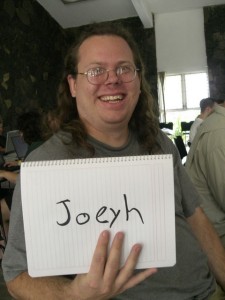
Raphaël Hertzog: People behind Debian: Joey Hess of debhelper fame


I decided recently to publish interviews from Debian contributors and I picked Joey Hess as my first target. He s one of the few who have heavily influenced Debian by creating software that have become building blocks of the project, like the debian-installer (Joey uses the shorthand d-i to refer to it). My questions are in bold, the rest is by Joey (except for the additional information that I inserted in italics). Who are you? Hello, I m Joey Hess. I m one of the oldtimers in Debian. Actually, I just checked, and there are still up to nineteen active Debian Developers who joined the project before I did, in 1996. I got started fairly young, and am just 34 years old. I spend part of my time working with Lars Wirzenius, another Debian oldtimer, on Branchable. It makes it dead-easy for anyone to make a website that is built from Git, using my Ikiwiki engine to do wiki and blog style things. These days I spend the rest of my time working on free software, when I should really be looking for work to pay the bills. What s your biggest achievement within Debian or Ubuntu? I guess I m mostly known by Debian developers for writing debhelper and perhaps debconf. Probably founding the Debian Installer project has been a bigger impact for users. I m fairly equally proud of all three projects. But while it might sound corny, I am more proud of the accumulation of all the smaller things done in the context of Debian. It s more of a deep connection to the project. All the bugs fixed, and filed, and packages uploaded, and late night discussions, and just being a part of the larger project. What are your plans for Debian Wheezy? Hmm, I stopped thinking of Debian releases by code names back around Slink. :) So, few specific plans for Wheezy. The main thing I would like to help make happen in Debian next is Constantly Usable Testing, and it transcends releases anyway. The only specific plans I have for Wheezy are that there will probably be a new debhelper compat level, and I hope d-i will finally switch to using git. RH: You can learn more about Constantly Usable Testing in my article Can Debian offer a Constantly Usable Testing distribution?. If you could spend all your time on Debian, what would you work on? Getting Debian on all these computers that we carry around in our pockets and can t easily run apt-get on and hack on. Phones that is. It s a bigger problem than just Debian, but I think Debian needs to find a way to be part of the eventual solution. The FreedomBox concept at least hints at a way around the current situation with embedded computers in general. What s the biggest problem of Debian? I believe that the biggest problem is institutional, social and technological inertia. Every specific case of something that frustrates me about Debian today can be traced back to that. You contribute regularly to Debian mailing lists, yet I don t remember any aggressive/frustrated mail of you. How do you manage that? Are you avoiding heated discussions? Rats, sounds like all my wonderful flames of years past have been forgotten! Seriously though, after I noticed thread patterns, I started trying to avoid participating in the bad patterns myself. Now I limit myself to one expression of an opinion, and I don t care who gets the last word. If people can t be convinced, it s time to find another approach to the problem. Also, code talks. Most of the programs you wrote for Debian are in Perl. Do you regret this choice? I love that question! No, no regrets. My only concern is whether the language limits contributors or users. I have not seen Perl significantly limiting the use of anything except for debconf (we had to rewrite it in C for d-i). And I do not notice fewer contributions to my Perl-based code than to other code. I do sometimes regret when someone tells me they had to learn or re-learn Perl to work on something I wrote. But while I m enjoying writing new things in Haskell now, and while I hope it will mean less maintenance burden later, I don t think using Haskell will make it easier for others to contribute to my programs. Anyway, for me the interesting thing about writing a program is the problem it solves and the decisions made doing it. Choice of language is one of the less interesting decisions. Is there someone in Debian that you admire for his contributions? Well, lots. You re tempting me to throw a dart at a map. So arbitrarily, I ll say Anthony Towns. We could all learn something from how he s approached making big, fundamental changes, like introducing Testing, and making Debian Maintainers happen.
Thank you to Joey for the time spent answering my questions. I hope you enjoyed reading his answers as I did. Subscribe to my newsletter and don t miss further interviews. You can also follow along on Identi.ca, Twitter and Facebook. PS: If you want to suggest me someone to interview, leave a comment or mail me.

3 comments Liked this article? Click here. My blog is Flattr-enabled.

4 November 2010

Gintautas Miliauskas: Living a monastic life for 10 days

About a month ago, at the end of August, I finished a 10-day Vipassana meditation course. This was probably one of the more extreme activities I have ever participated in, and it's well worth a blog post. I found out about the course in a ridiculously trivial way, by following a link in a Reddit comment (I wonder if I could track down that comment...). The website referenced by the comment contained (almost) no new-agey mumbo-jumbo and looked legit in general. I also appreciated the fact that this was a relatively serious and intensive course, which should be enough to form a reasonably founded opinion on meditation in general. When learning sporadically, in small bits, it is hard to say whether the material itself is no good, or you just do not understand it yet and need to study more; I was quite skeptical towards the practice, but wanted to give it fair trial. I was quite impressed that there was a course available in Lithuania, a few hours by train from where I live. Finally, the course was free (by tradition Vipassana is taught without monetary compensation). I went ahead and signed up for a standard introductory 10-day course. Vipassana (also called insight meditation) is a meditation technique allegedly coming back from Gautama Buddha himself (well, all the traditions like to claim that origin...). It has been experiencing a renaissance, partly due to an organization set up by a meditation teacher S. N. Goenka which has founded meditation centers all over the world. The essence of Vipassana is a method of teaching your mind to act instead of merely reacting to outside stimuli such as pain, anger of other people or hardships. The technique provided is to monitor your sensations, watch them with equanimity and suspend any reaction, and slowly it sinks in that all things are temporary and you can choose what to react to and how. That's the basic idea; I don't want to go deep into exposition of Vipassana as there is plenty of information about that (also at the same time the information is almost useless because you have to experience it to really understand it). Instead, I will sure some of the more personal remarks and experiences. The course took place in an cottage near Kretinga, housing around 50 people. The living conditions were absolutely great, and this would have been a true holiday if not for the regime and the rules. The day would start very early, at 4 AM (ending at around 9:30 PM), and we'd do about 12 hours of meditation in total inbetween, with occasional breaks, but the most gruesome part is that no communication at all was allowed with anyone except the manager of the camp (and the teacher during a specified time). That gets to you after a few days, but still, there are people around you, so it's bearable; on the other side, the senses (touch, smell) become very acute. The food was taken care of by volunteers (students who have finished the course), and I could say it was quite good actually. The goal, of course, was to keep the environment from interfering with meditation, and I think it was done very well. The presentation of the actual technique also did not disappoint. Each day a new step would be introduced, with the whole day to practice before moving on. Looking back, the pacing worked well. Every day in the evening there were lectures on theory. They were somewhat informative, but also sometimes annoyingly primitive and verbose. The little mistakes, holes in logic and slight doses of mumbo-jumbo almost drove me nuts by the middle of the course, until I learned not to react to them. Despite the shortcomings of presentation, the simplicity and lucidity of the practice and lightness of theoretical baggage really appealed to me. The whole organisation in general gave the impression of complete transparency, with no strings attached, no financial interests in play and no agitation for further involvement. While there are many meditation techniques, I am happy that I've gone with Vipassana in particular for one reason: Vipassana meditation uses no artificial tools to help you concentrate, such as mantras, visualisations, counting, etc. Such methods make concentration much easier, but they also create a dependence on the methods themselves. I appreciate the purity of Vipassana in this regard. Not everything in the practice is roses though. First, a particular worldview supported by Vipassana is presented as "scientific" and supposedly "the right way to live", and if even if you don't agree, "the truth" of Vipassana will become obvious to you with time. This is a distinctive mark of ideologies. The thing that makes everything break is the reincarnation, which is generally assumed as true, even if it's not shoved down the student's throat. Every rationalization of a world view has a "white lie" (usually related to the concept of eternity somehow) at the core, and in this context reincarnation is it. Given what we know now about the relationship between the mind and the body, reincarnation is absolutely ridiculous and completely untenable, and that breaks all "moral" reasoning for practicing meditation as opposed to doing something else. I'm not the first to bring up this problem, there's plenty of material about it online. The second slippery idea is that the concept of "negative happiness" is central in Vipassana, that is: happiness is defined as lack of suffering. This point is not that unreasonable actually, from personal experience I could indeed call the state of non-suffering happiness, but there is definitely something missing when compared to the state of mind when I'm truly, positively happy. Whether you consider that something important or not, it's definitely there. Third, Vipassana suggests that it is only you who is at fault when your inner state is disturbed; the world affects you as much as you let it, and in order to find happiness you should learn to control the "interface" rather than the outside world, which will usually not behave as you want. This may be correct, but sometimes it could just be easier to fix the world rather than change yourself, and I have the suspicion that it this is much more frequently the case in the modern world compared to the pre-modern environment. (This is one of the points which break when reincarnation is rejected, as with reincarnation you have the whole eternity to fix yourself.) While the complaints are serious, they do not mean complete rejection of Vipassana but rather integration among the various other techniques available. The actual meditation technique is still great for gaining and maintaining mental composure, reducing anxiety and improving well-being. Now, if I could only get used to meditating regularly... If you have the chance, I highly recommend you try out an introductory 10-day course. There is little to lose and a lot to gain. And if you do go ahead, I have two hints. First, do not even think about leaving the course before it's over. Any hardships are temporary and will be overcome quickly. Second, use the time with the teacher, those interactions were very helpful to me. Also, given the "noble silence", talking to someone once in a while will not hurt.

2 November 2010

Sam Hartman: Review of Git DPM

I ve been looking at git dpm. It s a tool for managing Debian packages in git. The description promises the world: use of git to maintain both a set of patches to some upstream software along with the history of those patches both at the same time. It also promises the ability to let me share my development repositories. The overhead is much less than topgit. My feelings are mixed. It does deliver on its promise to allow you to maintain your upstream patches and to use git normallyish. It produces nice quilt patch series. In order to understand the down side, it s necessary to understand a bit about how it works. It maintains your normal branch roughly the way you do things today. There s also a branch that is rebased often that is effectively the quilt series. It starts from the upstream and has a commit for every patch in your quilt series containing exactly the contents of that patch. This branch is merged into your debian branch when you run git dpm update-patches. The down side is that it makes the debian branch kind of fragile. If you commit an upstream change to the Debian branch it will be reverted by the next git dpm update-patches. The history will not be lost, but unless you have turned that change into a commit along your patches branch, git dpm update-patches will remove the change without warning. This can be particularly surprising if the change in question is a merge from the upstream branch. In that case, the merged in changes will all be lost, but since the tip of the upstream branch is in your history, then future merges will not bring them back. If you either also merge your changes into the patches branch, or tell git dpm about a new upstream, then the changes will reappear at the next git dpm update-patches. The other fragility is that rebasing your debian branch can have really unpleasant consequences. The problem is that rebase removes merge commits: it assumes that the only changes introduced by merge commits are resolution of conflicts. However, git dpm synthesizes merge commits. In particular, it takes the debian directory from your debian branch, plus the upstream sources from your upstream branch, plus all the patches you applied and calls that your new debian branch. There s also a metadata file that contains pointers to the upstream branch and the quilt patch series branch. In addition, debian/patches gets populated. Discarding this commit completely would simply roll you back to the previous state of your patches. However, this loses history! There is no reference that is left pointing to the patches branch; the only reason it is still referenced is that it s a parent of the commit rebase is throwing away. This isn t really all that unusual; if you merged in any branch, deleted the branch and rebased away both the merge and the commits from the branch, you d lose history. I do find it a bit easier to do with git dpm. However, it s more likely that you ll manage to rebase and keep the commits from the patches branch. In particular, if the horizon of your rebase includes a merge of the patches branch,then for every patch that involves changes to the debian branch from the point where rebase starts rewriting history, you will see a commit included by your rebase. My suspicion is that this commit is more likely to generate conflicts than usual because it s a patch on top of the upstream sources being applied to a partially patched debian branch. However I have not fully worked through things: it may be that such a patch is exactly as likely to cause conflicts as it would in a git dpm update-patches operation. If that succeeds and you do not manage to fail to pick one of these commits, you ll end up with roughly the same debian sources you started with. There are two key exceptions: the git dpm metadata file is not updated and your debian/patches is not consistent with your sources. The first means you re in the state of the previous paragraph: git dpm update-patches will blow away your changes. The second means that any source package you produce is going to be kind of funky if not out right broken. It is possible to recover from git dpm plus rebase. I think if you git dpm checkout-patches, then cherry pick the patch related commits from your debian branch that were introduced by the rebase, then git dpm update-patches, you ll be in a sane state. Obviously you could also recover by finding the pre-rebase commit and resetting there. I m assuming though that you actually needed to rebase for some reason. Of course git dpm does involve a space penalty. You generate a commit for every patch in your quilt series for every version of the upstream sources you deal with. Also, you will introduce and store every version of the quilt series directly in your debian directory. The extra commits probably aren t a big deal: the blobs probably delta compress well. I m not sure though that the quilt patch blobs will compress well with other things. In my opinion the ability to get nice quilt patches is well worth the space penalty. In conclusion, git dpm is a sharp tool. Actually, I think that s understating things. Git dpm involves a bunch of rotating blades. You stick your face and foot between the blades, and if you use it correctly, there s exactly enough clearance that nothing gets damaged and you get some fairly neat results. Other outcomes are available. I m still trying to evaluate if it is worth it. I think the tradeoff might be different for something like the krb5 package which is maintained by two very experienced maintainers than say for Shibboleth which seems to involve several more maintainers. I m not sure that there is much git dpm can do to make things better. Even detecting loss-of-foot events might be kind of tricky.

31 October 2010

Ondřej Čertík: git has won

I switched to git from mercurial about two years ago. See here why I switched and here my experience after 4 months. Back then I was unsure, whether git will win, but I thought it has a bigger momentum. Well, I think that now it's quite clear that git has already won. Pretty much everybody that I collaborate with is using git now.

I use github everyday, and now thanks to github pull requests, I think it's the best collaboration platform out there (compared to Google Code, Sourceforge, Bitbucket or Launchpad).

I think it's partly because the github guys have a clear vision of what has to be done in order to make collaboration more easier and they do it, but more importantly that git branches is the way to go, as well as other git features, that are "right" from the beginning (branches, interactive rebase, and so on), while other VCS like bzr and mercurial simply either don't have them, or are getting them, but it's hard to get used to it (for example mercurial uses the "mercurial queues", and I think that is the totally wrong approach to things).

Anyway, this is just my own personal opinion. I'll be happy to discuss it in the comments, if you disagree.

26 October 2010

David Welton: Kindle?

I'm thinking about getting a Kindle, and I thought I'd write down some thoughts, even if they're a bit jumbled, and invite commentary. Good: One thing I really like, living here in Italy, is that I would be able to get English language books instantaniously, and not pay shipping or import duties on them. Whatever disadvantages there may be, that is a huge advantage. Closely tied to that: if we ever move back to the US, shipping all our books will be very expensive. Having some of them in an electronic format would lighten that load considerably. It's fairly cheap. At $180, it's not something I'd want to treat carelessly, but it's significantly less expensive than various existing tables. Long battery life means it's not something you have to worry much about. E-ink looks like it's easier on the eyes than LCD screens. I'm not sure, but also its slow update speed might be a "feature not a bug" in the sense that you're not so easily distracted by the internet being just one click away. Bad: I love having real, physical books in my house. I grew up in a house full of books, and I want the same thing for my daughter. I like being able ot look through them, pick one up, and read about something. Real books are very convenient, as long as you're not lugging around hundreds of them. I like not having to worry too much about dropping them, about getting a bit of water on one or that sort of thing. You can cart them around in a backpack with little worry, take them to the beach, and so on. As far as I can tell, Knuth's books are not available for, nor would appear like they do on paper. That's the golden standard for me: once "The Art of Computer Programming" looks good on an e-reader, it will be really and truly ready. We're not there yet. It's not general purpose. Like I said above, maybe this is good for reading, but there are also times when it'd be nice to have a general purpose device, with email, maps, applications, and so on. A while back, Amazon announced some sort of beta program for a kindle SDK. I haven't heard much of anything since. So it looks like it's not really possible to code for it, which is a bit disappointing. I like to have that option available, even if I don't always exercise it. Unknown: The pricing: sometimes Kindle versions are cheaper (especially, in my case, considering shipping, and, potentially, import duties), but sometimes they aren't, which seems a bit unfair, given that you cannot sell the book if you don't like it. I'm not sure how it would work out for me in the aggregate. Digital Rights Management, or DRM, means you can't, say, sell someone a "used" ebook. This is, in some ways, understandeable, because it's not like an e-book degrades with time as a physical one might. Were it possible to sell on your old books, that might radically change the market. I could see that having both good consequences (cheaper books), but also negative ones for authors (less money). I suppose this topic merits a post or two, or even an entire book of its own, because it's a complicated subject without, in my opinion, "easy" answers. Suffice it to say, though, that there are some drawbacks, but I suppose it's also nice that Amazon "knows" which books I have, so even if I switch to a different reader, I still have my books. And it's good that authors can get paid to work on a book. Not having actually bought it yet, I have no idea how it actually 'feels' to read a book with one. I love curling up with a good book, something I certainly can't do with my laptop. The Kindle looks light and small enough that it could work, but maybe it's just too high tech and sleek to provide that same comfortable coziness. Or maybe I'm just a luddite where books are concerned?
Do you have one? Do you use it? For all kinds of books or just certain kinds (technical books, cheap 'fun' reads, whatever...)? What's the experience like?

14 October 2010

Axel Beckert: Thoughts on Gitorious and GitHub plus a useful git hook

When I took over the developement of xen-tools, I looked around for an appropriate git hosting. I especially had a look at GitHub and Gitorious. If you just regard the features, GitHub is definitely more targetted on single developers and Gitorious more towards projects: At GitHub, every repository has its URL under the URL of a user page which makes it nearly impossible to have user independent, official repositories for projects which have more than one official developer. At Gitorious, every hosted repository needs to belong to a project, even if it s only a published configuration. But a project can have more than one git repository. You only seem to be able to have personal repositories if you clone some existing Gitorious repository. So from a feature point of view, the xen-tools git repositories fit way better to Gitorious hosting while the git repositories with zshrc, conkerorrc and desktop configuration files defintely have a more fitting addresses on GitHub, in my case http://github.com/xtaran/$repository. On Gitorious, they are now together under a project called Axel s configuration files at http://gitorious.org/abe which contains git repositories of my on grml s .zshrc based .zshrc, my configuration for Conkeror and all the files necessary for my ratpoison/xmobar based netbook/laptop desktop. I though feel a little bad for giving the project the very short slug name abe instead of abe-config (as I did initially) since abe is IMHO not a proper project name for my configuration files and possibly other projects would have a more reasonable claim for that project name on Gitorious. But that way it suites more its purpose: Gather some of my git repositories which don t belong to a proper project. But there s another important point when comparing Gitorious and GitHub: Free Software needs free tools as Benjamin Mako Hill posted recently on Planet Debian. Despite my (probably well known) distrust against Google and therefore also Google Code, and despite knowing the history of SourceForge becoming non-free, I was not that much aware that GitHub s software is only partially open source and therefore also not free software while Gitorious is both as it s licensed under the GNU Affero General Public License (like StatusNet/identi.ca for example) which is basically GPLv3, but its ideas applied to hosted web applications scenario (where the GPL itself doesn t grasp), too. Initially I just had the xen-tools git repositories on Gitorious and all my small one-repository projects as copies of the repositories on my own git server on GitHub to get some more publicity for them and allow social cloning . After reading Mako s article, I decided to at least have repository clones on Gitorious of all repositories I mirror at GitHub, too. That way I force nobody to use the non-free tools on GitHub for social cloning one of my git repositories. And of course I have copies of my code somewhere on the net as backup. Or to say it with Linus Torvalds (slightly updated) words: Only wimps use tape backup: real men just upload their important stuff on git, and let the rest of the world clone it. ;-) But isn t that tedious to always push your code to three repositories? No, it isn t. I just push my code to git.noone.org where I have configured the according remotes and the following post-receive hook:
#!/bin/sh
                                                                     
read oldrev newrev refname
git push gitorious $ refname:t 
git push github $ refname:t 
The only other thing necessary is to use ssh-agent and SSH agent forwarding to at least the host you re pushing to.

5 October 2010

Gerfried Fuchs: New Backports Suite created

The Backports Team is pleased to announce the availability of a new suite on backports: lenny-backports-sloppy. Please read carefully before considering using or uploading to it what this entails. The Background You might want to ask: What's that? Let me explain it. During the etch release discussions popped up on the backports list with two clashing groups: The standing at that time was to accept packages that were in testing after the release, which wasn't etch anymore but lenny. The same discussion started again before the lenny release, and given that we are facing the upcoming squeeze release we started internally to discuss how to noise down these long and tedious discussions, because both groups of people had valid opinions that shouldn't get ignored. So this is where the idea for lenny-backports-sloppy comes from. The Change lenny-backports-sloppy will please the group that is happy to upgrade from lenny + lenny-backports to squeeze + squeeze-backports. lenny-backports is meant only for packages from squeeze, even after the release. Technically that means it will get locked down for uploads after the release of squeeze and require manual approval (for e.g. point release update versions, or security updates that happen during the squeeze release cycle), while lenny-backports-sloppy will accept packages from wheezy. Uploading to lenny-backports will have to get approved by the Debian Backports Team after the squeeze release, just like uploads to lenny are currently approved by the Release Team. While lenny-backports-sloppy is created already and working we ask you to not upload packages there without prior discussion with the Backports Team. This is meant to ensure that the Uploader is aware about the expectations that come along with that: The package should have a good chance to get included in the next Debian release aka wheezy, and that the Uploader is willing to look after the package in the upcoming squeeze-backports suite after the release of squeeze to ensure upgradability. In case of questions, feel free to ask either directly on the debian-backports@lists.debian.org mailinglist, or contact team@backports.debian.org privately. We are also pleased to announce that the first upload to lenny-backports-sloppy already happened. From now on you will be able to install Postgresql 9.0 (which is not targeted at squeeze) from lenny-backports-sloppy. How to use If you want to use lenny-backports-sloppy you will have to add both lenny-backports and lenny-backports-sloppy to your sources.list. Backports from lenny-backports-sloppy may depend on packages in lenny-backports.
  deb http://backports.debian.org/debian-backports lenny-backports   main
  deb http://backports.debian.org/debian-backports lenny-backports-sloppy main
About Backports You are running Debian stable, because you prefer the stable Debian tree. It runs great, there is just one problem: the software is a little bit outdated compared to other distributions. That is where backports come in. Backports are recompiled packages from testing (mostly) and unstable (in a few cases only, e.g. security updates), so they will run without new libraries (wherever it is possible) on a stable Debian distribution. It is recommended to pick out single backports which fit your needs, and not to use all available backports. Thanks for reading this far, and enjoy!
Rhonda in the name of the Backports Team

/debian permanent link Comments: 1 Flattr this

Alexander Wirt: A new player in the house: lenny-backports-sloppy

The Backports Team is pleased to announce the availability of a new
suite on backports: lenny-backports-sloppy. Please read carefully
before considering using or uploading to it what this entails.
The Background You might want to ask: What's that? Let me explain it. During the etch
release discussions popped up on the backports list with two clashing
groups: The standing at that time was to accept packages that were in testing
after the release, which wasn't etch anymore but lenny. The same discussion started again before the lenny release, and given that
we are facing the upcoming squeeze release we started internally to discuss
how to noise down these long and tedious discussions, because both groups
of people had valid opinions that shouldn't get ignored. So this is where
the idea for lenny-backports-sloppy comes from.
The Change lenny-backports-sloppy will please the group that is happy to upgrade from
lenny + lenny-backports to squeeze + squeeze-backports. lenny-backports is
meant only for packages from squeeze, even after the release. Technically
that means it will get locked down for uploads after the release of squeeze
and require manual approval (for e.g. point release update versions, or
security updates that happen during the squeeze release cycle), while
lenny-backports-sloppy will accept packages from wheezy. Uploading to
lenny-backport will have to get approved by the Debian Backports Team after
the squeeze release, just like uploads to lenny are currently approved by
the Release Team. While lenny-backports-sloppy is created already and working we ask you to
NOT upload packages there without prior discussion with the Backports Team.
This is meant to ensure that the Uploader is aware about the expectations
that come along with that: The package should have a good chance to get
included in the next Debian release aka wheezy, and that the Uploader is
willing to look after the package in the upcoming squeeze-backports suite
after the release of squeeze to ensure upgradeability. In case of questions, feel free to ask either directly on the
debian-backports@lists.debian.org mailinglist, or contact
team@backports.debian.org privately. We are also pleased to annonce that the first upload to
lenny-backports-sloppy already happened. From now on you will be able
to install Postgresql 9.0 (which is not targeted at squeeze) from
lenny-backports-sloppy.
How to use If you want to use lenny-backports-sloppy you will have to add both
lenny-backports and lenny-backports-sloppy to your sources.list. Backports
from lenny-backports-sloppy may depend on packages in lenny-backports.
deb http://backports.debian.org/debian-backports lenny-backports main
deb http://backports.debian.org/debian-backports lenny-backports-sloppy main

1 October 2010

Russ Allbery: Productivity

For once, not using that journal entry title to talk about my own. Someone posted a pointer to an opinion piece looking at productivity differences between the US and Germany to a private hierarchy I read. I know productivity numbers like this are somewhat disputed, but I don't want to get into that. What I'm more interested in is the analysis. Whether or not the US does significantly better or worse than other countries in this regard is hotly debated, but what isn't is that the length of typical work weeks for employees, particularly in IT, is not going down. Fifty or a hundred years ago, it was common to expect that the growth of automation would mean more leisure for humanity. There was, at the time, some argument over whether that would be a good thing, but it seemed to be a trend. This didn't happen here. The above article argues that the amount of vacation that US employees take is going down over time. And in IT it's common to hear about 50 hour weeks (or 80 hour weeks in startups). Little of that promise of increased leisure from modern technology seems to have happened in the US, although it seems to have happened somewhat in Europe; about all we managed was to get down to a 40-hour work week, which is now honored in the breech for a lot of exempt employees. And that was seventy years ago. Most of the scientific research that we have available is quite clear that working longer hours causes diminished productivity. Standard time management advice is to focus more and work in shorter intervals. Hours of unfocused work are considerably less effective than much shorter periods of focused work, recovery time is vital, and forcing oneself to work long hours leads to bad decision-making. Even in less cerebral and more repetitive work, such as some assembly line work, we've known for many decades that working longer hours leads to more accidents and more bad decisions, and there the costs of an accident are often much higher. So, why are we so dead-set on doing the exact opposite of what available evidence says is the best way to work? I think this is to some extent a Rorschach blot question: you're going to see the answer in this that fits your pre-conceived notions about what's dysfunctional about US workplaces. I rambled elsewhere about my own pet peeve: the overwhelming focus on money and short-term profit and cutting cost, which I think leads to a lot of the nasty employment abuses in the US. But here I want to raise a different point: as the article says, we work long hours because that's what we're measured on and rewarded for. We work unproductively for many of those hours partly because it's impossible to be productive for that many hours. We get used to feeling intermittantly unproductive at work; it becomes normal. And in many jobs, particularly in IT, we don't measure ourselves by results because we have no idea what a reasonable level of results actually is. Management gets a lot of blame for failure to manage by results rather than by artificial measures like attendance and time worked (or tickets closed, or hours logged against customer requests, or similar trivially manipulatable and artifical measures). But I think this goes deeper than management. I think even we ourselves, with as good of knowledge as anyone could possibly have of what our jobs are and what good results look like, don't have a clear idea of how much to expect from ourselves on a daily basis. I know from time management exercises that I wildly mis-estimate tasks and don't have a good feedback loop to get better at estimates. I also tend to plan towards maximums rather than the average. If I have a very good day, I try to work at that level and hold myself to that level of work, rather than trying to find a long-term average. And my perceptions about what results constitute good results vary wildly based on the most recent events and surrounding context (such as whether a project is late), even though I know that my basic work capacity is not going to change significantly because a project is late. If we want to change how we measure work, I think this may be the place to start. We can't ask managers to measure us by results if we don't even know what that measurement would look like. I'm going to start asking myself some new questions: What is the average amount of work I can get done in a day? What's the standard deviation? Is there some way that I can measure this over time so that I'm not fooling myself based on circumstances or temporary surges of productivity, since my day-to-day productivity seems to have a lot of "noise"? What realistically constitutes finishing a week's worth of work? When am I "working" but not accomplishing something, and more importantly, why am I doing that? What broke when that happens? I'm firmly convinced that one of my personal breakthroughs in time management will happen when I can stop "working" when I'm not being productive. Whenever I manage this (rarely, right now), I both find I needed the break and find that I can return far more productive than I was before I took the break. But usually I continue to "work" unproductively, clocking hours without creating results, and feel both guilty about the lack of results and even less productive. That's the trap that I think this article is pointing at.

29 September 2010

Russell Coker: Links September 2010

Kevin Stone gave an interesting TED talk about the biological future of joint replacement [1]. Using stem cells and animal tissue which has been prepared to destroy the chemicals that trigger immune responses the tissues can regrow. Replacing joints with titanium and ceramic lets people walk again, regrowing them with Kevin s methods allows them to compete at the highest levels of sporting contests! Derek Sivers gave a brief and interesting TED talk advising people to keep their goals secret if they want to achieve them [2]. The Parrot AR.Drone is an interesting device [3], it s a four-propeller helicopter that is controlled by WiFi. Apparently there is little security (it binds to the first WiFi client it sees) which is a significant down-side. It returns a video feed to the controlling iPhone as it flys and can hover when it loses it s connection. It will be interesting to see when people write software for other devices (Android etc). Also I wonder whether there will be open source weapons kits for it. If you could have those devices use either a nerf gun or a lance to attack each other s turbines then you could have drone jousting. Don Marti had an interesting new idea for a crime game [4]. The main concept is to use the element of mistrust that is present in real criminal gangs. The new guy you invite to join a job might inform the police and you won t know for sure. Sometimes a heist will be discovered by the police through bad luck (or good police work) and you will wonder whether there was an informant. The aim is for a simple game design and with the complexity in email discussions between the players. The C64 isn t dead, it s even on the Internet [5], an original C64 is running a web site! Tan Li gave an interesting TED talk about a new headset to read brain-waves [6]. The device in question can be applied in minutes, requires no gel or abrasion of the scalp, connects to the computer wirelessly and is relatively cheap at $300US. The developer s kit (which I think includes a headset) is $500US. I wonder if the community can develop a cheaper version of this which is more open. Lisa Margonelli gave an interesting TED talk about the politics of oil [7]. One of her insightful points is that the subsidies for oil should be shifted from the oil industry to middle-class consumers. But she goes off track a bit by suggesting gradual oil tax increases until 2020, according to the best estimates of groups such as the CSIRO they won t need to have taxes to give a high oil price in 2020! She is aiming for a 20% reduction in petrol use by 2020, but I m not aware of any serious group of scientists who have evidence to suggest that the production capacity in 2020 will be close to 80% what it is now. Slate has a good article about The Innocence Project which uses DNA tests to overturn false convictions [8], it s scarey how badly the justice system works. Rachel Sussman gave an interesting talk about the World s Oldest Living Things [9], nothing less than 2000 years old is included. Nicholas Negroponte gave an interesting EG 2007 talk about the OLPC project [10]. While some of the content about OLPC production is a little dated the OLPC history is relevant and his personal opinions regarding the benefits that children receive from computers are insightful. Jayne Poynter gave an interesting TED talk about life in Biosphere 2 [11]. Her work on mini-biospheres is also interesting. Let s hope we get a permanent Biosphere running outside the Earth sometime soon. Sheryl WuDunn gave an informative TED talk titled Our Century s Greatest Injustice about the plight of women in most of the world [12]. Daniel Kahn Gillmor wrote a good article about the use of ssh-agent [13]. You really should use it to secure your ssh keys. Mark Shuttleworth has described the development process for the Ubuntu font [14]. This is a very interesting project and IMHO one of the most significant things that Ubuntu has done. Prior to this an entirely closed development process has been used for font development. Now we are getting a major new font family developed with a free and open process and with some new legal developments for a font license! One thing to note that this project appears to have involved a lot of work from professional font designers, it sounds like Canonical spent a significant amount of money on this project.

28 September 2010

Gerfried Fuchs: That's What Friends Are For

If I'll make it through this week it's because of these special people in my life. They help me through thick and thin, they believe in me, they are there for me. There is one universal term for them, friends. The term in its real meaning, in its original meaning, not in the perverted sense that sites like Facebook want to make you believe that it's alright to apply to random bystanders. You won't go as far for those as you'd go for your true friends, so don't let them steal away the meaning of the word from you. As music is one of the most driving force for me and this song makes me wanna cry, this is what I want to send out to my friends who are able to motivate me to keep me going: That's What Friends Are For. And as this song is so special I won't drown it in two more like I usual do, this blog entry goes to my personal section anyway. There is though a second video of a live version of it that in my opinion adds quite something to it, it contains a short interview with Dionne Warwick at the end. Enjoy!

/personal permanent link Comments: 2 Flattr this

19 September 2010

Gunnar Wolf: Unambiguous name for Free Software without ideological dillution

Asheesh posted When "free software" got a new name, which mentions about the transition period where the Free Software movement started its quest towards being understood by non-geeks, and when people started finding terms better suited for general (and specifically, business-minded) audiences. We are talking about facts that reached concretion 12 years ago, when the term Open Source was coined and divulgated. That is already far in the past to try and change it Still, during DebConf I was talking with several friends about it. In my opinion, there was never really the need to choose such an ambiguous name In English, the word Liberty unambiguously refers to free as in freedom, with no conceptual links to gratuity. Liberty is also a concept held dear by the values of the USA society (which is the birthplace of our ideological movement, so it's specially important). Jimmy Kaplowitz pointed out a reason: Liberty is an incomplete word. You could translate what Asheesh's post mentions, Freed Software Liberated Software, but libertydoes not exist as an adjective by itself, only when used as contrasting with an earlier more restricted situation. We can say some piece of software was liberated if it was born unfree, but what about things that were libre since the beginning? So, yes, as beautiful as Liberty is, and as advantageous as such a concept would have been for us... Liberty seems to be too imperfect to be able to represent our movement.

Next.

Previous.