Search Results: "js"

11 December 2015

Lunar: Reproducible builds: week 32 in Stretch cycle

The first reproducible world summit was held in Athens, Greece, from December 1st-3rd with the support of the Linux Foundation, the Open Tech Fund, and Google. Faidon Liambotis has been an amazing help to sort out all local details. People at ImpactHub Athens have been perfect hosts. North of Athens from the Acropolis with ImpactHub in the center Nearly 40 participants from 14 different free software project had very busy days sharing knowledge, building understanding, and producing actual patches. Anyone interested in cross project discussions should join the rb-general mailing-list. What follows focuses mostly on what happened for Debian this previous week. A more detailed report about the summit will follow soon. You can also read the ones from Joachim Breitner from Debian, Clemens Lang from MacPorts, Georg Koppen from Tor, Dhiru Kholia from Fedora, and Ludovic Court s wrote one for Guix and for the GNU project. The Acropolis from  Infrastructure Several discussions at the meeting helped refine a shared understanding of what kind of information should be recorded on a build, and how they could be used. Daniel Kahn Gillmor sent a detailed update on how .buildinfo files should become part of the Debian archive. Some key changes compared to what we had in mind at DebConf15: Hopefully, ftpmasters will be able to comment on the updated proposal soon. Packages fixed The following packages have become reproducible due to changes in their build dependencies: fades, triplane, caml-crush, globus-authz. The following packages became reproducible after getting fixed: Some uploads fixed some reproducibility issues, but not all of them: Patches submitted which have not made their way to the archive yet: akira sent proposals on how to make bash reproducible. Alexander Couzens submitted a patch upstream to add support for SOURCE_DATE_EPOCH in grub image generator (#787795). reproducible.debian.net An issue with some armhf build nodes was tracked down to a bad interaction between uname26 personality and new glibc (Vagrant Cascadian). A Debian package was created for koji, the RPM building and tracking system used by Fedora amongst others. It is currently waiting for review in the NEW queue. (Ximin Luo, Marek Marczykowski-G recki) diffoscope development diffoscope now has a dedicated mailing list to better accommodate its growing user and developer base. Going through diffoscope's guts together enabled several new contributors. Baptiste Daroussin, Ed Maste, Clemens Lang, Mike McQuaid, Joachim Breitner all contributed their first patches to improve portability or add new features. Regular contributors Chris Lamb, Reiner Herrmann, and Levente Polyak also submitted improvements. diffoscope hacking session in Athens The next release should support more operating systems, filesystem image comparison via libguestfs, HTML reports with on-demand loading, and parallel processing for the most noticeable improvements. Package reviews 27 reviews have been removed, 17 added and 14 updated in the previous week. Chris Lamb and Val Lorentz filed 4 new FTBFS reports. Misc. Baptiste Daroussin has started to implement support for SOURCE_DATE_EPOCH in FreeBSD in libpkg and the ports tree. Thanks Joachim Breitner and h01ger for the pictures.

9 December 2015

Daniel Pocock: Is WebRTC one of your goals for 2016?

WebRTC continues to gather momentum around the world. Over the next week, Paris will host a TADHack event on WebRTC (12-13 December) followed by Europe's most well known meeting of the WebRTC community, the annual WebRTC Conference and Expo, 16-18 December. 2015 has been a busy year for WebRTC developers, in the browser, on the server-side and even in documentation, with the online publication of The RTC Quick Start Guide. These efforts have all come together to create a stable foundation for many implementations in 2016. Demo The JSCommunicator demo video shows just how convenient WebRTC can be, looking at the first customer-facing WebRTC deployment on Wall Street, a project I put together back in 2014: This solution was implemented entirely with free, open source software integrated with a traditional corporate PBX. The project involved significant innovation to bring together a new technology like WebRTC with a very established corporate telephony infrastructure. For example, the solution makes use of the reSIProcate Python scripting to add the Avaya UUI headers to the SIP signaling, so it can integrate seamlessly with all existing Avaya customizations and desktop CRM software. Is this something you can imagine on your organization's web site or as part of your web-based product or service? DruCall module for Drupal - WebRTC without coding If you run a Drupal CMS or if you would like to, the DruCall module provides a very quick way to get started with WebRTC. On a Debian or Ubuntu server, you can automatically deploy the entire Drupal stack, Apache, MySQL and all module dependencies with $ sudo apt-get install -t jessie-backports drupal7-mod-drucall JSCommunicator, the generic SIP phone for web pages If you don't want to do any JavaScript development, JSCommunicator may be the way to go. JSCommunicator is a completely generic solution that can be completely re-branded just by tweaking the HTML and CSS. All phone features can be enabled and disabled using the configuration file. WebRTC plugins for CRM solutions As part of Google Summer of Code 2014, Juliana Louback created a WebRTC plugin for the xTuple enterprise CRM and ERP suite. The source code of the DruCall and xTuple plugins provide an excellent point of reference for developing similar plugins for other web applications. Both of them are based on JSCommunicator which is designed to embed easily into any existing HTML page or templating system. Get involved To find out more and discuss RTC using free software and open standards, please join us on the Free-RTC mailing list.

7 December 2015

C.J. Adams-Collier: LLC-Technologies-Collier/Demo-SCCC-Byte-AngularJS

Hello dear readers and attendees, This is the post that I will be/ will have been referencing during my presentation to the Seattle Central Community College s Byte club on Thursday, December 10th at 1500-1630. I will begin with a bit of an autobio and find out what kind of students we have in attendance. Please feel free to comment if you d like to keep in touch before or after the presentation. I will discuss some of the bits and pieces of some industry standard platforms which I ve developed, deployed, maintained, managed, co-operated, administered and replaced. We can discuss some of the patterns that work well in the industry, and some that are a bit harder to tame. Once we have touched most of the areas of specialization represented at the meeting, I will dive in to an AngularJS demo I am developing in github here: https://github.com/LLC-Technologies-Collier/Demo-SCCC-Byte-AngularJS/tree/master To follow along with the presentation, please run these commands or something similar. My development environment is Debian stable. So yes, this means that we re not doing a demo of the state of the art. But it also means that the infrastructure has been exercised under load and in production. Install Debian package dependencies First, install the debian packages of nodejs and npm, the node package manager:
cjac@debian0:~$ sudo apt-get install nodejs nodejs-dev nodejs-legacy npm
Check out the git repository After this, check out the repository from github and create a branch for your work:
cjac@debian0:~$ mkdir -p /usr/src/git/github/LLC-Technologies-Collier
cjac@debian0:~$ cd /usr/src/git/github/LLC-Technologies-Collier
cjac@debian0:/usr/src/git/github/LLC-Technologies-Collier$ git clone git@github.com:LLC-Technologies-Collier/Demo-SCCC-Byte-AngularJS.git
...
cjac@debian0:/usr/src/git/github/LLC-Technologies-Collier$ cd Demo-SCCC-Byte-AngularJS
cjac@debian0:.../Demo-SCCC-Byte-AngularJS$ git checkout -b $USER
Upgrade to latest npm, install deps Once we have the git repository checked out, we ll grab the latest version of npm and the rest of the node modules
cjac@debian0:.../Demo-SCCC-Byte-AngularJS$ export PATH="$PWD/node_modules/.bin:$PATH"
cjac@debian0:.../Demo-SCCC-Byte-AngularJS$ npm install --save-exact npm@"2.1.0"
cjac@debian0:.../Demo-SCCC-Byte-AngularJS$ npm install --save-exact  cat pkgackage-list.txt 
This post and the associated git repository will be updated between now and the presentation on Thursday. Please chime in and feel free to get involved! C.J.

30 November 2015

Lunar: Reproducible builds: week 31 in Stretch cycle

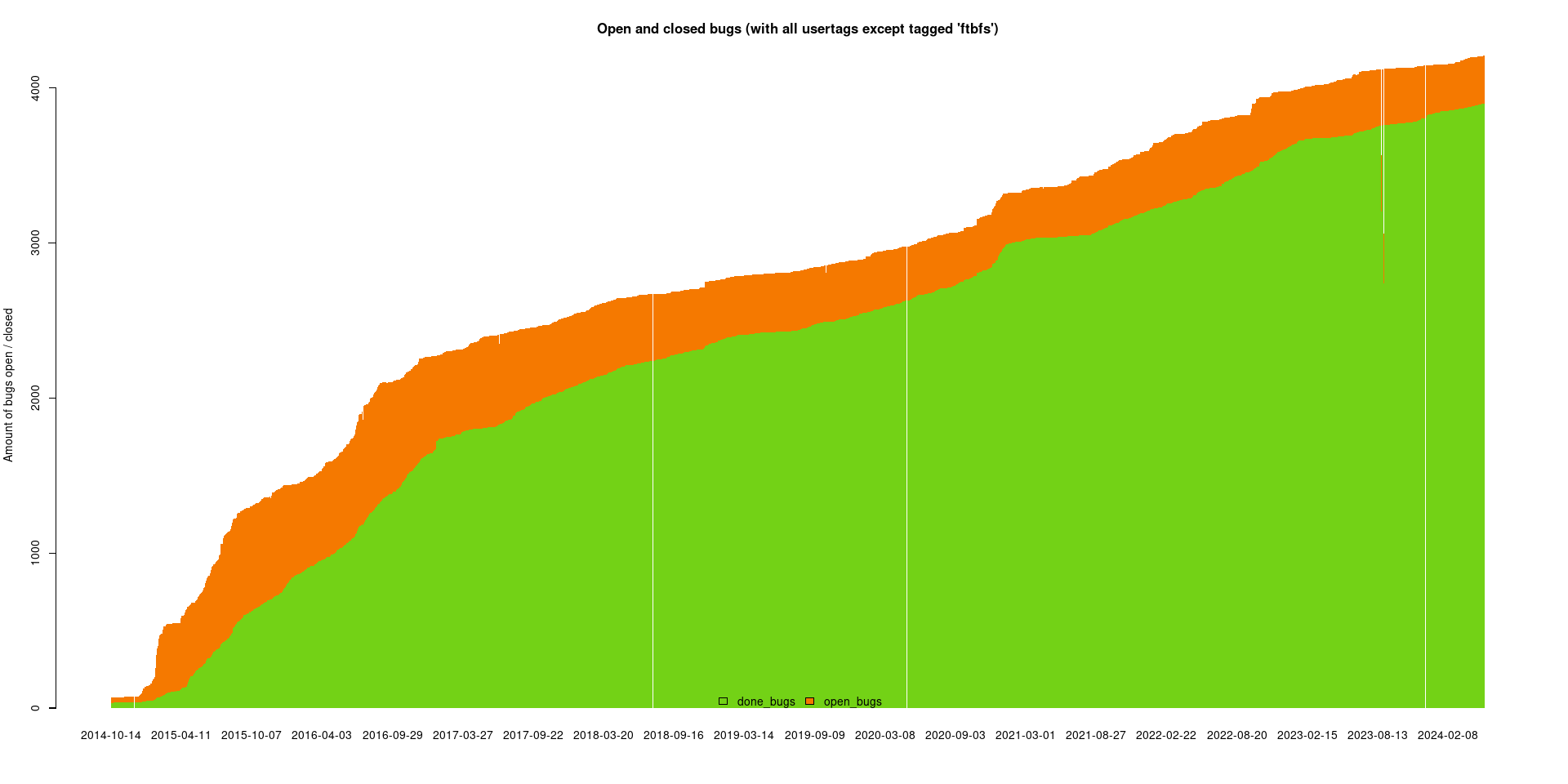
What happened in the reproducible builds effort this week: Toolchain fixes Reiner Herrmann submitted a patch against debhelper to make dh_installinit source files in a stable order. Chris Lamb found how to make cython output deterministic by ordering the keys used to traverse a dict. Reiner Herrmann proposed a patch for pyside-tools to remove the timestamps embedded by rcc in the generated Python code. Mattia Rizzolo rebased our custom version of debhelper on version 9.20151126. As no objections have been made so far, Mattia Rizzolo has filled #805872 asking -Wdate-time to be turned on by default in dpkg-buildflag. Guillem has since sent a final warning before proceeding as such in the next dpkg upload. Russ Allbery added support for SOURCE_DATE_EPOCH in podlators 4.00 which Niko Tyni intend to backport to Perl 5.22. Packages fixed The following packages have become reproducible due to changes in their build dependencies: fontforge, golang-github-tinylib-msgp, libpango-perl, libparanamer-java, libxaw, sqljet, stringtemplate4, uzbl, zope-mysqlda. The following packages became reproducible after getting fixed: Some uploads fixed some reproducibility issues, but not all of them: Patches submitted which have not made their way to the archive yet: Lunar reported two issues making xz-utils unreproducible (#806328, #806331). reproducible.debian.net A seventh armhf build node has been added (resulting of two more armhf build jobs). Thanks to Vagrant Cascadian for putting this Raspberry Pi 2B to help. (h01ger) jenkins.debian.net has been made more robust against network and proxy failures. (h01ger) A new 100 GB partition has been set up on reproducible.debian.net to prevent disk space issues. Thanks to ProfitBricks for its continuous support to our continuous test system. (h01ger) New graphs showing usertagged bugs have been added on the dashboard to measure the progress without FTBFS issues. Please note that comparing the two graphs might be misleading as more than 1300 FTBFS bugs have been inventoried. (h01ger) Package reviews 78 reviews have been removed, 116 added and 49 updated this week. 25 new FTBFS have been filed by Chris West, Chris Lamb and Santiago Vila. New issues identified this week: timestamps_in_documentation_generated_with_libwibble, copyright_year_in_documentation_generated_by_sphinx, timestamps_in_documentation_generated_by_glib_genpod, random_order_of_tmpfiles_in_postinst, random_order_in_cython_output, timestamps_in_python_code_generated_by_pyside. Reiner Herrmann and Lunar improved the prebuilder script: the script can now be called through a symlink, run parallel builds, calls diffoscope by its new name and ensure to install its recommends, and save the text output aside the HTML one. Reiner also added a script to lookup the last update of notes for a given package. Misc. Santiago Villa has been recently working on making sure that Arch:all packages were properly buildable by running dpkg-buildpackage -A. This uncovered a question that is probably not currently addressed by the policy: on which architectures should architecture-independent be buildable?

23 November 2015

Riku Voipio: Using ser2net for serial access.

Is your table a mess of wires? Do you have multiple devices connected via serial and can't remember which is /dev/ttyUSBX is connected to what board? Unless you are a embedded developer, you are unlikely to deal with serial much anymore - In that case you can just jump to the next post in your news feed. Introducting ser2netUsually people start with minicom for serial access. There are better tools - picocom, screen, etc. But to easily map multiple serial ports, use ser2net. Ser2net makes serial ports available over telnet. Persistent usb device names and ser2netTo remember which usb-serial adapter is connected to what, we use the /dev/serial tree created by udev, in /etc/ser2net.conf:

# arndale
7004:telnet:0:'/dev/serial/by-path/pci-0000:00:1d.0-usb-0:1.8.1:1.0-port0':115200 8DATABITS NONE 1STOPBIT
# cubox
7005:telnet:0:/dev/serial/by-id/usb-Prolific_Technology_Inc._USB-Serial_Controller_D-if00-port0:115200 8DATABITS NONE 1STOPBIT
# sonic-screwdriver
7006:telnet:0:/dev/serial/by-id/usb-FTDI_FT230X_96Boards_Console_DAZ0KA02-if00-port0:115200 8DATABITS NONE 1STOPBIT
The by-path syntax is needed, if you have many identical usb-to-serial adapters. In that case a Patch from BTS is needed to support quoting in serial path. Ser2net doesn't seems very actively maintained upstream - a sure sign that project is stagnant is a homepage still at sourceforge.net... This patch among other interesting features can be also be found in various ser2net forks in github. Setting easy to remember names Finally, unless you want to memorize the port numbers, set TCP port to name mappings in /etc/services:

# Local services
arndale 7004/tcp
cubox 7005/tcp
sonic-screwdriver 7006/tcp
Now finally:
telnet localhost sonic-screwdriver
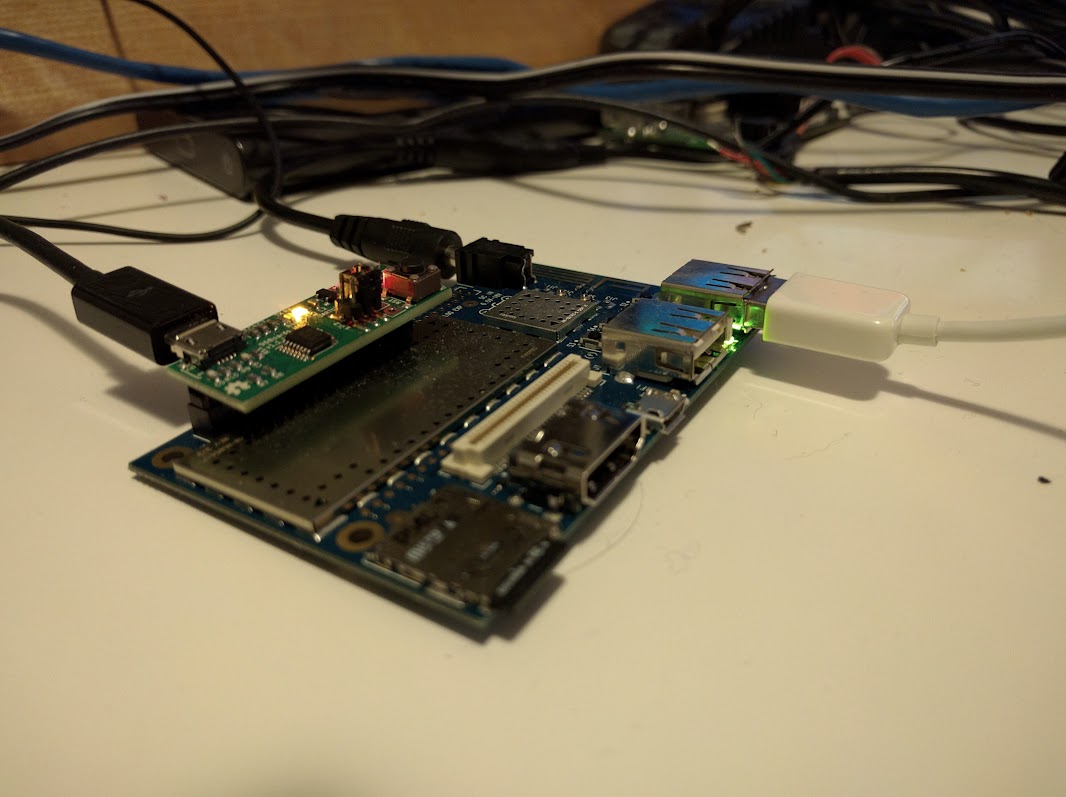
^Mandatory picture of serial port connection in action

Lunar: Reproducible builds: week 30 in Stretch cycle

What happened in the reproducible builds effort this week: Toolchain fixes Mattia Rizzolo uploaded a version of perl to the reproducible repository including the patch written by Niko Tyni to add support for SOURCE_DATE_EPOCH in Pod::Man. Dhole sent an updated version of his patch adding support for SOURCE_DATE_EPOCH in GCC to the upstream mailing list. Several comments have been made in response which have been quickly addressed by Dhole. Dhole also forwarded his patch adding support for SOURCE_DATE_EPOCH in libxslt upstream. Packages fixed The following packages have become reproducible due to changes in their build dependencies: antlr3/3.5.2-3, clusterssh, cme, libdatetime-set-perl, libgraphviz-perl, liblingua-translit-perl, libparse-cpan-packages-perl, libsgmls-perl, license-reconcile, maven-bundle-plugin/2.4.0-2, siggen, stunnel4, systemd, x11proto-kb. The following packages became reproducible after getting fixed: Some uploads fixed some reproducibility issues, but not all of them: reproducible.debian.net Vagrant Cascadian has set up a new armhf node using a Raspberry Pi 2. It should soon be added to the Jenkins infrastructure. diffoscope development diffoscope version 42 was release on November 20th. It adds a missing dependency on python3-pkg-resources and to prevent similar regression another autopkgtest to ensure that the command line is functional when Recommends are not installed. Two more encoding related problems have been fixed (#804061, #805418). A missing Build-Depends has also been added on binutils-multiarch to make the test suite pass on architectures other than amd64. Package reviews 180 reviews have been removed, 268 added and 59 updated this week. 70 new fail to build from source bugs have been reported by Chris West, Chris Lamb and Niko Tyni. New issue this week: randomness_in_ocaml_preprocessed_files. Misc. Jim MacArthur started to work on a system to rebuild and compare packages built on reproducible.debian.net using .buildinfo and snapshot.debian.org. On December 1-3rd 2015, a meeting of about 40 participants from 18 different free software projects will be held in Athens, Greece with the intent of improving the collaboration between projects, helping new efforts to be started, and brainstorming on end-user aspects of reproducible builds.

18 November 2015

Daniel Pocock: Improving DruCall and JSCommunicator user interface

DruCall is one of the easiest ways to get up and running with WebRTC voice and video calling on your own web site or blog. It is based on 100% open source and 100% open standards - no binary browser plugins and no lock-in to a specific service provider or vendor. On Debian or Ubuntu, just running a command such as
# apt-get install -t jessie-backports drupal7-mod-drucall
will install Drupal, Apache, MySQL, JSCommunicator, JsSIP and all the other JavaScript library packages and module dependencies for DruCall itself. The user interface Most of my experience is in server-side development, including things like the powerful SIP over WebSocket implementation in the reSIProcate SIP proxy repro. In creating DruCall, I have simply concentrated on those areas related to configuring and bringing up the WebSocket connection and creating the authentication tokens for the call. Those things provide a firm foundation for the module, but it would be nice to improve the way it is presented and optimize the integration with other Drupal features. This is where the projects (both DruCall and JSCommunicator) would really benefit from feedback and contributions from people who know Drupal and web design in much more detail. Benefits for collaboration If anybody wants to collaborate on either or both of these projects, I'd be happy to offer access to a pre-configured SIP WebSocket server in my lab for more convenient testing. The DruCall source code is a Drupal.org hosted project and the JSCommunicator source code is on Github. When you get to the stage where you want to run your own SIP WebSocket server as well then free community support can also be provided through the repro-user mailing list. The free, online RTC Quick Start Guide gives a very comprehensive overview of everything you need to do to run your own WebRTC SIP infrastructure.

13 November 2015

Francois Marier: How Tracking Protection works in Firefox

Firefox 42, which was released last week, introduced a new feature in its Private Browsing mode: tracking protection. If you are interested in how this list is put together and then used in Firefox, this post is for you.

Safe Browsing lists There are many possible ways to download URL lists to the browser and check against that list before loading anything. One of those is already implemented as part of our malware and phishing protection. It uses the Safe Browsing v2.2 protocol. In a nutshell, the way that this works is that each URL on the block list is hashed (using SHA-256) and then that list of hashes is downloaded by Firefox and stored into a data structure on disk:
  • ~/.cache/mozilla/firefox/XXXX/safebrowsing/mozstd-track* on Linux
  • ~/Library/Caches/Firefox/Profiles/XXXX/safebrowsing/mozstd-track* on Mac
  • C:\Users\XXXX\AppData\Local\mozilla\firefox\profiles\XXXX\safebrowsing\mozstd-track* on Windows
This sbdbdump script can be used to extract the hashes contained in these files and will output something like this:
$ ~/sbdbdump/dump.py -v .
- Reading sbstore: mozstd-track-digest256
[mozstd-track-digest256] magic 1231AF3B Version 3 NumAddChunk: 1 NumSubChunk: 0 NumAddPrefix: 0 NumSubPrefix: 0 NumAddComplete: 1696 NumSubComplete: 0
[mozstd-track-digest256] AddChunks: 1445465225
[mozstd-track-digest256] SubChunks:
...
[mozstd-track-digest256] addComplete[chunk:1445465225] e48768b0ce59561e5bc141a52061dd45524e75b66cad7d59dd92e4307625bdc5
...
[mozstd-track-digest256] MD5: 81a8becb0903de19351427b24921a772
The name of the blocklist being dumped here (mozstd-track-digest256) is set in the urlclassifier.trackingTable preference which you can find in about:config. The most important part of the output shown above is the addComplete line which contains a hash that we will see again in a later section.

List lookups Once it's time to load a resource, Firefox hashes the URL, as well as a few variations of it, and then looks for it in the local lists. If there's no match, then the load proceeds. If there's a match, then we do an additional check against a pairwise allowlist. The pairwise allowlist (hardcoded in the urlclassifier.trackingWhitelistTable pref) is designed to encode what we call "entity relationships". The list groups related domains together for the purpose of checking whether a load is first or third party (e.g. twitter.com and twimg.com both belong to the same entity). Entries on this list (named mozstd-trackwhite-digest256) look like this:
twitter.com/?resource=twimg.com
which translates to "if you're on the twitter.com site, then don't block resources from twimg.com. If there's a match on the second list, we don't block the load. It's only when we get a match on the first list and not the second one that we go ahead and cancel the network load. If you visit our test page, you will see tracking protection in action with a shield icon in the URL bar. Opening the developer tool console will expose the URL of the resource that was blocked:
The resource at "https://trackertest.org/tracker.js" was blocked because tracking protection is enabled.

Creating the lists The blocklist is created by Disconnect according to their definition of tracking. The Disconnect list is on their Github page, but the copy we use in Firefox is the copy we have in our own repository. Similarly the Disconnect entity list is from here but our copy is in our repository. Should you wish to be notified of any changes to the lists, you can simply subscribe to this Atom feed. To convert this JSON-formatted list into the binary format needed by the Safe Browsing code, we run a custom list generation script whenever the list changes on GitHub. If you run that script locally using the same configuration as our server stack, you can see the conversion from the original list to the binary hashes. Here's a sample entry from the mozstd-track-digest256.log file:
[m] twimg.com >> twimg.com/
[canonicalized] twimg.com/
[hash] e48768b0ce59561e5bc141a52061dd45524e75b66cad7d59dd92e4307625bdc5
and one from mozstd-trackwhite-digest256.log:
[entity] Twitter >> (canonicalized) twitter.com/?resource=twimg.com, hash a8e9e3456f46dbe49551c7da3860f64393d8f9d96f42b5ae86927722467577df
This in combination with the sbdbdump script mentioned earlier, will allow you to audit the contents of the local lists.

Serving the lists The way that the binary lists are served to Firefox is through a custom server component written by Mozilla: shavar. Every hour, Firefox requests updates from shavar.services.mozilla.com. If new data is available, then the whole list is downloaded again. Otherwise, all it receives in return is an empty 204 response. Should you want to play with it and run your own server, follow the installation instructions and then go into about:config to change these preferences to point to your own instance:
browser.trackingprotection.gethashURL
browser.trackingprotection.updateURL
Note that on Firefox 43 and later, these prefs have been renamed to:
browser.safebrowsing.provider.mozilla.gethashURL
browser.safebrowsing.provider.mozilla.updateURL

Learn more If you want to learn more about how tracking protection works in Firefox, you can find all of the technical details on the Mozilla wiki or you can ask questions on our mailing list. Thanks to Tanvi Vyas for reviewing a draft of this post.

9 November 2015

Daniel Pocock: debian.org RTC: announcing XMPP, SIP presence and more

Announced 7 November 2015 on the debian-devel-announce mailing list. The Debian Project now has an XMPP service available to all Debian Developers. Your Debian.org email identity can be used as your XMPP address. The SIP service has also been upgraded and now supports presence. SIP and XMPP presence, rosters and messaging are not currently integrated. The Lumicall app has been improved to enable rapid setup for Debian.org SIP users. This announcement concludes the maintenance window on the RTC services. All services are now running on jessie (using packages from jessie-backports). XMPP and SIP enable a whole new world of real-time multimedia communications possibilities: video/webcam, VoIP, chat messaging, desktop sharing and distributed, federated communication are the most common use cases. Details about how to get started and get support are explained in the User Guide in the Debian wiki. As it is a wiki, you are completely welcome to help it evolve. Several of the people involved in the RTC team were also at the Cambridge mini-DebConf (7-8 November). The password for all these real time communication services can be set via the LDAP control panel. Please note that this password needs to be different to any of your other existing debian.org passwords. Please use a strong password and please keep it secure. Some of the infrastructure, like the TURN server, is shared by clients of both SIP and XMPP. Please configure your XMPP and SIP clients to use the TURN server for audio or video streaming to work most reliably through NAT. A key feature of both our XMPP and SIP services is that they support federated inter-connectivity with other domains. Please try it. The FedRTC service for Fedora developers is one example of another SIP service that supports federation. For details of how it works and how we establish trust between domains, please see the RTC Quick Start Guide. Please reach out to other communities you are involved with and help them consider enabling SIP and XMPP federation of their own communities/domains: as Metcalfe's law suggests, each extra person or community who embraces open standards like SIP and XMPP has far more than just an incremental impact on the value of these standards and makes them more pervasive. If you are keen to support and collaborate on the wider use of Free RTC technology, please consider joining the Free RTC mailing list sponsored by FSF Europe. There will also be a dedicated debian-rtc list for discussion of these technologies within Debian and derivatives. This service has been made possible by the efforts of the DSA team in the original SIP+WebRTC project and the more recent jessie upgrades and XMPP project. Real-time communications systems have specific expectations for network latency, connectivity, authentication schemes and various other things. Therefore, it is a great endorsement of the caliber of the team and the quality of the systems they have in place that they have been able to host this largely within their existing framework for Debian services. Feedback from the DSA team has also been helpful in improving the upstream software and packaging to make them convenient for system administrators everywhere. Special thanks to Peter Palfrader and Luca Filipozzi from the DSA team, Matthew Wild from the Prosody XMPP server project, Scott Godin from the reSIProcate project, Juliana Louback for her contributions to JSCommunicator during GSoC 2014, Iain Learmonth for helping get the RTC team up and running, Enrico Tassi, Sergei Golovan and Victor Seva for the Prosody and prosody-modules packaging and also the Debian backports team, especially Alexander Wirt, helping us ensure that rapidly evolving packages like those used in RTC are available on a stable Debian system.

8 November 2015

Daniel Pocock: Problems observed during Cambridge mini-DebConf RTC demo

A few problems were observed during the demo of RTC services at the Cambridge mini-DebConf yesterday. As it turns out, many of them are already documented and solutions are available for some of them. Multiple concurrent SIP registrations I had made some test calls on Friday using rtc.debian.org and I still had the site open in another tab in another browser window. When people tried to call me during the demo, both tabs were actually ringing but only one was visible. When a SIP client registers, the SIP registration server sends it a list of all other concurrent registrations in the response message. We simply need to extend JSCommunicator to inspect the response message and give some visual feedback about other concurrent registrations. Issue #69. SIP also provides a mechanism to clear concurrent registrations and that could be made available with a button or configuration option too (Issue #9). Callee hears ringing before connectivity checks completed The second issue during the WebRTC demo was that the callee (myself) was alerted about the call before the ICE checks had been performed. The optimal procedure to provide a slick user experience is to run the connectivity checks before alerting the callee. If the connectivity checks fail, the callee should never be alerted with a ringing sound and would never know somebody had tried to call. The caller would be told that the call was unable to be attempted and encouraged to consider trying again on another wifi network. RFC 5245 recommends that connectivity checks should be done first but it is not mandatory. One reason this is problematic with WebRTC is the need to display the pop-up asking the user for permission to share their microphone and webcam: the popup must appear before connectivity checks can commence. This has been discussed in the JsSIP issue tracker. Non-WebRTC softphones, such as Lumicall, do the connectivity checks before alerting the callee. Dealing with UDP blocking It appears the corporate wifi network in the venue was blocking the UDP packets so the connectivity checks could never complete, not even using a TURN server to relay the packets. People trying to use the service on home wifi networks, in small offices and mobile tethering should not have this problem as these services generally permit UDP by default. Some corporate networks, student accommodation and wifi networks in some larger hotels have blocked UDP and in these cases, additional effort must be made to get through the firewall. The TURN server we are running for rtc.debian.org also supports a TLS transport but it simply isn't configured yet. At the time we originally launched the WebRTC service in 2013, the browsers didn't support TURN over TLS at all but now they do. This is probably the biggest problem encountered during the demo but it does not require any code change to resolve this, just configuration, so a solution is well within reach. During the demo, we worked around the issue by turning off the wifi on my laptop and using tethering with a 4G mobile network. All the calls made successfully during the demo used the tethering solution. Add a connectivity check timeout The ICE connectivity checks appeared to keep running for a long time. Usually, if UDP is not blocked, the ICE checks would complete in less than two seconds. Therefore, the JavaScript needs to set a timeout between two and five seconds when it starts the checks and give the user a helpful warning about their network problems if the timeout is exceeded. Issue #73 in JSCommunicator. While these lengthy connectivity checks appear disappointing, it is worth remembering that this is an improvement over the first generation of softphones: none of them made these checks at all, they would simply tell the user the call had been answered but audio and video would only be working in one direction or not at all. Microphone issues One of the users calling into the demo, Juliana, was visible on the screen but we couldn't hear her. This was a local audio hardware issue with her laptop or headset. It would be useful if the JavaScript could provide visual feedback when it detects a voice (issue #74) and even better, integrating with the sound settings so that the user can see if the microphone is muted or the gain is very low (issue #75). Thanks to participants in the demo I'd like to thank all the participants in the demo, including Juliana Louback who called us from New York, Laura Arjona who called us from Madrid, Daniel Silverstone who called from about three meters away in the front row and Iain Learmonth who helped co-ordinate the test calls over IRC. Thanks are also due to Steve McIntyre, the local Debian community, ARM and the other sponsors for making another mini-DebConf in the UK this year.

4 November 2015

Raphaël Hertzog: My Free Software Activities in October 2015

My monthly report covers a large part of what I have been doing in the free software world. I write it for my donators (thanks to them!) but also for the wider Debian community because it can give ideas to newcomers and it s one of the best ways to find volunteers to work with me on projects that matter to me. Debian LTS This month I have been paid to work 13.25 hours on Debian LTS. During this time I worked on the following things: I also started a conversation about what paid contributors could work on if they have some spare cycle as the current funding level might allow us to invest some time on work outside of just plain security updates. The Debian Administrator s Handbook I spent quite some time finalizing the Jessie book update, both for the content and for the layout of the printed book. Debian Handbook: cover of the jessie edition Misc Debian work GNOME 3.18. I uploaded a new gnome-shell-timer working with GNOME Shell 3.18 and I filed bugs #800660 and #802480 about an annoying gnome-keyring regression I did multiple test rounds with the Debian maintainers (Dmitry Shachnev, kudos to him!) and the upstream developers (see here and here). Apart from those regressions, I like GNOME 3.18! Python-modules team migration to Git. After the Git migration, and since the team policy now imposes usage of git-dpm on all members, I made some tries with it on the python-django package while pushing version 1.8.5 to experimental. And the least I can say is that I m not pleased with the result. I thus filed 3 bugs summarizing the problems I have with git-dpm: #801666 (no way to set the upstream branch names from within the repository), #801667 (no clean way to merge between packaging branches), #801668 (does not create upstream tag immediately on tarball import). That is on top of other randomly stupid bugs that were already reported like #801548 (does not work with perfectly valid pre-existing upstream tags). Django packaging. I filed bugs on all packages build-depending on python-django that fail to build with Django 1.8 and informed them that I would upload Django 1.8 to unstable in early November (it s done already). Then I fixed python-django-jsonfield myself since Distro Tracker relies on this package. Following this small mass-bug filing, I filed a wishlist bug on devscripts to improve the mass-bug helper script (see #801926). And since I used ratt to rebuild the packages, I filed a wishlist issue on this new tool as well. Tryton 3.6 upgrade. I upgraded my own Tryton installation to version 3.6 and filed bug #803066 because the SysV init script was not working properly. That also reminded me that the DD process of Matthias Behrle (the tryton package maintainer) was stalled due to a bug in the NM infrastructure so I pinged the NM team and we sorted out a way for me to advocate him and get his process going Distro Tracker. I continued my work to refactor the way we handle incoming mail processing (branch people/hertzog/mailprocessing). It s now mostly finished and I need to deploy it in a test environment before being able to roll it out on tracker.debian.org. Thanks See you next month for a new summary of my activities.

No comment Liked this article? Click here. My blog is Flattr-enabled.

Johannes Schauer: Let's Encrypt with Pound on Debian

TLDR: mister-muffin.de (and all its subdomains), bootstrap.debian.net and binarycontrol.debian.net are now finally signed by "Let's Encrypt Authority X1" \o/ I just tried out the letsencrypt client Debian packages prepared by Harlan Lieberman-Berg which can be found here: My server setup uses Pound as a reverse proxy in front of a number of LXC based containers running the actual services. Furthermore, letsencrypt only supports Nginx and Apache for now, so I had to manually setup things anyways. Here is how. After installing the Debian packages I built from above git repositories, I ran the following commands:
$ mkdir -p letsencrypt/etc letsencrypt/lib letsencrypt/log
$ letsencrypt certonly --authenticator manual --agree-dev-preview \
    --server https://acme-v01.api.letsencrypt.org/directory --text \
    --config-dir letsencrypt/etc --logs-dir letsencrypt/log \
    --work-dir letsencrypt/lib --email josch@mister-muffin.de \
    --domains mister-muffin.de --domains blog.mister-muffin.de \
    --domains [...]
I created the letsencrypt directory structure to be able to run letsencrypt as a normal user. Otherwise, running this command would require access to /etc/letsencrypt and others. Having to set this up and pass all these parameters is a bit bothersome but there is an upstream issue about making this easier when using the "certonly" option which in princible should not require superuser privileges. The --server option is necessary for now because "Let's Encrypt" is still in beta and one needs to register for it. Without the --server option one will get an untrusted certificate from the "happy hacker fake CA". The letsencrypt program will then ask me for my agreement to the Terms of Service and then, for each domain I specified with the --domains option present me the token content and the location under each domain where it expects to find this content, respectively. This looks like this each time:
-------------------------------------------------------------------------------
NOTE: The IP of this machine will be publicly logged as having requested this
certificate. If you're running letsencrypt in manual mode on a machine that is
not your server, please ensure you're okay with that.
Are you OK with your IP being logged?
-------------------------------------------------------------------------------
(Y)es/(N)o: Y
Make sure your web server displays the following content at
http://mister-muffin.de/.well-known/acme-challenge/XXXX before continuing:
 "header":  "alg": "RS256", "jwk":  "e": "AQAB", "kty": "RSA", "n": "YYYY" , "payload": "ZZZZ", "signature": "QQQQ" 
Content-Type header MUST be set to application/jose+json.
If you don't have HTTP server configured, you can run the following
command on the target server (as root):
mkdir -p /tmp/letsencrypt/public_html/.well-known/acme-challenge
cd /tmp/letsencrypt/public_html
echo -n ' "header":  "alg": "RS256", "jwk":  "e": "AQAB", "kty": "RSA", "n": "YYYY" , "payload": "ZZZZ", "signature": "QQQQ" ' > .well-known/acme-challenge/XXXX
# run only once per server:
$(command -v python2   command -v python2.7   command -v python2.6) -c \
"import BaseHTTPServer, SimpleHTTPServer; \
SimpleHTTPServer.SimpleHTTPRequestHandler.extensions_map =  '': 'application/jose+json' ; \
s = BaseHTTPServer.HTTPServer(('', 80), SimpleHTTPServer.SimpleHTTPRequestHandler); \
s.serve_forever()" 
Press ENTER to continue
For brevity I replaced any large base64 encoded chunks of the messages with YYYY, ZZZZ and QQQQ. The token location is abbreviated with XXXX. After temporarily stopping Pound on my webserver I created the directory /tmp/letsencrypt/public_html/.well-known/acme-challenge and then opened two shells on my server, both at /tmp/letsencrypt/public_html. In one, I kept a tiny HTTP server running (like the suggested Python SimpleHTTPServer which will also work if one has Python installed). In the other I copy pasted the echo line that the letsencrypt program suggested me to run. I had to copypaste that echo command for each domain I wanted to verify. This could easily be automated, so I filed an issue about this with upstream. It seems that the letsencrypt servers query each of these tokens twice: once directly each time after having hit enter after seeing the message above and another time once all tokens are in place. At the end of this ordeal I get:
2015-11-04 11:12:18,409:WARNING:letsencrypt.client:Non-standard path(s), might not work with crontab installed by your operating system package manager
IMPORTANT NOTES:
 - If you lose your account credentials, you can recover through
   e-mails sent to josch@mister-muffin.de.
 - Congratulations! Your certificate and chain have been saved at
   letsencrypt/etc/live/mister-muffin.de/fullchain.pem. Your cert will
   expire on 2016-02-02. To obtain a new version of the certificate in
   the future, simply run Let's Encrypt again.
 - Your account credentials have been saved in your Let's Encrypt
   configuration directory at letsencrypt/etc. You should make a
   secure backup of this folder now. This configuration directory will
   also contain certificates and private keys obtained by Let's
   Encrypt so making regular backups of this folder is ideal.
I can now scp the content of letsencrypt/etc/live/mister-muffin.de/* to my server. Unfortunately, Pound (and also my ejabberd XMPP server) requires the private key to be in the same file as the certificate and the chain, so on the server I also had to do:
cat /etc/ssl/private/privkey.pem /etc/ssl/private/fullchain.pem > /etc/ssl/private/private_fullchain.pem
And edit the Pound config to use /etc/ssl/private/private_fullchain.pem. But that's all, folks! EDIT It seems that manually copying over the echo commands as I described above is not necessary. Instead of using the certonly plugin, I can use the webroot plugin. That plugin takes the --webroot-path option and will copy the tokens to there. Since my webroot is on a remote machine, I could just mount it locally via sshfs and pass the mountpoint as --webroot-path. That I didn't realize that the webroot plugin does what I want (and not the certonly plugin) can easily be explained by the only documentation of the webroot plugin in the help output and the man page generated from it being "Webroot Authenticator" which is not very helpful. Another user seems to have run into similar problems. Better documenting the plugins so that these situations can be prevented in the future is tracked in this upstream bug.

3 November 2015

Daniel Pocock: How much of Linux will be illegal in the UK?

This week I've been in the UK again, giving a talk about Lumicall and JSCommunicator in Manchester last night and a talk about Free Real-Time Communications at the mini-DebConf in Cambridge on the weekend of 7-8 November. An interesting backdrop to these activities has been a national debate about Internet privacy. The UK Government and police are demanding laws to mandate back doors in all communications products and services. It leaves me wondering about a range of issues:
  • Will overzealous UK police, reknowned for singling out and bullying people who don't conform with their idea of normality, start taking a more sinister attitude to people using software like Linux? For example, if airport security asks to inspect a laptop and doesn't see the familiar Windows or Mac OS desktop, will the owner of the laptop be delayed or told to leave it behind? Some people may feel this is extreme, but workers in these roles are known for taking initiative in their own special way, such as the infamous baby pat-down. If the owner of a Linux laptop is a Muslim, like the Texas schoolboy recently arrested because his clock looks suspicious to the untrained eye of a policeman, the chances of a rough encounter with authority probably rise even further.
  • Will developers still be able to use technologies like PGP and ZRTP in the UK? Will PGP key-signing parties become illegal or have to be held 20 miles offshore on a boat like the legendary pirate radio stations of the sixties?
  • Will Linux distributions such as Debian and Fedora have to avoid distributing packages such as Enigmail?
  • Will updates to Android and iOS on smartphones seek to automatically disable or remove apps like Lumicall?
  • Even if a user chooses a secure app like Lumicall for communication, will the vendor of the operating system be required to provide alternative ways to monitor the user, for example, by intercepting audio before it is encrypted by the app?
  • Without strong encryption algorithms, digital signatures will no longer be possible either and it will be impossible for software vendors to securely distribute new versions of their software.
  • Why should the police be the only workers to have their job done for them by Internet snooping? Why shouldn't spouses have a right to all their partner's communications to periodically verify they are not cheating and putting themselves at risk of diseases? Why shouldn't employers be able to check on employee's private communications and home computers to help prevent leaks of customer data? Why shouldn't the NHS be able to go through people's garbage to monitor what they eat given the WHO warning that bacon is more likely to kill you than a terrorist?
  • While the authorities moan about the internet being a "safe" place for terrorists and paedophiles, what is their real motivation for trying to bring in these new laws, even when their best technical advisors must surely be telling them about the risks and negative consequences for compatibility of UK systems in a global Internet? If the terrorist scare story is not so credible, is it more likely they are seeking to snoop on people who may not be paying taxes or to maintain the upper hand over rival political parties like the Greens and the UKIP in a time of prolonged and increasingly punitive austerity?
  • Australia already introduced similar laws a few weeks ago, despite widespread criticism from around the world. With cricket and rugby now over, is the UK just looking to go one up on Australia in the game of snooping?
Island mentality in the Internet age Politics aside, what would this mean from a technical perspective? The overwhelming consensus among experts is that secure technology that people use and expect in many other parts of the world, including the US, simply won't be compatible with the products and services that UK residents will be permitted to use. Bigger companies like Google and Apple may be able to offer differentiated versions of their services for the UK but smaller companies or companies who have built their reputation on technical excellence simply won't be able or willing to offer crippled versions of their products with backdoors for the UK. The UK's island geography will become a metaphor for its relationship with the global marketplace. The first thing to take note of is that encryption and authentication are closely related. Public-key cryptography, for example, simply swaps the public key and private key when being used to authenticate instead of encrypt. An effective and wide-reaching legal ban on encryption would also potentially prohibit the algorithms used for authentication. Many methods of distributing software, including packages distributed through Linux distributions or apps distributed through the Google Play store are authenticated with such algorithms. This is often referred to as a digital signature. Digital signatures help ensure that software is not corrupted, tampered with by hackers or infected by viruses when it is transmitted and stored in the public Internet. To correctly implement these mechanisms for installing software safely, every device running an operating system such as Debian, Ubuntu, Fedora or Android needs to include some software modules implementing the algorithms. In Linux, for example, I'm referring to packages like GnuPG, OpenSSL and GnuTLS. Without these components, it would be hard or even impossible for developers in the UK to contribute or publish new versions of their software. Users of the software would not be able to securely receive vital updates to their systems. An opportunity for free software? Some people say that any publicity can be good publicity. Now the Government has put the ball into play, people promoting secure solutions based on free software have an opportunity to participate in the debate too. While laws may or may not change, principles don't. It is a perfect time to remind users that many of the principles of software freedom were written down many years ago, before the opportunity for mass surveillance came into existence. These principles remain relevant to this day. The experts who developed these principles back then are also far more likely to offer insights and trustworthy solutions for the road ahead. If you'd like to discuss these issues or ask questions, please join the Free-RTC mailing list.

31 October 2015

Chris Lamb: Free software activities in October 2015

Here is my monthly update covering a large part of what I have been doing in the free software world (previously):
Debian My work in the Reproducible Builds project was also covered in more depth in Lunar's weekly reports (#23, #24, #25, #26).
LTS

This month I have been paid to work 11 hours on Debian Long Term Support (LTS). In that time I did the following:
  • DLA 326-1 for zendframework fixing an SQL injection vulnerability.
  • DLA 332-1 for optipng correcting a use-after-free issue.
  • DLA 333-1 for cakephp preventing a remote Denial of Service attack.
  • DLA 337-1 for busybox fixing a vulnerability when unzipping a specially crafted zip file/
  • DLA 338-1 for xscreensaver preventing a crash when hot-swapping monitors.

Uploads
  • redis New upstream release as well as changing the default UNIX socket location and correctly supporting "cluster" mode config file hardening and redis-sentinel's runtime directory handling under systemd. An update for jessie was also uploaded.
  • python-redis Attempting to get the autopkgtest tests to finally pass.
  • debian-timeline Making the build reproducible.
  • gunicorn New upstream release.


28 October 2015

Daniel Pocock: Free Real-Time Communications workshop in Manchester, 2 November

Manchester Free Software and MadLab are hosting a workshop on Free and Federated Real-Time Communications with Free Software next Monday night, 2 November from 7pm. Add this to your calendar (iCalendar link) Users and developers are invited to come and discover the opportunities for truly free and secure chat, voice and video with WebRTC, mobile VoIP and the free desktop. This is an interactive workshop with practical, hands-on opportunities to explore this topic, see what works and what doesn't and learn about troubleshooting techniques to help developers like myself improve the software. This is also a great opportunity for any Java developers who would like to get some exposure to the Android platform. People wishing to fully participate in all the activities are encouraged to bring a laptop with the Wireshark software and Android tools (especially adb, the command line utility) or if you prefer to focus on WebRTC, have the latest version of Firefox and Chrome installed. If you are keen to run the DruCall module for WebRTC or your own SIP or XMPP server, you can try setting it up as described in the RTC Quick Start Guide and come along to the workshop with any questions you have. A workshop near you? Manchester has a history of great technological innovation, including the first stored program computer and it is a real thrill for me to offer this workshop there. FSFE Manchester ran a workshop evaluating the performance of free software softphones back in 2012. Over the coming months, I would like to be able to hold further workshops in other locations to get feedback from people who are trying this technology, including the Lumicall app, JSCommunicator and DruCall. If you are interested in helping organize such an event or you have any other feedback about this topic, please come and discuss it on the Free RTC mailing list.

27 October 2015

Lunar: Reproducible builds: week 26 in Stretch cycle

What happened in the reproducible builds effort this week: Toolchain fixes Mattia Rizzolo created a bug report to continue the discussion on storing cryptographic checksums of the installed .deb in dpkg database. This follows the discussion that happened in June and is a pre-requisite to add checksums to .buildinfo files. Niko Tyni identified why the Vala compiler would generate code in varying order. A better patch than his initial attempt still needs to be written. Packages fixed The following 15 packages became reproducible due to changes in their build dependencies: alt-ergo, approx, bin-prot, caml2html, coinst, dokujclient, libapreq2, mwparserfromhell, ocsigenserver, python-cryptography, python-watchdog, slurm-llnl, tyxml, unison2.40.102, yojson. The following packages became reproducible after getting fixed: Some uploads fixed some reproducibility issues but not all of them: reproducible.debian.net pbuilder has been updated to version 0.219~bpo8+1 on all eight build nodes. (Mattia Rizzolo, h01ger) Packages that FTBFS but for which no open bugs have been recorded are now tested again after 3 days. Likewise for depwait packages. (h01ger) Out of disk situations will not cause IRC notifications anymore. (h01ger) Documentation update Lunar continued to work on writing documentation for the future reproducible-builds.org website. Package reviews 44 reviews have been removed, 81 added and 48 updated this week. Chris West and Chris Lamb identified 70 fail to build from source issues. Misc. h01ger presented the project in Mexico City at the 3er Congreso de Seguridad de la Informaci n where it became clear that we lack academic papers related to reproducible builds. Bryan has been doing hard work to improve reproducibility for OpenWrt. He wrote a report linking to the patches and test results he published.

17 October 2015

Simon Richter: Key Transition

So, since several years I've had a second gpg key, 4096R/6AABE354. Several of you have already signed it, and I've been using it in Debian for some time already, but I've not announced it more widely yet, and I occasionally still get mail encrypted to the old key (which remains valid and usable, but it's 1024R). Of course, I've also made a formal transition statement:
-----BEGIN PGP SIGNED MESSAGE-----
Hash: SHA1
OpenPGP Key Transition Statement for Simon Richter
I have created a new OpenPGP key and will be transitioning away from
my old key.  The old key has not been compromised and will continue to
be valid for some time, but I prefer all future correspondence to be
encrypted to the new key, and will be making signatures with the new
key going forward.
I would like this new key to be re-integrated into the web of trust.
This message is signed by both keys to certify the transition.  My new
and old keys are signed by each other.  If you have signed my old key,
I would appreciate signatures on my new key as well, provided that
your signing policy permits that without re-authenticating me.
The old key, which I am transitioning away from, is:
pub   1024D/5706A4B4 2002-02-26
      Key fingerprint = 040E B5F7 84F1 4FBC CEAD  ADC6 18A0 CC8D 5706 A4B4
The new key, to which I am transitioning, is:
pub   4096R/6AABE354 2009-11-19
      Key fingerprint = 9C43 2534 95E4 DCA8 3794  5F5B EBF6 7A84 6AAB E354
The entire key may be downloaded from: http://www.simonrichter.eu/simon.asc
To fetch the full new key from a public key server using GnuPG, run:
  gpg --keyserver keys.gnupg.net --recv-key 6AABE354
If you already know my old key, you can now verify that the new key is
signed by the old one:
  gpg --check-sigs 6AABE354
If you are satisfied that you've got the right key, and the User IDs
match what you expect, I would appreciate it if you would sign my key:
  gpg --sign-key 6AABE354
You can upload your signatures to a public keyserver directly:
  gpg --keyserver keys.gnupg.net --send-key 6AABE354
Or email sr@simonrichter.eu (possibly encrypted) the output from:
  gpg --armor --export 6AABE354
If you'd like any further verification or have any questions about the
transition please contact me directly.
To verify the integrity of this statement:
  wget -q -O- http://www.simonrichter.eu/key-transition-2015-03-09.txt   gpg --verify
   Simon
-----BEGIN PGP SIGNATURE-----
Version: GnuPG v1
iQEcBAEBAgAGBQJU/bbEAAoJEH69OHuwmQgRWOIH/AogHxhhVO5Tp5FFGpBFwljf
NzKTPBExMhZ/8trAzYybOWFv3Bx4AGdWkYfDnxP6oxQJOXVq4KL6ZcPPuIZuZ6fZ
bu0XHdPMU89u0TymR/WJENRCOcydRBe/lZs+zdJbKQtEZ+on4uNXxHpUiZPi1xxM
ggSdVBKn2PlCBcYih40S9Oo/rM9uBmYcFavX7JMouBSzgX78cVoIcY6zPRmHoq4k
TkGKfvHeSu+wbzWRmDwu/PFHRA4TKNvR6oeO+Et1yk454zjrHMXineBILRvvMCIA
t54pV6n+XzOUmtXcKnkIGltK+ZaJSV6am0swtx84RaevVXrknIQE8NvlA4MNgguI
nAQBAQIABgUCVP23tAAKCRDSx966V9+/u3j4BACVHifAcO86jAc5dn+4OkFZFhV1
l3MKIolL+E7Q7Ox+vJunGJJuGnOnazUK+64yDGZ2JxNJ4QNWD1FOs/Ng2gm82Vin
ArBtyp1ZGWUa+349X+1qarUQF9qAaUXDZjFp5Hzh/o6KC4t3eECxcb41og3LUTQD
VuG2KWNXYBe5P5ak9Q==
=o61r
-----END PGP SIGNATURE-----

13 October 2015

Julien Danjou: Benchmarking Gnocchi for fun & profit

We got pretty good feedback on Gnocchi so far, even if we only had little. Recently, in order to have a better feeling of where we were at, we wanted to know how fast (or slow) Gnocchi was. The early benchmarks that some of the Mirantis engineers ran last year showed pretty good signs. But a year later, it was time to get real numbers and have a good understanding of Gnocchi capacity. Benchmark tools The first thing I realized when starting that process, is that we were lacking of tools to run benchmarks. Therefore I started to write some benchmark tools in python-gnocchiclient, which provides a command line tool to interrogate Gnocchi. I added a few basic commands to measure metric performance, such as:
$ gnocchi benchmark metric create -w 48 -n 10000 -a low
+----------------------+------------------+
Field Value
+----------------------+------------------+
client workers 48
create executed 10000
create failures 0
create failures rate 0.00 %
create runtime 8.80 seconds
create speed 1136.96 create/s
delete executed 10000
delete failures 0
delete failures rate 0.00 %
delete runtime 39.56 seconds
delete speed 252.75 delete/s
+----------------------+------------------+

The command line tool supports the --verbose switch to have detailed progress report on the benchmark progression. So far it supports metric operations only, but that's the most interesting part of Gnocchi. Spinning up some hardware I got a couple of bare metal servers to test Gnocchi on. I dedicated the first one to Gnocchi, and used the second one as the benchmark client, plugged on the same network. Each server is made of 2 Intel Xeon E5-2609 v3 (12 cores in total) and 32 GB of RAM. That provides a lot of CPU to handle requests in parallel. Then I simply performed a basic RHEL 7 installation and ran devstack to spin up an installation of Gnocchi based on the master branch, disabling all of the others OpenStack components. I then tweaked the Apache httpd configuration to use the worker MPM and increased the maximum number of clients that can sent request simultaneously. I configured Gnocchi to use the PostsgreSQL indexer, as it's the recommended one, and the file storage driver, based on Carbonara (Gnocchi own storage engine). That means files were stored locally rather than in Ceph or Swift. Using the file driver is less scalable (you have to run on only one node or uses a technology like NFS to share the files), but it was good enough for this benchmark and to have some numbers and profiling the beast. The OpenStack Keystone authentication middleware was not enabled in this setup, as it would add some delay validating the authentication token. Metric CRUD operations Metric creation is pretty fast. I managed to attain 1500 metric/s created pretty easily. Deletion is now asynchronous, which means it's faster than in Gnocchi 1.2, but it's still slower than creation: 300 metric/s can be deleted. That does not sound like a huge issue since metric deletion is actually barely used in production. Retrieving metric information is also pretty fast and goes up to 800 metric/s. It'd be easy to achieve very higher throughput for this one, as it'd be easy to cache, but we didn't feel the need to implement it so far. Another important thing is that all of these numbers are constant and barely depends on the number of the metric already managed by Gnocchi.
Operation Details Rate
Create metric Created 100k metrics in 77 seconds 1300 metric/s
Delete metric Deleted 100k metrics in 190 seconds 524 metric/s
Show metric Show a metric 100k times in 149 seconds 670 metric/s
Sending and getting measures Pushing measures into metrics is one of the hottest topic. Starting with Gnocchi 1.1, the measures pushed are treated asynchronously, which makes it much faster to push new measures. Getting new numbers on that feature was pretty interesting. The number of metric per second you can push depends on the batch size, meaning the number of actual measurements you send per call. The naive approach is to push 1 measure per call, and in that case, Gnocchi is able to handle around 600 measures/s. With a batch containing 100 measures, the number of calls per second goes down to 450, but since you push 100 measures each time, that means 45k measures per second pushed into Gnocchi! I've pushed the test further, inspired by the recent blog post of InfluxDB claiming to achieve 300k points per second with their new engine. I ran the same benchmark on the hardware I had, which is roughly two times smaller than the one they used. I achieved to push Gnocchi to a little more than 120k measurement per second. If I had same hardware as they used, I could interpolate the results to achieve almost 250k measures/s pushed. Obviously, you can't strictly compare Gnocchi and InfluxDB since they are not doing exactly the same thing, but it still looks way better than what I expected. Using smaller batch sizes of 1k or 2k improve the throughput further to around 125k measures/s.
Operation Details Rate
Push metric 5k Push 5M measures with batch of 5k measures in 40 seconds 122k measures/s
Push metric 4k Push 5M measures with batch of 4k measures in 40 seconds 125k measures/s
Push metric 3k Push 5M measures with batch of 3k measures in 40 seconds 123k measures/s
Push metric 2k Push 5M measures with batch of 2k measures in 41 seconds 121k measures/s
Push metric 1k Push 5M measures with batch of 1k measures in 44 seconds 113k measures/s
Push metric 500 Push 5M measures with batch of 500 measures in 51 seconds 98k measures/s
Push metric 100 Push 5M measures with batch of 100 measures in 112 seconds 45k measures/s
Push metric 10 Push 5M measures with batch of 10 measures in 852 seconds 6k measures/s
Push metric 1 Push 500k measures with batch of 1 measure in 800 seconds 624 measures/s
Get measures Push 43k measures of 1 metric 260k measures/s
What about getting measures? Well, it's actually pretty fast too. Retrieving a metric with 1 month of data with 1 minute interval (that's 43k points) takes less than 2 second. Though it's actually slower than what I expected. The reason seems to be that the JSON is 2 MB big and encoding it takes a lot of time for Python. I'll investigate that. Another point I discovered, is that by default Gnocchi returns all the datapoints for each granularities available for the asked period, which might double the size of the returned data for nothing if you don't need it. It'll be easy to add an option to the API to only retrieve what you need though! Once benchmarked, that meant I was able to retrieve 6 metric/s per second, which translates to around 260k measures/s. Metricd speed New measures that are pushed into Gnocchi are processed asynchronously by the gnocchi-metricd daemon. When doing the benchmarks above, I ran into a very interesting issue: sending 10k measures on a metric would make gnocchi-metricd uses up to 2 GB RAM and 120 % CPU for more than 10 minutes. After further investigation, I found that the naive approach we used to resample datapoints in Carbonara using Pandas was causing that. I reported a bug on Pandas and the upstream author was kind enough to provide a nice workaround, that I sent as a pull request to Pandas documentation. I wrote a fix for Gnocchi based on that, and started using it. Computing the standard aggregation methods set (std, count, 95pct, min, max, sum, median, mean) for 10k batches of 1 measure (worst case scenario) for one metric with 10k measures now takes only 20 seconds and uses 100 MB of RAM 45 faster. That means that in normal operations, where only a few new measures are processed, the operation of updating a metric only takes a few milliseconds. Awesome! Comparison with Ceilometer For comparison sake, I've quickly run some read operations benchmark in Ceilometer. I've fed it with one month of samples for 100 instances polled every minute. That represents roughly 4.3M samples injected, and that took a while almost 1 hour whereas it would have taken less than a minute in Gnocchi. Then I tried to retrieve some statistics in the same way that we provide them in Gnocchi, which mean aggregating them over a period of 60 seconds over a month.
Operation Details Rate
Read metric SQL Read measures for 1 metric 2min 58s
Read metric MongoDB Read measures for 1 metric 28s
Read metric Gnocchi Read measures for 1 metric 2s
Obviously, Ceilometer is very slow. It has to look into 4M of samples to compute and return the result, which takes a lot of time. Whereas Gnocchi just has to fetch a file and pass it over. That also means that the more samples you have (so the more time you collect data and the more resources you have), slower Ceilometer will become. This is not a problem with Gnocchi, as I emphasized when I started designing it. Most Gnocchi operations are O(log R) where R is the number of metrics or resources, whereas most Ceilometer operations are O(log S) where S is the number of samples (measures). Since is R millions of time smaller than S, Gnocchi gets to be much faster. And what's even more interesting, is that Gnocchi is entirely scalable horizontally. Adding more Gnocchi servers (for the API and its background processing worker metricd) will multiply Gnocchi performances by the number of servers added. Improvements There are several things to improve in Gnocchi, such as splitting Carbonara archives to make them more efficient, especially from drivers such as Ceph and Swift. It's already on my plate, and I'm looking forwarding to working on that! And if you have any questions, feel free to shoot them in the comment section.

12 October 2015

Ben Armstrong: Learning Nova Scotia Plants with Anki Flashcards

plants_of_nova_scotiaOne of the greatest pleasures of walking and hiking is to appreciate all of the many living things encountered along the way. A big part of that appreciation for me is to be able to identify individual species and learn the relationships among them. To that end, I would like to introduce a flashcard deck I created, based on the glossary of the excellent, and also free, Nova Scotia Plants, by Marian C. Munro, Ruth E. Newell, and Nicholas M. Hill, so that I could more effectively use the book as an amateur student of our local flora. Creating the Nova Scotia Plants glossary for Anki I authored the deck on Debian, using the free software utility pdftotext (from poppler-utils), the small shell script below to produce a rough draft, and a text editor to clean up any errors, inconsistencies, and artefacts caused by the conversion process, such as descriptions which wrapped to a second line.
#!/bin/sh
pdftotext -f 40 -l 55 \
  'Print Nova Scotia Plants complete manuscript.pdf' \
  glossary_raw.txt
egrep -v '^[ixvl]+$' glossary_raw.txt   \
  grep -P '^\f?[ a-z]+'   \
  sed -re 's/^\f?([^ ]+)( [- ]+ ? [- ]+ )( ?(.+))/\1\t\4/' \
  > glossary_import.txt
Nova Scotia Plants The Anki flashcard deck is intended as a companion for studying Nova Scotia Plants, linked above, and available either as a single PDF file, or multiple, smaller PDFs per section or family. This ebook has been a constant companion to me on my tablet during my walks and to study in quiet moments of the day. It has enriched my enjoyment of nature in Nova Scotia immeasurably. I am indebted to the authors for the years of work they put into it, and for making it available to the public for free. I hope you get as much out of it as I have. Anki for devices One of the criteria I used in selecting Anki as my flashcard software is that it is available for Debian, but also should work on my devices. I use the free software, AnkiDroid, on my Android phone and tablet, available both in F-Droid and the Google Play store. I understand there is also AnkiMobile for iOS, but that is not free. Feedback Please take the time to give me feedback. I spent an afternoon and a morning putting these materials together to share, and am eager to hear if my work has benefited you. Let me know if you have any suggestions for improvements, and don t forget to leave a review at ankiweb.net. facebooktwittergoogle_plusredditpinterestlinkedinmail

Daniel Pocock: RTC Quick Start becoming a book, now in beta

The Real-Time Communications (RTC) Quick Start Guide started off as a web site but has recently undergone bookification. As of today, I'm calling this a beta release, although RTC is a moving target and even when a 1.0 release is confirmed, the book will continue to evolve. An important aspect of this work is that the book needs to be freely and conveniently available to maximize participation in Free RTC. (This leads to the question of which free license should I choose?) The intended audience for this book are people familiar with setting up servers and installing packages, IT managers, system administrators and support staff and product managers. There are other books that already explain things like how to setup Asterisk. The RTC Quick Start Guide takes a more strategic view. While other books discuss low-level details, like how to write individual entries in the Asterisk extensions.conf file, the RTC Quick Start Guide looks at the high level questions about how to create a network of SIP proxies, XMPP servers and Asterisk boxes and how to modularize configuration and distribute it across these different components so it is easier to manage and support. Some chapters give very clear solutions, such as DNS setup while other chapters present a discussion of issues that are managed differently in each site, such as user and credential storage. One of the key themes of the book is the balance between Internet architecture and traditional telephony, with specific recommendations about mixing named user accounts with extension numbers. Many people have tried SIP or XMPP on Linux in the past and either found themselves overwhelmed by all the options in Asterisk (start with a SIP proxy, it is easier) or struggling with NAT issues (this has improved with the introduction of ICE and TURN, explained in a chapter on optimizing connectivity). The guide also looks at the next generation of RTC solutions based on WebRTC and gives specific suggestions to people deploying it with JSCommunicator. Help needed There are many ways people can help with this effort. The most important thing is for people to try it out. If you follow the steps in the guide, does it help you reach a working solution? Give feedback on the Free RTC mailing list or raise bug reports against any specific packages if they don't work for you. The DocBook5 source code of the book is is available on Github and people can submit changes as pull requests. There are various areas where help is needed: improvements to the diagrams, extra diagrams and helping add details to the chapter about phones, apps and softphones. How could the book be made more useful for specific sectors such as ISPs, hosting providers, the higher education sector or other domains that typically lead in the deployment of new technology? There is a PDF version of the book for download, it has been created using the default templates and stylesheets. How could the appearance be improved? Should I look at options for having it made available in print? The book is only available in English at the moment, what is the best strategy for supporting translations and engaging with translators? Are there specific communities or projects that the book should be aligned with, such as The Linux Documentation Project? (Note: RTC is not just for Linux and people use many of these components on BSD-like platforms, Windows, Mac and Android). Which is the best license to choose to engage contributors and translators and ensure the long term success of the project? Another great way to help is to create links to the book from other web sites and documents. Any questions or feedback on these topics would be very welcome through theFree RTC mailing list.

Next.

Previous.