Russ Allbery: WebAuth 4.4.0
WebAuth is a site-wide web authentication system with single sign-on
support. We use it extensively at Stanford for most of our user-facing
web applications that need to authenticate people.
This is the culmination of the last four months of work, so it's rather
nice to finally get it out the door. Even if not everything I wanted to
get done is done. That's always how it is with software releases.
This release fixes a bug in the encoding of delegated Kerberos credentials
when Heimdal is used as the Kerberos library. If you're building WebAuth
against Heimdal, upgrade any mod_webauth modules that receive delegated
credentials before upgrading mod_webkdc on the WebKDC. Otherwise, the
flags of delegated tickets won't be sent correctly.
The major new feature in this version is support for authorization
identities separate from authentication identities. This can be used for
testing, for administrators to proxy into an application as another user,
or in other cases where there's a mismatch between the canonical concept
of users and the capabilities of an application. The WebLogin server and
WebKDC now support an ACL file that controls what alternative identities
users can assert to specific web sites, and there is a new flow on the
WebLogin side to set or change identities.
All of this is disbled by default in each component. There is a new
WebKDC directive to enable this support and specify the identity ACL file,
and there is a new directive in mod_webauth to tell it to trust the
authorization identity. There is a new environment variable that will be
set to the authorization identity (trusted or not), and REMOTE_USER will
be set to the authorization identity only if it is trusted. WEBAUTH_USER
will always remain the authentication identity, so both identities can be
logged and web applications can distinguish.
To address one of the edge cases required by this support, there's a new
mod_webkdc Apache directive, WebKdcLoginTimeLimit, which controls how long
a multi-step login process can take, and also how recent a login has to be
to contribute its authentication factors to the session factors for an
authentication. This is also now used for WebAuthForceLogin, which means
that forced logins won't require re-authentication if they're within the
WebKdcLoginTimeLimit interval of the last login. This allows that feature
to work properly in conjunction with authorization identities and with
some multifactor authentication methods.
Also in this release, optional replay detection and rate limiting of
failed logins has been added to the WebLogin server. Either or both can
be enabled in the configuration file. This support requires a memcached
server (shared across any pool of WebLogin servers) be available to store
the necessary state. There are new parameters in the error template to
handle the error messages generated by these features.
The WebLogin server also has a few more minor improvements: single sign-on
cookies are now set even when displaying error pages if any are available,
fixing some looping issues with some scenarios around restricting users to
authenticate to specific sites, and the @REMUSER_REALMS setting has been
broken into two settings so that its two properties can be changed
independently. The old setting is still supported for backward
compatibility.
Multiple bugs in Kerberos ticket encoding have been fixed, some that were
introduced in 4.3.0 and some that have been present since the first days
of Heimdal support. Other fixes include the mapping of WebKDC error codes
to names in WebLogin (which previously resulted in Perl warnings in the
error log) and the missing documentation for the WebAuthRequireSSL
directive.
Finally, the thing that I'm the happiest about in this release is that I
finished my complete refactoring of the libwebauth library. Most of the
low-level interfaces are gone in favor of higher-level manipulation of
WebAuth protocol objects. The last pieces of code that used the old token
encoding system have been replaced with the new data-driven encoder. And
the last parts of the library have been converted to APR, so there is no
longer a mix of traditional memory management and APR pools. This comes
with lots of simplification of the API and removal of old cruft from the
public headers.
You can get the latest release from the
official WebAuth distribution site or
from my WebAuth distribution pages.
 I'm taking a krav maga class. It seems like a good place for single guys to meet women, she hinted.
Oh, good god, he sighed. Classes are a girl's last resort.
I'm taking it with Bev, she continued.
Is she the hot one? he asked.
Second eldest, she clarified.
See? he crowed. Classes are a girl's last resort.
 Have you ever heard someone talking extensively about Cloud Computing or generally Clouds? and have you ever noticed the fact many people (even the ones who present themselves as experts) don t really understand what a Cloud is at all? That happened to me multiple times and one of the most common misunderstandings is many see the Cloud as something being on the internet. Many companies add a little logo representing a cloud on their frontpage and without a single change on their infrastructure (but surely with a price increment) they start calling their products as being on the Cloud. Given the lack of knowledge about this specific topic people tend to buy the product presented as being on the Cloud without understanding what they really bought.
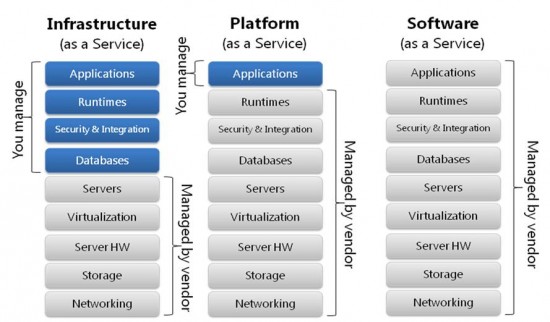
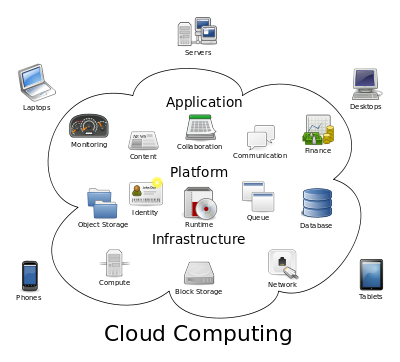 But what Cloud Computing really means? it took several years and more than fifteen drafts to the National Institute of Standards and Technology s (NIST) to find a definition. The final accepted proposal:
 About a month and a half ago, I got an email from someone studying at
the HELMo institute for higher eduction in Li ge, Belgium, inviting me
to talk at their conference which was held today. In the email, they
asked me to talk about "Debian and Open Source", which is such a wide
subject that I could talk about it all day; and then they gave me 20
minutes to do it. So I picked "Debian", and focused a bit more on that,
only to find out when I saw their schedule that they'd put "Open Source"
there instead. Hrm. Oh well.
The talk itself went pretty good. I believe I managed a good balance
between introducing Debian to those who've not heard of it before, and
explaining to those who have, how this Debian thing works (or is
supposed to work). The fact that the audience consisted of first- and
second-year IT students made this easier (in case you were wondering:
the third-year students, who're supposed to graduate at the end of this
eyar, organized the thing). I got some interesting questions afterwards
(which is always a good sign), and only positive comments as well (which
is even better).
After me,
 Like many of my friends, I have treated professional sports with
cultivated indifference. But a year and a half ago, I decided to
become a


 # Copyright (C) YEAR Free Software Foundation, Inc.
# This file is distributed under the same license as the PACKAGE package.
# FIRST AUTHOR <email>, YEAR.
#
#, fuzzy
msgid ""
msgstr ""
"Project-Id-Version: PACKAGE VERSION\n"
"POT-Creation-Date: 2012-10-12 11:14+0300\n"
"PO-Revision-Date: YEAR-MO-DA HO:MI+ZONE\n"
"Last-Translator: FULL NAME <email>\n"
"Language-Team: LANGUAGE <ll>\n"
"Language: \n"
"MIME-Version: 1.0\n"
"Content-Type: text/plain; charset=UTF-8\n"
"Content-Transfer-Encoding: 8bit\n"
#. type: Title #
#, no-wrap
msgid "Status hos doktoren"
msgstr ""
#. type: Plain text
#, no-wrap
msgid "\n"
msgstr ""
#. type: Plain text
#, no-wrap
msgid "\n"
msgstr ""
#. type: Plain text
#, no-wrap
msgid ""
"**Jonas Smedegaard** [dr.jones at pobox.com "
"](mailto:friends%40jones.dk?Subject=Status%20hos%20doktoren&In-Reply-To=1.5.4.32.19971011010004.0067de34%40kaospilot.dk) "
"\n"
msgstr ""
#. type: Plain text
msgid "_Sat Oct 11 15:22:00 CEST 1997_"
msgstr ""
#. type: Bullet: ' * '
#:
msgid "Previous message: [Spamming? ](000001.html)"
msgstr ""
#. type: Bullet: ' * '
#:
msgid ""
"**Messages sorted by:**

 Credit Unions are financial co-operatives where a
 If you think you are smart and create an ext filesystem with 1024 bytes
blocksize because there will be zillions of very small files, and then run into
ENOSPC errors while there's both space and inodes left, you will probably see
 Just about three years ago, I created the
 Scott Chamberlain