Search Results: "edd"

10 July 2021

Dirk Eddelbuettel: drat 0.2.1: Small Tweak

drat user A new minor release of drat arrived on CRAN overnight. This is a minor update relative to the 0.2.0 release in April. This release will now create an empty file index.html in the top-level (when initRepo() is called), and check for presence of such a file when adding files to a repo (via insertPackage()). This helps to avoid getting 404 results when (perfectly valid) drat repos are checking by accessing the top-level URL, as for example CRAN does when testing if an Additional_repositoiries is reachable. The step-by-step vignette had already suggested creating one by hand, this is now done programmatically (and one is present in the repo suggsted to fork from too). drat stands for drat R Archive Template, and helps with easy-to-create and easy-to-use repositories for R packages. Since its inception in early 2015 it has found reasonably widespread adoption among R users because repositories with marked releases is the better way to distribute code. See below for a few custom reference examples. Because for once it really is as your mother told you: Friends don t let friends install random git commit snapshots. Properly rolled-up releases it is. Just how CRAN shows us: a model that has demonstrated for two-plus decades how to do this. And you can too: drat is easy to use, documented by six vignettes and just works. The NEWS file summarises the release as follows:

Changes in drat version 0.2.1 (2021-07-09)
  • Two internal functions now have a note in their documentation stating them as not exported (Dirk in response to #123)
  • Repositories created by initRepo now have an placeholder index.html to not trigger a curl check at CRAN (Dirk)
  • Adding to a repository now checks for a top-level index.html and displays a message if missing (Dirk)
  • The DratStepByStep.Rmd vignette mentions the added index.html file

Courtesy of my CRANberries, there is a comparison to the previous release. More detailed information is on the drat page. If you like this or other open-source work I do, you can now sponsor me at GitHub.

This post by Dirk Eddelbuettel originated on his Thinking inside the box blog. Please report excessive re-aggregation in third-party for-profit settings.

7 July 2021

Dirk Eddelbuettel: Rcpp 1.0.7: More Updates

rcpp logo The Rcpp team is pleased to announce release 1.0.7 of Rcpp which arrived at CRAN earlier today, and will be uploaded to Debian shortly. Windows and macOS builds should appear at CRAN in the next few days. This release continues with the six-months cycle started with release 1.0.5 last July. As a reminder, interim dev or rc releases will alwasys be available in the Rcpp drat repo; this cycle there were seven (!!). These rolling release tend to work just as well, and are also fully tested against all reverse-dependencies. Rcpp has become the most popular way of enhancing R with C or C++ code. As of today, 2323 packages on CRAN depend on Rcpp for making analytical code go faster and further, along with 227 in BioConductor. This release contains a change which Luke Tierney urged us to make a good year ago in #1081) (and which we had looked at earlier in #382). Implementing the change in a regular update proved a little tricky, and my initial branch lay dormant until I aki revived it, and finished the transition (which we then did in two PRs). The change concerns how Rcpp grows internal objects, and the new approach (thanks to the hint by Luke) closer to what R does guaranteeing linear behaviour. It turns out that we overlooked one aspect (of coping with Modules built under earlier Rcpp releases) so the initial upload to CRAN on Saturday revealed that we needed a small adjustment that we made for the final release. This version should now be more performant, and rest on a stable API. Based on the reverse depends checks by both us and CRAN (using the updated version), we expect no issues with existing code. However, it something does act up a fresh compilation of the packages using Rcpp may help. We also made a few other minor changes in the API such as silencing a silly compiler warning, ensuring global Rcout and Rcerr objects, adding support for a new Rcpp::message() call, completing a switch to uint32_t instead of unsigned int and including the cfloat header (which relates to STRICT_R_HEADERS discussed below). Similarly, the Rcpp Attributes feature was enhanced by coping better with packages with a dot in their name and their for per-package include files, along with support for more quiet compilation if desired. As some Rcpp users may have seen, we plan to enable STRICT_R_HEADERS by the next release (expected in January 2022). A long issue tick #1158 is laying the ground work. Maintainers of 81 packages which are affected and need a small change (such as for example switching from PI to M_PI); of these 56 have already responded. We plan to be in touch in the fall. Adding the cfloat header is one help in this transition (as the corresponding C header was pulled in when STRICT_R_HEADERS is not defined) as it ensures DBL_EPSILON and alike are defined. Last but not least this is also the first relase in which we welcome I aki as a new member of the Rcpp Core team. Yay! The NEWS file entries follow summarizing the nine key PRs in this release.

Changes in Rcpp release version 1.0.7 (2021-07-06)
  • Changes in Rcpp API:
    • Refactored Rcpp_PreserveObject and Rcpp_ReleaseObject which are now O(1) (Dirk and I aki in #1133 and #1135 fixing #382 and #1081).
    • A spuriously assigned variable was removed (Dirk in #1138 fixing #1137).
    • Global Rcout and Rcerr objects are supported via a compiler directive (I aki in #1139 fixing #928)
    • Add support for Rcpp::message (Dirk in #1146 fixing #1145).
    • The uint32_t type is used throughout instead of unsigned int (Dirk in #1153 fixing #1152).
    • The cfloat header for floating point limits is now included (Dirk in #1162 fixing #1161).
  • Changes in Rcpp Attributes:
    • Packages with dots in their name can now have per-package include files (Dirk in #1132 fixing #1129).
    • New argument echo to quieten optional evaluation in sourceCpp (Dirk in #1138 fixing #1126).
  • Forthcoming Changes in Rcpp API:
    • Starting with Rcpp 1.0.8 anticipated in January 2022, STRICT_R_HEADERS will be enabled by default, see #1126.

Thanks to my CRANberries, you can also look at a diff to the previous release. Questions, comments etc should go to the rcpp-devel mailing list off the R-Forge page. Bugs reports are welcome at the GitHub issue tracker as well (where one can also search among open or closed issues); questions are also welcome under rcpp tag at StackOverflow which also allows searching among the (currently) 2616 previous questions. If you like this or other open-source work I do, you can sponsor me at GitHub.

This post by Dirk Eddelbuettel originated on his Thinking inside the box blog. Please report excessive re-aggregation in third-party for-profit settings.

Dirk Eddelbuettel: ttdo 0.0.7: Small tinytest update

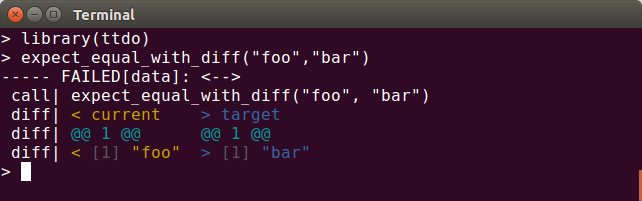
A new minor release of our ttdo package arrived on CRAN today. The ttdo package extends the most excellent (and very minimal / zero depends) unit testing package tinytest by Mark van der Loo with the very clever and well-done diffobj package by Brodie Gaslam to give us test results with visual diffs (as shown in the screenshot here) which seemingly is so compelling an idea that another package decided to copied it more recently: ttdo screenshot This release is mostly procedural to accomodate changes in tinytest 1.3.1 released today, and brought to us via a pull request by Mark himself. Other than that we also updated the CI runner to use r-ci and accomodated new CRAN check for a superfluous LazyData: field in a package without a data/ directory. This release also gets another #ThankYouCRAN mark as it was once again fully automated and intervention-free (once the new tinytest release hit CRAN). As usual, the NEWS entry follows.

Changes in ttdo version 0.0.7 (2021-07-06)
  • The CI setup was updated to use run.sh from r-ci (Dirk).
  • The package was updated for an API extension in tinytest 1.3.1 or later (Mark van der Look in #7)
  • The unused LazyData field was removed from DESCRIPTION (Dirk)

CRANberries provides the usual summary of changes to the previous version. Please use the GitHub repo and its issues for any questions. If you like this or other open-source work I do, you can now sponsor me at GitHub.

This post by Dirk Eddelbuettel originated on his Thinking inside the box blog. Please report excessive re-aggregation in third-party for-profit settings.

5 July 2021

Russell Coker: Servers and Lockdown

OS security features and server class systems are things that surely belong together. If a program is important enough to buy expensive servers to run it then it s important enough that you want to have all the OS security features enabled. For such an important program you will also want to have all possible monitoring systems running so you can predict hardware failures etc. Therefore you would expect that you could buy a server, setup the vendor s management software, configure your Linux kernel with security features such as lockdown (a LSM that restricts access to /dev/mem, the iopl() system call, and other dangerous things [1]), and have it run nicely! You will be disappointed if you try doing that on a HP or Dell server though. HP Problems
[370742.622525] Lockdown: hpasmlited: raw io port access is restricted; see man kernel_lockdown.7
The above message is logged when trying to INSTALL (not even run) the hp-health package from the official HP repository (as documented in my previous blog post about the HP ML-110 Gen9 [2]) with lockdown=integrity (the less restrictive lockdown option). Now the HP package in question is in their repository for Debian/Stretch (released in 2017) and the Lockdown LSM was documented by LWN as being released in 2019, so not supporting a Debian/Bullseye feature in Debian/Stretch packages isn t inherently a bad thing apart from the fact that they haven t released a new version of that package since. The Stretch package that I am testing now was released in 2019. Also it s been regarded as best practice to have device drivers for this sort of thing since long before 2017.
# hplog -v
ERROR: Could not open /dev/cpqhealth/cdt.
Please make sure the Health Monitor is started.
Attempting to run the hplog -v command (to view the HP hardware log) gives the above error. Strace reveals that it could and did open /dev/cpqhealth/cdt but had problems talking to something (presumably the Health Monitor daemon) over a Unix domain socket. It would be nice if they could at least get the error message right! Dell Problems
[   13.811165] Lockdown: smbios-sys-info: /dev/mem,kmem,port is restricted; see man kernel_lockdown.7
[   13.820935] Lockdown: smbios-sys-info: raw io port access is restricted; see man kernel_lockdown.7
[   18.118118] Lockdown: dchcfg: raw io port access is restricted; see man kernel_lockdown.7
[   18.127621] Lockdown: dchcfg: /dev/mem,kmem,port is restricted; see man kernel_lockdown.7
[   19.371391] Lockdown: dsm_sa_datamgrd: raw io port access is restricted; see man kernel_lockdown.7
[   19.382147] Lockdown: dsm_sa_datamgrd: /dev/mem,kmem,port is restricted; see man kernel_lockdown.7
Above is a sample of the messages when booting a Dell PowerEdge R710 with lockdown=integrity with the srvadmin-omacore package installed from the official Dell repository I describe in my blog post about the Dell PowerEdge R710 [3]. Now that repository is for Ubuntu/Xenial which was released in 2015, but again it was best practice to have device drivers for this many years ago. Also the newest Debian based releases that Dell apparently supports are Ubuntu/Xenial and Debian/Jessie which were both released in 2015.
# omreport system esmlog
Error! No Embedded System Management (ESM) log found on this system.
Above is the result when I try to view the ESM log (the Dell hardware log). How Long Should Server Support Last? The Wikipedia List of Dell PowerEdge Servers shows that the R710 is a Generation 11 system. Generation 11 was first released in 2010 and Generation 12 was first released in 2012. Generation 13 was the latest hardware Dell sold in 2015 when they apparently ceased providing newer OS support for Generation 11. Dell currently sells Generation 15 systems and provides more recent support for Generation 14 and Generation 15. I think it s reasonable to debate whether Dell should support servers for 4 generations. But given that a major selling point of server class systems is that they have long term support I think it would make sense to give better support for this and not drop support when it s only 2 versions from the latest release! The support for Dell Generation 11 hardware only seems to have lasted for 3 years after Generation 12 was first released. Also it appears that software support for Dell Generation 13 ceased before Generation 14 was released, that sucks for the people who bought Generation 13 when they were new! HP is currently selling Gen 10 servers which were first released at the end of 2017. So it appears that HP stopped properly supporting Gen 9 servers as soon as Gen 10 servers were released! One thing to note about these support times, when the new generation of hardware was officially released the previous generation was still on sale. So while HP Gen 10 servers officially came out in 2017 that doesn t necessarily mean that someone who wanted to buy a ML-110 Gen10 could actually have done so. For comparison Red Hat Enterprise Linux has been supported for 4-6 years for every release they made since 2005 and Ubuntu has always had a 5 year LTS support for servers. How To Do It Properly The correct way of interfacing with hardware is via a device driver that is supported in the kernel.org tree. That means it goes through the usual kernel source code quality checks which are really good at finding bugs and gives users an assurance that the code won t cause security problems. Generally nothing about the code from Dell or HP gives me confidence that it should be directly accessing /dev/kmem or raw IO ports without risk of problems. Once a driver is in the kernel.org tree it will usually stay there forever and not require further effort from the people who submit it. Then it just works for everyone and tends to work with any other kernel features that people use, like LSMs. If they released the source code to the management programs then it would save them even more effort as they could be maintained by the community.

29 June 2021

Ritesh Raj Sarraf: Plant Territorial Behavior

This blog post is about my observations of some of the plants in my home garden. While still a n00b on the subject, these notes are my observations and experiences over days, weeks and months. Thankfully, with the capability to take frequent pictures, it has been easy to do an assessment and generate a report of some of these amazing behaviors of plants, in an easy timeline order; all thanks to the EXIF data embedded. This has very helpfully allowed me to record my, otherwise minor observations, into great detail; and make some sense out of it by correlating the data over time. It is an emotional experience. You see, plants are amazing. When I sow a sapling, water it, feed it, watch it grow, prune it, medicate it, and what not; I build up affection towards it. Though, at the same time, to me it is a strict relationship, not too attached; as in it doesn t hurt to uproot a plant if there is a good reason. But still, I find some sort of association to it. With plants around, it feels I have a lot of lives around me. All prospering, communicating, sharing. And communicate they do. What is needed is just the right language to observe and absorb their signals and decipher what they are trying to say.

Devastation How in this world, when you are caring for your plants, can it transform:

From This
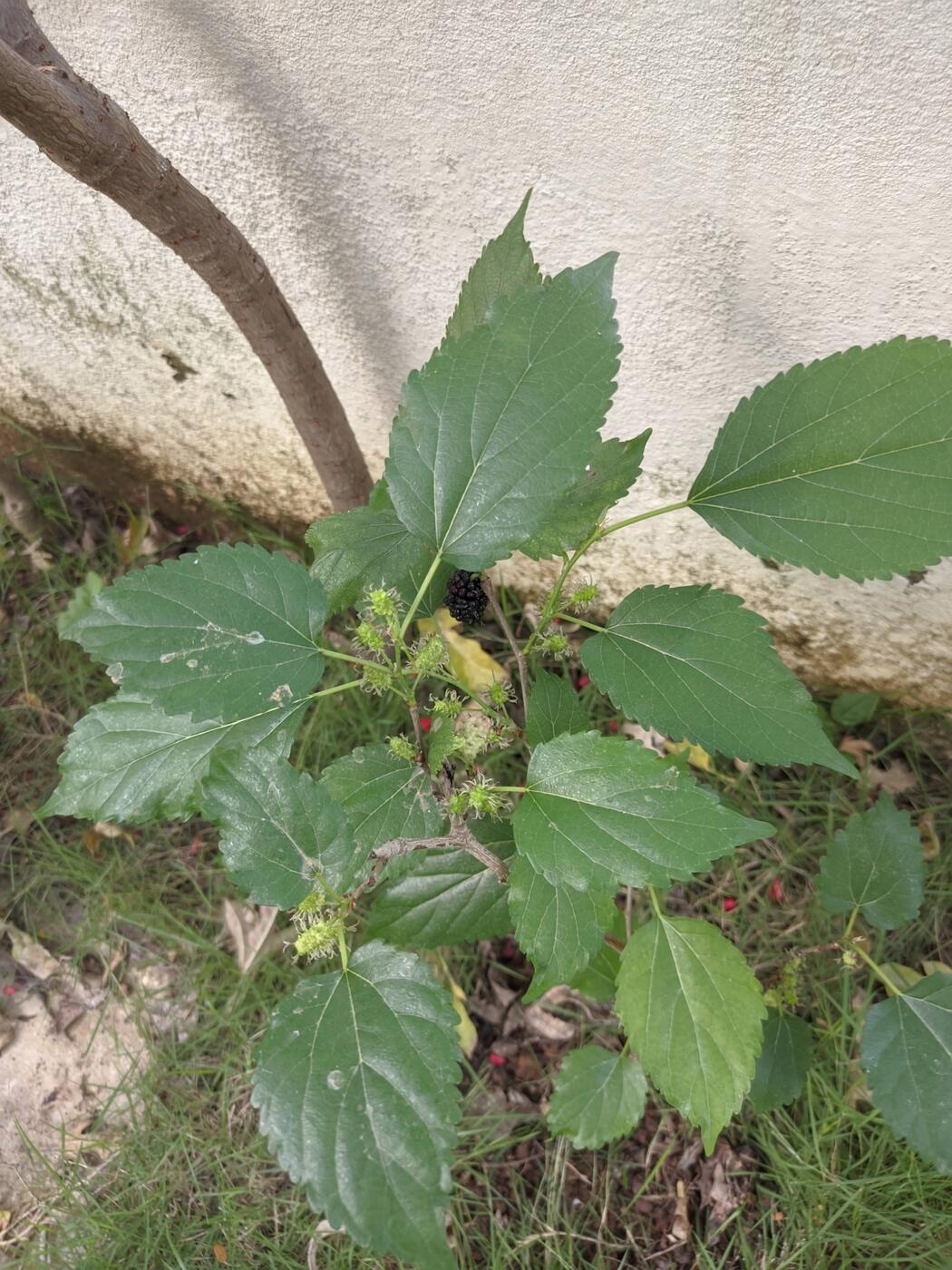
Healthy Mulberry Plant
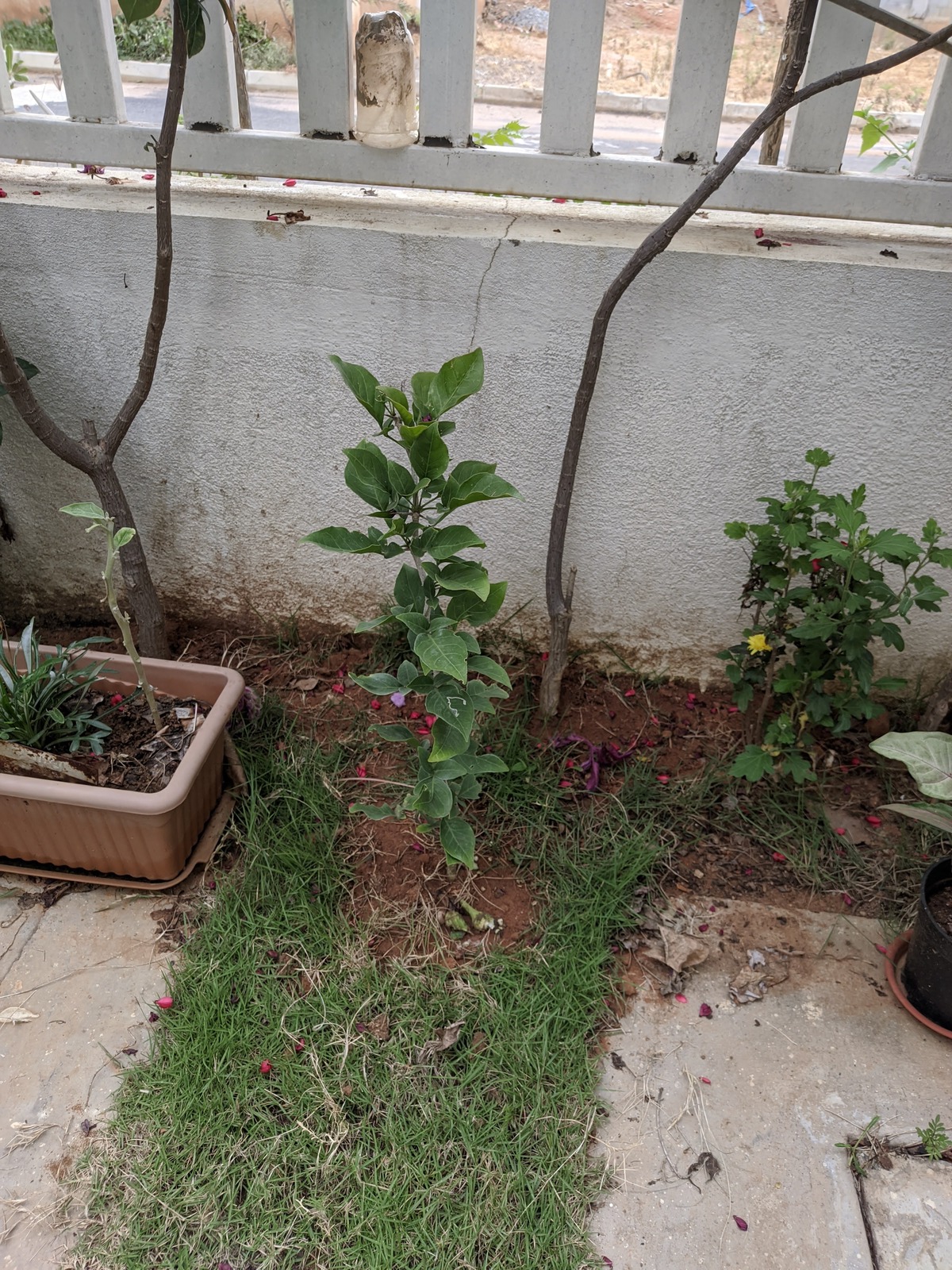
Healthy Bael Plant
Healthy Bael Plant

To This
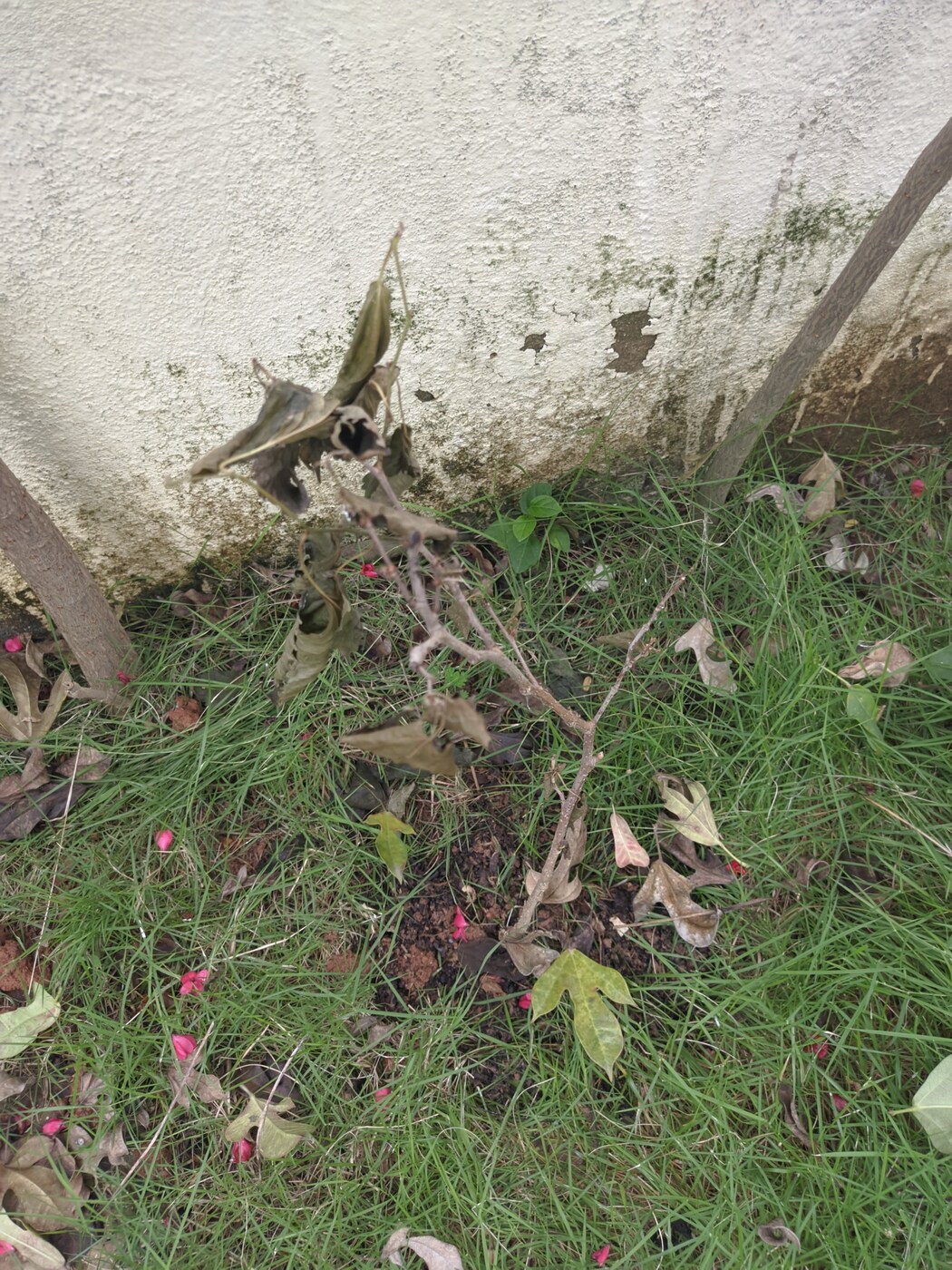
Dead Mulberry Plant
Dead Mulberry Plant
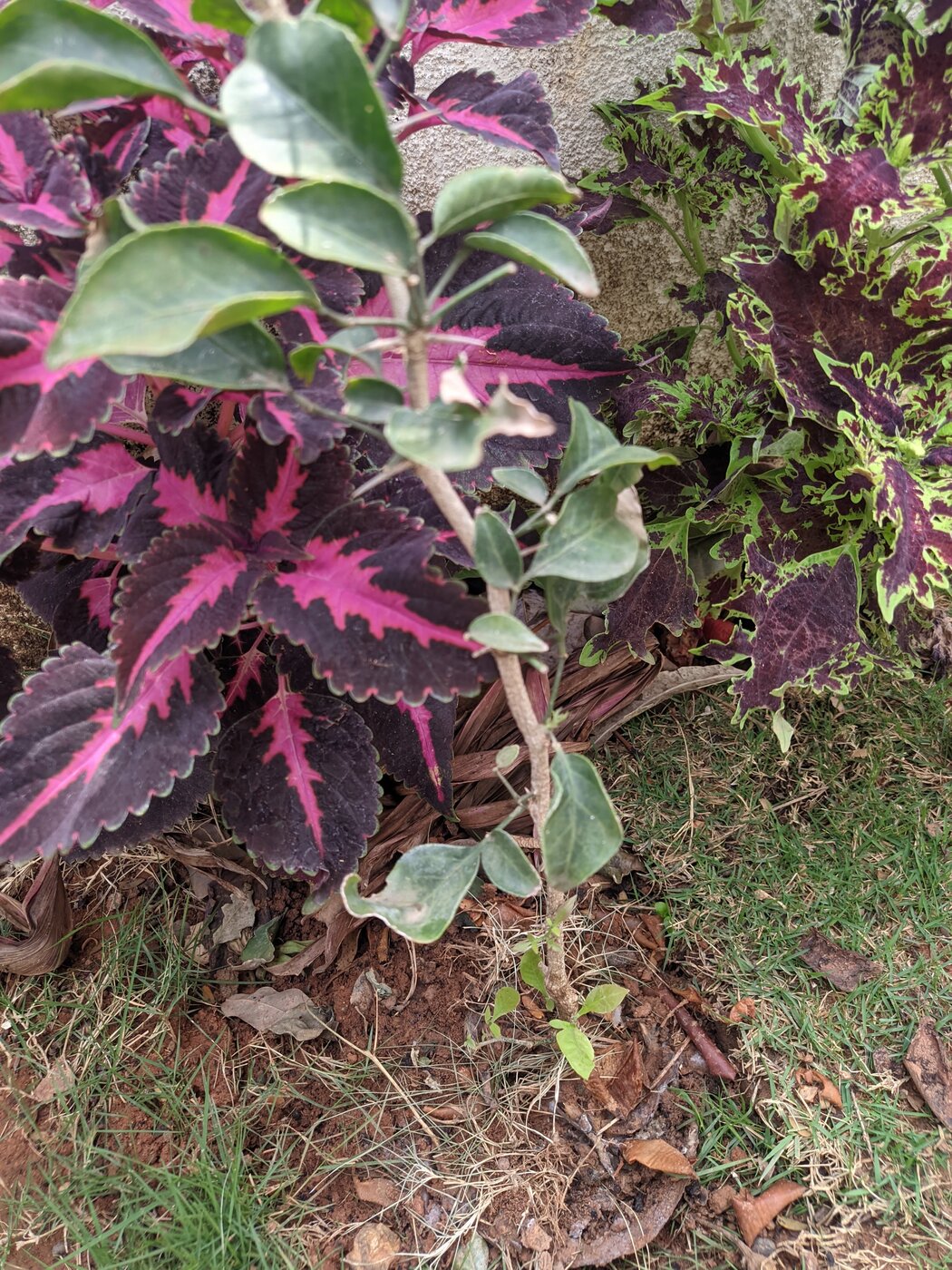
Very Sick Bael Plant
With emotions involved, this can be an unpleasant experience. Bael is a dear plant to me. The plant as a whole has religious values (Shiva). As well, its fruits have lots of health benefits, especially for the intestines. Its leaves have a lot of medicinal properties. When I planted the Bael, there were a lot of emotions that went along. On the other hand, the Mulberry is something I put in with a lot of enthusiasm. Mulberries are now rare to find, especially in urban locations. For one, they have a very short shelf life; But more than that, the way lifestyles are heading towards, I was always worried if my children would ever have a day to see and taste these fruits. The mulberry that I planted, yielded twice; once very soon when I had planted and second, before it died. Infact, it died while during its second yield phase. It was quite saddening to see that happen. It made me wonder why it happened. I had been caring for the plants fairly well. Watering them timely, feeding them the right amount of nutrients. They were getting a good amount of sun. But still their health was deteriorating. And then the demise of the Mulberry. Many thoughts hit my mind. I consulted the claimed experts in the domain, the maali, the gardener. I got a very vague answer; there must be termites in the soil. It didn t make much sense to me. I mean if there are termites they d hit day one. They won t sleep for months and just wake up one fine day and start attacking the roots of particular plants; not all. I wasn t convinced with the termite theory; But still, give the expert the blind hand, I went with his word. When my mulberry was dead, I dug its roots. Looking for proof, to see if there were any termites, I uprooted it. But I couldn t find any trace of termites. And the plant next to it was perfectly healthy and blossoming. So I was convinced that it wasn t the termite but something else. But else what ? I still didn t have an answer to that.

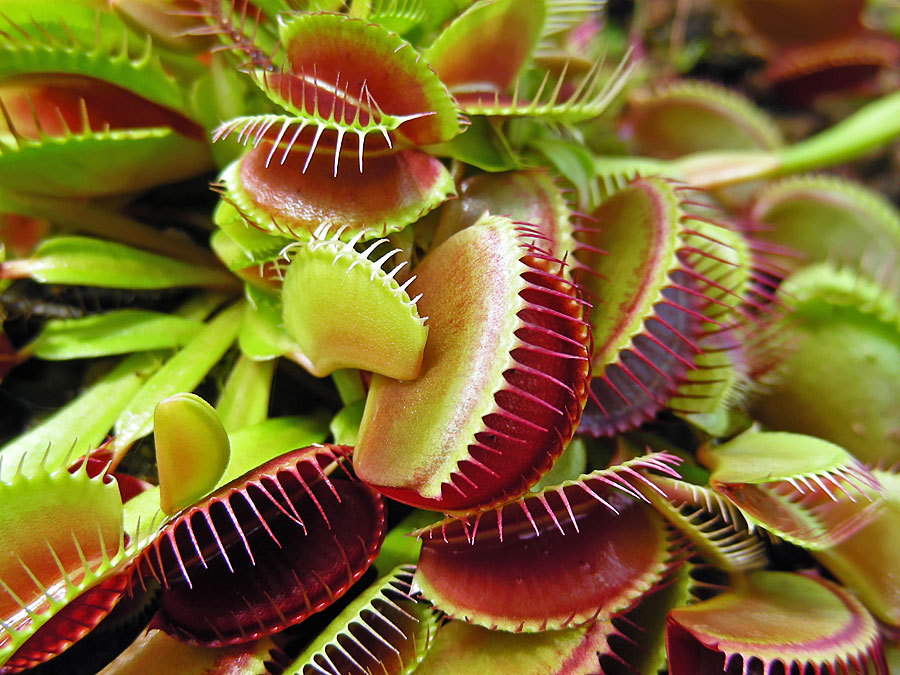
Thinking The Corona pandemic had embraced and there was a lot to worry, and worry not any, if you change the perspective. With plants around in my home, and our close engagement with them, and the helplessness that I felt after seeking help from the experts, it was time again; to build up some knowledge on the subject. But how ? How do you go about a subject you have not much clue about ? A subject which has always been around in the surrounding but very seldom have I dedicated focused thought to it. To be honest, the initial thought of diving on the subject made me clueless. I had no idea where to begin with. But, so, as has been my past history, I chose to take it as a curiosity. I gathered some books, skimmed through a couple of pages. Majority of the books I got hold of were about DIYs and How to do Home Gardening types. It was a decent introduction to a novice but my topic of curiosity was different. Thankfully, with the Internet, and YouTube in particular, a lot of good stuff is available as documentary videos. While going through some, I came across a video which mentioned about carnivore plants. Like, for example, this one.
Carnivore Plant
Carnivore Plant
This got me thinking that there could be a possibility of something similar, that did the fate to my Mulberry plant. But who did it ? And how to dive further on this suspicion ? And most of all, if that thought of possibility was actually the reality. Or was I just hitting in the dark ?

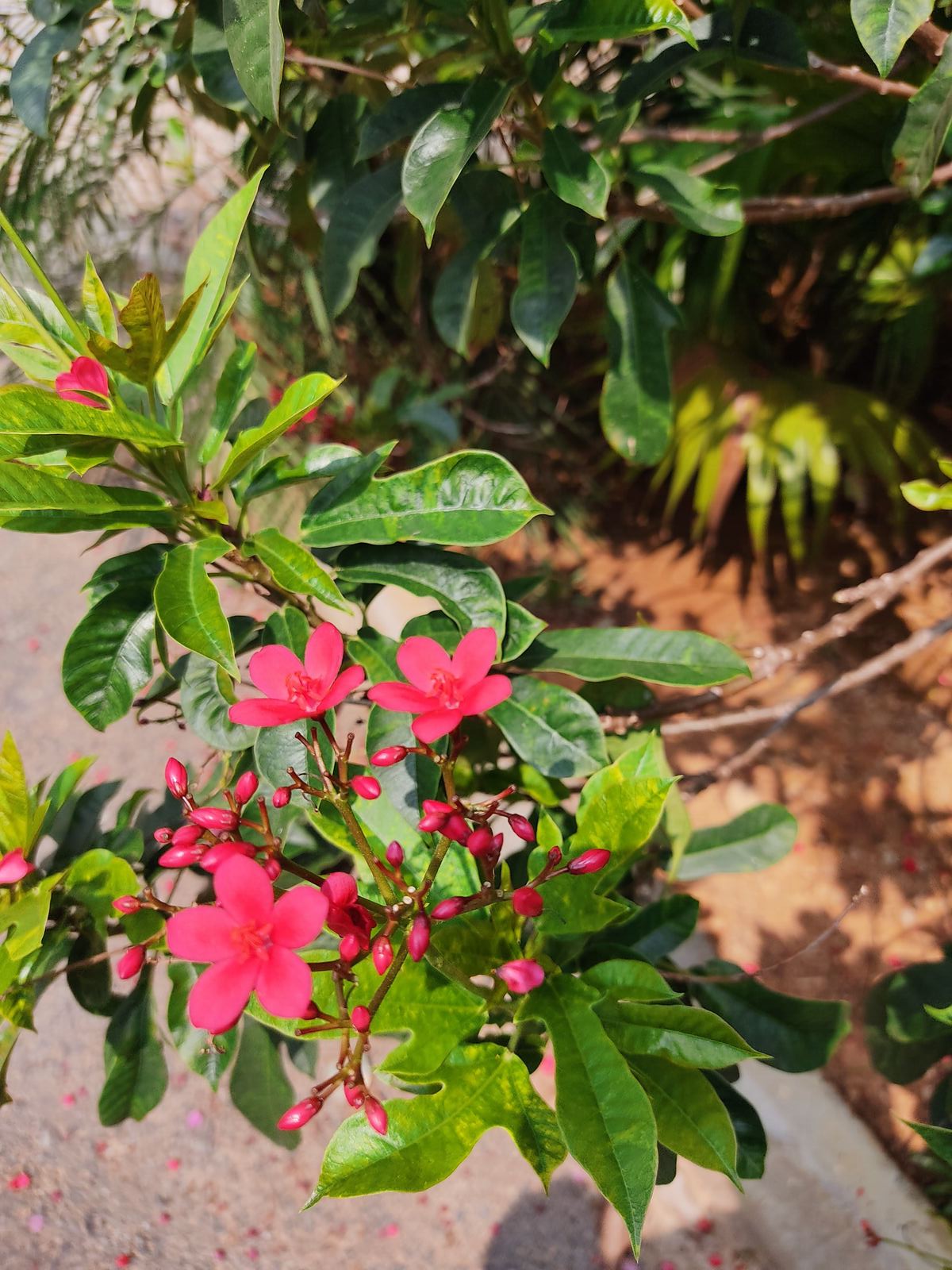
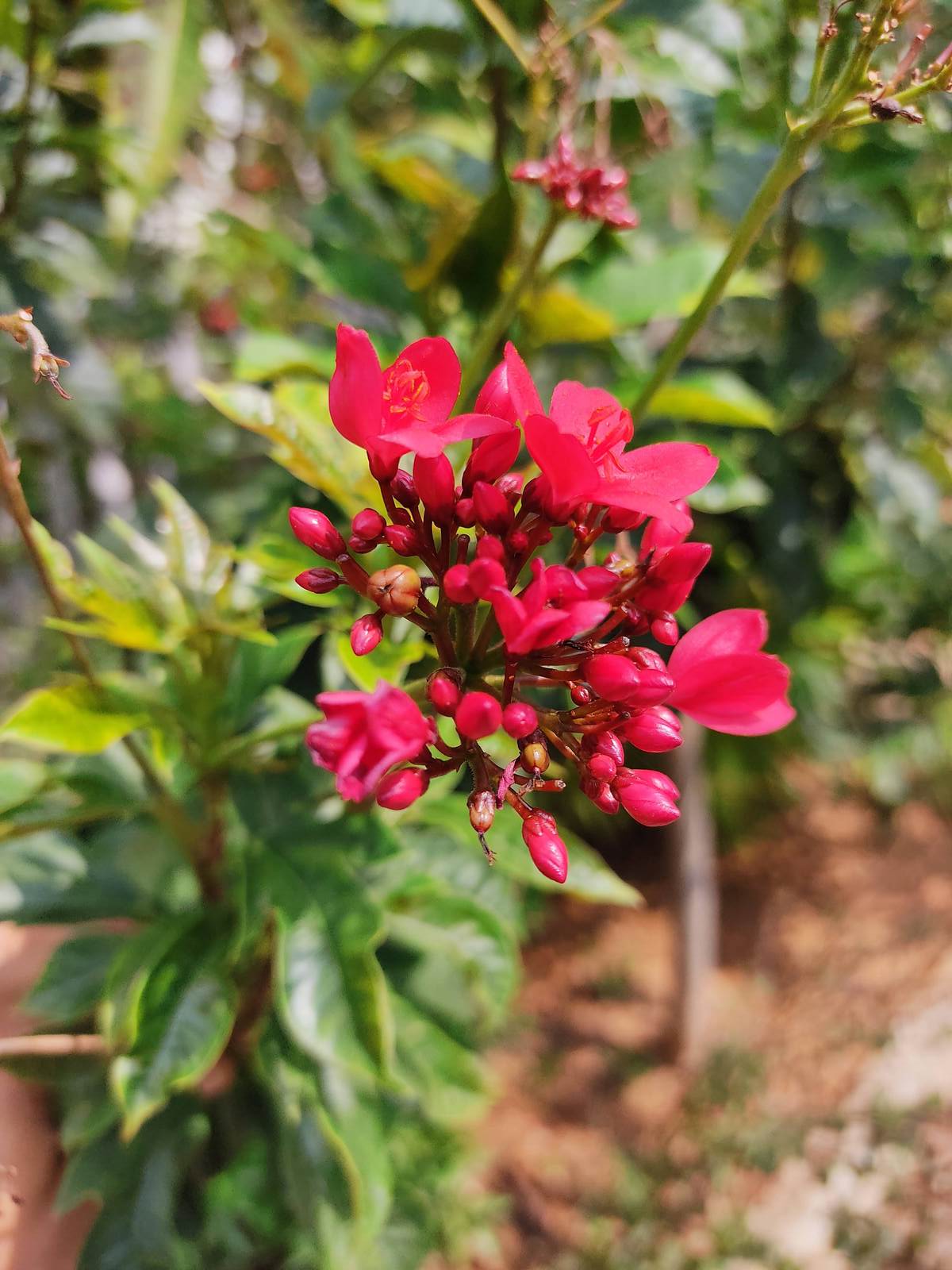
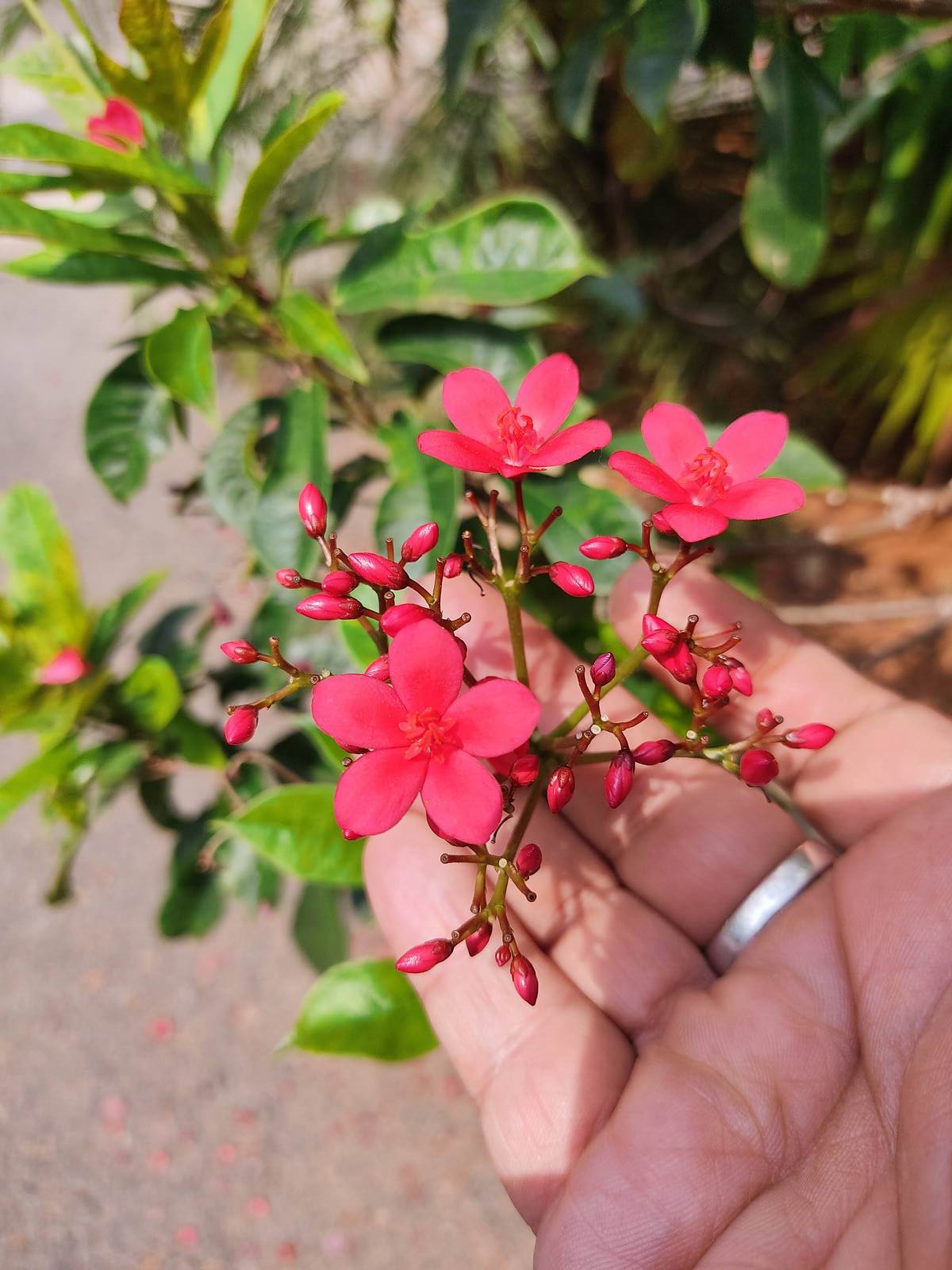
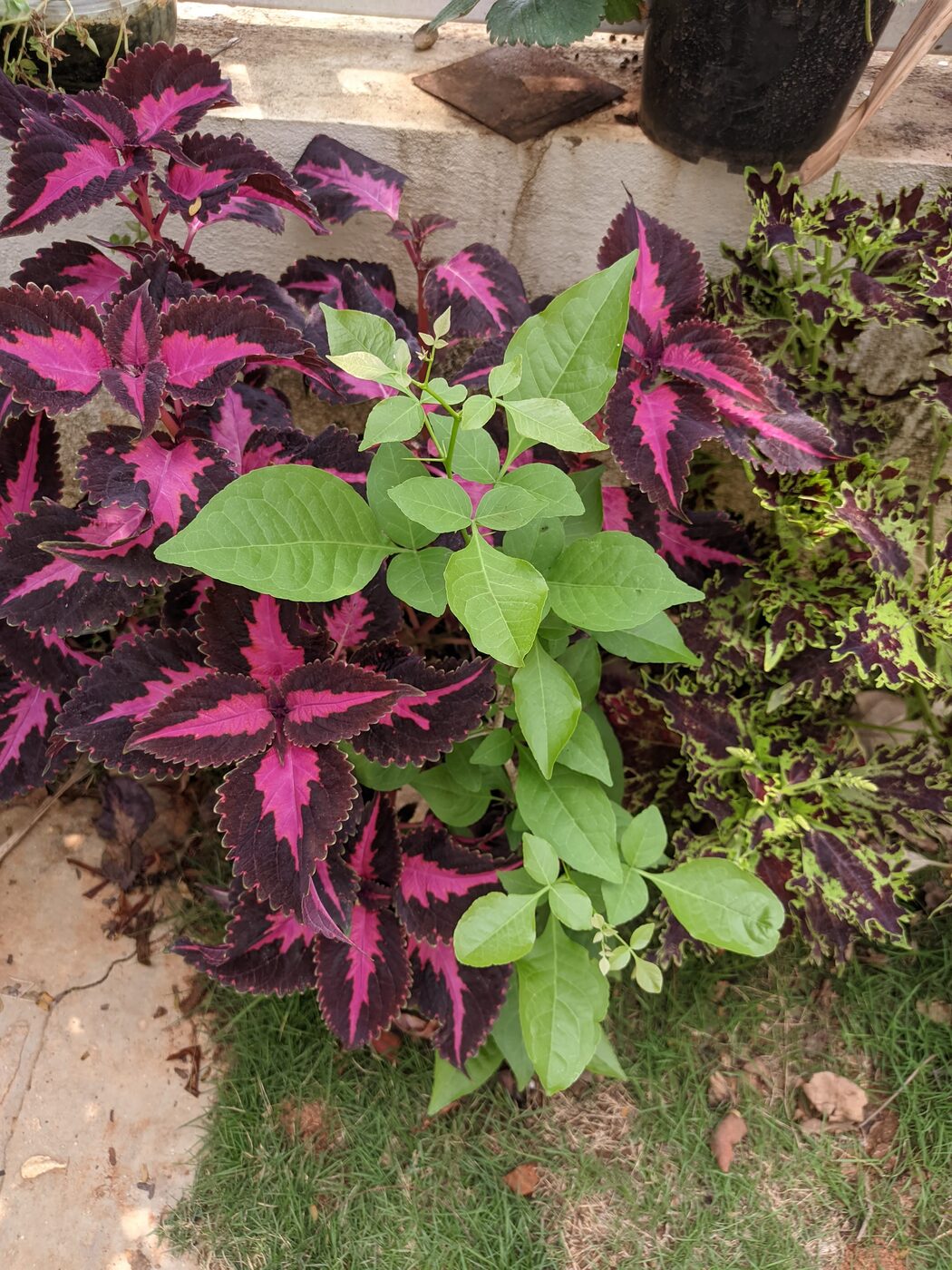
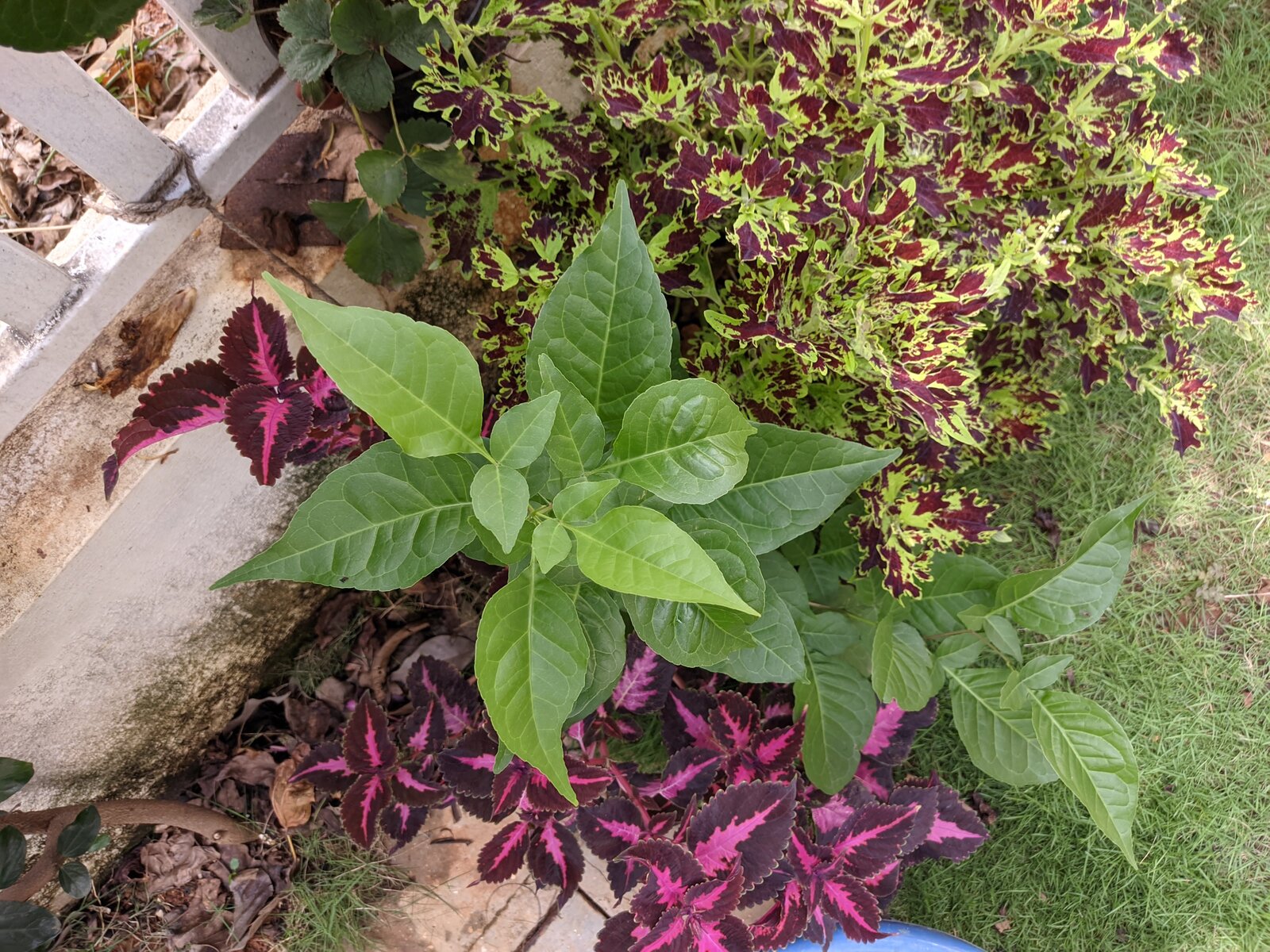
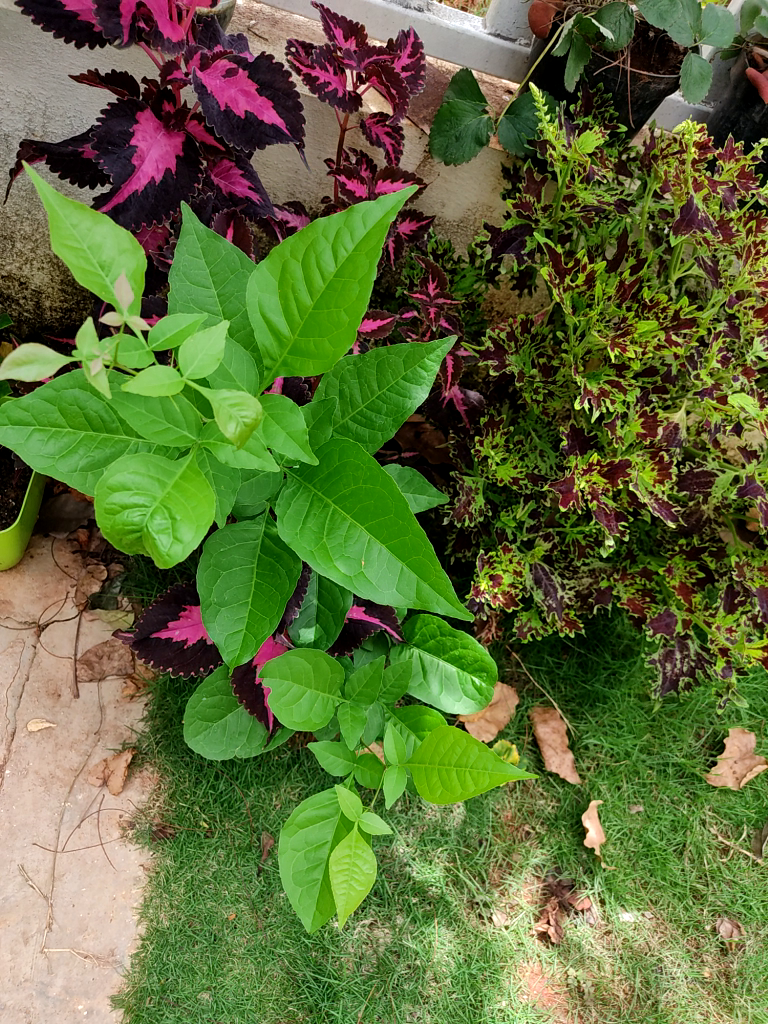
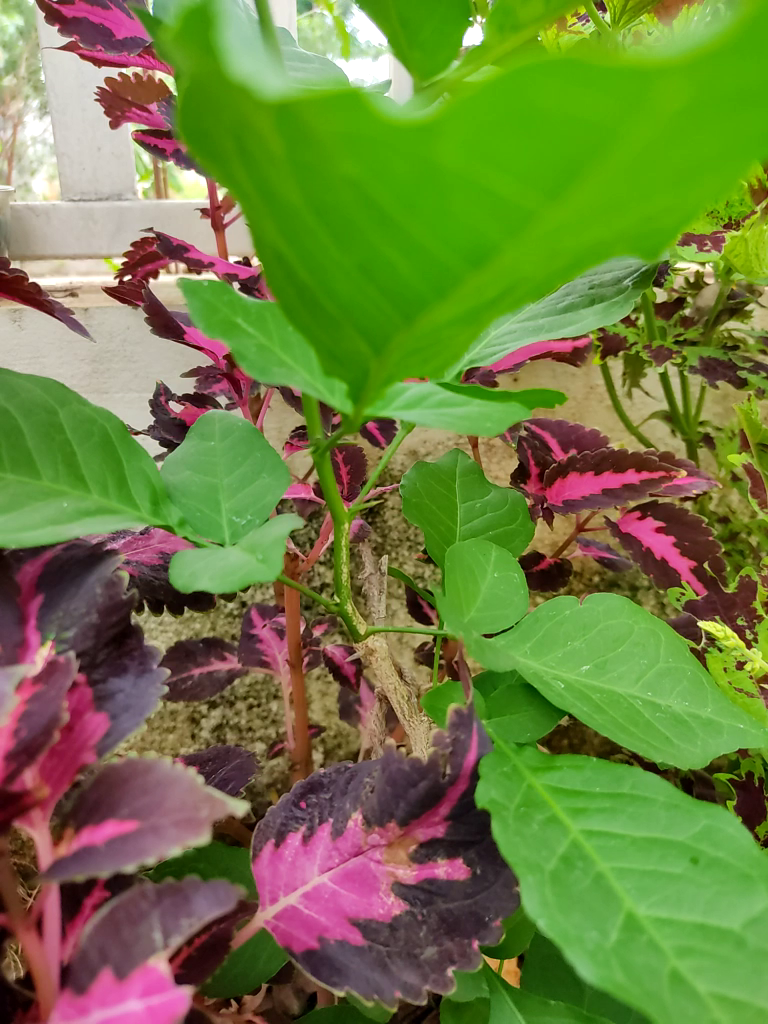
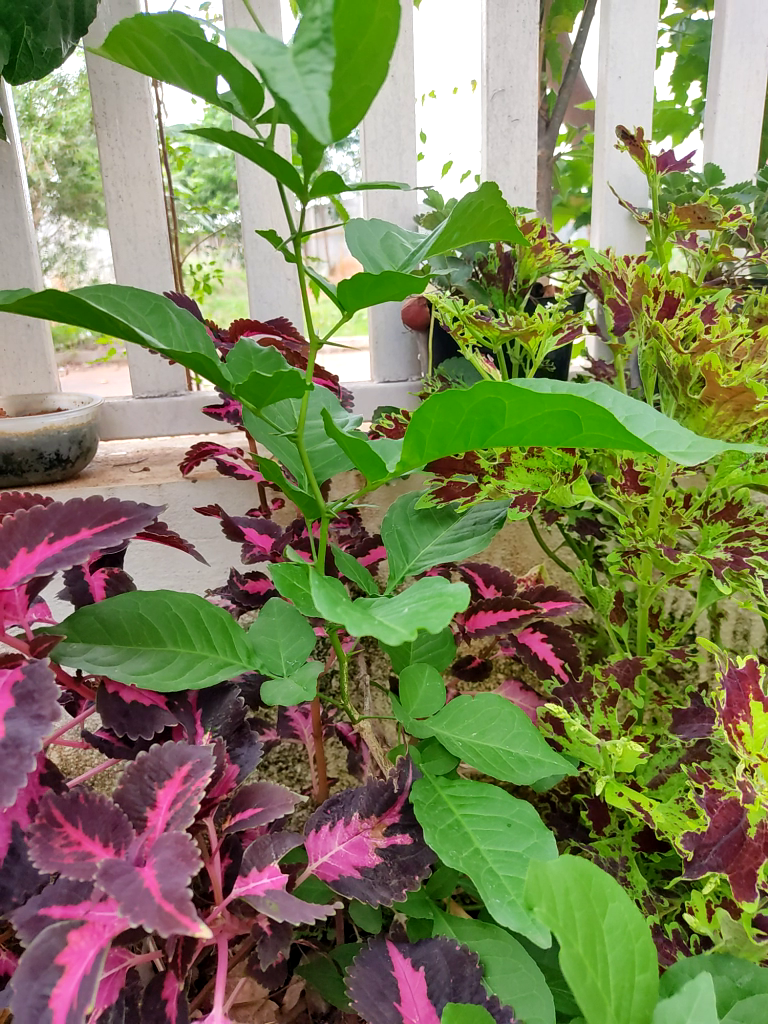
Beginning To put some perspective, here s how it started. When we moved into our home, the gardener put in a couple of plants stock, as part of the property handover. Now, I don t exactly recollect the name of the plants that came in stock, neither English nor Hindi; But at my neighbor s place, the plant is still there. Here are some of the pictures of this beauty. But don t just go by the looks as looks can be deceiving
Dominating Plant
Dominating Plant
Dominating Plant
Dominating Plant
Dominating Plant
Dominating Plant
We hadn t put any serious thought about the plants we were offered by the gardener. After all, we never had ever thought of any mishap either.

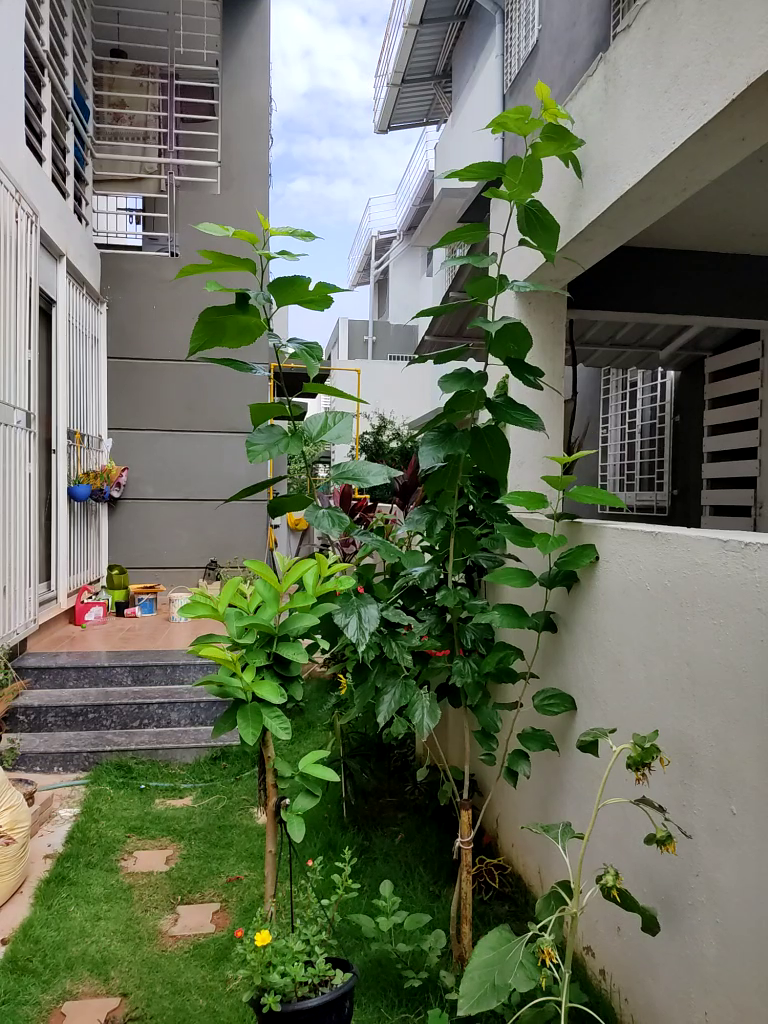
Plants we planted Apart from what was offered by the builder/gardener as part of the property handover, in over the next 6 months of we moving in, I planted 3 tree type plants.
  1. Mulberry
  2. Bael
  3. Rudraksha
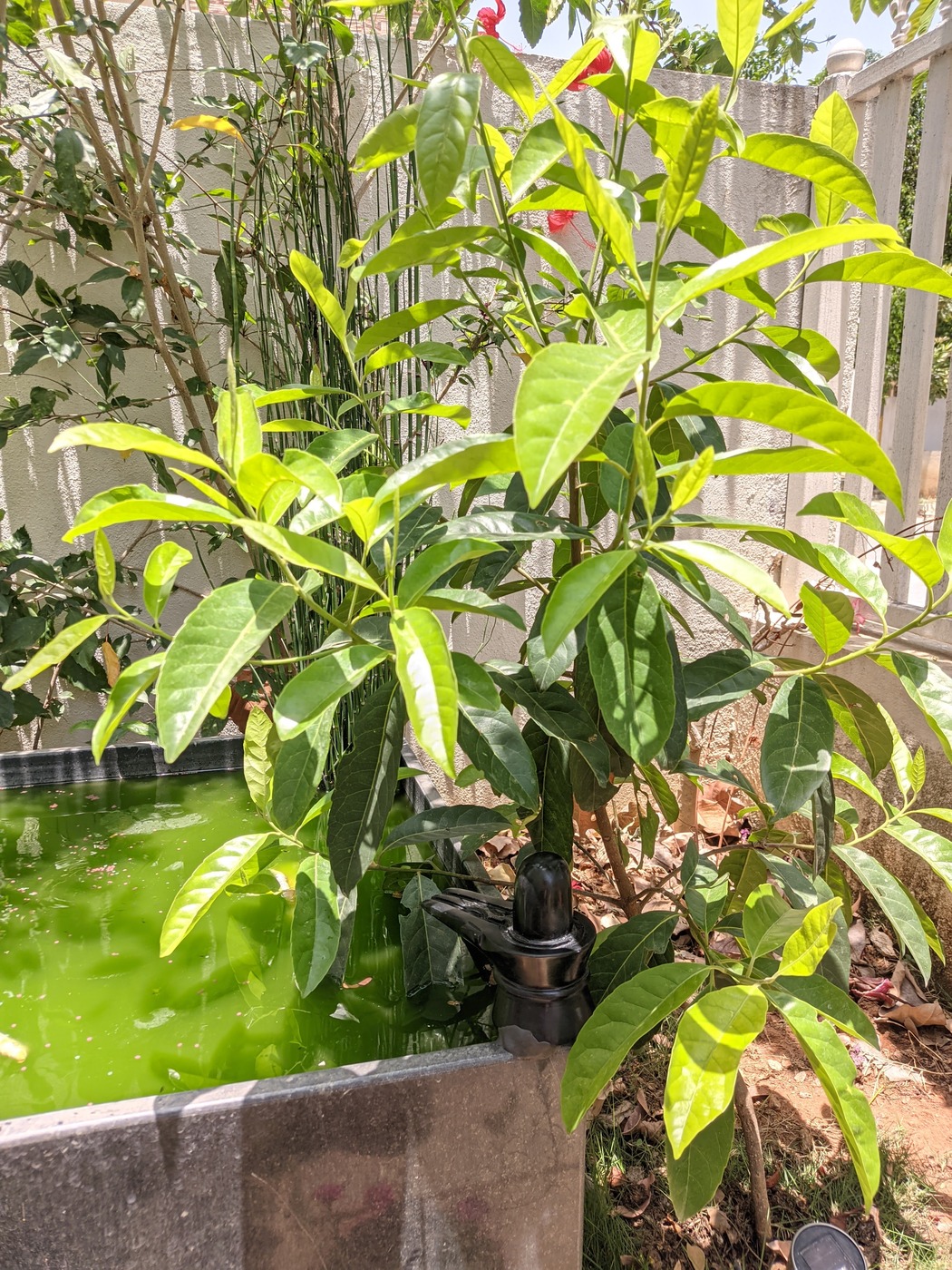
The Mulberry, as I have described so far, died a tragic death. Bael, on the other hand, fought hard. But very little did we know that the plant was struggling the fight. Our impression was that we must have been given a bad breed of the plant. Or maybe the termite theory had some truth. For the Rudraksha plant, the growth was slow. This was the very first time I had seen a Rudraksha plant, so I had no clue of what its growth rate could be, and what to expect out of it. I wasn t sure if the local climate suited the plant. A quick search showed no objections to the plant in the local climate, but that was it. So my theory has been to put in the plant, and observe. Here s what my Rudraksha plant looked like during the initial days/weeks of its settlement
Rudraksha Plant
Rudraksha Plant

The Hint Days passed and so on. Not much had progressed in gathering information. The plant s health was usual; deteriorating at a slow pace. On day, thinking of the documentaries I had been watching, it hit my mind about the plant behavior.
  • Plants can be Carnivores.
  • Plants can be Aggressive.
  • Plants can be Invaders.
  • Plants can be Territorial.
There are many plants where their aggression can be witnessed with bare human eyes. Like creepers. Some of them are good at spreading tentacles, grabbing onto other plants' stems and branches and spread above it. This was my hint from the documentaries. That s one of the many ways plants set their dominance. That is what hit my mind that if plants are aggressive on the out, underneath the soil, they should be having similar behavior. I mean, what we see as humans is just a part of the actual plant. More than half of the actual plant is usually underneath the soil, in most plants. So there s a high chance to get more information out, if you dig the soil and look the roots.

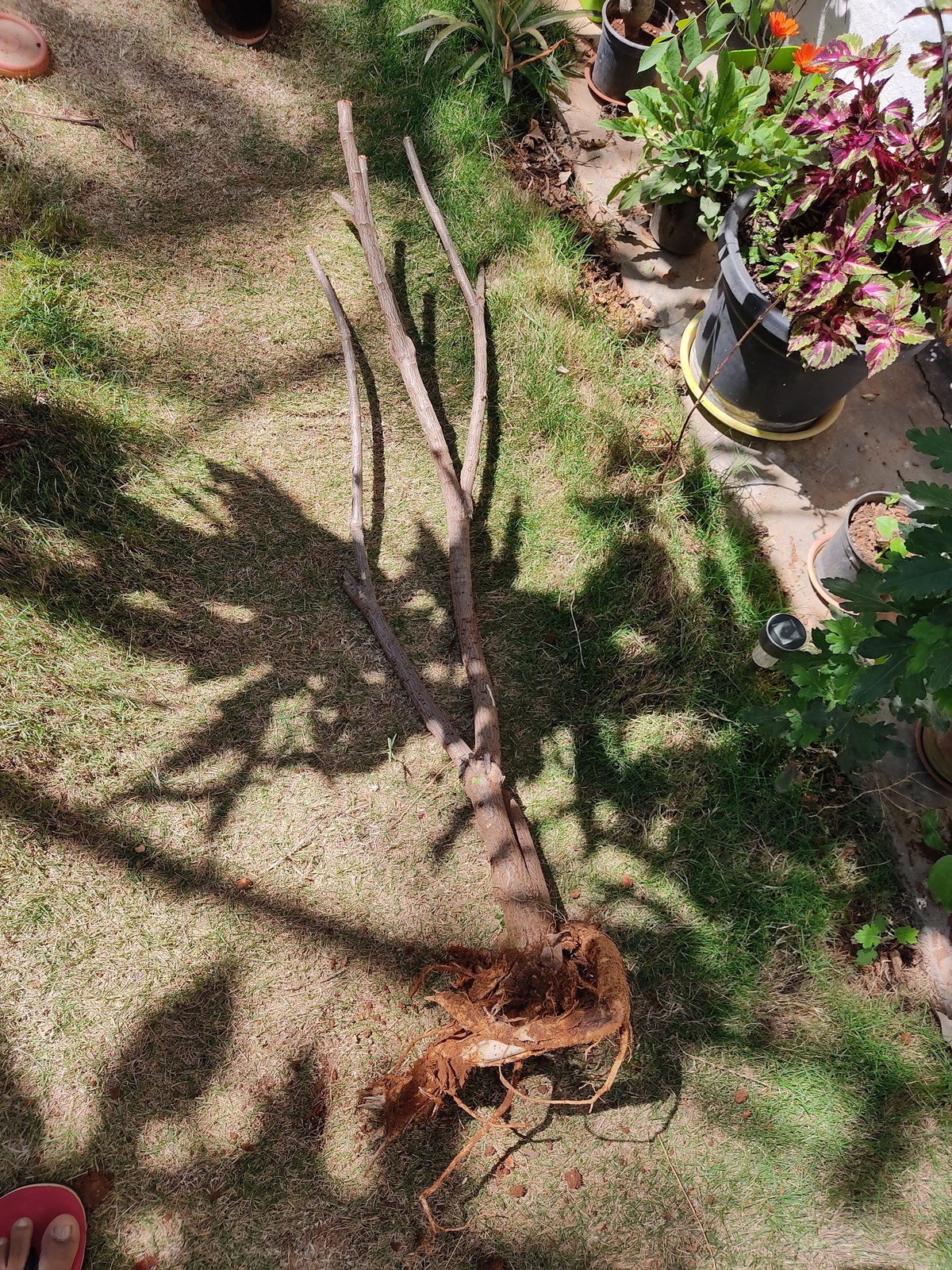
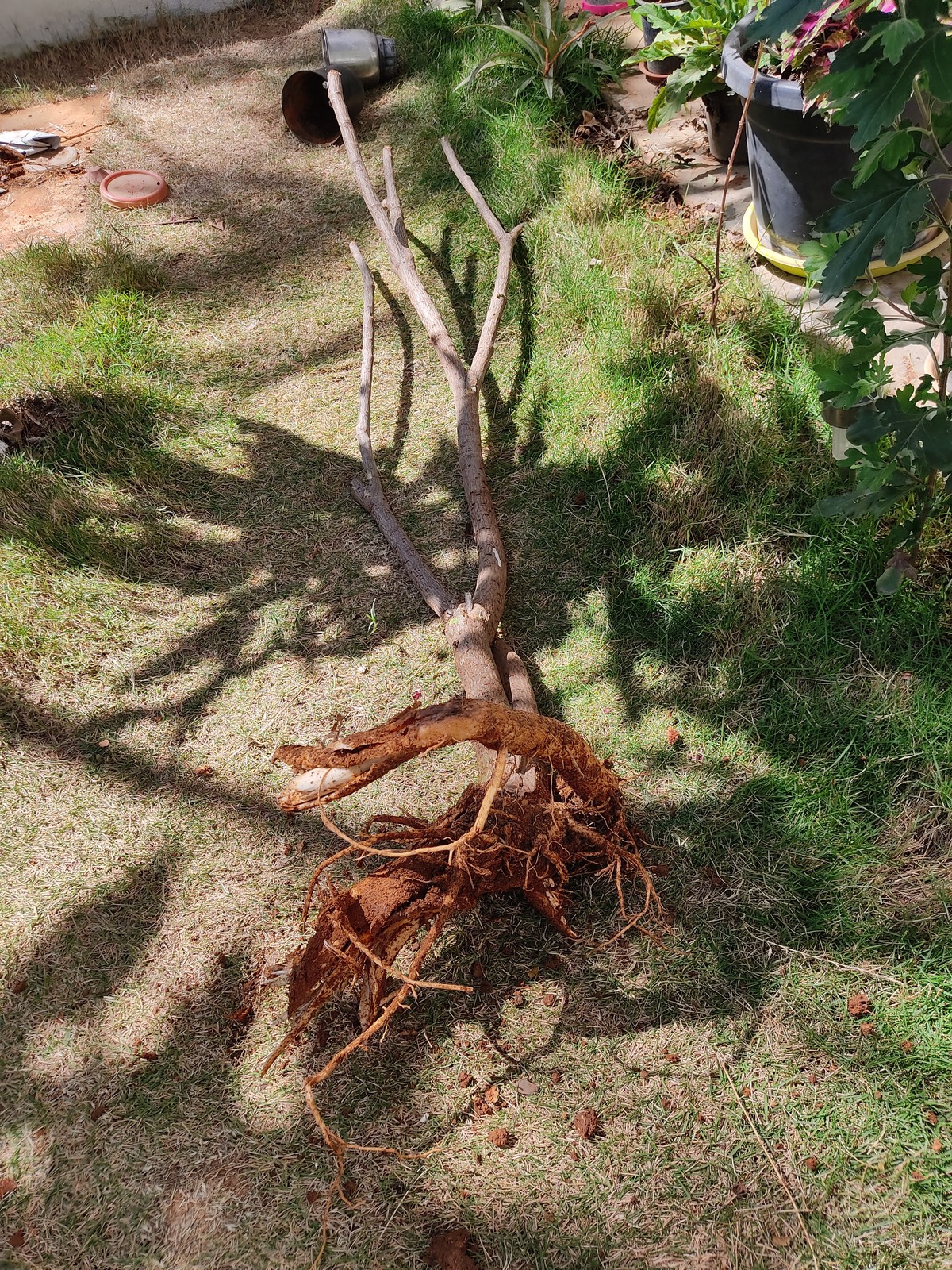
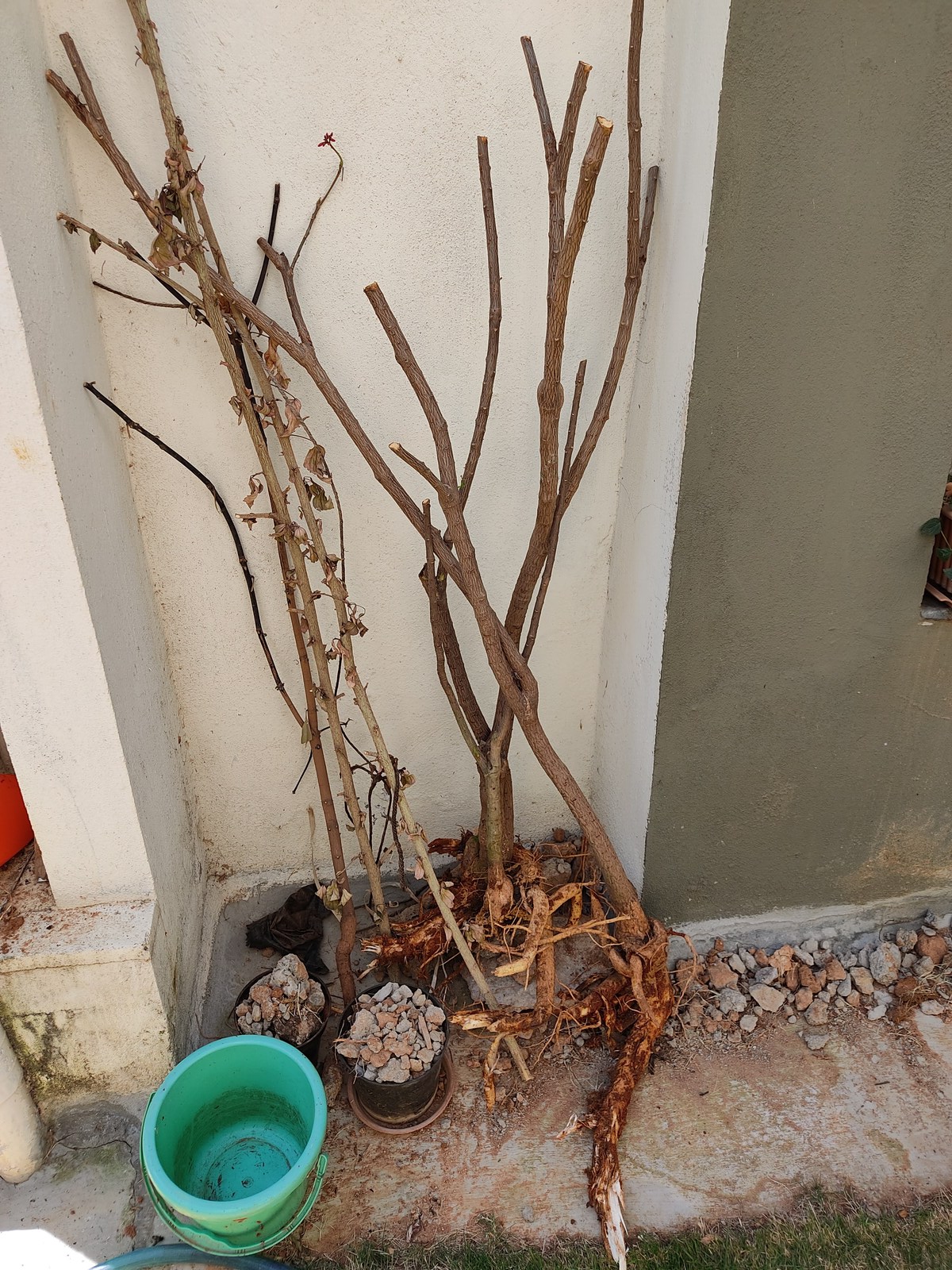
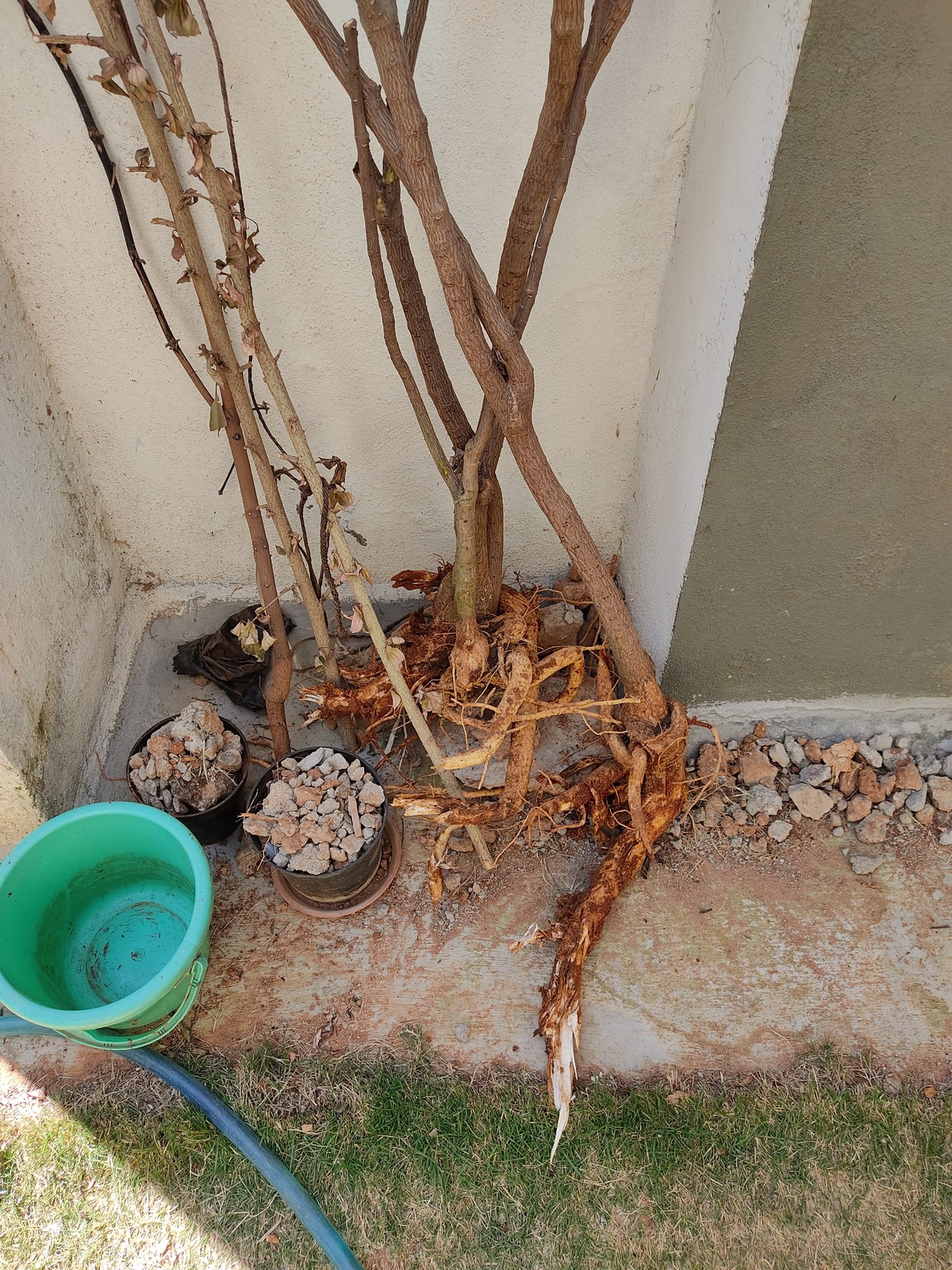
The Digging As I mentioned earlier, I do establish bindings, emotions and attachments. But not much usually comes in the way to curiosity. To dig further on the theory that the problem was elsewhere, with within the plants ecosystem, we needed to pick on another subject - the plant. And the plant we chose was the plant which was planted in the initial offering to us, when we moved into our home. It was the same plant breed which was neighboring all our newly planted trees: Rudraksha, Mulberry and Bael. If you look closely into the pictures above of these plants, you ll notice the stem of another plant, the Territorial Dominator, is close-by to these 3 plants. That s because the gardener put in a good number of them to get his action item complete. So we chose to dig and uproot one of those plant to start with. Now, while they may look gentle on the outside, with nice red colored tiny flowers, these plants were giants underneath. Their roots were huge. It took some sweat shredding to single-handedly remove them.
Dominating Plant Uprooted

Today is brighter

Bael I ll let the pictures do the initial talking today.
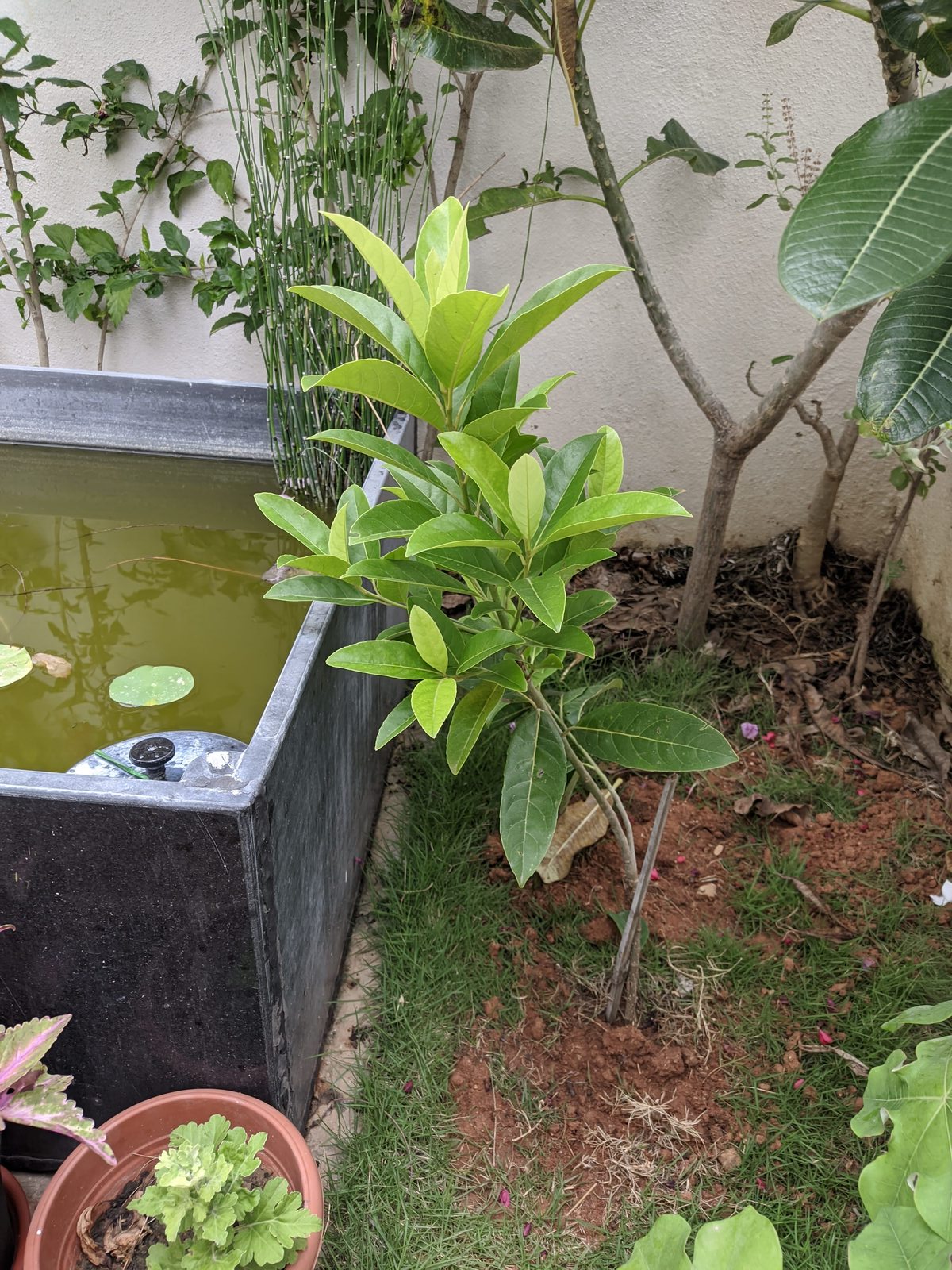
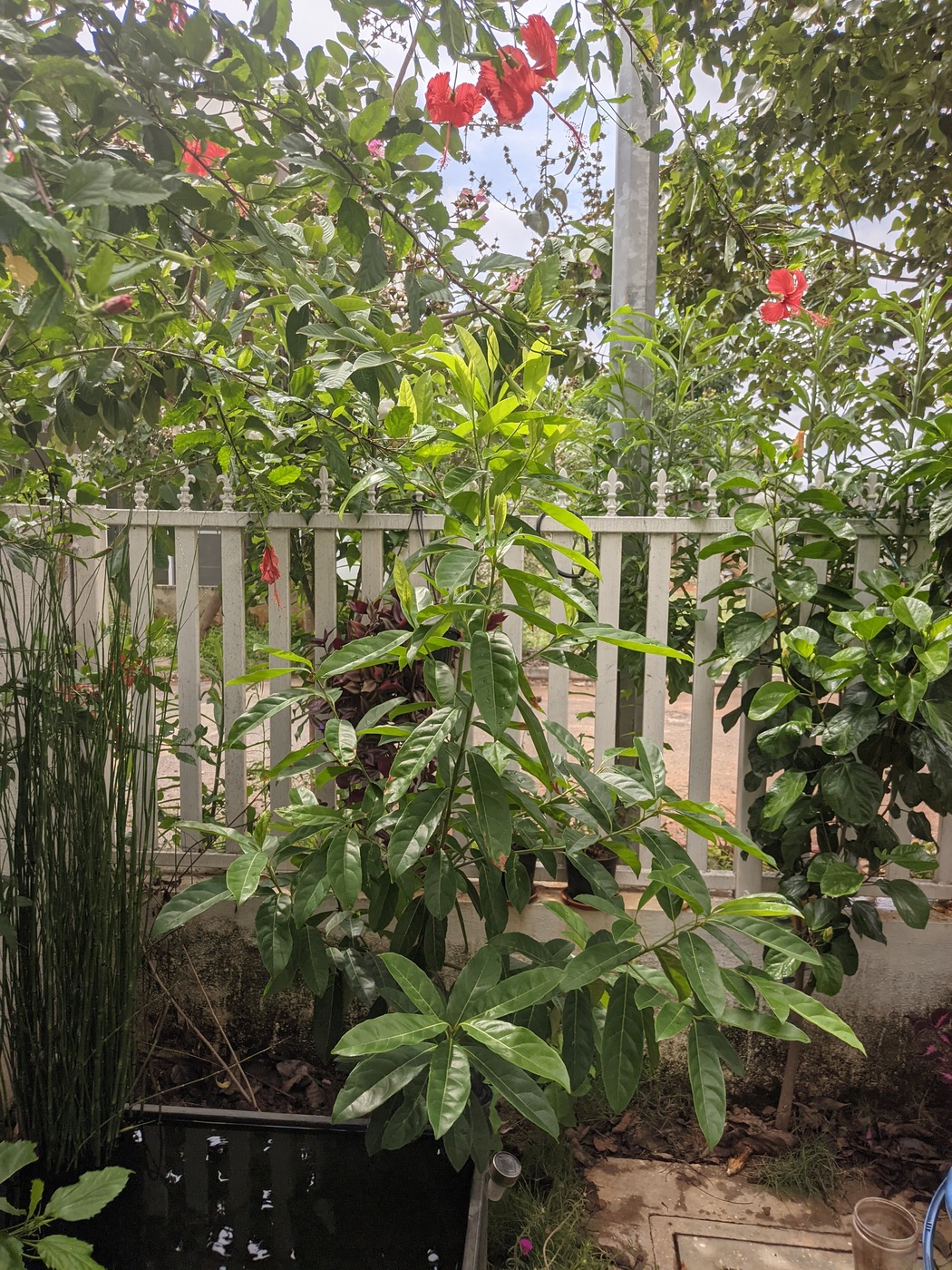
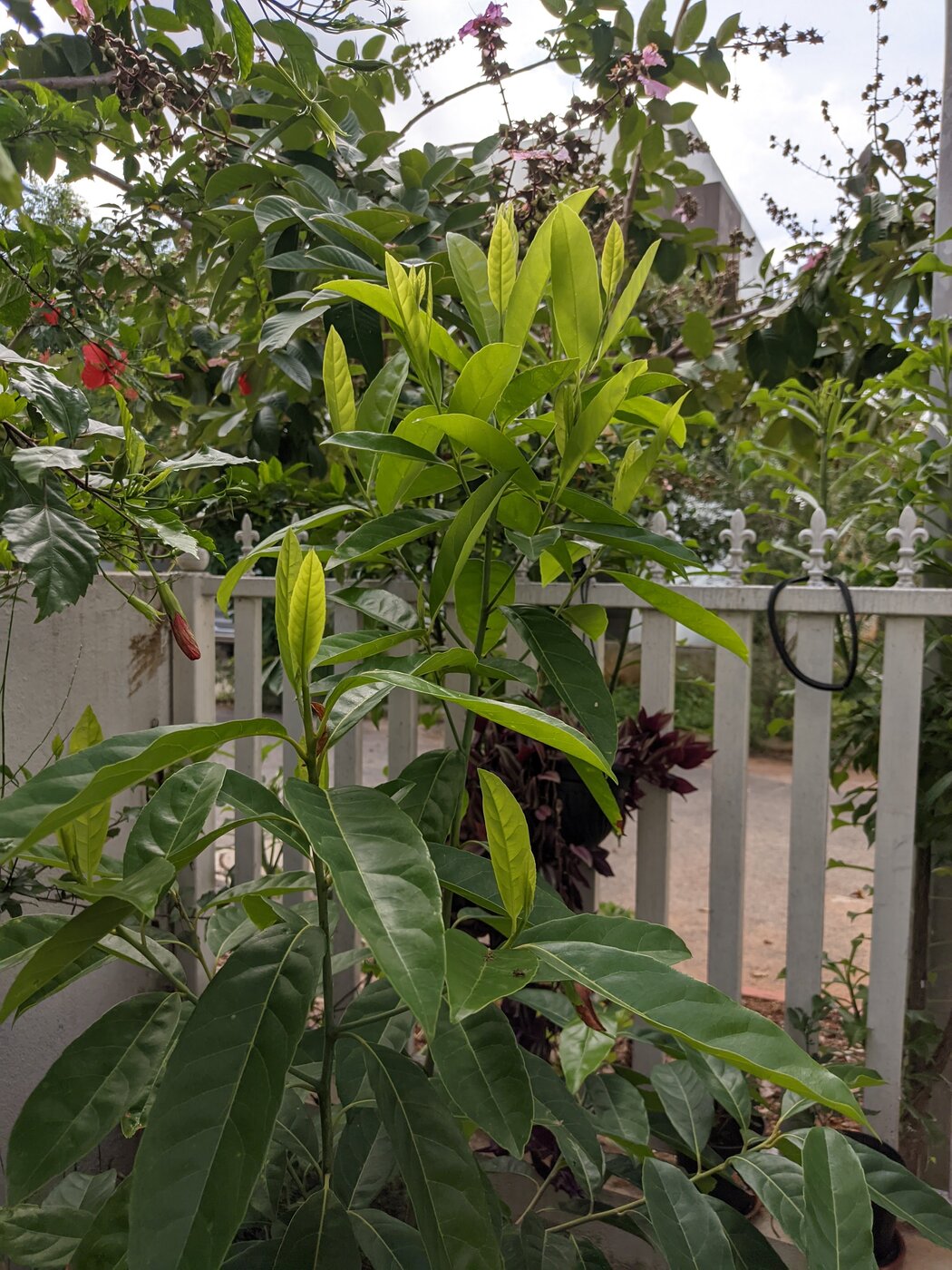
Healthy Bael
Healthy Bael
Healthy Bael
Healthy Bael
Healthy Bael
Healthy Bael
Healthy Bael
Healthy Bael
Healthy Bael
Healthy Bael
The above ones are pictures of the same Bael plant, which had struggled to live, for almost 14 months. Back then, this plant was starved of its resources. It was dying a slow death out of starvation. After we uprooted the other dominant species, the Bael has recovered and has regained its charm. In the pictures above of the Bael plant, you can clearly mark out the difference in its stem. The dark colored one is from its months of struggle, while the bright green is from now where it is well nourished and regained its health.

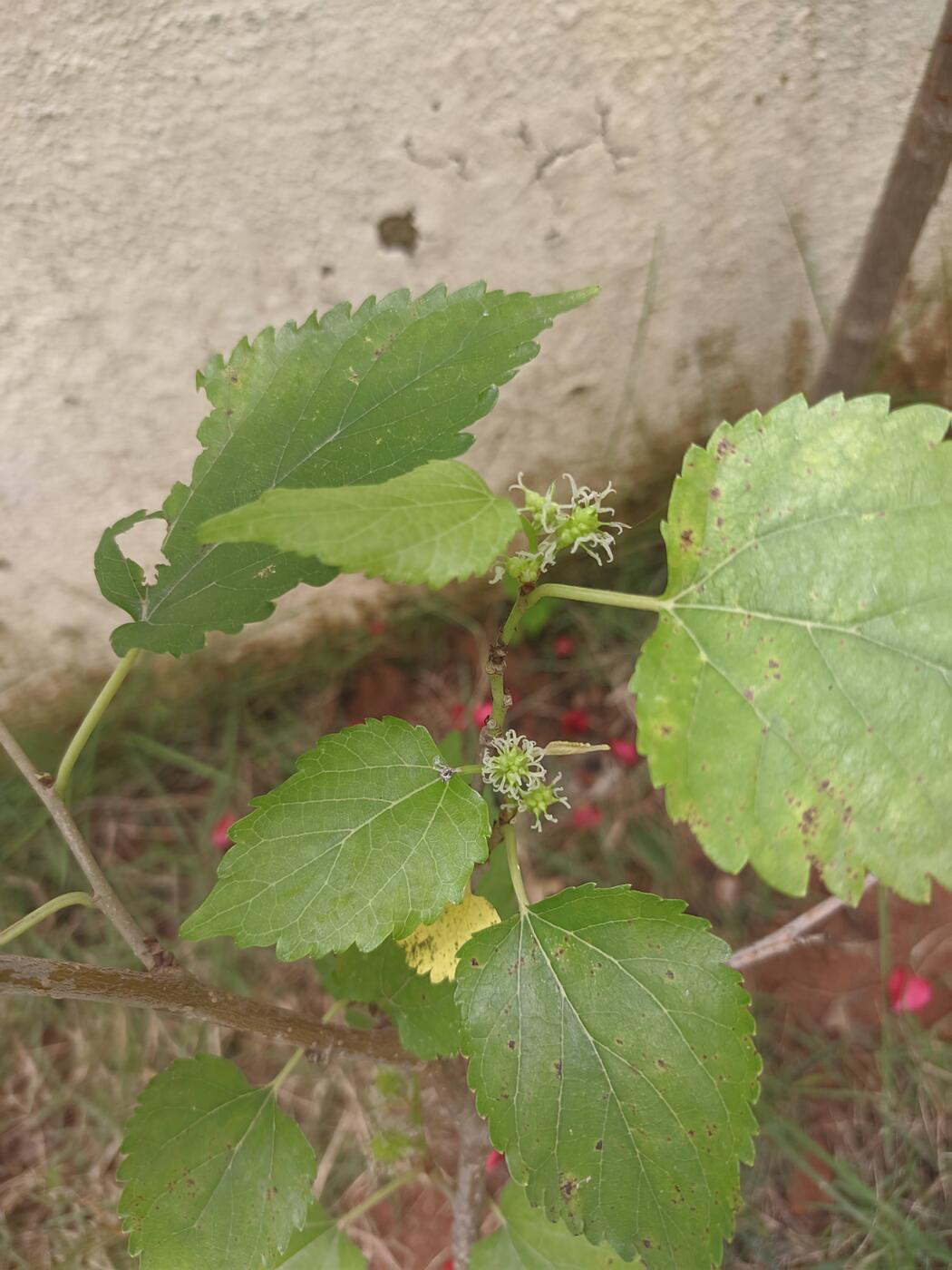
Mulberry As for the Mulberry, I couldn t save it. But I later managed to get another one. But it turns out I didn t take good, full length pictures of the new mulberry when I planted. The only picture I have is this:
Second Mulberry Plant
I recollect when I brought it home, it was around 1 - 1.5 feet in length. This is where I have it today: Majestically standing, 12 feet and counting
Second Mulberry Plant 7 feet tall

Rudraksha Then:
Rudraksha Plant
Rudraksha Plant
And now: I feel quite happy about
Rudraksha Plant
Rudraksha Plant
Rudraksha Plant
Rudraksha Plant
Rudraksha Plant
Rudraksha Plant
All these plants are on the very same soil with the very same care taker. What has changed is my experience and learning.

Plant Co-Existence Plant co-existence is a difficult topic. My knowledge on plants is very limited in general, and co-existence is something tricky, unexplored, at times invisible (when underneath the soil). So it is a difficult topic. So far, what I ve learnt is purely observations, experiences and hints from the documentaries. There surely are many many plants that co-exist very well. A good example is my Bael plant itself, which is healthily co-sharing its space with 2 other Croton plants. Same goes for the Rudraksha, which has a close-by neighbor in an Adenium and an Allamanda. The plant world is mesmerizing. How they behave, communicate and many many more signs. There s so much to observe, learn, explore and document. I hope to have more such observations and experiences to share

28 June 2021

Shirish Agarwal: Indian Capital Markets, BSE, NSE

I had been meaning to write on the above topic for almost a couple of months now but just kept procrastinating about it. That push came to a shove when Sucheta Dalal and Debasis Basu shared their understanding, wisdom, and all in the new book called Absolute Power Inside story of the National Stock Exchange s amazing success, leading to hubris, regulatory capture and algo scam . Now while I will go into the details of the new book as currently, I have not bought it but even if I had bought it and shared some of the revelations from it, it wouldn t have done justice to either the book or what is sharing before knowing some of the background before it.

Before I jump ahead, I would suggest people to read my sort of introductory blog post on banking history so they know where I m coming from. I m going to deviate a bit from Banking as this is about trade and capital markets, although Banking would come in later on. And I will also be sharing some cultural insights along with history so people are aware of why things happened the way they did. Calicut, Calcutta, Kolkata, one-time major depot around the world Now, one cannot start any topic about trade without talking about Kolkata. While today, it seems like a bastion of communism, at one time it was one of the major trade depots around the world. Both William Dalrymple and the Chinese have many times mentioned Kolkata as being one of the major centers of trade. This was between the 13th and the late 19th century. A cursory look throws up this article which talks about Kolkata or Calicut as it was known as a major trade depot. There are of course many, many articles and even books which do tell about how Kolkata was a major trade depot. Now between the 13th and 19th century, a lot of changes happened which made Kolkata poorer and shifted trade to Mumbai/Bombay which in those times was nothing but just a port city like many others.

The Rise of the Zamindar Around the 15th century when Babur Invaded Hindustan, he realized that Hindustan is too big a country to be governed alone. And Hindustan was much broader than independent India today. So he created the title of Zamindars. Interestingly, if you look at the Mughal period, they were much more in tune with Hindustani practices than the British who came later. They used the caste divisions and hierarchy wisely making sure that the status quo was maintained as far as castes/creed were concerned. While in-fighting with various rulers continued, it was more or less about land and power other than anything else. When the Britishers came they co-opted the same arrangement with a minor adjustment. While in the before system, the zamindars didn t have powers to be landowners. The Britishers gave them land ownerships. A huge percentage of thess zamindars especially in Bengal were from my own caste Banias or Baniyas. The problem and the solution for the Britishers had been this was a large land to control and exploit and the number of British officers and nobles were very less. So they gave virtually a lot of powers to the Banias. The only thing the British insisted on were very high rents from the newly minted Zamindars. The Zamindar in turn used the powers of personal fiefdom to give loans at very high interest rates when the poor were unable to pay the interest rate, they would take the land while at the same time slavery was forced on both men and women, many a time rapes and affairs. While there have been many records shedding light on it, don t think it could be any more powerful as enacted and shared by Shabana Azmi in Ankur:the Seedling. Another prominent grouping was formed around the same time was the Bhadralok. Now as shared Bhadralok while having all the amenities of belonging to the community, turned a blind eye to the excesses being done by the Zamindars. How much they played a hand in the decimation of Bengal has been a matter of debate, but they did have a hand, that much is not contested.

The Rise of Stock Exchanges Sadly and interestingly, many people believe and continue to believe that stock exchanges is recent phenomena. The first stock exchange though was the Calcutta Stock Exchange rather than the Bombay Stock Exchange. How valuable was Calcutta to the Britishers in its early years can be gauged from the fact that at one time it was made the capital of India in 1772 . In fact, after the Grand Trunk Road (on which there had been even Train names in both countries) x number of books have been written of the trade between Calcutta and Peshawar (Now in Pakistan). And it was not just limited to trade but also cultural give-and-take between the two centers. Even today, if you look at YT (Youtube) and look up some interviews of old people, you find many interesting anecdotes of people sharing both culture and trade.

The problem of the 60 s and rise of BSE
After India became independent and the Constitutional debates happened, the new elites understood that there cannot be two power centers that could govern India. On one hand, were the politicians who had come to power on the back of the popular vote, the other was the Zamindars, who more often than not had abused their powers which resulted in widespread poverty. The Britishers are to blame, but so do the middlemen as they became willing enablers to the same system of oppression. Hence, you had the 1951 amendment to the Constitution and the 1956 Zamindari Abolition Act. In fact, you can find much more of an in-depth article both about Zamindars and their final abolition here. Now once Zamindari was gone, there was nothing to replace it with. The Zamindars ousted of their old roles turned and tried to become Industrialists. The problem was that the poor and the downtrodden had already had experiences with the Zamindars. Also, some Industrialists from North and West also came to Bengal but they had no understanding of either the language or the cultural understanding of what had happened in Bengal. And notice that I have not talked about both the famines and the floods that wrecked Bengal since time immemorial and some of the ones which got etched on soul of Bengal and has marks even today  The psyche of the Bengali and the Bhadralok has gone through enormous shifts. I have met quite a few and do see the guilt they feel. If one wonders as to how socialist parties are able to hold power in Bengal, look no further than Tarikh which tells and shares with you that even today how many Bengalis still feel somewhat lost.

The Rise of BSE Now, while Kolkata Stock Exchange had been going down, for multiple reasons other than listed above. From the 1950s onwards Jawaharlal Nehru had this idea of 5-year plans, borrowed from socialist countries such as Russia, China etc. His vision and ambition for the newly minted Indian state were huge, while at the same time he understood we were poor. The loot by East India Company and the Britishers and on top of that the division of wealth with Pakistan even though the majority of Muslims chose and remained with India. Travel on Indian Railways was a risky affair. My grandfather had shared numerous tales where he used to fill money in socks and put the socks on in boots when going between either Delhi Kolkata or Pune Kolkata. Also, as the Capital became Delhi, it unofficially was for many years, the transparency from Kolkata-based firms became less. So many Kolkata firms either mismanaged and shut down while Maharashtra, my own state, saw a huge boon in Industrialization as well as farming. From the 1960s to the 1990s there were many booms and busts in the stock exchanges but most were manageable.

While the 60s began on a good note as Goa was finally freed from the Portuguese army and influence, the 1962 war with the Chinese made many a soul question where we went wrong. Jawaharlal Nehru went all over the world to ask for help but had to return home empty-handed. Bollywood showed a world of bell-bottoms and cars and whatnot, while the majority were still trying to figure out how to put two square meals on the table. India suffered one of the worst famines in those times. People had to ration food. Families made do with either one meal or just roti (flatbread) rather than rice. In Bengal, things were much more severe. There were huge milk shortages, so Bengalis were told to cut down on sweets. This enraged the Bangalis as nothing else could. Note If one wants to read how bad Indians felt at that time, all one has to read is V.S. Naipaul s An Area of darkness . This was also the time when quite a few Indians took their first step out of India. While Air India had just started, the fares were prohibitive. Those who were not well off, either worked on ships or went via passenger or cargo ships to Dubai/Qatar middle-east. Some went to Russia and some even to States. While today s migr s want to settle in the west forever and have their children and grandchildren grow up in the West, in the 1960s and 70s the idea was far different. The main purpose for a vast majority was to get jobs and whatnot, save maximum money and send it back to India as a remittance. The idea was to make enough money in 3-5-10 years, come back to India, and then lead a comfortable life. Sadly, there has hardly been any academic work done in India, at least to my knowledge to document the sacrifices done by Indians in search of jobs, life, purpose, etc. in the 1960s and 1970s. The 1970s was also when alternative cinema started its journey with people like Smita Patil, Naseeruddin Shah who portrayed people s struggles on-screen. Most of them didn t have commercial success because the movies and the stories were bleak. While the acting was superb, most Indians loved to be captured by fights, car-chases, and whatnot rather than the deary existence which they had. And the alt cinema forced them to look into the mirror, which was frowned upon both by the masses and the classes. So cinema which could have been a wake-up call for a lot of Indians failed. One of the most notable works of that decade, at least to me, was Manthan. 1961 was also marked by the launch of Economic Times and Financial Express which tells that there was some appetite for financial news and understanding. The 1970s was also a very turbulent time in the corporate sector and stock exchanges. Again, the companies which were listed were run by the very well-off and many of them had been abroad. At the same time, you had fly-by-night operators. One of the happenings which started in this decade is you had corporate wars and hostile takeovers, quite a few of them of which could well have a Web series or two of their own. This was also a decade marked by huge labor unrest, which again changed the face of Bombay/Mumbai. From the 1950s till the 1970s, Bombay was known for its mills. So large migrant communities from all over India came to Bombay to become the next Bollywood star and if that didn t happen, they would get jobs in the mills. Bombay/Mumbai has/had this unique feature that somehow you will make money to make ends meet. Of course, with the pandemic, even that has gone for a toss. Labor unrest was a defining character of that decade. Three movies, Kaala Patthar, Kalyug, and Ankush give a broad outlook of what happened in that decade. One thing which is present and omnipresent then and now is how time and time again we lost our demographic dividend. Again there was an exodus of young people who ventured out to seek fortunes elsewhere. The 1970s and 80s were also famous for the license Raj which they bought in. Just like the Soviets, there were waiting periods for everything. A telephone line meant waiting for things anywhere from 4 to 8 years. In 1987, when we applied and got a phone within 2-3 months, most of my relatives both from my mother and father s side could not believe we paid 0 to get a telephone line. We did pay the telephone guy INR 10/- which was a somewhat princely sum when he was installing it, even then they could not believe it as in Northern India, you couldn t get a phone line even if your number had come. You had to pay anywhere from INR 500/1000 or more to get a line. This was BSNL and to reiterate there were no alternatives at that time.

The 1990s and the Harshad Mehta Scam The 90s was when I was a teenager. You do all the stupid things for love, lust, whatever. That is also the time you are introduced really to the world of money. During my time, there were only three choices, Sciences, Commerce, and Arts. If History were your favorite subject then you would take Arts and if it was not, and you were not studious, then you would up commerce. This is how careers were chosen. So I enrolled in Commerce. Due to my grandfather and family on my mother s side interested in stocks both as a saving and compounding tool, I was able to see Pune Stock Exchange in action one day. The only thing I remember that day is people shouting loudly with various chits. I had no idea that deals of maybe thousands or even lakhs. The Pune Stock Exchange had been newly minted. I also participated in a couple of mock stock exchanges and came to understand that one has to be aggressive in order to win. You had to be really loud to be heard over others, you could not afford to be shy. Also, spread your risks. Sadly, nothing about the stock markets was there in the syllabus. 1991 was also when we saw the Iraq war, the balance of payments crisis in India, and didn t know that the Harshad Mehta scam was around the corner. Most of the scams in India have been caught because the person who was doing it was flashy. And this was the reason that even he was caught as Ms. Sucheta Dalal, a young beat reporter from Indian Express who had been covering Indian stock market. Many of her articles were thought-provoking. Now, a brief understanding is required to know before we actually get to the scam. Because of the 1991 balance of payments crisis, IMF rescued India on the condition that India throws its market open. In the 1980s itself, Rajeev Gandhi had wanted to partially make India open but both politicians and Industrialists advised him not to do the same, we are/were not ready. On 21st May 1991, Rajeev Gandhi was assassinated by the LTTE. A month later, due to the sympathy vote, the Narsimha Rao Govt. took power. While for most new Governments there is usually a honeymoon period lasting 6 months or so till they get settled in their roles before people start asking tough questions. It was not to be for this Govt. Immediately, The problem had been building for a few years. Although, in many ways, our economy was better than it is today. The only thing India didn t do well at that time was managing foreign exchange. As only a few Indians had both the money and the opportunity to go abroad and need for electronics was limited. One of the biggest imports of the time then and still today is Energy, Oil. While today it is Oil/Gas and electronics, at that time it was only OIl. The Oil import bill was ballooning while exports were more or less stagnant and mostly comprised of raw materials rather than finished products. Even today, it is largely this, one of the biggest Industrialists in India Ambani exports gas/oil while Adani exports coal. Anyways, the deficit was large enough to trigger a payment crisis. And Narsimha Rao had to throw open the Indian market almost overnight. Some changes became quickly apparent, while others took a long time to come.

Satellite Television and Entry of Foreign Banks Almost overnight, from 1 channel we became multi-channel. Star TV (Rupert Murdoch) bought us Bold and Beautiful, while CNN broadcasted the Iraq War. It was unbelievable for us that we were getting reports of what had happened 24-48 hours earlier. Fortunately or unfortunately, I was still very much a teenager to understand the import of what was happening. Even in my college, except for one or two-person, it wasn t a topic for debate or talk or even the economy. We were basically somehow cocooned in our own little world. But this was not the case for the rest of India and especially banks. The entry of foreign banks was a rude shock to Indian banks. The foreign banks were bringing both technology and sophistication in their offerings, and Indian Banks needed and wanted fast money to show hefty profits. Demand for credit wasn t much, at least nowhere the level it today is. At the same time, default on credit was nowhere high as today is. But that will require its own space and article. To quench the thirst for hefty profits by banks, Enter Harshad Mehta. At that point in time, banks were not permitted at all to invest in the securities/share market. They could only buy Government securities or bonds which had a coupon rate of say 8-10% which was nowhere enough to satisfy the need for hefty profits as desired by Indian banks. On top of it, that cash was blocked for a long time. Most of these Government bonds had anywhere between 10-20 year maturity date and some even longer. Now, one loophole in that was that the banks themselves could not buy these securities. They had to approach a registered broker of the share market who will do these transactions on their behalf. Here is where Mr. Mehta played his game. He shared both legal and illegal ways in which both the bank and he would prosper. While banking at one time was thought to be conservative and somewhat cautious, either because they were too afraid that Western private banks will take that pie or whatever their reasons might be, they agreed to his antics. To play the game, Harshad Mehta needed lots of cash, which the banks provided him in the guise of buying securities that were never bought, but the amounts were transferred to his account. He actively traded stocks, at the same time made a group, and also made the rumor mill work to his benefit. The share market is largely a reactionary market. It operates on patience, news, and rumor-mill. The effect of his shenanigans was that the price of a stock that was trending at say INR 200 reached the stratospheric height of INR 9000/- without any change in the fundamentals or outlook of the stock. His thirst didn t remain restricted to stocks but also ventured into the unglamorous world of Govt. securities where he started trading even in them in large quantities. In order to attract new clients, he coveted a fancy lifestyle. The fancy lifestyle was what caught the eye of Sucheta Dalal, and she started investigating the deals he was doing. Being a reporter, she had the advantage of getting many doors to open and get information that otherwise would be under lock and key. On 23rd April 1992, Sucheta Dalal broke the scam.

The Impact The impact was almost like a shock to the markets. Even today, it can be counted as one of the biggest scams in the Indian market if you adjust it for inflation. I haven t revealed much of the scam and what happened, simply because Sucheta Dalal and Debasis Basu wrote The Scam for that purpose. How do I shorten a story and experience which has been roughly written in 300 odd pages in one or two paragraphs, it is simply impossible. The impact though was severe. The Indian stock market became a bear market for two years. Sucheta Dalal was kicked out/made to resign out of Indian Express. The thing is simple, all newspapers survive on readership and advertisements with advertisements. Companies who were having a golden run, whether justified or not, on the bourses/Stock Exchange. For many companies, having a good number on the stock exchange was better than the company fundamentals. There was supposed to be a speedy fast-track court setup for Financial crimes, but it worked only for the Harshad Mehta case and still took over 5 years. It led to the creation of NSE (National Stock Exchange). It also led to the creation of SEBI, perhaps one of the most powerful regulators, giving it a wide range of powers and remit but on the ground more often that proved to be no more than a glorified postman. And the few times it used, it used on the wrong people and people had to go to courts to get justice. But then this is not about SEBI nor is this blog post about NSE. I have anyways shared about Absolute power above, so will not repeat the link here. The Anecdotal impact was widespread. Our own family broker took the extreme step. For my grandfather on the mother s side, he was like the second son. The news of his suicide devastated my grandfather quite a bit, which we realized much later when he was diagnosed with Alzheimer s. Our family stockbroker had been punting, taking lots of cash from the market at very high rates, betting on stocks wildly as the stock market was reaching for the stars when the market crashed, he was insolvent. How the family survived is a tale in itself. They had just got married just a few years ago and had a cute boy and girl soon after. While today, both are grown-up, at that time what the wife faced only she knows. There were also quite a few shareholders who also took the extreme step. The stock markets in those days were largely based on trust and even today is unless you are into day-trading. So there was always some money left on the table for the share/stockbroker which would be squared off in the next deal/transaction where again you will leave something. My grandfather once thought of going over and meeting them, and we went to the lane where their house is, seeing the line of people who had come for recovery of loans, we turned back with a heavy heart. There was another taboo that kinda got broken that day. The taboo was that the stock market is open to scams. From 1992 to 2021 has been a cycle of scams. Even now, today, the stock market is at unnatural highs. We know for sure that a lot of hot money is rolling around, a lot of American pension funds etc. Till it will work, it will work, some news something and that money will be moved out. Who will be left handing the can, the Indian investors? A Few days back, Ambani writes about Adani. Now while the facts shared are correct, is Adani the only one, the only company to have a small free float in the market. There probably are more than 1/4th or 1/3rd of well-respected companies who may have a similar configuration, the only problem is it is difficult to know who the proxies are. Now if I were to reflect and compare this either with the 1960s or even the 1990s I don t find much difference apart from the fact that the proxy is sitting in Mauritius. At the same time, today you can speculate on almost anything. Whether it is stocks, commodities, derivatives, foreign exchange, cricket matches etc. the list is endless. Since 2014, the rise in speculation rather than investment has been dramatic, almost stratospheric. Sadly, there are no studies or even attempts made to document this. How much official and unofficial speculation is there in the market nobody knows. Money markets have become both fluid and non-transparent. In theory, you have all sorts of regulators, but it is still very much like the Wild West. One thing to note that even Income tax had to change and bring it provisions to account for speculative income.So, starting from being totally illegitimate, it has become kind of legal and is part of Income Tax. And if speculation is not wrong, why not make Indian cricket officially a speculative event, that will be honest and GOI will get part of the proceeds.

Conclusion I wish there was some positive conclusion I could drive, but sadly there is not. Just today read two articles about the ongoing environmental issues in Himachal Pradesh. As I had shared even earlier, the last time I visited those places in 2011, and even at that time I was devastated to see the kind of construction going on. Jogiwara Road which they showed used to be flat single ground/first floor dwellings, most of which were restaurants and whatnot. I had seen the water issues both in Himachal and UT (Uttarakhand) back then and this is when they made huge dams. In U.S. they are removing dams and here we want more dams

26 June 2021

Dirk Eddelbuettel: RcppRedis 0.1.11: Minor Update

A new minor release of RcppRedis arrived on CRAN, the first update since the last release in January of last year. RcppRedis is one of several packages connecting R to the fabulous Redis in-memory datastructure store (and much more). RcppRedis does not pretend to be feature complete, but it may do some things faster than the other interfaces, and also offers an optional coupling with MessagePack binary (de)serialization via RcppMsgPack. The package has carried production loads for several years now. This release updates CI to using r-ci, adds a quit() methods, and updates the windows library in builds thanks to a PR by Jeroen which also enables builds under the experimemtal UCRT windows flavor.

Changes in version 0.1.11 (2021-06-26)
  • The CI setup was updated to use run.sh from r-ci (Dirk).
  • A new function quit can be used to close a connection (Dirk).
  • The windows build was updated to libhiredis 1.0.0, and UCRT support was added (Jeroen in #42).

Courtesy of CRANberries, there is also a diffstat report for this release. More information is on the RcppRedis page. If you like this or other open-source work I do, you can now sponsor me at GitHub.

This post by Dirk Eddelbuettel originated on his Thinking inside the box blog. Please report excessive re-aggregation in third-party for-profit settings.

23 June 2021

Dirk Eddelbuettel: RcppGSL 0.3.9: Polish and More Builds

Release 0.3.9 of the RcppGSL package arrived at CRAN today, pretty much exactly one year since the last upload. The RcppGSL package provides an interface from R to the GNU GSL by relying on the Rcpp package. This release brings some small documentation and CI polish, and enables builds on the newer (and still experimental) windows UCRT flavor (which will bring native utf-8 chars to Windows, see this and this write-up) thanks to a PR by Jeroen.

Changes in version 0.3.9 (2021-06-23)
  • The pdf vignette was extended by a small subsection (Dirk).
  • The CI setup was updated to use run.sh from r-ci (Dirk).
  • The windows was updated to GSL 2.7, and UCRT support was added (Jeroen in #28).

Courtesy of CRANberries, a summary of changes to the most recent release is also available. More information is on the RcppGSL page. Questions, comments etc should go to the issue tickets at the GitHub repo. If you like this or other open-source work I do, you can now sponsor me at GitHub.

This post by Dirk Eddelbuettel originated on his Thinking inside the box blog. Please report excessive re-aggregation in third-party for-profit settings.

22 June 2021

Lisandro Dami n Nicanor P rez Meyer: Creating an app with QML: a heater control

Last week I took the ICS course "Building an Embedded Application with Qt" and now it's time to put the gained knowledge into action. I decided to create an application to (simulate?) a heater control. Why? Because I have a very basic one at home, and I always dreamed of getting something better. So time to implement it.
Requirements General Try to do the business logic in C++ as much as possible. Thermostat Temperature profiles Profile selection The system should be able to configure the desired profile in slots of 15' for each day (Monday to Sunday). So 96 slots per day. Manual button Sometimes I want to override the predefined configuration for a special situation. This button should allow me to set a new target temperature in a time slot from 15 minutes to 3 hours. Heater on indicator We want to know when the heater is being commanded to turn on. Temperature sensor This is not strictly decided, so the ability to use different kinds of sensors, one at a time, would be just nice.
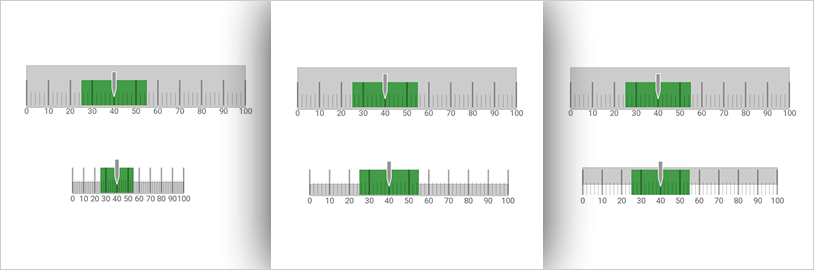
User interface I did some sketches on what I would want as a UI. But I'm not a graphic designer, so I will first do a very simple but yet functional UI and then try to switch to a better designed UI. I dream on emulating an horizontal disc gauge, those where the user sees the border of the disc and the center of it shows the current temperature, perhaps even with a magnifier in the middle. Something like this, but with the needle fixed in the center.
Implementing the idea The backend Code repository at GitLab. My first steps where to implement the C++ backend: a Settings class and a TemperatureEngine class. For the temperature sensor I decided to make a very simple AbstractTemperatureSensor class and also implement a FakeTemperatureSensor. The later will come handy in order to be able to run tests. Later on I can implement other temperature sources like reading an analog voltage from some GPIO, getting the data trough MQTT, etc. The GUI That's definitely Work In Progress :-)

21 June 2021

Shirish Agarwal: Accessibility, Freenode and American imperialism.

Accessibility This is perhaps one of the strangest ways and yet also perhaps the straightest way to start the blog post. For the past weeks/months, a strange experience has been there. I am using a Logitech wireless keyboard and mouse for almost a decade. Now, for the past few months and weeks we observed a somewhat rare phenomena . While in-between us we have a single desktop computer. So me and mum take turns to be on the Desktop. At times, however, the system would sit idle and after some time it goes to low-power mode/sleep mode after 30 minutes. Then, when you want to come back, you obviously have to give your login credentials. At times, the keyboard refuses to input any data in the login screen. Interestingly, the mouse still functions. Much more interesting is the fact that both the mouse and the keyboard use the same transceiver sensor to send data. And I had changed batteries to ensure it was not a power issue but still no input :(. While my mother uses and used the power switch (I did teach her how to hold it for few minutes and then let it go) but for self, tried another thing. Using the mouse I logged of the session thinking perhaps some race condition or something might be in the session which was not letting the keystrokes be inputted into the system and having a new session might resolve it. But this was not to be  Luckily, on the screen you do have the option to reboot or power off. I did a reboot and lo, behold the system was able to input characters again. And this has happened time and again. I tried to find GOK and failed to remember that GOK had been retired. I looked up the accessibility page on Debian wiki. Very interesting, very detailed but sadly it did not and does not provide the backup I needed. I tried out florence but found that the app. is buggy. Moreover, the instructions provided on the lightdm screen does not work. I do not get the on-screen keyboard while I followed the instructions. Just to be clear this is all on Debian testing which is gonna be Debian stable soonish  I even tried the same with xvkbd but no avail. I do use mate as my desktop-manager so maybe the instructions need some refinement ???? $ cat /etc/lightdm/lightdm-gtk-greeter.conf grep keyboard
# a11y-states = states of accessibility features: name save state on exit, -name
disabled at start (default value for unlisted), +name enabled at start. Allowed names: contrast, font, keyboard, reader.
keyboard=xvkbd no-gnome focus &
# keyboard-position = x y[;width height] ( 50%,center -0;50% 25% by default) Works only for onboard
#keyboard= Interestingly, Debian does provide two more on-screen keyboards, matchbox as well as onboard which comes from Ubuntu. While I have both of them installed. I find xvkbd to be enough for my work, the only issue seems to be I cannot get it from the drop-down box of accessibility at the login screen. Just to make sure that I have not gone to Gnome-display manager, I did run

$ sudo dpkg-reconfigure gdm3 Only to find out that I am indeed running lightdm. So I am a bit confused why it doesn t come up as an option when I have the login window/login manager running. FWIW I do run metacity as the window manager as it plays nice with all the various desktop environments I have, almost all of them. So this is where I m stuck. If I do get any help, I probably would also add those instructions to the wiki page, so it would be convenient to the next person who comes with the same issue. I also need to figure out some way to know whether there is some race-condition or something which is happening, have no clue how would I go about it without having whole lot of noise. I am sure there are others who may have more of an idea. FWIW, I did search unix.stackexchange as well as reddit/debian to see if I could see any meaningful posts but came up empty.

Freenode I had not been using IRC for quite some time now. The reasons have been multiple issues with Riot (now element) taking the whole space on my desktop. I did get alerted to the whole thing about a week after the whole thing went down. Somebody messaged me DM. I *think* I put up a thread or a mini-thread about IRC or something in response to somebody praising telegram/WhatsApp or one of those apps. That probably triggered the DM. It took me a couple of minutes to hit upon this. I was angry and depressed, seeing the behavior of the new overlords of freenode. I did see that lot of channels moved over to Libera. It was also interesting to see that some communities were thinking of moving to some other obscure platform, which again could be held hostage to the same thing. One could argue one way or the other, but that would be tiresome and fact is any network needs lot of help to be grown and nurtured, whether it is online or offline. I also saw that Libera was also using a software Solanum which is ircv3 compliant. Now having done this initial investigation, it was time to move to an IRC client. The Libera documentation is and was pretty helpful in telling which IRC clients would be good with their network. So I first tried hexchat. I installed it and tried to add Libera server credentials, it didn t work. Did see that they had fixed the bug in sid/unstable and now it s in testing. But at the time it was in sid, the bug-fixed and I wanted to have something which just ran the damn thing. I chanced upon quassel. I had played around with quassel quite a number of times before, so I knew I could play/use it. Hence, I installed it and was able to use it on the first try. I did use the encrypted server and just had to tweak some settings before I could use it with some help with their documentation. Although, have to say that even quassel upstream needs to get its documentation in order. It is just all over the place, and they haven t put any effort into streamlining the documentation, so that finding things becomes easier. But that can be said of many projects upstream. There is one thing though that all of these IRC clients lack. The lack of a password manager. Now till that isn t fixed it will suck because you need another secure place to put your password/s. You either put it on your desktop somewhere (insecure) or store it in the cloud somewhere (somewhat secure but again need to remember that password), whatever you do is extra work. I am sure there will be a day when authenticating with Nickserv will be an automated task and people can just get on talking on channels and figuring out how to be part of the various communities. As can be seen, even now there is a bit of a learning curve for both newbies and people who know a bit about systems to get it working. Now, I know there are a lot of things that need to be fixed in the anonymity, security place if I put that sort of hat. For e.g. wouldn t it be cool if either the IRC client or one of its add-on gave throwaway usernames and passwords. The passwords would be complex. This would make it easier who are paranoid about security and many do and would have. As an example we can see of Fuchs. Now if the gentleman or lady is working in a professional capacity and would come to know of their real identity and perceive rightly or wrongly the role of that person, it will affect their career. Now, should it? I am sure a lot of people would be divided on the issue. Personally, as far as I am concerned, I would say no because whether right or wrong, whatever they were doing they were doing on their own time. Not on company time. So it doesn t concern the company at all. If we were to let companies police the behavior outside the time, individuals would be in a lot of trouble. Although, have to say that is a trend that has been seen in companies that are firing people either on the left or right. A recent example that comes to mind is Emily Wilder who was fired by Associated Press. Interestingly, she was interviewed by Democracy now, and it did come out that she is a Jew. As can be seen and understood there is a lot of nuance to her story and not the way she was fired. It doesn t give a good taste in the mouth, but then getting fired nobody does. On few forums, people did share of people getting fired of their job because they were dancing (cops). Again, it all depends, for me again, hats off to anybody who feels like dancing or whatever because there are just so many depressing stories all around.

Banned and FOE On few forums I was banned because I was talking about Brexit and American imperialism, both of which are seem to ruffle a few feathers in quite a few places. For instance, many people for obvious reasons do not like this video

Now I m sorry I am not able to and have not been able to give invidious links for the past few months. The reason being invidious itself went through some changes and the changes are good and bad. For e.g. now you need to share your google id with a third-party which at least to my mind is not a good idea. But that probably is another story altogether and it probably will need its own place. Coming back to the video itself, this was shared by Anthony hazard and the Title is The Atlantic slave trade: What too few textbooks told you . I did see this video quite a few years ago and still find it hard to swallow that tens of millions of Africans were bought as slaves to the Americas, although to be fair it does start with the Spanish settlement in the land which would be called the U.S. but they bought slaves with themselves. They even got the American natives, i.e. people from different tribes which made up America at that point. One point to note is that U.S. got its independence on July 4, 1776 so all the people before that were called as European settlers for want of a better word. Some or many of these European settlers would be convicts who were sent from UK. But as shared in the article, that would only happen with U.S. itself is mature and open enough for that discussion. Going back to the original point though, these European or American settlers bought lot of slaves from Africa. The video does also shed some of the cruelty the Europeans or Americans did on the slaves, men and women in different ways. The most revelatory part though which I also forget many a times that because lot of people were taken from Africa and many of them men, it did lead to imbalances in the African societies not just in weddings but economics in general. It also developed a theory called Critical Race theory in which it tries to paint the Africans as an inferior race otherwise how would Christianity work where their own good book says All men are born equal . That does in part explain why the African countries are still so far behind their European or American counterparts. But Africa can still be proud as they are richer than us, yup India. Sadly, I don t think America is ready to have that conversation anytime soon or if ever. And if it were to do, it would have to out-do any truth and reconciliation Committee which the world has seen. A mere apology or two would not just cut it. The problems of America sadly are not limited to just Africans but the natives of the land, for e.g. the Lakota people. In 1868, they put a letter stating we will give the land back to the Lakota people forever, but then the gold rush happened. In 2007, when the Lakota stated their proposal for independence, the U.S. through its force denied. So much for the paper, it was written on. Now from what I came to know over the years, the American natives are called First nations . Time and time again the American Govt. has tried or been foul towards them. Some of the examples include The Yucca Mountain nuclear waste repository . The same is and was the case with The Keystone pipeline which is now dead. Now one could say that it is America s internal matter and I would fully agree but when they speak of internal matters of other countries, then we should have the same freedom. But this is not restricted to just internal matters, sadly. Since the 1950 s i.e. the advent of the cold war, America s foreign policy made Regime changes all around the world. Sharing some of the examples from the Cold War

Iran 1953
Guatemala 1954
Democratic Republic of the Congo 1960
Republic of Ghana 1966
Iraq 1968
Chile 1973
Argentina 1976
Afghanistan 1978-1980s
Grenada
Nicaragua 1981-1990
1. Destabilization through CIA assets
2. Arming the Contras
El Salvador 1980-92
Philippines 1986 Even after the Cold War ended the situation was anonymolus, meaning they still continued with their old behavior. After the end of Cold War

Guatemala 1993
Serbia 2000
Iraq 2003-
Afghanistan 2001 ongoing There is a helpful Wikipedia article titled History of CIA which basically lists most of the covert regime changes done by U.S. The abvoe is merely a sub-set of the actions done by U.S. Now are all the behaviors above of a civilized nation ? And if one cares to notice, one would notice that all the above countries in the list which had the regime change had either Oil or precious metals. So U.S. is and was being what it accuses China, a profiteer. But this isn t just the U.S. China story but more about the American abuse of its power. My own country, India paid IMF loans till 1991 and we paid through the nose. There were economic sanctions against India. But then, this is again not just about U.S. India. Even with Europe or more precisely Norway which didn t want to side with America because their intelligence showed that no WMD were present in Iraq, the relationship still has issues.

Pandemic and the World So I do find that this whole blaming of China by U.S. quite theatrical and full of double-triple standards. Very early during the debates, it came to light that the Spanish Flu actually originated in Kensas, U.S.

What was also interesting as I found in the Pentagon Papers much before The Watergate scandal came out that U.S. had realized that China would be more of a competitor than Russia. And this itself was in 1960 s itself. This shows the level of intelligence that the Americans had. From what I can recollect from whatever I have read of that era, China was still mostly an agri-based economy. So, how the U.S. was able to deduce that China will surpass other economies is beyond me even now. They surely must have known something that even we today do not. One of the other interesting observations and understanding that I got while researching that every year we transfer an average of 7500 diseases from animal to humans and that should be a scary figure. I think more than anything else, loss of habitat and use of animals from food to clothing to medicine is probably the reason we are getting such diseases. I am also sure that there probably are and have been similar number of transfer of diseases from humans to animals as well but for well-known biases and whatnot those studies are neither done or are under-funded. There are and have been reports of something like 850,000 undiscovered viruses which various mammals and birds have. Also I did find that most of such pandemics are hard to identify, for e.g. SARS 1 took about 15 years, Ebola we don t know till date from where it came. Even HIV has questions for us. Hell, even why does hearing go away is a mystery to us. In all of this, we want to say China is culpable. And while China may or may not be culpable, only time will tell, this is surely the opportunity for all countries to spend and make capacities in public health. Countries which will take lessons from it and improve their public healthcare models will hopefully will not suffer as those who will suffer and are continuing to suffer now  To those who feel that habitat loss of animals is untrue, I would suggest them to see Sherni which depicts the human/animal conflict in all its brutality. I am gonna warn in advance that the ending is not nice but what can you expect from a country in which forest area cover has constantly declined and the Govt. itself is only interested in headline management

The only positive story I can share from India is that finally the Modi Govt. has said we will do free vaccine immunization for everybody. Although the pace is nothing to write home about. One additional thing they relaxed was instead of going to Cowin or any other portal, people could simply walk in using their identity papers. Although, given the pace of vaccinations, it is going to take anywhere between 13-18 months or more depending on availability of vaccines.

Looking forward to all and any replies have a virtual keyboard, preferably xvkbd as that is good enough for my use-case.

Russ Allbery: Review: Demon Lord of Karanda

Review: Demon Lord of Karanda, by David Eddings
Series: The Malloreon #3
Publisher: Del Rey
Copyright: September 1988
Printing: February 1991
ISBN: 0-345-36331-0
Format: Mass market
Pages: 404
This is the third book of the Malloreon, which in turn is a sequel trilogy to The Belgariad. Eddings, unlike most series authors, does a great job of reminding you what's happening with prologues in each book, but you definitely do not want to start reading here. When we last left our heroes, they had been captured. (This is arguably a spoiler for King of the Murgos, but it's not much of one, nor one that really matters.) This turns out to be an opportunity to meet the Emperor of Mallorea, the empire from which their adversary Zandramas (and, from the earlier trilogy, the god Torak) comes. This goes much better than one might expect, continuing the trend in this series of showing the leaders of the enemy countries as substantially similar to the leaders of the supposedly good countries. This sounds like open-mindedness on Eddings's part, and I suppose it partly is. It's at least a change from the first series, in which the bad guys were treated more like orcs. But the deeper I read into this series, the more obvious how invested Eddings is in a weird sort of classism. Garion and the others get along with Zakath in part because they're all royalty, or at least run in those circles. They just disagree about how to be a good ruler (and not as much as one might think, or hope). The general population of any of the countries is rarely of much significance. Zakath is a bit more cynical than Garion and company and has his own agenda, but he's not able to overcome the strong conviction of this series that the Prophecy and the fight between the Child of Light and the Child of Dark is the only thing of importance that's going on, and other people matter only to the extent that they're involved in that story. When I first read these books as a teenager, I was one of the few who liked the second series and didn't mind that its plot was partly a rehash of the first. I found, and still find, the blatantness with which Eddings manipulates the plot by making prophecy a character in the novel amusing. What I had forgotten, however, was how much of a slog the middle of this series is. It takes about three quarters of this book before there are any significant plot developments, and that time isn't packed with interesting diversions. It's mostly the heroes having conversations with each other or with Zakath, being weirdly sexist, rehashing their personality quirks, or shrugging about horrific events that don't matter to them personally. The last is a reference to the plague that appears in this book, and which I had completely forgotten. To be fair to my memory, that's partly because none of the characters seem to care much about it either. They're cooling their heels in a huge city, a plague starts killing people, they give Zakath amazingly brutal and bloodthirsty advice to essentially set fire to all the parts of the city with infected people, and then they blatantly ignore all the restrictions on movement because, well, they're important unlike all those other people and have places to go. It's rather stunningly unempathetic under the best of circumstances and seems even more vile in a 2021 re-read. Eddings also manages to make Ce'Nedra even more obnoxious than she has been by turning her into a walking zombie with weird fits where she's obsessed with her child, and adding further problems (which would be a spoiler) on top of that. I have never been a Ce'Nedra fan (that Garion's marriage ever works at all appears to be by authorial decree), but in this book she's both useless and irritating while supposedly being a tragic figure. You might be able to tell that I'm running sufficiently low on patience for Eddings's character quirks that I'm losing my enthusiasm for re-reading this bit of teenage nostalgia. This is the third book of a five-book series, so while there's a climax of sorts just like there was in the third book of the Belgariad, it's a false climax. One of the secondary characters is removed, but nothing is truly resolved; the state of the plot isn't much different at the end of this book than it was at the start. And to get there, one has to put up with Garion being an idiot, Ce'Nedra being a basket case, the supposed heroes being incredibly vicious about a plague, and one character pretending to have an absolutely dreadful Irish accent for pages upon pages upon pages. (His identity is supposedly a mystery, but was completely obvious a hundred pages before Garion figured it out. Garion isn't the sharpest knife in the drawer.) The one redeeming merit to this series is the dry voice in Garion's head and the absurd sight of the prophecy telling all the characters what to do, and we barely get any of that in this book. When it wasn't irritating or offensive, it was just a waste of time. The worst book of the series so far. Followed by Sorceress of Darshiva. Rating: 3 out of 10

20 June 2021

Julian Andres Klode: Migrating away from apt-key

This is an edited copy of an email I sent to provide guidance to users of apt-key as to how to handle things in a post apt-key world. The manual page already provides all you need to know for replacing apt-key add usage:
Note: Instead of using this command a keyring should be placed directly in the /etc/apt/trusted.gpg.d/ directory with a descriptive name and either gpg or asc as file extension
So it s kind of surprising people need step by step instructions for how to copy/download a file into a directory. I ll also discuss the alternative security snakeoil approach with signed-by that s become popular. Maybe we should not have added signed-by, people seem to forget that debs still run maintainer scripts as root. Aside from this email, Debian users should look into extrepo, which manages curated external repositories for you.

Direct translation Assume you currently have:
wget -qO- https://myrepo.example/myrepo.asc   sudo apt-key add  
To translate this directly for bionic and newer, you can use:
sudo wget -qO /etc/apt/trusted.gpg.d/myrepo.asc https://myrepo.example/myrepo.asc
or to avoid downloading as root:
wget -qO-  https://myrepo.example/myrepo.asc   sudo tee -a /etc/apt/trusted.gpg.d/myrepo.asc
Older (and all) releases only support unarmored files with an extension .gpg. If you care about them, provide one, and use
sudo wget -qO /etc/apt/trusted.gpg.d/myrepo.gpg https://myrepo.example/myrepo.gpg
Some people will tell you to download the .asc and pipe it to gpg --dearmor, but gpg might not be installed, so really, just offer a .gpg one instead that is supported on all systems. wget might not be available everywhere so you can use apt-helper:
sudo /usr/lib/apt/apt-helper download-file https://myrepo.example/myrepo.asc /etc/apt/trusted.gpg.d/myrepo.asc
or, to avoid downloading as root:
/usr/lib/apt/apt-helper download-file https://myrepo.example/myrepo.asc /tmp/myrepo.asc && sudo mv /tmp/myrepo.asc /etc/apt/trusted.gpg.d

Pretending to be safer by using signed-by People say it s good practice to not use trusted.gpg.d and install the file elsewhere and then refer to it from the sources.list entry by using signed-by=<path to the file>. So this looks a lot safer, because now your key can t sign other unrelated repositories. In practice, security increase is minimal, since package maintainer scripts run as root anyway. But I guess it s better for publicity :) As an example, here are the instructions to install signal-desktop from signal.org. As mentioned, gpg --dearmor use in there is not a good idea, and I d personally not tell people to modify /usr as it s supposed to be managed by the package manager, but we don t have an /etc/apt/keyrings or similar at the moment; it s fine though if the keyring is installed by the package. You can also just add the file there as a starting point, and then install a keyring package overriding it (pretend there is a signal-desktop-keyring package below that would override the .gpg we added).
# NOTE: These instructions only work for 64 bit Debian-based
# Linux distributions such as Ubuntu, Mint etc.
# 1. Install our official public software signing key
wget -O- https://updates.signal.org/desktop/apt/keys.asc   gpg --dearmor > signal-desktop-keyring.gpg
cat signal-desktop-keyring.gpg   sudo tee -a /usr/share/keyrings/signal-desktop-keyring.gpg > /dev/null
# 2. Add our repository to your list of repositories
echo 'deb [arch=amd64 signed-by=/usr/share/keyrings/signal-desktop-keyring.gpg] https://updates.signal.org/desktop/apt xenial main'  \
  sudo tee -a /etc/apt/sources.list.d/signal-xenial.list
# 3. Update your package database and install signal
sudo apt update && sudo apt install signal-desktop
I do wonder why they do wget gpg --dearmor, pipe that into the file and then cat sudo tee it, instead of having that all in one pipeline. Maybe they want nicer progress reporting.

Scenario-specific guidance We have three scenarios: For system image building, shipping the key in /etc/apt/trusted.gpg.d seems reasonable to me; you are the vendor sort of, so it can be globally trusted. Chrome-style debs and repository config debs: If you ship a deb, embedding the sources.list.d snippet (calling it $myrepo.list) and shipping a $myrepo.gpg in /usr/share/keyrings is the best approach. Whether you ship that in product debs aka vscode/chromium or provide a repository configuration deb (let s call it myrepo-repo.deb) and then tell people to run apt update followed by apt install <package inside the repo> depends on how many packages are in the repo, I guess. Manual instructions (signal style): The third case, where you tell people to run wget themselves, I find tricky. As we see in signal, just stuffing keyring files into /usr/share/keyrings is popular, despite /usr supposed to be managed by the package manager. We don t have another dir inside /etc (or /usr/local), so it s hard to suggest something else. There s no significant benefit from actually using signed-by, so it s kind of extra work for little gain, though.

Addendum: Future work This part is new, just for this blog post. Let s look at upcoming changes and how they make things easier.

Bundled .sources files Assuming I get my merge request merged, the next version of APT (2.4/2.3.something) will do away with all the complexity and allow you to embed the key directly into a deb822 .sources file (which have been available for some time now):
Types: deb
URIs: https://myrepo.example/ https://myotherrepo.example/
Suites: stable not-so-stable
Components: main
Signed-By:
 -----BEGIN PGP PUBLIC KEY BLOCK-----
 .
 mDMEYCQjIxYJKwYBBAHaRw8BAQdAD/P5Nvvnvk66SxBBHDbhRml9ORg1WV5CvzKY
 CuMfoIS0BmFiY2RlZoiQBBMWCgA4FiEErCIG1VhKWMWo2yfAREZd5NfO31cFAmAk
 IyMCGyMFCwkIBwMFFQoJCAsFFgIDAQACHgECF4AACgkQREZd5NfO31fbOwD6ArzS
 dM0Dkd5h2Ujy1b6KcAaVW9FOa5UNfJ9FFBtjLQEBAJ7UyWD3dZzhvlaAwunsk7DG
 3bHcln8DMpIJVXht78sL
 =IE0r
 -----END PGP PUBLIC KEY BLOCK-----
Then you can just provide a .sources files to users, they place it into sources.list.d, and everything magically works Probably adding a nice apt add-source command for it I guess. Well, python-apt s aptsources package still does not support deb822 sources, and never will, we ll need an aptsources2 for that for backwards-compatibility reasons, and then port software-properties and other users to it.

OpenPGP vs aptsign We do have a better, tighter replacement for gpg in the works which uses Ed25519 keys to sign Release files. It s temporarily named aptsign, but it s a generic signer for single-section deb822 files, similar to signify/minisign. We believe that this solves the security nightmare that our OpenPGP integration is while reducing complexity at the same time. Keys are much shorter, so the bundled sources file above will look much nicer.

19 June 2021

Andrew Cater: Fixing Wayland failing to start when a desktop environment is installed but your machine needs firmware. ...

This came up in an install that I was just doing for Debian 10.10 media testing. I hadn't seen this before and it would be disconcerting to other people, though it is a known bug, I think. I was installing an image that had no network and no firmware. KDE failed to run and dropped me to a text mode prompt. This was because the Zotac SBC I'm using requires Radeon R600 firmware to work. There was a warning message on screen to that effect.
The way round this was to plug in a network cable and edit /etc/apt/sources.list. Editing /etc/apt/sources.list was to add contrib and non-free to the appropriate lines to allow me to install firmware-linux-nonfree and firmware-misc-nonfree which includes the appropriate AMD firmware for the embedded Radeon chipset.
Since the machine hadn't been connected to a network at install time, I also needed to run a dhclient command to obtain a network lease and allow me to install the non-free metapackages over the network.Result: success: a full KDE desktop. [The machine is an old Zotac SBC with embedded graphics hardware: AMD E350 - specifically, it requires firmware-amd-graphics and amd64-microcode].

10 June 2021

Dirk Eddelbuettel: #33: Collaborative Editing and Execution in Shared Byoby Sessions

Welcome to the 33th post in the rigorously raconteuring R recommendations series, or R4 for short. This post is also a post in the T4 series of tips, tricks, tools, and toys as it picks up and extends earlier posts on byobu. And it fits nicely in the more recent ESS-Intro series as we show some Emacs. You can find earlier R4 posts here, and the T4 posts here; the ESS-Intro series is here. The focus of this short video (and slides) is on collaboration using files, but also entire sessions, execution and all aspects of joint exploration, development or debugging. Anything you can do in a terminal you can also do shared in a terminal. The video contains a brief lightning talk, and a shared session jointly with Grant McDermott and Vicent Arel-Bundock. My big big thanks to both of them for prodding and encouragement, as well as fearless participation in the joint section of the video:

The corresponding pdf slides are here. If you like this or other open-source work I do, you can sponsor me at GitHub.

This post by Dirk Eddelbuettel originated on his Thinking inside the box blog. Please report excessive re-aggregation in third-party for-profit settings.

5 June 2021

Dirk Eddelbuettel: td 0.0.4 on CRAN: More Maintenance

The still fairly recent td package for accessing the twelvedata API for financial data has been updated on CRAN this morning, and is now at released version 0.0.4. This corrects something the previous 0.0.3 release from last weekend was meant to address, but didn t quite do it. Access to the helper function finding a proper user config file (for .e.g., the API config) is now correctly conditioned on R 4.0.0, and the versioned depends has been removed. The NEWS entry follows.

Changes in version 0.0.4 (2021-06-05)
  • The version comparison was corrected and the package no longer (formally) depends on R (>= 4.0.0)
  • Very minor README.md edits

Courtesy of my CRANberries, there is a comparison to the previous release. For questions or comments use the issue tracker off the GitHub repo. If you like this or other open-source work I do, you can now sponsor me at GitHub.

This post by Dirk Eddelbuettel originated on his Thinking inside the box blog. Please report excessive re-aggregation in third-party for-profit settings.

3 June 2021

Jonathan McDowell: Digging into Kubernetes containers

Having build a single node Kubernetes cluster and had a poke at what it s doing in terms of networking the next thing I want to do is figure out what it s doing in terms of containers. You might argue this should have come before networking, but to me the networking piece is more non-standard than the container piece, so I wanted to understand that first. Let s start with a process listing on the host. ps faxno user,stat,cmd There are a number of processes from the host kernel we don t care about:
kernel processes
    USER STAT CMD
       0 S    [kthreadd]
       0 I<    \_ [rcu_gp]
       0 I<    \_ [rcu_par_gp]
       0 I<    \_ [kworker/0:0H-events_highpri]
       0 I<    \_ [mm_percpu_wq]
       0 S     \_ [rcu_tasks_rude_]
       0 S     \_ [rcu_tasks_trace]
       0 S     \_ [ksoftirqd/0]
       0 I     \_ [rcu_sched]
       0 S     \_ [migration/0]
       0 S     \_ [cpuhp/0]
       0 S     \_ [cpuhp/1]
       0 S     \_ [migration/1]
       0 S     \_ [ksoftirqd/1]
       0 I<    \_ [kworker/1:0H-kblockd]
       0 S     \_ [cpuhp/2]
       0 S     \_ [migration/2]
       0 S     \_ [ksoftirqd/2]
       0 I<    \_ [kworker/2:0H-events_highpri]
       0 S     \_ [cpuhp/3]
       0 S     \_ [migration/3]
       0 S     \_ [ksoftirqd/3]
       0 I<    \_ [kworker/3:0H-kblockd]
       0 S     \_ [kdevtmpfs]
       0 I<    \_ [netns]
       0 S     \_ [kauditd]
       0 S     \_ [khungtaskd]
       0 S     \_ [oom_reaper]
       0 I<    \_ [writeback]
       0 S     \_ [kcompactd0]
       0 SN    \_ [ksmd]
       0 SN    \_ [khugepaged]
       0 I<    \_ [kintegrityd]
       0 I<    \_ [kblockd]
       0 I<    \_ [blkcg_punt_bio]
       0 I<    \_ [edac-poller]
       0 I<    \_ [devfreq_wq]
       0 I<    \_ [kworker/0:1H-kblockd]
       0 S     \_ [kswapd0]
       0 I<    \_ [kthrotld]
       0 I<    \_ [acpi_thermal_pm]
       0 I<    \_ [ipv6_addrconf]
       0 I<    \_ [kstrp]
       0 I<    \_ [zswap-shrink]
       0 I<    \_ [kworker/u9:0-hci0]
       0 I<    \_ [kworker/2:1H-kblockd]
       0 I<    \_ [ata_sff]
       0 I<    \_ [sdhci]
       0 S     \_ [irq/39-mmc0]
       0 I<    \_ [sdhci]
       0 S     \_ [irq/42-mmc1]
       0 S     \_ [scsi_eh_0]
       0 I<    \_ [scsi_tmf_0]
       0 S     \_ [scsi_eh_1]
       0 I<    \_ [scsi_tmf_1]
       0 I<    \_ [kworker/1:1H-kblockd]
       0 I<    \_ [kworker/3:1H-kblockd]
       0 S     \_ [jbd2/sda5-8]
       0 I<    \_ [ext4-rsv-conver]
       0 S     \_ [watchdogd]
       0 S     \_ [scsi_eh_2]
       0 I<    \_ [scsi_tmf_2]
       0 S     \_ [usb-storage]
       0 I<    \_ [cfg80211]
       0 S     \_ [irq/130-mei_me]
       0 I<    \_ [cryptd]
       0 I<    \_ [uas]
       0 S     \_ [irq/131-iwlwifi]
       0 S     \_ [card0-crtc0]
       0 S     \_ [card0-crtc1]
       0 S     \_ [card0-crtc2]
       0 I<    \_ [kworker/u9:2-hci0]
       0 I     \_ [kworker/3:0-events]
       0 I     \_ [kworker/2:0-events]
       0 I     \_ [kworker/1:0-events_power_efficient]
       0 I     \_ [kworker/3:2-events]
       0 I     \_ [kworker/1:1]
       0 I     \_ [kworker/u8:1-events_unbound]
       0 I     \_ [kworker/0:2-events]
       0 I     \_ [kworker/2:2]
       0 I     \_ [kworker/u8:0-events_unbound]
       0 I     \_ [kworker/0:1-events]
       0 I     \_ [kworker/0:0-events]
There are various basic host processes, including my SSH connections, and Docker. I note it s using containerd. We also see kubelet, the Kubernetes node agent.
host processes
    USER STAT CMD
       0 Ss   /sbin/init
       0 Ss   /lib/systemd/systemd-journald
       0 Ss   /lib/systemd/systemd-udevd
     101 Ssl  /lib/systemd/systemd-timesyncd
       0 Ssl  /sbin/dhclient -4 -v -i -pf /run/dhclient.enx00e04c6851de.pid -lf /var/lib/dhcp/dhclient.enx00e04c6851de.leases -I -df /var/lib/dhcp/dhclient6.enx00e04c6851de.leases enx00e04c6851de
       0 Ss   /usr/sbin/cron -f
     104 Ss   /usr/bin/dbus-daemon --system --address=systemd: --nofork --nopidfile --systemd-activation --syslog-only
       0 Ssl  /usr/sbin/dockerd -H fd://
       0 Ssl  /usr/sbin/rsyslogd -n -iNONE
       0 Ss   /usr/sbin/smartd -n
       0 Ss   /lib/systemd/systemd-logind
       0 Ssl  /usr/bin/containerd
       0 Ss+  /sbin/agetty -o -p -- \u --noclear tty1 linux
       0 Ss   sshd: /usr/sbin/sshd -D [listener] 0 of 10-100 startups
       0 Ss    \_ sshd: root@pts/1
       0 Ss        \_ -bash
       0 R+            \_ ps faxno user,stat,cmd
       0 Ss    \_ sshd: noodles [priv]
    1000 S         \_ sshd: noodles@pts/0
    1000 Ss+           \_ -bash
       0 Ss   /lib/systemd/systemd --user
       0 S     \_ (sd-pam)
    1000 Ss   /lib/systemd/systemd --user
    1000 S     \_ (sd-pam)
       0 Ssl  /usr/bin/kubelet --bootstrap-kubeconfig=/etc/kubernetes/bootstrap-kubelet.conf --kubeconfig=/etc/kubernetes/kubelet.conf --config=/var/lib/kubelet/config.yaml --network-plugin=cni --pod-infra-container-image=k8s.gcr.io/pause:3.4.1
And that just leaves a bunch of container related processes:
container processes
       0 Sl   /usr/bin/containerd-shim-runc-v2 -namespace moby -id fd95c597ff3171ff110b7bf440229e76c5108d5d93be75ffeab54869df734413 -address /run/containerd/containerd.sock
       0 Ss    \_ /pause
       0 Sl   /usr/bin/containerd-shim-runc-v2 -namespace moby -id c2ff2c50f0bc052feda2281741c4f37df7905e3b819294ec645148ae13c3fe1b -address /run/containerd/containerd.sock
       0 Ss    \_ /pause
       0 Sl   /usr/bin/containerd-shim-runc-v2 -namespace moby -id 589c1545d9e0cdf8ea391745c54c8f4db49f5f437b1a2e448e7744b2c12f8856 -address /run/containerd/containerd.sock
       0 Ss    \_ /pause
       0 Sl   /usr/bin/containerd-shim-runc-v2 -namespace moby -id 6f417fd8a8c573a2b8f792af08cdcd7ce663457f0f7218c8d55afa3732e6ee94 -address /run/containerd/containerd.sock
       0 Ss    \_ /pause
       0 Sl   /usr/bin/containerd-shim-runc-v2 -namespace moby -id afa9798c9f663b21df8f38d9634469e6b4db0984124547cd472a7789c61ef752 -address /run/containerd/containerd.sock
       0 Ssl   \_ kube-scheduler --authentication-kubeconfig=/etc/kubernetes/scheduler.conf --authorization-kubeconfig=/etc/kubernetes/scheduler.conf --bind-address=127.0.0.1 --kubeconfig=/etc/kubernetes/scheduler.conf --leader-elect=true --port=0
       0 Sl   /usr/bin/containerd-shim-runc-v2 -namespace moby -id 4b3708b62f4d427690f5979848c59fce522dab6c62a9c53b806ffbaef3f88e62 -address /run/containerd/containerd.sock
       0 Ssl   \_ kube-controller-manager --authentication-kubeconfig=/etc/kubernetes/controller-manager.conf --authorization-kubeconfig=/etc/kubernetes/controller-manager.conf --bind-address=127.0.0.1 --client-ca-file=/etc/kubernetes/pki/ca.crt --cluster-name=kubernetes --cluster-signing-cert-file=/etc/kubernetes/pki/ca.crt --cluster-signing-key-file=/etc/kubernetes/pki/ca.key --controllers=*,bootstrapsigner,tokencleaner --kubeconfig=/etc/kubernetes/controller-manager.conf --leader-elect=true --port=0 --requestheader-client-ca-file=/etc/kubernetes/pki/front-proxy-ca.crt --root-ca-file=/etc/kubernetes/pki/ca.crt --service-account-private-key-file=/etc/kubernetes/pki/sa.key --use-service-account-credentials=true
       0 Sl   /usr/bin/containerd-shim-runc-v2 -namespace moby -id 89f35bf7a825eb97db7035d29aa475a3a1c8aaccda0860a46388a3a923cd10bc -address /run/containerd/containerd.sock
       0 Ssl   \_ kube-apiserver --advertise-address=192.168.53.147 --allow-privileged=true --authorization-mode=Node,RBAC --client-ca-file=/etc/kubernetes/pki/ca.crt --enable-admission-plugins=NodeRestriction --enable-bootstrap-token-auth=true --etcd-cafile=/etc/kubernetes/pki/etcd/ca.crt --etcd-certfile=/etc/kubernetes/pki/apiserver-etcd-client.crt --etcd-keyfile=/etc/kubernetes/pki/apiserver-etcd-client.key --etcd-servers=https://127.0.0.1:2379 --insecure-port=0 --kubelet-client-certificate=/etc/kubernetes/pki/apiserver-kubelet-client.crt --kubelet-client-key=/etc/kubernetes/pki/apiserver-kubelet-client.key --kubelet-preferred-address-types=InternalIP,ExternalIP,Hostname --proxy-client-cert-file=/etc/kubernetes/pki/front-proxy-client.crt --proxy-client-key-file=/etc/kubernetes/pki/front-proxy-client.key --requestheader-allowed-names=front-proxy-client --requestheader-client-ca-file=/etc/kubernetes/pki/front-proxy-ca.crt --requestheader-extra-headers-prefix=X-Remote-Extra- --requestheader-group-headers=X-Remote-Group --requestheader-username-headers=X-Remote-User --secure-port=6443 --service-account-issuer=https://kubernetes.default.svc.cluster.local --service-account-key-file=/etc/kubernetes/pki/sa.pub --service-account-signing-key-file=/etc/kubernetes/pki/sa.key --service-cluster-ip-range=10.96.0.0/12 --tls-cert-file=/etc/kubernetes/pki/apiserver.crt --tls-private-key-file=/etc/kubernetes/pki/apiserver.key
       0 Sl   /usr/bin/containerd-shim-runc-v2 -namespace moby -id 2dabff6e4f59c96d931d95781d28314065b46d0e6f07f8c65dc52aa465f69456 -address /run/containerd/containerd.sock
       0 Ssl   \_ etcd --advertise-client-urls=https://192.168.53.147:2379 --cert-file=/etc/kubernetes/pki/etcd/server.crt --client-cert-auth=true --data-dir=/var/lib/etcd --initial-advertise-peer-urls=https://192.168.53.147:2380 --initial-cluster=udon=https://192.168.53.147:2380 --key-file=/etc/kubernetes/pki/etcd/server.key --listen-client-urls=https://127.0.0.1:2379,https://192.168.53.147:2379 --listen-metrics-urls=http://127.0.0.1:2381 --listen-peer-urls=https://192.168.53.147:2380 --name=udon --peer-cert-file=/etc/kubernetes/pki/etcd/peer.crt --peer-client-cert-auth=true --peer-key-file=/etc/kubernetes/pki/etcd/peer.key --peer-trusted-ca-file=/etc/kubernetes/pki/etcd/ca.crt --snapshot-count=10000 --trusted-ca-file=/etc/kubernetes/pki/etcd/ca.crt
       0 Sl   /usr/bin/containerd-shim-runc-v2 -namespace moby -id 73fae81715b670255b66419a7959798b287be7bbb41e96f8b711fa529aa02f0d -address /run/containerd/containerd.sock
       0 Ss    \_ /pause
       0 Sl   /usr/bin/containerd-shim-runc-v2 -namespace moby -id 26d92a720c560caaa5f8a0217bc98e486b1c032af6c7c5d75df508021d462878 -address /run/containerd/containerd.sock
       0 Ssl   \_ /usr/local/bin/kube-proxy --config=/var/lib/kube-proxy/config.conf --hostname-override=udon
       0 Sl   /usr/bin/containerd-shim-runc-v2 -namespace moby -id 7104f65b5d92a56a2df93514ed0a78cfd1090ca47b6ce4e0badc43be6c6c538e -address /run/containerd/containerd.sock
       0 Ss    \_ /pause
       0 Sl   /usr/bin/containerd-shim-runc-v2 -namespace moby -id 48d735f7f44e3944851563f03f32c60811f81409e7378641404035dffd8c1eb4 -address /run/containerd/containerd.sock
       0 Ssl   \_ /usr/bin/weave-npc
       0 S<        \_ /usr/sbin/ulogd -v
       0 Sl   /usr/bin/containerd-shim-runc-v2 -namespace moby -id 36b418e69ae7076fe5a44d16cef223d8908016474cb65910f2fd54cca470566b -address /run/containerd/containerd.sock
       0 Ss    \_ /bin/sh /home/weave/launch.sh
       0 Sl        \_ /home/weave/weaver --port=6783 --datapath=datapath --name=12:82:8f:ed:c7:bf --http-addr=127.0.0.1:6784 --metrics-addr=0.0.0.0:6782 --docker-api= --no-dns --db-prefix=/weavedb/weave-net --ipalloc-range=192.168.0.0/24 --nickname=udon --ipalloc-init consensus=0 --conn-limit=200 --expect-npc --no-masq-local
       0 Sl        \_ /home/weave/kube-utils -run-reclaim-daemon -node-name=udon -peer-name=12:82:8f:ed:c7:bf -log-level=debug
       0 Sl   /usr/bin/containerd-shim-runc-v2 -namespace moby -id 534c0a698478599277482d97a137fab8ef4d62db8a8a5cf011b4bead28246f70 -address /run/containerd/containerd.sock
       0 Ss    \_ /pause
       0 Sl   /usr/bin/containerd-shim-runc-v2 -namespace moby -id 9ffd6b668ddfbf3c64c6783bc6f4f6cc9e92bfb16c83fb214c2cbb4044993bf0 -address /run/containerd/containerd.sock
       0 Ss    \_ /pause
       0 Sl   /usr/bin/containerd-shim-runc-v2 -namespace moby -id 4a30785f91873a7e6a191e86928a789760a054e4fa6dcd7048a059b42cf19edf -address /run/containerd/containerd.sock
       0 Ssl   \_ /coredns -conf /etc/coredns/Corefile
       0 Sl   /usr/bin/containerd-shim-runc-v2 -namespace moby -id 649a507d45831aca1de5231b49afc8ff37d90add813e7ecd451d12eedd785b0c -address /run/containerd/containerd.sock
       0 Ssl   \_ /coredns -conf /etc/coredns/Corefile
       0 Sl   /usr/bin/containerd-shim-runc-v2 -namespace moby -id 62b369de8d8cece4d33ec9fda4d23a9718379a8df8b30173d68f20bff830fed2 -address /run/containerd/containerd.sock
       0 Ss    \_ /pause
       0 Sl   /usr/bin/containerd-shim-runc-v2 -namespace moby -id 7cbb177bee18dbdeed21fb90e74378e2081436ad5bf116b36ad5077fe382df30 -address /run/containerd/containerd.sock
       0 Ss    \_ /bin/bash /usr/local/bin/run.sh
       0 S         \_ nginx: master process nginx -g daemon off;
   65534 S             \_ nginx: worker process
       0 Ss   /lib/systemd/systemd --user
       0 S     \_ (sd-pam)
       0 Sl   /usr/bin/containerd-shim-runc-v2 -namespace moby -id 6669168db70db4e6c741e8a047942af06dd745fae4d594291d1d6e1077b05082 -address /run/containerd/containerd.sock
       0 Ss    \_ /pause
       0 Sl   /usr/bin/containerd-shim-runc-v2 -namespace moby -id d5fa78fa31f11a4c5fb9fd2e853a00f0e60e414a7bce2e0d8fcd1f6ab2b30074 -address /run/containerd/containerd.sock
     101 Ss    \_ /usr/bin/dumb-init -- /nginx-ingress-controller --publish-service=ingress-nginx/ingress-nginx-controller --election-id=ingress-controller-leader --ingress-class=nginx --configmap=ingress-nginx/ingress-nginx-controller --validating-webhook=:8443 --validating-webhook-certificate=/usr/local/certificates/cert --validating-webhook-key=/usr/local/certificates/key
     101 Ssl       \_ /nginx-ingress-controller --publish-service=ingress-nginx/ingress-nginx-controller --election-id=ingress-controller-leader --ingress-class=nginx --configmap=ingress-nginx/ingress-nginx-controller --validating-webhook=:8443 --validating-webhook-certificate=/usr/local/certificates/cert --validating-webhook-key=/usr/local/certificates/key
     101 S             \_ nginx: master process /usr/local/nginx/sbin/nginx -c /etc/nginx/nginx.conf
     101 Sl                \_ nginx: worker process
     101 Sl                \_ nginx: worker process
     101 Sl                \_ nginx: worker process
     101 Sl                \_ nginx: worker process
     101 S                 \_ nginx: cache manager process
There s a lot going on there. Some bits are obvious; we can see the nginx ingress controller, our echoserver (the other nginx process hanging off /usr/local/bin/run.sh), and some things that look related to weave. The rest appears to be Kubernete s related infrastructure. kube-scheduler, kube-controller-manager, kube-apiserver, kube-proxy all look like core Kubernetes bits. etcd is a distributed, reliable key-value store. coredns is a DNS server, with plugins for Kubernetes and etcd. What does Docker claim is happening?
docker ps
CONTAINER ID   IMAGE                                 COMMAND                  CREATED      STATUS      PORTS     NAMES
d5fa78fa31f1   k8s.gcr.io/ingress-nginx/controller   "/usr/bin/dumb-init  "   3 days ago   Up 3 days             k8s_controller_ingress-nginx-controller-5b74bc9868-bczdr_ingress-nginx_4d7d3d81-a769-4de9-a4fb-04763b7c1605_0
6669168db70d   k8s.gcr.io/pause:3.4.1                "/pause"                 3 days ago   Up 3 days             k8s_POD_ingress-nginx-controller-5b74bc9868-bczdr_ingress-nginx_4d7d3d81-a769-4de9-a4fb-04763b7c1605_0
7cbb177bee18   k8s.gcr.io/echoserver                 "/usr/local/bin/run. "   3 days ago   Up 3 days             k8s_echoserver_hello-node-59bffcc9fd-8hkgb_default_c7111c9e-7131-40e0-876d-be89d5ca1812_0
62b369de8d8c   k8s.gcr.io/pause:3.4.1                "/pause"                 3 days ago   Up 3 days             k8s_POD_hello-node-59bffcc9fd-8hkgb_default_c7111c9e-7131-40e0-876d-be89d5ca1812_0
649a507d4583   296a6d5035e2                          "/coredns -conf /etc "   4 days ago   Up 4 days             k8s_coredns_coredns-558bd4d5db-flrfq_kube-system_f8b2b52e-6673-4966-82b1-3fbe052a0297_0
4a30785f9187   296a6d5035e2                          "/coredns -conf /etc "   4 days ago   Up 4 days             k8s_coredns_coredns-558bd4d5db-4nvrg_kube-system_1976f4d6-647c-45ca-b268-95f071f064d5_0
9ffd6b668ddf   k8s.gcr.io/pause:3.4.1                "/pause"                 4 days ago   Up 4 days             k8s_POD_coredns-558bd4d5db-flrfq_kube-system_f8b2b52e-6673-4966-82b1-3fbe052a0297_0
534c0a698478   k8s.gcr.io/pause:3.4.1                "/pause"                 4 days ago   Up 4 days             k8s_POD_coredns-558bd4d5db-4nvrg_kube-system_1976f4d6-647c-45ca-b268-95f071f064d5_0
36b418e69ae7   df29c0a4002c                          "/home/weave/launch. "   4 days ago   Up 4 days             k8s_weave_weave-net-mchmg_kube-system_b9af9615-8cde-4a18-8555-6da1f51b7136_1
48d735f7f44e   weaveworks/weave-npc                  "/usr/bin/launch.sh"     4 days ago   Up 4 days             k8s_weave-npc_weave-net-mchmg_kube-system_b9af9615-8cde-4a18-8555-6da1f51b7136_0
7104f65b5d92   k8s.gcr.io/pause:3.4.1                "/pause"                 4 days ago   Up 4 days             k8s_POD_weave-net-mchmg_kube-system_b9af9615-8cde-4a18-8555-6da1f51b7136_0
26d92a720c56   4359e752b596                          "/usr/local/bin/kube "   4 days ago   Up 4 days             k8s_kube-proxy_kube-proxy-6d8kg_kube-system_8bf2d7ec-4850-427f-860f-465a9ff84841_0
73fae81715b6   k8s.gcr.io/pause:3.4.1                "/pause"                 4 days ago   Up 4 days             k8s_POD_kube-proxy-6d8kg_kube-system_8bf2d7ec-4850-427f-860f-465a9ff84841_0
89f35bf7a825   771ffcf9ca63                          "kube-apiserver --ad "   4 days ago   Up 4 days             k8s_kube-apiserver_kube-apiserver-udon_kube-system_1af8c5f362b7b02269f4d244cb0e6fbf_0
afa9798c9f66   a4183b88f6e6                          "kube-scheduler --au "   4 days ago   Up 4 days             k8s_kube-scheduler_kube-scheduler-udon_kube-system_629dc49dfd9f7446eb681f1dcffe6d74_0
2dabff6e4f59   0369cf4303ff                          "etcd --advertise-cl "   4 days ago   Up 4 days             k8s_etcd_etcd-udon_kube-system_c2a3008c1d9895f171cd394e38656ea0_0
4b3708b62f4d   e16544fd47b0                          "kube-controller-man "   4 days ago   Up 4 days             k8s_kube-controller-manager_kube-controller-manager-udon_kube-system_1d1b9018c3c6e7aa2e803c6e9ccd2eab_0
fd95c597ff31   k8s.gcr.io/pause:3.4.1                "/pause"                 4 days ago   Up 4 days             k8s_POD_kube-scheduler-udon_kube-system_629dc49dfd9f7446eb681f1dcffe6d74_0
589c1545d9e0   k8s.gcr.io/pause:3.4.1                "/pause"                 4 days ago   Up 4 days             k8s_POD_kube-controller-manager-udon_kube-system_1d1b9018c3c6e7aa2e803c6e9ccd2eab_0
6f417fd8a8c5   k8s.gcr.io/pause:3.4.1                "/pause"                 4 days ago   Up 4 days             k8s_POD_kube-apiserver-udon_kube-system_1af8c5f362b7b02269f4d244cb0e6fbf_0
c2ff2c50f0bc   k8s.gcr.io/pause:3.4.1                "/pause"                 4 days ago   Up 4 days             k8s_POD_etcd-udon_kube-system_c2a3008c1d9895f171cd394e38656ea0_0
Ok, that s interesting. Before we dig into it, what does Kubernetes say? (I ve trimmed the RESTARTS + AGE columns to make things fit a bit better here; they weren t interesting).
noodles@udon:~$ kubectl get pods --all-namespaces
NAMESPACE       NAME                                        READY   STATUS
default         hello-node-59bffcc9fd-8hkgb                 1/1     Running
ingress-nginx   ingress-nginx-admission-create-8jgkt        0/1     Completed
ingress-nginx   ingress-nginx-admission-patch-jdq4t         0/1     Completed
ingress-nginx   ingress-nginx-controller-5b74bc9868-bczdr   1/1     Running
kube-system     coredns-558bd4d5db-4nvrg                    1/1     Running
kube-system     coredns-558bd4d5db-flrfq                    1/1     Running
kube-system     etcd-udon                                   1/1     Running
kube-system     kube-apiserver-udon                         1/1     Running
kube-system     kube-controller-manager-udon                1/1     Running
kube-system     kube-proxy-6d8kg                            1/1     Running
kube-system     kube-scheduler-udon                         1/1     Running
kube-system     weave-net-mchmg                             2/2     Running
So there are a lot more Docker instances running than Kubernetes pods. What s happening there? Well, it turns out that Kubernetes builds pods from multiple different Docker instances. If you think of a traditional container as being comprised of a set of namespaces (process, network, hostname etc) and a cgroup then a pod is made up of the namespaces and then each docker instance within that pod has it s own cgroup. Ian Lewis has a much deeper discussion in What are Kubernetes Pods Anyway?, but my takeaway is that a pod is a set of sort-of containers that are coupled. We can see this more clearly if we ask systemd for the cgroup breakdown:
systemd-cgls
Control group /:
-.slice
 user.slice 
   user-0.slice 
     session-29.scope 
        515899 sshd: root@pts/1
        515913 -bash
       3519743 systemd-cgls
       3519744 cat
     user@0.service  
       init.scope 
         515902 /lib/systemd/systemd --user
         515903 (sd-pam)
   user-1000.slice 
     user@1000.service  
       init.scope 
         2564011 /lib/systemd/systemd --user
         2564012 (sd-pam)
     session-110.scope 
       2564007 sshd: noodles [priv]
       2564040 sshd: noodles@pts/0
       2564041 -bash
 init.scope 
   1 /sbin/init
 system.slice 
   containerd.service  
       21383 /usr/bin/containerd-shim-runc-v2 -namespace moby -id fd95c597ff31 
       21408 /usr/bin/containerd-shim-runc-v2 -namespace moby -id c2ff2c50f0bc 
       21432 /usr/bin/containerd-shim-runc-v2 -namespace moby -id 589c1545d9e0 
       21459 /usr/bin/containerd-shim-runc-v2 -namespace moby -id 6f417fd8a8c5 
       21582 /usr/bin/containerd-shim-runc-v2 -namespace moby -id afa9798c9f66 
       21607 /usr/bin/containerd-shim-runc-v2 -namespace moby -id 4b3708b62f4d 
       21640 /usr/bin/containerd-shim-runc-v2 -namespace moby -id 89f35bf7a825 
       21648 /usr/bin/containerd-shim-runc-v2 -namespace moby -id 2dabff6e4f59 
       22343 /usr/bin/containerd-shim-runc-v2 -namespace moby -id 73fae81715b6 
       22391 /usr/bin/containerd-shim-runc-v2 -namespace moby -id 26d92a720c56 
       26992 /usr/bin/containerd-shim-runc-v2 -namespace moby -id 7104f65b5d92 
       27405 /usr/bin/containerd-shim-runc-v2 -namespace moby -id 48d735f7f44e 
       27531 /usr/bin/containerd-shim-runc-v2 -namespace moby -id 36b418e69ae7 
       27941 /usr/bin/containerd-shim-runc-v2 -namespace moby -id 534c0a698478 
       27960 /usr/bin/containerd-shim-runc-v2 -namespace moby -id 9ffd6b668ddf 
       28131 /usr/bin/containerd-shim-runc-v2 -namespace moby -id 4a30785f9187 
       28159 /usr/bin/containerd-shim-runc-v2 -namespace moby -id 649a507d4583 
      514667 /usr/bin/containerd-shim-runc-v2 -namespace moby -id 62b369de8d8c 
      514976 /usr/bin/containerd-shim-runc-v2 -namespace moby -id 7cbb177bee18 
      698904 /usr/bin/containerd-shim-runc-v2 -namespace moby -id 6669168db70d 
      699284 /usr/bin/containerd-shim-runc-v2 -namespace moby -id d5fa78fa31f1 
     2805479 /usr/bin/containerd
   systemd-udevd.service 
     2805502 /lib/systemd/systemd-udevd
   cron.service 
     2805474 /usr/sbin/cron -f
   docker.service  
     528 /usr/sbin/dockerd -H fd://
   kubelet.service 
     2805501 /usr/bin/kubelet --bootstrap-kubeconfig=/etc/kubernetes/bootstrap 
   systemd-journald.service 
     2805505 /lib/systemd/systemd-journald
   ssh.service 
     2805500 sshd: /usr/sbin/sshd -D [listener] 0 of 10-100 startups
   ifup@enx00e04c6851de.service 
     2805675 /sbin/dhclient -4 -v -i -pf /run/dhclient.enx00e04c6851de.pid -lf 
   rsyslog.service 
     2805488 /usr/sbin/rsyslogd -n -iNONE
   smartmontools.service 
     2805499 /usr/sbin/smartd -n
   dbus.service 
     527 /usr/bin/dbus-daemon --system --address=systemd: --nofork --nopidfile 
   systemd-timesyncd.service 
     2805513 /lib/systemd/systemd-timesyncd
   system-getty.slice 
     getty@tty1.service 
       536 /sbin/agetty -o -p -- \u --noclear tty1 linux
   systemd-logind.service 
     533 /lib/systemd/systemd-logind
 kubepods.slice 
   kubepods-burstable.slice 
     kubepods-burstable-pod1af8c5f362b7b02269f4d244cb0e6fbf.slice 
       docker-6f417fd8a8c573a2b8f792af08cdcd7ce663457f0f7218c8d55afa3732e6ee94.scope  
         21493 /pause
       docker-89f35bf7a825eb97db7035d29aa475a3a1c8aaccda0860a46388a3a923cd10bc.scope  
         21699 kube-apiserver --advertise-address=192.168.33.147 --allow-privi 
     kubepods-burstable-podf8b2b52e_6673_4966_82b1_3fbe052a0297.slice 
       docker-649a507d45831aca1de5231b49afc8ff37d90add813e7ecd451d12eedd785b0c.scope  
         28187 /coredns -conf /etc/coredns/Corefile
       docker-9ffd6b668ddfbf3c64c6783bc6f4f6cc9e92bfb16c83fb214c2cbb4044993bf0.scope  
         27987 /pause
     kubepods-burstable-podc2a3008c1d9895f171cd394e38656ea0.slice 
       docker-c2ff2c50f0bc052feda2281741c4f37df7905e3b819294ec645148ae13c3fe1b.scope  
         21481 /pause
       docker-2dabff6e4f59c96d931d95781d28314065b46d0e6f07f8c65dc52aa465f69456.scope  
         21701 etcd --advertise-client-urls=https://192.168.33.147:2379 --cert 
     kubepods-burstable-pod629dc49dfd9f7446eb681f1dcffe6d74.slice 
       docker-fd95c597ff3171ff110b7bf440229e76c5108d5d93be75ffeab54869df734413.scope  
         21491 /pause
       docker-afa9798c9f663b21df8f38d9634469e6b4db0984124547cd472a7789c61ef752.scope  
         21680 kube-scheduler --authentication-kubeconfig=/etc/kubernetes/sche 
     kubepods-burstable-podb9af9615_8cde_4a18_8555_6da1f51b7136.slice 
       docker-48d735f7f44e3944851563f03f32c60811f81409e7378641404035dffd8c1eb4.scope  
         27424 /usr/bin/weave-npc
         27458 /usr/sbin/ulogd -v
       docker-36b418e69ae7076fe5a44d16cef223d8908016474cb65910f2fd54cca470566b.scope  
         27549 /bin/sh /home/weave/launch.sh
         27629 /home/weave/weaver --port=6783 --datapath=datapath --name=12:82 
         27825 /home/weave/kube-utils -run-reclaim-daemon -node-name=udon -pee 
       docker-7104f65b5d92a56a2df93514ed0a78cfd1090ca47b6ce4e0badc43be6c6c538e.scope  
         27011 /pause
     kubepods-burstable-pod4d7d3d81_a769_4de9_a4fb_04763b7c1605.slice 
       docker-6669168db70db4e6c741e8a047942af06dd745fae4d594291d1d6e1077b05082.scope  
         698925 /pause
       docker-d5fa78fa31f11a4c5fb9fd2e853a00f0e60e414a7bce2e0d8fcd1f6ab2b30074.scope  
          699303 /usr/bin/dumb-init -- /nginx-ingress-controller --publish-ser 
          699316 /nginx-ingress-controller --publish-service=ingress-nginx/ing 
          699405 nginx: master process /usr/local/nginx/sbin/nginx -c /etc/ngi 
         1075085 nginx: worker process
         1075086 nginx: worker process
         1075087 nginx: worker process
         1075088 nginx: worker process
         1075089 nginx: cache manager process
     kubepods-burstable-pod1976f4d6_647c_45ca_b268_95f071f064d5.slice 
       docker-4a30785f91873a7e6a191e86928a789760a054e4fa6dcd7048a059b42cf19edf.scope  
         28178 /coredns -conf /etc/coredns/Corefile
       docker-534c0a698478599277482d97a137fab8ef4d62db8a8a5cf011b4bead28246f70.scope  
         27995 /pause
     kubepods-burstable-pod1d1b9018c3c6e7aa2e803c6e9ccd2eab.slice 
       docker-589c1545d9e0cdf8ea391745c54c8f4db49f5f437b1a2e448e7744b2c12f8856.scope  
         21489 /pause
       docker-4b3708b62f4d427690f5979848c59fce522dab6c62a9c53b806ffbaef3f88e62.scope  
         21690 kube-controller-manager --authentication-kubeconfig=/etc/kubern 
   kubepods-besteffort.slice 
     kubepods-besteffort-podc7111c9e_7131_40e0_876d_be89d5ca1812.slice 
       docker-62b369de8d8cece4d33ec9fda4d23a9718379a8df8b30173d68f20bff830fed2.scope  
         514688 /pause
       docker-7cbb177bee18dbdeed21fb90e74378e2081436ad5bf116b36ad5077fe382df30.scope  
         514999 /bin/bash /usr/local/bin/run.sh
         515039 nginx: master process nginx -g daemon off;
         515040 nginx: worker process
     kubepods-besteffort-pod8bf2d7ec_4850_427f_860f_465a9ff84841.slice 
       docker-73fae81715b670255b66419a7959798b287be7bbb41e96f8b711fa529aa02f0d.scope  
         22364 /pause
       docker-26d92a720c560caaa5f8a0217bc98e486b1c032af6c7c5d75df508021d462878.scope  
         22412 /usr/local/bin/kube-proxy --config=/var/lib/kube-proxy/config.c 
Again, there s a lot going on here, but if you look for the kubepods.slice piece then you can see our pods are divided into two sets, kubepods-burstable.slice and kubepods-besteffort.slice. Under those you can see the individual pods, all of which have at least 2 separate cgroups, one of which is running /pause. Turns out this is a generic Kubernetes image which basically performs the process reaping that an init process would do on a normal system; it just sits and waits for processes to exit and cleans them up. Again, Ian Lewis has more details on the pause container. Finally let s dig into the actual containers. The pause container seems like a good place to start. We can examine the details of where the filesystem is (may differ if you re not using the overlay2 image thingy). The hex string is the container ID listed by docker ps.
# docker inspect --format=' .GraphDriver.Data.MergedDir ' 6669168db70d
/var/lib/docker/overlay2/5a2d76012476349e6b58eb6a279bac400968cefae8537082ea873b2e791ff3c6/merged
# cd /var/lib/docker/overlay2/5a2d76012476349e6b58eb6a279bac400968cefae8537082ea873b2e791ff3c6/merged
# find .   sed -e 's;^./;;'
pause
proc
.dockerenv
etc
etc/resolv.conf
etc/hostname
etc/mtab
etc/hosts
sys
dev
dev/shm
dev/pts
dev/console
# file pause
pause: ELF 64-bit LSB executable, x86-64, version 1 (GNU/Linux), statically linked, for GNU/Linux 3.2.0, BuildID[sha1]=d35dab7152881e37373d819f6864cd43c0124a65, stripped
This is a nice, minimal container. The pause binary is statically linked, so there are no extra libraries required and it s just a basic set of support devices and files. I doubt the pieces in /etc are even required. Let s try the echoserver next:
# docker inspect --format=' .GraphDriver.Data.MergedDir ' 7cbb177bee18
/var/lib/docker/overlay2/09042bc1aff16a9cba43f1a6a68f7786c4748e989a60833ec7417837c4bfaacb/merged
# cd /var/lib/docker/overlay2/09042bc1aff16a9cba43f1a6a68f7786c4748e989a60833ec7417837c4bfaacb/merged
# find .   wc -l
3358
Wow. That s a lot more stuff. Poking /etc/os-release shows why:
# grep PRETTY etc/os-release
PRETTY_NAME="Ubuntu 16.04.2 LTS"
Aha. It s an Ubuntu-based image. We can cut straight to the chase with the nginx ingress container:
# docker exec d5fa78fa31f1 grep PRETTY /etc/os-release
PRETTY_NAME="Alpine Linux v3.13"
That s a bit more reasonable an image for a container; Alpine Linux is a much smaller distro. I don t feel there s a lot more poking to do here. It s not something I d expect to do on a normal Kubernetes setup, but I wanted to dig under the hood to make sure it really was just a normal container situation. I think the next steps involve adding a bit more complexity - that means building a pod with more than a single node, and then running an application that s a bit more complicated. That should help explore two major advantages of running this sort of setup; resilency from a node dying, and the ability to scale out beyond what a single node can do.

2 June 2021

Matthew Garrett: Producing a trustworthy x86-based Linux appliance

Let's say you're building some form of appliance on top of general purpose x86 hardware. You want to be able to verify the software it's running hasn't been tampered with. What's the best approach with existing technology?

Let's split this into two separate problems. The first is to do as much as we can to ensure that the software can't be modified without our consent[1]. This requires that each component in the boot chain verify that the next component is legitimate. We call the first component in this chain the root of trust, and in the x86 world this is the system firmware[2]. This firmware is responsible for verifying the bootloader, and the easiest way to do this on x86 is to use UEFI Secure Boot. In this setup the firmware contains a set of trusted signing certificates and will only boot executables with a chain of trust to one of these certificates. Switching the system into setup mode from the firmware menu will allow you to remove the existing keys and install new ones.

(Note: You shouldn't use the trusted certificate directly for signing bootloaders - instead, the trusted certificate should be used to sign another certificate and the key for that certificate used to sign your bootloader. This way, if you ever need to revoke the signing certificate, you can simply sign a new one with the trusted parent and push out a revocation update instead of having to provision new keys)

But what do you want to sign? In the general purpose Linux world, we use an intermediate bootloader called Shim to bridge from the Microsoft signing authority to a distribution one. Shim then verifies the signature on grub, and grub in turn verifies the signature on the kernel. This is a large body of code that exists because of the use cases that general purpose distributions need to support - primarily, booting on arbitrary off the shelf hardware, and allowing arbitrary and complicated boot setups. This is unnecessary in the appliance case, where the hardware target can be well defined, where there's no need for interoperability with the Microsoft signing authority, and where the boot configuration can be extremely static.

We can skip all of this complexity using systemd-boot's unified Linux image support. This has the format described here, but the short version is that it's simply a kernel and initramfs linked into a small EFI executable that will run them. Instructions for generating such an image are here, and if you follow them you'll end up with a single static image that can be directly executed by the firmware. Signing this avoids dealing with a whole host of problems associated with relying on shim and grub, but note that you'll be embedding the initramfs as well. Again, this should be fine for appliance use-cases, but you'll need your build system to support building the initramfs at image creation time rather than relying on it being generated on the host.

At this point we have a single image that can be verified by the firmware and will get us to the point of a running kernel and initramfs. Unless you've got enough RAM that you can put your entire workload in the initramfs, you're going to want a filesystem as well, and you're going to want to verify that that filesystem hasn't been tampered with. The easiest approach to this is to use dm-verity, a device-mapper layer that uses a hash tree to verify that the filesystem contents haven't been modified. The kernel needs to know what the root hash is, so this can either be embedded into your initramfs image or into the kernel command line. Either way, it'll end up in the signed boot image, so nobody will be able to tamper with it.

It's important to note that a dm-verity partition is read-only - the kernel doesn't have the cryptographic secret that would be required to generate a new hash tree if the partition is modified. So if you require the ability to write data or logs anywhere, you'll need to add a new partition for that. If this partition is unencrypted, an attacker with access to the device will be able to put whatever they want on there. You should treat any data you read from there as untrusted, and ensure that it's validated before use (ie, don't just feed it to a random parser written in C and expect that everything's going to be ok). On the other hand, if it's encrypted, remember that you can't just put the encryption key in the boot image - an attacker with access to the device is going to be able to dump that and extract it. You'll probably want to use a TPM-sealed encryption secret, which will be discussed later on.

At this point everything in the boot process is cryptographically verified, and so should be difficult to tamper with. Unfortunately this isn't really sufficient - on x86 systems there's typically no verification of the integrity of the secure boot database. An attacker with physical access to the system could attach a programmer directly to the firmware flash and rewrite the secure boot database to include keys they control. They could then replace the boot image with one that they've signed, and the machine would happily boot code that the attacker controlled. We need to be able to demonstrate that the system booted using the correct secure boot keys, and the only way we can do that is to use the TPM.

I wrote an introduction to TPMs a while back. The important thing to know here is that the TPM contains a set of Platform Configuration Registers that are large enough to contain a cryptographic hash. During boot, each component of the boot process will generate a "measurement" of other security critical components, including the next component to be booted. These measurements are a representation of the data in question - they may simply be a hash of the object being measured, or the hash of a structure containing various pieces of metadata. Each measurement is passed to the TPM, along with the PCR it should be measured into. The TPM takes the new measurement, appends it to the existing value, and then stores the hash of this concatenated data in the PCR. This means that the final PCR value depends not only on the measurement, but also on every previous measurement. Without breaking the hash algorithm, there's no way to set the PCR to an arbitrary value. The hash values and some associated data are stored in a log that's kept in system RAM, which we'll come back to later.

Different PCRs store different pieces of information, but the one that's most interesting to us is PCR 7. Its use is documented in the TCG PC Client Platform Firmware Profile (section 3.3.4.8), but the short version is that the firmware will measure the secure boot keys that are used to boot the system. If the secure boot keys are altered (such as by an attacker flashing new ones), the PCR 7 value will change.

What can we do with this? There's a couple of choices. For devices that are online, we can perform remote attestation, a process where the device can provide a signed copy of the PCR values to another system. If the system also provides a copy of the TPM event log, the individual events in the log can be replayed in the same way that the TPM would use to calculate the PCR values, and then compared to the actual PCR values. If they match, that implies that the log values are correct, and we can then analyse individual log entries to make assumptions about system state. If a device has been tampered with, the PCR 7 values and associated log entries won't match the expected values, and we can detect the tampering.

If a device is offline, or if there's a need to permit local verification of the device state, we still have options. First, we can perform remote attestation to a local device. I demonstrated doing this over Bluetooth at LCA back in 2020. Alternatively, we can take advantage of other TPM features. TPMs can be configured to store secrets or keys in a way that renders them inaccessible unless a chosen set of PCRs have specific values. This is used in tpm2-totp, which uses a secret stored in the TPM to generate a TOTP value. If the same secret is enrolled in any standard TOTP app, the value generated by the machine can be compared to the value in the app. If they match, the PCR values the secret was sealed to are unmodified. If they don't, or if no numbers are generated at all, that demonstrates that PCR 7 is no longer the same value, and that the system has been tampered with.

Unfortunately, TOTP requires that both sides have possession of the same secret. This is fine when a user is making that association themselves, but works less well if you need some way to ship the secret on a machine and then separately ship the secret to a user. If the user can simply download the secret via some API, so can an attacker. If an attacker has the secret, they can modify the secure boot database and re-seal the secret to the new PCR 7 value. That means having to add some form of authentication, along with a strong binding of machine serial number to a user (in order to avoid someone with valid credentials simply downloading all the secrets).

Instead, we probably want some mechanism that uses asymmetric cryptography. A keypair can be generated on the TPM, which will refuse to release an unencrypted copy of the private key. The public key, however, can be exported and stored. If it's acceptable for a verification app to connect to the internet then the public key can simply be obtained that way - if not, a certificate can be issued to the key, and this exposed to the verifier via a QR code. The app then verifies that the certificate is signed by the vendor, and if so extracts the public key from that. The private key can have an associated policy that only permits its use when PCR 7 has an appropriate value, so the app then generates a nonce and asks the user to type that into the device. The device generates a signature over that nonce and displays that as a QR code. The app verifies the signature matches, and can then assert that PCR 7 has the expected value.

Once we can assert that PCR 7 has the expected value, we can assert that the system booted something signed by us and thus infer that the rest of the boot chain is also secure. But this is still dependent on the TPM obtaining trustworthy information, and unfortunately the bus that the TPM sits on isn't really terribly secure (TPM Genie is an example of an interposer for i2c-connected TPMs, but there's no reason an LPC one can't be constructed to attack the sort usually used on PCs). TPMs do support encrypted communication channels, but bootstrapping those isn't straightforward without firmware support. The easiest way around this is to make use of a firmware-based TPM, where the TPM is implemented in software running on an ancillary controller. Intel's solution is part of their Platform Trust Technology and runs on the Management Engine, AMD run it on the Platform Security Processor. In both cases it's not terribly feasible to intercept the communications, so we avoid this attack. The downside is that we're then placing more trust in components that are running much more code than a TPM would and which have a correspondingly larger attack surface. Which is preferable is going to depend on your threat model.

Most of this should be achievable using Yocto, which now has support for dm-verity built in. It's almost certainly going to be easier using this than trying to base on top of a general purpose distribution. I'd love to see this become a largely push button receive secure image process, so might take a go at that if I have some free time in the near future.

[1] Obviously technologies that can be used to ensure nobody other than me is able to modify the software on devices I own can also be used to ensure that nobody other than the manufacturer is able to modify the software on devices that they sell to third parties. There's no real technological solution to this problem, but we shouldn't allow the fact that a technology can be used in ways that are hostile to user freedom to cause us to reject that technology outright.
[2] This is slightly complicated due to the interactions with the Management Engine (on Intel) or the Platform Security Processor (on AMD). Here's a good writeup on the Intel side of things.

comment count unavailable comments

31 May 2021

Dirk Eddelbuettel: inline 0.3.19: Another Update

A new release of the inline package got to CRAN today, following and further updating the recent update from earlier in the month. inline facilitates writing code in-line in simple string expressions or short files. The package was used quite extensively by Rcpp in the days before Rcpp Attributes arrived on the scene providing an even better alternative for its use cases. inline is still used by rstan and a number of other packages. This release builds on and extends the work of the recent 0.3.18 release and tweaks some of the test. We cannot fully test all platforms used by CRAN so some times iterations such as this one are needed. The package was uploaded a few days ago, but it sometimes takes a few days to clarify changes over email to the CRAN maintainers whose work is still greatly appreciated. The NEWS extract follows and details the changes some more.

Changes in inline version 0.3.19 (2021-05-25)
  • Documentation for moveDLL was updated and extended (Johannes in #22).
  • A few more tests were made conditional the test platform (Dirk in #24).

Courtesy of my CRANberries, there is a comparison to the previous release. If you like this or other open-source work I do, you can now sponsor me at GitHub.

This post by Dirk Eddelbuettel originated on his Thinking inside the box blog. Please report excessive re-aggregation in third-party for-profit settings.

30 May 2021

Dirk Eddelbuettel: td 0.0.3 on CRAN: Maintenance release

The still recent-ish td package for accessing the twelvedata API for financial data has been updated on CRAN yesterday, and is now at released version 0.0.3. A few URLs were updated to please the lint checker, and a Depends: on R 4.0.0 or later was added. We then realized (as always just after the release ) that the core issue was an incorrect version comparison which we already fixed in the git repo. The NEWS entry follows.

Changes in version 0.0.3 (2021-05-29)
  • The package now (formally) depends on R (>= 4.0.0) as it uses a recently added R function for the default config file.
  • A few URLs were updated in the README.md file

Courtesy of my CRANberries, there is a comparison to the previous release. For questions or comments use the issue tracker off the GitHub repo. If you like this or other open-source work I do, you can now sponsor me at GitHub.

This post by Dirk Eddelbuettel originated on his Thinking inside the box blog. Please report excessive re-aggregation in third-party for-profit settings.

25 May 2021

Shirish Agarwal: Pandemic, Toolkit and India

Pandemic Situation in India. I don t know from where I should start. This is probably a good start. I actually would recommend Indiacable as they do attempt to share some things happening in India from day to day but still there is a lot thatt they just can t cover, nobody can cover. There were two reports which kind of shook me all inside. One which sadly came from the UK publication Independent, probably as no Indian publication would dare publish it. The other from Rural India. I have been privileged in many ways, including friends who have asked me if I need any financial help. But seeing reports like above, these people need more help, guidance and help than I. While I m never one to say give to Foundations. If some people do want to help people from Maharashtra, then moneylifefoundation could be a good place where they could donate. FWIW, they usually use the foundation to help savers and investors be safe and help in getting money when taken by companies with dubious intentions. That is their drive. Two articles show their bent. The first one is about the Algo scam which I have written previously about the same in this blog. Interestingly, when I talk about this scam, all Modi supporters are silent. The other one does give some idea as to why the Govt. is indifferent. That is going to a heavy cross for all relatives to bear. There has been a lot that has been happening. Now instead of being limited to cities, Covid has now gone hinterland in a big way. One could ask also Praveen as he probably knows what would be good for Kerala and surrounding areas. The biggest change, however, has been that India is now battling not just the pandemic but also Mucormycosis also known as black fungus and its deadlier cousin the white fungus. Mucormycosis came largely due to an ill-advise given that applying cow dung gives protection to Corona. And many applied it due to faith. And people who know science do know that in fact it has that bacteria. Sadly, those of us who are and were more interested in law, computer science etc. has now also have to keep on top of what is happening in the medical field. It isn t that I hate it, but it has a lot of costs. From what I could gather on various social media and elsewhere, a single injection of anti-fungal for the above costs INR 3k/- and that needs to be 5 times in a day and that course has to be for three weeks. So even the relatively wealthy people can and will become poor in no time. No wonder thousands of those went to UK, US, Dubai or wherever they could find safe-harbor from the pandemic with no plans of arriving back soon. There was also the whole bit about FBS or Fetal Bovin Serum. India ordered millions of blood serum products from abroad and continues to. This was quickly shut down as news on Social Media. Apparently, it is only the Indian cow which is worthy of reverence. All other cows and their children are fair game according to those in power. Of course, that discussion was quickly shut down as was the discussion about IGP (Indian Genome Project). People over the years had asked me why India never participated for the HGP (Human Gnome Project). I actually had no answer for that. Then in 2020, there was idea of IGP which was put up and then it was quickly shot down as the results could damage a political party s image. In fact, a note to people who want to join Indian civil services tells the reason exactly. While many countries in the world are hypocrites, including the U.S. none can take the place that India has made for itself in that field.

The Online experience The vaccination process has been made online and has led to severe heartburn and trouble for many including many memes. For e.g.

Daily work, get up, have a bath, see if you got a slot on the app, sleep.
People trying desperately to get a slot, taken from Hindi Movie Dilwale Dulhania Le Jaygenge.
Just to explain what is happening, one has to go to the website of cowin. Sharing a screenshot of the same.
Cowin app. sceeenshot
I have deliberately taken a screenshot of the cowin app. in U.P. which is one of the areas where the ruling party, BJP has. I haven t taken my state for the simple reason, even if a slot is open, it is of no use as there are no vaccines. As have been shared in India Cable as well as in many newspapers, it is the Central Govt. which holds the strings for the vaccines. Maharashtra did put up an international tender but to no effect. All vaccine manufacturers want only Central Govt. for purchases for multiple reasons. And GOI is saying it has no money even though recently it got loans as well as a dividend from RBI to the tune of 99k crore. For what all that money is, we have no clue. Coming back though, to the issue at hand. the cowin app. is made an open api. While normally, people like us should and are happy when an API is open, it has made those who understand how to use git, compile, etc. better than others. A copy of the public repo. of how you can do the same can be found on Github. Now, obviously, for people like me and many others it has ethical issues.

Kiran s Interview in Times of India (TOI) There isn t much to say apart from I haven t used it. I just didn t want to. It just is unethical. Hopefully, in the coming days GOI does something better. That is the only thing we are surviving on, hope.

The Toolkit saga A few days before, GOI shared a toolkit apparently made by Congress to defame the party in power. That toolkit was shared before the press and Altnews did the investigation and promptly shredded the claims. Congress promptly made an FIR in Chhattisgarh where it is in power. The gentleman who made the claims Mr. Sambit Patra refused to appear against the police without evidence citing personal reasons and asking 1 week to appear before them. Apart from Altnews which did a great job, sadly many people didn t even know that there is something called WYSIWYG. I had to explain that so many Industries, whether it is politics, creative industries, legal, ad industries, medical transcription, and imaging all use this, and all the participants use the same version of the software. The reason being that in most Industries, there is a huge loss and issue of legal liabilities if something untoward happens. For e.g. if medical transcription is done in India is wrong (although his or her work will be checked by a superior in the West), but for whatever reason is not, and a wrong diagnosis is put (due to wrong color or something) then a patient could die and the firm who does that work could face heavy penalties which could be the death of them. There is another myth that Congress has unlimited wealth or huge wealth. I asked if that was the case, why didn t they shift to Mac. Of course, none have answers on this one. There is another reason why they didn t want to appear. The Rona Wilson investigation by Arsenal Experts also has made them cautious. Previously, they had a free run. Nowadays, software forensic tools are available to one and all. For e.g. Debian itself has a good variety of tools for the same. I remember Vipin s sharing few years back. For those who want to start, just install the apps. and try figuring out. Expertise on using the tools takes years though, as you use the tool day in night. Update 25/05/2021 Apparently because Twitter made and showcased few tweets as Manipulated Media , those in Govt. are and were dead against it. So they conducted a raid against Twitter India headquarters, knowing fully well that there would be nobody except security. The moment I read this, my mind went to the whole Fruit of the poisonous tree legal doctrine. Sadly though, India doesn t recognize it and in fact, still believes in the pre-colonial era that evidence however collected is good. A good explanation of the same can be found here. There are some exceptions to the rule, but they are done so fine that more often than not, they can t be used in the court of law in India. Although a good RTI was shared by Mr. Saket Gokhale on the same issue, which does raise some interesting points
Twitter India Raid, Saket Gokhale RTI 1
Saket Gokhale RTI query , Twitter India Raid 2
FWIW, Saket has been successful in getting his prayers heard either as answers to RTI queries or then following it up in the various High Courts of India. Of course, those who are in the ruling party ridicule him but are unable to find faults in his application of logic. And quite a few times, I have learned from his applications as well as nuances or whatever is there in law, a judgment or a guideline which he invokes in his prayer. For e.g. the Lalitha Kumari Guidelines which the gentleman has shared in his prayer can be found here. Hence now, it would be upto the Delhi Police Cell to prove their case in response to RTI. He has also trapped them as he has shared they can t give excuses/exemptions which they have tried before. As I had shared earlier, High Courts in India have woken up, whether it is Delhi, Mumbai, Aurangabad, Madhya Pradesh, Uttar Pradesh, Odisha or Kerala. Just today i.e. on 25th May 2021, Justices Bela Trivedi and Justice Kalra had asked how come all the hospitals don t have NOC from the Fire De[partment. They also questioned the ASG (Assistant Solicitor General) as how BU (Building Use Certificate) has been granted as almost all the 400 hospitals are in residential area. To which the ASG replies, it is the same state in almost 4000 schools as well as 6000 odd factories in Ahemdabad alone, leave the rest of the district and state alone. And this is when last year strict instuctions were passed. They chose to do nothing sadly. I will share a link on this when bar and bench gives me  The Hindu also shared the whole raid on twitter saga.

Conclusion In conclusion, I sincerely do not where we are headed. The only thing I know is that we cannot expect things to be better before year-end and maybe even after that. It all depends on the vaccines and their availability. After that ruralindia article, I had to see quite a few movies and whatnot just to get that out of my head. And this is apart from the 1600 odd teachers and workers who have died in the U.P. poll duty. Now, what a loss, not just to the family members of the victims, but a whole generation of school children who would not be able to get quality teaching and be deprived of education. What will be their future, God only knows. The only good Bollywood movie which I saw was Ramprasad ki Teravi . The movie was an accurate representation of most families in and around me. There was a movie called Sansar (1987) which showed the breakup of the joint family and into a nuclear family. This movie could very well have been a continuation of the same. Even Marathi movies which at one time were very progressive have gone back to the same boy, girl love story routine. Sameer, though released in late 2020, was able to see it only recently. Vakeel Saab was an ok copy of Pink . I loved Sameer as, unlike Salman Khan films, it showed pretty much an authentic human struggle of a person who goes to the Middle East without any qualifications and works as a laborer and the trials he goes through. Somehow, Malayalam movies have a knack for showing truth without much of budget. Most of the Indian web series didn t make an impact. I think many of them were just going through the motions, it seems as everybody is concerned with the well-being of their near and dear ones. There was also this (Trigger Warning: This story discusses organized campaigns glorifying and advocating sexual violence against Muslim women.) Hoping people somehow make it to the other side of the pandemic.

Next.

Previous.