Last year I told you that I spent two full-time days working on Debian as a part of initiative sponsored by my current employer.
This year I ve devoted these two days again for Debian.
Quick summary of what I was able to do during these two days.
11 bugs, 4 lintian errors and 43 warnings were fixed. In addition 3 packages now use new source format (usually that means repackaging software from scratch). 4 uses new copyright format and the newest Standards-Version. 5 packages were updated to the newest upstream version.
Changelog entries:
potrace (1.11-1) unstable; urgency=low
  * The Akamai Technologies paid volunteer days release.

  * New upstream version.

  * Completely repackaged from scratch (funny experience as usual):

    - uses new copyright format

    - uses debhelper compatibility level 9 w/hardening options

    - uses the newest Standards-Version

    - fixes 11 lintian warnings and 2 errors

  * Fixes typo in manpage. (Closes: #694492)
 -- Bartosz Fenski   Mon, 9 Dec 2013 11:23:32 +0100
makeself (2.2.0-1) unstable; urgency=low
  * The Akamai Technologies paid volunteer days release.

  * New upstream release. (Closes: #690105)

    - handles df output in more portable way (Closes: #641804)

  * Repackaged from scratch.

    - uses new packaging format 3.0 (Closes: #670738)

    - uses new copyright format

    - uses debhelper compatibility level 9

    - uses the newest Standards-Version

    - fixes 2 lintian errors and 6 warnings
 -- Bartosz Fenski   Mon, 09 Dec 2013 17:32:45 +0100
dibbler (1.0.0~rc1-1) unstable; urgency=low
  * The Akamai Technologies paid volunteer days release.

  * New upstream release candidate 1 version (Closes: #686539)

    - doesn't drop dhcp session during pppd restarts (Closes: #641237)

    - doesn't hang indefinitely on 'stop' (Closes: #675272)

  * Calls dh --with autotools_dev to prevent build failures (Closes: 727356)

  * Includes Japanese debconf translation (Closes: #718921)

  * Updated Standards-Version (no changes needed)

  * Uses debhelper compatibility level 9 w/hardening options

  * init scripts now source init functions

  * Fixes 20 lintian warnings.
 -- Bartosz Fenski   Tue, 10 Dec 2013 10:05:56 +0100
calcurse (3.1.4-1) unstable; urgency=low
  * The Akamai Technologies paid volunteer days release.

  * New upstream version.

  * ACK previous NMU - thanks!

  * Bumped Standards-Version (no changes needed)
 -- Bartosz Fenski   Tue, 10 Dec 2013 12:22:06 +0100
ipcalc (0.41-4) unstable; urgency=low
  * The Akamai Technologies paid volunteer days release.

  * Fixes overzealous input checking (Closes: #332468)

  * Martin F Krafft removed as co-maintainer (Closes: #719098)

    + package now uses new copyright format

  * Bumped Standards-Version (no changes needed)
 -- Bartosz Fenski   Tue, 10 Dec 2013 13:05:15 +0100
msort (8.53-1) unstable; urgency=low
  * The Akamai Technologies paid volunteer days release.

  * New upstream release.

  * ACK previous NMUs, thanks!

  * Switched to new source format.

  * Switched to new copyright format.

  * Moved patches to new quilt format and described them.

  * Bumped Standards-Version (no changes needed)

  * Has correct tcl/tk dependencies (Closes: #545135)

  * Doesn't segfault with certain input (Closes: #630485)
-- Bartosz Fenski Tue, 10 Dec 2013 16:39:44 +0100
Thank you Akamai
I ve come up with some new favorites this season. The boys and Laura were around for all three, and I am happy to report there were many kitchen smiles over these!
From-Scratch Hot Chocolate
There s something about hot chocolate made from scratch, with chocolate melted into milk, instead of a powder stirred in. It takes quite a bit more time, and probably has more calories, but it is quite delicious.
The key to a delicious result where milk is concerned is to take things slow and keep stirring. You don t want the chocolate to scorch at the bottom of the pan. Heating up the milk before the chocolate should help things mix in more easily as well.
Begin with 3 cups milk and 1 cup heavy whipping cream. Heat slowly over moderate to low heat, stirring periodically. Once you see bubbles start to form around the edges, it is plenty hot (or even a bit more hot than it needs to be).
Add one cup of semisweet chocolate chips, 1 teaspoon sugar, and 1/2 tsp vanilla extract.
Stir constantly until all the chocolate is melted and well mixed. There will still be some small bits of chocolate within, but if it is all done slowly like this, the chocolate should be pretty well melted.
The basis for this recipe was here, and it called for 2 cups milk and 2 cups half-and-half. I trust my heavy whipping cream was fine! <grin> There are also some other variations on that site.
This nearly made my little cast iron kettle overflow, so next time I made a 3/4 recipe.
Hot Spiced Cider
We put up a Christmas tree yesterday, so I thought hot spiced cider would be perfect for the occasion. I went searching for recipes, and many of them called for cloves (which have to be sifted out later or put in a spice bag). I wasn t going to have time to delay two boys from setting up a Christmas tree long enough for that, so I found this basic recipe to work well. However, I, as usual, made some modifications ;-)
Warm 4 cups apple cider (not juice, as the recipe suggests) in a pot.
Add 1/2 tsp cinnamon
Add 1/4 tsp nutmeg or allspice (I used allspice because I was mysteriously out of nutmeg, but will probably use nutmeg next time)
Add 1 tbsp brown sugar
Stir constantly until sufficiently dissolved. Pour immediately before drinking, as the contents will tend to separate.
Mmmmm . yum .
Turkey or Chicken Noodle Soup
The annual what to do with all that leftover turkey quest strikes again. I like chicken noodle soup, so why not a turkey noodle soup done the same way?
Here s what I used, roughly, in my large 6-quart cast iron cooking pot (aka Dutch oven ):
9 cups chicken/turkey broth. Your own if you have it, or the canned variety works. Or make your own with boullion if you have it.
2 chopped yellow onions. (I added half a chopped red onion as well because I had it sitting around. Nobody complained, but 2.5 onions was a little much.)
4 tsp fresh basil or 1 tsp dried basil
4 tsp fresh oregano or 1 tsp dried oregano
1/2 tsp pepper
1/2 tsp salt
1 tsp beef bouillon
2 bay leaves
20 oz frozen mixed vegetables (I d probably add more than that next year; this wasn t quite enough)
Plenty of wide egg noodles. The recipe I used called for 1 cup, which was laughably inadequate. I just dumped until it looked right, and then the package was almost empty so I dumped the rest in too.
4 cups cooked turkey or chicken, cubed (a kitchen scissors makes quick work of that)
Two 14.5-oz cans diced tomatoes (do not drain)
Start with the broth, onion, basil, oregano, pepper, and bay leaf. Heat up the mixture and add the vegetables. Bring it to boiling, then add the uncooked noodles. Return to boiling, then reduce heat, cover, and simmer for 8 minutes. Add the turkey or chicken and diced tomatoes, and simmer until hot enough to serve.
The nice thing about soups is that they freeze well and make great winter leftovers. This recipe makes quite a lot of soup; you may wish to halve it.
This recipe was adapted from one in a Better Homes & Gardens cookbook.
The recent news that openSUSE considers btrfs safe for users prompted me to consider using it. And indeed I did. I was already familiar with zfs, so considered this a good opportunity to experiment with btrfs.
btrfs makes an intriguing filesystem for all sorts of workloads. The benefits of btrfs and zfs are well-documented elsewhere. There are a number of features btrfs has that zfs lacks. For instance:
The ability to shrink a device that s a member of a filesystem/pool
The ability to remove a device from a filesystem/pool entirely, assuming enough free space exists elsewhere for its data to be moved over.
Asynchronous deduplication that imposes neither a synchronous performance hit nor a heavy RAM burden
Copy-on-write copies down to the individual file level with cp --reflink
Live conversion between on-the-fly compression methods, including none at all
Numerous SSD optimizations, including alignment and both synchronous and asynchronous TRIM options
Proper integration with the VM subsystem
Proper support across the many Linux architectures, including 32-bit ones (zfs is currently only flagged stable on amd64)
Does not require excessive amounts of RAM
The feature set of ZFS that btrfs lacks is well-documented elsewhere, but there are a few odd btrfs missteps:
There is no way to see how much space subvolume/filesystem is using without turning on quotas. Even then, it is cumbersome and not reported with df like it should be.
When a maxmium size for a subvolume is set via a quota, it is not reported via df; applications have no idea when they are about to hit the maximum size of a filesystem.
btrfs would be fine if it worked reliably. I should say at the outset that I have never lost any data due to it, but it has caused enough kernel panics that I ve lost count. I several times had a file that produced a panic when I tried to delete it, several times when it took more than 12 hours to unmount a btrfs filesystem, behaviors where hardlink-heavy workloads take days longer to complete than on zfs or ext4, and that s just the ones I wrote about. I tried to use btrfs balance to change the metadata allocation on the filesystem, and never did get it to complete; it seemed to go into an endless I/O pattern after the first 1GB of metadata and never got past that. I didn t bother trying the live migration of data from one disk to another on this filesystem.
I wanted btrfs to work. I really, really did. But I just can t see it working. I tried it on my laptop, but had to turn of CoW on my virtual machine s disk because of the rm bug. I tried it on my backup devices, but it was unusable there due to being so slow. (Also, the hardlink behavior is broken by default and requires btrfstune -r. Yipe.)
At this point, I don t think it is really all that worth bothering with. I think the SuSE decision is misguided and ill-informed. btrfs will be an awesome filesystem. I am quite sure it will, and will in time probably displace zfs as the most advanced filesystem out there. But that time is not yet here.
In the meantime, I m going to build a Debian Live Rescue CD with zfsonlinux on it. Because I don t ever set up a system I can t repair.
At the London Perl Workshop last Saturday, one of the lightning
talks was about Questhub.io,
formerly known as "play-perl.org".
It's social gamification for your task list, or something like
that. Buzzword-tastic! But most importantly, there seems to be a
nice community of programming types to procrastinate with you on your
quests. This means I can finally get to work refuting lamby's
prediction about gamification of Debian development!
Tasks are referred to as "Quests", and are pursued in themed
"Realms", for that World of Warcraft feeling. For example, there's a
"Perl" realm, and a "Lisp" realm, and a "Haskell" realm, but also
non-programming realms like "Fitness" and "Japanese".
Of course, part of me now wants to construct a federated version
which can be self-hosted. :) Another downside of questhub currently is
the lack of SSL support - your session
cookies are sent in plain text. I hope this changes soon.
The editorial this issue is about the Dell Magazines Award, so newsy
without a lot of content (particularly since we don't get to read the
winners). Silverberg's column is much more interesting, focusing on the
complex rules of the honor code of the Albanian highlands and pointing out
that there's more complexity and strangeness in things we can find on
Earth than in a lot of science fiction. Even within the rules of real
human cultures.
James Patrick Kelly's column this issue is an interesting summary of what
graduates of the Clarion writing workshop learned, in their own words.
It's a nice barrage of quick writing tips, and an interesting view of what
people take away from a writing workshop. The book review column this
issue is Peter Heck's normal workman-like job.
"The End of the Line" by Robert Silverberg: Someday, I really
should read Lord Valentine's Castle. As you might guess from this
comment, this is another Majipoor story. This one follows an official who
is part of an advance party for the Coronal Lord, the ruler (of sorts).
He's decided, as part of those duties, to take the opportunity to learn
more about the aboriginal people of Majipoor: the somewhat mysterious
metamorphs, or Piurivar.
I'm not that familiar with the history of Majipoor, since all I've read is
this story and one other, none of the novels. Apparently, knowing that
the official in question is named Stiamot will place this story for more
familiar readers. For the unfamiliar, such as myself, there's a lot of
politics here and what's clearly background for a major event in the
world, but as a standalone story it's a bit unsatisfying (and grim). It's
not that clear why things had to turn out the way they did, and the
characters seem largely without agency. It's well-written, but mostly a
story for fans of the series, I think. (6)
"Corn Teeth" by Melanie Tem: This is a tight third-person story
about a human child raised by alien foster parents, and it's deeply
disturbing. Not because of the fostering, which appears wonderful and
loving, but because it's a train wreck sort of story: the reader can see
the horrible coming and can't do anything about it (and it turns out even
worse than one might expect). It's also a story built around failure of
communication and failure of empathy, and has a monumentally depressing
ending, the kind that leaves scars. I'm sure all of this is entirely
intentional; it seems very well-written. But I really didn't want this
much horrible misunderstanding and depressing hopelessness in my reading.
(2)
"Watch Bees" by Philip Brewer: I rather liked this story even
if the protagonist is an awful person. The story is set in a future of
bioengineered insects and hard economic times, and it features a man who
is supposedly working his way from farm to farm to get back home. What
he's actually after is more complicated and is closely related to the
defense systems that keep intruders off of farms. You might guess some of
the rest from the title. It's a story about understanding layered defense
systems, and about economic warfare. I didn't care much for any of the
characters, but the story is well-plotted and kept me interested in seeing
what would happen next. (6)
"For I Have Lain Me Down on the Stones of Loneliness and I'll
Not Be Back Again" by Michael Swanwick: By Swanwick, so it's a little
odd, but I found this story surprisingly moving and ambiguous. It's about
an American of Irish descent, a trip to Ireland, and a love affair with a
fierce Irish nationalist, all set against an SF background of an Earth
conquered by benevolent aliens. It's angry, uncertain, fanatical, and
realistic by turns, and left me with profound mixed feelings. I think it
does a good job capturing in a brief story the emotional complexities of
what it means to give onself to a cause. (7)
"We Were Wonder Scouts" by Will Ludwigsen: This is a short and
odd story about a variant of the Boy Scouts founded by a man who is a
little too obsessed with the paranormal, and an outing in the woods that
turns rather creepy. It's a type of story that I'm not very fond of: one
that twists the delight of discovery into something dark and mundane. I
suppose you could call it horror; it's more horror than fantasy, at least.
Anyway, not my thing. (3)
"Pairs" by Zachary Jernigan: This story, on the other hand,
isn't as dark as it seems like it should be from the setup. Humans have
been conquered and enslaved by more powerful alien races, and now human
souls are a profitable business. The protagonist is a person who has been
embodied in a spaceship, and who works with (and monitors) another largely
insane embodied person as they work as couriers, carrying souls to their
buyers. But neither of them are as fully under control as they might
appear, which is the point of the story. There is no grand tale of
redemption, and the price is high, but I found the psychological portrayal
oddly satisfying and faintly hopeful, and I was intrigued by the world
background. (7)
"Paradise is a Walled Garden" by Lisa Goldstein: The cover
story, this is by far the best story of the issue. It's steampunk, set in
a world where Muslim civilization was not pressed back by Christianity and
continues to thrive into the reign of Queen Elizabeth as, among other
things, makers of automata. A girl has managed to get herself a job in a
British factory by posing as a boy and is the first to sound the alarm
when the automata that do most of the work go strangely (and violently)
haywire. That leads to her being assigned to the subsequent delegation to
Al-Andulus (Muslim Spain, if you're not familiar with that name from
history).
The protagonist is the best part of this story. She's thoughtful,
resourceful, and delights in learning things, something that she's rarely
had the opportunity to do. She's also utterly unintimidated. In
Al-Andulus, she thrives, despite the contempt of the leader of the
expedition and some dangerous intrigues around the source of the anomalous
behavior. I won't spoil the ending, but it's a delight, leaving the
reader with a lot of hope for her future. I also liked the portrayal of
the Muslim world, which is engrossed in its own business and has its own
advantages and disadvantages, but is at least open to and focused on
learning and technological development. The contrast with the
superstitious British delegation is both pointed and historically grounded
in Muslim relations with Europe around the point of divergence of
Goldstein's world. (8)
Rating: 7 out of 10
A new maintenance release 0.10.6 of
Rcpp is now
on the CRAN network for
GNU R;
binaries for Debian have been uploaded
as well.
This version ties up a number of smaller loose ends, but also adds a few new
things, particularly John's new exposeClass. Details are as
usual in the NEWS extract below, and also
in the ChangeLog file in the package and on the
Rcpp Changelog page.
Changes in Rcpp version 0.10.6 (2013-10-27)
Changes in Rcpp API:
The function exposeClass takes a description of the
constructors, fields and methods to be exposed from a C++
class, and writes C++ and R files in the package. Inherited
classes can be dealt with, but require data type information.
This approach avoids hand-coding module files.
Two missing is<>() templates for
CharacterVector and CharacterMatrix have been added,
and some tests for is_na() and is_finite() have been
corrected thanks to Thomas Tse.
Changes in R code:
Export linking helper function LdFlags as well as
RcppLdFlags.
Function Rcpp.package.skeleton() no longer passes a
namespace argument on to package.skeleton()
Changes in R setup:
Raise requirement for R itself to be version 3.0.0 or later
as needed by the vignette processing
Changes in Rcpp attributes:
sourceCpp now correctly binds to Rtools 3.0 and 3.1
Dear all,
we are proud to announce the 3.0 release of the Shogun Machine-Learning Toolbox. This release features the incredible projects of our 8 hard-working Google Summer of Code students. In addition, you get other cool new features as well as lots of internal improvements, bugfixes, and documentation improvements. To speak in numbers, we got more than 2000 commits changing almost 400000 lines in more than 7000 files and increased the number of unit tests from 50 to 600. This is the largest release that Shogun ever had! Please visit http://shogun-toolbox.org/ to obtain Shogun.
News
Here is a brief description of what is new, starting with the GSoC projects, which deserve most fame:
Gaussian Process classification by Roman Votjakov
Structured Output Learning of graph models by Shell Hu
Estimators for log-determinants of large sparse matrices by Soumyajit De
Feature Hashing and random kitchen sinks by Evangelos Anagnostopoulos
Independent Component Analysis by Kevin Hughes
A web-based demo framework by Liu Zhengyang
Metric learning with large margin nearest neighbours by Fernando Iglesias
Native support for various popular file formats by Evgeniy Andreev
Screenshots
Everyone likes screenshots. Well, we have got something better!
All of the above projects (and more) are now documented in the form of IPython notebooks, combining machine learning fundamentals, code, and plots. Those are a great looking way that we chose to document our framework from now on. Have a look at them and feel free to submit your use case as a notebook!
The web-demo framework has been integrated into our website, go check them out.
Other changes
We finally moved to the Shogun build process to CMake.
Through GSoC, added a general clone and equals methods to all Shogun objects, and added automagic
unit-testing for serialisation and clone/equals for all classes. Other new features include
multiclass LDA, and probability outputs for multiclass SVMs. For the full list, see the NEWS.
Workshop Videos and slides
In case you missed the first Shogun workshop that we organised in Berlin last July, all of the talks have been put online.
Shogun in the Cloud
As setting up the right environment for shogun and installing it was always one of the biggest problems for the users (hence the switching to CMake), we have created a sandbox where you can try out shogun on your own without installing shogun on your system! Basically it's a web-service which give you access to your own ipython notebook server with all the shogun notebooks.
Of course you are more than welcome to create and share your own notebooks using this service!
*NOTE*: This is a courtesy service created by Shogun Toolbox developers, hence if you like it please
consider some form of donation to the project so that we can keep up this service running for you.
Try shogun in the cloud.
Thanks
The release has been made possible by the hard work of all of our GSoC students, see list above. Thanks also to Thoralf Klein and Bj rn Esser for the load of great contributions. Last but not least, thanks to all the people who use Shogun and provide feedback.
S ren Sonnenburg on behalf of the Shogun team
(+ Viktor Gal, Sergey Lisitsyn, Heiko Strathmann and Fernando Iglesias)
A person can find all sorts of implementations of backups using hardlink trees to save space for incrementals. Some of them are fairly rudimentary, using rsync --link-dest. Others, like BackupPC, are more sophisticated, doing file-level dedup to a storage pool indexed by a hash.
While these are fairly space-efficient, they are really inefficient in other ways, because they create tons of directory entries. It would not be surprising to find millions of directory entries consumed very quickly. And while any given backup set can be deleted without impact on the others, the act of doing so can be very time-intensive, since often a full directory tree is populated with every day s backup.
Much better is possible on modern filesystems. ZFS has been around for quite awhile now, and is stable on Solaris, FreeBSD and derivatives, and Linux. btrfs is also being used for real workloads and is considered stable on Linux.
Both have cheap copy-on-write snapshot operations that would work well with a simple rsync --inplace to achieve the same effect ad hardlink farms, but without all the performance penalties. When creating and destroying snapshots is a virtually instantaneous operation, and the snapshots work at a file block level instead of an entire file level, and preserve changing permissions and such as well (which rsync --link-dest can have issues with), why are we not using it more?
BackupPC has a very nice scheduler, a helpful web interface, and a backend that doesn t have a mode to take advantage of these more modern filesystems. The only tool I see like this is dirvish, which someone made patches for btrfs snapshots three years ago that never, as far as I can tell, got integrated.
A lot of folks are rolling a homegrown solution involving rsync and snapshots. Some are using zfs send / btrfs send, but those mechanisms require the same kind of FS on the machine being backed up as on the destination, and do not permit excluding files from the backup set.
Is this an area that needs work, or am I overlooking something?
Incidentally, hats off to liw s obnam. It doesn t exactly do this, but sort of implements its own filesystem with CoW semantics.
Almost every time he got off the bus for the past month and a half, Jacob started his afternoon in the same way. Before toys, before his trains and his toy bus, before anything indoors, he went for our cats. Here he is, cradling his favorite, Tigger:
Laura and I both grew up around cats. We had been talking about kittens, and shortly after we got engaged, one of my relatives offered us some free kittens. We went to his place one evening and selected two of them one calico and one tiger-colored. Since what is now my place will soon be our place, they came to live with me. Our cats were one of the first things we did to prepare for our lives together.
Oliver wanted to name them some rather impractical sentence-long names ( The Cat Who Always Likes To Run ), so Laura and I suggested some names from one of their favorite books: Tigger and Roo. They both liked the names, but Oliver thought they should be called Tigger the Digger and Roo the Runner . Never mind that they were just 6 weeks old at the time, and not really old enough to either dig or run. Here s Oliver with Roo, the day after the kittens arrived here.
I have always had outside cats, both because I m allergic to cats so I need them to be outside, and because they sometimes literally quiver with joy of being outdoors. Tigger and Roo often chased insects, wrestled with each other, ran up (and slowly came back down) trees, and just loved the outside. Sometimes, I have taken my laptop and wireless headset and work from the back porch. The kittens climb up my jeans, inspect the laptop, and once Roo even fell asleep on my lap at one of those times.
Jacob has been particularly attached to Tigger, calling him my very best friend. When Jacob picks him up after school, Tigger often purrs while cradled in Jacob s arms, and Jacob comments that Tigger loves me. Oh dad, he knows I am his friend!
The kittens have been growing, and becoming more and more comfortable with their home in the country. Whenever I go outside, it isn t long before there are two energetic kittens near my feet, running back and forth, sometimes being very difficult to avoid stepping on. I call and I see little heads looking at me, from up in a tree, or peeking out from the grain elevator door, or from under the grill. They stare for just a second, and then start running, sometimes comically crashing into something in their haste.
Yesterday when I went to give them food, I called and no cats came. I was concerned, and walked around the yard, but at some point either they come or they don t.
Yesterday afternoon, just after the bus dropped off Jacob, I discovered Tigger on the ground, motionless. Once Jacob was in the house, I went to investigate, and found Tigger was dead. As I was moving his body, I saw Roo was dead, too. Both apparently from some sort of sudden physical injury a bit mysterious, because neither of them were at a place where they had ever gone before. While all this was happening, I had to also think about how I was going to tell the boys about this.
I tried to minimize what he could see, Jacob had caught an unavoidable glimpse of Tigger as we were walking back from the bus, but didn t know exactly what had happened. He waited in the house, and when I came back, asked me if Tigger was dead. I said he was. Jacob started crying, saying, Oh Dad, I am so sad , and reached up for a hug. I picked him up and held him, then sat down on the couch and let him curl up on my lap. I could quite honestly let him know he wasn t alone, telling him I am sad, too.
Oliver arrived not long after, and he too was sad, though not as much as Jacob. Both boys pretty soon wanted to see them. I decided this was important for them for closure, and to understand, so while they waited in the house, I went back out to arrange the kittens to hide their faces, the part that looks most unnatural after they die. The boys and I walked out to where I put them, then I carried both of them the last few feet. We stood a little ways back close enough to see who was there, far enough to not get too much detail and they were both sniffling. I tried to put voice to the occasion, saying, Goodbye, Tigger and Roo. We love you. Oliver asked if they could hear us. I said No, but I told them what I felt like anyway. Jacob, through tears, said, Dad, maybe they are in heaven now.
We went back inside. Jacob said, Oh dad, I am so sad. This is the saddest day of my life. My heart is breaking. Hearing a 7-year-old say that isn t exactly easy for a dad. Pretty soon he was thinking of sort of comfort activities to do, saying I think I would feel better if we did So they decided to watch a favorite TV program. Jacob asked if Laura knew yet, and when I said no, he got his take-charge voice and said, Dad, you will start the TV show for us. While we are watching, you will send Laura an email to tell her about Tigger and Roo. OK? What could I say, it wasn t a bad idea.
Pretty soon both boys were talking and laughing. It was Big Truck Night last night, at a town about half an hour away. It s an annual event we were already planning to attend, where all sorts of Big Trucks firetrucks, school bus, combine, bucket truck, cement truck, etc show up and are open for kids to climb in and explore. It s always a highlight for them. They played and sang happily as we drove, excitedly opened and closed the big door on the school bus and yelled All Aboard! from the top of the combine. We ate dinner, and drove back home. When we got home, Jacob mentioned the cats again, in a sort of matter-of-fact way, and also wanted to make sure he knew Laura had got the message.
A person never wakes up expecting to have to dump a bowl of un-eaten cat food, or to give an impromptu cat funeral for little boys. As it was happening, I wished they hadn t been around right then. But in retrospect, I am glad they were. They had been part of life for those kittens, and it is only right that they could be included in being part of death. They got visual closure this way, and will never wonder if the cats are coming back someday. They had a chance to say goodbye.
Here is how I remember the kittens.
A new version of the code behind http.debian.net was deployed a few days ago. It has proved to be far more stable, faster, and scalable compared to the previous mod_perl-based deployment.
There were a couple of glitches during the earlier roll-out for IPv6 users, fixed thanks to the reports by Cyril Brulebois, Michael Stapelberg and Robert Drake.
What's behind? The redirector is now a plack application (with no middlewere) running under the Starman server with an apache fronted. Requests are processed faster than before and there mod_perl-induced system overload is finally gone.
The redirector is now easier to test and develop. Deploying the live instance is not yet fully streamlined, but it has seen a lot of improvement. Some important changes to the way the redirector works are already on their way to see the light and I am going to be announcing them when they do. Fork the repository and hack a few changes, contributions are welcome :)
A new version of Rcpp is now
on the CRAN network for
GNU R;
binaries for Debian have been uploaded
as well.
Once more, this release brings a large number of exciting changes to
Rcpp. Some concern
usability, some bring new features, some increase performance; see
below for the detailed list. We have now released three updates on a
quarterly cycle; if we keep this up the next version ought to be ready at the
end of December.
As in the past, we tested the release rather rigorously by checking against all
packages I could (relatively easily) built on my server: this time it
successfully passed \code R CMD check for all 107 packages I can build
locally out of a total of 136 packages. (Two failed: one for an error in
\code Makevars , and one for the need of an X11 server during tests; this may
get addressed in the in test script next time). As all of these 107 packages
passed, we do not expect any issues with dependent packages. Should
there be issues we would appreciate a note, preferably with reproducible
code, to the
rcpp-devel
mailing list.
The complete NEWS
entry for 0.10.4 is below; more details are in the ChangeLog file in the package and on the
Rcpp Changelog page.
Changes in Rcpp version 0.10.5 (2013-09-28)
Changes in R code:
New R function demangle that calls the DEMANGLE macro.
New R function sizeof to query the byte size of a
type. This returns an object of S3 class bytes that has a print method showing bytes and bits.
Changes in Rcpp API:
Add defined(__sun) to lists of operating systems to test for when checking for lack of backtrace() needed for stack traces.
as<T*>, as<const T*>, as<T&>
and as<const T&> are now supported, when T is a class exposed by modules, i.e. with RCPP_EXPOSED_CLASS
DoubleVector as been added as an alias to NumericVector
New template function is<T> to identify if an R object
can be seen as a T. For example is<DataFrame>(x).
This is a building block for more expressive dispatch in various places
(modules and attributes functions).
wrap can now handle more types, i.e. types that iterate over
std::pair<const KEY, VALUE> where KEY can be converted to a
String and VALUE is either a primitive type (int, double)
or a type that wraps. Examples :
std::map<int, double> : we can make a String from an int, and double is primitive
boost::unordered_map<double, std::vector<double> >: we can make
a String from a double and std::vector<double> can wrap itself
Other examples of this are included at the end of the wrap unit test
file (runit.wrap.R and wrap.cpp).
wrap now handles containers of classes handled by modules. e.g. if you expose a class Foo via modules, then you can wrap
vector<Foo>, ... An example is included in the wrap unit test file.
RcppLdFlags(), often used in Makevars files of
packages using Rcpp, is now exported from the package namespace.
Changes in Attributes:
Objects exported by a module (i.e. by a RCPP_MODULE call
in a file that is processed by sourceCpp) are now directly
available in the environment. We used to make the module object
available, which was less useful.
A plugin for openmp has been added to support use of OpenMP.
Rcpp::export now takes advantage of the more flexible
as<>, handling constness and referenceness of the input types.
For users, it means that for the parameters of function exported by modules,
we can now use references, pointers and const versions of them.
The file Module.cpp file has an example.
No longer call non-exported functions from the tools package
No longer search the inline package as a fallback when loading plugins for the the Rcpp::plugins attribute.
Changes in Modules:
We can now expose functions and methods that take
T& or const T& as arguments. In these situations
objects are no longer copied as they used to be.
Changes in sugar:
is_na supports classes DatetimeVector and DateVector
Changes in Rcpp documentation:
The vignettes have been moved from inst/doc/ to the vignettes directory which is now preferred.
The appearance of the vignettes has been refreshed by switching to the Bistream Charter font, and microtype package.
Deprecation of RCPP_FUNCTION_*:
The macros from the preprocessor_generated.h file
have been deprecated. They are still available, but they print a message in addition to their expected behavior.
The macros will be permanently removed in the first Rcpp release after July 2014.
Users of these macros should start replacing them with more up-to-date code, such as using 'Rcpp attributes' or 'Rcpp modules'.
A common theme that comes up in free software evangelism is the question of how to tap into the huge expenditure that small to medium-sized businesses make for off-the-shelf licensed software. It is well known that many small companies are paying over the odds compared to the site-license rates given to big business, so why is it that small businesses are not rushing to adopt free and open source solutions?
The answer is not likely to be found by fighting a battle on pricing (even though it is a battle that free software is inherently well prepared for). Rather, the most compelling strategy involves helping businesses find better ways to solve their own problems.
A problem that every business encounters in every industry is the maintenance of proper financial records. Up until now, packaged solutions like GnuCash and HomeBank, available in many Linux distributions, have only catered for the smallest businesses and household accounting. At the other end of the spectrum, solutions like Compiere/Adempiere and OpenERP require a level of effort to install and maintain that makes them unsuitable for small users and businesses that don't need their full range of features. OpenERP briefly appeared as a Debian package but subsequently dropped out due to difficulties supporting the package.
There is another choice, PostBooks. PostBooks has recently been packaged for Debian and this experience leads me to believe it will be supportable in Fedora and other distributions too. PostBooks, which started off as a commercial product, was re-licensed as an open source solution in 2007. In March 2013, PostBooks was project of the month on Sourceforge.
Of particular note,
PostBooks has a Qt-based GUI where users of equivalent commercial solutions are likely to feel comfortable very quickly
PostBooks does not depend on any dedicated server processes other than a PostgreSQL database
Using the quickstart database, it can be set up in less than half a day, making it suitable for many consultants and freelancers who may otherwise use a product having a setup wizard (such as QuickBooks).
However, with features like inventory, invoicing, a sophisticated data import GUI (known as CSVImp), a true SQL backend, multi-currency and multiple concurrent users, it scales beyond the use cases that Quickbooks and Sage Accounting are capable of servicing.
The company behind PostBooks, xTuple, is well established and offers related services such as training and an annual user conference (which takes place in just a few weeks). Many business users are likely to find this style of support very reassuring and familiar, even if they don't plan to immediately take advantage of these things.
Limitations
Two particular limitations caught my attention early when evaluating PostBooks:
There is no integrated support for tracking credit card expenditure, which is another very common requirement for many small businesses and professional/freelance consultants.
The developers have acknowledged these limitations and offered to complete these solutions with a crowd-funding campaign dubbed Feature Mob 2.
While everybody likes a free lunch, I personally feel that developers are perfectly entitled to request payment for their work. Having already taken a great leap of faith in open-sourcing a product that had previously been developed in-house, companies like xTuple need to look at new ways to generate revenue.
Having looked at some of the prices of equivalent solutions, I felt quite comfortable pledging a similar amount based on four things:
it is based on the Kickstarter model, they only keep the money if their funding target is reached and feature implementation goes ahead
they are releasing the work as open source
the desire to have the option of using a highly capable free software solution that will be around well into the future
the probability that this is one piece of software that is likely to create more commercial opportunities for free software developers
Next steps
People trying the packages and people who potentially want to package PostBooks for other distributions are very welcome to come and ask questions in the xTuple Debian maintainers packaging list or using the xTuple web forums. Please also feel free to report bugs through the Debian bug tracker.
On a regular basis, I find myself the odd-man-out when it comes to talking
about how to work with Python on Debian systems. I'm going to write this and
post it so that I might be able to point people at my thoughts without having
to write the same email in response to each thread that pops up.
Turns out I don't fit in with the Debian hardliners (which is to say, the
mindset that pip sucks and shouldn't exist), nor do I fit in with the Python
hardliners (which is to say apt and dpkg are out of date, and neither have
a place on a Development machine).
I think our discourse on this topic has become petty and stupid in general.
Let's all try to step back and drop a bit of the attitude.
pip doesn't suck, and neither does apt.
The truth is, both sides are wrong. As with any subject, the real
answer here is much more nuanced than either side presents it. I'm going to
try and present my opinion on this, in the way that both my Pythonista self
and my Debianite self see the issue. Hopefully I can keep this short, to
the point, and caked with logic.
The case for dpkg (the Debianite in me)
In defense of dpkg and apt, imagine having to install python-gnome2
on all your systems when you install. It'd be hell on earth.
Imagine having a user try to do this. It's insane to assume that
end-users will be using pip for this purpose.
pip is fun and all, but it's also installing 100% untrusted code to your
system (perhaps as root, if you're using pip with sudo for some reason),
and hasn't been reviewed for software freeness, which is something Debian
(and Debian users) take seriously. This isn't even to mention the hell that
pip wreaks on dpkg controlled files / packages.
Try to remember how much of your system running (yes, right now) is running
because of Python or Python modules. Try to imagine how much of a pain in
the ass it'd be if you couldn't boot into GNOME to use nm-applet to connect
to wifi to pip install something. I'm sure even the most extreme pip'er
understands the need for Operating System level package management.
Debian also has a bigger problem scope - we're not maintaining a library
in Debian for kicks, we're maintaining it so that end user applications may
use the library. When we update something like Django, we have to make sure
that we don't break anything using it (although, to be honest, the fact that we
package webapps is an entire rant for later) before we get to update it to the
newest release.
Hell, with a few coffees, I could automate the process of releasing a .deb
with a new upstream release, 100% unattended. I won't, however, since this is
an insane idea. Let's go over a brief list of things I do before uploading a
new package:
Review the entire codebase for simple mistakes.
Review the entire codebase for license issues.
Review the entire codebase for files without source, and track down
(and include source for) any sourceless files (such as pickle
files, etc).
Get to know the upstream, get to know open bugs, write something using
the lib, in case I need to debug later.
Install the package.
Test the package.
Work out any Debian package issues (this is easy).
Now, a brief list of things I do before I update a package:
Review the changes between the last uploaded version (in diff format, if
it's sane, otherwise get the VCS and review), ensure all the above are still
OK.
Review for Debian-local issues (such as how it will upgrade, using
piuparts, and adequate, etc).
Check to make sure it won't break any reverse dependencies.
Review for bugfixes that I might need to bring back to the stable release.
Figure out if I should (or even can) backport the package, if API is
stable.
Review for bugs (upstream or in Debian) that I need to mention in the
debian/changelog.
Clearly, this isn't a quick-and-dirty task. It's not a matter of getting a
package updated (technically), it's a much more detailed process than that.
This is also why Debian is so highly regarded for its technical virtuosity,
and why the
ISS decided to deploy Debian in space,
despite other commercial distros such as Red Hat, or Ubuntu, and
community distros, such as Fedora or Arch.
It's also not Debian's job to package the world in the archive. This is an
insane task, and it's not Debian's place to do it. We introduce libraries
as things need them, not because we wrote some new library that someone
may find slightly useful at some point in the future. maybe.
Upstream developers and language communities (not only Python here) tend to
lose sight of why we're doing this in the first place, which
is our users. This isn't some sort of technical pissing contest to see who can
distribute the software in the best way. Debian-folk always keep end users
as our highest priority.
I quote the
Debian Social Contract, when I say
that Our priorities are our users and free software. No one's trying to
get developers to use dpkg to create software. In fact, as you'll see
below, I actively discourage using system modules for development.
The case for pip (the Pythonista in me)
In defense of pip, the idea that Debian will keep the latest versions of
packages is insane. The idea that we can keep pace with upstream releases is
nuts, and the idea that every upstream release on pypi is ready to ship is
bananas. b-a-n-a-n-a-annas.
As a developer, I don't want to support every release, and I surely don't want
other people depending on some random snapshot.
Often times, I'll put stuff up on pypi as a preview, or to release often, and
solicit feedback without having to give out instructions on using a git
checkout (it's also easier to have them try a version from pypi so I can
cross-ref the git tag to reproduce issues when they file them)
pypi is easy, ubiquitous and works regardless of the platform, which means
less of my development time is spent packaging stuff up for platforms I don't
really care about (Arch, Fedora, OSX, Windows), even though I value
feedback from users on those systems. The effort it takes to release something
is limited to python setup.py sdist upload, and it's in a place (and in a
shape) that anyone can use it without having 10 sets of platform-local
instructions.
Even ignoring all the above, when I'm writing a new app or bit of code,
I want to be sure I'm targeting the latest version of the code I depend on,
so that future changes to API won't hit me as hard. By following
along with my dependencies' development, I can be sure that my code breaks
early, and breaks in development, not production. Upstreams also tend to not
like bug reports against old branches, so ensuring I have the latest code from
pypi means I can properly file bugs.
Lastly, I prefer virtualenv based setups for development, since I'm usually
working on many things at once. This often means version mismatches in
libraries, which brings in API changes (another whole rant here as well).
I don't want to keep installing and uninstalling packages to switch between
the two projects, and using a chroot(8) means a lot of overhead and that it's
disconnected from my development environment / filesystem, so I resort to
virtualenv to isolate my Development environment.
Final notes
I don't want to keep arguing about this. Just accept that the world's a big
place and that there exist use-cases that both apt and pip need to exist
and work in the way they're working now. At the very least, try and understand
there exist smart people on both sides, and no one is trying to screw anyone
over or keep their own little private club to themselves. Hopefully, going
forward, we can make sure that the integration between these two tools gets
better, not worse.
Help make this dream a reality. Contribute to a productive tone, not a
destructive one. In short:
Use pip without sudo always. Don't tell people to use sudo.
Use apt or dpkg when deploying system-wide.
Understand people are going to package, and they will be more concerned
about software using your library then keeping your library up to date.
Understand Debian Developers and package maintainers have to do a lot of
work when updating or sponsoring an upload.
Understand upstream developers can't be bothered to fix every issue
with every release (release early, release often) with some snapshot
you introduced into unstable.
Use pip and virtualenv in development setups, so we can upgrade your
app when we upgrade the lib.
I have just uploaded Lintian 2.5.18 to unstable. While fixing 22 bugs, it only features 5 new tags.
debian-changelog-has-wrong-weekday
debian-rules-missing-good-practice-target-dfsg
empty-udeb-package
file-name-in-PATH-is-not-ASCII
misplaced-extra-member-in-deb
The release also include fixes to some false-positives, such as python:any dependencies triggering python-script-but-no-python-dep, a rewritten README file. We also included a patch to make Lintian accept the Original-Maintainer field by default for non-Debian vendors (even if they do not have a profile and Lintian ends up loading the debian/main profile).
We also added support for running Lintian directly from a git checkout or source tree without setting LINTIAN_ROOT (or passing root). Since that was the primary use-case for root that option has now been deprecated. I also had lintian and lintian-info require the include-dir and [no-]user-dir options as the first if given at all.
I would like to thank Bastien Roucari s, Gaudenz Steinlin, Gunnar Wolf, J r my Bobbio and Lucas Nussbaum for contributing to Lintian and the many who submitted reports or suggestions for improvements. I would also like to thank Brian hugmeir Fraser, who assisted me in identifying and working around a bug in Perl s glob function when run under threads (filed upstream as RT#119897).
Today I link you to a video narrated by the legendary Carl Sagan The Frontier is Everywhere.
Partial quotes:
We were hunters and foragers. The frontier was everywhere. We were bounded only by the earth, and the ocean, and the sky. The open road still softly calls. Our little terraqueous globe as the madhouse of those hundred thousand millions of worlds. We, who cannot even put our own planetary home in order, riven with rivalries and hatreds; are we to venture out into space?
By the time we are ready to settle even the nearest other planetary systems, we will have changed For all our failings, despite our limitations and fallibilities, we humans are capable of greatness How far will our nomadic species have wandered, by the end of the next century, and the next millennium?
Our remote descendants, safely arrayed on many worlds through the solar system, and beyond, will be unified, by their common heritage, by their regard for their home planet, and by the knowledge that, whatever other life may be, the only humans in all the universe, come from Earth.
They will gaze up and strain to find the blue dot in their skies. They will marvel at how vulnerable the repository of all our potential once was, how perilous our infancy, how humble our beginnings, how many rivers we had to cross, before we found our way.
DebConf 13 report (by Andreas Tille)
General impression
I'm beginning my DebConf report in an unofficial
"Scenic Hacklab" right at the edge of the lake in Yverdon. This
is the right place to memorise the last days. When I started from
this place cycling to Le Camp 12 days ago I was full of great
expectations and what should I say - the reality has even beaten
these.
Once it comes about comparing DebConfs even if it is an unfair
comparison due all the differences my secret long term favourite was
Helsinki very closely followed by Argentina and also very closely
followed by all the other great DebConfs I joined (and I joined all in
Europe). Would Le Camp be able to beat it? The short answer is: Yes,
it is now my favourite DebConf while I think I do not suffer from the
last-Debconf-was-the-best-DebConf-syndrome (and I realised there are
others
thinking the same).
As you might probably know I'm a bit addicted to swimming. While
Helsinki had admittedly the better conditions I was at least able to
fix the distance issue using my bicycle. (Hey, those Le Camp
photographers did a great job in hiding the fact that you can not
actually touch the lake right from the meadow of Le Camp.) Being able
to have my bicycle at DebConf scored some extra points. However, the
really great view of the lake, the inspiring "Scenic Hacklab" which
was my favourite place has bumped DebConf13 at first place in my
personal ranking.
So it comes quite natural to say: "Kudos to the great organisation
team!" They did a Swiss-like precise work and perfectly succeeded in
hiding any problems (I assume there were some as always) from the
attendees so everything went smooth, nice and shiny for the attendees.
The local team was even precise in setting up great weather conditions
for DebConf.
While saying thanks to the local team I would like to also explicitly
thank Luca Capello who has quite some share that this DebConf was
possible at all (while I have to decrease my DebConf score one point
because he was not really there - Luca to bad that you were not able to
come full time!) Also thanks to Gunnar and Gannef who helped remotely
(another score down because I were missing them this year as well).
Even if it was my favourite DebConf I was not able to work down my
todo list fully (which was not only uploading one package per day
which I at least statistically fullfilled). But that's probably a
general feature of todo lists anyway. One item was definitely done:
Doing my daily swimming BoF. I actually was able to do the other
parts of the triathlon which was skipped by Christian and have done in
summary about 150km cycling with 3500m elevation and estimated 7-8km
swimming (0m elevation ;-)). Considering the great view at sunrise
over the lake I was not hating my "Senile bed
escape" disease too much (I was every day waking up at sunset) -
it was simply a great experience. I will never forget seeing water
drips glimmering like gold inside the morning sun while seeing the
Alps panorama in the distant. I hope I was able to help all
interested swimmers with the DebConf Beach Map
which was just a by-product of my activities in DebCamp.
Speaking about OSM: I was astonished that the area was way less
covered than I expected. Thanks to several DebConf attendees the
situation became better and the map does not only show random trees in
the wild but also the tracks leading to these. (Remark: It was no
DebConf attendee who is responsible for plastering the map with single
trees.) While I had my mapping focus basically close to the edge of
the lake I was also able to even map my very
own street. :-)
I clearly remember one specific mapping tour when I was invited by the
DPL: He convinced me to join him on a bicycle tour and since I was
afraid to get fired I joined him instead to keep on hacking. Also
Sorina was brave enough to join us on the tour and she did quite well.
(Sorina, do you remember the agreement about your work on the installer?
;-)) Lucas described the tour as: going uphill on only asphalted roads.
Sorina and me were witnessing the mighty DPL powers when we left the
wood around Le Camp to reach the described road: The asphalt was just
put onto the road - no doubt that it was done on the immediate demand of
mighty DPL. :-)
DebCamp time was flying like nose dive and a lot of known (and unknown)
faces arrived at Le Camp. What I really liked a lot this year was that
several really young children has pulled down the average age of DebConf
attendees. I clearly remember all the discussion one year ago what to
do about children. As always the issue was solved in a typical Debian
way: Just do it and bring your children - they had obviously a great
time as well. I think the youngest child was 2 months and the oldest
"child" above 20. ;-) Actually Baptiste Perrier did great in making the
C&W party a success and had obviously a nice time. (I wished my son
would have been able to come as well but he needs to write his
bachelor s thesis in physics. :-()
It was nice to see the kids using all playing facilities and
communicating with geeks. Also I would like to point out that even the
very young attendees had their share at the success of DebConf: Just
think of the three "bell ringing assistants" who helped me ringing the
bells for lunch and dinner. I've got this cool job from Didier in the
beginning of DebCamp. I must say having some real bells ringing is by
far nicer than just the "lunch / dinner starts in 10 minutes" from IRC
bot. The only thing I did not understand was that people did not
considered ringing the bells at 8:00 for breakfast as a good idea.
Regarding the food in general I would also like to send kudos to the
kitchen: It was tasty, freshly prepared, regional food with a good
change rate. I really liked this. Extra points for having the chance
to sit outside when eating.
Talks
But lets have a look into the conference programme. I'd really
recommend watching the videos of the talks Bits
from the DPL (video)
and Debian
Cosmology (video).
I considered both talks as entertaining and interesting. I also
really hope that the effort Enrico Zini started in Debian
Contributors (video)
will be successful.
I had some talks and BoFs myself starting with Why
running a Blend (video)
and I admit that (as usual) the number of attendees was quite low even
if I think there is some proof (see below) that it is interesting for
way more people who should consider working more "blendish" in their
team. Do you know how to recruit one developer per year and relax the
man power problem in your team? Feel free to watch the video.
We have confirmation that ten DDs of our team have considered to join
Debian only because Debian Med exists. Admittedly biology and
medicine are really leaf topics inside the Debian universe. So if
even this topic that has a very tiny share of the Debian users is able
to attract this level of attention - how many more people could we win
for multimedia, games, GIS and others?
So if you feel you are quite overworked with your packaging and you
have no time this is most probably wrong. The amount of time is
basically a matter of priorities you set for your tasks. Try to put
some higher priority onto using the just existing Blends tools I
explained in my talk to attract more users and developers to your team
and by doing so spread the workload over more people. It works, the
prove was given in my
main talk. So before you start working on a specific
package you should wonder who else could have an even stronger
interest to get this work done and provide him with some additional
motivation and help to get the common goal done.
The interesting thing is that my BoF about How
to attract new developers for your team (video)
- which was a simple report about some by-product of the Blends work -
made it into the main talk room and got way more attention. For me
this is the proof that the Blends concept itself is probably badly
perceived as something like "a few outsiders are doing damn specific
stuff which is not really interesting for anybody else" instead of
what is really is: Smoothing the way from specific upstream
applications to the end user via Debian.
Once you see the video
of this BoF you can observe how my friend Asheesh Laroia became
more and more excited about the Blends concept and admitted what I
said above: We should have more Blends for different fields. Funnily
enough Asheesh asked me in his excitement to talk more about Blends.
This would have been a really good suggestion ten years ago. At
DebConf 3 in Oslo I had my very
first talk about Blends (at this time under the name "Debian
Internal Projects"). I continuously kept on talking about this
(MiniDebConf
Peking 2005, DebConf
5, Helsinki (video),
DebConf
7, Edinburgh (video),
DebConf
8, Mar del Plata (video),
DebConf
9, C ceres (video),
MiniDebConf
Berlin 2010 (video
in German),
MiniDebConf
Paris 2010 (not video recorded),
DebConf
11, Banja Luka (video)
... and these are only (Mini)DebConfs my talks page is full
of this topic)
and every new year I try different ways to communicate the idea to my
fellow Debianistas. I'm wondering how I could invent a title +
abstract avoiding the term Blends, put "Git", "release" and "systemd
versus upstart" in and being able to inform about Blends reasonably by
not becoming to off topic with the abstract.
I also registered the Debian
Science round table. I admit we were lacking some input from
remote via IRC which used to be quite helpful in the past. The
attendees agreed upon the handling of citations in debian/upstream
files which was invented by Debian Med team to create even stronger
bounds to our upstream developers by giving their work extra reward
and providing users with even better documentation (see my summary in
Wiki).
As usual I suggested to create some Debian Science offsprings like
"Debian Astronomy", "Debian Electronics", "Debian Mathematics",
"Debian Physics" etc. who could perfectly leave the Debian Science
umbrella to get a more fine grained structure and a more focused team
to enhance the contact to our users. Unfortunately there is nobody
who volunteers to take over the lead for such Blends. I have given a
short summary about this BoF on the Debian
Science mailing list.
In the Debian
Med meeting I have given some status report. No other long term
team members were attending DebConf and so I gave some kind of
introduction for newcomers and interested people. I touched also the
DebiChem topic which maintains some packages that are used by
biologists frequently and so we have a good connection to this team.
Finally I had registered three BoFs in Blends I'm actually not (or not
yet) active part of. My motivation was to turn the ideas I have
explained in my
main talk into specific application inside these teams and helping
them to implement the Blends framework.
In the first BoF about Debian GIS I have shown the usual team metrics
graphs to demonstrate, that the one packaging team Pkg-OSM is in danger
to become MIA. There are only three persons doing actual uploads. Two
of them were at DebConf but did not joined the BoF because they do not
consider their contribution to Pkg-OSM as a major part of their general
Debian work. I will contact the main contributor David Paleino about
his opinion to move the packages step by step into maintenance of Debian
GIS packaging team to try to overcome the split of two teams that are
sharing a good amount of interest. At least if I might become an
Uploader for one of the packages currently maintained by Pkg-OSM I will
move this to pkg-grass-devel (which is the name of the packaging team of
Debian GIS for historical reasons). The attendees of the BoF have
considered this plan as sensible.
Moreover I talked about my experiences with OSGeo Live - an Ubuntu
derivative that tries to provide a full tool chain to work on GIS and
OSM problems ... basically the same goal as Debian GIS has just
provided by the OSGeo project. I'm lurking on OSGeo mailing list when
I asked explicitly I've got the answer that they are working together
with Debian GIS and are using common repository (which is IMHO the
optimal way of cooperation). However, it seems that several
protagonists of OSGeo Live are underestimating the resources provided
by Debian. For instance there was a question about Java packaging
issues but people were not aware about the existence of the
debian-java mailing list. I was able to give an example how the
Debian Med team managed to strengthen its ties to BioLinux that
is also an Ubuntu derivative for biologists. At our first Debian
Med sprint in 2011 we invited developers from BioLinux and reached
a state where they are using the very same VCS on Alioth where we are
maintaining our packages. At DebConf I was able to upload two
packages where BioLinux developers did certain changes for enhancing
the user experience. My "work" was just bumping the version number in
changelog and so we did profit from the work of the BioLinux
developers as well as they are profiting from our work. I plan to
dive a bit more into Debian GIS and try to strengthen the connection
to OSGeo Live a bit.
The next BoF was the Debian Multimedia meeting. It was nice that the
current leader of Ubuntu Studio
Kaj Ailomaa joined the meeting. When I was explaining my ideas about
cooperation with derivatives I repeated my detailed explanation about
the relation with BioLinux. It seems every topic you could cover
inside Debian has its related derivative. So to me it seems to be
quite natural to work together with the developers of the derivative
to join forces. I actually consider a Blend a derivative done the
right way = inside Debian. The final work for the derivers that might
be left for them is doing some shiny customising of backgrounds or
something like this - but all the hard work could and should be done
in common with the relevant Debian team. My dream is to raise such
relevant teams inside Debian ... the Blends.
Finally the last BoF of this series was the Debian Games meeting. As
always I presented the team metrics graphs and the Debian Games team
members who attended the BoF were quite interested. So it seems to be
some unknown fact that team metrics are done
for several teams in side Debian and so I repeat the link to it for
those who are not yet aware of it. As a result of the BoF Debian
Games team members agreed to put some more effort into maintaining
their Blends tasks. Moreover Miriam Ruiz wants to put some effort
into reviving Debian Jr. Regarding Debian Jr. there was an
interesting talk
about DouDouLinux - in case you might want to watch the video I'd
recommend skipping the first 30min and rather watch the nice live
demo. There was also an ad hoc BoF about Debian Jr scheduled to bring
together all people interested into this cute project and Per Anderson
volunteered to take over the lead. I have given a
summary about this specific BoF at the Debian Jr list.
For some other talks that I'd regard as remarkable for some reasons:
I'd regard the talk "Debian-LAN"
by Andreas Mundt as some hidden pearl because it did not got a lot
of attention but after having seen the video I was quite impressed -
specifically because it is also relevant for the Blends topic.
Memories
I also liked "Paths
into Debian" by Moray Allan (and I was only able to enjoy the
latter talks thanks to the great work of the video team!) because it
also scratched the same topic I was concerned about in my
mentoring talk. Related to this was in my opinion also "Women
in Debian 2013" were we tried to find out reasons for the lack of
woman compared to other projects and how to overcome this issue.
Besides the talks I will probably never forget
two specific moments that make DebConf so special. One of these
moments is recorded on an image that clearly needs no words - just
see Geert hovering over the grass.
Another strong moment in my personal record was in the DebConf Newbies
BoF "First
time at DebConf" that unfortunately was not recorded but at least
for this statement it would have been very great if we would have some
reference better than personal memory. Aarsh Shah a GSoC student from
India suddenly raised up and said: "Four months ago I was not even
aware that Free Software exists. Now I'm here with so many people who
are totally equal. If I will tell my mother at home that I was
standing in the same queue where the Debian Project Leader was queuing
up for food she will never believe me." He was totally excited about
things we are regarding as normal. IMHO we should memorise moments
like this that might be part of the key to success in cultures, where
Debian is widely unknown and very rarely in use.
Amongst these not scheduled great moments the scheduled day trip was also
a great thing. I had a really hard time to decide what tour I might
join but ended up in the "long distance walking (or should I say
running) group". Inspired by the "running Bubulle" who was flashing
between the walking groups we went uphill with 5.4km/h which was a nice
exercise. Our destination the large cliff was an exciting landscape and
I guess we all enjoyed the dinner organised by the "Trout cabal". ;-)
So I had a hard time to leave Le Camp and tried hard to
make sure my memories will remain as long as possible. Keeping some
signs attached to my bicycle, conserving the "Scenic Hacklab" sign
for my private "scenic hacklab @ home" was one part. I also have cut
some branches of the Buxus sempervirens in Le Camp and have put them
in my garden at home (where I create some hedgerow from places where
I spent some great time). These will probably build a great part of
the hedgerow ...
Thanks for reading this longish report.
Looking forward to see you all in Germany 2015 (or earlier)
Andreas.
rewrited PTS looks good for me, great work! I don't have any idea for its new name (since I like it as PTS :), but have an idea for its layout. So, I've photoshopedgimped a screenshot image as below.
merge two package version info and move it from left to center (don't repeat similar item twice)
sort release version reverse, from unstable to oldstable (since we're primary focusing to sid as active development)
add description and codename for each release, with codename is better since usually we call it with codename
add clickerable menu to show recent changelog and diff like launchpad
add "ask question" and "report bug" link like launchpad. It'd be better to add flow line to discuss package related problem with others to solve it
Today I have the delightful chance to write about a deep and wonderful joy.
Yes, Laura and I are engaged!
There are no words adequate for this kind of occasion, but there is a picture that gets close:
I never imagined a person could find a friend so wonderful, a person that enjoys so much in common, someone that understands me and that I understand so well. And yet, here I am, engaged to that friend. Amazing only begins to describe the feeling.
One of the first things Laura and I talked about was a hymn I was tinkering with, typesetting with GNU LilyPond. That hymn ends like this:
Since Love is Lord of heav n and earth, how can I keep from singing?
It is a wonderful thought, and very true. Even literally true; I often find myself singing, humming, or playing the penny whistle during my day.
One of my good friends once told me, I am completely sure that your happiest days lie ahead of you. And he was right. I have already experienced them. This is a wonderful time, and every day brings plentiful reasons to be thankful. And as Laura and I prepare for a life together, I know that it is true not only that my friend was right, but that he is right my happiest days are yet to come, and our happiest days are yet to come, too.
I have been blessed in many ways, and feel like the luckiest man alive.
To be loved, and to love, a person so wonderful is truly a remarkable gift.
When starting a new HTML project, a common base is to use
HTML5 Boilerplate which helps by setting up the essential
bits. Such a template is quite useful for both beginners and
experienced developers as it is kept up-to-date with best practices
and it avoids forgetting some of them.
Recently, I have started several little projects written in C for a
customer. Each project was bootstrapped from the previous one. I
thought it would be useful to start a template that I could reuse
easily. Hence, bootstrap.c1, a template for simple projects written
in C with the autotools, was born.
Usage
A new project can be created from this template in three steps:
Run Cookiecutter, a command-line tool to create projects from
project templates, and answer the questions.
Setup Git.
Complete the todo list .
Cookiecutter
Cookiecutter is a new tool to create projects from project
templates. It uses Jinja2 as a template engine for file names and
contents. It is language agnostic: you can use it for Python, HTML,
Javascript or C!
Cookiecutter is quite simple. You can read an
introduction from Daniel Greenfeld. The Debian package is
currently waiting in the NEW queue and should be available in a
few weeks in Debian Sid. You can also install it with pip.
Bootstrapping a new project is super easy:
$ cookiecutter https://github.com/vincentbernat/bootstrap.c.git
Cloning into 'bootstrap.c'...remote: Counting objects: 90, done.remote: Compressing objects: 100% (68/68), done.remote: Total 90 (delta 48), reused 64 (delta 22)Unpacking objects: 100% (90/90), done.Checking connectivity... donefull_name (default is "Vincent Bernat")? Alfred Thirstyemail (default is "bernat@luffy.cx")? alfred@thirsty.eurepo_name (default is "bootstrap")? secretprojectproject_name (default is "bootstrap")? secretprojectproject_description (default is "boilerplate for small C programs with autotools")? Super secret project for humans
Cookiecutter asks a few questions to instantiate the template
correctly. The result has been stored in the supersecret
directory:
Then, you need to extract the todo list built from the comments
contained in source files:
$ git ls-tree -r --name-only HEAD\> xargs grep -nH "T[O]DO:"\> sed 's/\([^:]*:[^:]*\):\(.*\)T[O]DO:\(.*\)/\3 (\1)/'\> sort -ns \> awk '(last != $1) print "" last=$1 ; print '2003 Add the dependencies of your project here. (configure.ac:52)2003 The use of "Jansson" here is an example, you don't have (configure.ac:53)2003 to keep it. (configure.ac:54)2004 Each time you have used PKG_CHECK_MODULES macro (src/Makefile.am:12)2004 in configure.ac , you get two variables that (src/Makefile.am:13)2004 you can substitute like above. (src/Makefile.am:14)3000 It's time for you program to do something. Add anything (src/secretproject.c:76)3000 you want here. */ (src/secretproject.c:77)[...]
Only a few minutes are needed to complete those steps.
What do you get?
Here are the main features:
Minimal configure.ac and Makefile.am.
Changelog based on Git logs and automatic version from Git tags2.
Manual page skeleton.
Logging infrastructure with variadic functions like log_warn(),
log_info().
About the use of the autotools
The autotools are a suite of tools to provide a build system for a
project, including:
autoconf to generate a configure script, and
automake to generate makefiles using a similar but higher-level language.
Understanding the autotools can be a quite difficult task. There are
a lot of bad documentations on the web and the manual does not help by
describing corner-cases that would be useful if you wanted your
project to compile for HP-UX. So, why do I use it?
I have invested a lot of time in the understanding of this build
system. Once you grasp how it should be used, it works reasonably
well and can cover most of your needs. Maybe CMake would be a
better choice but I have yet to learn it. Moreover, the
autotools are so widespread that you have to know how they work.
There are a lot of macros available for autoconf. Many of them
are included in the GNU Autoconf Archive and ready to use. The
quality of such macros are usually quite good. If you need to
correctly detect the appropriate way to compile a program with
GNU Readline or something compatible, there is a macro for that.
If you want to learn more about the autotools, do not read the
manual. Instead, have a look at Autotools Mythbuster. Start with a
minimal configure.ac and do not add useless macros: a macro should
be used only if it solves a real problem.
Happy hacking!
Retrospectively, I think boilerplate.c would have been a
better name.
For more information on those features, have a look at their
presentation in a previous post about lldpd.
Today, Oliver and Jacob heard about monorails. I showed them a wikipedia article about monorails, and it had a picture of a monorail in Germany.
Oliver, age 4: I have been on that monorail!
Me: Sorry, Oliver, but that monorail is in Germany. You have never been to Germany.
Oliver: But I HAVE been to Germany!
Me: No, you have never been to Germany.
Oliver: Dad, I HAVE been to Germany. I love Germany!
Jacob, taking an interest: Dad, can we go to Germany sometime?
Me: Yes, we probably could sometime.
Jacob: Great! Then we could ride a Deutsche Bahn train!
At this point, we had a brief discussion about the fact that we can t take a train from the United States to Germany, but we can fly there and then take trains.
Oliver: Dad, we should go the the airport and tell them to take us to Germany right now!
 Last year I told you that I spent two full-time days working on Debian as a part of initiative sponsored by my current employer.
This year I ve devoted these two days again for Debian.
Quick summary of what I was able to do during these two days.
11 bugs, 4 lintian errors and 43 warnings were fixed. In addition 3 packages now use new source format (usually that means repackaging software from scratch). 4 uses new copyright format and the newest Standards-Version. 5 packages were updated to the newest upstream version.
Changelog entries:

 A new maintenance release 0.10.6 of


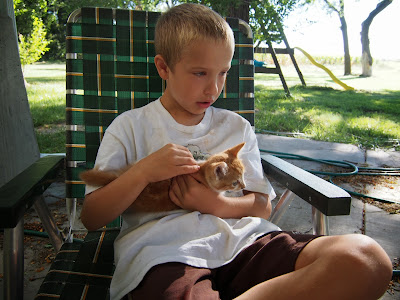
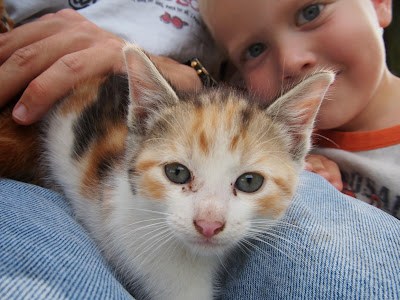
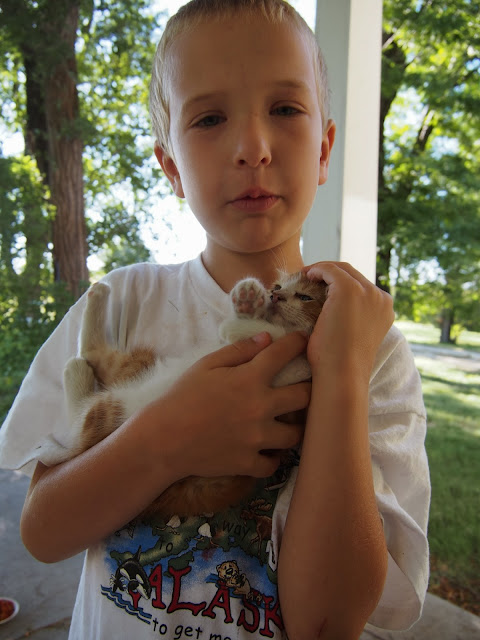
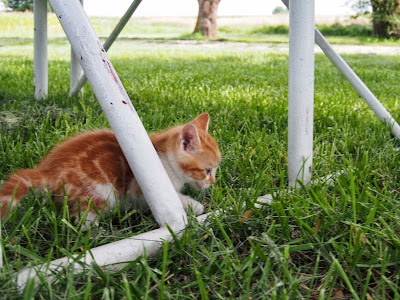
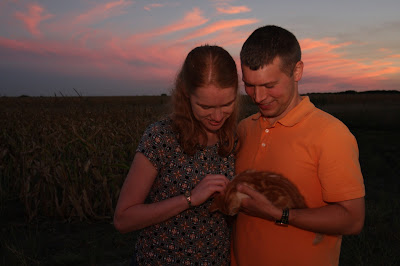

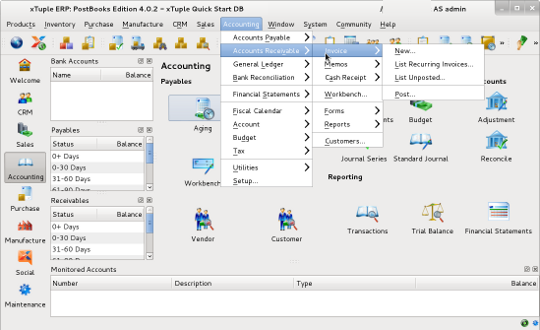 Of particular note,

 On a regular basis, I find myself the odd-man-out when it comes to talking
about how to work with Python on Debian systems. I'm going to write this and
post it so that I might be able to point people at my thoughts without having
to write the same email in response to each thread that pops up.
Turns out I don't fit in with the Debian hardliners (which is to say, the
mindset that





 When starting a new
