Neil Williams: Carrying Grief
 This isn't a book review, although the reason that I am typing this now is
because of a book, You Are Not Alone: from the creator and host of
Griefcast, Cariad Lloyd, ISBN: 978-1526621870 and I include a handful of
quotes from Cariad where there is really no better way of describing things.
Many people experience death for the first time as a child, often relating to a
family pet. Death is universal but every experience of death is unique. One of
the myths of grief is the idea of the Five Stages but this is a
misinterpretation. Denial, Anger, Bargaining, Depression and Acceptance
represent the five stage model of death and have nothing to do with
grief. The five stages were developed from studying those who are
terminally ill, the dying, not those who then grieve for the dead person and
have to go on living without them. Grief is for those who loved the person who
has died and it varies between each of those people just as people vary in how
they love someone. The Five Stages end at the moment of death, grief is what
comes next and most people do not grieve in stages, it can be more like a
tangled knot.
Death has a date and time, so that is why the last stage of the model is
Acceptance. Grief has no timetable, those who grieve will carry that grief for
the rest of their lives. Death starts the process of grief in those who go on
living just as it ends the life of the person who is loved. "Grief eases and
changes and returns but it never disappears.".
I suspect many will have already stopped reading by this point. People do not
talk about death and grief enough and this only adds to the burden of those who
carry their grief. It can be of enormous comfort to those who have carried
grief for some time to talk directly about the dead, not in vague pleasantries
but with specific and strong memories. Find a safe place without distractions
and talk with the person grieving face to face. Name the dead person. Go to
places with strong memories and be there alongside. Talk about the times with
that person before their death. Early on, everything about grief is painful and
sad. It does ease but it remains unpredictable. Closing it away in a box inside
your head (as I did at one point) is like cutting off a damaged limb but
keeping the pain in a box on the shelf. You still miss the limb and eventually,
the box starts leaking.
For me, there were family pets which died but my first job out of university
was to work in hospitals, helping the nurses manage the medication regimen and
providing specialist advice as a pharmacist. It will not be long in that
environment before everyone on the ward gets direct experience of the death of
a person. In some ways, this helped me to separate the process of death from
the process of grief. I cared for these people as patients but these were not
my loved ones. Later, I worked in specialist terminal care units, including
providing potential treatments as part of clinical trials. Here, it was not
expected for any patient to be discharged alive. The more aggressive
chemotherapies had already been tried and had failed, this was about pain
relief, symptom management and helping the loved ones. Palliative care is not
just about the patient, it involves helping the loved ones to accept what is
happening as this provides comfort to the patient by closing the loop.
Grief is stressful. One of the most common causes of personal stress is
bereavement.
The death of your loved one is outside of your control, it has happened, no
amount of regret can change that. Then come all the other stresses, maybe about
money or having somewhere to live as a result of what else has changed after
the death or having to care for other loved ones.
In the early stages, the first two years, I found it helpful to imagine my life
as a box containing a ball and a button. The button triggers new waves of pain
and loss each time it is hit. The ball bounces around the box and hits the
button at random. Initially, the button is large and the ball is enormous, so
the button is hit almost constantly. Over time, both the button and the ball
change size. Starting off at maximum, initially there is only one direction of
change. There are two problems with this analogy. First is that the grief ball
has infinite energy which does not happen in reality. The ball may get smaller
and the button harder to hit but the ball will continue bouncing. Secondly, the
life box is not a predictable shape, so the pattern of movement of the ball is
unpredictable.
A single stress is one thing, but what has happened since has just kept adding
more stress for me. Shortly before my father died 5 years ago now, I had moved
house. Then, I was made redundant on the day of the first anniversary of my
father's death. A year or so later, my long term relationship failed and a few
months after that COVID-19 appeared. As the country eased out of the pandemic
in 2021, my mother died (unrelated to COVID itself). A year after that, I had
to take early retirement. My brother and sister, of course, share a lot of
those stressors. My brother, in particular, took the responsibility for
organising both funerals and did most of the visits to my mother before her
death. The grief is different for each of the surviving family.
Cariad's book helped me understand why I was getting frequent ideas about going
back to visit places which my father and I both knew. My parents encouraged
each of us to work hard to leave Port Talbot (or Pong Toilet locally) behind,
in no small part due to the unrestrained pollution and deprivation that is
common to small industrial towns across Wales, the midlands and the north of
the UK. It wasn't that I wanted to move house back to our ancestral roots. It
was my grief leaking out of the box. Yes, I long for mountains and the sea
because I'm now living in a remorselessly flat and landlocked region after
moving here for employment. However, it was my grief driving those longings -
not for the physical surroundings but out of the shared memories with my
father. I can visit those memories without moving house, I just need to arrange
things so that I can be undisturbed and undistracted.
I am not alone with my grief and I am grateful to my friends who have helped
whilst carrying their own grief. It is necessary for everyone to think and talk
about death and grief. In respect of your own death, no matter how far ahead
that may be, consider Advance Care Planning and Expressions of Wish as well
as your Will.
Help your loved ones cope with your death by describing what you would like to happen.
Document how your life has been arranged so that the executor of your Will can find the right documents to inform:
- your bank,
- your mortgage company,
- your energy company,
- your mobile phone company,
- your house and car insurers and the like.
If you've got a complex home setup with servers and other machines which would be unfamiliar to the executor of your Will, then entrust someone else with the information required to revoke your keys, access your machines etc. and then provide the contact information for that person to your executor.
Arrange for your pets to be looked after.
Describe how you would like your belongings to be handled - do you want every effort made to have your clothes and furnishing recycled instead of going to landfill?
Where are the documents for the oven, the dishwasher and the central heating system so that these can be included in the sale of your property?
If there are loans outstanding, make sure your executor or a trusted person knows where to find the account numbers and company names.
What about organ donation? Make sure your executor knows your wishes and make sure your loved ones either agree or are willing to respect your wishes.
Then the personal stuff, what do you want to happen to your social media accounts, your cloud data, your games, DVD and CD collection, your photos and other media? Some social media companies have explicit settings available in your account to describe if you want the data deleted after a certain amount of time, after a notification from some government service or to set up some kind of memorialised version or hand over control of the account to a trusted person.

 Sometimes our booth also act as cloak room :). Ours was close to
the entrance door and we may be similar faces to folks. So people come
and drop their bags before they go to talks.
One thing I love about the such conference is that people have very
different hardwares that I never able to see otherwise. I remember KDE
booth had a Steam Value portable gaming board running KDE plasma. Then
a person have this eyeglass which act as a monitor. Then the usual
DJI drones but custom programmed. It was very lovely to meet and play
around with exotic hardwares.
 KDE Digikam 8.0.0 Snap

 The more I say, the more depressed I will become so will leave it for now. In many ways the destruction seems similar to the destruction that
 Way back at
 This post serves as a report from my attendance to Kubecon and CloudNativeCon 2023 Europe that took place in
Amsterdam in April 2023. It was my second time physically attending this conference, the first one was in
Austin, Texas (USA) in 2017. I also attended once in a virtual fashion.
The content here is mostly generated for the sake of my own recollection and learnings, and is written from
the notes I took during the event.
The very first session was the opening keynote, which reunited the whole crowd to bootstrap the event and
share the excitement about the days ahead. Some astonishing numbers were announced: there were more than
10.000 people attending, and apparently it could confidently be said that it was the largest open source
technology conference taking place in Europe in recent times.
It was also communicated that the next couple iteration of the event will be run in China in September 2023
and Paris in March 2024.
More numbers, the CNCF was hosting about 159 projects, involving 1300 maintainers and about 200.000
contributors. The cloud-native community is ever-increasing, and there seems to be a strong trend in the
industry for cloud-native technology adoption and all-things related to PaaS and IaaS.
The event program had different tracks, and in each one there was an interesting mix of low-level and higher
level talks for a variety of audience. On many occasions I found that reading the talk title alone was not
enough to know in advance if a talk was a 101 kind of thing or for experienced engineers. But unlike in
previous editions, I didn t have the feeling that the purpose of the conference was to try selling me
anything. Obviously, speakers would make sure to mention, or highlight in a subtle way, the involvement of a
given company in a given solution or piece of the ecosystem. But it was non-invasive and fair enough for me.
On a different note, I found the breakout rooms to be often small. I think there were only a couple of rooms
that could accommodate more than 500 people, which is a fairly small allowance for 10k attendees. I realized
with frustration that the more interesting talks were immediately fully booked, with people waiting in line
some 45 minutes before the session time. Because of this, I missed a few important sessions that I ll
hopefully watch online later.
Finally, on a more technical side, I ve learned many things, that instead of grouping by session I ll group
by topic, given how some subjects were mentioned in several talks.
On gitops and CI/CD pipelines
Most of the mentions went to
 On etcd, performance and resource management
I attended a talk focused on etcd performance tuning that was very encouraging. They were basically talking
about the
 On jobs
I attended a couple of talks that were related to HPC/grid-like usages of Kubernetes. I was truly impressed
by some folks out there who were using Kubernetes Jobs on massive scales, such as to train machine learning
models and other fancy AI projects.
It is acknowledged in the community that the early implementation of things like Jobs and CronJobs had some
limitations that are now gone, or at least greatly improved. Some new functionalities have been added as
well. Indexed Jobs, for example, enables each Job to have a number (index) and process a chunk of a larger
batch of data based on that index. It would allow for full grid-like features like sequential (or again,
indexed) processing, coordination between Job and more graceful Job restarts. My first reaction was: Is that
something we would like to enable in
 It seems I'm having a theme recently on this blog, of making emacs-related posts. Here's another.
I write a bunch of stuff in markdown, such as
 I wrote the
 Wrong sort of shim, but canned language bindings would be handy
 This is what I imagine it looks like inside these libraries
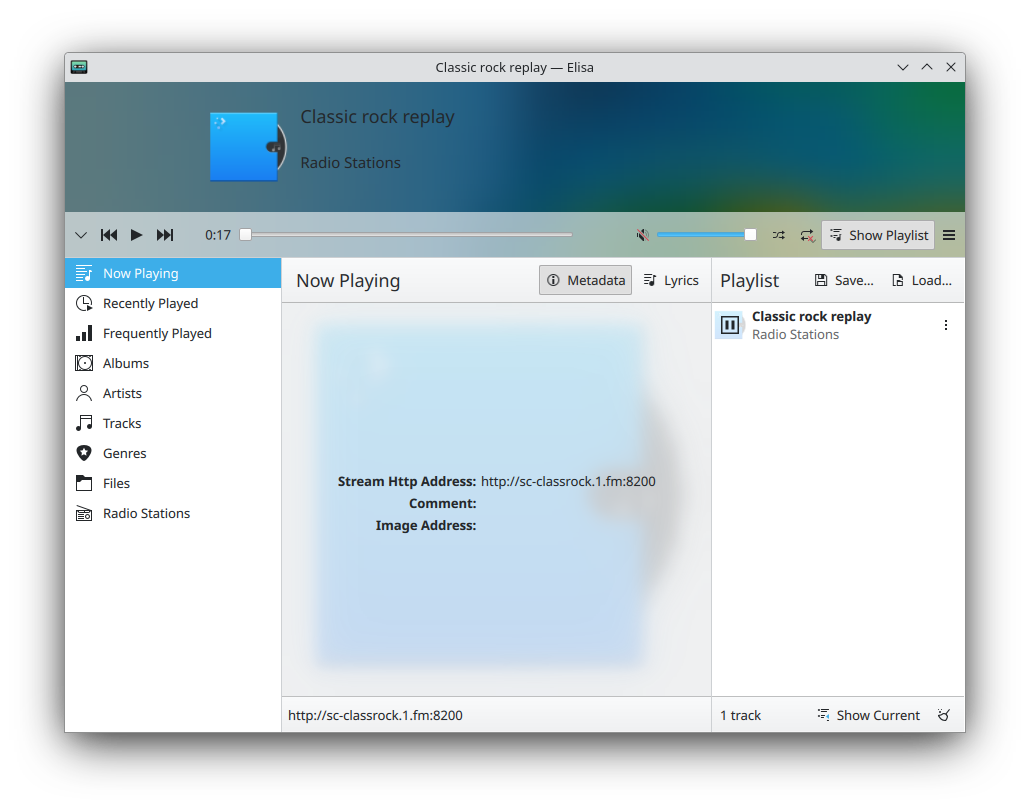 KDE Elisia snap
 I've been pondering what should happen to personal websites once the owner has
passed, or otherwise "moved on". Some time ago I stumbled across a