I'm back from the GTK hackfest in Toronto, Canada and mostly recovered from
jetlag, so it's time to write up my notes on what we discussed there.
Despite the hackfest's title, I was mainly there to talk about non-GUI
parts of the stack, and technologies that fit more closely in what could
be seen as the freedesktop.org platform than they do in GNOME. In particular,
I'm interested in Flatpak as a way to deploy self-contained "apps" in a
freedesktop-based, sandboxed runtime environment layered over
the Universal Operating System and
its many derivatives,
with both binary and source compatibility with other GNU/Linux distributions.
I'm mainly only writing about discussions I was directly involved in:
lots of what sounded like good discussion about the actual graphics toolkit
went over my head completely :-)
More notes, mostly from Matthias
Clasen, are available on the GNOME wiki.
In no particular order:
Thinking with portals
We spent some time discussing Flatpak's portals, mostly on Tuesday.
These are the components that expose a subset of desktop functionality
as D-Bus services that can be used by contained applications: they are
part of the security boundary between a contained app and the rest of the
desktop session. Android's intents are a similar concept seen elsewhere.
While the portals are primarily designed for Flatpak, there's no real
reason why they couldn't be used by other app-containment solutions
such as Canonical's Snap.
One major topic of discussion was their overall design and layout. Most
portals will consist of a UX-independent part in Flatpak itself, together
with a UX-specific implementation of any user interaction the portal
needs. For example, the portal for file selection has a D-Bus service
in Flatpak, which interacts with some UX-specific service that will
pop up a standard UX-specific "Open" dialog for GNOME and probably
other GTK environments, that dialog is in (a branch of) GTK.
A design principle that was reiterated in this discussion is that
the UX-independent part should do as much as possible, with the
UX-specific part only carrying out the user interactions that need
to comply with a particular UX design (in the GTK case, GNOME's design).
This minimizes the amount of work that needs to be redone for other
desktop or embedded environments, while still ensuring that the other
environments can have their chosen UX design. In particular, it's
important that, as much as possible, the security- and performance-sensitive
work (such as data transport and authentication) is shared between all
environments.
The aim is for portals to get the user's permission to carry out actions,
while keeping it as implicit as possible, avoiding an "are you sure?" step
where feasible. For example, if an application asks to open a file,
the user's permission is implicitly given by them selecting the file
in the file-chooser dialog and pressing OK: if they do not want this
application to open a file at all, they can deny permission by cancelling.
Similarly, if an application asks to stream webcam data, the UX we expect
is for GNOME's Cheese app (or a similar non-GNOME app) to appear, open
the webcam to provide a preview window so they can see what they are about
to send, but not actually start sending the
stream to the requesting app until the user has pressed a "Start" button.
When defining the API "contracts" to be provided by applications in that
situation, we will need to be clear about whether the provider is expected
to obtain confirmation like this: in most cases I would anticipate that
it is.
One security trade-off here is that we have to have a small amount of
trust in the providing app. For example, continuing the example of Cheese
as a webcam provider, Cheese could (and perhaps should) be a contained
app itself, whether via something like Flatpak, an LSM like AppArmor
or both. If Cheese is compromised somehow, then whenever it is running, it
would be technically possible for it to open the webcam, stream video and
send it to a hostile third-party application. We concluded that this is an
acceptable trade-off: each application needs to be trusted with the privileges
that it needs to do its job, and we should not put up barriers that are easy
to circumvent or otherwise serve no purpose.
The main (only?) portal so far is the file chooser, in which the contained
application asks the wider system to show an "Open..." dialog, and if the user
selects a file, it is returned to the contained application through a FUSE
filesystem, the document portal. The reference implementation of the UX for
this is in GTK, and is basically a GtkFileChooserDialog. The intention is
that other environments such as KDE will substitute their own equivalent.
Other planned portals include:
image capture (scanner/camera)
opening a specified URI
this needs design feedback on how it should work for non-http(s)
sharing content, for example on social networks (like Android's Sharing menu)
proxying joystick/gamepad input (perhaps via Wayland or FUSE, or perhaps
by modifying libraries like SDL with a new input source)
network proxies (GProxyResolver) and availability (GNetworkMonitor)
contacts/address book, probably vCard-based
notifications, probably based on freedesktop.org Notifications
video streaming (perhaps using Pinot, analogous to PulseAudio but for video)
Environment variables
GNOME on Wayland currently has a problem with environment variables:
there are some traditional ways to set environment variables for X11
sessions or login shells using shell script fragments (/etc/X11/Xsession.d,
/etc/X11/xinit/xinitrc.d, /etc/profile.d), but these do not apply to
Wayland, or to noninteractive login environments like cron and
systemd --user. We are also keen to avoid requiring a Turing-complete shell
language during session startup, because it's difficult to reason about
and potentially rather inefficient.
Some uses of environment variables can be dismissed as unnecessary or even
unwanted, similar to the statement in Debian Policy 9.9: "A program must not
depend on environment variables to get reasonable defaults." However,
there are two common situations where environment variables can be necessary
for proper OS integration: search-paths like $PATH, $XDG_DATA_DIRS and
$PYTHONPATH (particularly necessary for things like Flatpak), and
optionally-loaded modules like $GTK_MODULES and $QT_ACCESSIBILITY
where a package influences the configuration of another package.
There is a stopgap solution in GNOME's gdm display manager,
/usr/share/gdm/env.d, but this is gdm-specific and
insufficiently expressive to provide the functionality needed by
Flatpak: "set XDG_DATA_DIRS to its specified default value if unset,
then add a couple of extra paths".
pam_env comes closer PAM is run at every transition from "no user logged
in" to "user can execute arbitrary code as themselves" but it doesn't
support .d fragments, which are required if we want distribution packages
to be able to extend search paths. pam_env also turns off per-user
configuration by default, citing security concerns.
I'll write more about this when I have a concrete proposal for how to solve it.
I think the best solution is probably a PAM module similar to pam_env but
supporting .d directories, either by modifying pam_env directly or
out-of-tree, combined with clarifying what the security concerns for
per-user configuration are and how they can be avoided.
Relocatable binary packages
On Windows and OS X, various GLib APIs automatically discover where the
application binary is located and use search paths relative to that;
for example, if C:\myprefix\bin\app.exe is running, GLib might put
C:\myprefix\share into the result of g_get_system_data_dirs(),
so that the application can ask to load app/data.xml from the data
directories and get C:\myprefix\share\app\data.xml. We would like
to be able to do the same on Linux, for example so that the apps in a
Flatpak or Snap package can be constructed from RPM or dpkg packages without
needing to be recompiled for a different --prefix, and so that other
third-party software packages like the games on Steam and gog.com can
easily locate their own resources.
Relatedly, there are currently no well-defined semantics for what happens
when a .desktop file or a D-Bus .service file has Exec=./bin/foo.
The meaning of Exec=foo is well-defined (it searches $PATH) and the
meaning of Exec=/opt/whatever/bin/foo is obvious. When this came up in
D-Bus previously, my assertion was that the meaning should be the same as
in .desktop files, whatever that is.
We agreed to propose that the meaning of a non-absolute path in a .desktop
or .service file should be interpreted relative to the directory
where the .desktop or .service file was found: for example, if
/opt/whatever/share/applications/foo.desktop says Exec=../../bin/foo,
then /opt/whatever/bin/foo would be the right thing to execute.
While preparing a mail to the freedesktop and D-Bus mailing lists proposing
this, I found that I had
proposed the same thingalmost 2 years ago...
this time I hope I can actually make it happen!
Flatpak and OSTree bug fixing
On the way to the hackfest, and while the discussion moved to topics that I
didn't have useful input on, I spent some time fixing up the Debian packaging
for Flatpak and its dependencies. In particular, I did my first upload
as a co-maintainer of bubblewrap,
uploaded ostree to unstable (with the known limitation that the grub, dracut
and systemd integration is missing for now
since I haven't been able to test it yet), got
most of the way through packaging Flatpak 0.6.5 (which I'll upload soon),
cherry-picked the right patches to make ostree compile on Debian 8 in an effort
to make backports trivial, and spent some time disentangling
a flatpak test failure
which was breaking the Debian package's installed-tests.
I'm still looking into
ostree test failures on little-endian MIPS,
which I was able to reproduce on a Debian porterbox just before the end of the
hackfest.
OSTree + Debian
I also had some useful conversations with developers from
Endless, who recently opened up a version of their
OSTree build scripts
for public access. Hopefully that information brings me a bit closer to
being able to publish a walkthrough for
how to deploy a simple Debian derivative using OSTree
(help with that is very welcome of course!).
GTK life-cycle and versioning
The life-cycle of GTK releases has already been
mentioned here and elsewhere, and there are some interesting responses
in the comments on my earlier blog post.
It's important to note that what we
discussed at the hackfest is only a proposal: a hackfest discussion between
a subset of the GTK maintainers and a small number of other GTK users
(I am in the latter category)
doesn't, and shouldn't, set policy for all of GTK or for all of GNOME. I
believe the intention is that the GTK maintainers will discuss the proposals
further at GUADEC, and make a decision after that.
As I said before, I hope that being more realistic about API and ABI
guarantees can avoid GTK going too far towards either of the possible
extremes: either becoming unable to advance because it's too constrained
by compatibility, or breaking applications because it isn't constrained
enough. The current situation, where it is meant to be compatible within
the GTK 3 branch but in practice applications still sometimes break,
doesn't seem ideal for anyone, and I hope we can do better in future.
Acknowledgements
Thanks to everyone involved, particularly:
Matthias Clasen, who organised the hackfest and took a lot of notes
Allison Lortie, who provided on-site cat-herding and led us to some
excellent restaurants
Red Hat Inc., who provided the venue (a conference room
in their Toronto office), snacks, a lot of coffee, and several participants
my employers Collabora Ltd., who sponsored my travel and accomodation
Author: ceridwen
The very-first alpha-quality release of reprotest is now in Debian's
NEW package queue, so it should soon be available for install through
apt.
I've spent most of the past week reverse-engineering autopkgtest, with
some help from the maintainer, Martin
Pitt. As its name suggests,
autopkgtest
is a tool for running Debian/Ubuntu package tests. The key overlap
with reprotest is that it can create containers (what the autopkgtest
documentation calls "virtualization servers" or "virt-servers") and
then run tests in them. While reprotest builds packages and diffs
binaries instead, the process of copying source trees and executing
commands is much the same, so I can reuse a lot of the code.
As I outlined last
week,
autopkgtest is composed of a main command-line program and other
command-line programs chroot, lxd, schroot, null, schroot,
and qemu, which live in a directory virt/. (I've followed
autopkgtest 4.0 in dropping the adt-virt- prefix and other name
conventions.) Autopkgtest's directory structure looks like:
Autopkgtest doesn't contain any __init__.py files, which means that
from the perspective of Python none of its components are Python
packages. To enable the various components of autopkgtest test to
import each other as
implicit namespace packages,
there's a lot of explicit sys.path mutation code in the various
files like sys.path.insert(0, '/usr/share/autopkgtest/python') and
sys.path.insert(0,
os.path.join(os.path.dirname(os.path.dirname(os.path.abspath(__file__))),
'lib'))
. For my design goals, there are two problems with this.
First, setuptools makes it very, very difficult to distribute code
that isn't in Python packages, so this approach more or less doesn't
work with PyPi at all. Second, different OSes have different
directory layouts for Python packages, so an absolute path like
/usr/share/autopkgtest/python isn't portable.
The main code of reprotest at the moment lives in its __init__.py.
The autopkgtest CLI of the main runner is specific to running tests,
so my entry point is going to be adt_testbed. My first attempt to
refactor this involved putting an empty __init__.py in lib/ to
turn into a package so that I could import the modules in the files in
lib/ using code like from reprotest.lib import adtlog. This works
fine for the files in lib/ and makes adt_testbed importable in the
main __init__.py. However, the executables in virt/, which are
invoked by subprocess calls in adt_testbed.py, also need to import
modules from lib/ for the various adtlog functions and the timeout
functions in VirtSubproc. After some trial-and-error, by replacing
the sys.path mutations in virt/ with sys.path.insert(0,
os.path.dirname(os.path.dirname(os.path.dirname(os.path.abspath(__file__))))),
I managed to get the executables to run, though I still need to verify
that this works for both PyPi and apt. I'm not sure if this is the
best solution, so I may end up doing some kind of larger refactoring,
either changing all the subprocess calls in adt_testbed so they
work with reprotest.virt as a subpackage or reorganizing the rest of
the code somehow.
It's still not clear to me why autopkgtest uses its own special logging
module rather than the standard library's logging module. I thought
it might have something to do with combining the logging from a
process and its subprocesses, but because the Python subprocesses are
importing their own instances of the adtlog module, this isn't the
case. Another problem related to logging and debugging is that the
programs in virt/ interact through stdin and stdout, which means that
I haven't been able to use simple prints to help work out their state
during execution.
Now that I have adt_testbed working, my next step is to change the
code I've already written so that instead of executing commands
directly, it executes them through the autopkgtest interface.
This year a significant number of students are working on RTC-related projects as part of Google Summer of Code, under the umbrella of the Debian Project. You may have already encountered some of them blogging on Planet or participating in mailing lists and IRC.
WebRTC plugins for popular CMS and web frameworks
There are already a range of pseudo-WebRTC plugins available for CMS and blogging platforms like WordPress, unfortunately, many of them are either not releasing all their source code, locking users into their own servers or requiring the users to download potentially untrustworthy browser plugins (also without any source code) to use them.
Mesut is making plugins for genuinely free WebRTC with open standards like SIP. He has recently created the WPCall plugin for WordPress, based on the highly successful DruCall plugin for WebRTC in Drupal.
Keerthana has started creating a similar plugin for MediaWiki.
What is great about these plugins is that they don't require any browser plugins and they work with any server-side SIP infrastructure that you choose. Whether you are routing calls into a call center or simply using them on a personal blog, they are quick and convenient to install. Hopefully they will be made available as packages, like the DruCall packages for Debian and Ubuntu, enabling even faster installation with all dependencies.
Would you like to try running these plugins yourself and provide feedback to the students? Would you like to help deploy them for online communities using Drupal, WordPress or MediaWiki to power their web sites? Please come and discuss them with us in the Free-RTC mailing list.
You can read more about how to run your own SIP proxy for WebRTC in the RTC Quick Start Guide.
Finding all the phone numbers and ham radio callsigns in old emails
Do you have phone numbers and other contact details such as ham radio callsigns in old emails? Would you like a quick way to data-mine your inbox to find them and help migrate them to your address book?
Jaminy is working on Python scripts to do just that. Her project takes some inspiration from the Telify plugin for Firefox, which detects phone numbers in web pages and converts them to hyperlinks for click-to-dial. The popular libphonenumber from Google, used to format numbers on Android phones, is being used to help normalize any numbers found. If you would like to test the code against your own mailbox and address book, please make contact in the #debian-data channel on IRC.
A truly peer-to-peer alternative to SIP, XMPP and WebRTC
The team at Savoir Faire Linux has been busy building the Ring softphone, a truly peer-to-peer solution based on the OpenDHT distribution hash table technology.
Several students (Simon, Olivier, Nicolas and Alok) are actively collaborating on this project, some of them have been fortunate enough to participate at SFL's offices in Montreal, Canada. These GSoC projects have also provided a great opportunity to raise Debian's profile in Montreal ahead of DebConf17 next year.
Linux Desktop Telepathy framework and reSIProcate
Another group of students, Mateus, Udit and Balram have been busy working on C++ projects involving the Telepathy framework and the reSIProcate SIP stack. Telepathy is the framework behind popular softphones such as GNOME Empathy that are installed by default on the GNU/Linux desktop.
I previously wrote about starting a new SIP-based connection manager for Telepathy based on reSIProcate. Using reSIProcate means more comprehensive support for all the features of SIP, better NAT traversal, IPv6 support, NAPTR support and TLS support. The combined impact of all these features is much greater connectivity and much greater convenience.
The students are extending that work, completing the buddy list functionality, improving error handling and looking at interaction with XMPP.
Streamlining provisioning of SIP accounts
Currently there is some manual effort for each user to take the SIP account settings from their Internet Telephony Service Provider (ITSP) and transpose these into the account settings required by their softphone.
Pranav has been working to close that gap, creating a JAR that can be embedded in Java softphones such as Jitsi, Lumicall and CSipSimple to automate as much of the provisioning process as possible. ITSPs are encouraged to test this client against their services and will be able to add details specific to their service through Github pull requests.
The project also hopes to provide streamlined provisioning mechanisms for privately operated SIP PBXes, such as the Asterisk and FreeSWITCH servers used in small businesses.
Improving SIP support in Apache Camel and the Jitsi softphone
Apache Camel's SIP component and the widely known Jitsi softphone both use the JAIN SIP library for Java.
Nik has been looking at issues faced by SIP users in both projects, adding support for the MESSAGE method in camel-sip and looking at why users sometimes see multiple password prompts for SIP accounts in Jitsi.
If you are trying either of these projects, you are very welcome to come and discuss them on the mailing lists, Camel users and Jitsi users.
GSoC students at DebConf16 and DebConf17 and other events
Many of us have been lucky to meet GSoC students attending DebConf, FOSDEM and other events in the past. From this year, Google now expects the students to complete GSoC before they become eligible for any travel assistance. Some of the students will still be at DebConf16 next month, assisted by the regular travel budget and the diversity funding initiative. Nik and Mesut were already able to travel to Vienna for the recent MiniDebConf / LinuxWochen.at
As mentioned earlier, several of the students and the mentors at Savoir Faire Linux are based in Montreal, Canada, the destination for DebConf17 next year and it is great to see the momentum already building for an event that promises to be very big.
Explore the world of Free Real-Time Communications (RTC)
If you are interesting in knowing more about the Free RTC topic, you may find the following resources helpful:
Try Lumicall and Ring apps for Android with your freinds
RTC mentoring team 2016
We have been very fortunate to build a large team of mentors around the RTC-themed projects for 2016. Many of them are first time GSoC mentors and/or new to the Debian community. Some have successfully completed GSoC as students in the past. Each of them brings unique experience and leadership in their domain.
Helping GSoC projects in 2016 and beyond
Not everybody wants to commit to being a dedicated mentor for a GSoC student. In fact, there are many ways to help without being a mentor and many benefits of doing so.
Simply looking out for potential applicants for future rounds of GSoC and referring them to the debian-outreach mailing list or an existing mentor helps ensure we can identify talented students early and design projects around their capabilities and interests.
Testing the projects on an ad-hoc basis, greeting the students at DebConf and reading over the student wikis to find out where they are and introduce them to other developers in their area are all possible ways to help the projects succeed and foster long term engagement.
Google gives Debian a USD $500 grant for each student who completes a project successfully this year. If all 2016 students pass, that is over $10,000 to support Debian's mission.
Here is a small update for last week s work:
1. Templates
tests.reproducible-builds.org now has a templating system, instead of writing HTML in python files We are using mustache with pystache. So far, only the html for the package pages have been converted.
2. Navigation improvements on package pages
While converting the package pages to using mustache I also rearranged the navigation bar, adding sections and hover text. Navigation improvements inspired by Gerts Wollney s email requests. Please check out the changes and provide feedback: tests.reproducible-builds.org/<your-favorite-package>
3. Began converting script from bash to python
Before converting the rest of the site to mustache, I spent a day digging into the last unconverted bash script (all other html producing scripts are python). I ve never written or read that much bash, yet another learning opportunity I have to admit it s a bit less intuitive than python
Up next:
Finish converting package set script, create more mustache templates, more site improvements! Then fly to South Africa.
Git is a version control system which is very common among developers. I m not going to explain how git works, because there are plenty of great introductory tutorials on the internet for that. However, I would like to documment the commands I frequently use
1. First, we initialize a git repo. Take care to ensure that you initialise the repo in the folder where all the files you want to commit exists.
git init
2. To see all the branches in the current repo along with the current branch :
git branch
To create a new branch :
git branch <branch_name>
3. To change branches :
git checkout <branch_name>
If the branch doesn t exist, it can be created by using :
git checkout -b <branch_name>
4. To see the status of the files, ie. if there are uncommitted changes, files to save etc.. use :
git status
5. To stage the changes in the directory for the next commit, use :
git add <filename>
To stage all files in a directory
git add .
6. To commit the staged changes in the directory, use :
git commit -m "<commit_message>"
7. To create a new connection to a remote repo, especially to push existing code to a Github repo :
git remote add <connection_name> <connection_url>
8. To push the code into the remote repo
git push -u <connection_name> <branch_name>
9. To get the contents of a repo
git clone <path>
10. To merge another branch to the current (Example: a side branch to the master)
git merge <branch_name>
For a more detailed list of git commands for easy access check out this nifty cheat sheet. Happy coding!
Deux jours restants
Il reste deux jours avant mon d part pour le Cape, en Afrique du sud. C est
pour assister l v nement debconf ( Debian conference ), organis par
Debian, que je me rends l . Cet v nement est organis chaque ann e et,
l ann e prochaine, c est Montr al que a aura lieu !
J ai tr s h te de vivre cette exp rience qui sera sans doute innoubliable.
Debian est une organisation pioni re du monde du logiciel libre. Je rencontrerai
des gens tr s d vou s et partageant avec moi beaucoup d int r ts pour le
logiciel libre et sa philosophie.
L Afrique du sud
Ce sera la premi re fois que je prendrai l avion et je ferai une escale
Amsterdam, une ville que j aimerais bien visiter un jour. Ahhhh Jacques
Brel.
Je suis tr s heureux que le continent d Afrique soit la premi re destination me
permettant de sortir du continent d Am rique pour la premi re fois. J ai bien
h te de vivre l ambiance du Cape.
After last week's bike ride, I had to pack my bags, and get on Monday
morning on a plane to Seattle. The time was so short that I even left
the bike mounted on the car.
So 8:15, plane to Frankfurt, and then plane to Seattle. To my big
surprise, the Lufthansa "extended leg room" seats were overly
generous; I could actually extend my foot completely and put it on the
back of the seat in front of me. Very good value when travelling in
economy The only downside was that these were "standard" not
"premium" economy, so the seat had leg room but was very narrow. And
with normal sized adults on either side of me, it was somewhat
difficult. The leg space allowed me to work on my laptop without
fearing the person in front of me will recline their seat and break my
screen (almost happened once).
The funniest thing when travelling is that food is always tricky: even
familiar food can be not what you expect. Case in point, me at the
salad buffet, seeing slices of green vegetables, and asking myself:
Are those jalapeno slices, or bell pepper slices? Hmm, I'm sure
they're bell pepper , which resulted in my first vegetable salad with
jalapeno. Would definitely recommend if you like spicy things!
Otherwise the trip was as usual, but shorter and more densely packed
with meetings with a one day exception: had the opportunity to
experience for the first time Whirlyball, which was
more fun and more difficult than it first looked. Also spent an
afternoon on Whidbey Island, which fortunately was also
the nicest day, weather-wise, of the week (all phone pictures, not
colour corrected, straight-out-of-phone):
A few more pictures
here. I
keep being amazed by the nature in this area, definitely my preferred
place in US from the relatively few I visited.
Had a nice dinner as well at Cafe Langley,
which surprisingly had reasonably-authentic Mediterranean food; the
Baba Ganoush was excellent.
Other than that outing, nothing worth describing, except that I really
missed my Zwift or outdoor rides. The experience of using the
stationary bikes in the hotel does not compare, so I resorted more to
running on the treadmill (hmm, Zwift for running, hmm ); if the foot
pod calibration is to be trusted, I continued to slightly improve my
1K, 1mi, and 5K times. Not bad, I might want to join some running
races as well this summer, but I need to take it easy though and make
sure to not get injured again.
And finally, week over, flew back home, slept a bit mid-day (which
will ruin my jet lag recovery program), unloaded my bike from the car
(and checked it still works), and andand got on the trainer and
did a Zwift ride. Jet lagged, but managed to beat my Watopia sprint
record by a tiny bit, and complete a new workout ( The Gorby ), which
was interesting. I can stop any time I want, definitely (I just need
to take a trip away from home ).
I came across Debian Backports recently after a kind soul suggested it in my Jessie Installation article. Backports provide the bridge between two stable releases of Debian. Say you are running Jessie stable in your system now. While it runs great, Jessie stable will be a bit outdated compared to the testing release. This is solved by Backports which recompiles and adjusts these testing packages for the stable environment. Backports can be included into the source file next to the stable sources unlike the testing sources which can misbehave and have a significant risk, Backports are much more compatible and lower risk.
However, Backports cannot be tested as extensively as Debian stable, and backports are provided on an as-is basis, with risk of incompatibilities with other components in Debian stable. Use with care! It is therefore recommended to only select single backported packages that fit your needs, and not use all available backports.
To add Backports to your system,
Open the sources.list file : sudo nano /etc/apt/sources.list
For jessie add the line : deb http://ftp.debian.org/debian jessie-backports main
For wheezy add the line : deb http://ftp.debian.org/debian wheezy-backports main
After any change be sure to run sudo apt-get update
To know more about Backports and to contribute consult the main page here and the wiki here. Happy hacking!
As some of the world knows full well by now, I've been noodling with Go
for a few years, working through its pros, its cons, and thinking a lot
about how humans use code to express thoughts and ideas. Go's got a lot of
neat use cases, suited to particular problems, and used in the right place,
you can see some clear massive wins.
I've started writing Debian tooling in Go, because it's a pretty natural fit.
Go's fairly tight, and overhead shouldn't be taken up by your operating system.
After a while, I wound up hitting the usual blockers, and started to build up
abstractions. They became pretty darn useful, so, this blog post is announcing
(a still incomplete, year old and perhaps API changing) Debian package for Go.
The Go importable name is pault.ag/go/debian. This contains a lot of utilities
for dealing with Debian packages, and will become an edited down "toolbelt"
for working with or on Debian packages.
Module Overview
Currently, the package contains 4 major sub packages. They're a changelog
parser, a control file parser, deb file format parser, dependency parser
and a version parser. Together, these are a set of powerful building blocks
which can be used together to create higher order systems with reliable
understandings of the world.
changelog
The first (and perhaps most incomplete and least tested) is a changelog file
parser.. This provides the
programmer with the ability to pull out the suite being targeted in the
changelog, when each upload was, and the version for each. For example, let's
look at how we can pull when all the uploads of Docker to sid took place:
funcmain()resp,err:=http.Get("http://metadata.ftp-master.debian.org/changelogs/main/d/docker.io/unstable_changelog")iferr!=nilpanic(err)allEntries,err:=changelog.Parse(resp.Body)iferr!=nilpanic(err)for_,entry:=rangeallEntriesfmt.Printf("Version %s was uploaded on %s\n",entry.Version,entry.When)
The output of which looks like:
Version 1.8.3~ds1-2 was uploaded on 2015-11-04 00:09:02 -0800 -0800
Version 1.8.3~ds1-1 was uploaded on 2015-10-29 19:40:51 -0700 -0700
Version 1.8.2~ds1-2 was uploaded on 2015-10-29 07:23:10 -0700 -0700
Version 1.8.2~ds1-1 was uploaded on 2015-10-28 14:21:00 -0700 -0700
Version 1.7.1~dfsg1-1 was uploaded on 2015-08-26 10:13:48 -0700 -0700
Version 1.6.2~dfsg1-2 was uploaded on 2015-07-01 07:45:19 -0600 -0600
Version 1.6.2~dfsg1-1 was uploaded on 2015-05-21 00:47:43 -0600 -0600
Version 1.6.1+dfsg1-2 was uploaded on 2015-05-10 13:02:54 -0400 EDT
Version 1.6.1+dfsg1-1 was uploaded on 2015-05-08 17:57:10 -0600 -0600
Version 1.6.0+dfsg1-1 was uploaded on 2015-05-05 15:10:49 -0600 -0600
Version 1.6.0+dfsg1-1~exp1 was uploaded on 2015-04-16 18:00:21 -0600 -0600
Version 1.6.0~rc7~dfsg1-1~exp1 was uploaded on 2015-04-15 19:35:46 -0600 -0600
Version 1.6.0~rc4~dfsg1-1 was uploaded on 2015-04-06 17:11:33 -0600 -0600
Version 1.5.0~dfsg1-1 was uploaded on 2015-03-10 22:58:49 -0600 -0600
Version 1.3.3~dfsg1-2 was uploaded on 2015-01-03 00:11:47 -0700 -0700
Version 1.3.3~dfsg1-1 was uploaded on 2014-12-18 21:54:12 -0700 -0700
Version 1.3.2~dfsg1-1 was uploaded on 2014-11-24 19:14:28 -0500 EST
Version 1.3.1~dfsg1-2 was uploaded on 2014-11-07 13:11:34 -0700 -0700
Version 1.3.1~dfsg1-1 was uploaded on 2014-11-03 08:26:29 -0700 -0700
Version 1.3.0~dfsg1-1 was uploaded on 2014-10-17 00:56:07 -0600 -0600
Version 1.2.0~dfsg1-2 was uploaded on 2014-10-09 00:08:11 +0000 +0000
Version 1.2.0~dfsg1-1 was uploaded on 2014-09-13 11:43:17 -0600 -0600
Version 1.0.0~dfsg1-1 was uploaded on 2014-06-13 21:04:53 -0400 EDT
Version 0.11.1~dfsg1-1 was uploaded on 2014-05-09 17:30:45 -0400 EDT
Version 0.9.1~dfsg1-2 was uploaded on 2014-04-08 23:19:08 -0400 EDT
Version 0.9.1~dfsg1-1 was uploaded on 2014-04-03 21:38:30 -0400 EDT
Version 0.9.0+dfsg1-1 was uploaded on 2014-03-11 22:24:31 -0400 EDT
Version 0.8.1+dfsg1-1 was uploaded on 2014-02-25 20:56:31 -0500 EST
Version 0.8.0+dfsg1-2 was uploaded on 2014-02-15 17:51:58 -0500 EST
Version 0.8.0+dfsg1-1 was uploaded on 2014-02-10 20:41:10 -0500 EST
Version 0.7.6+dfsg1-1 was uploaded on 2014-01-22 22:50:47 -0500 EST
Version 0.7.1+dfsg1-1 was uploaded on 2014-01-15 20:22:34 -0500 EST
Version 0.6.7+dfsg1-3 was uploaded on 2014-01-09 20:10:20 -0500 EST
Version 0.6.7+dfsg1-2 was uploaded on 2014-01-08 19:14:02 -0500 EST
Version 0.6.7+dfsg1-1 was uploaded on 2014-01-07 21:06:10 -0500 EST
control
Next is one of the most complex, and one of the oldest parts of go-debian,
which is the control file parser
(otherwise sometimes known as deb822). This module was inspired by the way
that the json module works in Go, allowing for files to be defined in code
with a struct. This tends to be a bit more declarative, but also winds up
putting logic into struct tags, which can be a nasty anti-pattern if used too
much.
The first primitive in this module is the concept of a Paragraph, a struct
containing two values, the order of keys seen, and a map of string to string.
All higher order functions dealing with control files will go through this
type, which is a helpful interchange format to be aware of. All parsing of
meaning from the Control file happens when the Paragraph is unpacked into
a struct using reflection.
The idea behind this strategy that you define your struct, and let the Control
parser handle unpacking the data from the IO into your container, letting you
maintain type safety, since you never have to read and cast, the conversion
will handle this, and return an Unmarshaling error in the event of failure.
Additionally, Structs that define an anonymous member of control.Paragraph
will have the raw Paragraph struct of the underlying file, allowing the
programmer to handle dynamic tags (such as X-Foo), or at least, letting
them survive the round-trip through go.
The default decoder
contains an argument, the ability to verify the input control file using an
OpenPGP keyring, which is exposed to the programmer through the
(*Decoder).Signer() function. If the passed argument is nil, it will not
check the input file signature (at all!), and if it has been passed, any
signed data must be found or an error will fall out of the NewDecoder call.
On the way out, the opposite happens, where the struct is introspected,
turned into a control.Paragraph, and then written out to the io.Writer.
Here's a quick (and VERY dirty) example showing the basics of reading and
writing Debian Control files with go-debian.
packagemainimport("fmt""io""net/http""strings""pault.ag/go/debian/control")typeAllowedPackagestructPackagestringFingerprintstringfunc(a*AllowedPackage)UnmarshalControl(instring)errorin=strings.TrimSpace(in)chunks:=strings.SplitN(in," ",2)iflen(chunks)!=2returnfmt.Errorf("Syntax sucks: '%s'",in)a.Package=chunks[0]a.Fingerprint=chunks[1][1:len(chunks[1])-1]returnniltypeDMUAstructFingerprintstringUidstringAllowedPackages[]AllowedPackage control:"Allow" delim:"," funcmain()resp,err:=http.Get("http://metadata.ftp-master.debian.org/dm.txt")iferr!=nilpanic(err)decoder,err:=control.NewDecoder(resp.Body,nil)iferr!=nilpanic(err)fordmua:=DMUAiferr:=decoder.Decode(&dmua);err!=niliferr==io.EOFbreakpanic(err)fmt.Printf("The DM %s is allowed to upload:\n",dmua.Uid)for_,allowedPackage:=rangedmua.AllowedPackagesfmt.Printf(" %s [granted by %s]\n",allowedPackage.Package,allowedPackage.Fingerprint)
Output (truncated!) looks a bit like:
...
The DM Allison Randal <allison@lohutok.net> is allowed to upload:
   parrot [granted by A4F455C3414B10563FCC9244AFA51BD6CDE573CB]
...
The DM Benjamin Barenblat <bbaren@mit.edu> is allowed to upload:
   boogie [granted by 3224C4469D7DF8F3D6F41A02BBC756DDBE595F6B]
   dafny [granted by 3224C4469D7DF8F3D6F41A02BBC756DDBE595F6B]
   transmission-remote-gtk [granted by 3224C4469D7DF8F3D6F41A02BBC756DDBE595F6B]
   urweb [granted by 3224C4469D7DF8F3D6F41A02BBC756DDBE595F6B]
...
The DM     <aelmahmoudy@sabily.org> is allowed to upload:
   covered [granted by 41352A3B4726ACC590940097F0A98A4C4CD6E3D2]
   dico [granted by 6ADD5093AC6D1072C9129000B1CCD97290267086]
   drawtiming [granted by 41352A3B4726ACC590940097F0A98A4C4CD6E3D2]
   fonts-hosny-amiri [granted by BD838A2BAAF9E3408BD9646833BE1A0A8C2ED8FF]
   ...
...
deb
Next up, we've got the deb module. This contains code to handle reading
Debian 2.0 .deb files. It contains a wrapper that will parse the control
member, and provide the data member through the
archive/tar interface.
Here's an example of how to read a .deb file, access some metadata, and
iterate over the tar archive, and print the filenames of each of the
entries.
dependency
The dependency package provides an interface to parse and compute
dependencies. This package is a bit odd in that, well, there's no other
library that does this. The issue is that there are actually two different
parsers that compute our Dependency lines, one in Perl (as part of dpkg-dev)
and another in C (in dpkg).
To date, this has resulted in me filing
threedifferentbugs.
I also found a broken package in the
archive,
which actually resulted in another bug being (totally accidentally)
already fixed.
I hope to continue to run the archive through my parser in hopes of finding
more bugs! This package is a bit complex, but it basically just returns what
amounts to be an AST
for our Dependency lines. I'm positive there are bugs, so file them!
funcmain()dep,err:=dependency.Parse("foo bar, baz, foobar [amd64] bazfoo [!sparc], fnord:armhf [gnu-linux-sparc]")iferr!=nilpanic(err)anySparc,err:=dependency.ParseArch("sparc")iferr!=nilpanic(err)for_,possi:=rangedep.GetPossibilities(*anySparc)fmt.Printf("%s (%s)\n",possi.Name,possi.Arch)
Gives the output:
foo (<nil>)
baz (<nil>)
fnord (armhf)
version
Right off the bat, I'd like to thank
Michael Stapelberg for letting me graft this
out of dcs and into the go-debian package.
This was nearly entirely his work (with a one or two line function I added
later), and was amazingly helpful to have. Thank you!
This module implements Debian version comparisons and parsing, allowing for
sorting in lists, checking to see if it's native or not, and letting the
programmer to implement smart(er!) logic based on upstream (or Debian)
version numbers.
This module is extremely easy to use and very straightforward, and not worth
writing an example for.
Final thoughts
This is more of a "Yeah, OK, this has been useful enough to me at this point
that I'm going to support this" rather than a "It's stable!" or even
"It's alive!" post. Hopefully folks can report bugs and help iterate on
this module until we have some really clean building blocks to build
solid higher level systems on top of. Being able to have multiple libraries
interoperate by relying on go-debian will be a massive ease.
I'm in need of more documentation, and to finalize some parts of the older
sub package APIs, but I'm hoping to be at a "1.0" real soon now.
* find somebody in Europe who prints good stickers and doesn't require illustrator (or other proprietary software) to submit files for non-rectangular shapes * find out which Debian team I should contact to submit the files so that they can be used by everybody interested.
But neither will happen today, nor probably tomorrow, because lazy O:-)
Edit: now that I'm awake I realized I forgot to thank @Enrico Zini Zini and MadameZou for their help in combining my two proposals in a better design.
Wheezy's LTS period started a few weeks ago and the LTS team had to make an
early support decision concerning the Java eco-system since Wheezy ships two Java
runtime environments OpenJDK 6 and
OpenJDK 7. (To be fair, there are
actually three but gcj has
been superseded by OpenJDK a long time ago and the latter should be preferred
whenever possible.)
OpenJDK 6 is currently maintained by Red Hat and we mostly rely on their
upstream work as well as on package updates from Debian's maintainer Matthias Klose and
Tiago St rmer Daitx from Ubuntu. We already knew that both intend
to support OpenJDK 6 until April 2017 when Ubuntu 12.04 will reach its
end-of-life. Thus we had basically two options, supporting OpenJDK 6 for another
twelve months or dropping support right from the start. One of my first steps
was to ask for feedback and advice on
debian-java since
supporting only one JDK seemed to be the more reasonable solution. We agreed on warning users
via various channels about the intended change, especially about possible
incompatibilities
with OpenJDK 7. Even Andrew Haley, OpenJDK 6 project lead, participated in the discussion and confirmed that, while still supported, OpenJDK 6 security
releases are "always the last in the queue when there is urgent work to be
done".
I informed debian-lts about
my findings and issued a call for tests later.
Eventually we decided to concentrate our efforts on OpenJDK
7 because we are confident that for the
majority of our users one Java implementation is sufficient during a stable
release cycle. An immediate positive effect in making OpenJDK 7 the default is that
resources can be relocated to more pressing issues. On the other hand we were
also forced to make compromises. The switch to a newer default implementation
usually triggers a major transition with dozens of FTBFS bugs and the OpenJDK 7
transition
was no exception. I pondered about the usefulness of fixing all these bugs for
Wheezy LTS again and focussing on runtime issues instead and finally decided
that the latter was both more reasonable and more economic.
Different from regular default Java changes, users will still be able to use OpenJDK 6 to
compile their packages and the security impact for development systems is in general neglectable.
More important was to avoid runtime installations of OpenJDK 6. I identified eighteen
packages that strictly depended on the now obsolete JRE and fixed those
issues
on 4 May 2016 together with an update of
java-common and announced the switch to
OpenJDK 7 with a Debian NEWS file.
If you are not a regular reader of Debian
news and also not subscribed to
debian-lts,
debian-lts-announce or
debian-java, remember 26 June
2016 is the day when OpenJDK 7 will be made the default Java implementation in
Wheezy LTS. Of course there is no need to wait. You can switch right now:
Hello
While hacking on a script to update build dependencies on a Debian package, it occured to me that using Config::Model in a Perl program should be no more complicated than using cme from a shell script. That was an itch that I scratched immediately.
Fast forward a few days, Config::Model now features new cme() and modify() functions that have a behavior similar to cme modify command.
For instance, the following program is enough to update popcon s configuration file:
use strict; # let's not forget best practices ;-)
use warnings;
use Config::Model qw(cme); # cme function must be imported
cme('popcon')->modify("PARTICIPATE=yes");
The object returned by cme() is a Config;:Model::Instance. All its methods are available for a finer control. For instance:
my $instance = cme('popcon');
$instance->load("PARTICIPATE=yes");
$instance->apply_fixes;
$instance->say_changes;
$instance->save;
When run as root, the script above shows:
Changes applied to popcon configuration:
- PARTICIPATE: 'no' -> 'yes'
If need be, you can also retrieve the root node of the configuration tree to use Config;:Model::Node methods:
my $root_node = cme('popcon')->config_root;
say "is popcon active ? ",$root_node->fetch_element_value('PARTICIPATE');
In summary, using cme in a Perl program is now as easy as using cme from a shell script.
To provide feedback, comments, ideas, patches or to report problems, please follow the instructions from CONTRIBUTING page on github.
All the best Tagged: config-model, configuration, Perl
The last few months have been a bit of a crazy period of ups and downs, with a
tempest of events beneath the apparent and deceivingly calm surface waters of
being unemployed (still at it).
The daily grind
Chief activities are, of course, those related to the daily grind of
job-hunting, sending applications, and preparing and attending interviews.
It is demoralising when one searches for many days or weeks without seeing
anything suitable for one's skills or interests, or other more general life
expectations. And it takes a lot of time and effort to put one's best in the
applications for positions that one is really, really, interested in. And
even for the ones which are meh, for a variety of reasons (e.g. one is not
very suitable for what the offer demands).
After that, not being invited to interviews (or doing very badly at them) is
bad, of course, but quick and not very painful. A swift, merciful end to the
process.
But it's all the more draining when waiting for many weeks when not a few
months with the uncertainty of not knowing if one is going to be lucky enough
to be summoned for an interview; harbouring some hope one has to appear
enthusiastic in the interviews, after all , while trying to keep it contained
lest it grows too much ; then in the interview hearing good words and some
praises, and feeling the impression that one will fit in, that one did nicely
and that chances are good letting the hope grow again ; start to think about
life changes that the job will require to make a quick decision should the
offer finally arrives ; perhaps make some choices and compromises based on the
uncertain result; then wait for a week or two after the interview to know the
result...
... only to end up being unsuccessful.
All the effort and hopes finally get squashed with a cold, short email or
automatic response, or more often than not, complete radio silence from
prospective employers, as an end to a multi-month-long process. An emotional
roller coaster [1], which
happened to me several times in the last few months.
All in a day's work
The months of preparing and waiting for a new job often imply an impasse that
puts many other things that one cares about on hold, and one makes plans that
will never come to pass.
All in a day's (half-year's?) work of an unemployed poor soul.
But not all is bad.
This period was also a busy time doing some plans about life, mid- and
long-term; the usual and some really unusual! family events; visits to and
from friends, old and new; attending nice little local Debian gatherings or the
bigger gathering of Debian
SunCamp2016, and other
work for side projects or for other events that will happen soon...
And amidst all that, I managed to get some work done on aptitude.
Two pictures worth (less than) a thousand bugs
To be precise, worth 709 bugs 488 bugs in the first graph, plus 221 in the
second.
In 2015-11-15 (link to the post Work on aptitude):
In 2016-06-18:
Numbers
The BTS numbers for aptitude right now are:
221 (259 if counting all merged bugs independently)
1 Release Critical (but it is an artificial bug to keep it from migrating to
testing)
43 (55 unmerged) with severity Important or Normal
160 (182 unmerged) with severity Minor or Wishlist
17 (21 unmerged) marked as Forwarded or Pending
Highlights
Beyond graphs and stats, I am specially happy about two achievements in the last
year:
To have aptitude working today, first and foremost
Apart from the abandon that suffered in previous years, I mean
specifically the critical step of getting it through the troubles of the
last summer, with the GCC-5/C++11 transition in parallel with a
transition of the Boost library (explained in more detail in Work on
aptitude).
Without that, possibly aptitude would not have survived until today.
Improvements to the suggestions of the resolver
In the version 0.8, there were a lot of changes related with improving
the order of the suggestions from the resolver, when it finds conflicts
or other problems with the planned actions.
Historically, but specially in the last few years, there have been many
complaints about the nonsensical or dangerous suggestions from the
resolver. The first solution offered by the resolver was very often
regarded as highly undesirable (for example, removal of many packages),
and preferable solutions like upgrades of one or only a handful of
packages being offered only after many removals; and keeps only
offered as last resort.
Perhaps these changes don't get a lot of attention, given that in the first case
it's just to keep working (with few people realising that it could have
collapsed on the spot, if left unattended), and the second can probably go
unnoticed because it just works or it started to work more smoothly
doesn't get as much immediate attention as it suddenly broke! .
Still, I wanted to mention them, because I am quite proud of those.
Thanks
Even if I put a lot of work on aptitude in the last year, the results of the
graph and numbers have not been solely achieved by me.
Special thanks go to Axel Beckert (abe /
XTaran) and the apt team, David
Kalnischkies and Julian Andres Klode who, despite the claim in that page, does
not mostly work python-aptanymore... but also in the main tools.
They help with fixing some of the issues directly, or changing things in apt
that benefit aptitude, testing changes, triaging bugs or commenting on them,
patiently explaining to me why something in libapt doesn't do what I think it
does, and good company in general.
Not the least, for holding impromptu BTS group therapy / support meetings, for
those cases when prolonged exposure to BTS activity starts to induce very bad
feelings.
Thanks also to people who sent their translation updates, notified about
corrections, sent or tested patches, submitted bugs, or tried to help in other
ways. Change logs for details.
Notes
[1] ^ It's even an example in
the Cambridge Dictionaries Online website, for the entry of roller
coaster:
He was on an emotional roller coaster for a while when he lost his job.
This week I have been gathered with 38 KDE people in Randa, Switzerland. Randa is a place in a valley in the middle of the Alps close to various peaks like Matterhorn. It has been a week of intense hacking, bugfixing, brainstorming and a bit of enjoying the nature.
R is for Reproducible builds
I spent the first couple of days trying to get the Qt Documentation generation tool to reproducible generate documentation. Some of the fixes were of the usual put data in an randomized datastructure, then iterate over it and create output , where the fix is similar well known: Sort the datastructure first. Others were a bit more severe bugs that lead to the documentation to shuffle around the obsolete bit, and the inheritance chains. Most of these fixes have been reviewed and submitted to the Qt 5.6 branch, one is still pending review, but that hopefully gets fixed soon. Then most of Qt (except things containing copies of (parts) of webkit and derivatives) should be reproducible.
R is for Roaming around in the mountains
Sleeping, hacking and dining in the same building sometimes leads to a enormous desire for fresh air. Luckily in the middle of the alps, it is readily available, and at least once a day many people went for a walk. To say hi to a sheep. Or to just go uphill until tired and then going back down. Or just finding a circle around. For this area, OpenStreetMap seems to have better maps than Google. We also went on a nice group trip to Zermatt and surroundings, sponsored by our friends in Edeltech.
R is for Releasing
One of the tasks I set myself for was to get my barcode generation library (prison. you know. being behind bars.) ready for release. A bit of api cleanup, including some future proofing, was done, and all users adapted. Hopefully it will be released as part of the next KDE Frameworks release.
R is for Reviewing code
When signing up for the sprint, one has to declare a couple of tasks to work on. One of the things I put myself up to was reviewing David Faure s code changes. First, he is very productive, and second, he often gets into creating patches in code areas where many other contributors are scared to look. So someone has to do it, and code never scared me.
R is for Running
I planned on going running along the river monday, wednesday and friday. Fortunately that happened, but due to Switzerland having a bit more ups and downs than flat Denmark, it didn t go that fast.
R is for Random bugfixing
When in the hacking mood surrounded by great developers, it is very easy to just fix minor bugs when you encounter them. There is likely someone around who knows the code in question. Or you are just in the mood to actually fix it, rather than living with a missing clock applet or a corner case crash.
R is for Rubber ducking
I am a brilliant person sized rubber duck. And I did get the opportunity to show off my skills a couple of times, as well as using some of the other people for that.
R is for Raising money
These sprints in Randa is only possible because of all the nice donations from people and companies around the world. The fundraiser is still running, and can be found at
I wanted to write this blogpost since April, and even announced it in two previous posts, but never got to actually write it until now. And with the recent events in Snappy and Flatpak land, I can not defer this post any longer (unless I want to answer the same questions over and over on IRC ^^).
As you know, I develop the Limba 3rd-party software installer since 2014 (see this LWN article explaining the project better then I could do ) which is a spiritual successor to the Listaller project which was in development since roughly 2008. Limba got some competition by Flatpak and Snappy, so it s natural to ask what the projects next steps will be.
Meeting with the competition
At last FOSDEM and at the GNOME Software sprint this year in April, I met with Alexander Larsson and we discussed the rather unfortunate situation we got into, with Flatpak and Limba being in competition.
Both Alex and I have been experimenting with 3rd-party app distribution for quite some time, with me working on Listaller and him working on Glick and Glick2. All these projects never went anywhere. Around the time when I started Limba, fixing design mistakes done with Listaller, Alex started a new attempt at software distribution, this time with sandboxing added to the mix and a new OSTree-based design of the software-distribution mechanism. It wasn t at all clear that XdgApp, later to be renamed to Flatpak, would get huge backing by GNOME and later Red Hat, becoming a very promising candidate for a truly cross-distro software distribution system.
The main difference between Limba and Flatpak is that Limba allows modular runtimes, with things like the toolkit, helper libraries and programs being separate modules, which can be updated independently. Flatpak on the other hand, allows just one static runtime and enforces everything that is not in the runtime already to be bundled with the actual application. So, while a Limba bundle might depend on multiple individual other bundles, Flatpak bundles only have one fixed dependency on a runtime. Getting a compromise between those two concepts is not possible, and since the modular vs. static approach in Limba and Flatpak where fundamental, conscious design decisions, merging the projects was also not possible.
Alex and I had very productive discussions, and except for the modularity issue, we were pretty much on the same page in every other aspect regarding the sandboxing and app-distribution matters.
Sometimes stepping out of the way is the best way to achieve progress
So, what to do now? Obviously, I can continue to push Limba forward, but given all the other projects I maintain, this seems to be a waste of resources (Limba eats a lot of my spare time). Now with Flatpak and Snappy being available, I am basically competing with Canonical and Red Hat, who can make much more progress faster then I can do as a single developer. Also, Flatpaks bigger base of contributors compared to Limba is a clear sign which project the community favors more.
Furthermore, I started the Listaller and Limba projects to scratch an itch. When being new to Linux, it was very annoying to me to see some applications only being made available in compiled form for one distribution, and sometimes one that I didn t use. Getting software was incredibly hard for me as a newbie, and using the package-manager was also unusual back then (no software center apps existed, only package lists). If you wanted to update one app, you usually needed to update your whole distribution, sometimes even to a development version or rolling-release channel, sacrificing stability.
So, if now this issue gets solved by someone else in a good way, there is no point in pushing my solution hard. I developed a tool to solve a problem, and it looks like another tool will fix that issue now before mine does, which is fine, because this longstanding problem will finally be solved. And that s the thing I actually care most about.
I still think Limba is the superior solution for app distribution, but it is also the one that is most complex and requires additional work by upstream projects to use it properly. Which is something most projects don t want, and that s completely fine.
And that being said: I think Flatpak is a great project. Alex has much experience in this matter, and the design of Flatpak is sound. It solves many issues 3rd-party app development faces in a pretty elegant way, and I like it very much for that. Also the focus on sandboxing is great, although that part will need more time to become really useful. (Aside from that, working with Alexander is a pleasure, and he really cares about making Flatpak a truly cross-distributional, vendor independent project.)
Moving forward
So, what I will do now is not to stop Limba development completely, but keep it going as a research project. Maybe one can use Limba bundles to create Flatpak packages more easily. We also discussed having Flatpak launch applications installed by Limba, which would allow both systems to coexist and benefit from each other. Since Limba (unlike Listaller) was also explicitly designed for web-applications, and therefore has a slightly wider scope than Flatpak, this could make sense.
In any case though, I will invest much less time in the Limba project. This is good news for all the people out there using the Tanglu Linux distribution, AppStream-metadata-consuming services, PackageKit on Debian, etc. those will receive more attention
An integral part of Limba is a web service called LimbaHub to accept new bundles, do QA on them and publish them in a public repository. I will likely rewrite it to be a service using Flatpak bundles, maybe even supporting Flatpak bundles and Limba bundles side-by-side (and if useful, maybe also support AppImageKit and Snappy). But this project is still on the drawing board.
Let s see
P.S: If you come to Debconf in Cape Town, make sure to not miss my talks about AppStream and bundling
Hi to all the souls on planet.debian.org . I hope to meet many of you in Debconf16 which is being held at UCT (University of Cape Town), Rhondenbosch, South Africa and am excited to be part of it. I pushed a blog post about my journey to debconf till date.
I express my sympathy and condolences to all the people who died in the cowardly shooting spree done by a madman in Orlando . I have been upset about this development but as what s done is done, it s best to just keep moving.
Closer to my own reality, I was shocked to discover during my whole visa experience that nowhere there is any knowledge about vaccinations that people should have when they are traveling internationally. I was kinda rudely awakened by this mail which prompted me to take Hep A shot and also start a thread on the mailing list. The more comprehensive info. I got was at the CDC site . It seems to be a go-to site to find about what is recommended. While I will not be taking any shots now as it s nearing to the date of travel, if I had known before, it would have been a valuable resource in itself. Definitely something to be bookmarked if you are going overseas and are worried or have health concerns.
On another note, About few days back, there was a discussion as recently, travel advisories have been issued about possible terror action in South Africa by various embassies due to the holy month of Ramadan.
And the recent attack just proves that it takes just one twisted personality with a perverse sense of justice or whatever s/he/ thinks as just to do what s/he did and guns and more security and not the answer.
My take on it some would describe as simplistic, there are things which you can control, there are things beyond your control. No security agency, no country can guarantee it. By being either home or away, you can t wish you will not get bitten. Got images of Final Destination invoked when I was sharing that, for as an Indian, do believe a bit on fate and karma. Also, me being single also plays a part, perhaps I would have been more cautious or have different motivations if I had a family so I do understand some of the concerns which have been raised by people in that thread. At the end of it, it really is a non-choice in my book.
If you don t take part due to fear,uncertainty of a possible attack, you have already given in to fear and uncertainty and I believe this goes against the very philosophy of what Debian stands for, being bold, taking chances and having trust in your fellow men. If we haven t allowed proprietary, commercial software to win over us, how can we allow less than 0.1% radically motivated people to scare us ? And the recent attack just proves that it takes just one twisted personality with a perverse sense of justice or whatever s/he/ thinks as just to do what s/he did. More guns and more security are certainly not the answer here.
A more troubling part is not terrorism but caste-ism and racism which have been also making news (not in a good way) in India. Now while I cannot claim to have any knowledge about Africans apart from 2-3 conversations which didn t go anywhere, two-three preconceived notions about them can easily be countered. As far as drugs are concerned, IF some Africans are doing drugs smuggling, it would be wrong to pin all of it onto them. India has been fighting drugs smuggling from the 70 s itself. From what we know and have learnt over the years from consuming media, India shares porous borders with almost all our neighbors. Of those, Pakistan is supposed to be the largest grower and supplier and then Nepal where young boys are used as Traffickers. The recent film Rocky Handsome and the recent upcoming controversial movie Udta Punjab are trying to explore these issues. As far as drinking in open is concerned, I have seen and been part of Punjabi parties where both men and women drink without abandon in farm parties. Russians, Germans and Israelis can also out-drink a person on their day/mood. As far as sexuality is concerned, we are the second most populous country in the world, so the less said the better .
I believe though that underneath this racism is money, greed, phobia, language barriers and just maybe some lifestyle choices as well. I have seen North-Eastern, Chinese, Buddhist people being colored with the same brush. The more interesting case is with the Buddhist as can be seen in Himachal Pradesh, where locals feel they are deprived as Europeans come and indulge Buddhists for their monasteries and their way of life while locals don t get much money from them. This is partly true, but also due to our own short-comings in dealing with westerners. I have never seen my own countrymen going out of their way to make westerners or any tourists for that matter feel welcome in a genuine way. More often, the behavior is between hostility, jealousy and a perverted sense of hero-worship due to the color of skin. As far as being racist and bigoted are concerned, it seems we are not alone, just day before came across this news from Malaysia which is interesting in the sense that how people from different communities frame their own history and people around them, forget that is false and misleading to what we in India know to be the truth, it probably is/would be interesting for somebody who does comparative history, myth and folklore analysis. I was actually planning to talk about some of the talks I am looking forward to hearing and seeing on Debconf but guess that will have to wait for few more days. Hope to publish one more before actually flying to Debconf. Till later. Filed under: Miscellenous Tagged: #Debconf16, #racism, #terrorism, #vaccinations
The last few weeks have been pretty hectic in their way, but I ve also had the chance to take some time off work to spend with family, which has been nice.
Memorial Day: breakfast and mud
For Memorial Day, I decided it would be nice to have a cookout for breakfast rather than for dinner. So we all went out to the fire ring. Jacob and Oliver helped gather kindling for the fire, while Laura chopped up some vegetables. Once we got a good fire going, I cooked some scrambled eggs in a cast iron skillet, mixed with meat and veggies. Mmm, that was tasty.
Then we all just lingered outside. Jacob and Oliver enjoyed playing with the cats, and the swingset, and then . water. They put the hose over the slide and made a water slide (more mud slide maybe).
Then we got out the water balloon fillers they had gotten recently, and they loved filling up water balloons. All in all, we all just enjoyed the outdoors for hours.
Flying to Petit Jean, Arkansas
Somehow, neither Laura nor I have ever really been to Arkansas. We figured it was about time. I had heard wonderful things about Petit Jean State Park from other pilots: it s rather unique in that it has a small airport right in the park, a feature left over from when Winthrop Rockefeller owned much of the mountain.
And what a beautiful place it was! Dense forests with wonderful hiking trails, dotted with small streams, bubbling springs, and waterfalls all over; a nice lake, and a beautiful lodge to boot. Here was our view down into the valley at breakfast in the lodge one morning:
And here s a view of one of the trails:
The sunset views were pretty nice, too:
And finally, the plane we flew out in, parked all by itself on the ramp:
It was truly a relaxing, peaceful, re-invigorating place.
Flying to Atchison
Last weekend, Laura and I decided to fly to Atchison, KS. Atchison is one of the oldest cities in Kansas, and has quite a bit of history to show off. It was fun landing at the Amelia Earhart Memorial Airport in a little Cessna, and then going to three museums and finding lunch too.
Of course, there is the Amelia Earhart Birthplace Museum, which is a beautifully-maintained old house along the banks of the Missouri River.
I was amused to find this hanging in the county historical society museum:
One fascinating find is a Regina Music Box, popular in the late 1800s and early 1900s. It operates under the same principles as those that you might see that are cylindrical. But I am particular impressed with the effort that would go into developing these discs in the pre-computer era, as of course the holes at the outer edge of the disc move faster than the inner ones. It would certainly take a lot of careful calculation to produce one of these. I found this one in the Cray House Museum:
An Arduino Project with Jacob
One day, Jacob and I got going with an Arduino project. He wanted flashing blue lights for his police station , so we disassembled our previous Arduino project, put a few things on the breadboard, I wrote some code, and there we go. Then he noticed an LCD in my Arduino kit. I hadn t ever gotten around to using it yet, and of course he wanted it immediately. So I looked up how to connect it, found an API reference, and dusted off my C skills (that was fun!) to program a scrolling message on it. Here is Jacob showing it off:
What happened in the Reproducible
Builds effort between June 5th and June 11th 2016:
Media coverage
Ed Maste gave a talk at BSDCan 2016 on
reproducible builds
(slides,
video).
GSoC and Outreachy updates
Weekly reports by our participants:
Scarlett Clark
worked on making some packages reproducible, focusing on KDE backend and
utility programs.
Ceridwen
published an initial design for the interface for reprotest, including a
discussion on different types of build variations and the difficulties of
specifying certain types of variations.
Valerie Young improved documentation for
building our tests website, began migrating Debian-specific pages into a new
namespace, and planned future work around its navigation.
Documentation update
- Ximin Luo proposed a modification
to our SOURCE_DATE_EPOCH spec explaining FORCE_SOURCE_DATE.
Some upstream build tools (e.g. TeX, see below) have expressed a desire to
control which cases of embedded timestamps should obey SOURCE_DATE_EPOCH.
They were not convinced by our arguments on why this is a bad idea, so we
agreed on an environment variable FORCE_SOURCE_DATE for them to implement
their desired behaviour - named generically, so that at least we can set it
centrally. For more details, see the text just linked. However, we strongly
urge most build tools not to use this, and instead obey SOURCE_DATE_EPOCHunconditionally in all cases.
Toolchain fixes
TeX Live 2016 released
with SOURCE_DATE_EPOCH support for all engines except LuaTeX and original TeX.
Continued discussion
(alternative archive)
with TeX upstream, about SOURCE_DATE_EPOCH corner cases, eventually
resulting in the FORCE_SOURCE_DATE proposal from above.
gcc-5/5.4.0-4 by Matthias Klose now avoids storing
-fdebug-prefix-map in DW_AT_producer, thanks to original patch by
Daniel Kahn Gillmor.
sphinx/1.4.3-1 by Dmitry Shachnev now drops Debian-specific patches
relating to SOURCE_DATE_EPOCH applied upstream, original patch by Alexis
Bienven e.
asciidoctor/1.5.4-2 by C dric Boutillier now supports
SOURCE_DATE_EPOCH, thanks to original patch by Alexis Bienven e.
dh-python/1.5.4-2 by Piotr O arowski now behaves better in some
cases, thanks to original patch by Chris Lamb.
Andrew Ayer uploaded strip-nondeterminism/0.018-2 fixing #826700, a packaging improvement for Multi-Arch to ease cross-build
situations.
2 days later Andrew released strip-nondeterminism/0.019; now
strip-nondeterminism is able to:
recursively normalize JAR files embedded within JAR files (#823917)
clamp the timestamp, the same way tar >=1.28-2.2 can (for now available only for gzip archives)
disorderfs development
Andrew Ayer released disorderfs/0.4.3, fixing a issue with umask handling (#826891)
tests.reproducible-builds.org
Valerie Young namespaced the Debian-specific pages to /debian/
namespace, with redirects to
for the previous URLs.
Holger Levsen improved the reliability of build jobs: the availability of
both build nodes (for a given build) is now being tested when a build job is
started, to better cope when one of the 25 build nodes go down for some reason.
Ximin Luo improved the index of identified
issues to
include the total popcon scores of each issue, which is now also used for
sorting that page.
Misc.
Steven Chamberlain submitted a patch to FreeBSD's
makefs
to allow reproducible builds of the kfreebsd installer.
Ed Maste committed a patch to FreeBSD's
binutils to
enable determinstic archives by default in GNU ar.
Helmut Grohne
experimentedwith
cross+native reproductions of dash with some success, using
rebootstrap.
This week's edition was written by Ximin Luo, Chris Lamb, Holger Levsen, Mattia
Rizzolo and reviewed by a bunch of Reproducible builds folks on IRC.
I should probably document the purple server I hacked together in Perl and mentioned in my last post. In short it allows you to centralise notifications. Send "alerts" to it, and when they are triggered they will be routed from that central location. There is only a primitive notifier included, which sends data to the console, but there are sample stubs for sending by email/pushover, and escalation.
In brief you create alerts by sending a JSON object via HTTP-POST. These objects contain a bunch of fields, but the two most important are:
id
A human-name for the alert. e.g. "disk-space", "heartbeat", or "unread-mail".
raise
When to raise the alert. e.g. "now", "+5m", "1466006086".
When an update is received any existing alert has its values updated, which
makes heartbeat alerts trivial. Send a message with:
"id": "heartbeat",
"raise": "+5m",
..
The existing alert will be updated each time such a new event is submitted,
which means that the time at which that alert will raise will be pushed back
by five minutes. If you send this every 60 seconds then you'll get informed
of an outage five minutes after your server explodes (because the "+5m"
will have been turned into an absolute time, and that time will eventually
become in the past - triggering a notification).
Alerts are keyed on the source IP which sent the submission and
the id field, meaning you can send the same update from multiple
hosts without causing any problems.
Notifications can be viewed in a reasonably pretty Web UI, so you can
clear raised-alerts, see the pending ones, and suppress further notifications
on something that has been raised. (By default notifications are issued
every sixty seconds, until the alert is cleared. There is support for
only raising an alert once, which is useful for services you might deliver
events via, such as pushover which will repeat themselves.)
Anyway this is a fun project, which is a significantly simplified and
less scalable version of a project which is open-sourced already and
used at Bytemark.
Yesterday I was fixing an issue with one of the servers behind kallithea-scm.org: the hook intended to propagage pushes from Our Own Kallithea to Bitbucket stopped working. Until yesterday, that server was using Debian s flavour of System V init and djb s d montools to keep things running. To make the hook asynchronous, I wrote a service to be managed to d montools, so that concurrency issued would be solved by it. However, I didn t implement any timeouts, so when last week wget froze while pulling Weblate s hook, there was nothing to interrupt it, so the hook stopped working since d montools thought it s already running and wouldn t re-trigger it. Killing wget helped, but I decided I need to do something with it to prevent the situation from happening in the future.
I ve been using systemd at work for the last year, so I am now confident I m happier with systemd than with d montools, so I decided to switch the server to systemd. Not surprisingly, I prepared unit files in about 5 minutes without having to look into the manuals again, while with d montools I had to check things every time I needed to change something. The tricky thing was the switch itself. It is a virtual server, presumably running in Xen, and I don t have access to the console, so if I bork break something, I need to summon Bradley Kuhn or someone from Conservancy, who s kindly donated the server to the project. In any case, I decided to attempt to upgrade without a reboot, so that I have more options to roll back my changes in the case things go wrong.
After studying the manpages of both systemd s init and sysvinit s init, I realised I can install systemd as /sbin/init and ask already running System V init to re-exec. However, systemd s init can t talk to System V init, so before installing systemd I made a backup on it. It s also important to stop all running services (except probably ssh) to make sure systemd doesn t start second instances of each. And then: /tmp/init u and we re running systemd! A couple of additional checks, and it s safe to reboot.
Only when I did all that I realised that in the case of systemd not working I d probably not be able to undo my changes if my connection interrupted. So, even though at the end it worked, probably it s not a good idea to perform such manipulations when you don t have an alternative way to connect to the server :)
 I'm back from the GTK hackfest in Toronto, Canada and mostly recovered from
jetlag, so it's time to write up my notes on what we discussed there.
Despite the hackfest's title, I was mainly there to talk about non-GUI
parts of the stack, and technologies that fit more closely in what could
be seen as the freedesktop.org platform than they do in GNOME. In particular,
I'm interested in Flatpak as a way to deploy self-contained "apps" in a
freedesktop-based, sandboxed runtime environment layered over
the Universal Operating System and
its many derivatives,
with both binary and source compatibility with other GNU/Linux distributions.
I'm mainly only writing about discussions I was directly involved in:
lots of what sounded like good discussion about the actual graphics toolkit
went over my head completely :-)
More notes, mostly from Matthias
Clasen, are available on the GNOME wiki.
In no particular order:
Thinking with portals
We spent some time discussing Flatpak's portals, mostly on Tuesday.
These are the components that expose a subset of desktop functionality
as D-Bus services that can be used by contained applications: they are
part of the security boundary between a contained app and the rest of the
desktop session. Android's intents are a similar concept seen elsewhere.
While the portals are primarily designed for Flatpak, there's no real
reason why they couldn't be used by other app-containment solutions
such as Canonical's Snap.
One major topic of discussion was their overall design and layout. Most
portals will consist of a UX-independent part in Flatpak itself, together
with a UX-specific implementation of any user interaction the portal
needs. For example, the portal for file selection has a D-Bus service
in Flatpak, which interacts with some UX-specific service that will
pop up a standard UX-specific "Open" dialog for GNOME and probably
other GTK environments, that dialog is in (a branch of) GTK.
A design principle that was reiterated in this discussion is that
the UX-independent part should do as much as possible, with the
UX-specific part only carrying out the user interactions that need
to comply with a particular UX design (in the GTK case, GNOME's design).
This minimizes the amount of work that needs to be redone for other
desktop or embedded environments, while still ensuring that the other
environments can have their chosen UX design. In particular, it's
important that, as much as possible, the security- and performance-sensitive
work (such as data transport and authentication) is shared between all
environments.
The aim is for portals to get the user's permission to carry out actions,
while keeping it as implicit as possible, avoiding an "are you sure?" step
where feasible. For example, if an application asks to open a file,
the user's permission is implicitly given by them selecting the file
in the file-chooser dialog and pressing OK: if they do not want this
application to open a file at all, they can deny permission by cancelling.
Similarly, if an application asks to stream webcam data, the UX we expect
is for GNOME's Cheese app (or a similar non-GNOME app) to appear, open
the webcam to provide a preview window so they can see what they are about
to send, but not actually start sending the
stream to the requesting app until the user has pressed a "Start" button.
When defining the API "contracts" to be provided by applications in that
situation, we will need to be clear about whether the provider is expected
to obtain confirmation like this: in most cases I would anticipate that
it is.
One security trade-off here is that we have to have a small amount of
trust in the providing app. For example, continuing the example of Cheese
as a webcam provider, Cheese could (and perhaps should) be a contained
app itself, whether via something like Flatpak, an LSM like AppArmor
or both. If Cheese is compromised somehow, then whenever it is running, it
would be technically possible for it to open the webcam, stream video and
send it to a hostile third-party application. We concluded that this is an
acceptable trade-off: each application needs to be trusted with the privileges
that it needs to do its job, and we should not put up barriers that are easy
to circumvent or otherwise serve no purpose.
The main (only?) portal so far is the file chooser, in which the contained
application asks the wider system to show an "Open..." dialog, and if the user
selects a file, it is returned to the contained application through a FUSE
filesystem, the document portal. The reference implementation of the UX for
this is in GTK, and is basically a

 We are using
 Up next:
Finish converting package set script, create more mustache templates, more site improvements! Then fly to South Africa.


 Je suis tr s heureux que le continent d Afrique soit la premi re destination me
permettant de sortir du continent d Am rique pour la premi re fois. J ai bien
h te de vivre l ambiance du Cape.


 As some of the world knows full well by now, I've been noodling with Go
for a few years, working through its pros, its cons, and thinking a lot
about how humans use code to express thoughts and ideas. Go's got a lot of
neat use cases, suited to particular problems, and used in the right place,
you can see some clear massive wins.
I've started writing Debian tooling in Go, because it's a pretty natural fit.
Go's fairly tight, and overhead shouldn't be taken up by your operating system.
After a while, I wound up hitting the usual blockers, and started to build up
abstractions. They became pretty darn useful, so, this blog post is announcing
(a still incomplete, year old and perhaps API changing) Debian package for Go.
The Go importable name is

 Wheezy's LTS period started a few weeks ago and the LTS team had to make an
early support decision concerning the Java eco-system since Wheezy ships two Java
runtime environments

 In 2016-06-18:
 Numbers
The
 This week I have been gathered with 38 KDE people in Randa, Switzerland. Randa is a place in a valley in the middle of the Alps close to various peaks like Matterhorn. It has been a week of intense hacking, bugfixing, brainstorming and a bit of enjoying the nature.
R is for Reproducible builds
I spent the first couple of days trying to get the Qt Documentation generation tool to reproducible generate documentation. Some of the fixes were of the usual put data in an randomized datastructure, then iterate over it and create output , where the fix is similar well known: Sort the datastructure first. Others were a bit more severe bugs that lead to the documentation to shuffle around the obsolete bit, and the inheritance chains. Most of these fixes have been reviewed and submitted to the Qt 5.6 branch, one is still


 Hi to all the souls on planet.debian.org
 . I hope to meet many of you in Debconf16 which is being held at UCT (University of Cape Town), Rhondenbosch, South Africa and am excited to be part of it. I pushed a blog










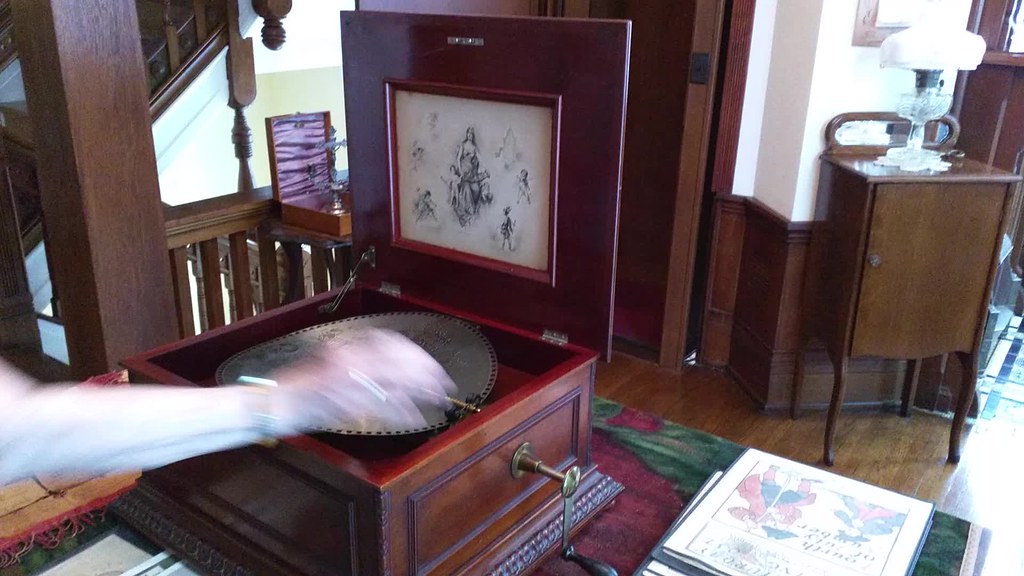
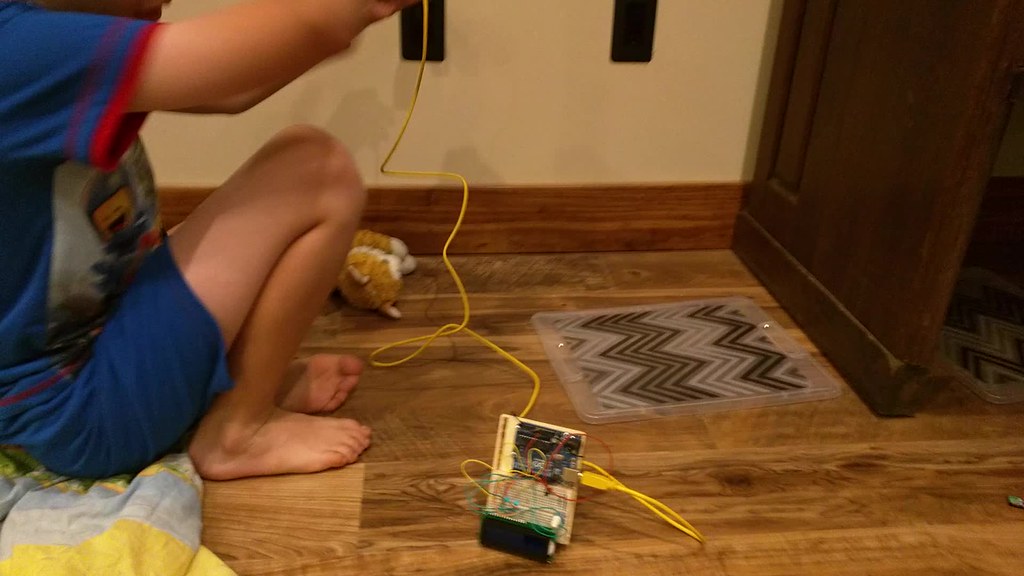
 I should probably document the