Search Results: "sto"

24 July 2011

Tore S. Bekkedal: Ut ya

Oppdatering: Jeg har skrevet en engelsk versjon av dette som er mer gjennomtenkt. I have written an English version of this post which I have had more time to think through. Det var meningen f rst ha dette som en kladd, for senere g igjennom og skrive mer, men WordPress krangler og jeg orker ikke finne ut av det. Derfor publiserer jeg dette n . Jeg har lenge nsket sette opp en ny bloggmotor men har aldri kommet meg til gj re det og dette er definitivt ikke tidspunktet, s jeg gjenoppliver min gamle, engelskspr klige blogg. Andre har skrevet sine fortellinger om hva som skjedde p Ut ya. Jeg ville gjerne skrive ned min ogs , f den ut. Jeg vil dels skrive det ned fordi jeg ikke vet om jeg vil huske alle disse detaljene senere. P en m te h per jeg ikke det. Dels ogs for at jeg skal slippe m tte beskrive dette hele tiden for alle som sp r. Gro Harlem Brundtland hadde nylig forlatt leiren. Jeg hadde tatt opp en videohilsen fra henne, og var i kontoret til mediegruppen for redigere filen til noe vi kunne laste opp p YouTube. En av de som var i rommet skvatt til og fortalte at Twitter var fullt av meldinger om en eksplosjon i Oslo. Etterhvert som pressen kunne fortelle om hvor angrepet hadde skjedd, ble det mer og mer tydelig at et informasjonsm te var p sin plass. Det ble enighet om at det m tet skulle avholdes etter at bolken med innledninger var ferdig. Informasjonsm tet ble avholdt, og jeg tok p meg som den lokale nerd-in-chief sette opp en laptop som kunne vise NRK Nett-TV s folk kunne f sett hva som skjedde. Det tr dl se nettverket gikk nesten umiddelbart ned, s vi ble enige om at det skulle settes et passord p det. I p vente av at noen andre gjorde det, gikk jeg p do. Idet jeg satt der, h rte jeg f rst agitert roping, s skriking, s skudd. Det h rtes mer ut som en lekepistol enn noe annet og jeg antok at dette bare var en eller annen som kom med en totalt smakl s vits. Med dette i tankene, kom jeg n rmest stormende ut av b sen men idet jeg vrengte opp d ren s jeg to mennesker som signaliserte at jeg skulle komme meg inn igjen. Ansiktsuttrykkene deres levnet overhodet ingen tvil om at dette var alvor. At de var der reddet utvilsomt livet mitt. Jeg var mest av alt forvirret. Jeg antok der og da det var en AUFer som hadde gjort dette, g tt amok. Jeg tittet ut igjen. De to var der fremdeles. Denne gangen s jeg en person som l der p gulvet, i en blodp l. Jeg hadde yekontakt med ham, og han signaliserte tydelig etter hjelp. Jeg tenkte umiddelbart at de d rene ikke ville st imot noen som helst type kuler, s jeg tenkte kun p forflytte meg vekk fra b sen. Min f rste tanke var komme meg utend rs. Jeg l p ut korridoren, og akkurat da kom en fra kaf gjengen mot meg. Hun pnet ansatt-toalettet, og jeg, hun, og en annen kastet seg inn. Det er bare en av de mange tilfeldighetene som jeg i etterkant m innse at jeg antar reddet livet mitt. Vi satt der, i halvannen time. Klare til l pe, klare for egentlig hva som helst. Det ble til en eiendommelig dynamikk mellom oss tre, en slags perpleks galgenhumor. Jeg, ettersom det var helt realistisk at v r gruppe var den eneste som visste om likene i bygget, pr vde umiddelbart f varslet om det. 112 fungerte ikke. 110 fungerte ikke. Til slutt kom jeg igjennom p 113, og de kunne opplyse om at politiet var klar over situasjonen og var p vei. Det skulle ta halvannen time, og da vi ble evakuert l han der d d. Det ekte politiet ankom omsider. Vi gikk ut. Jeg tok veien rundt lillesalen, noe jeg i etterkant angrer p ; det jeg s der vil nok bli med meg en stund. Det l en haug med folk jeg husker ingen ansikter, bare et stort, amorft sammensurium av kropper i en fryktelig stor blodp l noen av dem, jeg mener huske to, var fremdeles bevisste. Vi ble f rst flyttet til Planet Ut ya-kontoret leiravisa hvor det var en jente som hadde blitt skutt. Vi rev opp noen poser med gensere fra lageret og dekket til henne. Der satt vi en stund jeg hadde forlengst mistet tidsbegrepet jeg mener det m ha v rt tolv av oss. En av ungdommene ble trass i protester fra de i gruppa som kjente og gikk god for ham p f rt h ndjern. Jeg forstod ikke helt hvorfor. Senere ble vi forklart at det var fordi han hadde kommet fra et omr de politiet ikke hadde oversikt over. Jeg s ikke n r de h ndjernene ble l snet, men jeg husker ihvertfall at det slo meg som uverdig behandling. Politimannen som hadde vakt p posten der vi var, var veldig dyktig til forklare oss situasjonen. Vi ble flyttet ut til hovedkorridoren, hvor omkring 50 av oss var. F rst idet jeg s og omfavnet de som antakeligvis reddet livet mitt, knakk jeg sammen i gr t. Jeg tok meg fort inn igjen, fikk skjelvingen under kontroll, og etter en del venting ble vi marsjert med hendene p hodet mot fergen. Jeg husker hvor redd jeg var for at noen skulle gli i den bratte, gj rmete bakken og skape en misforst else. Det var flere lik ute. Noen var tildekket p improvisert vis, andre l der bare. Alle jeg s viste mot, ro og beherskelse p et niv langt over det noen nsker forvente fra folk i de aldersgruppene. Det var et samhold og en m lbevissthet som gjorde et inntrykk. Vel over fjorden ble vi tilbudt tepper. Jeg ble spurt om jeg var skadet, og bedt om vise mageregionen. Vi ble loset ombord i bussen, og kj rt til Sundvolden hotell. F lelsen, den totalt utrolige lettelsen av se sine n rmeste venner igjen kan jeg virkelig ikke beskrive. Lettelsen ble temperert av usikkerheten rundt de man ikke s . Det dreier seg blant annet om mennesker som jeg i skrivende stund m anta har mistet livet. Blant dem mennesker jeg tidligere hadde hatt stor glede av vissheten om at kom til gj re fantastiske ting i landets og verdens tjeneste n er de revet vekk. Jeg vet ikke hvor mye mer enn denne litt n kterne rapport av hendelsene jeg klarer komme med akkurat n . Men slik var det ihvertfall jeg opplevde situasjonen jeg kom ut av takket v re en serie tilfeldigheter. Litt kort vil jeg legge til: Redningstjenestene var en stor hjelp. Vel s stor, om ikke st rre, har muligheten til tilbringe tid sammen med de andre overlevende v rt. Vi holder sammen og tr ster hverandre med v r felles erfaring. Ett lyspunkt ser jeg her: Mest av alt er jeg s utrolig glad for at han ikke var fremme tyve minutter tidligere, under informasjonsm tet. Da var hele Ut ya samlet som sild i t nne i hovedsalen, og med hans automatv pen ville d dstallene i l pet av noen titalls sekunder blitt det mangedobbelte av det vi endte opp med. At det er en veldig mager tr st for de etterlatte er jeg inderlig klar over. Mine aller dypeste tanker er med dem alle. Dette var et angrep p hele det norske demokratiet. I forvirrelsen f ler jeg en bitter trass. Vi skal vise hans likesinnede at det er sterkere enn som s . Jeg vil ikke la meg skremme til taushet og passivitet. Jeg nsker minnes de d de, og deretter hedre dem ved fortsette arbeidet de var en del av.

23 July 2011

Joey Hess: from the convoy

As I type this, it's just passed midnight. I'm in the back of a BMW somewhere in east Germany , and the Debian UK convoy is doing 110 mph on the autobahn, twenty hours into a twenty-five hour first leg of our trip to Banja Lunka. This all started out so sanely with a 3 am departure to catch the 6 am ferry at Dover. Followed by a couple of hours leisurely breakfast onboard. First hint that yes, this is a road trip in which things will go wrong was a minor bumper denting of one of the convoy's cars by a stray landrover during the ferry trip, but it didn't really phase us. On to Cologne, for a very nice lunch and to pick up another person. But we didn't anticipate how brutal the next leg to Gratz would be. Nor did we count on apparently half of Germany and the Netherlands getting out their campers and heading east this Friday. Spent multiple hours stop-and-go, and many more in constant traffic. Finally it opened out, so we can follow the night speed limit. And while we started out horsing around on the radio, we've developed some real comms discipline by now to keep the convoy together. Also people seem to be amazingly keeping rested while not driving. To add to the sleep debt to me, I flew in the day before, but I actually feel caught up now. Still I've not been driving at all due to mislaid license and general inability to safely drive a right side drive stick shift at 100 mph at night. Our 7 drivers are doing an amazing job. Update: Arrived safely in Gratz at 4 am. Austria tantilized with 30+ miles of tunnels thru the alps, but I've not seen an alp yet.
PS, you'll never appreciate a stinky, free bathroom until you're in a country where all the antiseptic bathrooms cost money and hoards of vacationers are doing the logical thing next to service stations.

22 July 2011

Russell Coker: /run and SE Linux Policy

Currently Debian/Unstable is going through a transition to using /run instead of /var/run. Naturally any significant change to the filesystem layout requires matching changes to SE Linux policy. We currently have Debian bug #626720 open about this. Currently the initscripts package breaks selinux-policy-default in Debian/Unstable so that you can t have initscripts using /run if the SE Linux policy doesn t support it. A patch has been suggested to the policy which uses a subst file, basically that causes the SE Linux labeling programs to treat one directory tree the same way as another. The problem with this is that it depends on a libselinux patch that is not in any yet released version of libselinux (and certainly won t be in a Squeeze update). The upside of such a fix is that it would work for policy that I package as well as custom policy, so if someone wrote custom policy referring to /var/run it would automatically work with /run without any extra effort. I think that the only way to do this is to just have regular expressions that deal with this in the file contexts. It s a bit ugly and slows the relabel process down a little (probably no more than about 10%) but it will work and work on Squeeze as well. One thing I really like to do is to have the SE Linux policy for version X of Debian work with version X+1. This makes upgrades a lot easier for the users. Ideally upgrading a server could be a process that involves separate upgrades of the kernel, the SE Linux policy, and user-space in any particular order because upgrading everything at once almost guarantees that something will break and it may be difficult to determine the cause. At this time I m not sure whether I ll add a new policy using the subs file before the release of Wheezy (the next stable release of Debian) or just keep using regular expressions. I can have the Wheezy policy depend on a new enough libselinux so it won t be a problem in that regard (a new upstream version of libselinux with the subst feature should be released soon). In any case I need a back-port to Squeeze to use regular expressions to make an upgrade to Wheezy easier. for n in $(find . -name "*.fc" xargs grep var/run cut -f1 -d: uniq) ; do
sed -e "s/\/var\/run/\/(var\/)?run/" < $n > $n.new
mv $n.new $n
done
for n in $(find . -name "*.fc" xargs grep var/lock cut -f1 -d: uniq) ; do
sed -e "s/\/var\/lock/\/((var\/run) (run) (var))\/lock/" < $n > $n.new
mv $n.new $n
done
for n in $(find . -name "*.fc" xargs grep dev/shm cut -f1 -d: uniq) ; do
sed -e "s/\/dev\/shm/\/((var\/run) (run) (dev))\/shm/" < $n > $n.new
mv $n.new $n
done I used the above fragment of shell code to change /var/run to /(var/)?run , /var/lock to /((var/run) (run) (var))/lock , and change /dev/shm to /(var/run) (run) (dev))/shm . It involves a reasonable number of changes to policy (mostly for /var/run), but hopefully this will be acceptable to the release team for inclusion in the next Squeeze update as the changes are relatively simple and obvious and the size of the patch is due to it being generated code. There is one final complication, Squeeze currently has selinux-policy-default version 2:0.2.20100524-7+squeeze1, but initscripts in Unstable breaks versions <= 2:0.2.20100524-9. So I guess I could submit a proposed version 2:0.2.20100524-9+squeeze1 to the release team to fix this. I would really like to have the Squeeze policy work with initscripts from Unstable or Wheezy. Any suggestions for how to deal with this? Update: I wrote the above before testing the code, and it turned out to not work. I ve written another post describing a better solution that I have now uploaded to Unstable. I still have to sort something out with an update for Squeeze.

Matthew Palmer: Aaah, That Takes Me Back...

The Wrong Answer story from these tales from the interview brings back some memories I ve written this code (well, I got halfway through it before I realised precisely how stupid an idea it was), and I ve counselled more than one developer against trying it again (always unsuccessfully, much to my chagrin and that of anyone who had to deal with it in the future, I m sure). The reason people do it is twofold:
  1. It s more fun to write this sort of code than the sort that actually solves a real problem; and
  2. Schema manipulation in SQL databases sucks rocks. There s usually limited (or at least painful) introspection capabilities, and manipulating the schema is annoying and usually is deeply balls, performance wise.
If the resources that have been spent building these databases-on-databases over the years were instead redirected into fixing problem 2, above, then it probably wouldn t be a problem any more. On the other hand, problem 1 would still exist, for which the only solution is regular beatings. Remember: always whack your programmers on the back of the head at least once a week. Even if you don t know why, they do.

21 July 2011

Stefano Zacchiroli: Test Driven Development in Debian

... or TDDD and DEP8 context As a nice byproduct of the huge "rolling" discussion we had back in April/May, various people have brainstormed about applying Test-Driven Development (TDD) techniques to Debian development. Here is a brief summary of some opinions on the matter: ... and hey, they've also coined the cool TDDD acronym, which I hereby took the freedom to re-target to Test-Driven Development in Debian. Having a cool acronym, we are already half-way to actually having the process up and running *g*. more testing I believe Debian needs more testing and I've been advocating for that since quite a while e.g. at DebConf10, as one of the main goals we should pursue in the near future. Of course advocating alone is not enough in Debian to make things happen and that is probably why this goal has been (thus far) less successful that others we have put forward, such as welcoming non-packaging contributors as Debian Project members. There are important reasons for increasing testing in Debian. quality assurance Quality Assurance has always been, and still is, one of the distinctive traits of Debian. I often say that Debian has a widespread culture of technical excellence and that is visible in several places: the Debian Policy process, lintian, piuparts, periodic full archive rebuilds, the EDOS/Mancoosi QA tools, the cultural fact that maintainers tend to know a lot about the software they're packaging rather than only about packaging, the we release when it's ready mantra, etc. But caring about quality is not a boolean, it's rather something that should be continuously cherished, refining quality requirements over time. By simply maintaining the status quo in its QA tools and processes, Debian won't remain for long a distribution who could claim to care about package quality. Others will catch up and are in fact already doing that. In particular, we surely have room for improvements in our quality tools and processes for: reducing inertia Inertia is a recurring topic among Debian lovers (and haters). It is often argued how difficult it is to make changes in Debian, both small and large, due to several (alleged) hindrances such as the size of the archive, the number of ports, the number of maintainers that should agree before proceeding with a cross-package change, etc. It's undeniable that the more code/ports/diversity you have, the more difficult is to apply "global" changes. But at least for what concerns the archive size, I believe that for the most part it's just FUD: simply debunking the self-inflicted culture about how "dangerous" doing NMUs is might go and has already gone, imho a long way to fight inertia. Adding per-package and integration tests will make us go another long way in reducing inertia when it comes to performing archive-wide changes. Indeed if a package you are not entirely familiar with has extensive test suites, and if they still pass after your changes, you can be more confident in your changes. The barrier to contribution, possibly via NMU, gets reduced as a result. And if your change will turn out to be bad but still not spot by the test suites, then you can NMU (or otherwise contribute) again to extend the test suite and make the life easier for future contributors to that package. It smells a lot like an useful virtuous cycle to me. autopkgtest / DEP8 how you can help Of all the above, the topic that intrigues me the most is as-installed package testing. Work on that front has been started a few years ago by Ian Jackson when he was working for Canonical. The status quo is embodied by the autopkgtest package. At present, the package contains of various tools and the following two specs:
  1. README.package-tests provides a standard format to declare per-package tests using the new debian/tests/control file. Tests come as executable files which will be run by the adt-run tool in a testbed where the package(s) to be tested is already installed. This part of the specs has been reified as DEP8 which I'm (supposedly) co-driving with Iustin Pop and Ian (for well-deserved credits).
  2. README.virtualisation-sever describes the interface among the test runner and the testbed. A nice separation is provided among the runner and the testbed, enabling different testbed environments with a varying degree of isolation: you can have a "null" testbed which runs tests on your real machines (needless to say, this is highly discouraged, but is provided by the adt-virt-null tool), a chroot testbed (adt-chroot), or a XEN/LVM based testbed (adt-virt-xenlvm).
The specs allow for several runtime testing scenarios and look quite flexible. The tools on the other hand suffer a bit of bitrot, which is unsurprisingly given they haven't been used much for several years. At the very minimum the following Python development tasks are in need of some love: If you are both interested in TDDD and grok Python, the above and many others tasks might whet your appetite. If this is the case don't hesitate to contact me, I'll be happy to provide some guidance.
Note: this post is the basis for the TDDD BoF that I will co-host with Tom Marble at DebConf11. If you plan to come, we will appreciate your thoughts on this matter as well as your help in getting the autopkgtest toolchain up and running again.

Rapha&#235;l Hertzog: People behind Debian: Martin Michlmayr, former Debian Project Leader

Martin Michlmayr is a Debian developer since 2000 and I share quite a few things with him, starting with his age and involvement in the quality assurance team. He managed to be elected Debian Project Leader in 2003 and 2004. He s no longer as active as he used to be but his input is always very valuable and he continues to do very interesting things in particular concerning the support of NAS devices. Read on for the details. Raphael: Who are you? Martin: I m Martin Michlmayr. I m 32, originally from Austria, and currently living in the UK. I ve contributed to various free software projects over the years but Debian is without doubt the one I m most passionate about. I joined Debian in 2000 when I was a student. I worked on Debian more or less full time for a few years while I was pretending to study. Later I started a PhD to do research about quality and management aspects of volunteer free software projects. I investigated the release process in several free software projects, in particular looking at time-based releases. After finishing my PhD in 2007, I joined Hewlett-Packard. I m part of HP s Open Source Program Office and work on various free software and open source activities, both internally and within the community. Raphael: How did you start contributing to Debian? Martin: I first used Debian in the days of 0.93R6, some time around the end of 1995. The 0.93R6 release was still based on a.out but I needed an ELF-based system for some application, so I moved to Slackware. I then quickly moved to Red Hat Linux where I stayed for several years. I rediscovered Debian in 2000 and quickly decided to join the project. I cannot recall how I rediscovered Debian but when I did, it was clear to me that Debian was the ideal project for me: I could identify with its philosophy, I liked the volunteer nature of the project, and I found the size and diversity of Debian interesting since a large project offers a lot of different challenges and opportunities. I remember how many new things there were to learn and back then the documentation and other resources for new contributors were nowhere as good as they are today. My application manager, Julian Gilbey, was a great help he was incredibly friendly and passionate about Debian. I also remember meeting up with Peter Palfrader (weasel) for key signing when we were both in the New Maintainer queue. I was incredibly lucky with my New Maintainer process and soon became an official Debian Developer. Because there was a shortage of application managers, my first major contribution in Debian was to become an application manager myself and help other people join the project. Debian is a large project with a long history and a rich culture, so new contributors should expect that it will take some time to become familiar with everything. Fortunately, there are many resources, such as documentation and the debian-mentors list, for new contributors. Another great way to become familiar with the way things are done in Debian is to subscribe to various Debian mailing lists and ideally to read some mailing list archives. It s also a great idea to attend the Debian Conference or other conferences since meeting people in real life is a great way to integrate. I remember attending Debian Conference 1 in Bordeaux where I gave my first public talk. Finally, new contributors should find an area where they can make a unique contribution. Most people in Debian maintain packages but there are so many other ways to contribute. For example, most of my contributions were not technical but were about coordination and other organizational activities. Raphael: What s your biggest achievement within Debian? Martin: I m particularly proud of a number of achievements: Raphael: Speaking about NAS devices: what exactly are you doing on this topic and how can people help? Martin: There are plenty of instructions on the Internet to install Linux distributions on NAS or various embedded devices by connecting a serial console and then typing in hundreds of commands. What I found is that such instructions significantly limit the user base because they are way too complicated for most users. There are just too many steps that can go wrong. So instead, in Debian, we provide a solution that just works: usually, you download a firmware image for your NAS device from Debian and when you upgrade you get the Debian installer. You connect to the installer via SSH and perform a normal installation. The installer knows about the device and will prepare everything for you automatically for example, it knows if the device has requirements for the partition layout and it will install the kernel where the device expects to find it; unfortunately, NAS devices are not like PCs, so the requirements are different for almost every device and therefore you need special code to support a new device. Finally, there are detailed installation guides and we provide help on our mailing lists. There are a number of technical areas for improvement. The installation could be made even easier, and it would be nice to support new platforms and devices. A bigger problem is that while we ve implemented a great solution for NAS devices, we haven t really extended this work to support other classes of devices. For example, tablets and mobile phones are getting incredibly popular and we don t have a compelling solution for such devices, mostly because of the lack of an appropriate GUI. Raphael: What are your plans for Debian Wheezy? Martin: I ve recently been asked by Stefano Zacchiroli, our current Debian Project Leader, to coordinate the care-taking of Debian finances. Debian, as a volunteer project, relies on donations and in-kind gifts (e.g. hardware) to maintain its infrastructure and to support various development efforts, such as funding sprints and other developer gatherings. Debian s money and other assets are held by affiliate organizations around the world. My responsibility will be to keep track of money and other assets (e.g. hardware and trademarks), work with the DPL to establish procedures related to the use of Debian s assets, and make sure that the procedures are followed. Finally, we want to publish public statements so our donors know how we use their donations to further improve Debian. I just started working on this and this will be my main activity in Debian in the coming months. Raphael: Speaking of money, I plan to run a fundraising to get the Debian book I wrote with Roland Mas translated (cf. http://debian-handbook.info). Is this something Debian should support? Martin: First of all, I should make it clear that I don t decide how Debian spends its money. This is up to the DPL to decide together with the project at a whole. I ll just make sure that procedures are followed and expenses tracked and reported properly. Having said that, in my opinion, it s unlikely that Debian as a project will fund this effort. It would be inconsistent with the position of the project not to fund work directly (only some related expenses, such as travel costs to allow Debian teams to organize face-to-face meetings). Whether Debian should support the fundraising effort by helping to promote it is another question and that s probably not as clear cut. It looks like a worthwhile effort, but on the other hand it would be unfair for authors of other Debian books for Debian to put its weight behind one and there are many other efforts that are worth promoting if you promote one, where do you stop? So while it sounds worthwhile, it s probably better for Debian to stay out of it. But somehow related to this, I sometimes worry about the fact that there are so few paid opportunities around Debian. If you contribute to the Linux kernel for a while, you have an excellent chance to get hired by someone and to work on the kernel full time. The kernel may be an extreme example but there are a lot of projects that have more paid opportunities than Debian, e.g. Mono, GNOME, OpenOffice/LibreOffice and KDE. Obviously, there are some Debian Developers who can spend some time on Debian as part of their job. I know that some Canonical employees contribute to Debian, that support companies like credativ improve Debian as part of their work, and that system administrators fix bugs or package new software as they deploy Debian. But I think this is a minority of contributors and even they don t work full time on Debian. Instead what I see is that a lot of people leave university, get a job and then no longer have time for Debian or people start a family and no longer have time. I can take myself as an example since I don t have nearly as much time as I did in the past when I was a student. I guess there are different ways to deal with this problem one would be to create more paid opportunities around Debian outside the project, another one might be to make it easier for new volunteers to join the project. I don t have the answers to these questions but it s something I wonder about, and I also wonder whether pure volunteer projects can still keep up with projects with a lot of full time contributors. Raphael: What motivates you to continue to contribute year after year? Martin: Debian is a great project with a great mission, goals and people. I contribute to make Debian a better solution and to promote the free software philosophy. Finally, the community around Debian provides a lot of motivation. It s amazing how much I ve learned about other cultures because of my involvement in Debian and how many friends I ve made over the years all around the world. Raphael: Do you have wishes for Debian Wheezy? Martin: Not really. I m pretty happy with the way things are going at the moment. We have made a lot of organizational changes in the last few years from which the project has greatly benefited. I m particularly pleased about the plans to adopt a time-based freeze. Raphael: Is there someone in Debian that you admire for their contributions? Martin: There are many people I admire greatly. I d like to mention Joey Hess because he s a great example to follow. He doesn t get involved in politics, is easy to work with and does great technical work. In fact, he has made not one but several contributions that have completely changed Debian (debconf, debhelper, and debian-installer). Furthermore, Debian has a lot of contributors who have done great work over the years but who are not very vocal about it. People like Colin Watson or Peter Palfrader. Debian has many unique contributors and the list of people I admire is much longer than the few people I just mentioned.
Thank you to Martin for the time spent answering my questions. I hope you enjoyed reading his answers as I did. He raised some interesting questions. Subscribe to my newsletter to get my monthly summary of the Debian/Ubuntu news and to not miss further interviews. You can also follow along on Identi.ca, Twitter and Facebook.

No comment Liked this article? Click here. My blog is Flattr-enabled.

20 July 2011

Andrew Pollock: [life/americania] 4th of July in the Grand Canyon

Our adventurous friends Eric and Katie had invited us to join them on a hike in the Grand Canyon over the 4th of July weekend. As this struck us as something we'd never have considered doing otherwise, we thought we'd accept their kind offer. We're so glad we did. It was quite a bit of traveling just to get there. We flew out of San Jose on Thursday night, got into Las Vegas, rented a car, and then drove to Peach Springs, Arizona, where we stayed the night. We didn't get in at the Grand Canyon Caverns Inn until around midnight, and we had to get up again for a 5:00am departure (I think we actually got away by more like 5:30am), to drive to the Hualapai Hilltop, where the trail head was. Zoe handled all of this very well. She didn't end up falling asleep in the car until about 10:30pm I think, and dealt with the transfer out of the car at midnight very well and went back to sleep. The drive to the Hualapai Hilltop, along Indian Road 18, took about an hour. We had to dodge a bit of livestock on the road. The road itself was sealed and of good quality. We remarked on the way back out that as soon as you left the Havasupai Reservation and entered the Hualapai Reservation that there was a distinct degradation in the quality of the road. We parked at the Hilltop, and got ourselves organised, and commenced our descent by about 7:10am. The first 1.5 miles was very steep. There were a bunch of switchbacks and there was a fair few people coming up the other way already. There were also a few mule trains coming in the opposite direction that we had to dodge. The mule trains have right of way, so we had to stop and get out of the way to let them pass. Zoe thought they were pretty cool because they invariably had a few dogs with them as well, and she thinks dogs are awesome. The remaining 6.5 miles (it was an 8 mile/13 kilometre hike in total) were fairly easy. There was a lot of variety in terrain. Rocks, sand, dirt. It wasn't all in the sun, which was made it more comfortable. Heat wise, I think it was in the high 30's Celsius, with pretty much no humidity, so it didn't feel too uncomfortable. Towards the end, as we got near the water, there was a distinct change in the canyon. There was more greenery, and we started hearing insects and seeing bird life. When we first saw the water, it was hard not to just jump in, it looked so inviting. The total hiking time was about 4 hours 45 minutes, which included a reasonable stop to give Zoe some breakfast. We arrived in the village at around midday. Unfortunately the lodge wasn't ready for check ins until 1pm, so we had to twiddle our thumbs for a little bit. Zoe handled the hike incredibly well. We used a Macpac Possum child carrier that Nigel had passed down to us, and she didn't complain the whole time. She even took a nap in it. We were very relieved that it wasn't a problem for her. Sarah carried her, and I carried everything else. (I'm so glad I didn't see the photo of how I looked until well afterwards). In hindsight we probably brought too much stuff, but we didn't really know what to expect down there, so we'd rather have too much than too little. The village completely exceeded my expectations. I had this (silly) mental picture of it being just the lodge and not much else, but somewhere between 450 and 700 people live in the village. It had two general-type stores, a cafe that was pretty much like a fast food/takeaway place, an elementary school, and some sort of basic medical clinic. There was also a small general purpose community centre of some sort. The main store had pretty much everything you'd need in the food department. The cafe frequently ran out of various different things, but you weren't going to go hungry. For the remainder of Friday, we just stayed put in the village and let Zoe stretch her legs. Eric and Katie and their kids explored the first set of falls down from the village, unofficially named Rock Falls. On Saturday, we all hiked down to Havasu Falls. We met a couple of other families (amusingly both from the Bay Area) along the way, so we had some interesting conversations. I have no idea how long the hike was. Havasu Falls was impressive. Quite tall and narrow at the top, and quite loud. Zoe was impressed. We took her for a bit of a swim in the pools in the bottom. We had lunch there, and then Zoe and Sarah stayed there (Zoe took a nap in the KinderKot (also courtesy of Nigel) in the shade by the falls, and I took the Macpac with a water bladder in it to refill it at the spring in the campground, which was further down stream, and to check out Mooney Falls with Eric and Katie (and their kids), which was further downstream again from the campground. Mooney Falls was pretty insane. A lot taller than Havasu Falls, and a lot more treacherous to get to the bottom of. Parts of it were vertical. Chains and rickety ladders were involved. Caves were involved. I'm so glad I didn't have Zoe in the Macpac, because on multiple occasions, the top of it got bashed into rocks, so without having Sarah with me also to act as a guide, there's no way I could have safely descended with Zoe in the backpack. My favourite photo illustrating how crazy this was is this one that I took of Eric and Katie. This photo highlights some of the craziness involved to get down. I pretty much got to the bottom, had a quick look around and left Eric and Katie to it, because I figured Zoe would have woken up by now, and was probably bored. Turned out I had all of the sunscreen with me as well. So I climbed back up, and trekked back to the campground, refilled at the spring, and headed back up to Havasu Falls. After we reunited, we then hiked back up to the village, which to be honest, was the hardest bit of hiking we did. I was carrying Zoe in the Macpac, and it was hot, and it was mostly loose sand all the way. We were very glad to get back to the village. Zoe started showing signs of coming down with a cold and a cough, so we decided to cut short our stay in the village and leave on Sunday instead of Monday. We'd been tossing up between getting a helicopter or horses out. We ended up opting for the helicopter after learning that the horses still took about 3.5 hours, and you basically had no control over the animal. We were dubious as to how Zoe would go being bounced around on the back of a horse for that long. The helicopter ride also took all of about 5 minutes. The tribal members get first dibs on the helicopter, and there had been a death in the village, and I think a lot of people had come to the village for the viewing (the casket itself was flown out earlier on Sunday morning for a burial out of the village), so I suspect there was a higher number of tribal passengers than usual. We didn't get out until 2pm. Again, Zoe was incredibly good. She just hung out with us while we waiting for a flight out. There were plenty of dogs for her to be entertained by, and some other kids. She also took a pretty decent nap. So we finally got out, and got back to our car, and then the heavens opened. It absolutely poured down with rain. Sarah was keen to check out Hoover Dam, so we decided to stay near Boulder City in Nevada, and got a suite in the Hacienda Hotel and Casino for cheap. The next day was the Monday public holiday for Independence Day, and we were tossing up whether or not to take Zoe to a doctor to get her checked to see if she had bronchitis (we've been a bit gun-shy about bronchitis since the time she came down with it when we were in Australia). She ended up falling asleep in the car while we were hunting around for an Urgent Care facility that was open, so we decided to let her sleep and drove to Las Vegas. After she woke up, we took her to see the flamingos at Flamingo and the lions at MGM Grand. Zoe absolutely loved all the lights, sights and sounds of Las Vegas. In the afternoon, we took her to a doctor, and got the "first child, huh?" from the doctor (she didn't have bronchitis). After that, we went and briefly checked out Hoover Dam (just walked half way across the bridge in front of it and walked across the dam itself). The following day, we packed up and spent the morning on the Las Vegas strip again. This time we went to the Venetian (Zoe thought the gondolas were pretty cool) and then we flew out in the afternoon. So it was a lovely little family vacation. We ended up spending about as much time in Las Vegas as we did in the Grand Canyon, but that was okay. I'd really like to go back to Supai again, but I'm not sure if the stars will align themselves appropriately. If we did, knowing what I know now, I'd take a lot less food and put all of the luggage on a horse, and just hike in with the minimum of stuff. I'd probably be game to hike out as well if the bulk of the luggage was on a horse. Photos from the trip are here.

Cyril Brulebois: Smile of the day

It s been a while since my last patches for GNU/kFreeBSD, and Christoph kindly took over the kfreebsd-* build daemons from me some time ago, but still: smile of the day. Thanks, Russ.

Aigars Mahinovs: Debconf11 the arrival and Debcamp

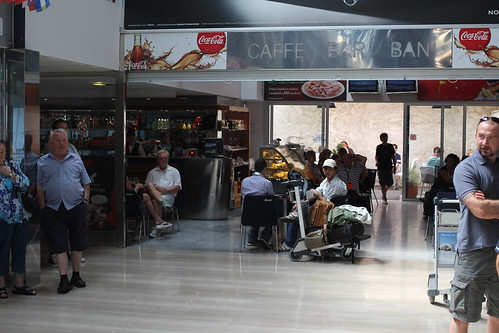
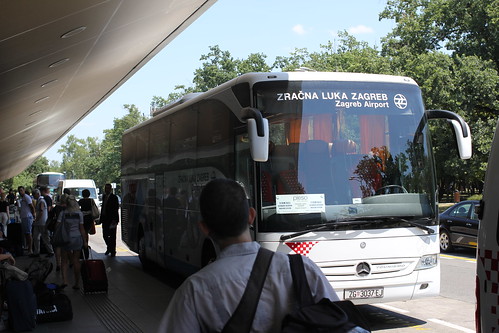
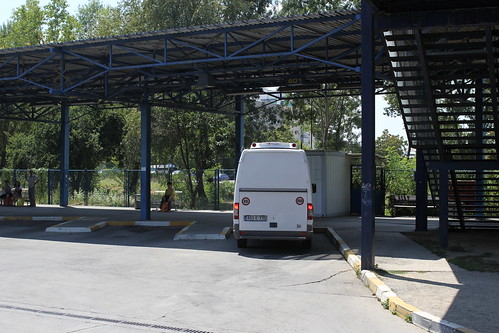
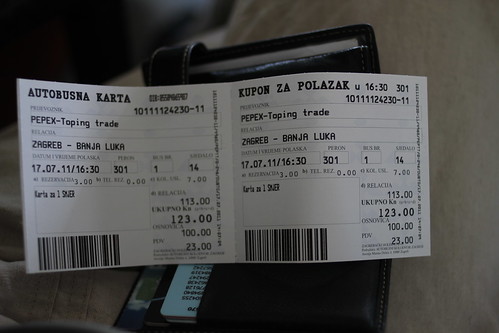
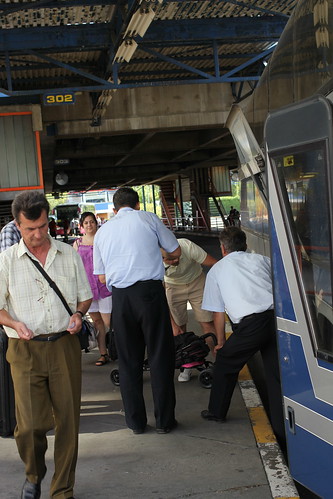
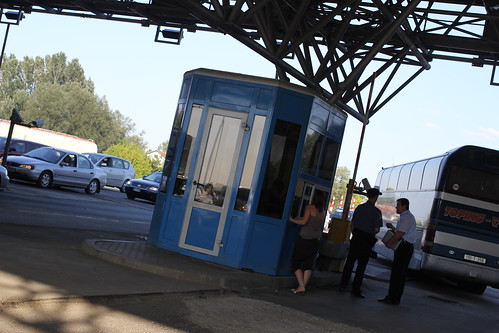
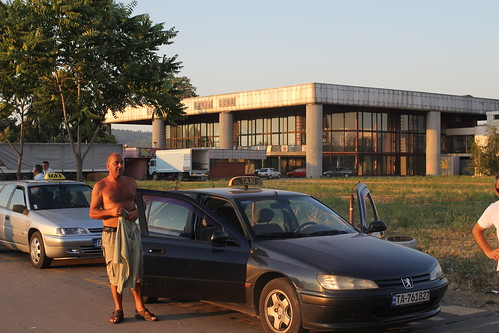
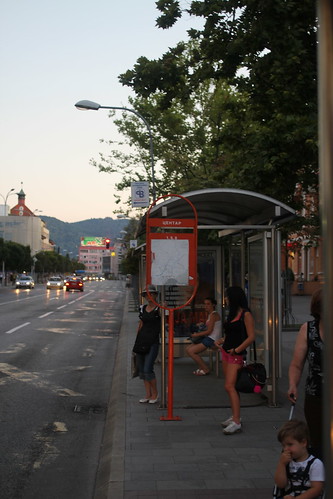
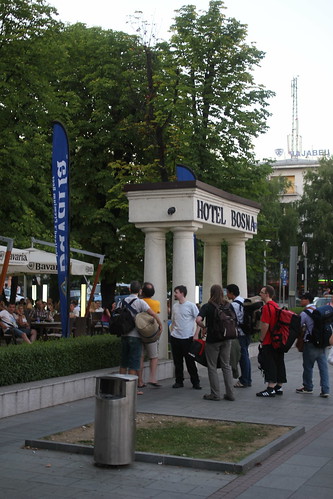
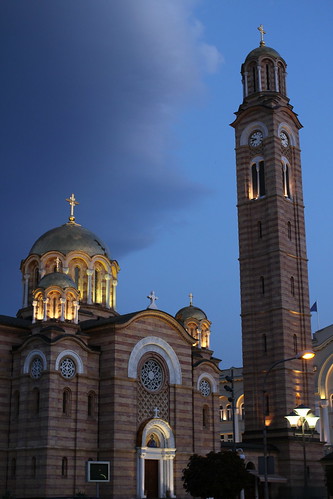
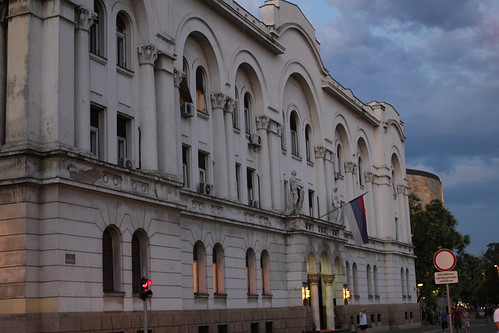
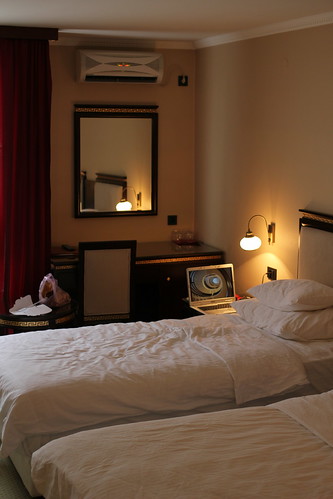
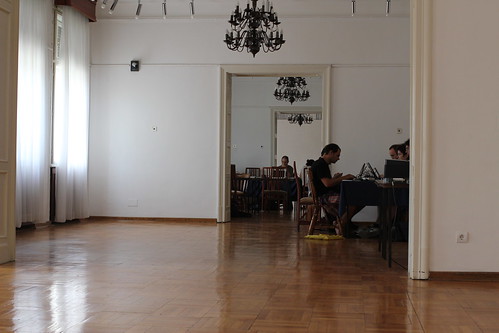
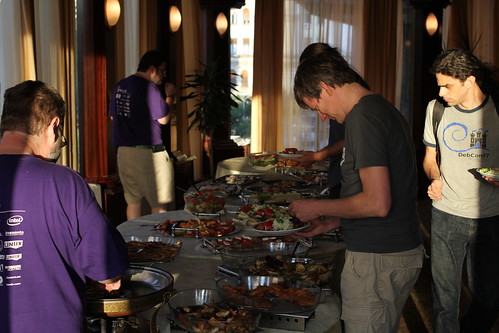
Short version arrival was quite easy, the arrival wiki page is now up-to-date and my photos are uploaded every day to this Flickr set. I had a small problem departing from CDG to Zagreb after scanning my suit twice and complaining that it had too many electronic devices, they had me remove my Nexus S, Nokia N950 and Kindle 3 from the suit pockets and then scanned that all lot again. After that another security guy asked me to open my suitcase and started squishing my Ligo cheese and declaring in a grave voice that it was too soft to be legal . As I kept calm and explained the DebConf cheese party to him, he looked around, put the cheese back in the bag and said ok, ok, off you go . So I still have that softness for the party. I heard an even better anecdote from our next years hosts when they were travelling trough Germany, a border official asked a typical so, what are you here for? question. They answered that they were in transit for an IT conference and gave him the invitation letter. He read the letter, nodded and then said: DebConf, huh? So, who was the author of the Linux kernel? and when after the initial shock they gave the right answer, they were immediately waved trough. Now that s what I call good border security. :) Meeting point - cafe at the Zagreb airport I met up with the guys in the Zagreb airport caf , which was immediately after exiting the secure zone. We waited for dkg to arrive and get his baggage. The passport check too a couple of minutes, but the baggage claim looked to be taking almost a half an hour. The airport bus After that was sorted out, we took out some local money in one of the 5 ATMs around and went to the bus. We were waived to just put our bags into the bus luggage space and get on, the driver went around to sell us tickets just before we drove off. It was one of the most comfortable and well air-conditioned buses I have been on in a long time. We were in the Zagreb bus station in less than half an hour. Non-official bus that tried to lure us Then a funny part started an old man came up to dkg and immediately asked Are you going to Banja Luka? , and when he said yes, the man started dragging us along to the bus station saying that there is a bus to there that will leave in a couple minutes, but we were in luck, so we should follow him right to the bus. Driven by curiosity, we went on. The man dragged us to the far side of the bus terminal bus stops where there was a minibus with Bosnian number plates, but no official designation as a passenger transit bus and no other passengers. They asked a reasonable 120 kuna for the trip, but they looked very shady to me, so we refused. I think that if we agreed and we were lucky enough that they actually did get us to Banja Luka, the price would have risen along the way, for example using the highway tolls as an excuse. Bus ticket to Banja Luka After getting cursed at by the old man and being demanded to buy him a beer for his efforts, we went upstairs to the real bus station where we were told that there were two buses to Banja Luka: one at 15:00 and another at 16:30, but that those two buses arrive in Banja Luka almost at the same time, so we got us tickets for the latter bus and went to a local bar to get some food and drinks. I somehow managed to get sausages in deepfried bread that for some reason cost almost triple of a hamburger and fries that others got, but it sure helped to pass the time and after all those 9 was not a bad price for a good meal. Bus to Banja Luka at Zagreb bus station We were a bit surprised by the bus drivers asking us to pay 1 (or 8 kuna) for bags to be put into bus bag storage, especially as we for several minutes could not quite understand what they want of us as neither of them spoke either English, Russian or German. Border crossing I don t remember when was the last time I crossed a real (i.e. non-Shengen) border in a bus, so getting out of the bus and walking one-by-one to the border official was a new experience. On the other border of two bus drivers collected the passports an then brought them back later, so that was less painful. And by then we were in Bosnia! And of the things that greeted us was a billboard for the casino in Banja Luka Hotel Bosna. :) By the time we got to Banja Luka, dkg had already made friends with an official from Croatian ministry of regional development that sat behind us on the bus and knew English very well (after living in Canada for some time). The bus station in Banja Luka looked almost abandoned like the bus stopped in the field with only a few taxi drivers and a bunch of buildings some distance away showing that this was indeed part of civilization. Banja Luka taxis The taxi drivers would take you to the venue for 8-10 KM 5 or 50-100 kuna (if their meter is broken and you look to be really ignorant of the exchange rates). If you walk on a bit, there is a bus station with an ATM taking Visa cards and a bit further on a bus stop that will take you to the centre of the city for 1.5 KM. The train station looked fully abandoned when we went there, only a news kiosk was working there. The bus driver reacted well to the name Hotel Bosna and wave toward it when we passed by it. Central bus stop - get off here Meeting first Debian peoples at the hotel It is hard to miss, especially the blinking Casino sign or the white pillars with black letters Hotel Bosna on top. You just get off at the bus station Central and walk back a couple hundred meters. Then see all you Debian friends drinking in the cool bar and walk around the corner to the main entrance of the hotel to check in. Church at sunset Main event location Hotel room The rooms are looking really great this is the best DebConf location that I have been to (I was not in Argentina). Soft beds with linens changed daily, nice air conditioning, towels (changed daily, if used), good shower, It is lacking in the speed and power of its free WiFi and in some place there is a clear impression that the hotel was built as a top of the line hotel a couple decades ago, but somehow has fallen into a disrepair since. Or it is simply used much more than expected. IMG_4973 So far I would say that the DebCamp is running full steam two hacklabs have desks, chairs, power and network connection, one of them even has sufficient air conditioning. The network works great for me so far, at least in the venue. The hotel wireless is barely usable to read a blog post, preferably without photos. Dinner buffet The food is being served well and on time. So far for lunch and dinner you walk up to the reception and get a food ticket based on your room number and go to the M level for the food (the M level is between the ground floor, labelled as PR , and first floor) where for breakfast and dinner there is a buffet, but for lunch you sit at a table and they bring you food. Vegetarians should clearly say vegetarian while pointing at themselves to get the special vegetarian option. So far food has been very good, except that that they often run out of popular items, such as fries, in the buffet. You can also ask for beer and other extra drinks with your food, but know that they cost extra up to 2.5KM for a beer, for example.

Aigars Mahinovs: Paris preDebConf11

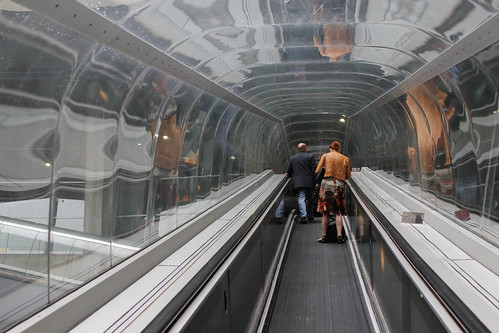
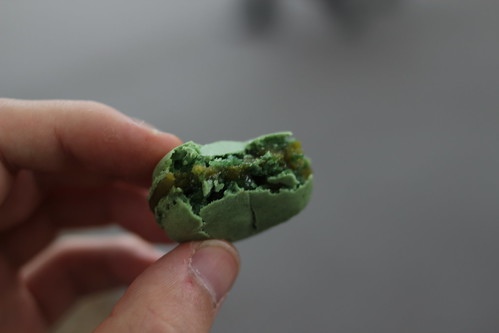
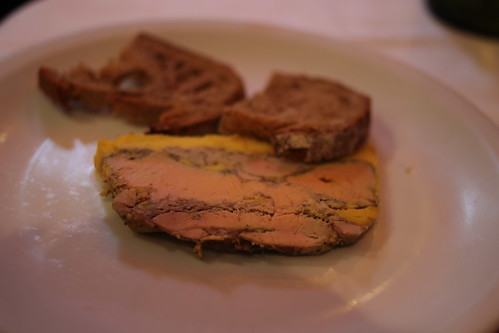
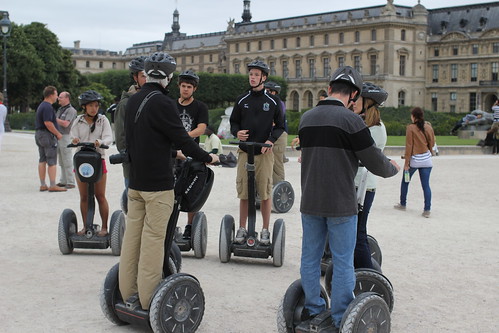
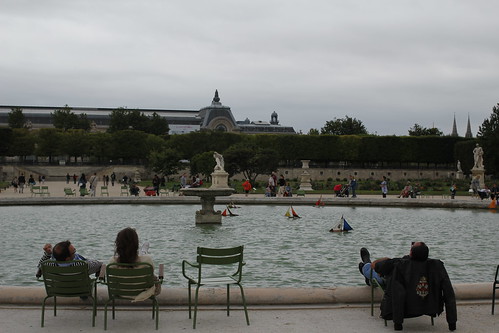
Before arriving to DebConf11, I arranged my flights so that I had a day and a night in Paris as I have not been there before. So after checking out of my work apartment in Tampere, going to work there with all the things from that apartment, then flying back to Riga, going to a midnight screening of the last Potter movie and finally getting back home around 2am, I quickly checked that I have everything needed for the conference and went off to sleep only to wake up at 8am again, pack everything (into a single carry-on bag, after a year of experience travelling by air weekly and watching Up in the Air twice) and be off to the plain to Paris. The CDG airport is quite huge, even compared to something like JFK it feels bigger and more concrete. And yet so dark and lacking interesting features that the only photo I got from it was this IMG_4710 I then used the B line train to get to my hotel(9.1 ), drop my stuff there and another metro ticket (1.7 ) to go to Arc de Triomphe (M tro Charles de Gaulle-Etoile), went up there and walked the length of the Champs-Elys es right up to the Louvre. Then I walked to the river, crossed it to a small island to see the Notre Dame and then went back following the other bank of the river Seine seing both some more normal non-touristy streets of central Paris and also some other magnificent buildings, like Les Invalides and ending up at the Eifel tower. It was a rather easy walk that was only spoiled by some rain in the end so I did not get to take some night photos of the Eiffel tower as I wanted. But the experience still was breathtaking. The scale of the buildings was impressive. The pervasive gold-gilded decorations do expand on the splendour and the same time the full access to all the previously-royal places brings them down to people. The city looks well built and the planning mostly makes sense, especially if you are on foot. Car drivers might have a different opinion about it considering the maze of roads and traffic circles and underpasses I saw in central Paris. It is often said that Riga is a mini-Paris. Mostly, that is said in Riga. But walking the back streets of Paris I can see where that comes from the architecture, the street design, the small cafes and some cobblestone roads and some historical buildings with a few modern building thrown into the mix, and a tower too. Visually Riga does look like Paris a lot, but for the feeling, I still think that Riga feels more like Berlin with its mix of eastern and western Europe. I had one incident when some girl in front of Louvre started to ask me to sign something, gesturing to show that she was mute, it looked like a donation racket, but I did not get to find it out in detail as a swift security guard appeared and started running for the girl, who immediately took off running along with several friends. I guess the guards know them very well. On a more positive note, in one of many confetterie shops I noticed the macaron sweets that my friend advertised loudly some time ago, so I decided to buy and try some. They cost 7 for a box of 6. The taste was very, very sweet. Basically it tastes like froffed up and then frozen sugar made into cookie form with a cream layer between two cookies. IMG_4806 So basically it is like an Oreo cookie, but much, much, much more tender, airy and sweet. The two of the 6 cookies were partly crushed while I tenderly carried them for 5 minutes in their box while searching for a place to sit down and eat them. IMG_4815 After that I also had a proper dinner in a restaurant that was not too near the touristy paths, but still it was a bit lacking. The starter was quite nice I mean it is hard to screw up cutting off a piece of foie gras (basically a piece of liver paste with a layer of extra geese fat), but the main dish was disappointing I ordered a medium rare steak. First of all it came with a side of fries, that in itself was an insult to Paris, baked potatoes would have fit much better with this dish. And despite the main part of the steak being very nicely done to medium rare, the cut was done badly and the edges of the steak had sinew that was too chewy to eat or even cut normally. Other interesting things I liked about Paris:
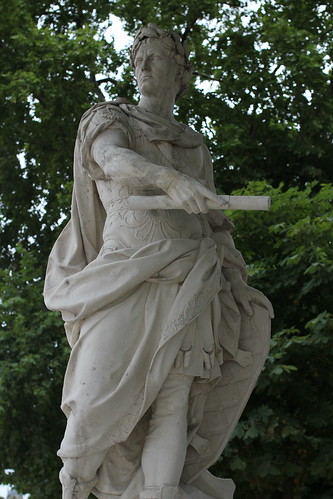
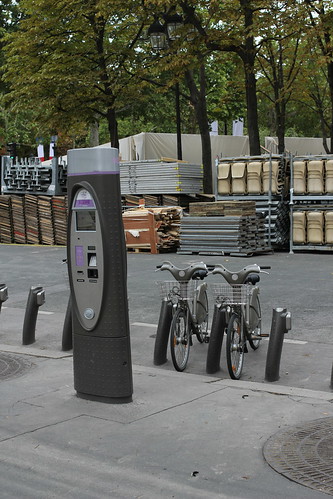
* high street shops of fashion labels and car manufacturers, that showed off the concept cars and also sold small branded accessories, such as Mercedes Benz key chains IMG_4723 * Statues some made of stone, some of iron, some covered in gold, everywhere and made with great quality IMG_4768 * Bicycle rentals, I mostly saw the locals using them IMG_4754 * Segway tourists IMG_4773 * And countless classic postcard shots of very recognizable architecture IMG_4738 The Eiffel tower was immensely impressive. It towers over everything around, especially because there simply is nothing high enough around it. It would not have been so impressive in the middle of New York, for example. The age and openness of the construction makes you really feel the massiveness of this marvel of functional architecture. But in the end Paris also looks like a great city to just kick back and relax in IMG_4770 P.S. I am amazed that when I put a link to a Flickr image (such as http://www.flickr.com/photos/aigarius/5950187165/in/set-72157627230456160 in a separate paragraph in my WordPress article text, something along the way translates them into proper linked images with a reasonable size. Progress is amazing.

19 July 2011

John Goerzen: Too Strange for Jon Stewart

I would have probably dismissed as not realistic enough for even The Daily Show this kind of story, had someone suggested it a few months ago: Rupert Murdoch s corporation (owner of FOX News, Wall Street Journal, News of the World, etc) would have been found to have illegally accessed other people s voicemails. These included voicemails from a cellphone belonging to a recently-murdered girl, which interfered with the police. And they had also bribed Scotland Yard officers for information, and actively covered it up. The story would close one of Britain s biggest newspapers, and force the resignation of various government and Scotland Yard officials. That it would lead to the first high-profile investigation under the Foreign Corrupt Practices Act of an American corporation bribing British officials. That one of the central figures in the scandal would suddenly die at a young age. That there was a question of how the former editor of Murdoch s newspaper whom he steadfastly defended until one day he didn t would be taken from jail to testify before Parliament. That CNN would live stream a hearing of a British Parliamentary subcommittee instead of the news conference given by the President of the United States. And that during this committee hearing, some guy would attack Rupert Murdoch who, until then, looked like he had a few drinks too many the night before with a shaving cream pie. And that Rupert Murdoch s newspapers and TV channels would portray News Corp. as a victim of the liberal press in all this, and that they should just be left alone. So maybe the last one was believable, but my goodness. Just when it couldn t get any stranger, a SHAVING CREAM PIE?!

Olivier Berger: Migrating mail from Evolution local storage to Evolution + local Imap (dovecot with Maildir) 2/X

See previous post for the rationale. I ve then started migrating my mail using evolution. First I ve installed dovecot and set it up so as to store my mail inside my $HOME/Maildir/ dir. Evolution will run dovecot on demand through a pipe, instead of through network access like with regular remote IMAP servers. So dovecot won t be started as a daemon. I ve been inspired by Roland s setup for this (even though I not using offlineimap). Inside Evolution, I ve configured a second mail profile, for this local IMAP server, using the custom command to connect to server :
"MAIL=maildir:$HOME/Maildir /usr/lib/dovecot/imap" I ve migrated my existing mail folders using copy to function on all top-level mail folders from the local evolution storage, to copy them to the IMAP folders. Note that some folders that include a dot ( . ) need to be renamed, as the dot is a path separator for IMAP. I ve adapted Evolution s vfolders definitions so as to take into account the active remote folders instead of the local ones, and that s it, the mail is migrated. I m using fetchmail + procmail to fetch mail from remote servers and to deliver it to the Maildirs, using dovecot s deliver program, with something like : DELIVER="/usr/lib/dovecot/deliver" :0: w
$DELIVER
I ve migrated the filters of evolution to server-side Sieve rules so that dovecot s deliver sorts incoming mail in the right Maildirs. The dovecot config needs to be adapted to activate the sieve plugin (dovecot-sieve Debian package), in /etc/dovecot/conf.d/15-lda.conf : protocol lda
# Space separated list of plugins to load (default is global mail_plugins).
mail_plugins = $mail_plugins sieve
log_path = /tmp/dovecot-deliver-errors.log
info_log_path = /tmp/dovecot-deliver.log

The original Evolution filters rules were stored in $HOME/.config/evolution/mail/filters.xml, so I wrote a quick python DOM parsing tool to extract the (long) list of definitions and generate Sieve rules for the $HOME/.dovecot.sieve config file (in which folder hierarchy uses a . path separator instead of a / ). The sieve-test program can be used to check is sieve rules function as you want. Now this is all setup, I only need to configure notmuch to index all the Maildirs. But this is left to another post.

Olivier Berger: Migrating mail from Evolution local storage to Evolution + local Imap (dovecot with Maildir) 1/X

I ve been fed up with Evolution being so buggy and slow, which was making managing my mail ever more painful as time passes. Still, one of the advantages of Evolution over other MUAs is the vfolders feature, which I ve been using intensively for years. Would there be some alternate way of managing my mail ? I ve been reading about notmuch s progress in becoming a very powerful mail management / retrieval tool (it could very well replace the vfolder feature of Evolution), but unfortunately, it is not (yet) integrated with Evolution. Others have documented their mail setup, and it seems that I could achieve a middle ground solution by migrating all my mail folders, currently stored inside Evolution s local storage, into Maildir folders managed by a local dovecot IMAP server. Evolution would still be my MUA, but it would store my mail inside Maildirs through dovecot. I ve been told that Evolution may be less buggy with IMAP than with local folders, which could solve my main annoyances. Also, it would make it possible to index mail with notmuch, as it supports the Maildir storage format. I ve then decided to take the opportunity of a holiday period to start the migration attempt. I ll document it in another post.

18 July 2011

John Goerzen: Pooh, Books, and Dads

If I think back to fond memories of being with my dad during my childhood, there s one thing that always comes back first. It s those late summer evenings outside. Dad often had outdoor projects going on of some sort. I d go out there hanging around, maybe chatting, maybe playing with cats, or maybe doing something of my own. Dad often had an old AM radio sitting around and would be listening to a baseball game while working. As it got darker, lights would come on, and the bugs would start flying near them. Sometimes dad would be working just inside the barn, and the bugs would start flying in there, while some light poured out the big front door. There s something about that scratchy AM signal, the evening slowly getting darker, the slow pace of the baseball game, and just being around dad and a peripheral part of whatever he was doing that stirs a wonderfully fond recollection in me. I don t remember the specifics of any one of those times, nor do I really remember how often it happened, but it does stick with me. We ve had a routine in our house, starting early enough that neither of our boys know anything different, where right before bed, I read a book and sing a song to each of them individually. Last November, I was looking for some books to challenge Jacob a little more than what we had been reading. I found The Complete Winnie the Pooh used for $4 on Amazon. This contains the original A. A. Milne stories, not the Disney series. It had a few line drawings, but there were many pages without any. It s 352 pages and written in a rather dated form of British English. So for all these reasons, I wasn t sure if Jacob would like it. But it was $4 so I bought it. And Jacob was hooked. Each evening, we start bedtime with looking at the map of the 100-acre forest, just inside the cover. He gets to pick out 4 things for me to describe, and then we turn to our story. We usually read somewhere between 2 and 5 pages at bedtime, depending on how well he got ready without wasting time. And then we sing. A. A. Milne has his Pooh character make up songs throughout the book. They are printed with words only, no tune, so I make up a tune for them as we go. Jacob has taken to requesting these songs for his bedtime song as well. Jacob always gets to choose his bedtime story, and sometimes he chooses a different one but about 75% of the time, it s been Pooh. A few weeks ago, he started noticing that we were almost to the end. He got very concerned, asking what we d do next. I suggested a different book, which he didn t like. Then I pointed out that we could restart the Pooh stories from the beginning, which was exciting for him. Last night, we finished the book. The very last story was an interesting one, suggesting Christopher Robin growing up and no longer having imaginary adventures with the animals, but making Pooh promise to always be there for him. I don t think Jacob caught onto that meaning, though. When we finished it, we had this conversation: Jacob: Dad, is that the end? Me: Yes. Jacob, getting a big smile: Yay! So can we start back at the beginning tomorrow? Me: Sure! Jacob then gave a clap, shouted Yay! again, and was a very happy boy. Sometimes I wonder what our boys will remember in 25 years of their fun times with me. I don t know if Jacob will remember all the days reading about the animals in the 100-acre wood when he was 4, or maybe he ll remember watching train and combine videos, or playing radio hide-and-seek, or maybe something entirely different. But I have no doubt that I will remember sitting on the couch in his room, holding him on my lap, and reading a 350-page book to a loving 4-year-old. As Pooh aptly put it, Sometimes, the smallest things take up the most room in your heart.

Jelmer Vernooij: Summer of Code 2011

The Samba team is once again participating in the Summer of Code this year. This year we have 4 students working on various projects related to Samba. This year I am mentoring Dhananjay Sathe, who is improving the GTK+ frontends for Samba. In particular, he is making it possible to manage shares and users of a remote Samba or Windows machine. Dhananjay is also blogging about his progress.

17 July 2011

Cyril Brulebois: Thoughts on multiple webcams

Keeping an eye on something with a webcam is really easy: just a matter of setting up for example (c)vlc to multicast from /dev/videoX to the network, and done. Example:
# Streaming:
cvlc v4l2:///dev/video0 --no-audio --sout "#transcode vcodec=mp2v,vb=3072 :std access=udp,mux=ts,dst=224.0.0.1 "
# Playing, possibly on a remote machine:
vlc udp://@224.0.0.1:1234
Notes: Possible problems: Where to go from here:

Wouter Verhelst: Mechlin to Banja Luka in statistics

I decided to go to DebConf11 by car. Not willing to do this alone, I asked for volunteers to join me in my car trip. One such volunteer showed up, and the car trip happened. Now, since I remembered to push the correct buttons on my dashboard after I completely fueled up the car and checked the tire tension and other things, I am now proud to be able to present you with the following statistics on this trip:
  1. Total distance travelled: 1466.8 km
  2. Average driving speed: 95.9 km/h [0]
  3. Total number of kilometers wasted on 'oh, crap, we forgot something': 10 (approx) [1][2]
  4. Total amount of fuel used: 81.3l
  5. Average fuel consumption rate: 5.5l/100km [3]
  6. Total amount of kilometers spent behind the wheel by Jeremy: 50 (approx)
  7. Total amount of kilometers spent behind the wheel by Wouter: the rest.[4]
  8. Time of departure: 2011-07-16 21:00
  9. Time of departure after point three and making sure we had everything: 2011-07-16 22:00
  10. Time of arrival: 2011-07-17 15:15 (approx) [5]
  11. Outside temperature at departure: 12 celcius
  12. Outside temperature at arrival: 35 celcius
  13. Longest (voluntary) break: 1 hour (approx; breakfast, tanking, bathroom visit, watching the sun rise)
  14. Longest (involuntary) break: 45 minutes (approx; customs check) [6]
  15. Last fueling stop: 4 AM.
  16. Amount of kilometers left to go before the car said bleep, you need to tank soon: less than one.
  17. Most tense moment: on crossing the slovenia->croatia border, confusing the border police officer ("no, I'm Wouter, that is Jeremy" yes, we both had photo-ID), who then promptly holds on to our documents, asks the car's papers, and tells us to please park over there and wait a moment while he gets us to be handled by guy in a somewhat more military-looking uniform.[7]
  18. Biggest "uh-oh" moment: after crossing the croatia->bosnia and herzegovina border, watching the very, very, very, very, very[8] long line of trucks queueing to cross the border. In the other direction. And then realizing that you probably need to go through that very same queue on the way back
  19. Largest single toll fee: 15 [9]
  20. Last bit of time spent asleep before this trip: the minutes surrounding 2011-07-16 05:00:00 [10]
  21. Time wasted writing this blog post when I really should've gone to bed instead: 45 minutes
  22. Time now: 21:02:54
But it was fun. And that's all that matters. Those who've shown up at debconf already, or who will arrive soon: see you tomorrow. Those who will arrive later: see you soon. And those who won't arrive: better luck next time, I hope. [0] this includes times when the car isn't moving with the engine running, but not times when the car is turned off, locked, alone and forgotten, in the rain, while those idiots who were supposed to be its drivers were inside having a drink.
[1] Which is surprisingly little. Usually I manage to need more.
[2] Jeremy forgot his^Wa Debian banner. I forgot something, I can't recall what. I decided to bring some CD's to enjoy during the trip, and a 3.5mm audio connection cable which we end up not using
[3] According to the dash. I'm too tired right now to check it. Also see the next two points. [4] This could incorrectly be interpreted as a criticism on Jeremy. It's not his fault that I only told him a day before we left that I have a manual transmission. And in fact, if anything, I'm unhappy with the fact that I even had to hand him the wheel for those 50 km. I would've loved to be able to say "I went all the way from Mechlin to Banja Luka, all by myself".
[5] I forgot to check the clock, to be honest.
[6] What, you think I have a chronometer?
[7] The last four points could really have been written as two. Figuring out which goes with which is left as an exercise to the reader.
[8] very, very, very
[9] 7-day Slovenian road tax vignet
[10] Once I wake up, I hardly ever manage to fall asleep again. Esecially if it's light outside.

16 July 2011

Steve Kemp: There is a reason why I test sites

Recently I was at a pub and there was an advert for pub tokens displayed on the window. Seemed like a cute idea: Perfect for friends, family, remote hackers/developers & similar. When I got home I checked out their site. Seemed simple and nice enough, with good coverage (in terms of local drinking establishments that would accept their tokens). I decided to sign up, with the intention of gifting my sister with some delicious beer. Unfortunately that's where it all went wrong. I tend to act the same on all new sites. Partly to amuse myself, partly to get a feel for how safe/secure/good the site is, I'll try to login with a few different values. You know you're in trouble when you see responses like this:
SELECT * FROM cms_module_pubtokens_users where email = '"'' AND
   password =''"' LIMIT 1
Fatal error: Call to a member function FetchRow() on a non-object in
  /home/pubtokens/U79P18WQ/htdocs/includes/functions.php on line 291
Suffice it to say I sent them an email, then poked them on twitter, but to no avail. In conclusion they don't get my money, and I couldn't recommend them to anybody else at this point either. As I'm not a customer at least I can rest easy knowing my details haven't been compromised at any point over the past few months. ObQuote: "It can't rain all the time" - The Crow

Matthew Palmer: MySQL replication and crash recovery

The question was recently asked, How do I perform crash recovery on a MySQL master/slave database cluster? Because replication is async, a transaction that has been committed to the master may not be able to leave the master before the crash happens. The short answer is, you don t. Asynchronous replication, by it s very nature, is prone to these sorts of issues, and MySQL doesn t make life easier in general by using query replay. Some of the issues aren t massive: for instance, if a slave crashes, the master will keep replication logs for the slave until it comes back up (as long as the slave comes back before the master decides some of the replogs are too old and starts deleting them, of course), so as long as you can live without a master for a while, you can recover and continue along your merry way. Promoting a slave to be a master, on the other hand, is a situation frought with peril. Here, you ve just got to hope hope that your chosen slave is consistent with the master s state at death (because it s async, you have no guarantees about that), and that all the other slaves have the same ideas about what counts as the current state of the data. If your newly-promoted slave managed to apply an update that another slave didn t, that slave will be out of sync with reality (until such time as the now-dead master comes back and replays all those queries hahahaha). To even guarantee that any slaves have a consistent view of the data as compared to the new master, you ve got to rereplicate everything from the new master, because MySQL s where are you up to? counter is master-specific. I ve heard people who have to deal with this sort of thing these days say that the Maatkit tools are handy for dealing with various issues of this type (monitoring, repairing the database when it gets inconsistent). However, I prefer to keep right the hell away from MySQL replication altogether, after a year of having to gently coax an insane MySQL tree replication setup to do the right thing for any extended period, and watching a group of DBAs at Engine Yard go slowly insane. My preferred alternatives are: Never discount the value of the Jaws approach to scaling ( we re gonna need a bigger boat^Wmachine ) hardware is so ridiculously cheap, relative to the clueful sysadmin time needed to make (and keep) MySQL replication running, that you really need to be at the huge end of town (where other scaling issues are going to bite you in the arse first) before spending too much time on your database is worth the investment. Even then, you ll get more bang for your buck from: than you ever will from the constant, mind-numbing grind that is keeping MySQL replication going.
  1. The term comes from a time when a colleague near-screamed This slave cluster keeps fucking me! at a particularly intransigent set of MySQL slaves.

14 July 2011

Jamie McClelland: GnuCash with python bindings

Hats off to the GnuCash developers and the Parit Worker Collective for the python bindings to GnuCash. If there is any doubt that free software makes life easier it's being able to write your own accounting import scripts while reading the original source code. I had to re-compile Debian's version of GnuCash because it doesn't have the python bindings enabled by default. As root:
apt-get build-dep gnucash
apt-get install python-dev
As a non privileged user:
apt-get source gnucash
cd gnucash-N.N.N # varies depending on your version)
Then, edit debian/rules and add --enable-python-bindings to the dhautoconfigure command. I replaced the line:
--enable-locale-specific-tax
With the lines:
--enable-locale-specific-tax \
--enable-python-bindings
Then, update the change log with:
dch
Built the new package:
dpkg-buildpackage -rfakeroot -uc -b
I then wrote a python module. It logs into the server running our members database, runs a script to export tab delimited lists, and then imports them into our gnucash xml file. It's far from perfect (I'm fairly new to python). Also - I have sheepishly inserted code that searches for certain values by accessing the gnucash file directly (via python's xml handling modules). I couldn't figure out how to do the search I needed with they available python methods, although it may very well be there and I just couldn't figure it out. If anyone is interested in using it for a template:
#!/usr/bin/python
import sys 
import os
import time
import csv
import warnings
from xml.dom.minidom import parse
from gnucash import Session,  GncNumeric
from gnucash.gnucash_business import Customer, Invoice, Entry, BillTerm
from decimal import Decimal
import datetime
import tempfile
import subprocess
def main(argv = None):
  if argv is None:
    argv = sys.argv
  path = os.environ['MFPL_GNUCASH_PATH']
  if not os.path.exists(path):
    print """Path (%s) does not exist. Please set 
    MFPL_GNUCASH_PATH environment variable\n""" % path
    return 1 
  if os.path.exists(path + '.LCK'):
    print """Lock file exists. Is GNUCash running?\n"""
    return 1 
  command = argv[1]
  import_file = None
  if 2 in argv:
    if argv[2] == '--from-file':
      if argv[3]:
        if os.path.exists(argv[3]):
          file_path = argv[3]
          import_file = open(file_path,'r')
        else:
          print "Can't find file to import: %s" % argv[3]
          return 1
      else:
        print "Please pass path to file if using --from-file"
        return 1
    else:
      print "I didn't understand the argument: %s" %s
  # download import file if not provided
  if import_file == None:
    import_file = get_data(command)
  # The file might be gzipped, so
  # open and save it 
  s = get_gnucash_session(path) 
  s.save()
  s.end()
  # Wait a second, so we can create a backup
  # without a name collision
  time.sleep(1)
  # Open for real now...
  s = get_gnucash_session(path) 
  xml_dom = parse(path) 
  if command == "members":
    ret = import_members_from_file(s, xml_dom, import_file)
  if command == "invoices":
    ret = import_invoices_from_file(s, xml_dom, import_file)
  s.save()
  s.end()
  return ret
def get_data(command):
  import_file = tempfile.NamedTemporaryFile()   
  if command == 'members':
    remote_cmd = 'acc-member-list'
  else:
    remote_cmd = 'acc-invoice-list'
  args = [ '/usr/bin/ssh', 'mayfirst@hay.mayfirst.org', '/home/mayfirst/bin/' + remote_cmd ]
  subprocess.call(args,stdout = import_file)
  return import_file
def import_invoices_from_file(s, xml_dom, csvfile):
  dialect = 'excel-tab'
  csvfile.seek(0)
  reader = csv.reader(csvfile, dialect)
  nodes = xml_dom.getElementsByTagName('gnc:GncCustomer')
  already_entered = 0
  entered = 0
  for row in reader:
    member_id = row[0]
    invoice_id = row[1]
    invoice_date = row[2]
    invoice_amount = row[3]
    invoice_desc = row[4]
    if not member_id.isdigit():
      # header line or not coded to a member?
      continue
    member_id = int(member_id)
    invoice_id = int(invoice_id)
    if invoice_exists(xml_dom, invoice_id):
      # print "Already entered %s (%s)" % (invoice_date,invoice_id)
      already_entered += 1
    else:
      if not member_exists(xml_dom, "No Name McGoo - fix me" , member_id):
        print "Skipping member id %s, invoice id %s - member doesn't exist" % (member_id, invoice_id)
      else:
        invoice_enter(s, member_id, invoice_id, invoice_date, invoice_amount, invoice_desc )
        entered += 1
  print "Invoices entered from last two months: %s (%s already existed)" % (entered, already_entered)
  return True
def get_guid_from_member_id(nodes,member_id):
  member_id = pad_number(member_id)
  for node in nodes:
    for child in node.childNodes:
      if child.nodeName == 'cust:guid':
        guid = child.childNodes[0].data
      if child.nodeName == 'cust:id':
        if member_id == child.childNodes[0].data:
          return guid   
def import_members_from_file(s, dom, csvfile):
  dialect = 'excel-tab'
  csvfile.seek(0)
  reader = csv.reader(csvfile, dialect)
  already_entered = 0
  entered = 0
  for row in reader:
    member = row[0]
    member_id = row[1]
    if not member_id.isdigit():
      # header line?
      continue
    member_id = int(member_id)
    if member_exists(dom, member, member_id):
      #print "Already entered %s (%s)" % (member, member_id)
      already_entered += 1
    else:
      member_enter(s, member, member_id )
      entered += 1
  print "Members entered from last two months: %s (%s already existed)" % (entered, already_entered)
  return True
def get_gnucash_session(path):
  with warnings.catch_warnings():
    warnings.simplefilter("ignore")
    return Session(path, is_new = False)
def member_enter(s, member, member_id):
  print "Entering %s with id %s" % (member, member_id)
  book = s.book
  root = book.get_root_account()
  commod_table = book.get_table()
  USD = commod_table.lookup('CURRENCY', 'USD')
  member_id = pad_number(member_id)
  new_customer = Customer(book, member_id, USD, member)
def invoice_enter(s, member_id, invoice_id, invoice_date, invoice_amount, invoice_desc):
  book = s.book
  root = book.get_root_account()
  commod_table = book.get_table()
  USD = commod_table.lookup('CURRENCY', 'USD')
  invoice_id = pad_number(invoice_id)
  member_id = pad_number(member_id)
  invoice_date_object = datetime.datetime.strptime(invoice_date, "%Y-%m-%d %H:%M:%S") 
  member = book.CustomerLookupByID(member_id)
  assert( member != None )
  assert( isinstance(member, Customer) )
  assets = root.lookup_by_name("Assets")
  recievables = assets.lookup_by_name("Recievables")
  income = root.lookup_by_name("Membership Dues")
  invoice = Invoice(book, invoice_id, USD, member, invoice_date_object )
  invoice_value = gnc_numeric_from_decimal(Decimal(invoice_amount))
  invoice_entry = Entry(book, invoice)
  invoice_entry.SetDescription(invoice_desc)
  invoice_entry.SetQuantity( GncNumeric(1) )
  invoice_entry.SetInvAccount(income)
  invoice_entry.SetInvPrice(invoice_value)
  invoice_entry.SetDate(invoice_date_object)
  invoice_entry.SetDateEntered(invoice_date_object)
  print "Entering invoice %s %s %s" % (invoice_id, invoice_date, invoice_amount)
  invoice.PostToAccount(recievables, invoice_date_object, invoice_date_object, "", True)
def pad_number(num):
  return "%(number)06d" %   'number': num  
def member_exists(dom, member, member_id):
  member_id = pad_number(member_id)
  for node in dom.getElementsByTagName('gnc:GncCustomer'):
    for child in node.childNodes:
      if child.nodeName == 'cust:name':
        for grandchild in child.childNodes:
          if member == grandchild.data:
            return True
      if child.nodeName == 'cust:id':
        for grandchild in child.childNodes:
          if member_id == grandchild.data:
            return True
  return False
def invoice_exists(dom, invoice_id):
  invoice_id = pad_number(invoice_id)
  for node in dom.getElementsByTagName('gnc:GncInvoice'):
    for child in node.childNodes:
      if child.nodeName == 'invoice:id':
        for grandchild in child.childNodes:
          if invoice_id == grandchild.data:
            return True
  return False
def gnc_numeric_from_decimal(decimal_value):
    sign, digits, exponent = decimal_value.as_tuple()
    # convert decimal digits to a fractional numerator
    # equivlent to
    # numerator = int(''.join(digits))
    # but without the wated conversion to string and back,
    # this is probably the same algorithm int() uses
    numerator = 0
    TEN = int(Decimal(0).radix()) # this is always 10
    numerator_place_value = 1
    # add each digit to the final value multiplied by the place value
    # from least significant to most sigificant
    for i in xrange(len(digits)-1,-1,-1):
        numerator += digits[i] * numerator_place_value
        numerator_place_value *= TEN
    if decimal_value.is_signed():
        numerator = -numerator
    # if the exponent is negative, we use it to set the denominator
    if exponent < 0 :
        denominator = TEN ** (-exponent)
    # if the exponent isn't negative, we bump up the numerator
    # and set the denominator to 1
    else:
        numerator *= TEN ** exponent
        denominator = 1
    return GncNumeric(numerator, denominator)
if __name__ == "__main__":
  sys.exit(main())

Next.

Previous.