Search Results: "ina"

27 October 2012

Soeren Sonnenburg: Shogun at Google Summer of Code 2012

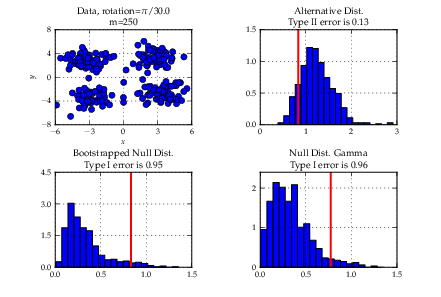
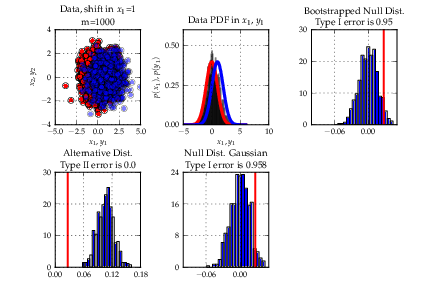
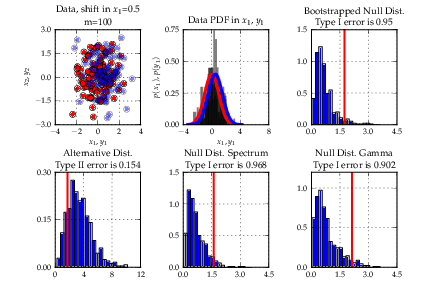
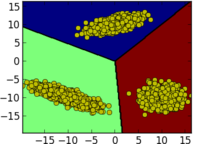
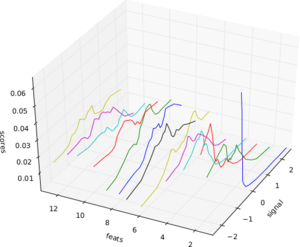
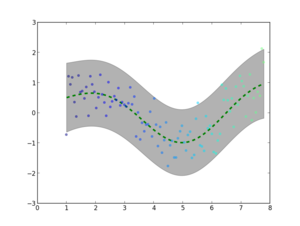
The summer came finally to an end and (yes in Berlin we still had 20 C end of October), unfortunately, so did GSoC with it. This has been the second time for SHOGUN to be in GSoC. For those unfamiliar with SHOGUN - it is a very versatile machine learning toolbox that enables unified large-scale learning for a broad range of feature types and learning settings, like classification, regression, or explorative data analysis. I again played the role of an org admin and co-mentor this year and would like to take the opportunity to summarize enhancements to the toolbox and my GSoC experience: In contrast to last year, we required code-contributions in the application phase of GSoC already, i.e., a (small) patch was mandatory for your application to be considered. This reduced the number of applications we received: 48 proposals from 38 students instead of 70 proposals from about 60 students last year but also increased the overall quality of the applications. In the end we were very happy to get 8 very talented students and have the opportunity of boosting the project thanks to their hard and awesome work. Thanks to google for sponsoring three more students compared to last GSoC. Still we gave one slot back to the pool for good to the octave project (They used it very wisely and octave will have a just-in-time compiler now, which will benefit us all!). SHOGUN 2.0.0 is the new release of the toolbox including of course all the new features that the students have implemented in their projects. On the one hand, modules that were already in SHOGUN have been extended or improved. For example, Jacob Walker has implemented Gaussian Processes (GPs) improving the usability of SHOGUN for regression problems. A framework for multiclass learning by Chiyuan Zhang including state-of-the-art methods in this area such as Error-Correcting Output Coding (ECOC) and ShareBoost, among others. In addition, Evgeniy Andreev has made very important improvements w.r.t. the accessibility of SHOGUN. Thanks to his work with SWIG director classes, now it is possible to use python for prototyping and make use of that code with the same flexibility as if it had been written in the C++ core of the project. On the other hand, completely new frameworks and other functionalities have been added to the project as well. This is the case of multitask learning and domain adaptation algorithms written by Sergey Lisitsyn and the kernel two-sample or dependence test by Heiko Strathmann. Viktor Gal has introduced latent SVMs to SHOGUN and, finally, two students have worked in the new structured output learning framework. Fernando Iglesias made the design of this framework introducing the structured output machines into SHOGUN while Michal Uricar has implemented several bundle methods to solve the optimization problem of the structured output SVM. It has been very fun and interesting how the work done in different projects has been put together very early, even during the GSoC period. Only to show an example of this dealing with the generic structured output framework and the improvements in the accessibility. It is possible to make use of the SWIG directors to implement the application specific mechanisms of a structured learning problem instance in python and then use the rest of the framework (written in C++) to solve this new problem. Students! You all did a great job and I am more than amazed what you all have achieved. Thank you very much and I hope some of you will stick around. Besides all these improvements it has been particularly challenging for me as org admin to scale the project. While I could still be deeply involved in each and every part of the project last GSoC, this was no longer possible this year. Learning to trust that your mentors are doing the job is something that didn't come easy to me. Having had about monthly all-hands meetings did help and so did monitoring the happiness of the students. I am glad that it all worked out nicely this year too. Again, I would like to mention that SHOGUN improved a lot code-base/code-quality wise. Students gave very constructive feedback about our (lack) of proper Vector/Matrix/String/Sparse Matrix types. We now have all these implemented doing automagic memory garbage collection behind scenes. We have started to transition to use Eigen3 as our matrix library of choice, which made quite a number of algorithms much easier to implement. We generalized the Label framework (CLabels) to be tractable for not just classification and regression but multitask and structured output learning. Finally, we have had quite a number of infrastructure improvements. Thanks to GSoC money we have a dedicated server for running the buildbot/buildslaves and website. The ML Group at TU Berlin does sponsor virtual machines for building SHOGUN on Debian and Cygwin. Viktor Gal stepped up providing buildslaves for Ubuntu and FreeBSD. Gunnar Raetschs group is supporting redhat based build tests. We have Travis CI running testing pull requests for breakage even before merges. Code quality is now monitored utilizing LLVMs scan-build. Bernard Hernandez appeared and wrote a fancy new website for SHOGUN. A more detailed description of the achievements of each of the students follows:

Russ Allbery: Review: Devil Take the Hindmost

Review: Devil Take the Hindmost, by Edward Chancellor
Publisher: Plume
Copyright: 1999
Printing: June 2000
ISBN: 0-452-28180-6
Format: Trade paperback
Pages: 349
Subtitled A History of Financial Speculation, Devil Take the Hindmost is exactly that: a history, with chapters on notable speculative bubbles or surges going back to the 1630s. The first significant bubble described is, of course, the notorious tulip speculation in Holland, but Chancellor is more thorough than any previous history I've read. There are chapters on the early stock market schemes, the South Sea bubble, 1820s emerging markets, the railway mania of 1845, the Gilded Age, the late 1970s and early 1980s, and the Japanese real estate bubble of the 1980s, as well as the mandatory look at the stock market crash of 1929. Each is thorough and detailed; indeed, perhaps slightly too detailed, as the clear narrative picture can occasionally groan under the weight of names and capsule biographies. The first thing one should realize about this book is that, despite the apparent currency of the topic, it was written in 1999. That means it predates both the subprime real estate collapse and the dot.com boom, as well as some more minor but possibly relevant events such as the Enron electricity market manipulation. Japan is the most recent bubble that Chancellor can cover; one can only speculate as to what he would make of the 2008 financial crash. The other focus to be aware of is the omission of sovereign debt. Chancellor is exclusively focused on private markets, usually stock markets, and (apart from the chapter on Japan) Western markets, mostly in the US and the UK. Governments play a role in some of the early speculative bubbles (most notably the South Sea bubble), but Chancellor's topic is private speculative frenzies, not the risks and effects of government borrowing. Interrogation of the role of government is mostly limited to cursory discussions of the impact of regulation, mostly in the negative. More on that in a moment. This is a history as opposed to either a polemic or a prescription. Chancellor does not set out to explain how to curb financial speculation. Insofar as he expresses an opinion on it, he presents speculation as a force of unbridled freedom in natural tension with regulation and financial conservatism and sees a cyclical pattern of speculative frenzy, collapse, retrenchment, and then renewed speculation. Speculation, as presented here, is more akin to a force of nature than, as seen in most other books on the topic, a phenomenon of greed that should be limited or prevented. Indeed, Chancellor seems skeptical of the entire project of preventing or limiting speculation, and presents considerable reason for the reader to become skeptical as well. The history he presents is one of speculative manias adapting to and circumventing every control that governments and markets have attempted to place on them. When certain practices are outlawed (and some modern complex financial practices have surprisingly long histories), people just find loopholes or alternative approaches through which to accomplish the same thing. Or the speculative mania takes an unexpected new form. Nor do the manias seem to be decreasing in severity as more regulation, custom, and restrictions attempt to blunt them. Even without adding the financial collapse of 2008, the impacts of the speculative frenzies documented here seem, if anything, to be growing. This is, therefore, a relatively straightforward history, but it's an entertaining one, filling in details that I'd not previously been aware of. The complexity of financial schemes as early as the 1600s was particularly eye-opening. There's a tendency to believe that complex derivative schemes are an artifact of modern financial markets, but they've been a part of speculation for as long as Chancellor goes back. Computers may have added layers to the mathematics, but they haven't added as much to the legal strategems and levels of indirection as one might think. Chancellor emphasizes that throughout: speculation involves a lot of complexity, not necessarily to deceive but to construct situations in which it's in the interest (at least short term) of all involved parties to continue and escalate the speculation. While Chancellor doesn't provide much encouragement to the reader hoping to find ways to curb speculation, he does show some commonalities that provide a bit of a handle on how speculation starts. The one that lept out at me was leverage. Every speculative bubble documented in Devil Take the Hindmost involves borrowing money to reinvest. The mechanism keeps changing, from straightforward loans during the tulip craze to much more complex constructions in modern finance, primarily in response to regulation that attempted to reduce leverage but only banned one specific technique. But whatever method is used, at the bottom is always some scheme for purchasing an asset using debt, magnifying both positive and negative price swings. Some variation of buying stocks on margin is particularly common; Chancellor documents how it was reinvented despite the limits on straight margin purchases instituted after the Great Depression. There is no recommendation here for any regulatory or legal action, but it's obvious from the repetition of history that limiting leverage would be the place to focus attention. I enjoyed this history, but it can be dry, and at times is a bit overstuffed with names, unimportant details, and microbiographies. It's also unfortunate that Chancellor missed two of the most significant (and two very different) speculative bubbles through the timing of his work. It would have been interesting to see them through the lens of his history. What we have is still worth reading, but also somewhat frustrating in Chancellor's refusal to draw or at least underline general conclusions. Devil Take the Hindmost is long on history but short on analysis, and while I appreciate the historian's focus in a source of data, it left me somewhat unsatisfied. Rating: 6 out of 10

26 October 2012

Bastian Venthur: Give Camp Berlin looking for volunteers

My friend Martijn from Talentspender is co-organizing a Give Camp in Berlin. They are looking for IT professionals and designers who want to spend one weekend of their time to support non-profit organizations to solve a specific problem at the Give Camp. It is for a good cause and there is no further commitment after the Camp. Plus you will be provided with free food and drinks. So if you are interested and happen to be in Berlin between 30. November and 02. December 2012 have a look at their website and register for the GiveCamp. Quoting from their flyer:
A GiveCamp is a weekend-long event where technology professionals donate their time to provide custom solutions for non-profit organizations. Voluntarily, without further commitment and for a good cause: the long-term strengthening of the organizations. How does it work?
  • Teamwork of experts during one weekend, with regular input from the NPOs
  • Clearly defined projects, to be completed at the GiveCamp
  • Young professionals mentored by experienced experts
  • Meals and drinks are provided
Who are we looking for?
  1. Software developers, database administrators, designers and entrepreneurs
  2. From students to senior experts
  3. Team players with enthusiasm for interdisciplinary projects

Jon Dowland: dsafilter

Seven years ago I wrote a quick ruby script called dsafilter which would verify the PGP signature on a Debian Security Advisory (DSA), determine which source package was mentioned in the mail, establish which binary packages are built from that source package and see whether any of them were installed on the current host. Future plans included ways of checking package lists for multiple hosts. Recently I had an enquiry about the script. I hadn't realised that the code had disappeared off the face of the web. I've now reinstated it and uploaded it to github. Hopefully people may find it useful!

Matthew Palmer: The e-mail PDA

I ve been a wannabe GTD afficionado for some years. I ve wanted to do it, but managing lists has always been something that has too much friction, overhead, or whatever. Finally, though, I think I might have found a way to manage lists that works. My use-case isn t unique, although I will concede I m perhaps being more dogmatic than most. I want something that: My previous attempt was a tool I called tagnote it was a vim-outliner file full of hierarchically organised outliner entries, with tags inlined. It was a neat idea, but it wasn t smooth to add/browse/delete items, and didn t work with my phone at all (trying to use vim for any length of time on a bottom-of-the-range Android phone would kill me). The current iteration, as the title of this post suggests, is a list manager that entirely uses e-mail. It really is a perfect symbiosis: So what have I got, exactly? It s fairly straightforward: That last point is the one I m really happy I achieved. I ve always been a fan of hide it until you need it , but my previous system didn t let me do that. Now, though, I have a separate list called tickler, and all the items in there have an X-Tickle header, which specifies the date I want to see them. Each night a cronjob runs through the tickler and moves anything for today into the INBOX. An X-Tickle-Repeat header lets me have things that repeat over and over again. So in short, using entirely open-source tools and a couple of hours of my time doing things I enjoy anyway (shell scripts! woo!), I ve now got a list manager that doesn t get in my way more than it absolutely has to. We ll see how long I last this time before I feel the urge to improve my lists again.

Russ Allbery: Review: Fables: Legends in Exile

Review: Fables: Legends in Exile, by Bill Willingham, et al.
Series: Fables #1
Penciller: Lan Medina
Inker: Steve Leialoha
Inker: Craig Hamilton
Colorist: Sherilyn van Valkenburgh
Letterer: Todd Klein
Publisher: Vertigo
Copyright: 2002
ISBN: 1-56389-942-6
Format: Graphic novel
Pages: 127
The characters of human fairy tales are all real. Real, but hidden: they have been driven from their ancestral homelands by some force referred to here only as the Adversary, and have fled to the mundane world to escape his notice. Specifically, New York, where those characters who can pass as human blend into the streets of New York City, and those who can't (referred to only in passing in this story arc apart from one pig) stay at a farm upstate. That's the brilliant premise of Fables, an ongoing comic series from Vertigo that's up to 121 issues plus numerous spinoffs as of this writing. This is the first trade paperback, collecting issues 1 through 5 plus a prose story. Legends in Exile is, in underlying form, a murder mystery. It opens with Jack reporting a murder to Bigby Wolf, who is what passes for law enforcement among the Fables. Rose Red's apartment has been discovered covered in blood, and her body is missing. "No more happily ever after" is written on the wall in blood. Jack, despite being the one to report the crime, is Rose's lover and an obvious suspect. So is Snow White, the effective leader of the Fables (King Cole is a figurehead) and Rose's estranged sister. And, perhaps coincidentally, Prince Charming, Snow White's philandering and stunningly narcissistic ex-husband, has just turned up in town again. The basic plot plays out like a typical murder mystery, complete with a grand reveal in the last chapter and a reconstruction of events. It's diverting but nothing special in itself; it's primarily a hook on which to hang an introduction to the major characters and an exploration of Fables politics and history. And that part is excellent. Like most fractured fairy tales, the characters are more complex and nuanced than they are allowed to be in the canonical stories; unlike most fractured fairy tales, nearly all of that development is allowed to happen after the original stories. The original stories happened, largely as we all remember them, but then the characters kept living and changing. Wolf and his relationship with one of the three pigs is one of the highlights, but I think the odious Price Charming is the best bit of characterization. Willingham takes the idea of a charming seducer and layers in the rest of the womanizing associations that come to mind, while retaining a slick surface charm that is hard not to like at some level. I'm not the best at critiquing art. I read graphic novels for the story, with the art as a nice bonus if it's fairly good. But I can say that Medina's pencils tell the story well, with a few larger panels that were quite impressive. I particularly liked Snow White's office, early in the collection. Detail is reasonably good throughout, there aren't too many panels featuring only talking heads, and Medina does a wonderful job with the pig. (Significant credit probably also goes to Steve Leialoha and Craig Hamilton, the inkers. I'm not a good enough art critic to distinguish between the quality of the pencil work and what was added by subsequent inking.) The largest problem for me with Legends in Exile is my standard problem with graphic novels and the reason I don't buy many of them: the cover price is $10 for what is effectively a short story that builds an interesting world. If one really loves art in stories, graphic novels may be a good value. If, like me, one mostly cares about the story and would be almost as happy with straight prose, the value becomes questionable given the brief length of the material. That said, Legends in Exile does add a quite good prose short story by Willingham, "A Wolf in the Fold," which in several ways is better than the main story of the collection. It tells the story of the original exile and the covenant that settled all past grudges (mostly) from the perspective of the wolf. Willingham does a great job here both striking a more mythic tone than the main story but still tying it back to the sarcastic and practical tone of the rest of the collection. Although the main story itself is not particularly memorable, the background and concept make this one of the better graphic novels I've read. I can see why it's won so many awards, and I'll probably keep reading, despite the high graphic novel price tag. Followed by Fables: Animal Farm. Rating: 7 out of 10

25 October 2012

Russ Allbery: Review: Passion Play

Review: Passion Play, by Sean Stewart
Publisher: Ace
Copyright: 1992
Printing: December 1993
ISBN: 0-441-65241-7
Format: Mass market
Pages: 194
Diane is a shaper: an empath, a sort of telepath, who sees emotions and the actions of others in the form of patterns and stories that she is nearly compelled to follow. She uses that skill as an investigator, a semi-official adjunct to the police who can read crime scenes and motives and hunt down criminals with uncanny ability. That makes her almost socially acceptable, but a shaper is still not something it's safe to be, something best kept hidden. Diane's world is one of theocracy, of dominance by aggressive religion, and even shapers working with the police are not exactly okay. This is Sean Stewart's first novel. He's since gone on to write many other books, one of which I've read and quite enjoyed (Nobody's Son) and another (Galveston) that won several awards, although he's probably most famous for his work on the ilovebees ARG. Passion Play won a minor award itself: the Aurora for the best Canadian SF novel of the year. I found it surprising as a first novel, since it's sharp, focused, and very short. Usually first novels are stuffed to the gills with ideas and plot, as if material had built up for years and exploded in the first book. Passion Play doesn't have that problem; if anything, it errs on the side of telling too little. This is, at its heart, a mystery. A famous actor died in the middle of a play. It was possibly suicide, possibly an accident, and possibly murder; the events of the death are quite ambiguous. But the actor is very important in Redemptionist politics, which warrants an investigation, and then Diane's shaper instincts start finding a pattern and a story in the death. The rest of the cast and crew form the obvious set of suspects, and have the normal mystery novel variety of flaws, foibles, strong personalities, and possible motives. I'm not much of a mystery novel reader, and to be honest I had some trouble tracking all of the characters and remembering Diane's suspicions about each one. But the details of the mystery are less important to this book than Diane herself. Shapers are not exactly stable. The patterns they see are all-consuming, the experience of others' strong emotions acts like a sort of drug, and shapers can burn themselves out. They can fall into a spiral of seeking stronger and stronger emotions until they can't feel anything at all. That's the core conflict of the book: Diane is slowly losing herself. She has a tenuous existence at the outskirts of a society that has inculcated her with an inflexible set of religious beliefs and an uncompromising attitude towards law and justice, but it's not a stable existence, she knows it, and she doesn't know what to do about it. She knows that the pattern of this particular death is deep and powerful, but she can't stay away from it. This is an unusual, and sometimes disturbing, focus for a story. It's risky, unconventional, and doesn't quite work. I think some of the failure is because of first novel problems, but most of it is due to character problems. In the first novel problems category, Passion Play is a bit too choppy and a bit too disjointed. I think Stewart was trying hard to keep the story focused, fast-moving, and tight, but the introduction of the world background is not particularly smooth, and Diane's first-person account of her emotional state is a bit too labored. The plot wants to build in a smooth arc towards its climax, but the writing and scene-setting jerks and jumps instead of flowing. But the larger problem for me is that there aren't enough interesting characters in this book; specifically, there aren't enough to show all sides of Diane's character. Stewart tries, by introducing Jim early in the book to serve essentially as Diane's friend (and she's desperately in need of one), but he's too much of a non-entity. He serves some plot purposes, but he doesn't have a strong enough voice and character to hold his ground against Diane and balance her obsessive internal monologue. And, other than Jim, all the other characters in the book (with the possible exception of the murder victim) are playing bit roles. They're not bad characters, but they don't feel fully real to either Diane or to the reader. It's very easy to put them into boxes that they never break out of. This does support the feeling of narrative inevitability about some parts of the book, but I think it would have been stronger with more conflict, more open challenging of Diane's perspective. I would characterize Passion Play as interesting but flawed, and ultimately a minor work. I'm not sorry I read it, but neither would I have missed much if I'd gone through life without reading it. It has a few interesting ideas, and a bravely unconventional narrative resolution, but it felt choppy and off-balance. Unless you love Stewart's writing and want to read everything he wrote, or unless you (like me) has a quirk about reading all award winners, this is probably best skipped over in favor of Stewart's later work. Rating: 6 out of 10

24 October 2012

Jon Dowland: Debian Days #10 and #11

I've had a few weeks with very little time spent on Debian. I did set aside some time to try to find and fix an RC bug, to help the release. Steven C commented to let me know about the UDD Developer's Dashboard which is a great way to find RC bugs relevant to a team. I sat down to try and fix #648272 in 'Abuse' but sadly I didn't manage, instead finding another possible RC bug #689457 on the way. I was curious as to how long the version 1 web services API for musicbrainz will be kept around, in case there was a strong likelyhood it would be turned off during the lifetime of wheezy. If that were the case, then it might have been worth requesting freeze exceptions to patch the last few WS1 clients to use WS2 instead. However, the musicbrainz developers have no plans to turn off WS1 as long as there are people still using it. This is a bit of a chicken and egg situation for wheezy, but probably not strong enough grounds to persue it any further. So last night was my first "Debian Day" in a while, and by chance I've had a number of enquiries for software and packages which I haven't touched in a while. For the prboom package, we rebuild the upstream tarball to remove some material we don't have the right to distribute. The code that does the repackaging lives in a script called debian/fix_upstream.sh. Prboom upstream release very infrequently, so the script hasn't been run in a while. Fabian Greffrath noticed some bashisms which meant it would not work reliably with a non-bash /bin/sh. He also noticed that we couldn't build the binary lump data/prboom.wad using only free software since some changes that were made to freedoom. One possible fix was to expand the deutex package to recognise freedoom.wad, which I've now applied. Fabian has fixed the bashism issue, but I suspect a more robust solution long-term would be to always rebuild data/prboom.wad during package build, so that code gets exercised more often. The prboom changes are in the Git repository but I haven't release them yet. I need to decide whether it's worth requesting a freeze exception for the orig tarball build issue. It's not an FTBFS but it's similar: you could not rebuild a binary distributed in the source tarball using software only in Debian, at least not without some workarounds. We've had another request to package Prboom+. I've never been particularly interested in doing this myself, but it would probably be very little work, you could more-or-less take the prboom packaging as it stands. One thing I thought would be interesting to try would be to set up a git repository for the packaging and import the upstream Subversion repository in its entirety via git svn, rather than just import the released tarballs. Sadly their repository layout is not quite ideal for this. game-data-packager continues to grow. Following hot on the heels of Hexen 2 support, Markus Koschany has written preliminary support for LGeneral, a game which has been in Debian, at least in part, on and off. Hopefully we'll have that merged soon, and finish of Hexen 2 support whilst we're at it. On that note, here's a lazyweb question: what's the most convenient way to determine the length (at microsecond resolution) of a PCM WAV file from the command-line? Finally, we've been building Debian-based virtual machines at work, which meant dusting off some old preseed files and tweaking them to have unattended installs. This took a lot longer than I thought. It's certainly a lot more painful than kickstart and Redhat-based systems, and it's very unlikely that a preseed file that worked for one version of Debian would fully work for another. I'm not certain but I think even different releases of d-i targetting the same release "break" assumptions you might make, particularly about which questions you need to answer via the kernel command line, rather than in the preseed file. That's one thing we really need to sort. It's crazy having to specify keyboard layouts in the command line for VMs which won't ever have a keyboard. The disparity between what the user is asked, what value is written to the debconf database at that point in the install process, and what ends up in the debconf database at the end of the process is also a real pain: answering a question about keyboard layout sets half a dozen different debconf values in a cascade that is probably sensitive to other things like priority or whether d-i is in expert mode, too. So working backwards from the debconf database of an installed machine is an exercise in frustration, and figuring out which questions are asked prior to the preseed file being read for any given d-i or Debian release is a slow trial and error process. I'm going to get in touch with the d-i folks and see what kind of continuous integration systems they have in place. It would be great to have commit-level notification that you've broken preseed builds. If not for the d-i folks, then certainly at work.

23 October 2012

Craig Small: More spam from nobistech.net

I get a lot of spam. Most of it, thankfully is blocked by dspam but occasionally i get some through the filter. One that particularly caught my eye was interesting not so much what it was advertising (I don t read that part of the email) but where it came from and goes to. Normally there are two service providers involved in spam. The email comes from (or via) one and then the spamvertised website is another. The interesting thing is for this spam both of these were the same service provider. The email came from 174.34.168.85 and the spamvertised website was 70.32.40.194. Both of these addresses are owned by nobistech.net. I punted the email to spamcop and it said that they re not interested in spam reports. A few google queries shows that these guys seem quite happy to have spam sources and destinations and have been doing it for years. They either appear as nobistech.net or unbiquity servers but they are one and the same organisation, or at least related. I won t bother to send anything to them, it seems this has been done many many times by others with no results. Instead some CIDR blocks will be put into my blacklist.

22 October 2012

Petter Reinholdtsen: Amazon steal books from customer and throw out her out without any explanation

A blog post from Martin Bekkelund today tell the story of how Amazon erased the books from a customer's kindle, locked the account and refuse to tell the customer why. If a real book store did this to a customer, it would be called breaking into private property and theft. The story has spread around the net today. A bit more background information is available in Norwegian from digi.no. It is no surprise that digital restriction mechanisms (DRM) are used this way, as it has been warned about such abuse since DRM was introduced many years back. And Amazon proved in 2009 that it was willing to break into customers equipment and remove the books people had bought, when it removed the book 1984 by George Orwell from all the customers who had bought it. From the official comments, it even sounded like Amazon would never do that again. And here we are, three years later. And thought this action is against Norwegian regulations and law, it is according to the terms of use as written by Amazon, and it is hard to hold Amazon accountable to Norwegian laws. It is just yet another example of unacceptable terms of use on the web, and how they are used to remove customer rights. Luckily for electronic books, there are alternatives without unacceptable terms. For example Project Gutenberg (about 40,000 books), Project Runenberg (1,652 books) and The Internet Archive (3,641,797 books) have heaps of books without DRM, which can read by anyone and shared with anyone. Update 2012-10-23: This story broke in the morning on Monday. In the evening after the story had spread all across the Internet, Amazon restored the account of the user, as reported by digi.no and NRK. Apparently public pressure work. The story from Martin have seen several twitter messages per minute the last 24 hours, which is quite a lot, and is still drawing a lot of attention. But even when the account is restored, the fundamental problem still exist. I recommend reading two opinions from Simon Phipps and Glen Moody if you want to learn more about the fundamentals and more details about the original story.

Erich Schubert: Changing Gnome 3 colors

One thing that many people dislike about Gnome 3, in my opinion is that the authors/maintainers impose a lot of decisions on you. They are in fact not really hard coded, but I found documentation to be really inaccessble on how to change them.
For example colors. I found it extremely badly documented on how to customize GTK colors. And at the same time, a lot of the themes do not work reliably across different Gnome versions. For example the unico engine in Debian experimental is currently incompatible with the main GTK version there (and even worse, GTK does not realize this and refuse to load the incompatible engine). A lot of the themes you can get on gnome-look.org for example use unico. So it's pretty easy to get stuck with a non-working GTK 3, this really should not happen that easily. (I do not blame the Debian maintainers to not have worked around this using package conflicts yet - it's in experimental after all. But upstream should know when they are breaking APIs!)
For my work on the ELKI data mining framework I do a lot of work in Eclipse. And here GTK3 really is annoying, in particular the default theme. Next to unusable, actually, as code documentation tooltips show up black-on-black.
Recently, Gnome seems to be mostly driven by a mix of design and visual motivation. Gnome shell is a good example. No classic Linux user I've met likes it, even my dad immediately asked me how to get the classic panels back. It is only the designers that seem to love it. I'm concerned that they are totally off on their audience, they seem to target the mac OSX users instead of the Linux users. This is a pity, and probably much more a reason why Gnome so far does not succeed on the Desktop: it keeps on forgetting the users it already has. They by now seem to move to XFCE and LXDE because neither the KDE nor the Gnome crowd care about classic Linux users in the hunt for copying OSX & Co.
Anyway, enough ranting. Here is a simple workaround -- that hopefully is more stable across GTK/Gnome versions than all those themes out there -- that just slightly adjusts the default theme:
$ gsettings set \
org.gnome.desktop.interface gtk-color-scheme '
os_chrome_fg_color:black;
os_chrome_bg_color:#FED;
os_chrome_selected_fg_color:black;
os_chrome_selected_bg_color:#f5a089;
selected_fg_color:white;
selected_bg_color:#c50039;
theme_selected_fg_color:black;
theme_selected_bg_color:#c50039;
tooltip_fg_color:black;
tooltip_bg_color:#FFC;
'
This will turn your panel from a designer-hip black back to a regular grayish work panel. If you are working a lot with Eclipse, you'll love the last two options. That part makes the tooltips readable again! Isn't that great? Instead of caring about what is the latest hipster colors, we now have readable tooltips for developers again instead of all that fancy-schmanzy designer orgasms!
Alternatively, you can use dconf-editor to set and edit the value. The tricky part was to find out which variables to set. The (undocumented?) os_chrome stuff seems to be responsible for the panel. Feel free to change the colors to whatever you prefer!
GTK is quite customizable. And the gsettings mechanism actually is quite nice for this. It just seems to be really badly documented. The Adwaita theme in particular seems to have quite some hard-coded relationships also for the colors. And I havn't found a way (without doing a complete new theme) to just reduce padding, for example. In particular, as there probably are a hundred of CSS parameters that one would need to override to get it into everywhere (and with the next Gnome, there will be again two dozen to add?)
Above method just seems to be the best way to tweak the looks. At least the colors, since that is all that you can do this way. If you want to customize more, you probably have to do a complete theme. At which point, you probably have to redo this at every new version. And to pick on Miguel de Icaza: the kernel APIs are extremely stable, in particular compared to the mess that Gnome has been across versions. And at every new iteration, they manage to offend a lot of their existing users (and end up looking more and more like Apple - maybe we should copy more from where we are good at, instead of copying OSX and .NET?).

Benjamin Mako Hill: Lookalikes

The seal of the National Intellectual Property Rights Coordination Center declares "Protection is Our Trademark." But, is the same seal violating Nintendo's trademark for the Pok mon Zapdos? I'll let you decide. /copyrighteous/images/niprc_zapdos_lookalike.png Thanks to Tomas Reimers for catching this one. Previous lookalikes here and here.

Yves-Alexis Perez: Debian, Xfce 4.10 and Xfce 4.11

It's been six months since Xfce 4.10 has been released. And it's been four months since Wheezy is frozen. Due to this timing (and the fact Squeeze has 4.6 and doing a 4.6 4.10 upgrade needed some tuning in various packages), it was decided to not try to push 4.10 into Wheezy that late in the release cycle. So Xfce 4.10 was uploaded to experimental instead, and as it needs a full rebuild of all panel plugins against 4.10 panel (another reason for not trying to push it to Wheezy), those have not been uploaded. You can try Xfce 4.10 using experimental, but you'll need to remove the xfce4-goodies metapackage and the various depending plugin (since they'll just crash if you try to load them on 4.10 panel). Multiple people asked me (either on IRC, by private or public mail) when 4.10 will be uploaded to unstable and transition to testing. Like last time, the answer is : not before Wheezy is released. Right now, we're more interested in stabilizing Wheezy and squashing the bugs there than adding new ones in unstable. So, if you want to have Xfce 4.10 in Debian sid/testing sooner, then the easiest and fastest way is to fix some release critical bugs so we can release sooner, and then start breaking sid by uploading a whole lot of new stuff there. Note that this is true also for other software like GNOME, KDE stack (I have no idea how to call it these days), the Linux kernel, strongswan or whatever. About development releases of Xfce 4.11 (like the recently released exo 0.9 and Thunar 1.5), well, since we already use experimental for 4.10, there's not much chance they get uploaded anytime soon. We could try to package them and let people build it themselves, or I could host it somewhere on my server for people to try. But as I already said, we're more interested in fixing bug in Wheezy right now, and people interested in finding bugs in Xfce development releases (so they are fixed for the final one) should build it themselves and report everything they find on the Xfce bugzilla. TL;DR: if you care about new, shiny stuff, please help fixing RC bugs in Wheezy.

21 October 2012

Jon Dowland: Dropbox and drive letters

For long-winded reasons I'd rather not explain nor defend, my partner uses Dropbox for a large set of important files (~70G), which are stored on a removable drive. She is also a Windows user. Recently, by introducing a few new drives, I inadvertently changed the drive letter that is assigned to her portable device, which stopped Dropbox from working. Solving this properly is rather finicky so I thought I'd write down what I did. The end goal is to try and ensure that the portable drive always gets the same drive letter and that Dropbox is configured to use that drive letter, but before I can get that far I need to get Dropbox syncing again. It used to be F:, and I opted for U: going forward. Luckily the extra letters I'd introduced were all partitions on a separate hard drive from the OS, so I powered the machine down, unplugged the extra hard drive and booted back up. This freed up the stolen drive letters, but the portable drive did not re-inherit them. Running regedit as an administrative user and renaming keys in HKEY_LOCAL_MACHINE\SYSTEM\MountedDevices moved the USB drive back to the correct letter, but I suspected the extra hard drive would take precedence when it was back, so this was only an interim solution. With the portable drive back on F:, the Dropbox client was happy once again. However I needed to reconfigure the Dropbox client to use a different letter. I wasn't happy with the idea of altering the Dropbox client's configuration database under its feet, so I had to do everything "by the book". Luckily, the client supports the notion of moving your Dropbox folder. Combined with the command-prompt subst command (run as the local user rather than as an admin this time), I was able to clone the F: drive to a virtual U: drive, and then ask Dropbox to move the folder.
subst U: F:\
This was pretty awkward. F:\Dropbox and U:\Dropbox are in fact the same folder, so I needed to ask Dropbox to move it from F: to something other than U:. I opted for U:\tmp. The move took a long time (~2 hours). The proper solution is to try and get a stable drive letter for her device. This can be achieved using a tool called 'USB Drive letter Manager', or USBDLM. USBDLM is free for educational use, and my partner is a teacher, which is lucky. Once that's all sorted, reboot, insert portable device, ensure it's on the right drive letter, and move the Dropbox folder back down to U:. This time the move was near instantaneous.

Christian Perrier: [life] Running update: nearly qualified for Boston marathon...

That was not my target in today's marathon (my second one in the year). The target was breaking my 3h38'45" record, set on June 10th in Caen. And, well, I did it. By more than 5 minutes \o/. Of course, the Seine-Eure marathon is the perfect place for this: My target was running 5'06"/km, so 3h35'11" (but the target was running this as long as possible and see what happens after km 35). I did this nearly perfectly in the first half, reaching the half-marathon in 1h47'30". Double this and you get 3h35'..:-) "However", I slightly accelerated in the second half, first without noticing, then because....I just could do it..:-). So I managed to run the second half at an average 5'/km, with even the last 2 kilometers around 4'50" and an amazing sprint at the end. Usain bubulle. The outcome is 3h33'35". Doh. Never thought I could do this. It seems that my unusual preparation (remember the "let's run a marathon when coming back from work, at night", in September? or the 5 half-marathons in a row....culminating in a 3/4 marathon in the 6th week-end?)...was not so bad. I'm now very close to qualifying times for Boston, my dream marathon (much more than NYC) as they are 3h30' for my age category. Well, another option is to wait turning 55, where the qualifying time is then 3h40..:-)...but it woudl be quite good to complete one under 3h30. Now, it doesn't look like a dream. We'll see at the end of next year as I will only run one marathon, in autumn, more focusing Spring on ultra running (and, technically, a marathon, but that will be the Mont-Blanc marathon, just before Debconf13....and these 42.195km are quite different from those in Normandy!

20 October 2012

Ritesh Raj Sarraf: Debian Boot time

<iframe frameborder="0" height="350" src="http://www.youtube.com/embed/cTK3aIZbe2A" width="425"></iframe> In case, the video doesn't show on the page, http://www.youtube.com/watch?v=cTK3aIZbe2A This blog post is to show-off the impressive performance I saw with my machine.
I recently switched to a ThinkPad W530 laptop. It is a fairly recent machine with the following hardware config:
  • Intel(R) Core(TM) i7-3720QM CPU @ 2.60GHz
  • 8 GiB RAM
  • nVIDIA Optimus
  • Samsung SSD Drive
On the software front, I decided to take my chances. Hence:
  • BTRFS File System
  • SystemD Init
The rest is in the video. It is impressive to see how drastically the experience has changed with this combination.
From my limited time spent exploring the machine, all credit goes to the SSD technology.

19 October 2012

Martin F. Krafft: Configuration management

Puppet I've really had it with Puppet. I used to be able to put up with all its downsides
  • Non-Unix approach to everything (own transport, self-made PKI, non-intuitive configuration language, a faint attempt at versioning (bitbucket), and much much more )
  • Ruby
  • Abysmal slowness
  • Lack of basic functionality (e.g. replace a line of text)
  • Host management and configuration programming intertwined, lack of a high-level approach to defining functionality
  • Horrific error messages
  • Catastrophic upgrade paths
  • Did I mention Ruby and its speed?
  • Lack of IPv6 support
  • [I could keep going ]
but now that my fourth attempt to upgrade my complex configuration from version 0.25.5 to version 2.7 failed due to a myriad of completely incomprehensible errors ("err: Could not run Puppet configuration client: interning empty string") and many hours were lost in trying to hunt these down using binary searches, I am giving up. Bye bye Puppet.

An alternative But I need an alternative. I want a system that is capable of handling a large number of hosts, but not so complex that one wouldn't put it to use for half a dozen machines. The configuration management system I want looks about as follows: It
  • makes use of existing infrastructure (e.g. SSH transport and public keys, Unix toolchain, Debian package management and debconf)
  • interacts with the package management system (Debian only in my case)
  • can provision files whose contents might depend on context, particular machine data and conditionals. There should be a unified templating approach for static and dynamic files, with the ability to override the source of data (e.g. a default template used unless a template exists for a class of machine, or a specific hostname)
  • can edit files on the target machine in a flexible and robust manner
  • can remove files
  • can run commands when files change
  • can reference data from other machines (e.g. obtain the certificate fingerprint of each hosts that define me as their SMTP smarthost)
  • can control running services (i.e. enable init.d scripts, check that a process is running
  • is written in a sensible language
  • is modular and easily extensible, ideally using a well-known language (e.g. Python!)
  • allows to specify infrastructure with tags ("all webservers", "all machines in Zurich", "machines that are in Munich and receive mail"), but with the ability to override every parameter for a specific host
  • should just do configuration management, and not try to take away jobs from monitoring software
  • logs changes per-machine and collects data about applied configurations in a central location
  • is configured using flat files that are human-readable so that the configuration may be stored in Git (e.g. YAML, not XML)
  • can be configured using scripts in a flexible way
Since for me, Ruby is a downside of Puppet, I won't look at Chef, but from this page, I gleaned a couple of links: Ansible, Quattor, Salt, and bcfg2 (which uses XML though). And of course, there remains the ephemeral cfengine.

cfengine I haven't used cfengine since 2002, but I am not convinced it's worth a new look because it seems to be an academic project with gigantic complexity and a whole vernacular to its own. There is no doubt that it is a powerful solution, and the most mature of all of them, but it's far away from the Unix-like simplicity that I've come to love in almost 20 years of Debian. Do correct me if I am wrong.

Ansible Ansible looks interesting. It seems rather bottom-up, first introducing a way to remotely execute commands on hosts, which you can then later extend/automate to manage the host configurations. It uses SSH for transport, and its reason-to-be made me want to look at it. My ventures into the Ansible domain are not over yet, but I've put them on hold. First of all, it's not yet packaged for Debian (Ubuntu-PPA packages work on Debian squeeze and wheezy). Second, I was put off a bit by its gratuitous use of the shell to run commands, as well as other design decisions. Check this out: there are modules for the remote execution of commands, namely "shell", "command", and "raw". The shell modules should be self-explanatory; the command module provides some idempotency, such as not running the command if a file exists (or not). To do this, it creates a Python script in /tmp on the target and then executes that like so:
$SHELL -c /tmp/ansible/ansible-1350291485.22-74945524909437/command

Correct me if I am wrong, but there is zero need for this shell indirection. My attempts at finding an answer on IRC were met by user "daniel_hozac" with a reason along the lines of "it's needed, believe me", and on the mailing list, I am told that only the shell can execute a script by parsing the interpreter line at the top of the module. Finally, the raw execution module also executes using the shell And there a few other design decisions that I can't quite explain, around the command-line switch --sudo see the aforementioned message In short: running a command like
ansible -v arnold.madduck.net -a "/usr/bin/apt-get update" --sudo

does not invoke apt-get with sudo, as one might like; it invokes the shell that runs the Python script that runs the command. Effectively therefore, you need to allow sudo shell execution, and for proper automation, this has to be possible without a password. And then you might just as well allow root logins again. The author seems to think that "core behaviour" is that sudo allows all execution and that limiting the commands to run is not a use-case that Ansible will support. Apparently, I was the first to ever suggest this. There are always ways around (e.g. skip --sudo and just use sudo as the command, simply ignore the useless shell invocation and trust that your machine can handle it, but when such design decisions remain incomprehensible and get defended by the project people, then I am hesitant to invest more time on principle.

Salt Finally, I've looked at Salt, which is what I've spent most time on so far. From the discussions I started on host targeting and data collection, it soon became apparent that Salt is very thin and flexible, and that the user community is accomodating. Unfortunately, Salt does not use SSH, but at least it reuses existing functionality (ZeroMQ). As opposed to the push/pull model, Salt "minions" interestingly maintain a persistent connection to the server (which is not yet very stable), and while non-root usage is still not unproblematic, at least there has already been work done in this direction. I think I will investigate Salt more as it does look like it can do what I want. The YAML-based syntax does seem a bit brittle, but it's the best I've found so far. NP: The Pineapple Thief: Someone Here is Missing

18 October 2012

Lior Kaplan: LibreOffice conference 2012 (day 1)

Most of the day before the conference, and the conference morning spent working and finalizing my RTL status presentation. My apologies to the lecturers whose lectures I attend only physically (sorry, I can t split my attention too well). To my disappointment I had very few attendees in the talk, but I can understand the competition, as the other parallel talks were quite interesting. In at least one of them I wished to attend my self (if I could only be in two places in the same time ). Maybe next year we should have less parallel talks (4 tacks is a lot). To still push some of the RTL issues, I ve done a private talk over RTL issues for Caolan and Jan (kendy), which was interesting with some feedback. Jan took fdo#44657 on himself, and by the evening he showed me a great improvement in the status of things, so at least there s horizontal scrolling in Calc with RTL interface. With the help of Rene, I got master builds for Debian, and would spend the rest of the conference to check some bugs with it. During the evening dinner and social event I wanted to thank Miklos personally for really improving the RTF support for RTL and Hebrew documents, and he showed me a few of the new stuff he d done in master/3.7. While working I ve noticed a few regressions, and I m glad they were caught early. Cedric told me that after last years talk, he started to check his features also in RTL interface, which for me was the best feedback on my efforts. Having developers keeping RTL in mind (even only nce in a while) saves a lot of trouble along the road. I would prefer to check and double check features while they re being created instead of trying to get bugs fixed later on the release process. Another thing which I enjoyed noticing is the fresh blood the GSoC project brings to LibreOffice. I ve met with Miklos and Eilidh and got impressed with how a successful internship was used as a springboard into a good job. As there almost aren t any Israelis who take part in GSoC, I m not used to notice the effect closely. The event dinner and mingling was very successful for me, I ve got a chance to talk with old friends and meet some of the new attendees (and even get some technical work done by talking with people) Thanks again for the organizational team.
Filed under: LibreOffice

Jonas Smedegaard: SOME DESCRIPTIVE TITLE

# Copyright (C) YEAR Free Software Foundation, Inc. # This file is distributed under the same license as the PACKAGE package. # FIRST AUTHOR <email>, YEAR. # #, fuzzy msgid "" msgstr "" "Project-Id-Version: PACKAGE VERSION\n" "POT-Creation-Date: 2012-10-12 12:27+0300\n" "PO-Revision-Date: YEAR-MO-DA HO:MI+ZONE\n" "Last-Translator: FULL NAME <email>\n" "Language-Team: LANGUAGE <ll>\n" "Language: \n" "MIME-Version: 1.0\n" "Content-Type: text/plain; charset=UTF-8\n" "Content-Transfer-Encoding: 8bit\n" #. type: Title # #, no-wrap msgid "Robot-driven phone theater" msgstr "" #. type: Plain text #, no-wrap msgid "\n" msgstr "" #. type: Plain text #, no-wrap msgid "\n" msgstr "" #. type: Plain text msgid "I collaborate with [Hello!earth][] on creating theater performances." msgstr "" #. type: Title ## #, no-wrap msgid "You've got a message!" msgstr "" #. type: Plain text msgid "" "Unlike traditional theater, however, the "stage" is everyday life. The " "familiar streets of your home town, the supermarket, or perhaps your own " "home. And the story is yours uniquely, like ancient storytelling at a " "campfire unfolding inside your head, imagined by you, only seeded by the " "storyteller." msgstr "" #. type: Plain text msgid " and the storyteller is robots, texting your cellphone." msgstr "" #. type: Title ## #, no-wrap msgid "Programming poems to be live-performed by machines" msgstr "" #. type: Plain text msgid "" "Vera and Jacob, the artists behind Hello!earth, compose "poems" that I " "program a system to "read" for the audience, triggered by a "dialogue" " "of words and actions of the audience." msgstr "" #. type: Plain text #, no-wrap msgid "[[!graph src="""\n" msgstr "" #. type: Plain text #, no-wrap msgid "" "rankdir=LR\n" "subgraph robot botphone poetrybot chatbot \n" "authors -> poetrybot -> botphone -> "phone net" -> audience;\n" "admin -> chatbot;\n" msgstr "" #. type: Plain text #, no-wrap msgid "#rank=same authors audience artists admin \n" msgstr "" #. type: Title ## #, no-wrap msgid "Who's behind the wheel?" msgstr "" #. type: Plain text msgid "When I say "robot-driven" I don't mean computers taking over." msgstr "" #. type: Plain text msgid "" "Like a car driven by the engine, these performances are driven by programs " "acting like agents with tiny missions. But like someone is (or should be!) " "steering the car to reach a sensible destination, the robot agents don't " "operate autonomously, but are steered throughout the performance." msgstr "" #. type: Plain text msgid "" "Our phone performances are guided by the plot and storyline(s) embedded " "into the robot system by HelloEarth and me. But the real beauty of it is " "that the one steering - the one really in control - are those traditionally " "called "audience", but here more accurately labelled "participants". " "Individually or collaboratively, depending on plot of each performance, the " "participants unfold the "play" in their minds, inspired by the weakest " "possible but accurately planted seeds of inspiration provided by our " "machinary." msgstr "" #. type: Plain text msgid "Theater performed by robots, controlled by the minds of the audience." msgstr "" #. type: Plain text #, no-wrap msgid "" "[hello!earth]: http://helloearth.cc/\n" " "hello!earth - platform for art projects crossing the edge of diverse performative practice"\n" msgstr ""

Jonas Smedegaard: Blended configuration

I want all my computing environments "furnished" similarly and as close to my personal taste as possible - be it big and small machines, self-administered and user accounts of others. and not only for myself - similar is needed for the environments I help maintain for my friends Siri, Erik and Peter. The environments are seldom fully equal, so simply copying things around is rarely useful. Here's a checklist of things that I need to customize and syncronize for me and my friends to feel at $HOME : Above is work-in-progress. I hope to later extend with more details - probably by linking to separate pages about each subtopic.

Next.

Previous.