Search Results: "sto"

7 August 2011

Wouter Verhelst: Restoring from backups using NBD

During the past Debconf, Joerg borrowed my laptop. I'd told him that he could basically wipe all files if he wanted to, since I had a full backup at home. With that, I mostly meant to say that he could reinstall the box, or add or remove packages as much as he wanted to. What I didn't mean for him to do was to give it back to me with a completely wiped hard disk that it wouldn't even boot off of anymore, but that's what he did. Oh well. So I hadn't done the restore yet, last week, since I'd been busy doing other things. Now, my backup consisted of a file called 'mbr' of 2KB; a file called 'backup.tar.bz2' of 66G, and an LVM volume called 'windows' that was written with 'dd if=/dev/sda1 of=/dev/lvm/windows'[1]. Meaning, I could do a restore, but it was somewhat more involved than just running bacula and allowing it to do its stuff for a while. I briefly considered mounting the external USB disk on which the backup was written to my other laptop, and streaming everything over the network, but quickly discarded that idea for speed issues. Instead, I created 4GB NBD export on that other laptop, ran d-i with my partman-nbd on the to-be-restored laptop, installed Debian to the NBD device, booted off of that, and could then do a restore while having a fully functional system. With the sole gotcha that I couldn't disconnect it from the network until the restore was complete, but that's not insurmountable. The 'dd' restore has finished in the mean time, I'm still waiting for tar to complete its job. Once that's finished, I'll probably have to refresh grub to the internal hard disk, and then I'll be able to boot it. I hope. Having said that, doing a bare-metal restore while booting off of an NBD device is quite practical. I mean, sure, I could have downloaded a live system from the network somewhere, but that would've taken forever, would probably have had an impact on performance of the system while it was running, and overall isn't very ideal IMO. On the other hand, an NBD device is much faster than a local CD or DVD, can be written to without requiring a RAM disk, doesn't need squashfs to get you to reasonable sizes, and as far as the kernel is concerned it's just a local hard disk. If the above paragraph sounds like I'm proud, then that's because I am. Two years ago, doing this would have involved much more manual work. Today, I had a system running root off NBD in minutes. [1] Yeah, so my car has a builtin TomTom GPS that I can't do updates for under Linux, AFAIK. Plus some other stuff. Sue me.

Tanguy Ortolo: Useful options of rsync

rsync logo
rsync is often used to back up systems, with options such as:
-a --archive
recurse and preserve usual attributes: symlinks, devices and special files, user and groups ownership, permissions and times;
-H --hard-links
detect and preserve hard links;
-A --acls
preserve ACLs, if you use them;
-X --xattrs
preserve extended attributes, if you use them.
In addition to these common options, rsync has plenty others, so everyone has his own recipe, but I would like to share two useful options I discovered.--numeric-ids By default, rsync uses literal UIDs and GIDs if it can find matches in both the source and the destination. That is, if you have users jacquouille (1002) on your source system Reblochon, and a user jacquouille (1005) on your destination system Neufch tel, rsync will map them: files with an UID of 1002 will be backed up with an UID of 1005. This may or may not be wanted, but anyway you must be aware of it. For instance, if you have to restore Reblochon's home directories and do that by attaching a new drive locally to Neufch tel, you will end with mixed up UIDs. This option --numeric-ids forces rsync to use numeric IDs instead of trying to map them. It is notably needed for backups of jailed systems (BSD jails, OpenVZ, VServer, lxc ) which appear to have bogus IDs when seen from their host system because they have their own ID maps. --fake-super When you back up a full system or anything that requires keeping file ownership or device information, you need to have root privileges on the destination system. Without them, rsync would be unable to correctly chown() the destination files. This option --fake-super offers a way to back up privileged information without requiring root privileges. It works by adding special extended attributes such as user.rsync.%stat containing al this information. Of course, it still requires a destination file system that supports extended attributes. This provides a good way to push system backups without weakening your security by opening a root access on you destination system. For instance, I personally use it with rsyncd running as an unprivileged user.

Asheesh Laroia: Women, men, and accidentally being a jerk (at the Desktop Summit)

The first day of the Desktop Summit was yesterday, Saturday, August 6. I loved it and gave a presentation. There are two very different stories I can tell on the topic of gender equality in free software. I'll start with the bad.
It's pretty easy, in the U.S. at least, to get people of privilege to stop using terms that evoke centuries of oppression from slavery. It's harder to ask people to stop doing that to women. I'm writing this post to ask for that. There were two different times that people I generally respect used words that historically have been used to hurt and minimize women. "Cygnus Solutions is prostitutes." Dave Neary was delivering a talk (that I found impressively informative) called, "The cost of going it alone". When the talk covered the cost (in time and money) of getting your corporation's code into the community branch of an open-source project, he pointed out you could hire someone with the skills. Cygnus was the go-to company for that in the 1990s; to explain that Cygnus does not care who they work for, he said the sentence in bold. "The OpenSuSE Build Service is a slut." I was at a party at a hackerspace last night. Someone who I admire for his work in free in free software, both technical and community, was joking with me about that no one should compile (or use) GTK. I riffed on the joke and remarked, "The OpenSuSE build service will build anything." He replied with the sentence in bold. "Slut" and "prostitute" are terms that recall the objectification of women. They're terms that attempt to measure a woman's worth as a sex object. It's not nice to the many women in attendance to bring that up. You might not have thought this through. You might want to read one woman's take "On Sluts, Rape, and Fuckery". Give it a read. Then, give it a rest. The thing is, this matters all the time. That's why I have to call you two out on it. Now for the happy story.
While watching the Desktop Summit's intern showcase, I was floored. One hacker implemented Off-The-Record instant messaging for Telepathy. Another implemented pluggable back-ends for Getting Things GNOME, a task manager. I heard about overwhelming documentation and usability improvements to GNOME mainstays Cheese and Anjuta. In a short summer, these students made huge changes. For most of them, this was the first time they delivered any sort of presentation. Every single talk was delivered in earnest and enthusiasm. They told us about the work they had done and what might happen in the future. The other remarkable thing about the intern presentations was the demographics. I didn't keep count, but it seemed like as many women as men presented. We heard about hugely-important changes to documentation, code, and usability. People from central Europe, South Asia (yay), and Brazil took the stage. I hope that is the future of free software.
There are two things I want to see for our community. I want to know that people are respected and not reminded of centuries of oppression. I also want to see our community grow in size and diversity. I treat these issues as separate. We should choose respectful words when we speak not because we want more women to show up, but because it part of the expectation of decency that we should be able to expect from each other. And I failed the community when I did not make it clear there and then that this kind of language is not okay with me. It took me a day to understand this failure, so here I am writing this blog post. P.S. Thanks to Karen Rustad for her feedback while writing this post.

Lars Wirzenius: Missing roles in software: build engineers

The construction, deployment, and use of software involves a number of roles. I do not have an exhaustive list, but I have a couple in my list that seem to be surprising to some developers. In the traditional Unix (mainframe) model, there are three roles: In my personal reality distortion bubble, this model is badly broken, and has been since the middle of the 1990s. Here's an updated model: A common misconception is that distro developers merely compile software and shove the binaries into glorified tarballs. That is, of course, part of the job, but it's also the part that most distro's tools completely automate. There's a lot more to do, though. For example, just keeping track of known security problems among thirty thousand packages, and making or finding fixes for them, and testing the fixes, and releasing updates for them, takes up quite a bit of effort. Another thing distro developers have to spend effort on is dealing with the multitude of build systems upstream projects use. The freedom to experiment with different solutions is one of the cornerstones of free software development. However, when it comes to build systems, many of them are not serious experiments, and instead are quick hacks thrown together to imperfectly solve problems that sometimes should not exist at all. This highlights one role prominently still missing: build engineer. Their task is to solve the problem of taking the upstream source code, dealing with build-time configuration issues, actually building the software, and then installing it in whatever location the person installing the software wants it installed. Further, their task is to provide the software to do this in a sensible manner. Build engineers already exist, of course. For example, the developers of the autotools suite are such. Every upstream project also has someone who sets up autotools for their project, or some other build tools, or writes them from scratch for that project. However, what's lacking, perhaps, is recognition that build engineering is an important part of software development. Mostly, build systems are set up (or, worse, written) by upstream developers to fit their narrow view of how things should work, a view anchored in the old, broken model of roles. This attitude matters, because for the most part, build systems do not seem to be written to the same quality standards as the rest of the upstream software. For example, when an upstream developer writes a Makefile, and does not consider distro development, they'll often make it hard to differentiate between install-time location and run-time location of various components of the software. Thus, it might be hard for the Debian packager to get the software installed into debian/tmp rather than /usr/local, because the build system hardcodes debian/tmp/usr/lib/foo/plugins as the location of the plugins, since that's where the software gets installed, even if, in the Debian scenario, it's not where it gets run from. Luckily for much software these problems have been solved or avoided. Indeed, as crufty as autotools is, it's one of the things that has kept upstreams sane about their build systems, by providing such good tools that it's more work to write a new, bad one than to use autotools. We currently have roving bands of translators, who move from project to project and translate them into various natural languages. I would like to see a future where there are people dedicated to build engineering, who go from project to project and set up or fix their build problems. A good build system, once set up, should require a minimum of work to keep working. I'd also like to see much improvement in the build software. As good as autotools has been to free software, I'm sure there's a lot of room for improvement. For example, autotools requires setting up a bunch of boilerplate files in each project, which seems like something that could be avoided by relying on specific conventions. However, those improvements are a separate topic. I might go into them some day, if I decide to start developing build tools myself, but until then, I'll let those who do that decide how they want to do it. PS. There are lots more missing roles in my model of free software development, of course. For example, security engineers (find and fix problems, but also provide ways to prevent problems, or limit their scope), internal politicians (keep the project's human wheels from squeaking too much), diplomats (keep different projects from clashing too much), release engineers, etc. Someone should make an exhaustive list.

Christian Perrier: Jiwayeu Anivaichai' Bob

Today is our "historical" Spongebob (the one you can see here) birthday. Bob is indeed "born" on August 7th 2002, in Las Vegas, when my (at that time) kids won it in the Kids Casino in Circus Circus casino. Since then, Bob is one of the family mascots along with the world famous Titeps (these are born much earlier). The Perrier family has tons of stories about Bob and we developed a major "Sponge disease", becoming more and more crazy about this incredible character. So, happy 9th birthday, Bobob....and have a good meal tomorrow (the day after his birthday is the only day in one year where he eats something....the rest of the year, Bob only drinks whatever liquid comes close to him). I know that Jean-Baptiste won't forget to feed you.

Antonio Terceiro: Playing with JPEG quality and file size

This is probably no news at all for graphics/image processing experts, but its something I've just learnt myself and I thought it would be fun to share. I am writing a static HTML photo algum generator and was a little suspicious of the size of the generated JPEG images. I thought "well, these JPEGs should not be that large ..." I did some quick research and found out that ImageMagick uses JPEG quality 92 by default and was curious how file size would vary as I changed the output quality. Then I took an image and produced thumbnails for it with the "JPEG quality" parameter ranging from 1 to 100 to check 1) how the file size varies with quality and 2) how much quality actually makes any difference when viewing the images. To generate the thumbnails with varying quality, I did the following:
$ for i in $(seq -f %03g 1 100); do convert -scale 640x480 -quality $i /path/to/original.jpg $i.jpg; echo $i; done
Then I generated a data file by calculating the size of each file with du and piping the results through sed and awk:
$ du -b [0-9]*.jpg   sed 's/.jpg//'   awk '  print $2 " " $1  '
The generated data file looks this, with JPEG quality in first column and file size in bytes in the second column:
001 20380
002 20383
003 20634
004 21106
[...]
Regarding to file size, it seems like between 1 and 50, file size grows sublinearly with quality. Beyond that, the curve reaches an inflection point and grows in a way that looks, if not exponentially, at least polynomially.Jpeg-file-size-by-quality The above plot was produced in a R session that looked like this:
$ R
R version 2.13.1 (2011-07-08)
Copyright (C) 2011 The R Foundation for Statistical Computing
ISBN 3-900051-07-0
Platform: i486-pc-linux-gnu (32-bit)
R   um software livre e vem sem GARANTIA ALGUMA.
Voc  pode redistribu -lo sob certas circunst ncias.
Digite 'license()' ou 'licence()' para detalhes de distribui o.
R   um projeto colaborativo com muitos contribuidores.
Digite 'contributors()' para obter mais informa es e
'citation()' para saber como citar o R ou pacotes do R em publica es.
Digite 'demo()' para demonstra es, 'help()' para o sistema on-line de ajuda,
ou 'help.start()' para abrir o sistema de ajuda em HTML no seu navegador.
Digite 'q()' para sair do R.
> png()
> data <- read.table('points.dat')
> quality <- data[[1]]
> quality
  [1]   1   2   3   4   5   6   7   8   9  10  11  12  13  14  15  16  17  18
 [19]  19  20  21  22  23  24  25  26  27  28  29  30  31  32  33  34  35  36
 [37]  37  38  39  40  41  42  43  44  45  46  47  48  49  50  51  52  53  54
 [55]  55  56  57  58  59  60  61  62  63  64  65  66  67  68  69  70  71  72
 [73]  73  74  75  76  77  78  79  80  81  82  83  84  85  86  87  88  89  90
 [91]  91  92  93  94  95  96  97  98  99 100
> filesize <- data[[2]]
> filesize
  [1]  20380  20383  20634  21106  21551  22012  22469  22878  23323  23715
 [11]  24103  24494  24952  25327  25725  26127  26507  26886  27216  27550
 [21]  27917  28288  28627  28945  29271  29583  29919  30280  30516  30813
 [31]  31099  31367  31679  31873  32232  32538  32704  33072  33324  33443
 [41]  33860  34055  34253  34633  34804  35074  35216  35491  35871  35935
 [51]  36030  36443  36743  36898  37120  37382  37726  38077  38307  38581
 [61]  39002  39270  39700  39962  40388  40762  41086  41629  42062  42544
 [71]  43048  43392  44062  44824  45023  45682  46532  47347  47833  48701
 [81]  49612  50423  51694  52637  53635  55243  56340  58304  59709  62162
 [91]  64207  66273  70073  74617  79917  86745  94950 105680 128158 145937
> plot(quality, filesize, xlab = 'JPEG Quality', ylab = 'File size')
> 
Save workspace image? [y/n/c]: y
Looking at the actual generated thumbnails, somewhere after quality > 60 I stopped noticing the difference between increasing quality factors. Settling with a default quality of 75 seems to be good enough: the resulting static HTML album generated from a folder with 82 pictures dropped from 12MB with the default ImageMagick quality factor to 6MB with quality 75, with very little perceivable image quality loss.

6 August 2011

Bdale Garbee: FreedomBox in Banja Luka

FreedomBox activities at Debconf11 I spent the last two weeks of July 2011 in Banja Luka. The occasion was the annual Debian developer's conference, Debconf11 and preceding work week known as Debcamp. This was my tenth successive year attending Debconf, and I had a very productive and pleasant time! The facilities were good, the local team was friendly, enthusiastic, and very helpful, and in addition to giving three talks and hosting a couple panel discussions, I managed to put a burst of energy into work on FreedomBox. Several other developers working on FreedomBox were also present, and a good number of Sheeva and Dream plugs were evident in the hacklabs sporting new FreedomBox stickers. Working together in the same place for several days, we made good progress on several projects, and also had some great discussions about what we want to do going forward. image building tools For some time, I've been working towards a light-weight tool set to build FreedomBox software images. Shortly before Debconf started, I chose the name 'freedom-maker' for this tool and shared a link to a readable copy of my git repository with other developers I expected to work with in Banja Luka. With input from Bert Agaz and Jonas Smedegaard during Debcamp, freedom-maker went from almost useful to actually useful. It still deserves work to be more useful to others, but I have now pushed a copy of the git repository to git.debian.org so that we can take advantage of the tools supported there to enable others to more easily contribute to the code. Very soon, Bert plans to add support to freedom-maker for using Lars Wirzenius' vmdebootstrap to build x86 images suitable for testing in a virtualized environment. At the same time, we plan to refactor the existing code slightly to enable lists of desired packages for the various image flavors we expect to produce independently of the configuration for each specific image building tool. Jonas continued in parallel to work on his alternate packaging toolset boxer. It offers some potentially interesting features for the future, and we may eventually merge some or all of it into freedom-maker, but for now it remains a separate utility. uAP user space tools Several weeks ago, we received from Marvell the source code to two user space programs that are necessary for configuring and monitoring the binary firmware provided for the uAP wireless chip used in the DreamPlug. Early during my stay in Banja Luka, I packaged these for Debian as uaputl and uapevent, and I am pleased to note that they were quickly accepted into the archive and are now present in Debian mirrors. u-boot Another bit of code received very shortly before Debconf started was the source for the version of u-boot shipped by Globalscale in the DreamPlug units we're working with. During Debcamp, Clint Adams passed a copy of this source to Jason Cooper, who was already trying to add support for the DreamPlug to upstream u-boot, but had stalled due to a lack of information. Jason has now merged his own work with the sources we got from the manufacturer, and is making good progress towards merging DreamPlug support into upstream u-boot. Once that happens, we should be able to flash our Sheeva and Dream plug devices with a u-boot image built from the source in the Debian u-boot package, in the process enabling things that matter to us like the ability to boot from an ext2 partition, and hopefully the ability to execute command scripts from that partition instead of having to hard-code kernel filenames in flash. This will allow us to support the ongoing effort in Debian to move away from the need for kernel symlinks. DreamPlug kernels With respect to kernels, another work stream at Debconf primarily involving H ctor Or n and Nick Bane was to analyze the current state of the patches from Marvell and Globalscale used to support the DreamPlug against both upstream and current Debian kernel sources. To my surprise and our collective pleasure, the remaining patch set required against current upstream kernels is much smaller than we previously believed! There are still several patches critical to us that are not merged upstream, but the work remaining to be able to build images for our devices from mainline and Debian kernel source trees now seems like something we might be able to complete before Debian's next stable release. One of our discoveries during the u-boot and kernel work during Debconf was that Globalscale did not obtain a new machine id for the DreamPlug, but instead re-used the one for the GuruPlug series, despite there being some differences in the hardware that require at least one additional driver. After much discussion, we plan to continue using the existing machine id instead of requesting another, particularly because the ARM kernel community has apparently stopped issuing new ids for the moment. We will add a new kernel config option for the DreamPlug, however, and are likely to build distinct Sheeva and Dream kernel packages that do not require initrd for use in FreedomBox images, even if doing so is not strictly necessary. This will allow us to optimize both the in-memory footprint and boot times for our devices. software configuration Another area of investigation in Banja Luka was technology for package configuration. Mirsal Ennaime performed various tests using debconf and Config::Model, with some results reflected in this commit relating to configuring the bitcoind daemon in the bitcoin package for Debian. identity and trust management While we did not actually do any FreedomBox specific work on the trust management layer we know is necessary, after several rounds of conversation, I am now more convinced than ever that the right path forward is to base our trust relationships on OpenPGP keys using GnuPG and Monkeysphere as starting software elements. Our thinking to date is captured on an Identity Management page in the wiki. communication services Another thing that became fairly clear to me during discussions at Debconf is that in the near term, planning to build communication services around XMPP is the approach most likely to give good results. Investigating the software choices available to build an interesting XMPP infrastructure is now a high priority for me. Jonas has done some work towards configuring and integrating ejabberd or Prosody, I've started studying yate as a possible call manager and VoIP server choice with XMPP/jingle support, and we await with great interest a release from the Buddycloud developers to evaluate as a possible basis for deploying social network services. Some of these software choices will lead us to use Apache as our web services base technology because of the need for features that only it supports well among daemons that are Free Software. Jonas completed packaging GNU Sip Witch for Debian, and it is now available in the mirror network. Tzafrir Cohen and Jonas did some initial testing on its use. documentation A number of new wiki pages were written (or at least started) in order to sum up ideas, design various aspects of FreedomBox, and reflect discussions that happened during DebConf11. A lot of work is needed to complete these pages though, as well as others to capture more of the current state of the project. press coverage Finally, while in Banja Luka I got some great press coverage for FreedomBox! On Sunday the 24th, I was interviewed by the main television network serving the Republika Srpska. This led to a couple of minutes of coverage near the top of the national news program that night, immediately following the lead story about the President and several ministers appearing at Debian Day that morning to help open the conference. This interview was later re-used in another TV program that summarized Debconf11. On the morning of Thursday the 28th, I was part of a small group that spent more than an hour meeting with the Minister of Science and Technology in his office, and the relationship between Debian and our work on FreedomBox was one of the items of discussion in that meeting and the associated press conference. I'm told this resulted in more press coverage, but if true I have not seen it yet. summary On Friday afternoon the 29th, I gave a talk in the main Debconf program containing a FreedomBox Progress Report . In it, I talked about the structure of the FreedomBox Foundation, progress the foundation has made, and the work that was still then underway in Banja Luka. It was streamed live over the internet, and replays are available online. The reaction from Debian developers present was very positive, which was good to learn since by that time my energy level was quite low after the nearly two weeks of intense technical and social interaction that is Debconf! All in all, we got lots of work done on FreedomBox in Banja Luka, enough that I think at least the next few steps along the road towards an eventual "1.0" release of a reference implementation are now much clearer than they were two weeks ago!

5 August 2011

Kai Wasserb ch: YouTube: download 1080p videos when CLive is unavailable

Todays addition to the tips series has a funny history. A friend of mine was stuck in an envrionment, where she couldn't install Perl or CLive but PHP with some PECL modules was installed. She needed to download a few videos for a presentation, but didn't know how to fetch the videos from YouTube. So I was asked to help. ;-) After some pondering of the problem, I came up with the following script:
<?php
/*
 * Copyright (C) 2011  Kai Wasserb ch <kai@dev.carbon-project.org>
 *
 * Small little script to help out in the absence of Perl/Clive but with
 * PHP present.
 *
 * License: GPLv3 <http://www.gnu.org/licenses/gpl-3.0.txt>
 *
 */
if(php_sapi_name() !== 'cli')
  die("This script needs to be run on the CLI!\n");
if($argc !== 2 )
  die("No URL given on CLI or too much parameters!\n");
// Script expects a URL like http://www.youtube.com/watch?v=[ID]
if(filter_var($argv[1], FILTER_VALIDATE_URL, FILTER_FLAG_QUERY_REQUIRED) === false)
  die("Parameter given as URL does not seem to be an URL or contain a query!\n");
if(!$ch = curl_init($argv[1]))
  die("Couldn't init cURL handle for  ".$argv[1]." \n");
curl_setopt($ch, CURLOPT_HEADER,          false );
curl_setopt($ch, CURLOPT_RETURNTRANSFER,  true  );
$htmlsource = curl_exec($ch);
$error = curl_error($ch);
curl_close($ch);
if($htmlsource === false)
  die('cURL returned an error: '.$error."\n");
unset($error);
if(!preg_match('/url_encoded_fmt_stream_map=([a-zA-Z0-9%\.,\-_]+)&/',
               $htmlsource, $matches))
  die("No matches found for url_encoded_fmt_stream_map!\n");
$final = NULL;
foreach(explode(',', urldecode($matches[1])) as $decoded_url_map)  
  parse_str($decoded_url_map, $tmp);
  if($tmp['quality'] === 'hd1080')  
    $final = $tmp;
    $final['url']   = urldecode($tmp['url']);
    // $final['type']  = urldecode($tmp['type']); // Not used
    break;  // Not really needed, but should save us some
            // iterations, since 1080p seems to come always first.
   
 
if(!is_array($final)   is_null($final))
  die("No 1080p version of the video was found!\n");
if(!preg_match('/<meta property="og:title" content="(.*)"/', $htmlsource, $title))
  die("Couldn't determine title!\n");
$ftitle = preg_replace('/[^\w\d]*/', '', $title[1]);
printf("Found hd1080-quality video for  %s .\n", $argv[1]);
printf("Downloading to %s.mp4 ...", $ftitle);
if(!$ch=curl_init($final['url']))
  die("\nCouldn't create cURL handle for  ".$final['url']." \n");
if(!$fh = fopen(getcwd().DIRECTORY_SEPARATOR.$ftitle.'.mp4', 'wb'))  
  curl_close($ch);
  die("\nCouldn't create  ".$ftitle.".mp4 .\n");
 
curl_setopt($ch, CURLOPT_HEADER,         false );
curl_setopt($ch, CURLOPT_FILE,           $fh   );
curl_setopt($ch, CURLOPT_BINARYTRANSFER, true  );
if(!curl_exec($ch))  
  $error = curl_error($ch);
  fclose($fh);
  curl_close($ch);
  die("\nCouldn't download video. cURL error: ".$error."\n");
 
curl_close($ch);
fclose($fh);
printf(" done.\n");
?>
You can download it from my website or you can just copy the code given above into a file. However you get the code, the execution will look like: php -f /path/to/script.php http://www.youtube.com/watch?v=[ID]. Now, before I get a lot of e-mails telling me, what could be improved on the script or its other limitations (like only being able to download 1080p videos), please remember that it was hacked together for a simple use case with no real intent on my part to use it for anything else. It only later occurred to me, that others might be in a similar pinch sometime. Thus I'm releasing the above code "as is" under the GNU GPLv3. Therefore you're free to adapt it to your needs. Please also note, that I'm not recommending using the above script instead of CLive. If you can install CLive, do so and don't bother with the above.

Wouter Verhelst: n900 broken

Yesterday, as I was trying to charge my N900, something bad happened. I must have applied slightly too much pressure when I tried to enter the battery charger into the micro-USB port, and I heard something crack. Next thing I know, I see the micro-USB port is not where it's supposed to be anymore, and it won't charge anymore, at all. This isn't something that's unfixable, but it's not something that's in my skillset to fix. So I'll need to send it in for repairs, or some such. Since the battery was almost flat, and the red traffic light behind which I'd been waiting at the time switched to green, I just switched it off to save battery life, and moved on. When I got home, I tried switching it on again so that I could take a backup of the device before sending it in for repair and/or finding someone to fix it, but the battery was apparently already quite dead at the time -- I could boot it, I could start the backup application, but around the time I pushed on the 'new backup' button, the phone decided that the battery level was just too low and powered itself down. D'oh. So, here's a silly question: Does anyone have the necessary skills required to help me solder the micro-USB connector back on? Alternatively, does anyone have a (charged) Nokia BL-5J battery that I can borrow for a few minutes so I can create a backup and store it on the micro-sd card? Your help is very much appreciated. Mean time, I'll be off buying a temporary replacement phone now.

Rudy Godoy: Compute Clusters Integration for Debian Development and Building Report 4

Hello, this is the fourth report for the project. First, I d like to
apologize for being late, I took a short trip over the weekend and
missed the deadline. This time I ve good news for my project. As
expected I ve made the necesary changes to have Eucalyptus support ARM
images. The approach was extending and exposing an arch field that
will be used by libvirt s XML domain file. I m working currently on
having the involved functions working with the new extension and I
expect to have this done over the middle of the next week. What was done so far

- Extended the ncInstance_t struct on util/data.h adding the archId
parameter. This struct keeps the information regarding a node (nc),
say RAM, Kernel, etc. Currently it has no way to set an arch in order
to be used later. typdef struct ncInstance_t
...
char reservationId[CHAR_BUFFER_SIZE];
char userId[CHAR_BUFFER_SIZE];
char archId[CHAR_BUFFER_SIZE]; // arch field added
int retries;
...

The Eucalyptus team was OK with this approach that I ve proposed few
weeks ago. For all my changes the approach is maintain compatibility
with existing features.
We still have to define if we are setting a default value, say amd64,
or keep it unset until the user sets one. For now we will be supporting
amd64 and arm as valid fields. - Modified the allocate_intance() function to support the archId
field. This involved adding a new parameter and detecting whether its
present and setting de value accordingly. This function is later used
by the doRunInstance() function in node/handlers_kvm.c - Modified the involved functions that are called by the KVM handlers
and result in passing parameters to the XML file generator for being
used by libvirt s and KVM and have the image running under
Eucalyptus. The new parameters and field are not required and only
being used if they are set with a value. The archId parameter has been
added as the last one, so existing function calls can work. This could
be rearranged later, but will involve a more extensive revision with
Eucalyptus developers. - I ve set a git local repo in order to keep track of the changes to
Eucalyptus. Since this part is a sort of a Eucalyptus branch I took
this approach. Steffen and I are discussing whether to release this as
a pkg-eucalyptus branch (as dpatch, using existing packaging). Either
way I m putting the diff files form my git repo over the wiki and will
put them on my site too. I plan to use git-svn in order to send them
later to the pkg-eucalyptus repo once we are settled with this. - Updated the project s wiki[1] page with information regarding all that s
involved on my work, so it can be re-played or resumed later. 1- http://wiki.debian.org/SummerOfCode2011/BuildWithEucalyptus/ProjectLog What I plan to to over the next weeks
-
- Finish the modifications to the relevant functions. Expected dealine:
next week.
- Do integration tests:
Write a test program, there s an example under node/ that could be
helpful.
Generate the XML domain definition from Eucalyptus functions. The
full cycle: handler_kvm -> allocate_instance -> get_instance_xml ->
have the XML file properly generated -> qemu-kvm runs the instance
using the proper emulator (arm in our case).
- Test runnning the image I ve worked on the project s begining.
- Fixing bits and cooperate with the pkg-eucalyptus team on the
packaging bits.
- Talk to Eucalyptus so they adopt our patches.
- Rock and roll :) What would be nice to have after the project ends
-
- The Debian packaging *needs* work. I ve already discussed this on the
pkg-eucalyptus mailing list. I ve also committed myself to help on
that side even after the SoC ends.
- Talk with upstream and Ubuntu to coordinate the packaging efforts and
modifications to the software.
- Get adopters to use our work :) By now, few weeks about to finish the SoC, I can say that it s been a
good experience and as I stated I m planning to keep maintaing/working
on the software after that. I ve already joined the pkg-eucalyptus team
and plan to contribute actively. I m sad I didn t managed to get Debconf
this year, time was a constraint again, hopefully we can meet in 2012! I
guess that all by now! Best regards,
Rud

4 August 2011

John Goerzen: Please. Stop. Removing. Features.

apt-get dist-upgrade is getting a little less fun these days. It s not because of a problem with Debian or with apt-get. It s because of things upstream authors are doing. It seems that upstreams, for some reason, like to remove features from new versions of software. The two recent examples to bite me are the removal of the Gnome Terminal features to play the bell through sound card rather than the console speaker, and the recent upgrade to gtkpod the best iPod music manager out there which removed the ability to actually, well, play music. Wha ? Earlier examples where when Gnome removed the ability to type a filename in the Open dialog box (remember that? thankfully reverted eventually.) KDE 4 was infamous for this too, with maybe thousands of instances (and they broke Amarok so badly that it didn t actually play music from my devices either.) I don t understand this. The Gnome people somehow thought that they knew better than I what options I might want, I guess. But I am totally baffled about gtkpod. All it ever did was call xmms (or something like it such as qmmp) with appropriate arguments to play a file. Simple, configurable, and supremely useful. Probably just a few lines of code. And even that is gone. There is a post by Ingo Molnar complaining that perhaps Gnome and KDE are trying to mimic the Apple and Google result without internalizing the process. Perhaps. It all seems so baffling to me though. Updated: rewrote introduction.

Rapha&#235;l Hertzog: My Debian activities in July 2011

This is my monthly summary of my Debian related activities. If you re among the people who made a donation to support my work (170 , thanks everybody!), then you can learn how I spent your money. Otherwise it s just an interesting status update on my various projects. This month passed by very quickly since I attended both the Libre Software Meeting / RMLL and the DebConf. Libre Software Meeting / RMLL I attended only 3 days out of the 6 but that was a deliberate choice since I was also attending DebConf for a full week later in the month. During those 3 days I helped with the Debian booth that was already well taken care of by Fr d ric Perrenot and Arnaud Gambonnet. Unfortunately we did not have any goodies to sell. We (as in Debian France) should do better in this regard next time. One of the talks I attended presented EnVenteLibre. This website started as an online shop for two French associations (Ubuntu-fr, Framasoft). They externalize all the logistic to a company and only have to care about ordering goodies and delivering to the warehouse of the logistic company. They can also take some goodies from the warehouse and ship them for a conference, etc. We discussed a bit to see how Debian France could join, they are even ready to study what can be done to operate at the international level (that would be interesting for Debian with all the local associations that we have throughout the world). Back to the LSM, while I had 3 good days in Strasbourg, it seems to mee that the event is slowly fading out it s far from being an international event and the number of talks doesn t make for a better quality. BTW, do you remember that Debconf 0 and Debconf 1 were associated to this event while it was in Bordeaux? dpkg-source improvements During my time in Strasbourg (and in particular the travel to go there and back!) I implemented some changes to 3.0 (quilt) source format. It will now fail to build the source package if there are upstream changes that are not properly recorded in a quilt patch:

dpkg-source: info: local changes detected, the modified files are:
 2ping-1.1/README
dpkg-source: info: you can integrate the local changes with dpkg-source --commit
dpkg-source: error: aborting due to unexpected upstream changes, see /tmp/2ping_1.1-1.diff.cki8YB
As the error message hints, there s a new --commit command supported by dpkg-source that will generate the required quilt patch to fix this. In the processe you will have to submit a name and edit the patch header (pre-formatted with DEP3 compatible fields). You can get back the old behavior with the --auto-commit option. Build flags changes Ever since we adopted the Ubuntu changes to let dpkg-buildpackage set some build related environment variables (see #465282), many Debian people expressed their concerns with this approach both because it broke some packages and because those variables are not set if you execute debian/rules directly. In the end, the change was not quickly reverted and we fixed the package that this change broke. Despite this we later decided that the correct approach to inject build flags would be a new interface: dpkg-buildflags. Before changing dpkg-buildpackage to no longer set the compilation flags, I wanted to ensure dpkg-buildflags had some decent coverage in the archive (to avoid breaking too many packages again). My criteria was that CDBS and dh (of debhelper) should be using it. With the recent debhelper change (see #544844) this has been reached so I changed dpkg-buildpackage accordingly. Makefile snippets provided by dpkg At the same time, I also wanted an easy way for maintainers not using dh or CDBS to be able to fix their package easily and go back to injecting the compilation flags in the environment but doing it from the rules files. Starting with the next version of dpkg, this will be possible with something like this:
DPKG_EXPORT_BUILDFLAGS = 1
include /usr/share/dpkg/default.mk
Without DPKG_EXPORT_BUILDFLAGS the variables are not exported in the environment and have no effect unless you use them somewhere. More than build flags, this will also provide a bunch of other variables that can be useful in a rules files: all the variables provided by dpkg-architecture, vendor related variables/macro and some basic package information (mainly version related). dpkg-buildflags improvements Given the renewed importance that dpkg-buildflags will take now that dpkg-buildpackage no longer sets the corresponding environment variables, I thought that I could give it some love by fixing all the open issues and implementing some suggestions I got. I also had a chat with a few members of the technical committee to discuss how hardening build flags could be enabled in Debian and this also resulted in a few ideas of improvements. In the end, here are the main changes implemented: Will all those changes, the complete set of compilation flags can be returned by dpkg-buildflags (before it would only return the default flags and it was expected that the Debian packaging would add whatever else is required afterwards). Now the maintainer just has to use the new environment variables to ensure the returned values correspond to what the package needs. DebConf: rolling and hardening build flags I spent a full week in DebConf (from Sunday 24th to Sunday 31th) and as usual, it s been a pleasure to meet again all my Debian friends. It s always difficult to find a good balance between attending talks, working in the hacklab and socializing but I m pretty happy with the result. I did not have any goal when I arrived, except managing the Rolling Bof (slides and video here) but all the discussions during talks always lead to a growing TODO list. This year was no exception. The technical committee BoF resulted in some discussions of some of the pending issues, in particular one that interests me: how to enable hardening build flags in Debian (see #552688). We scheduled another discussion on the topic for Tuesday and the outcome is that dpkg-buildflags is the proper interface to inject hardening build flags provided that it offers a mean to drop unwanted flags and a practical way to inject them in the ./configure command line. Given this I got to work and implemented those new features and worked with Kees Cook to prepare a patch that enables the hardening build flags by default. It s not ready to be merged but it s working already (see my last update in the bug log). A few words about the Rolling BoF too. The room was pretty crowded: as usual the topic generates lots of interest. My goal with the BoF was very limited, I wanted to weigh the importance of the various opinions expressed in the last gigantic discussion on debian-devel. It turns out a vast majority of attendants believe that testing is already usable. But when you ask them if we must advertise it more, answers are relatively mixed. When asked if we can sustain lots of testing/rolling users, few people feel qualified to reply but those that do tend to say yes. More dpkg work Lots of small things done: Package Tracking System and DEHS Christoph Berg recently wrote a replacement for DEHS because the latter was not really reliable and not under control of the QA team. This is a centralized system that uses the watch files to detect new upstream versions of the software available in Debian. I updated the Package Tracking System to use this new tool instead of DEHS. The new thing works well but we re still lacking the mail notifications that DEHS used to send out. If someone wants to contribute it, that would be great! Misc packaging work I did some preliminary work to update the WordPress package to the latest upstream version (3.2). I still have to test the resulting package, replacing upstream shipped copies of javascript/PHP libraries is always a risk and unfortunately all of them had some changes in the integration process. I also updated nautilus-dropbox to version 0.6.8 released upstream. I also uploaded the previous version (that was in testing at that time) to squeeze-backports. So there s now an official package in all the Debian distributions (Squeeze, Wheezy, Sid and Experimental)! Thanks See you next month for a new summary of my activities.

No comment Liked this article? Click here. My blog is Flattr-enabled.

Blars Blarson: debconf11

DebConf 11 -- Banja Luka, Bosnia and Herzegovina I'm writing this on my way back from my fifth DebConf, waiting in the Frankfurt Airport for my flight to Munich then another wait for a flight back to Los Angeles. DebConf is the annual convention of Debian Developers and other interested in how Debian Linux (or Debian BSD) works, and want to help make it better. Debian is an international volunteer project, and Debconf is held each year in a different city, normally not on the same Continent two years in a row. Only one so far has been held in the United States, last year Debconf 10 was in New York City. (Mexico and Canada have also hosted Debconfs.) DebConf is a week long conference, with one day designated as "Debian Day" with more introductory level talks, frequently in the local language, and local people are invited to learn about Debian. The rest of DebConf is held in English. This year had over 350 attendees from a couple of dozen countries. Unlike most computer conferences, DebConf is free to attend. (Professional and Corporate memberships are available for those who would like to financially support DebConf.) If you apply early enough, you can request help paying for food, lodging, and travel as well, but such support is limited and you have to justify it. This is all make possible by our generous sponsors, who include some major corporations who use Debian. This year DebConf was held in Banja Luka, Bosnia and Herzegovina. The Bosnian bid won partially based on the generous support of the Bosnian government, not only financial and letting us use one of their buildings for the conference, but also help with getting visas and other such aid. (Visas are not required from the US or most of Europe, but they are from some other countries.) I arrived on Saturday about 24 hours after I left home, starting with too little sleep. I actually managed to eat dinner before passing out in my hotel bed. The hotel room I had in Hotel Vidovic (accent on the c) was nicer than any I have stayed at in Europe (although I always chose by price), and the conference price was less than half what a similar room goes for at a US hotel. There was a nice breakfast buffet included in the hotel cost. (Hot omelets and sausages as well as the usual cold cuts, cheese, fruit, juice, coffee, tea, cereal, yogurt, etc.) The in-room ethernet connection worked all the time except one morning, although it was not particularly fast. The hotel is relatively new, the Lift (elevator) had a date of 2005 on it and I suspect that is when the building was constructed. Sunday was Debian Day, and I went to a couple of sessions before deciding to take a nap in the afternoon. My nap wound up being from 3pm to after 11pm, sleeping through dinner. I was awake for an hour or so checking my email, and then slept till 4am. That was the morning I made it to breakfast before 7am. This was the first time I ate breakfast at normal breakfast hours for a full week for many years. After breakfast Monday, I spent several hours at the front desk helping give out badges, conference bags, and t-shirts. Lunches and dinners were in the Hotel Bosna, across the street from venue. For lunches we were served soup, salad, a plate of food, and desert. For dinners there was a buffet. The food served at Bosna was fairly good, but repetitive from day to day. (I've had much worse hotel food in the US for much more money.) Tuesday was more or less a repeat of Monday, with me opening the front desk by myself and not nearly as many new arrivals. The sessions varied of course, and I played "Debconf Experimental 5-card Mao". (Mao is a card game, popular in Cambridge and at DebConf.) Wednesday was the Day Trip. One day at DebConf is dedicated to socializing while seeing some of the local culture of the hosting city/country. This year there was an option of rafting (with some white water) or visiting a historical monastery and hiking to a waterfall with several grain mills powered by diverted water. This is the first time I had seen one actually grinding grain. (It's mainly a historical tourist attraction, but I don't know what happens to the flower made.) We then met at the rafting location for a BBQ lunch. Apparently there was some miscommunicaiton and the rafting place was not prepared for 70 or 80 people who wished to go rafting, so some did not get to raft until after lunch, and I'm not sure all that wanted to did. Dinner was back at Bosna. Thursday was another normal conference day, with the new wrinkle of distributing food tickets since Bosna was not willing/able to follow our instructions on who should be allowed to eat at Debconf expense. Those who wished to dine with the other Debconf attendees could purchase the tickets from the front desk, although this was not well publicised and few people took us up on it. The special "Conference Dinner" was Thursday night. This was held at a restaurant on the 14th floor of a building a few blocks away, and was a fancier buffet. There didn't seem to be much difference between the first and second course, and they ran out of desert before many people got any. This one was not as memorable as the one in Mexico, but that one was for the wrong reasons, including an unplanned indoor waterfall. After the dinner I played Mao again, this time till 2am. Friday was the only day I did not arrive at the venue in time for the first session (10am). Saturday I opened the front desk by myself again. In the afternoon was the "Debbugs Skills Exchange" that was requested by several people, so Collin Watson, Ian Jackson and I gave some information about it and Don Armstrong (who has done most of the recent coding on debbugs) participated via voip. (Debbugs is software for the Debian Bug Tracking System, often called the BTS.) Collin and Ian are emeritus members of the BTS team, and not active in it, while I am handling the spam filtering and haven't done much with the rest of the BTS. This was in the small "Meeting Room" (rather than the Auditorium or the round room) so we don't have to worry about video archives of it being available. (All the sessions is the two main rooms were streamed live on the internet, and will be edited and archived on http://meetings-archive.debian.net/pub/debian-meetings/2011/debconf11/.) We created a mini intro to the BTS document at that session that should be cleaned up and published. Less than two hours after that talk, the conference was over and teardown was started. As usual, the teardown and cleanup of what we had set up over several days was done is several hours, with many people helping. Sunday was leaving day. I was one of the people on the 11am charter bus to Zagreb DebConf arranged. The two such charter busses were an excellent idea, since the normal busses and trains would not have been able to manage that many extra passengers. This actually took longer than the planned 4 hours due to the long lines at the border crossing on Sunday afternoon. Both Bosnia and Croatia check passports both coming and leaving, so it is checked on both sides of the river that is the border between the countries. The check is pretty cursory unless you are from a country that needs a visa. I then had a plane flight to Frankfurt, and am currently in the middle of my 11 hour layover here. After that I fly to Munich early in the morning, have an 8 hour layover, and fly to Los Angeles. This schedule was in order to get flights at something resembling reasonable cost when I did it. From what I saw of Banja Luka, it's a nice place to visit, although most of the people do not speak English. Vegetarians may have a hard time finding meals, and sometimes they try to serve fish to them. (Assuming vegetarian means "no meat".) Transportation to Banja Luka is a bit hard, there are only six or so flights per week to the local airport, and one of the airlines is not on the international ticket sites. Most DebConf attendees flew to Zagreb then took busses, trains, vans, or taxis to Banja Luka (a 2.5-5 hour ride depending on border lines, road construction, etc.). The weather was rainy off and on throughout Debconf, but the day of the Day trip the rain held off until most of us were back and we had a lovely day. Temperatures were warm but not overly hot, and I never needed my jacket. There are many large alarm clocks in Banja Luka, (such as the one pictured here, across the street from the venue) but there doesn't seem to be a way to change the time setting or put them on snooze.

Diego Escalante Urrelo: GUADEC Hispana in Sevilla

Sevilla is located in the (one of the many actually) oh-boy-is-that-really-the-temperature region of Spain. It has been historically significative for its financial, artistic and cultural value. But it s most important role has been that of hosting lots of GNOME activity. The 3rd ever GUADEC was held here, those cool Emergya guys who are working on a11y live here, and the even more awesome Sugus ETSII group helping with the conference setup and beer availability who helped organize the GNOME 3 launch party in Sevilla.

Foto de familia de la Guadec-es8

GUADEC Hispana group picture by Ana Rey (from GUADEC_ES8 set) Not as huge as GUADEC, but certainly as much fun as it, GUADEC Hispana lets the Spanish speaking community get closer together, get bugs fixed and only as a side effect get a bit drunk. A big thank to Ana, Juanje, V ctor, the Sugus team and all the local people that contributed. Also, of course, thanks to our GNOME loving (and loved) companies: Emergya, Igalia and OpenShine. And don t forget Escuela T cnica Superior de Ingenier a Inform tica who hosted the event. Beer time now. See ya at Berlin.

Aigars Mahinovs: Debconf 11 postmortem

Another year, another Debconf and now it is passed. Pictures are processes and all are now uploaded. We are still missing 25 names in the Debconf 11 group photo. With 265 people and 86 Mpix it is the highest resolution image we have had so far (Spain image had a bit more pixels, but a lot of them were outside the actual photo) and the largest number of people (Edinburgh photo had 248 people). The video team produced hundreds of gigabytes of footage, we had very interesting talks and debates and sometimes the AdHoc meeting room on the side was overcrowded with people in BoFs that were not on the initial schedule. It has been a very special kind of conference. As it always is. :)
As always, there were also some problems. I did not read the debconf-team mailing list, but I hear there was plenty of fun discussions to be had in the run-up to the event, some information on getting to the venue was not quite clear (that was quickly fixed as first people arriving to Debcamp were documenting their experience), the organizational dance with the food tickets was more elaborate than usually, both the day trip and the formal dinner were more self-driven than expected, vegetarian complaint level was about the same as usual (which is considered high by some) and the wireless in the hotel was very weak, also Saturday weddings are quite loud and run very late apparently.
To compensate for that we had: very sunny Debcamp, cheap beer (!!!), great quality accommodations, very good looking venue, good network at the venue (after initial scalability issues with the wireless), good food (that did sometimes run out, though), short distances to all locations, oh and did I mention cheep beer? What do we learn from this for next year? I am told that Debconf12 team has already had some meetings specifically to identify and learn from some shortcomings and strengths of this years conference. However, I think everyone of us might have an idea or two to add to the mix as well. For example, I think that BoF rooms are great and we should expand and solidify on that concept: take a page from unconference playbook have a board on-site where people can book slots for their BoF in one of the two rooms for tomorrow. Not far in advance and without moderation requirement of penta scheduling. In the evening the stickers can be taken down and tomorrows BoFs can be added to the schedule at that point, so the people can see online what is going on.
Also I think that we need some kind of coverage of the BoF room(s) from the video team. Even if that is in a form of a single self-service omnidirectional microphone where people could just walk into the room, press a single button and the audio would start streaming and recording.
In addition we could have a screen with the IRC channel of the room projected onto a screen on a side of the stage, to simplify getting questions off the channel. Recording that channel (as a text log) could also be useful.
It feels like post-conference assembly of the talk lists, presentations, links to the relevant recordings, photos, chat logs, ideas, comments, for every talk is very problematic in penta, should we perhaps just use wiki for that?
Any other ideas? And to finish off some more personal travel-inspired rambling. After visiting Paris, Zagreb, Banja Luka and (very shortly) Vienna on this trip it was very interesting to see similarities and draw some parallels, especially with the added context of Berlin and Riga. The similarities in city planning, street shops, brands and the way people go about their lives in these capitals are quite remarkable. I would even say that a trend can be seen where capitols of countries/regions that had troubles in the past (Bosnia more recently; Riga, Zagreb and East Berlin a bit more into the past) are now moving from their different pasts and converging towards the vision of the European capitol city living we see in cities like Paris. If you look at individual pieces you can even recognise milestones along this route and see when specific cities reach them (possibly in a different order than others). With that in mind you can even try to predict what might come next, like looking at Banja Luka and thinking that they might reach the point of upgrading their buses in the next 2-3 years, or comparing Riga and Zagreb we can see that Riga needs to soon choose a street and close it to car traffic to have more caf s, beer gardens and shops concentrated in that area. Or looking at Paris we might find a compelling idea, like clustering a lot of businesses of the same type (such as kitchen design) in the same street, so the customers know where they can go to have all the best choices available within a block. All in all this years Debconf for me was one with the most diverse experiences and the one that felt closest to home. I hope to see you all good people again next year! P.S. I do hope that Debconf12 dates are nailed down in the next 2 months, so we can start talking to air plane companies for group discounts immediately.

Petter Reinholdtsen: How is booting into runlevel 1 different from single user boots?

Wouter Verhelst have some interesting comments and opinions on my blog post on the need to clean up /etc/rcS.d/ in Debian and my blog post about the default KDE desktop in Debian. I only have time to address one small piece of his comment now, and though it best to address the misunderstanding he bring forward:
Currently, a system admin has four options: [...] boot to a single-user system (by adding 'single' to the kernel command line; this runs rcS and rc1 scripts)
This make me believe Wouter believe booting into single user mode and booting into runlevel 1 is the same. I am not surprised he believe this, because it would make sense and is a quite sensible thing to believe. But because the boot in Debian is slightly broken, runlevel 1 do not work properly and it isn't the same as single user mode. I'll try to explain what is actually happing, but it is a bit hard to explain. Single user mode is defined like this in /etc/inittab: "~~:S:wait:/sbin/sulogin". This means the only thing that is executed in single user mode is sulogin. Single user mode is a boot state "between" the runlevels, and when booting into single user mode, only the scripts in /etc/rcS.d/ are executed before the init process enters the single user state. When switching to runlevel 1, the state is in fact not ending in runlevel 1, but it passes through runlevel 1 and end up in the single user mode (see /etc/rc1.d/S03single, which runs "init -t1 S" to switch to single user mode at the end of runlevel 1. It is confusing that the 'S' (single user) init mode is not the mode enabled by /etc/rcS.d/ (which is more like the initial boot mode). This summary might make it clearer. When booting for the first time into single user mode, the following commands are executed: "/etc/init.d/rc S; /sbin/sulogin". When booting into runlevel 1, the following commands are executed: "/etc/init.d/rc S; /etc/init.d/rc 1; /sbin/sulogin". A problem show up when trying to continue after visiting single user mode. Not all services are started again as they should, causing the machine to end up in an unpredicatble state. This is why Debian admins recommend rebooting after visiting single user mode. A similar problem with runlevel 1 is caused by the amount of scripts executed from /etc/rcS.d/. When switching from say runlevel 2 to runlevel 1, the services started from /etc/rcS.d/ are not properly stopped when passing through the scripts in /etc/rc1.d/, and not started again when switching away from runlevel 1 to the runlevels 2-5. I believe the problem is best fixed by moving all the scripts out of /etc/rcS.d/ that are not required to get a functioning single user mode during boot. I have spent several years investigating the Debian boot system, and discovered this problem a few years ago. I suspect it originates from when sysvinit was introduced into Debian, a long time ago.

John Goerzen: Complete.Org Migrated To Different Continent, 15 minutes downtime

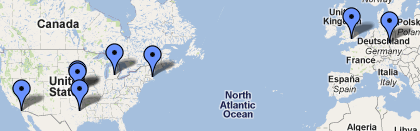
It s time to change locations for my server. I ve been with CoreNetworks for almost 5 years. They provide a good value, with fully dedicated servers a lot cheaper than most places, and good support to boot targeting people that can handle root on their own box. I m switching, though, to Hetzner Online (of Germany), primarily because I am needing more than 1GB RAM, and they can provide a 2GB box for less than I pay now for 1GB. I asked for feedback on Google+, and got positive feedback. Today, I migrated from one machine to another, copying a dozen or two GB of data, and only had about 15 minutes downtime. I was able to do this without console access to the source machine, though console access wasn t really required for either. This will work with any basic Linux install on the destination, or it could be prepared directly from a rescue environment. Before I explain how I did it, I thought it was interesting to think of the different places that the machine that was known as complete.org has lived over the years. Here s a map (click for detail): Here s the general process. First, well in advance of the move, crank the TTL on the domains way down. This way, old IPs won t be cached for very long once the system moves. Next, start rsyncing data from the old machine to the new. Do not yet shut down daemons on the old. Shut down as much as you can on the new. You ll want to focus on static data, such as /home. /usr is a good candidate as well. /var if you are selective databases may be a good candidate, or may not. The idea is to seed the destination with data so that when we do the real rsync, most of the data will be there; it will have to tidy things up after daemons are stopped, and update some things, but the bulk of the work should be done. Next, start preparing some exclude lists for the final rsync, which will copy an entire machine to the other. You will likely want to exclude files such as /etc/fstab, /etc/network/interfaces, /etc/resolv.conf, /etc/hosts, /etc/default/grub, /sys/*, /proc/*, /dev/*, and the like. I used rsync -v -P -a -H -A -X -S numeric-ids delete-after. Now, start editing config files for the new IP, but do it on the old server (these will be synced over to the new one). Start with the bind config files, and touch anything else that needs it maybe Apache configs, whatever. Next, get ready to do the final sync. In an ideal environment, we d just shut both machines down to single-user mode, but that s not going to quite cut it here. Use ps and shut down all daemons except sshd and udev on the destination. Yes, including even syslog. This is to prevent anything actively accessing the disk during the rsync, and also to prevent any issues with clients accessing server daemons that aren t ready yet. Now, on the source machine, reload bind. This will start answering DNS queries with the new machine s IP, and should also propagate the changes to your secondary DNS. Next, kill off all the daemons on the source machine, except for ssh and bind. You might want to set /etc/nologin to prevent regular users from logging in on ssh, if you have them. Now rsync things over to the new machine. Do any final tweaking over there (merging in /etc/hosts maybe, dealing with the udev rules.d persistent net thing, etc.). Reboot the new server and you should be up and running.

3 August 2011

Andrew Pollock: [life] Zoe at 15 months

Boy, the last three months have been very eventful, developmentally. First off, about 2 weeks after she turned 1, Zoe started walking in earnest. Within about 2 weeks of that there was no stopping her. It's funny to think she's only been walking for under 3 months and yet she's very stable on her feet. Secondly, she developed a mild egg allergy. Sarah was giving her some scrambled eggs (one egg's worth) for lunch one day, and she mixed in some cream cheese, and Zoe absolutely scoffed it all down, so she scrambled another egg and she scoffed that down too. She then broke out in some hives around her mouth and Sarah noticed that she was coughing a bit and a little wheezy when she put her down for her afternoon nap. Upon subsequent consultation with her paediatrician and a blood test, the allergy was confirmed and we now have to avoid eggs and Zoe was prescribed an Epi Pen Jr. We went and saw an allergist as a followup, and he did some skin tests that showed eggs were the only thing she's allergic to. He said her allergy was very mild in the grand scheme of things, and we're going to do another skin test when she's 2 to see if she's grown out of it. Eggs in baked goods are generally okay, as the offending protein is denatured at high temperatures. She's more allergic to the egg whites (1.56, which is in the "moderate" range) than the egg yolks (0.55, which is in the "low" range). Egg allergies are apparently something that one does eventually out grow, so that's a good thing. We'd also been keeping her off gluten and dairy because of a strong correlation between them and rather disgusting bowel motions. We've successfully reintroduced gluten with no adverse effects, and we've just started her back on cow's milk. We of course had our epic trip to the Grand Canyon, which Zoe handled absolutely marvelously. That was closely followed by a weekend down in LA, which was a bit more of a disaster as Sarah and I both came down with a 24 hour stomach bug that Zoe had had during the week. There's nothing quite like languishing in a non-childproofed hotel room, feeling like death, with a full of beans toddler busy running around jamming her fingers in drawers. Fortunately we were able to use a babysitter for a few hours respite, but it did rather completely mess up our plans for the weekend. Zoe did handle the drive to and from LA very well though. Zoe's been doing Saturday morning swim classes at the YMCA, which I've taken her to. I don't think she's enjoyed them as much as the indoor ones she did at the Sutton Swim School, where she went with Sarah previously, and I definitely don't feel like the classes are as structured. Unfortunately we just finished an 8 week session, and the next one filled up before we got a chance to book, so we're hoping to get back into something at the Sutton Swim School once an opening comes up. I might do something ad hoc with her on Saturdays at the Rinconada Pool in Palo Alto in the meantime. Zoe has also started going to regular daycare on Thursdays, so Sarah gets a day to focus on her University study. It's a home daycare that isn't too far away, and our friend's daughter goes there too, so there's someone she knows. The first few times Zoe got pretty upset when she was dropped off, but she barely makes a whimper now when Sarah drops her off. She's also usually down to one nap a day now. She has four teeth, top and bottom, with one molar definitely through and another three starting to make an appearance. I just bought an iBert safe-T-seat for my bike, because I've been itching to get out on the bike with Zoe on the weekends when I'm looking after her so Sarah can get some more study done. The weather is currently nice, and I've just learned about a bike trail that cuts across the bay in front of Moffett Field, so I'm keen to check that out. Apparently there's geese out there. I did my first decent ride with her last Sunday to the Mountain View Farmer's Markets and back. Zoe seemed to be okay with it. The helmet we got her drew a lot of comments from people at the markets. She's very much in the "point and grunt" stage at the moment. What's really cool is she'll nod or shake her head in response to yes/no questions. It's so cool when you can ask her a question and she solemnly nods her head in response. Often in the morning Sarah takes her to the park around the back of our home, and so now Zoe's gotten into that habit, so she'll scratch around at the front door and they head over there. The other day, Sarah opened the front door and she took off in the direction of the park, so Sarah just followed her to see where she went. Sure enough, she made her way over to the park. Tonight, Zoe fetched me my shoes and then dragged me over by the hand to the front door to demand that I take her out for a walk. She's also really getting into books now. She actively seeks out books, and has a bit of a flick through them, or brings one over and climbs into our laps, or backs up and sits in our laps if we're sitting on the floor, to have us read them to her. She's now strong enough to hold her bottle herself at bedtime, so I sit with her in my lap in the glider and read a story to her while she has her bedtime bottle. It's indescribably wonderful. She seems to understand quite a large array of words. We can go "Where's your <insert object here> and she'll look around the living room and generally find the item we're talking about. She also seems to understand questions about breakfast, lunch, going to the park, going to the bathroom, having a bath, etc as she seems to respond appropriately. In the speech department, I haven't really counted the words, but she's not saying a huge number of words. This morning, apparently she yelled "MAMA! MAMA! PARK!". "Park" being a new word for her. We bought an annual membership to the Children's Discovery Museum in San Jose, and we've probably taken her there half a dozen times or so since getting the membership. She particularly loves the water area. We finally got around to getting our back yard landscaped and made generally fit for a small child to run around in. Sarah's planted a butterfly garden in one corner, so hopefully once that's established we'll have some fun things for Zoe to watch from the window. I'm looking forward to planting some bulbs in the autumn. I expect the next 3 months will be more of the same. We've got some more overseas travel coming up, but a lot of relatives will be around, so hopefully we'll get a bit of downtime to ourselves. Zoe and I on my bike

Lars Wirzenius: Obnam 0.19 (backup software)

From the depths of the Andromeda galaxy I bring you version 0.19 of the backup program called Obnam, just released and travelling to the Terran Internet faster than light! This is a BETA release. Some day soon it may well end up being in Debian, unless you prevent that by reporting bugs faster than I can fix them. Meanwhile, my code.liw.fi has .debs for amd64, i386, and armel. Or you can install it from source, presumably (I never do). The NEWS items as listed below. INCOMPATIBILITY CHANGES: BUG FIXES: USER VISIBLE CHANGES: INTERNAL STUFF:

Robert Millan: Recent improvements with Debian GNU/kFreeBSD

Debian GNU/kFreeBSD was first released with Squeeze in last february. The technology preview label indicated, among other things, that it had a number of limitations when compared with what users would expect: missing features, incomplete functionality, etc. But it has seen many noteworthy improvements since then. Here are some that I would like to mention:

Next.

Previous.