
This is an essay form of a talk I have given today at the Cambridge
Mini-debconf. The talk was videoed, so will presumably show up in the
Debconf video archive eventually.
Abstract
Debian has a long and illustrious history. However, some of the things
we do perhaps no longer make as much sense as they used to do. It's a
new millennium, and we might find better ways of doing things. Things
that used to be difficult might now be easy, if we dare look at things
from a fresh perspective. I have been doing that at work, for the
Baserock project, and this talk is a compilation of observations based
on what I've learnt, concentrating on things that affect the
development workflow of package maintainers.
Introduction and background
I have been a Debian developer since August, 1996 (modulo a couple of
retirements), and have used it a little bit longer. I have done a
variety of things for Debian, from maintaining PGP 2 packages to
writing
piuparts to blathering excessively on the mailing lists.
My day job is to develop the
Baserock system at
Codethink. Baserock is
a set of tools and workflows for developing embedded and appliance
Linux systems. If you squint, it looks a bit like a source-based Linux
distribution. I have worked on Baserock since September, 2011.
Some of Baserock's design has been influenced by my experience with
Debian. With Baserock I have the chance to fix all the things that are
wrong in Debian, and this talk is me giving back to Debian by pointing
out some the things I feel should be fixed. I don't have solutions for
these problems: this is a bug report, not a patch. It's also perhaps a
bit of a rant.
I am specifically concentrating here on technical and tooling issues
that affect the development process of Debian. I excluding social
issues.
I am also not trying to get Debian to switch to Baserock. Baserock is
targeting embedded and appliance systems, and makes simplifying
assumptions based on those targets, which Debian does not get to do. I
am pointing out problems, and I am outlining solutions as implemented
in Baserock, when I think the concept carries over well to Debian.
Build tools should be intelligent, packaging should be dumb
In Debian, the fundamental tool for compiling the upstream code and
assembling a binary package is
dpkg-buildpackage. It uses
debian/rules, which is a Makefile with targets with specific names
and semantics. By executing the right targets in the right order,
dpkg-buildpackage tells the source package to build the binary
package.
On the one hand, this is a nice design, because it abstracts away the
large variety of upstream build systems into one API for
dpkg-buildpackage to use. On the other hand, it puts all the
intelligence for how packages are built into the packages.
Making packaging intelligent, rather than the build tool, means
packagers need to do more work, and there's more work to do when, say,
the Debian policy changes, or when there are other changes that affect
a large number of packages. If packaging is intelligent, then every
package needs changes. If the build tool is intelligent, then you
change the build tool and re-build everything.
In Baserock we put as much intelligence as we can into the Morph tool,
which drives the build process. It turns out that today, unlike in
1995, most upstream projects use one of a handful well-known build
systems: autotools, cpan, cmake, Python distutils, etc. With just a
little extra logic in Morph we avoid having any delta against upstream
in Baserock. This doesn't work for quite all upstream projects, of
course, but we've spent the 2% (two, not twenty) of effort that solves
80% of the problem.
In recent years, the
dh approach to packaging has made a lot of
packages be able to have only a minimal, 3-line
debian/rules file.
This is excellent. Wouldn't it be nice if even that wasn't needed?
It'd save thousands of files in source packages across the archive, at
least. It would be easy to: if the file is missing, have
dpkg-buildpackage assume the 3-line version by default.
Getting rid of a single file is, of course, not a particularly big
win. The big win is the change in mindset: rather than dealing with
all new issues in development by adding yet more fields to
debian/control and more optional, competing tooling outside the core
toolset, if you improve the tools everyone uses, then everyone's
packages gets better.
The goal should, in my opinion, be that for the large number of
packages where upstream uses a well-known, well-behaved build system,
and uses it in a reasonably sensible way, the Debian source package
should not require anything added to make the package build. There
will still be a need to add some stuff, such as the
debian/copyright
file, to make a good Debian package, but just getting the package to
build should require nothing extra. (Side note: wouldn't it be nice if
there was a well-known, widely used way to mark up copyright
information so that
debian/copyright could be constructed and
updated automatically?)
Configuration file handling on upgrades: add ucf to dpkg already
In the 1990s,
dpkg had excellent handling of configuration files and
merging local changes with changes from the new package version, but
it was excellent only because it tried to do that at all, and mostly
nothing else did. It hasn't changed much, since, and it's not
excellent on any absolute scale.
We have the
ucf tool, which can do a better job, but requires to be
added to each package wanting to use it. Why don't we make
dpkg
smarter, instead? If
ucf is not not good enough to be merged
wholesale into
dpkg, let's write something better.
Making every package maintainer use
ucf manually is just wasteful.
This is not the kind of thing that should be done for each package
separately: the package manager should be smart so that packaging can
be stupid.
The goal should be that
dpkg is smart enough in its configuration
file handling that having the package do it is a very rare special
case.
Clean building shouldn't be hard
The basic tool for building a package is
dpkg-buildpackage. It is
ever so slightly cumbersome to use, so there are some wrappers, most
importantly
debuild. However, if you're making a build intended to
be uploaded to the Debian archive, you should be doing a clean build.
This means having to learn, configure, and use yet more tools.
A clean build is important: security updates, development, debugging,
quality control, porting, and user support become more difficult if we
don't know how a package was built, and can't reproduce the build. It
gets harder to keep build dependencies correct, making it harder for
everyone to build things.
Luckily, Debian has solved the clean build problem. Unluckily, it has
solved it multiple times, creating the problem of having to choose the
clean building approach you want to use. The default way of building
is not clean, so then you have to remember to use the non-standard
way. You also get to spend time maintaining the clean build
environments yourself, since that doesn't seem to be fully automated.
None of this is hard, as such, but it's extra friction in the
development workflow.
The primary approaches for clean building in Debian seem to be
pbuilder,
cowbuilder, and
sbuild. I happen to use
pbuilder
myself, because it's what's been around the longest, but I make no
claim of having made an informed choice.
That is part of the problem here: why should I have to spend the
effort to become informed to make a choice well? Why is the default
way of building not clean? Don't say performance: Morph sets up a
clean staging area in seconds, and does not offer you a choice of not
doing so. It's a chroot, with everything but the build tree hardlinked
from cached, unpacked build dependencies, and protected using
read-only bind mounts.
What's more, this approach avoids having to maintain the
pbuilder
base tarballs or
sbuild chroots manually. It's all automatic, and up
to date, for every build. Furthermore, the staging area contains only
the specified build dependencies, and not anything else, meaning a
build fails if a build dependency is missing, rather than succeeding
because it happens to be in the default set of packages the build tool
installs.
Mass building shouldn't be hard
Suppose you want to try out a large-scale change in Debian. It might
be trying out a new version of GCC, or using llvm's
clang as the
default C compiler, or updating glibc, or doing a large library
transition such as a new version of GTK+, or trying a new
dpkg
version, or even something more exploratory such as changing the
default optimisation flags for all packages to see what breaks.
All of these will require you to at least rebuild all affected
packages. Ideally you'd test the built packages as well, but let's
concentrate on the building for now.
Here's what you do. You make the changes you want to try out, and
build those packages. You create a dedicated APT repository, and
upload your packages there. You configure your build environment to
favour that APT repository. You make a list of all reverse build
dependencies of the packages you changed. You write a script to build
all of those, preferably so that if you change A, and rebuild B, then
you also rebuild C which build depends on B. Each rebuilt package you
also upload to your APT repository. You keep track of the build log,
and success or failure, of each build.
The people in Debian who do this kind of stuff regularly presumably
have tools for doing it. It shouldn't be a rare, special thing,
though. If my package has reverse build dependencies, I should at
least consider testing building when I'm making changes. Otherwise, it
might take years until the reverse build dependencies are rebuilt, and
the problem is only found then, making it harder to fix.
To be fair, building a lot of packages takes a lot of resources. It's
not feasible to rebuild everything in Debian every time there's any
change to, say, eglibc. However, it's feasible to do it, for large
subsets of the archive, without huge hardware investments.
One VCS to rule them all
In 1995 there was really only one relevant version control system:
CVS. It was not a great tool. In 2000, another contender existed:
Subversion. It fixed some problems in CVS, but still wasn't a great
tool. In 2005, there was a great upheaval and distributed version
control systems started to become mainstream. There were a large
handful of them. In 2010, it was becoming pretty clear that
git had
won. It's ugly, but it's powerful.
I'm not going to debate the relative merits of different version
control systems. Until recently, I was a Bazaar boy, and all of my
personal projects were kept in Bazaar. (I have recently switched
everything to git.)
There are, however, strong benefits from everyone using the same
system. Developers don't need to learn a dozen version control
systems. Tools that operate on many repositories are easier to write
and maintain. Workflows become simpler if one system can be assumed.
Debian has a strong historical tendency to choose every option. This
is sometimes a good thing, and sometimes a bad thing. For keeping
source packages in version control I believe it is to be a bad thing.
The status quo is that a Debian source package may not be in version
control at all, or it might be in any version control system.
This is acceptable when everyone only ever needs to maintain their own
packages. However, in a distribution the size of Debian, that is not
the case. NMUs, security support, archive wide transitions, and other
situations arise when I might need to change yours, or you might need
to change mine.
We try to work around this by having a complicated source package
format, using
quilt to maintain patches to upstream semi-manually in
a
debian/patches directory. This is an awkward workflow. It's a
workflow that trips up those that are not used to it. (I know
quilt
is a patch management system, not a version control system. I think
git does it much better anyway.)
It would be oh so much easier if everyone kept their source packages
in the same, real version control system. I don't even care what it
is, as long as it is powerful enough to handle the use cases we have.
Imagine a world where every Debian source package is kept, for
argument's sake,
git, and everyone also uses the same layout and
roughly the same workflow to maintain it. What would this mean?
It would mean that if you want to inspect the history of your package,
you know how to do that. If you want to merge in some bugfix from
upstream code, you know how to do that, without having to figure out
which of the several source package formats are in use.
It would make feasible the development of more powerful, more higher
level tooling. For example, it would allow Debian to have what we call
system branches in Baserock. In Debian we have stable, testing,
unstable, and experimental. We may get something like Ubuntu's PPAs,
or perhaps an improved version of those. These are very poor versions
of system branches, just like quilt is a poor way to manage patches
and deltas against upstream. For example, you can upload an
experimental version of
gccto
experimental, but then nobody else
can upload another experimental version. You can set up your own PPA
for this, but you'll still be affected by all the uploads to
unstable while you're working.
A Baserock system branch is a branch of the entire system, or the
entire distribution in the case of Debian. It is isolated from other
system branches. In branch in an individual repository is a well-known
concept. A system branch is conceptually like branching every
repository in the distribution at once. The actual implementation is
more efficient, of course.
This would be possible to implement without standardising on one
version control system, but it would be much harder to implement, and
would have to live with the lowest common denominator for features.
CVS and Subversion, for example, don't really to merges, where Bazaar,
Mercurial, and git do. Possible does not mean feasible.
Any work you do in a system branch is isolated. Your work doesn't
affect others, and theirs doesn't affect yours, until a merge happens.
This is a simple, but very powerful tool.
Cheap system branches, and powerful merging, makes it possible to do
experiments safely, with little fuss. Combine that with being able to
build everything cleanly and quickly, and get into a situation where
there's no need to have make technical decisions based on arguments on
mailing lists, and instead they can be done by choosing by looking at
working code.
I don't know how this could be implemented in Debian, but think about
it. If Debian could have this, it might many archive-scale changes
easier.
debian/rules clean: really?
One of the silliest things we require of packages is that they have a
debian/rules clean rule that cleans up after a build perfectly so
that we can do repeated builds in the same source tree.
Let's just use
git clean -fdx instead.
This is a problem that is superbly well suited for automation. There
is no point whatsover making packagers do any manual work for this.
Large scale semi-mechanical changes require too much effort
About a decade ago, we decided to follow a new version of the
Filesystem Hierarchy Standard and transition from
/usr/doc to
/usr/share/doc. This was an almost entirely mechanical change: in
many cases, a mere rebuild would fix it, and in almost every other
case it was just a minor tweak to the packaging. A one-line change.
It took us seven years to do this.
Seven years. Think about it.
In a recent discussion about building R binary data files from source
at package build time it was suggested that we take 2-3 release cycles
to get this done. That's four to six years. Think about it.
These are not isolated cases. Every time we need to make a change that
affects more than a small handful of packages, it becomes a major
undertaking. Most of the time all the people involved in this are
agreeable to the change, and welcome it. The change takes long because
it requires co-ordinating a large number of people. Sometimes people
are just busy. Sometimes they've left the project, but haven't
properly orphaned their packages. Waiting for a timeout for answers
about packages drags the process longer.
Mechanical changes, or semi-mechanical ones, which are very easy and
very quick to do should not take years. They should take an evening,
no more.
There's no end of changes we might want to do like this. In 2005 and
2006 I filed a few hundred bugs from failed
piuparts runs. They're
still being fixed, even when the fix is simple, such as adding a
postrm script to remove, when the package is purged, a configuration
file created by postinst, or starting the service with
invoke-rc.d
rather than running an
init.d script directly. Mostly one-line
changes.
There's more mechanical changes that might happen. For example,
changing the value of the
VCS-Browser field when the Debian version
control server changes domain names.
It's not just about simple, mechanical changes, either. Transitions of
important library packages, for example, which require changes to
reverse dependencies due to a changed API are another source of pain.
What should be a few evenings of build fixes can drag out to months of
co-ordination.
This is caused partly by technical issues, and partly due to social
issues. The main social issue is that we have quite a strong ownership
of packages, and NMUs are to be done carefully, and only in some
cases. This is both good and bad, and I won't discuss that aspect now.
The technical issues are that our tools are primarily intended for
maintaining individual packages, rather than all of them together,
making it harder to make even simple changes in large number of
packages.
In addition to easy mass building and system branches, as outlined
above, large-scale changes would require testing tools so that you
don't build the new package versions, but also test things
automatically. Essentially, CI at the distribution level.
Conclusion
I've listed above a small variety of problems I see in the Debian
development processes and tools. They're not the important part of
this talk. The important part is that it we, the Debian developers,
should look at our tools, and workflows, critically, and improve them
when we can. Even small improvements are very useful, when they affect
each of our twenty thousand source packages. The important change I
argue for here is one in mindset, rather than any specific problem in
any tool. We need a mindset of constant, incremental improvement for
our tools.


 This photo is actually from a few years ago, but the white stuff has started to appear in some parts of the country. Maybe someone local will even be able to sneak down there and draw the Debian swirl in the snow.

 We ve been trying to build Mono on MIPS in Debian for a long time. Just under a decade, in fact. Mono 0.29.99.20040114-3 was the first attempt, back when the Mono source was 10 meg, not today s ~80.
It never worked though. Not once. At the end of 2004, 10 upstream versions later, we gave up, and turned off mipsel as a target architecture in the package.
When I became a Debian Developer in 2009, one of the first things I did was try again with Mono on various previously unsupported architectures, by running a build on the Debian porterboxes. Supposedly MIPS support was there, as evidenced by all the MIPS-related files in the source tree. But I d try it, and it d fail, and upstream would say works for me . I repeat the process every major release or so, to see what s changed.
The breakthrough
Spurred by the removal of two bitrotted architectures (IA64 and SPARC), I decided to try again, this time investigating more deeply into the reason for the failures, with the help of upstream developer Alex R nne Petersen. A couple of hours of IRC-driven gdb and test program disassembly later, a seemingly innocent comment flagged something in my brain:
 After running a QNAP TS-459 Pro+ for the last 3 or 4 years at home, my monitoring was alerting me about memory warnings cause I upgraded my
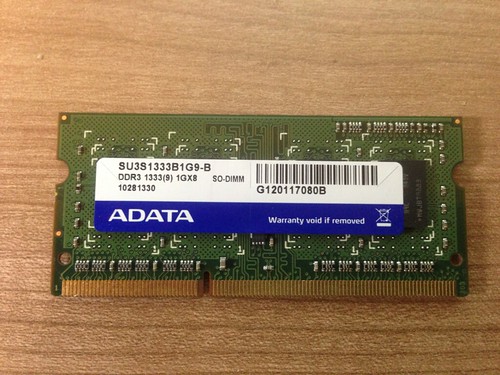 It
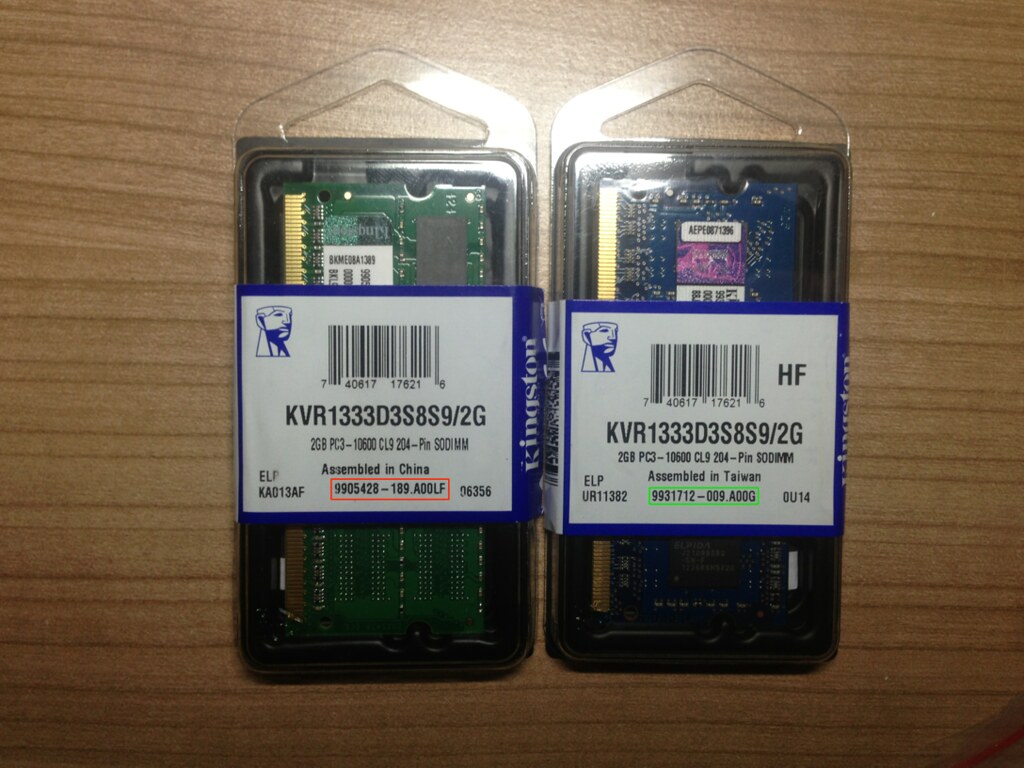 As you can see, the 16 chip design module has printed '9905428-189.A00lf' on and the 8 chip design '9931712-009.A00G'. It's something like in the Wireless LAN USB dongle business where they sell totally different hardware with the same Part Number but different Revisions.
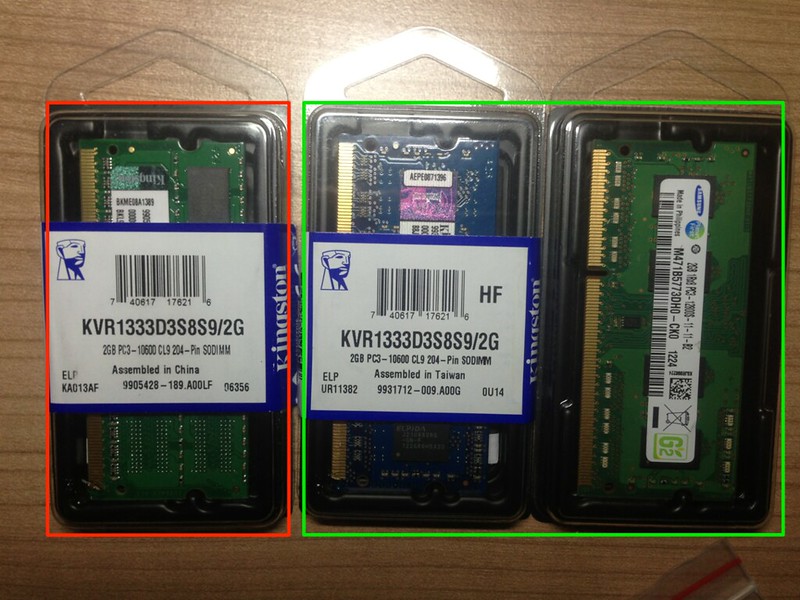
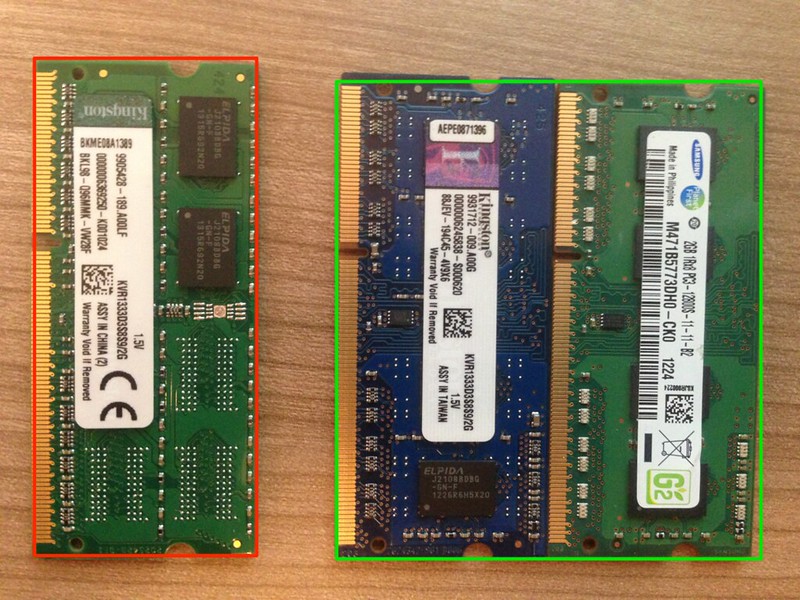 To make it short, both 8 chips design modules worked like a charm, the M471B5773DH0-CH9 and the KVR1333D3S8S9/2G (9931712-009.A00G). - Please avoid the Adolf one from Kingston! ;)
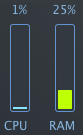

 Last week was the
 The week has been wonderful. It was my second OpenStack design summit, and I
loved it. Bumping into various people I've never met so far and worked with
online was a real pleasure. As it was to meet again with fellow OpenStack
developers! The event organisation was great, as were the parties. :-)
On the last day, I had the chance to present a talk with Eoghan Glynn and
Nick Barcet how we built the auto-scaling feature in Heat, implementing the
"alarming" feature needed in Ceilometer.

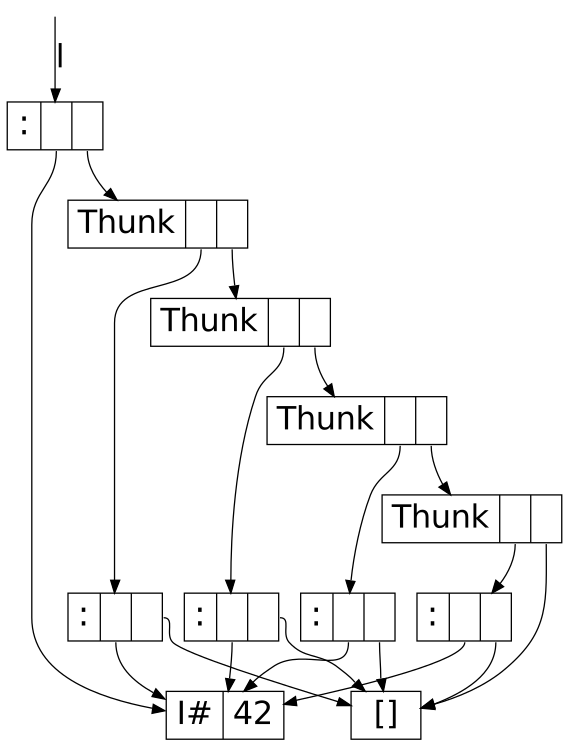
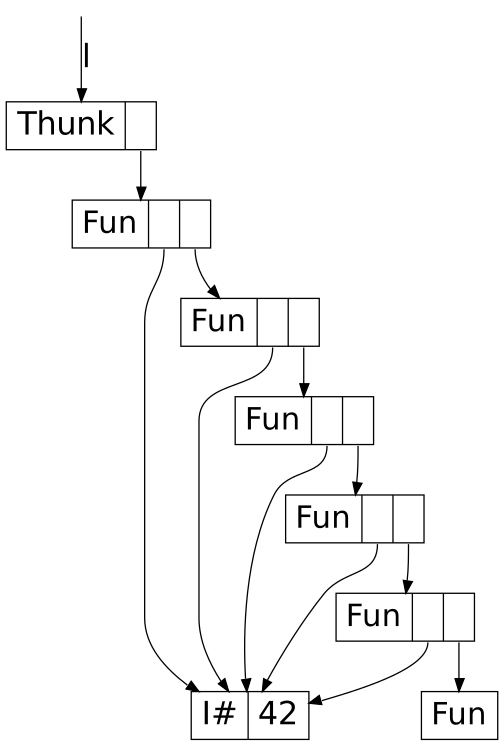
 In Haskell, lists are ubiquitous. In real-world Haskell, monads are ubiquitous. So it should be an easy task to fill a list with values obtained in a monad, i.e. a list of n random numbers (in the



 While quite old fashioned,
 In high school, I had a science teacher who would mark your answers wrong if
you forgot to include units. What does that mean? , he would write, 17.2
elephants? The point he was trying to get across was that a bare number,
without the relevant units, wasn t precise enough to be useful. Also,
carrying the units with you helped to cross-check your work if you got
a numeric answer, but the units were garbage (seconds per kilogram, for
instance, when you were trying to find an acceleration), then you could be
pretty sure you d made a mistake somewhere.
Fast forward to today, and I m currently working with a database containing
a pile of timestamps. Without timezones. Where the timestamps being
inserted are in local time. Thankfully, so far, this particular system has
always been run in one timezone, so I ve only got one timezone to deal with,
but the potential ramifications of systems with different timezones
inserting data into this database terrify me.
The naive answer is to just store everything in UTC and be done with it.
I m not particularly averse to that solution, as long as it s very clear to
everyone what s going on. The correct answer, though, I think, is to
always keep timezone information with your timestamps otherwise, you ll
never know whether it s 0830 in elephants
 I'm very happy: I was finally able to present a talk at a Free Software conference in Paran , Argentina Regina's hometown. Not only in Paran , but at the Vieja Usina culture center, half a block away from her parents' house. So, I must doubly thank Laura: First, for letting us know there would be a Free Software conference there, and second, for taking some pictures :-

