Search Results: "ron"

16 January 2010

Ingo Juergensmann: Drupal 7 alpha 1 released

As Dries Buytaert, the creator and head of development of Drupal, announced on Twitter, the new major (pre-)version of Drupal, namely Drupal 7 alpha 1 has been released! This was on the 9th birthday of Drupal.

This is great news and the release notes are mentioning some aspects why this is so:

Revamped User Interface
An incredible amount of work has gone into improving the user experience and administration interface. The new administration theme "Seven", the overlay module, the dashboard and the configurable shortcut bar, all lead to a much more user-friendly interface. In-place editing is enabled for blocks and nodes by default, so modifying the content of a site becomes much simpler.

Custom Fields
Drupal 7 bundles in the ability to add custom fields, similar in functionality to the Content Construction Kit (CCK) module. However, fields are no longer limited only to content types; they can be added to users, taxonomy terms, and other entities. Fields also have support for translations.

Image Handling
Drupal 7 brings native image handling to core. Image fields may be added to content, and have image styles applied to them, such as scaling, cropping, and other effects.
Update Manager
Building on Drupal 6's Update module, which keeps site administrators informed when new module and theme releases are available, the new Update Manger module can also install and upgrade modules and themes.

Front-end "under-the-hood" improvements
A new render API allows for highly granular theming, core template files have been revamped to provide more semantic markup, Drupal 7 now has built-in RDFa support, includes jQuery UI and a new AJAX framework, and a new core theme "Stark" which exposes Drupal's markup directly for those who want to dive in and start theming.

In addition, Drupal 7 has several major accessibility enhancements, making it the most accessible release of Drupal to date!

Back-end "under-the-hood" improvements
A revamped database layer resolving nearly all limitations in the Drupal 6 database layer, automated testing framework, new PHP stream-based file API that supports private and public files simultaneously, revamped node access system, new hooks for more flexible system interaction, an Entity API, a job queue API, and many, many, many more improvements.

Drupal 7 is also the most scalable release to date, with features such as built-in proxy server support, advanced caching techniques, and Content Delivery Network support for static files.


Alone the inclusion of CCK and Views are great news, whereas all PostgreSQL users will benefit from the new database layer under the hood. I've tested a pre-alpha development version some weeks ago and that Drupal 7 experience was already great. So, it would be nice to see Drupal 7 in Debian soon as well, but I guess a alpha 1 version might be too early to be packaged.

15 January 2010

Roland Mas: FusionForge developers/users meeting coming up

News is slow this month on the FusionForge development front. We're all busy gathering all the things that we want to go into the next release, but there's no big news from the code. However, there is something of interest. You may have heard about the Coclico project, which is an initiative aiming at collaboration and convergence between several forge engines, most notably FusionForge, Codendi and Novaforge. That project was started last October, and it holds regular meetings with its members. The next meeting is scheduled for the 2nd of February in Paris, and we thought we could host an open meeting on the 3rd for non-Coclico members, a bit like the forge meeting we had last year (which is when FusionForge was officially born), but with an emphasis on what Coclico did so far. Since most of the FusionForge hackers are in Western Europe, and several are in Paris (especially if we add those who go to Paris for the Coclico meeting), we thought it would also be a good opportunity to gather for a technical and social meeting. It seems the Coclico open session didn't generate much interest this time (at least, it hasn't so far), so I proposed to hijack the room for this FusionForge meeting, and I didn't hear any objections. I have several themes I'd like to discuss with people, and possibly start implementing during that day: and so on. These are in no way specific to FusionForge, and in fact I think it would be great if hackers/users of other forges were present, because we could benefit a great deal from their experience and plans. But if we find ourselves amongst FF people only, I think these would be good to discuss, possibly write some code for, and go home with a clearer picture of where our efforts should focus in the near future. I'd therefore like to invite interested people to mark the 3rd of February on their agendas. The meeting will take place in Issy-les-Moulineaux (near Paris, within reach of the tube). If you're interested, please get in touch with us (#FusionForge on the FreeNode IRC network, or the fusionforge-general mailing-list), so we can have a rough estimate of how many people to expect. The meeting room is provided by France T l com, and they're probably going to need numbers if not names. Further details will be announced when known.

Eddy Petrișor: Busy, busy, busy and lazy me

It has been quite some time since my last post. I have been involved in quite a few things and the last part of 2009 which left no time for anything else. At the begining of 2010, just to set things on a good tone from the new year, I went on a snowboarding vacation to Austria to Kitzb hel.

Presidential campaign and pure irrationality in Romania

I got involved in Remus Cernea's presidential campaign, which was quite a success, considering the media blockade he was subject to. Unfortunately, Romanians seem to more and more indoctrinated, idiotic and gullible, probably thanks to newer generations that come through public schools after 12 years of religious indctrination and media promoting stupidity, non-values, ignorance and so on.

The more I live in this country, the more I realize how I don't feel like fitting in, because I refuse to be a mindless sheep, a moron, listening to anything the news at 5 say (those living in Romania know what I mean). I obstinately form my own ideas and question everything.

Significant event in my life

In September 2009 a life-turning event took place in my life - don't worry, is nothing bad, is pure good - and my eyes opened entirely. I have bacame a sponge trying to know more and more and this has helped me see the world with new eyes, from a new perspective, without lies or preconceptions.

Now I am thingking freely.


I am sorry for not going into details, but I have my reasons. Those who have the eyes and brains to understand what I am talking about, surely have understood by now what has happened to me ;-) .

Snowboarding vacation

At the begining of this year I went with my wife and some friends to Austria for a vacation. Kitzb hel's slopes and conditions were very good (bad points were only due to a couple of areas where snowboarders had to open at least one binding).

<iframe frameborder="0" height="350" marginheight="0" marginwidth="0" scrolling="no" src="http://www.openstreetmap.org/export/embed.html?bbox=12.2575,47.3556,12.5092,47.5304&amp;layer=mapnik" style="border: 1px solid black" width="425"></iframe>
View Larger Map

Weather was good and snow was icy only late in the afternoon. I was quite suprised to see stores close at 6pm, but overall, it was a well deserved vacation and I enjoyed it very much. My wife's skills on the board got better, although the third day some beginner skyer broke one of the bindings of my wife's snowboard and she had to use a rental instead. The rental was a quite new Burton board and Otilia got used to it and liked to the extent that we decided the next board we buy (for either of us) will be a Burton.

Did it worth it to drive 1500 km (roughly 1000 miles for the metric system challenged people :-P) for this vacation? Definitely! Did I enjoy the drive? Well, let's just say that the 950km from Kitzb hel to the Romanian border were made in approximately the same time it took us to make the last 550km to Bucharest, while 110km of those last were on the A1 "highway".

I'll probably put some photos from my vacation somewhere on the intenets, but don't hold your breath :-P .

Instead of conclusions

I know I promissed a lot of people to take care of some things like Wormux and some kernel bug debugging and I didn't kept my promise. I appologise, yet I don't expect anyone to accept my appologies. I am still unsure when I'll get back to that. I still care for Debian, yet the day has only 24 hours and I have to use at least 7 of those on sleep.

Dirk Eddelbuettel: RQuantLib 0.3.2 released

A new version of RQuantLib (a package combining the quantitative analytics of QuantLib with the R statistical computing environment and language) is now out at CRAN and in Debian (where it depends on the 1.0.0 beta of QuantLib that is currently in the NEW queue with its new library version). This RQuantLib release works with either the current release 0.9.9 as well as with the just-released first beta of QuantLib 1.0.0. This versions brings a few cleanups due to minor Rcpp changes (in essence: we now define the macro R_NO_REMAP before including R's headers and this separate non-namespaced functions like error() or length() out into prefixed-versions Rf_error() and Rf_length() which is a good thing). It also adds a number of calendaring and holiday utilities that Khanh just added: tests for weekend, holiday, endOfMonth as well dayCount, date advancement and year fraction functions commonly used in fixed income. Full changelog details, examples and more details about this package are at my RQuantLib page.

14 January 2010

Sandro Tosi: Matplotlib for Python Developers - Images available for download

This is a book on a graphic library, so when they first told me it will be printed in black&white I was quite surprised and puzzled. The editor explained it was to reduce paper copy cost, and that the PDF version will still be in full color, but I would be quite upset if I bought the book and then discover it's black&white without knowing it upfront.

Thus I've asked to at least let the images be downloadable from the book website, so that any reader (either for the paper or electronic copy) can see the pictures as if they're running the programs.

The first request went ignored, but keep pushing got results: now images can be downloaded!! To get them, got the book webpage, then in the "Code Download" section, and request the zip file: in it you'll find either the source code and the images.

The pictures are quite big, because they are the same used for book production (so with specific dimensions and DPI) but you got colors now :)

Jonny Lamb: Telepathy on Maemo

A few weeks ago, I got a cool Christmas present from work. It's pretty sweet, and I've been writing some apps for it. I'll try and blog about them here. A while ago, I wrote some a number of account plugins for Maemo 5, so that other Telepathy connection managers could be used and well-integrated into the N900's Contacts and Conversations User interface. This enables the following extra protocols: There are still a few problems which I'll try to iron out soon enough but they appear to be working pretty well. The best thing about it is clearly the integration with the rest of the phone, as demonstrated by Marco in the screenshot above. The PR1.1 update, which is due today, also opens the door for enabling other protocols dynamically by providing libpurple plugins. I will be adding Facebook Chat support soon, and someone else has made a package for Twitter. This is in extras-testing for you all to download and try out. You can find all the packages in the "Network" category of the Application manager. The Extra protocol plugins for Conversations and Contacts metapackage (telepathy-extras, in reality) pulls in all the cool account plugins and connection managers of the time. File bugs from the maemo.org package link.

Sam Hartman: Open Source Accounting Software

I m developing a huge backlog of things to write about, going back as far as a couple of posts inspired by the Kerberos conference in October. However, those require more effort putting together the post, so I m going to focus on something more recent. Part of running a business even a small business like Painless Security is dealing with the administrative and bookkeeping. The normal solution seems to be Intuit s Quick Books. When I set up the company, I looked into that. However, Intuit s accessibility story starts with give up, and goes down hill from there. Apparently, screen reader vendors have offered to work with Intuit to help them, but have been turned down, or at least that s the strong implication I get from reading blogs from these accessibility vendors. So, I d definitely rather not give Intuit my money. I m also looking for a bit more than the minimum in accounting software. Keeping the books in order enough to pay taxes would be easy. However I want to be able to understand where I m making money; I want to be able to figure out if the fixed price contracts I enter into end up being good ideas. I want to understand how expensive community projects Painless Security gets involved in like Debian and IETF work are both in terms of direct costs and opportunity costs. I want to understand what sorts of work ends up being the most profitable. All of these are fairly typical management questions; solutions to varying degrees are understood. however it means I m actually going to use an accounting product more than just to track my invoices and prepare taxes. I decided to see what the open source world was like in this space. I started with Ledger SMB. Ledger SMB s main claim to fame is that it tries to be better than SQL Ledger. Being better than SQl Ledger is definitely a good thing. It worked well enough to generate invoices and income statements. It nominally had facilities to track the sort of per-project information I m looking for, but the facilities are not near good enough. Also, there were some issues things like the fact that total debits didn t particularly need or tend to sum to total credits got old after a very short while. Also, facilities for correcting mistakes were unfortunate. You could either operate in a mode where you could delete a transaction, or a mode where you reverse transactions. Deleting transactions in practice meant deleting most of a transaction; balances became out of sync and half of the transaction tended to stick around using some interfaces but not other interfaces. Database cleanup was almost always required. In principle, reversals are better. However, there is no facility to indicate that you re not expecting payment on a reversed invoice. The receivables/payables account balance out because of the reversing transaction, but both the reversing and reversed transaction end up becoming over-due. Hey, can you please send me some anti-money to clean this up? The code was dreadful; the goal was to have better abstraction than SQL Ledger. Perhaps that was achieved, but man that leaves a lot to desire. Now, I m playing with Open ERP. It wants to grow up some day to be a competitor to SAP R3. In a way that sounds good, although it does mean there s a high complexity cost. There s a lot of functionality. There s reasonably good separation between view and model (and possibly even controller). The code is often clean, although the random blocks of commented out code with no explanation cause me to cringe. Many aspects of the system seem incredibly well designed; you can approach the system through a web client, graphical client, two different RPC mechanisms, XL and Open Office plugins. However, there s this mix of missing stuff and completely broken that causes me to wonder whether I m going to be sad. First, there appears to be basically no support for the US. All addresses are European format and are hard coded. Each individual report needs to be changed. Recently, I found cases where as best I can tell debits and credits are just reversed. I ve found a case where backing up the database succeeds but generates a zero length file. I almost lost data through that last one. There s a complex set of mechanisms to deal with units-of-measure for products for example, some jobs billed in hours, some are billed in days. However other parts of the code just add quantities. Playing around with this I am reminded again that I really enjoy thinking about these sorts of problems. An interesting ERP project could be fun to work on. for example, I bet handling ERP needs for some cloud-centered company would be a lot of fun. Also, as part of looking at Open ERP, I ve more or less developed the necessary scripts to migrate a simple service company from Ledger SMB to Open ERP. There are limitations of course, but if this would be useful to you, drop me a line.

John Goerzen: System Administrators Might Save Your Life

There s a lot of responsibility on the shoulders of system administrators. Unless you re one, it s probably hard to grasp the full weight of it. This week has been full of reminders for me. This afternoon, shortly after lunch, I got word that people were having trouble with phones. A few minutes of testing showed that calls within our city were working fine, but it was completely impossible to place or receive long-distance calls. A little while later, a local newspaper s website indicated that numerous cities over a multi-county region, all served by the CenturyLink local telephone company, were out of service in this manner. I figure that represents hundreds of square miles, or a patch of rural Kansas roughly the size of Los Angeles. Adding to the problem was the fact that emergency 911 services are accessed via these long-distance lines that were down. For roughly three hours, 911 was completely down across this entire area. What s more, many cellphone towers and Internet access options were also taken down, since they feed from these same lines. This adds up to a situation that could very easily cost lives due to delayed response of emergency medical, fire, or police services. In the end, the problem was traced to a bad controller card on a Titan 5500 owned by AT&T. Now, here s the system administration angle: If you worked for the phone company and had to troubleshoot a problem that you knew had taken down emergency services for thousands of people, what kind of pressure would you be feeling? Would you be able to keep your cool? I m glad that I don t have that kind of job. I also wouldn t like to be the engineer (or, more likely, accountant) that decided that they didn t need any more redundancy to provide good service to the area. Especially considering this is the second time in the last year or two this has happened. But, ironically, yesterday I signed a purchase order for a new Asterisk PBX (corporate phone) server. When selecting a machine for that task, I am always completely conscious of the responsibility on my shoulders: several hundred employees rely on the machine that is ultimately my responsibility to select. Our own access to 911 would be cut if the machine were to go down. I never forget that the correct operation of the systems that our team sets up and deploys could help save someone s life, and that a malfunction could cost the company dearly in terms of revenue, productivity, image or worse. Nearly four years ago, we switched from an analog PBX, with outsourced support, to a digital VOIP system running Asterisk. Note that we use VOIP in-house, but do not use it externally. Anyhow, I can not say that the Asterisk PBX has been 100% perfect; I doubt that this could be honestly said of any PBX of any complexity. I can say, though, that it saved us well over $100,000 AND has proven far more reliable than the system it replaced. Outages are exceptionally rare and brief now. Plus we have internal expertise to fix it, rather than having to wait for a technician to be dispatched from a city 2 hours away to fix anything. I know I don t have the resources to build a perfect PBX that will never go down (if such a thing is even possible), but I take my responsibility regarding a reliable PBX extremely seriously. We used to have a frequent problem: someone would call 911, then hang up. We suspected this was often on accident maybe people hit 9 for an outside line, then misdialed their number. In any case, 911 dispatch would then call our main office, saying they got a hangup. A person or team would then go across our entire campus making sure nobody was in distress that nobody had managed to dial, then passed out, for instance. With Asterisk, I was able to help this situation. Whenever somebody calls 911 now, two emails are generated: the first contains details about the call, such as the extension number that called and the duration of the call. This goes to all people that are likely to receive a callback from 911. It may not always pinpoint the source (as with somebody using a wireless phone), but almost every time will give us a very good idea where the call came from. The second email is a recording of the call, and serves as an additional clue, but goes to fewer people. I am aware that email isn t a perfect medium, but: it let us make a dramatic (albeit imperfect) solution to a problem that very few institutions our size are able to address nearly so well. There s a lot of weight on our shoulders: keeping the accounting system up, the Internet links up, the web store or the sales phone lines, the shipping systems or the document archives up. These things going down can spell deep trouble in many ways. And sometimes the systems we maintain might save a life. Such as this morning, when someone was feeling symptoms of a heart attack, used our phones to call a colleague for help, that person called 911, and an ambulance was dispatched. I know the system worked exactly as it should, because I had two familiar emails from Asterisk in my mailbox this morning when I got to work.

13 January 2010

Matt Brubeck: Finding SI unit domain names with Node.js

I'm working on some ideas for finance or news software that deliberately updates infrequently, so it doesn't reward me for checking or reloading it constantly. I came up with the name "microhertz" to describe the idea. (1 microhertz once every eleven and a half days.) As usual when I think of a project name, I did some DNS searches. Unfortunately "microhertz.com" is not available (but "microhertz.org" is). Then I went off on a tangent and got curious about which other SI units are available as domain names. This was the perfect opportunity to try node.js so I could use its asynchronous DNS library to run dozens of lookups in parallel. I grabbed a list of units and prefixes from NIST and wrote the following script:
var dns = require("dns"), sys = require('sys');
var prefixes = ["yotta", "zetta", "exa", "peta", "tera", "giga", "mega",
  "kilo", "hecto", "deka", "deci", "centi", "milli", "micro", "nano",
  "pico", "femto", "atto", "zepto", "yocto"];
var units = ["meter", "gram", "second", "ampere", "kelvin", "mole",
  "candela", "radian", "steradian", "hertz", "newton", "pascal", "joule",
  "watt", "colomb", "volt", "farad", "ohm", "siemens", "weber", "henry",
  "lumen", "lux", "becquerel", "gray", "sievert", "katal"];
for (var i=0; i<prefixes.length; i++)  
  for (var j=0; j<units.length; j++)  
    checkAvailable(prefixes[i] + units[j] + ".com", sys.puts);
   
 
function checkAvailable(name, callback)  
  var resolution = dns.resolve4(name);
  resolution.addErrback(function(e)  
    if (e.errno == dns.NXDOMAIN) callback(name);
   )
 
Out of 540 possible .com names, I found 376 that are available (and 10 more that produced temporary DNS errors, which I haven't investigated). Here are a few interesting ones, with some commentary: To get the complete list, just copy the script above to a file, and run it like this: node listnames.js Along the way I discovered that the API documentation for Node's dns module was out-of-date. This is fixed in my GitHub fork, and I've sent a pull request to the author Ryan Dahl.

Russell Coker: My Ideal Netbook

I have direct knowledge (through observation or first-hand reports) of the following use cases for Netbooks:
  1. System administrator s emergency workstation something light to carry when you might get an SMS about a problem.
  2. A really small laptop for a serious technical user, can be used for programming and other serious tasks. Only someone who is really dedicated to the hobby of computing would choose a system with a tiny screen for their main computer so that they can take it everywhere.
  3. A computer for a child. Children are less demanding about some aspects of their computer experience, no-one wants to buy a really expensive toy for a young child, and children find it difficult to carry full size laptops.
1 and 2 are the options that interest me. But it would be good if the extensive children s toy market could drive economies of scale and reduce the expenses of my hobby and profession. I have found my EeePC 701 to provide adequate CPU performance (Celeron-M 630MHz) for light compiling tasks and I have used it for some Debian development work. The SSD that is built in is very fast and OpenOffice load times compare well to my Thinkpad T41p because of it. The main problems I have with my EeePC for sysadmin and coding tasks are the small keyboard (which can t be fixed the overall size of the machine needs to remain small), the small screen (which could be expanded without changing the case size), the low resolution screen (which has been fixed in newer netbooks), and the fact that my 3G dongle sticks out and is likely to get broken. More recent Netbooks address these issues while having the trade-off of being heavier and larger. There are also some tasks which are generally not performed on a Netbook but that could be if it was properly designed. Here are some examples of things that I think should be done on a Netbook:
  1. Basic image editing and blogging something that a lot of people do on smart-phones nowadays. It can be done more effectively and with less effort on a general purpose computer I can t imagine the GIMP or Inkscape running on a smart-phone.
  2. Reading electronic books. The number of people who want a Netbook but don t want to read electronic books would be quite small as would the number of people who only want to read electronic books and never want to use a general purpose computer while travelling. No-one really wants to carry both a Netbook and an ebook reader at the same time.
  3. Watching movies.
  4. Everything that you might want to do on a terminal in an Internet cafe those machines are always 0wned, just say no for security reasons.
  5. Games. The Nintendo DS has two ARM CPUs running at 66MHz and 33MHz and a combined screen resolution of 256*384*18bpp [1] and the Sony PSP has a 333MHz MIPS R4000 CPU and a screen resolution of 480*272*24bpp [2]. The original EeePC had more CPU power and more screen resolution than the DS and the PSP so it IS suitable for games even though it won t run the latest 3D games. There are lots of great games like Wesnoth that don t require much video performance.
  6. Educational Software. Portable educational devices include the awful V.smile system for young children [3] and the educational software for the DS (I ve seen a demonstration of a training program in rapid completion of basic maths problems for elderly people and presume it s not the only educational software on that platform).

Image editing requires a color screen of high resolution. Effective blogging requires a platform with a resolution that compares to the typical web user according to Hitslink 1024*768 is the most popular resolution of web browsing systems at 28.34% and the most popular resolution that is less than 1024*768 is 800*600 at 3.28% [4]. So even the most casual blogger will have an incentive to get a screen that is of higher resolution than all but the latest Netbooks. The recently released EeePC 1201 has a screen resolution of 1366*768 which should be barely adequate for those tasks. Reading electronic books requires a reasonable resolution. Based on my experience with the 1400*1050 display in my Thinkpad it seems that a resolution of 1366*768 would be barely adequate for reading an academic paper that has two columns in a small font. But as the original Kindle had a resolution of 600*800 and the latest Kindle has a resolution of 824*1200 [5] it seems that perhaps the epaper displays are good enough to allow reading the text at a lower resolution. A display that can draw little or no power when idling (as epaper does) is simply required for an ebook. The Pixel-Qi hybrid displays are claimed to offer the best features of TFT and epaper displays [6] but they haven t been released yet. I think it s reasonable to assume that someone will achieve that Pixel-Qi is attempting and that it will become the standard display for a Netbook. Watching movies and playing games (even games like Wesnoth) requires better video performance than epaper can deliver, we just have to hope that Pixel-Qi release something soon. Watching movies and reading ebooks are both things that are best done without a keyboard in the way. The Always Innovating Touch Book [7] seems like a good solution to this problem. It s a tablet PC that can be connected to a keyboard base if/when you desire. It should also be good for web browsing and reading email while on the move, I find that my EeePC is unreasonably heavy and awkward for typing email while walking. Intel CPUs are not particularly energy efficient. As there are ARM CPUs with clock speeds as high as 2GHz and with as many as four CPU cores it seems that the ARM architecture can provide as much CPU power as is required. Debian currently supports two versions of the ARM CPU, if another one became commonly used it wouldn t be that difficult to run Debian build servers for it. Given a screen resolution equal to the latest Kindle, CPU power greater than the early Netbooks, and the ability to run a free software OS the range of educational and gaming software should be adequate. So it seems that the ideal netbook would have a detachable keyboard and base and a touch-screen in the computer part. It would have a Pixel-Qi display (or equivalent) with a resolution of 1400*1050 or better. It would have USB, Gig-E, Wifi, and Bluetooth connectivity and the ability to have an internally mounted USB dongle (as the Always Innovating Touch Book does). I think that this is not overly difficult to achieve it is basically an Always Innovating system with a better display. Update: Another criteria is the ability to start operating quickly when requested. Even mobile phones are often limited in their utility by the time that is taken to activate them (I can t get my mobile phone to take a photo in much less than 7 seconds after removing it from my pocket). The Always Innovating system is apparently always in suspend to RAM mode when it s not being used so that it can start quickly. That combined with fast application load times and a good menu system could allow turning the system on and launching an application in less than 2 seconds. If I was buying a Netbook right now the only thing that would stop me from buying an Always Innovating device is the shipping delay. But as my EeePC is working quite well I m not going to buy another system unless I am going to get significant benefits such as a high resolution PixelQi display.

12 January 2010

Gerfried Fuchs: Your Expectations

<comment />
Your Expectations
I won't fulfil them for you
they are only yours Feeling been let down
it is understandable
but it's also wrong There are more than me
who can do the piece of work
why just bug me then? Effect is stop work
so that others won't expect
your problem is solved
German Version If you are looking for some packages to take care of within Debian, take a look at this list and feel free to contact me if you are interested.

John Goerzen: Sing to Me, Muse

(a review of Homer s Iliad)
Here, therefore, huge and mighty warrior though you be, here shall you die. - Homer (The Iliad)
And with that formidable quote, I begin my review of The Iliad. I shall not exhaust you with a rehashing of the plot; that you can find on Wikipedia. Nor shall I be spending page upon page of analyzing the beautiful imagery, the implications of our understanding of fate and destiny, or all the other things that compel English majors to write page after page on the topic. Nor even shall I try to decipher whether it is a piece of history or a piece of legend. Rather, I intend to talk about why I read it: it s a really good story.
Sing to me, O goddess Muse, the wrath of Achilles, son of Peleus, which brought countless ills upon the Acheans.
As I d be reading it, I d think to myself: Ah ha! Now here we finally have a section of the story that doesn t speak to modern life. Perhaps it was a section the fear of being enslaved or butchered by conquerors, or about pride leading both sides to fight a war they need not have, or a graphic description of a spear going clear through someone s head or neck. And then, I d have to sit and think. Are we really so far removed from that? Here we are, in a supposedly civilized world. We use remotely-operated drones to drop bombs on people, and think it naught but regrettable collateral damage when the brains and intestines of dozens of innocent victims are scattered about, killing them, all for the chance of killing one enemy. But we aren t the only ones to blame; we live in a world in which killing the innocent is often the goal. People fly airplanes into skyscrapers, drop atomic weapons to flatten entire cities, and kill noncombatants in terrible numbers. And for what? A little power, some prestige, some riches, some vengeance, some wounded pride? Slavery is not dead, either. We that can happily afford Internet access most likely abhor the thought. What, though, can we make of the fact that people are starving in this world in record numbers? That our actions may literally wipe some nations off the map? Are those people as free as we are? Do our actions repress them? I suspect you can t read the Iliad without being at least a bit introspective.
Fear, O Achilles, the wrath of heaven; think on your own father and have compassion upon me, who am the more pitiable
One of the great things about reading the Iliad is that I can learn about the culture of the ancient civilizations. Now, of course, one can read about this in history books and Wikipedia. But reading some dry sentence is different from reading a powerful story written by and for them. I know that the Iliad isn t exactly a work of history, but it sure shows what made people tick: their religion, their morals, their behavior, and what they valued. I feel that I finally have some sort of insight into their society, and I am glad of it.
The day that robs a child of his parents severs him from his own kind; his head is bowed, his cheeks are wet with tears, and he will go about destitute among the friends of his father, plucking one by the cloak and another by the shirt. Some one or other of these may so far pity him as to hold the cup for a moment towards him and let him moisten his lips, but he must not drink enough to wet the roof of his mouth; then one whose parents are alive will drive him from the table with blows and angry words.
There are gory battle scenes in the Iliad, but then there are also heart-wrenching tender moments: when Hector leaves his wife to go fight, for instance, and worries about the future of his child if he should die. That s not to say I found the entire story riveting. I would have liked it to be 1/3 shorter. The battle just dragged on and on. And yet, I will grant that there was some purpose served by that: it fatigued me as a reader, which perhaps gave me a small sense of the fatigue felt by the participants in the story.
Why, pray, must the Argives needs fight the Trojans? What made the son of Atreus gather the host and bring them?
A question that was never answered, for either side: why are we so foolish that we must go to war? One tragedy among many is that neither side got smart about it until way too late, if ever they did at all. I read The Illiad in the Butler translation, which overall I liked. Some of these quotes, however, use the Lattimore one. This completes the first item on my 2010 reading list. I leave you with this powerful hope for the future, written almost three thousand years ago. Despite my criticisms above, we have made a lot of progress, haven t we? What a beautiful ideal it is, and what a long ways we have yet to walk.
I wish that strife would vanish away from among gods and mortals, and gall, which makes a man grow angry for all his great mind, that gall of anger that swarms like smoke inside of a man s heart and becomes a thing sweeter to him by far than the dripping of honey.
Sing to me, O goddess, the anger of Achilles, that one day his story may speak less to our hearts, for then will we have outgrown it.

11 January 2010

Robert Millan: GRUB gets new face


My friend Jo Shields added the missing piece by writing the first theme that fit the basic requirements (uses only legal & free fonts and images with no external dependencies), and now GRUB gets a new face! This is just one of the ton of possibilities our new graphical menu framework was designed for. If you want to try it out, grub-pc 1.98~experimental.20100111.1-1 has just been uploaded to Debian/experimental. For non-Debian systems, Jo s blog post provides a standalone tarball which can be used with GRUB Experimental branch in Bazaar. Many thanks to everyone who made this possible, including Jo, Colin for developing the gfxmenu framework and Vladimir for his extensive work reviewing and polishing it. Now for the obvious question (before anyone asks): when is this reaching mainstream? Well, there s lots of code being added, and keep in mind GRUB is a bootloader and it must not compromise on its main feature (being able to boot!), so we need a pack of brave souls to try out the code, find bugs and report them. Once we re reasonably sure the new code is mature, it ll find its way to GRUB trunk and eventually GRUB 1.98. So you can help us out! Install it; spread the news; make your desktop a bit nicer and come to us if you find that something went terribly wrong ;-)

10 January 2010

Russell Coker: The Lenovo U1 Hybrid an example of how Proprietary OSs Suck

Lenovo have announced their innovative new U1 Hybrid laptop [1]. It consists of a tablet-style device with a resistive touch-screen that runs Linux on a 1GHz ARM processor which attaches to a base computer that has a keyboard and a Core2 processor running Windows 7. They apparently have some special software to synchronise web browsing on both computers so you can maintain your web sessions when you detach the computers. How they manage to use the power of the Core2 CPU for javascript and flash intensive web sites while allowing the active browser sessions to migrate to a different OS must be a neat technical trick. Revision3 have a youtube review of the U1 which shows what it can do in terms of the hardware interface [2] Running two computers requires having two batteries, motherboards, etc which means more weight or means less battery life for the weight, whichever way you think of it the user is losing because of this choice. The idea of having two computers in one is one of these cool technical ideas which just won t provide a benefit for the users. The best thing for the users would be to have a single light-weight computer that provides an adequate amount of performance. A 1GHz ARM processor should give good performance when running Linux for most tasks (web browsing, office applications, and most games). So it seems that a good tablet with some USB ports and a matching USB keyboard would be a better option. Maybe you could have a spare battery integrated with the keyboard as most times when you want a full sized keyboard weight isn t such a big problem. The problem with MS-Windows in regard to such machines is that performance is poor and processors other than i386 and AMD64 have never really been supported (sure you can buy MS-Windows-based PDAs that have ARM and PPC CPUs, but the application support for them is minimal). These problems will never be solved. MS wants to compel users to continually upgrade their software, this requires always adding new features (bloat) while an older or less featureful OS is often a better option for lesser hardware. Vendors of proprietary applications will never support the range of CPU architectures that a free software distribution such as Debian or NetBSD supports (not that NetBSD is an ideal tablet OS but it does demonstrate what can be done if you want a portable OS). These inherent flaws in the proprietary software environment lead to some unusual hardware being designed to work around them such as the Lenovo U1. I don t have any reason to believe that the Lenovo is a bad machine, it sounds like a reasonable work-around for some of the problems that MS-Windows has forced on the industry. But I believe that it would be a much better machine if it was lighter, had a better battery life, and had a choice of keyboards all of which would have been achieved if it was designed as an ARM-only tablet machine that you can connect to an external keyboard. They could even have used a multi-core ARM CPU. But the market for such systems apparently isn t large enough for Lenovo (or anyone else) to ship ARM laptops for serious use. There have been a couple of netbooks released recently with CPUs that don t support the i386 or AMD64 instruction set, but they were aimed at web browsing use not general purpose computing. Almost everything that I do on computers could be done at least as well with a CPU that doesn t run an Intel-based instruction set, the only exception is virtualisation which doesn t seem to be well supported on architectures other than AMD64 nowadays.

Gunnar Wolf: Winter in the tropics

Five out of six experts agree: Five out of six cats cannot be mistaken
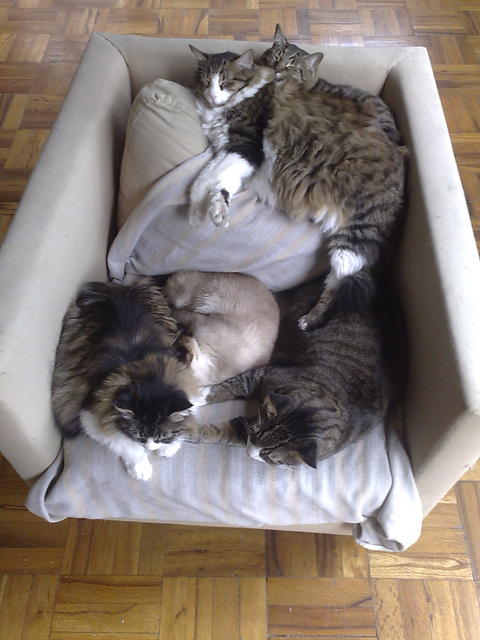
It. Is. Cold.
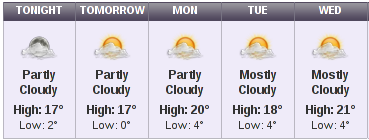
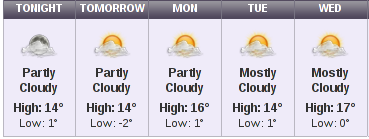
No, we are far from this very impressive picture of a fully-snowed UK seen from the sky that everybody and their dog must have seen by now. Still, in Mexico City we are experiencing the traditional one-or-two-weeks-a-year where it is genuinely cold. And, very strange being this Winter (the rainy season is Summer around here, January should be dry!) we have rain all day long. The Ajusco mountain is around 15Km south from my home, and it is the closest of the giants that surround our valley. Yesterday I managed to get some peeks at it behind the very thick layer of clouds we have. Ajusco looks really gorgeous all snowed, maybe down to the 3400m line (while the city's main area is at 2300m). This picture was not taken this year, we have snow in Ajusco almost every year (although very seldom as much as this time): (last photo is not current, we have not yet had a clear day to take a picture of our Ajusco yet this year) How does it feel? Well, I live in Coyoac n, in the flat area of the valley. Remember that houses here are not built to endure extreme temperatures (and this week is what we call extreme, of course ;-) ). According to Yahoo! Weather: And while the difference appears to be small, what about Magdalena Contreras, ~200m higher, where many people dear to me live (and have even a window pending to be installed)? People say this cold wave is the strongest in 120 years, since records are being taken. Every year people get excited, expecting that this time we will get snow. This has only happened once in at least a century, in 1966 AFAIR. I do not think this year to be atypical. Still, I have a reputation for being insensible to cold weather. Everybody wears heavy jackets while I still go to work with my usual long-sleeved shirt and that's it. But the last two days, I have been using jacket and scarf... But, of course, I don't look as gratious or cute as my cats :-
9 January 2010

Rapha&#235;l Hertzog: Debian related goals for 2010

Here s stuff that I d like to do this year, more or less by decreasing order of importance: All of this probably doesn t fit in my free time (being a father since last month does not help increasing my free time :-) ), so if you re interested in seeing one or more of those projects completed, and if you know some person/company that could sponsor them, get in touch with me! Partagez cet article / Share This

Bastian Venthur: git bisect, ccache, cowbuilder

Git bisect, ccache and cowbuilder: a combination made in heaven! Tracking down a commit which introduced an ugly bug with those tools was a breeze. Git bisect is very useful finding a commit which introduced a bug very quickly, ccache massively reduces compiling time. Compiling icedove (thunderbird) on my laptop using cowbuilder takes roughly 30 minutes. Using cowbuilder with ccache, it only takes 10 minutes, where most of the time is spent setting up the build environment.

Russell Coker: Another Hot Summer

Yesterday was ~30C in my area, today was well over 30C during the day (although cooler in the evening). They forecast 33C for tomorrow in Melbourne, but that means where I live it will probably be about 36C (it s always a few degrees hotter than the overall forecast for the city). Monday is predicted to be 41C and Tuesday may be 32C. I turned off my SE Linux Play Machine this morning and will probably leave it off until at least Tuesday evening. The hardware I use for the Play Machine is fairly energy efficient, but it s in a confined space with some other electronic stuff so it s best not to take chances. I ll probably leave it offline for about half the duration of January and February. I miss Amsterdam and London weather.

Adrian von Bidder: Industry Standard

Wow. I just stumbled over the SIL Fonts, which I haven't heard of before. Looks like an absolutely great project. Not only are these fornts released under an open license (I haven't read it myself, but many of these fonts are in Debian...), but above all I really liked the selection of supported systems with icons by each entry: The Old Windows 3.1 Windows flag stands for tested on Windows , the very old rainbow colored apple for tested on Mac , our official (and current :-) familiar swirl not only for tested on Debian, but for Debian package available . I mean: while it's not uncommon today to see some kind of Linux support in software (or other downloads), explicit Debian support is not that widespread. And seeing this side by side with the two very outdated logos for the two other mainstream OSs (and Ubunut not even being mentioned on this page) is ... what, exactly? Wishful thinking? An ironic comment on how the (conputing) landscape should look like? Made me smile, in any case.

Andrew Pollock: [life/americania] First encounter with the police

I was driving home from a late night at work recently, and I was almost home, when the car behind me lit up like a Christmas tree. My immediate reaction was, "Oh crap, I'm tired and I wasn't paying attention to my speed". So I pulled over. To my relief, it wasn't my speed that was the problem, my left-hand tail light was out. The officer was very nice about the whole thing, but he gave me a fix-it ticket. He told me I had until I think some time in February to fix the problem, then I had to get a police officer to sign off that it had been fixed. I thought that was the end of it, and continued on my way home. The other day, I got this official looking letter in the mail the Superior Court of California, County of Santa Clara. My initial thought was, "ha, the fools have issued me a jury summons like they did for Sarah. Can't they tell I'm an alien? Nanoo Nanoo." So I open the letter and start scanning it. It's a courtesy notice. The first actual sentences I run into start with "Failure to respond to this notice by the due date may result in your bail being increased...". Huh? Bail? What? It turns out that there's a bit more to the fix-it ticket story. Not only do I have to get a police officer to sign off that I've had the tail light fixed, to avoid going to court, I have to pay a $25 "dismissal fee" (also known as California is broke and needs every dollar it can get). Today was the first day that either of us have had any time to scratch ourselves, so we trekked off to Toyota. The guy yanked off the cover inside the boot, and was poking around to show us where to change the bulb, when lo and behold, it started working again. So it was just a loose connector. Dammit. So now I have to track down a police officer. Preferably under the cover of darkness, as we've tinted the front windows of the Prius, which is apparently cause for another fix-it ticket. Although I'm struggling to find the wording that specifically says that.

Next.

Previous.