Search Results: "mak"

25 June 2012

Raphaël Hertzog: Test Driven Development with CppUTest, now in Debian


I have recently read Test Driven Development with Embedded C by James W. Grenning and published by Pragmatic Programmers. I really enjoyed the book: while I was aware of the huge benefits of having a comprehensive test suite, I never studied seriously the principles behind Test Driven Development (TDD) and this book makes a good introduction to the topic. At the same time it focuses on the C language and contains lots of examples on how you can create tests even for projects which have to interact with hardware or other unpredictable components (the key is to create many abstractions) using all the possibilities that C offers. The author convincingly argues that developing code with TDD forces you to create a modular design that is easier to evolve when the underlying requirements change. He also highlights how the tests serve as reference documentation of the API. James W. Grenning recommends CppUTest as his xUnit test framework of choice. When I wanted to try this test framework, I discovered that it was not available in Debian. I decided to package it because it has some interesting features not offered by the contenders (at least not to my knowledge). It s now available in Debian and in Ubuntu. First, it doesn t require any explicit registration of tests and has a very lightweight syntax. The small downside is that CppUTest requires the usage of C++ for the tests. But C++ is compatible with C so it doesn t matter much if you have a C++ compiler for your target. On the contrary, usage of variables and methods scoped to the test group makes it easy to write clear tests. Here s a short sample of test code:
extern "C"  
#include "timer.h"
#include "timefn.h"
 
 
#include "CppUTest/TestHarness.h"
 
static Time the_time;
static const int start_sec = 123;
static const int start_nsec = 456789000;
static const int delay_sec = 8;
static const int delay_nsec = 111111000; // start_nsec + delay_nsec < 10^9
 
TEST_GROUP(Timer)
 
    /* Class variables available to all tests in the group */
    Timer timer;
    Delay remaining;
 
    /* Standard setup/teardown methods of xUnit tests */
    void setup()  
        timer = timer_new();
        time_set(&the_time, start_sec, start_nsec);
        /* [...] */
     
 
    void teardown()  
        timer_free(timer);
        /* [...] */
     
 
    /* Helper functions specific to the test group */
    void start_timer_with_delay(long sec, long nsec)
     
        timer_set_real_delay(timer, sec, nsec);
        timer_start(timer);
     
 
    void ensure_remaining_is(long sec, long nsec)
     
        CHECK_EQUAL(sec, delay_get_seconds(remaining));
        CHECK_EQUAL(nsec, delay_get_nanoseconds(remaining));
     
 ;
 
TEST(Timer, NewIsNotStarted)
 
    CHECK(!timer->started);
 
/* [...] */
TEST(Timer, GetRemainingTimeWithNanosecondPrecision_ShiftOfSeconds)
 
    start_timer_with_delay(delay_sec, delay_nsec);
    time_set(&the_time, start_sec + delay_sec - 5, start_nsec + delay_nsec + 1000);
 
    remaining = timer_get_remaining_time(timer);
 
    ensure_remaining_is(4, 999999000);
 
To run those tests, you just need this boilerplate code in a main.cpp:
#include "CppUTest/CommandLineTestRunner.h"
 
int main(int argc, char** argv)
 
   return CommandLineTestRunner::RunAllTests(argc, argv);

 
Another interesting feature is its integrated memory leak detection system. Any test that hasn t released allocated memory at the end of the teardown process will be marked as failed. The upstream developers have made some unusual choices (static library only, installation in a private directory) but this will likely change with the switch to an automake and autoconf-based build system. I have reported the oddities that I found and I requested them to provide a pkg-config file to make it easier to compile and link unit tests exploiting CppUTest. I already used CppUTest to develop a small application running on an embedded Linux. At some point, I might try to use CppUTest for dpkg development. I believe that it makes for a good fit. dpkg is already C++ ready since dselect is written in C++ and reuses a good part of dpkg s code. In any case, if you like Test Driven Development and are writing C or C++ based applications, I invite you to try CppUTest.

No comment Liked this article? Click here. My blog is Flattr-enabled.

Robert Collins: Running juju against a private openstack instance.

My laptop has somewhat less than 1/2 the grunt of my desktop at home, but I prefer to work on it as I can go sit in the sun etc, very hard to do that with a mini tower case :) However, running everything through ssh to another machine makes editing and iterating more clumsy; I need to do agent forwarding etc not terribly hard, but not free either, particularly when I travel, I need to remember to sync my source trees back to my laptop. So I prefer to live on my laptop and use my desktop for compute power. I had a couple of Juju charms I wanted to investigate, but I needed enough compute power to make my laptop really quite warm so I thought, its time to update my local cloud provider from Eucalyptus to Openstack. This was easy enough, until I came to run Juju. Turns out that Juju s commands really want to talk to the public DNS name of the instance (in order to SSH tunnel a connection to Zookeeper). But! Openstack returns DNS names like Server-3 , and if you think about a home network, its fairly rare to have a local DNS server *anyway*, so putting a suffix on names like that won t help at all: you either need to use a DNS naming provider (openstack ships with an LDAP provider, which adds even more complexity), and configure your clients to know how to find it, or you need to use the public IP addresses (which default to the FlatNetwork, which is routable within a home LAN by simply adding a route to 10.0.0.0/8 to your wifi interface). Adding to confusion, some wifi routers fail to forward avahi messages, which is a) terrible and b) breaks the only obvious way of doing no-config local DNS :( . So, I did some yak shaving this morning. Turns out other folk have already run into this and filed a Juju bug and a supporting txaws bug. The txaws bug was fixed, but just missed the release of Precise. Clint Byrum is going to SRU it this week though, so we ll have it soon. I ve put a patch up to address the Juju side, which is now pending review. Running the two together works very happily for me. \o/

24 June 2012

Joey Hess: trying obnam

Obnam 1.0 was released during several months when I had no well-connected server to use for backups. Yesterday I installed a terabyte disk in a basement with a fiber optic network connection, so my backupless time is over. Now, granted, I have a very multi-layered approach to backups; all my data is stored in git, most of it with dozens of copies automatically maintained, and with archival data managed by git-annex. But I still like to have a "real" backup system underneath, to catch anything else. And to back up those parts of my user's data that I have not given them tools to put into git yet... My backup server is not my basement, so I need to securely encrypt the backups stored there. Encrypting your offsite backups is such a good idea that I've always been surprised at the paucity of tools to do it. I got by with duplicity for years, but it's increasingly creaky, and the few times I've needed to restore, it's been a terrific pain. So I'm excited to be trying Obnam today. So far I quite like it. The only real problem is that it can be slow, when there's a transatlantic link between the client and the server. Each file backed up requires several TCP round-trips, and the latency kills the bandwidth. Large files are still sent fast, and obnam uses little resources on either the client or server while running. And this mostly only affects the initial, full backup. But the encryption and ease of use more than make up for this. The real killer feature with Obnam's encryption isn't that it's industry-standard encryption with gpg, that can be trivially enabled with a single option (--encrypt-with=DEADBEEF). No, the great thing about it is its key management. I generate a new gpg key for each system I back up. This prevents systems reading each other's backups. But that means you have to backup the backup keys.. or when a system is lost, the backup would be inaccessible. With Obnam, I can instead just grant my personal gpg key access to the repository: obnam add-key --keyid 2512E3C7. Now both the machine's key and my gpg key can access the data. Great system; can't revoke access, but otherwise perfect. I liked this so much I stole the design and used it in git-annex too. :) I'm also pleased I can lock down .ssh/authorized_keys on my backup server, to prevent clients running arbitrary commands. Duplicity runs ad-hoc commands over ssh, which defeated me from ever locking it down. Obnam can be easily locked down, like this: command="/usr/lib/openssh/sftp-server" This could still be improved, since clients can still read the whole filesystem with sftp. I'd like to have something like git-annex's git-annex-shell, which can limit access to only a specific repository. Hmm, if Obnam had its own server-side program like this, it could stream backup data to it using a protocol that avoids the roundtrips needed by the SFTP protocol, and fix the latency issue too. Lars, I know you've been looking for a Haskell starter project ... perhaps this is it? :)

23 June 2012

Richard Darst: The size of DebConf12

Phil blogged about DebConf12 having many fewer attendees than past DebConfs (10 and 11). Dealing with registration for several years, I can say these numbers tell a different story.First and foremost, these numbers tell me that DebConf12 hasn't happened yet, DC10 and DC11 have. People are told to sign up register early and reconfirm, but in reality, only the people who have accommodations with us have a significant motivation to do it. Once DebConf starts, lots of day-attendees will drop by, be told to register, and greatly inflate our numbers without staying for a very long time. The number of advance registrants also depends on how much advertisement is done. In terms of people who have both dates in the registration system (Phil's updated graph), I don't place much weight on this number, either.It's my opinion that number of beds occupied is a better indication of the scale of a DebConf, and especially at this stage. This also roughly correlates to number of Debian developers staying, though for years with cheap rooms or lots of external funding, even this number can get inflated. We need some things like t-shirts and badges for every attendee (possibly registered before a certain time), but for now, the number of rooms is what matters.In fact, I wouldn't be surprised if DebConf13 had lower "reconfirmed" numbers, because it is further away form population centers, yet still was a "bigger" conference because there are more people staying on-site or coming for multiple days.For DebConf12, I see an average of 130 people/night, for DebConf11, I see an average of 240 people/night, and for DebConf10, I see an average of 200 people/night. So, DebConf12 is smaller, but in a different way than it seems, and even this is subject to change or variable interpretation. I'm not really wanting to predict DebConf sizes at this stage.So basically, one does not simply expect DebConf registration data to make sense. One should not simply dismiss any DebConf before it happens. And most importantly, one can not simply use this data to plan a conference. The registration team has been frantically running around trying to correct every possible inconsistency you can imagine.Tags: debconf

Bernd Zeimetz: Report from the Bug Squashing Party in Salzburg

bsp_2012_salzburg photo from salzburg-cityguide.com, Copyright (C) Uwe Brandl

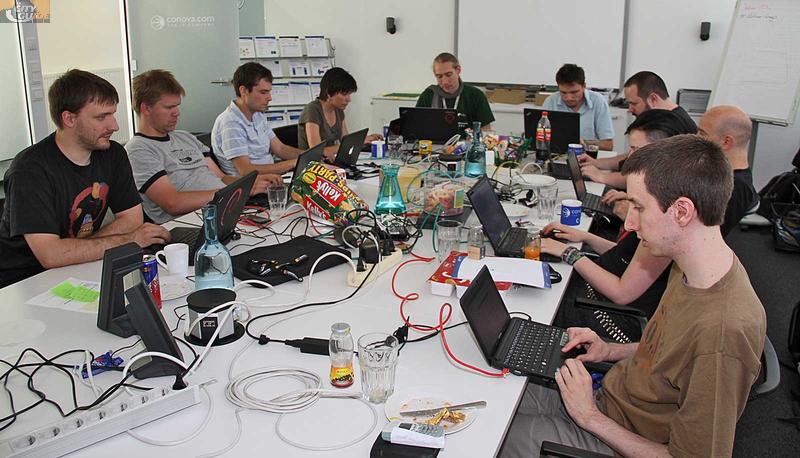
Participation and Results From June 15-17th we held a Debian BugSquashingParty in Salzburg, hosted and sponsored by conova communications GmbH. It was a fun and busy weekend, with 15-17 people from 5 countries being around, mainly working on RC bugs in Testing/Unstable. Gerfried Fuchs (rhonda) also worked on triaging the impact of RC bugs on the version in Squeeze, while Peter Palfrader (weasel) took care of Tor related things and Debian sysadmin work, including starting on the new bugs and udd hosts. Phillip Hug (hug) worked on the debian.ch infrastructure. Together with Miroslav Such from Red Hat Bernd Zeimetz (bzed) worked on the packaging of the necessary libraries and daemons to add (basic) Spacewalk client support to Debian. As soon as the packages passed NEW and #677871 was applied (thanks to the APT guys for working on that already), managing Debian clients with Spacewalk should work out of the box. Of course we also had a little keysigning party :)

Statistics
  • about 68 bugs in unstable/testing were triaged/patched/fixed or at least pinged
  • 54 bugs were tagged to show if they affect Squeeze, several other bugs were pinged to retrieve necessary information or to trigger an update in the next stable pointrelease.
  • 5 packages were introduced into Debian (still in NEW, though) - the Spacewalk client related packages and libapache2-mod-auth-memcookie.

Accomodation Thanks to Debian funds we were able to provide accomodation for four participants in the JUFA youth hostel in Salzburg. We had paid in advance for eight, but changing to rooms with a higher category for only 4 people would have been equally or more expensive.

Press/Media coverage Additionally to being mentioned in the calendars on ProLinux and similar pages, we had some press coverage by the local newspaper and online magazines:

Fun facts We consumed 2kg of Leberkas, a big plate of "Buchteln mit Vanillesosse", about 16000cm^2 of Pizza, about 80 litres of coke, juice, beer and wine and I guess we drank at least the same amount of water. We had coffee made of 1.5kg coffee beans and managed to empty the (formerly well filled) icemaker in the fridge. Also we had successful training sessions of a standard Debconf game (rules won't be explained here obviously). Maybe we even successfully spread the game to the employees of a commercial linux distribution ;)

22 June 2012

Michael Casadevall: Announcement of Calxeda Highbank Images for Quantal

Hello all,

As many of you are aware, Canonical, in coordination with Calxeda and others have been working to bring Ubuntu to this new class of high-performance cluster yet low power-consumption computers built around ARM processors. Many of you who were in attendance at UDS in Oakland may remember seeing Calxeda's talks and demonstration live, and the exciting news that this represents. The full presentation is available here.

In line of this work, I'm am extremely pleased to announce that the initial images for the Calxeda Highbank platform are now available for download, with installation instructions available here. Please remember that Quantal is still in alpha development, and is not currently recommended for use in a production environment. As development of 12.10 continues, we will continue to refine these images, and our tools to fully embrace MAAS on ARM, and make 12.10 to be our best release yet.


As an additional note, Highbank support for Ubuntu 12.04 LTS will be released as part of the 12.04.1 update in mid-August and will join our support for ArmadaXP from Marvell, which was released as part of 12.04.

---
Michael Casadevall
ARM Server Tech Lead
Professional Engineering and Services, Canonical
michael.casadevall@canonical.com

Philipp Kern: The upcoming DebConf 12

Update 2: Richard and especially Moray debunked my statistics and given that they're actually on the DebConf team, they simply know it better what to look at and which numbers cannot be trusted. So look over to Moray's post for some numbers about DC11 and DC12.

Oops. At least the average count of days per person seems slightly higher. (But then the stats may likely be off, given that any part of the day counts as full.)
This year's DebConf will have remote participation through video streams and IRC chat, as usual. But they will be late at night for Europeans. Despite those hurdles, let's make this conference a success! The same procedure as every year. ;-)

Update: I don't have any privileged access to Pentabarf and hence I was just working on the exported data at the link above. When perusing the "Statistics for ONLY people who have both dates in Penta" I get this:
That's because this year seems to have a much higher percentage of people filling out both fields (~58% for DC10/DC11 and 85% for DC12). I'm still unsure if Penta was set to filter out those who did not reconfirm. But after all the others would not be very meaningful for room planning.

21 June 2012

Russell Coker: New SE Linux Policy for Wheezy

I ve just uploaded a new SE Linux policy for Debian/Wheezy. It now works correctly with systemd and Chromium, two significant features that I wanted for Wheezy. Now it turns out that we have until the end of the month for Wheezy updates, so I may get another version of the policy uploaded before then. If so it will only be for relatively minor changes, I think that most SE Linux users would be reasonably happy with policy the way it is. Anything that doesn t work now can probably be solved by local configuration changes. execmem The current version of KDE in Debian is 4.8.4, it seems that large parts of the KDE environment depend on execmem access, this includes kwin and plasma-desktop. Basically there is no possibility of having a KDE desktop environment without those programs and therefore KDE depends on execmem access. Debugging this is difficult as the important programs SEGV when denied execmem access and the KDE crash handler really gets in the way of debugging it running /usr/bin/plasma-desktop results in the process forking a child and detaching from the gdb session. The most clear example of an execmem issue in KDE is from the program /usr/lib/kde4/libexec/kwin_opengl_test which gives the following error:
LLVM ERROR: Allocation failed when allocating new memory in the JIT
Can t allocate RWX Memory: Permission denied To make this work you run the command setsebool -P allow_execmem 1 which gives many domains the ability to create writable-executable memory regions. I raised this issue for discussion on the SE Linux mailing list and Hinnerk van Bruinehsen wrote an informative message in response summarising the situation [1]. It seems that it s possible to compile some of the programs in question to not use the JIT and therefore not require such access and there is a build option in Gentoo to allow it. But it s impractically difficult for me to fork KDE in Debian so the only option is to recommend that people enable the allow_execmem boolean for Debian desktop systems running SE Linux. Related posts:
  1. /run and SE Linux Policy Currently Debian/Unstable is going through a transition to using /run...
  2. An Update on DKIM Signing and SE Linux Policy In my previous post about DKIM [1] I forgot to...
  3. New SE Linux Policy for Squeeze I have just uploaded refpolicy version 0.2.20100524-1 to Unstable. This...

19 June 2012

Joey Hess: I work for The Internet now

I have an interesting problem: How do I shoehorn "hired by The Internet for a full year to work on Free Software" into my resume? Yes, the git-annex Kickstarter went well. :) I had asked for enough to get by for three months. Multiple people thought I should instead work on it for a full year and really do the idea justice. Jason Scott was especially enthusiastic about this idea. So I added new goals and eventually it got there. graph: up and to the right, to 800% funded Don Marti thinks the success of my Kickstarter validates crowdfunding for Free Software. Hard to say; this is not the first Free Software to be funded on Kickstarter. Remember Diaspora? Here's what I think worked to make this a success: I've already put two weeks work into developing the git-annex assistant. I'm blogging about my progress every day on its development blog. The first new feature, a git annex watch command that automatically commits changes to git, will be in the next release of git-annex. I can already tell this is going to be a year of hard work, difficult problems, and great results. Thank you for helping make it happen.

Jo Shields: Enormity

(This blog post is a more firm version of a series of tweets and forum posts I made a few weeks ago. This should also be considered a refresh of this post by Mirco Bauer a few years ago) It has been said that Mono is bloated, and that people should use lighter frameworks that don t pull in hundreds of meg . How much basis in reality is there for those comments? Well, let s do a little thought exercise. How much space is the minimum space needed for several languages to work? For this experiment, we will be looking at the required installation size on disk of several language frameworks, each time installing the bare minimum for a command-line hello world app in that language to run. For example, the Ruby result is the minimum install required to run:
puts 'Hello world'
and the Mono result is the minimum install required to run the following code, which has been compiled on a different machine using dmcs :
public class Hello1
 
   public static void Main()
    
      System.Console.WriteLine("Hello, World!");
    
 
Obviously, for dynamic languages like Ruby and Python, there is no compiler step needed. For languages like C# and Java, it is fair to compile these on a different machine as end-users of packages running these frameworks receive binaries, not source they do not need a development environment. So, on to the test environment. This is a bare bootstrapped AMD64 Debian Unstable system, as of today (i.e. debootstrap sid /tmp/badger ). Its install size is 275MB. So how much space? Ruby 1.9 Test code is as follows:
puts 'Hello world'
Install requirements are as follows:
root@dream:/# aptitude install ruby1.9.1
The following NEW packages will be installed:
  libffi5 a  libruby1.9.1 a  libyaml-0-2 a  ruby1.9.1 
0 packages upgraded, 4 newly installed, 0 to remove and 0 not upgraded.
Need to get 4703 kB of archives. After unpacking 13.1 MB will be used.
OpenJDK 7 Test code is as follows:
class HelloWorldApp  
    public static void main(String[] args)  
        System.out.println("Hello world");
     
 
Install requirements are as follows:
root@dream:/# aptitude install openjdk-7-jre-headless
The following NEW packages will be installed:
  ca-certificates a  ca-certificates-java a  dbus a  fontconfig-config a  
  icedtea-7-jre-cacao a  icedtea-7-jre-jamvm a  java-common a  
  krb5-locales a  libavahi-client3 a  libavahi-common-data a  
  libavahi-common3 a  libcap2 a  libcups2 a  libdbus-1-3 a  libexpat1 a  
  libffi5 a  libfontconfig1 a  libfreetype6 a  libglib2.0-0 a  
  libglib2.0-data a  libgssapi-krb5-2 a  libjpeg8 a  libk5crypto3 a  
  libkeyutils1 a  libkrb5-3 a  libkrb5support0 a  liblcms2-2 a  libnspr4 a  
  libnss3 libnss3-1d a  libpcre3 a  libpcsclite1 a  libsystemd-login0 a  
  libxml2 a  openjdk-7-jre-headless openjdk-7-jre-lib a  openssl a  
  sgml-base a  shared-mime-info a  ttf-dejavu-core a  tzdata-java a  ucf a  
  xml-core a  
0 packages upgraded, 43 newly installed, 0 to remove and 0 not upgraded.
Need to get 51.5 MB of archives. After unpacking 137 MB will be used.
Python 3.2 Test code is as follows:
print ("Hello world")
Install requirements are as follows:
root@dream:/# aptitude install python3.2-minimal
The following NEW packages will be installed:
  file a  libexpat1 a  libffi5 a  libmagic1 a  mime-support a  python3.2 a  python3.2-minimal 
0 packages upgraded, 7 newly installed, 0 to remove and 0 not upgraded.
Need to get 4853 kB of archives. After unpacking 17.7 MB will be used.
Mono 2.10 (C#) Test code is as follows:
public class Hello
 
   public static void Main()
    
      System.Console.WriteLine("Hello world");
    
 
Install requirements are as follows:
root@dream:/# aptitude install mono-runtime
The following NEW packages will be installed:
  binfmt-support a  cli-common a  libmono-corlib4.0-cil a  libmono-i18n-west4.0-cil a  libmono-i18n4.0-cil a  
  libmono-security4.0-cil a  libmono-system-configuration4.0-cil a  libmono-system-security4.0-cil a  
  libmono-system-xml4.0-cil a  libmono-system4.0-cil a  mono-4.0-gac a  mono-gac a  mono-runtime 
0 packages upgraded, 13 newly installed, 0 to remove and 0 not upgraded.
Need to get 4383 kB of archives. After unpacking 11.5 MB will be used.
Of course, every time I try to make the argument that Mono is much leaner than what people propose as an alternative, the anti-Mono brigade go on the defensive and insist that nobody in their right minds uses Python or Ruby either everything ever should be written in Qt. So, hypothetically Qt 4.8 (C++) Test code is as follows:
#include <QTextStream>
int main(int argc, char **argv)
 
   QTextStream s(stdout);
   s << "Hello, world!\n";
   return 0;
 
Install requirements are as follows:
root@dream:/# aptitude install libqtcore4
The following NEW packages will be installed:
  libffi5 a  libglib2.0-0 a  libglib2.0-data a  libpcre3 a  libqtcore4 
  libxml2 a  sgml-base a  shared-mime-info a  xml-core a  
0 packages upgraded, 9 newly installed, 0 to remove and 0 not upgraded.
Need to get 10.3 MB of archives. After unpacking 27.8 MB will be used.
Presented without comment for your consideration. Edit: There are complaints that these numbers are misleading, because they show default package manager behaviour, rather than what happens when passing extra flags or config file settings to Apt. When disabling installation of Recommends: packages, the numbers change as follows:

18 June 2012

Gunnar Wolf: Turning failure into apparent success, and carrying on: e-voting in Jalisco

I will sound monothematic, but I have been devoting quite a bit of work to this topic lately: Trying to stop the advance of e-voting in Mexico, Latin America and the world. Why trying to stop it? Isn't technology supposed to help us, to get trustable processes? Yes, it's supposed to... but it just cannot achieve it, no matter how hard it is tried I won't get into explanations in this blog post, but there is plenty of information. Feel free to ask me for further details. Anyway Yesterday (Sunday, 2012-06-17) was the fifth simulated voting that will lead to the first wide-scale deployment of electronic voting booths in my country: About 10% of the population of the state of Jalisco (that means, ~500,000 people) will cast their votes on July 1st electronically. This particular case illustrates how simulated votings can be used to forge a lie: Pounce Consulting, the company that won the e-voting project for IEPC (Jalisco's voting authority), delivered their booths over 40 days late, just before the deadline for the project to be canceled. Oh, and by the way, it's the same company that just failed to deliver on time for another planned local authority (10% of the booths in the Federal District, where I live, where fortunately 100% of the votes will be cast on traditional, auditable and cheap paper). After this delay, five voting simulations were programmed, to get the local population acquinted with them. The first ones just failed to get the population's interest and had close to 40% failure rates (mainly regarding transmission). Several other "minor details" were reported, including mechanical details that allowed subsequent voters to see the vote of who had just left. Anyway, making long story short: The fifth and last simulation was held yesterday. Officially, it was finally successful (about time). As these booths include the "facilities" to communicate the results via the cellular network, but the populations where they are to be deployed do not yet have cellular coverage, 10% of the booths will have to be carried back to the Districtal Header (that can be a ~10hr trip) to be counted. Also, in all places, traditional paper stationery and paraphernalia will be printed just in case it is needed (and when will they now? When half of the votes are cast and lost?) Anyway... e-voting is still in its first stage in Mexico. Right now, I'm sure, no attempts to rig the election will be made (centrally). But every effort will be made (as it has been made) to dismiss the obviously big and nontrivial ways it has failed and will fail, and any problems will be labeled as "minor". And probably by 2018 we will be facing many more states (even nationwide) deployments. But propaganda fails to see the obvious: E-voting is more expensive, more complicated, leads to more possible failure states. E-voting should not be deployed in large-scale (i.e. more than a couple of hundred voters) elections. Electronic voting is insecure, violates secrecy, allows for fraud. No matter how many locks are put into it.

17 June 2012

Johannes Schauer: port bootstrap build-ordering tool report 2

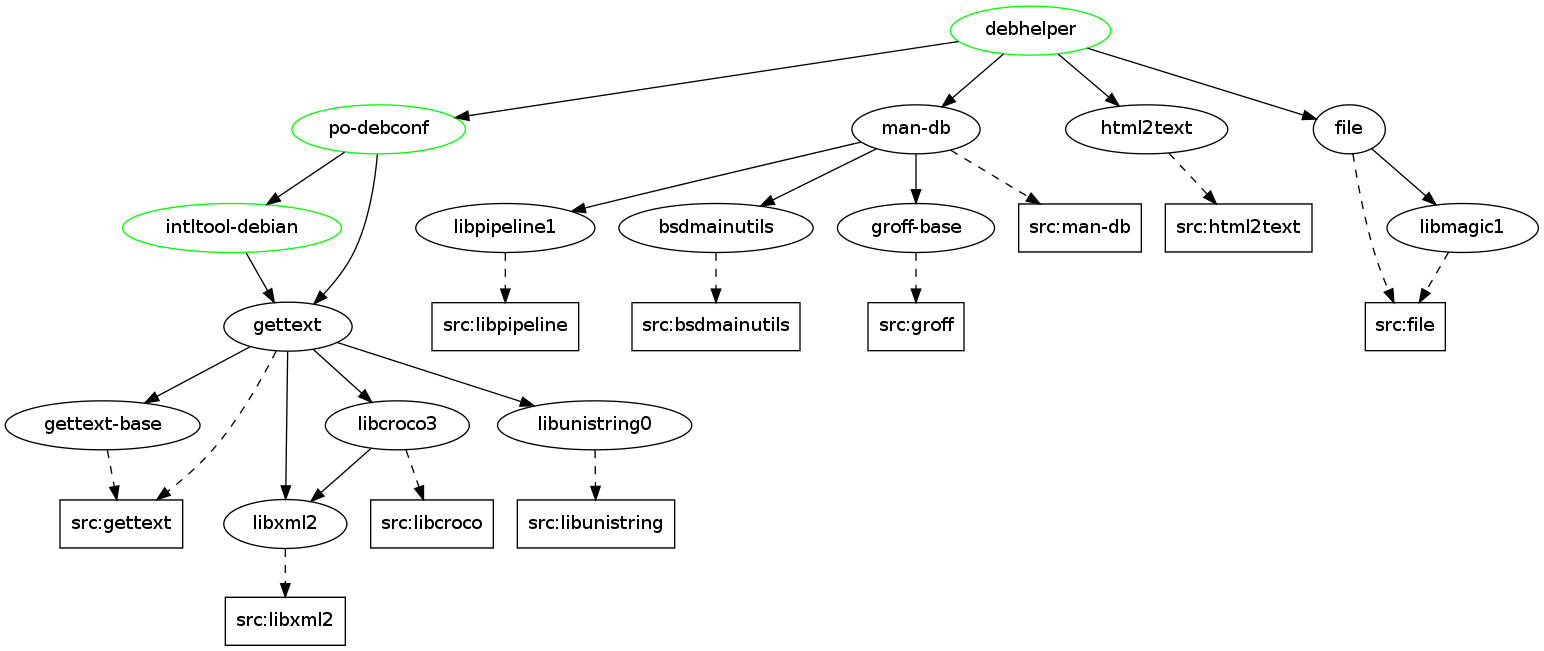
A copy of this post is sent to soc-coordination@lists.alioth.debian.org as well as to debian-bootstrap@lists.mister-muffin.de. Diary June 4 I added the first version of basenocycles.ml to git. Given an initial set of cross built packages, it tries to compile as much as possible on the resulting system in multiple rounds. June 5 During June 3, I discovered and error in my program that would only come up when using the Debian Sid package lists as the input:
Fatal error: exception Assert_failure("common/edosSolver.ml", 610, 11)
On this day, June 5, I wrote a minimal test case for this problem. The same day, Pietro figured out that this is a bug in dose which will be fixed in the next release. Begin writing code to figure out how important a binary package is for the further build process. Try to use Depsolver.edos_install to find out what packages are needed to make debhelper available. Restructure basenocycles.ml, exclude source packages that already have been built, still trouble with already existing binary packages and Cudf.mem_installed, comment stuff better. June 6 I wrote some crude code (only estimate, not correct, fixed later) that would give a rough overview of how often a given binary package is directly required as a build dependency. Debhelper came out as the most needed package. It is architecture:all, so it does not have to be built but it has unfulfilled runtime dependencies. To make those packages available, 13 (actually 11, fixed later) packages have to be compiled on Ubuntu Natty. But those packages all (except gettext) require debhelper itself to be built. The first dependency cycle. This dependency cycle (actually, the 12 cycles) can be broken by either cross compiling those source packages or by making them build without debhelper. One goal of the program is to help decide what the easier option is, but this is not yet implemented. To play around a bit, I created the possibility to specify a list of packages that are additionally to the minimal set of cross compiled packages also cross compiled. I added the 13 packages found above to the list, thus making the binary packages they build available. This made debhelper available in the system. As a result, 1625 out of 3339 source packages can be built with just a minimal build system (priority:essential packages plus build-essential) and debhelper available. The next package that blocks the most other source packages from being built is cdbs. The next nine packages in that list also require cdbs so it seems to be the next important package to be available. Pietro's suggestions make me:
 - do not open BootstrapCommon but ExtLib, Common, Algo, Debian
 - do proper option parsing and logging
 - use Debcudf.ignore_essential = true
 - do Debcudf.init_tables (binlist@srclist)
 - use @ with shorter list first
 - use more List.rev_append instead of @
 - use CudfAdd.who_provides to find if a package is available
June 7 Pietro and Patrick suggest that for solving the debhelper cycles, one could provide a minimal debhelper version so that the above list of 12 packages can be built without debhelper. I try to figure out how to get a list of packages that are missing to make a package installable/buildable. This functionality should be provided in dose but I fail to find it. June 8 Lacking a solution of the problem of June 7, I write a mail to Pietro. I start my first graphs in ocaml using the ocamlgraph library. The graph I generate, starts off at a binary package. For each binary package it connects new vertices as its runtime dependencies. If a binary package is not arch:all and also not yet otherwise compiled, its source package is also added. The result is a graph in which set of source packages in it will make the initial package available, if those source packages would be cross compiled. The graph is extended further than the source packages. June 9 I refine a couple of functions, make univ_get_pkg_by_name return the package with the highest version number. I wrote a rather lengthy (1027 words) email to the list that explains my status as of this day. I can create graphviz dot files with ocaml, can create node and edge types and create the graph by an imperative pattern that I saw a lot in Pietro's code. Disjunctions are not yet handled correctly (see mail from June 8). The graphs generated look like the following: http://mister-muffin.de/p/8nyc.png June 11 I write a test case which shows how CudfAdd.who_provides doesnt find virtual packages. Automate the process of finding the packages that, if cross compiled, would make another package available. Add more predicates (identifying source packages) and improve input file reading code. Move build_compile_rounds which compiles as many source packages as it can in multiple rounds on a given minimal system a toplevel function and thereby abstract it more. Create a rudimentary text based menu to choose different actions to take for an analysis. Start writing an extended version of simple_dependency_graph for deeper analysis. Use xdot to show graphs from the text menu. Allow saving those graphs to a file. June 12 Move functionality from the extended version of simple_dependency_graph over to the normal version and delete the extended version. Add the new Closure vertex type. Create extended_dependency_graph which is supposed to not contain single binary package vertices but handle a package and its installation set as one vertex. The output of extended_dependency_graph is optionally reduced to the biggest (non degenerate) strongly connected component. User gets the option of choosing the exploration depth. June 13 Pietro replies to my mail from June 8 but apparently I failed to express myself well enough in my last mail, so I rephrase my question. Pietro replies to my email from June 11 and explains how the effect I see is due to "a nuisance of the debian to cudf encoding". As a result I change my code accordingly. June 14 Another lengthy (1130 words) email to the list. I explain what was done in the past days, what parts work and how they work. I list some rationales on why I did things the way I did them. The most important observation is, that after improving my code again and again, I ended up representing the dependency cycle problem in the same (very similar) way that Pietro suggested in the beginning. This is probably a good discovery. Lots of data of that email is now of only little use as of June 16, I make lots of improvements in correctness. As I dont have an answer to my other email to Pietro from June 13, I implement a very crude way to get an answer to the question of what packages are missing for a package to be available/compileable. I called it flatten_vpkgformula_best_effort and it suffers from many faults including disjunctions and package conflicts. Patrick spots a problem. As a result, I make sure that at no point, the source package of an arch:all package can be listed. June 15 As a reply to my mail from June 13, Pietro creates a new branch in the git and adds the code I needed to get a proper installation set. June 16 As a result of Pietro's efforts from June 15, I make great advancements on all fronts. Details of the current status follow in the next section. Results A big leap was made on June 16 due to Pietro's great help on making me understand how Depsolver.listcheck can be used for my purposes. My difficulties in finding the solution myself are rooted in many parts of the dose framework being poorly commented but Pietro did already a couple of documentation commits whenever things were unclear for me. Using Depsolver.listcheck makes it possible to be more distribution agnostic and I dont have to handle vpkgs, virtual packages and constraints myself anymore. The code also doesnt suffer anymore by wrongly analyzed dependencies and conflicts. The only thing that is not yet taken care of, is that Depsolver.listcheck only chooses one out of several possible installation set. A final version should be able to take into account that a different installation set could provide a better solution. Overall, in comparison to two weeks ago, I can now properly build, traverse and analyze graphs, can choose an installation set properly, understand more about dependencies, closures, dose and ocaml in general. Finding the importance of binary packages for building When calculating how many source packages are depending on the availability of a binary package I originally flattened the pkg.Cudf.depends list twice for a rough overview. This is of course wrong due to disjunctions and conflicts and also doesnt provide a deep dependency inspection. The new method is to calculate an installation set that is necessary to compile a source package for every source package. The resulting list of binary packages is then used to find out how often a binary package appears in an installation set. I see three drawbacks though: Removing simple graph The simple graph which contained single binary and source packages was removed. I realized it doesnt really serve any purpose to look at it. As a result, Bin vertices and InstallDep edges are also not part of the graph anymore. Since it was responsible for generating the list of source packages that have to be cross built to make a package available, I created a new function get_cross_source_packages which uses an installation to serve the same purpose. Fix extended_dependency_graph extended_dependency_graph now uses installation sets for generating the list of packages that is needed to compile a source package or install a binary package. The list of build dependencies does not include packages that are already installable. The list of runtime dependencies does not include packages that are otherwise available (cross built, arch:all...). Instead of checking for list membership all the time, I created hash tables for the list of installable as well as for the list of available binary packages. Future There are two big tasks for the next two weeks: Task one is to find a way to give hints on which packages to best consider for having reduced build dependencies. This would then probably finally make use of Pietro's cycle algorithms. Task two is to find a way to break cycles and create a build-DAG from a list of packages that already have staged build dependency information. Patrick is currently working on patching dpkg with Build-Depends-StageN dependencies as making perl cross compilable. If he doesnt need the ability to decide which packages to modify to have staged build dependencies in the near future, then task one is probably less urgent and therefor of less importance right now? On the other hand, I can easily generate fake reduced build dependencies so that doing task two right now would not be a problem. Also, having the solution for task two will make it possible to show the user what effect it would have to add reduced build dependencies to a package. For the reasons above (it's not urgent, task one profits from task two being solved) I will go and implement task two first (if there are no objections from my mentors). Another idea, that I discussed with wookey and Patrick yesterday, was that due to multiarch being used for more and more packages, there should exist a set of packages that is cross compilable without any change to the package. We agreed that I make a list of packages that, if cross compiled, would break dependency cycles and make other packages available. I created such a list of about 160 packages for Ubuntu Natty that, if cross compiled, made it possible to have 87% of Natty available (those numbers have to be treated with caution as I did not yet use the proper way of installation sets when generating that list, but the order of magnitude should be correct). Wookey can then try to cross compile those packages. If some packages of those "crucial" source packages are found to be cross compilable, then they should be cross compiled because it means that no work has to be done to break some cycles. Cross compiling all packages that are cross compilable out of the box is no solution, as only natively compiled packages can go into the archive. This is why the list of potentially additionally cross compiled source packages has to be kept as small as possible.

Russell Coker: Debian SE Linux Status June 2012

It s almost the Wheezy freeze time and I ve been working frantically to get things working properly. Policy Status At the moment I m preparing an upload of the policy which will support KDE (and probably most desktop environment) logins and many little fixes related to server operations (particularly MTAs). I would like to get another version done before Wheezy is released, but if Wheezy releases with version 2.20110726-6 of the policy that will be OK. It will work well enough for most things that users will be able to use local changes for the things that don t work. One significant lack with the current policy is that systemd won t work. I ve included most of the policy changes needed, but haven t done any of the testing and tweaking that is necessary to make it work properly. I would like to see policy support for systemd in a Wheezy update if I don t get it done in time for the first release. If I don t get it done in time for the release and if the release team don t accept it for an update then I ll put it in my own repository so anyone who needs it can get it. /run Labelling One significant change for Wheezy is to use a tmpfs mounted on /run instead of /var/run. This means that lots of daemon start scripts create subdirectories of /run at boot time which need to have SE Linux labels applied for correct operation. The way things work is that usually the daemon will write to the directory immediately after the init script has created it, so I can t just have my own script recursively relabel all of /run. Some packages that need to be patched are x11-common #677831, clamav-daemon #677686, sasl2-bin #677685, dkim-filter #677684, and cups #677580. I am sure that there are others. [ -x /sbin/restorecon ] && /sbin/restorecon -R $DIR Generally if you are writing an init script and creating a directory under /run then you need to have some shell code like the above immediately after it s created. Also the same applies for directories under /tmp and any other significant directories that are created at boot time. Upgrading Currently there are some potential problems with the upgrade process, I m working on them at the moment. Ideally an apt-get dist-upgrade would cleanly upgrade everything. But at the moment it seems likely that the upgrade might initially go wrong and then work on the second try. There are some complications such as the selinux-policy-default package owning a config file which is used by mcstransd (which is part of the policycoreutils package), when the config file format changes you get order dependencies for the upgrade. Kernel Support My aim when developing a new SE Linux release for Debian is that the policy should work as much as possible with the user-space from the previous release. So if you upgrade from Squeeze to Wheezy you should be able to start the process by upgrading the SE Linux policy (which drags in the utilities and lots of libraries). This means that if you have a server running you don t have to put it out of action for the entire upgrade, you can get the policy going and then get other things going. I haven t tested this yet but I don t expect any problems (apart from all the dependencies). Also the policy should work with the kernel from the previous release. So if you have a virtual server where it s not convenient to upgrade the kernel then that shouldn t stop you from upgrading the user-space and the SE Linux policy. I ve tested this and found one bug, the sepolgen-ifgen utility that you need to run before audit2allow -R won t work if the kernel is older than the utilities #677730. I don t know if it will be possible to get this fixed. Anyway it s not that important, you can always copy the audit log to another system running the same policy to run audit2allow, it s not convenient but not THAT difficult either. The End Result I think that the result of using SE Linux in Wheezy will be quite good for the people who get the upgrade done and who modify a few init scripts that don t get the necessary changes in time. I anticipate that someone who doesn t know much about SE Linux will be able to get a basic workstation or small server installation done in considerably less than an hour if they read the documentation and someone who knows what they are doing will get it done in a matter of minutes (plus download and install time which can be significant on old hardware). At the moment I m in the process of upgrading all of my systems to Unstable (currently Testing has versions of some SE Linux packages that are too broken). While doing this I will keep discovering bugs and fix as many of them as possible. But it seems that I ve already fixed most things that affect common users. Also BTRFS works well. Not that supporting a new filesystem is a big deal (all that s needed is XATTR support), but having all the nice new features on one system is a good thing. Now I just need to get systemd working. Related posts:
  1. SE Linux Status in Debian 2012-01 Since my last SE Linux in Debian status report [1]...
  2. SE Linux Status in Debian 2012-03 I have just finished updating the user-space SE Linux code...
  3. SE Linux Status in Debian 2011-10 Debian/Unstable Development deb http://www.coker.com.au wheezy selinux The above APT sources.list...

16 June 2012

Vincent Bernat: GPG Key Transition Statement 2012

I am transitioning my GPG key from an old 1024-bit DSA key to a new 4096-bit RSA key. The old key will continue to be valid for some time but I prefer all new correspondance to be encrypted with the new key. I will be making all signatures going forward with the new key. I have followed the excellent tutorial from Daniel Kahn Gillmor which also explains why this migration is needed. The only step that I did not execute is issuing a new certification for keys I have signed in the past. I did not find any search engine to tell me which key I have signed. Here is the signed transition statement (I have stolen it from Zack):
-----BEGIN PGP SIGNED MESSAGE-----
Hash: SHA256,SHA1
I am transitioning GPG keys from an old 1024-bit DSA key to a new
4096-bit RSA key.  The old key will continue to be valid for some
time, but I prefer all new correspondance to be encrypted in the new
key, and will be making all signatures going forward with the new key.
This transition document is signed with both keys to validate the
transition.
If you have signed my old key, I would appreciate signatures on my new
key as well, provided that your signing policy permits that without
reauthenticating me.
The old key, which I am transitional away from, is:
  pub   1024D/F22A794E 2001-03-23
      Key fingerprint = 5854 AF2B 65B2 0E96 2161  E32B 285B D7A1 F22A 794E
The new key, to which I am transitioning, is:
  pub   4096R/353525F9 2012-06-16 [expires: 2014-06-16]
      Key fingerprint = AEF2 3487 66F3 71C6 89A7  3600 95A4 2FE8 3535 25F9
To fetch the full new key from a public key server using GnuPG, run:
  gpg --keyserver keys.gnupg.net --recv-key 95A42FE8353525F9
If you have already validated my old key, you can then validate that
the new key is signed by my old key:
  gpg --check-sigs 95A42FE8353525F9
If you then want to sign my new key, a simple and safe way to do that
is by using caff (shipped in Debian as part of the "signing-party"
package) as follows:
  caff 95A42FE8353525F9
Please contact me via e-mail at <vincent@bernat.im> if you have any
questions about this document or this transition.
  Vincent Bernat
  vincent@bernat.im
  16-06-2012
-----BEGIN PGP SIGNATURE-----
Version: GnuPG v1.4.12 (GNU/Linux)
iQIcBAEBCAAGBQJP3LchAAoJEJWkL+g1NSX5fV0P/iEjcLp7EOky/AVkbsHxiV30
KId7aYmcZRLJpvLZPz0xxThZq2MTVhX+SdiPcrSTa8avY8Kay6gWjEK0FtB+72du
3RxhVYDqEQtrhUmIY2jOVyw9c0vMJh4189J+8iJ5HGQo9SjFEuRrP9xxNTv3OQD5
fRTMUBMC3q1/KcuhPA8ULp4L1OS0xTksRfvs6852XDfSJIZhsYxYODWpWqLsGEcu
DhQ7KHtbOUwjwsoiURGnjwdiFpbb6/9cwXeD3/GAY9uNHxac6Ufi4J64bealuPXi
O4GgG9cEreBTkPrUsyrHtCYzg43X0q4B7TSDg27j0xm+xd+jW/d/0AlBHPXcXemc
b+pw09qLOwQWbsd6d4bx22VXI75btSFs8HwR9hKHBeOAagMHz+AVl5pLXo2rYoiH
34fR1HWqyRdT3bCt19Ys1N+d0fznsZNFOMC+l23QyptOoMz7t7vZ6GbB20ExafrW
+gi7r1sV/6tb9sYMcVV2S3XT003Uwg8PXajyOnFHxPsMoX9zsk1ejo3lxkkTZs0H
yLZtUj3iZ3yX9e2yfv3eOxitR4+bIntEbMecnTI9xJn+33QTz/pWBqg9uDosqzUo
UoQtc6WVn9x3Zsi7aneDYcp06ZdphgsyWhgiLIhQG9MAK9wKthKiZv8DqGYDOsKt
WwpQFvns33e5x4SM4KxXiEYEARECAAYFAk/ctyEACgkQKFvXofIqeU5YLwCdFhEL
P7vpUJA2zv9+dpPN5GLfBlcAn0mDGJcjJpYZl/+aXEnP/8cE0day
=0QnC
-----END PGP SIGNATURE-----
For easier access, I have also published it in text format. You can check it with:
$ gpg --keyserver keys.gnupg.net --recv-key 95A42FE8353525F9
gpg: requesting key 353525F9 from hkp server keys.gnupg.net
gpg: key 353525F9: "Vincent Bernat <bernat@luffy.cx>" not changed
gpg: Total number processed: 1
gpg:              unchanged: 1
$ curl http://vincent.bernat.im/media/files/key-transition-2012.txt   \
>       gpg --verify
To avoid signing/encrypting with the old key who share the same email addresses than the new one, I have saved it, removed it from the keyring and added it again. The new key is now first in both the secret and the public keyrings and will be used whenever the appropriate email address is requested.
$ gpg --export-secret-keys F22A794E > ~/tmp/secret
$ gpg --export F22A794E > ~/tmp/public
$ gpg --delete-secret-key F22A794
sec  1024D/F22A794E 2001-03-23 Vincent Bernat <bernat@luffy.cx>
Delete this key from the keyring? (y/N) y
This is a secret key! - really delete? (y/N) y
$ gpg --delete-key F22A794E
pub  1024D/F22A794E 2001-03-23 Vincent Bernat <bernat@luffy.cx>
Delete this key from the keyring? (y/N) y
$ gpg --import ~/tmp/public
gpg: key F22A794E: public key "Vincent Bernat <bernat@luffy.cx>" imported
gpg: Total number processed: 1
gpg:               imported: 1
gpg: 3 marginal(s) needed, 1 complete(s) needed, classic trust model
gpg: depth: 0  valid:   2  signed:   0  trust: 0-, 0q, 0n, 0m, 0f, 2u
gpg: next trustdb check due at 2014-06-16
$ gpg --import ~/tmp/secret
gpg: key F22A794E: secret key imported
gpg: key F22A794E: "Vincent Bernat <bernat@luffy.cx>" not changed
gpg: Total number processed: 1
gpg:              unchanged: 1
gpg:       secret keys read: 1
gpg:   secret keys imported: 1
$ rm ~/tmp/public ~/tmp/secret
$ gpg --edit-key F22A794E
[...]
gpg> trust
[...]
Please decide how far you trust this user to correctly verify other users' keys
(by looking at passports, checking fingerprints from different sources, etc.)
  1 = I don't know or won't say
  2 = I do NOT trust
  3 = I trust marginally
  4 = I trust fully
  5 = I trust ultimately
  m = back to the main menu
Your decision? 5
Do you really want to set this key to ultimate trust? (y/N) y
I now need to gather some signatures for the new key. If this is appropriate for you, please sign the new key if you signed the old one.

Wouter Verhelst: Life: general update

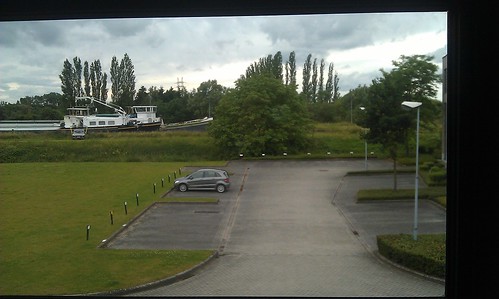
In case you were wondering what had happened to my blog over the past few weeks: the server on which it runs, samba.nixsys.be, has been down for that time, since we've just moved office. There's a story behind it, with which I won't bore you; suffice to say that we had to move out because of circumstances beyond our control. If you really do care, ask me over a beer or something (at debconf would be a good opportunity). I'll happily tell you the story. Meanwhile, the server on which this blog runs and which was located in a separate room at our office was now no longer available. But that's now over, albeit that it's behind a different IP address, and ignoring the fact that I still have some minor things to finish after the move. During this move, I found that we'd accumulated quite an amount of old unused hardware. While I've retained some of it (mostly my m68k machines, and some other machines that were given to me in order to add or improve Debian support for them), most of it has been given or thrown away. And that's even ignoring the other crap that had been in the cellar or the server/storage room. Oh my. I had severely underestimated the amount of work that would be required to clean out the office, which unfortunately also meant that I overshot the official date on which I were to leave the office by about two weeks. Luckily the landlord wasn't in a hurry or something, so no harm done. But I'll say this: if I ever say "yes" to anyone offering me some old decrepit hardware again for which I have no immediate purpose, may I be struck by lightning where I stand. Anyway. There's one significant advantage from this particular move: the view. I've gone from a dead wall to this: IMAG0004 Which is clearly an improvement... Additionally, now just over a month ago, my bother's fianc e gave birth to a boy, which makes me an uncle for the first time ever. Scary.
15 June 2012

Erich Schubert: Dritte Startbahn - 2 gewinnt!

Usually I don't post much about politics. And this even is a highly controversial issue. Please do not feel offended.
This weekend, there is an odd election in Munich. Outside of Munich, nearby the cities of Freising and Erding, there is the Munich airport. The company operating the airport is owned partially by the city of Munich, which gives the city a veto option.
The Munich airport has grown a lot. Everybody who has been flying a bit knows that big airports (such as Heathrow) are oft the worst. If anything goes wrong, you are busted, because it will take them a long time to resume operations. This just happened to me in Munich, where the luggage system was down, and no luggage arrived at the airplanes.
Yet, they want to take the airport further down this road, and make it even bigger: add two satellite terminals, and a third runway. I'm convinved that this will make the airport much worse for anybody around here. The security checkpoints will be even more crowded, the lines for the baggage drop-off too, and you will have to walk much further on the airport.
Up to now, the Munich airport was pretty good compared to others. In particular given that is is one of the largest in Europe! It is because it had been designed from the ground up for this size. Now they plan to screw it up.
But there are other arguments against this, not the egoist view of a traveller. The first is the money issue. The airport is continuously making losses. It's the taxpayer that has to pay for all of this - and the current cost estimation is 1200 million. This is not appropriate, in particular since history shows that you can take this x2 to x10 to get the real number. They should first get the airport into a financial stable condition, then plan on making it even bigger.
Then there are the numbers. Just like with any polticial large-scale project, the numbers are all fake. The current airport was planned to cost 800 million, in the end it was about 8550 million. The politicians happily lie to us. Because they want to push their pet projects. We must no longer accept such projects based on fake numbers and old predictions.
If you are already one of the 10 largest airports in Europe, can you really expect to grow even further?!? There is a natural limit to growth, unless you want to have every single passenger on the world first travel to Munich multiple times, then go to his final destination ...
One thing they seem to have completely neglected is that Berlin is currently getting a brand new airport. And very likely, this is going to divert quite some traffic away from Munich. Just like the Munich airport diverted a lot of traffic away from Frankfurt. To some extend because many people actually want to go to Berlin, not Munich, but they currently have to change planes here or in Frankfurt. So when Berlin finally is operational, this will have an impact on Munich.
And speaking of the Berlin airport, this is a good example to not trust the numbers and our politicians. It is another example of a way-over-budget, way-behind-time project the politicians screwed up badly and where they lied to us. If we should not have trusted them with Berlin, why should we trust them with the Munich addon?
A lot of people whose families have been living there for years will have to be resettled. Whole towns are going to disappear. An airport is huge. Yet, they cannot vote against it, because their small towns do not own shares of the airport. The polticians don't even talk to them, not even to their poltical representatives.
Last but not least, the airport is in a sensitive ecological area. The directly affected area is an European special protection area for wild birds. There are nature preserves nearby, and all this area already suffers badly from airport drainage, pollution and noise. When they built the airport originally, the replacement areas they setup were badly done, and are mostly inhabited by nettles and goldenrod (which is not even native to Europe). See this article in S ddeutsche Zeitung on the impact on nature. You can't replace the loss of the original habitats just by digging some pools and filling them with water ...
If you want more information, go to this page, by Bund Naturschutz.
This is not about progress ("Fortschritt"). That is a killer argument the politicians love, but it doesn't hold. Nobody is trying to shut down the airport. Munich will be better of by keeping the balance having both a reasonably sized airport (and in fact, the airport is already one of the 10 largest in Europe!) and preserving some nature to make it worth living here.
If you are located in Munich, please go vote against the airport extension, and enjoy the DEN-GER soccer game afterwards. Thank you.

John Goerzen: Windows & a dying hard disk: Solving with Linux

Today, my workstation sent me this email:
The following warning/error was logged by the smartd daemon:
Device: /dev/sda [SAT], 1 Currently unreadable (pending) sectors
and then a little later, this one:
The following warning/error was logged by the smartd daemon:
Device: /dev/sda [SAT], 1 Offline uncorrectable sectors
From the hard disk s SMART data, this is a clue that the drive is failing or will soon. Sigh. Incidentally, if smartmontools isn t installed on your machine, whether it s a laptop, desktop, or server, it should be. Although most of you know I run Linux on the metal on my machines almost exclusively, I do maintain a small drive with a Windows installation that I boot into every few months for various reasons. This is that drive. The drive is non-redundant (no RAID), and although it is backed up, the backup is made via backuppc from the NTFS filesystem mounted on Linux, and is a partial backup backing up certain data, not the OS. There are, of course, bare metal Windows backup solutions, but I generally don t want to back up Windows from within Windows on this machine. Restoring Windows isn t quite as simple as an mkfs, an untar, and a grub-install, either. So my first thought is: immediately save whatever of the drive I can. So I ran apt-get install gddrescue to install the GNU ddrescue tool. ddrescue is somewhat similar to dd, but deals much more intelligently with bad blocks on the drive. It will try to read them repeatedly, with decreasing block sizes, in an effort to get every last good byte off the disk that it can. If it ultimately fails to get certain bytes read, it will write placeholder data to the output file in place of the missing data, so that the output file maintains proper size and alignment. It also saves a log file that notes what it found (see info ddrescue for more on that.) So I created an LVM volume for the purpose (not enough free space on /home, and didn t want to have to shrink it somehow later), and ran:
ddrescue /dev/sda /mnt/sdasave.ddrescue /mnt/sdasave.logfile
Then I went to dinner. When I got back, I discovered there were 1 or 2 bad sectors, about halfway through the disk, but everything else was fine. So now, the question became: did I lose any data? If so, what? I needed to know if I had to revert to a backup for anything or not. To answer THAT question, first I had to figure out the offset of the bad spots on the disk. That s not too hard; the logfile gives it to me:
# Rescue Logfile. Created by GNU ddrescue version 1.15
# Command line: ddrescue /dev/sda /mnt/sdasave.ddrescue sdasave.logfile
# current_pos  current_status
0x3BBB8BFC00     +
#      pos        size  status
0x00000000  0x3BBB8BF000  +
0x3BBB8BF000  0x00001000  -
0x3BBB8C0000  0x38B5346000  +
what we see is that the bad sector starts at byte 0x3BBB8BF000 (256549580800 decimal) and extends for 0 1000 bytes (4096 decimal). Both the drive and NTFS use 512-byte sectors. So dividing by 512, we get sector 501073400 501073407 (4096 bytes is 8 sectors). As a check, I ran grep sector /var/log/kern.log and turned up a bunch of lines like this: Jun 14 21:39:11 hephaestus kernel: [35346.929957] end_request: I/O error, dev sda, sector 501073404 Which is within my calculated range. But this is an absolute sector on the disk. We need the sector within the partition, so for that, we have to enlist fdisk to make that calculation. fdisk shows, among other things:
Units = sectors of 1 * 512 = 512 bytes
Sector size (logical/physical): 512 bytes / 512 bytes
   Device Boot      Start         End      Blocks   Id  System
/dev/sda1   *        2048   976771071   488384512    7  HPFS/NTFS/exFAT
So the Windows partition starts at disk sector 2048. Let s just confirm that. If I use dd if=/dev/sda1 bs=512 count=1 hd head, I see a line beginning with .R.NTFS . Exactly the same as with dd if=/dev/sda bs=512 count=1 skip=2048 hd head, so I read the partition table information correctly. Subtract offset of 2048 from the earlier values, and I get relative sectors 501071352-501071359. That s enough to get some solid info from the filesystem via ntfscluster, part of Debian s ntfs-3g package. I pass -s to it, and ignoring some irrelevant stuff, get my answer:
ntfscluster -s 501071352-501071359 /dev/sda1
Inode 190604 /System Volume Information/ b4816feb-b609-11e1-a908-50e549b934f7 3808876b-c176-4e48-b7ae-04046e6cc752 /$DATA
I even reran it with a much larger sector range, just to be absolutely sure I had wiggle room in case calculations had an off-by-one error or something somewhere. This is really great news, because the file in question is pretty much useless I believe it s a system restore point, which I won t be needing anyhow. So at this point, all that remains is to reinstall this on a different drive. For that, I could just use my ddrescue image. I thought I would take a second image, just to be very extra careful, and use that; I used:
partclone.ntfs --rescue -c -s /dev/sda1 -o sda1.partclone
although ntfsclone would work just as well. This captures only the partition; I ll need the partition table as well, and perhaps also the space between the partition table and the first partition. I could capture it separately with dd, but it s already in the ddrescue image, so there s no need. (GRUB is installed on this drive, but there is no Linux filesystem on it, so it may well exceed the size of the MBR). Note that for Linux ext[234] filesystems, debugfs can provide the same (and more) info as I got from ntfscluster. I happen to have a drive of the right size sitting here, which I was about to install in a different machine. So a wipe and a swap and a restore later, and I should be good to go. This scenario is commonplace enough that I thought I d post how I dealt with it, in case anyone else ever has hard drive issues.

Paul Tagliamonte: debtree.pault.ag - my latest toy

I ve pushed up some code (named familytree) to my GitHub, which lets folks browse the social connections that make up Debian. Many thanks to the number of people who gave me feedback (arno, luca, algernon (at least!)) Y all rock! I ve taken the dump of information from nm.debian.org, and rendered it out into four datasets. Mashing this up with an example d3 page, I ve come up with what I m calling debgraph . Here are some notable examples that I think are rad :) By the way - green lines indicate sponsorship, black lines indicate sponsors, and dashed lines indicate AM-ing. Tan nodes are DD-emeritus, and blue is active. I don t think this handles MIA correctly. Anyway, here it is: Me! (paultag) Algernon tbm (OK, this one is massive, I ve scaled it down a skitch old computer warning, it ll peg your CPU!) zack

Matthew Garrett: No, really, secure boot does add security

Carla Schroder wrote a piece for linux.com on secure boot, which gives a reasonable overview of the technology and some of the concerns. It unfortunately then encourages everyone to ignore those legitimate concerns by making the trivially false claim that secure boot is just security theatre.

Security isn't some magic binary state where you're either secure or insecure and you can know which. Right now I'd consider my web server secure. If someone finds an exploitable bug in Apache then that would obviously no longer be the case. I could make it more secure by ensuring that Apache runs in a sufficiently isolated chroot that there's no easy mechanism for anyone to break out, which would be fine up until there's also a kernel exploit that allows someone to escalate their privileges enough to change their process root. So it's entirely possible that someone could right now be breaking into my system through bugs I don't even know exist. Am I secure? I don't know. Does that mean I should just disable all security functionality and have an open root shell bound to a well known port? No. Obviously.

Secure boot depends on the correctness of the implementation and the security of the signing key. If the implementation is flawed or if control of the signing key is lost then it stops providing security, and understanding that is important in order to decide how much trust you place in the technology. But much the same is true of any security technique. Kernel flaws make it possible for an unprivileged user to run with arbitrary privileges. Is user/admin separation security theatre? SSL certificate authorities have leaked keys. Is it security theatre for your bank to insist that you use SSL when logging in?

Secure boot doesn't instantly turn an insecure system into a secure one. It's one more technology that makes it more difficult for attackers to take control of your system. It will be broken and it will be fixed, just like almost any other security. If it's security theatre, so is your doorlock.

Why is this important? Because if you tell anyone that understands the technology that secure boot adds no security, they'll just assume that you're equally uninformed about everything else you're saying. It's a perfect excuse for them to just ignore discussion of market restrictions and user freedoms. We don't get anywhere by arguing against reality. Facts are important.

comment count unavailable comments

14 June 2012

Russell Coker: The Financial Value of a University Degree

I ve read quite a few articles about the value of a degree. Most of them come from the US where the combination of increasing tuition fees and uncertain job market makes a degree seem like a risky investment. I think that most analysis of the value of a degree are missing some important points. The Value of Money at Different Times The value of money is different at various stages of your life. The impression that I get is that when a married couple have their house fully paid off and they either don t/won t have children or their children are old enough to leave home the amount of money that they earn seems to matter a lot less. Doing a university degree involves 3 or 4 years not earning money (or more if doing post-graduate studies), which is usually starting at the age of 18. Effectively getting a degree involves giving up some money while young for the opportunity to earn more when older. Any analysis based on directly comparing the money spent on the degree to the amount of financial return without considering when money is needed is not very useful. I think that a reasonable analysis would exclude income earned after the age of about 45. By that age most people have either achieved a solid financial position and learned to live within their means or messed up their finances so badly that they won t live long enough to recover. A Degree as a Signal The Wikipedia page on economic signalling gives education as an example of a signal. A signal in this case means something that doesn t inherently mean anything but which signifies something else. So completing a degree doesn t necessarily mean that you learned anything relevant to work, but if you are able to do it then it means that you can probably also do things which are economically useful for an employer. This raises the question of how else one might signal their ability to work. One obvious answer is by working, someone who has remained steadily employed for 3 or 4 years has demonstrated their ability to work reliably and get along with other people which should be at least as useful as a signal. It s Not Only the Degree Most analysis seem to compare average income of people with degrees with the average of income with people who didn t attend university. That is based on the assumption that the degree was the only difference. When I was young my parents spent a moderate amount of money on a full set of paper encyclopedias (about 2 meters of shelf space). I m sure that this gave me some educational benefit as they intended, and it was something that was apparently quite rare I don t recall seeing a full encyclopedia in anyone else s house before the Wikireader [1]. My parents also bought me quite a lot of computer gear (back when hardware was really expensive), were always available to drive me to computer users group meetings etc, and did everything else that seemed likely to have an educational benefit. The value of such learning opportunities is significant. I think that almost everyone who had similar learning opportunities to me when they were young will probably have experienced similar support and pressure to attend university. I also think that almost everyone who receives such opportunities will be able to earn more than the median income even if they don t attend university. To a large extent people who are going to be successful attend university. A university degree doesn t make anyone successful if they couldn t succeed without a degree. There are some careers that just aren t options if you don t have a relevant degree (such as medicine and law). But I believe that anyone who is capable of completing a difficult course such as medicine or law (or any other career that has legal requirements for a degree) is capable of being successful without a degree in many other fields. So comparing the wages of a doctor or a lawyer to an average person doesn t make sense, it makes more sense to try and compare their wages to someone of similar skill who didn t have such a qualification. Conclusion It seems to me that the question is, of the people who had great learning opportunities when they were young and who wanted to succeed, would they have earned much less if they hadn t attended university? The next question is, of the people who might earn significantly less without getting a degree, would that salary difference really have mattered, or would it just be a matter of earning some luxury money when they are too old to really need it? Related posts:
  1. Ideas for a Home University There seems to be a recent trend towards home-schooling. The...
  2. university degrees Recently someone asked me for advice on what they can...
  3. Microsoft Hires University Drop-Out for Recruiting Campaign news.com.au reports that MS has hired former Miss Australia Erin...

Next.

Previous.