An offline PKI enhances security by physically isolating the certificate
authority from network threats. A YubiKey is a low-cost solution to store a
root certificate. You also need an air-gapped environment to operate the root
CA.
Offline PKI backed up by 3 YubiKeys
This post describes an offline PKI system using the following components:
2 YubiKeys for the root CA (with a 20-year validity),
1 YubiKey for the intermediate CA (with a 5-year validity), and
It is possible to add more YubiKeys as a backup of the root CA if needed. This
is not needed for the intermediate CA as you can generate a new one if
the current one gets destroyed.
The software part
offline-pki is a small Python application to manage an offline PKI.
It relies on yubikey-manager to manage YubiKeys and cryptography for
cryptographic operations not executed on the YubiKeys. The application has some
opinionated design choices. Notably, the cryptography is hard-coded to use NIST
P-384 elliptic curve.
The first step is to reset all your YubiKeys:
$ offline-pkiyubikeyreset
This will reset the connected YubiKey. Are you sure? [y/N]: yNew PIN code:Repeat for confirmation:New PUK code:Repeat for confirmation:New management key ('.' to generate a random one):WARNING[pki-yubikey] Using random management key: e8ffdce07a4e3bd5c0d803aa3948a9c36cfb86ed5a2d5cf533e97b088ae9e629INFO[pki-yubikey] 0: Yubico YubiKey OTP+FIDO+CCID 00 00INFO[pki-yubikey] SN: 23854514INFO[yubikit.management] Device config writtenINFO[yubikit.piv] PIV application data reset performedINFO[yubikit.piv] Management key setINFO[yubikit.piv] New PUK setINFO[yubikit.piv] New PIN setINFO[pki-yubikey] YubiKey reset successful!
Then, generate the root CA and create as many copies as you want:
$ offline-pkicertificateroot--permittedexample.com
Management key for Root X:Plug YubiKey "Root X"...INFO[pki-yubikey] 0: Yubico YubiKey CCID 00 00INFO[pki-yubikey] SN: 23854514INFO[yubikit.piv] Data written to object slot 0x5fc10aINFO[yubikit.piv] Certificate written to slot 9C (SIGNATURE), compression=TrueINFO[yubikit.piv] Private key imported in slot 9C (SIGNATURE) of type ECCP384Copy root certificate to another YubiKey? [y/N]: yPlug YubiKey "Root X"...INFO[pki-yubikey] 0: Yubico YubiKey CCID 00 00INFO[pki-yubikey] SN: 23854514INFO[yubikit.piv] Data written to object slot 0x5fc10aINFO[yubikit.piv] Certificate written to slot 9C (SIGNATURE), compression=TrueINFO[yubikit.piv] Private key imported in slot 9C (SIGNATURE) of type ECCP384Copy root certificate to another YubiKey? [y/N]: n
Then, you can create an intermediate certificate with offline-pki yubikey
intermediate and use it to sign certificates by providing a CSR to offline-pki
certificate sign. Be careful and inspect the CSR before signing it, as only the
subject name can be overridden. Check the documentation for more details.
Get the available options using the --help flag.
The hardware part
To ensure the operations on the root and intermediate CAs are air-gapped,
a cost-efficient solution is to use an ARM64 single board computer. The Libre
Computer Sweet Potato SBC is a more open alternative to the well-known
Raspberry Pi.1
Libre Computer Sweet Potato SBC, powered by the AML-S905X SOC
I interact with it through an USB to TTL UART converter:
$ tio/dev/ttyUSB0
[16:40:44.546] tio v3.7[16:40:44.546] Press ctrl-t q to quit[16:40:44.555] Connected to /dev/ttyUSB0GXL:BL1:9ac50e:bb16dc;FEAT:ADFC318C:0;POC:1;RCY:0;SPI:0;0.0;CHK:0;TE: 36574BL2 Built : 15:21:18, Aug 28 2019. gxl g1bf2b53 - luan.yuan@droid15-szset vcck to 1120 mvset vddee to 1000 mvBoard ID = 4CPU clk: 1200MHz[ ]
The Nix glue
To bring everything together, I am using Nix with a Flake providing:
a package for the offline-pki application, with shell completion,
a development shell, including an editable version of the offline-pki application,
a NixOS module to setup the offline PKI, resetting the system at each boot,
a QEMU image for testing, and
an SD card image to be used on the Sweet Potato or another ARM64 SBC.
# Execute the application locally
nixrungithub:vincentbernat/offline-pki----help
# Run the application inside a QEMU VM
nixrungithub:vincentbernat/offline-pki\#qemu
# Build a SD card for the Sweet Potato or for the Raspberry Pi
nixbuild--systemaarch64-linuxgithub:vincentbernat/offline-pki\#sdcard.potato
nixbuild--systemaarch64-linuxgithub:vincentbernat/offline-pki\#sdcard.generic
# Get a development shell with the application
nixdevelopgithub:vincentbernat/offline-pki
The key for the root CA is not generated by the YubiKey. Using an
air-gapped computer is all the more important. Put it in a safe with the
YubiKeys when done!
Thank you everyone for keeping the lights on for a bit longer. KDE snaps have been restored. I also released 24.12.3! In addition, I have moved most snaps to core24. The remaining snaps need newer qt6/kf6, which is a WIP. The Bad luck girl has been hit once again with another loss, so with that, I will be reducing my hours on snaps while I consider my options for my future. I am still around, just a bit less.
Thanks again everyone, if you can get me through one more ( lingering broken arm ) surgery I would be forever grateful! https://gofund.me/d5d59582
Last year, I attended the annual LibreOffice Conference in Luxembourg with the help of a generous travel grant by The Document Foundation (TDF). It was a three-day event from the 10th to the 12th of October 2024, with an additional day for community meetup on the 9th.
Luxembourg is a small (twice as big as Delhi) country in Western Europe. After going through an arduous visa process, I reached Luxembourg on the 8th of October. Upon arriving in Luxembourg, I took a bus to the city center, where my hotel Park Inn was located. All the public transport in Luxembourg was free of cost. It was as if I stepped in another world. There were separate tracks for cycling and a separate lane for buses, along with good pedestrian infrastructure. In addition, the streets were pretty neat and clean.
Luxembourg's Findel Airport
Separate cycling tracks in Luxembourg
My hotel was 20 km from the conference venue in Belval. However, the commute was convenient due to a free of cost train connection, which were comfortable, smooth, and scenic, covering the distance in half an hour. The hotel included a breakfast buffet, recharging us before the conference.
This is what trains look like in Luxembourg
Pre-conference, a day was reserved for the community meetup on the 9th of October. On that day, the community members introduced themselves and their contributions to the LibreOffice project. It acted as a brainstorming session. I got a lovely conference bag, which contained a T-Shirt, a pen and a few stickers. I also met my long time collaborators Mike, Sophie and Italo from the TDF, whom I had interacted only remotely till then. Likewise, I also met TDF s sysadmin Guilhem, who I interacted before regarding setting up my LibreOffice mirror.
Conference bag
The conference started on the 10th. There were 5 attendees from India, including me, while most of the attendees were from Europe. The talks were in English. One of the talks that stood out for me was about Luxchat a chat service run by the Luxembourg government based on the Matrix protocol for the citizens of Luxembourg. I also liked Italo s talk on why document formats must be freedom-respecting. On the first night, the conference took us to a nice dinner in a restaurant. It offered one more way to socialize with other attendees and explore food at the same time.
One of the slides of Italo's talk
Picture of the hall in which talks were held
On the 11th of October, I went for a walk in the morning with Biswadeep for some sightseeing around our hotel area. As a consequence, I missed the group photo of the conference, which I wanted to be in. Anyway, we enjoyed roaming around the picturesque Luxembourg city. We also sampled a tram ride to return to our hotel.
We encountered such scenic views during our walk
Another view of Luxembourg city area
The conference ended on the 12th with a couple of talks. This conference gave me an opportunity to meet the global LibreOffice community, connect and share ideas. It also gave me a peek into the country of Luxembourg and its people, where I had good experience. English was widely known, and I had no issues getting by.
Thanks to all the organizers and sponsors of the conference!
For uninteresting reasons I need very regular 58Hz pulses coming out of an
RS-232 Tx line: the time between each pulse should be as close to 1/58s as
possible. I produce each pulse by writing an \xFF byte to the device. The
start bit is the only active-voltage bit being sent, and that produces my pulse.
I wrote this obvious C program:
#include<stdio.h>#include<stdlib.h>#include<stdbool.h>#include<sys/ioctl.h>#include<unistd.h>#include<fcntl.h>#include<termios.h>#include<stdint.h>#include<sys/time.h>staticuint64_tgettimeofday_uint64()
structtimevaltv;
gettimeofday(&tv, NULL);
return (uint64_t) tv.tv_sec * 1000000ULL + (uint64_t) tv.tv_usec;
intmain(intargc, char* argv[])
// open the serial device, and make it as raw as possibleconstchar* device = "/dev/ttyS0";
constspeed_tbaud = B9600;
intfd = open(device, O_WRONLY O_NOCTTY);
tcflush(fd, TCIOFLUSH);
structtermiosoptions = .c_iflag = IGNBRK,
.c_cflag = CS8 CREAD CLOCAL ;
cfsetspeed(&options, baud);
tcsetattr(fd, TCSANOW, &options);
constuint64_tT_us = (uint64_t)(1e6 / 58.);
constuint64_tt0 = gettimeofday_uint64();
for(inti=0; ; i++)
constuint64_tt_target = t0 + T_us*i;
constuint64_tt1 = gettimeofday_uint64();
if(t_target > t1)
usleep(t_target - t1);
write(fd, &((char) '\xff' ), 1);
return 0;
This tries to make sure that each write() call happens at 58Hz. I need these
pulses to be regular, so I need to also make sure that the time between each
userspace write() and when the edge actually hits the line is as short as
possible or, at least, stable.
Potential reasons for timing errors:
The usleep() doesn't wake up exactly when it should. This is subject to the
Linux scheduler waking up the trigger process
The write() almost certainly ends up scheduling a helper task to actually
write the \xFF to the hardware. This helper task is also subject to the
Linux scheduler waking it up.
Whatever the hardware does. RS-232 doesn't give you any guarantees about
byte-byte timings, so this could be an unfixable source of errors
The scheduler-related questions are observable without any extra hardware, so
let's do that first.
I run the ./trigger program, and look at diagnostics while that's running.
I look at some device details:
# ls -lh /dev/ttyS0
crw-rw---- 1 root dialout 4, 64 Mar  6 18:11 /dev/ttyS0
# ls -lh /sys/dev/char/4:64/
total 0
-r--r--r-- 1 root root 4.0K Mar  6 16:51 close_delay
-r--r--r-- 1 root root 4.0K Mar  6 16:51 closing_wait
-rw-r--r-- 1 root root 4.0K Mar  6 16:51 console
-r--r--r-- 1 root root 4.0K Mar  6 16:51 custom_divisor
-r--r--r-- 1 root root 4.0K Mar  6 16:51 dev
lrwxrwxrwx 1 root root    0 Mar  6 16:51 device -> ../../../0000:00:16.3:0.0
-r--r--r-- 1 root root 4.0K Mar  6 16:51 flags
-r--r--r-- 1 root root 4.0K Mar  6 16:51 iomem_base
-r--r--r-- 1 root root 4.0K Mar  6 16:51 iomem_reg_shift
-r--r--r-- 1 root root 4.0K Mar  6 16:51 io_type
-r--r--r-- 1 root root 4.0K Mar  6 16:51 irq
-r--r--r-- 1 root root 4.0K Mar  6 16:51 line
-r--r--r-- 1 root root 4.0K Mar  6 16:51 port
drwxr-xr-x 2 root root    0 Mar  6 16:51 power
-rw-r--r-- 1 root root 4.0K Mar  6 16:51 rx_trig_bytes
lrwxrwxrwx 1 root root    0 Mar  6 16:51 subsystem -> ../../../../../../../class/tty
-r--r--r-- 1 root root 4.0K Mar  6 16:51 type
-r--r--r-- 1 root root 4.0K Mar  6 16:51 uartclk
-rw-r--r-- 1 root root 4.0K Mar  6 16:51 uevent
-r--r--r-- 1 root root 4.0K Mar  6 16:51 xmit_fifo_size
Unsurprisingly, this is a part of the tty subsystem. I don't want to spend the
time to really figure out how this works, so let me look at all the tty
kernel calls and also at all the kernel tasks scheduled by the trigger
process, since I suspect that the actual hardware poke is happening in a helper
task. I see this:
Looking at the sources I see that uart_write() calls __uart_start(), which
schedules a task to call serial_port_runtime_resume() which eventually calls
serial8250_tx_chars(), which calls some low-level functions to actually send
the bits.
I look at the time between two of those calls to quantify the scheduler latency:
The offset from 58Hz of when each write() call happens. This shows effect #1
from above: how promptly the trigger process wakes up
The latency of the helper task. This shows effect #2 above.
The raw data as I tweak things lives here. Initially I see big latency spikes:
These can be fixed by adjusting the priority of the trigger task. This tells
the scheduler to wake that task up first, even if something else is currently
using the CPU. I do this:
sudo chrt -p 90 pidof trigger
And I get better-looking latencies:
During some experiments (not in this dataset) I would see high helper-task
timing instabilities as well. These could be fixed by prioritizing the helper
task. In this kernel (6.12) the helper task is called kworker/N where N is
the CPU index. I tie the trigger process to cpu 0, and priorities all the
relevant helpers:
This fixes the helper-task latency spikes.
OK, so it looks like on the software side we're good to within 0.1ms of the true
period. This is in the ballpark of the precision I need; even this might be too
high. It's possible to try to push the software to do better: one could look at
the kernel sources a bit more, to do smarter things with priorities or to try an
-rt kernel. But all this doesn't matter if the serial hardware adds
unacceptable delays. Let's look.
Let's look at it with a logic analyzer. I use a saleae logic analyzer with
sigrok. The tool spits out the samples as it gets them, and an awk script
finds the edges and reports the timings to give me a realtime plot.
On the server I was using (physical RS-232 port, ancient 3.something kernel):
OK This is very discrete for some reason, and generally worse than 0.1ms.
What about my laptop (physical RS-232 port, recent 6.12 kernel)?
Not discrete anymore, but not really any more precise. What about using a
usb-serial converter? I expect this to be worse.
Yeah, looks worse. For my purposes, an accuracy of 0.1ms is marginal, and the
hardware adds non-negligible errors. So I cut my losses, and use an external
signal generator:
Debian.Social administration, by Stefano Rivera
Over the last year, the Debian.social
services outgrew the infrastructure
that was supporting them. The matrix bridge in particular was hosted on a cloud
instance backed by a large expensive storage volume. Debian.CH rented a new
large physical server to host all these instances, earlier this year. Stefano
set up Incus on the new physical machine
and migrated all the old debian.social LXC Containers, libvirt VMs, and cloud
instances into Incus-managed LXC containers.
Stefano set up Prometheus monitoring and alerts for the new infrastructure and a
Grafana dashboard. The current stack of
debian.social services seem to comfortably fit on the new machine, with good
room to grow.
DebConf 25, by Santiago Ruano Rinc n and Stefano Rivera
DebConf 25 preparations continue. The team is currently finalizing a budget.
Stefano helped to review the current budget proposals and suggest approaches for
balancing it.
Stefano installed a Zammad instance to organize
queries from attendees, for the registration and visa teams.
Santiago continued discussions with possible caterers so we can have options for
the different diet requirements and that could fit into the DebConf budget.
Also, in collaboration with Anupa, Santiago pushed the first
draft changes
to document the venue information in the DebConf 25 website and how to get to
Brest.
Time-based test failure in requests, by Colin Watson
Colin fixed a fun bug in the Python
requests package. Santiago Vila
has been running
tests of what
happens when Debian packages are built on a system in which time has been
artificially set to somewhere around the end of the support period for the next
Debian release, in order to make it easier to do things like issuing security
updates for the lifetime of that release. In this case, the
failure indicated an expired test
certificate, and since the repository already helpfully included scripts to
regenerate those certificates, it seemed natural to try regenerating them just
before running tests. However, this
failed for more obscure reasons
and Colin spent some time investigating. This turned out to be because the test
CA was missing the CA constraint and so recent versions of OpenSSL reject it;
Colin sent a pull request to fix
this.
Priority list for outdated packages, by Santiago Ruano Rinc n
Santiago started a
discussion on
debian-devel about packages that have a history of security issues and that are
outdated regarding new upstream releases. The goal of the mentioned effort is to
have a prioritized list of packages needing some work, from a security point of
view. Moreover, the aim of publicly sharing the list of packages with the Debian
Developers community is to make it easier to look at the packages maintained by
teams, or even other maintainers where help could be welcome. Santiago is
planning to take into account the feedback provided in debian-devel and to
propose a tooling that could help to regularly bring collective awareness of
these packages.
Miscellaneous contributions
Carles worked on English to Catalan po-debconf translations: reviewed
translations, created merge requests and followed up with developers for more
than 30 packages using po-debconf-manager.
Carles helped users, fixed bugs and implemented downloading updated templates
on po-debconf-manager.
Carles packaged a new upstream version of python-pyaarlo.
Carles improved reproducibility of qnetload (now reported as reproducible) and
simplemonitor (followed up with upstream and pending update of Debian package).
Carles collaborated with debian-history package: fixed FTBFS from master
branch, enabled salsa-ci and investigated reproducibility.
Emilio improved support for automatically marking CVEs as NOT-FOR-US in the
security-tracker, closing #1073012.
Emilio updated xorg-server and xwayland in unstable, fixing the last round of
security vulnerabilities.
Helmut Grohne sent patches for 24 cross build failures.
Helmut fixed two problems in the Debian /usr-merge analysis tool. In one
instance, it would overmatch Debian bugs to issues and in another it would fail
to recognize Pre-Depends as a conflict mechanism.
Helmut attempted making rebootstrap work for gcc-15 with limited success as
very many packages FTBFS with gcc-15 due to using function declarations without
arguments.
Helmut provided a change to the security-tracker that would pre-compute
/data/json during database updates rather than on demand resulting in a
reduced response time.
Colin uploaded OpenSSH security
updates for testing/unstable,
bookworm, bullseye, buster, and stretch.
Colin fixed upstream monitoring for 26
Python packages, and upgraded 54 packages (mostly Python-related, but also
PuTTY) to new upstream versions.
Colin updated python-django in bookworm-backports to 4.2.18 (issuing
BSA-121),
and added new backports of python-django-dynamic-fixture
and python-django-pgtrigger, all of which are dependencies of
debusine.
Thorsten Alteholz finally managed to upload hplip to fix two release critical
and some normal bugs. The next step in March would be to upload the latest
version of hplip.
Faidon updated crun in unstable & trixie, resolving a long-standing request of
enabling criu support and thus enabling podman with checkpoint/restore
functionality (With gratitude to Salvatore Bonaccorso and Reinhard Tartler for
the cooperation and collaboration).
Faidon uploaded a number of packages (librdkafka, libmaxminddb,
python-maxminddb, lowdown, tox, tox-uv, pyproject-api, xiccd and gdnsd) bringing
them up to date with new upstream releases, resolving various bugs.
Lucas Kanashiro uploaded some ruby packages involved in the Rails 7 transition
with new upstream releases.
Lucas triaged a ruby3.1 bug
(#1092595)) and
prepared a fix for the next stable release update.
Lucas set up the needed wiki pages and updated the Debian Project status in
the Outreachy portal, in order to send out a call for projects and mentors for
the next round of Outreachy.
Anupa joined Santiago to prepare a list of companies to contact via LinkedIn
for DebConf 25 sponsorship.
Anupa printed Debian stickers and sponsorship brochures, flyers for DebConf
25 to be distributed at FOSS ASIA summit 2025.
Anupa participated in the Debian publicity team meeting and discussed the
upcoming events and tasks.
Rapha l packaged zim 0.76.1 and integrated an upstream patch for another
regression that he reported.
Rapha l worked with the Debian System Administrators for tracker.debian.org
to better cope with gmail s requirement for mails to be authenticated.
Update 20250309 13:20-03:00 - How to help
A friend of mine living in the USA sent me this link to help the flood victims: Support Bah a Blanca (Argentina) Flood Victims
Original blog post
These are not good news. In fact, much the contrary. Compared to the real issue, the fact that I'm not able to attend Embedded World at Nuremberg is, well, a detail. Or at least that's what I'm forcing myself to believe, as I REALLY wanted to be there. But mother nature said otherwise.
Park "D. Alberto Martinelli", Las Ca itas, Bah a Blanca (Google Maps)Bah a Blanca , the city I live, has received a lot on rainfall. Really, a lot. Let me introduce the number like this: the previous highest recorded measurement was 170mm (6.69 inch)... in a month. Yesterday Friday 07 we had more than 400mm (15.75 inch) in 9 hours.
But those are just numbers. Some things are better seen in images.
I'll start with some soft ones.
Sink in Fournier street near Cambaceres (Google Maps)
I also happen to do figure skating in the same school of the 4 times world champions (where "world" means the whole world) Roller Dreams precision skating team - Instagram, from Club El Nacional. Our skating rink got severely damaged with the hail we had like 3 weeks ago (yes, we had hail too!!!). Now it's just impossible:
The "real" thing
Let's get to the heavy, heartbreaker part. I did go to downtown Bah a Blanca, but during night, so let me share some links, most of them in Spanish, but images are images:
My alma matter, Universidad Nacional del Sur, lost its main library, great part of the Physics department and a lot of labs :-(
A nearby town, General Cerri, had even worst luck. In Bah a Blanca, a city of 300k+ people, has around 400 evacuated people. General Cerri, a town of 3000? people, had at least 800.
Bah a Blanca, devil's land
Every place has its legends. We do too. This land was called "Huecuv Map ", something like "Devil's land" by the original inhabitants of the zone, due to its harsh climate: string winters and hot summers, couple with fierce wind. But back in 1855 the Cacique (chief) Jos Mar a Bulnes Yanquetruz had a peace agreement with commander Nicanor Otamendi. But a battle ensued, which Yanquetruz won. At this point history defers depending upon who tells it. Some say Yanquetruz was assigned a military grade as Captain of the indigenous auxiliary forces and provided a military suit, some say he stole it, some say this was a setup of another chief wanting to disrupt peace. But what is known is that Yanquetruz was killed, and his wife, the "machi" (sorceress), issued a curse over the land that would last 1000 years, and the curse was on the climate.
Aftermath
No, we are not there yet. This has just happened. The third violent climate occurrence in 15 months. The city needs to mourn and start healing itself. Time will say.
The other day, I noted that the emacs integration with debputy stopped working.
After debugging for a while, I realized that emacs no longer sent the didOpen
notification that is expected of it, which confused debputy. At this point, I was
already several hours into the debugging and I noted there was some discussions on
debian-devel about emacs and byte compilation not working. So I figured I would
shelve the emacs problem for now.
But I needed an LSP capable editor and with my vi skills leaving much to be desired,
I skipped out on vim-youcompleteme. Instead, I pulled out kate, which I had not
been using for years. It had LSP support, so it would fine, right?
Well, no. Turns out that debputy LSP support had some assumptions that worked for
emacs but not kate. Plus once you start down the rabbit hole, you stumble on
things you missed previously.
Getting started
First order of business was to tell kate about debputy. Conveniently, kate has
a configuration tab for adding language servers in a JSON format right next to the tab where
you can see its configuration for built-in LSP (also in JSON format9. So a quick bit of
copy-paste magic and that was done.
Yesterday, I opened an MR against upstream to have the configuration added
(https://invent.kde.org/utilities/kate/-/merge_requests/1748) and they already merged it.
Today, I then filed a wishlist against kate in Debian to have the Debian maintainers
cherry-pick it, so it works out of the box for Trixie (https://bugs.debian.org/1099876).
So far so good.
Inlay hint woes
Since July (2024), debputy has support for Inlay hints. They are basically small
bits of text that the LSP server can ask the editor to inject into the text to provide
hints to the reader.
Typically, you see them used to provide typing hints, where the editor or the underlying
LSP server has figured out the type of a variable or expression that you did not
explicitly type. Another common use case is to inject the parameter name for positional
arguments when calling a function, so the user do not have to count the position to
figure out which value is passed as which parameter.
In debputy, I have been using the Inlay hints to show inherited fields in
debian/control. As an example, if you have a definition like:
Source: foo-src
Section: devel
Priority: optional
Package: foo-bin
Architecture: any
Then foo-bin inherits the Section and Priority field since it does not supply
its own. Previously, debputy would that by injecting the fields themselves and their
value just below the Package field as if you had typed them out directly. The editor
always renders Inlay hints distinctly from regular text, so there was no risk of
confusion and it made the text look like a valid debian/control file end to end. The
result looked something like:
With the second instances of Section and Priority being rendered differently than
its surrendering (usually faded or colorlessly).
Unfortunately, kate did not like injecting Inlay hints with a newline in them,
which was needed for this trick. Reading into the LSP specs, it says nothing about
multi-line Inlay hints being a thing and I figured I would see this problem again
with other editors if I left it be.
I ended up changing the Inlay hints to be placed at the end of the Package field
and then included surrounding () for better visuals. So now, it looks like:
Unfortunately, it is no longer 1:1 with the underlying syntax which I liked about the
previous one. But it works in more editors and is still explicit. I also removed the
Inlay hint for the Homepage field. It takes too much space and I have yet to
meet someone missing it in the binary stanza.
If you have any better ideas for how to render it, feel free to reach out to me.
Spurious completion and hover
As I was debugging the Inlay hints, I wanted to do a quick restart of debputy after
each fix. Then I would trigger a small change to the document to ensure kate would
request an update from debputy to render the Inlay hints with the new code.
The full outgoing payloads are sent via the logs to the client, so it was really about
minimizing which LSP requests are sent to debputy. Notably, two cases would flood the
log:
Completion requests. These are triggered by typing anything at all and since I wanted
to a change, I could not avoid this. So here it was about making sure there would be
nothing to complete, so the result was a small as possible.
Hover doc requests. These are triggered by mouse hovering over field, so this was
mostly about ensuring my mouse movement did not linger over any field on the way
between restarting the LSP server and scrolling the log in kate.
In my infinite wisdom, I chose to make a comment line where I would do the change. I figured
it would neuter the completion requests completely and it should not matter if my cursor
landed on the comment as there would be no hover docs for comments either.
Unfortunately for me, debputy would ignore the fact that it was on a comment line.
Instead, it would find the next field after the comment line and try to complete based on
that. Normally you do not see this, because the editor correctly identifies that none of
the completion suggestions start with a \#, so they are all discarded.
But it was pretty annoying for the debugging, so now debputy has been told to explicitly
stop these requests early on comment lines.
Hover docs for packages
I added a feature in debputy where you can hover over package names in your relationship
fields (such as Depends) and debputy will render a small snippet about it based on
data from your local APT cache.
This doc is then handed to the editor and tagged as markdown provided the editor supports
markdown rendering. Both emacs and kate support markdown. However, not all
markdown renderings are equal. Notably, emacs's rendering does not reformat the text
into paragraphs. In a sense, emacs rendering works a bit like <pre>...</pre> except
it does a bit of fancy rendering inside the <pre>...</pre>.
On the other hand, kate seems to convert the markdown to HTML and then throw the result
into an HTML render engine. Here it is important to remember that not all newlines are equal
in markdown. A Foo<newline>Bar is treated as one "paragraph" (<p>...</p>) and the HTML
render happily renders this as single line Foo Bar provided there is sufficient width to
do so.
A couple of extra newlines made wonders for the kate rendering, but I have a feeling this
is not going to be the last time the hover docs will need some tweaking for prettification.
Feel free to reach out if you spot a weirdly rendered hover doc somewhere.
Making quickfixes available in kate
Quickfixes are treated as generic code actions in the LSP specs. Each code action has a "type"
(kind in the LSP lingo), which enables the editor to group the actions accordingly or
filter by certain types of code actions.
The design in the specs leads to the following flow:
The LSP server provides the editor with diagnostics (there are multiple ways to trigger
this, so we will keep this part simple).
The editor renders them to the user and the user chooses to interact with one of them.
The interaction makes the editor asks the LSP server, which code actions are available
at that location (optionally with filter to only see quickfixes).
The LSP server looks at the provided range and is expected to return the relevant
quickfixes here.
This flow is really annoying from a LSP server writer point of view. When you do the diagnostics
(in step 1), you tend to already know what the possible quickfixes would be. The LSP spec
authors realized this at some point, so there are two features the editor provides to simplify
this.
In the editor request for code actions, the editor is expected to provide the diagnostics
that they received from the server. Side note: I cannot quite tell if this is optional or
required from the spec.
The editor can provide support for remembering a data member in each diagnostic. The
server can then store arbitrary information in that member, which they will see again in
the code actions request. Again, provided that the editor supports this optional feature.
All the quickfix logic in debputy so far has hinged on both of these two features.
As life would have it, kate provides neither of them.
Which meant I had to teach debputy to keep track of its diagnostics on its own. The plus side
is that makes it easier to support "pull diagnostics" down the line, since it requires a similar
feature. Additionally, it also means that quickfixes are now available in more editors. For
consistency, debputy logic is now always used rather than relying on the editor support
when present.
The downside is that I had to spend hours coming up with and debugging a way to find the
diagnostics that overlap with the range provided by the editor. The most difficult part was keeping
the logic straight and getting the runes correct for it.
Making the quickfixes actually work
With all of that, kate would show the quickfixes for diagnostics from debputy and you could
use them too. However, they would always apply twice with suboptimal outcome as a result.
The LSP spec has multiple ways of defining what need to be changed in response to activating a
code action. In debputy, all edits are currently done via the WorkspaceEdit type. It
has two ways of defining the changes. Either via changes or documentChanges with
documentChanges being the preferred one if both parties support this.
I originally read that as I was allowed to provide both and the editor would pick the one it
preferred. However, after seeing kate blindly use both when they are present, I reviewed
the spec and it does say "The edit should either provide changes or documentChanges",
so I think that one is on me.
None of the changes in debputy currently require documentChanges, so I went with just
using changes for now despite it not being preferred. I cannot figure
out the logic of whether an editor supports documentChanges. As I read the notes for this
part of the spec, my understanding is that kate does not announce its support for
documentChanges but it clearly uses them when present. Therefore, I decided to keep it
simple for now until I have time to dig deeper.
Remaining limitations with kate
There is one remaining limitation with kate that I have not yet solved. The kate
program uses KSyntaxHighlighting for its language detection, which in turn is the
basis for which LSP server is assigned to a given document.
This engine does not seem to support as complex detection logic as I hoped from it. Concretely,
it either works on matching on an extension / a basename (same field for both cases) or
mime type. This combined with our habit in Debian to use extension less files like
debian/control vs. debian/tests/control or debian/rules or
debian/upstream/metadata makes things awkward a best.
Concretely, the syntax engine cannot tell debian/control from debian/tests/control as
they use the same basename. Fortunately, the syntax is close enough to work for both and
debputy is set to use filename based lookups, so this case works well enough.
However, for debian/rules and debian/upstream/metadata, my understanding is that if
I assign these in the syntax engine as Debian files, these rules will also trigger for any
file named foo.rules or bar.metadata. That seems a bit too broad for me, so I have
opted out of that for now. The down side is that these files will not work out of the box
with kate for now.
The current LSP configuration in kate does not recognize makefiles or YAML either. Ideally,
we would assign custom languages for the affected Debian files, so we do not steal the ID
from other language servers. Notably, kate has a built-in language server for YAML and
debputy does nothing for a generic YAML document. However, adding YAML as a supported
language for debputy would cause conflict and regressions for users that are already
happy with their generic YAML language server from kate.
So there are certainly still work to be done. If you are good with KSyntaxHighlighting
and know how to solve some of this, I hope you will help me out.
Changes unrelated to kate
While I was working on debputy, I also added some other features that I want to mention.
The debputy lint command will now show related context to diagnostic in its terminal
report when such information is available and is from the same file as the diagnostic
itself (cross file cases are rendered without related information).
The related information is typically used to highlight a source of a conflict. As an
example, if you use the same field twice in a stanza of debian/control, then
debputy will add a diagnostic to the second occurrence. The related information
for that diagnostic would provide the position of the first occurrence.
This should make it easier to find the source of the conflict in the cases where
debputy provides it. Let me know if you are missing it for certain diagnostics.
The diagnostics analysis of debian/control will now identify and flag simple
duplicated relations (complex ones like OR relations are ignored for now). Thanks
to Matthias Geiger for suggesting the feature and Otto Kek l inen for reporting
a false positive that is now fixed.
Closing
I am glad I tested with kate to weed out most of these issues in time before
the freeze. The Debian freeze will start within a week from now. Since debputy
is a part of the toolchain packages it will be frozen from there except for
important bug fixes.
From April 27th to 30th, 2024,
MiniDebConf Belo Horizonte 2024 was held at
the Pampulha Campus of
UFMG - Federal University of Minas Gerais, in Belo
Horizonte city.
This was the fifth time that a MiniDebConf (as an exclusive in-person event
about Debian) took place in Brazil. Previous editions were in Curitiba
(2016,
2017, and
2018), and in
Bras lia 2023. We had other MiniDebConfs
editions held within Free Software events such as
FISL and Latinoware, and other
online events. See our
event history.
Parallel to MiniDebConf, on 27th (Saturday)
FLISOL - Latin American Free Software Installation Festival took place. It's the largest event in Latin America to promote Free Software,
and It has been held since 2005 simultaneously in several cities.
MiniDebConf Belo Horizonte 2024 was a success (as were previous editions) thanks to the participation of everyone, regardless of their level of knowledge about
Debian. We value the presence of both beginner users who are familiarizing
themselves with the system and the official project developers. The spirit of
welcome and collaboration was present during all the event.
2024 edition numbers
During the four days of the event, several activities took place for all
levels of users and collaborators of the Debian project. The official schedule
was composed of:
06 rooms in parallel on Saturday;
02 auditoriums in parallel on Monday and Tuesday;
30 talks/BoFs of all levels;
05 workshops for hands-on activities;
09 lightning talks on general topics;
01 Live Electronics performance with Free Software;
Install fest to install Debian on attendees' laptops;
BSP (Bug Squashing Party);
Uploads of new or updated packages.
The final numbers for MiniDebConf Belo Horizonte 2024 show that we had a
record number of participants.
Total people registered: 399
Total attendees in the event: 224
Of the 224 participants, 15 were official Brazilian contributors,
10 being DDs (Debian Developers) and 05 (Debian Maintainers), in addition to
several unofficial contributors.
The organization was carried out by 14 people who started working at the end of
2023, including Prof. Lo c Cerf from the Computing Department who made the event possible at UFMG, and 37 volunteers who helped during the event.
As MiniDebConf was held at UFMG facilities, we had the help of more than
10 University employees.
See the list with the
names of people who helped in some way in organizing MiniDebConf Belo Horizonte
2024.
The difference between the number of people registered and the number of
attendees in the event is probably explained by the fact that there is no
registration fee, so if the person decides not to go to the event, they will
not suffer financial losses.
The 2024 edition of MiniDebconf Belo Horizonte was truly grand and shows the
result of the constant efforts made over the last few years to attract more
contributors to the Debian community in Brazil. With each edition the numbers
only increase, with more attendees, more activities, more rooms, and more
sponsors/supporters.
Activities
The MiniDebConf schedule was intense and diverse. On the 27th, 29th and 30th
(Saturday, Monday and Tuesday) we had talks, discussions, workshops and many
practical activities.
On the 28th (Sunday), the Day Trip took place, a day dedicated to sightseeing
around the city. In the morning we left the hotel and went, on a chartered bus,
to the
Belo Horizonte Central Market. People took
the opportunity to buy various things such as cheeses, sweets, cacha as and
souvenirs, as well as tasting some local foods.
After a 2-hour tour of the Market, we got back on the bus and hit the road for
lunch at a typical Minas Gerais food restaurant.
With everyone well fed, we returned to Belo Horizonte to visit the city's
main tourist attraction: Lagoa da Pampulha and Capela S o Francisco de Assis,
better known as
Igrejinha da Pampulha.
We went back to the hotel and the day ended in the hacker space that we set up
in the events room for people to chat, packaging, and eat pizzas.
Crowdfunding
For the third time we ran a crowdfunding campaign and it was incredible how
people contributed! The initial goal was to raise the amount equivalent to a
gold tier of R$ 3,000.00. When we reached this goal, we defined a new one,
equivalent to one gold tier + one silver tier (R$ 5,000.00). And again we
achieved this goal. So we proposed as a final goal the value of a gold + silver
+ bronze tiers, which would be equivalent to R$ 6,000.00. The result was that
we raised R$7,239.65 (~ USD 1,400) with the help of more than 100 people!
Thank you very much to the people who contributed any amount. As a thank you, we list the names of the people who donated.
Food, accommodation and/or travel grants for participants
Each edition of MiniDebConf brought some innovation, or some different benefit
for the attendees. In this year's edition in Belo Horizonte, as with DebConfs, we offered bursaries for food, accommodation and/or travel to help those people who would like to come to the event but who would need
some kind of help.
In the registration form, we included the option for the person to request a
food, accommodation and/or travel bursary, but to do so, they would have to
identify themselves as a contributor (official or unofficial) to Debian and
write a justification for the request.
Number of people benefited:
Food: 69
Accommodation: 20
Travel: 18
The food bursary provided lunch and dinner every day. The lunches included
attendees who live in Belo Horizonte and the region. Dinners were paid for
attendees who also received accommodation and/or travel. The accommodation was
held at the BH Jaragu Hotel. And the
travels included airplane or bus tickets, or fuel (for those who came by car or
motorbike).
Much of the money to fund the bursaries came from the Debian Project, mainly
for travels. We sent a budget request to the former Debian leader Jonathan
Carter, and He promptly approved our request.
In addition to this event budget, the leader also approved individual requests
sent by some DDs who preferred to request directly from him.
The experience of offering the bursaries was really good because it allowed
several people to come from other cities.
Photos and videos
You can watch recordings of the talks at the links below:
Thanks
We would like to thank all the attendees, organizers, volunteers, sponsors and
supporters who contributed to the success of MiniDebConf Belo Horizonte 2024.
Sponsors
Gold:
This year I was at FOSDEM 2025, and it was the fifth edition in a row that I participated in person (before it was in 2019, 2020, 2023 and 2024). The event took place on February 1st and 2nd, as always at the ULB campus in Brussels.
We arrived on Friday at lunchtime and went straight to the hotel to drop off our bags. This time we stayed at Ibis in the city center, very close to the hustle and bustle. The price was good and the location was really good for us to be able to go out in the city center and come back late at night. We found a Japanese restaurant near the hotel and it was definitely worth having lunch there because of the all-you-can-eat price. After taking a nap, we went out for a walk. Since January 31st is the last day of the winter sales in the city, the streets in the city center were crowded, there were lots of people in the stores, and the prices were discounted. We concluded that if we have the opportunity to go to Brussels again at this time, it would be better wait to buy clothes for cold weather there.
Unlike in 2023 and 2024, the FOSDEM organization did not approve my request for the Translations DevRoom,so my goal was to participate in the event and collaborate at the Debian booth. And also as I always do, I volunteered to operate the broadcast camera in the main auditorium on both days, for two hours each.
The Debian booth:
Me in the auditorium helping with the broadcast:
2 weeks before the event, the organization put out a call for interested people to request a room for their community s BoF (Birds of a Feather), and I requested a room for Debian and it was approved :-)
It was great to see that people were really interested in participating at the BoF and the room was packed! As the host of the discussions, I tried to leave the space open for anyone who wanted to talk about any subject related to Debian. We started with a talk from MiniDebConf25 organizers, that will be taking place this year in France. Then other topics followed with people talking, asking and answering questions, etc. It was worth organizing this BoF. Who knows, the idea will remain in 2026.
Carlos (a.k.a Charles), Athos, Ma ra and Melissa talked at Fosdem, and Kanashiro was one for organizers of Distributions DevRoom
During the two days of the event, it didn t rain or get too cold. The days were sunny (and people celebrated the weather in Brussels). But I have to admit that it would have been nice to see snow like I did in 2019. Unlike last year, this time I felt more motivated to stay at the event the whole time.
Deixo meu agradecimento especial para o Andreas Tille, atual L der do Debian que aprovou o meu pedido de passagens para que eu pudesse participar dos FOSDEM 2025. Como sempre, essa ajuda foi essencial para viabilizar a minha viagem para Bruxelas.
I would like to give my special thanks to Andreas Tille, the current Debian Leader, who approved my request for flight tickets so that I could join FOSDEM 2025. As always, this help was essential in making my trip to Brussels possible.
And once again Jandira was with me on this adventure. On Monday we went for a walk around Brussels and we also traveled to visit Bruges again. The visit to this city is really worth it because walking through the historic streets is like going back in time. This time we even took a boat trip through the canals, which was really cool.
Meta
In case you haven't noticed, I'm trying to post and one of the things
that entails is to just dump over the fence a bunch of draft notes. In
this specific case, I had a set of rough notes about NixOS and
particularly Nix, the package manager.
In this case, you can see the very birth of an article, what it looks
like before it becomes the questionable prose it is now, by looking at
the Git history of this file, particularly its birth. I have
a couple of those left, and it would be pretty easy to publish them as
is, but I feel I'd be doing others (and myself! I write for my own
documentation too after all) a disservice by not going the extra mile
on those.
So here's the long version of my experiment with Nix.
Nix
A couple friends are real fans of Nix. Just like I work with Puppet a
lot, they deploy and maintain servers (if not fleets of servers)
with NixOS and its declarative package management system. Essentially,
they use it as a configuration management system, which is pretty
awesome.
That, however, is a bit too high of a bar for me. I rarely try new
operating systems these days: I'm a Debian developer and it takes most
of my time to keep that functional. I'm not going to go around messing
with other systems as I know that would inevitably get me dragged down
into contributing into yet another free software project. I'm mature
now and know where to draw the line. Right?
So I'm just testing Nix, the package manager, on Debian, because I
learned from my friend that nixpkgs is the largest package
repository out there, a mind-boggling 100,000 at the time of
writing (with 88% of packages up to date), compared to around
40,000 in Debian (or 72,000 if you count binary packages, with 72% up
to date). I naively thought Debian was the largest, perhaps competing
with Arch, and I was wrong: Arch is larger than Debian too.
What brought me there is I wanted to run Harper, a fast
spell-checker written in Rust. The logic behind using Nix instead of
just downloading the source and running it myself is that I delegate
the work of supply-chain integrity checking to a distributor, a bit
like you trust Debian developers like myself to package things in a
sane way. I know this widens the attack surface to a third party of
course, but the rationale is that I shift cryptographic verification
to another stack than just "TLS + GitHub" (although that is somewhat
still involved) that's linked with my current chain (Debian
packages).
I have since then stopped using Harper for various reasons and
also wrapped up my Nix experiment, but felt it worthwhile to jot down
some observations on the project.
Hot take
Overall, Nix is hard to get into, with a complicated learning curve. I
have found the documentation to be a bit confusing, since there are
many ways to do certain things. I particularly tripped on "flakes"
and, frankly, incomprehensible error reporting.
It didn't help that I tried to run nixpkgs on Debian which is
technically possible, but you can tell that I'm not supposed to be
doing this. My friend who reviewed this article expressed surprised at
how easy this was, but then he only saw the finished result, not me
tearing my hair out to make this actually work.
Nix on Debian primer
So here's how I got started. First I installed the nix binary package:
apt install nix-bin
Then I had to add myself to the right group and logout/log back in to
get the rights to deploy Nix packages:
adduser anarcat nix-users
That wasn't easy to find, but is mentioned in the README.Debian
file shipped with the Debian package.
Then, I didn't write this down, but the README.Debian file above
mentions it, so I think I added a "channel" like this:
At this point, harper was installed in a ... profile? Not sure.
I had to add ~/.nix-profile/bin (a symlink to
/nix/store/sympqw0zyybxqzz6fzhv03lyivqqrq92-harper-0.10.0/bin) to my
$PATH environment for this to actually work.
Side notes on documentation
Those last two commands (nix-channel and nix-env) were hard to
figure out, which is kind of amazing because you'd think a tutorial on
Nix would feature something like this prominently. But threedifferenttutorials failed to bring me up to that basic
setup, even the README.Debian didn't spell that out clearly.
The tutorials all show me how to develop packages for Nix, not
plainly how to install Nix software. This is presumably because "I'm
doing it wrong": you shouldn't just "install a package", you should
setup an environment declaratively and tell it what you want to do.
But here's the thing: I didn't want to "do the right thing". I just
wanted to install Harper, and documentation failed to bring me to that
basic "hello world" stage. Here's what one of the tutorials suggests
as a first step, for example:
curl -L https://nixos.org/nix/install   sh
nix-shell --packages cowsay lolcat
nix-collect-garbage
... which, when you follow through, leaves you with almost precisely
nothing left installed (apart from Nix itself, setup with a nasty
"curl pipe bash". So while that works in testing Nix, you're not much
better off than when you started.
Rolling back everything
Now that I have stopped using Harper, I don't need Nix anymore, which
I'm sure my Nix friends will be sad to read about. Don't worry, I have
notes now, and can try again!
But still, I wanted to clear things out, so I did this, as root:
I think this cleared things out, but I'm not actually sure.
Side note on Nix drama
This blurb wouldn't be complete without a mention that the Nix
community has been somewhat tainted by the behavior of its founder. I
won't bother you too much with this; LWN covered it well in 2024,
and made a followup article about spinoffs and forks that's worth
reading as well.
I did want to say that everyone I have been in contact with in the Nix
community was absolutely fantastic. So I am really sad that the
behavior of a single individual can pollute a community in such a way.
As a leader, if you have all but one responsability, it's to behave
properly for people around you. It's actually really, really hard to
do that, because yes, it means you need to act differently than others
and no, you just don't get to be upset at others like you would
normally do with friends, because you're in a position of
authority.
It's a lesson I'm still learning myself, to be fair. But at least I
don't work with arms manufacturers or, if I would, I would be sure as
hell to accept the nick (or nix?) on the chin when people would get
upset, and try to make amends.
So long live the Nix people! I hope the community recovers from
that dark moment, so far it seems like it will.
And thanks for helping me test Harper!
I previously blogged about getting an 8K TV [1]. Now I m working on getting 8K video out for a computer that talks to it. I borrowed an NVidia RTX A2000 card which according to it s specs can do 8K [2] with a mini-DisplayPort to HDMI cable rated at 8K but on both Windows and Linux the two highest resolutions on offer are 3840*2160 (regular 4K) and 4096*2160 which is strange and not useful.
The various documents on the A2000 differ on whether it has DisplayPort version 1.4 or 1.4a. According to the DisplayPort Wikipedia page [3] both versions 1.4 and 1.4a have a maximum of HBR3 speed and the difference is what version of DSC (Display Stream Compression [4]) is in use. DSC apparently causes no noticeable loss of quality for movies or games but apparently can be bad for text. According to the DisplayPort Wikipedia page version 1.4 can do 8K uncompressed at 30Hz or 24Hz with high dynamic range. So this should be able to work.
My theories as to why it doesn t work are:
NVidia specs lie
My 8K cable isn t really an 8K cable
Something weird happens converting DisplayPort to HDMI
The video card can only handle refresh rates for 8K that don t match supported input for the TV
To get some more input on this issue I posted on Lemmy, here is the Lemmy post [5]. I signed up to lemmy.ml because it was the first one I found that seemed reasonable and was giving away free accounts, I haven t tried any others and can t review it but it seems to work well enough and it s free. It s described as A community of privacy and FOSS enthusiasts, run by Lemmy s developers which is positive, I recommend that everyone who s into FOSS create an account there or some other Lemmy server.
My Lemmy post was about what video cards to buy. I was looking at the Gigabyte RX 6400 Eagle 4G as a cheap card from a local store that does 8K, it also does DisplayPort 1.4 so might have the same issues, also apparently FOSS drivers don t support 8K on HDMI because the people who manage HDMI specs are jerks. It s a $200 card at MSY and a bit less on ebay so it s an amount I can afford to risk on a product that might not do what I want, but it seems to have a high probability of getting the same result. The NVidia cards have the option of proprietary drivers which allow using HDMI and there are cards with DisplayPort 1.4 (which can do 8K@30Hz) and HDMI 2.1 (which can do 8K@50Hz). So HDMI is a better option for some cards just based on card output and has the additional benefit of not needing DisplayPort to HDMI conversion.
The best option apparently is the Intel cards which do DisplayPort internally and convert to HDMI in hardware which avoids the issue of FOSS drivers for HDMI at 8K. The Intel Arc B580 has nice specs [6], HDMI 2.1a and DisplayPort 2.1 output, 12G of RAM, and being faster than the low end cards like the RX 6400. But the local computer store price is $470 and the ebay price is a bit over $400. If it turns out to not do what I need it still will be a long way from the worst way I ve wasted money on computer gear. But I m still hesitating about this.
Any suggestions?
Welcome to the second report in 2025 from the Reproducible Builds project. Our monthly reports outline what we ve been up to over the past month, and highlight items of news from elsewhere in the increasingly-important area of software supply-chain security. As usual, however, if you are interested in contributing to the Reproducible Builds project, please visit our Contribute page on our website.
Table of contents:
Reproducible Builds at FOSDEM 2025
Similar to last year s event, there was considerable activity regarding Reproducible Builds at FOSDEM 2025, held on on 1st and 2nd February this year in Brussels, Belgium. We count at least four talks related to reproducible builds. (You can also read our news report from last year s event in which Holger Levsen presented in the main track.)
Jelle van der Waa, Holger Levsen and kpcyrd presented in the Distributions track on A Tale of several distros joining forces for a common goal. In this talk, three developers from two different Linux distributions (Arch Linux and Debian), discuss this goal which is, of course, reproducible builds. The presenters discuss both what is shared and different between the two efforts, touching on the history and future challenges alike. The slides of this talk are available to view, as is the full video (30m02s). The talk was also discussed on Hacker News.
Zbigniew J drzejewski-Szmek presented in the ever-popular Python track a on Rewriting .pyc files for fun and reproducibility, i.e. the bytecode files generated by Python in order to speed up module imports: It s been known for a while that those are not reproducible: on different architectures, the bytecode for exactly the same sources ends up slightly different. The slides of this talk are available, as is the full video (28m32s).
In the Nix and NixOS track, Julien Malka presented on the Saturday asking How reproducible is NixOS: We know that the NixOS ISO image is very close to be perfectly reproducible thanks to reproducible.nixos.org, but there doesn t exist any monitoring of Nixpkgs as a whole. In this talk I ll present the findings of a project that evaluated the reproducibility of Nixpkgs as a whole by mass rebuilding packages from revisions between 2017 and 2023 and comparing the results with the NixOS cache. Unfortunately, no video of the talk is available, but there is a blog and article on the results.
Lastly, Simon Tournier presented in the Open Research track on the confluence of GNU Guix and Software Heritage: Source Code Archiving to the Rescue of Reproducible Deployment. Simon s talk describes design and implementation we came up and reports on the archival coverage for package source code with data collected over five years. It opens to some remaining challenges toward a better open and reproducible research. The slides for the talk are available, as is the full video (23m17s).
Reproducible Builds at PyCascades 2025
Vagrant Cascadian presented at this year s PyCascades conference which was held on February 8th and 9th February in Portland, OR, USA. PyCascades is a regional instance of PyCon held in the Pacific Northwest. Vagrant s talk, entitled Re-Py-Ducible Builds caught the audience s attention with the following abstract:
Crank your Python best practices up to 11 with Reproducible Builds! This talk will explore Reproducible Builds by highlighting issues identified in Python projects, from the simple to the seemingly inscrutable. Reproducible Builds is basically the crazy idea that when you build something, and you build it again, you get the exact same thing or even more important, if someone else builds it, they get the exact same thing too.
reproduce.debian.net updates
The last few months have seen the introduction of reproduce.debian.net. Announced first at the recent Debian MiniDebConf in Toulouse, reproduce.debian.net is an instance of rebuilderd operated by the Reproducible Builds project.
Powering this work is rebuilderd, our server which monitors the official package repositories of Linux distributions and attempt to reproduce the observed results there. This month, however, Holger Levsen:
Split packages that are not specific to any architecture away from amd64.reproducible.debian.net service into a new all.reproducible.debian.net page.
Increased the number of riscv64 nodes to a total of 4, and added a new amd64 node added thanks to our (now 10-year sponsor), IONOS.
Uploaded the devscripts package, incorporating changes from Jochen Sprickerhof to the debrebuild script specifically to fix the handling the Rules-Requires-Root header in Debian source packages.
Uploaded a number of Rust dependencies of rebuilderd (rust-libbz2-rs-sys, rust-actix-web, rust-actix-server, rust-actix-http, rust-actix-server, rust-actix-http, rust-actix-web-codegen and rust-time-tz) after they were prepared by kpcyrd :
Jochen Sprickerhof also updated the sbuild package to:
Obey requests from the user/developer for a different temporary directory.
Use the root/superuser for some values of Rules-Requires-Root.
Don t pass --root-owner-group to old versions of dpkg.
Upstream patches
The Reproducible Builds project detects, dissects and attempts to fix as many currently-unreproducible packages as possible. We endeavour to send all of our patches upstream where appropriate. This month, we wrote a large number of such patches, including:
go (clear GOROOT for func ldShared when -trimpath is used)
Distribution work
There as been the usual work in various distributions this month, such as:
In Debian, 17 reviews of Debian packages were added, 6 were updated and 8 were removed this month adding to our knowledge about identified issues.
Fedora developers Davide Cavalca and Zbigniew J drzejewski-Szmek gave a talk on Reproducible Builds in Fedora (PDF), touching on SRPM-specific issues as well as the current status and future plans.
Thanks to an investment from the Sovereign Tech Agency, the FreeBSD project s work on unprivileged and reproducible builds continued this month. Notable fixes include:
The Yocto Project has been struggling to upgrade to the latest Go and Rust releases due to reproducibility problems in the newer versions. Hongxu Jia tracked down the issue with Go which meant that the project could upgrade from the 1.22 series to 1.24, with the fix being submitted upstream for review (see above). For Rust, however, the project was significantly behind, but has made recent progress after finally identifying the blocking reproducibility issues. At time of writing, the project is at Rust version 1.82, with patches under review for 1.83 and 1.84 and fixes being discussed with the Rust developers. The project hopes to improve the tests for reproducibility in the Rust project itself in order to try and avoid future regressions.
Yocto continues to maintain its ability to binary reproduce all of the recipes in OpenEmbedded-Core, regardless of the build host distribution or the current build path.
Finally, Douglas DeMaio published an article on the openSUSE blog on announcing that the Reproducible-openSUSE (RBOS) Project Hits [Significant] Milestone. In particular:
The Reproducible-openSUSE (RBOS) project, which is a proof-of-concept fork of openSUSE, has reached a significant milestone after demonstrating a usable Linux distribution can be built with 100% bit-identical packages.
diffoscope & strip-nondeterminismdiffoscope is our in-depth and content-aware diff utility that can locate and diagnose reproducibility issues. This month, Chris Lamb made the following changes, including preparing and uploading versions 288 and 289 to Debian:
Add asar to DIFFOSCOPE_FAIL_TESTS_ON_MISSING_TOOLS in order to address Debian bug #1095057) []
Catch a CalledProcessError when calling html2text. []
Additionally, Vagrant Cascadian updated diffoscope in GNU Guix to version 287 [][] and 288 [][] as well as submitted a patch to update to 289 []. Vagrant also fixed an issue that was breaking reprotest on Guix [][].
strip-nondeterminism is our sister tool to remove specific non-deterministic results from a completed build. This month version 1.14.1-2 was uploaded to Debian unstable by Holger Levsen.
Website updates
There were a large number of improvements made to our website this month, including:
Holger Levsen clarified the name of a link to our old Wiki pages on the History page [] and added a number of new links to the Talks & Resources page [][].
James Addison update the website s own README file to document a couple of additional dependencies [][], as well as did more work on a future Getting Started guide page [][].
Reproducibility testing framework
The Reproducible Builds project operates a comprehensive testing framework running primarily at tests.reproducible-builds.org in order to check packages and other artifacts for reproducibility. In January, a number of changes were made by Holger Levsen, including:
Fix /etc/cron.d and /etc/logrotate.d permissions for Jenkins nodes. []
Add support for riscv64 architecture nodes. [][]
Grant Jochen Sprickerhof access to the o4 node. []
Disable the janitor-setup-worker. [][]
In addition:
kpcyrd fixed the /all/api/ API endpoints on reproduce.debian.net by altering the nginx configuration. []
James Addison updated reproduce.debian.net to display the so-called bad reasons hyperlink inline [] and merged the Categorized issues links into the Reproduced builds column [].
Jochen Sprickerhof also made some reproduce.debian.net-related changes, adding support for detecting a bug in the mmdebstrap package [] as well as updating some documentation [].
Roland Clobus continued their work on reproducible live images for Debian, making changes related to new clustering of jobs in openQA. []
And finally, both Holger Levsen [][][] and Vagrant Cascadian performed significant node maintenance. [][][][][]
If you are interested in contributing to the Reproducible Builds project, please visit our Contribute page on our website. However, you can get in touch with us via:
In today s digital landscape, social media is more than just a communication tool it is the primary medium for global discourse. Heads of state, corporate leaders and cultural influencers now broadcast their statements directly to the world, shaping public opinion in real time. However, the dominance of a few centralized platforms X/Twitter, Facebook and YouTube raises critical concerns about control, censorship and the monopolization of information. Those who control these networks effectively wield significant power over public discourse.
In response, a new wave of distributed social media platforms has emerged, each built on different decentralized protocols designed to provide greater autonomy, censorship resistance and user control. While Wikipedia maintains a comprehensive list of distributed social networking software and protocols, it does not cover recent blockchain-based systems, nor does it highlight which have the most potential for mainstream adoption.
This post explores the leading decentralized social media platforms and the protocols they are based on: Mastodon (ActivityPub), Bluesky (AT Protocol), Warpcast (Farcaster), Hey (Lens) and Primal (Nostr).
Comparison of architecture and mainstream adoption potential
1. Mastodon (ActivityPub)
Mastodon was created in 2016 by Eugen Rochko, a German software developer who sought to provide a decentralized and user-controlled alternative to Twitter. It was built on the ActivityPub protocol, now standardized by W3C Social Web Working Group, to allow users to join independent servers while still communicating across the broader Mastodon network.
Mastodon operates on a federated model, where multiple independently run servers communicate via ActivityPub. Each server sets its own moderation policies, leading to a decentralized but fragmented experience. The servers can alternatively be called instances, relays or nodes, depending on what vocabulary a protocol has standardized on.
Identity: User identity is tied to the instance where they registered, represented as @username@instance.tld.
Storage: Data is stored on individual instances, which federate messages to other instances based on their configurations.
Cost: Free to use, but relies on instance operators willing to run the servers.
Servers communicate across different platforms by publishing activities to their followers or forwarding activities between servers. Standard HTTPS is used between servers for communication, and the messages use JSON-LD for data representation. The WebFinger protocol is used for user discovery. There is however no neat way for home server discovery yet. This means that if you are browsing e.g. Fosstodon and want to follow a user and press Follow, a dialog will pop up asking you to enter your own home server (e.g. mastodon.social) to redirect you there for actually executing the Follow action on with your account.
Mastodon is open source under the AGPL at github.com/mastodon/mastodon. Anyone can operate their own instance. It just requires to run your own server and some skills to maintain a Ruby on Rails app with a PostgreSQL database backend, and basic understanding of the protocol to configure federation with other ActivityPub instances.
Popularity: Already established, but will it grow more?
Mastodon has seen steady growth, especially after Twitter s acquisition in 2022, with some estimates stating it peaked at 10 million users across thousands of instances. However, its fragmented user experience and the complexity of choosing instances have hindered mainstream adoption. Still, it remains the most established decentralized alternative to Twitter.
Note that Donald Trump s Truth Social is based on the Mastodon software but does not federate with the ActivityPub network.
The ActivityPub protocol is the most widely used of its kind. One of the other most popular services is the Lemmy link sharing service, similar to Reddit. The larger ecosystem of ActivityPub is called Fediverse, and estimates put the total active user count around 6 million.
2. Bluesky (AT Protocol)
Interestingly, Bluesky was conceived within Twitter in 2019 by Twitter founder Jack Dorsey. After being incubated as a Twitter-funded project, it spun off as an independent Public Benefit LLC in February 2022 and launched its public beta in February 2023.
Bluesky runs on top of the Authenticated Transfer (AT) Protocol published at https://github.com/bluesky-social/atproto. The protocol enables portable identities and data ownership, meaning users can migrate between platforms while keeping their identity and content intact. In practice, however, there is only one popular server at the moment, which is Bluesky itself.
Identity: Usernames are domain-based (e.g., @user.bsky.social).
Storage: Content is theoretically federated among various servers.
Cost: Free to use, but relies on instance operators willing to run the servers.
Popularity: Hybrid approach may have business benefits?
Bluesky reported over 3 million users by 2024, probably getting traction due to its Twitter-like interface and Jack Dorsey s involvement. Its hybrid approach decentralized identity with centralized components could make it a strong candidate for mainstream adoption, assuming it can scale effectively.
3. Warpcast (Farcaster Network)
Farcaster was launched in 2021 by Dan Romero and Varun Srinivasan, both former crypto exchange Coinbase executives, to create a decentralized but user-friendly social network. Built on the Ethereum blockchain, it could potentially offer a very attack-resistant communication medium.
However, in my own testing, Farcaster does not seem to fully leverage what Ethereum could offer. First of all, there is no diversity in programs implementing the protocol as at the moment there is only Warpcast. In Warpcast the signup requires an initial 5 USD fee that is not payable in ETH, and users need to create a new wallet address on the Ethereum layer 2 network Base instead of simply reusing their existing Ethereum wallet address or ENS name.
Despite this, I can understand why Farcaster may have decided to start out like this. Having a single client program may be the best strategy initially. One of the decentralized chat protocol Matrix founders, Matthew Hodgson, shared in his FOSDEM 2025 talk that he slightly regrets focusing too much on developing the protocol instead of making sure the app to use it is attractive to end users. So it may be sensible to ensure Warpcast gets popular first, before attempting to make the Farcaster protocol widely used.
As a protocol Farcaster s hybrid approach makes it more scalable than fully on-chain networks, giving it a higher chance of mainstream adoption if it integrates seamlessly with broader Web3 ecosystems.
Identity: ENS (Ethereum Name Service) domains are used as usernames.
Storage: Messages are stored in off-chain hubs, while identity is on-chain.
Cost: Users must pay gas fees for some operations but reading and posting messages is mostly free.
Popularity: Decentralized social media + decentralized payments a winning combo?
Ethereum founder Vitalik Buterin (warpcast.com/vbuterin) and many core developers are active on the platform. Warpcast, the main client for Farcaster, has seen increasing adoption, especially among Ethereum developers and Web3 enthusiasts. I too have an profile at warpcast.com/ottok. However, the numbers are still very low and far from reaching network effects to really take off.
Blockchain-based social media networks, particularly those built on Ethereum, are compelling because they leverage existing user wallets and persistent identities while enabling native payment functionality. When combined with decentralized content funding through micropayments, these blockchain-backed social networks could offer unique advantages that centralized platforms may find difficult to replicate, being decentralized both as a technical network and in a funding mechanism.
4. Hey.xyz (Lens Network)
The Lens Protocol was developed by decentralized finance (DeFi) team Aave and launched in May 2022 to provide a user-owned social media network. While initially built on Polygon, it has since launched its own Layer 2 network called the Lens Network in February 2024. Lens is currently the main competitor to Farcaster.
Lens stores profile ownership and references on-chain, while content is stored on IPFS/Arweave, enabling composability with DeFi and NFTs.
Identity: Profile ownership is tied to NFTs on the Polygon blockchain.
Storage: Content is on-chain and integrates with IPFS/Arweave (like NFTs).
Cost: Users must pay gas fees for some operations but reading and posting messages is mostly free.
Popularity: Probably not as social media site, but maybe as protocol?
The social media side of Lens is mainly the Hey.xyz website, which seems to have fewer users than Warpcast, and is even further away from reaching critical mass for network effects. The Lens protocol however has a lot of advanced features and it may gain adoption as the building block for many Web3 apps.
5. Primal.net (Nostr Network)
Nostr (Notes and Other Stuff Transmitted by Relays) was conceptualized in 2020 by an anonymous developer known as fiatjaf. One of the primary design tenets was to be a censorship-resistant protocol and it is popular among Bitcoin enthusiasts, with Jack Dorsey being one of the public supporters. Unlike the Farcaster and Lens protocols, Nostr is not blockchain-based but just a network of relay servers for message distribution. If does however use public key cryptography for identities, similar to how wallets work in crypto.
Popularity: If Jack Dorsey and Bitcoiners promote it enough?
Primal.net as a web app is pretty solid, but it does not stand out much. While Jack Dorsey has shown support by donating $1.5 million to the protocol development in December 2021, its success likely depends on broader adoption by the Bitcoin community.
Will any of these replace X/Twitter?
As usage patterns vary, the statistics are not fully comparable, but this overview of the situation in March 2025 gives a decent overview.
Mastodon and Bluesky have already reached millions of users, while Lens and Farcaster are growing within crypto communities. It is however clear that none of these are anywhere close to how popular X/Twitter is. In particular, Mastodon had a huge influx of users in the fall of 2022 when Twitter was acquired, but to challenge the incumbents the growth would need to significantly accelerate. We can all accelerate this development by embracing decentralized social media now alongside existing dominant platforms.
Who knows, given the right circumstances maybe X.com leadership decides to change the operating model and start federating contents to break out from a walled garden model. The likelyhood of such development would increase if decentralized networks get popular, and the encumbents feel they need to participate to not lose out.
Past and future
The idea of decentralized social media is not new. One early pioneer identi.ca launched in 2008, only two years after Twitter, using the OStatus protocol to promote decentralization. A few years later it evolved into pump.io with the ActivityPump protocol, and also forked into GNU Social that continued with OStatus. I remember when these happened, and that in 2010 also Diaspora launched with fairly large publicity. Surprisingly both of these still operate (I can still post both on identi.ca and diasp.org), but the activity fizzled out years ago. The protocol however survived partially and evolved into ActivityPub, which is now the backbone of the Fediverse.
The evolution of decentralized social media over the next decade will likely parallel developments in democracy, freedom of speech and public discourse. While the early 2010s emphasized maximum independence and freedom, the late 2010s saw growing support for content moderation to combat misinformation. The AI era introduces new challenges, potentially requiring proof-of-humanity verification for content authenticity.
Key factors that will determine success:
User experience and ease of onboarding
Network effects and critical mass of users
Integration with existing web3 infrastructure
Balance between decentralization and usability
Sustainable economic models for infrastructure
This is clearly an area of development worth monitoring closely, as the next few years may determine which protocol becomes the de facto standard for decentralized social communication.
Some of you may remember that I recently felt a bit underwhelmed
by the last pager I reverse engineered the Retekess TD-158,
mostly due to how intuitive their design decions were. It was pretty easy
to jump to conclusions because they had made some pretty good decisions on
how to do things.
I figured I d spin the wheel again and try a new pager system this time I
went for a SU-68G-10 pager, since I recognized the form factor as another
fairly common unit I ve seen around town. Off to Amazon I went, bought a set,
and got to work trying to track down the FCC filings on this model. I
eventually found what seemed to be the right make/model, and it, once again,
indicated that this system should be operating in the 433 MHz ISM band likely
using OOK modulation. So, figured I d start with the center of the band (again)
at 433.92 MHz, take a capture, test my luck, and was greeted with a now very
familiar sight.
Same as the last goarounds, except the premable here is a 0 symbol followed
by 6-ish symbol durations of no data, followed by 25 bits of a packet. Careful
readers will observe 26 symbols above after the preamble I did too! The last
0 in the screenshot above is not actually a part of the packet rather,
it s part of the next packet s preamble. Each packet is packed in pretty tight.
By Hand Demodulation
Going off the same premise as last time, I figured i d give it a manual demod
and see what shakes out (again). This is now the third time i ve run this play,
so check out either of my prior twoposts for a
better written description of what s going on here I ll skip all the details
since i d just be copy-pasting from those posts into here. Long story short, I
demodulated a call for pager 1, call for pager 10, and a power off command.
What
Bits
Call 1
1101111111100100100000000
Call 10
1101111111100100010100000
Off
1101111111100111101101110
A few things jump out at me here the first 14 bits are fixed (in my case,
11011111111001), which means some mix of preamble, system id, or other
system-wide constant. Additionally, The last 9 bits also look like they are our
pager the 1 and 10 pager numbers (LSB bit order) jump right out
(100000000 and 010100000, respectively). That just leaves the two remaining
bits which look to be the action 00 for a Call , and 11 for a Power
off . I don t super love this since command has two bits rather than one, the
base station ID seems really long, and a 9-bit Pager ID is just weird. Also,
what is up with that power-off pager id? Weird. So, let s go and see what we
can do to narrow down and confirm things by hand.
Testing bit flips
Rather than call it a day at that, I figure it s worth a bit of diligence to
make sure it s all correct so I figured we should try sending packets to
my pagers and see how they react to different messages after flipping bits
in parts of the packet.
I implemented a simple base station for the pagers using my Ettus B210mini, and
threw together a simple OOK modulator and transmitter program which allows me
to send specifically crafted test packets on frequency. Implementing the base
station is pretty straightforward, because of the modulation of the signal
(OOK), it s mostly a matter of setting a buffer to 1 and 0 for where the
carrier signal is on or off timed to the sample rate, and sending that off to
the radio. If you re interested in a more detailed writeup on the steps
involved, there s a bit more in my christmas tree post.
First off, I d like to check the base id. I want to know if all the bits in
what I m calling the base id are truly part of the base station ID, or
perhaps they have some other purpose (version, preamble?). I wound up following
a three-step process for every base station id:
Starting with an unmodified call packet for the pager under test:
Flip the Nth bit, and transmit the call. See if the pager reacts.
Hold SET , and pair the pager with the new packet.
Transmit the call. See if the pager reacts.
After re-setting the ID, transmit the call with the physical base station,
see if the pager reacts.
Starting with an unmodified off packet for the pager system
Flip the Nth bit, transmit the off, see if the pager reacts.
What wound up happening is that changing any bit in the first 14 bits meant
that the packet no longer worked with any pager until it was re-paired, at
which point it begun to work again. This likely means the first 14 bits are
part of the base station ID and not static between base stations, or some
constant like a version or something. All bits appear to be used.
I repeated the same process with the command bits, and found that only 11
and 00 caused the pagers to react for the pager ids i ve tried.
I repeated this process one last time with the pager id bits this time, and
found the last bit in the packet isn t part of the pager ID, and can be either
a 1 or a 0 and still cause the pager to react as if it were a 0. This means
that the last bit is unknown but it has no impact on either a power off or
call, and all messages sent by my base station always have a 0 set. It s not
clear if this is used by anything likely not since setting a bit there
doesn t result in any change of behavior I can see yet.
Final Packet Structure
After playing around with flipping bits and testing, the final structure
I was able to come up with based on behavior I was able to observe from
transmitting hand-crafted packets and watching pagers buzz:
base id
command
pager id
???
Commands
The command section bit comes in two flavors either a call or an off
command.
Type
Id (2 bits)
Description
Call
00
Call the pager identified by the id in pager id
Off
11
Request pagers power off, pager id is always 10110111
As for the actual RF PHY characteristics, here s my best guesses at what s
going on with them:
What
Description
Center Frequency
433.92 MHz
Modulation
OOK
Symbol Duration
1300us
Bits
25
Preamble
325us of carrier, followed by 8800us of no carrier
I m not 100% on the timings, but they appear to be close enough to work
reliabily. Same with the center frequency, it s roughly right but there
may be a slight difference i m missing.
Lingering Questions
This was all generally pretty understandable another system that had some
good decisions, and wasn t too bad to reverse engineer. This was a bit more fun
to do, since there was a bit more ambiguity here, but still not crazy. At least
this one was a bit more ambiguous that needed a bit of followup to confirm
things, which made it a bit more fun.
I am left with a few questions, though which I m kinda interested in
understanding, but I ll likely need a lot more data and/or original source:
Why is the command two bits here? This was a bit tough to understand because
of the number of bits they have at their disposal given the one last bit at
the end of the packet that doesn t seem to do anything, there s no reason this
couldn t have been a 16 bit base station id, and an 8 bit pager id along with a
single bit command (call or off).
When sending an off why is power off that bit pattern? Other pager IDs
don t seem to work with off , so it has some meaning, but I m not sure what
that is. You press and hold 9 on the physical base station, but the code winds
up coming out to 0xED, 237 or maybe -19 if it s signed. I can t quite
figure out why it s this value. Are there other codes?
Finally what s up with the last bit? Why is it 25 bits and not 24? It must
take more work to process something that isn t 8 bit aligned and all for
something that s not being used!
[I d like to stop writing posts like this. I ve been trying to work out what to say now for nearly 2 months (writing the mail to -private to tell the Debian project about his death is one of the hardest things I ve had to write, and I bottled out and wrote something that was mostly just factual, because it wasn t the place), and I ve decided I just have to accept this won t be the post I want it to be, but posted is better than languishing in drafts.]
Last weekend I was in Portland, for the Celebration of Life of my friend Steve, who sadly passed away at the start of the year. It wasn t entirely unexpected, but that doesn t make it any easier.
I ve struggled to work out what to say about Steve. I ve seen many touching comments from others in Debian about their work with him, but what that s mostly brought home to me is that while I met Steve through Debian, he was first and foremost my friend rather than someone I worked with in Debian. And so everything I have to say is more about that friendship (and thus feels a bit self-centred).
My first memory of Steve is getting lost with him in Porto Alegre, Brazil, during DebConf4. We d decided to walk to a local mall to meet up with some other folk (I can t recall how they were getting there, but it wasn t walking), ended up deep in conversation (ISTR it was about shared library transititions), and then it took a bit longer than we expected. I don t know how that managed to cement a friendship (neither of us saw it as the near death experience others feared we d had), but it did.
Unlike others I never texted Steve much; we d occasionally chat on IRC, but nothing major. That didn t seem to matter when we actually saw each other in person though, we just picked up like we d seen each other the previous week. DebConf became a recurring theme of when we d see each other. Even outside DebConf we went places together. The first time I went somewhere in the US that wasn t the Bay Area, it was to Portland to see Steve. He, and his family, came to visit me in Belfast a couple of times, and I did road trip from Dublin to Cork with him. He took me to a volcano.
Steve saw injustice in the world and actually tried to do something about it. I still have a copy of the US constitution sitting on my desk that he gave me. He made me want to be a better person.
The world is a worse place without him in it, and while I am better for having known him, I am sadder for the fact he s gone.
title: Debian Day 30 years online in Brazil
description: by Paulo Henrique de Lima Santana (phls)
published: true
date: 2025-03-01T17:39:03.284Z
tags: blog, english
editor: markdown
dateCreated: 2023-08-25T16:00:00.000Z
In 2023 the traditional Debian Day is
being celebrated in a special way, after all on August 16th Debian turned 30
years old!
To celebrate this special milestone in the Debian's life, the
Debian Brasil community organized a week with
talks online from August 14th to 18th. The event was named
Debian 30 years.
Two talks were held per night, from 7:00 pm to 10:00 pm, streamed on the
Debian Brasil channel on YouTube totaling 10 talks. The recordings are also available on the
Debian Brazil channel on Peertube.
We had the participation of 9 DDs, 1 DM, 3 contributors in 10 activities.
The live audience varied a lot, and the peak was on the preseed talk with
Eriberto Mota when we had 47 people watching.
Thank you to all participants for the contribution you made to the success of
our event.
Antonio Terceiro
Aquila Macedo
Charles Melara
Daniel Lenharo de Souza
David Polverari
Eriberto Mota
Giovani Ferreira
Jefferson Maier
Lucas Kanashiro
Paulo Henrique de Lima Santana
Sergio Durigan Junior
Thais Araujo
Thiago Andrade
Veja abaixo as fotos de cada atividade:
Nova gera o: uma entrevista com iniciantes no projeto Debian
Instala o personalizada e automatizada do Debian com preseed
Manipulando patches com git-buildpackage
debian.social: Socializando Debian do jeito Debian
Proxy reverso com WireGuard
Celebra o dos 30 anos do Debian!
Instalando o Debian em disco criptografado com LUKS
O que a equipe de localiza o j conquistou nesses 30 anos
Debian - Projeto e Comunidade!
Design Gr fico e Software livre, o que fazer e por onde come ar
Another short status update of what happened on my side last
month. One larger blocks are the Phosh 0.45 release, also reviews
took a considerable amount of time. From the fun side debugging bananui and coming up with a fix in
phoc as well as setting up a small GSM network using osmocom to test more Cell Broadcast thingies were likely the most fun parts.
phosh
Since my motivation boost in the beginning of the month caused me
to wrap up a new release of
liboggz, I have used the
same boost to wrap up new editions of
libfishsound,
liboggplay
and
libkate
too. These have been tagged in upstream git, but not yet published on
the Xiph download location. I am waiting for someone with access to
have time to move the tarballs there, I hope it will happen in a few
days. The same is the case for a minor update of liboggz too.
As I was looking at Xiph packages lacking updates, it occurred to
me that there are packages in Debian that have not received a new
upload in a long time. Looking for a way to identify them, I came
across the ltnu script from the
devscripts
package. It can sort by last update, packages maintained by a single
user/group, and is useful to figure out which packages a single
maintainer should have a look at. But I wanted a archive wide
summary. Based on the UDD SQL
query used by ltnu, I ended up with the following command:
#!/bin/sh
env PGPASSWORD=udd-mirror psql --host=udd-mirror.debian.net --user=udd-mirror udd --command="
select source,
       max(version) as ver,
       max(date) as uploaded
from upload_history
where distribution='unstable' and
      source in (select source
                 from sources
                 where release='sid')
group by source
order by max(date) asc
limit 50;"
This will sort all source packages in Debian by upload date, and
list the 50 oldest ones. The end result is a list of packages I
suspect could use some attention:
So there are 8 packages last uploaded to unstable in 2011, 12
packages in 2012 and 26 packages in 2013. I suspect their maintainers
need help and we should all offer our assistance. I already contacted
two of them and hope the rest of the Debian community will chip in to
help too. We should ensure any Debian specific patches are passed
upstream if they still exist, that the package is brought up to speed
with the latest Debian policy, as well as ensure the source can built
with the current compiler set in Debian.
As usual, if you use Bitcoin and want to show your support of my
activities, please send Bitcoin donations to my address
15oWEoG9dUPovwmUL9KWAnYRtNJEkP1u1b.
So there are only 2 web browser engines, and it seems likely there will
soon only be 1, and making a whole new web browser from the ground up is
effectively impossible because the browsers vendors have weaponized web
standards complexity against any newcomers. Maybe eventually someone will
succeed and there will be 2 again. Best case. What a situation.
So throw out all the web standards. Make a browser that just runs WASM
blobs, and gives them a surface to use, sorta like Wayland does. It has
tabs, and a throbber, and urls, but no HTML, no javascript, no CSS.
Just HTTP of WASM blobs.
This is where the web browser is going eventually anyway, except in the
current line of evolution it will be WASM with all the web standards
complexity baked in and reinforcing the current situation.
Would this be a mass of proprietary software? Have you looked at any
corporate website's "source" lately? But what's important is that this
would make it easy enough to build new browsers that they would stop
being a point of control.
Want a browser that natively supports RSS? Poll the feeds, make a UI,
download the WASM enclosures to view the posts. Want a browser that
supports IPFS or gopher? Fork any browser and add it, the mantenance load
will be minimal. Want to provide access to GPIO pins or something? Add an
extension that can be accessed via the WASI component model. This would
allow for so many things like that which won't and can't happen with the
current market duopoly browser situation.
And as for your WASM web pages, well you can still use HTML if you like. Use
the WASI component model to pull in a HTML engine. It doesn't need to
support everything, just the parts of web standards that you want to use.
Or you can do something entitely different in your WASM that is not HTML
based at all but a better paradigm (oh hi Spritely or display postscript
or gemini capsules or whatever).
Dual innovation sources or duopoly? I know which I'd prefer. This is not my
project to build though.
I have been testing fish for a couple months now (this file started on
2025-01-03T23:52:15-0500 according to stat(1)), and those are my
notes. I suspect people will have Opinions about my comments here. Do
not comment unless you have some Constructive feedback to provide: I
don't want to know if you think I am holding it Wrong. Consider that I
might have used UNIX shells for longer that you have lived.
I'm not sure I'll keep using fish, but so far it's the first shell
that survived heavy use outside of zsh(1) (unless you count
tcsh(1), but that was in another millenia).
My normal shell is bash(1), and it's still the shell I used
everywhere else than my laptop, as I haven't switched on all the
servers I managed, although it is available since August 2022 on
torproject.org servers. I first got interested in fish because they
ported to Rust, making it one of the rare shells out there
written in a "safe" and modern programming language, released after an
impressive ~2 year of work with Fish 4.0.
Cool things
Current directory gets shortened,
~/wikis/anarc.at/software/desktop/wayland shows up as
~/w/a/s/d/wayland
Autocompletion rocks.
Default prompt rocks. Doesn't seem vulnerable to command injection
assaults, at least it doesn't trip on the git-landmine.
It even includes pipe status output, which was a huge pain to
implement in bash. Made me realized that if the last command succeeds,
we don't see other failures, which is the case of my current prompt
anyways! Signal reporting is better than my bash implementation too.
So far the only modification I have made to the prompt is to add a
printf '\a' to output a bell.
By default, fish keeps a directory history (but separate from the
pushd stack), that can be navigated with cdh, prevd, and
nextd, dirh shows the history.
Less cool
I feel there's visible latency in the prompt creation.
POSIX-style functions (foo() true ) are unsupported. Instead,
fish uses whitespace-sensitive definitions like this:
function foo
    true
end
This means my (modest) collection of POSIX functions need to be ported
to fish. Workaround: simple functions can be turned into aliases,
which fish supports (but implements using functions).
EOF heredocs are considered to be "minor syntactic sugar". I find
them frigging useful.
Process substitution is split on newlines, not whitespace. you need to
pipe through string split -n " " to get the equivalent.
<(cmd) doesn't exist: they claim you can use cmd foo - as a
replacement, but that's not correct: I used <(cmd) mostly where
foo does not support - as a magic character to say 'read from
stdin'.
Documentation is... limited. It seems mostly geared the web docs
which are... okay (but I couldn't find out about
~/.config/fish/conf.d there!), but this is really inconvenient when
you're trying to browse the manual pages. For example, fish thinks
there's a fish_prompt manual page, according to its own completion
mechanism, but man(1) cannot find that manual page. I can't find the
manual for the time command (which is actually a keyword!)
Fish renders multi-line commands with newlines. So if your terminal
looks like this, say:
Note that this is an issue specific to foot(1), alacritty(1) and
gnome-terminal(1) don't suffer from that issue. I have already filed
it upstream in foot and it is apparently fixed already.
Globbing is driving me nuts. You can't pass a * to a command
unless fish agrees it's going to match something. You need to escape
it if it doesn't immediately match, and then you need the called
command to actually support globbing. 202[345] doesn't match
folders named 2023, 2024, 2025, it will send the string
202[345] to the command.
Blockers
() is like $(): it's process substitution, and not a
subshell. This is really impractical: I use ( cd foo ; do_something)
all the time to avoid losing the current directory... I guess I'm
supposed to use pushd for this, but ouch. This wouldn't be so bad if
it was just for cd though. Clean constructs like this:
... which fails and suggests using begin/end, at which point: why
not just support the curly braces?
FOO=bar is not allowed. It's actually recognized syntax, but creates
a warning. We're supposed to use set foo bar instead. This really
feels like a needless divergence from standard.
Aliases are... peculiar. Typical constructs like alias mv="\mv -i"
don't work because fish treats aliases as a function definition, and
\ is not magical there. This can be worked around by specifying the
full path to the command, with e.g. alias mv="/bin/mv -i". Another
problem is trying to override a built-in, which seems completely
impossible. In my case, I like the time(1) command the way it
is, thank you very much, and fish provides no way to bypass that
builtin. It is possible to call time(1) with command time, but
it's not possible to replace the command keyword so that means a lot
of typing.
Again: you can't use \ to bypass aliases. This is a huge annoyance
for me. I would need to learn to type command in long form, and I
use that stuff pretty regularly. I guess I could alias command to
c or something, but this is one of those huge muscle memory challenges.
alt . doesn't always work the way i expect.
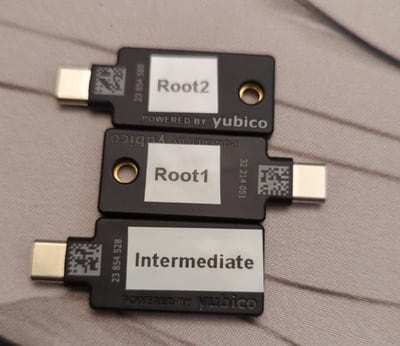 Offline PKI backed up by 3 YubiKeys
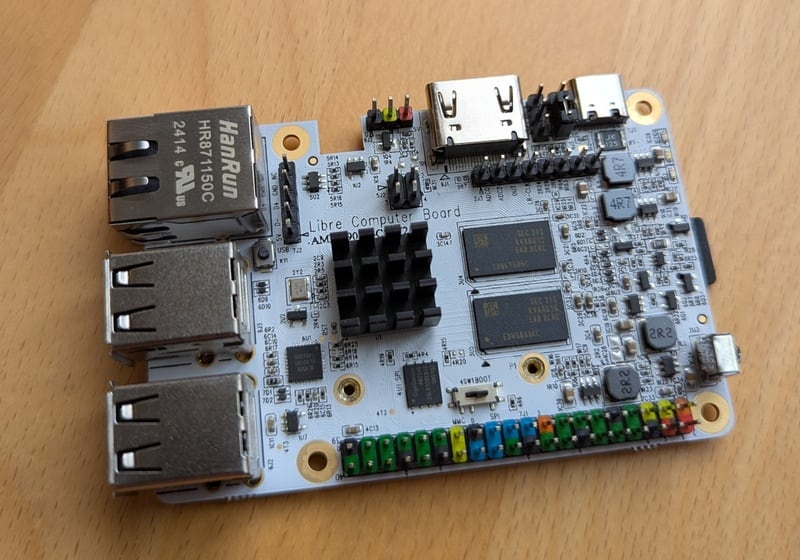 Libre Computer Sweet Potato SBC, powered by the AML-S905X SOC
 KDE Mascot
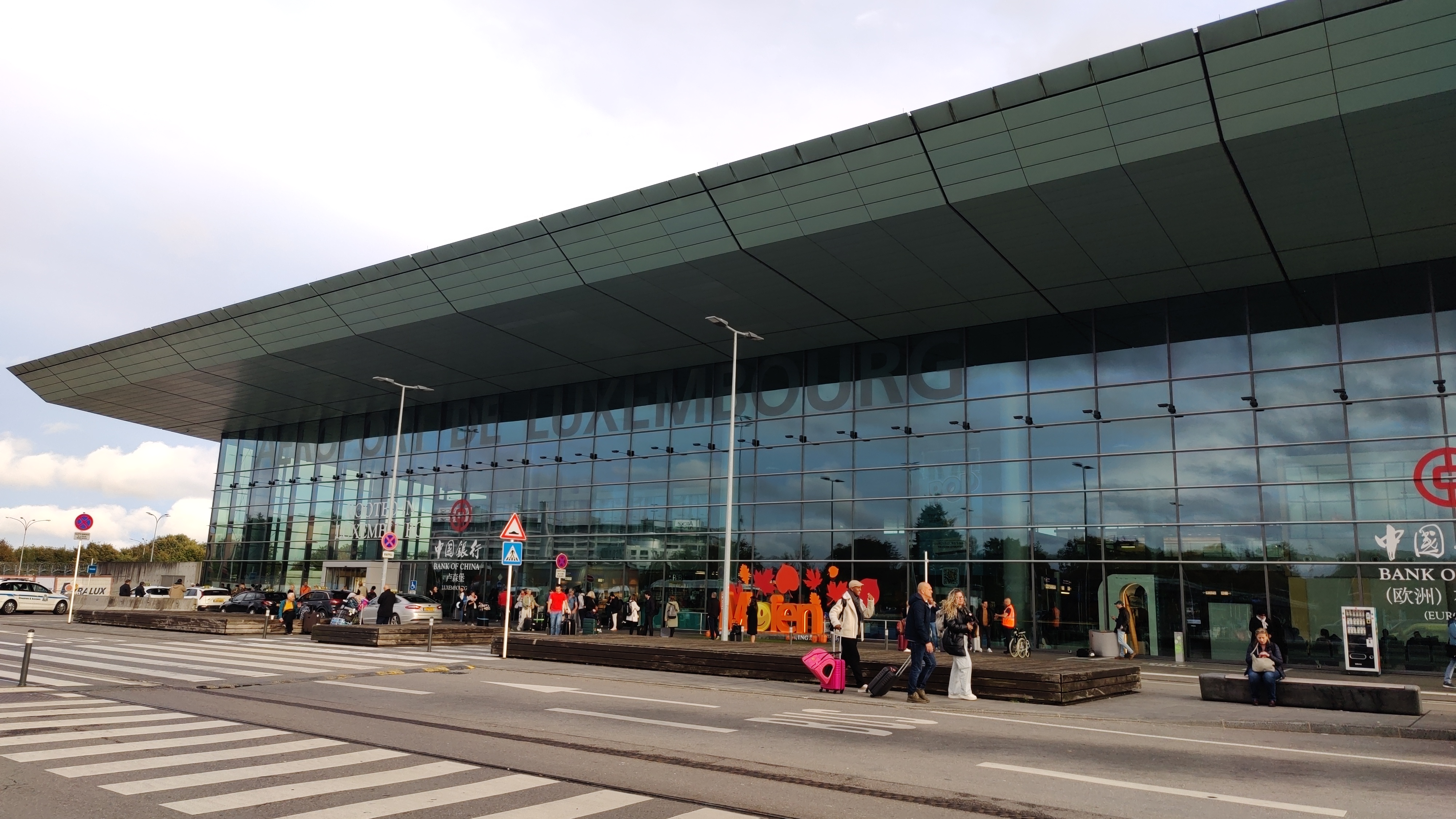 Luxembourg's Findel Airport
 Separate cycling tracks in Luxembourg
 This is what trains look like in Luxembourg
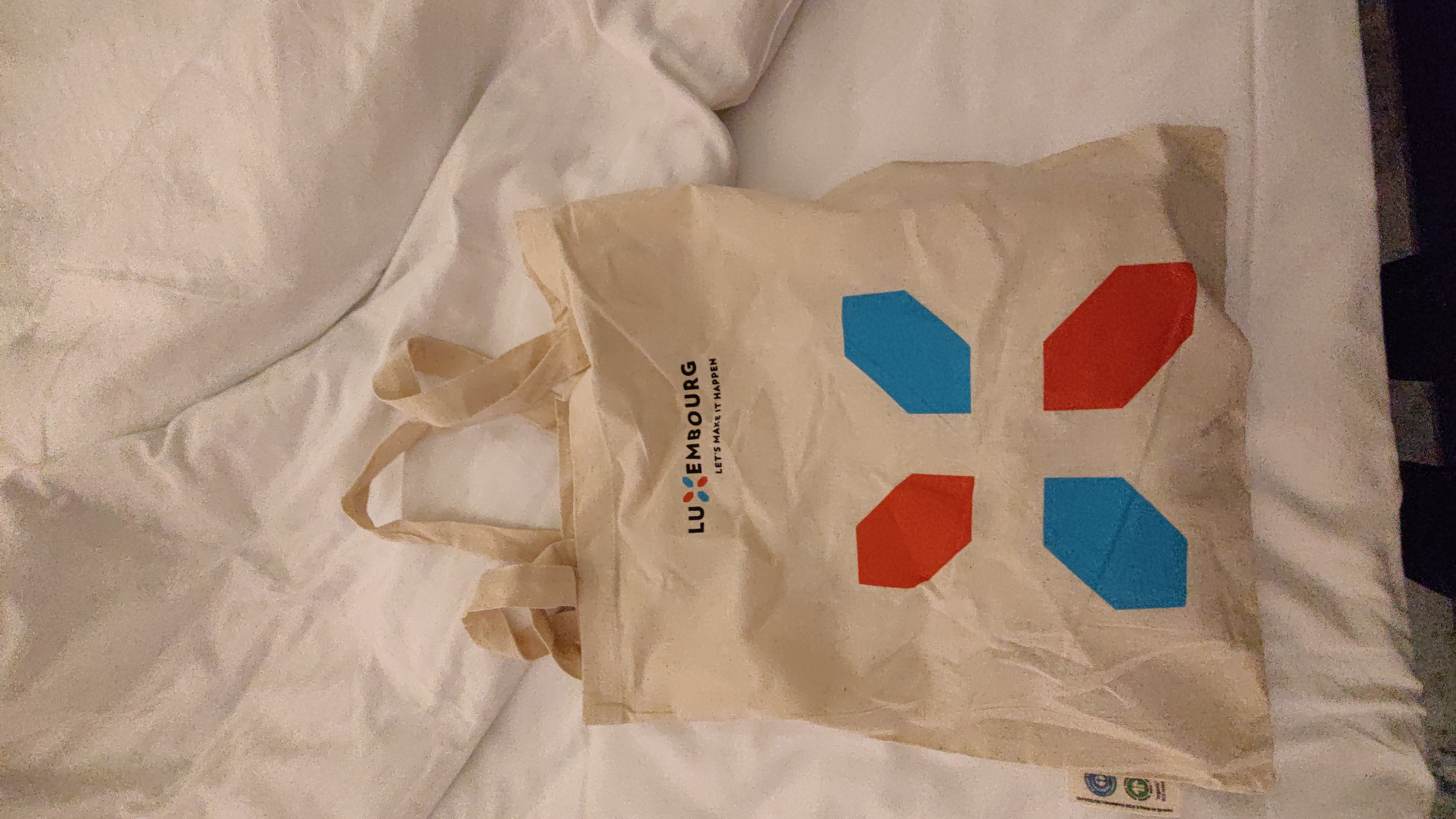 Conference bag
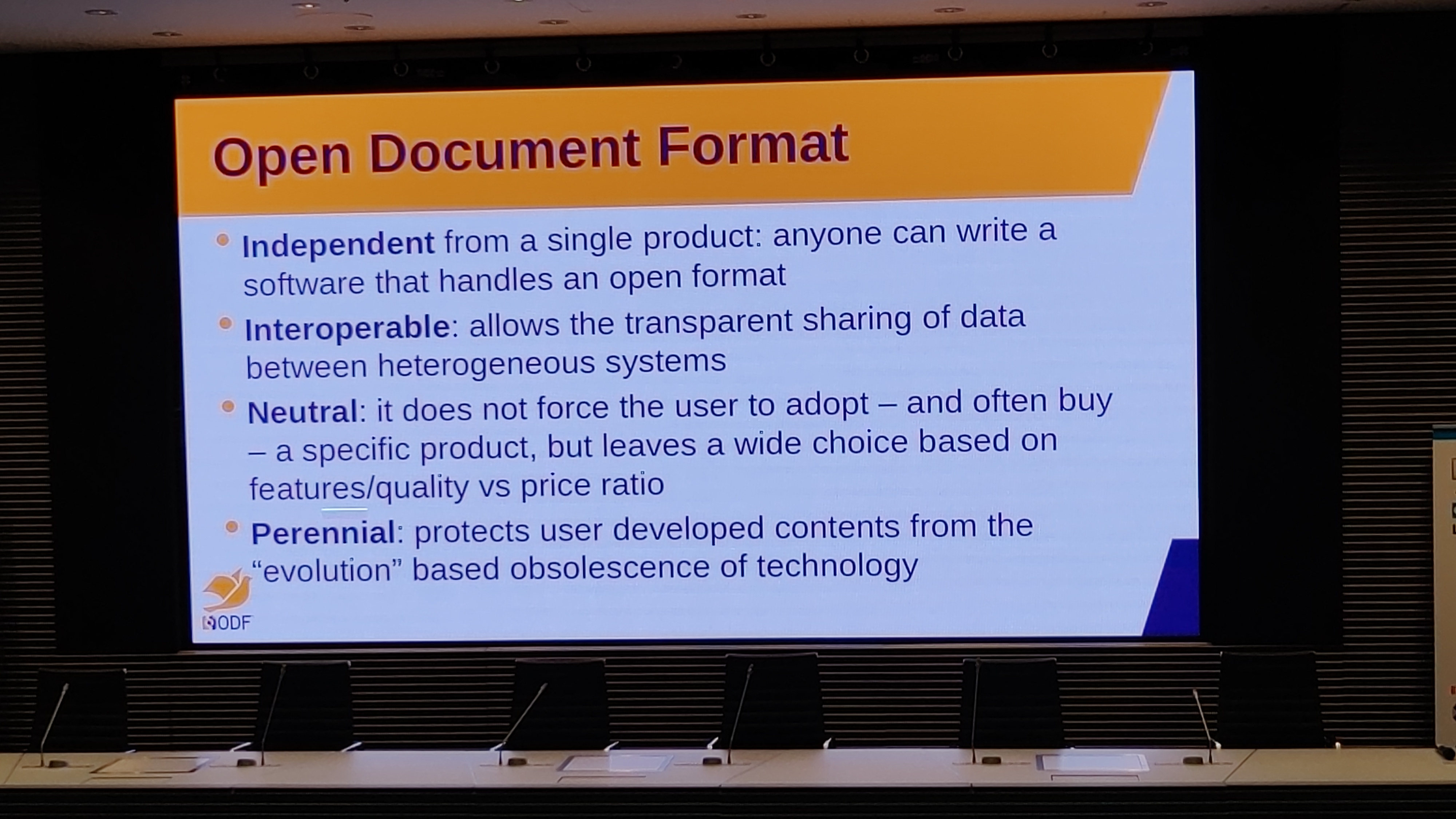 One of the slides of Italo's talk
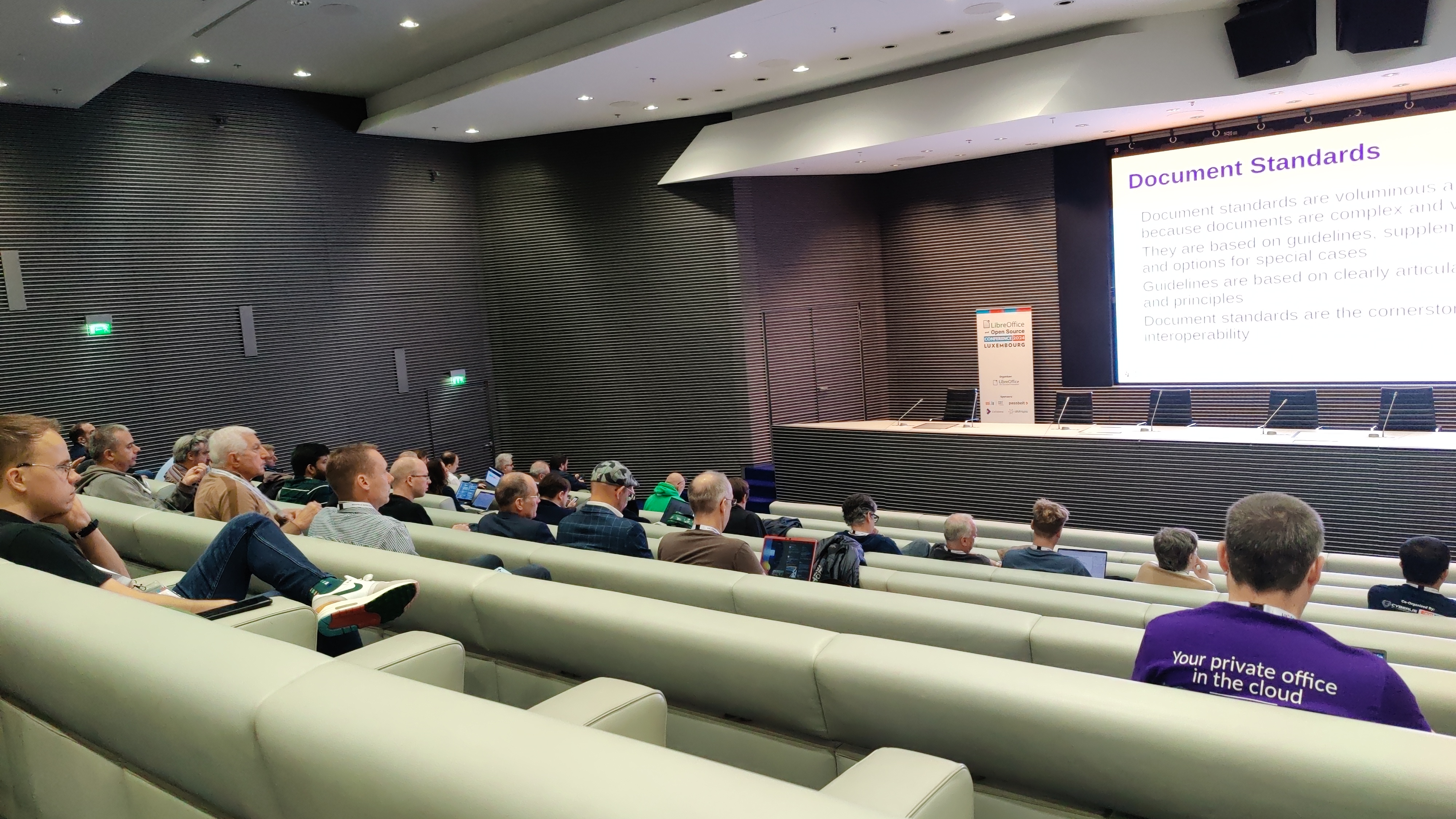 Picture of the hall in which talks were held
 We encountered such scenic views during our walk
 Another view of Luxembourg city area



 Update 20250309 13:20-03:00 - How to help
A friend of mine living in the USA sent me this link to help the flood victims:



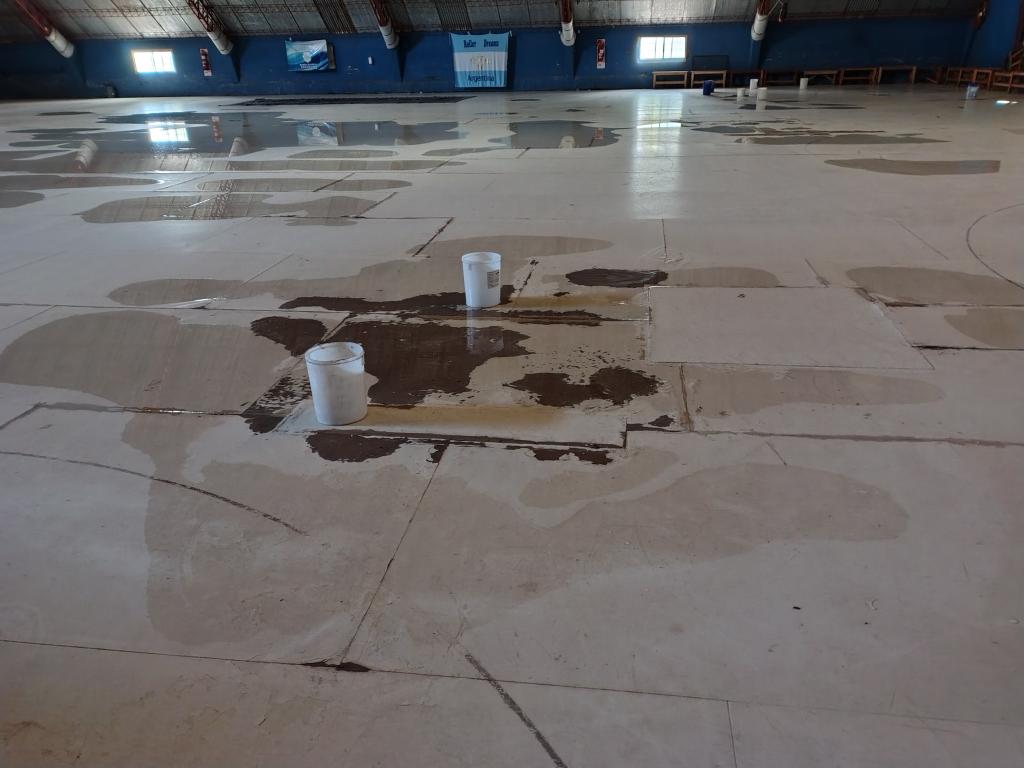 The "real" thing
Let's get to the heavy, heartbreaker part. I did go to downtown Bah a Blanca, but during night, so let me share some links, most of them in Spanish, but images are images:
 From April 27th to 30th, 2024,
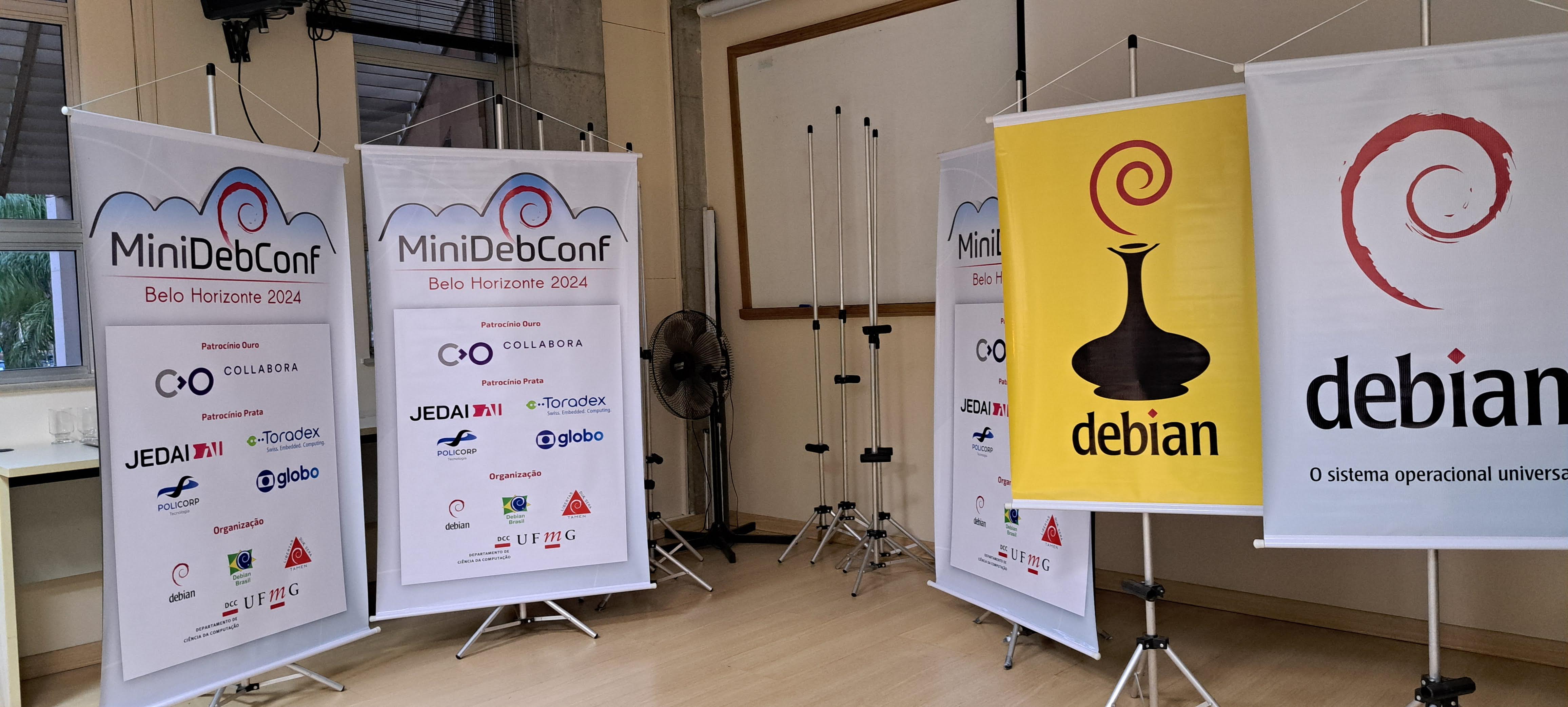 This was the fifth time that a MiniDebConf (as an exclusive in-person event
about Debian) took place in Brazil. Previous editions were in Curitiba
(
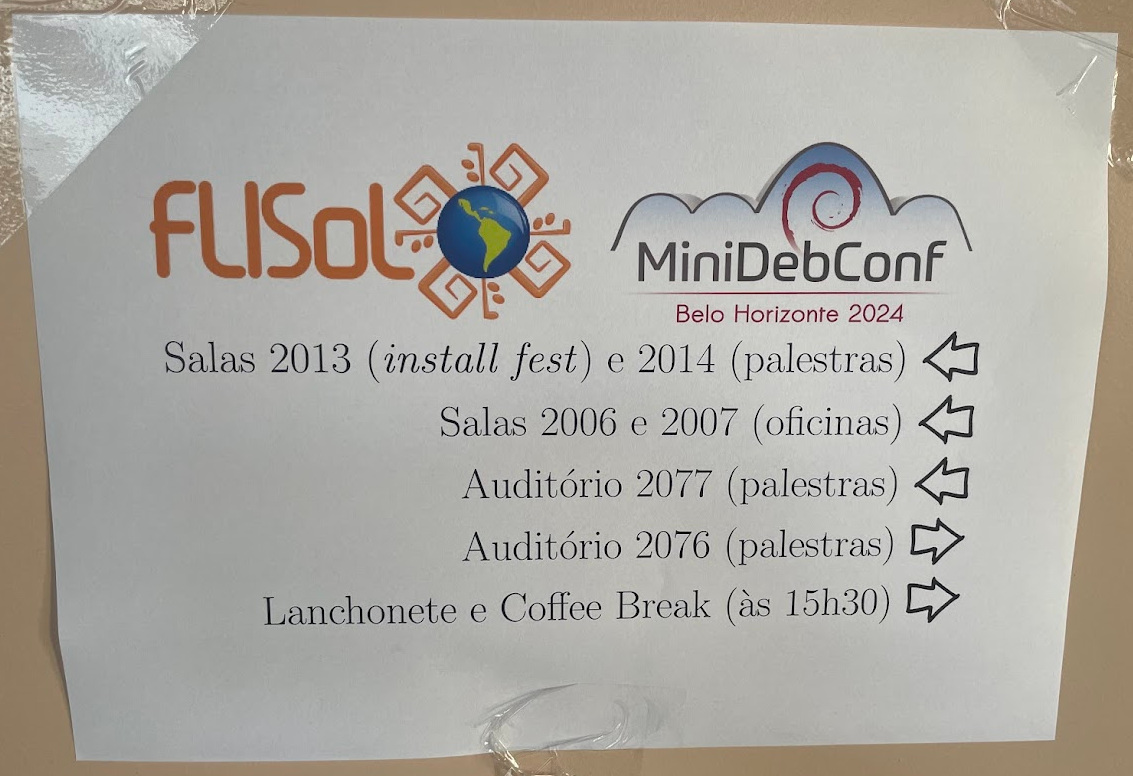 2024 edition numbers
During the four days of the event, several activities took place for all
levels of users and collaborators of the Debian project. The official schedule
was composed of:
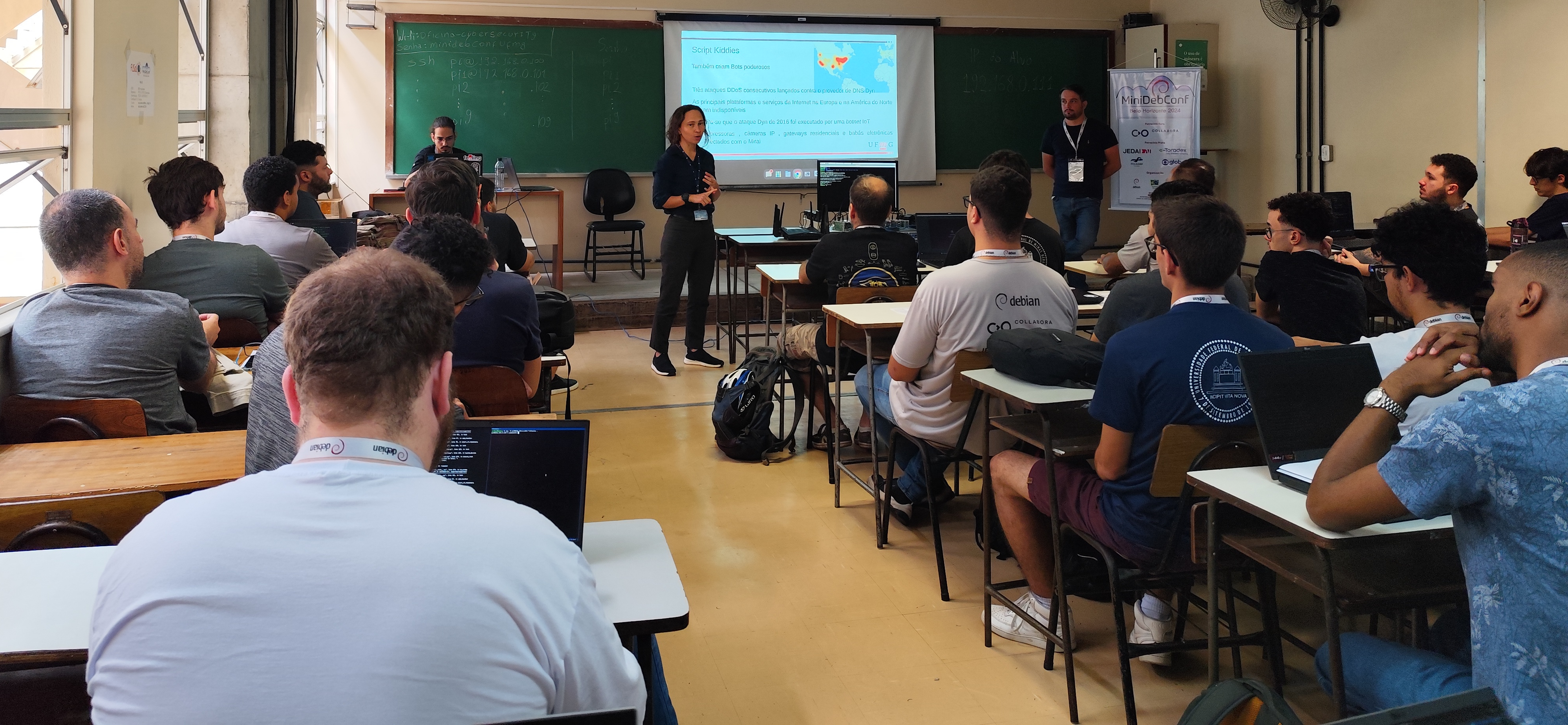 The final numbers for MiniDebConf Belo Horizonte 2024 show that we had a
record number of participants.
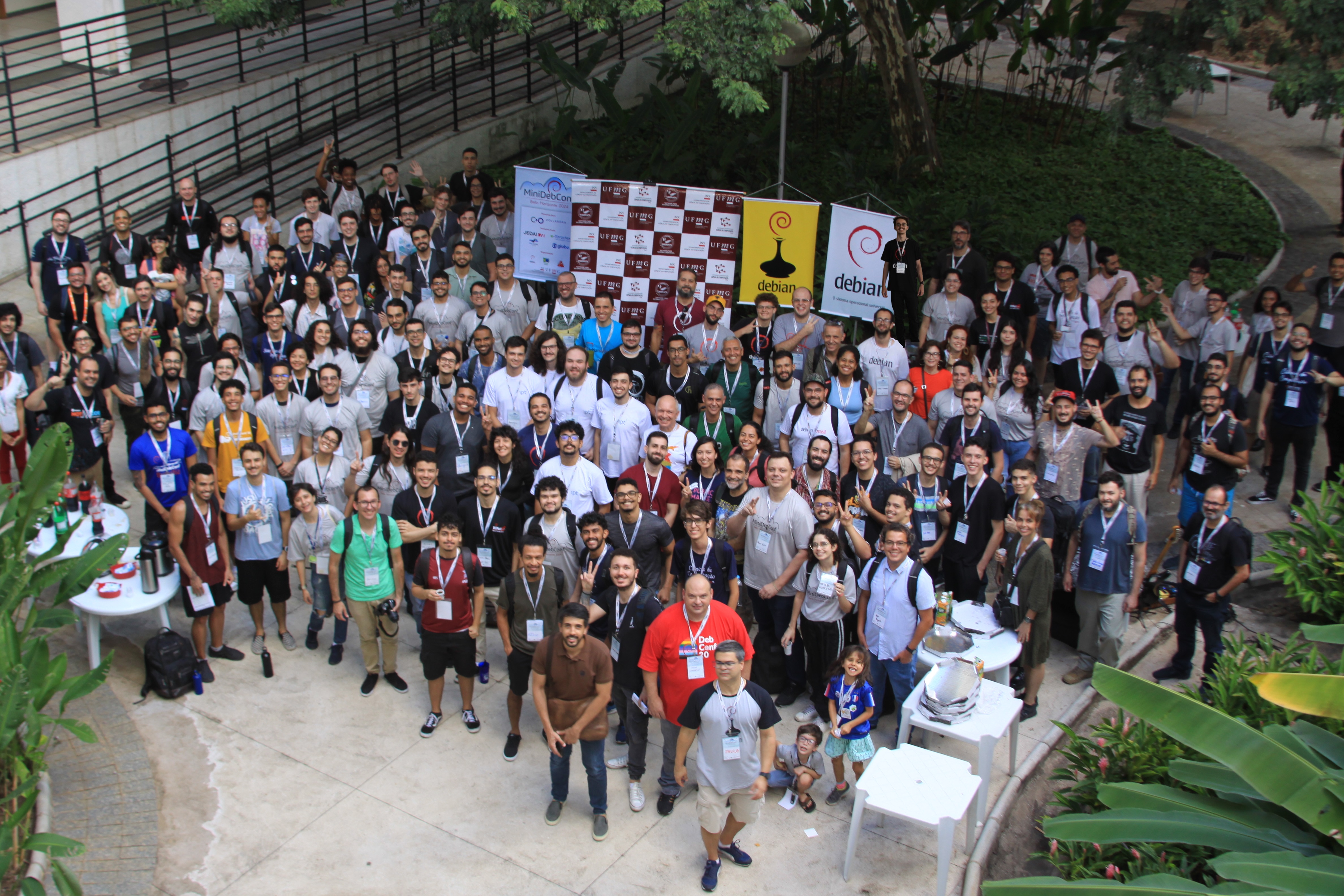
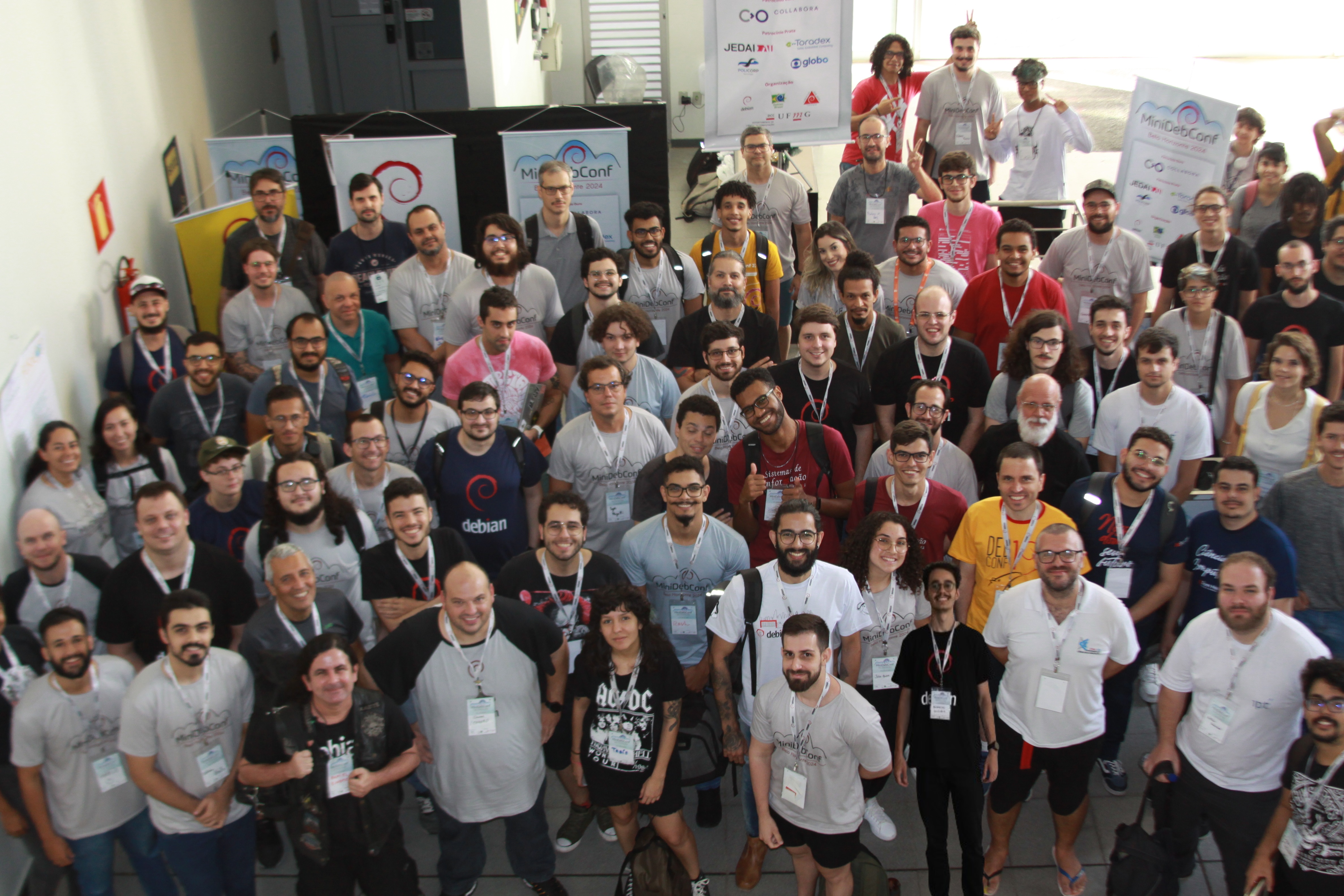 Activities
The MiniDebConf schedule was intense and diverse. On the 27th, 29th and 30th
(Saturday, Monday and Tuesday) we had talks, discussions, workshops and many
practical activities.
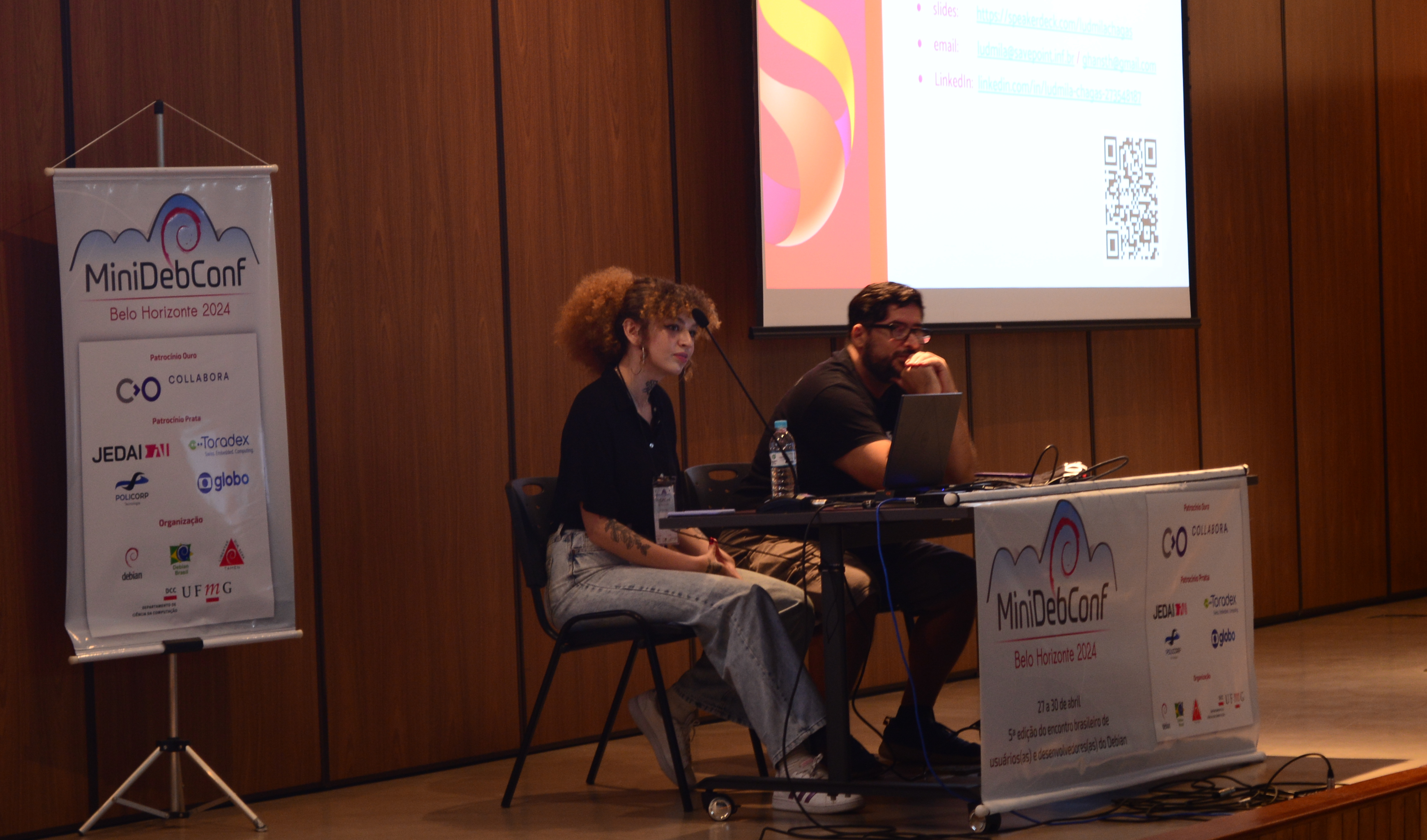 On the 28th (Sunday), the Day Trip took place, a day dedicated to sightseeing
around the city. In the morning we left the hotel and went, on a chartered bus,
to the
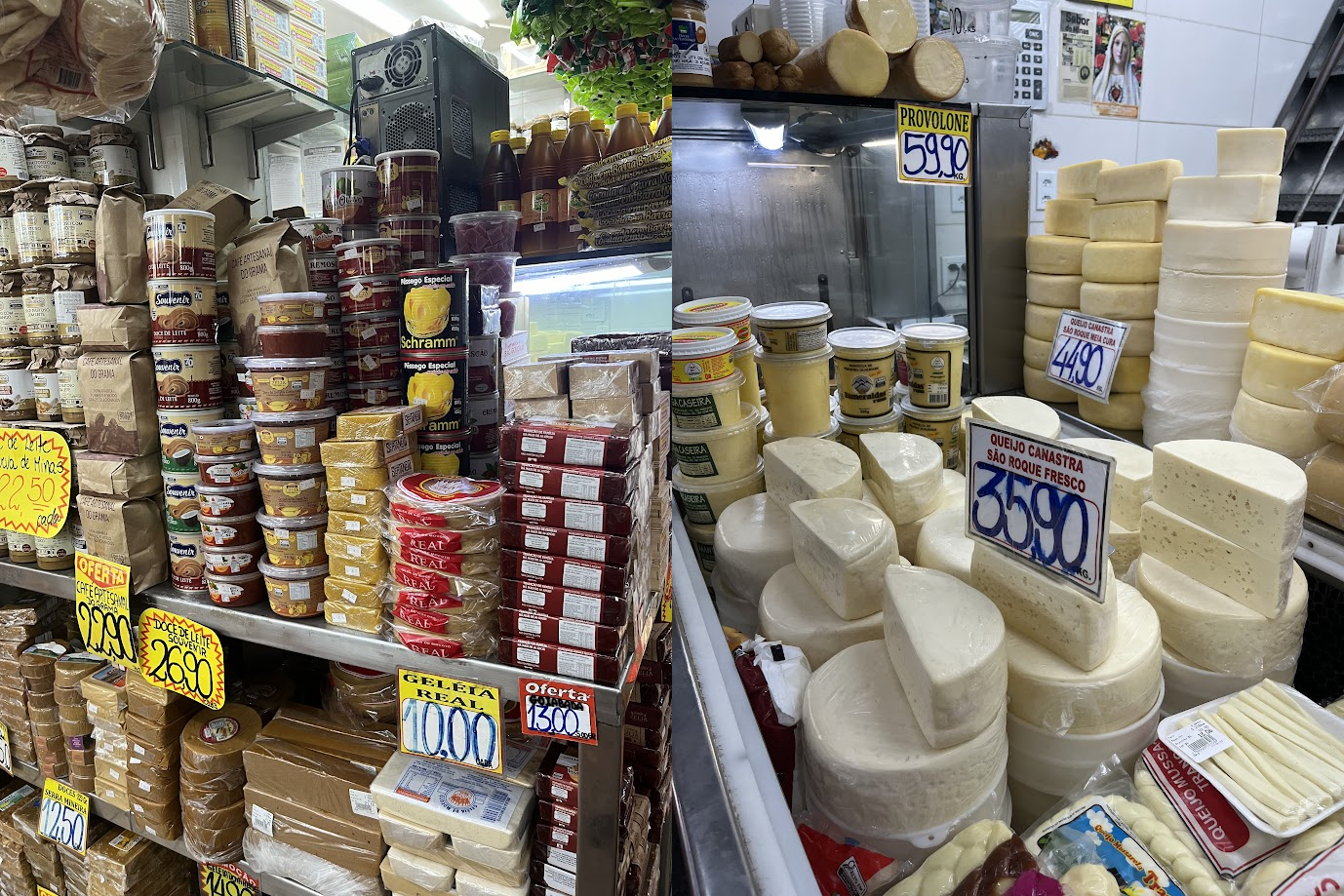 After a 2-hour tour of the Market, we got back on the bus and hit the road for
lunch at a typical Minas Gerais food restaurant.
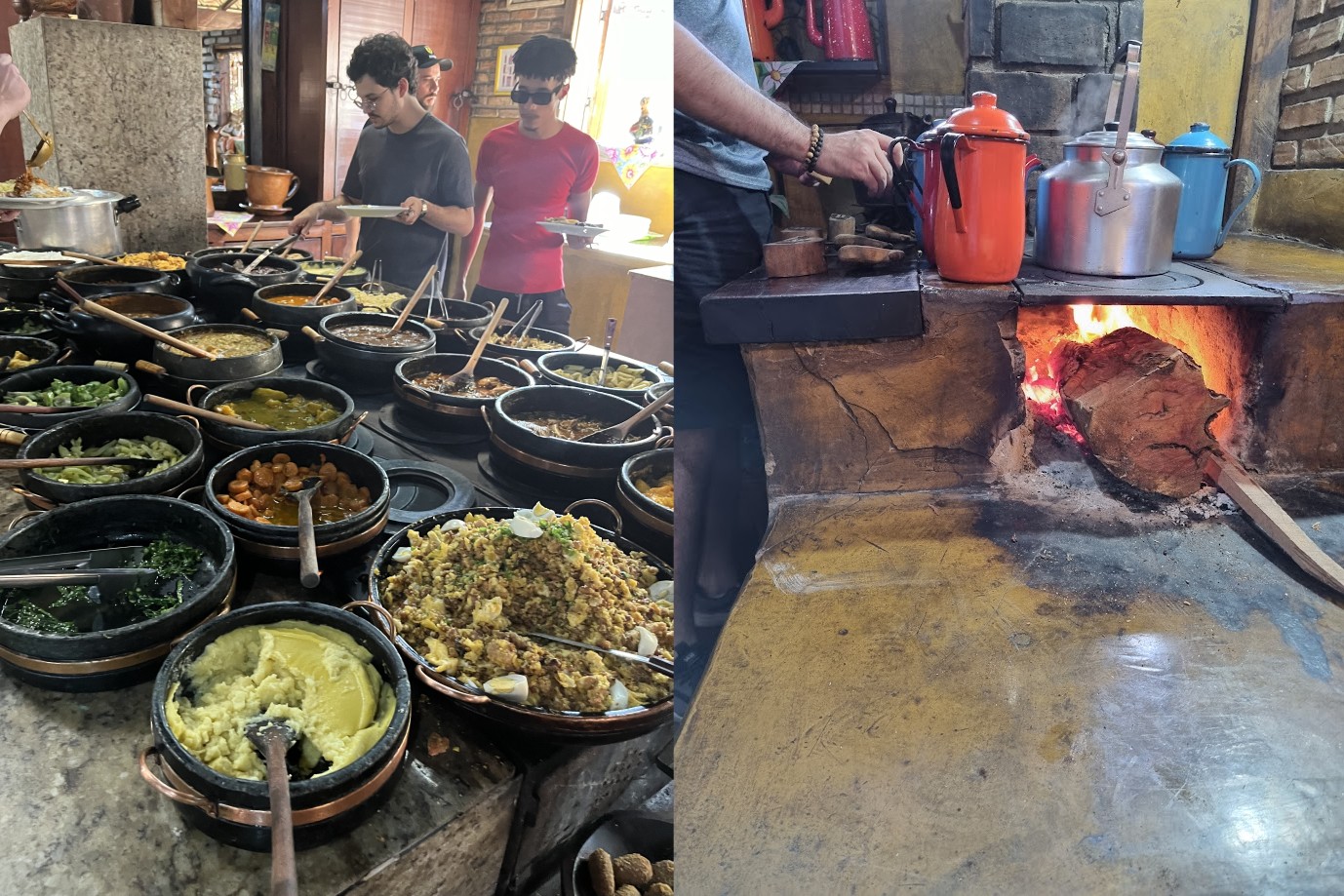 With everyone well fed, we returned to Belo Horizonte to visit the city's
main tourist attraction: Lagoa da Pampulha and Capela S o Francisco de Assis,
better known as
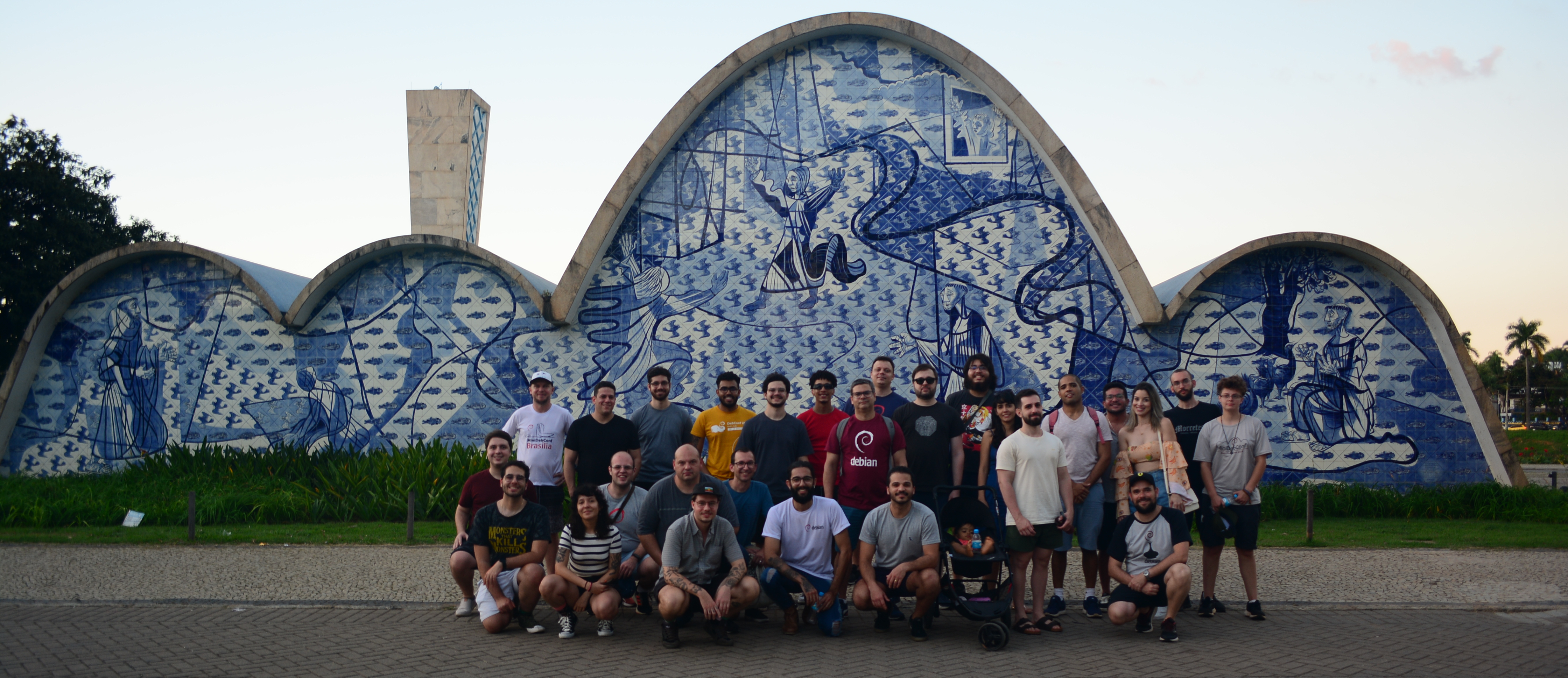 We went back to the hotel and the day ended in the hacker space that we set up
in the events room for people to chat, packaging, and eat pizzas.
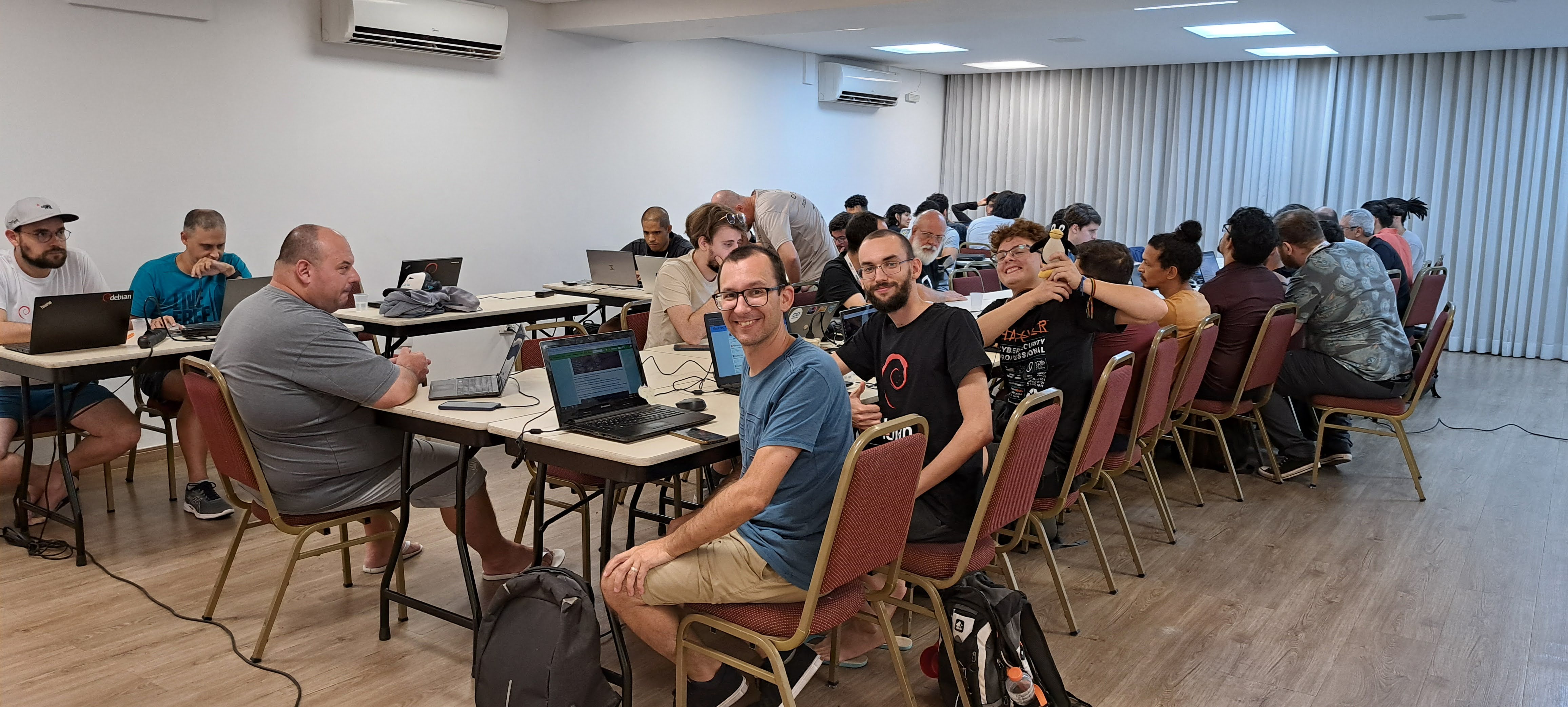 Crowdfunding
For the third time we ran a crowdfunding campaign and it was incredible how
people contributed! The initial goal was to raise the amount equivalent to a
gold tier of R$ 3,000.00. When we reached this goal, we defined a new one,
equivalent to one gold tier + one silver tier (R$ 5,000.00). And again we
achieved this goal. So we proposed as a final goal the value of a gold + silver
+ bronze tiers, which would be equivalent to R$ 6,000.00. The result was that
we raised R$7,239.65 (~ USD 1,400) with the help of more than 100 people!
Thank you very much to the people who contributed any amount. As a thank you, we
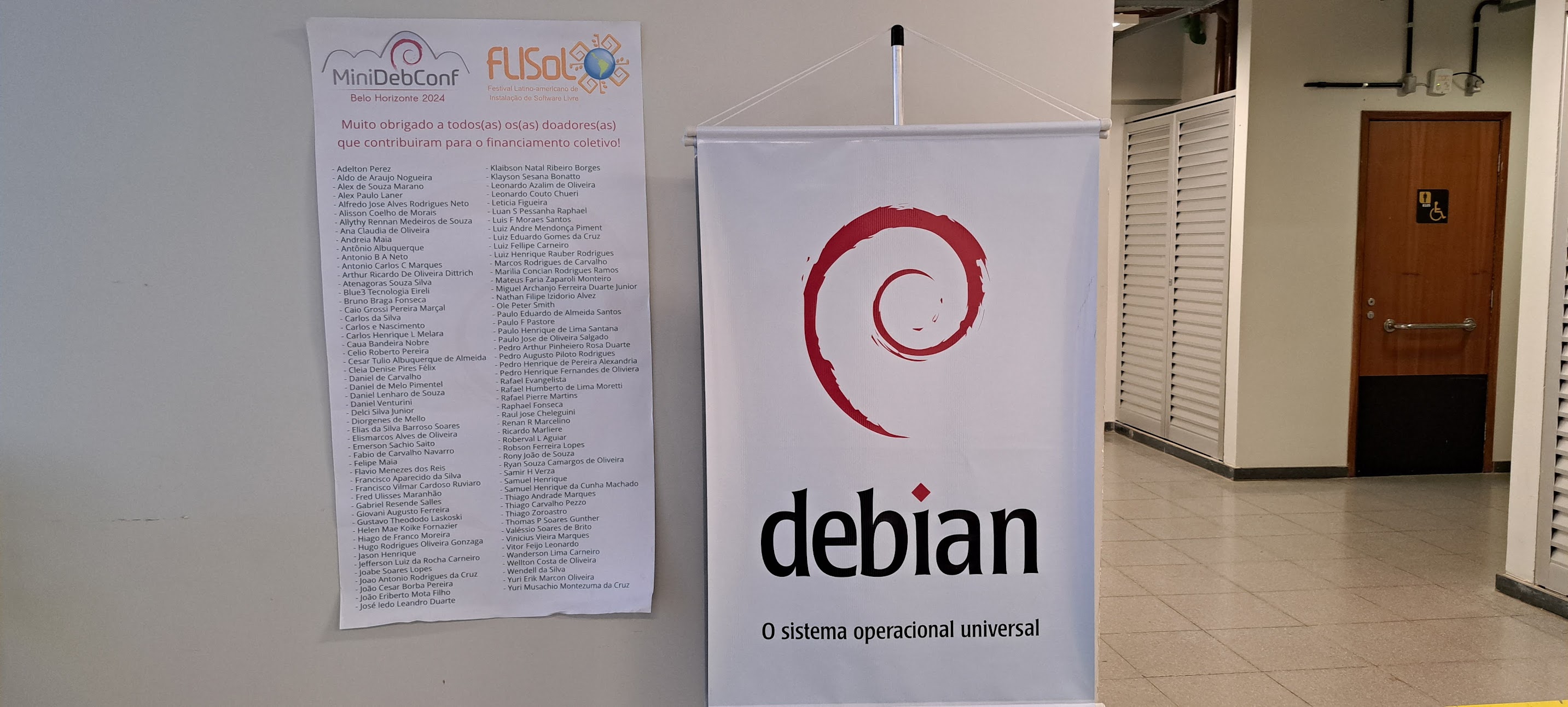 Food, accommodation and/or travel grants for participants
Each edition of MiniDebConf brought some innovation, or some different benefit
for the attendees. In this year's edition in Belo Horizonte, as with DebConfs, we
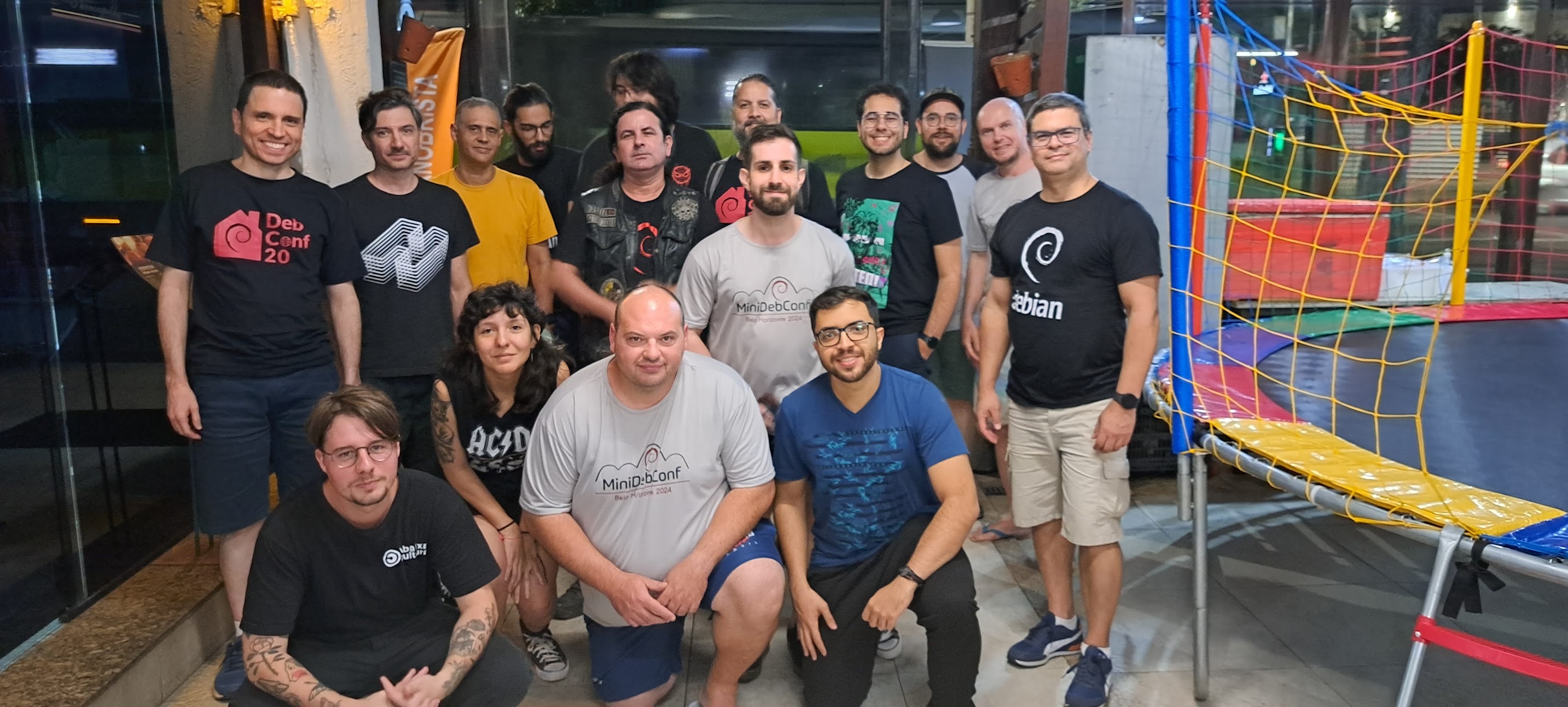 Photos and videos
You can watch recordings of the talks at the links below:
 Sponsors
Gold:
 This year I was at

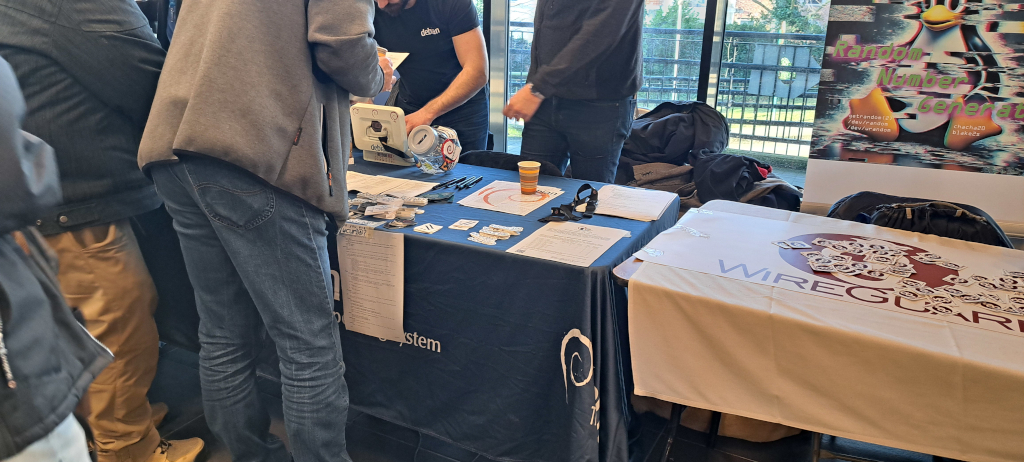
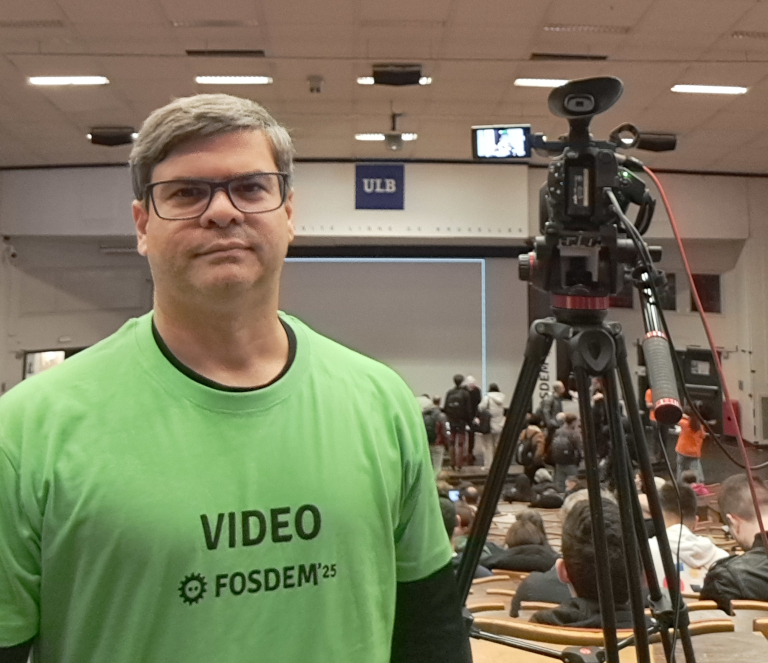
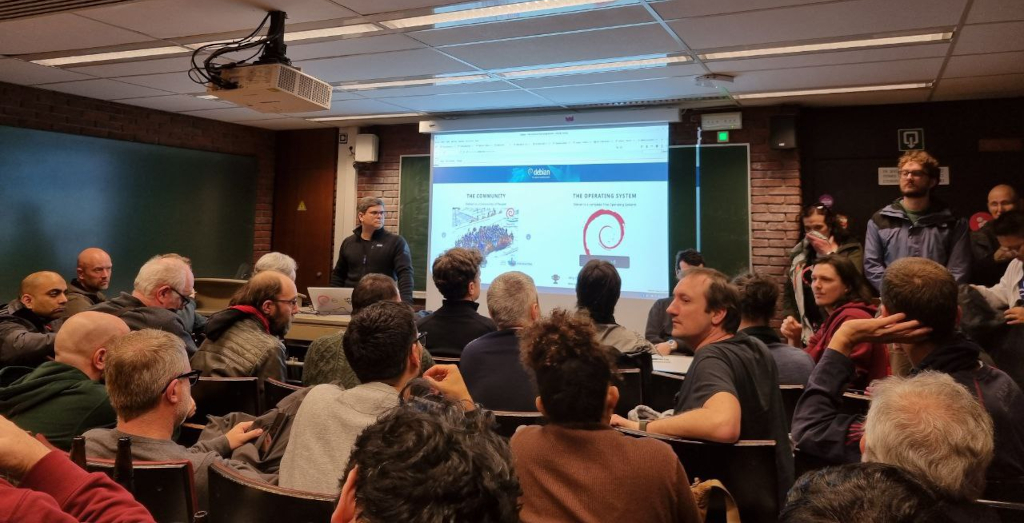
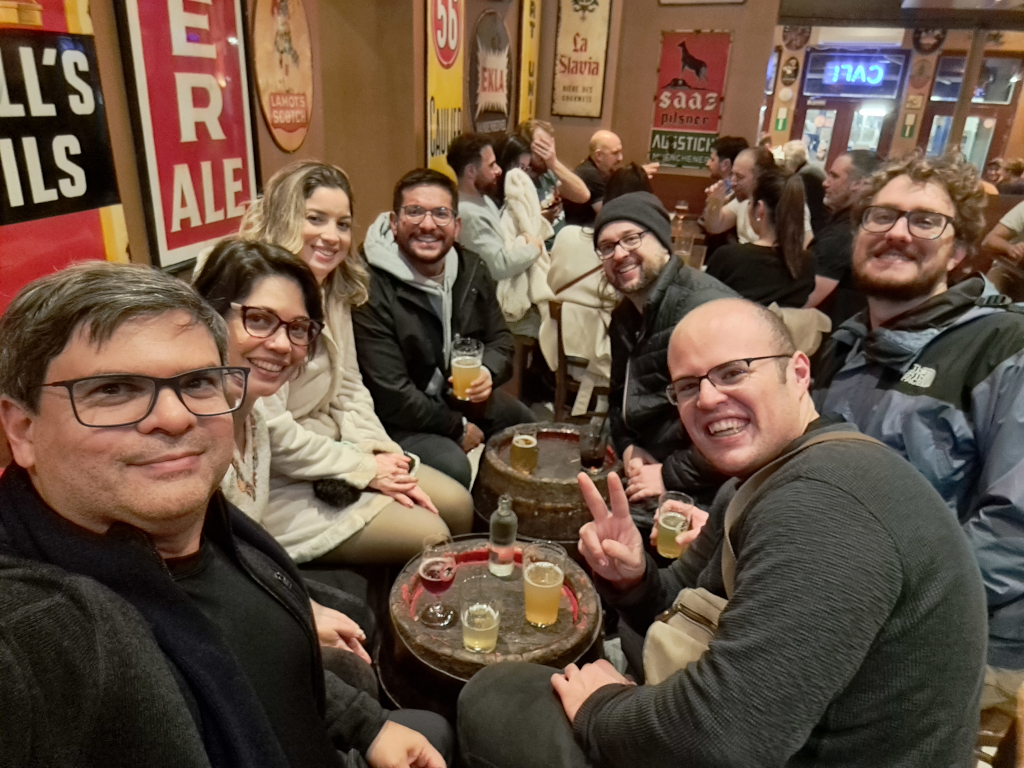





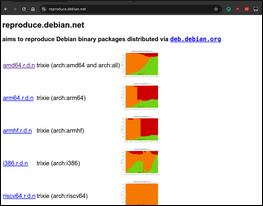





 In today s digital landscape, social media is more than just a communication tool it is the primary medium for global discourse. Heads of state, corporate leaders and cultural influencers now broadcast their statements directly to the world, shaping public opinion in real time. However, the dominance of a few centralized platforms X/Twitter, Facebook and YouTube raises critical concerns about control, censorship and the monopolization of information. Those who control these networks effectively wield significant power over public discourse.
In response, a new wave of distributed social media platforms has emerged, each built on different decentralized protocols designed to provide greater autonomy, censorship resistance and user control. While
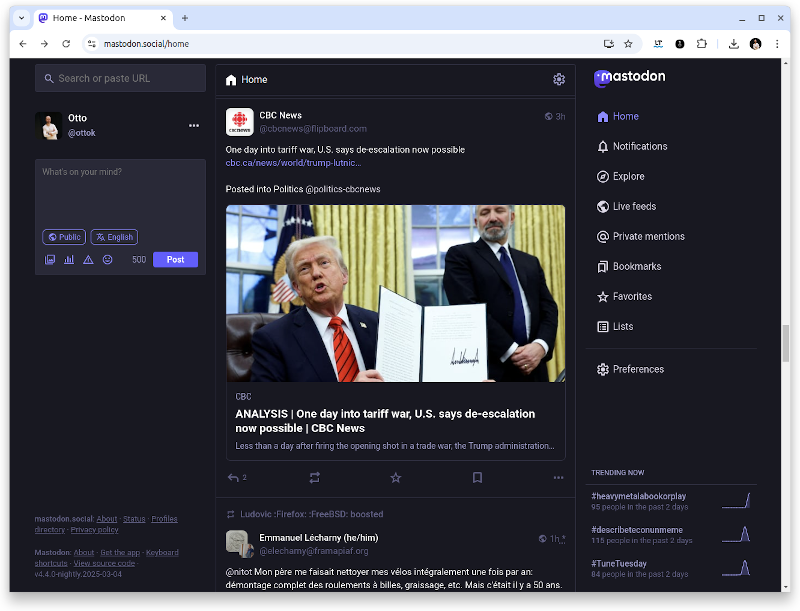 Mastodon was created in 2016 by
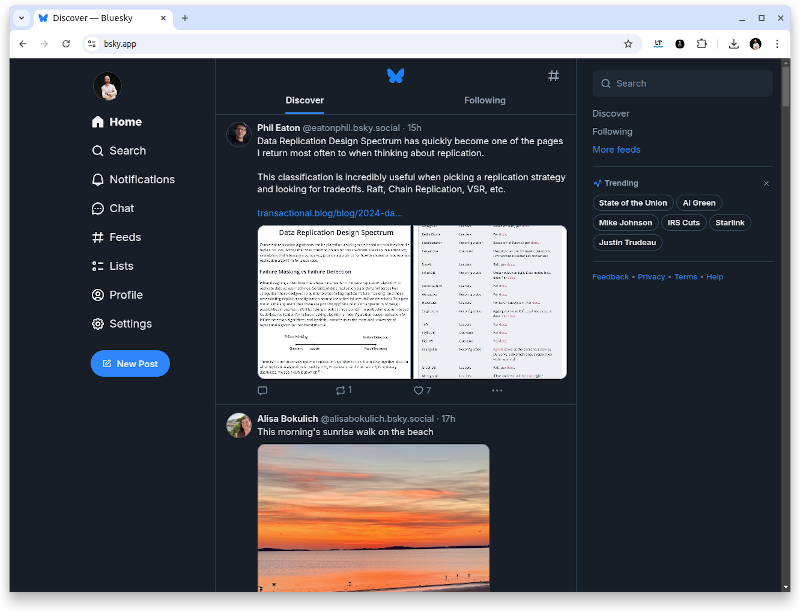 Interestingly,
 Some of you may remember that I recently felt a bit underwhelmed
by the last
 Same as the last goarounds, except the premable here is a
 [I d like to stop writing posts like this. I ve been trying to work out what to say now for nearly 2 months (writing the mail to
 Nova gera o: uma entrevista com iniciantes no projeto Debian
 Instala o personalizada e automatizada do Debian com preseed
 Manipulando patches com git-buildpackage
 debian.social: Socializando Debian do jeito Debian
 Proxy reverso com WireGuard
 Celebra o dos 30 anos do Debian!
 Instalando o Debian em disco criptografado com LUKS
 O que a equipe de localiza o j conquistou nesses 30 anos
 Debian - Projeto e Comunidade!
 Design Gr fico e Software livre, o que fazer e por onde come ar
 Another short status update of what happened on my side last
month. One larger blocks are the
 So there are only 2 web browser engines, and it seems likely there will
soon only be 1, and making a whole new web browser from the ground up is
effectively impossible because the browsers vendors have weaponized web
standards complexity against any newcomers. Maybe eventually someone will
succeed and there will be 2 again. Best case. What a situation.
So throw out all the web standards. Make a browser that just runs WASM
blobs, and gives them a surface to use, sorta like Wayland does. It has
tabs, and a throbber, and urls, but no HTML, no javascript, no CSS.
Just HTTP of WASM blobs.
This is where the web browser is going eventually anyway, except in the
current line of evolution it will be WASM with all the web standards
complexity baked in and reinforcing the current situation.
Would this be a mass of proprietary software? Have you looked at any
corporate website's "source" lately? But what's important is that this
would make it easy enough to build new browsers that they would stop
being a point of control.
Want a browser that natively supports RSS? Poll the feeds, make a UI,
download the WASM enclosures to view the posts. Want a browser that
supports IPFS or gopher? Fork any browser and add it, the mantenance load
will be minimal. Want to provide access to GPIO pins or something? Add an
extension that can be accessed via the WASI component model. This would
allow for so many things like that which won't and can't happen with the
current market duopoly browser situation.
And as for your WASM web pages, well you can still use HTML if you like. Use
the WASI component model to pull in a HTML engine. It doesn't need to
support everything, just the parts of web standards that you want to use.
Or you can do something entitely different in your WASM that is not HTML
based at all but a better paradigm (oh hi Spritely or display postscript
or gemini capsules or whatever).
Dual innovation sources or duopoly? I know which I'd prefer. This is not my
project to build though.