Review: The Library of Broken Worlds, by Alaya Dawn Johnson
Publisher:
Scholastic Press
Copyright:
June 2023
ISBN:
1-338-29064-9
Format:
Kindle
Pages:
446
The Library of Broken Worlds is a young-adult far-future science
fantasy. So far as I can tell, it's stand-alone, although more on that
later in the review.
Freida is the adopted daughter of Nadi, the Head Librarian, and her
greatest wish is to become a librarian herself. When the book opens,
she's a teenager in highly competitive training. Freida is low-wetware,
without the advanced and expensive enhancements of many of the other
students competing for rare and prized librarian positions, which she
makes up for by being the most audacious. She doesn't need wetware to
commune with the library material gods. If one ventures deep into their
tunnels and consumes their crystals, direct physical communion is
possible.
The library tunnels are Freida's second home, in part because that's where
she was born. She was created by the Library, and specifically by Iemaja,
the youngest of the material gods. Precisely why is a mystery. To Nadi,
Freida is her daughter. To Quinn, Nadi's main political rival within the
library, Freida is a thing, a piece of the library, a secondary and
possibly rogue AI. A disruptive annoyance.
The Library of Broken Worlds is the sort of science fiction where
figuring out what is going on is an integral part of the reading
experience. It opens with a frame story of an unnamed girl (clearly
Freida) waking the god Nameren and identifying herself as designed for
deicide. She provokes Nameren's curiosity and offers an Arabian Nights
bargain: if he wants to hear her story, he has to refrain from killing her
for long enough for her to tell it. As one might expect, the main
narrative doesn't catch up to the frame story until the very end of the
book.
The Library is indeed some type of library that librarians can search for
knowledge that isn't available from more mundane sources, but Freida's
personal experience of it is almost wholly religious and oracular. The
library's material gods are identified as AIs, but good luck making sense
of the story through a science fiction frame, even with a healthy
allowance for sufficiently advanced technology being indistinguishable
from magic. The symbolism and tone is entirely fantasy, and late in the
book it becomes clear that whatever the material gods are, they're not
simple technological AIs in the vein of, say, Banks's Ship Minds.
Also, the Library is not solely a repository of knowledge. It is the
keeper of an interstellar peace. The Library was founded after the Great
War, to prevent a recurrence. It functions as a sort of legal system and
grand tribunal in ways that are never fully explained.
As you might expect, that peace is based more on stability than fairness.
Five of the players in this far future of humanity are the Awilu, the most
advanced society and the first to leave Earth (or Tierra as it's called
here); the Mah m, who possess the material war god Nameren of the frame
story; the Lunars and Martians, who dominate the Sol system; and the
surviving Tierrans, residents of a polluted and struggling planet that is
ruthlessly exploited by the Lunars. The problem facing Freida and her
friends at the start of the book is a petition brought by a young Tierran
against Lunar exploitation of his homeland. His name is Joshua, and
Freida is more than half in love with him. Joshua's legal argument
involves interpretation of the freedom node of the treaty that ended the
Great War, a node that precedent says gives the Lunars the freedom to
exploit Tierra, but which Joshua claims has a still-valid originalist
meaning granting Tierrans freedom from exploitation.
There is, in short, a lot going on in this book, and "never fully
explained" is something of a theme. Freida is telling a story to Nameren
and only explains things Nameren may not already know. The reader has to
puzzle out the rest from the occasional hint. This is made more difficult
by the tendency of the material gods to communicate only in visions or
guided hallucinations, full of symbolism that the characters only partly
explain to the reader.
Nonetheless, this did mostly work, at least for me. I started this book
very confused, but by about the midpoint it felt like the background was
coming together. I'm still not sure I understand the aurochs, baobab, and
cicada symbolism that's so central to the framing story, but it's the
pleasant sort of stretchy confusion that gives my brain a good workout. I
wish Johnson had explained a few more things plainly, particularly near
the end of the book, but my remaining level of confusion was within my
tolerances.
Unfortunately, the ending did not work for me. The first time I read it,
I had no idea what it meant. Lots of baffling, symbolic things happened
and then the book just stopped. After re-reading the last 10%, I think
all the pieces of an ending and a bit of an explanation are there, but
it's absurdly abbreviated. This is another book where the author appears
to have been finished with the story before I was.
This keeps happening to me, so this probably says something more about me
than it says about books, but I want books to have an ending. If the
characters have fought and suffered through the plot, I want them to have
some space to be happy and to see how their sacrifices play out, with more
detail than just a few vague promises. If much of the book has been
puzzling out the nature of the world, I would like some concrete
confirmation of at least some of my guesswork. And if you're going to end
the book on radical transformation, I want to see the results of that
transformation. Johnson does an excellent job showing how brutal the
peace of the powerful can be, and is willing to light more things on fire
over the course of this book than most authors would, but then doesn't
offer the reader much in the way of payoff.
For once, I wish this stand-alone turned out to be a series. I think an
additional book could be written in the aftermath of this ending, and I
would definitely read that novel. Johnson has me caring deeply about
these characters and fascinated by the world background, and I'd happily
spend another 450 pages finding out what happens next. But,
frustratingly, I think this ending was indeed intended to wrap up the
story.
I think this book may fall between a few stools. Science fiction readers
who want mysterious future worlds to be explained by the end of the book
are going to be frustrated by the amount of symbolism, allusion, and
poetic description. Literary fantasy readers, who have a higher tolerance
for that style, are going to wish for more focused and polished writing.
A lot of the story is firmly YA: trying and failing to fit in, developing
one's identity, coming into power, relationship drama, great betrayals and
regrets, overcoming trauma and abuse, and unraveling lies that adults tell
you. But this is definitely not a straight-forward YA plot or world
background. It demands a lot from the reader, and while I am confident
many teenage readers would rise to that challenge, it seems like an
awkward fit for the YA marketing category.
About 75% of the way in, I would have told you this book was great and you
should read it. The ending was a let-down and I'm still grumpy about it.
I still think it's worth your attention if you're in the mood for a
sink-or-swim type of reading experience. Just be warned that when the
ride ends, I felt unceremoniously dumped on the pavement.
Content warnings: Rape, torture, genocide.
Rating: 7 out of 10
Version 0.0.16 of RcppSpdlog is now
on CRAN and will be uploaded to
Debian. RcppSpdlog
bundles spdlog, a
wonderful header-only C++ logging library with all the bells and
whistles you would want that was written by Gabi Melman, and also includes fmt by Victor Zverovich. You can learn
more at the nice package
documention site.
This releases updates the code to the version 1.13 of spdlog which was release
this morning.
The NEWS entry for this release follows.
An new version 0.2.6 of the random-number generator tester RDieHarder
(based on the DieHarder
suite developed / maintained by Robert Brown with contributions by David
Bauer and myself along with other contributors) is now on CRAN (and to the day year after
the previous release).
This release contains changes to printf format strings
to avoid new warnings on Windows. No functional changes have been
made.
Thanks to CRANberries, you
can also look at the most recent diff
to the previous release.
If you like this or other open-source work I do, you can now sponsor me at
GitHub.
Release 0.6.34 of the digest package
arrived at CRAN today and has
also been uploaded to Debian
already.
digest
creates hash digests of arbitrary R objects. It can use a number
different hashing algorithms (md5, sha-1,
sha-256, sha-512, crc32,
xxhash32, xxhash64, murmur32,
spookyhash, blake3, and crc32c),
and ebales easy comparison of (potentially large and nested) R language
objects as it relies on the native serialization in R. It is a mature
and widely-used package (with 63.8 million downloads just on the partial
cloud mirrors of CRAN which keep logs) as many tasks may involve
caching of objects for which it provides convenient
general-purpose hash key generation to quickly identify the various
objects.
(Oh and we also just passed the 20th anniversary of the initial CRAN
upload. Time flies, as they say.)
This release contains small (build-focussed) enhancements contributed
by Michael Chirico, and another set of fixed for printf
format warnings this time on Windows.
My CRANberries
provides a summary of changes to the previous
version. For questions or comments use the issue tracker
off the GitHub
repo.
If you like this or other open-source work I do, you can now sponsor me at
GitHub.
This post is in part a response to an aspect of Nate s post Does Wayland really break everything? , but also my reflection on discussing Wayland protocol additions, a unique pleasure that I have been involved with for the past months1.
Some facts
Before I start I want to make a few things clear: The Linux desktop will be moving to Wayland2 this is a fact at this point (and has been for a while), sticking to X11 makes no sense for future projects. From reading Wayland protocols and working with it at a much lower level than I ever wanted to, it is also very clear to me that Wayland is an exceptionally well-designed core protocol, and so are the additional extension protocols (xdg-shell & Co.). The modularity of Wayland is great, it gives it incredible flexibility and will for sure turn out to be good for the long-term viability of this project (and also provides a path to correct protocol issues in future, if one is found). In other words: Wayland is an amazing foundation to build on, and a lot of its design decisions make a lot of sense!
The shift towards people seeing Linux more as an application developer platform, and taking PipeWire and XDG Portals into account when designing for Wayland is also an amazing development and I love to see this this holistic approach is something I always wanted!
Furthermore, I think Wayland removes a lot of functionality that shouldn t exist in a modern compositor and that s a good thing too! Some of X11 s features and design decisions had clear drawbacks that we shouldn t replicate. I highly recommend to read Nate s blog post, it s very good and goes into more detail. And due to all of this, I firmly believe that any advancement in the Wayland space must come from within the project.
But!
But! Of course there was a but coming I think while developing Wayland-as-an-ecosystem we are now entrenched into narrow concepts of how a desktop should work. While discussing Wayland protocol additions, a lot of concepts clash, people from different desktops with different design philosophies debate the merits of those over and over again never reaching any conclusion (just as you will never get an answer out of humans whether sushi or pizza is the clearly superior food, or whether CSD or SSD is better). Some people want to use Wayland as a vehicle to force applications to submit to their desktop s design philosophies, others prefer the smallest and leanest protocol possible, other developers want the most elegant behavior possible. To be clear, I think those are all very valid approaches.
But this also creates problems: By switching to Wayland compositors, we are already forcing a lot of porting work onto toolkit developers and application developers. This is annoying, but just work that has to be done. It becomes frustrating though if Wayland provides toolkits with absolutely no way to reach their goal in any reasonable way. For Nate s Photoshop analogy: Of course Linux does not break Photoshop, it is Adobe s responsibility to port it. But what if Linux was missing a crucial syscall that Photoshop needed for proper functionality and Adobe couldn t port it without that? In that case it becomes much less clear on who is to blame for Photoshop not being available.
A lot of Wayland protocol work is focused on the environment and design, while applications and work to port them often is considered less. I think this happens because the overlap between application developers and developers of the desktop environments is not necessarily large, and the overlap with people willing to engage with Wayland upstream is even smaller. The combination of Windows developers porting apps to Linux and having involvement with toolkits or Wayland is pretty much nonexistent. So they have less of a voice.
A quick detour through the neuroscience research lab
I have been involved with Freedesktop, GNOME and KDE for an incredibly long time now (more than a decade), but my actual job (besides consulting for Purism) is that of a PhD candidate in a neuroscience research lab (working on the morphology of biological neurons and its relation to behavior). I am mostly involved with three research groups in our institute, which is about 35 people. Most of us do all our data analysis on powerful servers which we connect to using RDP (with KDE Plasma as desktop). Since I joined, I have been pushing the envelope a bit to extend Linux usage to data acquisition and regular clients, and to have our data acquisition hardware interface well with it. Linux brings some unique advantages for use in research, besides the obvious one of having every step of your data management platform introspectable with no black boxes left, a goal I value very highly in research (but this would be its own blogpost).
In terms of operating system usage though, most systems are still Windows-based. Windows is what companies develop for, and what people use by default and are familiar with. The choice of operating system is very strongly driven by application availability, and WSL being really good makes this somewhat worse, as it removes the need for people to switch to a real Linux system entirely if there is the occasional software requiring it. Yet, we have a lot more Linux users than before, and use it in many places where it makes sense. I also developed a novel data acquisition software that even runs on Linux-only and uses the abilities of the platform to its fullest extent. All of this resulted in me asking existing software and hardware vendors for Linux support a lot more often. Vendor-customer relationship in science is usually pretty good, and vendors do usually want to help out. Same for open source projects, especially if you offer to do Linux porting work for them But overall, the ease of use and availability of required applications and their usability rules supreme. Most people are not technically knowledgeable and just want to get their research done in the best way possible, getting the best results with the least amount of friction.
KDE/Linux usage at a control station for a particle accelerator at Adlershof Technology Park, Germany, for reference (by 25years of KDE)3
Back to the point
The point of that story is this: GNOME, KDE, RHEL, Debian or Ubuntu: They all do not matter if the necessary applications are not available for them. And as soon as they are, the easiest-to-use solution wins. There are many facets of easiest : In many cases this is RHEL due to Red Hat support contracts being available, in many other cases it is Ubuntu due to its mindshare and ease of use. KDE Plasma is also frequently seen, as it is perceived a bit easier to onboard Windows users with it (among other benefits). Ultimately, it comes down to applications and 3rd-party support though.
Here s a dirty secret: In many cases, porting an application to Linux is not that difficult. The thing that companies (and FLOSS projects too!) struggle with and will calculate the merits of carefully in advance is whether it is worth the support cost as well as continuous QA/testing. Their staff will have to do all of that work, and they could spend that time on other tasks after all.
So if they learn that porting to Linux not only means added testing and support, but also means to choose between the legacy X11 display server that allows for 1:1 porting from Windows or the new Wayland compositors that do not support the same features they need, they will quickly consider it not worth the effort at all. I have seen this happen.
Of course many apps use a cross-platform toolkit like Qt, which greatly simplifies porting. But this just moves the issue one layer down, as now the toolkit needs to abstract Windows, macOS and Wayland. And Wayland does not contain features to do certain things or does them very differently from e.g. Windows, so toolkits have no way to actually implement the existing functionality in a way that works on all platforms. So in Qt s documentation you will often find texts like works everywhere except for on Wayland compositors or mobile 4.
Many missing bits or altered behavior are just papercuts, but those add up. And if users will have a worse experience, this will translate to more support work, or people not wanting to use the software on the respective platform.
What s missing?
Window positioning
SDI applications with multiple windows are very popular in the scientific world. For data acquisition (for example with microscopes) we often have one monitor with control elements and one larger one with the recorded image. There is also other configurations where multiple signal modalities are acquired, and the experimenter aligns windows exactly in the way they want and expects the layout to be stored and to be loaded upon reopening the application. Even in the image from Adlershof Technology Park above you can see this style of UI design, at mega-scale. Being able to pop-out elements as windows from a single-window application to move them around freely is another frequently used paradigm, and immensely useful with these complex apps.
It is important to note that this is not a legacy design, but in many cases an intentional choice these kinds of apps work incredibly well on larger screens or many screens and are very flexible (you can have any window configuration you want, and switch between them using the (usually) great window management abilities of your desktop).
Of course, these apps will work terribly on tablets and small form factors, but that is not the purpose they were designed for and nobody would use them that way.
I assumed for sure these features would be implemented at some point, but when it became clear that that would not happen, I created the ext-placement protocol which had some good discussion but was ultimately rejected from the xdg namespace. I then tried another solution based on feedback, which turned out not to work for most apps, and now proposed xdg-placement (v2) in an attempt to maybe still get some protocol done that we can agree on, exploring more options before pushing the existing protocol for inclusion into the ext Wayland protocol namespace. Meanwhile though, we can not port any application that needs this feature, while at the same time we are switching desktops and distributions to Wayland by default.
Window position restoration
Similarly, a protocol to save & restore window positions was already proposed in 2018, 6 years ago now, but it has still not been agreed upon, and may not even help multiwindow apps in its current form. The absence of this protocol means that applications can not restore their former window positions, and the user has to move them to their previous place again and again.
Meanwhile, toolkits can not adopt these protocols and applications can not use them and can not be ported to Wayland without introducing papercuts.
Window icons
Similarly, individual windows can not set their own icons, and not-installed applications can not have an icon at all because there is no desktop-entry file to load the icon from and no icon in the theme for them. You would think this is a niche issue, but for applications that create many windows, providing icons for them so the user can find them is fairly important. Of course it s not the end of the world if every window has the same icon, but it s one of those papercuts that make the software slightly less user-friendly. Even applications with fewer windows like LibrePCB are affected, so much so that they rather run their app through Xwayland for now.
I decided to address this after I was working on data analysis of image data in a Python virtualenv, where my code and the Python libraries used created lots of windows all with the default yellow W icon, making it impossible to distinguish them at a glance. This is xdg-toplevel-icon now, but of course it is an uphill battle where the very premise of needing this is questioned. So applications can not use it yet.
Limited window abilities requiring specialized protocols
Firefox has a picture-in-picture feature, allowing it to pop out media from a mediaplayer as separate floating window so the user can watch the media while doing other things. On X11 this is easily realized, but on Wayland the restrictions posed on windows necessitate a different solution. The xdg-pip protocol was proposed for this specialized usecase, but it is also not merged yet. So this feature does not work as well on Wayland.
Automated GUI testing / accessibility / automation
Automation of GUI tasks is a powerful feature, so is the ability to auto-test GUIs. This is being worked on, with libei and wlheadless-run (and stuff like ydotool exists too), but we re not fully there yet.
Wayland is frustrating for (some) application authors
As you see, there is valid applications and valid usecases that can not be ported yet to Wayland with the same feature range they enjoyed on X11, Windows or macOS. So, from an application author s perspective, Wayland does break things quite significantly, because things that worked before can no longer work and Wayland (the whole stack) does not provide any avenue to achieve the same result.
Wayland does break screen sharing, global hotkeys, gaming latency (via no tearing ) etc, however for all of these there are solutions available that application authors can port to. And most developers will gladly do that work, especially since the newer APIs are usually a lot better and more robust. But if you give application authors no path forward except use Xwayland and be on emulation as second-class citizen forever , it just results in very frustrated application developers.
For some application developers, switching to a Wayland compositor is like buying a canvas from the Linux shop that forces your brush to only draw triangles. But maybe for your avant-garde art, you need to draw a circle. You can approximate one with triangles, but it will never be as good as the artwork of your friends who got their canvases from the Windows or macOS art supply shop and have more freedom to create their art.
Triangles are proven to be the best shape! If you are drawing circles you are creating bad art!
Wayland, via its protocol limitations, forces a certain way to build application UX often for the better, but also sometimes to the detriment of users and applications. The protocols are often fairly opinionated, a result of the lessons learned from X11. In any case though, it is the odd one out Windows and macOS do not pose the same limitations (for better or worse!), and the effort to port to Wayland is orders of magnitude bigger, or sometimes in case of the multiwindow UI paradigm impossible to achieve to the same level of polish. Desktop environments of course have a design philosophy that they want to push, and want applications to integrate as much as possible (same as macOS and Windows!). However, there are many applications out there, and pushing a design via protocol limitations will likely just result in fewer apps.
The porting dilemma
I spent probably way too much time looking into how to get applications cross-platform and running on Linux, often talking to vendors (FLOSS and proprietary) as well. Wayland limitations aren t the biggest issue by far, but they do start to come come up now, especially in the scientific space with Ubuntu having switched to Wayland by default. For application authors there is often no way to address these issues. Many scientists do not even understand why their Python script that creates some GUIs suddenly behaves weirdly because Qt is now using the Wayland backend on Ubuntu instead of X11. They do not know the difference and also do not want to deal with these details even though they may be programmers as well, the real goal is not to fiddle with the display server, but to get to a scientific result somehow.
Another issue is portability layers like Wine which need to run Windows applications as-is on Wayland. Apparently Wine s Wayland driver has some heuristics to make window positioning work (and I am amazed by the work done on this!), but that can only go so far.
A way out?
So, how would we actually solve this? Fundamentally, this excessively long blog post boils down to just one essential question:
Do we want to force applications to submit to a UX paradigm unconditionally, potentially loosing out on application ports or keeping apps on X11 eternally, or do we want to throw them some rope to get as many applications ported over to Wayland, even through we might sacrifice some protocol purity?
I think we really have to answer that to make the discussions on wayland-protocols a lot less grueling. This question can be answered at the wayland-protocols level, but even more so it must be answered by the individual desktops and compositors.
If the answer for your environment turns out to be Yes, we want the Wayland protocol to be more opinionated and will not make any compromises for application portability , then your desktop/compositor should just immediately NACK protocols that add something like this and you simply shouldn t engage in the discussion, as you reject the very premise of the new protocol: That it has any merit to exist and is needed in the first place. In this case contributors to Wayland and application authors also know where you stand, and a lot of debate is skipped. Of course, if application authors want to support your environment, you are basically asking them now to rewrite their UI, which they may or may not do. But at least they know what to expect and how to target your environment.
If the answer turns out to be We do want some portability , the next question obviously becomes where the line should be drawn and which changes are acceptable and which aren t. We can t blindly copy all X11 behavior, some porting work to Wayland is simply inevitable. Some written rules for that might be nice, but probably more importantly, if you agree fundamentally that there is an issue to be fixed, please engage in the discussions for the respective MRs! We for sure do not want to repeat X11 mistakes, and I am certain that we can implement protocols which provide the required functionality in a way that is a nice compromise in allowing applications a path forward into the Wayland future, while also being as good as possible and improving upon X11. For example, the toplevel-icon proposal is already a lot better than anything X11 ever had. Relaxing ACK requirements for the ext namespace is also a good proposed administrative change, as it allows some compositors to add features they want to support to the shared repository easier, while also not mandating them for others. In my opinion, it would allow for a lot less friction between the two different ideas of how Wayland protocol development should work. Some compositors could move forward and support more protocol extensions, while more restrictive compositors could support less things. Applications can detect supported protocols at launch and change their behavior accordingly (ideally even abstracted by toolkits).
You may now say that a lot of apps are ported, so surely this issue can not be that bad. And yes, what Wayland provides today may be enough for 80-90% of all apps. But what I hope the detour into the research lab has done is convince you that this smaller percentage of apps matters. A lot. And that it may be worthwhile to support them.
To end on a positive note: When it came to porting concrete apps over to Wayland, the only real showstoppers so far5 were the missing window-positioning and window-position-restore features. I encountered them when porting my own software, and I got the issue as feedback from colleagues and fellow engineers. In second place was UI testing and automation support, the window-icon issue was mentioned twice, but being a cosmetic issue it likely simply hurts people less and they can ignore it easier.
What this means is that the majority of apps are already fine, and many others are very, very close! A Wayland future for everyone is within our grasp!
I will also bring my two protocol MRs to their conclusion for sure, because as application developers we need clarity on what the platform (either all desktops or even just a few) supports and will or will not support in future. And the only way to get something good done is by contribution and friendly discussion.
Footnotes
Apologies for the clickbait-y title it comes with the subject
When I talk about Wayland I mean the combined set of display server protocols and accepted protocol extensions, unless otherwise clarified.
I would have picked a picture from our lab, but that would have needed permission first
Qt has awesome platform issues pages, like for macOS and Linux/X11 which help with porting efforts, but Qt doesn t even list Linux/Wayland as supported platform. There is some information though, like window geometry peculiarities, which aren t particularly helpful when porting (but still essential to know).
Besides issues with Nvidia hardware CUDA for simulations and machine-learning is pretty much everywhere, so Nvidia cards are common, which causes trouble on Wayland still. It is improving though.
Boost is a very large and
comprehensive set of (peer-reviewed) libraries for the C++ programming
language, containing well over one hundred individual libraries. The BH package provides a
sizeable subset of header-only libraries for (easier, no linking
required) use by R. It is fairly
widely used: the (partial) CRAN mirror logs (aggregated from the cloud
mirrors) show over 35.7 million package downloads.
Version 1.84.0 of Boost was released in December following the
regular Boost release schedule of April, August and December releases.
As the commits and changelog show, we packaged it almost immediately and
started testing following our annual update cycle which strives to
balance being close enough to upstream and not stressing CRAN and the
user base too much. The reverse depends check revealed five packages
requiring changes or adjustments which is a pretty good outcome given
the over three hundred direct reverse dependencies. So we opened issue #100 to
coordinate the issue over the winter break during which CRAN also closes
(just as we did in previous years). Our sincere thanks to the two
packages that already updated before, and to the one that updated today
within hours (!!) of the BH uploaded it needed.
There are very few actual changes. We honoured one request (in issue #97) to
add Boost
QVM bringing quarternion support to R. No other new changes needed to
be made. A number of changes I have to make each time in BH, and it is worth
mentioning them. Because CRAN cares about backwards compatibility and
the ability to be used on minimal or older systems, we still
adjust the filenames of a few files to fit a jurassic constraints of
just over a 100 characters per filepath present in some long-outdated
versions of tar. Not a big deal. We also, and that is more
controversial, silence a number of #pragma diagnostic
messages for g++ and clang++ because CRAN
insists on it. I have no choice in that matter. One warning we
suppressed last year, but no longer do, concerns the C++14 standard that
some Boost libraries now default to.
Packages setting C++11 explicitly will likely get a note from CRAN
changing this; in most cases that should be trivial to remove as we only
had to opt into (then) newer standards under old compilers. These days
newer defaults help; R itself now defaults to C++17.
Via my CRANberries, there
is a diffstat report relative to the previous
release. Comments and suggestions about BH are welcome via the issue
tracker at the GitHub
repo.
If you like this or other open-source work I do, you can now sponsor me at
GitHub.
Having had success running Trisquel on the ppc64 Talos II, I felt ready to get an arm64 machine running Trisquel. I have a Ampere Altra Developer Platform from ADLINK, which is a fairly powerful desktop machine. While there were some issues during installation, I m happy to say the machine is stable and everything appears to work fine.
ISO images for non-amd64 platforms are unfortunately still hidden from the main Trisquel download area, so you will have to use the following procedure to download and extract a netinst ISO image (using debian-installer) and write it to a USB memory device. Another unfortunate problem is that there are no OpenPGP signatures or hash checksums, but below I publish one checksum.
Insert the USB stick in a USB slot in the machine, and power up. Press ESCAPE at the BIOS prompt and select the USB device as the boot device. The first problem that hit me was that translations didn t work, I selected Swedish but the strings were garbled. Rebooting and selecting the default English worked fine. For installation, you need Internet connectivity and I use the RJ45 port closest to VGA/serial which is available as enP5p1s0 in the installer. I wouldn t connect the BMC RJ45 port to anything unless you understand the security implications.
During installation you have to create a EFI partition for booting, and I ended up with one 1GB EFI partition, one 512GB ext4 partition for / with discard/noatime options, and a 32GB swap partition. The installer did not know about any Trisquel mirrors, but only had the default archive.trisquel.org, so if you need to use a mirror, take a note of the necessary details. The installation asks me about which kernel to install, and I went with the default linux-generic which results in a 5.15 linux-libre kernel. At the end of installation, unfortunately grub failed with a mysterious error message: Unable to install GRUB in dummy. Executing 'grub-install dummy' failed. On another console there is a better error message: failed to register the EFI boot entry. There are some references to file descriptor issues. Perhaps I partitioned the disk in a bad way, or this is a real bug in the installer for this platform. I continued installation, and it appears the installer was able to write GRUB to the device, but not add the right boot menu. So I was able to finish the installation properly, and then reboot and manually type the following GRUB commands: linux (hd0,gpt2)/boot/vmlinuz initrd (hd0,gpt2)/boot/initrd.img boot. Use the GRUB ls command to find the right device. See images below for more information.
Booting and installing GRUB again manually works fine:
root@ampel:~# update-grub
Sourcing file  /etc/default/grub'
Sourcing file  /etc/default/grub.d/background.cfg'
Sourcing file  /etc/default/grub.d/init-select.cfg'
Generating grub configuration file ...
Found linux image: /boot/vmlinuz-5.15.0-91-generic
Found initrd image: /boot/initrd.img-5.15.0-91-generic
Found linux image: /boot/vmlinuz-5.15.0-58-generic
Found initrd image: /boot/initrd.img-5.15.0-58-generic
Warning: os-prober will not be executed to detect other bootable partitions.
Systems on them will not be added to the GRUB boot configuration.
Check GRUB_DISABLE_OS_PROBER documentation entry.
Adding boot menu entry for UEFI Firmware Settings ...
done
root@ampel:~#
During installation I tend to avoid selecting any tasksel components, in part because it didn t use a local mirror to gain network speed, and in part because I don t want to generate OpenSSH keys in a possibly outdated environment that is harder to audit and reproducible rebuild than the finally installed system. When I selected the OpenSSH and GNOME tasksel, I get an error, but fortunately using apt get directly is simple.
Graphics in GNOME was slow using the built-in ASPEED AST2500 VGA controller with linux-libre 5.15. There are kernels labeled 64k but I haven t tested them, and I m not sure they would bring any significant advantage. I simply upgraded to a more recent linux-libre 6.2 kernel via the linux-image-generic-hwe-11.0 virtual package. After a reboot, graphics in GNOME is usable.
There seems to be some issue with power-saving inside GNOME, since the machine becomes unresponsive after 20 minutes, and I m unable to make it resume via keyboard or power button. Disabling the inactivity power setting in GNOME works fine to resolve this.
I will now put this machine to some more heavy use and see how it handles it. I hope to find more suitable arm64-based servers to complement my ppc64el-based servers in the future, as this ADLINK Ampere Altra Developer Platform with liquid-cooling is more of a toy than a serious server for use in a datacentre.
Happy Trisquel-on-arm64 Hacking!
The Rcpp Core Team is once again thrilled to announce a new release
1.0.12 of the Rcpp package. It
arrived on CRAN early today,
and has since been uploaded to Debian as well. Windows and macOS
builds should appear at CRAN in the next few days, as will builds in
different Linux distribution and of course at r2u should catch up
tomorrow. The release was uploaded yesterday, and run its reverse
dependencies overnight. Rcpp always
gets flagged nomatter what because the grandfathered
.Call(symbol) but we had not single change to worse
among over 2700 reverse dependencies!
This release continues with the six-months January-July cycle started
with release
1.0.5 in July 2020. As a reminder, we do of course make interim
snapshot dev or rc releases available via the Rcpp drat repo and strongly
encourage their use and testing I run my systems with these versions
which tend to work just as well, and are also fully tested against all
reverse-dependencies.
Rcpp has long established itself
as the most popular way of enhancing R with C or C++ code. Right now,
2791 packages on CRAN depend on
Rcpp for making analytical code go
faster and further, along with 254 in BioConductor. On CRAN, 13.8% of
all packages depend (directly) on Rcpp, and 59.9% of all compiled packages
do. From the cloud mirror of CRAN (which is but a subset of all CRAN
downloads), Rcpp has been downloaded
78.1 million times. The two published papers (also included in the
package as preprint vignettes) have, respectively, 1766 (JSS, 2011) and 292 (TAS, 2018)
citations, while the the book (Springer useR!,
2013) has another 617.
This release is incremental as usual, generally preserving existing
capabilities faithfully while smoothing our corners and / or extending
slightly, sometimes in response to changing and tightened demands from
CRAN or R standards.
The full list below details all changes, their respective PRs and, if
applicable, issue tickets. Big thanks from all of us to all
contributors!
Changes in
Rcpp release version 1.0.12 (2024-01-08)
Changes in Rcpp API:
Missing header includes as spotted by some recent tools were
added in two places (Michael Chirico in #1272 closing #1271).
Casts to avoid integer overflow in matrix row/col selections have
neem added (Aaron Lun #1281).
Three print format correction uncovered by R-devel were applied
with thanks to Tomas Kalibera (Dirk in #1285).
Correct a print format correction in the RcppExports glue code
(Dirk in #1288
fixing #1287).
The upcoming OBJSXP addition to R 4.4.0 is supported
in the type2name mapper (Dirk and I aki in #1293).
Changes in Rcpp Attributes:
Generated interface code from base R that fails under LTO is now
corrected (I aki in #1274 fixing a
StackOverflow issue).
Changes in Rcpp Documentation:
The caption for third figure in the introductory vignette has
been corrected (Dirk in #1277 fixing #1276).
A small formatting issue was correct in an Rd file as noticed by
R-devel (Dirk in #1282).
The Rcpp FAQ vignette has been updated (Dirk in #1284).
The Rcpp.bib file has been refreshed to current
package versions.
Changes in Rcpp Deployment:
The RcppExports file for an included test package has been updated
(Dirk in #1289).
The Language Server Protocol (LSP) standardizes communication between editors and so called language servers for different programming languages. This reduces the old problem that every editor had to implement many different plugins for all different programming languages. With LSP an editor just needs to talk LSP and can immediately provide typicall IDE features.
I already packaged the Emacs packages lsp-mode and lsp-haskell for Debian bullseye. Now lsp-java is waiting in the NEW queue.
I m always worried about downloading and executing binaries from random places of the internet. It should be a matter of hygiene to only run binaries from official Debian repositories. Unfortunately this is not feasible when programming and many people don t see a problem with running multiple curl-sh pipes to set up their programming environment.
I prefer to do such stuff only in virtual machines. With Emacs and LSP I can finally have a lightweight textmode programming environment even for Java.
Unfortunately the lsp-java mode does not yet work over tramp. Once this is solved, I could run emacs on my host and only isolate the code and language server inside the VM.
The next step would be to also keep the code on the host and mount it with Virtio FS in the VM. But so far the necessary daemon is not yet in Debian (RFP: #1007152).
In Detail I uploaded these packages:
I ended 2022 with a musical retrospective and very much enjoyed writing
that blog post. As such, I have decided to do the same for 2023! From now on,
this will probably be an annual thing :)
Albums
In 2023, I added 73 new albums to my collection nearly 2 albums every three
weeks! I listed them below in the order in which I acquired them.
I purchased most of these albums when I could and borrowed the rest at
libraries. If you want to browse though, I added links to the album covers
pointing either to websites where you can buy them or to Discogs when digital
copies weren't available.
Once again this year, it seems that Punk (mostly O !) and Metal dominate my
list, mostly fueled by Angry Metal Guy and the amazing Montr al
Skinhead/Punk concert scene.
Concerts
A trend I started in 2022 was to go to as many concerts of artists I like as
possible. I'm happy to report I went to around 80% more concerts in 2023 than
in 2022! Looking back at my list, April was quite a busy month...
Here are the concerts I went to in 2023:
March 8th: Godspeed You! Black Emperor
April 11th: Alexandra Str liski
April 12th: Bikini Kill
April 21th: Brigada Flores Magon, Union Thugs
April 28th: Komintern Sect, The Outcasts, Violent Way, Ultra Razzia, Over the
Hill
May 3rd: First Fragment
May 12th: Rhapsody of Fire, Wind Rose
May 13th: Aeternam
June 2nd: Mortier, La Gachette
June 17th: Ultra Razzia, Total Nada, BLEMISH
June 30th: Avishai Cohen Trio
July 9th: Richard Galliano
August 18th: Gojira, Mastodon, Lorna Shore
September 14th: Jinjer
September 22nd: CUIR, Salvaje Punk, Hysteric Polemix, Perestroika, Ultra Razzia, Ilusion, Over the Hill, Asbestos
October 6th: Rancoeur, Street Code, Tenaz, Mortimer, Guernica, High Anxiety
Although metalfinder continues to work as intended, I'm very glad to have
discovered the Montr al underground scene has departed from Facebook/Instagram
and adopted en masseGancio, a FOSS community agenda that supports
ActivityPub. Our local instance, askapunk.net
is pretty much all I could ask for :)
That's it for 2023!
So this blog is now celebrating its 21st birthday (or 20 if you count
from zero, or 18 if you want to be pedantic), and I figured I would do
this yearly thing of reviewing how that went.
Number of posts
2022 was the official 20th
anniversary in any case, and
that was one of my best years on record, with 46 posts, surpassed only
by the noisy 2005 (62) and matching 2006 (46). 2023, in comparison,
was underwhelming: a feeble 11 posts! What happened!
Well, I was busy with other things, mostly away from keyboard, that I
will not bore you with here...
The other thing that happened is that the one-liner I used to collect
stats was broken (it counted folders and other unrelated files) and
wildly overestimated 2022! Turns out I didn't write that much then:
But even that is inaccurate because, in ikiwiki, I can tag any page as
being featured on the blog. So we actually need to process the HTML
itself because we don't have much better on hand without going through
ikiwiki's internals:
Anyway. 2023 is certainly not a glorious year in that regard, in any case.
Visitors
In terms of visits, however, we had quite a few hits. According to
Goatcounter, I had 122 300 visits in 2023! 2022, in comparison,
had 89 363, so that's quite a rise.
What you read
I seem to have hit the Hacker News front page at least twice. I say
"seem" because it's actually pretty hard to tell what the HN
frontpage actually is on any given day. I had 22k visits on
2023-03-13, in any case, and you can't see me on the front that
day. We do see a post of mine on 2023-09-02, all the way down
there, which seem to have generated another 10k visits.
In any case, here were the most popular stories for you fine visitors:
Framework 12th gen laptop
review: 24k visits, which is
surprising for a 13k words article "without images", as some
critics have complained. 15k referred by Hacker News. Good
reference and time-consuming benchmarks, slowly bit-rotting.
That is, by far, my most popular article ever. A popular article in
2021 or 2022 was around 6k to 9k, so that's a big one. I suspect it
will keep getting traffic for a long while.
Calibre replacement considerations:
15k visits, most of which without a referrer. Was actually an old
article, but I suspect HN brought it back to light. I keep updating
that wiki page regularly when I find new things, but I'm still
using Calibre to import ebooks.
Hacking my Kobo Clara HD: is not
new but always gathering more and more hits, it had 1800 hits in
the first year, 4600 hits last year and now brought 6400 visitors
to the blog! Not directly related, but this iFixit
battery replacement guide I wrote also seem to be quite popular
Where you've been
People send less and less private information when they browse the
web. The number of visitors without referrers was 41% in 2021, it rose
to 44% in 2023. Most of the remaining traffic comes from Google, but
Hacker News is now a significant chunk, almost as big as Google.
In 2021, Google represented 23% of my traffic, in 2022, it was down to
15% so 18% is actually a rise from last year, even if it seems much
smaller than what I usually think of.
Ratio
Referrer
Visits
18%
Google
22 098
13%
Hacker News
16 003
2%
duckduckgo.com
2 640
1%
community.frame.work
1 090
1%
missing.csail.mit.edu
918
Note that Facebook and Twitter do not appear at all in my referrers.
Where you are
Unsurprisingly, most visits still come from the US:
Ratio
Country
Visits
26%
United States
32 010
14%
France
17 046
10%
Germany
11 650
6%
Canada
7 425
5%
United Kingdom
6 473
3%
Netherlands
3 436
Those ratios are nearly identical to last year, but quite different
from 2021, where Germany and France were more or less reversed.
Back in 2021, I mentioned there was a long tail of countries with at
least one visit, with 160 countries listed. I expanded that and
there's now 182 countries in that list, almost all of the 193 member
states in the UN.
What you were
Chrome's dominance continues to expand, even on readers of this blog,
gaining two percentage points from Firefox compared to 2021.
Ratio
Browser
Visits
49%
Firefox
60 126
36%
Chrome
44 052
14%
Safari
17 463
1%
Others
N/A
It seems like, unfortunately, my Lynx and Haiku users have not visited
in the past year. It seems like trying to read those metrics is like
figuring out tea leaves...
In terms of operating systems:
Ratio
OS
Visits
28%
Linux
34 010
23%
macOS
28 728
21%
Windows
26 303
17%
Android
20 614
10%
iOS
11 741
Again, Linux and Mac are over-represented, and Android and iOS are
under-represented.
What is next
I hope to write more next year. I've been thinking about a few posts I
could write for work, about how things work behind the scenes at Tor,
that could be informative for many people. We run a rather old setup,
but things hold up pretty well for what we throw at it, and it's worth
sharing that with the world...
So anyway, thanks for coming, faithful reader, and see you in the
coming 2024 year...
FTP master
This month I accepted 235 and rejected 13 packages. The overall number of packages that got accepted was 249. I also handled lots of RM bugs and almost stopped the increase in packages this month :-). Please be aware, if you don t want your package to be removed, take care of it and keep it in good shape!
Debian LTS
This was my hundred-fourteenth month that I did some work for the Debian LTS initiative, started by Raphael Hertzog at Freexian.
During my allocated time I uploaded:
[DLA 3686-1] xorg-server security update for two CVEs to fix privilege escalation
[DLA 3686-2] xorg-server security update for one CVE to really fix privilege escalation. Unfortunately the first patches provided by upstream did not really solve the problem, so here we are in round 2
[DLA 3699-1] libde265 security update for three CVEs to fix heap buffer or global buffer overflows
[DLA 3700-1] cjson security update for one CVE to fix a segmentation violation
[#1056934] Bookworm PU-bug for libde265; I could finally upload the package
[#1056737] Bookworm PU-bug for minizip; I could finally upload the package
[libde265]For the next round of CVEs of libde265 I prepared debdiffs for Bullseye and Bookworm and sent them to the maintainer.
[cjson]I prepared debdiffs for Bullseye and Bookworm and sent them to the maintainer.
This month was rather calm and no unexpected things happened. The web team now automatically creates all webpages from data found in the security tracker. So I could deactivate my web-dla script again which created the webpages from the contents of the announcement mailing list.
Last but not least I also did two weeks of frontdesk duties.
Debian ELTS
This month was the sixty-fifth ELTS month. During my allocated time I uploaded:
[ELA-1019-1]xorg-server security update for two CVEs to fix privilege escalation
[ELA-1019-2]xorg-server security update for to really fix privilege escalation. As with the DLAs above, the first patches provided by upstream did not really solve the problem, so here we are in round 2
[ELA 1027-1] libde265 security update for three CVEs in Stretch to fix heap buffer or global buffer overflows
Last but not least I also did two weeks of frontdesk duties.
Debian Printing
This month I uploaded a package to fix bugs:
cups/Bookworm to fix a bug related to color printing
Other stuff
This month I uploaded new upstream version of packages, did a source upload for the transition or uploaded it to fix one or the other issue:
I write this in the context of my decision to ditch Raspberry Pi OS and move everything I possibly can, including my Raspberry Pi devices, to Debian. I will write about that later.
But for now, I wanted to comment on something I think is often overlooked and misunderstood by people considering distributions or operating systems: the huge importance of getting security updates in an automated and easy way.
Background
Let s assume that these statements are true, which I think are well-supported by available evidence:
Every computer system (OS plus applications) that can do useful modern work has security vulnerabilities, some of which are unknown at any given point in time;
During the lifetime of that computer system, some of these vulnerabilities will be discovered. For a (hopefully large) subset of those vulnerabilities, timely patches will become available.
Now then, it follows that applying those timely patches is a critical part of having a system that it as secure as possible. Of course, you have to do other things as well good passwords, secure practices, etc but, fundamentally, if your system lacks patches for known vulnerabilities, you ve already lost at the security ballgame.
How to stay patched
There is something of a continuum of how you might patch your system. It runs roughly like this, from best to worst:
All components are kept up-to-date automatically, with no intervention from the user/operator
The operator is automatically alerted to necessary patches, and they can be easily installed with minimal intervention
The operator is automatically alerted to necessary patches, but they require significant effort to apply
The operator has no way to detect vulnerabilities or necessary patches
It should be obvious that the first situation is ideal. Every other situation relies on the timeliness of human action to keep up-to-date with security patches. This is a fallible situation; humans are busy, take trips, dismiss alerts, miss alerts, etc. That said, it is rare to find any system living truly all the way in that scenario, as you ll see.
What is your system ?
A critical point here is: what is your system ? It includes:
Your kernel
Your base operating system
Your applications
All the libraries needed to run all of the above
Some OSs, such as Debian, make little or no distinction between the base OS and the applications. Others, such as many BSDs, have a distinction there. And in some cases, people will compile or install applications outside of any OS mechanism. (It must be stressed that by doing so, you are taking the responsibility of patching them on your own shoulders.)
How do common systems stack up?
Debian, with its support for unattended-upgrades, needrestart, debian-security-support, and such, is largely category 1. It can automatically apply security patches, in most cases can restart the necessary services for the patch to take effect, and will alert you when some processes or the system must be manually restarted for a patch to take effect (for instance, a kernel update). Those cases requiring manual intervention are category 2. The debian-security-support package will even warn you of gaps in the system. You can also use debsecan to scan for known vulnerabilities on a given installation.
FreeBSD has no way to automatically install security patches for things in the packages collection. As with many rolling-release systems, you can t automate the installation of these security patches with FreeBSD because it is not safe to blindly update packages. It s not safe to blindly update packages because they may bring along more than just security patches: they may represent major upgrades that introduce incompatibilities, etc. Unlike Debian s practice of backporting fixes and thus producing narrowly-tailored patches, forcing upgrades to newer versions precludes a minimal intervention install. Therefore, rolling release systems are category 3.
Things such as Snap, Flatpak, AppImage, Docker containers, Electron apps, and third-party binaries often contain embedded libraries and such for which you have no easy visibility into their status. For instance, if there was a bug in libpng, would you know how many of your containers had a vulnerability? These systems are category 4 you don t even know if you re vulnerable. It s for this reason that my Debian-based Docker containers apply security patches before starting processes, and also run unattended-upgrades and friends.
The pernicious library problem
As mentioned in my last category above, hidden vulnerabilities can be a big problem. I ve been writing about this for years. Back in 2017, I wrote an article focused on Docker containers, but which applies to the other systems like Snap and so forth. I cited a study back then that Over 80% of the :latest versions of official images contained at least one high severity vulnerability. The situation is no better now. In December 2023, it was reported that, two years after the critical Log4Shell vulnerability, 25% of apps were still vulnerable to it. Also, only 21% of developers ever update third-party libraries after introducing them into their projects.
Clearly, you can t rely on these images with embedded libraries to be secure. And since they are black box, they are difficult to audit.
Debian s policy of always splitting libraries out from packages is hugely beneficial; it allows finegrained analysis of not just vulnerabilities, but also the dependency graph. If there s a vulnerability in libpng, you have one place to patch it and you also know exactly what components of your system use it.
If you use snaps, or AppImages, you can t know if they contain a deeply embedded vulnerability, nor could you patch it yourself if you even knew. You are at the mercy of upstream detecting and remedying the problem a dicey situation at best.
Who makes the patches?
Fundamentally, humans produce security patches. Often, but not always, patches originate with the authors of a program and then are integrated into distribution packages. It should be noted that every security team has finite resources; there will always be some CVEs that aren t patched in a given system for various reasons; perhaps they are not exploitable, or are too low-impact, or have better mitigations than patches.
Debian has an excellent security team; they manage the process of integrating patches into Debian, produce Debian Security Advisories, maintain the Debian Security Tracker (which maintains cross-references with the CVE database), etc.
Some distributions don t have this infrastructure. For instance, I was unable to find this kind of tracker for Devuan or Raspberry Pi OS. In contrast, Ubuntu and Arch Linux both seem to have active security teams with trackers and advisories.
Implications for Raspberry Pi OS and others
As I mentioned above, I m transitioning my Pi devices off Raspberry Pi OS (Raspbian). Security is one reason. Although Raspbian is a fork of Debian, and you can install packages like unattended-upgrades on it, they don t work right because they use the Debian infrastructure, and Raspbian hasn t modified them to use their own infrastructure. I don t see any Raspberry Pi OS security advisories, trackers, etc. In short, they lack the infrastructure to support those Debian tools anyhow.
Not only that, but Raspbian lags behind Debian in both new releases and new security patches, sometimes by days or weeks.
Live Migrating from Raspberry Pi OS bullseye to Debian bookworm contains instructions for migrating Raspberry Pis to Debian.
For an embarassingly long time, my shell has unnecessarily tried to
initialize a console font in every kind of interactive terminal.
This leaves the following error message in my terminal:
Couldn't get a file descriptor referring to the console.
It even shows up twice when running tmux!
Clearly I ve done something horrible to my configuration,
and now I ve got to clean it up.
How does Shell Initialization Work?
The precise files a shell reads at start-up is somewhat complex, and defined
by this excellent chart 1:
For the purposes of what I m trying to fix, there are two paths that matter.
Interactive login shell startup
Interactive non-login shell startup
As you can see from the above, trying to distinguish these two paths in bash
is an absolute mess.
zsh, in contrast, is much cleaner and allows for a clear distinction
between these two cases, with login shell configuration files as a superset of
configuration files used by non-login shells.
How did we get here?
I keep my configuration files in a config
repository.
Some time ago I got quite frustrated at this whole shell initialization thing,
and just linked everything together in one profile file:
Move to ZSH
I ve wanted to move to zsh for a while, and took this opportunity to do so.
So my new configuration files are .zprofile and .zshrc instead of .mkshrc
and .profile
(though I m going to retain those symlinks to allow my old configurations to
continue working).
mksh is a nice simple shell,
but using zsh here allows for more consistency
between my home and $WORK environments, and will allow a lot more powerful
extensions.
Updating my Prompt
ZSH prompts use a totally different configuration via variable expansion.
However, it also uses the PROMPT variable, so I set that to the needed
values for zsh.
There s an excellent ZSH prompt generator at
https://zsh-prompt-generator.site
that I used to get these variables, though I m sure they re in the zsh
documentation somewhere as well.
I wanted a simple prompt with user (%n), host (%m), and path (%d).
I also wanted a % at the end to distinguish this from other shells.
PROMPT="%n@%m%d%% "
Fixing mksh prompts
This worked but surprisingly mksh also looks at PROMPT,
leaving my mksh prompt as the literal prompt string without expansion.
Fixing this requires setting up a proper shrc and linking it to
.mkshrc and .zshrc.
I chose to move my existing aliases script to this file,
as it also broke in non-login shells when moved to profile.
Within this new shrc file we can check what shell we re running via $0:
I chose to add plain zsh here in case I run it manually for whatever reason.
I also added -zsh to support tmux as that s what it presents as $0.
This also means you ll need to be careful to quote $0 or you ll get fun shell
errors.
There s probably a better way to do this, but I couldn t find something that
was compatible with POSIX shell, which is what most of this has to be written
in to be compatible with mksh and zsh2.
We can then setup different prompts for each:
if [ "$0" = "/bin/zsh" ]   [ "$0" = "zsh" ]   [ "$0" = "-zsh" ]
then
	PROMPT="%n@%m%d%% "
else
	# Borrowed from
	# http://www.unixmantra.com/2013/05/setting-custom-prompt-in-ksh.html
	PS1='$(id -un)@$(hostname -s)$PWD$ '
fi
Setting Console Font in a Better Way
I ve been setting console font via setfont in my .profile for a while.
I m not sure where I picked this up, but it s not the right way.
I even tried to only run this in a console with -t but that only
checks that output is a terminal, not specifically a console.
if [ -t 1 ]
then
	setfont /usr/share/consolefonts/Lat15-Terminus20x10.psf.gz
fi
This also only runs once the console is logged into,
instead of initializing it on boot.
The correct way to set this up, on Debian-based systems,
is reconfiguring console-setup like so:
dpkg-reconfigure console-setup
From there you get a menu of encoding, character set, font, and then font size
to configure for your consoles.
VIM mode
To enable VIM mode for ZSH, you simply need to set:
bindkeys -v
This allows you to edit your shell commands with basic VIM keybinds.
Getting back Ctrl + Left Arrow and Ctrl + Right Arrow
Moving around one word at a time with Ctrl and the arrow keys is broken by
vim mode unfortunately, so we ll need to re-enable it:
Better History Search
But of course we re now using zsh so we can do better than just the same
configuration as we had before.
There s an excellent substring history search plugin that we can just
source without a plugin manager3
source $HOME/config/zsh-history-substring-search.zsh
# Keys are weird, should be ^[[ but it's not
bindkey '^[[A' history-substring-search-up
bindkey '^[OA' history-substring-search-up
bindkey '^[[B' history-substring-search-down
bindkey '^[OB' history-substring-search-down
For some reason my system uses ^[OA and ^[OB as up and down keys.
It seems ^[[A and ^[[B are the defaults, so I ve left them in,
but I m confused as to what differences would lead to this.
If you know, please let me know
and I ll add a footnote to this article explaining it.
Back to history search.
For this to work, we also need to setup history logging:
Why did it show up twice for tmux?
Because tmux creates a login shell.
Adding:
echo PROFILE
to profile and:
echo SHRC
to shrc confirms this with:
PROFILE
SHRC
SHRC
For now, profile sources shrc so that running twice is expected.
But after this exploration and diagram,
it s clear we don t need that for zsh.
Removing this will break remote bash shells (see above diagram),
but I can live without those on my development laptop.
Removing that line results in the expected output for a new terminal:
SHRC
And the full output for a new tmux session or console:
PROFILE
SHRC
So finally we re back to a normal state!
This post is a bit unfocused but I hope it helps someone else repair or enhance
their shell environment.
If you liked this4, or know of any other ways to manage this I could use,
let me know at fixmyshell@tookmund.com.
This chart comes from the excellent Shell Startup Scripts article by Peter Ward. I ve generated the SVG from the graphviz source linked in the article.
Technically it has be compatible with Korn shell, but a quick google seems to suggest that that s actually a subset of POSIX shell.
I use oh-my-zsh at $WORK but for now I m going to simplify my personal configuration. If I end up using a lot of plugins I ll reconsider this.
Or if you ve found any typos or other issues that I should fix.
It can be incredibly easy for a frontend developer to accidentally
write a client-side cross-site-scripting (DOM-XSS) security issue, and
yet these are hard for security teams to detect. Vulnerability
scanners are slow, and suffer from false positives. Can smarter
collaboration between development, operations and security teams
provide a way to eliminate these problems altogether?
Google claims that Trusted
Types has all but eliminated
DOM-XSS exploits on those of their sites which have implemented
it. Let s find out how this can work!
DOM-XSS vulnerabilities are easy to write, but hard for security teams to catch
It is very easy to accidentally introduce a client-side XSS problem.
As an example of what not to do, suppose you are setting an element s
text to the current URL, on the client side:
// Don't do this
para.innerHTML = location.href;
Unfortunately, an attacker can now manipulate the URL (and e.g. send
this link in a phishing email), and any HTML tags they add will be
interpreted by the user s browser. This could potentially be used by
the attacker to send private data to a different server.
Detecting DOM-XSS using vulnerability scanning tools is challenging -
typically this requires crawling each page of the website and
attempting to detect problems such as the one above, but there is a
significant risk of false positives, especially as the complexity of
the logic increases.
There are already ways to avoid these exploits developers
should validate untrusted input before making use of it. There are
libraries such as DOMPurify
which can help with sanitization.1
However, if you are part of a security team with responsibility for
preventing these issues, it can be complex to understand whether you
are at risk. Different developer teams may be using different
techniques and tools. It may be impossible for you to work closely
with every developer so how can you know that the frontend
team have used these libraries correctly?
Trusted Types closes the DevSecOps feedback loop for DOM-XSS, by allowing Ops and Security to verify good Developer practices
Trusted Types enforces sanitization in the browser2, by requiring
the web developer to assign a particular kind of JavaScript object
rather than a native string to .innerHTML and other dangerous
properties. Provided these special types are created in an
appropriate way, then they can be trusted not to expose XSS
problems.
This approach will work with whichever tools the frontend developers have
chosen to use, and detection of issues can be rolled out by
infrastructure engineers without requiring frontend code changes.
Content Security Policy allows enforcement of security policies in the browser itself
Because enforcing this safer approach in the browser for all websites
would break backwards-compatibility, each website must opt-in through
Content Security Policy headers.
Content Security Policy (CSP) is a mechanism that allows web pages
to restrict what actions a browser should execute on their page, and a
way for the site to receive reports if the policy is violated.
Figure 1: Content-Security-Policy browser communication
This is revolutionary, because it allows servers to receive feedback
in real time on errors that may be appearing in the browser s console.
Trusted Types can be rolled out incrementally, with continuous feedback
Web.dev s article on Trusted Types
explains how to safely roll out the feature using the features of CSP itself:
Deploy a CSP collector if you haven t already
Switch on CSP reports without enforcement (via Content-Security-Policy-Report-Only headers)
Iteratively review and fix the violations
Switch to enforcing mode when there are a low enough rate of reports
Static analysis in a continuous integration pipeline is also sensible
you want to prevent regressions shipping in new releases
before they trigger a flood of CSP reports. This will also give you a
chance of finding any low-traffic vulnerable pages.
Smart security teams will use techniques like Trusted Types to eliminate entire classes of bugs at a time
Rather than playing whack-a-mole with unreliable vulnerability
scanning or bug bounties, techniques such as Trusted Types are truly
in the spirit of Secure by Design build high quality in from
the start of the engineering process, and do this in a way which
closes the DevSecOps feedback loop between your Developer, Operations
and Security teams.
Sanitization libraries are especially needed when the examples
become more complex, e.g. if the application must manipulate the
input. DOMPurify version 1.0.9 also added Trusted Types support, so
can still be used to help developers adopt this feature.
Trusted Types has existed in Chrome and Edge since 2020, and
should soon be coming to
Firefox
as well. However, it s not necessary to wait for Firefox or Safari to
add support, because the large market share of Chrome and Edge will
let you identify and fix your site s DOM-XSS issues, even if you do
not set enforcing mode, and users of all browsers will benefit. Even
so, it is great that Mozilla is now on board.
Looking at the options for blocking ads, people usually first look at browser extensions. Google's plan is to disable adblock extensions in 2024. The alternative is usually an app (on phones) or a "VPN" that does filtering for you. All these methods are quite heavyweight, and require installing software on your phone or PC. What is less known, is that you can you DNS-over-TLS or DNS-over-HTTPS for ad blocking.
What is DNS-over-TLS and DNS-over-HTTPS
Since Android 9, Google has provided a setting calledPrivate DNS. Traditional DNS is unencrypted UDP so anyone can monitor your requests and/or return false records. With private DNS, DNS-over-TLS or DNS-over-HTTPS is used to guarantee the DNS request is sent to the server you configured. Which Google hopes is of course Google's own public servers. If you do so, your ISP and hotspot providers no longer can monitor, monetize and enshittify your DNS requests - only Google can do so.
Subverting private DNS for ad blocking
This is where AdGuard DNS comes useful. By setting the AdGuard DNS server as your "private DNS" server following the instructions,you can start blocking right away. Note, on PC you can also configure the Adguard DNS server on the Browser settings (Firefox -> Enable secure DNS and Chrome -> Use Secure DNS) instead of configuring a system-wide DNS server. Blocking via DNS, of course, limits effectiveness to ads distributed from 3rd party servers.
Other uses for AdGuard DNS
If you register for Adguard DNS, you get your "own", customizable DNS server address to point to. You can, for example, create your own /etc/hosts style records that are now available to all you devices you have connected to the Adguard DNS server - whether your a are home or not. Of course, you choose to use the personal DNS server, your DNS query privacy is in the hands of AdGuard.
Going further
What else is ruining the web than Ads? Well commercial social media. An article ("Ei n in! Algoritmi hky") from the latest Finnish Magazine SKROLLI (mainos: jos luet suomeksi, Tilaa skrolli!) hit a chord for me. The algorithms of social media sites are designed not to serve you, but to addict you. For example, If you stop to watch a hateful meme image, the algorithm will record "The user spent time watching this, show more of the same!". It doesn't help block or mute - yeah that spefic hate engager will be blocked, but all the dozens similar hate pages will still be shown to you. Worse, the social media sites are being overrun by AI-generated crap. Unfortunately the addictive nature of the algorithms works. You reload in vain, hoping this time the algorithmic god will show something your friends share. How do you cure addiction? By blocking yourself out:
Epilogue
I didn't block myself out of Fediverse - yet. It's not engineered to be addictive, which is also probably why it isn't as popular as the commercial alternatives...
The Afterward is a standalone young adult high fantasy with a
substantial romance component. The title is not misspelled.
Sir Erris and her six companions, matching the number of the new gods,
were successful in their quest for the godsgem. They defeated the Old God
and destroyed Him forever, freeing King Dorrenta from his ensorcellment,
and returned in triumph to Cadrium to live happily ever after. Or so the
story goes.
Sir Erris and three of the companions are knights. Another companion is
the best mage in the kingdom. Kalanthe Ironheart, who distracted the Old
God at a critical moment and allowed Sir Erris to strike, is only an
apprentice due to her age, but surely will become a great knight. And
then there is Olsa Rhetsdaughter, the lowborn thief, now somewhat
mockingly called Thief of the Realm for all the good that does her. The
reward was enough for her to buy her freedom from the Thief's Court. It
was not enough to pay for food after that, or enough for her to change her
profession, and the Thief's Court no longer has any incentive to give her
easy (or survivable) assignments.
Kalanthe is in a considerably better position, but she still needs a good
marriage. Her reward paid off half of her debt, which broadens her
options, but she's still a debt-knight, liable for the full cost of her
training once she reaches the age of nineteen. She's mostly made her
peace with the decisions she made given her family's modest means, but
marriages of that type are usually for heirs, and Kalanthe is not looking
forward to bearing a child. Or, for that matter, sleeping with a man.
Olsa and Kalanthe fell in love during the Quest. Given Kalanthe's debt
and the way it must be paid, and her iron-willed determination to keep
vows, neither of them expected their relationship to survive the end of
the Quest. Both of them wish that it had.
The hook is that this novel picks up after the epic fantasy quest is over
and everyone went home. This is not an entirely correct synopsis;
chapters of The Afterward alternate between "After" and "Before"
(and one chapter delightfully titled "More or less the exact moment of"),
and by the end of the book we get much of the story of the Quest. It's
not told from the perspective of the lead heroes, though; it's told by
following Kalanthe and Olsa, who would be firmly relegated to supporting
characters in a typical high fantasy. And it's largely told through the
lens of their romance.
This is not the best fantasy novel I've read, but I had a fun time with
it. I am now curious about the intended audience and marketing, though.
It was published by a YA imprint, and both the ages of the main characters
and the general theme of late teenagers trying to chart a course in an
adult world match that niche. But it's also clearly intended for readers
who have read enough epic fantasy quests that they will both be amused by
the homage and not care that the story elides a lot of the typical
details. Anyone who read David Eddings at an impressionable age will
enjoy the way Johnston pokes gentle fun at The Belgariad (this book is dedicated to David and Leigh
Eddings), but surely the typical reader of YA fantasy these days isn't
also reading Eddings. I'm therefore not quite sure who this book was for,
but apparently that group included me.
Johnston thankfully is not on board with the less savory parts of
Eddings's writing, as you might have guessed from the sapphic romance.
There is no obnoxious gender essentialism here, although there do appear
to be gender roles that I never quite figured out. Knights are referred
to as sir, but all of the knights in this story are women. Men still seem
to run a lot of things (kingdoms, estates, mage colleges), but apart from
the mage, everyone on the Quest was female, and there seems to be an
expectation that women go out into the world and have adventures while men
stay home. I'm not sure if there was an underlying system that escaped
me, or if Johnston just mixed things up for the hell of it. (If the
latter, I approve.)
This book does suffer a bit from addressing some current-day
representation issues without managing to fold them naturally into the
story or setting. One of the Quest knights is transgender, something
that's revealed in a awkward couple of paragraphs and then never mentioned
again. Two of the characters have a painfully earnest conversation about
the word "bisexual," complete with a strained attempt at in-universe
etymology. Racial diversity (Olsa is black, and Kalanthe is also not
white) seemed to be handled a bit better, although I am not the reader to
notice if the discussions of hair maintenance were similarly awkward.
This is way better than no representation and default-white characters, to
be clear, but it felt a bit shoehorned in at times and could have used
some more polish.
These are quibbles, though. Olsa was the heart of the book for me, and is
exactly the sort of character I like to read about. Kalanthe is pure
stubborn paladin, but I liked her more and more as the story continued.
She provides a good counterbalance to Olsa's natural chaos. I do wish
Olsa had more opportunities to show her own competence (she's not a very
good thief, she's just the thief that Sir Erris happened to know), but the
climax of the story was satisfying. My main grumble is that I badly
wanted to dwell on the happily-ever-after for at least another chapter,
ideally two. Johnston was done with the story before I was.
The writing was serviceable but not great and there are some bits that I
don't think would stand up to a strong poke, but the characters carried
the story for me. Recommended if you'd like some sapphic romance and
lightweight class analysis complicating your Eddings-style quest fantasy.
Rating: 7 out of 10
Nettle & Bone is a standalone fantasy novel with fairy tale vibes.
T. Kingfisher is a pen name for Ursula Vernon.
As the book opens, Marra is giving herself a blood infection by wiring
together dog bones out of a charnel pit. This is the second of three
impossible tasks that she was given by the dust-wife. Completing all
three will give her the tools to kill a prince.
I am a little cautious of which T. Kingfisher books I read since she
sometimes writes fantasy and sometimes writes horror and I don't get along
with horror. This one seemed a bit horrific in the marketing, so I held
off on reading it despite the Hugo nomination. It turns out to be just on
the safe side of my horror tolerance, with only a couple of parts that I
read a bit quickly.
One of those is the opening, which I am happy to report does not set the
tone for the rest of the book. Marra starts the story in a wasteland full
of disease, madmen, and cannibals (who, in typical Ursula Vernon fashion,
turn out to be nicer than the judgmental assholes outside of the blistered
land). She doesn't stay there long. By chapter two, the story moves on
to flashbacks explaining how Marra ended up there, alternating with
further (and less horrific) steps in her quest to kill the prince of the
Northern Kingdom.
Marra is a princess of a small, relatively poor coastal kingdom with a
good harbor and acquisitive neighbors. Her mother, the queen, has
protected the kingdom through arranged marriage of her daughters to the
prince of the Northern Kingdom, who rules it in all but name given the
mental deterioration of his father the king. Marra's eldest sister Damia
was first, but she died suddenly and mysteriously in a fall. (If you're
thinking about the way women are injured by "accident," you have the right
idea.) Kania, the middle sister, is next to marry; she lives, but not
without cost. Meanwhile, Marra is sent off to a convent to ensure that
there are no complicating potential heirs, and to keep her on hand as a
spare.
I won't spoil the entire backstory, but you do learn it all. Marra is a
typical Kingfisher protagonist: a woman who is way out of her depth who
persists with stubbornness, curiosity, and innate decency because what
else is there to do? She accumulates the typical group of misfits and
oddballs common in Kingfisher's quest fantasies, characters that in the
Chosen One male fantasy would be supporting characters at best. The
bone-wife is a delight; her chicken is even better. There are fairy
godmothers and a goblin market and a tooth extraction that was one of the
creepiest things I've read without actually being horror. It is, in
short, a Kingfisher fantasy novel, with a touch more horror than average
but not enough to push it out of the fantasy genre.
I think my favorite part of this book was not the main quest. It was the
flashback scenes set in the convent, where Marra has the space (and the
mentorship) to develop her sense of self.
"We're a mystery religion," said the abbess, when she'd had a bit more
wine than usual, "for people who have too much work to do to bother
with mysteries. So we simply get along as best we can. Occasionally
someone has a vision, but [the goddess] doesn't seem to want anything
much, and so we try to return the favor."
If you have read any other Kingfisher novels, much of this will be
familiar: the speculative asides, the dogged determination, the slightly
askew nature of the world, the vibes-based world-building that feels more
like a fairy tale than a carefully constructed magic system, and the sense
that the main characters (and nearly all of the supporting characters) are
average people trying to play the hands they were dealt as ethically as
they can. You will know that the tentative and woman-initiated romance is
coming as soon as the party meets the paladin type who is almost always
the romantic interest in one of these books. The emotional tone of the
book is a bit predictable for regular readers, but Ursula Vernon's brain
is such a delightful place to spend some time that I don't mind.
Marra had not managed to be pale and willowy and consumptive at any
point in eighteen years of life and did not think she could achieve it
before she died.
Nettle & Bone won the Hugo for Best Novel in 2023. I'm not sure
why this specific T. Kingfisher novel won and not any of the half-dozen
earlier novels she's written in a similar style, but sure, I have no
objections. I'm glad one of them won; they're all worth reading and
hopefully that will help more people discover this delightful style of
fantasy that doesn't feel like what anyone else is doing. Recommended,
although be prepared for a few more horror touches than normal and a
rather grim first chapter.
Content warnings: domestic abuse. The dog... lives? Is equally as alive
at the end of the book as it was at the end of the first chapter? The dog
does not die; I'll just leave it at that. (Neither does the chicken.)
Rating: 8 out of 10
Debian Public Statement about the EU Cyber Resilience Act and the Product Liability Directive
The European Union is currently preparing a regulation "on horizontal
cybersecurity requirements for products with digital elements" known as the
Cyber Resilience Act (CRA). It is currently in the final "trilogue" phase of
the legislative process. The act includes a set of essential cybersecurity and
vulnerability handling requirements for manufacturers. It will require products
to be accompanied by information and instructions to the user. Manufacturers
will need to perform risk assessments and produce technical documentation and,
for critical components, have third-party audits conducted. Discovered security
issues will have to be reported to European authorities within 25 hours (1).
The CRA will be followed up by the Product Liability Directive (PLD) which will
introduce compulsory liability for software.
While a lot of these regulations seem reasonable, the Debian project believes
that there are grave problems for Free Software projects attached to them.
Therefore, the Debian project issues the following statement:
Free Software has always been a gift, freely given to society, to take and
to use as seen fit, for whatever purpose. Free Software has proven to be an
asset in our digital age and the proposed EU Cyber Resilience Act is going to
be detrimental to it.
a. As the Debian Social Contract states, our goal is "make the best system
we can, so that free works will be widely distributed and used." Imposing
requirements such as those proposed in the act makes it legally perilous for
others to redistribute our work and endangers our commitment to "provide an
integrated system of high-quality materials with no legal restrictions that
would prevent such uses of the system". (2)
b. Knowing whether software is commercial or not isn't feasible,
neither in Debian nor in most free software projects - we don't track people's
employment status or history, nor do we check who finances upstream projects
(the original projects that we integrate in our operating system).
c. If upstream projects stop making available their code for fear of being
in the scope of CRA and its financial consequences, system security will
actually get worse rather than better.
d. Having to get legal advice before giving a gift to society will
discourage many developers, especially those without a company or other
organisation supporting them.
Debian is well known for its security track record through practices of
responsible disclosure and coordination with upstream developers and other
Free Software projects. We aim to live up to the commitment made in the Debian
Social Contract: "We will not hide problems." (3)
a.The Free Software community has developed a fine-tuned, tried-and-tested
system of responsible disclosure in case of security issues which will be
overturned by the mandatory reporting to European authorities within 24 hours
(Art. 11 CRA).
b. Debian spends a lot of volunteering time on security issues, provides
quick security updates and works closely together with upstream projects and
in coordination with other vendors. To protect its users, Debian regularly
participates in limited embargos to coordinate fixes to security issues so that
all other major Linux distributions can also have a complete fix when the
vulnerability is disclosed.
c. Security issue tracking and remediation is intentionally decentralized
and distributed. The reporting of security issues to ENISA and the intended
propagation to other authorities and national administrations would collect all
software vulnerabilities in one place. This greatly increases the risk of
leaking information about vulnerabilities to threat actors, representing a
threat for all the users around the world, including European citizens.
d. Activists use Debian (e.g. through derivatives such as Tails), among
other reasons, to protect themselves from authoritarian governments; handing
threat actors exploits they can use for oppression is against what Debian
stands for.
e. Developers and companies will downplay security issues because a
"security" issue now comes with legal implications. Less clarity on what is
truly a security issue will hurt users by leaving them vulnerable.
While proprietary software is developed behind closed doors, Free Software
development is done in the open, transparent for everyone. To retain parity
with proprietary software the open development process needs to be entirely
exempt from CRA requirements, just as the development of software in private
is. A "making available on the market" can only be considered after development
is finished and the software is released.
Even if only "commercial activities" are in the scope of CRA, the Free
Software community - and as a consequence, everybody - will lose a lot of
small projects. CRA will force many small enterprises and most probably all
self employed developers out of business because they simply cannot fulfill
the requirements imposed by CRA. Debian and other Linux distributions depend
on their work. If accepted as it is, CRA will undermine not only an established
community but also a thriving market. CRA needs an exemption for small
businesses and, at the very least, solo-entrepreneurs.
Information about the voting process:
Debian uses the Condorcet method for voting. Simplistically, plain Condorcets
method can be stated like so : "Consider all possible two-way races between
candidates. The Condorcet winner, if there is one, is the one candidate who
can beat each other candidate in a two-way race with that candidate." The
problem is that in complex elections, there may well be a circular relationship
in which A beats B, B beats C, and C beats A. Most of the variations on
Condorcet use various means of resolving the tie. Debian's variation is spelled
out in the constitution, specifically, A.5(3)
Sources:
(1)
CRA proposals and links & PLD proposals and links
(2)
Debian Social Contract No. 2, 3, and 4
(3)
Debian Constitution
The Emacs part is superceded by a cleaner approach
I the upcoming term I want to use KC Lu's
web based stacker tool.
The key point is that it takes (small) programs encoded as part of the url.
Yesterday I spent some time integrating it into my existing
org-beamer workflow.
In my init.el I have
This means that when I "execute" the block below with C-c C-c, it
updates the link, which is then embedded in the slides.
#+begin_src stacker :results value latex :exports both
  (deffun (f x)
    (let ([y 2])
      (+ x y)))
  (f 7)
#+end_src
#+RESULTS:
#+begin_export latex
\stackerlink %28deffun+%28f+x%29%0A++%28let+%28%5By+2%5D%29%0A++++%28%2B+x+y%29%29%29%0A%28f+7%29
#+end_export
The \stackerlink macro is probably fancier than needed. One could
just use \href from hyperref.sty, but I wanted to match the
appearence of other links in my documents (buttons in the margins).
This is based on a now lost answer from stackoverflow.com;
I think it wasn't this one, but you get the main idea: use \hyper@normalise.
\makeatletter% define \stacker@base appropriately\DeclareRobustCommand*\stackerlink\hyper@normalise\stackerlink@\def\stackerlink@#1%\begintikzpicture [overlay]%\coordinate (here) at (0,0);%\draw (current page.south west - here)%
node[xshift=2ex,yshift=3.5ex,fill=magenta,inner sep=1pt]%\hyper@linkurl\tiny\textcolorwhitestacker\stacker@base?program=#1; %\endtikzpicture\makeatother
 Version 0.0.16 of
 I think while developing Wayland-as-an-ecosystem we are now entrenched into narrow concepts of how a desktop should work. While discussing Wayland protocol additions, a lot of concepts clash, people from different desktops with different design philosophies debate the merits of those over and over again never reaching any conclusion (just as you will never get an answer out of humans whether sushi or pizza is the clearly superior food, or whether CSD or SSD is better). Some people want to use Wayland as a vehicle to force applications to submit to their desktop s design philosophies, others prefer the smallest and leanest protocol possible, other developers want the most elegant behavior possible. To be clear, I think those are all very valid approaches.
But this also creates problems: By switching to Wayland compositors, we are already forcing a lot of porting work onto toolkit developers and application developers. This is annoying, but just work that has to be done. It becomes frustrating though if Wayland provides toolkits with absolutely no way to reach their goal in any reasonable way. For Nate s Photoshop analogy: Of course Linux does not break Photoshop, it is Adobe s responsibility to port it. But what if Linux was missing a crucial syscall that Photoshop needed for proper functionality and Adobe couldn t port it without that? In that case it becomes much less clear on who is to blame for Photoshop not being available.
A lot of Wayland protocol work is focused on the environment and design, while applications and work to port them often is considered less. I think this happens because the overlap between application developers and developers of the desktop environments is not necessarily large, and the overlap with people willing to engage with Wayland upstream is even smaller. The combination of Windows developers porting apps to Linux and having involvement with toolkits or Wayland is pretty much nonexistent. So they have less of a voice.
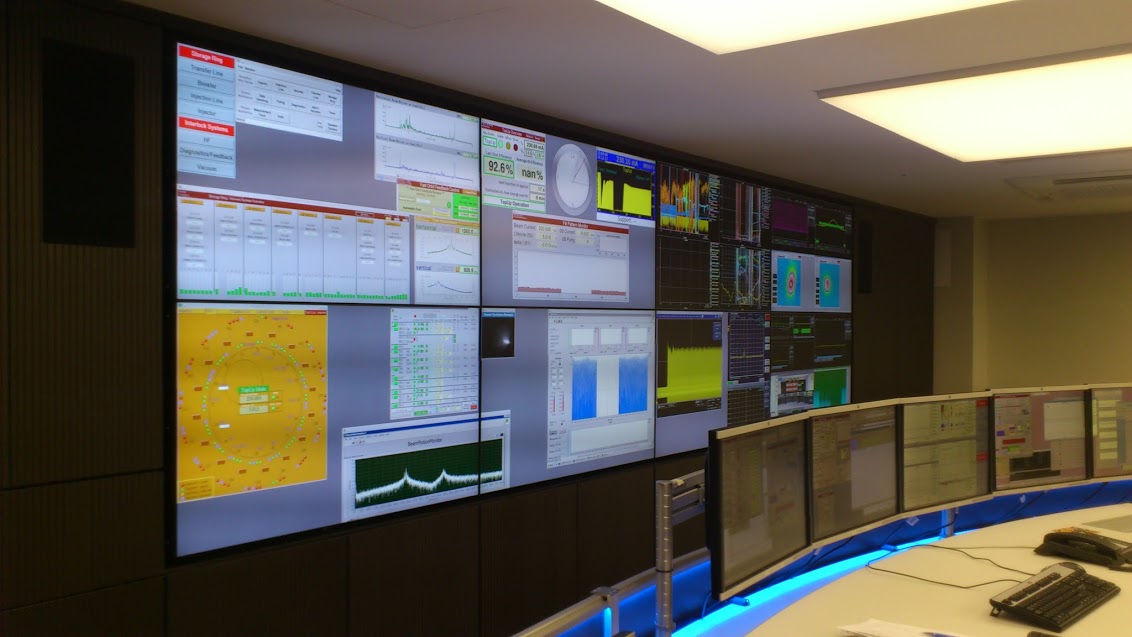
 I will also bring my two protocol MRs to their conclusion for sure, because as application developers we need clarity on what the platform (either all desktops or even just a few) supports and will or will not support in future. And the only way to get something good done is by contribution and friendly discussion.


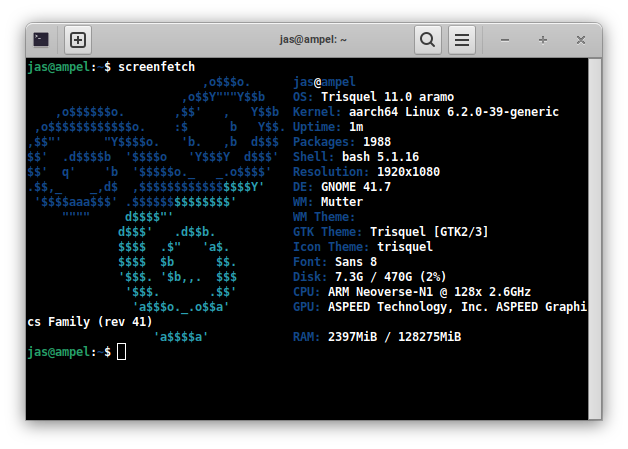
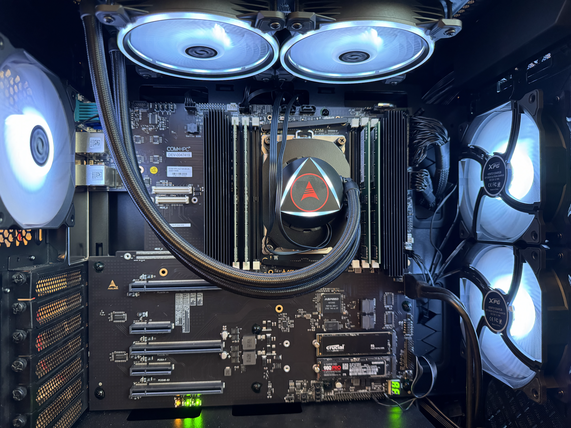
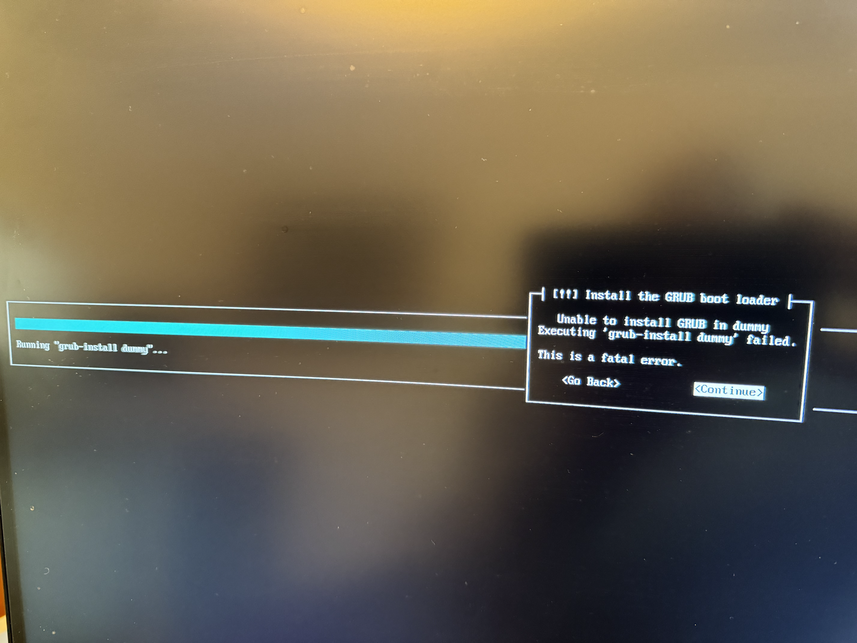
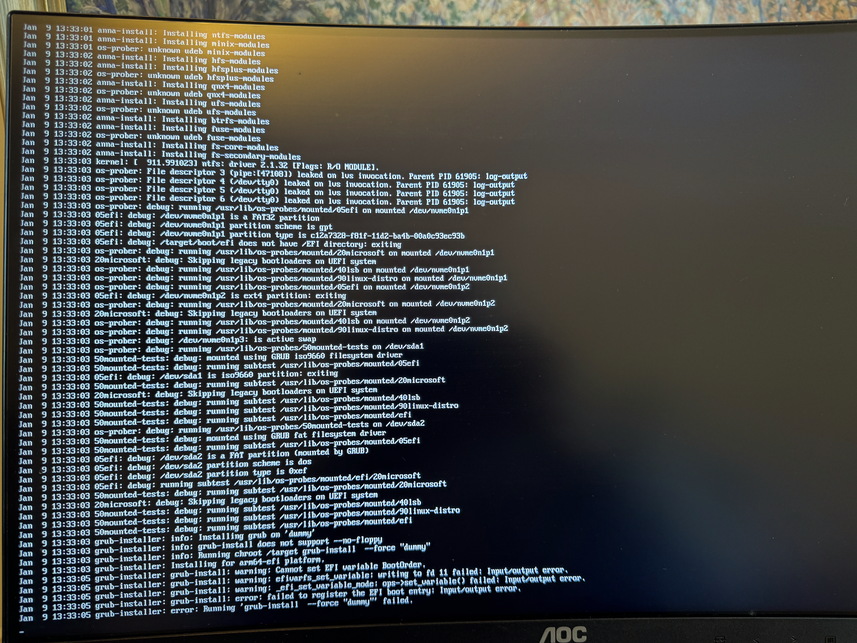
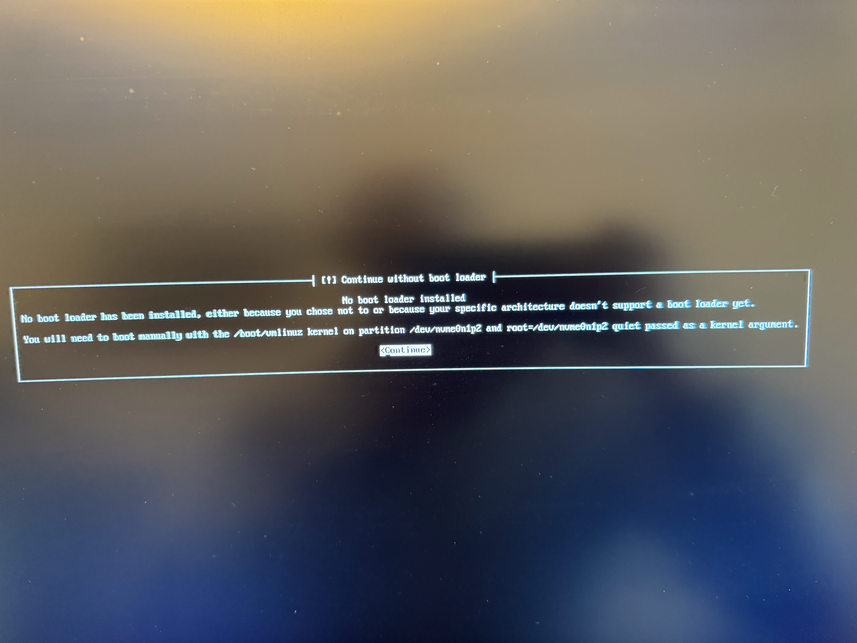
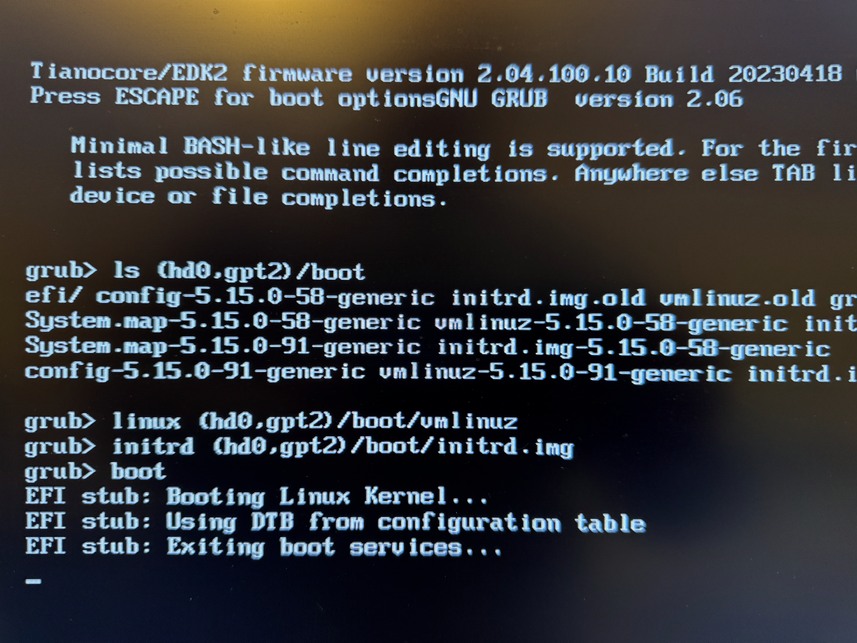
 The Rcpp Core Team is once again thrilled to announce a new release
1.0.12 of the














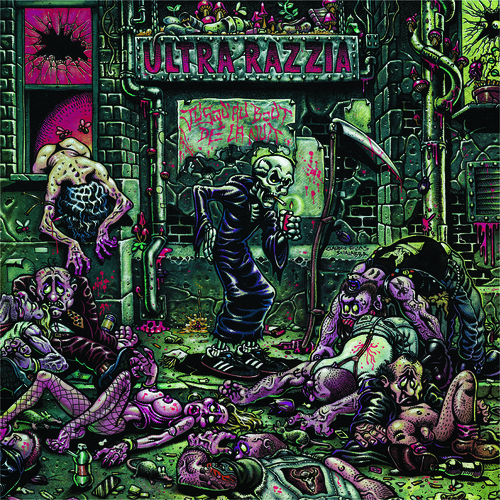


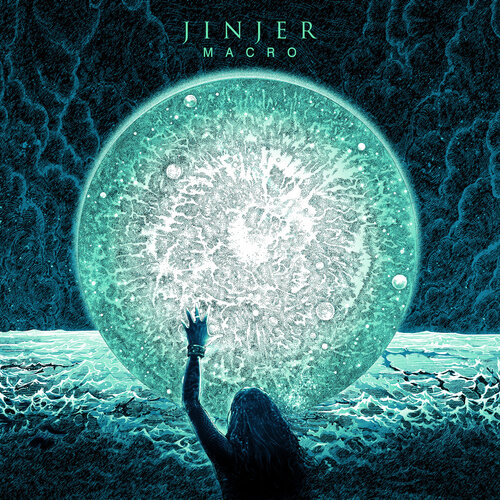
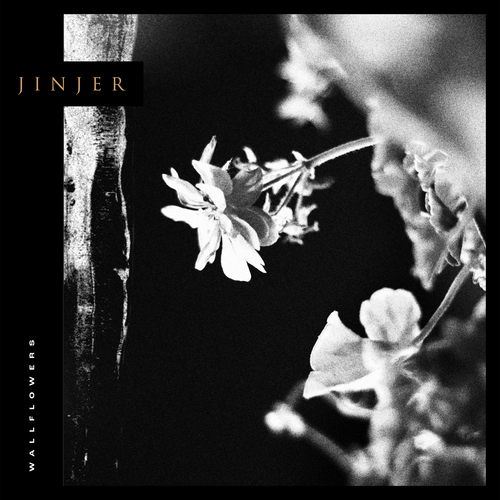
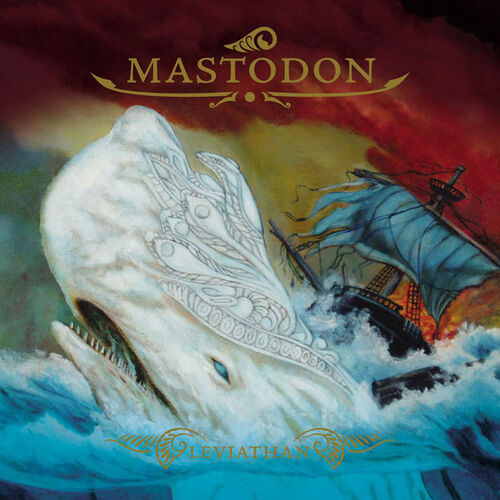



















 For the purposes of what I m trying to fix, there are two paths that matter.
 Figure 1: Content-Security-Policy browser communication
This is revolutionary, because it allows servers to receive feedback
in real time on errors that may be appearing in the browser s console.


 Debian Public Statement about the EU Cyber Resilience Act and the Product Liability Directive
The European Union is currently preparing a regulation "on horizontal
cybersecurity requirements for products with digital elements" known as the
Cyber Resilience Act (CRA). It is currently in the final "trilogue" phase of
the legislative process. The act includes a set of essential cybersecurity and
vulnerability handling requirements for manufacturers. It will require products
to be accompanied by information and instructions to the user. Manufacturers
will need to perform risk assessments and produce technical documentation and,
for critical components, have third-party audits conducted. Discovered security
issues will have to be reported to European authorities within 25 hours (1).
The CRA will be followed up by the Product Liability Directive (PLD) which will
introduce compulsory liability for software.
While a lot of these regulations seem reasonable, the Debian project believes
that there are grave problems for Free Software projects attached to them.
Therefore, the Debian project issues the following statement:
 The Emacs part is superceded by