Search Results: "gio"

12 September 2011

John Goerzen: Mexico Part 2: Lodging & Family

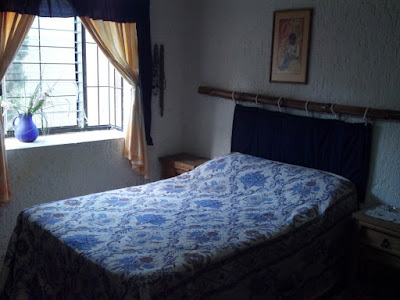
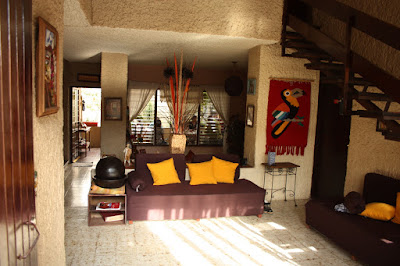
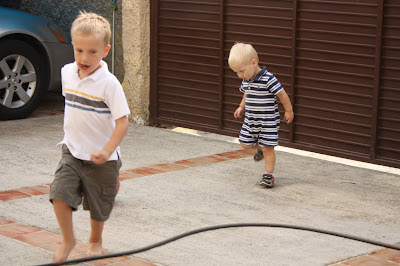
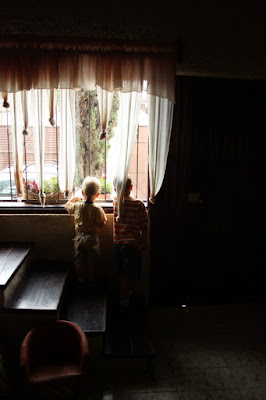
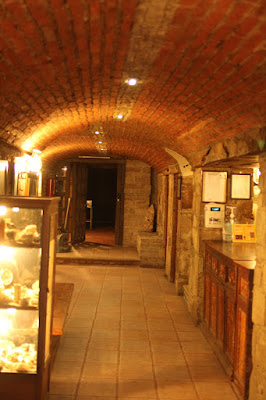
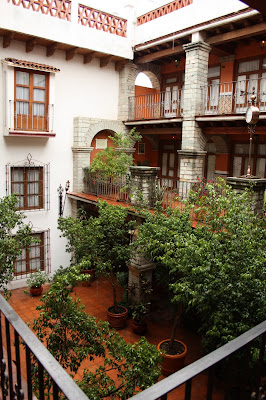
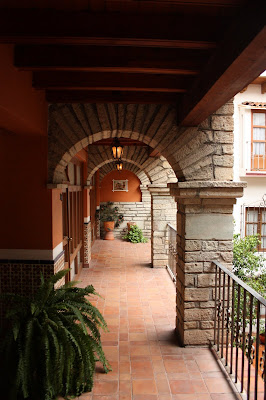
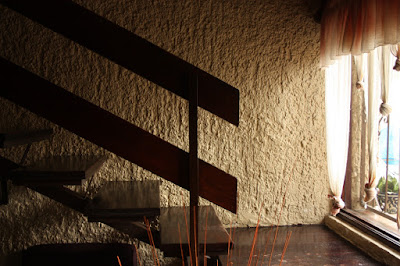
As I wrote in part 1, my family and I were in Mexico recently. Today I ll write about the places we stayed. We spent most of the time in a room we rented in a private home in Guadalajara. My friend Jonathan had found it for us, and it was not too far from his home. The owner was a grandmother, and across the courtyard was more family, including a granddaughter close in age to our boys. They enjoyed playing together. It was really a perfect arrangement for us. There s no better way to be a part of local life when traveling than to stay in someone s house. Here s our bedroom: Notice the glass slats in the window it s a nifty, though not airtight, alternative to our regular windows. More on that later. More of the inside: We had a bit of a language barrier while in Mexico, though never anything significant. My Spanish vocabulary started with almost nothing and I reached maybe a few dozen words by the time we left. Terah knew some Spanish from high school and college, and my friend was fluent. Our hostess also knew a little English. But we all communicated well enough. Terah or Jonathan would help translate when needed. As I d seen before, the children would say things to each other, but never seemed to be bothered that their playmates didn t understand what was being said. They just had a great time anyhow. On Sunday afternoon, when we came back from our activities, there was a buzz of activity. Children everywhere outside, running and playing. Adults too, chatting. We didn t know exactly what was happening, but sent Jacob and Oliver out to play anyhow (which they were eager to do). The yard was enclosed by a wall, so children could pretty much run around without lots of supervision. Eventually they were invited to have some birthday cake (ah ha!) it was one of the children s birthday. Jacob and Oliver actually were served the first two pieces of cake (as the amigos ). Everyone seemed so friendly, warm, and welcoming. Each morning started with breakfast at the house, followed by a scene like this: That s Jacob and Oliver, looking to see if Jonathan had arrived for the day yet. I often noticed in Mexico that I was unsure if I was inside or outside. Here in Kansas, we can have a string of summer days that each exceed 110F (44C) or a few weeks in winter that never get above 15F (-9C), even in daytime. And then we have some pleasant days like right now, too or rain blowing sideways at 60MPH. In general, we spend a lot of effort keeping the outside, well, out. It is quite clear that this isn t a problem in the Guadalajara area. Some restaurants could have been described as buildings with large, open windows so you feel a lot of breeze while inside. Or perhaps as a simple shade roof with a few supports on the edges, so you re never really inside at all (sort of like going under a small shade tent outdoors). To the extent that windows could close, many of them couldn t be made airtight. It was clear that in that area, people spend more energy finding ways to invite the outdoors in rather than to keep it out, thanks to the year-round moderate climate. Perhaps the best example of this surprised me one evening. We were arriving in Guanajuato, an old silver mining town in the mountains, and were going to spend the night at Hotel Socav n, which had been recommended to us by a local friend of Jonathan s. From the street, the hotel looked tiny. But walk in, and you get in this old-looking (and feeling) entry tunnel: That s the front desk, apparently cut out of it there on the right. We asked to see some of the rooms before buying apparently a normal request around there. The innkeeper agreed, and gave us keys and directions to find them on the third floor. It included going up 2 flights of stairs, passing through a courtyard, and going up another flight. It was after dark, and the hotel was dimly lit something I was fine with. I thought we were stepping out into a beautiful atrium with some potted plants in the center of the building something fairly common in some nicer hotels. Until I felt rain on my head. Then I realized that the courtyard, which began two floors up from the street, was open to the sky. Beautiful! Here was the view from out room door: And down the hall : After getting home, a Google happened to turn up some reviews of this hotel. I was so annoyed at what some people wrote! One person gave them only 3 stars because they didn t have air conditioning, had poor water pressure, and lots of steps . Someone else complained of the dark entry tunnel something I couldn t help but smiling about the moment I entered. My review, which should hopefully get posted soon, is certainly different. I gave them 5 stars, because if I wanted a Super 8 with generic fluorescent lighting and the same layout as thousands of other hotels, I would have gone to Nebraska instead of Mexico. Most homes and local hotels in the region don t have air conditioning because they don t need it, and that s just how water pressure is in Mexico (due to needing to pump it from municipal supplies to private storage tanks overhead). And who doesn t appreciate entering a hotel through a brick tunnel? Ah, sigh This should give you some idea of the kind of travel we like: part of the point of traveling is enjoying the differences from home, and I think it is a huge mistake to be annoyed at everything that is different. Enjoy the differences! Finally, here s a photo of the staircase in the home we stayed in, which I thought was fascinating:
6 September 2011

Joey Hess: water

This was the second most rainy day of the year, so far. 28 hours of solid rain and counting. Good time to take stock of the water situation here at the cabin after a year's experience. The springs were as seasonal as I'd feared. After running strongly all Spring, the main spring ebbed and died in the Summer months. By mid-July there was no remaining source of potable water. If I had not been away so much over the summer it would have been worse. As it was, I needed only twenty gallons of water hauled from neighbor Lee's well. The large cistern was filled in a single night during the most rainy period this Spring, and provided wash water for two months of the summer, and that only lowered it by a quarter. So I could have been less sparing with it, and not relied so much on rain water catchment for supplimental wash water. Today I replaced the pump, so I can use the pressure tank and have running water in the house. I could have done this earlier, but what can I say; I enjoy hauling buckets of water, when it doesn't involve breaking ice. In the winter when there's firewood to haul instead, I'll enjoy the indoor plumbing. Also today, I may have finally fixed the pipe to the large cistern properly, so it won't only fill at the heaviest rain times. Along with the ability to cross-pump water from the small to the large cistern, it should be easier to keep it filled, and I might be able to reduce the turbidity enough that it's potable eventually. Will see. I don't live in a dry region, but this is a relatively dry place for the area. It's been interesting to get a taste of what it'd be like to live somewhere where water is actually scarce.

4 September 2011

Raphaël Hertzog: My Debian activities in August 2011

This is my monthly summary of my Debian related activities. If you re among the people who made a donation to support my work (91.44 , thanks everybody!), then you can learn how I spent your money. Otherwise it s just an interesting status update on my various projects. Dpkg work When I came back from Debconf, I merged my implementation of dpkg-source --commit (already presented last month). I continued some work on the hardening build flags but it s currently stalled waiting on Kees Cook to provide the required documentation to integrate in dpkg-buildflags(1). Following a discussion held during DebConf, Michael Prokop has been kind enough to setup a git-triggered auto-builder of dpkg (using Jenkins). You can now help us by testing the latest git version. Follow those instructions:

$ wget -O - http://jenkins.grml.org/debian/C525F56752D4A654.asc   sudo apt-key add -
$ sudo sponge /etc/apt/sources.list.d/dpkg-git <<END
deb http://jenkins.grml.org/debian dpkg main
END
$ sudo apt-get update && sudo apt-get upgrade
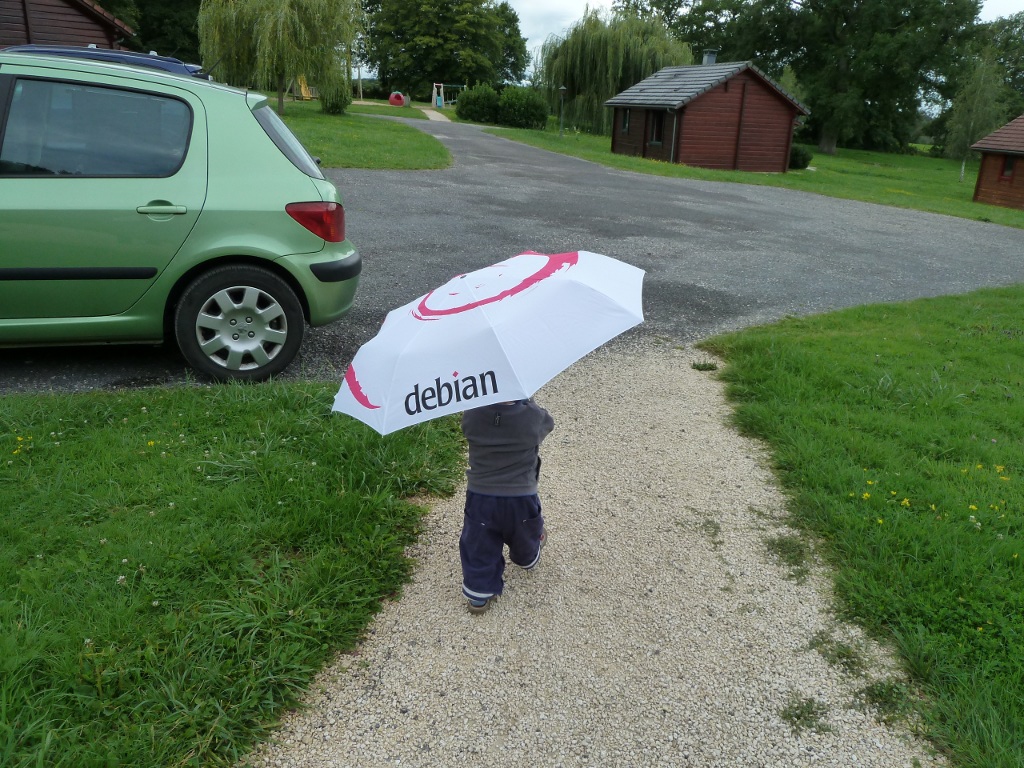
On the bug fixing side I took care of #640198 (minor man page update), #638291 (a fix to correctly handle hardlinks of conffiles), #637564 (the simplification logic of union dependencies was broken in some cases) and #631494 (interrupting dpkg-source while building a native source package left some temporary files around that should have been cleaned). WordPress update I released WordPress 3.2.1 in unstable (after having taken the time to test the updated package on my blog!) and fixed its RC bug (#625773). In the process I discovered a false positive in lintian (I reported it in 637473). Gnome-shell-timer package From time to time, I like to use the Pomodoro Technique. That s why I was an user of timer-applet in GNOME 2. Now with the switch to GNOME 3, I lost this feature. But I recently discovered gnome-shell-timer, a GNOME Shell extension that provides the same features. I created a Debian package of it and quickly filed some bugs while I was testing it (two usability issues and an encoding problem) QA Work During DebConf I met Giovanni Mascellani and he was interested to help the QA team. He started working on the backlog of bugs concerning the Package Tracking System (PTS) and submitted a bunch of patches. I reviewed them and merged them but since they were good, I quickly got lazy and got him added to the QA team so that he can commit his fixes alone. It also helps to build trust when you have had the opportunity to discuss face to face. :-) Vacation That s not so much compared to usual but to my defense I also took 2 weeks of vacation with my family. But somehow even in vacation I can t really forget Debian. Here s my son:
Thanks See you next month for a new summary of my activities.

3 comments Liked this article? Click here. My blog is Flattr-enabled.

28 August 2011

Christian Perrier: 10 years being Debian Developer - part 3: the news and genealogy years

I stopped my story in early 1994, after my Big Switch to the mysterious and new world of Linux. My home server, kheops, is now running Debian and is fed with news and mail by FrMug, formerly French Minix Users Group and now run by AFAU, the "Association Fran aise des Amateurs de Usenet". As I'm still console-challenged, I'm reading mail and news on another machine I have at home, named "khephren", which is running an, ahem, beta copy of Microsoft Windows 95. Yeah, I know...:-) These 1994-1999 years were mostly the Usenet years, for me. I gradually became more and more involved in several fr.* newsgroups, either related to the Linux world...or to the Windows world. The latter was professionnally a bonus for me as 1994 is also the year where I switched from the Material Science department at Onera to the Network and Computing Department. My mission there was to accompany the increasing prevalence of personal desktop workstations in the daily life of what was formerly the Big Castle of Computing at Onera, hosting various generations of Cray computers, most of which being in the Top500 world supercomputers (we even had one in the Top10, very briefly, at somepoint). So, I was "the PC and Windows guy" in this world of supercomputing, Unix and network wizards. But my hobby at home helped me keeping and growing skills in both "worlds" which, over the years, has proven to be a not so common profile..:-) Meanwhile, at home, I was spending hours and nights reading those newsgroups...or getting involved in fr.* hierarchy management..or expanding my friends network to many people in the news, Linux, BSD worlds. That lasted for about 3 years with ups and downs (with three young kids at home, you end up having slightly less time...). I was gradually improving my home server use, adding more functionalities to it, for instance setting it up as a file and print server with Samba 1.9.something (this will be the beginning of a long story with samba!). Unfortunately, my dear Ren had passed in the meantime. Ren did so much for Linux in France that he'll be the only link I give in this article. If you happen to go through P re Lachaise cemetery in Paris, go to its Memory garden instead of visiting Jim Morrison's grave and drink a whisky bottle in memory of Ren . Or just install one of the most funnily named Debian packages: le-dico-de-rene-cougnenc and, again, drink something to his memory (whisky is highly preferred). We then reached 1997 and a specific event: my father (who was very sick for years) passed during summer, some time after my grand-father passed too. As it apparently happens for many people, it triggerred me into the interest for family history. After all, those people who are going away are family memories. And, in some way, I wanted to keep track of this memory. As a consequence, I started collecting family memories, interviewing my close relatives (the oldest ones) and ending, of course, in tracking all this with my computers. That was the start of a long genealogy research that sent me on the track of the Perrier family (of course), but also all other branches, on my mother and father side, as well as reconstructing the tree of cousins we have, etc, etc. As anybody who did that knows, this is quite an endless task but I went very committed to it. I quickly ended up in joining research groups that were using the recent growth of personal access to Internet communication. Those groups were, in these 90's, building elaborated systems where people can help together in their research instead of having to travel to places where archives are stored. I participated to many such groups and even ended up animating one who was doing research in archives of the "Yvelines" "d partement", my place of living (even though I have no family branch there). At the same time, other groups were sending me research results for my own family in the French region where my roots are. Collective effort, help others for free, you can recognize things that are a constant all over these years, indeed. It actually helped me in tracking my Perrier ancestors up to about 1680, with 11 generations of men holding that name (from Jean-Baptiste, my son, up to tienne Perrier, who is born about 1640-1650, in the small village named Briant in Sa ne et Loire, in France). Or even climbing up to Laurent Polette, born circa 1510, mentioned in a document date February 1562. He his my oldest known ancestor.Those folks being 15 generations before me. My oldest ancestor is born under Fran ois the First, King of France, protector of Leonardo Da Vinci, at the time La Joconde was painted or the Chambord castle was built. Doh. Unfortunately, genealogy software, at that time, was quite poor for Unix systems. Lifelines was a quite strong development but wasn't that user-friendly and I ended up using a Windows-based "shareware" software written by an individual. Still, my Linux machine was used quite intensively: databases were stored there, and saved there, all important informations were there, my mail was received there, along with dozens of mailing lists I was reading. I even hosted a few mailing lists on my home server. Still, in the meantime also, again in 1997, in October, another event happened. We had a pollution peak in Paris area and October 1st was the first (and as of now the only ever) day where driving restrictions were applied. Up to that moment, I was driving to/from work (30 kilometers one way). I decided to use this opportunity to really test public transport, for one full month. As I knew it would take me much more time than driving, I tried to imagine a way to use that time. How about reading mail and news on a laptop instead of only at home? Done... In a few days, I found a used Compaq Aero laptop (486 16MHz), I installed Debian "bo" on it, switched my mail and news workflow to console programs (mutt and slrn) and here we go! So, finally, in October 1997, I was using Linux nearly all time long, the only exception being genealogy data handling. That laptop was named "mykerinos" (the small pyramid) and....my laptop is still named mykerinos, though it's now the 5th mykerinos I have..:-) Ah, and since then, I nearly always use public transport to go to/from work. Debian addiction is good for the planet! At some point (I don't remember exactly when...about 1999, I think), DSL connections appeared and one of the first DSL FAI emerged on France: Free. I was already using their services for dialup access, but DSL was then a revolution: persistent connection! And nearly immediately, static IP! I became one of their first DSL customers (and I'm still one). Moreover, I had then friends working there...and they had many Debian machines to host their services. So, with the help of my Freenix friends, some DNS hosting on their machines and the still tireless eu.org entirely free domain, perrier.eu.org was born. Immediately, this gave me opportunities for doing many interesting things with my home server: setting up www.perrier.eu.org and use it....for learning web things and sharing genealogical data. For instance, I ended up hosting some data sent by other genealogists such as digital copies of archives for some French regions, all served through my 512/128kbps DSL line (quickly upgraded to 2Mb, IIRC). And, very quickly, I felt the need to share my family tree, of course! And here comes Geneweb. Written (in Ocaml) by Daniel de Rauglaudre, Geneweb was (and still is) by far one of the best tools to share genealogy data over the Net. So, I ended up installing it on my home machine. Guess how I did that? "apt-get install geneweb", of course. Yes, it was packaged. Indeed by Brent Fulgham who did the initial release on July 22nd 2000. Here, my memory is a little bit vague. I think I actually packaged Geneweb for my own use and sharing it on upstream FTP site, forking Brent's package as a start, but updating to latest upstream release. Then I quickly ended up having discussions with Brent about this new upstream release, and that lead to:
geneweb (3.10-3) unstable; urgency=low
  * Merging with unofficial package from Geneweb ftp site
    (in preparation of new maintainer [Christian Perrier] takeing
    over responsibility).  Note that all of this work is from
    Christian.
  * Default database dir is now writable by members of geneweb group
  * New geneweb group added at installation
  * Package tries to properly handle former installations of the
    unofficial Geneweb package available on Geneweb ftp site
  * Debconf dialogs translated in french
  * More languages available
  * Creation of /var/geneweb/etc, /var/geneweb/cnt, /var/geneweb/images
    with proper permission so that authorised users may use these also
  * When de-installed, all databases are exported with gwu (should allow
    smooth upgrades when the databse format changes)
 -- Brent A. Fulgham <bfulgham>  Mon, 22 Jan 2001 19:30:47 -0800
See? Already "debconf translation to French"! "More languages available". Here we are. As discussed with Brent, he propsoed me to take the package over. So, on January 11th 2001, I had applied in the New Maintainer Process. I'm amazed how quickly it went indeed: there was a tool I needed, it needed to be packaged, I could handle the packaging...and then I decided to be involved. Here we are: bubulle is on his way to become one of those magicians who are building the best universal operating system. Yes, me, the clueless material scientist..:-) How did it go? You'll know this in next episode, of course...

18 August 2011

Rapha&#235;l Hertzog: People behind Debian: Peter Palfrader, Debian System Administrator

You might not know who Peter is because he s not very visible on Debian mailing lists. He s very active however and in particular on IRC. He was an admin of the OFTC IRC network at the time Debian switched from Freenode to OFTC. Nowadays he s a member of the Debian System Administration team who runs all the debian.org servers. If you went to a Debconf you probably met him since he s always looking for new signatures of his GPG key. He owns the best connected key in the PGP web of trust. He also wrote caff a popular GPG key signing tool. Raphael: Who are you? Peter: I m Peter Palfrader, also known as weasel. I m in my early 30s, born and raised in Innsbruck, Austria and am now living and working in Salzburg, Austria. In my copious free time, other than help running Debian s servers I also help maintaining the Tor project s infrastructure. Away from the computer I enjoy reading fiction (mostly English language Science Fiction and Fantasy), playing board games and going to the movies. Weather permitting, I also occasionally do some cycling. Raphael: How did you start contributing to Debian? Peter: I installed my first Debian the week slink came out. That was Debian 2.1 for the youngsters, in early 1999. The one thing I immediately liked about slink was that Debian s pppd supported RAS authentication which my university s dial-up system required. No way I d go back to SuSE 5.3 when I had working Internet with my Debian box. :) During that year I started getting involved in the German language Debian channel on IRCnet which got me in contact with some DDs. Christian Kurz (<shorty>) was working on Debian QA at the time and he asked my help in writing a couple of scripts. Some of that work, debcheck, still produces parts of the qa.d.o website, tho the relevance of that nowadays is probably negligible. While trying to learn more Perl earlier, I had written a program to produce syntax highlighted HTML for code snippets in various languages. I didn t really know what I was doing but it kinda worked, and probably still does since I still get mail from users every now and then. I figured that it would be really nice if people could just get my software together with Debian. According to code2html s Debian changelog the initial release of the package was done on a weekday at 2:30 in the morning early in 2000, and if my memory serves me correctly, shorty uploaded it shortly afterwards. I started packaging a couple of other piece of software and in the same year I sent my mail to the debian account managers to register my intent to become a DD. No new developers where being accepted at that time since the DAMs wanted to overhaul the entire process so I wasn t surprised to not get any immediate reply. Of course what the silence also meant was that the mail had been lost, but I only learned of that later when I took all my courage to ask DAM about the status of application a couple months later. Once that was sorted out I was assigned an AM, did the usual dance, and got my account late in November 2000. Raphael: Four years ago, the Debian System Administration team was a real bottleneck for the project and personal conflicts made it almost impossible to find solutions. You were eager to help and at some point you got dropped as a new member in that team. Can you share your story and how you managed the transition in the difficult climate at that time? Peter: Ah, that was quite the surprise for an awful lot of people, me included. Branden Robinson, who was our DPL for the 2005-2006 term, tried to get some new blood added to DSA who were at the time quite divided. He briefly talked to me on IRC some time in summer 2005, telling me I had come recommended for a role on the sysadmin team . In the course of these 15 minutes he outlined some of the issues he thought a new member of DSA would face and asked me if I thought I could help. My reply was cautiously positive, saying that I didn t want to step on anybody s toes but maybe I could be of some assistance. And that was the first and last of it, until some fine November day two years later I got an email from Phil Hands saying I ve just added you to the adm group, and added you to the debian-admin@d.o alias. and welcome on board . *blink* What!? My teammates at the time were James Troup (elmo), Phil Hands (fil), Martin Joey Schulze and Ryan Murray (neuro). The old team, while apparently not on good terms with one another, was however still around to do heavy lifting when required. I still remember when on my first or second day on the team two disks failed in the raid5 of ftp-master.debian.org aka ries. Neuro did the reinstall once new disks had arrived at Brown University. I m sure I d have been way out of my league had this job fallen to me. Fortunately my teammates were all willing and able to help me find whatever pieces of information existed that might help me learn how debian.org does its stuff. Unfortunately a lot of it only existed in various heads, or when lucky, in one of the huge mbox archives of the debian-admin alias or list. Anyway, soon I was able to get my hands dirty with upgrading from sarge to etch, which had been released about half a year earlier. Raphael: I know the DSA team has accomplished a lot over the last few years. Can you share some interesting figures? Peter: Indeed we have accomplished a lot. In my opinion the most important of these accomplishment is that we re actually once again a team nowadays. A team where people talk to one another and where nobody should be a SPoF. Since this year s debconf we are six people in the admin team: Tollef Fog Heen (Mithrandir) and Faidon Liambotis (paravoid) joined the existing members: Luca Filipozzi, Stephen Gran, Martin Zobel-Helas, and myself. Growing a core team, especially one where membership comes with uid0 on all machines, is not easy and that s why I m very glad we managed to actually do this step. I also think the infrastructure and our workflows have matured well over the last four years. We now have essential monitoring as a matter of course: Nagios not only checks whether all daemons that should be running are in fact running, but it also monitors hardware health of disks, fans, etc. where possible. We are alerted of outstanding security updates that need to be installed and of changes made to our systems that weren t then explicitly acked by one of us. We have set up a centralized configuration system, puppet, for some of our configuration that is the same, or at least similar, on all our machines. Most, if not all, pieces of software, scripts and helpers that we use on debian.org infrastructure is in publicly accessible git repositories. We have good communication with other teams in Debian that need our support, like the ftp folks or the buildd people. As for figures, I don t think there s anything spectacular. As of the time of our BoF at this year s DebConf, we take care of approximately 135 systems, about 100 of them being real iron, the other virtual machines (KVM). They are hosted at over 30 different locations, tho we are trying to cut down on that number, but that s a long and difficult process. We don t really collect a lot of other figures like web hits on www.debian.org or downloads from the ftp archive. The web team might do the former and the latter is pretty much impossible due to the distributed nature of our mirrors, as you well know. Raphael: The DSA team has a policy of eating its own dog food, i.e. you re trying to rely only on what s available in Debian. How does that work out and what are the remaining gaps? Peter: Mostly Debian, the OS, just meets our needs. Sure, the update frequency is a bit high, we probably wouldn t mind a longer release cycle. But on the other hand most software is recent enough. And when it s not, that s easy to fix with backports. If they aren t on backports.debian.org already, we ll just put them there (or ask somebody else to prepare a backport for us) and so everybody else benefits from that work too. Some things we need just don t, and probably won t, exist in Debian. These are mainly proprietary hardware health checks like HP s tools for their servers, or various vendors programs to query their raid controller. HP actually makes packages for their stuff which is very nice, but other things we just put into /usr/local, or if we really need it on a number of machines, package ourselves. The push to cripple our installers and kernels by removing firmware was quite annoying, since it made installing from the official media next to impossible in some cases. Support for working around these limitations has improved with squeeze so that s probably ok now. One of the other problems is that especially on embedded platforms most of the buildd work happens on some variation of development boards, usually due to increased memory and hard disk requirements than the intended market audience. This often implies that the kernel shipped with Debian won t be usable on our own debian.org machines. This makes keeping up with security and other kernel fixes way more error prone and time intensive. We keep annoying the right people in Debian to add kernel flavors that actually boot on our machines, and things are getting better, so maybe in the future this will no longer be a problem. Raphael: If you could spend all your time on Debian, what would you work on? Peter: One of the things that I think is a bit annoying for admins that maintain machines all over the globe is mirror selection. I shouldn t have to care where my packages come from, apt-get should just fetch them from a mirror, any mirror, that is close by, fast and recent. I don t need to know which one it was. We have deployed geodns for security.debian.org a while ago, and it seems to work quite well for the coarse granularity we desired for that setup, but geodns is an ugly hack (I think it is a layer violation), it might not scale to hundreds or thousands of mirrors, and it doesn t play well with DNSSEC. What I d really like to see is Debian support apt s mirror method that I think (and I apologize if I m wronging somebody) Michael Vogt implemented recently. The basic idea is that you simply add deb mirror://mirror.debian.org/ or something like that to your sources.list, and apt goes and asks that server for a list of mirrors it should use right now. The client code exists, but I don t know how well tested it is. What is missing is the server part. One that gives clients a mirror, or list of mirrors, that are close to them, current, and carry their architecture. It s probably not a huge amount of work, but at the same time it s also not entirely trivial. If I had more time on my hands this is something that I d try to do. Hopefully somebody will pick it up. Raphael: What motivates you to continue to contribute year after year? Peter: It s fun, mostly. Sure, there are things that need to be done regularly that are boring or become so after a while, but as a sysadmin you tend to do things once or twice and then seek to automate it. DSA s users, i.e. DDs, constantly want to play with new services or approaches to make Debian better and often they need our support or help in their endeavors. So that s a constant flow of interesting challenges. Another reason is that Debian is simply where some of my friends are. Working on Debian with them is interacting with friends. I not only use Debian at debian.org. I use it at work, I use it on my own machines, on the servers of the Tor project. When I was with OFTC Debian is what we put on our machines. Being a part of Debian is one way to ensure what Debian releases is actually usable to me, professionally and with other projects. Raphael: Is there someone in Debian that you admire for their contributions? Peter: That s a hard one. There are certainly people who I respect greatly for their technical or other contributions to Debian, but I don t want to single anybody out in particular. I think we all, everyone who ever contributed to Debian with code, support or a bug report, can be very proud of what we are producing one of the best operating systems out there.
Thank you to Peter for the time spent answering my questions. I hope you enjoyed reading his answers as I did. Subscribe to my newsletter to get my monthly summary of the Debian/Ubuntu news and to not miss further interviews. You can also follow along on Identi.ca, Twitter and Facebook.

No comment Liked this article? Click here. My blog is Flattr-enabled.

4 August 2011

Diego Escalante Urrelo: GUADEC Hispana in Sevilla

Sevilla is located in the (one of the many actually) oh-boy-is-that-really-the-temperature region of Spain. It has been historically significative for its financial, artistic and cultural value. But it s most important role has been that of hosting lots of GNOME activity. The 3rd ever GUADEC was held here, those cool Emergya guys who are working on a11y live here, and the even more awesome Sugus ETSII group helping with the conference setup and beer availability who helped organize the GNOME 3 launch party in Sevilla.

Foto de familia de la Guadec-es8

GUADEC Hispana group picture by Ana Rey (from GUADEC_ES8 set) Not as huge as GUADEC, but certainly as much fun as it, GUADEC Hispana lets the Spanish speaking community get closer together, get bugs fixed and only as a side effect get a bit drunk. A big thank to Ana, Juanje, V ctor, the Sugus team and all the local people that contributed. Also, of course, thanks to our GNOME loving (and loved) companies: Emergya, Igalia and OpenShine. And don t forget Escuela T cnica Superior de Ingenier a Inform tica who hosted the event. Beer time now. See ya at Berlin.

Aigars Mahinovs: Debconf 11 postmortem

Another year, another Debconf and now it is passed. Pictures are processes and all are now uploaded. We are still missing 25 names in the Debconf 11 group photo. With 265 people and 86 Mpix it is the highest resolution image we have had so far (Spain image had a bit more pixels, but a lot of them were outside the actual photo) and the largest number of people (Edinburgh photo had 248 people). The video team produced hundreds of gigabytes of footage, we had very interesting talks and debates and sometimes the AdHoc meeting room on the side was overcrowded with people in BoFs that were not on the initial schedule. It has been a very special kind of conference. As it always is. :)
As always, there were also some problems. I did not read the debconf-team mailing list, but I hear there was plenty of fun discussions to be had in the run-up to the event, some information on getting to the venue was not quite clear (that was quickly fixed as first people arriving to Debcamp were documenting their experience), the organizational dance with the food tickets was more elaborate than usually, both the day trip and the formal dinner were more self-driven than expected, vegetarian complaint level was about the same as usual (which is considered high by some) and the wireless in the hotel was very weak, also Saturday weddings are quite loud and run very late apparently.
To compensate for that we had: very sunny Debcamp, cheap beer (!!!), great quality accommodations, very good looking venue, good network at the venue (after initial scalability issues with the wireless), good food (that did sometimes run out, though), short distances to all locations, oh and did I mention cheep beer? What do we learn from this for next year? I am told that Debconf12 team has already had some meetings specifically to identify and learn from some shortcomings and strengths of this years conference. However, I think everyone of us might have an idea or two to add to the mix as well. For example, I think that BoF rooms are great and we should expand and solidify on that concept: take a page from unconference playbook have a board on-site where people can book slots for their BoF in one of the two rooms for tomorrow. Not far in advance and without moderation requirement of penta scheduling. In the evening the stickers can be taken down and tomorrows BoFs can be added to the schedule at that point, so the people can see online what is going on.
Also I think that we need some kind of coverage of the BoF room(s) from the video team. Even if that is in a form of a single self-service omnidirectional microphone where people could just walk into the room, press a single button and the audio would start streaming and recording.
In addition we could have a screen with the IRC channel of the room projected onto a screen on a side of the stage, to simplify getting questions off the channel. Recording that channel (as a text log) could also be useful.
It feels like post-conference assembly of the talk lists, presentations, links to the relevant recordings, photos, chat logs, ideas, comments, for every talk is very problematic in penta, should we perhaps just use wiki for that?
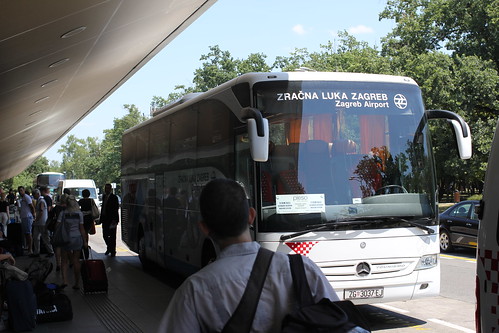
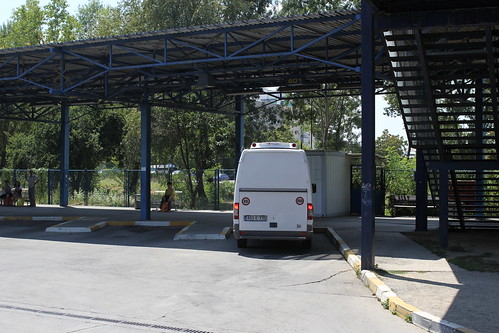
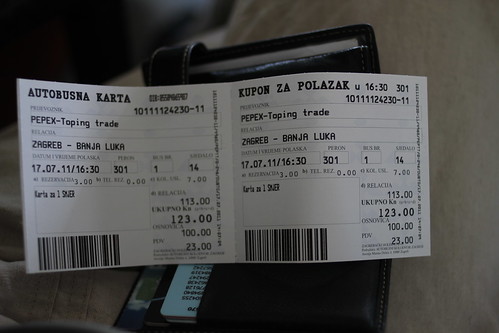
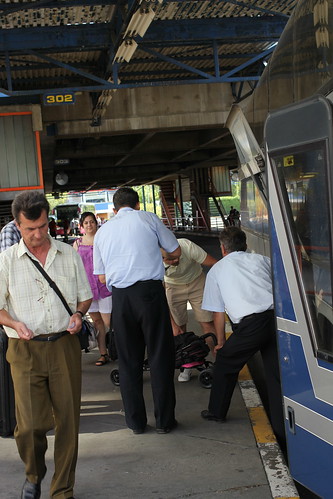
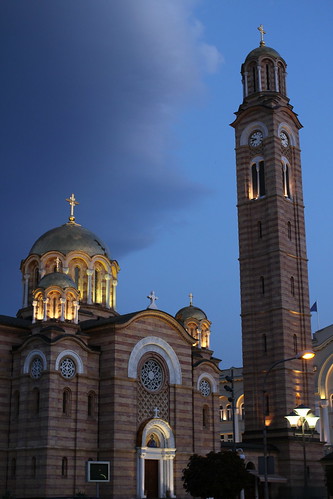
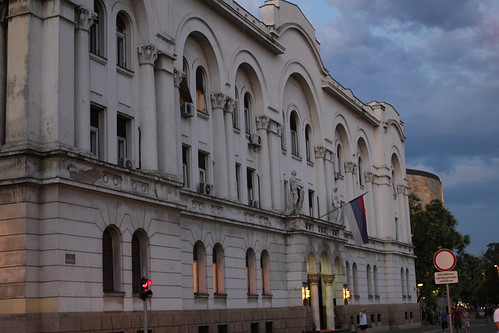
Any other ideas? And to finish off some more personal travel-inspired rambling. After visiting Paris, Zagreb, Banja Luka and (very shortly) Vienna on this trip it was very interesting to see similarities and draw some parallels, especially with the added context of Berlin and Riga. The similarities in city planning, street shops, brands and the way people go about their lives in these capitals are quite remarkable. I would even say that a trend can be seen where capitols of countries/regions that had troubles in the past (Bosnia more recently; Riga, Zagreb and East Berlin a bit more into the past) are now moving from their different pasts and converging towards the vision of the European capitol city living we see in cities like Paris. If you look at individual pieces you can even recognise milestones along this route and see when specific cities reach them (possibly in a different order than others). With that in mind you can even try to predict what might come next, like looking at Banja Luka and thinking that they might reach the point of upgrading their buses in the next 2-3 years, or comparing Riga and Zagreb we can see that Riga needs to soon choose a street and close it to car traffic to have more caf s, beer gardens and shops concentrated in that area. Or looking at Paris we might find a compelling idea, like clustering a lot of businesses of the same type (such as kitchen design) in the same street, so the customers know where they can go to have all the best choices available within a block. All in all this years Debconf for me was one with the most diverse experiences and the one that felt closest to home. I hope to see you all good people again next year! P.S. I do hope that Debconf12 dates are nailed down in the next 2 months, so we can start talking to air plane companies for group discounts immediately.

1 August 2011

Chris Lamb: Monitoring Redis? Check last_save_time

As Redis writes to disk asychronously, it is not sufficient to monitor whether it is still listening to TCP/IP connections - you must check whether it is managing to persist the in-memory data to disk. However, as it is not currently possible to deterministically monitor the status of these background saves, we are limited to checking that the number of seconds since the last save has not exceeded some specific number. This is possible by using last_save_time which is available via the INFO command:
$ redis-cli info   grep last_save_time
last_save_time:1312045364
Checking for this has already saved me twice: once when my vm.overcommit_memory = 1 change was accidentally rolled back (see "Background saving is failing with a fork() error" in the Redis FAQ), and again when the machine simply did not have enough disk space. To monitor this with Nagios:
#!/usr/bin/env python
import sys
import time
import redis
def main(host, warning, critical):
    try:
        client = redis.Redis(host=host)
        last_save = time.time() - client.info()['last_save_time']
    except Exception, e:
        print "CRITICAL: %s" % e
        return 2
    ret = 0
    state = 'OK'
    for limit, state_, ret_ in (
        (int(warning), 'WARNING', 1),
        (int(critical), 'CRITICAL', 2),
    ):
        if last_save > limit:
            ret = ret_
            state = state_
    print "%s: Last dump was %d seconds ago" % (state, last_save)
    return ret
if __name__ == '__main__':
    sys.exit(main(*sys.argv[1:]))
The following invokation will trigger a warning when we haven't saved in an hour and become critical if we haven't saved within 24 hours. (If we cannot connect to the server we are immediately critical, so we avoid an extra check just for this.)
$ check_redis 127.0.0.1 3600 86400
This setup works well, although we are now monitoring a non-deterministic heuristic. To remedy this, Redis could expose background save failures in the INFO output (last_bgsave_status=fail, perhaps?). However, the treatment of previous contributions puts me off sending further patches.

31 July 2011

Russell Coker: Links July 2011

The Reid Report has an article about the marriage pledge that Michelle Bachmann signed which implies that slavery wasn t so bad [1]. Greg Carey has written an interesting article for the Huffington Post about marriage and the bible [2], I always knew that the so-called conservatives weren t basing their stuff on the Bible, but the truth surprised me. Geoff Lemon has written an interesting blog post about the carbon tax debate in Australia [3]. He focuses on how small it is and how petty the arguments against it are. Lord Bacon wrote an interesting list of the top 100 items to disappear first in a national emergency [4]. Some of them are specific to region and climate but it is still a good source of ideas for things to stockpile. Markus Fischer gave an interesting TED talk about the SmartBird that he and his team built [5]. A flying machine that flaps it s wings isn t that exciting (my local department store sells toys that implement that concept), but having one closely match the way a bird s wings work is interesting.

27 July 2011

Thorsten Glaser: (Banja Luka)

Been hot and dry today (although the sky is now back full of dark clouds), so I had a headache most of the morning until way past noon. Better now though, and I found a place where I could get Cevapi, which are really some sort of quick imbiss / fast food here (no uve pirina though, and she didn t have any Ajvar nor did she speak any language other than the local, but that wasn t a problem, only a bit dry because I didn t give in and took the offered Ketchup). Bought a 1 bottle of Kru kovac (from Hrvatska, though) and some small plastic glasses, then. I wonder how many people would, now, be willing to give Bosna i Hercegovina a try as holiday region (which might have been the intent of having a Balkan DebConf). I m sure I do. To all attendees: the hotel will give you some kind of stamped hardpaper card which states where you stayed on the trip, and for how long give that to the border guards when exiting Bosnia.

26 July 2011

Matthew Garrett: Further adventures in EFI booting

Many people still install Linux from CDs. But a growing number install from USB. In an ideal world you'd be able to download one image that would let you do either, but it turns out that that's quite difficult. Shockingly enough, it's another situation where the system firmware exists to make your life difficult.

Booting a hard drive is pretty easy. The BIOS reads the first 512 bytes off the drive, copies them to RAM and executes them. That code is then responsible for either starting your bootloader or identifying the currently active partition and jumping to its boot sector, but before too long you're in a happy place where you're executing whatever you want to. Life is good. So you'd think that CDs would work in a similar way. The ISO 9660 format even leaves a whole 32KB at the start of a filesystem, which is enough space for a pretty awesome bootloader. But no. This is not how CDs work. That would be far too easy.

Let's imagine we're back in the 90s. People want to be able to boot off CD without needing a boot floppy to do so. And you're a PC vendor with a BIOS that's been lovingly[1] forced into a tiny piece of flash and which has to execute out of an almost as tiny piece of RAM if you want your users to be able to play any games. Letting boot code read arbitrary content off the CD would mean adding a new set of interrupt hooks, and that's going to be even more complicated because CDs have a sector size of 2K while hard drives are 512 bytes[2] and who's going to pay to implement this and for the extra flash and RAM and look surely there has to be another way?

So, of course, another way was found. The El Torito specification defines a way for shoving a reference to some linear blocks into the ISO 9660 header. The BIOS reads those blocks into memory and then redirects either the floppy or hard drive access interrupts (depending on the El Torito type) to that region. The boot code can then proceed as if it had been read off a floppy without all the trouble of actually putting a floppy in the machine, and the extra code required in the system BIOS is minimal.

USB sticks, however, are treated as hard drives. The BIOS won't look for El Torito images on them. Instead, it'll try to execute a boot sector. That isn't there on a CD image. Sigh.

A few years ago a piece of software called isohybrid popped up and solved this problem nicely. isohybrid is a companion to isolinux, which itself is a bootloader that fits into an El Torito image and can then load your kernel and installer from CD. isohybrid takes an ISO image, adds an x86 boot sector and partition table and does some more fiddling to turn a valid ISO image into one that can be copied directly onto a USB stick and booted. The world suddenly becomes a better place.

But that's BIOS. EFI makes this easier, right? Right?

No. EFI does not make this easier.

Despite EFI being a modern firmware for the modern world[3], EFI implementations are not required to be able to understand ISO 9660. In fact, I've never seen one that does. FAT is all the spec requires, and FAT is typically all you get. Nor will EFI just execute some arbitrary boot code from the start of the CD. So, how does EFI boot off CD?

El Torito. Obviously.

It's not quite as bad as it sounds, merely almost as bad as it sounds. While the typical way of using El Torito for a long time was to use floppy or hard drive emulation, it also supports a "No emulation" mode. It also supports setting a type flag for your media, which means you can distinguish between images intended for BIOS booting and EFI booting. But the fact remains that your CD has to include an embedded FAT partition that then contains a bootloader that's able to read ISO 9660 because your firmware is too inept to handle that itself[4].

How about USB sticks? Thankfully, booting these on EFI doesn't require any boot sectors at all. Instead you just have to have a partition table, a FAT partition and a bootloader in a well known location in that FAT partition. The required partition is, in fact, identical to the one you need in an El Torito image. And so this is where we start introducing some extra hacks.

Like I said earlier, isohybrid fakes up an MBR and adds some boot code that points at the actual bootloader. It needs to do a little more on EFI. The first problem is that the isohybrid MBR partition has to cover the entire ISO 9660 filesystem on the USB stick so that the operating system can access it later, but the El Torito FAT image is inside that partition. A lot of MBR-based code becomes very unhappy if you try to set up a partition that's a subset of another partition. So we can't really use MBR. On to GPT.

GPT, or the GUID Partition Table, is the EFI era's replacement for MBR partitions. It has two main advantages over MBR - firstly it can cover partitions larger than 2TB without having to increase sector size, and secondly it doesn't have the primary/logical partition horror that still makes MBR more difficult than it has any right to be. The format is pretty simple - you have a header block 1 logical block into the media (so 512 bytes on a typical USB stick), and then a pointer to a list of partitions. There's then a secondary table one block from the end of the disk, which points at another list of partitions. Both blocks have multiple CRCs that guarantee that neither the header nor the partition list have been corrupted. It turns out to be a relatively straightforward modification of isohybrid to get it to look for a secondary EFI image and construct a GPT entry pointing at it. This works surprisingly well, and media prepared this way will boot EFI machines if burned to a CD or written to a USB stick.

There's a few quirks. Macs will show two boot icons for these CDs[6], one marked "EFI Boot" and one helpfully marked "Windows"[7], with the latter booting the BIOS El Torito image. That's a little irritating, but not insurmountable. The other issue is that older Macs won't look for boot loaders in the legacy locations. This is where things start getting horrible.

Back in the old days, Apple boot media used to have a special "blessed" folder. Attempting to boot would involve the firmware looking for such a folder and then using that to start itself up. Any folder in the filesystem could be blessed. Modern hardware doesn't use boot folders, but does use boot files. For an HFS+ filesystem, the inode of the bootloader is written to a specific offset in the filesystem superblock and the firmware simply finds that inode and executes it. And this appears to be all that older Macs support.

So, having written a small tool to bless an HFS+ partition, I tried the obvious first step of burning a CD with three El Torito images (one BIOS, one FAT, one HFS+). It failed. While Refit could see the bootloader in the HFS+ image, the firmware appeared to have no interest at all in booting off it. Yet Apple install media would boot. What was the difference?

The difference, obviously, was that these earlier Macs don't appear to support El Torito booting. The Apple install media contained an Apple partition map.

The Apple partition map (APM) is Apple's legacy partition table format. Apple mostly dropped it when they went to x86, where it's retained for two purposes. The first is for drives that need to be shared between Intel Macs and PPC ones. The second seems to be for their install DVDs. Some further playing revealed that burning a CD with an APM entry pointing at the HFS+ filesystem on the CD gave me a boot icon. Problem solved?

Not really. Remember how I earlier mentioned that ISO 9660 leaves 32KB at the start of the image, and that an isohybrid image then writes an MBR and boot sector in the first 512 bytes of that, and the GPT header starts 512 bytes into a drive? That means that it's easy to produce an ISO that has both a boot sector, MBR partition table and GPT. None of them overlap. APM, on the other hand, has a header that's located at byte 0 of the media, overlapping with the boot sector. And it has a partition listing that's located at sector 1, overlapping with the GPT. Is all lost?

No. Merely sanity.

The first thing to remember is that the boot sector is just raw assembler. It's a byte stream that's executed by the CPU. And there's a lot of things you can tell a CPU to do that result in nothing happening. Peter Jones pointed out that the only bits of the AFP header you actually need are the letters "ER", followed by the sector size as a two byte big endian integer. These disassemble to harmless instructions, so we can simply move the boot code down a little and stick these at the beginning. A PC that executes it will read straight through the bizarre (but harmless) Apple bytes and then execute the real boot code.

The second thing that's important here is that we were just given the opportunity to specify the sector size. The GPT is only relevant when the image is written to a USB stick, so assumes a sector size of 512 bytes. So when the GPT starts one sector into the drive, it's actually starting 512 bytes into the drive. APM also starts one sector into the drive, but we can simply put a different sector size into the header and suddenly we're able to choose where that's going to be. 2K seems like a good choice, and so the firmware will now look for the header at byte 2048.

That's still in them middle of the GPT partition listing, though. Except we can avoid that as well. GPT lets you specify where the partition listing starts and doesn't require it to be immediately after the header. So we can offset the partition listing to, say, byte 8192 and leave a hole for the Apple partition map.

And, shockingly, this works. Setting up a CD this way gives a boot icon on old Macs. On new Macs, it gives three - one for legacy boot, one for EFI boot via FAT and one for EFI boot via HFS. Less than ideal, but eh. The one remaining problem is that this doesn't work for USB sticks (the firmware sees the GPT and ignores the APM), so we also need to add a GPT entry for the HFS+ partition. Job done.

So, it is possible to produce install media that will work if burned to CD or written to a USB stick. It's even possible to produce a version that will work on Macs, as long as you're willing to put up with three partition tables and an x86 boot sector that doubles as an APM header. And patches to isohybrid to do all of this will be turning up as soon as I tidy the code to the point where it works without having to hack in offsets by hand.

[1] Insert some other adverb here if you feel like it
[2] Why yes, 15 years later BIOSes still tend to assume 512 bytes. Which is why your 4K sector disk is much harder to work with than you'd like it to be.
[3] Ever noticed how the modern world involves a great deal of suffering, misery and death? EFI fits into that world perfectly.
[4] Obviously if you want your media to be bootable via both BIOS and EFI you need to produce a CD with two El Torito images. BIOS systems should ignore the image that says it's for EFI, and EFI systems should ignore the BIOS one. Some especially creative BIOS authors[5] have decided that users shouldn't have their choices limited in such a way, and so pop up a screen that says:
1.
2.
Select CD-ROM boot type:

and wait for the user to press a key. The lack of labels after the numbers is not a typographical error on my part.
[5] Older (pre-2009, and some 2009 models) Apple hardware has this bug if a dual-El Torito CD is booted via the BIOS compatibility layer. This is especially unfortunate because said machines often fail to provide a working keyboard emulation at this stage, resulting in you being stuck forever at an impressively unhelpful screen. This isn't a Linux bug, since it's happening before we've run any of our code at all. It's not even limited to Linux. 64-bit install media for Vista SP1, Windows 7 and Server 2008 all have similar El Torito layout and all trigger the same bug on Apple hardware. Apple's aware of this, and has resolved the issue by declaring that these machines don't support 64 bit Windows.
[6] Even further investigation reveals that Apple will show you as many icons as there are El Torito images, which is a rare example of Apple giving the user the freedom to brutally butcher their extremities if they so desire
[7] "Windows" is Apple code for "Booting via BIOS compatibility". The Apple boot menu will call any filesystem with a BIOS boot sector Windows.

24 July 2011

Tore S. Bekkedal: Ut ya: English version

If a single man can display so much hatred
think only of how much love we all can display together.

Stine Renate H heim

I wrote a Norwegian post explaining my experience at Ut ya. I had taken this blog for dead, and had entirely forgotten that it was syndicated on Planet Debian. I don t want to let Google Translate make this disaster any worse than it is the translation of bullets into balls being particularly bad so the international attention the massacre has garnered in consideration, I am writing an English translation of my experiences. I feel somehow duty-bound to make people aware of what happened, but I don t want to get into anything else but a sober description of the events and some very brief reflections. There are many details I have chosen to omit. Others have written their experiences of the events at Ut ya. I wanted to write mine down as well, and get it out there . Partly, I want to write this down because I m unsure if I will remember all the details at a later point in time, although I think I d prefer it if I couldn t. I m also writing this because people are asking about my experiences and it s much better to have an URL to give them, lest I have to keep going through the same spiel over and over again. Our former Prime Minister and current labour movement demigod Gro Harlem Brundtland had recently left the island. I had been the cameraman for a video interview of her talking about Ut ya, and I was in the media group room encoding the video into a file suitable for YouTube, when someone else in the room startled and said that Twitter was full of messages about a loud explosion in Oslo. As the newspapers brought us information about the extent of the damages, a consensus arose that an informational meeting was in order. As soon as the current round of talks finished, we were gathered into the main hall. The meeting was duly held, and after the statement was made that a TV feed would be made available, I took it upon myself as the local alpha geek to make it happen. Of course, the situation caused both the wireless network and the GPRS networks to become totally unusable. As I was waiting for someone to set up a password, I took the opportunity to face the consequences of having eaten two bits of a microwavable dish called Hold-It the local equivalent of a Hot Pocket and went to the toilet. As I was in there, I first heard agitated shouting, then screams, then gunshots coming from just outside the toilets. More than anything else, it sounded like a toy gun. I was convinced that someone was making a joke in incredibly bad taste and I stormed out of the booth with the intent of halting it. As I tore the door open, I saw two of my comrades hiding in a recessed corner. Their facial expressions left absolutely no doubt that this was no toy. They signalled for me to get back in the booth. I closed the door, did a mental double-take in utter, complete confusion, and opened it again. They were still signalling. Had they not stood there, I would have run straight into the gunman; they saved my life. I looked out into the hallway, and I made eye contact with a young boy lying in a pool of blood. He was motioning for me to help him. I heard more gunshots from inside the building and retreated back inside. As I was trying to think through my next move, I realized that the decidedly insubstantial wood-fiber door would not resist any kind of bullets. I made my way out into the hallway, with the intent of escaping outside. At that point, I was of course not aware that there was an intention to kill as many as possible, so I thought that the open spaces outside would be a place of relative safety. Of course, this proved to be wrong and my life was probably saved a second time by one of the caf volunteers taking me into a hard-to-spot employee s bathroom. We sat there for ninety minutes. Always ready to make a run for it, ready for just about anything. A peculiar group dynamic arose with these two people with whom I had barely previously spoken. We came to share a strange sense of common destiny and gallows humour. One of them had seen the shooter and described the police uniform. I perceived it to be realistic that we were the only ones aware of the wounded outside the toilet. I tried to reach the emergency services, but all their lines were busy; the terror attack in Oslo had probably clogged their lines. I finally got through to the fire services, who could inform me that the police did know about the situation and were on their way. This was to take 90 minutes and by the time we evacuated, the young boy outside my door had perished. The despair I first saw in his eyes as I passed him, fleeing from one room to the other and the empty, blank stare as we left, are burned into me and they are images I will never in my life forget. Finally, the real police arrived. We walked out. I chose the path through the minor conference hall something I now regret. The sight was simply beyond my capacity to describe fully, and so terrifying that I barely remember the sight only the terror it struck in me. There were several people bunched up in a corner, a big amorphous heap of bodies. Some were conscious and yelled at me not to do anything that could startle the police, others lay still. Their bodies were all covered in blood, and a thick pool of blood extended at least a half-metre in all directions around them. The policeman across the hall was screaming orders at me, but he was screaming so loudly that I couldn t make out his words at first. We were first moved into the camp newspaper s offices. There were about eight of us there, I think, in addition to one girl who lay wounded. Towards the end she was drifting in and out of consciousness. We covered her with sweaters to keep her warm and one of us tried to at least temper her bleeding. The bullet had missed her heart, but by the entry wound it was clear that it was not by far. I do not know who this girl was or how she is now. I sat behind and never saw her face. The wounded were evacuated first. I don t remember how long we remained; I had lost all concept of time. In spite of protests from the group who knew him, one kid was put in handcuffs. At the time I didn t understand why, and the policeman seemed to say something almost to the effect that there was no reason for it at all. I didn t see when they undid his cuffs, but I remember thinking that this treatment made a terrible experience even worse for him. I tried my best to comfort him but knew it would be little help. Later, when things stabilised a little, we were told that he was handcuffed because he had come from an unsecured area. The police was extremely good at carefully explaining what was happening and why; this was a big help and I am grateful for it. Eventually we were moved out into the main corridor of the building, where we joined up into a group of about fifty. Only when I saw the two people who saved my life did any emotion other than mild confusion arise. I broke down shivering in tears in one of their arms. After a few seconds, I came back to my senses and realised that this was not the time. I quickly gathered myself, got the shaking under control, and sat down. We were given some chocolate and soda from the kiosk. I remember making an offhand remark that an inability to find joy in free candy was a sure sign of a bad situation. We all laughed out loud. Gallows humour is a coping mechanism, but in retrospect one almost feels guilty for it. We were shown out in a single file with hands above our heads. I remember an intense concern that someone would slip in the steep, muddy slope and create a misunderstanding. Outside, there were more bodies. Some under improvised covers a tarpaulin from the waffle stand, the deflated bouncy castle but some simply lay there. Everyone I met displayed a courage, a mental discipline and unity of purpose far beyond anything one would ever wish to expect from people this young. Everyone conducted themselves with an attitude that could almost be described as stiff upper lip . Safely across the fjord we were offered blankets. I was asked if I was aware of any injuries, and asked to lift my shirt and show my abdominal region. We were shown into the bus which took us to the hotel used by the survivors and their family. I simply cannot describe in any words the relief I felt when I was able to embrace my living comrades. It was completely unlike anything I had ever felt before in my life. The euphoric feeling was tempered only by the realisation that there would be many I could never see again, comrades whom I had taken great pride in calling my friends, with futures in the service of all mankind, futures I had previously found such great joy in pondering and guessing about. The feeling which continues to upset me the most, is the feeling that so many of my comrades left behind grieving families and friends. Torn away senselessly. I do not know how much more than this relatively sober account of the events on Ut ya I can muster. I would, however, like to offer some reflections. First of all, from the bottom of my heart, I want to thank the police who saved the lives of so many still on the island, the holidaymakers who took aboard swimmers into their boats and the rescue services staffed primarily by volunteers who have spared no effort in trying to soften the blow as much as they can. The opportunity to spend time with those comrades who underwent the same experience as myself has also been an immeasurable aid. I was also so relieved to find my very closest friend among the survivors, which has also been an indescribable help. If I can name a single positive in this tragedy: Had he arrived with his automatic weapon fifteen or twenty minutes prior, he would have arrived during the informational meeting, at a time when the major hall was absolutely jam-packed the death toll would be many times what it ended up being. I am agonisingly aware of the meager comfort this provides to those who have been bereft of their closest, but I do find some solace in this. We cannot sweep under a rug that this was without question! a political attack on the labour movement. But it is thankfully also an attack which has been perceived by everyone as an attack on the Norwegian society, and on a symbol of the wide recruitment to the participatory democracy which lies at our very national soul. I cannot thank the Norwegian people, and indeed the people in other nations who have offered their condolences, enough for their shows of support and shared grief. It really has been a tremendous help to me knowing that so many people feel with us. I also want to thank from the bottom of my heart the rock-steadiness of everyone in both the national and local wings of the Labour Party and Labour Youth in supporting us, and the political milieu in general for their resolute steadfastness saving me from losing yet more that I cherish; our freedoms in a participatory democracy. Our Party has lost many of its very brightest youngsters. Personally I feel an angry spite, a deep restless urge to get the wheels of society going again. I want to show his kind that we will not be broken. We re stronger than that. I will not be frightened into silence and passivity. I want to remember the dead, and honor them by carrying on our common work. I want to end this with a request to everyone who reads this, echoing a statement I read by one of my good friends and comrades: Please, don t let me see any messages of hatred, wishes for the death penalty, anything like that. If anyone should be of the belief that anything will improve by murdering this sad little person, they would be profoundly wrong. All attention now should be plowed into caring for those victims and their relatives who did not share my luck, and not giving an audience to a perpetrator who wants one. Tore Sinding Bekkedal

Tore S. Bekkedal: Ut ya

Oppdatering: Jeg har skrevet en engelsk versjon av dette som er mer gjennomtenkt. I have written an English version of this post which I have had more time to think through. Det var meningen f rst ha dette som en kladd, for senere g igjennom og skrive mer, men WordPress krangler og jeg orker ikke finne ut av det. Derfor publiserer jeg dette n . Jeg har lenge nsket sette opp en ny bloggmotor men har aldri kommet meg til gj re det og dette er definitivt ikke tidspunktet, s jeg gjenoppliver min gamle, engelskspr klige blogg. Andre har skrevet sine fortellinger om hva som skjedde p Ut ya. Jeg ville gjerne skrive ned min ogs , f den ut. Jeg vil dels skrive det ned fordi jeg ikke vet om jeg vil huske alle disse detaljene senere. P en m te h per jeg ikke det. Dels ogs for at jeg skal slippe m tte beskrive dette hele tiden for alle som sp r. Gro Harlem Brundtland hadde nylig forlatt leiren. Jeg hadde tatt opp en videohilsen fra henne, og var i kontoret til mediegruppen for redigere filen til noe vi kunne laste opp p YouTube. En av de som var i rommet skvatt til og fortalte at Twitter var fullt av meldinger om en eksplosjon i Oslo. Etterhvert som pressen kunne fortelle om hvor angrepet hadde skjedd, ble det mer og mer tydelig at et informasjonsm te var p sin plass. Det ble enighet om at det m tet skulle avholdes etter at bolken med innledninger var ferdig. Informasjonsm tet ble avholdt, og jeg tok p meg som den lokale nerd-in-chief sette opp en laptop som kunne vise NRK Nett-TV s folk kunne f sett hva som skjedde. Det tr dl se nettverket gikk nesten umiddelbart ned, s vi ble enige om at det skulle settes et passord p det. I p vente av at noen andre gjorde det, gikk jeg p do. Idet jeg satt der, h rte jeg f rst agitert roping, s skriking, s skudd. Det h rtes mer ut som en lekepistol enn noe annet og jeg antok at dette bare var en eller annen som kom med en totalt smakl s vits. Med dette i tankene, kom jeg n rmest stormende ut av b sen men idet jeg vrengte opp d ren s jeg to mennesker som signaliserte at jeg skulle komme meg inn igjen. Ansiktsuttrykkene deres levnet overhodet ingen tvil om at dette var alvor. At de var der reddet utvilsomt livet mitt. Jeg var mest av alt forvirret. Jeg antok der og da det var en AUFer som hadde gjort dette, g tt amok. Jeg tittet ut igjen. De to var der fremdeles. Denne gangen s jeg en person som l der p gulvet, i en blodp l. Jeg hadde yekontakt med ham, og han signaliserte tydelig etter hjelp. Jeg tenkte umiddelbart at de d rene ikke ville st imot noen som helst type kuler, s jeg tenkte kun p forflytte meg vekk fra b sen. Min f rste tanke var komme meg utend rs. Jeg l p ut korridoren, og akkurat da kom en fra kaf gjengen mot meg. Hun pnet ansatt-toalettet, og jeg, hun, og en annen kastet seg inn. Det er bare en av de mange tilfeldighetene som jeg i etterkant m innse at jeg antar reddet livet mitt. Vi satt der, i halvannen time. Klare til l pe, klare for egentlig hva som helst. Det ble til en eiendommelig dynamikk mellom oss tre, en slags perpleks galgenhumor. Jeg, ettersom det var helt realistisk at v r gruppe var den eneste som visste om likene i bygget, pr vde umiddelbart f varslet om det. 112 fungerte ikke. 110 fungerte ikke. Til slutt kom jeg igjennom p 113, og de kunne opplyse om at politiet var klar over situasjonen og var p vei. Det skulle ta halvannen time, og da vi ble evakuert l han der d d. Det ekte politiet ankom omsider. Vi gikk ut. Jeg tok veien rundt lillesalen, noe jeg i etterkant angrer p ; det jeg s der vil nok bli med meg en stund. Det l en haug med folk jeg husker ingen ansikter, bare et stort, amorft sammensurium av kropper i en fryktelig stor blodp l noen av dem, jeg mener huske to, var fremdeles bevisste. Vi ble f rst flyttet til Planet Ut ya-kontoret leiravisa hvor det var en jente som hadde blitt skutt. Vi rev opp noen poser med gensere fra lageret og dekket til henne. Der satt vi en stund jeg hadde forlengst mistet tidsbegrepet jeg mener det m ha v rt tolv av oss. En av ungdommene ble trass i protester fra de i gruppa som kjente og gikk god for ham p f rt h ndjern. Jeg forstod ikke helt hvorfor. Senere ble vi forklart at det var fordi han hadde kommet fra et omr de politiet ikke hadde oversikt over. Jeg s ikke n r de h ndjernene ble l snet, men jeg husker ihvertfall at det slo meg som uverdig behandling. Politimannen som hadde vakt p posten der vi var, var veldig dyktig til forklare oss situasjonen. Vi ble flyttet ut til hovedkorridoren, hvor omkring 50 av oss var. F rst idet jeg s og omfavnet de som antakeligvis reddet livet mitt, knakk jeg sammen i gr t. Jeg tok meg fort inn igjen, fikk skjelvingen under kontroll, og etter en del venting ble vi marsjert med hendene p hodet mot fergen. Jeg husker hvor redd jeg var for at noen skulle gli i den bratte, gj rmete bakken og skape en misforst else. Det var flere lik ute. Noen var tildekket p improvisert vis, andre l der bare. Alle jeg s viste mot, ro og beherskelse p et niv langt over det noen nsker forvente fra folk i de aldersgruppene. Det var et samhold og en m lbevissthet som gjorde et inntrykk. Vel over fjorden ble vi tilbudt tepper. Jeg ble spurt om jeg var skadet, og bedt om vise mageregionen. Vi ble loset ombord i bussen, og kj rt til Sundvolden hotell. F lelsen, den totalt utrolige lettelsen av se sine n rmeste venner igjen kan jeg virkelig ikke beskrive. Lettelsen ble temperert av usikkerheten rundt de man ikke s . Det dreier seg blant annet om mennesker som jeg i skrivende stund m anta har mistet livet. Blant dem mennesker jeg tidligere hadde hatt stor glede av vissheten om at kom til gj re fantastiske ting i landets og verdens tjeneste n er de revet vekk. Jeg vet ikke hvor mye mer enn denne litt n kterne rapport av hendelsene jeg klarer komme med akkurat n . Men slik var det ihvertfall jeg opplevde situasjonen jeg kom ut av takket v re en serie tilfeldigheter. Litt kort vil jeg legge til: Redningstjenestene var en stor hjelp. Vel s stor, om ikke st rre, har muligheten til tilbringe tid sammen med de andre overlevende v rt. Vi holder sammen og tr ster hverandre med v r felles erfaring. Ett lyspunkt ser jeg her: Mest av alt er jeg s utrolig glad for at han ikke var fremme tyve minutter tidligere, under informasjonsm tet. Da var hele Ut ya samlet som sild i t nne i hovedsalen, og med hans automatv pen ville d dstallene i l pet av noen titalls sekunder blitt det mangedobbelte av det vi endte opp med. At det er en veldig mager tr st for de etterlatte er jeg inderlig klar over. Mine aller dypeste tanker er med dem alle. Dette var et angrep p hele det norske demokratiet. I forvirrelsen f ler jeg en bitter trass. Vi skal vise hans likesinnede at det er sterkere enn som s . Jeg vil ikke la meg skremme til taushet og passivitet. Jeg nsker minnes de d de, og deretter hedre dem ved fortsette arbeidet de var en del av.

20 July 2011

Aigars Mahinovs: Debconf11 the arrival and Debcamp

Short version arrival was quite easy, the arrival wiki page is now up-to-date and my photos are uploaded every day to this Flickr set. I had a small problem departing from CDG to Zagreb after scanning my suit twice and complaining that it had too many electronic devices, they had me remove my Nexus S, Nokia N950 and Kindle 3 from the suit pockets and then scanned that all lot again. After that another security guy asked me to open my suitcase and started squishing my Ligo cheese and declaring in a grave voice that it was too soft to be legal . As I kept calm and explained the DebConf cheese party to him, he looked around, put the cheese back in the bag and said ok, ok, off you go . So I still have that softness for the party. I heard an even better anecdote from our next years hosts when they were travelling trough Germany, a border official asked a typical so, what are you here for? question. They answered that they were in transit for an IT conference and gave him the invitation letter. He read the letter, nodded and then said: DebConf, huh? So, who was the author of the Linux kernel? and when after the initial shock they gave the right answer, they were immediately waved trough. Now that s what I call good border security. :) Meeting point - cafe at the Zagreb airport I met up with the guys in the Zagreb airport caf , which was immediately after exiting the secure zone. We waited for dkg to arrive and get his baggage. The passport check too a couple of minutes, but the baggage claim looked to be taking almost a half an hour. The airport bus After that was sorted out, we took out some local money in one of the 5 ATMs around and went to the bus. We were waived to just put our bags into the bus luggage space and get on, the driver went around to sell us tickets just before we drove off. It was one of the most comfortable and well air-conditioned buses I have been on in a long time. We were in the Zagreb bus station in less than half an hour. Non-official bus that tried to lure us Then a funny part started an old man came up to dkg and immediately asked Are you going to Banja Luka? , and when he said yes, the man started dragging us along to the bus station saying that there is a bus to there that will leave in a couple minutes, but we were in luck, so we should follow him right to the bus. Driven by curiosity, we went on. The man dragged us to the far side of the bus terminal bus stops where there was a minibus with Bosnian number plates, but no official designation as a passenger transit bus and no other passengers. They asked a reasonable 120 kuna for the trip, but they looked very shady to me, so we refused. I think that if we agreed and we were lucky enough that they actually did get us to Banja Luka, the price would have risen along the way, for example using the highway tolls as an excuse. Bus ticket to Banja Luka After getting cursed at by the old man and being demanded to buy him a beer for his efforts, we went upstairs to the real bus station where we were told that there were two buses to Banja Luka: one at 15:00 and another at 16:30, but that those two buses arrive in Banja Luka almost at the same time, so we got us tickets for the latter bus and went to a local bar to get some food and drinks. I somehow managed to get sausages in deepfried bread that for some reason cost almost triple of a hamburger and fries that others got, but it sure helped to pass the time and after all those 9 was not a bad price for a good meal. Bus to Banja Luka at Zagreb bus station We were a bit surprised by the bus drivers asking us to pay 1 (or 8 kuna) for bags to be put into bus bag storage, especially as we for several minutes could not quite understand what they want of us as neither of them spoke either English, Russian or German. Border crossing I don t remember when was the last time I crossed a real (i.e. non-Shengen) border in a bus, so getting out of the bus and walking one-by-one to the border official was a new experience. On the other border of two bus drivers collected the passports an then brought them back later, so that was less painful. And by then we were in Bosnia! And of the things that greeted us was a billboard for the casino in Banja Luka Hotel Bosna. :) By the time we got to Banja Luka, dkg had already made friends with an official from Croatian ministry of regional development that sat behind us on the bus and knew English very well (after living in Canada for some time). The bus station in Banja Luka looked almost abandoned like the bus stopped in the field with only a few taxi drivers and a bunch of buildings some distance away showing that this was indeed part of civilization. Banja Luka taxis The taxi drivers would take you to the venue for 8-10 KM 5 or 50-100 kuna (if their meter is broken and you look to be really ignorant of the exchange rates). If you walk on a bit, there is a bus station with an ATM taking Visa cards and a bit further on a bus stop that will take you to the centre of the city for 1.5 KM. The train station looked fully abandoned when we went there, only a news kiosk was working there. The bus driver reacted well to the name Hotel Bosna and wave toward it when we passed by it. Central bus stop - get off here Meeting first Debian peoples at the hotel It is hard to miss, especially the blinking Casino sign or the white pillars with black letters Hotel Bosna on top. You just get off at the bus station Central and walk back a couple hundred meters. Then see all you Debian friends drinking in the cool bar and walk around the corner to the main entrance of the hotel to check in. Church at sunset Main event location Hotel room The rooms are looking really great this is the best DebConf location that I have been to (I was not in Argentina). Soft beds with linens changed daily, nice air conditioning, towels (changed daily, if used), good shower, It is lacking in the speed and power of its free WiFi and in some place there is a clear impression that the hotel was built as a top of the line hotel a couple decades ago, but somehow has fallen into a disrepair since. Or it is simply used much more than expected. IMG_4973 So far I would say that the DebCamp is running full steam two hacklabs have desks, chairs, power and network connection, one of them even has sufficient air conditioning. The network works great for me so far, at least in the venue. The hotel wireless is barely usable to read a blog post, preferably without photos. Dinner buffet The food is being served well and on time. So far for lunch and dinner you walk up to the reception and get a food ticket based on your room number and go to the M level for the food (the M level is between the ground floor, labelled as PR , and first floor) where for breakfast and dinner there is a buffet, but for lunch you sit at a table and they bring you food. Vegetarians should clearly say vegetarian while pointing at themselves to get the special vegetarian option. So far food has been very good, except that that they often run out of popular items, such as fries, in the buffet. You can also ask for beer and other extra drinks with your food, but know that they cost extra up to 2.5KM for a beer, for example.

13 July 2011

Jaldhar Vyas: A Dance With Dragons (No Spoilers)

Somehow, even though I'd know about it for the longest time, I had never get around to reading George R.R. Martins A Song of Ice and Fire series until I heard about the Game of Thrones HBO series. Then I thought I had better hurry up and read the books as TV adaptations tend to be inferior. (I must say HBO did a pretty good job though.) I was instantly hooked and finished all four books in a week. Today the long-awaited fifth installment called A Dance with Dragons and I immediately got myself a copy. (Nowadays I mostly do my recreational reading with the Kindle app on my Android smartphone.) As before, I'm spellbound. I'm already about 25% through it and loving it. What I love about Martin is that he really gets how traditional, "pagan", "feudal" societies work. Take religion for instance. A lot of Sci-Fi/Fantasy authors if they deal with the subject at all usually give a cartoon version of polytheism that owes more to Christian canards and Dungeons & Dragons than any existing human religion. But in Westeros, one can be simultaneously devout, amoral, superstitious, and cynical in a way that makes a lot of sense to me as a Hindu. Or class. Being a peasant in Martins' world is horrible. Your life is completely at the mercy of Lords and Ladies and can end in an instant. But the upper class despite its wealth and power is trapped in its own way too. They must constantly protect their status from jealous competitors and a reversal of political or military fortune can destroy an ancient noble family just as suddenly as a bad harvest can destroy a family of farmers. Like the other books in the series, this one has a huge cast of characters whose stories weave in and out with each chapter told mainly from one characters viewpoint. This is a tactic which I for one found helpful to keep my attention from flagging but it means you can't really enjoy it unless you've read the previous volumes in order first. I definitely think it's worth the effort though.

12 July 2011

Jaldhar Vyas: Google^wBraincells Summer^wChaturmasa of Code

Barring a miracle, it looks like I won't be going to Debconf 11 this year which is a shame as that is a part of the world I have yet to visit. Anyway it got me thinking, I've neglected a lot of my Open Source activities this past year or so what with struggling to stay in good financial shape. As Chaturmasa started today in which we take up additional religious duties, I thought it might be a good time to recommit to getting all my projects up to speed again. So during the next four months I aim to (in no particular order) Hopefully by writing this down here in public, I will be able to shame myself into getting most if not all of this done.

11 July 2011

Thorsten Glaser: Yugoslawia, I ll be back

So yes, this means I m going to DebConf 11 to what used to be Yugoslawia when I was there the last time, although in the Pore region of Istria, Hrvatska. Thanks to my my boss who s sending me there.

9 July 2011

Wouter Verhelst: On Software (and Cultural) Freedom

Nina Paley, author/actor/director/animatrist of the excellent sita sings the blues, blogs about the FSF's double standards when it comes to freedom. To the FSF, Software Should Be Free!!1!, and it is willing to go to great lengths to accomplish that. For example, the FSF will create dracionian requirements on their Hardware endorsement criteria, that will most likely render it unusable, just for the remote possibility that they might convert a single soul to their religion. They will add propaganda to their documentation, and slap on a license that makes it illegal for anyone to modify or remove that propaganda. They will claim to make an update to that license, just to make their friends happy, but then do not make any effort to finish the job. Most of all, the FSF is led by a person who deserves our respect for jumpstarting a movement that has made all this free software even possible, but whose atypical behaviour might be interfering with his message these days. I have stated before that I'm not a member of the FSF, and that 'I have my reasons'. In case you were wondering: the above are my reasons. I can't be a member of, or be supporting of, any organization that uses such double standards in anything. In the case of Debian, it took us a long time to come to the conclusion that the GNU FDL is a non-free license. And though we came to that conclusion through other arguments than "Culture should be free, too" (specifically, the arguments boiled down to "if it's digital, it's software, and software should be free"), I have since come to the conclusion that there is nothing special about 'digital stuff' that should mean it should be more free than 'non-digital stuff'. If I hand you a piece of music on a sheet of paper, why should you not have the right to redistribute and/or modify that, while you should have the exact same right if I were to hand you the exact same paper on a digital medium? That makes no sense. So, in short, I agree with you, Nina: there is no Free Culture movement, and that's a shame; and while it would be nice if the FSF were to take a lead role in guiding such a movement, I find it highly unlikely that they will. The FSF may claim they care about Freedom, that doesn't mean they do; they care about Software Freedom. And while that certainly was an issue thirty years ago, when the FSF was formed, it isn't so much anymore today. There can only be one conclusion: the FSF is obsolete.

4 July 2011

Ross Burton: System Defaults in GSettings

Note: Florian in the comments points me at the documentation (albeit rather concise) for this in the API documentation under Vendor Overrides. GSettings, like GConf before it, allows the administrator of a system to override the default settings or lock down keys to particular settings. This is well documented in the GNOME wiki. However GConf didn't really have the concept of vendor patches. Traditionally if a Vendor wanted to change a default (say, the wallpaper) they'd have to patch the GConf schemas directly. Luckily for people who maintain distributions, GSettings provides a way of installing vendor overrides directly. It's not documented as far as I can tell so consider this a first draft at the manual... First, find the setting you want to override, dconf-editor is useful for this. Say you're making a work-orientated custom distribution so you want the shell's popup calendar to show the week number by default. Some digging in dconf-editor leads us to the org.gnome.shell.calendar folder (the "schema") with a boolean key show-weekdate that defaults to false. By changing the default of this to true, all users will have work week shown unless they explicitly set it to false. Now we've found the information we need we can write the override file. Create a new file with the extension .gschema.override, such as mydistro-tweaks.gschema.override. This file is a .ini-style keyfile, logically mapping schemas to groups and key/value pairs to (predicable) key/value pairs. The value needs to be in the GVariant serialisation format, but for things like booleans, numbers and strings these are fairly obvious. So we'd have a file that looks a little something like this:
[org.gnome.shell.calendar]
  show-weekdate=true
Note that you can set multiple keys in multiple schemas in the same override file, so if we also wanted to show the date in the panel we'd have this:
[org.gnome.shell.calendar]
show-weekdate=true
[org.gnome.shell.clock]
show-date=true
Now the file is ready to be installed. Put it in a package, install to $prefix/share/glib-2.0/schemas and finally run glib-compile-schemas $prefix/share/glib-2.0/schemas in the post-install/post-remove hooks. Done! (many thanks to Ryan Lortie for telling me how vendor patches work)

1 July 2011

Ian Wienand: Debugging __thead variables from coredumps

I think the old-fashioned coredump is a little under-appreciated these days. I'm not sure when it changed, but I even had to add myself to /etc/security/limits.conf to raise my ulimit to even create one. Anyway, debugging __thread variables from coredumps is a bit of a pain. For the uninitiated, the __thread identifier specifies a thread-local variable, i.e. every thread gets its own copy of the variable automatically. The implementation of this is highly architecture specific. The reason is that TLS entries need to be accessed via a register kept as part of the thread state, and thus every architecture chooses their own register and builds their own ABI. On x86-32, which is very register-limited, you certainly don't want to dedicate a register to a pointer to TLS variables and take it out of operation. Luckily there is the hang-over from the 70's (60's? 50's?) segmentation. Without going into real detail, segment registers can be used to offset into a region of memory based on a look-up of a region descriptor stored in a table. Simple example of gs and the GDT Above, you see a simplified example of the %gs register loaded with the index value 2, and thus when you access %gs:20 what you are saying is "find entry 2 in the global descriptor table (GDT), follow it and offset 20 into that region. The kernel gives each thread its own GDT (i.e. the GDT register is part of the thread-state). Thus __thread variables are stored based on segment offsets and voila thread-local storage. Now, there's a few tricks here. For various reasons, a process can not setup entries in the GDT; this is a privileged operation that must be done by the kernel. There is actually a special system call for threads to setup their TLS areas in the GDT set_thread_area. When a new thread starts, the thread-library and dynamic linker conspire to allocate and load any static TLS data (i.e. if you have a global __thread variable initialised to some value, then every thread must see that value when it starts) and then calls this to make sure the variables are ready to go. After that, the gs register is filled with the index of that GDT entry, and all TLS access goes via it. That, in a nut-shell, is TLS for x86-32. Now, to the problem. Take, for example, the following short program:
#include <stdio.h>
#include <stdlib.h>
#include <unistd.h>
#include <pthread.h>
int __thread foo;
void* thread(void *in)  
        foo = (int)in;
        printf("foo is %d\n", foo);
        while (1)  
                sleep(10);
         
 
int main(void)  
        pthread_t threads[5];
        int i;
        for (i=0; i<5; i++)  
                pthread_create(&threads[i], NULL,
                               thread, (void*)i);
         
        sleep(5);
        abort();
 
We start a few threads and then abort to make it dump core. But, if you try and examine foo:
$ gdb ./thread core 
GNU gdb (GDB) 7.2-debian
Reading symbols from /home/ianw/tmp/thread/thread...done.
[New Thread 4970]
[New Thread 4975]
[New Thread 4974]
[New Thread 4973]
[New Thread 4972]
[New Thread 4971]
Core was generated by  ./thread'.
Program terminated with signal 6, Aborted.
#0  0xffffe424 in __kernel_vsyscall ()
(gdb) print foo
Cannot find thread-local variables on this target
It seems that gdb doesn't know how to find the value of foo because its not a variable in the usual sense ("this target", in this case, means a coredump). It relies on accessing via the gs register, which relies on the current processes' GDT state, which has since been destroyed. If you care to consult the canonical source of TLS info, you can find out exactly why this is so hard to figure out generically. However, with some work, we can start to figure out the value by hand. A coredump is really a ELF file full of just two things: a bunch of LOAD segments that are just dumps of the process memory regions, and a NOTE section that includes a bunch of notes that the kernel dumps out for us such as the current register state, the process id, the signal that killed us, etc. Here's an example of a core file under readelf
$ readelf --headers ./core 
ELF Header:
  Magic:   7f 45 4c 46 01 01 01 00 00 00 00 00 00 00 00 00 
  Class:                             ELF32
...
  OS/ABI:                            UNIX - System V
...
  Type:                              CORE (Core file)
...
There are no sections in this file.
Program Headers:
  Type           Offset   VirtAddr   PhysAddr   FileSiz MemSiz  Flg Align
  NOTE           0x0003d4 0x00000000 0x00000000 0x006b4 0x00000     0
  LOAD           0x001000 0x08048000 0x00000000 0x00000 0x01000 R E 0x1000
  LOAD           0x001000 0x08049000 0x00000000 0x01000 0x01000 RW  0x1000
  LOAD           0x002000 0x0804a000 0x00000000 0x21000 0x21000 RW  0x1000
  LOAD           0x023000 0x46015000 0x00000000 0x00000 0x1b000 R E 0x1000
  LOAD           0x023000 0x46030000 0x00000000 0x01000 0x01000 R   0x1000
  LOAD           0x024000 0x46031000 0x00000000 0x01000 0x01000 RW  0x1000
...
You can examine the notes; with readelf we see:
$ readelf --notes ./core 
Notes at offset 0x000003d4 with length 0x000006b4:
  Owner                 Data size      Description
  CORE                 0x00000090      NT_PRSTATUS (prstatus structure)
  CORE                 0x0000007c      NT_PRPSINFO (prpsinfo structure)
  CORE                 0x000000a0      NT_AUXV (auxiliary vector)      
  LINUX                0x00000030      Unknown note type: (0x00000200) 
  CORE                 0x00000090      NT_PRSTATUS (prstatus structure)
  LINUX                0x00000030      Unknown note type: (0x00000200) 
  CORE                 0x00000090      NT_PRSTATUS (prstatus structure)
  LINUX                0x00000030      Unknown note type: (0x00000200) 
  CORE                 0x00000090      NT_PRSTATUS (prstatus structure)
  LINUX                0x00000030      Unknown note type: (0x00000200)
  CORE                 0x00000090      NT_PRSTATUS (prstatus structure)
  LINUX                0x00000030      Unknown note type: (0x00000200)
  CORE                 0x00000090      NT_PRSTATUS (prstatus structure)
  LINUX                0x00000030      Unknown note type: (0x00000200)
This shows 5 notes of type NT_PRSTATUS; it should be little surprise that each of these notes describes the process status of one running thread. When gdb pops up [New Thread 4973] that's because it just hit another note that describes the new thread. To actually make sense of the note, however, we need some other tools that look deeper. The elfutils based tools give us a better description of the various notes in the coredump; more akin to what GDB is interpreting them as. Below I've extracted one thread's info:
$ eu-readelf --notes core
...
  CORE                 144  PRSTATUS
    info.si_signo: 6, info.si_code: 0, info.si_errno: 0, cursig: 6
    sigpend: <>
    sighold: <>
    pid: 4970, ppid: 4960, pgrp: 4970, sid: 4960
    utime: 0.000000, stime: 0.000000, cutime: 0.000000, cstime: 0.000000
    orig_eax: 270, fpvalid: 0
    ebx:           4970  ecx:           4970  edx:              6
    esi:              0  edi:     1176018932  ebp:     0xbfa5b710
    eax:              0  eip:     0xffffe424  eflags:  0x00000206
    esp:     0xbfa5b6f8
    ds: 0x007b  es: 0x007b  fs: 0x0000  gs: 0x0033  cs: 0x0073  ss: 0x007b
  LINUX                 48  386_TLS
    index: 6, base: 0xb6043b70, limit: 0x000fffff, flags: 0x00000051
    index: 7, base: 0x00000000, limit: 0x00000000, flags: 0x00000028
    index: 8, base: 0x00000000, limit: 0x00000000, flags: 0x00000028
What's particularly interesting here is that the note type that was previously unknown (Unknown note type: (0x00000200)) has been resolved for us it is in fact of type NT_386_TLS and is a dump of the GDT entries for the thread. So, if we examine how our function is accessing our TLS variable by disassembling the thread function:
(gdb) disassemble thread
Dump of assembler code for function thread:
   0x08048514 <+0>:    push   %ebp
   0x08048515 <+1>:    mov    %esp,%ebp
   0x08048517 <+3>:    sub    $0x18,%esp
   0x0804851a <+6>:    mov    0x8(%ebp),%eax
   0x0804851d <+9>:    mov    %eax,%gs:0xfffffffc
   0x08048523 <+15>:   mov    %gs:0xfffffffc,%edx
   0x0804852a <+22>:   mov    $0x8048670,%eax
   0x0804852f <+27>:   mov    %edx,0x4(%esp)
   0x08048533 <+31>:   mov    %eax,(%esp)
   0x08048536 <+34>:   call   0x80483f4 <printf@plt>
   0x0804853b <+39>:   movl   $0xa,(%esp)
   0x08048542 <+46>:   call   0x8048404 <sleep@plt>
   0x08048547 <+51>:   jmp    0x804853b <thread+39>
Examining the disassembly we can see that foo is accessed via an offset of -4 from %gs (this is OK, as our limit value is maxed out. See the TLS ABI doc for more info). Now, we can examine gs and see which selector it is telling us to use:
(gdb) print $gs >> 3
$31 = 6
Above we shift out the last 3 bits, as these refer to the privilege level (bits 0 and 1) and if this is a GDT or LDT reference (bit 2). Thus, looking at the GDT descriptor for index 6:
  LINUX                 48  386_TLS
    index: 6, base: 0xb6043b70, limit: 0x000fffff, flags: 0x00000051
we can finally do some maths from the base-address to figure out the value:
(gdb) print *(int*)(0xb6043b70 - 4)
$34 = 3
Thus we have found our TLS value; in this case for thread 3 the value is indeed 3. I caution this is the simplest possible case; other "models" (see the TLS doc, again) may not be so simple to work out by hand, but this would certainly be how you would start.

Next.

Previous.