The Great Electric Airplane Race
It took me quite sometime to write as have been depressed about things. Then a few days back saw Nova s The Great Electric Airplane Race. While it was fabulous and a pleasure to see and know that there are more than 200 odd startups who are in the race of making an electric airplane which works and has FAA certification. I was disappointed though that there no coverage of any University projects.
From what little I know, almost all advanced materials which U.S. had made has been first researched in mostly Universities and when it is close to fruition then either spin-off as a startup or give to some commercial organization/venture to make it scalable and profitable. If they had, I am sure more people could be convinced to join sciences and engineering in college. I actually do want to come to this as part of both general medicine and vaccine development in U.S. but will come later. The idea that industry works alone should be discouraged, but that perhaps may require another article to articulate why I believe so.
Medical Device Ventilators in India
Before the pandemic, probably most didn t know what a ventilator is and was, at least I didn t, although I probably used it during my somewhat brief hospital stay a couple of years ago. It entered into the Indian twitter lexicon more so in the second wave as the number of people who got infected became more and more and the ventilators which were serving them became less and less just due to sheer mismatch of numbers and requirements.
Rich countries donated/gifted ventilators to India on which GOI put GST of 28%. Apparently, they are a luxury item, just like my hearing aid.
Last week Delhi High Court passed a judgement that imposition of GST should not be on a gift like ventilators or oxygenators. The order can be found here. Even without reading the judgement the shout from the right was judicial activism while after reading it is a good judgement which touches on several points. The first, in itself, stating the dichotomy that if a commercial organization wanted to import a ventilator or an oxygenator the IGST payable is nil while for an individual it is 12%. The State (here State refers to State Government in this case Gujarat Govt.) did reduce the IGST for state from 12% to NIL IGST for federal states but that to till only 30.06.2021. No relief to individuals on that account.
The Court also made use of Mr. Arvind Datar, as Amicus Curiae or friend of court. The petitioner, an 85-year-old gentleman who has put it up has put broad assertions under Article 21 (right to live) and the court in its wisdom also added Article 14 which enshrines equality of everyone before law.
The Amicus Curiae, as his duty, guided the court into how the IGST law works and shared a brief history of the law and the changes happening before and after it. During his submissions, he also shared the Mega Exemption Notification no. 50/2017 under which several items are there which are exempted from putting IGST. The Amicus Curiae did note that such exemptions were also there before Mega Exemption Notification had come into play.
However, DGFT (Directorate General of Foreign Trade) on 30-04-2021 issued notification No. 4/2015-2020 through which oxygenators had been exempted from Custom Duty/BCD (Basic Customs Duty. In another notification on no. 30/2021 dated 01.05.2021 it reduced IGST from 28% to 12% for personal use. If however the oxygenator was procured by a canalizing agency (bodies such as State Trading Corporation of India (STC) or/and Metals and Minerals Corporation (MMTC) and such are defined as canalising agents) then it will be fully exempted from paying any sort of IGST, albeit subject to certain conditions. What the conditions are were not shared in the open court.
The Amicus Curiae further observed that it is contrary to practice where both BCD and IGST has been exempted for canalising agents and others, some IGST has to be paid for personal use. To share within the narrow boundaries of the topic, he shared entry no. 607A of General Exemption no.190 where duty and IGST in case of life-saving drugs are zero provided the life-saving drugs imported have been provided by zero cost from an overseas supplier for personal use.
He further shared that the oxygen generator would fall in the same entry of 607A as it fulfills all the criteria as shared for life-saving medicines and devices. He also used the help of Drugs and Cosmetics Act 1940 which provides such a relief.
The Amicus Curiae further noted that GOI amended its foreign trade policy (2015-2020) via notification no.4/2015-2020, dated 30.04.2021, issued by DGFT where Rakhi and life-saving drugs for personal use has been exempted from BCD till 30-07-2021. No reason not to give the same exemption to oxygenators which fulfill the same thing.
The Amicus Curiae, further observes that there are exceptional circumstances provisions as adverted to in sub-section (2) of Section 25 of the Customs Act, whereby Covid-19 which is known and labelled as a pandemic where the distinctions between the two classes of individuals or agencies do not make any sense. While he did make the observation that exemption from duty is not a right, in the light of the pandemic and Article 14, it does not make sense to have distinctions between the two classes of importers.
He further shared from Circular no. 9/2014-Customs, dated 19.08.2014 by CBEC (Central Board of Excise and Customs) which gave broad exemptions under Section 25 (2) of the same act in respect of goods and services imported for safety and rehabilitation of people suffering and effected by natural disasters and epidemics.
He further submits that the impugned notification is irrational as there is no intelligible differentia rule applied or observed in classifying the import of oxygen concentrators into two categories. One, by the State and its agencies; and the other, by an individual for personal use by way of gift. So there was an absence of adequate determining principle . To bolster his argument, he shared the judgements of
a) Union of India vs. N.S. Rathnam & Sons, (2015) 10 SCC 681 (N.S. Ratnams and Sons Case)
b) Shayara Bano vs. Union of India, (2017) 9 SCC 1 (Shayara Bano Case)
The Amicus Curiae also rightly observed that the right to life also encompasses within it, the right to health. You cannot have one without the other and within that is the right to have affordable treatment. He further stated that the state does not only have a duty but a positive obligation is cast upon it to ensure that the citizen s health is secured. He again cited Navtej Singh Johars vs Union of India (Navtej Singh Johar Case) in defence of right to life. Mr. Datar also shared that unlike in normal circumstances, it is and should be enough to show distinct and noticeable burdensomeness which is directly attributable to the impugned/questionable tax. The gentleman cited Indian Express Newspapers (Bombay) Private Limited vs. Union of India, (1985) 1 SCC 641 (Indian Express case) 1985 which shared both about Article 19 (1) (a) and Article 21.
Bloggers note At this juncture, I should point out which I am sharing the judgement and I would be sharing only the Amicus Curiae POV and then the judge s final observations. While I was reading it, I was stuck by the fact that the Amicus Curiae had cited 4 cases till now, 3 of them are pretty well known both in the legal fraternity and even among public at large. Another 3 which have been shared below which are also of great significance. Hence, felt the need to share the whole judgement.
The Amicus Curiae further observed that this tax would have to be disproportionately will have to be paid by the old and the infirm, and they might find it difficult to pay the amounts needed to pay the customs duty/IGST as well as find the agent to pay in this pandemic.
Blogger Note The situation with the elderly is something like this. Now there are a few things to note, only Central Govt. employees and pensioners get pensions which has been freezed since last year. The rest of the elderly population does not. The rate of interest has fallen to record lows from 5-6% in savings interest rate to 2% and on Fixed Deposits at 4.9% while the nominal inflation rate has up by 6% while CPI and real inflation rates are and would be much more. And this is when there is absolutely no demand in the economy. To add to all this, RBI shared a couple of months ago that fraud of 5 trillion rupees has been committed between 2015 and 2019 in banks. And this is different from the number of record NPA s that have been both in Public and Private Sector banks. To get out of this, the banks have squeezed their customers and are squeezing as well as asking GOI for bailouts. How much GOI is responsible for the frauds as well as NPA s would probably require its own space. And even now, RBI and banks have made heavy provisions as lockdowns are still a facet and are supposed to remain a facet till the end of the year or even next year (all depending upon when we get the vaccine).
The Amicus Curiae further argued that the ventilators which are available locally are of bad quality. The result of all this has resulted in a huge amount of unsurmountable pressure on hospitals which they are unable to overcome. Therefore, the levy of IGST on oxygenators has direct impact on health of the citizen. So the examination of the law should not be by what intention it was but how it is affecting citizen rights now. For this he shared R.C.Cooper vs Union of India (another famous case R.C. Cooper vs Union of India) especially paragraph 49 and Federation of Hotel & Restaurant Association of India vs. Union of India, (1989) at paragraph 46 (Federation of Hotel Case)
Mr. Datar further shared the Supreme Court order dated 18.12.2020, passed in Suo Moto Writ Petition(Civil) No.7/2020, to buttress the plea that the right to health includes the right to affordable treatment.
Blogger s Note For those, who don t know Suo Moto is when the Court, whether Supreme Court or the High Courts take up a matter for public good. It could be in anything, law and order, Banking, Finance, Public Health etc. etc. This was the norm before 2014. The excesses of the executive were curtailed by both the Higher and the lower Judiciary. That is and was the reason that Judiciary is and was known as the third pillar of Indian democracy. A good characterization of Suo Moto can be found here.
Before ending his submission, the learned Amicus Curiae also shared Jeeja Ghosh vs. Union of India, (2016) (Jeeja Ghosh Case, an outstanding case as it deals with people with disabilities and their rights and the observations made by the Division Bench of Hon ble Mr. Justice A. K. Sikri as well as Hon ble Mr. Justice R. K. Agrawal.)
After Amicus Curiae completed his submissions, it was the turn of Mr. Sudhir Nandrajog, and he adopted the arguments and submissions made by the Amicus Curiae. The gentleman reiterated the facts of the case and how the impugned notification was violative of both Article 14 and 21 of the Indian Constitution.
Blogger s Note The High Court s judgement which shows all the above arguments by the Amicus Curiae and the petitioner s lawyer also shared the State s view. It is only on page 24, where the Delhi High Court starts to share its own observations on the arguments of both sides.
Judgement continued The first observation that the Court makes is that while the petitioner demonstrated that the impugned tax imposition would have a distinct and noticeable burdensomeness while the State did not state or share in any way how much of a loss it would incur if such a tax were let go and how much additional work would have to be done in order to receive this specific tax. It didn t need to do something which is down the wire or mathematically precise, but it didn t even care to show even theoretically how many people will be affected by the above. The counter-affidavit by the State is silent on the whole issue.
The Court also contended that the State failed to prove how collecting IGST from the concerned individuals would help in fighting coronavirus in any substantial manner for the public at large. The High Court shared observations from the Navtej Singh Johar case where it is observed that the State has both negative and positive obligations to ensure that its citizens are able to enjoy the right to health.
The High Court further made the point that no respectable person does like to be turned into a charity case. If the State contends that those who obey the law should pay the taxes then it is also obligatory on the state s part to lessen exactions such as taxes at the very least in times of war, famine, floods, epidemics and pandemics. Such an approach would lead a person to live a life of dignity which is part of Article 21 of the Constitution.
Another point that was made by the State that only the GST council is able to make any changes as regards to exemptions rather than the State were found to be false as the State had made some exemptions without going to the GST council using its own powers under Section 25 of the Customs Act.
The Court also points out that it does send a discriminatory pattern when somebody like petitioner has to pay the tax for personal use while those who are buying it for commercial use do not have to pay the tax.
The Court agreed of the view of the Amicus Curiae, Mr. Datar that oxygenator should be taxed at NIL rate at IGST as it is part of life-saving drugs and oxygenator fits the bill as medical equipment as it is used in the treatment, mitigation and prevention of spread of Coronavirus. Mr. Datar also did show that oxygenator is placed at the same level as other life-saving drugs. The Court felt further emboldened as the observations by Supreme Court in State of Andhra Pradesh vs. Linde India Limited, 2020 ( State of Andhra Pradesh vs Linde Ltd.)
The Court further shared many subsequent notifications from the State and various press releases by the State itself which does make the Court s point that oxygenators indeed are drugs as defined in the court case above. The State should have it as part of notification 190. This would preserve the start of the notification date from 03.05.2021 and the state would not have to issue a new notification.
The Court further went to postulate that any persons similar to the petitioner could avail of the same, if they furnish a letter of undertaking to an officer designated by the State that the medical equipment would not be put to commercial use. Till the state does not do that, in the interim the importer could give the same undertaking to Joint Secretary, Customs or their nominee can hand over the same to custom officer.
The Court also shared that it does not disagree with the State s arguments but the challenges which have arisen are in a unique time period/circumstances, so they are basing their judgement based on how the situation is.
The Court also mentioned an order given by Supreme Court Diary No. 10669/2020 passed on 20.03.2020 where SC has taken pains to understand the issues faced by the citizens. The court also mentioned the Small Scale Industrial Manufactures Association Case (both of these cases I don t know) .
So in conclusion, the Court holds the imposition of IGST on oxygenator which are imported by individuals as gifts from their relatives as unconstitutional. They also shared that any taxes taken by GOI in above scenario have to be returned. The relief to the state is they will not have to pay interest cost on the same.
To check misuse of the same, the petitioner or people who are in similar circumstances would have to give a letter of undertaking to an officer designated by the State within 7 days of the state notifying the patient or anybody authorized by him/her to act on their behalf to share the letter of undertaking with the State. And till the State doesn t provide an officer, the above will continue.
Hence, both the writ petition and the pending application are disposed off.
The Registry is directed to release any money deposited by the petitioner along with any interest occurred on it (if any) .
At the end they record appreciation of Mr. Arvind Datar, Mr. Zoheb Hossain, Mr. Sudhir Nandrajog as well as Mr. Siddharth Bambha. It is only due to their assistance that the court could reach the conclusion it did.
For Delhi High Court
RAJIV SHAKDHER, J.
TALWANT SINGH, J.
May 21, 2020
Blogger s Observations Now, after the verdict GOI does have few choices, either accept the verdict or appeal in the SC. A third choice is to make a committee and come to the same conclusions via the committee. GOI has done something similar in the past. If that happens and the same conclusions are reached as before, then the aggrieved may have no choice but to appear in the highest court of law. And this will put the aggrieved at a much more vulnerable place than before as SC court fees, lawyer fees etc. are quite high compared to High Courts. So, there is a possibility that the petitioner may not even approach unless and until some non-profit (NGO) does decide to fight and put it up as common cause or something similar.
There is another judgement that I will share, probably tomorrow. Thankfully, that one is pretty short compared to this one. So it should be far more easier to read. FWIW, I did learn about the whole freeenode stuff and many channels who have shifted from freenode to libera. I will share my own experience of the same but that probably will take a day or two.
Zeeshan of IYC (India Youth Congress) along with Salman Khan s non-profit Being Human getting oxygenators
The above picture of Zeeshan. There have been a whole team of Indian Youth Congress workers (main opposition party to the ruling party) who have doing lot of relief effort. They have been buying Oxygenators from abroad with help of Being Human Foundation started by Salman Khan, an actor who works in A-grade movies in Bollywood.
Debian v11 with codename bullseye is supposed to be released as new stable release soon-ish (let s hope for June, 2021! :)). Similar to what we had with #newinbuster and previous releases, now it s time for #newinbullseye!
I was the driving force at several of my customers to be well prepared for bullseye before its freeze, and since then we re on good track there overall. In my opinion, Debian s release team did (and still does) a great job I m very happy about how unblock requests (not only mine but also ones I kept an eye on) were handled so far.
As usual with major upgrades, there are some things to be aware of, and hereby I m starting my public notes on bullseye that might be worth also for other folks. My focus is primarily on server systems and looking at things from a sysadmin perspective.
Further readings
Of course start with taking a look at the official Debian release notes, make sure to especially go through What s new in Debian 11 + Issues to be aware of for bullseye.
Chris published notes on upgrading to Debian bullseye, and also anarcat published upgrade notes for bullseye.
Package versions
As a starting point, let s look at some selected packages and their versions in buster vs. bullseye as of 2021-05-27 (mainly having amd64 in mind):
Package
buster/v10
bullseye/v11
ansible
2.7.7
2.10.8
apache
2.4.38
2.4.46
apt
1.8.2.2
2.2.3
bash
5.0
5.1
ceph
12.2.11
14.2.20
docker
18.09.1
20.10.5
dovecot
2.3.4
2.3.13
dpkg
1.19.7
1.20.9
emacs
26.1
27.1
gcc
8.3.0
10.2.1
git
2.20.1
2.30.2
golang
1.11
1.15
libc
2.28
2.31
linux kernel
4.19
5.10
llvm
7.0
11.0
lxc
3.0.3
4.0.6
mariadb
10.3.27
10.5.10
nginx
1.14.2
1.18.0
nodejs
10.24.0
12.21.0
openjdk
11.0.9.1
11.0.11+9 + 17~19
openssh
7.9p1
8.4p1
openssl
1.1.1d
1.1.1k
perl
5.28.1
5.32.1
php
7.3
7.4+76
postfix
3.4.14
3.5.6
postgres
11
13
puppet
5.5.10
5.5.22
python2
2.7.16
2.7.18
python3
3.7.3
3.9.2
qemu/kvm
3.1
5.2
ruby
2.5.1
2.7+2
rust
1.41.1
1.48.0
samba
4.9.5
4.13.5
systemd
241
247.3
unattended-upgrades
1.11.2
2.8
util-linux
2.33.1
2.36.1
vagrant
2.2.3
2.2.14
vim
8.1.0875
8.2.2434
zsh
5.7.1
5.8
Linux Kernel
The bullseye release will ship a Linux kernel based on v5.10 (v5.10.28 as of 2021-05-27, with v5.10.38 pending in unstable/sid), whereas buster shipped kernel 4.19. As usual there are plenty of changes in the kernel area and this might warrant a separate blog entry, but to highlight some issues:
One surprising change might be that the scrollback buffer (Shift + PageUp) is gone from the Linux console. Make sure to always use screen/tmux or handle output through a pager of your choice if you need all of it and you re in the console.
The kernel provides BTF support (via CONFIG_DEBUG_INFO_BTF, see #973870), which means it s no longer necessary to install LLVM, Clang, etc (requiring >100MB of disk space), see Gregg s excellent blog post regarding the underlying rational. Sadly the libbpf-tools packaging didn t make it into bullseye (#978727), but if you want to use your own self-made Debian packages, my notes might be useful.
With kernel version 5.4, SUBDIRS support was removed from kbuild, so if an out-of-tree kernel module (like a *-dkms package) fails to compile on bullseye, make sure to use a recent version of it which uses M= or KBUILD_EXTMOD= instead.
Unprivileged user namespaces are enabled by default (see #898446 + #987777), so programs can create more restricted sandboxes without the need to run as root or via a setuid-root helper. If you prefer to keep this feature restricted (or tools like web browsers, WebKitGTK, Flatpak, don t work), use sysctl -w kernel.unprivileged_userns_clone=0 .
The /boot/System.map file(s) no longer provide the actual data, you need to switch to the dbg package if you rely on that information:
% cat /boot/System.map-5.10.0-6-amd64
ffffffffffffffff B The real System.map is in the linux-image-<version>-dbg package
Be aware though, that the *-dbg package requires ~5GB of additional disk space.
Systemd
systemd v247 made it into bullseye (updated from v241). Same as for the kernel this might warrant a separate blog entry, but to mention some highlights:
Systemd in bullseye activates its persistent journal functionality by default (storing its files in /var/log/journal/, see #717388).
systemd-timesyncd is no longer part of the systemd binary package itself, but available as standalone package. This allows usage of ntp, chrony, openntpd, without having systemd-timesyncd installed (which prevents race conditions like #889290, which was biting me more than once).
journalctl gained new options:
--cursor-file=FILE      Show entries after cursor in FILE and update FILE
--facility=FACILITY...  Show entries with the specified facilities
--image=IMAGE           Operate on files in filesystem image
--namespace=NAMESPACE   Show journal data from specified namespace
--relinquish-var        Stop logging to disk, log to temporary file system
--smart-relinquish-var  Similar, but NOP if log directory is on root mount
systemctl gained new options:
clean UNIT...                       Clean runtime, cache, state, logs or configuration of unit
freeze PATTERN...                   Freeze execution of unit processes
thaw PATTERN...                     Resume execution of a frozen unit
log-level [LEVEL]                   Get/set logging threshold for manager
log-target [TARGET]                 Get/set logging target for manager
service-watchdogs [BOOL]            Get/set service watchdog state
--with-dependencies                 Show unit dependencies with 'status', 'cat', 'list-units', and 'list-unit-files'
 -T --show-transaction              When enqueuing a unit job, show full transaction
 --what=RESOURCES                   Which types of resources to remove
--boot-loader-menu=TIME             Boot into boot loader menu on next boot
--boot-loader-entry=NAME            Boot into a specific boot loader entry on next boot
--timestamp=FORMAT                  Change format of printed timestamps
If you use systemctl edit to adjust overrides, then you ll now also get the existing configuration file listed as comment, which I consider very helpful.
The MACAddressPolicy behavior with systemd naming schema v241 changed for virtual devices (I plan to write about this in a separate blog post).
There are plenty of new manual pages:
Another new unit configuration is SystemCallLog= , which supports listing the system calls to be logged. This is very useful for for auditing or temporarily when constructing system call filters.
The cgroupv2 change is also documented in the release notes, but to explicitly mention it also here, quoting from /usr/share/doc/systemd/NEWS.Debian.gz:
systemd now defaults to the unified cgroup hierarchy (i.e. cgroupv2).
This change reflects the fact that cgroups2 support has matured
substantially in both systemd and in the kernel.
All major container tools nowadays should support cgroupv2.
If you run into problems with cgroupv2, you can switch back to the previous,
hybrid setup by adding systemd.unified_cgroup_hierarchy=false to the
kernel command line.
You can read more about the benefits of cgroupv2 at https://www.kernel.org/doc/html/latest/admin-guide/cgroup-v2.html
Note that cgroup-tools (lssubsys + lscgroup etc) don t work in cgroup2/unified hierarchy yet (see #959022 for the details).
Configuration management
puppet s upstream doesn t provide packages for bullseye yet (see PA-3624 + MODULES-11060), and sadly neither v6 nor v7 made it into bullseye, so when using the packages from Debian you re still stuck with v5.5 (also see #950182).
ansible is also available, and while it looked like that only version 2.9.16 would make it into bullseye (see #984557 + #986213), actually version 2.10.8 made it into bullseye.
chef was removed from Debian and is not available with bullseye (due to trademark issues).
Prometheus stack
Prometheus server was updated from v2.7.1 to v2.24.1, and the prometheus service by default applies some systemd hardening now. Also all the usual exporters are still there, but bullseye also gained some new ones:
prometheus-elasticsearch-exporter (v1.1.0)
prometheus-exporter-exporter (v0.4.0-1)
prometheus-hacluster-exporter (v1.2.1-1)
prometheus-homeplug-exporter (v0.3.0-2)
prometheus-ipmi-exporter (v1.2.0)
prometheus-libvirt-exporter (v0.2.0-1)
prometheus-mqtt-exporter (v0.1.4-2)
prometheus-nginx-vts-exporter (v0.10.3)
prometheus-postfix-exporter (v0.2.0-3)
prometheus-redis-exporter (v1.16.0-1)
prometheus-smokeping-prober (v0.4.1-2)
prometheus-tplink-plug-exporter (v0.2.0)
Virtualization
docker (v20.10.5), ganeti (v3.0.1), libvirt (v7.0.0), lxc (v4.0.6), openstack, qemu/kvm (v5.2), xen (v4.14.1), are all still around, though what s new and noteworthy is that podman version 3.0.1 (tool for managing OCI containers and pods) made it into bullseye.
If you re using the docker packages from upstream, be aware that they still don t seem to understand Debian package version handling. The docker* packages will not be automatically considered for upgrade, as 5:20.10.6~3-0~debian-buster is considered newer than 5:20.10.6~3-0~debian-bullseye:
Vagrant is available in version 2.2.14, the package from upstream works perfectly fine on bullseye as well. If you re relying on VirtualBox, be aware that upstream doesn t provide packages for bullseye yet, but the package from Debian/unstable (v6.1.22 as of 2021-05-27) works fine on bullseye (VirtualBox isn t shipped with stable releases since quite some time due to lack of cooperation from upstream on security support for older releases, see #794466). If you rely on the virtualbox-guest-additions-iso and its shared folders support, you might be glad to hear that v6.1.22 made it into bullseye (see #988783), properly supporting more recent kernel versions like present in bullseye.
debuginfod
There s a new service debuginfod.debian.net (see debian-devel-announce and Debian Wiki), which makes the debugging experience way smoother. You no longer need to download the debugging Debian packages (*-dbgsym/*-dbg), but instead can fetch them on demand, by exporting the following variables (before invoking gdb or alike):
BTW: if you can t rely on debuginfod (for whatever reason), I d like to point your attention towards find-dbgsym-packages from the debian-goodies package.
Vim
Sadly Vim 8.2 once again makes another change for bad defaults (hello mouse behavior!). When incsearch is set, it also applies to :substitute. This makes it veeeeeeeeeery annoying when running something like :%s/\s\+$// to get rid of trailing whitespace characters, because if there are no matches it jumps to the beginning of the file and then back, sigh. To get the old behavior back, you can use this:
au CmdLineEnter : let s:incs = &incsearch   set noincsearch
au CmdLineLeave : let &incsearch = s:incs
rsync
rsync was updated from v3.1.3 to v3.2.3. It provides various checksum enhancements (see option --checksum-choice). We got new capabilities (hardlink-specials, atimes, optional protect-args, stop-at, no crtimes) and the addition of zstd and lz4 compression algorithms. And we got new options:
--atimes: preserve access (use) times
--copy-as=USER: specify user (and optionally group) for the copy
--crtimes/-N: for preserving the file s create time
--max-alloc=SIZE: change a limit relating to memory allocation
--mkpath:create the destination s path component
--open-noatime: avoid changing the atime on opened files
--stop-after=MINS: stop rsync after MINS minutes have elapsed
--write-devices: write to devices as files (implies inplace)
OpenSSH
OpenSSH was updated from v7.9p1 to 8.4p1, so if you re interested in all the changes, check out the release notes between those version (8.0, 8.1, 8.2, 8.3 + 8.4). Let s highlight some notable new features:
It now defers creation of ~/.ssh until there s something to write (e.g. the known_hosts file), so the good old admin trick to run ssh localhost and cancel immediately to create ~/.ssh with proper permissions no longer works
v8.2 brought FIDO/U2F + FIDO2 resident keys Support
The new include sshd_config keyword allows including additional configuration files via glob(3) patterns
ssh now allows %n to be expanded in ProxyCommand strings.
The scp and sftp command-lines now accept -J option as an alias to ProxyJump.
The scp and sftp command-lines allow the -A flag to explicitly enable agent forwarding.
exim: you might be interested being aware of the allow_insecure_tainted_data option, see #987133 + #987924 (Exim 4.94 includes a new tainting-feature)
glusterfs: was updated from 5.5 to v9.1, there s no direct upgrade path (only v5 towards v8 would be supported), so online migration does not work
mariadb: no longer runs as /usr/sbin/mysqld, but as /usr/sbin/mariadbd
python: Python 2.7 (and a few core packages) is still present, but there won t be any security updates for Python 2, see wiki.debian.org/Python/2Removal
I am really excited that my Google Summer of Code proposal with Debian for the project Debian Continuous Integration improvements has been accepted. Through this blog, I am here to share about my Pre-GSoC journey.
I knew about GSoC since my first year of college but had this misconception that only great coders get selected for GSoC which did not let me apply to the program until my 3rd year of engineering. I applied this year not because I thought I have turned into one but because I actually wanted to give a fair try to this before the time I become ineligible to participate.
Finding Project
Scrolling through the list of GSoC 2021 organizations, I was checking out projects of organizations I am familiar with. Debian is one of the huge Open Source communities that has always inspired developers around the world to contribute to Open Source. So as I checked through Debian projects, I got excited to find the Debian Continuous Integration improvements project (referred to as debci in this post) related to web development and more concerned with backend work which is something I am very much interested in.
I joined the community, and as directed by the application tasks of the project I set up the debci on my machine and started with an issue labeled as a newcomer. Soon I was able to submit my first Merge Request and it was reviewed by Antonio Terceiro, the mentor of my GSoC Project. With his further guidance, I was able to turn MR into an acceptable patch, and voila it got merged! That really did boost my morale to contribute further to the project.
Student Application Period
At the suggestion of the mentor, during the Student Application Period, I worked on more open issues which were helping me understand the codebase better and in turn the deliverables of the project for my proposal. For my every doubt, I first tried to tackle it myself, and if still not able to find a solution I turn to mentors who did their best to answer my queries and this is how I completed my proposal and got it reviewed by Antonio before finally submitting it on 13th April. I still cannot express that feeling of satisfaction I achieved on submitting the proposal. I finally successfully applied for GSoC.
After Proposal Submission
I did not stop my contribution after the Student Application period ended and kept on working on more issues which helped me stay in touch with the project and also because I was enjoying it a lot. I had already made up my mind to contribute more in Open Source as I learned and enjoyed plenty during this process.
Day of Results
On 17th May, I got my acceptance mail at around 11:30 pm at night and I remember screaming and waking everybody up in my home to announce the news to them. It was truly the happiest moment for me.
Moment of Truth
I would admit that I got involved with GSoC because of the reputation associated with it but things I learned during this pre GSoC period have made me realize the fun and learning opportunities associated with working opensource and I am here to stay for sure.
I plan to write more blogs regarding my project and keep you guys updated about my work. Stay tuned!
Pandemic Situation in India.
I don t know from where I should start. This is probably a good start. I actually would recommend Indiacable as they do attempt to share some things happening in India from day to day but still there is a lot thatt they just can t cover, nobody can cover. There were two reports which kind of shook me all inside. One which sadly came from the UK publication Independent, probably as no Indian publication would dare publish it. The other from Rural India. I have been privileged in many ways, including friends who have asked me if I need any financial help. But seeing reports like above, these people need more help, guidance and help than I.
While I m never one to say give to Foundations. If some people do want to help people from Maharashtra, then moneylifefoundation could be a good place where they could donate. FWIW, they usually use the foundation to help savers and investors be safe and help in getting money when taken by companies with dubious intentions. That is their drive. Two articles show their bent. The first one is about the Algo scam which I have written previously about the same in this blog. Interestingly, when I talk about this scam, all Modi supporters are silent. The other one does give some idea as to why the Govt. is indifferent. That is going to a heavy cross for all relatives to bear. There has been a lot that has been happening. Now instead of being limited to cities, Covid has now gone hinterland in a big way. One could ask also Praveen as he probably knows what would be good for Kerala and surrounding areas.
The biggest change, however, has been that India is now battling not just the pandemic but also Mucormycosis also known as black fungus and its deadlier cousin the white fungus. Mucormycosis came largely due to an ill-advise given that applying cow dung gives protection to Corona. And many applied it due to faith. And people who know science do know that in fact it has that bacteria.
Sadly, those of us who are and were more interested in law, computer science etc. has now also have to keep on top of what is happening in the medical field. It isn t that I hate it, but it has a lot of costs. From what I could gather on various social media and elsewhere, a single injection of anti-fungal for the above costs INR 3k/- and that needs to be 5 times in a day and that course has to be for three weeks. So even the relatively wealthy people can and will become poor in no time. No wonder thousands of those went to UK, US, Dubai or wherever they could find safe-harbor from the pandemic with no plans of arriving back soon.
There was also the whole bit about FBS or Fetal Bovin Serum. India ordered millions of blood serum products from abroad and continues to. This was quickly shut down as news on Social Media. Apparently, it is only the Indian cow which is worthy of reverence. All other cows and their children are fair game according to those in power. Of course, that discussion was quickly shut down as was the discussion about IGP (Indian Genome Project). People over the years had asked me why India never participated for the HGP (Human Gnome Project). I actually had no answer for that. Then in 2020, there was idea of IGP which was put up and then it was quickly shot down as the results could damage a political party s image. In fact, a note to people who want to join Indian civil services tells the reason exactly. While many countries in the world are hypocrites, including the U.S. none can take the place that India has made for itself in that field.
The Online experience
The vaccination process has been made online and has led to severe heartburn and trouble for many including many memes. For e.g.
Daily work, get up, have a bath, see if you got a slot on the app, sleep. People trying desperately to get a slot, taken from Hindi Movie Dilwale Dulhania Le Jaygenge.
Just to explain what is happening, one has to go to the website of cowin. Sharing a screenshot of the same.
Cowin app. sceeenshot
I have deliberately taken a screenshot of the cowin app. in U.P. which is one of the areas where the ruling party, BJP has. I haven t taken my state for the simple reason, even if a slot is open, it is of no use as there are no vaccines. As have been shared in India Cable as well as in many newspapers, it is the Central Govt. which holds the strings for the vaccines. Maharashtra did put up an international tender but to no effect. All vaccine manufacturers want only Central Govt. for purchases for multiple reasons. And GOI is saying it has no money even though recently it got loans as well as a dividend from RBI to the tune of 99k crore. For what all that money is, we have no clue.
Coming back though, to the issue at hand. the cowin app. is made an open api. While normally, people like us should and are happy when an API is open, it has made those who understand how to use git, compile, etc. better than others. A copy of the public repo. of how you can do the same can be found on Github. Now, obviously, for people like me and many others it has ethical issues.
Kiran s Interview in Times of India (TOI)
There isn t much to say apart from I haven t used it. I just didn t want to. It just is unethical. Hopefully, in the coming days GOI does something better. That is the only thing we are surviving on, hope.
The Toolkit saga
A few days before, GOI shared a toolkit apparently made by Congress to defame the party in power. That toolkit was shared before the press and Altnews did the investigation and promptly shredded the claims. Congress promptly made an FIR in Chhattisgarh where it is in power. The gentleman who made the claims Mr. Sambit Patra refused to appear against the police without evidence citing personal reasons and asking 1 week to appear before them. Apart from Altnews which did a great job, sadly many people didn t even know that there is something called WYSIWYG. I had to explain that so many Industries, whether it is politics, creative industries, legal, ad industries, medical transcription, and imaging all use this, and all the participants use the same version of the software. The reason being that in most Industries, there is a huge loss and issue of legal liabilities if something untoward happens. For e.g. if medical transcription is done in India is wrong (although his or her work will be checked by a superior in the West), but for whatever reason is not, and a wrong diagnosis is put (due to wrong color or something) then a patient could die and the firm who does that work could face heavy penalties which could be the death of them.
There is another myth that Congress has unlimited wealth or huge wealth. I asked if that was the case, why didn t they shift to Mac. Of course, none have answers on this one.
There is another reason why they didn t want to appear. The Rona Wilson investigation by Arsenal Experts also has made them cautious. Previously, they had a free run. Nowadays, software forensic tools are available to one and all. For e.g. Debian itself has a good variety of tools for the same. I remember Vipin s sharing few years back. For those who want to start, just install the apps. and try figuring out. Expertise on using the tools takes years though, as you use the tool day in night.
Update 25/05/2021 Apparently because Twitter made and showcased few tweets as Manipulated Media , those in Govt. are and were dead against it. So they conducted a raid against Twitter India headquarters, knowing fully well that there would be nobody except security. The moment I read this, my mind went to the whole Fruit of the poisonous tree legal doctrine. Sadly though, India doesn t recognize it and in fact, still believes in the pre-colonial era that evidence however collected is good. A good explanation of the same can be found here. There are some exceptions to the rule, but they are done so fine that more often than not, they can t be used in the court of law in India. Although a good RTI was shared by Mr. Saket Gokhale on the same issue, which does raise some interesting points
Twitter India Raid, Saket Gokhale RTI 1 Saket Gokhale RTI query , Twitter India Raid 2
FWIW, Saket has been successful in getting his prayers heard either as answers to RTI queries or then following it up in the various High Courts of India. Of course, those who are in the ruling party ridicule him but are unable to find faults in his application of logic. And quite a few times, I have learned from his applications as well as nuances or whatever is there in law, a judgment or a guideline which he invokes in his prayer. For e.g. the Lalitha Kumari Guidelines which the gentleman has shared in his prayer can be found here. Hence now, it would be upto the Delhi Police Cell to prove their case in response to RTI. He has also trapped them as he has shared they can t give excuses/exemptions which they have tried before.
As I had shared earlier, High Courts in India have woken up, whether it is Delhi, Mumbai, Aurangabad, Madhya Pradesh, Uttar Pradesh, Odisha or Kerala. Just today i.e. on 25th May 2021, Justices Bela Trivedi and Justice Kalra had asked how come all the hospitals don t have NOC from the Fire De[partment. They also questioned the ASG (Assistant Solicitor General) as how BU (Building Use Certificate) has been granted as almost all the 400 hospitals are in residential area. To which the ASG replies, it is the same state in almost 4000 schools as well as 6000 odd factories in Ahemdabad alone, leave the rest of the district and state alone. And this is when last year strict instuctions were passed. They chose to do nothing sadly. I will share a link on this when bar and bench gives me
The Hindu also shared the whole raid on twitter saga.
Conclusion
In conclusion, I sincerely do not where we are headed. The only thing I know is that we cannot expect things to be better before year-end and maybe even after that. It all depends on the vaccines and their availability.
After that ruralindia article, I had to see quite a few movies and whatnot just to get that out of my head. And this is apart from the 1600 odd teachers and workers who have died in the U.P. poll duty. Now, what a loss, not just to the family members of the victims, but a whole generation of school children who would not be able to get quality teaching and be deprived of education. What will be their future, God only knows.
The only good Bollywood movie which I saw was Ramprasad ki Teravi . The movie was an accurate representation of most families in and around me. There was a movie called Sansar (1987) which showed the breakup of the joint family and into a nuclear family. This movie could very well have been a continuation of the same. Even Marathi movies which at one time were very progressive have gone back to the same boy, girl love story routine. Sameer, though released in late 2020, was able to see it only recently. Vakeel Saab was an ok copy of Pink . I loved Sameer as, unlike Salman Khan films, it showed pretty much an authentic human struggle of a person who goes to the Middle East without any qualifications and works as a laborer and the trials he goes through. Somehow, Malayalam movies have a knack for showing truth without much of budget. Most of the Indian web series didn t make an impact. I think many of them were just going through the motions, it seems as everybody is concerned with the well-being of their near and dear ones. There was also this (Trigger Warning: This story discusses organized campaigns glorifying and advocating sexual violence against Muslim women.) Hoping people somehow make it to the other side of the pandemic.
LCD PanelMost (if not all) QNAP models come with an LCD display, in my model i got a 2 lines by 16 characters each. The tool to control the panel is:
/sbin/lcd_tool
but sometimes it's a bit stubborn in executing the commands, so as mentioned here you may want to killall -9 lcdmond and then issue the command you want; this is the snippet i'm using:
# print a msg on the panel
killall -9 lcdmond
/sbin/lcd_tool -1 "$LINE1" -2 "$LINE2"
sleep 5
# turn off screen light
killall -9 lcdmond
/sbin/lcd_tool -f
it ain't pretty, but it gets the job done.
Speaker / BuzzerIf you look for how to make your system beep, you may find these commands:
/sbin/pic_raw 80    Beep short
/sbin/pic_raw 81    Beep long
but they no longer work. So keep looking, i stumbled upon this post, mentioning hal_app, and that indeed works, but with a different syntax than the one presented at that link.In order to use hal_app to make a beep sound, the syntax that worked for me is:
/sbin/hal_app --se_buzzer enc_id=0,mode=XXX
If you remove entirely mode=XXX, it produces a short beep, but here is the list of all the modes available and their results (found out via exhaustive search):
code
output
0
short beep (0.5 secs)
1
long beep (1 sec)
2
3x short beeps (0.5 secs), long pause (1 sec)
3-7, 10, 15, 16, 17, 18, 19, 20
2x long beeps (1 sec), very long pause (2 secs)
8, 9
3x long beeps (1 sec), very long pauses (2 secs)
12, 13
long beep, 2x very short pause (0.25) very short beep (0.25)
14
3x very short beep (0.25) very short pause (0.25)
(you can prepend as many 0 to the mode strings as you wish, so 000 is equivalent to 0, 000018 is equivalent to 18, and so on).PS: this article is based on my system, TVS-473 running firmware 4.5.3.1652PPS: friendlyreminder that this is how you edit the crontab on a QNAP machine.
As a person who prefers full access to data in the simplest format, while at the same time having it useful with latest technologies, my quest for trying things out is an ongoing activity.
Earlier, I blogged about my needs of collating news feeds in a simple format, readily accessible offline, while still being useful and aligned with the modern paradigm.
In today s age, the other common aspect of our life, is digitization of moments. With the advent of great technology and affordable economics, the world now has access to great devices to capture moments in digital form. Most people, these days, are equipped with smart devices, like mobile phones, that come with pretty good image capturing devices. Our lives, our societies, how we interact; a lot of it is now built around the assumption of smart devices and digital services.
A lot of good things have happened of it. We are now able to send messages to people, securely, in a matter of seconds. We are now able to capture moments, which otherwise we d often miss; all thanks to devices like smart mobile phones that most of all carry almost all along with us.
In this regard, we are quite indebted to the technology revolution that has improved life styles all over. Of course, like every coin has a flip side, thus too, too much of obsession with digital life, also has its drawbacks. A simple reminder to self should always be about what a human life is designed for and try to live by its rules.
Moments
Given the tools general availability, we are all more used to capturing moments. Once upon a time, taking a photo meant going to a photo studio.
Then came a generation where we d have personal devices with roll films, to which we captured the moments. And then get it processed from a photo developing service provider. And that is when we d know which all moments came out correct and which ones were spoilt. In such cases, there s always the wish I could have that moment again.
Thankfully, now, in our current generation, we have the liberty to take pictures and validate them almost immediately. We also have the flexibility to take multiple shots of the moment and do the filtering later. There s also many intelligent and invasive services, all mostly provided free, to help you organize these moments; at a small cost of keeping an eye on your life activity.
In a summary, mankind, now, generates lots and lots of data. So much lot that now even mammoths like Google are forced to make a call whether it is more profitable to sniff user activity while providing them a service for free, or ask people to pay otherwise too.
Privacy
Many of us are wary of the amount of personal data we generate, which is our asset; and how the big tech giants want a piece of it in the name of free services. And in such quest, free aside, there s always a lookout for privacy savvy tools that can help us draw a bold line in between Public and Private
Google Photos
Google Photos has been a great tool. The way it organizes, siphons and present your data is simply amazing. No good would have been the photos taken, if they weren t easily searchable, organized, annotated, and presented.
But Google Photos is proprietary and invasive. The amount of information they have access to should be a concern to all people. For services that invade so much, the world needs Free Services.
PhotoPrism
I only came across this project around a month ago, while the project has been around since 2019. So far, in my exploration, this is one of the best Free Software tools to manage and organize my digital photos. The other favorite tool that I regularly depend on is Digikam and it still is a gem.
In a gist, PhotoPrism aims to be the equivalent of Google Photos, for the privacy savvy people.
As of date, it has a decent list of features available. And for some of the missing ones, I ve come up with a fairly okay workflow with other tools, which is one of the reasons of this blog post.
PhotoPrism is a web app, written in the Go Programming Language. Its layout and workflow as a Photo Management application is similar to Google Photos. It is very performant compared to other applications. Since it is a Progressive Web App, access through a Laptop, Tablet or Mobile is almost the same. It uses Google TensorFlow for some of its features and thus you feel like using Google Photos in some regard.
Some shortcomings and workarounds
Facial Recognition: To date, facial recognition is a planned feature. But this was easy to tackle given that Digikam has pretty solid facial recognition. So I use Digikam to detect, recognize and annotate faces. And then PhotoPrism is happy enough to use those annotations and present relevant data.
HTTP Web App: The upstream project has done a good job of making use of Docker container technology in presenting this web app solution. A software solution, the equivalent of a Google Photos, does need a heavyweight config. In free software, it is all about reusing available tools. PhotoPrism makes use of tools like MySQL, Vue.js, TensorFlow, GoLang, GoLibs and strives to provide a single package solution, all thanks to Docker containers.
In its current offering, PhotoPrism is run as a HTTP Web App. I wanted to have an added layer of security on top of it. And thus run an nginx reverse proxy on top of it. Along with it, I run the proxy service on HTTPS, thus making all traffic from clients to the proxy encrypted. I also wanted an added layer of HTTP AUTH on top, so I explored some options and finally settled down with http-auth-digest
Also, in the current implementation, PhotoPrism doesn t have a strong notion of normal and private photos in its data organization. I wanted normal photos available under a standard auth realm and private photos under a different realm. And along with a different realm, I also wanted some added security directives for it. So far, it looks like I ve put together a decent solution with the help of nginx.
First of all, since the port from the host is forwarded to the docker instance, that needed to be controlled. Instead of the default of listening on all interfaces, I changed it to loopback only. Because my primary and only interface is going to be the nginx reverse proxy
Setup nginx with a self-signed certificate to have all communication encrypted.
Setup nginx as a reverse proxy to talk to PhotoPrism.
nginx packaging: I was so happy to see the simplicity of the nginx packaging in Debian. Becuase http-auth-digest is not upstream, it needs to be pulled in separately and compiled. I was happy to see how simple the packaging structure of nginx in Debian is. It was just a matter of putting in the module in the right modules location, which as structured such in the packaging falls under the debian/ packaging sub-folder, that any future upgrades will be quite easy to manage.
http-auth-digest: I d love to see http-auth-digest module be part of the upstream package. While I m a web n00b, I felt this module perfect for my use case. From what I ve understood, set up and tested so far, this module fills in all my requirements; which is more of like a session management.
With the combined setup in place, https://host is authenticated with a different set of credentials. On the other hand, https://host/discover and /private get covered with a different set of credentials and policies. While, this will continue to be an ongoing effort and audit of the services that I build, so far now, I feel this is in decent shape that I can use it as my daily driver.
The end result is:
It is is now fair to say that Google is big enough to rewrite all the standards. Or at least break them. Or best, their arrogance of it. This bug report is a fine example of what other ways it could have been dealt.
Kubernetes is about giving up control. As someone who likes to understand what s going on that s made it hard for me to embrace it. I ve also mostly been able to ignore it, which has helped. However I m aware it s incredibly popular, and there s some infrastructure at work that uses it. While it s not my responsibility I always find having an actual implementation of something is useful in understanding it generally, so I decided it was time to dig in and learn something new.
First up, I should say I understand the trade-off here about handing a bunch of decisions off to Kubernetes about the underlying platform allowing development/deployment to concentrate on a nice consistent environment. I get the analogy with the shipping container model where you can abstract out both sides knowing all you have to do is conform to the TEU API. In terms of the underlying concepts I ve got some virtualisation and container experience, so I m not coming at this as a complete newcomer. And I understand multi-site dynamically routed networks.
That said, let s start with a basic goal. I d like to understand k8s (see, I can be cool and use the short name) enough to be comfortable with what s going on under the hood and be able to examine a running instance safely (i.e. enough confidence about pulling logs, probing state etc without fearing I might modify state). That ll mean when I come across such infrastructure I have enough tools to be able to hopefully learn from it.
To do this I figure I ll need to build myself a cluster and deploy some things on it, then poke it. I ll start by doing so on bare metal; that removes variables around cloud providers and virtualisation and gives me an environment I know is isolated from everything else. I happen to have a GMK NucBox available, so I ll use that.
As a first step I m aiming to get a single node cluster deployed running some sort of web accessible service that is visible from the rest of my network. That should mean I ve covered the basics of a Kubernetes install, a running service and actually making it accessible.
Of course I m running Debian. I ve got a Bullseye (Debian 11) install - not yet released as stable, but in freeze and therefore not a moving target. I wanted to use packages from Debian as much as possible but it seems that the bits of Kubernetes available in main are mostly just building blocks and not a great starting point for someone new to Kubernetes. So to do the initial install I did the following:
# Install docker + nftables from Debian
apt install docker.io nftables
# Add the Kubernetes repo and signing key
curl -s https://packages.cloud.google.com/apt/doc/apt-key.gpg > /etc/apt/k8s.gpg
cat > /etc/apt/sources.list.d/kubernetes.list <<EOF
deb [signed-by=/etc/apt/k8s.gpg] https://apt.kubernetes.io/ kubernetes-xenial main
EOF
apt update
apt install kubelet kubeadm kubectl
That resulted in a 1.21.1-00 install, which is current at the time of writing. I then used kubeadm to create the cluster:
The extra parameters were to make the API server externally accessible from the host. I don t know if that was a good idea or not at this stage
kubeadm spat out a bunch of instructions but the key piece was about copying the credentials to my user account. So I did:
noodles@udon:~$ kubectl get nodes
NAME   STATUS     ROLES                  AGE     VERSION
udon   NotReady   control-plane,master   4m31s   v1.21.1
Ooooh. But why s it NotReady? Seems like it s a networking issue and I need to install a networking provider. The documentation on this is appalling. Flannel gets recommended as a simple option but then turns out to need a --pod-network-cidr option passed to kubeadm and I didn t feel like cleaning up and running again (I ve omitted all the false starts it took me to get to this point). Another pointer was to Weave so I decided to try that with the following magic runes:
(I believe what that s doing is the first 3 lines create a password and store it into the internal Kubernetes config so the weave pod can retrieve it. The final line then grabs a YAML config from Weaveworks to configure up weave. My intention is to delve deeper into what s going on here later; for now the primary purpose is to get up and running.)
As I m running a single node cluster I then had to untaint my control node so I could use it as a worker node too:
These are all things I m going to have to learn about, but for now I ll nod and smile and pretend I understand.
Now I want to actually deploy something to the cluster. I ended up with a simple HTTP echoserver (though it s not entirely clear that s actually the source for what I ended up pulling):
$ kubectl create deployment hello-node --image=k8s.gcr.io/echoserver:1.10
deployment.apps/hello-node created
$ kubectl get pod
NAME                          READY   STATUS    RESTARTS   AGE
hello-node-59bffcc9fd-8hkgb   1/1     Running   0          36s
$ kubectl expose deployment hello-node --type=NodePort --port=8080
$ kubectl get services
NAME         TYPE        CLUSTER-IP      EXTERNAL-IP   PORT(S)          AGE
hello-node   NodePort    10.107.66.138   <none>        8080:31529/TCP   1m
Looks good. And to test locally:
curl http://10.107.66.138:8080/
Hostname: hello-node-59bffcc9fd-8hkgb
Pod Information:
	-no pod information available-
Server values:
	server_version=nginx: 1.13.3 - lua: 10008
Request Information:
	client_address=192.168.53.147
	method=GET
	real path=/
	query=
	request_version=1.1
	request_scheme=http
	request_uri=http://10.107.66.138:8080/
Request Headers:
	accept=*/*
	host=10.107.66.138:8080
	user-agent=curl/7.74.0
Request Body:
	-no body in request-
Neat. But my external network is 192.168.53.0/24 and that s a 10.* address so how do I actually make it visible to other hosts?
What I seem to need is an Ingress Controller which provide some sort of proxy between the outside world and pods within the cluster. Let s pick nginx because at least I have some vague familiarity with that and it seems like it should be able to do a bunch of HTTP redirection to different pods depending on the incoming request.
i.e. incoming requests to http://udon.mynetwork/ should go to the hello-node on port 8080. I applied this:
$ kubectl apply -f hello-ingress.yaml
ingress.networking.k8s.io/example-ingress created
$ kubectl get ingress
NAME              CLASS    HOSTS            ADDRESS   PORTS   AGE
example-ingress   <none>   udon.mynetwork             80      3m8s
No address? What have I missed? Let s check the nginx service, which apparently lives in the ingress-nginx namespace:
noodles@udon:~$ kubectl get services -n ingress-nginx
NAME                                 TYPE           CLUSTER-IP      EXTERNAL-IP   PORT(S)                    AGE
ingress-nginx-controller             LoadBalancer   10.96.9.41      <pending>     80:32740/TCP,443:30894/TCP 13h
ingress-nginx-controller-admission   ClusterIP      10.111.16.129   <none>        443/TCP                    13h
<pending> does not seem like something I want. Digging around it seems I need to configure the external IP. So I do:
noodles@udon:~$ kubectl get services -n ingress-nginx
NAME                                 TYPE           CLUSTER-IP      EXTERNAL-IP      PORT(S)                 AGE
ingress-nginx-controller             LoadBalancer   10.96.9.41      192.168.53.147   80:32740/TCP,443:30894/TCP   14h
ingress-nginx-controller-admission   ClusterIP      10.111.16.129   <none>           443/TCP                 14h
noodles@udon:~$ kubectl get ingress
NAME              CLASS    HOSTS           ADDRESS          PORTS   AGE
example-ingress   <none>   udon.mynetwork  192.168.53.147   80      14h
Let s try a curl from a remote host:
curl http://udon.mynetwork/
Hostname: hello-node-59bffcc9fd-8hkgb
Pod Information:
	-no pod information available-
Server values:
	server_version=nginx: 1.13.3 - lua: 10008
Request Information:
	client_address=192.168.0.5
	method=GET
	real path=/
	query=
	request_version=1.1
	request_scheme=http
	request_uri=http://udon.mynetwork:8080/
Request Headers:
	accept=*/*
	host=udon.mynetwork
	user-agent=curl/7.64.0
	x-forwarded-for=192.168.53.136
	x-forwarded-host=udon.mynetwork
	x-forwarded-port=80
	x-forwarded-proto=http
	x-real-ip=192.168.53.136
	x-request-id=6aaef8feaaa4c7d07c60b2d05c45f75c
	x-scheme=http
Request Body:
	-no body in request-
Ok, so that seems like success. I ve got a single node cluster running a single actual application pod (the echoserver) and exporting it to the outside world. That s enough to start poking under the hood. Which is for another post, as this one is already getting longer than I d like. I ll just leave some final thoughts of things I need to work out:
What s going on with the networking?
Where s the IPv6 (the host in question has native IPv6 routing)?
How do I deploy my own application pod?
I should look at a multiple host setup (i.e. a real cluster).
How much of this goes away if I use a cloud provider like AWS to run the cluster?
Can I do this with the Debian Kubernetes packages?
My newsletter Le Courrier du hacker (3,800 subscribers, 176 issues) is 3 years old and Mailchimp costs were becoming unbearable for a small project ($50 a month, $600 a year), with still limited revenues nowadays. Switching to the Open Source Mailtrain plugged to the AWS Simple Email Service (SES) will dramatically reduce the associated costs.
First things first, thanks a lot to Pierre-Gilles Leymarie for his own article about switching to Mailtrain/SES. I owe him (and soon you too) so much. This article will be a step-by-step about how to set up Mailtrain/SES on a dedicated server running Linux.
What s the purpose of this article?
Mailchimp is more and more expensive following the growth of your newsletter subscribers and you need to leave it. You can use Mailtrain, a web app running on your own server and use the AWS SES service to send emails in an efficient way, avoiding to be flagged as a spammer by the other SMTP servers (very very common, you can try but you have been warned against
Prerequisites
You will need the following prerequisites :
An AWS account with admin rights
Full control over the domain name you use to send your newsletter
A baremetal or virtual Linux Debian server you have the root access to
NodeJS installed (8x and 10x are ok with Mailtrain)
A MySQL/MariaDB instance with the root access to
Redis 3x (not 5) if you want to use Redis (not mandatory)
Steps
This is a fairly straightforward setup if you know what you re doing. In the other case, you may need the help of a professional sysadmin.
You will need to complete the following steps in order to complete your setup:
Configure AWS SES
Configure your server by:
configuring your database
install Mailtrain
configuring your web server
Configure your Mailtrain setup
Configure AWS SES
Verify your domain
You need to configure the DKIM to certify that the emails sent are indeed from your own domain. DKIM is mandatory, it s the de-facto standard in the mail industry.
Ask to verify your domain
Ask AWS SES to verify a domain
Generate the DKIM settings
Generate the DKIM settings
Use the DKIM settings
Now you have your DKIM settings and Amazon AWS is waiting for finding the TXT field in your DNS zone.
Configure your DNS zone to include DKIM settings
I can t be too specific for this section because it varies A LOT depending on your DNS provider. The keys is: as indicated by the previous image you have to create one TXT record and two CNAME records in your DNS zone. The names, the types and the values are indicated by AWS SES.
If you don t understand what s going here, there is a high probabiliy you ll need a system administrator to apply these modifications and the next ones in this article.
Am I okay for AWS SES ?
As long as the word verified does not appear for your domain, as shown in the image below, something is wrong. Don t wait too long, you have a misconfiguration somewhere.
AWS SES pending verification
When your domain is verified, you ll also receive an email to inform you about the successful verification.
SMTP settings
The last step is generating your credentials to use the AWS SES SMTP server. IT is really straightforward, providing the STMP address to use, the port, and a pair of username/password credentials.
AWS SES SMTP settings and credentials
Just click on Create My SMTP Credentials and follow the instructions. Write the SMTP server address somewhere and store the file with credentials on your computer, we ll need them below.
Configure your server
As we said before, we need a baremetal server or a virtual machine running a recent Linux.
Configure your MySQL/MariaDB database
We create a user mailtrain having all rights on a new database mailtrain.
MariaDB [(none)]> create database mailtrain;
Query OK, 1 row affected (0.00 sec)
MariaDB [(none)]> CREATE USER 'mailtrain' IDENTIFIED BY 'V3rYD1fF1cUlTP4sSW0rd!';
Query OK, 0 rows affected (0.01 sec)
MariaDB [(none)]> GRANT ALL PRIVILEGES ON mailtrain.* TO 'mailtrain'@localhost IDENTIFIED BY 'V3rYD1fF1cUlTP4sSW0rd!';
Query OK, 0 rows affected (0.00 sec)
MariaDB [(none)]> FLUSH PRIVILEGES;
Query OK, 0 rows affected (0.00 sec)
MariaDB [(none)]> show databases;
+--------------------+
  Database
+--------------------+
  information_schema
  mailtrain
  mysql
  performance_schema
+--------------------+
6 rows in set (0.00 sec)
MariaDB [(none)]> Bye
Configure your web server
I use Nginx and I ll give you the complete setup for it, including generating Let s Encrypt.
Configure Let s Encrypt
You need to stop Nginx as root:
systemctl stop nginx
Then get the certificate only, I ll give the Nginx Vhost configuration:
certbot certonly -d mailtrain.toto.com
Install Mailtrain
On your server create the following directory:
mkdir -p /var/www/
cd /var/www
wget https://github.com/Mailtrain-org/mailtrain/archive/refs/tags/v1.24.1.tar.gz
tar zxvf v1.24.1.tar.gz
Modify the file /var/www/mailtrain/config/production.toml to use the MySQL settings:
Now Mailtrain is launched and should be running. Yeah I know it s ugly to launch like this (root process in a screen, etc) you can improve security with the following commands:
To register the following systemd unit and to launch the new Mailtrain daemon, use the following commands (do not forget to kill your screen session if you used it before):
Now Mailtrain is running under the classic user mailtrain of the mailtrain system group.
Configure the Nginx Vhost configuration for your domain
Here is my configuration for the Mailtrain Nginx Vhost:
This Nginx vhost will redirect all http requests coming to the Mailtrain process running on the 3000 port. Now it s time to setup Mailtrain!
Setup Mailtrain
You should be able to access your Mailtrain at https://mailtrain.toto.com
Mailtrain is quite simple to configure, Here is my mailer setup. Mailtrain just forwards emails to AWS SES. We only have to plug Mailtrain to AWS SES.
Mailtrain mailer setup
The hostname is provided by AWS SES in the STMP Settings section. Use the 465 port and USE TLS option. Next is providing your AWS SES username and password you generated above and stored somewhere on your computer.
One of the issues I encountered is the AWS SES rate limit. Send too many emails too fast will get you flagged as a spammer.
So I had to throttle Mailtrain. Because I m a lazy man, I asked Pierre-Gilles Leymarie his setup. Quite easier than determining myself the good one. Here is my setup. Works fine for my soon-to-be 4k subscribers. The idea is: if your AWS SES lets you know you send too fast then just slow down.
Mailtrain to throttle sending emails to AWS SES
Conclusion
That s it! You re ready! Almost. You need an HTML template for your newsletter and a list of subscribers. Buf if you re not new in the newsletter field, fleeing Mailchimp because of their expensive prices, you should have them both already.
After sending almost ten issues with this setup, I m really happy with it. Open/click rates are the same.
When leaving Mailchimp, do not leave any list of subscribers because they ll charge you $8 for a 0 to 500 contacts, that s crazy expensive!
About the author
Review: A Desolation Called Peace, by Arkady Martine
Series:
Teixcalaan #2
Publisher:
Tor
Copyright:
2021
ISBN:
1-250-18648-X
Format:
Kindle
Pages:
496
A Desolation Called Peace is a direct sequel to
A Memory Called Empire and picks up
shortly after that book's ending. It would completely spoil the first
book and builds heavily on previous events. This is not a series to read
out of order.
It's nearly impossible to discuss anything about the plot of this book
without at least minor spoilers for the previous book, so beware. If
you've not read A Memory Called Empire, I highly recommend it, and
you may want to skip this review until you have.
Mahit Dzmare has returned to Lsel Station and escaped, mostly, the pull of
the Teixcalaan Empire in all its seductive arrogance. That doesn't mean
Lsel Station is happy to see her. The maneuverings of the station council
were only a distant part of the complex political situation she was
navigating at the Teixcalaanli capital. Now home, it is far harder to
ignore powerful councilors who would be appalled by the decisions she
made. The ambassador to a hated foreign empire does not have many allies.
Yaotlek Nine Hibiscus, the empire's newest commander of
commanders, is the spear the empire has thrust towards a newly-discovered
alien threat. The aliens have already slaughtered all the inhabitants of
a mining outpost for no obvious reason, and their captured communications
are so strange as to provoke nausea in humans. Their cloaking technology
makes the outcome of pitched warfare dangerously uncertain. Nine Hibiscus
needs someone who can talk to aliens without mouths, and that means the
Information Ministry.
The Information Ministry means a newly promoted Three Seagrass, who is
suffering from insomnia, desperately bored, and missing Mahit
Dzmare. And who sees in Nine Hibiscus's summons an opportunity to address
several of those problems at once.
A Memory Called Empire had an SFnal premise and triggering plot
machinery, but it was primarily a city political thriller. A
Desolation Called Peace moves onto the more familiar SF ground of first
contact with a very alien species, but Martine makes the unusual choice of
revealing one of the secrets of the aliens to the reader at the start of
the book. This keeps the reader's focus more on the political maneuvering
than on the mystery, but with a classic first-contact communication
problem as the motivating backdrop.
That's only one of the threads of this book, though. Another is the
unfinished business between Three Seagrass and Mahit Dzmare, and between
Mahit Dzmare and the all-consuming culture of Teixcalaan. A third is the
political education of a very exceptional boy, whose mere existence is a
spoiler for A Memory Called Empire and therefore not something I
will discuss in detail. And then there are the internal politics of Lsel
Station, although I thought that was the least effective part of the book
and never reached a satisfying conclusion.
This is a lot to balance, and I think that's one of the reasons why
A Desolation Called Peace doesn't replicate the magic that made me
love A Memory Called Empire so much. Full-steam-ahead pacing with
characters who are thinking on their feet and taking desperate risks has a
glorious momentum. Here, there's too much going on (not to mention four
major viewpoint characters) to maintain the same pace. Once Mahit and
Three Seagrass get into the same room, there are moments that are as good
as the highlights of A Memory Called Empire, but it's not as
sustained as I was hoping for.
This book also spends more time on Mahit and Three Seagrass's
relationship, and despite liking both of the characters, this didn't
entirely work for me. Martine uses them to make a subtle and powerful
point about relationships across power gradients and the hurt that comes
from someone trivializing a conflict that is central to your identity. It
took me a while to understand the strength of Mahit's reaction, but it
eventually felt right. But that fight wasn't what I was looking for in
the book, and there was a bit too much of both of them failing (or
refusing) to communicate for my taste. I appreciated what Martine was
exploring, but personally I wanted a different sort of catharsis.
That said, this is still a highly enjoyable book. Nine Hibiscus is a
solid military SF character who is a good counterweight to the more
devious approaches of the other characters. I enjoyed the subplot of the
kid in the Teixcalaanli capital more than I expected, although it felt
more like setup for future novels than critical to the plot of this one.
And then there's Three Seagrass.
Three Seagrass always made decisions wholly and entire. All at once.
choosing information as her aptitudes. Choosing the position of
cultural liaison to the Lsel Ambassador. Choosing to trust her.
choosing to come here, to take this assignment entirely, completely,
and without pausing to look to see how deep the water was that she was
leaping into.
Every word of this is true, and it's so much fun to read. Three Seagrass
was a bit overshadowed in A Memory Called Empire, a supporting
character in someone else's story. Here, she has moments where she can
take the lead, and she's so delightfully different than Mahit. I loved
every moment of her viewpoint.
A Desolation Called Peace isn't as taut or as coherent as A
Memory Called Empire. The plot sags in a few places, and I think there
was a bit too much hopeless Lsel politics, nebulous alien horror, and
injured silence between characters. But the high points are nearly as
good as the high points of A Memory Called Empire and I adore these
characters. If you liked the first book, I think you'll like this one
too.
More, please!
Rating: 8 out of 10
pomodoro timer in elisp.
I put up my current
configuration here if
you're interested. Not that I recommend this to anybody but
this is tightly integrated with my daily notes taken in
markdown format, so that I have a new entry for my notes
every pomodoro. I don't time my break time because my water
heater takes 5 minutes to boil and that's a good enough
timer for me. I tried using notifications-notify to make
sound but it turned out some environments I use don't
forward this correctly, maybe someone already could have
done the integration with OSC9/OSC777 to make sound work but
not quite sure, so I make sound via sshing to my local
raspberry pi and making it trigger chrome cast commands in
my room to play sound.
The Debian Janitor is an automated
system that commits fixes for (minor) issues in Debian packages that can be
fixed by software. It gradually started proposing merges in early
December. The first set of changes sent out ran lintian-brush on sid packages maintained in
Git. This post is part of a series about the progress of the Janitor.
The FOSS world uses a wide variety of different build tools; given a git
repository or tarball, it can be hard to figure out how to build and install a
piece of software.
Humans will generally know what build tool a project is using when they check
out a project from git, or they can read the README. And even then, the answer
may not always be straightforward to everybody. For automation, there
is no obvious place to figure out how to build or install a project.
Debian
For Debian packages, Debian maintainers generally will have determined
that the appropriate tools to invoke are, and added appropriate invocations to
debian/rules. This is really nice when rebuilding all of Debian - one can just
invoke debian/rules - a consistent interface - and it will in turn invoke the
right tools to build the package, meeting a long list of requirements.
With newer versions of debhelper
and most common build systems, debhelper can figure a lot of this out
automatically - the maintainer just has to add the
appropriate build and run time dependencies.
However, debhelper needs to be consistent in its behaviour per compat level -
otherwise builds might start failing with different versions of debhelper, when
the autodetection logic is changed. debhelper can also only do the right thing
if all the necessary dependencies are present. debhelper also only functions
in the context of a Debian package.
Ognibuild
Ognibuild is a new tool that figures
out the build system in use by an upstream project, as well as the other
dependencies it needs. This information can then be used to invoke said build
system, or to e.g. add missing build dependencies to a Debian package.
Ognibuild uses a variety of techniques to work out what the dependencies for an
upstream package are:
Extracting dependencies and other requirements declared in build system
metadata (e.g. setup.py)
Attempting builds and parsing build logs for missing dependencies (repeating
until the build succeeds), calling out to buildlog-consultant
Once it is determined which dependencies are missing, they can be resolved in a
variety of ways. Apt can be invoked to install missing dependencies on Debian
systems (optionally in a chroot) or ecosystem-specific tools can be used to do
so (e.g. pypi or cpan).
Instead of installing packages, the tool can also simply
inform the user about the missing packages and commands to install them, or
update a Debian package appropriately (this is what deb-fix-build does).
The target audience of ognibuild are people who need to (possibly from
automation) build a variety of projects from different ecosystems or users who
are looking to just install a project from source. Developers who are just
hacking on e.g. a Python project are better off directly invoking the
ecosystem-native tools rather than a wrapper like ognibuild.
Supported ecosystems
(Partially) supported ecosystems currently include:
Combinations of make and autoconf, automake or CMake
Python, including fetching packages from pypi
Perl, including fetching packages from cpan
Haskell, including fetching from hackage
Ninja/Meson
Maven
Rust, including fetching packages from crates.io
PHP Pear
R, including fetching packages from CRAN and Bioconductor
Usage
Ognibuild provides a couple of top-level subcommands that will seem familiar to anybody who has used a couple of other build systems:
ogni clean - remove build artifacts
ogni dist - create a dist tarball
ogni build - build the project in the current directory
ogni test - run the test suite
ogni install - install the project somewhere
ogni info - display project information including discovered build system and dependencies
ogni exec - run an arbitrary command but attempt to resolve issues like missing dependencies
These tools all take a couple of common options:
resolve=apt auto native
Specifies how to resolve any missing dependencies:
apt: install the appropriate dependency using apt
native: install dependencies using native tools like pip or cpan
auto: invoke either apt or native package install, depending on whether
the current user is allowed to invoke apt
schroot=name
Run inside of a schroot.
explain
do not make any changes but tell the user which native on apt packages they could install.
There are also subcommand-specific options, e.g. to install to a specific directory on restrict which tests are run.
Examples
Creating a dist tarball
1
2
3
4
5
6
7
8
9
% git clone https://github.com/dulwich/dulwich
%cd dulwich
% ogni --schroot=unstable-amd64-sbuild dist
Writing dulwich-0.20.21/setup.cfgcreating distCreating tar archiveremoving 'dulwich-0.20.21' (and everything under it)Found new tarball dulwich-0.20.21.tar.gz in /var/run/schroot/mount/unstable-amd64-sbuild-974d32d7-6f10-4e77-8622-b6a091857e85/build/tmpucazj7j7/package/dist.
Installing ldb from source, resolving dependencies using apt
% wget https://cpan.metacpan.org/authors/id/T/TO/TORU/XML-LibXML-LazyBuilder-0.08.tar.gz_ <https://cpan.metacpan.org/authors/id/T/TO/TORU/XML-LibXML-LazyBuilder-0.08.tar.gz>_
% tar xvfz XML-LibXML-LazyBuilder-0.08.tar.gz
Cd XML-LibXML-LazyBuilder-0.08% ogni test
Current Status
ognibuild is still in its early stages, but works well enough that it can
detect and invoke the build system for most of the upstream projects packaged
in Debian. If there are buildsystems that it currently lacks support for or
other issues, then I d welcome any bug reports.
The Population Issue and its many facets
Another couple of weeks passed. A Lot of things happening, lots of anger and depression in folks due to handling in pandemic, but instead of blaming they are willing to blame everybody else including the population. Many of them want forced sterilization like what Sanjay Gandhi did during the Emergency (1975). I had to share So Long, My son . A very moving tale of two families of what happened to them during the one-child policy in China. I was so moved by it and couldn t believe that the Chinese censors allowed it to be produced, shot, edited, and then shared worldwide. It also won a couple of awards at the 69th Berlin Film Festival, silver bear for the best actor and the actress in that category. But more than the award, the theme, and the concept as well as the length of the movie which was astonishing. Over a 3 hr. something it paints a moving picture of love, loss, shame, relief, anger, and asking for forgiveness. All of which can be identified by any rational person with feelings worldwide.
Girl child
What was also interesting though was what it couldn t or wasn t able to talk about and that is the Chinese leftover men. In fact, a similar situation exists here in India, only it has been suppressed. This has been more pronounced more in Asia than in other places. One big thing in this is human trafficking and mostly women trafficking. For the Chinese male, that was happening on a large scale from all neighboring countries including India. This has been shared in media and everybody knows about it and yet people are silent. But this is not limited to just the Chinese, even Indians have been doing it. Even yesteryear actress Rupa Ganguly was caught red-handed but then later let off after formal questioning as she is from the ruling party. So much for justice.
What is and has been surprising at least for me is Rwanda which is in the top 10 of some of the best places in equal gender. It, along with other African countries have also been in news for putting quite a significant amount of percentage of GDP into public healthcare (between 20-10%), but that is a story for a bit later. People forget or want to forget that it was in Satara, a city in my own state where 220 girls changed their name from nakusha or unwanted to something else and that had become a piece of global news. One would think that after so many years, things would have changed, the only change that has happened is that now we have two ministries, The Ministry of Women and Child Development (MoWCD) and The Ministry of Health and Welfare (MoHFW). Sadly, in both cases, the ministries have been found wanting, Whether it was the high-profile Hathras case or even the routine cries of help which given by women on the twitter helpline. Sadly, neither of these ministries talks about POSH guidelines which came up after the 2012 gangrape case. For both these ministries, it should have been a pinned tweet. There is also the 1994 PCPNDT Act which although made in 1994, actually functioned in 2006, although what happens underground even today nobody knows .
On the global stage, about a decade ago, Stephen J. Dubner and Steven Levitt argued in their book Freakonomics how legalized abortion both made the coming population explosion as well as expected crime rates to be reduced. There was a huge pushback on the same from the conservatives and has become a matter of debate, perhaps something that the Conservatives wanted. Interestingly, it hasn t made them go back but go forward as can be seen from the Freakonomics site.
Climate Change
Another topic that came up for discussion was repeatedly climate change, but when I share Shell s own 1998 Confidential report titled Greenhouse effect all become strangely silent. The silence here is of two parts, there probably is a large swathe of Indians who haven t read the report and there may be a minority who have read it and know what already has been shared with U.S. Congress. The Conservative s argument has been for it is jobs and a weak we need to research more . There was a partial debunk of it on the TBD podcast by Matt Farell and his brother Sean Farell as to how quickly the energy companies are taking to the coming change.
Health Budget
Before going to Covid stories. I first wanted to talk about Health Budgets. From the last 7 years the Center s allocation for health has been between 0.34 to 0.8% per year. That amount barely covers the salaries to the staff, let alone any money for equipment or anything else. And here by allocation I mean, what is actually spent, not the one that is shared by GOI as part of budget proposal. In fact, an article on Wire gives a good breakdown of the numbers. Even those who are on the path of free markets describe India s health business model as a flawed one. See the Bloomberg Quint story on that. Now let me come to Rwanda. Why did I chose Rwanda, I could have chosen South Africa where I went for Debconf 2016, I chose because Rwanda s story is that much more inspiring. In many ways much more inspiring than that South Africa in many ways. Here is a country which for decades had one war or the other, culminating into the Rwanda Civil War which ended in 1994. And coincidentally, they gained independence on a similar timeline as South Africa ending Apartheid in 1994. What does the country do, when it gains its independence, it first puts most of its resources in the healthcare sector. The first few years at 20% of GDP, later than at 10% of GDP till everybody has universal medical coverage.
Coming back to the Bloomberg article I shared, the story does not go into the depth of beyond-expiry date medicines, spurious medicines and whatnot. Sadly, most media in India does not cover the deaths happening in rural areas and this I am talking about normal times. Today what is happening in rural areas is just pure madness. For last couple of days have been talking with people who are and have been covering rural areas. In many of those communities, there is vaccine hesitancy and why, because there have been whatsapp forwards sharing that if you go to a hospital you will die and your kidney or some other part of the body will be taken by the doctor. This does two things, it scares people into not going and getting vaccinated, at the same time they are prejudiced against science. This is politics of the lowest kind. And they do it so that they will be forced to go to temples or babas and what not and ask for solutions. And whether they work or not is immaterial, they get fixed and property and money is seized. Sadly, there are not many Indian movies of North which have tried to show it except for oh my god but even here it doesn t go the distance. A much more honest approach was done in Trance . I have never understood how the South Indian movies are able to do a more honest job of story-telling than what is done in Bollywood even though they do in 1/10th the budget that is needed in Bollywood. Although, have to say with OTT, some baggage has been shed but with the whole film certification rearing its ugly head through MEITY orders, it seems two steps backward instead of forward. The idea being simply to infantilize the citizens even more. That is a whole different ball-game which probably will require its own space.
Vaccine issues
One good news though is that Vaccination has started. But it has been a long story full of greed by none other than GOI (Government of India) or the ruling party BJP. Where should I start with. I probably should start with this excellent article done by Priyanka Pulla. It is interesting and fascinating to know how vaccines are made, at least one way which she shared. She also shared about the Cutter Incident which happened in the late 50 s. The response was on expected lines, character assassination of her and the newspaper they published but could not critique any of the points made by her. Not a single point that she didn t think about x or y. Interestingly enough, in January 2021 Bharati Biotech was supposed to be share phase 3 trial data but hasn t been put up in public domain till May 2021. In fact, there have been a few threads raised by both well-meaning Indians as well as others globally especially on twitter to which GOI/ICMR (Indian Council of Medical Research) is silent. Another interesting point to note is that Russia did say in its press release that it is possible that their vaccine may not be standard (read inactivation on their vaccines and another way is possible but would take time, again Brazil has objected, but India hasn t till date.)
What also has been interesting is the homegrown B.1.617 lineage or known as double mutant . This was first discovered from my own state, Maharashtra and then transported around the world. There is also B.1.618 which was found in West Bengal and is same or supposed to be similar to the one found in South Africa. This one is known as Triple mutant . About B.1.618 we don t know much other than knowing that it is much more easily transferable, much more infectious. Most countries have banned flights from India and I cannot fault them anyway. Hell, when even our diplomats do not care for procedures to be followed during the pandemic then how a common man is supposed to do. Of course, now for next month, Mr. Modi was supposed to go and now will not attend the G7 meeting. Whether, it is because he would have to face the press (the only Prime Minister and the only Indian Prime Minister who never has faced free press.) or because the Indian delegation has been disinvited, we would never know.
A good article which shares lots of lows with how things have been done in India has been an article by Arundhati Roy. And while the article in itself is excellent and shares a bit of the bitter truth but is still incomplete as so much has been happening. The problem is that the issue manifests in so many ways, it is difficult to hold on. As Arundhati shared, should we just look at figures and numbers and hold on, or should we look at individual ones, for e.g. the one shared in Outlook India. Or the one shared by Dr. Dipshika Ghosh who works in Covid ICU in some hospital
Dr. Dipika Ghosh sharing an incident in Covid Ward
Interestingly as well, while in the vaccine issue, Brazil Anvisa doesn t know what they are doing or the regulator just isn t knowledgeable etc. (statements by various people in GOI, when it comes to testing kits, the same is an approver.)
ICMR/DGCI approving internationally validated kits, Press release.
Twitter
In the midst of all this, one thing that many people have forgotten and seem to have forgotten that Twitter and other tools are used by only the elite. The reason why the whole thing has become serious now than in the first phase is because the elite of India have also fallen sick and dying which was not the case so much in the first phase. The population on Twitter is estimated to be around 30-34 million and people who are everyday around 20 odd million or so, which is what 2% of the Indian population which is estimated to be around 1.34 billion. The other 98% don t even know that there is something like twitter on which you can ask help. Twitter itself is exclusionary in many ways, with both the emoticons, the language and all sorts of things. There is a small subset who does use Twitter in regional languages, but they are too small to write anything about. The main language is English which does become a hindrance to lot of people.
Censorship
Censorship of Indians critical of Govt. mishandling has been non-stop. Even U.S. which usually doesn t interfere into India s internal politics was forced to make an exception. But of course, this has been on deaf ears. There is and was a good thread on Twitter by Gaurav Sabnis, a friend, fellow Puneite now settled in U.S. as a professor.
Gaurav on Trump-Biden on vaccination of their own citizens
Now just to surmise what has been happened in India and what has been happening in most of the countries around the world. Most of the countries have done centralization purchasing of the vaccine and then is distributed by the States, this is what we understand as co-operative federalism. While last year, GOI took a lot of money under the shady PM Cares fund for vaccine purchase, donations from well-meaning Indians as well as Industries and trade bodies. Then later, GOI said it would leave the states hanging and it is they who would have to buy vaccines from the manufacturers. This is again cheap politics. The idea behind it is simple, GOI knows that almost all the states are strapped for cash. This is not new news, this I have shared a couple of months back. The problem has been that for the last 6-8 months no GST meeting has taken place as shared by Punjab s Finance Minister Amarinder Singh. What will happen is that all the states will fight in-between themselves for the vaccine and most of them are now non-BJP Governments. The idea is let the states fight and somehow be on top. So, the pandemic, instead of being a public health issue has become something of on which politics has to played. The news on whatsapp by RW media is it s ok even if a million or two also die, as it is India is heavily populated. Although that argument vanishes for those who lose their dear and near ones. But that just isn t the issue, the issue goes much more deeper than that
Oxygen:12% Remedisivir:12% Sanitiser:12% Ventilator:12% PPE:18% Ambulances 28%
Now all the products above are essential medical equipment and should be declared as essential medical equipment and should have price controls on which GST is levied. In times of pandemic, should the center be profiting on those. States want to let go and even want the center to let go so that some relief is there to the public, while at the same time make them as essential medical equipment with price controls. But GOI doesn t want to. Leaders of opposition parties wrote open letters but no effect. What is sad to me is how Ambulances are being taxed at 28%. Are they luxury items or sin goods ? This also reminds of the recent discovery shared by Mr. Pappu Yadav in Bihar. You can see the color of ambulances as shared by Mr. Yadav, and the same news being shared by India TV news showing other ambulances. Also, the weak argument being made of not having enough drivers. Ideally, you should have 2-3 people, both 9-1-1 and Chicago Fire show 2 people in ambulance but a few times they have also shown to be flipped over. European seems to have three people in ambulance, also they are also much more disciplined as drivers, at least an opinion shared by an American expat.
Pappu Yadav, President Jan Adhikar Party, Bihar May 11, 2021
What is also interesting to note is GOI plays this game of Health is State subject and health is Central subject depending on its convenience. Last year, when it invoked the Epidemic and DMA Act it was a Central subject, now when bodies are flowing down the Ganges and pyres being lit everywhere, it becomes a State subject. But when and where money is involved, it again becomes a Central subject. The States are also understanding it, but they are fighting on too many fronts.
Snippets from Karnataka High Court hearing today, 13th March 2021
One of the good things is most of the High Courts have woken up. Many of the people on the RW think that the Courts are doing Judicial activism . And while there may be an iota of truth in it, the bitter truth is that many judges or relatives or their helpers have diagnosed and some have even died due to Covid. In face of the inevitable, what can they do. They are hauling up local Governments to make sure they are accountable while at the same time making sure that they get access to medical facilities. And I as a citizen don t see any wrong in that even if they are doing it for selfish reasons. Because, even if justice is being done for selfish reasons, if it does improve medical delivery systems for the masses, it is cool. If it means that the poor and everybody else are able to get vaccinations, oxygen and whatever they need, it is cool. Of course, we are still seeing reports of patients spending in the region of INR 50k and more for each day spent in hospital. But as there are no price controls, judges cannot do anything unless they want to make an enemy of the medical lobby in the country. A good story on medicines and what happens in rural areas, see no further than Laakhon mein ek.
Allahabad High Court hauling Uttar Pradesh Govt. for lack of Oxygen is equal to genocide, May 11, 2021
The censorship is not just related to takedown requests on twitter but nowadays also any articles which are critical of the GOI s handling. I have been seeing many articles which have shared facts and have been critical of GOI being taken down. Previously, we used to see 404 errors happen 7-10 years down the line and that was reasonable. Now we see that happen, days weeks or months. India seems to be turning more into China and North Korea and become more anti-science day-by-day
Fake websites
Before going into fake websites, let me start with a fake newspaper which was started by none other than the Gujarat CM Mr. Modi in 2005 .
Gujarat Satya Samachar 2005 launched by Mr. Modi.
And if this wasn t enough than on Feb 8, 2005, he had invoked Official Secrets Act
Mr. Modi invoking Official Secrets Act, Feb 8 2005 Gujarat Samachar
The headlines were In Modi s regime press freedom is in peril-Down with Modi s dictatorship. So this was a tried and tested technique. The above information was shared by Mr. Urvish Kothari, who incidentally also has his own youtube channel.
Now cut to 2021, and we have a slew of fake websites being done by the same party. In fact, it seems they started this right from 2011. A good article on BBC itself tells the story. Hell, Disinfo.eu which basically combats disinformation in EU has a whole pdf chronicling how BJP has been doing it. Some of the sites it shared are
Times of New York Manchester Times Times of Los Angeles Manhattan Post Washington Herald and many more.
The idea being take any site name which sounds similar to a brand name recognized by Indians and make fool of them. Of course, those of who use whois and other such tools can easily know what is happening. Two more were added to the list yesterday, Daily Guardian and Australia Today. There are of course, many features which tell them apart from genuine websites. Most of these are on shared hosting rather than dedicated hosting, most of these are bought either from Godaddy and Bluehost. While Bluehost used to be a class act once upon a time, both the above will do anything as long as they get money. Don t care whether it s a fake website or true. Capitalism at its finest or worst depending upon how you look at it. But most of these details are lost on people who do not know web servers, at all and instead think see it is from an exotic site, a foreign site and it chooses to have same ideas as me. Those who are corrupt or see politics as a tool to win at any cost will not see it as evil. And as a gentleman Raghav shared with me, it is so easy to fool us. An example he shared which I had forgotten. Peter England which used to be an Irish brand was bought by Aditya Birla group way back in 2000. But even today, when you go for Peter England, the way the packaging is done, the way the prices are, more often than not, people believe they are buying the Irish brand. While sharing this, there is so much of Naom Chomsky which comes to my mind again and again
Caste Issues
I had written about caste issues a few times on this blog. This again came to the fore as news came that a Hindu sect used forced labor from Dalit community to make a temple. This was also shared by the hill. In both, Mr. Joshi doesn t tell that if they were volunteers then why their passports have been taken forcibly, also I looked at both minimum wage prevailing in New Jersey as a state as well as wage given to those who are in the construction Industry. Even in minimum wage, they were giving $1 when the prevailing minimum wage for unskilled work is $12.00 and as Mr. Joshi shared that they are specialized artisans, then they should be paid between $23 $30 per hour. If this isn t exploitation, then I don t know what is.
And this is not the first instance, the first instance was perhaps the case against Cisco which was done by John Doe. While I had been busy with other things, it seems Cisco had put up both a demurrer petition and a petition to strike which the Court stayed. This seemed to all over again a type of apartheid practice, only this time applied to caste. The good thing is that the court stayed the petition.
Dr. Ambedkar s statement if Hindus migrate to other regions on earth, Indian caste would become a world problem given at Columbia University in 1916, seems to be proven right in today s time and sadly has aged well. But this is not just something which is there only in U.S. this is there in India even today, just couple of days back, a popular actress Munmun Dutta used a casteist slur and then later apologized giving the excuse that she didn t know Hindi. And this is patently false as she has been in the Bollywood industry for almost now 16-17 years. This again, was not an isolated incident. Seema Singh, a lecturer in IIT-Kharagpur abused students from SC, ST backgrounds and was later suspended. There is an SC/ST Atrocities Act but that has been diluted by this Govt. A bit on the background of Dr. Ambedkar can be found at a blog on Columbia website. As I have shared and asked before, how do we think, for what reason the Age of Englightenment or the Age of Reason happened. If I were a fat monk or a priest who was privileges, would I have let Age of Enlightenment happen. It broke religion or rather Church which was most powerful to not so powerful and that power was more distributed among all sort of thinkers, philosophers, tinkers, inventors and so on and so forth.
Situation going forward
I believe things are going to be far more complex and deadly before they get better. I had to share another term called Comorbidities which fortunately or unfortunately has also become part of twitter lexicon. While I have shared what it means, it simply means when you have an existing ailment or condition and then Coronavirus attacks you. The Virus will weaken you. The Vaccine in the best case just stops the damage, but the damage already done can t be reversed. There are people who advise and people who are taking steroids but that again has its own side-effects. And this is now, when we are in summer. I am afraid for those who have recovered, what will happen to them during the Monsoons. We know that the Virus attacks most the lungs and their quality of life will be affected. Even the immune system may have issues. We also know about the inflammation. And the grant that has been given to University of Dundee also has signs of worry, both for people like me (obese) as well as those who have heart issues already. In other news, my city which has been under partial lockdown since a month, has been extended for another couple of weeks. There are rumors that the same may continue till the year-end even if it means economics goes out of the window.There is possibility that in the next few months something like 2 million odd Indians could die
The above is a conversation between Karan Thapar and an Oxford Mathematician Dr. Murad Banaji who has shared that the under-counting of cases in India is huge. Even BBC shared an article on the scope of under-counting. Of course, those on the RW call of the evidence including the deaths and obituaries in newspapers as a narrative . And when asked that when deaths used to be in the 20 s or 30 s which has jumped to 200-300 deaths and this is just the middle class and above. The poor don t have the money to get wood and that is the reason you are seeing the bodies in Ganges whether in Buxar Bihar or Gajipur, Uttar Pradesh. The sights and visuals makes for sorry reading Pandit Ranjan Mishra son on his father s death due to unavailability of oxygen, Varanasi, Uttar Pradesh, 11th May 2021.
For those who don t know Pandit Ranjan Mishra was a renowned classical singer. More importantly, he was the first person to suggest Mr. Modi s name as a Prime Ministerial Candidate. If they couldn t fulfil his oxygen needs, then what can be expected for the normal public.
Conclusion
Sadly, this time I have no humorous piece to share, I can however share a documentary which was shared on Feluda . I have shared about Feluda or Prodosh Chandra Mitter a few times on this blog. He has been the answer of James Bond from India. I have shared previously about The Golden Fortress . An amazing piece of art by Satyajit Ray. I watched that documentary two-three times. I thought, mistakenly that I am the only fool or fan of Feluda in Pune to find out that there are people who are even more than me. There were so many facets both about Feluda and master craftsman Satyajit Ray that I was unaware about. I was just simply amazed. I even shared few of the tidbits with mum as well, although now she has been truly hooked to Korean dramas. The only solace from all the surrounding madness. So, if you have nothing to do, you can look up his books, read them and then see the movies. And my first recommendation would be the Golden Fortress. The only thing I would say, do not have high hopes. The movie is beautiful. It starts slow and then picks up speed, just like a train. So, till later.
Update The Mass surveillance part I could not do justice do hence removed it at the last moment. It actually needs its whole space, article. There is so much that the Govt. is doing under the guise of the pandemic that it is difficult to share it all in one article. As it is, the article is big
Review: The Voyage of the Dawn Treader, by C.S. Lewis
Illustrator:
Pauline Baynes
Series:
Chronicles of Narnia #3
Publisher:
Collier Books
Copyright:
1952
Printing:
1978
ISBN:
0-02-044260-2
Format:
Mass market
Pages:
216
There was a boy named Eustace Clarence Scrubb and he almost deserved
it.
The Voyage of the Dawn Treader is the third Narnia book in original
publication order (see my review of The
Lion, the Witch and the Wardrobe for more about reading order). You
could arguably start reading here; there are a lot of references to the
previous books, but mostly as background material, and I don't think any
of it is vital. If you wanted to sample a single Narnia book to see if
you'd get along with the series, this is the one I'd recommend.
Since I was a kid, The Voyage of the Dawn Treader has held the spot
of my favorite of the series. I'm happy to report that it still holds up.
Apart from one bit that didn't age well (more on that below), this is the
book where the story and the world-building come together, in part because
Lewis picks a plot shape that works with what he wants to write about.
The younger two Pevensie children, Edmund and Lucy, are spending the
summer with Uncle Harold and Aunt Alberta because their parents are in
America. That means spending the summer with their cousin Eustace.
C.S. Lewis had strong opinions about child-raising that crop up here and
there in his books, and Harold and Alberta are his example of everything
he dislikes: caricatured progressive, "scientific" parents who don't
believe in fiction or mess or vices. Eustace therefore starts the book as
a terror, a whiny bully who has only read boring practical books and is
constantly scoffing at the Pevensies and making fun of their stories of
Narnia. He is therefore entirely unprepared when the painting of a ship
in the guest bedroom turns into a portal to the Narnia and dumps the three
children into the middle of the ocean.
Thankfully, they're in the middle of the ocean near the ship in the
painting. That ship is the Dawn Treader, and onboard is Caspian
from the previous book, now king of Narnia. He has (improbably) sorted
things out in his kingdom and is now on a sea voyage to find seven
honorable Telmarine lords who left Narnia while his uncle was usurping the
throne. They're already days away from land, headed towards the Lone
Islands and, beyond that, into uncharted seas.
MAJOR SPOILERS BELOW.
Obviously, Eustace gets a redemption arc, which is roughly the first half
of this book. It's not a bad arc, but I am always happy when it's over.
Lewis tries so hard to make Eustace insufferable that it becomes tedious.
As an indoor kid who would not consider being dumped on a primitive
sailing ship to be a grand adventure, I wanted to have more sympathy for
him than the book would allow.
The other problem with Eustace's initial character is that Lewis wants it
to stem from "modern" parenting and not reading the right sort of books,
but I don't buy it. I've known kids whose parents didn't believe in
fiction, and they didn't act anything like this (and kids pick up a lot
more via osmosis regardless of parenting than Lewis seems to realize).
What Eustace acts like instead is an entitled, arrogant rich kid who is
used to the world revolving around him, and it's fascinating to me how
Lewis ignores class to focus on educational philosophy.
The best part of Eustace's story is Reepicheep, which is just setup for
Reepicheep becoming the best part of The Voyage of the Dawn
Treader.
Reepicheep, the leader of Narnia's talking mice, first appears in
Prince Caspian, but there he's mostly
played for laughs: the absurdly brave and dashing mouse who rushes into
every fight he sees. In this book, he comes into his own as the courage
and occasionally the moral conscience of the party. Caspian wants to
explore and to find the lords of his past, the Pevensie kids want to have
a sea adventure, and Eustace is in this book to have a redemption arc, but
Reepicheep is the driving force at the heart of the voyage. He's going to
Aslan's country beyond the sea, armed with a nursemaid's song about his
destiny and a determination to be his best and most honorable self every
step of the way, and nothing is going to stop him.
Eustace, of course, takes an immediate dislike to a talking rodent.
Reepicheep, in return, is the least interested of anyone on the ship in
tolerating Eustace's obnoxious behavior and would be quite happy to duel
him. But when Eustace is turned into a dragon, Reepicheep is the one who
spends hours with him, telling him stories and ensuring he's not alone.
It's beautifully handled, and my only complaint is that Lewis doesn't do
enough with the Eustace and Reepicheep friendship (or indeed with Eustace
at all) for the rest of the book.
After Eustace's restoration and a few other relatively short incidents
comes the second long section of the book and the part that didn't age
well: the island of the Dufflepuds. It's a shame because the setup is
wonderful: a cultivated island in the middle of nowhere with no one in
sight, mysterious pounding sounds and voices, the fun of trying to figure
out just what these invisible creatures could possibly be, and of course
Lucy's foray into the second floor of a house, braving the lair of a
magician to find and read one of the best books of magic in fantasy.
Everything about how Lewis sets this scene is so well done. The kids are
coming from an encounter with a sea serpent and a horrifically dangerous
magic island and land on this scene of eerily normal domesticity. The
most dangerous excursion is Lucy going upstairs in a brightly lit house
with soft carpet in the middle of the day. And yet it's incredibly tense
because Lewis knows exactly how to put you in Lucy's head, right down to
having to stand with her back to an open door to read the book.
And that book! The pages only turn forward, the spells are beautifully
illustrated, and the sense of temptation is palpable. Lucy reading the
eavesdropping spell is one of the more memorable bits in this series, at
least for me, and makes a surprisingly subtle moral point about the
practical reasons why invading other people's privacy is unwise and can
just make you miserable. And then, when Lucy reads the visibility spell
that was her goal, there's this exchange, which is pure C.S. Lewis:
"Oh Aslan," said she, "it was kind of you to come."
"I have been here all the time," said he, "but you have just made me
visible."
"Aslan!" said Lucy almost a little reproachfully. "Don't make fun of
me. As if anything I could do would make you visible!"
"It did," said Aslan. "Did you think I wouldn't obey my own rules?"
I love the subtlety of what's happening here: the way that Lucy is much
more powerful than she thinks she is, but only because Aslan decided to
make the rules that way and chooses to follow his own rules, making
himself vulnerable in a fascinating way. The best part is that Lewis
never belabors points like this; the characters immediately move on to
talk about other things, and no one feels obligated to explain.
But, unfortunately, along with the explanation of the thumping and the
magician, we learn that the Dufflepuds are (remarkably dim-witted)
dwarfs, the magician is their guardian (put there by Aslan, no less!), he
transformed them into rather absurd shapes that they hate, and all of this
is played for laughs. Once you notice that these are sentient creatures
being treated essentially like pets (and physically transformed against
their will), the level of paternalistic colonialism going on here is very
off-putting. It's even worse that the Dufflepuds are memorably funny
(washing dishes before dinner to save time afterwards!) and are arguably
too dim to manage on their own, because Lewis made the authorial choice to
write them that way. The "white man's burden" feeling is very strong.
And Lewis could have made other choices! Coriakin the magician is a
fascinating and somewhat morally ambiguous character. We learn later in
the book that he's a star and his presence on the island is a punishment
of sorts, leading to one of my other favorite bits of theology in this
book:
"My son," said Ramandu, "it is not for you, a son of Adam, to know
what faults a star can commit."
Lewis could have kept most of the setup, kept the delightfully silly
things the Dufflepuds believe, changed who was responsible for their
transformation, and given Coriakin a less authoritarian role, and the
story would have been so much stronger for it.
After this, the story gets stranger and wilder, and it's in the last part
that I think the true magic of this book lies. The entirety of The
Voyage of the Dawn Treader is a progression from a relatively mundane sea
voyage to something more awe-inspiring. The last few chapters are a tour
de force of wonder: rejuvenating stars, sunbirds, the Witch's stone knife,
undersea kingdoms, a sea of lilies, a wall of water, the cliffs of Aslan's
country, and the literal end of the world. Lewis does it without much
conflict, with sparse description in a very few pages, and with
beautifully memorable touches like the quality of the light and the hush
that falls over the ship.
This is the part of Narnia that I point to and wonder why I don't see more
emulation (although I should note that it is arguably an
immram). Tolkien-style
fantasy, with dwarfs and elves and magic rings and great battles, is
everywhere, but I can't think of many examples of this sense of awe and
discovery without great battles and detailed explanations. Or of
characters like Reepicheep, who gets one of the best lines of the series:
"My own plans are made. While I can, I sail east in the Dawn
Treader. When she fails me, I paddle east in my coracle. When she
sinks, I shall swim east with my four paws. And when I can swim no
longer, if I have not reached Aslan's country, or shot over the edge
of the world in some vast cataract, I shall sink with my nose to the
sunrise and Peepiceek shall be the head of the talking mice in
Narnia."
The last section of The Voyage of the Dawn Treader is one of my
favorite endings of any book precisely because it's so different than the
typical ending of a novel. The final return to England is always a bit
disappointing in this series, but it's very short and is preceded by so
much wonder that I don't mind. Aslan does appear to the kids as a lamb at
the very end of the world, making Lewis's intended Christian context a bit
more obvious, but even that isn't belabored, just left there for those who
recognize the symbolism to notice.
I was curious during this re-read to understand why The Voyage of
the Dawn Treader is so much better than the first two books in the
series. I think it's primarily due to two things: pacing, and a story
structure that's better aligned with what Lewis wants to write about.
For pacing, both The Lion, the Witch and the Wardrobe and
Prince Caspian have surprisingly long
setups for short books. In The Voyage of the Dawn Treader, by
contrast, it takes only 35 pages to get the kids in Narnia, introduce all
the characters, tour the ship, learn why Caspian is off on a sea voyage,
establish where this book fits in the Narnian timeline, and have the kids
be captured by slavers. None of the Narnia books are exactly slow, but
Dawn Treader is the first book of the series that feels like it
knows exactly where it's going and isn't wasting time getting there.
The other structural success of this book is that it's a semi-episodic
adventure, which means Lewis can stop trying to write about battles and
political changes whose details he's clearly not interested in and instead
focus wholeheartedly on sense-of-wonder exploration. The island-hopping
structure lets Lewis play with ideas and drop them before they wear out
their welcome. And the lack of major historical events also means that
Aslan doesn't have to come in to resolve everything and instead can play
the role of guardian angel.
I think The Voyage of the Dawn Treader has the most compelling
portrayal of Aslan in the series. He doesn't make decisions for the kids
or tell them directly what to do the way he did in the previous two books.
Instead, he shows up whenever they're about to make a dreadful mistake and
does just enough to get them to make a better decision. Some readers may
find this takes too much of the tension out of the book, but I have always
appreciated it. It lets nervous child readers enjoy the adventures while
knowing that Aslan will keep anything too bad from happening. He plays
the role of a protective but non-interfering parent in a genre that
usually doesn't have parents because they would intervene to prevent
adventures.
I enjoyed this book just as much as I remembered enjoying it during my
childhood re-reads. Still the best book of the series.
This, as with both The Lion, the Witch and the Wardrobe and
Prince Caspian, was originally intended to be the last book of the
series. That, of course, turned out to not be the case, and The
Voyage of the Dawn Treader is followed (in both chronological and
original publication order) by The Silver Chair.
Rating: 9 out of 10
One could think that nowadays having a machine with software raid doing dual boot should be easy, but... my experience showed that it is not that easy.Having a Windows machine do software raid is easy (I still don't understand why it doesn't really work like it should, but that is because I'm used to Linux software raid), and having software raid on Linux is also really easy. But doing so on a BIOS booted machine, on mbr disks (as Windows doesn't allow GPT on BIOS) is quite a pain.The problem is how Windows does all this, with it's dynamic disks. What happens with this is that you get from a partitioning like this:/dev/sda1 * 2048 206847 204800 100M 7 HPFS/NTFS/exFAT /dev/sda2 206848 312580095 312373248 149G 7 HPFS/NTFS/exFAT /dev/sda3 312580096 313165823 585728 286M 83 Linux /dev/sda4 313165824 957698047 644532224 307,3G fd Linux raid autodetect To something like this:/dev/sda1 63 2047 1985 992,5K 42 SFS /dev/sda2 * 2048 206847 204800 100M 42 SFS /dev/sda3 206848 312580095 312373248 149G 42 SFS /dev/sda4 312580096 976769006 664188911 316,7G 42 SFS These are the physical partitions as seen by fdisk, logical partitions are still like before, of course, so there is no problem in accesing them under Linux or windows, but what happens here is that Windows is using the first sectors for its dynamic disks stuff, so... you cannot use those to write grub info there :-(So... the solution I found here was to install Debian's mbr and make it boot grub, but then... where do I store grub's info?, well, to do this I'm using a btrfs /boot which is on partition 3, as btrfs has room for embedding grub's info, and I setup the software raid with ext4 on partition 4, like you can see on my first partition dump. Of course, you can have just btrfs with its own software raid, then you don't need the fourth partition or anything.There are however some caveats on doing all this, what I found was that I had to install grub manually using grub-install --no-floppy on /dev/sda3 and /dev/sdb3, as Debian's grub refused to give me the option to install there, also... several warnings came as a result, but things work ok anyway.One more warning, I did all this on Buster, but it looks like for Grub 2.04 which is included on Bullseye, things have gotten a bit bigger, so at least on my partitions there was no room for it, so I had to leave the old Buster's grub around for now, if anybody has any ideas on how to solve this... they are welcome.
Like each month, have a look at the work funded by Freexian s Debian LTS offering.
Debian project funding
In March, we put aside 3225 EUR to fund Debian projects but sadly nobody picked up anything, so this one of the many reasons Raphael posted as series of blog posts titled Challenging times for Freexian , posted in 4 parts on the last two days of March and the first two of April. [Part one, two, three and four]
So we re still looking forward to receive more projects from various Debian teams! Learn more about the rationale behind this initiative in this article!
Debian LTS contributors
In March, 11 contributors have been paid to work on Debian LTS, their reports are available:
Abhijith PA did 9.0h (out of 9h assigned and 12h from February), thus carrying over 12h to April.
Evolution of the situation
In March we released 28 DLAs and held our second LTS team meeting for 2021 on IRC, with the next public IRC meeting coming up at the end of May.
At that meeting Holger announced that after 2.5 years he wanted to step back from his role helping Rapha l in coordinating/managing the LTS team. We would like to thank Holger for his continuous work on Debian LTS (which goes back to 2014) and are happy to report that we already found a successor which we will introduce in the upcoming April report from Freexian.
Finally, we would like to remark once again that we are constantly looking for new contributors. For a last time, please contact Holger if you are interested!
The security tracker currently lists 42 packages with a known CVE and the dla-needed.txt file has 28 packages needing an update.
We are also pleased to report that we got 4 new sponsors over the last 2 months : thanks to sipgate GmbH, OVH US LLC, Tilburg University and Observatoire des Sciences de l Univers de Grenoble !
Thanks to our sponsors
Sponsors that joined recently are in bold.
I read this book as part of the Beyond Series Bundle (Books 1-3),
which is what the sidebar information is for.
Noelle is a child of Eden, the rich and technologically powerful city of a
post-apocalyptic world. As the daughter of a councilman, she had
everything she wanted except the opportunity to feel. Eden's religious
elite embrace a doctrine of strict Puritanism: Even hugging one's children
was frowned upon, let alone anything related to sex. Noelle was too
rebellious to settle for that, which is why this book opens with her
banished from Eden, ejected into Sector Four. The sectors are the city
slums, full of gangs and degenerates and violence, only a slight step up
from the horrific farming communes. Luckily for her, she literally
stumbles into one of the lieutenants of the O'Kane gang, who are just as
violent as their reputations but who have surprising sympathy for a
helpless city girl.
My shorthand distinction between romance and erotica is that romance mixes
some sex into the plot and erotica mixes some plot into the sex.
Beyond Shame is erotica, specifically BDSM erotica. The forbidden
sensations that Noelle got kicked out of Eden for pursuing run strongly
towards humiliation, which is tangled up in the shame she was taught to
feel about anything sexual. There is a bit of a plot surrounding the
O'Kanes who take her in, their leader, some political skulduggery that
eventually involves people she knows, and some inter-sector gang warfare,
but it's quite forgettable (and indeed I've already forgotten most of it).
The point of the story is Noelle navigating a relationship with Jasper
(among others) that involves a lot of very graphic sex.
I was of two minds about reviewing this. Erotica is tricky to review,
since to an extent it's not trying to do what most books are doing. The
point is less to tell a coherent story (although that can be a bonus) than
it is to turn the reader on, and what turns the reader on is absurdly
personal and unpredictable. Erotica is arguably more usefully marked with
story codes
(which in this case would be something like MF, MMFF, FF, Mdom, Fdom, bd,
ds, rom, cons, exhib, humil, tattoos) so that the reader has an idea
whether the scenarios in the story are the sort of thing they find hot.
This is particularly true of BDSM erotica, since the point is arousal from
situations that wouldn't work or might be downright horrifying in a
different sort of book. Often the forbidden or taboo nature of the scene
is why it's erotic. For example, in another genre I would complain about
the exaggerated and quite sexist gender roles, where all the men are
hulking cage fighters who want to control the women, but in male-dominant
BDSM erotica that's literally the point.
As you can tell, I wrote a review anyway, primarily because of how I came
to read this book. Kit Rocha (which is a pseudonym for the writing team
of Donna Herren and Bree Bridges) recently published Deal with the
Devil, a book about mercenary librarians in a post-apocalyptic future.
Like every right-thinking person, I immediately wanted to read a book
about mercenary librarians, but discovered that it was set in an existing
universe. I hate not starting at the beginning of things, so even though
there was probably no need to read the earlier books first, I figured out
Beyond Shame was the first in this universe and the bundle of the
first three books was only $2.
If any of you are immediately hooked by mercenary librarians but are
back-story completionists, now you know what you'll be getting into.
That said, there are a few notable things about this book other than it
has a lot of sex. The pivot of the romantic relationship was more
interesting and subtle than most erotica. Noelle desperately wants a man
to do all sorts of forbidden things to her, but she starts the book unable
to explain or analyze why she wants what she wants, and both Jasper and
the story are uncomfortable with that and unwilling to leave it alone.
Noelle builds up a more coherent theory of herself over the course of the
book, and while it's one that's obviously designed to enable lots of
erotic scenes, it's not a bad bit of character development.
Even better is Lex, the partner (sort of) of the leader of the O'Kane gang
and by far the best character in the book. She takes Noelle under her
wing from the start, and while that relationship is sexualized like nearly
everything in this book, it also turns into an interesting female
friendship that I would have also enjoyed in a different genre. I liked
Lex a lot, and the fact she's the protagonist of the next book might keep
me reading.
Beyond Shame also has a lot more female gaze descriptions of the
men than is often the case in male-dominant BDSM. The eye candy is fairly
evenly distributed, although the gender roles are very much not. It even
passes the Bechdel
test, although it is still erotica and nearly all the conversations end
up being about sex partners or sex eventually.
I was less fond of the fact that the men are all dangerous and violent and
the O'Kane leader frequently acts like a controlling, abusive psychopath.
A lot of that was probably the BDSM setup, but it was not my thing. Be
warned that this is the sort of book in which one of the (arguably) good
guys tortures someone to death (albeit off camera).
Recommendations are next to impossible for erotica, so I won't try to give
one. If you want to read the mercenary librarian novel and are dubious
about this one, it sounds like (although I can't confirm) that it's a bit
more on the romance end of things and involves a lot fewer group orgies.
Having read this book, I suspect it was entirely unnecessary to have done
so for back-story. If you are looking for male-dominant BDSM,
Beyond Shame is competently written, has a more thoughtful story
than most, and has a female friendship that I fully enjoyed, which may
raise it above the pack.
Rating: 6 out of 10
Review: Learning React, by Alex Banks & Eve Porcello
Publisher:
O'Reilly
Copyright:
June 2020
ISBN:
1-4920-5172-1
Format:
Trade paperback
Pages:
287
My first JavaScript project was a React frontend to a REST service. As
part of that project, I read two books: JavaScript: The Definitive Guide to learn the language foundation and
this book to learn the framework on top of it. This was an unintentional
experiment in the ways programming books can approach the topic.
I commented in my review of JavaScript: the Definitive Guide that
it takes the reference manual approach to the language. Learning
React is the exact opposite. It's goal-driven, example-heavy, and has a
problem and solution structure. The authors present a sample application,
describe some desired new feature or deficiency in it, and then introduce
the specific React technique that solves that problem. There is some
rewriting of previous examples using more sophisticated techniques, but
most chapters introduce new toy applications along with new parts of the
React framework.
The best part of this book is its narrative momentum, so I think the
authors were successful at their primary goal. The first eight chapters
of the book (more on the rest of the book in a moment) feel like a
whirlwind tour where one concept flows naturally into the next and one's
questions while reading about one technique are often answered in the next
section. I thought the authors tried too hard in places and overdid the
enthusiasm, but it's very readable in a way that I think may appeal to
people who normally find programming books dry. Learning React is
also firm and definitive about the correct way to use React, which may
appeal to readers who only want to learn the preferred way of using the
framework. (For example, React class components are mentioned briefly,
mostly to tell the reader not to use them, and the rest of the book only
uses functional components.)
I had two major problems with this book, however. The first is that this
breezy, narrative style turns out to be awful when one tries to use it as
a reference. I read through most of this book with both enjoyment and
curiosity, sat down to write a React component, and immediately struggled
to locate the information I needed. Everything felt logically connected
when I was focusing on the problems the authors introduced, but as soon as
I started from my own problem, the structure of the book fell apart. I
had to page through chapters to locate some nugget buried in the text, or
re-read sections of the book to piece together which motivating problem my
code was most similar to. It was a frustrating experience.
This may be a matter of learning style, since this is why I prefer
programming books with a reference structure. But be warned that I can't
recommend this book as a reference while you're programming, nor does it
prepare you to use the official React documentation as a reference.
The second problem is less explicable and less defensible. I don't know
what happened with O'Reilly's copy-editing for this book, but the code
snippets are a train wreck. The Amazon reviews are full of people
complaining about typos, syntax errors, omitted code, and glaring logical
flaws, and they are entirely correct. It's so bad that I was left
wondering if a very early, untested draft of the examples was somehow
substituted into the book at the last minute by mistake.
I'm not the sort of person who normally types code in from a book, so I
don't care about a few typos or obvious misprints as long as the
general shape is correct. The general shape was not correct. In a few
places, the code is so completely wrong and incomplete that even combined
with the surrounding text I was unable to figure out what it was supposed
to be. It's possible this is fixed in a later printing (I read the June
2020 printing of the second edition), but otherwise beware. The authors
do include a link to a GitHub repository of the code samples, which are
significantly different than what's printed in the book, but that
repository is incomplete; many of the later chapter examples are only
links to JavaScript web sandboxes, which bodes poorly for the longevity of
the example code.
And then there's chapter nine of this book, which I found entirely
baffling. This is a direct quote from the start of the chapter:
This is the least important chapter in this book. At least, that's
what we've been told by the React team. They didn't specifically say,
"this is the least important chapter, don't write it." They've only
issued a series of tweets warning educators and evangelists that much
of their work in this area will very soon be outdated. All of this
will change.
This chapter is on suspense and error boundaries, with a brief mention of
Fiber. I have no idea what I'm supposed to do with this material as a
reader who is new to React (and thus presumably the target audience).
Should I use this feature? When? Why is this material in the book at
all when it's so laden with weird stream-of-consciousness disclaimers?
It's a thoroughly odd editorial choice.
The testing chapter was similarly disappointing in that it didn't answer
any of my concrete questions about testing. My instinct with testing UIs
is to break out Selenium and do integration testing with its backend, but
the authors are huge fans of unit testing of React applications. Great, I
thought, this should be interesting; unit testing seems like a poor fit
for UI code because of how artificial the test construction is, but maybe
I'm missing some subtlety. Convince me! And then the authors... didn't
even attempt to convince me. They just asserted unit testing is great and
explained how to write trivial unit tests that serve no useful purpose in
a real application. End of chapter. Sigh.
I'm not sure what to say about this book. I feel like it has so many
serious problems that I should warn everyone away from it, and yet the
narrative introduction to React was truly fun to read and got me excited
about writing React code. Even though the book largely fell apart as a
reference, I still managed to write a working application using it as my
primary reference, so it's not all bad. If you like the problem and
solution style and want a highly conversational and informal tone (that
errs on the side of weird breeziness), this may still be the book for you.
Just be aware that the code examples are a trash fire, so if you learn
from examples, you're going to have to chase them down via the GitHub
repository and hope that they still exist (or get a later edition of the
book where this problem has hopefully been corrected).
Rating: 6 out of 10
I m playing with a HP Proliant ML350P Gen8 server (part num 646676-011). For HP servers ML means tower (see the ProLiant Wikipedia page for more details [1]). For HP servers the generation indicates how old the server is, Gen8 was announced in 2012 and Gen10 seems to be the current generation.
Debian Packages from HP
The above commands will setup the APT repository for Debian/Buster. See the HP Downloads FAQ [2] for more information about their repositories.
hponcfg
This package contains the hponcfg program that configures ILO (the HP remote management system) from Linux. One noteworthy command is hponcfg -r to reset the ILO, something you should do before selling an old system.
ssacli
This package contains the ssacli program to configure storage arrays, here are some examples of how to use it:
# list controllers and show slot numbers
ssacli controller all show
# list arrays on controller identified by slot and give array IDs
ssacli controller slot=0 array all show
# show details of one array
ssacli controller slot=0 array A show
# show all disks on one controller
ssacli controller slot=0 physicaldrive all show
# show config of a controller, this gives RAID level etc
ssacli controller slot=0 show config
# delete array B (you can immediately pull the disks from it)
ssacli controller slot=0 array B delete
# create an array type RAID0 with specified drives, do this with one drive per array for BTRFS/ZFS
ssacli controller slot=0 create type=arrayr0 drives=1I:1:1
When a disk is used in JBOD mode just under 33MB will be used at the end of the disk for the RAID metadata. If you have existing disks with a DOS partition table you can put it in a HP array as a JBOD and it will work with all data intact (GPT partition table is more complicated). When all disks are removed from the server the cooling fans run at high speed, this would be annoying if you wanted to have a diskless workstation or server using only external storage.
ssaducli
This package contains the ssaducli diagnostic utility for storage arrays. The SSD wear gauge report doesn t work for the 2 SSDs I tested it on, maybe it only supports SAS SSDs not SATA SSDs. It doesn t seem to do anything that I need.
storcli
This package contains both 32bit and 64bit versions of the MegaRAID utility and deletes whichever one doesn t match the installation in the package postinst, so it fails debsums checks etc. The MegaRAID utility is for a different type of RAID controller to the Smart Storage Array (AKA SSA) that the other utilities work with. As an aside it seems that there are multiple types of MegaRAID controller, the management program from the storcli package doesn t work on a Dell server with MegaRAID. They should have made separate 32bit and 64bit versions of this package.
Recommendations
Here is HP page for downloading firmware updates (including security updates) [3], you have to login first and have a warranty. This is legal but poor service. Dell servers have comparable prices (on the second hand marker) and comparable features but give free firmware updates to everyone. Dell have overall lower quality of Debian packages for supporting utilities, but a wider range of support so generally Dell support seems better in every way. Dell and HP hardware seems of equal quality so overall I think it s best to buy Dell.
Suggestions for HP
Finding which of the signing keys to use is unreasonably difficult. You should get some HP employees to sign the HP keys used for repositories with their personal keys and then go to LUG meetings and get their personal keys well connected to the web of trust. Then upload the HP keys to the public key repositories. You should also use the same keys for signing all versions of the repositories. Having different keys for the different versions of Debian wastes people s time.
Please provide firmware for all users, even if they buy systems second hand. It is in your best interests to have systems used long-term and have them run securely. It is not in your best interests to have older HP servers perform badly.
Having all the fans run at maximum speed when power is turned on is a standard server feature. Some servers can throttle the fan when the BIOS is running, it would be nice if HP servers did that. Having ridiculously loud fans until just before GRUB starts is annoying.
I had a twitter fight few days back with a gentleman and the article is a result of that fight. Sadly, I do not know the name of the gentleman as he goes via a psuedo name and then again I ve not taken permission from him to quote him in either way. So I will just state the observations I was able to make from the conversations we had. As people who read this blog regularly would know, I am and have been against Railway Privatization which is happening in India. And will be sharing some of the case studies from other countries as to how it panned out for them.
UK Railways
How Privatization Fails : Railways
The Above video is by a gentleman called Shaun who basically shared that privatization as far as UK is concerned is nothing but monopolies and while there are complex reasons for the same, the design of the Railways is such that it will always be a monopoly structure. At the most what you can do is have several monopolies but that is all that can happen. The idea of competition just cannot happen. Even the idea that subsidies will be less or/and trains will run on time is far from fact. Both of thesefacts have been checked and found to be truthful by fullfact.org. It is and argued that UK is small and perhaps it doesn t have the right conditions. It is probably true but still we do deserve to have a glance at the UK railway map.
UK railway map with operators
The above map is copyrighted to Map Marketing where you could see it today . As can be seen above most companies had their own specified areas. Now if you had looked at the facts then you would have seen that UK fares have been higher. In fact, an oldish article from Metro (a UK publication) shares the same. In fact, UK nationalized its railways effectively as many large rail operators were running in red. Even Scotland is set to nationalised back in March 2022. Remember this is a country which hasn t seen inflation go upwards of 5% in nearly a decade. The only outlier was 2011 where they indeed breached the 5% mark. So from this, what we see is Private Gains and Private Gains Public Losses perhaps seem fit. But then maybe we didn t use the right example. Perhaps Japan would be better. They have bullet trains while UK is still thinking about it. (HS2).
Japanese Railway
Below is the map of Japanese Railway
Railway map of Japan with private ownership courtesy Wikimedia commons
Japan started privatizing its railway in 1987 and to date it has not been fully privatized. And on top of it, amount as much as 24 trillion of the long-term JNR debt was shouldered by the government at the expense of taxpayers of Japan while also reducing almost 1/4th of it employees. To add to it, while some parts of Japanese Railways did make profits, many of them made profits by doing large-scale non-railway business mostly real estate of land adjacent to railway stations. In many cases, it seems this went all the way up to 60% of the revenue. The most profitable has been the Shinkansen though. And while it has been profitable, it has not been without safety scandals over the years, the biggest in recent years was the 2005 Amagasaki derailment. What was interesting to me was the Aftermath, while the Wikipedia page doesn t share much, I had read at the time and probably could be found how a lot of ordinary people stood up to the companies in a country where it is a known fact that most companies are owned by the Yakuza. And this is a country where people are loyal to their corporation or company no matter what. It is a strange culture to west and also here in India where people change jobs on drop of hat, although nowadays we have record unemployment. So perhaps Japan too does not meet our standard as it doesn t do competition with each other but each is a set monopoly in those regions. Also how much subsidy is there or not is not really transparent.
U.S. Railways
Last, but not the least I share the U.S. Railway map. This is provided by A Mr. Tom Alison on reddit on channel maporn. As the thread itself is archived and I do not know the gentleman concerned, nor have taken permission for the map, hence sharing the compressed version
U.S. Railway lines with the different owners
Now the U.S. Railways is and has always been peculiar as unlike the above two the U.S. has always been more of a freight network. Probably, much of it has to do that in the 1960 s when oil was cheap, the U.S. made zillions of roadways and romanticized the road trip and has been doing it ever since. Also the creation of low-cost airlines definitely didn t help the railways to have more passenger services, in fact the opposite.
There are and have been smaller services and attempts of privatization in both New Zealand and Australia and both have been failures. Please see papers in that regard. My simple point is this, as can be seen above, there have been various attempts at privatization of railways and most of them have been a mixed bag. The only one which comes close to what we think as good is Japanese but that also used a lot of public debt which we don t know what will happen on next. Also for higher-speed train services like a bullet train or whatever, you need to direct, no hair pen bends. In fact, a good talk on the topic is the TBD podcast which while it talks about hyperloop, the same questions is and would be asked if were to do in India. Another thing to be kept in mind is that the Japanese have been exceptional builders and this is because they have been forced to. They live in a seismically active zone which made Fukushima disaster a reality but at the same time, their buildings are earthquake-resistant.
Standard Disclaimer The above is a simplified version of things. I could have added in financial accounts but that again has no set pattern. For e.g. some Railways use accrual, some use cash and some use hybrid. I could have also shared in either the guage or electrification but all have slightly different standards, although uniguage is something that all Railways aspire for and electrification is again something that all Railways want although in many cases it just isn t economically feasible.
Indian Railways
Indian Railways itself recently made the move from Cash to Accrual couple of years back. In-between for a couple of years, it was hybrid. The sad part is and was you can now never measure against past performance in the old way because it is so different. Hence, whether the Railways will be making a loss or a profit, we would come to know only much later. Also, most accountants don t know the new system well, so it is gonna take more time, how much unknown. Sadly, what GOI did a few years back is merge the Railway budget into the Union Budget. Of course, the excuse they gave is too many pressures of new trains, while the truth is, by doing this, they decreased transparency about the whole thing. For e.g. for the last few years, the only state which had significant work being done is in U.P. (Uttar Pradesh) and a bit in Goa, although that is has been protested time and again. I being from the neighborly state of Maharashtra , and have been there several times. Now it does feels all like a dream, going to Goa :(.
Covid news
Now before I jump on the news, I should share the movie Virus (2019) which was made by the talented Aashiq Abu. Even though, am not a Malayalee, I still have enjoyed many of his movies simply because he is a terrific director and Malayalam movies, at least most of them have English subtitles and lot of original content.. Interestingly, unlike the first couple of times when I saw it a couple of years back. The first time I saw it, I couldn t sleep a wink for a week. Even the next time, it was heavy. I had shared the movie with mum, and even she couldn t see it in one go. It is and was that powerful Now maybe because we are headlong in the pandemic, and the madness is all around us. There are two terms that helped me though understand a great deal of what is happening in the movie, the first term was altered sensorium which has been defined here. The other is saturation or to be more precise oxygen saturation . This term has also entered the Indian twitter lexicon quite a bit as India has started running out of oxygen. Just today Delhi High Court did an emergency hearing on the subject late at night. Although there is much to share about the mismanagement of the center, the best piece on the subject has been by Miss Priya Ramani. Yup, the same lady who has won against M.J. Akbar and this is when Mr. Akbar had 100 lawyers for this specific case. It would be interesting to see what happens ahead.
There are however few things even she forgot in her piece, For e.g. reverse migration i.e. from urban to rural migration started again. Twoarticles from different entities sharing a similar outlook.Sadly, the right have no empathy or feeling for either the poor or the sick. Even the labor minister Santosh Gangwar s statement that around 1.04 crores were the only people who walked back home. While there is not much data, however some work/research has been done on migration to cites that the number could be easily 10 times as much. And this was in the lockdown of last year. This year, again the same issue has re-surfaced and migrants learning lessons started leaving cities. And I m ashamed to say I think they are doing the right thing. Most State Governments have not learned lessons nor have they done any work to earn the trust of migrants. This is true of almost all state Governments. Last year, just before the lockdown was announced, me and my friend spent almost 30k getting a cab all the way from Chennai to Pune, how much we paid for the cab, how much we bribed the various people just so we could cross the state borders to return home to our anxious families. Thankfully, unlike the migrants, we were better off although we did make a loss. I probably wouldn t be alive if I were in their situation as many didn t. That number is still in the air undocumented deaths Vaccine issues
Currently, though the issue has been the Vaccine and the pricing of the same. A good article to get a summation of the issues outlined has been shared on Economist. Another article that goes to the heart of the issue is at scroll. To buttress the argument, the SII chairman had shared this few weeks back
Adar Poonawala talking to Vishnu Som on Left, right center, 7th April 2021.
So, a licensee manufacturer wants to make super-profits during the pandemic. And now, as shared above they can very easily do it. Even the quotes given to nearby countries is smaller than the quotes given to Indian states
Prices of AstraZeneca among various states and countries.
The situation around beds, vaccines, oxygen, anything is so dire that people could go to any lengths to save their loved ones. Even if they know if a certain medicine doesn t work. For e.g. Remdesivir, 5 WHO trials have concluded that it doesn t increase mortality. Heck, even AIIMS chief said the same. But both doctors and relatives desperation to cling on hope has made Remdesivir as a black market drug with unoffical prices hovering anywhere between INR 14k/- to INR30k/- per vial. One of the executives of a top firm was also arrested in Gujarat. In Maharashtra, the opposition M.P. came to the rescue of the officials of Bruick pharms in Mumbai.
Sadly, this strange affliction to the party in the center is also there in my extended family. At one end, they will heap praise on Mr. Modi, at the same time they can t get wait to get fast out of India. Many of them have settled in horrors of horror Dubai, as it is the best place to do business, get international schools for the young ones at decent prices, cheaper or maybe a tad more than what they paid in Delhi or elsewhere. Being an Agarwal or a Gupta makes it easier to compartmentalize both things. Ease of doing business, 5 days flat to get a business registered, up and running. And the paranoia is still there. They won t talk on the phone about him because they are afraid they may say something which comes back to bite them. As far as their decision to migrate, can t really blame them. If I were 20-25 yeas younger and my mum were in a better shape than she is, we probably would have migrated as well, although would have preferred Europe than anywhere else.
Internet Freedom and Aarogya Setu App.
Internet Freedom had shared the chilling effects of the Aarogya Setu App. This had also been shared by FSCI in the past, and recently had their handle being banned on Twitter. This was also apparent in a legal bail order which the high court judge gave. While I won t go into the merits and demerits of the bail order, it is astounding for the judge to say that the accused, even though he would be on bail install an app. so he can be surveilled. And this is a high court judge, such a sad state of affairs. We seem to be putting up new lows every day when it comes to judicial jurisprudence. One interesting aspect of the whole case was shared by Aishwarya Iyer. She shared a story that she and her team worked on quint which raises questions on the quality of the work done by Delhi Police. This is of course, up to Delhi Police to ascertain the truth of the matter because unless and until they are able to tie in the PMO s office in for a leak or POTUS s office it hardly seems possible. For e.g. the dates when two heads of state can meet each other would be decided by the secretaries of the two. Once the date is known, it would be shared with the press while at the same time some sort of security apparatus would kick in place. It is incumbent, especially on the host to take as much care as he can of the guest. We all remember that World War 1 (the war to end all wars) started due to the murder of Archduke Ferdinand.
As nobody wants that, the best way is to make sure that a political murder doesn t happen on your watch. Now while I won t comment on what it would be, it would be safe to assume that it would be z+ security along with higher readiness. Especially if it as somebody as important as POTUS. Now, it would be quite a reach for Delhi Police to connect the two dates. They either will have to get creative with the dates or some other way. Otherwise, with practically no knowledge in the public domain, they can t work in limbo. In either case, I do hope the case comes up for hearing soon and we see what the Delhi Police says and contends in the High Court about the same. At the very least, it would be irritating for them to talk of the dates unless they can contend some mass conspiracy which involves the PMO (and would bring into question the constant vetting done by the Intelligence dept. of all those who work in PMO). And this whole case is to kind of shelter to the Delhi riots which happened in which majorly the Muslims died but their deaths lay unaccounted till date
Conclusion
In Conclusion, I would like to share a bit of humor because right now the atmosphere is humorless, both with authoritarian tendencies of the Central Govt. and the mass mismanagement of public health which they now have left to the state to do as they fit. The peice I am sharing is from arre, one of my goto sites whenever I feel low.
A new website containing introductory videos and slide decks is now available for your perusal at ess-intro.github.io. It provides a series of introductions to the excellent Emacs Speaks Statistics (ESS) mode for the Emacs editor.
This effort started following my little tips, tricks, tools and toys series of short videos and slide decks for the command-line and R, broadly-speaking . Which I had mentioned to friends curious about Emacs, and on the ess-help mailing list. And lo and behold, over the fall and winter sixteen of us came together in one GitHub org and are now proud to present the initial batch of videos about first steps, installing, using with spaceemacs, customizing, and org-mode with ESS. More may hopefully fellow, the group is open and you too can join: see the main repo and its wiki.
This is in fact the initial announcement post, so it is flattering that we have already received over 350 views, four comments and twenty-one likes.
We hope it proves to be a useful starting point for some of you. The Emacs editor is quite uniquely powerful, and coupled with ESS makes for a rather nice environment for programming with data, or analysing, visualising, exploring, data. But we are not zealots: there are many editors and environments under the sun, and most people are perfectly happy with their choice, which is wonderful. We also like ours, and sometimes someone asks tell me more or how do I start . We hope this series satisifies this initial curiousity and takes it from here.
With that, my thanks to Fr d ric, Alex, Tyler and Greg for the initial batch, and for everybody else in the org who chipped in with comments and suggestion. We hope it grows from here, so happy Emacsing with R from us!

 Zeeshan of IYC (India Youth Congress) along with Salman Khan s non-profit Being Human getting oxygenators


 I knew about GSoC since my first year of college but had this misconception that only great coders get selected for GSoC which did not let me apply to the program until my 3rd year of engineering. I applied this year not because I thought I have turned into one but because I actually wanted to give a fair try to this before the time I become ineligible to participate.

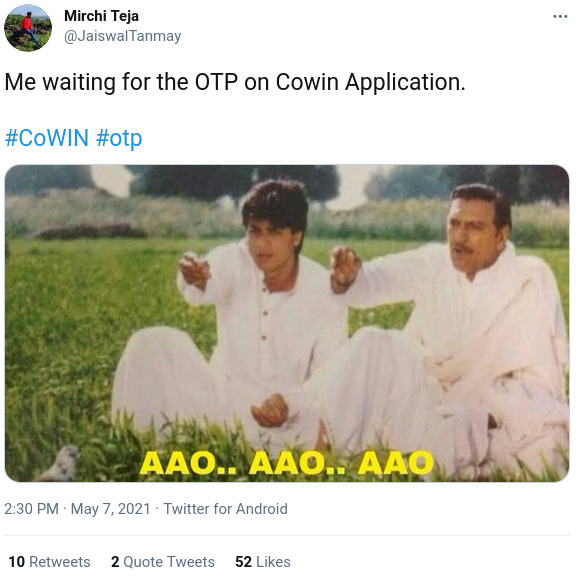

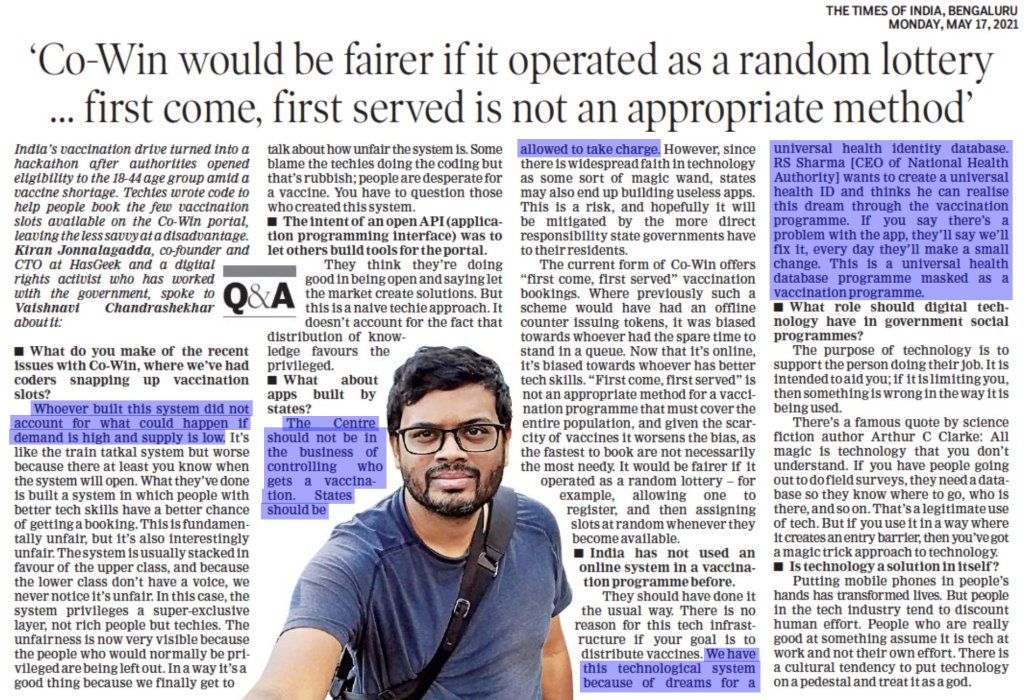
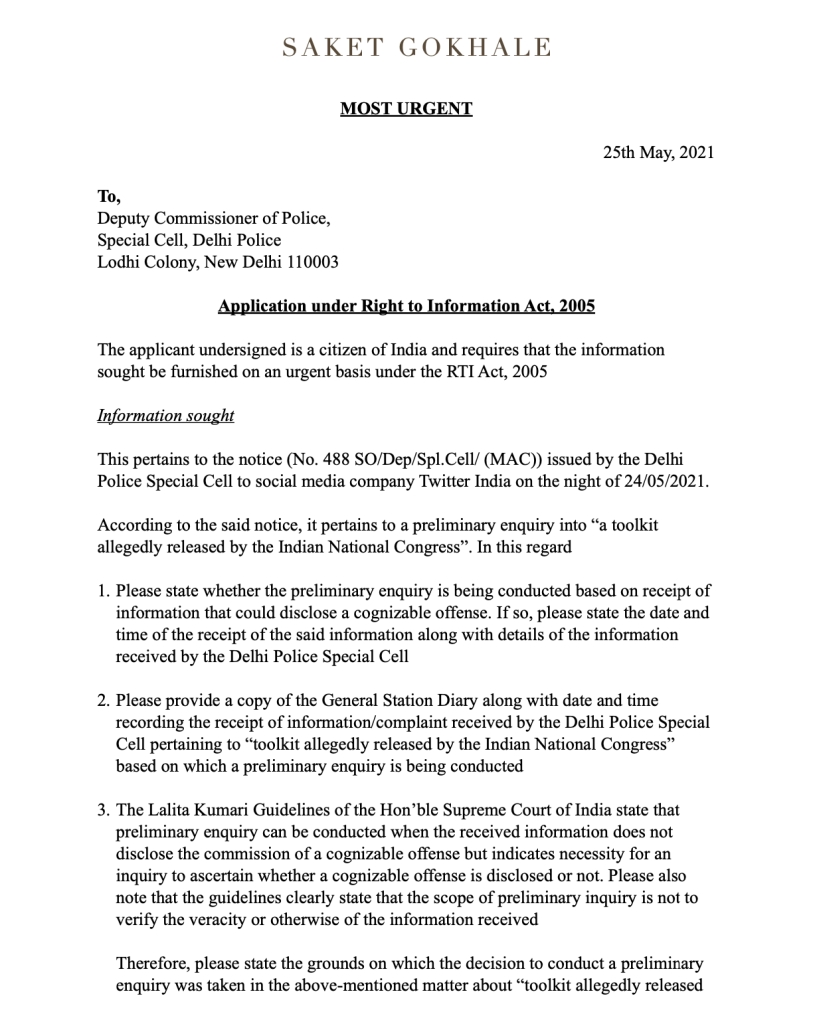

 The Hindu also
 As a person who prefers full access to data in the simplest format, while at the same time having it useful with latest technologies, my quest for trying things out is an ongoing activity.
Earlier, I

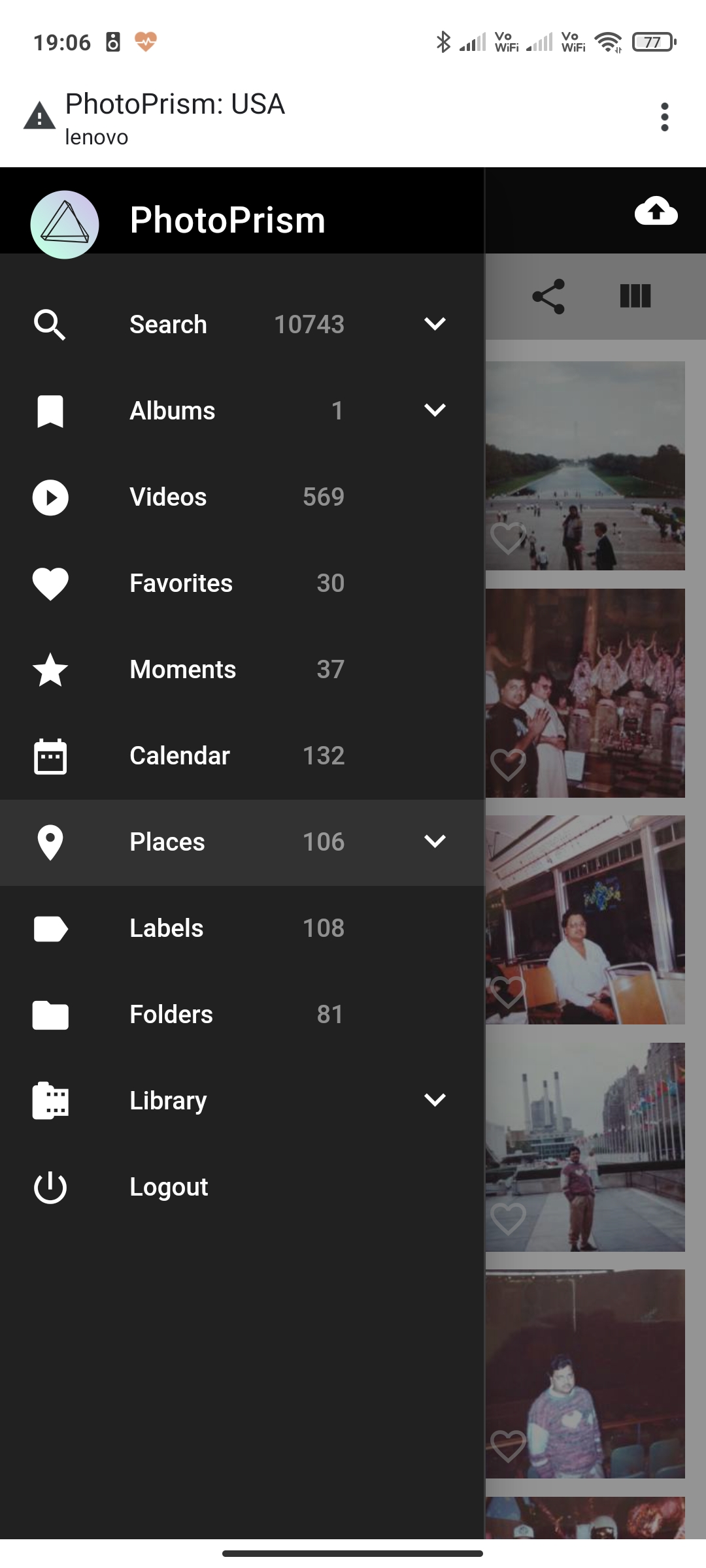


 Prerequisites
You will need the following prerequisites :
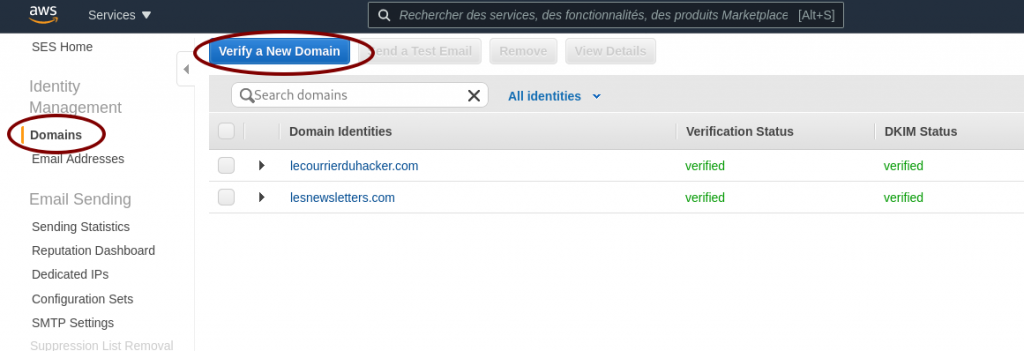 Ask AWS SES to verify a domain
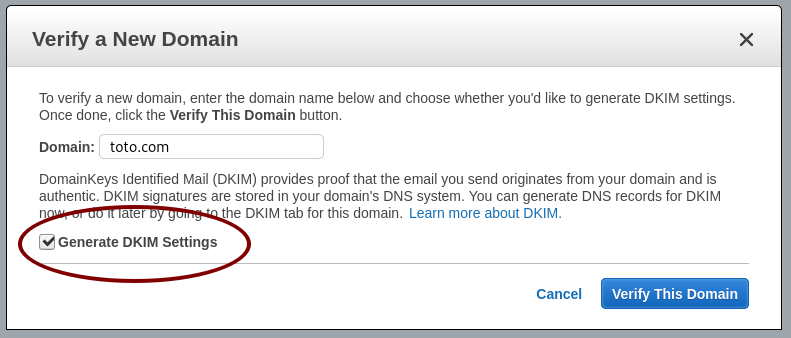 Generate the DKIM settings
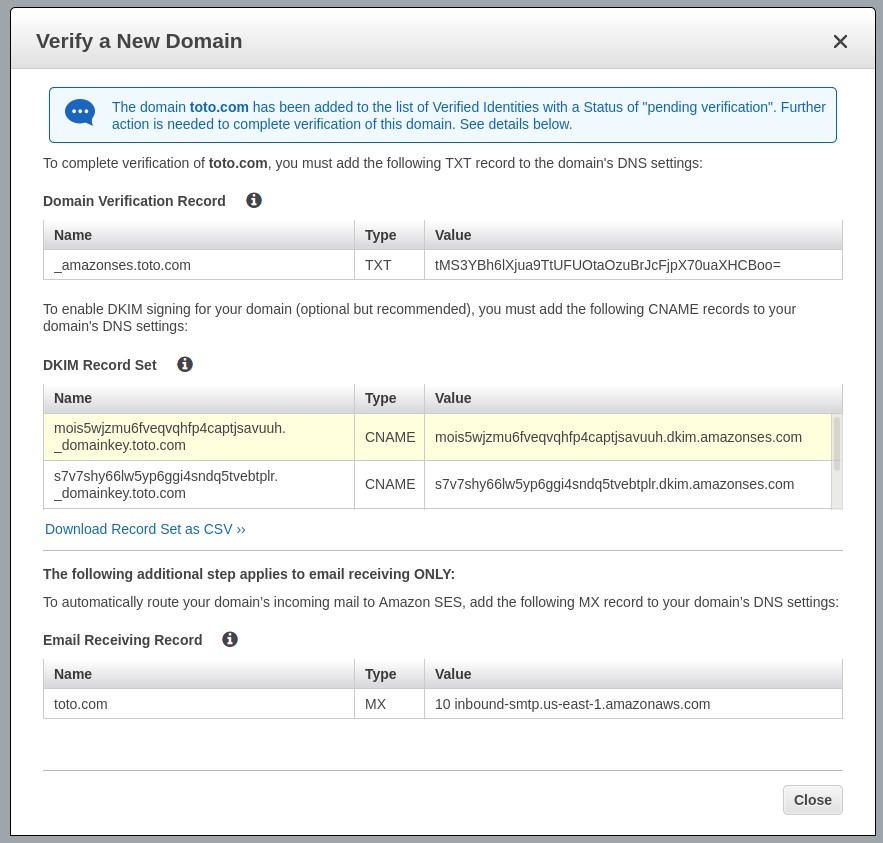
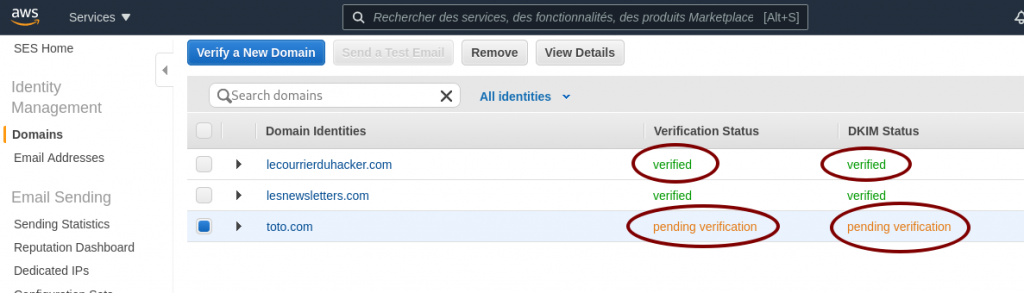 AWS SES pending verification
 AWS SES SMTP settings and credentials
 Mailtrain mailer setup
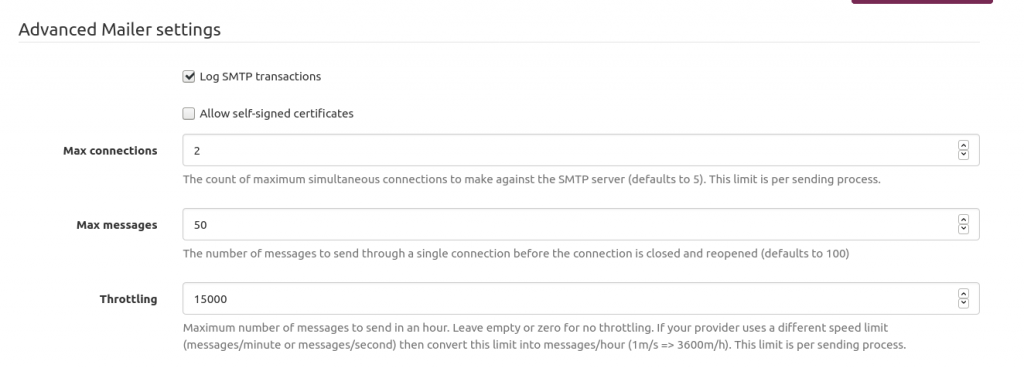 Mailtrain to throttle sending emails to AWS SES
 pomodoro timer in elisp.
I put up my current
configuration
 .
On the global stage, about a decade ago, Stephen J. Dubner and Steven Levitt argued in their book

 Pappu Yadav, President Jan Adhikar Party, Bihar May 11, 2021


 One could think that nowadays having a machine with software raid doing dual boot should be easy, but... my experience showed that it is not that easy.Having a Windows machine do software raid is easy (I still don't understand why it doesn't really work like it should, but that is because I'm used to Linux software raid), and having software raid on Linux is also really easy. But doing so on a BIOS booted machine, on mbr disks (as Windows doesn't allow GPT on BIOS) is quite a pain.The problem is how Windows does all this, with it's dynamic disks. What happens with this is that you get from a partitioning like this:/dev/sda1 * 2048 206847 204800 100M 7 HPFS/NTFS/exFAT /dev/sda2 206848 312580095 312373248 149G 7 HPFS/NTFS/exFAT /dev/sda3 312580096 313165823 585728 286M 83 Linux /dev/sda4 313165824 957698047 644532224 307,3G fd Linux raid autodetect To something like this:/dev/sda1 63 2047 1985 992,5K 42 SFS /dev/sda2 * 2048 206847 204800 100M 42 SFS /dev/sda3 206848 312580095 312373248 149G 42 SFS /dev/sda4 312580096 976769006 664188911 316,7G 42 SFS These are the physical partitions as seen by fdisk, logical partitions are still like before, of course, so there is no problem in accesing them under Linux or windows, but what happens here is that Windows is using the first sectors for its dynamic disks stuff, so... you cannot use those to write grub info there :-(So... the solution I found here was to install Debian's mbr and make it boot grub, but then... where do I store grub's info?, well, to do this I'm using a btrfs /boot which is on partition 3, as btrfs has room for embedding grub's info, and I setup the software raid with ext4 on partition 4, like you can see on my first partition dump. Of course, you can have just btrfs with its own software raid, then you don't need the fourth partition or anything.There are however some caveats on doing all this, what I found was that I had to install grub manually using grub-install --no-floppy on /dev/sda3 and /dev/sdb3, as Debian's grub refused to give me the option to install there, also... several warnings came as a result, but things work ok anyway.One more warning, I did all this on Buster, but it looks like for Grub 2.04 which is included on Bullseye, things have gotten a bit bigger, so at least on my partitions there was no room for it, so I had to leave the old Buster's grub around for now, if anybody has any ideas on how to solve this... they are welcome.


 UK railway map with operators
 Railway map of Japan with private ownership courtesy Wikimedia commons


 A new website containing introductory videos and slide decks is now available for your perusal at