Search Results: "angel"

9 March 2014

Dirk Eddelbuettel: RQuantLib 0.3.12

A new bug-fix / maintenance release RQuantLib 0.3.12 is now on CRAN and in Debian. While adding the plugin feature, I was too optmistic about finding the quantlib-config script. This is now tested more carefully. A few things related to building with Rcpp were updated as well now that Rcpp 0.11.0 is out. Thanks to CRANberries, there is also a diff to the previous release 0.3.11. Full changelog details, examples and more details about this package are at my RQuantLib page.

This post by Dirk Eddelbuettel originated on his Thinking inside the box blog. Please report excessive re-aggregation in third-party for-profit settings.

24 February 2014

John Goerzen: Good all-day light laptop?

I am trying to find a laptop with all-day battery life that s fairly light. Perhaps I am dreaming too big here, but I thought I d toss out my hopes and see if there are any recommendations. I am hoping for: The point is that I want to be able to do general web browsing with a real browser (Firefox), run Thunderbird for mail, hopefully even be able to run a VM or two under KVM or VirtualBox (with the understanding that this will kill battery life). I have been using a Thinkpad T420s for a couple of years now. Its battery life wasn t great even when it was new, and is worse now, of course. An Asus TF700t tablet has great battery life, but the storage system in it is so slow that I rather suspect that the browser cache is hurting, not helping, performance. I am also rather disappointed with the Android system. I can t really develop for it with my usual tools. Enough components are closed that, like Windows or MacOS X, I can t feel like I can truly trust it with sensitive data. Although it has SSH clients available, the SSH server there wants you to pay to use public key auth, and the SSH clients don t work all that well. Git can work, sort of. Battery life is great, and the keyboard is fine, but even flashing a different OS won t fix that terrible performance. I ve had people recommend certain Asus laptops, a Microsoft Surface Pro, or a Macbook Air. Any thoughts?

23 February 2014

Sylvain Le Gall: Release of OASIS 0.4.2

I am happy to announce the release of OASIS v0.4.2. Logo OASIS small OASIS is a tool to help OCaml developers to integrate configure, build and install systems in their projects. It should help to create standard entry points in the source code build system, allowing external tools to analyse projects easily. This tool is freely inspired by Cabal which is the same kind of tool for Haskell. You can find the new release here and the changelog here. More information about OASIS in general on the OASIS website. Here is a quick summary of the important changes: BSD3 and BSD4 are still valid but marked as deprecated. When one of the modules of a library has the name of the library, ocamlbuild tends to just transform this module into a .cmxs. Now, the use of a .mldylib fix that problem and the .cmxs really contains all modules of the library. I have published a quick intermediate version 0.4.1, a few days after the previous release. This was a bug fix related to threads. I also decided to skip the release of last month. I was in the US at this time and didn't have time to work enough on OASIS (christmas vacation and a travel to the US). This month I am back on track. This new version doesn't feature a lot of visible changes. I mostly work on the command line interface code, in order to be able to create external plugins. A first external plugin is almost ready, but need some more polishing before release. This first plugin project is a port of the script that I have used for a long time and that was present in the source code of oasis (oasis-dist.ml). It will be a project on its own and have a different release cycle. The point of this plugin is to create .tar.gz out of an OASIS enabled project. I also must admit that I am very happy to see contributors sending me pull-request through GitHub. It helps me a lot and I also realize that the learning curve to enter OASIS code is steep. This last point is something I will try to improve.

13 February 2014

John Goerzen: Backing up every few minutes with simplesnap

I ve written a lot lately about ZFS, and one of its very nice features is the ability to make snapshots that are lightweight, space-efficient, and don t hurt performance (unlike, say, LVM snapshots). ZFS also has zfs send and zfs receive commands that can send the content of the snapshot, or a delta between two snapshots, as a data stream similar in concept to an amped-up tar file. These can be used to, for instance, very efficiently send backups to another machine. Rather than having to stat() every single file on a filesystem as rsync has to, it sends effectively an intelligent binary delta which is also intelligent about operations such as renames. Since my last search for backup tools, I d been using BackupPC for my personal systems. But since I switched them to ZFS on Linux, I ve been wanting to try something better. There are a lot of tools out there to take ZFS snapshots and send them to another machine, and I summarized them on my wiki. I found zfSnap to work well for taking and rotating snapshots, but I didn t find anything that matched my criteria for sending them across the network. It seemed par for the course for these tools to think nothing of opening up full root access to a machine from others, whereas I would much rather lock it down with command= in authorized_keys. So I wrote my own, called simplesnap. As usual, I wrote extensive documentation for it as well, even though it is very simple to set up and use. So, with BackupPC, a backup of my workstation took almost 8 hours. (Its incremental might take as few as 3 hours) With ZFS snapshots and simplesnap, it takes 25 seconds. 25 seconds! So right now, instead of backing up once a day, I back up once an hour. There s no reason I couldn t back up every 5 minutes, in fact. The data consumes less space, is far faster to manage, and doesn t require a nightly hours-long cleanup process like BackupPC does zfs destroy on a snapshot just takes a few seconds. I use a pair of USB disks for backups, and rotate them to offsite storage periodically. They simply run ZFS atop dm-crypt (for security) and it works quite well even on those slow devices. Although ZFS doesn t do file-level dedup like BackupPC does, and the lz4 compression I ve set ZFS to use is less efficient than the gzip-like compression BackupPC uses, still the backups are more space-efficient. I am not quite sure why, but I suspect it s because there is a lot less metadata to keep track of, and perhaps also because BackupPC has to store a new copy of a file if even a byte changes, whereas ZFS can store just the changed blocks. Incidentally, I ve packaged both zfSnap and simplesnap for Debian and both are waiting in NEW.

10 February 2014

Mario Lang: Neurofunkcasts

I have always loved Drum and Bass. In 2013 I rediscovered my love for Darkstep and Neurofunk, and found that these genres have developed quite a lot in the recent years. Some labels like Black Sun Empire and Evol Intent produce mixes/sets on a regular basis as podcasts these days. This article aggregates some neurofunk podcasts I like a lot, most recent first. Enjoy 33 hours and 57 minutes of fun with dark and energizing beats. Thanks to BSE Contrax and Evol Intent for providing such high quality sets. You can also see the Python source for the program that was used to generate this page.

8 February 2014

John Goerzen: Migrated from Hetzner to OVH hosting

Since August 2011, my sites such as complete.org have been running on a Xen-backed virtual private server (VPS) at Hetzner Online, based in Germany. I had what they called their VQ19 package, which included 2GB RAM, 80GB HDD, 100Mb NIC and 4TB transfer. Unlike many other VPS hosts, I never had performance problems. However, I did sometimes have hardware problems with the host, and it could take hours to resolve. Their tech support only works business hours German time, which was also a problem. Meanwhile, OVH, a large European hosting company, recently opened a datacenter in Canada. Although they no longer offer their value-line Kimsufi dedicated servers there starting at $11.50/mo they do offer their midrange SoYouStart servers there. $50/mo gets a person a 4-core 3.2GHz Xeon server with 32GB RAM, 2x2TB SATA HDD, 200Mbps bandwidth. Not bad at all! The Kimsufi options are still good for lower-end needs as well. I signed up for one of the SoYouStart servers. I ve been pleased with my choice to migrate, and at the possibilities that having hardware like that at my disposal open up, but it is not without its downside. The primary downside is lack of any kind of KVM console. If the server doesn t boot, I can t see the Grub error message (or whatever) behind it. They do provide hardware support and automatic technician dispatching when the server isn t pingable, but they state they have no KVM access at all. They support many OS flavors, and have a premade image for them, but there is no using a custom ISO to install; if you want ZFS on Linux, for instance, you can t very easily build it into root. My server was promised within 72 hours, but delivered much quicker: within about 1. I had two times they said they had to replace a motherboard within the first day; once they did it in 30 minutes, and the other took them 2.5 hours for some reason. They do have phone support, which answers almost immediately, but the people there are not the people actually in the datacenter. It was frustrating with a server down for hours and nobody really commenting on what was going on. The server performs quite well, and after the initial issues, I ve been happy. I was initially planning an all-ZFS installation. SoYouStart does offer a rescue environment, but it doesn t support ZFS, so I figured I better stick with an ext4 root at least. The default Debian install uses RAID1 on md-raid, with a 20GB root partition and the rest of the 2TB drive in /home, and then a swap partition on each drive (mysteriously NOT in the RAID!) So I broke the mirror on /home and converted those into the two legs of a mirrored vdev for a zpool. I run all of the real work inside KVM VMs, so that should minimize the number of times I have to do anything to the root filesystem that could cause trouble. SoYouStart includes 100GB of space on a separate FTP server for backup purposes. I have scripts that upload nightly tarballs of the root filesystem, plus full zfs send streams of everything else. Every hour, it uploads an incremental zfs send stream as well. This all works quite nicely; even if the machine is a complete loss, I d never lose more than an hour s work, and could restore it completely from a rescue environment. Very nice! I ll write more in a few days about the ZFS setup I m using, and some KVM discoveries as well.

7 February 2014

John Goerzen: VirtFS isn t quite ready

Despite claims to the contrary [PDF], VirtFS the 9P-based virtio KVM/QEMU layer designed to pass through a host s filesystem to the guest is quite slow. I have yet to get it to perform at even 1/10 the speed of the virtual block device (VBD). That s unfortunate, because in theory it should be significantly faster. At this rate, I suspect even NFS will be significantly faster. Beyond that, it seems impossible to use VirtFS as the root filesystem in a VM, at least with Debian; initramfs-tools doesn t know how to build an initrd in that situation, and the support is just not there. It would make a great combination with btrfs or zfs, but unfortunately looks to be just not ready yet.

6 February 2014

John Goerzen: How to fix fstrim: Operation not supported under KVM?

Maybe someone out there will have some ideas. I have a KVM host running wheezy, with wheezy-backports versions of libvirt and qemu. I have defined a guest, properly set discard=unmap in the domain XML file for it, verified that s being passed to the guest, but TRIM/DISCARD is just not working. Mounting the ext4 filesystem with discard has no effect, and fstrim / always reports: fstrim: /: FITRIM ioctl failed: Operation not supported Every single time. I ve tried with the virtio, IDE, and SCSI (both default and virtio-scsi) backend drivers. The guest is also running wheezy (i386 version; the host is amd64) and I ve tried the latest 3.12 backported kernel for it. No dice. If I shut down the VM and mount the filesystem on the host, fstrim works fine. Everything says this should work. But it doesn t. Any ideas?

3 February 2014

Dirk Eddelbuettel: Rcpp 0.11.0

A new major release 0.11.0 of Rcpp is now on the CRAN network for GNU R and binaries for Debian have been uploaded as well. Before you read on, please note that this release will most likely require a reinstallation of all your packages using Rcpp as it now works without a user-facing shared library. The biggest change in this version is that it is now effectively headers-only. Before you wonder, there is still compiled code provided by Rcpp for use by packages. But this uses the function registration mechanism of GNU R instead via instantiation at package startup. This does make package building easier, will remove the need to query GNU R for the Rcpp library file in src/Makevars when compiling, and should generally avoid building issues such as the dreaded fails on paths with spaces still annoying users of a certain OS. There are a number of other fixes, upgrades and other extensions detailed in NEWS file extract below, in the ChangeLog file in the package and on the Rcpp Changelog page as well as in a release announcement I'll post later.
Changes in Rcpp version 0.11.0 (2014-02-02)
  • Changes in Rcpp API:
    • Functions provided/used by Rcpp are now registered with R and instantiated by client package alleviating the need for explicit linking against libRcpp which is therefore no longer created.
    • Updated the Rcpp.package.skeleton() function accordingly.
    • New class StretchyList for pair lists with fast addition of elements at the front and back. This abstracts the 3 functions NewList, GrowList and Insert used in various packages and in parsers in R.
    • The function dnt, pnt, qnt sugar functions were incorrectly expanding to the no-degree-of-freedoms variant.
    • Unit tests for pnt were added.
    • The sugar table function did not handle NAs and NaNs properly for numeric vectors. Fixed and tests added.
    • The internal coercion mechanism mapping numerics to strings has been updated to better match R (specifically with Inf, -Inf, and NaN.)
    • Applied two bug fixes to Vector sort() and RObject definition spotted and corrected by Kevin Ushey
    • New checkUserInterrupt() function that provides a C++ friendly implementation of R_CheckUserInterrupt.
  • Changes in Rcpp attributes:
    • Embedded R code chunks in sourceCpp are now executed within the working directory of the C++ source file.
    • Embedded R code chunks in sourceCpp can now be disabled.
  • Changes in Rcpp documentation:
    • The Rcpp-FAQ and Rcpp-package vignettes have been updated and expanded.
    • Vignettes are now typeset with grey background for code boxes.
    • The bibtex reference file has been update to reflexct current package versions.
  • Changes in Rcpp unit tests:
    • The file tests/doRUnit.R was rewritten following the pattern deployed in RProtoBuf which is due to Murray Stokely
    • The function test() was rewritten; it provides an easy entry point to running unit tests of the installed package
Thanks to CRANberries, you can also look at a diff to the previous release 0.10.6. As always, even fuller details are on the Rcpp Changelog page and the Rcpp page which also leads to the downloads, the browseable doxygen docs and zip files of doxygen output for the standard formats. A local directory has source and documentation too. Questions, comments etc should go to the rcpp-devel mailing list off the R-Forge page

This post by Dirk Eddelbuettel originated on his Thinking inside the box blog. Please report excessive re-aggregation in third-party for-profit settings.

28 January 2014

Andrea Colangelo: The (brand new) Debian 3D-Printing Team is hiring!

The 3D-printing technology has gained quite a big momentum in recent times. Its use is spreading widely even among hobbyists and many sources report daily several (sometimes weird) examples of its usage. The thing I like most, as a Free Software activist, is that several 3D-printing-related free and open source software are already available and quite good, and some printers are even released as free hardware. Unfortunately, Debian is quite lagged behind with regard to the availability of such software in our archive, especially compared to other distributions who already ship much of it. Hopefully this situation will change drastically thanks to the brand new Debian 3D-Printing team, whose purpose is to make Debian a rocking platform to do some serious 3D-printing. The team is bootstrapping right now, and we are looking for volunteers who are willing to help us. Packagers are greatly welcomed, but also triagers, users and passionate people with some experience in the field are extremely valuable. People willing to join the team can take a look at our (in-progress) wiki page and apply on the team page on Alioth. As with any good packaging team, a mailing list is available to share ideas, feel free to subscribe it, and feel free to join #debian-3dprinting on OFTC if you want to hang out with other team members.

Dirk Eddelbuettel: RQuantLib 0.3.11

A new minor / maintenance release RQuantLib 0.3.11 is now on CRAN and in Debian. Like the RcppClassic upload two days ago and the RcppZiggurat and RcppEigen uploads yesterday, this release was motivated at least in part by an upcoming Rcpp release about which I should have more to day soon. A few things got polished and updated, and we added a plugin which should make use via Rcpp Attribute easier. RQuantLib combines (some of) the quantitative analytics of QuantLib with the R statistical computing environment and language. Thanks to CRANberries, there is also a diff to the previous release 0.3.10. Full changelog details, examples and more details about this package are at my RQuantLib page.

This post by Dirk Eddelbuettel originated on his Thinking inside the box blog. Please report excessive re-aggregation in third-party for-profit settings.

23 January 2014

John Goerzen: Why and how to run ZFS on Linux

I m writing a bit about ZFS these days, and I thought I d write a bit about why I am using it, why it might or might not be interesting for you, and what you might do about it. ZFS Features and Background ZFS is not just a filesystem in the traditional sense, though you can use it that way. It is an integrated storage stack, which can completely replace the need for LVM, md-raid, and even hardware RAID controllers. This permits quite a bit of flexibility and optimization not present when building a stack involving those components. For instance, if a drive in a RAID fails, it needs only rebuild the parts that have actual data stored on them. Let s look at some of the features of ZFS: Although it is often considered a server filesystem, ZFS has been used in plenty of other situations for some time now, with ports to FreeBSD, Linux, and MacOS. I find it particularly useful: The added level of security in having cheap snapshots available is almost worth it by itself. ZFS drawbacks Compared to other Linux filesystems, there are a few drawbacks of ZFS: Converting to ZFS I have written up an extensive HOWTO on converting an existing system to use ZFS. It covers workarounds for all the boot-time bugs I have encountered as well as documenting all steps needed to make it happen. It works quite well. Additional Hints If setting up zvols to be used by VirtualBox or some such system, you might be interested in managing zvol ownership and permissions with udev.

22 January 2014

Erich Schubert: The init wars

The init wars have recently caught a lot of media attention (e.g. heise, prolinux, phoronix). However, one detail that is often overlooked: Debian is debating over the default, while all of them are already supported to a large extend, actually. Most likely, at least two of them will be made mandatory to support IMHO.
The discussion seems to be quite heated, with lots of people trying to evangelize for their preferred system. This actually only highlights that we need to support more than one, as Debian has always been about choice. This may mean some extra work for the debian-installer developers, because choosing the init system at install time (instead of switching later) will be much easier. More often than not, when switching from one init system to another you will have to perform a hard reset.
If you want to learn about the options, please go to the formal discussion page, which does a good job at presenting the positions in a neutral way.
Here is my subjective view of the init systems:
  • SysV init is the current default, and thus deserves to be mentioned first. It is slow, because it is based on a huge series of shell scripts. It can often be fragile, but at the same time it is very transparent. For a UNIX system administrator, SysV init is probably the preferred choice. You only reboot your servers every year anyway.
  • upstart seems to be a typical Canonical project. It solves a great deal of problems, but apparently isn't good enough at it for everybody, and they fail at including anyone in their efforts. Other examples of these fails include Unity and Mir, where they also announced the project as-is, instead of trying to get other supporters on board early (AFAICT). The key problem to widespread upstart acceptance seems to be the Canonical Contributor License Agreement that many would-be contributors are unwilling to accept. The only alternative would be to fork upstart completely, to make it independent of Canonical. (Note that upstart nevertheless is GPL, which is why it can be used by Debian just fine. The CLA only makes getting patches and enhancements included in the official version hard.)
  • systemd is the rising star in the init world. It probably has the best set of features, and it has started to incorporate/replace a number of existing projects such as ConsoleKit. I.e. it not only manages services, but also user sessions. It can be loosely tied to the GNOME project which has started to rely on it more and more (much to the unhappyness of Canonical, who used to be a key player for GNOME; note that officially, GNOME chose to not depend on systemd, yet I see this as the only reliable combination to get a complete GNOME system running, and since "systemd can eventually replace gnome-session" I foresee this tie to become closer). As the main drawback, systemd as is will (apparently) only work with the Linux kernel, whereas Debian has to also support kFreeBSD, NetBSD, Hurd and the OpenSolaris kernels (some aren't officially supported by Debian, but by separate projects).
So my take: I believe the only reasonable default is systemd. It has the most active development community and widest set of features. But as it cannot support all architectures, we need mandatory support for an alternative init system, probably SysV. Getting both working reliably will be a pain, in particular since more and more projects (e.g. GNOME) tie themselves closely to systemd, and would then become Linux-only or require major patches.
I have tried only systemd on a number of machines, and unfortunately I cannot report it as "prime time ready" yet. You do have the occasional upgrade problems and incompatibilities, as it is quite invasive. From screensavers activating during movies to double suspends, to being unable to shutdown my system when logged in (systemd would treat the login manager as separate session, and not being the sole user it would not allow me to shut down), I have seen quite a lot of annoyances happen. This is an obvious consequence of the active development on systemd. This means that we should make the decision early, because we will need a lot of time to resolve all these bugs for the release.
There are more disruptions coming on the way. Nobody seems to have talked about kDBUS yet, the integration of an IPC mechanism like DBUS into the Linux kernel. It IMHO has a good chance of making it into the Linux kernel rather soon, and I wouldn't be surprised if it became mandatory for systemd soon after. Which then implies that only a recent kernel (say, mid-2014) version might be fully supported by systemd soon.
I would also like to see less GNOME influence in systemd. I have pretty much given up on the GNOME community, which is moving into a UI direction that I hate: they seem to only care about tablet and mobile phones for dumb users, and slowly turn GNOME into an android UI; selling black background as major UI improvements. I feel that the key GNOME development community does not care about developers and desktop users like me anymore (but dream of being the next Android), and therefore I have abandoned GNOME and switched to XFCE.
I don't give upstart much of a chance. Of course there are some Debian developers already involved in its development (employed by Canonical), so this will cause some frustration. But so far, upstart is largely an Ubuntu-only solution. And just like Mir, I don't see much future in it; instead I foresee Ubuntu going systemd within a few years, because it will want to get all the latest GNOME features. Ubuntu relies on GNOME, and apparently GNOME already has chosen systemd over upstart (even though this is "officially" denied).
Sticking with SysV is obviously the easiest choice, but it does not make a lot of sense to me technically. It's okay for servers, but more and more desktop applications will start to rely on systemd. For legacy reasons, I would however like to retain good SysV support for at least 5-10 more years.

But what is the real problem? After all, this is a long overdue decision.
  • There is too much advocacy and evangelism, from either side. The CTTE isn't really left alone to do a technical decision, but instead the main factors have become of political nature, unfortunately. You have all kinds of companies (such as Spotify) weigh in on the debate, too.
  • The tone has become quite aggressive and emotional, unfortunately. I can already foresee some comments on this blog post "you are a liar, because GNOME is now spelled Gnome!!1!".
  • Media attention. This upcoming decision has been picked up by various Linux media already, increasing the pressure on everybody.
  • Last but not least, the impact will be major. Debian is one of the largest distributions, last but not least used by Ubuntu and Steam, amongst others. Debian preferring one over the other will be a slap in somebodys face, unfortunately.
So how to solve it? Let the CTTE do their discussions, and stop flooding them with mails trying to influence them. There has been so much influencing going on, it may even backfire. I'm confident they will find a reasonable decision, or they'll decide to poll all the DDs. If you want to influence the outcome provide patches to anything that doesn't yet fully support your init system of choice! I'm sure there are hundreds of packages which do neither have upstart nor systemd support yet (as is, I currently have 27 init.d scripts launched by systemd, for example). IMHO, nothing is more convincing than have things just work, and of course, contributing code. We are in open source development, and the one thing that gets you sympathy in the community is to contribute code to someone elses project. For example, contribute full integrated power-management support into XFCE, if you include power management functionality.
As is, I have apparently 7 packages installed with upstart support, and 25 with systemd support. So either, everybody is crazy about systemd, or they have the better record of getting their scripts accepted upstream. (Note that this straw poll is biased - with systemd, the benefits of not using "legacy" init.d script may just be larger).

John Goerzen: Debian-Live Rescue image with ZFS On Linux; Ditched btrfs

I m a geek. I enjoy playing with different filesystems, version control systems, and, well, for that matter, radios. I have lately started to worry about the risks of silent data corruption, and as such, looked to switch my personal systems to either ZFS or btrfs, both of which offer built-in checksumming of all data and metadata. I initially opted for btrfs, because of its tighter integration into the Linux kernel and ability to shrink an existing btrfs filesystem. However, as I wrote last month, that experiment was not a success. I had too many serious performance regressions and one too many kernel panics and decided it wasn t worth it. And that the SuSE people got it wrong, deeply wrong, when they declared btrfs ready for production. I never lost any data, to its credit. But it simply reduces uptime too much. That left ZFS. Before I build a system, I always want to make sure I can repair it. So I started with the Debian Live rescue image, and added the zfsonlinux.org repository to it, along with some key packages to enable the ZFS kernel modules, GRUB support, and initramfs support. The resulting image is described, and can be downloaded from, my ZFS Rescue Disc wiki page, which also has a link to my source tree on github. In future blog posts in the series, I will describe the process of converting existing Debian installations to use ZFS, of getting them to boot from ZFS, some bugs I encountered along the way, and some surprising performance regressions in ZFS compared to ext4 and btrfs.

21 January 2014

John Goerzen: Married!

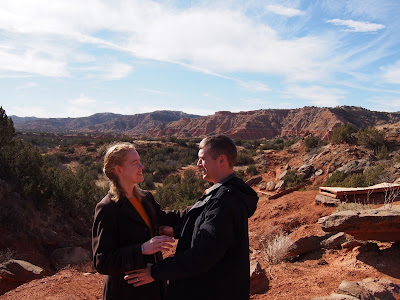
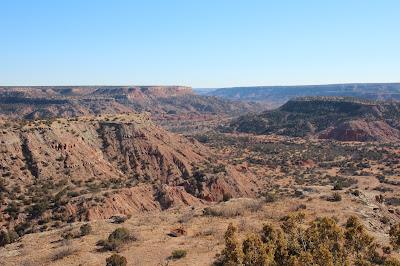
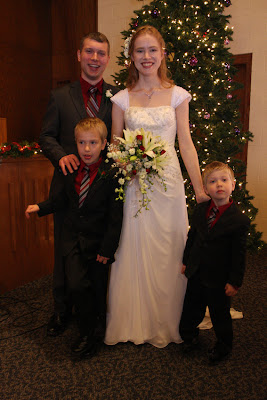
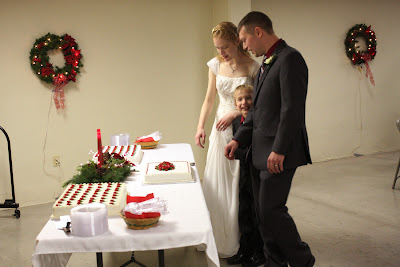
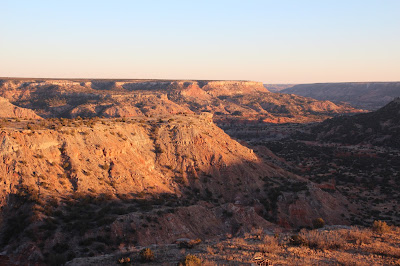
One week before the wedding, to Laura: Mono won t just clear up right away. One week before the wedding, to me: That s going to need stitches. Yes, not long before the wedding, Laura had come down with mononucleosis and I had cut into my finger with a very sharp knife while cutting bread requiring a trip to the emergency room to get stitches. Two days before we got married, instead of moving furniture, I was getting stitches out of my finger. It wasn t the kind of week we had planned. But it was the happiest, most amazing occasion I could have ever imagined. As I wrote last month, I am richly blessed indeed. Our wedding was three days after Christmas. The church was still decorated for Christmas, with the tree in on corner, glittering stars suspended in mid-air on cables from the walls, wreaths and candles in the windows, and it was a joy-filled day. Before the ceremony, we took pictures the only part of the day Jacob and Oliver weren t thrilled with. Nevertheless, we got some fun ones. Laura and I seem to know quite a few pastors between us and not just because Laura is a pastor. My brother officiated with the wedding vows, his wife with scripture and a prayer of blessing, and the church s pastor gave the message. Laura and I wrote in our wedding program, Music has long been a thread running through both our lives. We have enjoyed singing together, playing piano and pennywhistle duets, attending concerts, and even exploring old hymnals. Music is also one of the best ways to have a conversation even a conversation with God. We wrote a page in the program about each of the hymns that were a part of the wedding, and why we picked them. The combined church choirs of my home church and Laura s church sang John Rutter s beautiful arrangement of For the Beauty of the Earth (click here to listen to a different choir). Hearing For the beauty of each hour , For the joy of human love , and Lord of all, to thee we raise this our joyful hymn of praise was perfect for the day. It was with such great happiness that we walked out of the sanctuary, a married couple, to the sound of the congregation singing Joy to the World! Jacob and Oliver were so very excited on our wedding day. They happily explored the church while waiting for things to happen. We had them help us light our unity candle, and they were pleased with that. Jacob loved his suit, which made him look just like me. And they were, of course, delighted with the cake and in the middle of it all. For our honeymoon, we managed to get two weeks of vacation, and spent about half of it at home. We had looked at various options for retreats in the country, but eventually concluded that our house is a retreat in the country, so might as well enjoy it at home. We also went to the Palo Duro Canyon area near Amarillo in the Texas panhandle, staying in a small B&B in Canyon, TX. Palo Duro is the second-largest canyon in North America, and quite colorful year-round. What a beautiful place to go for our honeymoon! By the time we got there, Laura was getting past mono, and we went for hikes in the canyon on two different days hiking a total of 10 miles, including a hike up the side of the canyon. After we got back home, on the last weekday of our honeymoon, we went back to the Flint Hills of Kansas, to some of the same places we had spent our third date. We climbed the windy staircase at the Chase County Courthouse, the oldest courthouse still in use in Kansas. And peered out its famous oval window. We found the last remnant of the old ghost town of Elk, ate at the same restaurant we had that day. It brought back wonderful memories, and it was a good day in itself. Because even though it was a gold, drizzly, overcast day in January, this time, we were married. And this year, Thanksgiving is all year.






7 January 2014

Vincent Sanders: Healthy discontent is the prelude to progress

Back in the mists of Internet time (2002) when spirits were brave, the stakes were high, men were real men, women were real women and small furry creatures from Alpha Centauri were real small furry creatures from Alpha Centauri there were few hosting options for a budding open source project.

Despite the meteoric rise of many dot com companies in the early noughties a project either had to go it alone by running everything themselves or pick from a small selection of companies that had not yet worked out how to turn free hosting into money.

One such company, arguably the first, was VA Research with their SourceForge system. Many projects used their platform including a small niche web browser called NetSurf. For years the service was great, there were rough edges but nothing awful.

Netsurf issue tracker in the new SourceForge interface
Over time the NetSurf projects requirements grew beyond what SourceForge could provide and service after service was migrated away eventually all that was left was the bug tracking system. This remained the state of affairs until mid 2013 when SourceForge forced a migration to their new platform which made them unsuitable for the projects use case.

Aside from the issue trackers questionable user interface SourceForge had started aggressively placing advertising throughout their platform. Some of the placements so inadvisable that projects started taking the decision to leave.

While I appreciate that SourceForge had to make money to provide a service they appear to have sown discontent within a large part of their user base without understanding that there are a number of alternatives solutions with a much less onerous funding model.

NetSurf used this as an opportunity to move the remaining issue tracking service to our own infrastructure. Rob Kendrick proceeded to evaluate several solutions and in December 2013 I finally found the time to migrate an XML dump of the old data from SourceForge into MantisBT.

Migrating data from one database into another via incompatible formats took me back to my roots. My early career started with programming tasks moving historical business data from ancient large systems which were about to be scrapped to modern Sparc based systems. Later I would be in a role where financial data needed to be retrieved from obsolete proprietary systems and moved into databases on x86 servers.

My experience in this field was not really stretched as it turns out that modern systems can process a few tens of megabytes in seconds rather than the days for a run in my youth! So some ugly perl scripts and a few hours later I had a nice shiny SQL database filled with NetSurfs bugs and MantisBT instance configured to use them.

NetSurf MantisBT instance showing most recently updated open bugs
Then came the hard bit, triaging all the open bugs, fixing up all the bugs submitted as an anonymous user but with email addresses in, removing duplicates and checking every open bug was still valid took almost two weeks of tedious drudge.

I set up an initial bug workflow within the system that the project developers are still fine tuning to better suit their needs but overall Mantis is proving a very flexible tool. The main deficiencies center around configuration for the projects useage, especially removing unused fields from filters and making the workflow more intuitive..

The resulting system is now getting bug reports submitted again where the sourceforge system had had three in the six months since the forced migration.

The issue tracker is once more a useful tool for the developers allowing us to focus on areas actually causing problems for our users and allowing us to see progress we are making fixing issues.

Overall this was a successful migration and provides a platform the NetSurf project can control where we can offer guarantees to our users about their personal information usage and having a clean rapid interface with no advertisements.

31 December 2013

Paul Tagliamonte: Hy 0.9.12 released

Good morning all my hungover friends. New Hy release - sounds like the perfect thing to do while you re waiting for your headaches to go away. Here s a short-list of the changes (from NEWS) - enjoy!
Changes from Hy 0.9.11
   tl;dr:
    0.9.12 comes with some massive changes,
    We finally took the time to implement gensym, as well as a few
    other bits that help macro writing. Check the changelog for
    what exactly was added. 
    
    The biggest feature, Reader Macros, landed later
    in the cycle, but were big enough to warrent a release on it's
    own. A huge thanks goes to Foxboron for implementing them
    and a massive hug goes out to olasd for providing ongoing
    reviews during the development.
    
    Welcome to the new Hy contributors, Henrique Carvalho Alves,
    Kevin Zita and Kenan B l kba . Thanks for your work so far,
    folks!
    
    Hope y'all enjoy the finest that 2013 has to offer,
      - Hy Society
    * Special thanks goes to Willyfrog, Foxboron and theanalyst for writing
      0.9.12's NEWS. Thanks, y'all! (PT)
    [ Language Changes ]
    * Translate foo? -> is_foo, for better Python interop. (PT)
    * Reader Macros!
    * Operators + and * now can work without arguments
    * Define kwapply as a macro
    * Added apply as a function
    * Instant symbol generation with gensym
    * Allow macros to return None
    * Add a method for casting into byte string or unicode depending on python version
    * flatten function added to language
    * Add a method for casting into byte string or unicode depending on python version
    * Added type coercing to the right integer for the platform
    [ Misc. Fixes ]
    * Added information about core team members
    * Documentation fixed and extended
    * Add astor to install_requires to fix hy --spy failing on hy 0.9.11.
    * Convert stdout and stderr to UTF-8 properly in the run_cmd helper.
    * Update requirements.txt and setup.py to use rply upstream.
    * tryhy link added in documentation and README
    * Command line options documented
    * Adding support for coverage tests at coveralls.io
    * Added info about tox, so people can use it prior to a PR
    * Added the start of hacking rules
    * Halting Problem removed from example as it was nonfree
    * Fixed PyPI is now behind a CDN. The --use-mirrors option is deprecated.
    * Badges for pypi version and downloads.
    [ Syntax Fixes ]
    * get allows multiple arguments
    [ Bug Fixes ]
    *  OSX: Fixes for readline Repl problem which caused HyREPL not allowing 'b'
    * Fix REPL completions on OSX
    *  Make HyObject.replace more resilient to prevent compiler breakage.
    [ Contrib changes ]
    * Anaphoric macros added to contrib
    * Modified eg/twisted to follow the newer hy syntax
    * Added (experimental) profile module

27 December 2013

John Goerzen: Richly Blessed

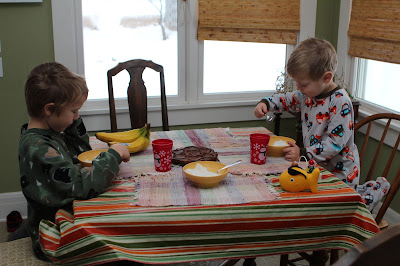
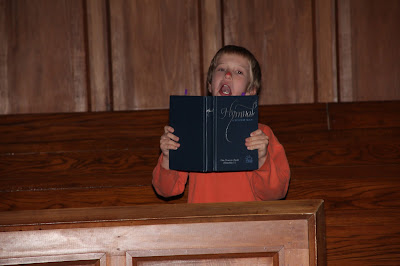
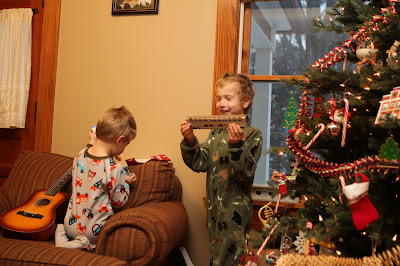
It s wedding week! Wedding week! Wedding week! Wedding week! Oh, also Christmas. Oh dad, it s wedding week! I can t believe it! It s finally here! Wedding week! Jacob, age 7, Sunday Oh dad, this is the best Christmas EVER! Jacob, Wednesday Dad, is the wedding TODAY? Oliver, age 4, every morning this week This has certainly been a Christmas like no other. I have never known something to upstage Christmas for Jacob, but apparently a wedding can! Laura and I got to celebrate our first Christmas together this year together, of course, with the boys. We enjoyed a wonderful day in the middle of a busy week, filled with play, family togetherness, warmth, and happiness. At one point, while I was helping the boys with their new model train components, Laura was enjoying playing Christmas tunes on the piano. Every time she d reach the end, Jacob paused, and said, That was awesome! , beating me to it. That s a few days before Christmas Jacob and Oliver demanding snow ice cream, and of course who am I to refuse? Cousins opening presents After his school Christmas program, Jacob has enjoyed singing. Here he is after the Christmas Eve program, where he excitedly ran up into the choir loft, picked up a hymnal, and pretended to sing. And, of course, opening of presents at home. Sometimes I think about how I didn t know life could get this good. Soon Laura and I will be married, and it will be even better. Truly we have been richly blessed.

18 December 2013

Daniel Kahn Gillmor: automatically have uscan check signatures

If you maintain software in debian, one of your regular maintenance tasks is checking for new upstream versions, reviewing them, and preparing them for debian if appropriate. One of those steps is often to verify the cryptographic signature on the upstream source archive. At the moment, most maintainers do the cryptographic check manually, or maybe even don't bother to do it at all. For the common case of detached OpenPGP signatures, though, uscan can now do it for you automatically (as of devscripts version 2.13.3). You just need to tell uscan what keys you expect upstream to be signing with, and how to find the detached signature. So, for example, Damien Miller recently announced his new key that he will be using to sign OpenSSH releases (his new key has OpenPGP fingerprint 59C2 118E D206 D927 E667 EBE3 D3E5 F56B 6D92 0D30 -- you can verify it has been cross-signed by his older key, and his older key has been revoked with the indication that it was superceded by this one). Having done a reasonable verification of Damien's key, if i was the openssh package maintainer, i'd do the following:
cd ~/src/openssh/
gpg --export '59C2 118E D206 D927 E667  EBE3 D3E5 F56B 6D92 0D30' >> debian/upstream-signing-key.pgp
And then upon noticing that the signature files are named with a simple .asc suffix on the upstream distribution site, we can use the following pgpsigurlmangle option in debian/watch:
version=3
opts=pgpsigurlmangle=s/$/.asc/ ftp://ftp.openbsd.org/pub/OpenBSD/OpenSSH/portable/openssh-(.*)\.tar\.gz 
I've filed this specific example as debian bug #732441. If you notice a package with upstream signatures that aren't currently being checked by uscan (or if you are upstream, you sign your packages, and you want your debian maintainer to verify them), you can file similar bugs. Or, if you maintain a package for debian, you can just fix up your package so that this check is there on the next upload. If you maintain a package whose upstream doesn't sign their releases, ask them why not -- wouldn't upstream prefer that their downstream users can verify that each release wasn't tampered with? Of course, none of these checks take the the place of the real work of a debian package maintainer: reviewing the code and the changelogs, thinking about what changes have happened, and how they fit into the broader distribution. But it helps to automate one of the basic safeguards we should all be using. Let's eliminate the possibility that the file was tampered with at the upstream distribution mirror or while in transit over the network. That way, the maintainer's time and energy can be spent where they're more needed.Tags: crypto, devscripts, openpgp, package maintenance, signatures, uscan

13 December 2013

Sylvain Le Gall: Release of OASIS 0.4.0

I am happy to announce that OASIS v0.4.0 has just been released. Logo OASIS small OASIS is a tool to help OCaml developers to integrate configure, build and install systems in their projects. It should help to create standard entry points in the source code build system, allowing external tools to analyse projects easily. This tool is freely inspired by Cabal which is the same kind of tool for Haskell. You can find the new release here and the changelog here. More information about OASIS in general on the OASIS website. I have recently resumed my work on OASIS and this will be hopefully the new version that will lead to quicker iteration in the development of OASIS. The development process was slowdown by the fact, that I feared introducing new fields in _oasis or regression. This was a pain and I decided to change my development model. Features The most important step is the introduction of AlphaFeatures and BetaFeatures fields. They allow to introduce pieces of code that will only be activated if certain features are listed in those fields. It should help to be always ready to release. The features also cover other aspect like flag_tests and flag_docs which has been introduced in OASIS v0.3.0. In fact the features API is now used to introduce all enhancement while keeping backward compatibility with regard to OASISFormat. Rather than defining a ~since_version:0.3 for fields we use a feature that handle the maturity level of the feature. When I feel a specific feature is ready to ship, I just change the InDev Alpha to InDev Beta and then SinceVersion 0.4. On the long term, when we won't support anymore a version of OASIS that existed before the SinceVersion, the feature will always be true and I will fully integrate it in the code. The only constraint around features is: if you use AlphaFeatures or BetaFeatures field, you must use the latest OASISFormat... Features section in the manual. Example of features available: Automate Another topic is automation of testing releases. For OASIS v0.3.0, I ran tests on all platforms manually, late in the development of v0.3.0 and it was painful to fix. So I have decided to setup a Jenkins instance that automate testing on Linux. On the long term, I plan to also setup a Mac OS X builder and start looking at Windows as well. This should help me catch errors early and be able to fix them quickly. However, for v0.4.0 I have decided to just release what I have and which has mainly be tested on Linux. The point here is to quickly release and iterate, rather than wait for perfection. Hopefully end user testing will allow to quickly discover new bugs. Time boxed release In the coming months, I will try to do time boxed releases. I will try to release version of OASIS every 15th of the month. The point here is to try to iterate faster and avoid long delay between release. See you in 1 month for the next release.

Next.

Previous.