Search Results: "anbe"

29 November 2014

Dirk Eddelbuettel: RcppArmadillo 0.4.550.1.0

A week ago, Conrad provided another minor release 4.550.0 of Armadillo which has since received one minor correction in 4.550.1.0. As before, I had created a GitHub-only pre-release of his pre-release which was tested against the almost one hundred CRAN dependents of our RcppArmadillo package. This passed fine as usual, and results are as always in the rcpp-logs repository. Processing and acceptance at the CRAN took a little longer as around the same time a fresh failure in unit tests had become apparent on an as-of-yet unannounced new architecture (!!) also tested at CRAN. The R-devel release has since gotten a new capabilities() test for long double, and we now only run this test (for our rmultinom()) if the test asserts that the given R build has this capability. Phew, so with all that the new version in now on CRAN; Windows binaries have been built and I also uploaded new Debian binaries. Changes are summarized below; our end also includes added support for conversion of Field types takes to short pull request by Romain.
Changes in RcppArmadillo version 0.4.550.1.0 (2014-11-26)
  • Upgraded to Armadillo release Version 4.550.1 ("Singapore Sling Deluxe")
    • added matrix exponential function: expmat()
    • faster .log_p() and .avg_log_p() functions in the gmm_diag class when compiling with OpenMP enabled
    • faster handling of in-place addition/subtraction of expressions with an outer product
    • applied correction to gmm_diag relative to the 4.550 release
  • The Armadillo Field type is now converted in as<> conversions
Courtesy of CRANberries, there is also a diffstat report for the most recent release. As always, more detailed information is on the RcppArmadillo page. Questions, comments etc should go to the rcpp-devel mailing list off the R-Forge page.

This post by Dirk Eddelbuettel originated on his Thinking inside the box blog. Please report excessive re-aggregation in third-party for-profit settings.

18 November 2014

Dirk Eddelbuettel: RcppAnnoy 0.0.3

Hours after the initial blog post announcing the first release of the new package RcppAnnoy, Qiang Kou sent us a very nice pull request adding mmap support in Windows. So a new release with Windows support is on now CRAN, and Windows binaries should be available by this evening as usual. To recap, RcppAnnoy wraps the small, fast, and lightweight C++ template header library Annoy written by Erik Bernhardsson for use at Spotify. RcppAnnoy uses Rcpp Modules to offer the exact same functionality as the Python module wrapped around Annoy. Courtesy of CRANberries, there is also a diffstat report for this release. More detailed information is on the RcppAnnoy page page.

This post by Dirk Eddelbuettel originated on his Thinking inside the box blog. Please report excessive re-aggregation in third-party for-profit settings.

10 November 2014

Dirk Eddelbuettel: BH release 1.54.0-5

A new release of BH, our package providing Boost headers for use by R is now on CRAN. This release was triggered via a request by Ben Goodrich as noted below who asked for Boost Circular Buffer which RStan uses. No other changes were made.
Changes in version 1.54.0-5 (2014-11-09)
  • Added Boost Circular Buffer requested by Ben Goodrich for RStan
Courtesy of CRANberries, there is also a diffstat report for the most recent release Comments and suggestions are welcome via the mailing list or the issue tracker at the GitHubGitHub repo.

This post by Dirk Eddelbuettel originated on his Thinking inside the box blog. Please report excessive re-aggregation in third-party for-profit settings.

7 November 2014

Dirk Eddelbuettel: RcppRedis 0.1.2

A new release of RcppRedis is now on CRAN. It contains additional commands for hashes and sets, all contributed by John Laing and Whit Armstrong.
Changes in version 0.1.2 (2014-11-06)
  • New commands execv, hset, hget, sadd, srem, and smembers contributed by John Laing and Whit Armstrong over several pull requests.
Courtesy of CRANberries, there is also a diffstat report for the most recent release. As always, more detailed information is on the RcppRedis page page.

This post by Dirk Eddelbuettel originated on his Thinking inside the box blog. Please report excessive re-aggregation in third-party for-profit settings.

6 November 2014

Dirk Eddelbuettel: RPushbullet 0.1.1

A minor bugfix release 0.1.1 of the RPushbullet package (interfacing the neat Pushbullet service) landed on CRAN yesterday morning. It cleans up a small issue related to the ability to transfer files between devices via the Pushbullet service where the ability to select a (non-default) target device has now been restored. With that, allow me to borrow one excellent use case of RPushbullet from the blog of Karl Broman: how to use RPushbullet for error notifications from R:
options(error = function()  
    library(RPushbullet)
    pbPost("note", "Error", geterrmessage())
 )
This is very clever: should an error occur, you get immediate notification in browser or on your phone. Left as an exercise for the reader is to combine this with the equally excellent rfoaas package (github cran) to get appropriately colourful error messages... More details about the package are at the RPushbullet webpage and the RPushbullet GitHub repo. Courtesy of CRANberries, there is also a diffstat report for this release.

This post by Dirk Eddelbuettel originated on his Thinking inside the box blog. Please report excessive re-aggregation in third-party for-profit settings.

2 November 2014

Dirk Eddelbuettel: RcppArmadillo 0.4.500.0

A few days ago, Conrad provided another minor release of Armadillo. Once again, I had created a GitHub-only pre-release of his pre-release which was tested against (then) all ninety (!!) CRAN dependents of our RcppArmadillo package, providing a further test for Conrad's code and uploaded RcppArmadillo 0.4.500.0 to CRAN and Debian once his release was finalized. The few changes from his end are summarized below; our end also includes an update / extension to the sample() method provided by Christian Gunning --- and used to great effect in the excellent Rcpp Gallery post by Jonathan Olmsted.
Changes in RcppArmadillo version 0.4.500.0 (2014-10-30)
  • Upgraded to Armadillo release Version 4.500 ("Singapore Sling")
    • faster handling of complex vectors by norm()
    • expanded chol() to optionally specify output matrix as upper or lower triangular
    • better handling of non-finite values when saving matrices as text files
  • The sample functionality has been extended to provide the Walker Alias method (including new unit tests) via a pull request by Christian Gunning
Courtesy of CRANberries, there is also a diffstat report for the most recent release. As always, more detailed information is on the RcppArmadillo page. Questions, comments etc should go to the rcpp-devel mailing list off the R-Forge page.

This post by Dirk Eddelbuettel originated on his Thinking inside the box blog. Please report excessive re-aggregation in third-party for-profit settings.

11 October 2014

Dirk Eddelbuettel: RPushbullet 0.1.0 with a lot more awesome

A new release 0.1.0 of the RPushbullet package (interfacing the neat Pushbullet service) landed on CRAN today. It brings a number of goodies relative to the first release 0.0.2 of a few months ago: There is a whole boat load of more wickedness in the Pushbullet API so if anybody feels compelled to add it, fire off pull requests at GitHub. More details about the package are at the RPushbullet webpage and the RPushbullet GitHub repo. Courtesy of CRANberries, there is also a diffstat report for this release.

This post by Dirk Eddelbuettel originated on his Thinking inside the box blog. Please report excessive re-aggregation in third-party for-profit settings.

30 September 2014

Dirk Eddelbuettel: Rcpp 0.11.3

A new release 0.11.3 of Rcpp is now on the CRAN network for GNU R, and an updated Debian package has been uploaded too. Rcpp has become the most popular way of enhancing GNU R with C++ code. As of today, 273 packages on CRAN depend on Rcpp for making analyses go faster and further. This release brings a fairly large number of continued enhancements, fixes and polishing to Rcpp. These were provided by a total of seven different contributors---which is a new record as well. See below for a detailed list of changes extracted from the NEWS file, but some highlights included in this release are One sore point, however, is that we missed that packages using Rcpp Modules appear to require a rebuild. We are sorry for the inconvenience; this has highlighted a shortcoming in our fairly robust and extensive tests. While we test our packages against all known CRAN dependents, such tests check for the ability to compile and run freshly and not whether previously built packages still run. We intend to augment our testing in this direction to avoid a repeat occurrence of such a misfeature.
Changes in Rcpp version 0.11.3 (2014-09-27)
  • Changes in Rcpp API:
    • The deprecation of RCPP_FUNCTION_* which was announced with release 0.10.5 last year is proceeding as planned, and the file macros/preprocessor_generated.h has been removed.
    • Timer no longer records time between steps, but times from the origin. It also gains a get_timers(int) methods that creates a vector of Timer that have the same origin. This is modelled on the Rcpp11 implementation and is more useful for situations where we use timers in several threads. Timer also gains a constructor taking a nanotime_t to use as its origin, and a origin method. This can be useful for situations where the number of threads is not known in advance but we still want to track what goes on in each thread.
    • A cast to bool was removed in the vector proxy code as inconsistent behaviour between clang and g++ compilations was noticed.
    • A missing update(SEXP) method was added thanks to pull request by Omar Andres Zapata Mesa.
    • A proxy for DimNames was added.
    • A no_init option was added for Matrices and Vectors.
    • The InternalFunction class was updated to work with std::function (provided a suitable C++11 compiler is available) via a pull request by Christian Authmann.
    • A new_env() function was added to Environment.h
    • The return value of range eraser for Vectors was fixed in a pull request by Yixuan Qiu.
  • Changes in Rcpp Sugar:
    • In ifelse(), the returned NA type was corrected for operator[].
  • Changes in Rcpp Attributes:
    • Include LinkingTo in DESCRIPTION fields scanned to confirm that C++ dependencies are referenced by package.
    • Add dryRun parameter to sourceCpp.
    • Corrected issue with relative path and R chunk use for sourceCpp.
  • Changes in Rcpp Documentation:
    • The Rcpp-FAQ vignette was updated with respect to OS X issues.
    • A new entry in the Rcpp-FAQ clarifies the use of licenses.
    • Vignettes build results no longer copied to /tmp to please CRAN.
    • The Description in DESCRIPTION has been shortened.
  • Changes in Rcpp support functions:
    • The Rcpp.package.skeleton() function will now use pkgKitten package, if available, to create a package which passes R CMD check without warnings. A new Suggests: has been added for pkgKitten.
    • The modules=TRUE case for Rcpp.package.skeleton() has been improved and now runs without complaints from R CMD check as well.
  • Changes in Rcpp unit test functions:
    • Functions from the RUnit package are now prefixed with RUnit::
    • The testRcppModule and testRcppClass sample packages now pass R CMD check --as-cran cleanly with NOTES or WARNINGS
Thanks to CRANberries, you can also look at a diff to the previous release As always, even fuller details are on the Rcpp Changelog page and the Rcpp page which also leads to the downloads page, the browseable doxygen docs and zip files of doxygen output for the standard formats. A local directory has source and documentation too. Questions, comments etc should go to the rcpp-devel mailing list off the R-Forge page.

This post by Dirk Eddelbuettel originated on his Thinking inside the box blog. Please report excessive re-aggregation in third-party for-profit settings.

23 September 2014

Dirk Eddelbuettel: RcppArmadillo 0.4.450.1.0

Continuing with his standard pace of approximately one new version per month, Conrad released a new minor release of Armadillo a few days ago. As before, I had created a GitHub-only pre-release which was tested against all eighty-seven (!!) CRAN dependents of our RcppArmadillo package and then uploaded RcppArmadillo 0.4.450.0 to CRAN. The CRAN maintainers pointed out that under the R-development release, a NOTE was issued concerning the C-library's rand() call. This is a pretty new NOTE, but it means using the (sometimes poor quality) rand() generator is now a no-no. Now, Armadillo being as robustly engineered as it is offers a new random number generator based on C++11 as well as a fallback generator for those unfortunate enough to live with an older C++98 compiler. (I would like to note here that I find Conrad's continued support for both C++11, offering very useful modern language idioms, as well as the fallback code for continued deployment and usage by those constrained in their choice of compilers rather exemplary --- because contrary to what some people may claim, it is not a matter of one or the other. C++ always was, and continues to be, a multi-paradigm language which can be supported easily by several standard. But I digress...) In any event, one cannot argue with CRAN about their prescription of a C++98 compiler. So Conrad and I discussed this over email, and came up with a scheme where a user-package (such as RcppArmadillo) can provide an alternate generator which Armadillo then deploys. I implemented a first solution which was then altered / reflected by Conrad in a revised version 4.450.1 of Armadillo. I packaged, and now uploaded, that version as RcppArmadillo 0.4.450.1.0 to both CRAN and into Debian. Besides the RNG change already discussed, this release brings a few smaller changes from the Armadillo side. These are detailed below in the extract from the NEWS file. On the RcppArmadillo side, we now have support for pkgKitten which is both very exciting and likely the topic of another blog post with an example of creating an RcppArmadillo package that purrs. In the process, I overhauled and polished how new packages are created by RcppArmadillo.package.skeleton(). An upcoming blog post may provide an example.
Changes in RcppArmadillo version 0.4.450.1.0 (2014-09-21)
  • Upgraded to Armadillo release Version 4.450.1 (Spring Hill Fort)
    • faster handling of matrix transposes within compound expressions
    • expanded symmatu()/symmatl() to optionally disable taking the complex conjugate of elements
    • expanded sort_index() to handle complex vectors
    • expanded the gmm_diag class with functions to generate random samples
  • A new random-number implementation for Armadillo uses the RNG from R as a fallback (when C++11 is not selected so the C++11-based RNG is unavailable) which avoids using the older C++98-based std::rand
  • The RcppArmadillo.package.skeleton() function was updated to only set an "Imports:" for Rcpp, but not RcppArmadillo which (as a template library) needs only LinkingTo:
  • The RcppArmadillo.package.skeleton() function will now prefer pkgKitten::kitten() over package.skeleton() in order to create a working package which passes R CMD check.
  • The pkgKitten package is now a Suggests:
  • A manual page was added to provide documentation for the functions provided by the skeleton package.
  • A small update was made to the package manual page.
Courtesy of CRANberries, there is also a diffstat report for the most recent release. As always, more detailed information is on the RcppArmadillo page. Questions, comments etc should go to the rcpp-devel mailing list off the R-Forge page.

This post by Dirk Eddelbuettel originated on his Thinking inside the box blog. Please report excessive re-aggregation in third-party for-profit settings.

11 September 2014

Dirk Eddelbuettel: pkgKitten 0.1.2: Still creating R Packages that purr

A brown bag release 0.1.2 of pkgKitten is now on CRAN, following yesterday's 0.1.1 upload Next time I'll try to remember that when I have parameters name and path, it won't work so well to call them as path and name ...
Changes in version 0.1.2 (2014-09-11)
  • Brown-bag fix of calling the new helper function with then correct order of arguments.
More details about the package are at the pkgKitten webpage and the pkgKitten GitHub repo. Courtesy of CRANberries, there is also a diffstat report for this release

This post by Dirk Eddelbuettel originated on his Thinking inside the box blog. Please report excessive re-aggregation in third-party for-profit settings.

Dirk Eddelbuettel: pkgKitten 0.1.1: Still creating R Packages that purr

A maintenance release 0.1.1 of pkgKitten is now on CRAN. It has only one small change: the function playWithPerPackageHelpPage() was factored out of the main function kitten() as I happened to be needing something just like playWithPerPackageHelpPage() to make packages created by the Rcpp function Rcpp.package.skeleton() a little nicer. We also added a NEWS.Rd file which restates major release features. As it is so short, we include it in its entirety.
Changes in version 0.1.1 (2014-09-09)
  • New (exported) function playWithPerPackageHelpPage() which lets other packages create a non-complaint-generating package help page
Changes in version 0.1.0 (2014-06-13)
  • Initial public version and CRAN upload
More details about the package are at the pkgKitten webpage and the pkgKitten GitHub repo. Courtesy of CRANberries, there is also a diffstat report for this release

This post by Dirk Eddelbuettel originated on his Thinking inside the box blog. Please report excessive re-aggregation in third-party for-profit settings.

31 August 2014

Russell Coker: Links August 2014

Matt Palmer wrote a good overview of DNSSEC [1]. Sociological Images has an interesting article making the case for phasing out the US $0.01 coin [2]. The Australian $0.01 and $0.02 coins were worth much more when they were phased out. Multiplicity is a board game that s designed to address some of the failings of SimCity type games [3]. I haven t played it yet but the page describing it is interesting. Carlos Buento s article about the Mirrortocracy has some interesting insights into the flawed hiring culture of Silicon Valley [4]. Adam Bryant wrote an interesting article for NY Times about Google s experiments with big data and hiring [5]. Among other things it seems that grades and test results have no correlation with job performance. Jennifer Chesters from the University of Canberra wrote an insightful article about the results of Australian private schools [6]. Her research indicates that kids who go to private schools are more likely to complete year 12 and university but they don t end up earning more. Kiwix is an offline Wikipedia reader for Android, needs 9.5G of storage space for the database [7]. Melanie Poole wrote an informative article for Mamamia about the evil World Congress of Families and their connections to the Australian government [8]. The BBC has a great interactive web site about how big space is [9]. The Raspberry Pi Spy has an interesting article about automating Minecraft with Python [10]. Wired has an interesting article about the Bittorrent Sync platform for distributing encrypted data [11]. It s apparently like Dropbox but encrypted and decentralised. Also it supports applications on top of it which can offer social networking functions among other things. ABC news has an interesting article about the failure to diagnose girls with Autism [12]. The AbbottsLies.com.au site catalogs the lies of Tony Abbott [13]. There s a lot of work in keeping up with that. Racialicious.com has an interesting article about Moff s Law about discussion of media in which someone says why do you have to analyze it [14]. Paul Rosenberg wrote an insightful article about conservative racism in the US, it s a must-read [15]. Salon has an interesting and amusing article about a photography project where 100 people were tased by their loved ones [16]. Watch the videos.

30 August 2014

Dirk Eddelbuettel: BH release 1.54.0-4

Another small new release of our BH package providing Boost headers for use by R is now on CRAN. This one brings a one-file change: the file any.hpp comprising the Boost.Any library --- as requested by a fellow package maintainer needing it for a pending upload to CRAN. No other changes were made.
Changes in version 1.54.0-4 (2014-08-29)
  • Added Boost Any requested by Greg Jeffries for his nabo package
Courtesy of CRANberries, there is also a diffstat report for the most recent release. Comments and suggestions are welcome via the mailing list or issue tracker at the GitHub repo.

This post by Dirk Eddelbuettel originated on his Thinking inside the box blog. Please report excessive re-aggregation in third-party for-profit settings.

25 August 2014

Erich Schubert: Analyzing Twitter - beware of spam

This year I started to widen up my research; and one data source of interest was text because of the lack of structure in it, that makes it often challenging. One of the data sources that everybody seems to use is Twitter: it has a nice API, and few restrictions on using it (except on resharing data). By default, you can get a 1% random sample from all tweets, which is more than enough for many use cases.
We've had some exciting results which a colleague of mine will be presenting tomorrow (Tuesday, Research 22: Topic Modeling) at the KDD 2014 conference:
SigniTrend: Scalable Detection of Emerging Topics in Textual Streams by Hashed Significance Thresholds
Erich Schubert, Michael Weiler, Hans-Peter Kriegel
20th ACM SIGKDD Conference on Knowledge Discovery and Data Mining
You can also explore some (static!) results online at signi-trend.appspot.com

In our experiments, the "news" data set was more interesting. But after some work, we were able to get reasonable results out of Twitter as well. As you can see from the online demo, most of these fall into pop culture: celebrity deaths, sports, hip-hop. Not much that would change our live; and even less that wasn't before captured by traditional media.
The focus of this post is on the preprocessing needed for getting good results from Twitter. Because it is much easier to get bad results!
The first thing you need to realize about Twitter is that due to the media attention/hype it gets, it is full of spam. I'm pretty sure the engineers at Twitter already try to reduce spam; block hosts and fraud apps. But a lot of the trending topics we discovered were nothing but spam.
Retweets - the "like" of Twitter - are an easy source to see what is popular, but are not very interesting if you want to analyze text. They just reiterate the exact same text (except for a "RT " prefix) than earlier tweets. We found results to be more interesting if we removed retweets. Our theory is that retweeting requires much less effort than writing a real tweet; and things that are trending "with effort" are more interesting than those that were just liked.
Teenie spam. If you ever searched for a teenie idol on Twitter, say this guy I hadn't heard of before, but who has 3.88 million followers on Twitter, and search for Tweets addressed to him, you will get millions over millions of results. Many of these tweets look like this: Now if you look at this tweet, there is this odd "x804" at the end. This is to defeat a simple spam filter by Twitter. Because this user did not tweet this just once: instead it is common amongst teenie to spam their idols with follow requests by the dozen. Probably using some JavaScript hack, or third party Twitter client. Occassionally, you see hundreds of such tweets, each sent within a few seconds of the previous one. If you get a 1% sample of these, you still get a few then...
Even worse (for data analysis) than teenie spammers are commercial spammers and wannabe "hackers" that exercise their "sk1llz" by spamming Twitter. To get a sample of such spam, just search for weight loss on Twitter. There is plenty of fresh spam there, usually consisting of some text pretending to be news, and an anonymized link (there is no need to use an URL shortener such as bit.ly on Twitter, since Twitter has its own URL shortener t.co; and you'll end up with double-shortened URLs). And the hacker spam is even worse (e.g. #alvianbencifa) as he seems to have trojaned hundreds of users, and his advertisement seems to be a nonexistant hash tag, which he tries to get into Twitters "trending topics".
And then there are the bots. Plenty of bots spam Twitter with their analysis of trending topics, reinforcing the trending topics. In my opinion, bots such as trending topics indonesia are useless. No wonder there are only 280 followers. And of the trending topics reported, most of them seem to be spam topics...

Bottom line: if you plan on analyzing Twitter data, spend considerable time on preprocessing to filter out spam of various kind. For example, we remove singletons and digits, then feed the data through a duplicate detector. We end up discarding 20%-25% of Tweets. But we still get some of the spam, such as that hackers spam.
All in all, real data is just messy. People posting there have an agenda that might be opposite to yours. And if someone (or some company) promises you wonders from "Big data" and "Twitter", you better have them demonstrate their use first, before buying their services. Don't trust visions of what could be possible, because the first rule of data analysis is: Garbage in, garbage out.

21 August 2014

Dirk Eddelbuettel: RcppEigen 0.3.2.2.0

A new upstream release of the Eigen C++ template library for linear algebra was released a few days ago. And Yixuan Qiu did some really nice work rolling this into a new RcppEigen released and then sent me a nice pull requent. The new version is now on CRAN, and I will prepare a Debian in a moment too. Upstream changes for Eigen are summarized in their changelog. On the RcppEigen side, Yixuan also rolled in some more changes on as() and wrap() converters as noted below in the NEWS entry.
Changes in RcppEigen version 0.3.2.2.0 (2014-08-19)
  • Updated to version 3.2.2 of Eigen
  • Rcpp::as() now supports the conversion from R vector to row array , i.e., Eigen::Array<T, 1, Eigen::Dynamic>
  • Rcpp::as() now supports the conversion from dgRMatrix (row oriented sparse matrices, defined in Matrix package) to Eigen::MappedSparseMatrix<T, Eigen::RowMajor>
  • Conversion from R matrix to Eigen::MatrixXd and Eigen::ArrayXXd using Rcpp::as() no longer gives compilation errors
Courtesy of CRANberries, there are diffstat reports for the most recent release. Questions, comments etc about RcppEigen should go to the rcpp-devel mailing list off the R-Forge page.

This post by Dirk Eddelbuettel originated on his Thinking inside the box blog. Please report excessive re-aggregation in third-party for-profit settings.

20 August 2014

Dirk Eddelbuettel: RcppArmadillo 0.4.400.0

After two pre-releases in the last few days, Conrad finalised a new Armadillo version 4.400 today. I had kept up with the pre-releases, tested twice against all eighty (!!) CRAN dependents of RcppArmadillo and have hence uploaded RcppArmadillo 0.4.400.0 to CRAN and into Debian. This release brings a number of new upstream features which are detailed below. As included is s bugfix for sparse matrix creation at the RcppArmadillo end which was found by the ASAN tests at CRAN --- which are similar to the sanitizers tests I recently blogged. I was able to develop and test the fix in the very docker r-devel-san images I had written about which was nice. Special thanks also to Ryan Curtin for help with the fix.
Changes in RcppArmadillo version 0.4.400.0 (2014-08-19)
  • Upgraded to Armadillo release Version 4.400 (Winter Shark Alley)
    • added gmm_diag class for statistical modelling using Gaussian Mixture Models; includes multi-threaded implementation of k-means and Expectation-Maximisation for parameter estimation
    • added clamp() for clamping values to be between lower and upper limits
    • expanded batch insertion constructors for sparse matrices to add values at repeated locations
    • faster handling of subvectors by dot()
    • faster handling of aliasing by submatrix views
  • Corrected a bug (found by the g++ Address Sanitizer) in sparse matrix initialization where space for a sentinel was allocated, but the sentinel was not set; with extra thanks to Ryan Curtin for help
  • Added a few unit tests for sparse matrices
Courtesy of CRANberries, there is also a diffstat report for the most recent release. As always, more detailed information is on the RcppArmadillo page. Questions, comments etc should go to the rcpp-devel mailing list off the R-Forge page.

This post by Dirk Eddelbuettel originated on his Thinking inside the box blog. Please report excessive re-aggregation in third-party for-profit settings.

5 August 2014

Dirk Eddelbuettel: BH release 1.54.0-3

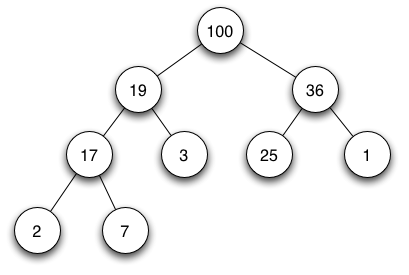
A new release of our BH package providing Boost headers for use by R is now on the CRAN mirrors. max-heap image This release is the third based on Boost 1.54.0. At the request of the maintainer of the recent added RcppMLPACK package, it adds the Boost.Heap library. Boost.Heap implements priority queues which extend beyond the corresponding (and somewhat simpler) class in the STL. Key features of the Boost.Heap priority queues are mutability, iterators, ability to merge, stable sort, and comparison. No other changes were made.
Changes in version 1.54.0-3 (2014-08-03)
  • Added Boost Heap library which will be needed by the next version of RcppMLPACK
Courtesy of CRANberries, there is also a diffstat report for the most recent release. Comments and suggestions are welcome via the mailing list or issue tracker at the GitHub repo.

This post by Dirk Eddelbuettel originated on his Thinking inside the box blog. Please report excessive re-aggregation in third-party for-profit settings.

12 July 2014

Dirk Eddelbuettel: RcppArmadillo 0.4.320.0

While I was out at the (immensely impressive and equally enjoyable) useR! 2014 conference at UCLA, Conrad provided a bug-fix release 4.320 of Armadillo, the nifty templated C++ library for linear algebra. I quickly rolled that into RcppArmadillo release 0.4.320.0 which has been on CRAN and in Debian for a good week now. This release fixes some minor things with sparse and dense Eigen solvers (as well as one RNG issue probably of lesser interest to R users deploying the RNGs from R) as shown in the NEWS entry below.
Changes in RcppArmadillo version 0.4.320.0 (2014-07-03)
  • Upgraded to Armadillo release Version 4.320 (Daintree Tea Raider)
    • expanded eigs_sym() and eigs_gen() to use an optional tolerance parameter
    • expanded eig_sym() to automatically fall back to standard decomposition method if divide-and-conquer fails
    • automatic installer enables use of C++11 random number generator when using gcc 4.8.3+ in C++11 mode
Courtesy of CRANberries, there is also a diffstat report for the most recent release. As always, more detailed information is on the RcppArmadillo page. Questions, comments etc should go to the rcpp-devel mailing list off the R-Forge page.

This post by Dirk Eddelbuettel originated on his Thinking inside the box blog. Please report excessive re-aggregation in third-party for-profit settings.

9 June 2014

Dirk Eddelbuettel: Rcpp 0.11.2

A new minor release 0.11.2 of Rcpp is now on the CRAN network for GNU R, and binaries for Debian have also been uploaded. The release smoothes a few edges on both the Rcpp side itself, as well as on the interaction between Rcpp and R which since release 3.1.0 offers a few new features related to C++11. Kevin added a couple of neat extensions related to vectors, a new ListOf templated list class, as well as a new option to warn on implicit casts. We decided not to make this option the default as it may be too common in some packages. JJ took care of a few buglets related to the wonderful Rcpp Attributes. See the NEWS file section below for details, or the ChangeLog file in the package and on the Rcpp Changelog page. Note that the diffstat reported by CRANberries is very large as Kevin also committed a whitespace cleanup which touched almost all files. As before, we tested this release by building against all CRAN packages which depend upon Rcpp. In fact we did three such runs leading up to the release. Only one package was blacklisted (as I currently don't have CUDA set-up), two had what may be internal errors or tests which were too restrictive, sixteen suffered from missing packages or RGL devices --- but the remaining 202 packages all built and tested cleanly. Detailed results of those tests (and the scripts for it) are in the rcpp-logs repo GitHub. There are a number of other fixes, upgrades and other extensions detailed in NEWS file extract below, in the ChangeLog file in the package and on the Rcpp Changelog page.
Changes in Rcpp version 0.11.2 (2014-06-06
  • Changes in Rcpp API:
    • Implicit conversions, e.g. between NumericVector and IntegerVector, will now give warnings if you use #define RCPP_WARN_ON_COERCE before including the Rcpp headers.
    • Templated List containers, ListOf<T>, have been introduced. When subsetting such containers, the return is assumed to be of type T, allowing code such as ListOf<NumericVector> x; NumericVector y = x[0] + x[1] + x[2].
    • In a number of instances, returned results are protected and/or cast more carefully.
  • Changes in Rcpp Attributes
    • Trailing line comments are now stripped by the attributes parser. This allows the parser to handle C++ source files containing comments inline with function arguments.
    • The USE_CXX1X environment variable is now defined by the cpp11 plugin when R >= 3.1. Two additional plugins have been added for use with C++0x (eg when using g++ 4.6.* as on Windows) as well as C++1y for compilers beginning to support the next revision of the standard; additional fallback is provided for Windows.
    • compileAttributes() now also considers Imports: which may suppress a warning when running Rcpp.package.skeleton().
Thanks to CRANberries, you can also look at a diff to the previous release. As always, even fuller details are on the Rcpp Changelog page and the Rcpp page which also leads to the downloads, the browseable doxygen docs and zip files of doxygen output for the standard formats. A local directory has source and documentation too. Questions, comments etc should go to the rcpp-devel mailing list off the R-Forge page

This post by Dirk Eddelbuettel originated on his Thinking inside the box blog. Please report excessive re-aggregation in third-party for-profit settings.

5 June 2014

Dirk Eddelbuettel: RcppArmadillo 0.4.300.8.0

A new minor / bug fix release 4.300.8 of Armadillo, the templated C++ library for linear algebra, was tagged by Conrad in his SVN repo a few days ago, following earlier snapshots in the 4.300.* series. We had prepared two earlier releases for GitHub but not CRAN in order to accomodate the CRAN maintainer's desire of "a release every one to two months" expressed in the CRAN Repo Policy. However, two actual bugs in the interaction between MinGW and C++11 were reported on the rcpp-devel mailing list, and this releases addresses these. Hence time for new release 0.4.300.8.0 of RcppArmadillo which is now on CRAN and in Debian. This release brings a few upstream changes detailed below such as nice new upstream changes such as more robust norm() (and related) functions, and fixes related to matrix and cube interactions. From our end, we added a better detection of Windows via both _WIN32 and WIN32 (as the former apparently gets undefined by MinGW in C++11 mode). We also added the ability to turn on C++11 support from R (possible since R 3.1.0) yet also turn it off for Armadillo. This is needed as the prescribed compiler on Windows is g++ 4.6.2 -- which offers a subset of C++11 which is good enough for a number of things from the C++11 standard, but not advanced enough for everything which Armadillo uses when C++11 support is turned on. As Armadillo continues to offer a choice of C++ standards, we can use the ability to deploy C++11 only outside of its internals. It is worth repeating that this issue should only affect Windows users wishing to use C++11; other platforms are fine as they generally have more modern compilers.
Changes in RcppArmadillo version 0.4.300.8.0 (2014-05-31)
  • Upgraded to Armadillo release Version 4.300.8 (Medieval Cornea Scraper)
    • More robust norm-related functions
    • Fixes between interactions between cube and vector types.
  • Adds a #define ARMA_DONT_USE_CXX11 to provide an option to turn C++11 off for Armadillo (but client packages may still use it)
  • More robust Windows detection by using _WIN32 as well as WIN32 as the latter gets diabled by MinGW with C++11
  • On Windows, C++11 can be turned off as the Armadillo code base uses more features of C++11 than g++ 4.6.2 version in Rtools implements
Changes in RcppArmadillo version 0.4.300.5.0 (2014-05-19)
  • Upgraded to Armadillo release Version 4.300.5 (Medieval Cornea Scraper)
    • Handle possible underflows and overflows in norm(), normalise(), norm_dot()
    • Fix for handling of null vectors by norm_dot()
Changes in RcppArmadillo version 0.4.300.2.0 (2014-05-13)
  • Upgraded to Armadillo release Version 4.300.2 (Medieval Cornea Scraper)
    • faster find()
Courtesy of CRANberries, there is also a diffstat report for the most recent release As always, more detailed information is on the RcppArmadillo page. Questions, comments etc should go to the rcpp-devel mailing list off the R-Forge page.

This post by Dirk Eddelbuettel originated on his Thinking inside the box blog. Please report excessive re-aggregation in third-party for-profit settings.

Next.

Previous.