Search Results: "will"

1 February 2013

Daniel Kahn Gillmor: proprietary software activation fail

i have a colleague who is forced by work situations to use Windows. Somehow, I'm the idiot^W^W^W^W^Wfriendly guy who gets tapped to fix it when things break. Well, this time, the power supply broke. As in, dead, no lights, no fan, no nothing. No problem, though, the disk is still good, and i've got a spare machine lying around; and the spare is actually superior hardware to the old machine so it'll be an upgrade in addition to a fix. Nice! So i transplant the disk and fire up the new chassis. But WinXP fails to boot with a lovely "0x0000007b" BSOD. The internet tells me that this might mean it can't find its own disk. OK, pop into the new chassis' BIOS, tell it to run the SATA ports in "legacy IDE" mode, and try again. Now we get a "0x0000007e" BSOD. Some digging on the 'net makes me think it's now complaining now about the graphics driver. Hmm. Well, i figure i can probably work around that by installing new drivers from Safe Mode. So i reboot into Safe Mode. Success! It boots to the login screen in Safe Mode. And, mirabile dictu, i happen to know the Administrator password. I put it in, and get a message that this Windows installation isn't "activated" yet -- presumably because the hardware has changed out from under it. And by the way, i'm not allowed to log in via safe mode until it's activated. So please reboot to "normal" Windows and activate it first. Except, of course, the whole reason i'm booting into safe mode was because normal Windows gives a BSOD. Grrrr. Who thought up this particular lovely catch-22? OK, change tactics. Scavenging the scrap bin turns up a machine with a failed mainboard, but a power supply with all the right leads. It's rated for about 80W less than the old machine's failed supply, but i figure if i rip out the DVD-burner and the floppy drive maybe it will hold. Oh, and the replacement power supply doesn't physically fit the old chassis, but it hangs halfway out the back and sort of rattles around a bit. I sacrifice the rest of the scrap machine, rip out its power supply, stuff the power supply into the old chassis, swap the original disk back in, and ... it boots successfully, finally. That was the shorter version of the story :P So now my colleague has a horrible mess of a frankencomputer which is more likely to fail again in the future, instead of a nice shiny upgrade. Why? Because Microsoft's need to control the flow of software takes priority over the needs of their users. This is what you get when you let Marketing and BizDev drive your technical decisions. Do i still need to explain why i prefer free software? Tags: griping, windows

Johannes Schauer: Bootstrappable Debian FOSDEM talk

I will give a talk about the current status of automating Debian bootstrapping at FOSDEM 2013. There will also be a live demo of the developed toolchain. The talk will start 16:30 on Saturday, 2 February 2013 in room H.1302 as part of the Cross distro devroom track and will be half an hour long. Directly after my talk, at 17:00, Wookey will give his about bootstrapping Debian/Ubuntu for arm64 in the same location. The current version of the slides can be downloaded here. The latex beamer source is available in the git repository of the debian bootstrap project. If you can't make it to FOSDEM, then my last post about the topic gives away most of the things I will be talking about.

Martin F. Krafft: A botnet for configuration management

Following my last rant about configuration management, I've had a closer look at Salt, both for my personal use, as well as for a client who would like to deploy something that is not Puppet. Salt has some very good ideas, for instance: But there are also a couple of downsides to Salt: Those are the big issues. There are many small issues two, but those won't be around for too long as the project is moving along quickly and the community is vibrant. This is surely an important point that speaks for Salt. However, the above issues seem to hint at design choices that might well turn out to stand in the way later. Following a day of frustration, I now feel the overpowering urge to write my own configuration management system, because of course I feel that I could do it better than everyone else. Does this sound familiar to you? Let's just say hypothetically that I would, then I'd want to reuse as much existing functionality as possible. For instance, I'd want the entire remote execution framework to be independent from any configuration management implemented on top. So what does this mean? What would such a remote execution framework need? Here are some thoughts: Doesn't this sound like a Unix botnet to you? ;) I could imagine whacking this up with a bit of Python, some shell glue, socat and SSH: the server would have an authorized_keys file with forced commands connecting the client to the server process via sockets. Or I could imagine using twisted for that. But I would prefer if something like this already existed. Anyone? Comments are broken on my blog, and I cannot be bothered to work on them. If you have any input, please write to me. I will (eventually) condense all feedback into a new article. NP: Mouse on Mars: Parastrophics

Matthew Garrett: The current state of UEFI and Linux

Executive summary: Most things work fine.

Things we know are broken:
Not an amazingly positive list, but as far as I know that's about it - other than some Samsungs, one range of Toshibas and one range of Lenovo desktops, Linux should be fine. If you have any other UEFI system that's unable to install Fedora 18, let me know and we'll do our best to work out what's going on.

comment count unavailable comments

Russell Coker: Speaking Stacks

Brianna Laugher wrote a blog post about the speaking stack used in the free software activism BoF at LCA 2013 [1]. Occupy Wall St uses what they call a progressive speaking stack this means that white men step back in the queue and people from marginalised groups step forward [2]. During the free software activism BoF the speaking queue that was used was that people who hadn t already spoken had priority over those who had spoken before. This was a really good idea and could be used a lot more in LCA and other conferences. It is fairly common that a small number of delegates take up the vast majority of question time. I suggest that all white men watch the questions and observe how many are asked by white men and how many are asked by everyone else. Also note the way that questions are asked, who shouts a question, who wins when two delegates ask at the same time, and who waits until the end of the talk. The Reasons for a Speaking Stack In Occupy Wall St there is a real benefit in giving priority to members of minority groups. The political needs of white men are generally reasonably well publicised due to disparities in media coverage. As the aim of the occupy movement is not to replace one group of white men with another there is an obvious need to get opinions from members of minority groups. Bugs in software generally affect members of all groups equally (with the exception of bugs related to accessibility features). But even so I think it is important to encourage diversity among people who ask questions. When someone is in the audience sees that no-one who is in their minority group is asking questions they will get the impression that they are just watching someone else s conference. We should aim to have a conference for everyone. How to Implement it When taking questions for one of my talks I generally try to give priority to people who find it difficult to be heard. But doing that requires some concentration and I often don t have any to spare when giving a demanding technical talk. I think that this needs to be managed by the moderator/MC/microphone holder. Someone who doesn t need to think much about the content of the talk can concentrate on choosing the best people to ask questions. Also a significant issue is questions that are called out during a talk. Some speakers insist that questions are only asked at the end of their talk. But I prefer some degree of interaction with the audience so my talks often end up being more about having a conversation with the audience than reading from a script. The difficulty with an interactive talk is that it strongly favors those who are prepared to shout a question over those who wait their turn. I think I ll try to make a strict policy of having people raise their hand to ask a question in future to address this issue, but I will need assistance from someone who s not concentrating on the technical issues. For a conference I think it would make sense for the people who hold the microphones to keep a mental list of who s asked questions. If someone asks their share of questions on the first day of the conference then they would deserve a lower priority for questions on later days. This would also encourage delegates to consider whether their question is really worth asking during the lecture or whether they should save their question quota and talk to the speaker afterwards. Also we could ask delegates to exercise restraint. One suggestion I heard was that people should set themselves a quota of 3 questions per conference or 1 per day. In a conference with ~600 delegates and ~33 sessions per day if everyone asked a question each day that would be about 18 questions per session more than is typical. So it seems that anyone who asks a single question per day is still likely to be asking more than 1/600 of all questions. Exceptions There are occasions when multiple questions and comments make sense. One example is where a member of the audience has significant expertise in the topic in question. Another is when a speaker completes significantly before the end of their allotted time and some questions from the MC or an experienced member of the audience can help them spend all their time educating the audience. But I think there needs to be a compelling reason that has a clear benefit for the audience. General Benefits How many of the repeat questions are useful to the audience? It seems to me that there is a correlation between multiple questions and questions that are more about the person asking than about clarifying issues that are likely to matter to the audience. Would such limits improve the quality of the discussion even for people who don t care about diversity? Also I have asked a disproportionate number of questions in the past. I am reducing the number of questions that I ask although I think I asked more than 3 at this conference.

Russ Allbery: WebAuth 4.4.1

WebAuth is the site-wide web authentication software that we use at Stanford. We're about to start another round of intensive development on multifactor authentication support, so I wanted to get a minor release out with the other things that have accumulated in the past month and a half. The main feature change in this release is to add support for another WebLogin configuration callback. This one is run whenever WebLogin is attempting to establish the user's identity and can return any identity it wishes, so it's available as a generic callback to determine identity information from the environment. The most likely use will be to inspect the results of client-side certificate authentication (which Apache puts in various environment variables) and interpret them in a site-specific way. Also in this release I refactored the WebLogin scripts so that they use FastCGI more correctly. The application objects are now instantiated only once and then reused for the lifetime of the FastCGI script, rather than torn down and set up for each new request. This is primarily of interest to those using the new features that require a memcached connection, since that connection will no longer be constantly set up and torn down, but it should help with speed in other situations. This is the riskiest change, since if I didn't get it exactly right it would be possible for information to leak from one request to the next. I've audited it fairly carefully, though, and think I've gotten everything. Finally, besides some documentation updates, I've switched the Perl build to Module::Build from ExtUtils::MakeMaker. This should mostly be transparent, but it means some additional Perl modules from CPAN will be required to build the distribution with --enable-webkdc for versions of Perl older than 5.10. (5.10 is fairly old, so I doubt this will be a serious issue.) You can get the latest release from the official WebAuth distribution site or from my WebAuth distribution pages.

31 January 2013

Lars Wirzenius: Baserock talk at FOSDEM

I and Rob Taylor will be giving a talk about Baserock at FOSDEM this year. Baserock is a new method for developing embedded Linux systems, and one such system, which we are creating at Codethink. The talk is scheduled in the Embedded and mobile devroom on Saturday, at 14:00. There will be a demo.

Joachim Breitner: Going to FOSDEM after all

Earlier this week, things were looking different, and I did have to cancel a Haskell talk in Freiburg on Monday due to illness. But I m back on track and will be travelling to Brussels tomorrow. I ll be holding a talk on how we package Haskell in Debian, on Suday at 15:30. I hope it will be useful to Debian users (who will better understand the packaging), other Debian Developers (who ll learn about the peculiarities of Haskell and the implications for the Debian infrastructure), other distro s maintainers (to compare best practices) and Haskell developers (to learn about the needs and worries of downstream packages). The talk will be based on my DebConf 11 talk on the same topic. I m also happy to answer questions about Haskell, Haskell in Debian or any other topic that you want to hear my opinion about, so just talk to me during FOSDEM.
In related news: GHC 7.6.2 was uploaded to Debian experimental the day it was released; the rebuilding of all libraries is still in progress (~370 of ~570 done).

Kartik Mistry: Mandatory yearly post

* Somehow, I felt that there should be post for atleast to abuse Planet Debian in the new year of 2013. So, what s going on? 1. Finished Full Marathon aka Standard Charted Mumbai Marathon with pathetic timing of 5h55m35s (and felt good at the end). 2. Good thing: Visited family twice in last 2 months. 3. N number of Idlis were consumed. Where, N >= 300. Overall, I m big fan of South Indian food which is more suitable for my stomach. Thanks to running, my junkfood consumption is lesser than I can imagine but you can find me in those places during some weekends to fullfill calories lost in LSD run! 4. Last Sunday, I delivered lecture on Debian Ecosystem , mostly same presentation with additional updates and details, at SVIT, Doddaballapur (technically, some outskirt of BLR) as part of FSMK s 5 days event. It was well received from the applause I got. Photos are still lying in memory card and probably will not come out until next usage of camera. 5. I m very silent on Debian packaging and someone will hit me for pending tasks, but enjoying packaging and fixing tlsdate/torbirdy for Debian lately to get motivation. Other than that, few uploads were done.

Russ Allbery: Consensus failure

As most people reading this have probably seen, xkcd found a particularly entertaining Wikipedia argument. (It is all true. There are at least 40,000 words arguing over whether to capitalize an "i" in a page title. I went and looked last night and spent several hours following the conversation.) This is, of course, funny, and I'm sure lots of people went away smiling at an excellent example of bikeshed painting on the Internet. But I think it's rather more serious than it appears to be. In fact, I would go so far as to say that it is a visible manifestation of a deeply-rooted problem that is the core of why I personally refuse to contribute to Wikipedia in any way that requires me to invest non-trivial time or become a member of that community. To explain that statement requires a bit of background. One of the very first services I found when I joined the Internet in 1993 was Usenet. Originally, I talked about comics collecting and then Magic: The Gathering, but I eventually ended up involved in Usenet governance. I spent more than ten years deeply invested in Usenet hierarchy administration; roughly, the process of agreeing on names for and sometimes moderators for global Usenet discussion groups, as well as all the supporting infrastructure for Usenet news server administrators to agree upon and share articles in those groups. Usenet newsgroup creation was, throughout that period, a consensus-driven process. There was a voting system that was used to measure consensus, but the voting system was largely designed to ensure that rough consensus existed (it was heavily skewed towards not changing anything). We took great pride in that fact. I'm sure that one could find many articles from me proudly championing the concept of a consensus-based decision-making process against many alternatives. That means I was also there when the toxic flaws at the heart of a consensus-based process completely destroyed it and, as a side effect, destroyed the community of people who had formed around it. I will never again invest my time and energy in a community that operates solely via a consensus process unless that community is small enough that consensus can actually work (which means not much more than twenty people). Consensus decision-making in large groups destroys communities and hurts people. These sorts of extended arguments on Wikipedia are not rare anomolies. They happen with some frequency; just by going through the debate xkcd references and looking at pointers, you can easily find others (Sega Genesis, cat ownership vs. companionship, endless notability debates... there are many). They look funny from outside, but from inside they're hugely demoralizing. Even when they don't get heated and spill over into personal animosity (and if they don't do that, you're lucky), they consume astonishingly vast quantities of time exactly not the resource that you want to be squandering in volunteer projects. And they do so without giving back anything emotionally. I know these arguments very well. One of the most contentious and angry arguments in the history of Usenet newsgroup creation was the argument over whether, when breaking up a group into multiple more focused groups, to rename the original group to end in *.misc or leave its existing name. This argument went on for years and led to deep, lingering hatred between the participants. It's the same sort of thing. These arguments happen in the way that they happen because there is toxic waste at the center of Wikipedia's governance process. And that toxic waste hurts people, wastes their time, and destroys their willingness to volunteer. It undermines community, which is sad and ironic because the whole point of consensus decision-making is to create, support, and empower community. But it doesn't work. It doesn't work for two very simple but very closely-related reasons: it's impossible to ever end an argument, and there is no incentive for anyone to shut up. As a result, it is nearly impossible to get the decision-making to cohere into something that is timely, consistent, unambiguous, and final. These are not optional requirements of a decision-making process. Without them, people will lose faith in the decision-making process itself, and some people will learn that, as long as they never stop talking about something, they can prolong the debate indefinitely and possibly eventually get their way. Now, of course, I'm deeply involved and invested in Debian. And on the surface, it may look like Debian also uses a consensus-based decision-making process. But while Debian decision-making has some problems, it's much healthier for a few reasons that are useful to examine:
  1. Individual packages in Debian are not managed by consensus, but rather fall under the authority of the package maintainer, who is either a single person or a small team. (Consensus works in small teams; it's great if the number of people involved is five or less.) This drastically limits the number of decisions that are subject to a large-scale consensus process. Nearly all decisions in Debian are made directly by the person doing the work, and only in exceptional circumstances can some larger process be invoked. This, on the surface, sounds like it could be similar to Wikipedia, but note that appeals to a larger process are much rarer in Debian than they are in Wikipedia. There is a strong bias in favor of letting the person working on the package do their job however they want to do it. This is more social than structural, but it's a core value (and we should be very careful about changing it). As a result, Debian operates less by mass consensus and more as a federation of semi-autonomous fiefdoms. This sounds worse: it sounds authoritarian and non-democratic. But it's significantly more functional, and it doesn't waste people's time.
  2. On appeal, and for broader questions that necessarily cut across multiple packages, there are several people in Debian who are perceived as having clear authority to make timely and relatively final decisions, who are almost never overruled, and who can therefore effectively end arguments. These include core teams like ftp-master or the release team, formal appeal bodies like the Technical Committee, and the Debian Project Leader. Not all of this ability is written in black and white in the governance process, but that's not the important part; the important part is that it works in practice to provide timely, consistent, unambiguous, and final decisions most of the time. (Some parts work better than others, and we do struggle with timely, but I've seen much, much worse.)
  3. There is a well-established ultimate appeal (a General Resolution), the ultimate appeal process is very specific and concrete, there is little or no ambiguity or human interpretation involved in analyzing the results, it is time-limited, and it's almost universally respected. Everyone abides by the result of a GR if matters get to that point, and while it's theoretically possible to propose another GR immediately to overturn the first one, this doesn't happen in practice. There's also substantial pushback against invoking the GR process for anything that isn't really important.
We still occasionally devolve into endless discussion, usually on some technical topic that cuts across the distribution and usually when the options haven't cohered enough for any authority to make a useful decision (often because it's too early for it to be possible to make a final decision). Those cases, such as the recurring systemd vs. upstart discussion, are still quite frustrating. But they're also relatively rare and largely ignorable because they have to be about just the right sort of issue. Wikipedia has these sorts of arguments all the time, and they're much less ignorable, because consensus is invoked for every minor dispute on any page in the entire project. You have to participate in endless consensus process or risk having your work undone, reverted, or removed. We would all like all decisions to be made by consensus, since we don't want anyone in a volunteer project to lose (and because we all love to convince other people we're right). And for small teams, consensus is wonderful. But that's precisely because governance in small teams is very easy; humans are naturally adapted for decision-making in small teams and have a huge variety of natural tools, tendencies, and abilities devoted to making those sorts of decisions. You rarely need any formal decision-making process; most decisions will just happen. You need a decision-making process when enough people are involved that mutual social pressure can't bring a dispute to resolution, and when you're in that situation, consensus is a horrible process. Due to my past experiences, I'm almost certainly at the extreme in dislike of consensus processes. Most people are not going to refuse to participate in communities solely on that basis. But be aware that 40,000 words of discussion about something that an outsider will not consider particularly important is not an accidental phenomenon. It's not something that just happens randomly on the Internet. It's an effect, and symptom, of a governance process, or lack thereof, and it's something that you can do something about if you want to.

30 January 2013

Russell Coker: SE Linux Things To Do

At the end of my talk on Monday about the status of SE Linux [1] I described some of the things that I want to do with SE Linux in Debian (and general SE Linux stuff). Here is a brief summary of some of them: One thing I ve wanted to do for years is to get X Access Controls working in Debian. This means that two X applications could have windows on the same desktop but be unable to communicate with each other by any of the X methods (this includes screen capture and clipboard). It seems that the Fedora people are moving to sandbox processes with Xephyr for X access (see Dan Walsh s blog post about sandbox -X [2]). But XAce will take a lot of work and time is always an issue. An ongoing problem with SE Linux (and most security systems) is the difficulty in running applications with minimum privilege. One example of this is utility programs which can be run by multiple programs, if a utility is usually run by a process that is privileged then we probably won t notice that it requires excess privileges until it s run in a different context. This is a particular problem when trying to restrict programs that may be run as part of a user session. A common example is programs that open files read-write when they only need to read them, if the program then aborts when it can t open the file in question then we will have a problem when it s run from a context that doesn t grant it write access. To deal with such latent problems I am considering ways of analysing the operation of systems to try and determine which programs request more access than they really need. During my talk I discussed the possibility of using a shared object to log file open/read/write to find such latent problems. A member of the audience suggested static code analysis which seems useful for some languages but doesn t seem likely to cover all necessary languages. Of course the benefit of static code analysis is that it will catch operations that the program doesn t perform in a test environment error handling is one particularly important corner case in this regard.

Roland Mas: Various small bits

Dear reader, I know you're wondering what I'm getting up to these days. Or at least, I guess there's a possibility that you're wondering. So since there's no single bit of news that would be worthy of a post here by itself, here's one summarizing things, in the hope that the accumulation makes a tiny bit of a difference. On the rock'n'roll front: Eleven did its first true gig on our own in a pub last Saturday. And when I say on our own , it could almost be taken literally, for we must have had a grand total of about 10 people. A bit of a disappointment, to say the least, especially since the pub was about 120 kilometers from home, 60 of which I rode on my motorbike at 2 AM (and close to 0 C). However, the landlord seemed to like us and hinted at further gigs during seasons where people are more likely to go out for drinks and music than to stay warm at home. In a related note: we got ourselves a small set of stage lights (LED-powered, of course), and they have, in addition to the power cord and various switches, two sockets at the back for plugging XLR-3 cables. On investigation, it seems that this means they can be controlled by a protocol known as DMX 512, which opens up a lot of possibilities for someone who likes to control various things from a computer. I read a few web pages to get an idea of how this is supposed to work, it seems rather simple and straightforward, but the required software isn't in Debian yet. So I guess that if/when I get the necessary hardware, I'll have a new hobby and new toys to play with. Maybe our next gig will have bursts of lights on the big accented beats, triggered by strong enough hits on my drum cymbals. This allows me to link to a new minor release of Wiimidi. The only addition is a new configuration section mapping to the default drumkit provided by Hydrogen. And finally, to stay in the small bits of software , I was prompted to give my simple GPG-encrypted password store, a.k.a. SGEPS, its own page, with a proper release and so on. So there, 0.1 is out, with minimal Debian packaging included.

James Morrison: Issues with Appengine

I like App Engine, my wedding website runs on App Engine as well as a couple recent commercial projects. However, there are some annoyances that make a lot of the useful things I learned at Google not applicable.

  1. Chunked responses
    App Engine doesn't have a way of doing chunked responses.
    1.5. Processing after sending the response My annoyance here is that I can't send an early response and wait for some resource. Say I want to do 5 url fetches that I cache for a short period of time. If I want to reply in 250ms, I want to use any of the results I've gotten and reply to the user. Then once the rest of the fetches come in, I want to put them in the cache, so they will come back quickly the next time.
  2. Counters
    App Engine has crappy support for counters. You can shard your counters into the datastore: https://developers.google.com/appengine/articles/sharding_counters#counter_python or you can use taskqueues: http://blog.appenginefan.com/2009/10/non-sharded-counters-part-2-using-task.html . Now, how do you graph these counters over time, well, that is left as an exercise for the reader. Google has special datastores for stores and retrieving counters.
  3. Backends
    Backends in appengine are versioned separately from frontends. This sounds like a good idea, but to run the devserver with backends, the backends need to be in the same source tree. Thus backends share the same url space. Backends also share the same app.yaml, so again the url space is shared. Thus, if you make a change that you want to coordinate between the frontend and the backend, you need to change the application version in app.yaml, then rename all the backends in backends.yaml. If backends are supposed to be in the same source tree as frontends, then they should be prefixed with the application version. If backends should be versioned separately from frontends, then they shouldn't share url handlers from app.yaml.
    3.5 Uploading backends is slow
    Each backend is uploaded through appcfg.py separately. So if you are crazy and have one backend per backend level, then you need to upload 4 copies of the source code each time the backends get updated.
  4. Logging
    I want structured logs. Instead what you have to do is use the python logging module to write out human readable logs, then parse them out into the structure you want.
    http://code.google.com/p/google-app-engine-samples/source/browse/trunk/logparser/logparser.py

As a preemptive counter, 1.5 could be dealt with using backends and a background thread, except backends don't scale to the number of queries, so my use case above isn't fixed.

Wouter Verhelst: HOWTO: create a PXE netboot debian-installer image with firmware files

Debian-installer is a great piece of software, which allows one to install the system in a variety of situations: manually, on a serial console, graphically, automatically, there are a number of scenarios it handles well. However, there is one issue: when installing Debian to a machine that requires firmware just to get at the network, getting things to work can be a hassle. There is a tarball containing the most-often required firmware blobs in order to be able to use the installer on such systems; but since they fail the DFSG, these cannot be part of Debian, for political reasons. To use them, you need to write the required firmware packages to a directory "/firmware" on a USB stick or similar, and put that in the system when asked. This is acceptable when you have just one system to install and have a USB stick handy; but if you have a lot of systems to install, or (as recently happened to me) you don't have a USB stick handy, then things become slightly more problematic. Luckily, there's an easy solution: you can update the initrd image so it contains the firmware packages already on it; when doing that, you don't need to deal with USB sticks anymore. Of course, using such an initrd image will cause the installer to automatically install all provided firmware packages, even if your hardware will function (at a basic level) without said firmware. Additionally, if you pass firmware packages to the installer in any way (through a USB stick, or through the method I'm about to describe, that makes no difference), and the installer determines that it might help to install one of these firmware packages, then the installed system will have them installed, and have the non-free repository enabled, which is not the default. Don't do this if you don't want that. Anyway, on to the actual procedure now: Tadaa! You've now created an initrd image that will not ask you for firmware images, instead just install them.

Tanguy Ortolo: Using the UDF as a successor of FAT for USB sticks

USB Stick FAT USB sticks are traditionally formatted with FAT 32, because this file system is implemented by almost every operating system and device. Unfortunately, it sucks, as it cannot use more than 2 TiB, store files larger than 2 GiB or store symbolic links for instance. In a word, it is an obsolete and deficient file system.

exFAT Good news: someone addressed that problem. Bad new: that someone is Microsoft. So as you could expect, exFAT, the extended FAT, is a stinking proprietary, secret and patented file system. There are free implementations of that shit, but it is safer to stay away from it.UDF to the rescue! Good news: there is one file system that is implemented almost everywhere as well, and which does not suffer from such limitations. UDF, the Universal Disk Format, is an ISO standard originally designed for DVDs, but it is perfectly usable for USB sticks. It also supports POSIX permissions, with one killer feature for removable media: a file can belong to no specific person or group. So, to use it, assuming you USB stick is /dev/sdc:
$ dd if=/dev/zero of=/dev/sdc bs=1M count=1
$ mkudffs -b 512 --media-type=hd /dev/sdc
The initial dd is to erase the existing partition table or file system information, to prevent you USB stick from being detected as a FAT after it has been formatted with UDF. The -b 512 is to force a file system block size equal to the USB stick's physical block size, as required by the UDF specification. Adapt it if you have the luck of having a USB stick with an more appropriate block size. After that, you USB stick will be usable for reading and writing with GNU/Linux and the other free operating systems of course, but also with current versions of Windows (read-only with the outdated version XP) and with MacOS.

Bastian Venthur: Synchronizing Google Mail Contacts with Thunderbird

Dear Lazyweb, can anyone recommend a good Thunderbird extension which allows for synchronizing the address book with Google mail? So far I tried Google Contacts, but something went wrong with the syncing and some contacts where deleted on both sides. To avoid this problem, one can use Google Contacts in read-only mode (it will only fetch contacts from Google, but never write to it) but then you have to import new Thunderbird contacts to Google mail manually. Google introduced CardDav in December 2012, which allows for syncing of contacts, but since Thunderbird s development is apparently on hold this is probably not gonna be supported out-of-the-box. There are some other extensions for Thunderbird, but since synchronization is hard and a lot more complicated than: replace newer version with older one I m looking for something mature and well tested. Before someone suggests it, I know Evolution has this feature built-in. I gave it a try last week and found so many other grave bugs with the calendar and newsgroups that Evolution is simply unfit for my needs. I really like Thunderbird and want to stick with it for a few more years until I have to look for something else. Yours truly, Basti

Gunnar Wolf: The phone is dead. How to stay reasonably unbound?

So, today an endurance test can be declared as finished. In early 2008, for the first time, I paid for a cellular phone (as my previous ones were all 100% subsidized by the operator in a fixed plan). I got a Nokia N95. And, although at the beginnning I was quite thrilled with my smartphone (when such things were still a novelty), it didn't take much to me to start dumbing it down to what is really useful to me: A phone with a GPS. And the GPS only because it is the only toy I want in such a form factor. Anyway, despite the operator repeatedly offering me newer and more capable models, I kept this one, and as soon as I was free of the forced 18 month rental period, switched to a not-data-enabled, pay-as-you-go plan. I don't want to be connected to the intertubes when I'm away from a usable computer! But yes, five years are over what a modern phone wants to endure. Over time, I first started getting SIM card errors whenever the phone was dropped or slightly twisted - As I'm a non-frequent phone user, I didn't care much. Charging it also became a skill of patience, as getting the Nokia micro-connector to make contact has been less and less reliable. Over one year ago, the volume control (two sensors on the side) died after a phone drop (and some time later I found the switches broken from the mainboard loose) - A nuisance, yes, but nothing too bad. I don't know how, but some time ago the volume went down when using the radio, and as I can't raise it again, my phone became radio-disabled. And today, the screen died (it gets power, but stays black). I can blind-operate the phone, but of course, it is really not meant for that. So, I expect this Saturday to go get a new phone. Between now and then, I'll be cellphone-deprived (in case you wonder why I'm not answering to your messages or whatever). I would love to get a phone with a real keyboard (as I prefer not to look at the screen when writing messages, just to check if everything came out right and fix what's needed). I understand Android phones are more likely to keep me happy as a free software geek, and I'd be delighted to use Cyanogen if it is usable and stable But my phone is *not* my smart computer and it should not attempt to be, so it's not such a big deal. I will look for something with FM radio capability, and GPS. Of course, I want something cheap. It would be great to get it at no cost, but I don't expect I'll find such a bargain. Oh, and I want something I can find at the first Telcel office I come to, am I asking for too much? :) Anyway - I'll enjoy some days of being really disconnected from any wireless bugs (that I am aware off).

Uwe Hermann: libsigrokdecode 0.1.1 released, more protocol decoders supported

sigrok logo Just a quick announce: We released libsigrokdecode 0.1.1 today, a new version of one of the shared libraries part of the open-source sigrok project (for signal acquisition/analysis of various test&measurement gear, like logic analyzers, scopes, multimeters, etc). I will update the Debian package soonish. As you probably know, in addition to the infrastructure for protocol decoding, this library also ships with a bunch of protocol decoders written in Python. Currently we support 29 different ones (in various states of "completeness", improvements are ongoing). This release adds support for the following new protocol decoders:
CAN probing Please check the announce on the sigrok blog and/or the NEWS file for the full list of changes and improvements. Happy hacking and decoding!

Rog rio Brito: Looking for (Free) a Video Editor

Let's suppose that you went to a show of your favourite some time ago and you were able to sneak in a camera (well, in those times, cell phones weren't able to record much more than 176x144 pixels at 12fps). But, then, you suddenly found that some people uploaded (short) fragments of that very same show to youtube and, collecting those, you may be able to create a "multi-camera" version of the video that you can record to keep of your memorable concert. The multi-camera, in the sense above, is not the same as multiple angles (like some DVDs), but something like a TV broadcast, where the stage is filmed by cameras positioned at some places and the image that is broadcast is switched from time to time according to that who is singing, or playing etc. So, Dear Lazyweb, do we happen to have any Free Software (preferably already packaged in Debian) that is able to help with the task of "aligning" (in time) videos from various (different) sources so as to produce one multi-camera video? What would my options be? I asked this on youtube for a person that did exactly what I want and their answer was Sony Vegas, which I fear that does not exactly would be allowed in Debian. :) Any comments are welcome, thanks, and if I am successful, I will upload the final video. :)

29 January 2013

Jonathan Carter: Ubuntu Developer Summit for 13.04 (Raring)

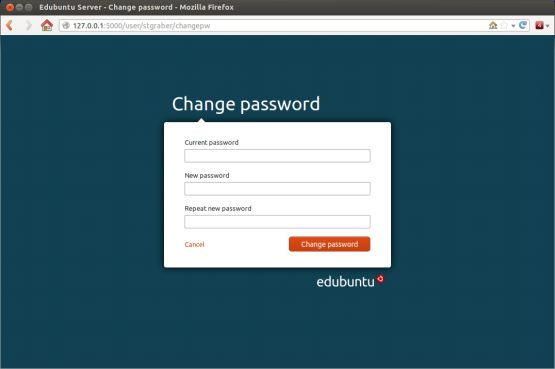
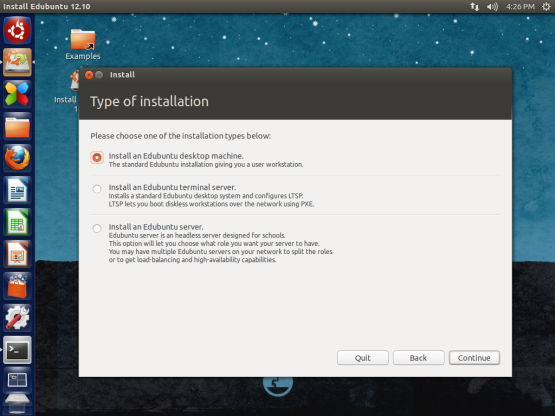
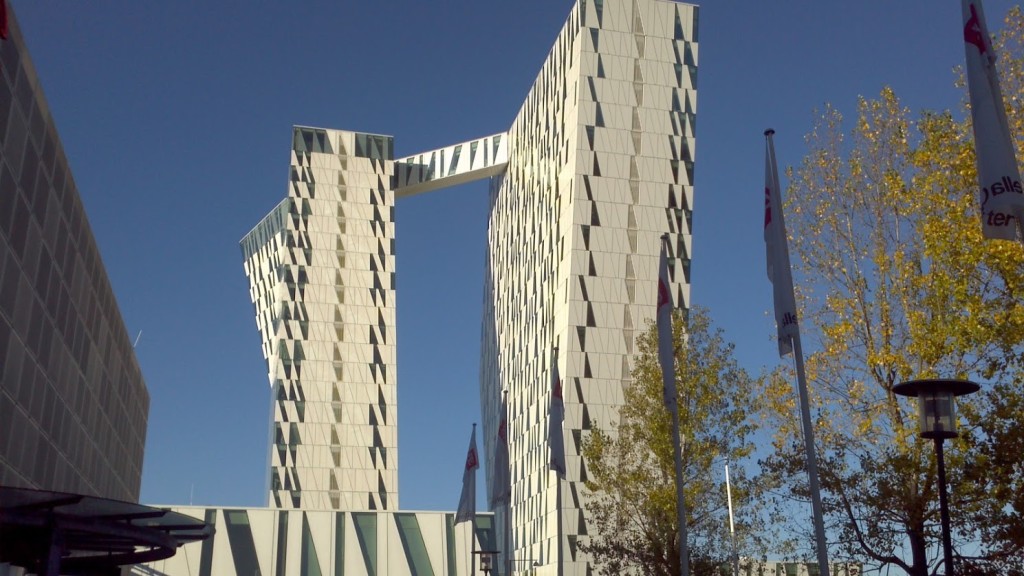
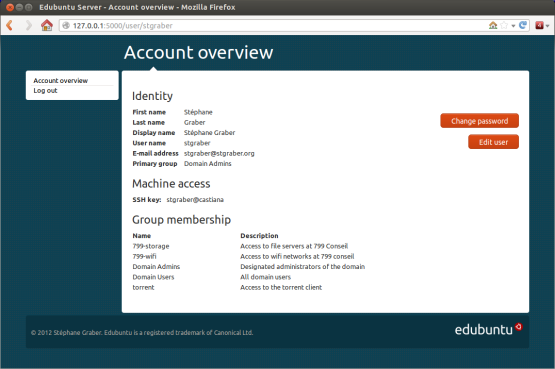
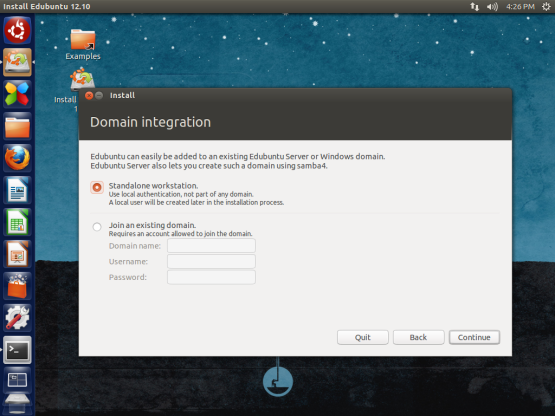
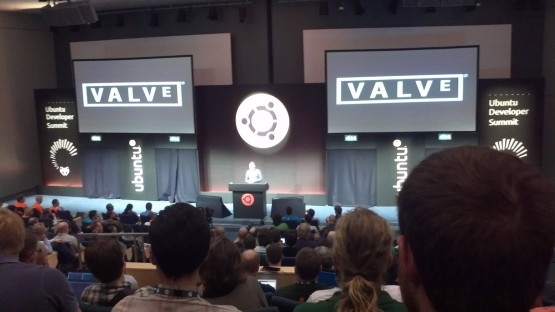
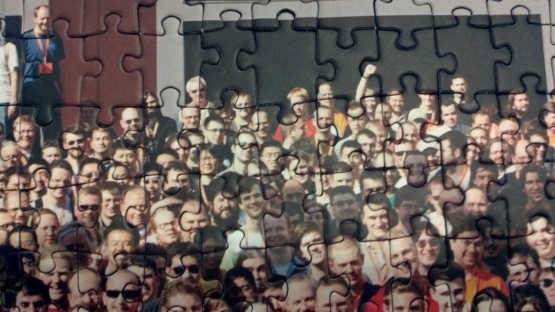
The War on Time Whoosh! I ve been incredibly quiet on my blog for the last 2-3 months. It s been a crazy time but I ll catch up and explain everything over the next few entries. Firstly, I d like to get out a few details about the last Ubuntu Developer Summit that took place in Copenhagen, Denmark in October. I m usually really good at getting my blog post out by the end of UDS or a day or two after, but this time it just flew by so incredibly fast for me that I couldn t keep up. It was a bit shorter than usual at 4 days, as apposed to the usual 5. The reason I heard for that was that people commented in previous post-UDS surveys that 5 days were too long, which is especially understandable for Canonical staff who are often in sprints (away from home) for the week before the UDS as well. I think the shorter period works well, it might need a bit more fine-tuning, I think the summary session at the end wasn t that useful because, like me, there wasn t enough time for people to process the vast amount of data generated during UDS and give nice summaries on it. Overall, it was a great get-together of people who care about Ubuntu and also many areas of interest outside of Ubuntu. Copenhagen, Denmark I didn t take many photos this UDS, my camera is broken and only takes blurry pics (not my fault I swear!). So I just ended up taking a few pictures with my phone. Go tag yourself on Google+ if you were there. One of the first interesting things I saw when arriving in Copenhagen was the hotel we stayed in. The origami-like design reminded me of the design of the Quantal Quetzel logo that is used for the current stable Ubuntu release. 2012-10-28_05-50-14_21 quantal The Road ahead for Edubuntu to 14.04 and beyond St phane previously posted about the vision we share for Edubuntu 14.04 and beyond, this was what was mostly discussed during UDS and how we ll approach those goals for the 13.04 release. This release will mostly focus on the Edubuntu Server aspect. If everything works out, you will be able to use the standard Edubuntu DVD to also install an Edubuntu Server system that will act as a Linux container host as well as an Active Directory compatible directory server using Samba 4. The catch with Samba 4 is that it doesn t have many administration tools for Linux yet. St phane has started work on a web interface for Edubuntu server that looks quite nice already. I m supposed to do some CSS work on it, but I have to say it looks really nice already, it s based on the MAAS service theme and St phane did some colour changes and fixes on it already. edu-server-account edu-server-password From the Edubuntu installer, you ll be able to choose whether this machine should act as a domain server, or whether you would like to join an existing domain. Since Edubuntu Server is highly compatible with Microsoft Active Directory, the installer will connect to it regardless of whether it s a Windows Domain or Edubuntu Domain. This should make it really easy for administrators in schools with mixed environments and where complete infrastructure migrations are planned. Authentication Options Choosing machine role You will be able to connect to the same domain whether you re using Edubuntu on thin clients, desktops or tablets and everything is controllable using the Epoptes administration tool. Many people are asking whether this is planned for Ubuntu / Ubuntu Server as well, since this could be incredibly useful in other organisations who have a domain infrastructure. It s currently meant to be easily rebrandable and the aim is to have it available as a general solution for Ubuntu once all the pieces work together. Empowering Ubuntu Flavours This cycle, Ubuntu is making some changes to the release schedule. One of the biggest changes made this cycle is that the alpha and beta releases are being dropped for the main Ubunut product. This session was about establishing how much divergence and changes the Ubuntu Flavours (Ubuntu Studio, Mythbuntu, Kubuntu, Lubuntu and Edubuntu) could have from the main release cycle. Edubuntu and Kubuntu decided to be a bit more conservative and maintain the snapshot releases. For Edubuntu it has certainly helped so far in identifying and finding some early bugs and I m already glad that we did that. Mythbuntu is also a notable exception since it will now only do LTS releases. We re tempted to change Edubuntu s official policy that the LTS releases are the main releases and treat the releases in between more like technology previews for the next LTS. It s already not such a far stretch from the truth, but we ll need to properly review and communicate that at some point. Valve at UDS and Steam for Linux One of the first plenaries was from Valve where Drew Bliss talked about Steam on Linux. Steam is one of the most popular publishing and distribution systems for games and up until recently it has only been available on Windows and Mac. Valve (the company behind Steam and many popular games such as Half Life and Portal) are actively working on porting games to run natively on Linux as well. Some people have asked me what I think about it, since the system is essentially using a free software platform to promote a lot of non-free software. My views on this is pretty simple, I think it s an overwhelmingly good thing for Linux desktop adoption and it s been proven to be a good thing for people who don t even play games. Since the announcement from Valve, Nvidia has already doubled perfomance in many cases for its Linux drivers. AMD, who have been slacking on Linux support the last few years have beefed up their support drastically with the announcement of new drivers that were released earlier this month. This new collection of AMD drivers also adds support for a range of cards where the drivers were completely discontinued, giving new life to many older laptops and machines which would be destined for the dumpster otherwise. This benefits not only gamers, but everyone from an average office worker who wants snappy office suite performance and fast web browsing to designers who work with graphics, videos and computer aided design. Also, it means that many home users who prefer Linux-based systems would no longer need to dual-boot to Windows or OS X for their games. While Steam will actively be promoting non-free software, it more than makes up for that by the enablement it does for the free software eco-system. I think anyone who disagrees with that is somewhat of a purist and should be more willing to make compromises in order to make progress. Ubuntu Release Changes Last week, there was a lot of media noise stating that Ubuntu will no longer do releases and will become a rolling release except for the LTS releases. This is certainly not the case, at least not any time soon. One meme that I ve noticed increasingly over the last UDSs was that there s an increasing desire to improve the LTS releases and using the usual Ubuntu releases more and more for experimentation purposes. I think there s more and more consensus that the current 6 month cycle isn t really optimal and that there must be a better way to get Ubuntu to the masses, it s just the details of what the better way is that leaves a lot to be figured out. There s a desire between developers to provide better support (better SRUs and backports) for the LTS releases to make it easier for people to stick with it and still have access to new features and hardware support. Having less versions between LTS releases will certainly make that easier. In my opinion it will probably take at least another 2 cycles worth of looking at all the factors from different angles and getting feedback from all the stakeholders before a good plan will have formed for the future of Ubuntu releases. I m glad to see that there is so much enthusiastic discussion around this and I m eager to see how Ubuntu s releases will continue to evolve. Lightning Talks Lightning talks are a lot like punk-rock songs. When it s good, it s really, really amazingly good and fun. When it s bad, at least it will be over soon :) Unfortunately, since it s been a few months since the UDS, I can t remember all the details of the lightning talks, but one thing that I find worth mentioning is that they re not just awesome for the topic they aim to produce (for example, the one lightning talks session I attended was on the topic of Tests in your software ), but since they are more demo-like than presentation-like, you get to learn a lot of neat tricks and cool things that you didn t know before. Every few minutes someone would do something and I d hear someone say something like Awesome! I didn t know you could do that with apt-daemon! . It s fun and educational and I hope lightning talks will continue to be a tradition at future UDSs. Social Stefano Rivera (fellow MOTU, Debianista, Capetonian, Clugger) wins the prize for person I ve seen in the most countries in one year. In 2012, I saw him in Cape Town for Scaleconf, Managua during Debconf, Oakland for a previous UDS and Copenhagen for this UDS. Sometimes when I look at silly little statistics like that I realise what a great adventure the year was! Between the meet n greet, an evening of lightning talks and the closing party (which was viking themed and pretty awesome) there was just one free evening left. I used it to gather with the Debian folk who were at UDS. It was great to see how many Debian people were attending, I think we had around a dozen or so people at the dinner and there were even more who couldn t make it since they work for Canonical or Linaro and had to attend team dinners the same evening. It was as usual, great to put some more faces to names and get to know some people better. It was also great to have a UDS with many strong technical community folk present who is willing to engage in discussion. There were still a few people who felt missing but it was less than at some previous UDSs. I also discovered my face on a few puzzles! They were a *great* idea, I saw a few people come and go to work on them during the week, they seem to have acted as good menial activities for people to fix their brains when they got fried during sessions :) 2012-10-31_14-32-28_374 Overall, this was a good and punchy UDS. I ll probably not make the next one in Oakland due to many changes in my life currently taking place (although I will remotely participate), but will probably make the one later this year, especially if it s in Europe. I ll also make a point of live-blogging a bit more, it s just so hard remembering all the details a few months after the fact. Thanks to everyone who contributed their piece in making it a great week!
Next.

Previous.