Search Results: "tar"

1 March 2013

Ritesh Raj Sarraf: I am so indebted to the community

As someone who learned computers on his own, I always acknowledged the value that the Free Software movement has brought. The accessibility of these topics, which are only supposed to be part of text books and schools, is available for anyone and everyone who has the resource and passion to do it. But this past week, 2 things made me pretty impressed with the maturity and quality of work that we do.

rrs@zan:/media$ sudo lvextend -r -v -L 100G /dev/BackupDisk/DATA

Finding volume group BackupDisk
Executing: fsadm --verbose check /dev/BackupDisk/DATA
fsadm: "ext4" filesystem found on "/dev/mapper/BackupDisk-DATA"
fsadm: Skipping filesystem check for device "/dev/mapper/BackupDisk-DATA" as the filesystem is mounted on /media/DATA
fsadm failed: 3
Archiving volume group "BackupDisk" metadata (seqno 7).
Extending logical volume DATA to 100.00 GiB
Found volume group "BackupDisk"
Loading BackupDisk-DATA table (254:2)
Suspending BackupDisk-DATA (254:2) with device flush
Found volume group "BackupDisk"
Resuming BackupDisk-DATA (254:2)
Creating volume group backup "/etc/lvm/backup/BackupDisk" (seqno 8).
Logical volume DATA successfully resized
Executing: fsadm --verbose resize /dev/BackupDisk/DATA 104857600K
fsadm: "ext4" filesystem found on "/dev/mapper/BackupDisk-DATA"
fsadm: Device "/dev/mapper/BackupDisk-DATA" size is 107374182400 bytes
fsadm: Parsing tune2fs -l "/dev/mapper/BackupDisk-DATA"
fsadm: Resizing filesystem on device "/dev/mapper/BackupDisk-DATA" to 107374182400 bytes (13107200 -> 26214400 blocks of 4096 bytes)
fsadm: Executing resize2fs /dev/mapper/BackupDisk-DATA 26214400
resize2fs 1.42.5 (29-Jul-2012)
Filesystem at /dev/mapper/BackupDisk-DATA is mounted on /media/DATA; on-line resizing required
old_desc_blocks = 4, new_desc_blocks = 7
The filesystem on /dev/mapper/BackupDisk-DATA is now 26214400 blocks long.
I didn't have much hope that this extend operation would succeed. But it did. When I initiated this operation, in the background, I had the backups being synced parallely (which actually made me resize my volume. :-)
The other item which made me happy yesterday was Audacity. Once upon a time, when I needed to split a music file to cut a ringtone out of it, I'd go looking for software that could do it. Then I would hope that one of those software vendors have a fully working version and not a demo with just 5 seconds clipping. Cowon was one media player I can recollect I've used to split audio files.
But in this case, I had a different requirement. I needed to increase the dB of my ringtone file so that it sounded really a ringtone (Example: Bourne Ultimatum OST). Audacity, not only did it do the job, it did it for me in just 3-5 minutes. And all with just button clicks. For a n00b with no experience in that domain, I was really impressed.

Thomas Goirand: Openstack Grizzly (2013.1~g3) available

This post is just a status update for the Openstack packaging, after the next version froze last week. The Openstack bi-annual summit of next April will take place this year in Portland, Oregon, and if everything goes as plan, Grizzly will be released just before the summit. Grizzly will be out a bit before the next Ubuntu in April, as releases are following the one of Ubuntu. Openstack uses town names for it s release names: Austin, Bextar, Cactus (2011.1), Diablo (2011.2), Essex (2012.1), Folsom (2012.2), Grizzly (2013.1). I started to seriously work on the Openstack packaging in October, and never stopped working on its packaging until now. Slowly, but surely, preparing all the packages and their dependency python modules. One package at a time, working all this every day. Folsom works now pretty well and can be used in production, and I maintain it for security (along with Essex, which is in Wheezy). Then Grizzly was frozen last week, on the 22nd of February, with the G3 release. As I already worked on packaging the G2 release in January, managing the packaging of G3 was fast. On late Sunday, I had a repository with Grizzly built, and its corresponding python (build-)dependencies. But while just building your own repository is easy, having all the dependencies in Debian is a lot more work. As of today, if I include all the python modules, I have (at least) touch around 50 packages in total when working on Openstack. Many of them were simply built from scratch. The only python dependency that needs an upgrade in Experimental, so that all dependencies are satisfied, is a new version of pep8. The rest of is new python modules that were not in Debian, and which are currently waiting in the NEW queue for ftp masters approval: python-pecan, python-tablib, python-wsme and websockify. Some of these python modules have been waiting there for a long time, like python-pecan (it s been waiting in the NEW queue for more than 35 days now), some like websockify and python-wsme have been uploaded only this week. I really hope it can be possible to have all of Grizzly in Debian before the next Openstack summit (this depends mainly on the ftp-masters). Note that I do not intend to apply security patches in Grizzly until it is released as the new Openstack stable. So use my private Grizzly repository as your own risk. I intend to fix this by working on some constant integration to have nightly builds, like many people are doing with Openstack. If you want to try it out: deb http://archive.gplhost.com/debian grizzly main

Steve Kemp: Templer rocks.

For the past few days I've been making minor changes to my static-site generator, templer (source on github). The recent changes have all had one aim, which was to allow me to rebuild my main site. Now I've finished http://www.steve.org.uk is up to date, and the source code to the website is stored in a mercurial repository. No real functional changes have been made, but I've rationolized several ad-hoc bits of the site, marked areas are depreciated/unsupported where appropriate, and removed a few things that were completely broken. I almost removed the software for Microsoft Windows, but didn't. By a strange coincidence I was recognized as the author of a windows utility back in 2004 - almost ten years ago now - on Hacker News. Guess I made the right choice. I'm going to spend a while working on my slaughter documentation in the next week or two, although "the definitive guide" is a great starting point. "Yes, this is dog" - Landscape in The Mist (1984).

28 February 2013

Erich Schubert: ELKI data mining in 2013

ELKI, the data mining framework I use for all my research, is coming along nicely, and will see continued progress in 2013. The next release is scheduled for SIGMOD 2013, where we will be presenting the novel 3D parallel coordinates visualization we recently developed. This release will bear the version number 0.6.0.
Version 0.5.5 of ELKI is in Debian unstable since december (Version 0.5.0 will be in the next stable release) and Ubuntu raring. The packaged installation can share the dependencies with other Debian packages, so they are smaller than the download from the ELKI web site.
If you are developing cluster analysis or outlier detection algorithm, I would love to see them contributed to ELKI. If I get a clean and well-integrated code by mid june, your algorithm could be included in the next release, too. Publishing your algorithms in source code in a larger framework such as ELKI will often give you more citations. Because it is easier to compare with your algorithm then and to try it on new problems. And, well, citations counts are a measure that administration loves to judge researchers ...
So what else is happening with ELKI:
  • The new book "Outlier Analysis" by C. C. Aggarwal mentions ELKI for visual evaluation of outlier results as well as in the "Resources for the Practioner" section and cites around 10 publications closely related to ELKI.
  • Some classes for color feature extraction of ELKI have been contributed to jFeatureLib, a Java library for feature detection in image data.
  • I'd love to participate in the Google Summer of Code, but I need a contact at Google to "vouch" for the project, otherwise it is hard to get in. I've been sending a couple of emails, but so far have not heard back much yet.
  • As the performance of SVG/Batik is not too good, I'd like to see more OpenGL based visualizations. This could also lead to an Android based version for use on tablets.
  • As I'm not an UI guy, I would love to have someone make a fancier UI that still exposes all the rich functions we have. The current UI is essentially an automatically generated command line builder - which is nice, as new functionality shows up without the need to modify UI code. It's good for experienced users like me, but hard for beginners to get started.
  • I'd love to see integration of ELKI with e.g. OpenRefine / Google Refine to make it easier to do appropriate data cleaning and preprocessing
  • There is work underway for a distributed version running on Hadoop/YARN.

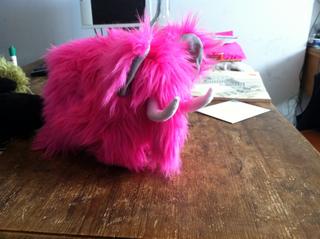
Daniel Kahn Gillmor: Make a Woolly Mammoth (thanks, inkscape!)

I feel like i've done a lot of blogging recently about failing to do things with proprietary software. That's annoying. This post is about something i made successfully with free software (and some non-software crafting): I made a Woolly Mammoth for my nephew!I documented the pattern (with pictures!) that i came up with using Inkscape (and used markdown, pandoc, emacs, pdftk, and other free software in the process). i've also published the source for the pattern via git if you want to modify it:
git clone git://lair.fifthhorseman.net/~dkg/woolly
Writing up the documentation makes me realize that i don't know of any software tools designed specifically for facilitating fabric/craft construction. Some interesting software ideas: Anyone have any ideas?Tags: brainstorming, crafting, inkscape

27 February 2013

Matthew Garrett: Supporting third-party keys in a Secure Boot world

It's fairly straightforward to boot a UEFI Secure Boot system using something like Shim or the Linux Foundation's loader, and for distributions using either the LF loader or the generic version of Shim that's pretty much all you need to care about. The physically-present end user has had to explicitly install new keys or hashes, and that means that you no longer need to care about Microsoft's security policies or (assuming there's no exploitable flaws in the bootloader itself) fear any kind of revocation.

But what about if you're a distribution that cares about booting without the user having to install keys? There's several reasons to want that (convenience for naive users, ability to netboot, that kind of thing), but it has the downside that your system can now be used as an attack vector against other operating systems. Do you care about that? It depends how you weigh the risks. First, someone would have to use your system to attack another. Second, Microsoft would have to care enough to revoke your signature. The first hasn't happened yet, so we have no real idea how likely the second is. However, it doesn't seem awfully unlikely that Microsoft would be willing to revoke a distribution signature if that distribution were being used to attack Windows.

How do you avoid that scenario? There's various bits of security work you need to do, but one of them is to require that all your kernel modules be signed. That's easy for the modules in the distribution, since you just sign them all before shipping them. But how about third party modules? There's three main options here:

  1. Don't support third party modules on Secure Boot systems
  2. Have the distribution sign the modules
  3. Have the vendor sign the modules

The first option is easy, but not likely to please users. Or hardware vendors. Not ideal.

The second option is irritating for a bunch of reasons, and a pretty significant one is license-related. If you sign a module, does that mean you're endorsing it in some way? Does signing the nvidia driver mean that you think there's no license concerns? Even ignoring that, how do you decide whose drivers to sign? We can probably assume that companies like AMD and nvidia are fairly reputable, but how about Honest John's Driver Emporium? Verifying someone's identity is astonishingly expensive to do a good job of yourself, and not hugely cheaper if you farm it out to a third party. It's also irritating for the driver vendor, who needs a separate signature for every distribution they support. So, while possible, this isn't an attractive solution.

The third option pushes the responsibility out to other people, and it's always nice to get other people to do work instead of you. The problem then is deciding whose keys you trust. You can push that off to the user, but it's not the friendliest solution. The alternative is to trust any keys that are signed with a trusted key. But what is a trusted key? Having the distribution sign keys just pushes us back to option (2) - you need to verify everyone's identity, and they need a separate signing key for every distribution they support. In an ideal world, there'd be a key that we already trust and which is owned by someone willing to sign things with it.

The good news is that such a key exists. The bad news is that it's owned by Microsoft.

The recent discussion on LKML was about a patchset that allowed the kernel to install new keys if they were inside a PE/COFF binary signed by a trusted key. It's worth emphasising that this patchset doesn't change the set of keys that the kernel trusts - the kernel trusts keys that are installed in your system firmware, so if your system firmware trusts the Microsoft key then your kernel already trusts the Microsoft key. The reasoning here is pretty straightforward. If your firmware trusts things signed by Microsoft, and if a bad person can get things signed by Microsoft, the bad person can already give you a package containing a backdoored bootloader. Letting them sign kernel modules doesn't alter the power they already have over your system. Microsoft will sign PE/COFF binaries, so a vendor would just have to sign up with Microsoft, pay $99 to Symantec to get their ID verified, wrap their key in a PE/COFF binary and then get it signed by Microsoft. The kernel would see that this object was signed by a trusted key and extract and install the key.

Linus is, to put it mildly, unenthusiastic about this idea. It adds some extra complexity to the kernel in the form of a binary parser that would only be used to load keys from userspace, and the kernel already has an interface for that in the form of X509 certificates. The problem we have is that Microsoft won't sign X509 certificates, and there's no way to turn a PE/COFF signature into an X509 signature. Someone would have to re-sign the keys, which starts getting us back to option (2). One way around this would be to have an automated service that accepts PE/COFF objects, verifies that they're signed by Microsoft, extracts the key, re-signs it with a new private key and spits out an X509 certificate. That avoids having to add any new code to the kernel, but it means that there would have to be someone to run that service and it means that their public key would have to be trusted by the kernel by default.

Who would that third party be? The logical choice might be the Linux Foundation, but since we have members of the Linux Foundation Technical Advisory Board saying that they think module signing is unnecessary and that there's no real risk of revocation, it doesn't seem likely that they'll be enthusiastic. A distribution could do it, but there'd be arguments about putting one distribution in a more privileged position than others. So far, nobody's stood up to do this.

A possible outcome is that the distributions who care about signed modules will all just carry this patchset anyway, and the ones who don't won't. That's probably going to be interpreted by many as giving too much responsibility to Microsoft, but it's worth emphasising that these patches change nothing in that respect - if your firmware trusts Microsoft, you already trust Microsoft. If your firmware doesn't trust Microsoft, these patches will not cause your kernel to trust Microsoft. If you've set up your own chain of trust instead, anything signed by Microsoft will be rejected.

What's next? It wouldn't surprise me too much if nothing happens until someone demonstrates how to use a signed Linux system to attack Windows. Microsoft's response to that will probably determine whether anyone ends up caring.

comment count unavailable comments

26 February 2013

Olivier Berger: Python RDF example of a MySQL triple store thanks to redland/librdf

In a way similar to my previous post about persisting graphs in PostGreSQL in PHP, here s similar examples for Python and MySQL. Note that you may need to adjust the MySQL table creation templates if you re running librdf version 1.0.16 (see this bug for details). The first example will load data from a file, and store the parsed model to the RDBMS, while the second example, will reload the model and issue queries on it. These examples don t do much, but hopefully, they ll help you get started if you re interested in using redland/librdf. One potential benefit can be interoperability with other languages like PHP, for instance if you re running harvesters in Python that will save facts in a triple store, which is then accessed by a PHP application that will publish a Web interface.

Ingo Juergensmann: Xen problems with VMs on 2.6.32-5-xen-amd64?

On Saturday there were some updates for Squeeze/Stable, for example a new/updated version of Xen hypervisor and kernels were downloaded and installed:
gate:~# dir /var/cache/apt/archives/
base-files_6.0squeeze7_amd64.deb                 libxenstore3.0_4.0.1-5.6_amd64.deb
bind9-host_1%3a9.7.3.dfsg-1~squeeze9_amd64.deb   linux-base_2.6.32-48_all.deb
dbus_1.2.24-4+squeeze2_amd64.deb                 linux-image-2.6.32-5-amd64_2.6.32-48_amd64.deb
dbus-x11_1.2.24-4+squeeze2_amd64.deb             linux-image-2.6.32-5-xen-amd64_2.6.32-48_amd64.deb
firmware-linux-free_2.6.32-48_all.deb            lock
gzip_1.3.12-9+squeeze1_amd64.deb                 openssh-client_1%3a5.5p1-6+squeeze3_amd64.deb
host_1%3a9.7.3.dfsg-1~squeeze9_all.deb           openssh-server_1%3a5.5p1-6+squeeze3_amd64.deb
libbind9-60_1%3a9.7.3.dfsg-1~squeeze9_amd64.deb  openssl_0.9.8o-4squeeze14_amd64.deb
libcups2_1.4.4-7+squeeze3_amd64.deb              partial
libdbus-1-3_1.2.24-4+squeeze2_amd64.deb          perl_5.10.1-17squeeze5_amd64.deb
libdbus-glib-1-2_0.88-2.1+squeeze1_amd64.deb     perl-base_5.10.1-17squeeze5_amd64.deb
libdns69_1%3a9.7.3.dfsg-1~squeeze9_amd64.deb     perl-modules_5.10.1-17squeeze5_all.deb
libisc62_1%3a9.7.3.dfsg-1~squeeze9_amd64.deb     ssh_1%3a5.5p1-6+squeeze3_all.deb
libisccc60_1%3a9.7.3.dfsg-1~squeeze9_amd64.deb   tzdata_2012g-0squeeze1_all.deb
libisccfg62_1%3a9.7.3.dfsg-1~squeeze9_amd64.deb  xen-hypervisor-4.0-amd64_4.0.1-5.6_amd64.deb
libldap-2.4-2_2.4.23-7.3_amd64.deb               xen-linux-system-2.6.32-5-xen-amd64_2.6.32-48_amd64.deb
liblwres60_1%3a9.7.3.dfsg-1~squeeze9_amd64.deb   xenstore-utils_4.0.1-5.6_amd64.deb
libperl5.10_5.10.1-17squeeze5_amd64.deb          xen-utils-4.0_4.0.1-5.6_amd64.deb
libssl0.9.8_0.9.8o-4squeeze14_amd64.deb
Unfortunately this update appears to be problematic on my Xen hosting server. This night it happened the second time that some of the virtual network interfaces disappeared or turned out to be non-working. For example I have two VMs: one running the webserver and one running the databases. Between these two VMs there's a bridge on the dom0 and both VMs have a VIF to that (internal) bridge. What happens is that this bridge becomes inaccessible from within the webserver VM. Sadly there's not much to see in the log files. I just spotted this on dom0:
Feb 26 01:01:29 gate kernel: [12697.907512] vif3.1: Frag is bigger than frame.
Feb 26 01:01:29 gate kernel: [12697.907550] vif3.1: fatal error; disabling device
Feb 26 01:01:29 gate kernel: [12697.919921] xenbr1: port 3(vif3.1) entering disabled state
Feb 26 01:22:00 gate kernel: [13928.644888] vif2.1: Frag is bigger than frame.
Feb 26 01:22:00 gate kernel: [13928.644920] vif2.1: fatal error; disabling device
Feb 26 01:22:00 gate kernel: [13928.663571] xenbr1: port 2(vif2.1) entering disabled state
Feb 26 01:40:44 gate kernel: [15052.629280] vif7.1: Frag is bigger than frame.
Feb 26 01:40:44 gate kernel: [15052.629314] vif7.1: fatal error; disabling device
Feb 26 01:40:44 gate kernel: [15052.641725] xenbr1: port 6(vif7.1) entering disabled state
This corresponds to the number of VMs having lost their internal connection to the bridge. On the webserver VM I see this output:
Feb 26 01:59:01 vserv1 kernel: [16113.539767] IPv6: sending pkt_too_big to self
Feb 26 01:59:01 vserv1 kernel: [16113.539794] IPv6: sending pkt_too_big to self
Feb 26 02:30:54 vserv1 kernel: [18026.407517] IPv6: sending pkt_too_big to self
Feb 26 02:30:54 vserv1 kernel: [18026.407546] IPv6: sending pkt_too_big to self
Feb 26 02:30:54 vserv1 kernel: [18026.434761] IPv6: sending pkt_too_big to self
Feb 26 02:30:54 vserv1 kernel: [18026.434787] IPv6: sending pkt_too_big to self
Feb 26 03:39:16 vserv1 kernel: [22128.768214] IPv6: sending pkt_too_big to self
Feb 26 03:39:16 vserv1 kernel: [22128.768240] IPv6: sending pkt_too_big to self
Feb 26 04:39:51 vserv1 kernel: [25764.250170] IPv6: sending pkt_too_big to self
Feb 26 04:39:51 vserv1 kernel: [25764.250196] IPv6: sending pkt_too_big to self
Rebooting the VMs will result in a non-working VM as it will get paused on creation and Xen scripts complain about not working hotplug scripts and Xen logs shows this:
[2013-02-25 13:06:34 5470] DEBUG (XendDomainInfo:101)
XendDomainInfo.create(['vm', ['name', 'vserv1'], ['memory', '2048'],
['on_poweroff', 'destroy'], ['on_reboot', 'restart'], ['on_crash',
'restart'], ['on_xend_start', 'ignore'], ['on_xend_stop', 'ignore'],
['vcpus', '2'], ['oos', 1], ['bootloader', '/usr/lib/xen-4.0/bin/pygrub'],
['bootloader_args', ''], ['image', ['linux', ['root', '/dev/xvdb '],
['videoram', 4], ['tsc_mode', 0], ['nomigrate', 0]]], ['s3_integrity', 1],
['device', ['vbd', ['uname', 'phy:/dev/lv/vserv1-boot'], ['dev', 'xvda'],
['mode', 'w']]], ['device', ['vbd', ['uname', 'phy:/dev/lv/vserv1-disk'],
['dev', 'xvdb'], ['mode', 'w']]], ['device', ['vbd', ['uname',
'phy:/dev/lv/vserv1-swap'], ['dev', 'xvdc'], ['mode', 'w']]], ['device',
['vbd', ['uname', 'phy:/dev/lv/vserv1mirror'], ['dev', 'xvdd'], ['mode',
'w']]]])
[2013-02-25 13:06:34 5470] DEBUG (XendDomainInfo:2508)
XendDomainInfo.constructDomain
[2013-02-25 13:06:34 5470] DEBUG (balloon:220) Balloon: 2100000 KiB free;
need 16384; done.
[2013-02-25 13:06:34 5470] DEBUG (XendDomain:464) Adding Domain: 39
[2013-02-25 13:06:34 5470] DEBUG (XendDomainInfo:2818)
XendDomainInfo.initDomain: 39 256
[2013-02-25 13:06:34 5781] DEBUG (XendBootloader:113) Launching bootloader
as ['/usr/lib/xen-4.0/bin/pygrub', '--args=root=/dev/xvdb  ',
'--output=/var/run/xend/boot/xenbl.6040', '/dev/lv/vserv1-boot'].
[2013-02-25 13:06:39 5470] DEBUG (XendDomainInfo:2845)
_initDomain:shadow_memory=0x0, memory_static_max=0x80000000,
memory_static_min=0x0.
[2013-02-25 13:06:39 5470] INFO (image:182) buildDomain os=linux dom=39
vcpus=2
[2013-02-25 13:06:39 5470] DEBUG (image:721) domid	    = 39
[2013-02-25 13:06:39 5470] DEBUG (image:722) memsize	    = 2048
[2013-02-25 13:06:39 5470] DEBUG (image:723) image	    =
/var/run/xend/boot/boot_kernel.xj7W_t
[2013-02-25 13:06:39 5470] DEBUG (image:724) store_evtchn   = 1
[2013-02-25 13:06:39 5470] DEBUG (image:725) console_evtchn = 2
[2013-02-25 13:06:39 5470] DEBUG (image:726) cmdline	    =
root=UUID=ed71a39f-fd2e-4035-8557-493686baa151 ro root=/dev/xvdb
[2013-02-25 13:06:39 5470] DEBUG (image:727) ramdisk	    =
/var/run/xend/boot/boot_ramdisk.QavuAo
[2013-02-25 13:06:39 5470] DEBUG (image:728) vcpus	    = 2
[2013-02-25 13:06:39 5470] DEBUG (image:729) features	    =
[2013-02-25 13:06:39 5470] DEBUG (image:730) flags	    = 0
[2013-02-25 13:06:39 5470] DEBUG (image:731) superpages     = 0
[2013-02-25 13:06:40 5470] INFO (XendDomainInfo:2367) createDevice: vbd :
 'uuid': '04d99772-cf27-aecf-2d1b-c73eaf657410', 'bootable': 1, 'driver':
'paravirtualised', 'dev': 'xvda', 'uname': 'phy:/dev/lv/vserv1-boot',
'mode': 'w' 
[2013-02-25 13:06:40 5470] DEBUG (DevController:95) DevController: writing
 'virtual-device': '51712', 'device-type': 'disk', 'protocol':
'x86_64-abi', 'backend-id': '0', 'state': '1', 'backend':
'/local/domain/0/backend/vbd/39/51712'  to
/local/domain/39/device/vbd/51712.
[2013-02-25 13:06:40 5470] DEBUG (DevController:97) DevController: writing
 'domain': 'vserv1', 'frontend': '/local/domain/39/device/vbd/51712',
'uuid': '04d99772-cf27-aecf-2d1b-c73eaf657410', 'bootable': '1', 'dev':
'xvda', 'state': '1', 'params': '/dev/lv/vserv1-boot', 'mode': 'w',
'online': '1', 'frontend-id': '39', 'type': 'phy'  to
/local/domain/0/backend/vbd/39/51712.
[2013-02-25 13:06:40 5470] INFO (XendDomainInfo:2367) createDevice: vbd :
 'uuid': 'e46cb89f-3e54-41d2-53bd-759ed6c690d2', 'bootable': 0, 'driver':
'paravirtualised', 'dev': 'xvdb', 'uname': 'phy:/dev/lv/vserv1-disk',
'mode': 'w' 
[2013-02-25 13:06:40 5470] DEBUG (DevController:95) DevController: writing
 'virtual-device': '51728', 'device-type': 'disk', 'protocol':
'x86_64-abi', 'backend-id': '0', 'state': '1', 'backend':
'/local/domain/0/backend/vbd/39/51728'  to
/local/domain/39/device/vbd/51728.
[2013-02-25 13:06:40 5470] DEBUG (DevController:97) DevController: writing
 'domain': 'vserv1', 'frontend': '/local/domain/39/device/vbd/51728',
'uuid': 'e46cb89f-3e54-41d2-53bd-759ed6c690d2', 'bootable': '0', 'dev':
'xvdb', 'state': '1', 'params': '/dev/lv/vserv1-disk', 'mode': 'w',
'online': '1', 'frontend-id': '39', 'type': 'phy'  to
/local/domain/0/backend/vbd/39/51728.
[2013-02-25 13:06:40 5470] INFO (XendDomainInfo:2367) createDevice: vbd :
 'uuid': 'e2d61860-7448-1843-3935-6b63c5d2878e', 'bootable': 0, 'driver':
'paravirtualised', 'dev': 'xvdc', 'uname': 'phy:/dev/lv/vserv1-swap',
'mode': 'w' 
[2013-02-25 13:06:40 5470] DEBUG (DevController:95) DevController: writing
 'virtual-device': '51744', 'device-type': 'disk', 'protocol':
'x86_64-abi', 'backend-id': '0', 'state': '1', 'backend':
'/local/domain/0/backend/vbd/39/51744'  to
/local/domain/39/device/vbd/51744.
[2013-02-25 13:06:40 5470] DEBUG (DevController:97) DevController: writing
 'domain': 'vserv1', 'frontend': '/local/domain/39/device/vbd/51744',
'uuid': 'e2d61860-7448-1843-3935-6b63c5d2878e', 'bootable': '0', 'dev':
'xvdc', 'state': '1', 'params': '/dev/lv/vserv1-swap', 'mode': 'w',
'online': '1', 'frontend-id': '39', 'type': 'phy'  to
/local/domain/0/backend/vbd/39/51744.
[2013-02-25 13:06:40 5470] INFO (XendDomainInfo:2367) createDevice: vbd :
 'uuid': 'd314a46e-1ce9-0e8d-b009-3f08e29735f5', 'bootable': 0, 'driver':
'paravirtualised', 'dev': 'xvdd', 'uname': 'phy:/dev/lv/vserv1mirror',
'mode': 'w' 
[2013-02-25 13:06:40 5470] DEBUG (DevController:95) DevController: writing
 'virtual-device': '51760', 'device-type': 'disk', 'protocol':
'x86_64-abi', 'backend-id': '0', 'state': '1', 'backend':
'/local/domain/0/backend/vbd/39/51760'  to
/local/domain/39/device/vbd/51760.
[2013-02-25 13:06:40 5470] DEBUG (DevController:97) DevController: writing
 'domain': 'vserv1', 'frontend': '/local/domain/39/device/vbd/51760',
'uuid': 'd314a46e-1ce9-0e8d-b009-3f08e29735f5', 'bootable': '0', 'dev':
'xvdd', 'state': '1', 'params': '/dev/lv/vserv1mirror', 'mode': 'w',
'online': '1', 'frontend-id': '39', 'type': 'phy'  to
/local/domain/0/backend/vbd/39/51760.
[2013-02-25 13:06:40 5470] DEBUG (XendDomainInfo:3400) Storing VM details:
 'on_xend_stop': 'ignore', 'shadow_memory': '0', 'uuid':
'04541225-6d3c-3cae-a4c4-0b6d4ccfac7a', 'on_reboot': 'restart',
'start_time': '1361794000.37', 'on_poweroff': 'destroy', 'bootloader_args':
'', 'on_xend_start': 'ignore', 'on_crash': 'restart', 'xend/restart_count':
'0', 'vcpus': '2', 'vcpu_avail': '3', 'bootloader':
'/usr/lib/xen-4.0/bin/pygrub', 'image': "(linux (kernel ) (args
'root=/dev/xvdb  ') (superpages 0) (tsc_mode 0) (videoram 4) (pci ())
(nomigrate 0) (notes (HV_START_LOW 18446603336221196288) (FEATURES
'!writable_page_tables pae_pgdir_above_4gb') (VIRT_BASE
18446744071562067968) (GUEST_VERSION 2.6) (PADDR_OFFSET 0) (GUEST_OS linux)
(HYPERCALL_PAGE 18446744071578882048) (LOADER generic) (SUSPEND_CANCEL 1)
(PAE_MODE yes) (ENTRY 18446744071584289280) (XEN_VERSION xen-3.0)))",
'name': 'vserv1' 
[2013-02-25 13:06:40 5470] DEBUG (XendDomainInfo:1804) Storing domain
details:  'console/ring-ref': '2143834', 'image/entry':
'18446744071584289280', 'console/port': '2', 'store/ring-ref': '2143835',
'image/loader': 'generic', 'vm':
'/vm/04541225-6d3c-3cae-a4c4-0b6d4ccfac7a',
'control/platform-feature-multiprocessor-suspend': '1',
'image/hv-start-low': '18446603336221196288', 'image/guest-os': 'linux',
'cpu/1/availability': 'online', 'image/virt-base': '18446744071562067968',
'memory/target': '2097152', 'image/guest-version': '2.6', 'image/pae-mode':
'yes', 'description': '', 'console/limit': '1048576', 'image/paddr-offset':
'0', 'image/hypercall-page': '18446744071578882048',
'image/suspend-cancel': '1', 'cpu/0/availability': 'online',
'image/features/pae-pgdir-above-4gb': '1',
'image/features/writable-page-tables': '0', 'console/type': 'xenconsoled',
'name': 'vserv1', 'domid': '39', 'image/xen-version': 'xen-3.0',
'store/port': '1' 
[2013-02-25 13:06:40 5470] DEBUG (DevController:95) DevController: writing
 'protocol': 'x86_64-abi', 'state': '1', 'backend-id': '0', 'backend':
'/local/domain/0/backend/console/39/0'  to
/local/domain/39/device/console/0.
[2013-02-25 13:06:40 5470] DEBUG (DevController:97) DevController: writing
 'domain': 'vserv1', 'frontend': '/local/domain/39/device/console/0',
'uuid': 'c8819aed-c78f-02b8-0ef7-1600abd15add', 'frontend-id': '39',
'state': '1', 'location': '2', 'online': '1', 'protocol': 'vt100'  to
/local/domain/0/backend/console/39/0.
[2013-02-25 13:06:40 5470] DEBUG (XendDomainInfo:1891)
XendDomainInfo.handleShutdownWatch
[2013-02-25 13:06:40 5470] DEBUG (DevController:139) Waiting for devices
vif2.
[2013-02-25 13:06:40 5470] DEBUG (DevController:139) Waiting for devices
vif.
[2013-02-25 13:06:40 5470] DEBUG (DevController:139) Waiting for devices
vscsi.
[2013-02-25 13:06:40 5470] DEBUG (DevController:139) Waiting for devices
vbd.
[2013-02-25 13:06:40 5470] DEBUG (DevController:144) Waiting for 51712.
[2013-02-25 13:06:40 5470] DEBUG (DevController:628) hotplugStatusCallback
/local/domain/0/backend/vbd/39/51712/hotplug-status.
From my point of view, either Xen hypervisor or the kernel seems to be broken, but it's hard to tell for me. Maybe it would be easier to update the system from Squeeze to Wheezy and get rid off this problem that way? On the other hand this would solve the problem. Are there any other people experiencing problems with that latest update of Xen and kernel? UPDATE: Bug #701744 filed. UPDATE 2: Downgrading kernel and hypervisor on dom0 to the following packages from snapshot.debian.org seems to have solved that problem.
  • xen-hypervisor-4.0-amd64_4.0.1-5.4_amd64.deb
  • linux-image-2.6.32-5-xen-amd64_2.6.32-46_amd64.deb
Note that I haven't tested yet with the newest kernel update from DSA-2632-1. UPDATE 3: After running with older versions of hypervisor and kernel I now have upgraded the hypervisor to xen-hypervisor-4.0-amd64_4.0.1-5.6_amd64.deb and rebooted. Let's see whether it's running stable or not. If not it's the hypervisor, if yes, it's the kernel. UPDATE 4: apparently it's the kernel which is buggy. And the kernel from DSA-2632-1 is affected as well. So, the current workaround is to downgrad to linux-image-2.6.32-5-xen-amd64_2.6.32-46_amd64.deb.

Kategorie:

Russ Allbery: Review: Witches Abroad

Review: Witches Abroad, by Terry Pratchett
Series: Discworld #12
Publisher: Harper
Copyright: 1991
Printing: February 2008
ISBN: 0-06-102061-3
Format: Mass market
Pages: 350
Witches Abroad is the twelfth book in the Discworld series, but there's no strong reason why you couldn't start here. It's the second book about the three witches (Granny Weatherwax, Nanny Ogg, and Magrat Garlick), following Wyrd Sisters, and the third book about Granny Weatherwax, but it doesn't assume any knowledge of the previous books or of Discworld in general. Desiderata Hollow is dying. This is not a surprise; she's known for a long time exactly when she was going to die, and that time has come. She's not particularly bothered by it, but it does pose one difficult problem. She's a fairy godmother, as well as a witch, and she's balancing another fairy godmother because they come in pairs. With her dead, Lilith seems likely to win their long struggle, and that would be a bad thing. She needs to pass her wand on to a successor, but she wasn't the planning sort. At least she claims; this comment of hers turns out to hide an elegant bit of manipulation that leaves her wand in the hands of Magrat and sends the three witches on their way to the city of Genua to confront Lilith. There are two halves to Witches Abroad. The first half is the setup described above and their trip across Discworld. The second half is a sort of retelling of Cinderella, as foreshadowed early on by Desiderata. But the whole book is about stories and story shapes and their head-on collisions with the practical confidence of Nanny Ogg and the endless stubbornness of Granny Weatherwax. I think the three witches are one of Pratchett's best inventions, and Granny Weatherwax the best of the three. She has many of the characteristics that would normally relegate her to a supporting mentor figure: older, very knowledgeable, remarkably good at getting her way and at manipulating situations, and not particularly interested in going on adventures. But Pratchett turns this on end at every opportunity. Granny Weatherwax doesn't act like a mentor at all: she doesn't explain things to Magrat, or anyone else; she's almost constantly bickering with the other witches; and she's a fount of irritated and exasperated opinions about the world. She's one of the best irascibly competent characters in fiction, and she steals every scene she's in, refusing to become a supporting character and staying at the center of the story, despite not being a viewpoint character. (Pratchett wisely keeps her out of the viewpoint role for most of the story, since much of her knowledge and "headology" would be less effective if the reader knew what she was thinking.) The dynamics between the three witches are the best part of this book, and I love all three of them. But I'm also a sucker for fractured fairy tales in general, and Witches Abroad is full of them. Their opponent loves stories and has gathered most of her power from reinforcing and manipulating stories, which means that the density of random stories keeps increasing as they approach Genua. That provides numerous opportunities for the witches to stumble through, analyze, take apart, twist, or untwist numerous familiar stories, ranging from Red Riding Hood to Sleeping Beauty. Pratchett keeps things moving right along, not belaboring connections and not explaining too much, which makes it very easy to keep turning pages. The story does get a bit slower in Genua. There's quite a bit of scene-setting and figuring things out, and while Pratchett maintains the steady stream of humor, it isn't quite as compelling without the ever-changing context. He introduces a bit of voodoo magic, which I found to be the least interesting of the multiple styles of magic that show up here. But there are some absolutely brilliant bits with Nanny Ogg's cat, a wonderfully annoyed Cinderella, and an inversion of the traditional story that kept surprising me. I thought the ending was a bit of an anticlimax, but it does fit the nature of the characters. Despite a few plot short-comings, this is my favorite Discworld book up to this point in the series. Definitely recommended, and not a horrible starting point. Followed by Small Gods in the chronological sense and (later) by Lords and Ladies in the plot sense. Rating: 8 out of 10

25 February 2013

Russ Allbery: Review: The Hare with Amber Eyes

Review: The Hare with Amber Eyes, by Edmund de Waal
Publisher: Farrar, Straus and Giroux
Copyright: 2010
ISBN: 0-374-10597-9
Format: Kindle
Pages: 351
A netsuke ( ) is a miniature sculpture, often made from ivory or boxwood, generally rounded and no larger than a matchbox. They were a part of Japanese clothing starting from the 17th century: traditional garments had no pockets, but people needed a way to carry small objects around with them, so they wore pouches or small boxes attached to a cord. The cord could then be passed under the sash of the garment and be held in place there by a netsuke attached to the end of the cord, since the netsuke was too large to slip under the sash. The hare with amber eyes is one of 264 netsuke. It, and all the rest, belonged to Edmund de Waal's uncle Iggie. They sat in a vitrine in his home in Japan, where de Waal went for a two-year scholarship and was working on a book on japonisme: the passionate and creative Western misunderstanding of Japan. When Iggie later died in 1991, de Waal inherited the collection. This book is his attempt to tell their history. The Hare with Amber Eyes falls into the genre of family memoir or biography, but it's one told from an unusual angle. Edmund de Waal is a potter by profession: an artist who creates physical objects that then pass from his studio out into the world. The physicality of the netsuke their occupation of time and space and their passsage through the world fascinates him, and he tries to express that fascination to the reader and uses it as a focal point for the memoir. He tells, here, the story of his own family, but he does so via the netsuke, following them from their purchase in Paris in 1871 through one branch of the family and then another until they reach Iggie and, finally, him. Along the way, he tries to put them into context. At first, the context is primarily artistic, and the early parts of this book are something of a tour of late 19th century artistic culture in Paris. But, as the story continues, the connection becomes more emotional and the context becomes more complicated. Anyone who is a fan of the TV program Antiques Roadshow or any similar effort to trace the history of specific objects will see the immediate appeal in this presentation. Antiques are fascinating in their mute path through lives and history; attempting to reconstruct the rooms they've sat in and the conversations they've witnessed is something I've always found intriguing. But it's also very difficult to do. Most of our objects, and most owners of objects, simply don't have that sort of documentation. I was wondering, at the start of this book, how de Waal was going to manage to construct his history. The answer is that his family is, or at least was, famous enough to have letters, papers, and history in libraries throughout Europe. That's what makes the parts of the book before Iggie's living memory possible. It's a bit disappointing, if unsurprising; de Waal doesn't have any special technique to find hidden history, and most objects could never have this sort of history written about them. The first owner of the netsuke in his family is Charles Ephrussi, a critic, historian, and art historian who was a patron of the Impressionists and who was important enough in Parisian art culture that he is the inspiration of a character in Marcel Proust's Remembrance of Things Past. This means that quite a lot of this book is about people who moved through social circles and lived in ways that I find quite foreign, which made it hard to invest too much in the first part of the book. The Ephrussi family was originally from Odessa and made a fortune as grain merchants some time prior to the start of the history, and by the time de Waal opens their story, they have vast inherited wealth. There is no sign in the book that Charles needs to work in any way. The first part of the book paints a picture of the culture of art patronage partly via descriptions of Charles's rooms and personal collection, to which the netsuke were added during the surge in interest in Japanese art in Europe produced by the opening of Japan during the Meiji period. It's interesting, but for me in a distant and intellectual way. (People with a deeper interest in Impressionist art or other late 19th century art may have a different reaction.) De Waal writes at length at the start of this book about avoiding sentimentality and trying to take an honest and immersive look at the history of the netsuke. The emotional intensity that he brings to this goal seemed a bit odd, since little in the early part of the book seems to tempt towards sentimentality. But then the Dreyfus Affair enters Charles's story, followed by his gift of the vitrine and the netsuke to a cousin in Austria as a marriage gift, and I started to realize the implications of following a possession of a prominent Jewish family in Europe during the first half of the twentieth century. This is the sort of non-fiction book that you can spoil, so I won't give a detailed description of the rest of the book. But there is a specific event in the history of the netsuke that de Waal tells that would be the story most people would start with, and I now understand the sentimentality that de Waal was trying to avoid. It's a great story, but one of the things I like about this book is that de Waal puts it into a broader context and complicates the story. He includes the long periods of time when the netsuke were mostly ignored, he ties them into the history of western obsession with (and exploitation of) Japanese art, and he shows how the sturdy nature of the netsuke, meant for physical handling rather than display, led to them creating the emotional connection that made them important to the family. It's a book that deals with anti-Semitism with accuracy and specifics without being either lurid or overwhelming. It's a book that traces a line through one of the most overwritten and well-trod areas of history and manages to stay on its own path. It's a book that made me angry, and made me cry, and then made me step back and think about those emotions in a broader context and think about the benefits of leaving those emotions behind. I've never read a book quite like this before. It's slow in places (particularly if one is not very interested in art history), utterly compelling in others, and carefully avoids any simple themes or grand stories. It's entangled with some of the darkest events of recent history, but de Waal stays tightly focused on the family through the lens of the netsuke, which is valuable for keeping the story from drifting into well-worn and less unique material. I was not as completely taken by this book as the review that got me to buy it (it's an excellent review, better than this one). But I'm glad that I read it, and I feel like I now know more about the world. Rating: 7 out of 10

Robert Collins: El cheapo 10Gbps networking

I ve been hitting the limits of gigabit ethernet at home for quite a while now, and as I spend more time working with cloud technologies this started to frustrate me. I d heard of other folk getting good results with second hand Infiniband cards and decided to give it a go myself. I bought two Voltaire dual-port Infiniband adapters a 4X SDR PCI-E x4 card. And in a 2 metre 8470 cable, and we re in business. There are other, more comprehensive guides around to setting this up e.g. http://davidhunt.ie/wp/?p=2291 or http://pkg-ofed.alioth.debian.org/howto/infiniband-howto-4.html On ubuntu the hardware was autodetected; all I needed to do was:
modprobe ib_ipoib
sudo apt-get install opensm # on one machine
And configure /etc/network/interfaces e.g.:
iface ib1 inet static
address 192.168.2.3
netmask 255.255.255.0
network 192.168.2.0
up echo connected > find /sys -name mode   grep ib1 
up echo 65520 > find /sys -name mtu   grep ib1 
With no further tuning I was able to get 2Gbps doing linear file copies via Samba, which I suspect is rather pushing the limits of my circa 2007 home server I ll investigate futher to identify where the bottlenecks are, but the networking itself I suspect is ok netperf got me 6.7Gbps in a trivial test.

24 February 2013

Andrew Pollock: [tech] On owning a Nissan Leaf

I'll soon be disposing of the Nissan Leaf that we leased a few months ago, so I thought it a useful exercise to write about my experiences with it. I am not a car man. I am a gadget man. For me, driving is a means to an end, and I'm much more interested in what I call the "cabin" experience, than the "driving" experience, so this is going to slanted much more that way. That said, I found the Nissan Leaf a fun car to drive, from my limited experiences of having fun driving cars. I liked how responsive it was when you put your foot down. It has two modes of operation, "D" and "Eco". I've actually taken to driving it in "Eco" mode most of the time, as it squeezes more range out of the batteries, but occasionally I'll pop it back into "D" to have a bit of fun. The main difference between the two modes, from a driving perspective, is it seems to limit the responsiveness of the accelerator. In "Eco" mode it feels more like you're driving in molasses, whereas in "D" mode, when you put your foot down, it responses instantly. "D" is great for dragging people off at the lights. It's a very zippy little car in "D" mode. It feels lighter. I've noticed that it has a bit of a penchant for over steering. Or maybe that's just my driving. If I have floored it a bit to take a right turn into oncoming traffic, I've noticed slight over steering. That's about all the driving type "real car stuff" I'll talk about. Now to the driver's "cabin experience". It's absolutely fabulous. I love sitting in the driver's seat of this car. Firstly, the seat itself is heated (in fact all of them are). As is the steering wheel. Nissan has gone to great lengths to allow you to avoid needing to run the car's heating system to heat the car, as doing so immediately drops at least 10 miles off the range. Unfortunately I found the windscreen had a tendency to fog up in the winter rainy periods, so I'd have to intermittently fire up the air conditioning to defog the windscreen. Of course, in the summer months, you're going to want to run the AC to cool down, so the range hit in that situation is unavoidable. I've only had this car from late Autumn until late Winter so far, so that hasn't been an issue I've had to contend with. The dashboard is all digital, and looks relatively high tech, which appeals to my inner geek. It's a dashboard. It tells you stuff. The stuff you'd expect it to tell you. Enough said. The audio system is nice. It supports Bluetooth audio, so one can be streaming Pandora from one's phone, through the sound system, for example. Or listening to audio from the phone. There's also a USB port, and it will play various audio files from USB storage. I found the way it chose to sort the files on a USB stick to be slightly surprising though. I haven't invested the time to figure out how I should be naming files so that they play in the order I expect them to play. The ability to play from USB storage compensates nicely for the fact that it only has a single CD player. (We have a 6 disc stacker in our 2006 Prius). The car also came with a 3 month free trial of Sirius XM satellite radio. This was fun. The only dance music FM station in the Bay Area has a weak signal in Mountain View, and I hate dance music with static, whereas there was an excellent electronic music station that I could listen to in glorious high definition. As long as I wasn't driving under a bridge. There's no way I'd pay money for satellite radio, but it was a fun gimmick to try out. The navigation system is really, really good. I haven't bothered using Google Maps on my phone at all. It gives such good spoken directions, that you don't even need to have the map on the screen. It names all the streets. I couldn't figure out a way to get distances in metric. The telematics service, Carwings, is probably my favourite feature. This is what really makes it feel like a car of the future. Through the companion Android application, I can view the charging status (if it's plugged in) or just check the available range (if it's not plugged in). From a web browser, I can plan a route, and push the route to the vehicle's navigation system. If the car is plugged in, I can also remotely turn on the vehicle's climate control system, pre-warming or cooling the car. It's a little thing, but the door unlocking annoyed me a little bit. I'm used to the Prius, where if you unlock the boot (that's trunk, Americans), or the front passenger door, all the doors unlocked. This was a convenient way of unlocking the car for multiple people as you approached it. With the Leaf, unlocking the boot only unlocks the boot. Unlocking the front passenger door only unlocks that door. It requires a second unlock action to unlock all the doors. I've found this to be slightly cumbersome when trying to unlock the car for everyone all at once, quickly (like when it's raining). Another minor annoyance is the headlights. I've gotten into the habit of driving with the headlights on all the time, because I believe it's safer. In the Prius, one could just leave the headlights switched to the "on" position, and they'd turn off whenever the driver's door was opened after the car was switched off. If you try that in the Leaf, the car beeps at you to warn you you've left the headlights on. It has an "auto" mode, where the car will choose when to turn the headlights on, based on ambient light conditions. In that case, when you turn the car off, it'll leave the headlights on for a configurable period of time and then turn them off. This is actually slightly unsettling, because it makes you think you've left your headlights on. The default timeout was quite long as well, something like 60 seconds. The way multiple Bluetooth phones are handled is just as annoying in the Leaf as it is in the Prius, which disappoints me, given 6 years have passed. The way I'd like to see multiple phones handled is the car chooses to pair with whichever phone is in range, or if multiple phones are in range, it asks or uses the last one it paired with. In reality, it tries to pair with whatever it paired with last time, and one has to press far too many buttons to switch it to one of the other phones it knows about. Range anxiety is definitely something of a concern. It can be managed by using the GPS navigation for long or otherwise anxiety-inducing trips, and then one can compare the "miles remaining" on the GPS with the "miles remaining" on the battery range, and reassure oneself that they will indeed make it to where they're trying to go. The worst case I had was getting to within 5 miles of empty. The car started complaining at me. The charging infrastructure in the Bay Area is pretty good. There are plenty of charging stations in San Francisco and San Jose. I'm spoiled in that I have free charging available at work (including a building at the end of my street, so I never bothered with getting a home charger installed). I've almost never had to pay for charging, so it's been great while gas prices have been on the rise. The car's navigation system knows about some charging stations, so you can plan a route with the charging stations it knows about in mind. The only problem is it doesn't know if the charging stations are in use. If you use the ChargePoint Android app, you can see if the charging stations are in use, but then you have to do this cumbersome dance to find an available charging station and plug the address into the vehicle's navigation system. Of course, what can then happen is in the time you're driving to the charging station, someone else starts using it. I actually got bitten by this yesterday. Would I buy a Leaf again? Not as my sole car. It makes a perfect second/commuter car, but as a primary vehicle, it's too limited by its range. They're also ridiculously expensive in Australia, and Brisbane has absolutely no charging infrastructure.

23 February 2013

Sylvain Le Gall: OUnit 2.0 progress

I have recently started to work on OUnit 2.0. The point of this new version will be to adapt OUnit to improve speed and compatibility with third party system: Only the 3 last point needs to be completed. Here is a screenshot of Jenkins reading JUnit output of an OUnit test: Jenkins, OUnit test results So if you have a long standing issue with OUnit, this is the time to submit a bug. OUnit BTS

Paul Tagliamonte: Here was a talk I gave at Boston Python a few weeks ago. Check...

<iframe allowfullscreen="allowfullscreen" frameborder="0" height="225" src="http://www.youtube.com/embed/ulekCWvDFVI?wmode=transparent&amp;autohide=1&amp;egm=0&amp;hd=1&amp;iv_load_policy=3&amp;modestbranding=1&amp;rel=0&amp;showinfo=0&amp;showsearch=0" width="400"></iframe>

Here was a talk I gave at Boston Python a few weeks ago. Check it out, and feel free to follow along with the slides, and take a look at the source. Sorry about the major futzup at 40 minutes in, and small mistakes throughout first time giving this talk! (link to the video for those on the planets)

Hideki Yamane: Open Source Conference 2013 Tokyo/Spring

Well, some Debian folks have participated in Open Source Conference 2013 Tokyo/Spring, at Meisei Univ.( ).

Takahide Nojima talked "Debian Update", various thing during about Debian during this 1 or 2 years. Participates are not so much, because it was first session and Meisei Univ is a little bit far from central Tokyo (it takes almost 40 minutes by train...), it was tough (at least for me ;)


Also we had a booth, chatted with users (and potential users) - 1000 participates were there in Meisei Univ.

Thanks folks.

Guido G nther: Accelerometer and screen orientation in GNOME3

Following up on using Debian on the WeTab with GNOME Shell I had a look at automatically adjusting the screen orientation when rotating the device. The accelerometer is handled in the asus_laptop module since kernel 3.2, so this shows up in /proc/bus/input/devices:
I: Bus=0019 Vendor=0000 Product=0000 Version=0000
N: Name="Pegatron Lucid Tablet Accelerometer"
P: Phys=pega_accel/input0
S: Sysfs=/devices/platform/asus_laptop/input/input4
U: Uniq=
H: Handlers=event4 js0 
B: PROP=0
B: EV=9
B: ABS=7
Whenever the screen orientation changes the driver emits a udev event. The helper in /lib/udev/accelerometer processes it thanks to /lib/udev/rules.d/61-accelerometer.rules, determines the orientation and adds the ID_INPUT_ACCELEROMETER_ORIENTATION property to the event which can be checked with udevadm monitor --property:
UDEV  [5778.534171] change   /devices/platform/asus_laptop/input/input4 (input)
ABS=7
ACTION=change
DEVPATH=/devices/platform/asus_laptop/input/input4
EV=9
ID_FOR_SEAT=input-platform-asus_laptop
ID_INPUT=1
ID_INPUT_ACCELEROMETER=1
ID_INPUT_ACCELEROMETER_ORIENTATION=right-up
ID_PATH=platform-asus_laptop
ID_PATH_TAG=platform-asus_laptop
MODALIAS=input:b0019v0000p0000e0000-e0,3,kra0,1,2,mlsfw
NAME="Pegatron Lucid Tablet Accelerometer"
PHYS="pega_accel/input0"
PRODUCT=19/0/0/0
PROP=0
SEQNUM=1550
SUBSYSTEM=input
TAGS=:seat:
UDEV_LOG=3
USEC_INITIALIZED=6154288
This is captured by gnome-settings-daemon (>=3.2) that adjusts the screen rotation using xrandr2 accordingly. This can be checked by running gnome-settings-daemon with --debug. The old way of using xinput events is no longer supported. Unfortunately Debian's udev has a minor bug that misdetects the input device so this patch is needed to have the screen orientation changed automatically on the WeTab. This blog is flattr enabled.

Daniel Pocock: Checking authors.txt before migrating to github

Ensuring that contributors are correctly recognised for their work is a cornerstone of the free and open source software community. Here I present a convenient script to help. When projects migrate to git (and usually Github these days), there is usually quite a lot of enthusiasm to get up and running and the authors.txt file is not looked at closely, or not at all. Github does a great job of summarising the free software contributions of each member. To do this, it needs to cross-reference their commits with their email addresses. This possibility is not unique to Github though: as git is a distributed version control system, it is quite possible that other services will seek to mirror and report on code contributions in the future. authors.txt can be tedious For a large project with a long history, there may be more than 100 committers, many of them designated by SVN user IDs that are unique to the project and not easily mapped to the user email address. If the project is hosted on Google Code SVN, then Google often makes dummy gmail.com accounts for the committers - and many people don't even use those accounts for anything else, not even as an email account. Including these accounts in a git repository is a bad idea if it is not the person's preferred email address. If they don't have that address associated with their Github account, then their commits won't be easily attributed to them at all. Often, building an accurate authors.txt can be tedious, but here are some steps to simplify it:
  • Use a script like svn-authors-extract to quickly build a template file by scanning the SVN repository.
  • Scan email list history - if necessary, download the email archive as a mailbox, and use regular expressions to extract all email addresses
  • Find out if the SVN server keeps a list of email addresses with the SVN user IDs somewhere
  • Use searches in Google, LinkedIn and various other places to try and find out where the person is now
  • Finally, use the script below to test the results
Testing the results against Github automatically How do you know which email addresses are already matched to a Github account and which need further research? I've written a convenient script to help It creates a dummy repository with one commit per committer. Upload this dummy repository as a new project on Github, view the commit log page, and all the matched user IDs will be highlighted, so the missing ones will stand out and you can quickly focus your search for missing email addresses. I've tested this with the authors.txt file I'm building for the Sipdroid/Lumicall projects. This project comes from Google Code SVN and almost all the identities are obscured by gmail.com addresses that may or may not be the real/preferred email addresses. I created a dummy project on Github called sipdroid-users and pushed the dummy commits there so I can see how many of the contributors are correctly mapped to a Github account. A full copy of the script is below, you can also find it in the sync2git repository:
#!/bin/bash
set -e
if [ $# -lt 2 ];
then
  echo "$0 <authors file> <dest repo for push>"
  exit 1
fi
AUTHORS_FILE=" pwd /$1"
DEST_REPO="$2"
if [ ! -e "$ AUTHORS_FILE " ];
then
  echo "can't find $ AUTHORS_FILE , aborting"
  exit 1
fi
TMP_REPO= mktemp -d 
TARGET_FILE="testing.txt"
cd "$ TMP_REPO "
git init .
cat "$ AUTHORS_FILE "   while read ;
do
  full_info= echo "$ REPLY "   cut -f2 -d'='   cut -b2- 
  an=" echo "$ full_info "   sed -e "s/ <.*\$//\" "
  am=" echo "$ full_info "   sed -e "s/^.*</</\" "
  cn="$an"
  cm="$am"
  echo "$REPLY" >> "$ TARGET_FILE "
  git add "$ TARGET_FILE "
  export GIT_AUTHOR_NAME="$an"
  export GIT_AUTHOR_EMAIL="$am"
  export GIT_COMMITTER_NAME="$cn"
  export GIT_COMMITTER_EMAIL="$cm"
  git commit -m "Test adding $ REPLY "
done
git remote add origin "$ DEST_REPO "
git push -u origin master

Robert Collins: Simpler is better a single event type for StreamResult

StreamResult, covered in my last few blog posts, has panned out pretty well. Until that is, that I sat down to do a serialised version of it. It became fairly clear that the wire protocol can be very simple just one event type that has a bunch of optional fields test ids, routing code, file data, mime-type etc. It is up to the recipient at the far end of a stream to derive semantic meaning, which means that encoding a lot of rules (such as a data packet can have either a test status or file data) into the wire protocol isn t called for. If the wire protocol doesn t have those rules, Python parsers that convert a bytestream into StreamResult API calls will have to manually split packets that have both status() and file() data in them this means it would be impossible to create many legitimate bytestreams via the normal StreamResult API. That seems to be an unnecessary restriction, and thinking about it, having a very simple here is an event about a test run API that carries any information we have and maps down a very simple wire protocol should be about as easy to work with as the current file or status API. Most combinations of file+status parameters is trivially interpretable, but there is one that had no prior definition a test_status with no test id specified. Files with no testid are easily considered as global scope for their source, so perhaps test_status should be treated the same way? [Feedback in comments or email please]. For now I m going to leave the meaning undefined and unconstrained. So I m preparing a change to my patchset for StreamResult to: This will make the API trivially serialisable (both to JSON or protobufs or whatever, or to the custom binary format I m considering for subunit), and equally trivially parsable, which I think is a good thing.

Russ Allbery: Surfacing

(Wasn't that the subject of the last journal post I made? Oh, no, it was just similar.) Hi. Sorry that I've been a bad correspondant! I owe lots of people mail and I'm rather behind in various things. Over the past couple of weeks, I've dealt with a couple of ant invasions, a compromised credit card number, and then a respiratory infection that completely knocked me on my ass. I'm still only back up to about 80%, although I did manage to do a complete day of work today for the first time in over a week. More normal posting and communication should hopefully resume shortly. The System of the World is a very long book, and is not, so far, all that horribly interesting, but I'm going to finally finish this series if it kills me, and illness thankfully let me get a solid start on it. Finally finishing Stephenson's Baroque Cycle so that I can stop thinking about it was one of my reading goals for the year. (I would have considered just not finishing the series, but it won an award, and I have a thing about eventually reading all the winners of certain awards so that I can judge them fairly.)

22 February 2013

Richard Hartmann: Finland I

Finland. Helsinki, Lahti, streets Arriving at Helsinki airport, we filed a claim with Lufthansa as a hard shell suitcase had a splintered corner. We were surprised that so many Finns arrived from Munich with skis, more on that later. We picked up our car and started on our way towards Koli; driving with a top speed of 100 km/h and often being limited to 80 km/h or even 60 km/h is... unusual... Finnish police/authorities seem to be obsessed with enforcing those speed limits as there are a lot of speed cameras along the way. Finnish people seem to be similarly obsessed with slot machines; there is an incredible amount of them at gas stations and a constant stream of people playing them. From an outsider's perspective, it's weird that a country as strict about one form of addiction, alcohol, and working against it vigorously, by means of taxes, would allow another form of addiction, gambling, run as freely and this allow so many slot machines. Speaking of taxes on alcohol: a single 0.33 l bottle of beer is more expensive in a Finnish supermarket than 0.5 l of beer in a German restaurant. Which also explains why supermarkets tend to have a rather large section with relatively cheap alcohol free beer. Anyway, coming back to streets: Highway intersections don't have continuous on/off ramps from which you change from one highway to another; you drive off of the highway, stop at a traffic light, and then continue onto the other highway. Weird system, but given the amount of traffic we witnessed, it's probably Good Enough (tm). Stopping for a short time in Lohti simply because it's apparently famous for winter sports competitions, we arrived at Future Freetime in Koli national park after about five to six gruelling hours of net driving through somewhat bad weather and behind slow drivers. Koli Hiking up to Ukko-Koli and its sister peaks proved to be rather exhausting as we kept on breaking through the snow cover to our knees and sometimes even our hips. Once we were up there, we realized that even though you couldn't see it in between the trees, there was fog all over the plains so we couldn't see anything. Still, it was a nice hike even if somewhat short. Note to self: Even when a trail is marked locally, if OpenStreetMap does not know about it... don't walk along it. Especially not when the going's rough already. And if there's a sign suggesting you wear snow shoes... wear snow shoes. Returning to Koli Hotel and the museum next to it, we walked over to the ski slope. The highest peak within Koli,Ukko-Koli, is 347 meters high, the local ski slope starts a good way below that. This would explain why a lot of Finns came back from Munich with their skis... Afterwards, we rented a snow mobile, without guide or supervision, and drove from Loma-Koli over lake Pielien towards Purnuniemi and in a large circle down towards lake Ryyn skyl where we turned around and went back the same way. If we thought Finnish streets don't have a lot of signs we soon realized that snow mobile tracks have even less. There are at most two or three signs pointing you in the right direction, but on the plus side, there are no posted speed limits for snow mobiles, either. In somewhat related news, snow mobiles can go at least 95 km/h. At that point, the scratched and dirty visor of your rental helmet will keep slamming down, forcing you to take one hand off the handle and thus stop accelerating to maintain stability. To round off the day, we heated up the sauna built into our little wooden hut. Running outside three times to rub myself off with snow from head to toes, I almost slipped and fell while standing still. When your feet are too hot for the snowy ground, you'll start to melt your own little pools of slippery water/snow mush within seconds. File that one under "I would never have guessed unless I had experienced it myself". Generic The MarkDown source of this blog post is not even 5 kiB in size; even in a worst case scenario, pushing this to my ikiwiki instance via git will eat up less 10 kiB of mobile data. Which is good because I have 78 MiB of international data left on this plan. This is also the reason why there are no links in this blog post: I am writing everything off line and don't want to search for the correct URLs to link to. I really wish EU regulators would start to tackle data roaming now that SMS and voice calls are being forced down into somewhat sane pricing regions by regulations. PS:
-rw-r--r-- 1 richih richih 4.6K Feb 11 22:55 11-Finland-I.mdwn
[...]
Writing objects: 100% (7/7), 2.79 KiB, done.

Next.

Previous.