Search Results: "ina"

30 December 2012

Iustin Pop: Interesting tool of the day: ghc-gc-tune

Courtesy of a recent Google+ post/Stack overflow answer, I stumbled upon ghc-gc-tune, a simple but nice tool which generates interesting graphs for Haskell programs. What is does is quite trivial: iterate over a range of arena and heap sizes, and run a specified program with those RTS options, then generate a graph comparing the performance (by default cpu time) across the combinations of the values. Note that for newer GHC versions, you'll need to link with -rtsopts to allow for the -A/-H custom sizes. The reason I mention it is that the graphs it generates can be quite interesting. For one of the Ganeti programs, hspace, run with the command line ./hspace --simu p,20,1t,96g,16,1 --disk-template drbd, it generates this graph: runtime graph with trivial usage This picture, if I read it correctly, says that this program is actually well behaved (well, +RTS -s says "3 MB total memory in use" with default options), and that the optimum sizes actually relate to the (L1? L2?) cache size. But note that the maximum difference is only about ~1.6 . By changing the parameters to hspace and make it allocate more memory (./hspace --simu p,20,1t,128g,256,32 --disk-template plain --tiered=1g,128m,1, ~52MB reported by +RTS -s), the graph changes significantly: runtime graph with 50mb usage Now we have somewhat the opposite situation: very small arena sizes are detrimental (and by a big factor, 4.5 ), large arena/heap sizes are OK-ish, and the sweet spot is around 2-4MB arena size with heap sizes up to 4MB. Now maybe these particular examples were not very elightening (and they were definitely not well-conducted tests, etc.), but they should allow some intuition into how the program behaves. Plus, the tool can also generate other plots, for example peak memory usage.

Keith Packard: MicroPeakSerial

MicroPeak Serial Interface Flight Logging for MicroPeak MicroPeak was original designed as a simple peak-recording altimeter. It displays the maximum height of the last flight by blinking out numbers on the LED. Peak recording is fun and easy, but you need a log across apogee to check for unexpected bumps in baro data caused by ejection events. NAR also requires a flight log for altitude records. So, we wondered what could be done with the existing MicroPeak hardware to turn it into a flight logging altimeter. Logging the data The 8-bit ATtiny85 used in MicroPeak has 8kB of flash to store the executable code, but it also has 512B (yes, B as in bytes ) of eeprom storage for configuration data. Unlike the code flash, the little eeprom can be rewritten 100,000 times, so it should last for a lifetime of rocketry. The original MicroPeak firmware already used that to store the average ground pressure and minimum pressure (in Pascals) seen during flight; those are used to compute the maximum height that is shown on the LED. If we store just the two low-order bytes of the pressure data, we d have room left for 251 data points. That means capturing data at least every 32kPa, which is about 3km at sea level. 251 points isn t a whole lot of storage, but we really only need to capture the ascent and arc across apogee, which generally occurs within the first few seconds of flight. MicroPeak samples air pressure once every 96ms, if we record half of those samples, we ll have data every 192ms. 251 samples every 192ms captures 48 seconds of flight. A flight longer than that will just see the first 48 seconds. Of course, if apogee occurs after that limit, MicroPeak will still correctly record that value, it just won t have a continuous log. Downloading the data Having MicroPeak record data to the internal eeprom is pretty easy, but it s not a lot of use if you can t get the data into your computer. However, there aren t a whole lot of interfaces avaialble on MicroPeak. We ve only got: First implementation I changed the MicroPeak firmware to capture data to eeprom and made a test flight using my calibrated barometric chamber (a large syringe). I was able to read out the flight data using the AVR programming pins and got the flight logging code working that way. The plots I created looked great, but using an AVR programmer to read the data looked daunting for most people as it requires: With the hardware running at least $120 retail, and requiring a pile of software installed from various places around the net, this approach didn t seem like a great way to let people easily capture flight data from their tiny altimeter. The Blinking LED The only other interface available is the MicroPeak LED. It s a nice LED, bright and orange and low power. But, it s still just a single LED. However, it seemed like it might be possible to have it blink out the data and create a device to watch the LED and connect that to a USB port. The simplest idea I had was to just blink out the data in asynchronous serial form; a start bit, 8 data bits and a stop bit. On the host side, I could use a regular FTDI FT230 USB to serial converter chip. Those even have a 3.3V regulator and can supply a bit of current to other components on the board, eliminating the need for an external power supply. To see the LED blink, I needed a photo-transistor that actually responds to the LED s wavelength. Most photo-transistors are designed to work with infrared light, which nicely makes the whole setup invisible. There are a few photo-transistors available which do respond in the visible range, and ROHM RPM-075PT actually has its peak sensitivity right in the same range as the LED. In between the photo-transistor and the FT230, I needed a detector circuit which would send a 1 when the light was present and a 0 when it wasn t. To me, that called for a simple comparator made from an op-amp. Set the voltage on the negative input to somewhere between light and dark and then drive the positive input from the photo-transistor; the output would swing from rail to rail. Bit-banging async The ATtiny85 has only a single serial port , which is used on MicroPeak to talk to the barometric sensor in SPI mode. So, sending data out the LED requires that it be bit-banged directly modulated with the CPU. I wanted the data transmission to go reasonably fast, so I picked a rate of 9600 baud as a target. That means sending one bit every 104 S. As the MicroPeak CPU is clocked at only 250kHz, that leaves only about 26 cycles per bit. I need all of the bits to go at exactly the same speed, so I pack the start bit, 8 data bits and stop bit into a single 16 bit value and then start sending. Of course, every pass around the loop would need to take exactly the same number of cycles, so I carefully avoided any conditional code. With that, 14 of the 26 cycles were required to just get the LED set to the right value. I padded the loop with 12 nops to make up the remaining time. At 26 cycles per bit, it s actually sending data at a bit over 9600 baud, but the FT230 doesn t seem to mind. A bit of output structure I was a bit worried about the serial converter seeing other light as random data, so I prefixed the data transmission with MP ; that made it easy to ignore anything before those two characters as probably noise. Next, I decided to checksum the whole transmission. A simple 16-bit CRC would catch most small errors; it s easy enough to re-try the operation if it fails after all. Finally, instead of sending the data in binary, I displayed each byte as two hex digits, and sent some newlines along to keep the line lengths short. This makes it easy to ship flight logs in email or whatever. Here s a sample of the final data format:
MP
dc880100fec000006800f56d8f63b059
73516447273fa93728301927d91b7712
730bbf0491fe88f7c5ee8ee896e3fadc
9dd9d3d502d1afcea2cbafc6b4c34ec1
bfbfcabf10c03dc05dc070c084c08fc0
9cc0abc0b9c0c1c0ccc0dcc020c152c4
71c9a6cf45d623db7de05ee758edd9f2
b4f9fd00aa074311631a9221c4291330
c035873b2943084bbb52695c0c67eb6b
d26ee5707472fb74a4781f7dee802b84
09860a87e786ad868a866e8659865186
4e8643863e863986368638862e862d86
2f862d86298628862a86268629862686
28862886258625862486
d925
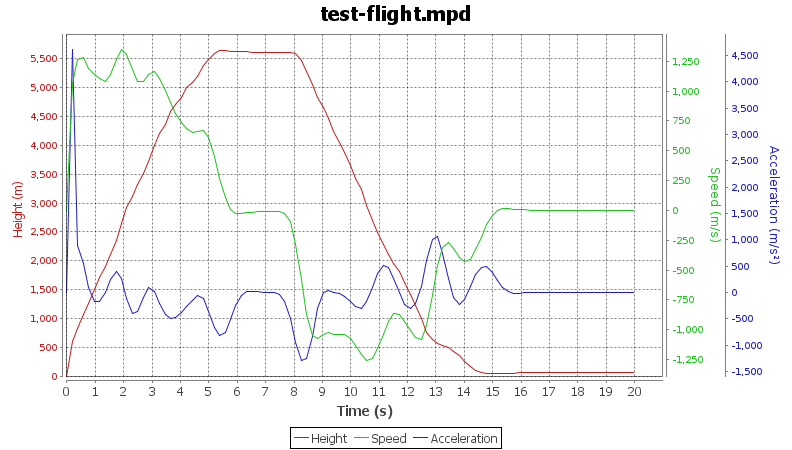
Making the photo-transistor go fast enough The photo-transistor acts as one half of a voltage divider on the positive op-amp terminal, with a resistor making the other half. However, the photo-transistor acts a bit like a capacitor, so when I initially chose a fairly large value for the resistor, it actually took too long to switch between on and off the transistor would spend a bunch of time charging and discharging. I had to reduce the resistor to 1k for the circuit to work. Remaining hardware design I prototyped the circuit on a breadboard using a through-hole op-amp that my daughter designed into her ultrasonic guided robot and a prefabricated FTDI Friend board. I wanted to use the target photo-transistor, so I soldered a couple of short pieces of wire onto the SMT pads and stuck that into the breadboard. Once I had that working, I copied the schematic to gschem, designed a board and had three made at OSHPark for the phenomenal sum of $1.35. Aside from goofing up on the FT230 USB data pins (swapping D+ and D-), the board worked perfectly. The final hardware design includes an LED connected to the output of the comparator that makes it easier to know when things are lined up correctly, otherwise it will be essentially the same. Host software Our AltosUI code has taught us a lot about delivering code that runs on Linux, Mac OS X and Windows, so I m busy developing something based on the same underlying Java bits to support MicroPeak. Here s a sample of the graph results so far: Production plans I ve ordered a couple dozen raw boards from OSH Park, and once those are here, I ll build them and make them available for sale in a couple of weeks. The current plan is to charge $35 for the MicroPeak serial interface board, or sell it bundled with MicroPeak for $75.

Luca Falavigna: Spare Parts TV Set

I don t like watching videos sitting in front of a computer, I usually store them into a USB key to plug into my Samsung LE37 TV set. It s not an easy task, though, as I have to fight with other components of my family who usually like watching something completely different than DebConf videos ;) I could have invested 200 to buy a new one, but I tried a different approach first. Recycling a netbook I received a Tweety device as Christmas gift, and I tried to connect it to my netbook to see how it worked. I was quite impressed by the good quality of the sound (if compared to the really poor quality of the netbook speakers), and I realized I could have recycled the netbook as a brand new TV set with some little adjustments. I plugged my SyncMaster 920n PC monitor into the netbook VGA port, switched Totem to fullscreen mode, and here it is my TV set! Remote control OK, that was quite straightforward to accomplish. A real TV set has a remote control too, but my netbook is not equipped with an IrDA port, so I had to think about a different solution. My BlackBerry is equipped with a cool app called BBSSH, which allows you to connect to any SSH server, this could be a good starting point to implement a remote control device. Then, I had to write an interface to Totem using Python and DBus binding to allow my SSH remote control to issue commands to start and pause the player. I published a first working implementation: at the moment the only supported operations are play, pause, stop and volume adjustments, but there are a lot of opportunities by implementing full MPRIS specification. Just to avoid typing a long command each time, I finally created a set of bash aliases, one for each command, so I just have to type one letter to have the desired function, as much as a real remote control :)

29 December 2012

Russ Allbery: Review: Blackout

Review: Blackout, by Mira Grant
Series: Newsflesh #3
Publisher: Orbit
Copyright: 2012
ISBN: 0-316-20218-5
Format: Kindle
Pages: 631
Blackout is the third book in the Newsflesh series that started with Feed. As with the second book, Deadline, you do not want to read this book out of order. All the emotional heavy lifting is done in Feed, and the book won't mean as much without that. Also, as with Deadline, be very careful about any information you read bout the sequels if you've not yet read Feed, since it's very easy to spoil that book and most information about subsequent books will do so. I'm going to try to write this review without spoilers. That's going to be a bit tricky due to events in Feed, so bear with me if I'm less specific than normal. This is the grand finale of the series, and it is a firm conclusion. As you might expect, particularly from Deadline, that involves a lot more politics, a few more big revelations, some reunions, escalating scale, and a lot of fighting. Unfortunately, it also involves setup. A lot of setup. I didn't expect that, given that Deadline ended at a run, but it takes about half of Blackout and a whole lot of pages before we get to the events that logically follow from the end of Blackout. And those pages dragged for me. There are some great moments. The banter continues to be strong, there are some deeply affecting scenes with Shaun, and Maggie continues to be wonderful. Grant also introduces some new secondary characters (Monkey and the rest of his household) who are brilliant and feel like they could have come directly from Borderlands. All of Blackout has a bit more of that mad scientist feel, full of slightly deranged people who take the fight to the world in their own ways. But it still drags. One branch of the book has the protagonists going here, there, and everywhere in several roundabout attempts to advance the plot. The other branch is more psychologically tense, but it takes too long to get moving and therefore turns into a repetition of the same emotions and the same complaints. I wanted to get to the key events that happen about halfway through the book in about half as many pages as they took. Thankfully, things do pick up when the two strands of the book come together. Some of the emotional dynamics strengthen as well, which I'd been missing. Grant does a great job here tying the whole series together in a way that shows the differences between Feed and Deadline and digs into their nature a bit more. There is one big reveal that I found disappointing, both because it had been obvious since early in Deadline and yet was treated as a big reveal and because I think it put the book and series onto slightly more conventional territory in a place where it had previously been interestingly distinct. (I'm being vague because of spoilers.) But that didn't bother me too much, and the surrounding character dynamics I think made up for it. The final ending isn't exactly bad, but neither did it entirely work for me. The whole series seems a touch too naive. This worked in Feed (at least for me; some other reviewers disliked it) since the naivete felt like part of the dynamic of the story and the characters, and the stakes were mostly kept small enough that it was believable. The stakes are large enough here that I needed the world to be a touch more complicated and the villains less hissable. (If there's been one consistent flaw throughout this series, it's that Grant's villains are too purely evil.) And, in the end, I didn't quite buy the conflict at the heart of the story; after everything that had happened, I wanted something more complex and nuanced. I'm a bit unsatisfied, but, like Deadline, Blackout is still a good book. Neither of them live up to Feed, but they're both enjoyable, action-filled, and creative looks at a zombie apocalypse. I think Blackout is at its best when it's being Fallout or Borderlands and emphasizing the mad scientist angle of Grant's world, and I would have happily read several more chapters about Monkey. The mix of wacky risk-taking and serious political idealism doesn't quite gel, and the latter never worked for me in Blackout, but I still had a lot of fun with the core character interactions. If you read Deadline, you certainly want to read Blackout. If you stopped at Feed, Blackout is probably not a persuasive argument to continue. Rating: 7 out of 10

Matthew Garrett: No, Linux won't be easy to run on a Microsoft Surface

The Microsoft Surface is a fairly attractive bit of tablet hardware, and as a result people have shown interest in running Linux on it. The immediate problem is that (like many ARM devices) it has a locked-down firmware that will only run signed binaries - unlike many other ARM devices, this is implemented using an existing standard (UEFI Secure Boot). Microsoft provide a signing service for UEFI binaries, so it's tempting to think that getting around this restriction would be as simple as taking an existing Linux bootloader, signing it and then booting. Unfortunately Microsoft's signing service signs binaries using a different key (the "Microsoft Windows UEFI Driver Publisher" key) to the one used to sign Windows, and the Surface doesn't carry that key. Booting Linux on these devices would involve finding a flaw in the firmware and using that to run arbitrary code.

Could this also be a problem on x86? In theory - Microsoft don't require that vendors carry the driver publisher key, and so a system could be Windows 8 certified and still not carry it. It's unlikely to occur in practice, though, since any third party expansion hardware will then fail on that device. As a result, anything with PCIe or Expresscard slots is effectively certain to have this key. If anyone finds any counterexamples, please let me know.

comment count unavailable comments

Russ Allbery: Review: Dragonhaven

Review: Dragonhaven, by Robin McKinley
Publisher: Ace
Copyright: September 2007
Printing: October 2008
ISBN: 0-441-01643-X
Format: Mass market
Pages: 338
With a title like Dragonhaven from a well-established fantasy author like Robin McKinley, one's first expectations are probably some variety of medieval fantasy, perhaps with a boy or girl who encounters a rare dragon and befriends them. To some extent, those expectations are right: there is a boy, a rare dragon, and a friendship. But they're mostly wrong. Dragonhaven could easily pass for science fiction if one allowed a bit of handwaving, and the setting is contemporary. Jake is the first-person narrator and the center of this story. He lives with his father and a small group of park rangers and other scientists at Smokehill National Park, one of the few remaining reserves for dragons in the world. McKinley's world is much like ours, with the same politics and governments, except that dragons exist: huge, flying dragons that breathe fire. But they've been hunted to near-extinction, including via an actual war in Australia, and are now dwindling in a small handful of isolated reserves. No one is entirely sure how many are left since, for huge creatures, they're remarkably hard to find and document. The Smokehill staff mostly estimate them from prey kills and other indirect signs. This book is Jake's telling of his story, and McKinley goes to quite a bit of effort to find the right tone for a teenage boy. It's more verbal than written in style, with lots of capital letters, italics, tangents, digressions, and short sentences. He's also trying to tell the story in order without skipping ahead but sometimes failing, which turns into a mechanism to do foreshadowing as he slips in comments or mentions things he wasn't aware of at the time. The voice McKinley constructs is very strong and makes this book read unlike any other books of hers I've read. How much you enjoy the book will probably depend heavily on your opinion of Jake's storytelling style. The story proper starts when Jake, on his first overnight trip in the park, encounters a dying dragon and a dead poacher. This is a catastrophe for the park: the dead poacher will provide ammunition for everyone who thinks dragons are too dangerous and should be wiped out. But for Jake, it's a more immediately life-changing event. The dragon was a mother with newborn infants, one of whom has survived and who promptly bonds with Jake. This may sound like it's moving back into traditional fantasy territory, but it's not. Jake's relationship with Lois (the name he gives the baby dragon) is very unlike fantasy bonds with baby hatchlings and quite a bit like taking care of an actual infant. Except the infant is hot enough to burn the skin. And wants to be in a pouch (McKinley's dragons are marsupial, sort of) and therefore needs to crawl inside Jake's clothing and press against skin. And that's not mentioning the smell. Or the excretions. The vast majority of the book is concerned with Jake raising Lois, so you'd better be prepared for lots of description of this. Thankfully, Jake is not the sort to describe in gruesome detail (at least most of the time), and some of the description is quite funny. I was particularly fond of his account of the Smell being so intense and overwhelming that it became a third person in the room. But still, it is a lot of pages of, essentially, child-rearing, and I got tired of it before it was over. Also frustrating is that Jake obviously has never read any science fiction or fantasy. He doesn't even guess at certain aspects of the situation that are immediately obvious to any experienced SFF reader early on. One of those reveals is dragged out until nearly the end of the book. (I'll refrain from spoiling it, but I'll be very surprised if any regular reader of my reviews takes long to pick up on it.) McKinley does a good job with that part of the plot when Jake finally figures out what's going on, but it was still exasperating to have it take so long. Dragonhaven is already somewhat slow-paced due its detailed descriptions of Lois's rearing, and adding an obvious plot element that the protagonist is too dense to figure out makes the pace feel even slower. About a third of the way into this book, I didn't care for it. It was sort of gross, Lois wasn't very interesting, Jake was more frustrating than entertaining, and nothing was happening. But then it started to win me over, and the last part of the book wasn't bad at all. McKinley's best talent is her ability to mix the fantastic with the quotidian and give them equal weight and importance, to embed the reader so thoroughly with the character that one thinks about all the day-to-day impact of fantastic events that is normally skimmed over in books of this type. If you get engrossed in that angle of Jake and Lois's story, Dragonhaven can be quite enjoyable. When you're waiting for the plot to advance, it's a bit painful. Probably the best thing to do with this book, if you can, is read the first chapter or so and see what you think of Jake's voice. If you enjoy reading it, that's probably a good sign for the rest of the book. I do like McKinley's dragons: she avoids the traps of both making them too human and making them too much like animals, and manages to give Lois (once she's a bit older) a sort of intelligence that's inhuman but still canny and clearly sharper than a dog's. You'll likely get tired, as I did, of Jake's omnipresent headache and Lois's endless upbringing, but there is a payoff in the end. Rating: 7 out of 10

28 December 2012

Hideki Yamane: How to associate with distribution


I know there is a reason why you rebuild/create your own packages.

  • Unfortunately, there's no official package that is necessary to provide service to your customers
  • distro package is not suitable for your purpose by default
    • maybe since its features
    • maybe since performance issue


However, I want to ask you one question.
Is it necessary that you'd maintain it in your private repository?
Because create custom package repository is a kind of "fork"


  • Of course, you can do folk. But if you don't want to be "upstream", every time you need to follow your upstream to fix bugs, vulnerabilities and introduce new features. Important: Merge cost would become larger and larger from the time you did folk.
  • It's best that if your system can be used "out of box", but you need to modify packages for some reason (as above).
    Then, what would you do? - minimize
    • minimize numbers of private package
      = reduce maintenance cost
    • minimize diff with distro package
      = minimize diff with upstream = reduce maintenance cost

If you could minimize diff with distro, you can update and introduce new attractive features from updated distro package easily (maybe you don't need to maintain your custom package since its feature is merged to upstream).

Yes, you can get Agility.


And, if you would put your package to Debian official repository, we Debian can give you below benefits

  • build daemon with many architectures
  • open bug tracking system
  • world wide mirror network
  • security vulnerabilities tracker
  • users

  1. We can provide build system, including non-x86 arch (none of you have thought arm* architecture become important, right?) You can deal with porting as daily job, no huge jump to support newer architectures. It also brings the view to build cleaner structures in your code.
    It is much work to setup such system, but you can use it without any trouble.
  2. You can get bug report/wishlist/patches from Debian BTS (without any pay for it! :-)
    It will help you to improve software packages, it cannot be sent to you if you would put packages to closed private repository.
  3. Package is mirrored to many repositories in world wide. Robust. You can get binary/source code immediately, anywhere. No need to backup your package source.
  4. Any CVE is tracked. You can analyze security status in your system easily (it means you don't need to pay much money to build such system)
  5. Debian has huge user base. It would work as good "showcase" test (of course, without any pay for it...)


Conclusion)

It's okay to create/modify package. It's FLOSS. As you like! :)

However, to maintain custom package, you need to pay its cost (someone should work for it. If it's in only your own repository, it means you should work, no one can help it).

To maintain packages in distro can reduce its cost, can get many benefit - Less cost, more benefit - why not? Let's get involved to distribution!

Russ Allbery: Review: Perl Best Practices

Review: Perl Best Practices, by Damian Conway
Publisher: O'Reilly
Copyright: July 2005
Printing: April 2011
ISBN: 0-596-00173-8
Format: Trade paperback
Pages: 492
I had a rather bad first reaction to this book or, rather, the existence of this book. Some time ago, I started hearing about a new program named perlcritic that served as a lint program for Perl and decided to give it a try. I was taken aback by the flood of diagnostics, but even more taken aback by the fact that most of them were apparently explained only by a reference to a book that I didn't own. It struck me wrong in an open source project and gave me a negative reaction towards the book, which lingered for years. That was exacerbated by discovering that it recommended using use English in some circumstances, something that I consider to be a horrible idea. So, when a coworker recommended it and suggested I really should read it, I was dubious. I'm glad I gave it a chance, since it turns out that nearly all of my objections were based on misunderstandings or false information. (Well, except for the use English part, but more on that in a moment.) Perl Best Practices does provide a lot of advice, explaining that flood of diagnostics, but perlcritic also warns about the same thing repeatedly, inflating a handful of issues into a lot of messages. Most of the recommendations in Perl Best Practices were things I was doing already; most of the rest are entirely sensible. Also, perlcritic does come with complete explanations of its diagnostics once you know where they're hidden (the perldoc of Perl::Critic::Policy modules whose names you can get at by insisting perlcritic divulge them). And, even more delightfully, once I got past my objections, I discovered that Perl Best Practices is one of the best books on coding style that I've read. Coding style is a notoriously difficult subject, since nearly everyone is convinced their personal style is the best (or at least that they don't want to change). Conway acknowledges that up-front, and acknowledges that some things are just arbitrary and consistency with any rule set is better than following some specific rule set. He then spends surprisingly little time on the sorts of things that dominate most coding style discussions (indentation, spacing, commenting, etc.). Instead, this is primarily a book about how to write efficient and transparent Perl code, one that focuses much more on the content and structure of that code than on how it is indented. The best part is that there are no undefended rules here. Perl Best Practices contains 256 separate guidelines, some quite general ("Provide an optimal interface, rather than a minimal one") and some quite specific ("Pass constructor arguments as labeled values, using a hash reference"), but every one of them has a supporting argument and specific reasons behind it. Conway backs up every recommendation with code samples and practical scenarios showing the pluses and minuses of different approaches. This is a book unconcerned with being an authority; rather, it reads like optional advice from a good mentor, complete with insightful discussions on each point raised. You may come away from it disagreeing with Conway's specific recommendation (and I did, in several places), but you'll almost certainly be better-informed about the problem for having read it. Plus, this book is just fun to read. Admittedly, I love this sort of thing; I spend lots of time thinking about coding style in any language, and a lot more time refactoring coding style when working on my own projects to try to achieve clarity and simplicity. But even without sharing my love of the material, I think this book will be a delight for any practicing Perl programmer who hasn't yet read it. Conway clearly has a wealth of experience and years in the trenches of working with other people's Perl code. The examples he draws on are brief, comprehensible, and illuminating. He also gave me a tour of a variety of helper modules and libraries that I didn't know existed. List::Util is the most prominant example; this incredibly helpful supply of list manipulation functions that I've always half-known I wanted but never bothered to write is now part of Perl core (as of 5.7.3), so there's no reason to avoid it. You too can stop using grep when you actually mean first, or rewriting max in ad hoc ways. That does raise two of the rare flaws in this book, though. One is that I disagree (partially) with Conway's willingness to recommend non-core modules. He is a particular champion of the Readonly module over either normal file global variables or use constant, for very good reasons. But making Readonly a prerequisite for all other Perl code that one releases seems a bit annoying (speaking as someone who used to maintain local Perl installations). Maybe this isn't as big of a deal in these days of ubiquitous Linux distributions and willingness to use the CPAN shell, but I still dislike releasing code that depends on a half-dozen (or more) other CPAN modules for reasons of coding convenience and minor readability rather than core functionality. (His advocacy of Sub::Install raised similar objections.) The second flaw is not something Conway could have done anything about: this book is from 2005, and it's now 2012. Now, the Perl ecosystem is now quite mature, so that hampers the book much less than it would a corresponding book about Ruby or even Python. I also aim for compatibility with the oldest thing out there I know someone is still running, so I'm still hesitant to require anything newer than Perl 5.8. But still, this book was written seven years ago, and Perl is now at 5.14. In the meantime, we've seen core language features like given/when added, the addition of state variables, the need for substantial reworking of how Unicode I/O is handled, the addition of the new // operator, and the new package syntax, among many other things. The Perl taught here is a bit dated, and I would love to hear Conway's opinion about when (or if) to use say. Maybe someday we'll get a second edition. There are two other points that I do have to argue with. One is that Conway does advocate, in a limited way, use English. I could almost go along with his recommendation to use it only for those variables that one has to look up, except that in nearly every case there are other options and one can take the much better approach of simply not using those variables at all. But he then writes the remaining examples in the book using $EVAL_ERROR rather than $@, and I'm sorry, but no. One could not construct a more frustrating annoyance for an experienced Perl programmer than sending them on a futile hunt for where the global variable $EVAL_ERROR is defined. One can debate the merits of Larry Wall's original decision to use variables like $_, @_, $?, $!, and $?, but for better or ill this is Perl, and marginal readability gains for inexperienced programmers do not warrant confusing experienced programmers. This is particularly true when the use English variables are completely indistinguishable from normal global variables, and not infrequently look like a global variable that a programmer might choose. The second is more of an amusement that a real disagreement. Conway rightfully points out that Perl OO, and particularly the way that Perl stores object instance data, is awkward, and none of the commonly-used techniques are particularly satisfying. He then introduces a completely new way of doing instance data that, while having some advantages, has a very strange syntax and is utterly unlike how any OO code one finds in the wild is written. While the discussion of the problem that he's trying to solve is still interesting, I think the solutions he proposes will be more of a curiosity than a style that most programmers will adopt. But, those disagreements aside, I thoroughly enjoyed this book. I found it so engrossing that I kept reading it straight through a long train ride rather than switching to fiction halfway, like I do with most programming books. I've since recommended it to several other coworkers, and we're in the process of revising our internal Perl coding style based heavily on it. It's the sort of book that I expect to re-read several times to refresh my memory of Conway's analysis. If you've been avoiding this one due to misconceptions like I had, or because you think it might be too dry, or even just because you're afraid it's outdated, I strongly recommend it. If you're worried about the price of a printed (or electronic) book on this topic and you do Perl programming as part of your job, see if your employer will buy you a copy as training. It's worth it. I've been writing Perl professionally for more than fifteen years, and I learned a ton from this book. (And if it inspires you to change your coding style, take a look at perlcritic. It requires some configuration, and getting started is quite frustrating, but it reliably detects a surprisingly high percentage of the issues discussed here and can help a great deal in making the coding style shift stick until you can build new habits.) Rating: 9 out of 10

27 December 2012

Russ Allbery: Charity review

I'm thankfully in a place where I can afford to give money to charity, and I've slowly built up a set of charities that I give money to. But I've never been that systematic about it. I've had a vague target for how much I want to give, I add new charities when they seem neat, I'll rarely drop a charity when it doesn't seem to be effective, and I probably spread my money out too much. Recently, I followed a chain of blog references and discovered GiveWell, a site that's devoted to doing more in-depth analysis of charities than the basic financial analysis done by sites like Charity Navigator. In particular, they do literature surveys to try to dig into the effectiveness of particular interventions and take a closer look at how effectively a charity can use new donations. After reading quite a bit on their site and some related sites, I sat down yesterday and did a comprehensive review of my goals and principles and then put together a new plan. Some of that may be interesting to other people, so I'll write up that process here. This will be somewhat US-centric, since charities vary a lot by tax regime, but I think some of the general principles will still apply elsewhere. (But most of my specific examples will be US charities.) First, a few basic principles about charitable giving:
  1. Charity goals cannot be evaluated uniformly. Different types of organizations need different criteria. I've found that charities divide generally into ones that are trying to accomplish a specific task and ones that are trying to create political change. For the former, small and quiet organizations are often the best. For the latter, the charity has to get to a certain size before it's part of the conversation, and that involves a different set of tradeoffs.
  2. When you care about efficiency (number of lives saved or quality of life improvement per dollar spent), don't give money to organizations you've heard about via means other than word of mouth or third-party evaluations. This is for a simple reason: if the charity has successfully made you aware of it, that means they're advertising themselves to you. Advertising generally costs quite a bit of money. That's money they're not spending on whatever they're trying to accomplish. Excellent examples are many of the health research and education charities, such as the American Heart Association and the American Lung Association, or the massive disaster relief organizations like the American Red Cross. These are not efficient organizations. If you're trying to get the most impact for your dollar, this isn't a good place to spend it. As a special case of this, please don't ever give money to any organization that produces TV commercials showing starving children in Africa. If the commercial makes you want to give money, that's great; just don't give it to the organization on TV. TV commercials are extremely expensive, and those organizations are notorious for being some of the least efficient charities in existence (in some cases bordering on scams). You'll be lucky if 50% of your money actually goes to Africa, and the money that is spent probably isn't spent wisely.
  3. If your donation gets you a membership that comes with a glossy magazine, remember that means that the organization is spending your money producing that magazine. This is counted as program funding, not administrative costs, in sites like Charity Navigator because the charity probably counts the magazine as part of their educational mission. If you want to subscribe to the magazine and enjoy it, there's not necessarily anything wrong with this. But if you were giving them money to do something else, be aware that money is being used to produce the magazine (and the Christmas cards and the mailing labels and the tote bag) instead of doing things that you might consider program funding. For example, I stopped giving money to the Audubon Foundation because I want my environmental giving to go directly to protecting the environment, not towards printing calendars and making a glossy magazine full of bird pictures. As a counter-example, I consider the Southern Poverty Law Center to be one of the most effective US political charities, despite the fact that they produce a glossy magazine. That's because a large part of their mission is investigative reporting and research, and that magazine is how they publish that research. In this case, I both want to read the magazine and consider the magazine something that I'm happy to fund.
  4. Efficiency isn't everything. For some types of charities, the charity has to be huge in order to be effective. This is particularly true of political charities. For example, the ACLU is not a particularly efficient charity and has several fund-raising practices that I dislike. However, what the ACLU does requires that they have extensive media access and respect from legislators and the judicial system. It cannot be done effectively by a smaller and more efficient organization. Similar principles apply to a lot of political and environmental charities, and to some international aid charities such as Doctors without Borders (M decins Sans Fronti res).
If you're looking to increase the efficiency and effectiveness of your giving according to objective measures, I highly recommend reading through GiveWell's site. They recommend charities that avoid all the pitfalls above. You've probably never heard of them because they don't spend their money on advertising and marketing. However, keep in mind that efficiency isn't everything. With those principles in mind, and after doing a lot of reading on GiveWell, I redid my charity plan by dividing my giving up into five categories with different goals. Services. There are some things that I use that I think should be paid for by tax dollars but aren't, and are instead funded by charitable donations. I don't consider this charity in the same sense as the rest of this list. Rather, I'm paying for what I use plus some extra so that other people who can't afford it can use the service for free. Efficiency doesn't matter as much because there's usually only one organization supporting the thing that I personally use. Examples include my local PBS (public broadcasting) station, the non-profit that works with city government to support the local library system, and the trust that helps maintain the state parks where I go on vacation. Education. This is a special category for me since I regularly give money to the community college I attended. I know the region and the college and have some idea of what they need and what matters to the students there, so I can make specific choices. I give all the money in this category to the same place. Free software. Here, I know that my donations won't be used as efficiently in terms of quality of life as they could be if sent somewhere else, but this is my community and I want to support it because it's my community. Here, as with education, I have a lot more data and can pick and choose places that I think can use my money. Examples here are the Ada Initiative and the Free Software Foundation. Politics. This is the hardest area for efficiency, since it's so difficult to measure effectiveness in any organization where much of the goal of the organization is to persuade politicians or the general public. I try to measure effectiveness by how many concrete actions the organization takes (rather than press releases), which is easiest for organizations like the ACLU or the EFF that file lawsuits or legal documents and requests. As mentioned above, I think the standout in this area is the Southern Poverty Law Center, but political charities are so targeted that I give to multiple charities to cover my range of interests. I've found environmental charities particularly difficult to evaluate, but the one that appears the most effective to me so far is the Environmental Defense Fund, so that's where I concentrate my environmental money. I used to give to small political charities but have given up on that as basically useless, at least for national politics. I think the charity has to be of a minimum size to get anyone in government to listen to them. Poverty and Health. This is where efficiency matters much more than size. GiveWell's analysis is very interesting here, and sadly shows that most interventions either don't work or at least can't be proven to work. Here, I abandoned nearly all of my traditional large charities and have gone almost entirely with GiveWell's recommendations, with two exceptions. I still cycle money through Kiva (a microfinance support charity) because I have a bit of an emotional attachment to it, although microfinance is looking increasingly suspect as an effective charity method and I may yet drop them. And I still give money to Doctors without Borders because, despite being less efficient, I think their size and history has won them an international credibility that lets them get into areas that smaller, more efficient charities wouldn't be able to help. One of GiveWell's recommendations is my new favorite charity: GiveDirectly. All aid charities run a serious risk of having a colonialist bent, where rich countries come into poor countries and build things or tell them how to do things following the priorities of the rich countries. (This is one of the reasons why I prefer medical charities, since they're less susceptible to this.) GiveDirectly identifies the poorest people in a region (using a very transparent process) and transfers money to them directly using the M-Pesa cell system to spend however they choose, with no strings attached other than some due diligence to protect against fraud. This is refreshingly non-paternalistic and makes me far more comfortable than typical aid projects. Originally, I was going to assign money into those buckets and then break the buckets down further, but I ended up not quite doing that. The services bucket is more driven by the services I use than by an even allocation. Of the rest, it goes approximately three shares to poverty and health, two to politics, and one each to education and free software. I think I've managed to eliminate most of the places where I'm giving money to multiple organizations that do the same thing, but I'm still spreading my money rather widely and could stand to focus it more. That's hard, though; there are a lot of different things that I care about, and political charities in particular aren't very interchangeable. I'm currently not giving locally very much, which might be worth changing. The easiest way to do so would be to find a good local food bank and start donating to them (giving cash, not food). For a more comprehensive list of charities I support, see my charities link page.

Vasudev Kamath: Note to Self: Telling apt to download specific architecture information only

If you have enabled multi-arch enabled in your system and one of the third party repository you use in /etc/apt/sources.list is not providing the foreign arch you have selected then fear not just do the below for that particular repository line.
deb [arch=arch1] uri distribution component
In my case mozilla.debian.net doesn't provide binary-armel hence I just did this
deb [arch=amd64] http://localhost:9999/mdn experimental iceweasel-aurora
and apt stopped complaining about missing foreign arch. Well this is present in man page of sources.list but I just wrote here so I can find it easily next time :-).

Jamie McClelland: Live video streaming using vp8enc and webm on Debian

The vp8 video codec and webm container format (which are alternates for theora/ogg and h264/flv) are getting lots of attention, especially as more web browsers are supporting html5 - which includes a new video tag that plays video directly in a web page, rather than requiring a plugin. With Google fully behind these new formats (and converting YouTube videos) and even skype using vp8, it seems as though it could supplant h264/flash as the default video codec and container. After years under the boot of the proprietary flash video, this change could usher in a lot of exciting developments. While the shift in formats is also significant for on-demand video, I'm focusing on live streaming in this blog. There are a lot of tools needed to successfully stream a live video. Enough of them support vp8 and webm to create a live video stream, however, not all of the right versions of these tools have landed in Debian. Without any patches or changes, if you try to send a live video stream to icecast using vp8 encoding and webm, you'll get something like this:
0 jamie@animal:~$ gst-launch v4l2src ! video/x-raw,width=320,height=240 ! vp8enc ! webmmux ! shout2send ip=icecast.server port=8000 password=secret mount=/test.webm
WARNING: erroneous pipeline: could not link webmmux0 to shout2send0
1 jamie@animal:~$
I've documented the steps for patching/upgrading gstreamer and icecast2 so you can get a live video stream using vp8 encoding and the webmc container that originates on a Debian wheezy machine using gstreamer and streams to a Debian squeeze server running icecast2. On the workstation, you'll need libshout3 version 2.3.0 or higher, which is at the moment available in experimental and installable without bringing in any dependencies. In addition, you will need to bring in gstreamer1.0 from sid and you will need to rebuild gstreamer1.0-plugins-good after libshout-dev has been installed from experimental. So, begin by adding experimental and sid to your sources list by creating the files /etc/apt/sources.list.d/experimental.list and /etc/apt/sources/lists.d/sid.list with the respective contents:
deb http://mirror.cc.columbia.edu/debian experimental main
and
deb http://mirror.cc.columbia.edu/debian sid main 
deb-src http://mirror.cc.columbia.edu/debian sid main
In order to avoid upgrading your entire machine to sid (experimental packages won't upgrade by default), you'll also need to add the file /etc/apt/preferences.d/sid:
Package: *
Pin: release n=sid
Pin-Priority: 200
Then update and install:
apt-get update
apt-get install -t experimental libshout3
apt-get install gir1.2-clutter-gst-1.0 gir1.2-gst-plugins-base-1.0 gir1.2-gstreamer-1.0 gstreamer0.10-ffmpeg  gstreamer1.0-libav:amd64 gstreamer1.0-plugins-bad:amd64 gstreamer1.0-plugins-base:amd64 gstreamer1.0-plugins-base-apps gstreamer1.0-plugins-good:amd64 gstreamer1.0-pulseaudio:amd64 gstreamer1.0-tools gstreamer1.0-x:amd64 libclutter-gst-1.0-0:amd64 libgstreamer-plugins-bad1.0-0:amd64 libgstreamer-plugins-base1.0-0:amd64 libgstreamer-plugins-base1.0 libgstreamer1.0-0:amd64 libgstreamer1.0
Fortunately, the version of gstreamer1.0-plugins-good in sid includes a fix for a bug patched on November 31, 2012 that allows the use of the webm container. However, for it to work properly gstreamer1.0-plugins-good has to be built against libshout version 2.3.0 or higher (which is in experimental, not sid). Therefore, you have install libshout-dev from experimental and then rebuild gstreamer1.0-plugins-good.
sudo apt-get build-dep gstreamer1.0-plugins-good
sudo apt-get -t experimental install libshout-dev
apt-get source gstreamer1.0-plugins-good
cd gst-plugins-good1.0-1.0.4
dch -v 1.0.4-1+webmmux
fakeroot debian/rules binary
sudo dpkg -i ../gstreamer1.0-plugins-good_1.0.4-1+webmmux_amd64.deb
Now if you try the command, things should work on the client side. When streaming to an icecast2 server running squeeze, I don't get any errors, however, when opening the streaming page via the icecast URL, there is a play button, which can be clicked, but no picture is shown. That's because the version of Icecast2 in squeeze doesn't support either vp8 or webm. On the server side, you will need icecast2 version 2.4beta or higher. This version hasn't landed anywhere in Debian as of this writing. However, you can build it from source by following these steps (the patches I'm removing have all been applied to the new upstream version).
apt-get source icecast2
wget http://downloads.xiph.org/releases/icecast/icecast-2.4-beta.tar.gz
tar -xzvf icecast-2.4-beta.tar.gz
cp -r icecast2-2.3.2/debian icecast-2.3.99.0/
cd icecast-2.3.99.0/
rm debian/patches/ 1001_autotools_avoid_debian-subdir.patch,1002_add_missing_xspf_file,1003_fix_memory_leak.patch,series 
dch -v 2.3.99.0-1
fakeroot debian/rules binary
When you install it, be sure to replace the icecast2.xml configuration file and update it with your server-specific customizations. Hopefully this version of icecast2 will make it to experimental soon. And now... you can successfully stream via:
gst-launch-1.0 v4l2src ! video/x-raw,width=320,height=240 ! vp8enc ! webmmux !  shout2send ip=icecast.server port=8000 password=secret mount=/test.webm
If you want full audio and video, here's a more complete pipeline: gst-launch-1.0 v4l2src ! queue ! video/x-raw,width=320,height=240 ! tee name=tscreen ! queue ! autovideosink tscreen. ! queue ! videorate ! video/x-raw,framerate=25/2 ! queue ! vp8enc ! queue ! webmmux name=mux pulsesrc ! queue ! audioconvert ! vorbisenc ! queue ! queue ! mux. mux. ! queue ! shout2send ip=hobo port=8000 mount=jamie.webm password=secret Unfortunately, since I'm not sure how to deal with the python2.7 vs python3 dependecies, my elegant mobi python script that creates this pipeline for you using python-gtk as been reduced to a crude bash script. Another item on the todo list is opus audio encoding. gstreamer doesn't seem able to use opus in the webm container (although it seems to work with ogg). In the course of this research I found directions for getting gstreamer-1.0 installed on debian independent of packages installed on the system. If you follow the directions above, these steps should not be necessary. I'm including in case you need the latest sources for another reason. Extra steps I needed were:

Russ Allbery: Review: Science Fiction: The 101 Best Novels: 1985 2010

Review: Science Fiction: The 101 Best Novels: 1985 2010, by Damien Broderick & Paul Di Filippo
Publisher: Nonstop
Copyright: 2012
ISBN: 1-933065-39-7
Format: Trade paperback
Pages: 288
I like book reviews and lists of best novels, as a follower of my reviews probably noticed, so I couldn't resist when this collection made my radar. A follow-up to the earlier Science Fiction: The 101 Best Novels: 1949 1985 by David Pringle (which I have not read), it is a collection of short (two to three pages, generally) reviews of 101 recent SF novels. The date spread is fairly balanced: at least two novels from each year under consideration are featured, and no year gets more than seven or eight. The authors also clearly tried to cover the range of what falls under the science fiction genre, from alternate history through space opera and including novels normally marketed as mainstream, so the result should contain something to everyone's taste. With those characteristics, you may suspect that the "best" part of the title is a bit questionable, and you would be right. "101 of the better novels" would be a more accurate description. While most Hugo and Nebula winners are included here, the section is at times eclectic. But it's eclectic in the spirit of broad inclusiveness: Jumper, Temeraire, or The Hunger Games would normally not be included on this sort of list because they're too popular or "light," but they're here alongside more obscure books (at least for SF readers) like Galatea 2.2, Distance Haze, or My Dirty Little Book of Stolen Time. I doubt anyone will seriously argue that this selection should have replaced the Hugo or Nebula short lists, but one doesn't read review collections like this only to hear about books one already knows about. Those books one has either already read or already chosen not to read. The wide-ranging selection makes it likely that something here will be new to most readers. The authors, Damien Broderick and Paul Di Filippo, are known reviewers in the SF world, and I've read reviews from both of them before. I bought this book largely on the strength of Broderick's name, since I've usually enjoyed his contributions to The New York Review of Science Fiction. Paul Di Filippo was more of a gamble; he's one of the regular reviewers for Asimov's Science Fiction and not one of my favorites. But what I usually disliked about his columns was their focus on obscure small-press titles, graphic novels, and slipstream, so I was hoping that an SF review collection aiming towards the genre mainstream would be more to my taste. The result is mixed. There are things about this selection, and about the reviews, that I enjoyed, and there are other things I found quite annoying. First, the selection. I could (and will in a moment) talk about good and bad selections, but I also have a good statistical metric for at least the alignment of the authors' taste with mine. Of the 107 novels reviewed here (in several case, duologies and trilogies are given single entries), I've read 39, or a little over a third. (Note that I've read every Nebula or Hugo winner in that time period and most of the Hugo nominees, so that will give you a good feel for how broad-ranging this selection is, and how far afield of the normal award slates it goes.) My average rating for those 39 books was 7.49 (including four perfect 10s). By comparison, my average rating for Hugo winners is 6.68 and for Nebula winners is 7.10. There was one 4 (The White Queen) and one 5 (Red Mars), and in both cases I can see why they're here. Of the rest of the books I read I rated them all at least at 6 out of 10. At least among the books I've read, this seems to be a solid selection. Sometimes the details of those selections are odd, though. For example, the authors make an effort to limit the number of selections for each author, a wise choice since they're clearly going by diversity. But if one is operating within that limitation, choosing Ammonite over Slow River for Nicola Griffith, or particularly Ventus over Lady of Mazes or even Permanence for Karl Schroeder, is baffling. There were several similar places where I thought the selection for an author was obscure, minor, or just missed obvious alternatives. Perhaps this was to fill in one of the other breadth criteria, such as balancing number of novels per year or attempting to cover each subgenre. Also, if one is going to divide science fiction and fantasy and try to cover only the science fiction (a division that I think is quite difficult, which is why I don't do it, but it does have the merit of narrowing the field), including The Falling Woman is quite strange. It's a solid book, to be sure, and a Nebula winner. It is also quite straightforward contemporary fantasy involving ghosts and Mayan mythology, without a hint of science-fictional content. Making the protagonists archeologists and scientists doesn't make the book science fiction. The authors try to defend this (unpersuasively to me), but it wasn't the only instance here where I thought their line between science fiction and fantasy was a bit off. That said, there are a lot of great selections here, including books that I love but that aren't frequently picked for this sort of list (The Fortunate Fall, The Time Traveler's Wife, or China Mountain Zhang, for example). It's great to see underappreciated authors like Linda Nagata, Joan Slonczewski, and Karl Schroeder featured. But, of course, one doesn't buy this sort of book just for the list, if for no other reason than that lists aren't copyrightable and one can easily find the complete list of reviewed novels on the Internet (just one example that turned up in a search). Rather, one reads this sort of book for the reviews. And that's where this book moves onto more questionable ground. First, while I realize that everyone has different thresholds for what they consider spoilers and most professional reviewers are more cavalier about them than I am, Broderick and Di Filippo cross any line that I consider reasonable. Most of the reviews are okay, if skirting the limits, but in several places they give away key reveals of books or discuss plot twists right up to, or even including, the ending. The combined review of The Sparrow and Children of God is particularly egregious, containing unambiguous, book-destroying spoilers for The Sparrow. Giving away the ending of Ammonite is only slightly less bad. And those are just two examples I remember. This is not okay. The whole point of this sort of collection is to expose the reader to books they've not yet read but may want to. Proceeding to spoil the book for them in the course of the review is perverse. This alone would make me hesitant to recommend this collection. Second, quite a few of the reviews in this book are, for lack of a better term, emotionally overreaching. Here's an excerpt of a review picked at random (As She Climbed Across the Table by Jonathan Lethem) that will hopefully illustrate:
Lethem's beautifully balanced, metaphorically rich prose propels this blackly jolly fable to a surprising yet satisfying conclusion. By book's end, a sense that the author had accomplished his takeoff taxiing and was now fully in flight for more cosmopolitan cities pervades the pages.
What's "beautifully balanced prose"? Could you recognize it? Does that phrase communicate anything to you other than that the authors liked the book? The whole review collection is written with adjectives and metaphors like this, and after a while it all seems a bit much. It felt like the authors were straining for ways to describe how important or significant the books are and, in the process, lost sight of the basic goal of conveying information about the book. It feels overwrought rather than informative. Even if one is reviewing the books that one considers the pinnacle of achievement in science fiction, a conversational tone with concrete examples and specifics communicates more than impressive but slippery terms like "metaphorically rich." Lest I sound entirely negative, one thing that I did appreciate is that the reviews go to some effort (particularly for their short length) to put the work in the broader context of the field and within the author's oeuvre. Often there's some discussion of previous and subsequent work or related books, and the reviews that feature books from larger series provide good explanations for why those particular books were singled out. Sometimes the number of dangling references was frustrating; authors of these sorts of collections need to remember that most readers will not be as widely read, and reviewing books largely by comparison to other books runs the risk of missing the reader's knowledge entirely. But the reviews convey a real sense of SF as a broad conversation and provide a sense of the breadth and variety of themes and subgenres available. This is one of the fun explorations that this sort of catalog lets the authors and reader do together. Another, more minor, touch that I appreciated was the cover art. Each review leads with an image of the reviewed book's cover (alas, only in black and white for obvious printing reasons). But rather than taking the obvious approach of using the covers of the first releases, or the covers from a particular country, they're chosen from all of the world-wide editions in all their delightful variety. Typical artistic styles for book covers vary drastically between countries, and getting to see a sample of artwork from different markets is a treat. I want to recommend this book. It casts a much broader net than most collections of its kind and provides some needed attention to smaller corners of the genre. I was impressed by the book list before I bought it, and (with the inevitable quibbles) am even more impressed now that I've read it. Broderick and Di Filippo go out of their way to broaden the reader's horizon and open up new avenues for reading, which is one of the best things a review collection can do. But when reviewers don't avoid spoilers, I just can't recommend their work. For me, this is a cardinal sin. Combine that with a writing style that was occasionally overblown and overwritten and the merits don't quite overcome the flaws. I'm glad I read it; it got me excited about reading many books I've already purchased but not gotten to, and I got from it another slew of books to add to my to-purchase list. But I had to read it uncomfortably and lightly, constantly prepared to jump past a review that was too revealing. Rating: 6 out of 10

26 December 2012

Rudy Godoy: s3tools Simple Storage Service for non-Amazon providers

One of the nicest developments in the cloud arena is the increasing adoption of standards, this of course will impact on maturity and market confidence on such technologies. Amazon, as one of the pioneers, made a good choice on their offering design by making their API implementation public. Now, vendors such as Eucalyptus private/hybrid cloud offering and many other providers can leverage and build upon the specs to offer compatible services without the hassle for their customers to learn a new technology/tool. I ve bare-metal servers siting on Connectria s data-center. A couple of months ago I ve learned about their new cloud storage offering. Since I m working a lot on cloud lately I checked the service. It s was nice to learn they are not re-inventing the wheel but instead implementing Amazon s Simple Storage Service (S3) de-facto standard for cloud storage. Currently there are many S3-compatible tools available both FLOSS and freeware/closed source (Connectria provides a nice list of them). I ve been using s3tools, which is already available in the Debian archive, to interact with S3-compatible services. Usage is pretty straightforward. For my use case I intend to store copies of certain files on my provider s S3 service. I ll need to create buckets to be able to store files. For the ones not very familiar with S3 terminology buckets can be seen as containers or folders (in the desktop paradigm). First thing to do is configure your keys and credentials for accessing S3 from your provider. I do recommend you to use the --configure option to create the $HOME/.s3cfg file because it will put all the available options for a standard S3 service, leaving you the work of just tweaking them based on your needs. You can go and create the file all by yourself if you prefer, of course.
$ sudo aptitude install s3cmd
$ s3cmd --configure
Enter new values or accept defaults in brackets with Enter.
Refer to user manual for detailed description of all options.
Access key and Secret key are your identifiers for Amazon S3
Access Key:
...
You ll be required to enter the access key and the secret key. You ll be asked for a encryption password (use only if you plan to use this feature). Finally, the software will test the configuration against Amazon s service. Since this is not our case it will fail. Tell the configuration instead to not retry configuration and say Y to Save configuration. Now, edit the $HOME/.s3cfg file and set the address for your private/third-party S3 provider. This is done here:
host_base = s3.amazonaws.com
host_bucket = %(bucket)s.s3.amazonaws.com
Change s3.amazonaws.com to your provider s address and the host_bucket configuration also. For my case I had to use:
host_base = rs1.connectria.com
host_bucket = %(bucket)s.rs1.connectria.com
Now, save the file and test the service by listing the available buckets (of course there is none yet).
$ s3cmd ls
If you don t get an error then the tool is properly configured. Now you can create buckets, put files, list, etc.
$ s3cmd mb s3://testbucket
Bucket 's3://testbucket/' created
$ s3cmd put testfile.txt s3://testbucket
testfile.txt -> s3://testbucket/testfile.txt [1 of 1]
8331 of 8331 100% in 1s 7.48 kB/s done
$ s3cmd ls s3://testbucket
2012-12-26 22:09 8331 s3://testbucket/testfile.txt

Russ Allbery: git-pbuilder 1.29

git-pbuilder is a shell script suitable for use as the builder command in git-buildpackage that simplifies using pbuilder, cowbuilder, or qemubuilder to build packages in a chroot. It's now part of the git-buildpackage Debian package, but I maintain it somewhat separately. This version supports a new environment variable, GIT_PBUILDER_OUTPUT_DIR, that can be set to override the default output location of ".." (the parent directory). It also changes the script to be a bash script and uses arrays to handle the options passed to the builder command so that shell metacharacters in the GIT_PBUILDER_OPTIONS environment variable will hopefully be handled correctly. As part of that change, it also tries to escape any options that will be passed to --debbuildopts to hopefully protect them from the additional layer of shell parsing that they'll be subject to. Thanks to Guido G nther and paul cannon for the patches. I hate having to make the script bash-specific, but trying to get the shell expansion right is otherwise a huge headache. That probably means that it's outlived the usefulness of the original implementation language (which was shell only because this started life as a quick hack). I should probably take the time to rewrite it in either Perl (which I know best) or Python (which is the language the rest of git-buildpackage is written in). But that's for another day. (Here's an excellent case in point for why one shouldn't embed language-specific extensions in the name of an executable that's part of a user interface or configuration interface.) You can get the latest version from my scripts page.

25 December 2012

Russ Allbery: Kindle haul

Happy winder holiday of choice to all and sundry! Enough new Kindle books have accumulated that it seems time for another post so that I can remember what I bought. Elizabeth Bear Garret Investigates (sff)
eluki bes shahar Hellflower (sff)
Elizabeth Cleghorn Gaskell Cranford (mainstream)
John Scalzi Subterranean Scalzi Super Bundle (sff) Cranford was free since it was written in the 1800s. I picked it up because of Jo Walton's review on Tor.com. The eluki bes shahar novel is from Daniel Moran's e-book site FS&, an impulse buy from browsing through his catalog while picking up the Long Run bundle for my mother. The Scalzi super-bundle is a collection of five separately-published novellas and chapbooks plus one non-fiction essay, only one of which I already owned (The God Engines), which seemed like a fairly good deal. In a separate note, the problem with watching interesting lectures on YouTube (apart from the fact that it's very easy to lose a day doing so) is that I usually end up wanting to buy the book on the topic and then read that. That happened to me today: I finally got around to watching Philip Ball's lecture on the chemistry of painting, and now Bright Earth is in my non-fiction want list. And there are three more hour-long TVO programs linked off of related material that look interesting. I fear the day may disappear.... Well, I will be rescued at least partly by being called to help decorate Christmas cookies. This is the beginning of by far my favorite two weeks of the year, although not for the reasons that people might suspect. Other than food (yum) my family doesn't do Christmas: no decorations, no huge family get-togethers, and we all give each other the freedom from guilt and stress of having to find presents. But I get two weeks of mandatory vacation from work, as does, importantly, everyone else. Which means there's nothing going on to suck me in from vacation and a very pleasant sense of resting and resetting for the new year. It's quiet, I can sit and read, I can focus on one thing at a time, and I can reorganize and order my life and revisit priorities and to-do lists with a lovely sense of perspective. Any other mandatory or at least widespread holiday would work as well, so it's unrelated to the season. (I find the commercialism somewhat distracting rather than a positive part of the experience.) But this is the one that we get, and it happens to coincide nicely with the meaningless but psychologically significant change of the year number. And it's delightful every year.

Russ Allbery: Review: A Paradise Built in Hell

Review: A Paradise Built in Hell, by Rebecca Solnit
Publisher: Penguin
Copyright: 2009
Printing: 2010
ISBN: 0-14-311807-2
Format: Trade paperback
Pages: 319
A Paradise Built in Hell is a book with an agenda. Solnit's goal is to convince the reader that nearly everything we're shown in movies and popular culture about human behavior during disasters is wrong. Not only is destructive mass panic unusual verging on nonexistent, spontaneous cooperation and acts of startling courage and resourcefulness are commonplace. The heroes that we hear about afterwards are more the norm than the exception. Disasters are far more likely to bring out the best in people than the worst. They break down barriers and form spontaneous human communities that survivors remember for a lifetime. Rather than natural disasters leading inevitably to an exacerbating human crisis in the absence of strong authority, Solnit argues that they are an amazing human opportunity, and that the most negative and destructive human behavior during crises is not from untrained victims but from the panic of the elites who are supposedly responsible for protecting the public. I think her analysis and presentation is both deeply appealing and deeply flawed. The flaws involve extrapolation and generalization beyond the applicability of her research, and I'll say more about that in a moment. But the appeal is still surprising and satisfying, and I think there's a lot of truth in this book despite its one-sided presentation. I like to tell people, half-jokingly, that I'm an anarchosyndicalist. It's my political alliegance of the heart: the political structure that I know would never work, but that matches the world I want to live in. (I suspect much of the belief in libertarianism is of this form.) Now I have a book to point people at when they ask what the appeal of anarchosyndicalism is. The sense of spontaneous community, of bonding, of reaching out to other people to do something necessary, together, that Solnit describes here in the aftermath of a disaster matches that vision of a world without imposed economic authority, where people spontaneously collaborate to solve problems. A Paradise Built in Hell is structured by disaster, providing a tour of major disasters and their aftermath interspersed with extended musings on what the human reactions mean and how disaster communities functioned. The major disasters discussed are the 1906 San Francisco earthquake, the Halifax explosion, the 1985 Mexico City earthquake, 9/11, and Hurricane Katrina. Solnit moves through them in chronological order, closing the book with Katrina, which had (at least for me) the most infuriating and uplifting mixes of community bonding and elite panic. But both of those factors are present from the beginning in the 1906 earthquake: spontaneous human organization that (from multiple first-hand accounts) transformed people's lives mixed with a military reaction and elite panic that possibly did more damage to the city than the earthquake did. Elite panic is the dark side of Solnit's celebration of human altruism and spontaneous community organization. The primary picture she paints is of ordinary people responding with great courage and creativity and finding, in their reaction, a transformative experience and a sense of purpose that often becomes the most powerful and positive experience of their life. But this is at odds with a deeply-entrenched elite belief in mass panic, in the necessity of keeping information from the public to suppress their reaction, and in the need to re-establish "order." And with that, Solnit is absolutely scathing, and with some justification. Along with detailed accounts of these major disasters, Solnit also gives the reader a tour of the research literature on disasters, research that has shown that the panic and chaos that is at the center of practically every disaster movie ever made is essentially a myth. Mass panic in disasters is not only rare, it's close to non-existent. As you might expect, the handling of Katrina by both the government and by neighboring white communities is the subject of the harshest attacks. The material on Katrina presented here is enough to make anyone want to throw out the current playbook on how we react to disasters (and lest one think Solnit is unfair, her research matches very closely with other research and journalism on Katrina that I've seen from a wide variety of sources). But Solnit shows that this is a pattern: the combination of our media-driven belief in how people will react to disasters combined with the elite need to re-establish control plays out in many major disasters, and almost always negatively. Even in 9/11, the official response in some cases hampered and undermined an already-effective unofficial response. This is very interesting and has concrete implications for public policy around disasters. But where Solnit moves onto thinner anarchosyndicalist ice is the story that she tells about disasters as dramatic upheavals of the established social order that could point to a revolution in how we interact with each other. Solnit is deeply inspired by human altruism during disasters, and her enthusiasm is somewhat contageous, but it was useful to read this book shortly after Bruce Schneier's Liars and Outliers. I think Solnit, in her understandable eagerness to find a way to extend disaster behavior to general life, does not understand the relationships between what Schneier terms moral, reputational, and institutional pressures. And that's the core of why we need to both enable spontaneous human response in disasters and have organized first responders and supporting infrastructure, and why disaster communities will break down when extended beyond the disaster. When I first mentioned A Paradise Built in Hell to my mother, her first reaction was dubiousness due to her memory of the 1977 New York City blackout. There was a disaster that resulted in widespread looting and destruction, rather than the positive reaction Solnit describes. Solnit does have a cogent argument for why looting is poorly analyzed (we don't, for example, distinguish between breaking into stores to get desperately needed supplies and doing so for personal gain) and should not be a priority in a life-threatening disaster. But it's not completely convincing; in some disasters, particularly ones like the 1977 power outage that were not particularly life-threatening, the looting has been the most destructive part of the disaster. Schneier provides what I think is the missing piece, both to this and to why the wonderful behavior during disasters doesn't last into everyday life. During a life-threatening disaster, moral pressures are massively increased. Nearly all of us have self-images and moral beliefs that provide very strong incentives to help others and collaborate in the face of life-threatening emergencies, incentives that override other motives and lead to the sort of behavior that Solnit celebrates. But moral pressures have inherent limitations. That moral reaction applies most strongly to small groups (such as bands of survivors), and will start to break down as larger society re-establishes itself. And disasters, like a power outage, that are not immediately life-threatening will not provoke the same intensification of moral pressures: we don't have strong moral beliefs and internal stories about staying quietly at home during power outages the way that we do for saving people from burning buildings or pulling them out of rubble. Once larger communities have reformed and that short-term emergency reaction has dissipated, the need for institutional pressures (police, law, and formal authority structures) will return. I wish Solnit had been able to read Schneier's book before writing hers. I think his analysis structure provides a healthy dose of realism and perspective to her desire for a self-organizing communal world, and might have blunted her enthusiastic but somewhat unrealistic hopes for finding some key to a revolution in human organization in the heart of disasters. But if A Paradise Built in Hell is unlikely to lead to a radical change in how we organize societies, it should at least provoke a radical rethinking of some of our unnecessary pessimism about our fellow humans. The evidence is substantial and compelling: crisis brings out the best in people, not the worst, and the ordinary people who happen to be around are capable of becoming some of the most amazing disaster response teams that we can imagine. This has numerous mundane implications for social policy. We should consider simple training for the general public, for example, to strengthen that reaction, should allow for it in legal structures and training of first responders (around looting, for instance), and should do everything we can to kill the destructive myth that people cannot be trusted in disasters or that mass panic will be as much of a threat as the disaster. But the best part of this book is that it provides a concrete, well-documented, and well-defended reason to let go of some of our cynicism and to extend a bit of trust to our fellow humans. There sadly aren't earth-shaking implications for everyday society, but there is a wealth of evidence that shows that we're better people in the crunch than we believe we are, or that we expect of others. And the more that we can embrace the dissolution of boundaries and social hierarchies in the middle of disasters, the more we are likely to be surprised by deep human connection and a sense of shared, focused purpose. Solnit is a bit long-winded with her agenda, but that bright hope has stuck with me. Recommended. Rating: 8 out of 10

Ingo Juergensmann: Resurrecting m68k - We're on track again!

Mid of November I already wrote about "Resurrecting m68k" - and went on holidays right after that writing. So, nothing really happened until December. But then things happened rather quickly one after one. First, I got Elgar up and running. Then I upgraded Arrakis and Vivaldi again. And then it was a lucky coincedence that my parents made a short trip to Nuremberg. Back then there were another buildd located in that city: Akire, which was operated by Matthias "smurf" Urlichs. So I mailed him and asked, if Akire still do exists and he answered surprising quickly that it is - but he wanted to take it to the garbage soon. I asked Smurf if my parents could pick it up and we managed to exchange contact addresses/phone numbers. To all of our surprise the Hotel, where my parents were staying, was just 180m away from Smurfs home! So it was really easy for my parents to pick up the machine, until they continued their trip to visit me in Rostock. That way I had just another machine to upgrade! Whoohoo! I used most of the time in December to upgrade the machines, migrating to larger disks, setting up everything as someone on debian-68k list popped up to offer a hosting facility in Berlin. That was really perfect timing! I took Elgar from NMMN in Hamburg, where it was hosted until August, and had now a second machine, Akire, where I didn't know where to host. So the offer made it easy to decide: Elgar & Akire will go to Berlin whereas Kullervo & Crest will move back to NMMN, when those two boxes got upgraded. That way we have some kind of redundancy. Perfect! Except that we would still need a running Buildd on those machines. During the last few years, I think 4-5 years, the sbuild/buildd suite did change in a great way. Nothing worked any longer as it did. So I concentrated on getting sbuild ready to pick a source and build it. But I got faced with some segfaults of various stuff. After all, it happened to be a somewhat broken kernel that caused all the problems. After upgrading the kernel, schroot suddenly did work and I could continue in setting up sbuild. After some days things got clearer and finally it worked: 6tunnel was the first newly build package by sbuild on m68k on 20. December 2012! During the next days I tried to get a larger disk (18G) for Spice, another machine, working, so I could use the big disk (36G) for Akire, instead of the old 2 & 4G disks and tried to deploy the sbuild config to Arrakis and Vivaldi. That was about two days ago. The missing part was an updated buildd config. This was addressed by Wouter today (well, actually yesterday in the meantime) and now we have a working buildd again since years! Hooray! :-)) Now we are back on track with the m68k port and will add more buildds, as well native as emulated ones, to come down from that "Needs-Build : 5261" number. So, very big thanks to all that made this possible:
  • Wouter for configuring the buildd setup on Arrakis
  • Aurelien for adding the m68k buildd back to debian-ports.org.
  • John Paul Adrian Glaubitz for offering the hosting
  • Matthias "smurf" Urlichs for keeping care of Akire all of these years
  • NMMN in Hamburg for willing to continue the hosting for Kullervo & Crest
  • adb@#debian-68k for donating 4x 32MB PS/2 RAM
and finally, last but not least, a very, very BIG THANKS to Thorsten Glaser who acted all these years as a human buildd and for solving the TLS problem on m68k and keeping the port alive in some kind of one-man-show!
Kategorie:

24 December 2012

Wouter Verhelst: m68k: back from the dead

It's been a few years coming, but the day has finally arrived. Contrary to some rumours which I've had to debunk over the years, the m68k port did not go into limbo because it was kicked out of the archive; instead, it did because recent versions of glibc require support for thread-local storage, a feature that wasn't available on m68k, and nobody with the required time, willingness, and skill set could be found to implement it. This changed a few years back, when some people wrote the required support, because they were paid to do so in order to make recent Linux run on ColdFire processors again. Since ColdFire and m68k processors are sufficiently similar, that meant the technical problem was solved. However, by that time we'd fallen so far behind that essentially, we needed to rebootstrap the port all over again. Doing that is nontrivial, and most of the m68k porters team just didn't have the time or willingness anymore to work on this; and for a while, it seemed like the m68k port was well and truly dead. But then, two things happened. The first thing that happened was called "ARAnyM", short for "Atari Running on Any Machine". An atari emulator, it started supporting running Linux at some point, allowing us to work on the port while on the road, using a laptop something not possible beforehand. While there were some bugs in the emulation of early versions of aranym, these were all fairly quickly fixed, and before long we could run Debian/m68k in the emulator. However, that was still the etch-m68k port on debian-ports.org, some time after Debian etch wasn't even supported anymore; this still required work. The second "thing" that happened was called "Thorsten Glaser". A fresh DD and maintainer of the "mksh" shell, he wanted to make sure his shell would work on all Debian architectures, including the ones on debian-ports.org. When he found out that the m68k port was in a pretty bad shape, he did not, like many before him, shrug and move on; instead, he took it upon himself to start compiling things, just so he could compile his shell. How's that for dedication. Anyway, fast-forward two years, and we're now, finally, at a point where I spent most of today getting buildd up and running on arrakis, one of our oldest buildd hosts. There were some issues while trying that, but it looks like everything is in working order now; and the first package to start building on the first functioning buildd host since a long time (the build of which is still ongoing at the time of this writing) is "babl". Of course, with only one buildd, we'll have no hope whatsoever of ever catching up. But that can be remedied easily by using more than one buildd host... Update: It built! Party!

Bastian Blank: Relaying e-mail over unreliable connections

Introduction I still prefer to handle all my mails at home. I got backup set-up on my own and have anything in direct access. This network is connected to the internet via an end-user DSL connection without a static IP-address and without any useful SLA. However relaying mails over such an unreliable connection is still an unsolved problem. There exists a lot of solutions for this problem. I'm currently building a new e-mail setup, so I tried to collect all the used and maybe possible solutions for the relay problem. I will show some of them.
Don't do it The easiest solution is to just don't try to collect mails at home. This solution is somewhat against the rules, but I know people who prefers it. Access to the mails is usually done with IMAP and a copy is made if needed. This is not really a solution, but it works for many people.
SMTP SMTP is the mail protocol used in the internet. It is used for all public mail exchanges. By itself it can't be used to submit mails to remote destinations With some preparations it can be used to relay mail over unreliable connections. There are three different turn commands in SMTP that can be used to start the mail flow. Two of them will be
VPN or dynamic DNS with TLS with or without extended turn (ETRN) Using SMTP themself is an easy solution. It can relay mails without much hasle But it needs either a fixed or authenticated connection. SMTP can use a fixed connection. This is usually provided by some sort of VPN. The VPN can be encrypted, but does not need to. This allow the MTA to connect to the downstream server if it is available. The other solution is to authenticate the downstream server. Authentication is available via TLS and X.509 certificates. It still needs some way to find it, but with dynamic DNS this is no real problem. Both variants can be combined with the extended turn command. Extended turn allows to request a queue flush for a domain. It can be used to request mails only to be delivered if the downstream server is available at all. This reduces the load on the MTA.
Authenticated turn (ATRN) On-demand mail relay is a rarely supported ESMTP feature. The Authenticated turn command effectively reverses the SMTP connection and allows, after authentication, the flow of mails from the server to the client via standard SMTP. There exists some stand-alone implementations, but no widely used MTA includes an implementation.
POP3/IMAP and fetchmail/getmail All e-mails can be delivered to mailboxes and retrieved by the end-users system and re-injected into the delivery system. Both fetchmail and getmail are able to retrieve mail from POP3 and IMAP servers. They are either directly delivered via a MDA like procmail or maildrop. Otherwise they are submitted via the sendmail interface or SMTP and delivered by the MTA. Neither POP3 nor IMAP have support for meta data like the real recipient or sender.
Mailbox per address The mails for each address are delivered to its own mailbox. This allows proper identification of the recipient address. It still have no real idea of the sender address. Because it needs to poll one mailbox per address, this highers the resources needed on both sides dramatically.
Multi-drop mailbox The mails for all addresses are delivered into one mailbox. The original recipient must be saved in a custom header to allow this information to be restored. Only one mailbox needs to be polled for mail addresses.
UUCP One of the oldest transports used for mail is UUCP. It effectively copies a file to a different system and pipes it into a program. UUCP can be used to transport mails in various ways.
rmail Each mail is copied verbatim to the client. It saves the sender address in form of a "From" pseudo header in the mail itself and supplies the recipient on the command-line. So it have access to both sender and recipient address.
Batched SMTP Batched SMTP transfers old-style SMTP transactions over UUCP The MTA (Exim supports this) or a special tool (in the bsmtpd package) writes this files and after a given time or size they are dispatched via UUCP to the remote system. The bsmtpd packages was removed from Debian some years ago.
Dovecot synchronization Dovecot support bi-directional synchronization of mailbox contents. It holds all data on both sides. The internal log is used to merge changes done on both sides, so it should not loose any data. This synchronization can be used to work with the data on both sides (via Dovecot of cause) or create backups. It needs shell access to the user owning the data on both sides.
Conclusions There is no one size fits all solution for this problem. If you admin the remote system, you can implement any of this solutions If it is managed by someone else you need good luck. Almost all solutions does not support current SMTP features. The one I'm really missing is DSN, aka configurable delivery notices. POP3 and IMAP handle already delivered mail and have no need for this. All UUCP variants does not handle it, because they are much older anyway. Only SMTP itself supports all of its features. I still use rmail over UUCP for my mails at home and it works flawless. UUCP itself runs over SSH, it can compress data on the fly and authenticate using private keys.

Russ Allbery: Review: Cry Wolf

Review: Cry Wolf, by Patricia Briggs
Series: Alpha and Omega #2
Publisher: Ace
Copyright: August 2008
ISBN: 0-441-01615-4
Format: Mass market
Pages: 310
Cry Wolf is a sequel to the novella Alpha and Omega. This was originally included in the anthology On the Prowl, which I had no particular interest in, but it's now available as a standalone novella if you have an ebook reader. I recommend reading it first if you have any interest in this series; it's not particularly expensive, and piecing together what happened in it while reading the beginning of Cry Wolf is not particularly enjoyable. There are some mild spoilers for Alpha and Omega here, so if you're planning on reading the novella first, you may want to do that before reading on. Anna is an Omega, an extremely rare form of werewolf who does not fall into the normal pack hierarchy. With normal werewolves, either the wolf is dominant or is submissive, and the most dominant wolf leads the pack and can force their will on the other pack members. Omegas are strange. Normal pack dominance doesn't really work on them, but neither are they dominant themselves. At the start of Cry Wolf, Anna has very little idea what any of this means. She's been rescued from a horribly abusive situation and is being brought to Montana by Charles, the enforcer and son of the leader of all North American werewolves. And, apparently, her mate, according to both of their wolf natures, but she's not entirely sure what that means either. She doesn't have a lot of time to find out, since the local pack is immediately threatened by a rogue werewolf and she's pulled into both pack politics and that hunt. Cry Wolf, despite being the first full book of the Alpha and Omega series, is set in the same world as Briggs's Mercy Thompson series. (At a guess, somewhere around Iron Kissed.) This is not just a vague link within the universe, unfortunately. The characters here refer frequently to Mercy and previous events in her series in that way that implies the reader should have read them, without explaining fully what happened. If, like me, you're more interested in this series than the Mercy Thompson series (I preferred it because there are no vampires and I'm sick of vampires), be aware that starting here will feel like starting in the middle of a series. This will be even worse if you don't read Alpha and Omega first, making the first section of the book feel like constant namedropping when you don't know any of the references. The story, otherwise, is basically hurt/comfort with a side of coming of age. Whether you will enjoy this will depend on whether you're in the mood for a fairly predictable story that hits those buttons. Anna is a mess, thrown into survival mode after years of abuse and hating what she's become. (She is, actually, somewhat less of a mess than I think she should be given what happened to her, although Briggs has both her Omega nature and her wolf as outs there.) Charles wants to comfort her and isn't sure how. She misreads things, he misreads things, there's lots of missed communication... you've probably read this story before and have a pretty good idea how it will go. They are somewhat less stupid about their communication problems than the typical novel of this type, but they still don't use words very well. The rest of the plot felt like mostly an excuse to throw Anna and Charles together doing something external to their relationship and to give Anna a chance to use her unique talents. It takes a bit to get going, since most of the early book is introductions and setting up all the connections to the Mercy Thompson stories, but there is some meat to it, including fleshing out the mythology of werewolves in Briggs's world. (And some passable descriptions of Montana wilds.) I'm not a big fan of how power struggles and combat seem binary and very hierarchical, but that seems to be the way that Briggs differentiates her werewolves, and it does form a sharp contrast with Anna's ability. I think Omegas could have been even more subtle than they are here, but the interplay between the conflict-driven approach of everyone else and Anna's inherent calm can be fun. The biggest problem I had with Cry Wolf, apart from the general predictability of the story and relationships, is that the hurt/comfort angle never felt adequately resolved. Hurting a character very badly and then having others offer comfort is a very common story technique that brings with it some reader expectations in terms of emotional payoff. The point at which the comfort finally works can be very empowering and very affecting. I don't think Briggs hit the payoff as well as she could have. Anna recovers, but she does so rather more easily than felt correct, and without the emotional punch that I was waiting for. It seems odd to complain about this sort of urban fantasy novel having too little angst, and maybe I was just hoping for a story other than the one I was reading, but I wanted a story that dug a bit deeper into Anna's psyche. I think the best word for Cry Wolf is okay. If this is the story you're in the mood for, it delivers that story. Briggs's werewolves are mildly interesting, and the Omega concept is a good one, although not as thoroughly or convincingly explored as I would have liked. I would have preferred more intensity in the hurt/comfort plot and a more difficult healing, but I still enjoyed the book. Followed by Hunting Ground. Rating: 6 out of 10

Next.

Previous.