Search Results: "ed"

21 December 2016

Norbert Preining: Cornelia Travnicek Junge Hunde

A novel on late adolescence and self-finding, set on a mixture of stages ranging from Vienna, its Hinterland, to China. The recent book of the Viennese young writer Cornelia Travnicek (official page, WikiPedia) tells a complicated story about finding and loosing your parents.
The main actors, Johanna, always helpful and supportive of those around here, and Ernst, a Chinese adoptive son in Austria, are good friends since early childhood. He sets out to find his parents in China, while she has to deal with profound change in her own world while worrying about his travel and distance. Although in principle a nice and interesting story, I felt that the book is at times weighting too much on sentiments, second hand sentiments, and trying to extend the story. By itself this wouldn t be a problem if the language would be of a great story teller, but in this case it just extends and gave me hard time continue reading. The surprising ending isn t that surprising, a single line 2/3 through the book just let it slip so that it is clear who is the father. All in all not a bad book, but I wouldn t recommend it from the depth of my heart. Still, as Viennese I felt a bit nostalgic with parts of dialect appearing in the book.

Hideki Yamane: considering package delta


From Android Developers Blog: Saving Data: Reducing the size of App Updates by 65%

We should consider providing delta package, especially update packages from security.debian.org, IMO.

Update:
Yes, B lint R czey and others via email pointed out there's debdelta.debian.net for this purpose. But for general usage, it should be intergrated to the infrastructure, without any extra manual setup. Probably apt (as Julian Andres Klode said in his talk in DebConf16and also infrastructure (dak?) would need to be modified to implement it.

Applying delta to daily unstable/testing update may be hard, but security update packages from security.debian.org and stable point release is worse for the effort at least, IMO.

Some rpm distro (Fedora and openSUSE) have already provided delta package, so we can do it, too. Right? :-)

20 December 2016

Reproducible builds folks: Reproducible Builds: week 86 in Stretch cycle

What happened in the Reproducible Builds effort between Sunday December 11 and Saturday December 17 2016: Reproducible builds world summit The 2nd Reproducible Builds World Summit was held in Berlin, Germany on December 13th-15th. The event was a great success with enthusiastic participation from an extremely diverse number of projects. Many thanks to our sponsors for making this event possible! Reproducible Summit 2 in Berlin 2016 Whilst there is an in-depth report forthcoming, the Guix project have already released their own report. Media coverage Reproducible work in other projects Documentation update A large number of revisions were made to the website during the summit, including re-structuring existing content and creating a concrete plan to move the wiki content to the website: Elsewhere in Debian Packages reviewed and fixed, and bugs filed Chris Lamb: Daniel Shahaf: Reiner Herrmann: Reviews of unreproducible packages 9 package reviews have been added, 19 have been updated and 17 have been removed in this week, adding to our knowledge about identified issues. 3 issue types have been added: One issue type was updated: Weekly QA work During our reproducibility testing, some FTBFS bugs have been detected and reported by: diffoscope development reprotest development trydiffoscope development Misc. This week's edition was written by Chris Lamb and reviewed by a bunch of Reproducible Builds folks on IRC and via email.

Mario Lang: Squarepusher's Shobaleader One

I recently was lucky enough to see one of my long-time favourite drum and bass artists live! Squarepusher! I know and love his music since the late 90s. My girlfriend got us tickets for the Shobaleader One performance at Progy & Bess in Vienna. It was fantastic! 90 minutes of high energy jazz. As a personal memory, I captured one of my favourite Squarepusher tracks, Cooper's World. This is another case of #unseenphotography. While I am usually not very much into jazz, I like this fusion of dnb and jazz very much.

Petter Reinholdtsen: Isenkram updated with a lot more hardware-package mappings

The Isenkram system I wrote two years ago to make it easier in Debian to find and install packages to get your hardware dongles to work, is still going strong. It is a system to look up the hardware present on or connected to the current system, and map the hardware to Debian packages. It can either be done using the tools in isenkram-cli or using the user space daemon in the isenkram package. The latter will notify you, when inserting new hardware, about what packages to install to get the dongle working. It will even provide a button to click on to ask packagekit to install the packages. Here is an command line example from my Thinkpad laptop:
% isenkram-lookup  
bluez
cheese
ethtool
fprintd
fprintd-demo
gkrellm-thinkbat
hdapsd
libpam-fprintd
pidgin-blinklight
thinkfan
tlp
tp-smapi-dkms
tp-smapi-source
tpb
%
It can also list the firware package providing firmware requested by the load kernel modules, which in my case is an empty list because I have all the firmware my machine need:
% /usr/sbin/isenkram-autoinstall-firmware -l
info: did not find any firmware files requested by loaded kernel modules.  exiting
%
The last few days I had a look at several of the around 250 packages in Debian with udev rules. These seem like good candidates to install when a given hardware dongle is inserted, and I found several that should be proposed by isenkram. I have not had time to check all of them, but am happy to report that now there are 97 packages packages mapped to hardware by Isenkram. 11 of these packages provide hardware mapping using AppStream, while the rest are listed in the modaliases file provided in isenkram. These are the packages with hardware mappings at the moment. The marked packages are also announcing their hardware support using AppStream, for everyone to use: air-quality-sensor, alsa-firmware-loaders, argyll, array-info, avarice, avrdude, b43-fwcutter, bit-babbler, bluez, bluez-firmware, brltty, broadcom-sta-dkms, calibre, cgminer, cheese, colord, colorhug-client, dahdi-firmware-nonfree, dahdi-linux, dfu-util, dolphin-emu, ekeyd, ethtool, firmware-ipw2x00, fprintd, fprintd-demo, galileo, gkrellm-thinkbat, gphoto2, gpsbabel, gpsbabel-gui, gpsman, gpstrans, gqrx-sdr, gr-fcdproplus, gr-osmosdr, gtkpod, hackrf, hdapsd, hdmi2usb-udev, hpijs-ppds, hplip, ipw3945-source, ipw3945d, kde-config-tablet, kinect-audio-setup, libnxt, libpam-fprintd, lomoco, madwimax, minidisc-utils, mkgmap, msi-keyboard, mtkbabel, nbc, nqc, nut-hal-drivers, ola, open-vm-toolbox, open-vm-tools, openambit, pcgminer, pcmciautils, pcscd, pidgin-blinklight, printer-driver-splix, pymissile, python-nxt, qlandkartegt, qlandkartegt-garmin, rosegarden, rt2x00-source, sispmctl, soapysdr-module-hackrf, solaar, squeak-plugins-scratch, sunxi-tools, t2n, thinkfan, thinkfinger-tools, tlp, tp-smapi-dkms, tp-smapi-source, tpb, tucnak, uhd-host, usbmuxd, viking, virtualbox-ose-guest-x11, w1retap, xawtv, xserver-xorg-input-vmmouse, xserver-xorg-input-wacom, xserver-xorg-video-qxl, xserver-xorg-video-vmware, yubikey-personalization and zd1211-firmware If you know of other packages, please let me know with a wishlist bug report against the isenkram-cli package, and ask the package maintainer to add AppStream metadata according to the guidelines to provide the information for everyone. In time, I hope to get rid of the isenkram specific hardware mapping and depend exclusively on AppStream. Note, the AppStream metadata for broadcom-sta-dkms is matching too much hardware, and suggest that the package with with any ethernet card. See bug #838735 for the details. I hope the maintainer find time to address it soon. In the mean time I provide an override in isenkram.

Mario Lang: Upgrading GlusterFS from Wheezy to Stretch

We are about to upgrade one of our GlusterFS-based storage systems at work. Fortunately, I was worrying about the upgrade procedure for the Debian packages not being tested by the maintainers. It turns out I was right. Simply upgrading the packages without manual intervention will apparently render your GlusterFS server unusable.
Basic setup I have only tested the most basic distributed GlusterFS setup. No replication whatsoever. We have two GlusterFS servers, storage1 and storage2. A peering between both has been established, and a very basic volume has been configured:
storage1:~# gluster
gluster> peer status
Number of Peers: 1
Hostname: storage2
Uuid: 2d22cc13-2252-4cf1-bfe9-3d27fa2fbc29
State: Peer in Cluster (Connected)
gluster> volume create data storage1:/srv/data storage2:/srv/data
...
gluster> volume start data
...
gluster> volume info
Volume Name: data
Type: Distribute
Volume ID: e2bd5767-4b33-4e57-9320-91ca76f52d56
Status: Started
Number of Bricks: 2
Transport-type: tcp
Bricks:
Brick1: storage1:/srv/data
Brick2: storage2:/srv/data
For the test setup, I populated the volume with a number of files.
Upgrading from Wheezy to Jessie To be save, stop the volume before you begin with the package upgrade:
gluster> volume stop data
And now perform your dist-upgrade. After the upgrade, you will have to perform two manual clean ups. Both actions have to be performed on all storage servers.
/etc/glusterd is now /var/lib/glusterd The package maintainers have apparently neglected to take care of this one. You manually need to copy the old configuration files over.
storage1:~# cd /var/lib/glusterd && cp -r /etc/glusterd/* .
Put volume-id in extended attribute GlusterFS 3.5 requires the volume-id in an extended directory attribute. This is also not automatically handled during package upgrade.
storage1:~# vol=data
storage1:~# volid=$(grep volume-id /var/lib/glusterd/vols/$vol/info   cut -d= -f2   sed 's/-//g')
storage1:~# setfattr -n trusted.glusterfs.volume-id -v 0x$volid /srv/data
With these two steps performed on all GlusterFS servers, you should now be able to start and mount your volume again in Debian Jessie. Do not forget to explicitly stop the volume again before continueing with the next upgrade step.
Upgrading from Jessie to Stretch After you have dist-upgraded to Stretch, there is yet another manual step you have to take to convert the volume metadata to the new layout in GlusterFS 3.8. Make sure you have stopped your volumes and the GlusterFS server.
storage1:~# service glusterfs-server stop
Now run the following command:
storage1:~# glusterd --xlator-option *.upgrade=on -N
Now you should be ready to start your volume again:
storage1:~# service glusterfs-server start
storage1:~# gluster
gluster> volume start data
And mount it:
client:~# mount -t glusterfs storage1:/data /mnt
You should now be running GlusterFS 3.8 and your files should still all be there.

Thorsten Glaser: How to use the subtree git merge strategy

This article might be perceived as a blatant ripoff of this Linux kernel document, but, on the contrary, it s intended as add-on, showing how to do a subtree merge (the multi-project merge strategy that s actually doable in a heterogenous group of developers, as opposed to subprojects, which many just can t wrap their heads around) with contemporary git ( stupid content tracker ). Furthermore, the commands are reformatted to be easier to copy/paste.

To summarise: you re on the top level of a checkout of the project into which the other project (Bproject) is to be merged. We wish to merge the top level of Bproject s master branch as (newly created) subdirectory dir-B under the current project s top level.

	$ git remote add --no-tags -f Bproject /path/to/B/.git
	$ git merge -s ours --allow-unrelated-histories --no-commit Bproject/master
	$ git read-tree -u --prefix=dir-B/ Bproject/master
	$ git commit -m 'Merge B project as our subdirectory dir-B'
	Later updates are easy:
	$ git pull -s subtree Bproject master
 

(mind the trailing slash after dir-B/ on the read-tree command!) Besides reformatting, the use of --allow-unrelated-histories recently became necessary. --no-tags is also usually what you want, because tags are not namespaced like branches.

Another command you might find relevant is how to clean up orphaned remote branches:

	$ for x in $(git remote); do git remote prune "$x"; done
 

This command locally deletes all remote branches (those named origin/foo ) that have been deleted on the remote side. Update: Natureshadow wishes you to know that there is such a command as git subtree which can do similar things to the subtree merge strategy explained above, and several more related things. It does, however, need the pr fix on every subsequent pull.

Mike Hommey: Announcing git-cinnabar 0.4.0 release candidate 2

Git-cinnabar is a git remote helper to interact with mercurial repositories. It allows to clone, pull and push from/to mercurial remote repositories, using git. Get it on github. These release notes are also available on the git-cinnabar wiki. What s new since 0.4.0rc?

Elizabeth Ferdman: 2 Week Progress Update for PGP Clean Room

I m interning for the PGP Clean Room Project, which aims to code best practices for using GnuPG into the workflow in order to make it easier for users to create and manage their keys. The live disc already contains code for partitioning and mounting the sd cards, and setting up a sample gpg.conf. For my first task, I decided to start building a basic TUI to gather the user s info and preferences for the primary and secondary encryption keys, as well as for additional subkeys and uids, and then create the keys based on the user s input. See the code on github. For the TUI, I decided on whiptail, a command line program that creates user-friendly dialogs. You can see what the whiptail script looks like so far here and run it to see what the TUI looks like. I also explored different ways to run the gpg2 commands non-interactively. One option is Unattended Key Generation using the batch option, however that doesn t allow for multiple subkeys or setting a different expiration date for the subkey than for the primary key. gpg2 --gen-key --batch gen-key-script or gpg2 --expert --full-gen-key --batch gen-key-script The command-fd and command-file options also allow you to bypass the interactive prompt: echo "uid 1\nprimary\nsave\n" gpg2 --command-fd 0 --status-fd 2 --edit-key 'Joe Tester' Newer versions of gpg2 simplify the creation of primary/subkeys and editing of keys with one liners such as: gpg2 --quick-gen-key 'User Name <user@example.com>' rsa4096 sign 3y gpg2 --quick-addkey <fingerprint> rsa2048 encrypt 1y gpg2 --quick-adduid <fingerprint> <primary-uid> <new-uid> Aside from making life easier for command line users, gpg 2.1.x also supports ECC keys and creates a revocation certificates by default.

19 December 2016

Mike Gabriel: [Arctica Project] Release of nx-libs (version 3.5.99.3)

Introduction NX is a software suite which implements very efficient compression of the X11 protocol. This increases performance when using X applications over a network, especially a slow one. NX (v3) has been originally developed by NoMachine and has been Free Software ever since. Since NoMachine obsoleted NX (v3) some time back in 2013/2014, the maintenance has been continued by a versatile group of developers. The work on NX (v3) is being continued under the project name "nx-libs". Release Announcement On Monday, Dec 19th, version 3.5.99.3 of nx-libs has been released [1]. This release brings another major backport of libNX_X11 (to the status of X.org's libX11 1.6.4, i.e. latest HEAD) and also a major backport of the xtrans library (status of latest HEAD at X.org, as well). This big chunk of work has again been performed by Ulrich Sibiller. Thanks for your work on this. This release is also the first version of nx-libs (v3) that has dropped nxcompext as shared library. We discovered that shipping nxcompext as shared library is a big design flaw as it has to be built against header files private to the Xserver (namely, dix.h). Conclusively, code from nxcompext was moved into the nxagent DDX [2]. Furthermore, we worked again and again on cleaning up the code base. We dropped various files from the Xserver code shipped in nx-libs and various compilier warnings have been amended. In the upstream ChangeLog you will find some more items around code clean-ups and .deb packaging, see the diff [3] on the ChangeLog file for details. A very special and massive thanks to all major contributors, namely Ulrich Sibiller, Mihai Moldovan and Vadim Troshchinskiy. Well done!!! Also a special thanks to Vadim Troshchinskiy for fixing some regressions in nxcomp introduced by the Unix socketeering support. Change Log A list of recent changes (since 3.5.99.2) can be obtained from here. Known Issues from 3.5.99.2 (solved in 3.5.99.3) This version of nx-libs now works fine again with LDFLAGS / CFLAGS having the -pie / -fPIE hardening flags set. Binary Builds You can obtain binary builds of nx-libs for Debian (jessie, stretch, unstable) and Ubuntu (trusty, xenial) via these apt-URLs: Our package server's archive key is: 0x98DE3101 (fingerprint: 7A49 CD37 EBAE 2501 B9B4 F7EA A868 0F55 98DE 3101). Use this command to make APT trust our package server:
 wget -qO - http://packages.arctica-project.org/archive.key   sudo apt-key add -
The nx-libs software project brings to you the binary packages nxproxy (client-side component) and nxagent (nx-X11 server, server-side component). Ubuntu developers, please note: we have added nightly builds for Ubuntu latest to our build server. This has been Ubuntu 16.10 so far, but we will soon drop 16.10 support in nightly builds and add 17.04 support. References

Norbert Preining: I. J. Parker The Dragon Scroll

Very enthralling and entertaining criminal story set in the 11th century Japan, the starting point of a series of novels around Sugawara Akitada ( ), a fictional official/scholar in the Heian period who solves several difficult cases using his great balance of knowledge and common sense.
Akitada is sent to the far north (nowadays around Chiba) to check what has happened to the last three tax convoys that never appeared in the capital. He pokes around and unravels a involved plot to overthrow law and order. A few love stories, dead ends, and lots over wandering around brings the story to a wild finish. The first book in the Akitada series reads very smoothly and quickly, never boring. It gives nice fews onto the society as imagined by the (scholarly) author, and somehow manages to transfer the feeling of living in this area to the reader. For those with interest in criminal stories and Japan, it is a very recommendable book.

Chris Lamb: 10 years of Debian

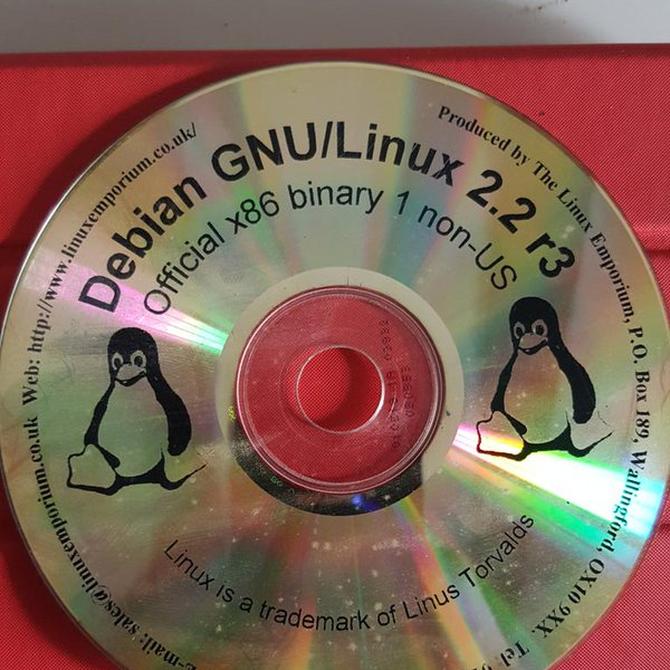
Today marks the 10-year anniversary of my first contribution to Debian GNU/Linux. I will not recount the full history here but my first experience with Debian was a happy accident. I had sent off for a 5-CD set of Red Hat from The Linux Emporium only to discover I lacked the required 12MB of RAM. Annoyed, I reached for the Debian "potato" CD that was included gratis in my order due to it being outdated at the time Fast-forwarding a few years, whilst my first contribution was trivial, it was Thomas Bushnell's infectious enthusiasm that led me to contribute more, eventually becoming a Google Summer of Code student under Daniel Baumann, and finally becoming an official Debian Developer in September 2008 with Thomas Viehmann as my Application Manager. (Some things may never change, however I still struggle with the bug tracker's control@ interface.)
The response I got to my patch always reminds me of the irrational power of providing attibution. I've always liked to tell myself I'm above such vanities but perhaps the truly mature approach would be to accept that ego is part of the human condition and as a community take steps to avoid handicapping ourselves by underestimating the value of "trivialities" such as having one's name listed. I've since been fascinated by the number of maintainers who do not attribute patches in changelogs, especially from newcomers or when the changes are non-trivial a handful in particular have stung me fairly deeply. I would certainly concede that it adds nothing technical and can even be distracting, but it seems a reasonable concession that dramatically increases the chance of future efforts or, frankly, is simply a kindly gesture of thanks and good will. Given our level of technical expertise, I fear we regularly suffer from not having sufficient empathy for newcomers or first-time users who lack the context or orientation that we possess. Anyway, here's to another ten

18 December 2016

Jonathan McDowell: Timezones + static blog generation

So, it turns out when you move to static blog generation and do the generation on your laptop, which is usually in the timezone you re currently physically located, it can cause URLs to change. Especially if you re prone to blogging late at night, which can result in even just a shift to DST changing things. I ve forced jekyll to UTC by adding timezone: 'UTC' to the config, and ensuring all the posts now have timezones for when they were written (a lot of the imported ones didn t), so hopefully things should be stable from here on.

Iustin Pop: Printer fun

Had some printer fun this week. It was fun in the sense that failure modes are interesting, not that there was much joy in the process. My current document printer is an HP that I bought back in early 2008; soon 9 years old, that is. When I got the printer I was quite happy: it supports Postscript, it supports memory extension (which allowed me to go from the built-in 64MB to a whopping 320MB), it is networked and has automatic duplex. Not good for much more than document printing, but that it did well. I didn't print a lot on it (averaged it was well below the recommended monthly limit), which might explain the total trouble-free operation, but I did change the toner cartridges a couple of times. The current cartridges were running low for a while, but I didn't need to change them yet. As I printed a user manual at the beginning of the week (~300+ pages in total), I ran out of the black half-way through. Bought a new cartridge, installed it, and the first strange thing was that it still showed Black empty - please replace . I powered the printer off and turned it on again (the miracle cure for all IT-related things), and things seemed OK, so I restarted printing. However, this time, the printer was going through 20-30 pages, and then was getting stuck in "Printing document" with green led blinking. Waited for 20 minutes, nothing. So cancel the job (from the printer), restart printing, all fine. The next day I wanted to print a single page, and didn't manage to. Checked that the PDF is normal, checked an older PDF which I printed successfully before, nothing worked. Changed drivers, unseated & re-seated the extra memory, changed operating systems, nothing. Not even the built-in printer diagnostic pages were printing. The internet was all over with "HP formatter issues"; apparently some HP printers had "green" (i.e. low-quality) soldering, and were failing after a while. But people were complaining about 1-2-4 years, not 9 that my printer worked, and it was very suspicious that all troubles started after my cartridge replacement. Or, more likely, due to the recent sudden increase in printing. Given that formatter board fixes (bake in the oven for N minutes at a specific temperature to reflow the soldering) are temporary and that you can't find replacement parts for this printer, I started looking for a new printer. To my surprise (and dismay at the waste that capitalism produces), a new printer from a higher class was cheaper than replacing all 4 cartridges in my printer. So I had a 90% full black cartridge that I couldn't reuse, but I'd get a new printer for not much more. Interestingly, in 9 years, the development was: I was however happy that one can still get OS-independent (Postscript), networked printers that are small enough for home use and don't (necessarily) come with WiFi. However, one thing still bothered me: did I have such problems because the printer died of overwork at old age, or was it related to the cartridge change? So I start searching again, and I find a post on a forum (oh Google, why did you remove "forum search" and replaced it with "language level"?) that details a hidden procedure to format the internal storage of the printer, exactly for my printer model, exactly for my symptoms. Huh, I will lose page count, but this is worth a try So I do press the required keys, I see the printer booting and saying "erasing ", then asking for language, which makes me happy because it seems the forum post was correct in one regard. I confirm English, the printer reboots once more, and then when it comes up it warns me: "Yellow cartridge is a non-HP original, please confirm". I get confused, and re-seat all cartridges, to no avail. Yellow is non-HP. Sigh, maybe that cartridge had something that confused the printer? When I visit its web page however, all cartridges except the newly installed black one are marked as Non-HP; this only means that I can't see their remaining toner level, but otherwise the printer is restored back to life. I take the opportunity to also perform a firmware upgrade (only five years newer firmware, but still quite old), but this doesn't solve the Non-HP message. The printer works now, and I'm left wondering: was this all a DRM-related failure, something like new cartridge chip which had some new code that confused the printer so bad it needed reformatting, at which point the old cartridge code is no longer supported (for whatever reason)? Was it just a fluke, unrelated to DRM? Was the problem that I powered off the printer soon after replacing the cartridge, while it was still doing something (e.g. preparing to do a calibration after the change)? And another, more practical question: I have 3 cartridges to replace still; they were at 10% before this entire saga, and I'm not able to see their level anymore, but they'll get down to empty soon. The black cartridge in the printer is already at 77%, which is surprising as I didn't print that much. So should I replace the cartridges on what is a possibly fully functional, but also possibly a dying printer? Or buy a new one for slightly more, throwing out possibly good hardware? Even though I understand the business reason behind it, I hate the whole concept of "the printer is free, you pay for the ink". Though in my case "free" didn't mean bad, as a lifetime of 9 years is good enough for a printer.

Daniel Stender: How to cheat setuptools-scm (Debian diary)

[2016-12-19: some additions] This is another little issue from Python packaging for Debian which I came across lately packaging the compressed NumPy based data container Bcolz. Upstream uses setuptools-scm to determine the software s version during build time from the source code management environment the code is in. This method is convenient for the upstream development because with that the version number doesn t need to be hard-coded, and often people just forget to update that (and other version carrying files like doc/conf.py) when a new version of a project is released. python-setuptools just needs to be added to the setup.py to do its job, and in Bcolz the code goes like this:
setup(
    name="bcolz",
    use_scm_version= 
        'version_scheme': 'guess-next-dev',
        'local_scheme': 'dirty-tag',
        'write_to': 'bcolz/version.py'
The file the version number is written to is bcolz/version.py. This file isn t in the upstream code revision nor in the tarball which was released by the upstream developers, it s always generated during build time. In Debian there is an error if you try to build a package from a source tree which contains files which aren t to be found in the corresponding tarball, like cruft from a previous build, or if any files have changed therefore every new package should be test build also twice in a row in a non-chroot environment. Generally there a two ways to solve this, either you add cruft to debian/clean, or you add the file resp. a matching file pattern to extend-diff-ignore in debian/source/options. Which method is the better one could be discussed, I m generally using the clean option if something isn t in the upstream tarball, and the source/options solution if something is already in the upstream tarball, but gets changed during a build. This is related to your preferred Git procedures, if you remove a file which is in the upstream tarball these removals have to be checked in separately, and that means everytime a new upstream tarball is released that is not very convenient. Another option which is available is to strip certain files from the upstream tarball by putting them on the Files-Excluded in deb/copyright. By the way, the same complex applies to egg-info/: that folder is shipped or is not shipped in the upstream tarball, and files in that folder get changed during build. When the source code is put into a Git environment for Debian packaging, there could be problems with the version number setuptools-scm comes up with. This setuptools extension gets the recent version from the latest Git tag when there is a version number to be found, and that s all right. In Git environments for Debian packaging (like e.g. of the Debian Science group, the Python groups and the others) that is available, like the commonly used upstream tags have that1. The problem is, sometimes the upstream version which Debian has2 doesn t match the original upstream version number which is wanted for version in bcolz/version.py. For example, the suffix +ds is used if the upstream tarball has been stripped from prebuild files or embedded convenience shipments (like it s the case with the Bcolz package where c-blosc/ has been stripped because that s build for another package), of the suffix +dfsg shows that non-DFSG free software has been removed (which can t be distributed through the main archive section). For example, the version string for Bcolz which is found after the build currently (1.1.0+ds1-1) is 1.1.0+ds1:
# coding: utf-8
# file generated by setuptools_scm
# don't change, don't track in version control
version = '1.1.0+ds1'
But that s not wanted because this version never has been released, but appears everywhere:
$ pip list   grep bcolz
bcolz (1.1.0+ds1)
$ python3 -c 'import bcolz; bcolz.print_versions()'
-=-=-=-=-=-=-=-=-=-=-=-=-=-=-=-=-=-=-=-=-=-=-=-=-=-
bcolz version:     1.1.0+ds1
There are several different ways how to fix this. The one with the crowbar (like said in German) is to patch use_scm_version out from setup.py, but if you don t provide any version in exchange the version number which is used by Setuptools then is 0.0.0. The upstream version could be hard-coded into the patch, but then again it has not to be forgotten to update it manually by the maintainer, which is not very convenient. Plus, setup.py could change and the patch then might need to be unfuzzed, thus more work. Bad. A patch could be spared by manipulating and exporting the SETUPTOOLS_SCM_PRETEND_VERSION environment variable for setuptools-scm in debian/rules, which is sometimes used when I see the returns for that string on Debian Code Search. But how to prevent to hard code the version number, here? The dpkg-dev package (pulled by build-essential) ships a Makefile snippet /usr/share/dpkg/pkg-info.mk which could be included into debian/rules. It defines several variables which are useful for packaging, like DEB_SOURCE contains the source package name, they are extracted from debian/changelog. But, DEB_VERSION_UPSTREAM which is available through that puts out the upstream version without epoch and Debian revision, but it s not getting any finer grained out of the box. For a custom fix, a regular expression which removes the +... extensions (if present) from the bare upstream version string would be s/\+[^+]*//:
$ echo "1.1.0+ds1"   sed -e 's/\+[^+]*//'
1.1.0
$ echo "1.1.0"   sed -e 's/\+[^+]*//'
1.1.0
$ echo "1.1.0+dfsg12"   sed -e 's/\+[^+]*//'
1.1.0
With that, a custom variable VERSION_UPSTREAM could be set on the top of DEB_VERSION_UPSTREAM (from pkg-info.mk) in debian/rules:
include /usr/share/dpkg/pkg-info.mk
VERSION_UPSTREAM = $(shell echo '$(DEB_VERSION_UPSTREAM)'   sed -e 's/\+[^+]*//')
export SETUPTOOLS_SCM_PRETEND_VERSION = $(VERSION_UPSTREAM)
Bam, that works (see the commit here):
# coding: utf-8
# file generated by setuptools_scm
# don't change, don't track in version control
version = '1.1.0'
An addition, I ve seen that dh-python also takes care of SETUPTOOLS_SCM_PRETEND_VERSION since 2.20160609. The environment variable is set by the Debhelper build system if python 3, -setuptools-scm is among the build-dependencies in debian/control. The Perl code for that is in dh/pybuild.pm. I think the version number string above comes from dh-python s pretended version, and not from any of the Git tags (which are currently debian/1.1.0+ds1-1 and upstream/1.1.0+ds1).

  1. For Git in Debian packaging, e.g. see the DEP-14 proposal (Recommended layout for Git packaging repositories): http://dep.debian.net/deps/dep14/ [return]
  2. Following the scheme for package versions [epoch:]upstream_version[-debian-revision] [return]

Sean Whitton: progpoking

Programming by poking: why MIT stopped teaching SICP Perhaps there is a case for CS programs keeping pace with workplace technological changes (in addition to developments in the academic field of CS), but it seems sad to deprive undergrads of deeper knowledge about language design.

Dirk Eddelbuettel: RcppArmadillo 0.7.600.1.0

armadillo image Earlier this week, Conrad released Armadillo 7.600.1. The corresponding RcppArmadillo release 0.7.600.1.0 is now on CRAN and in Debian. This follows several of rounds testing at our end with a full reverse-dependency of a pre-release version followed by another full reverse-depency check. Which was of course followed by CRAN testing for two more days. Armadillo is a powerful and expressive C++ template library for linear algebra aiming towards a good balance between speed and ease of use with a syntax deliberately close to a Matlab. RcppArmadillo integrates this library with the R environment and language--and is widely used by (currently) 298 other packages on CRAN -- an increase of 24 just since the last CRAN release of 0.7.500.0.0 in October! Changes in this release relative to the previous CRAN release 0.7.500.0.0 are as follows:

Changes in RcppArmadillo version 0.7.600.1.0 (2016-12-16)
  • Upgraded to Armadillo release 7.600.1 (Coup d'Etat Deluxe)
    • more accurate eigs_sym() and eigs_gen()
    • expanded floor(), ceil(), round(), trunc(), sign() to handle sparse matrices
    • added arg(), atan2(), hypot()

Changes in RcppArmadillo version 0.7.500.1.0 (2016-11-11)
  • Upgraded to Armadillo release 7.500.1
  • Small improvement to return value treatment
  • The sample.h extension was updated to the newer Armadillo interface. (Closes #111)

Courtesy of CRANberries, there is a diffstat report. More detailed information is on the RcppArmadillo page. Questions, comments etc should go to the rcpp-devel mailing list off the R-Forge page.

This post by Dirk Eddelbuettel originated on his Thinking inside the box blog. Please report excessive re-aggregation in third-party for-profit settings.

Mike Gabriel: Free Your Phone, Free Yourself, Get Sponsored for your Work

TL;DR; This is a call to every FLOSS developer interested in working towards Free Software driven mobile phones, esp. targetting the Fairphone 2. If your only show stopper is lack of development hardware or lack of financial support, please go on reading below. As I see it, the Fairphone 2 will be (or already is) the FLOSS community platform on the mobile devices market. Regularly, I get new notice about people working on this or that OS port to the FP2 hardware platform. The combination of a hardware-wise sustainably maintained mobile phone platform and a Free (or sort-of-Free) operating system being ported to it, makes the Fairphone 2 a really attractive device. Personally, I run Sailfish OS on my Fairphone 2. Some weeks ago, I got contacted by one of my sponsors letting me know that he got involved in setting up an initiative that works on porting the Ubuntu Table/Phone OS to FP2. That very project is in need of more developers. Possibly, it needs exactly YOU!!! So, if you are a developer that meets one or more of the below requirements and are interested in working in a highly motivated team, please get in touch with the UT4FP [1] project (skill requirements taken from the UT4FP website): My sponsor offers to send out FP2 devices to (seriously) interested developers and if needed, he can also back up developers financially. If you are interested, please get in touch with me (and I'll channel you through...) via IRC (on the OFTC or Freenode network). light+love
Mike (aka sunweaver on IRC) [1] https://www.ut4fp.org/

B lint R czey: Hardening Debian Stretch with PIE is ready but bindnow will be missing

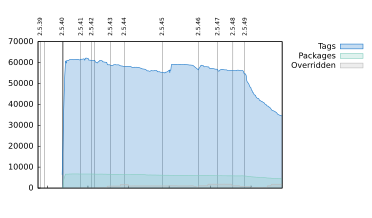
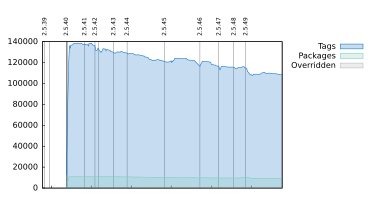
pie-bindnow-notnow-debianHardening all executables by making them position independent by default is basically ready with a few packages to fix (bugs). On the other hand bindnow is not enabled globally (#835146) and it seems it will not be for the next stable release despite my plan :-(. If you are a maintainer you can still have your packages hardened in Stretch by enabling bindnow per package before 25 January, 2017. It could be a nice present for your users! update: It is nice to see how enabling PIE in GCC increased PIE coverage while bindnow coverage is improving slowly with maintainers enabling it package by package:
lintian-pie

From https://lintian.debian.org/tags/hardening-no-pie.html

lintian-no-bindnow

From: https://lintian.debian.org/tags/hardening-no-bindnow.html

update 2: Changed the deadline of enabling bindnow per package to align with the start of the full freeze, not the soft freeze.

Johannes Schauer: Looking for self-hosted filesharing software

The owncloud package was removed from Debian unstable and testing. I am thus now looking for an alternative. Unfortunately, finding such replacement seems to be harder than I initially thought, even though I only use a very small subset of what owncloud provides. What I require is some software which allows me to:
  1. upload a directory of files of any type to my server (no "distributed" filesharing where I have to stay online with my laptop)
  2. share the content of that directory via HTTP (no requirement to install any additional software other than a web browser)
  3. let the share-links be private (no possibility to infer the location of other shares)
  4. allow users to browse that directory (image thumbnails or a photo gallery would be nice)
  5. allow me to allow anonymous users to upload their own content into that directory (also only requiring their web browser)
  6. already in Debian or easy to package and maintain due to low complexity (I don't have enough time to become the next "owncloud maintainer")
I thought this was a pretty simple task to solve but I am unable to find any software that fits above criteria. The below table shows the result of my research of what's currently available. The columns mark whether the respective software fulfills one of the six criteria from above.
Software 123456
owncloud
sparkleshare
dvcs-autosync
git annex assistant
syncthing
pydio
seafile
sandstorm.io
ipfs
bozon
droppy
Pydio, seafile and sandstorm.io look promising but they seem to be beasts similar in complexity to owncloud as they bring features like version tracking, office integration, wikis, synchronization across multiple devices or online editing of files which are features that I do not need. I would already be very happy if there was a script which would make it easy to create a hard-to-guess symlink to a directory with data tracked by git annex under my www-root and then generate some static HTML to provide a thumbnails view or a photo gallery. Unfortunately, even that solution would not be sufficient as it would still disallow public upload by anybody whom I would give the link to... If you know some software that meets my criteria or would like to submit corrections to above table, please shoot an email to josch@debian.org. Thanks!

Next.

Previous.