Search Results: "ag"

6 August 2016

Norbert Preining: Debian/TeX Live 2016.20160805-1

TUG 2016 is over, and I have returned from a wonderful trip to Toronto and Maine. High time to release a new checkout of the TeX Live packages. After that I will probably need some time for another checkout, as there are a lot of plans on the table: upstream created a new collection, which means new package in Debian, which needs to go through NEW, and I am also planning to integrate tex4ht to give it an update. Help greatly appreciated here. texlive2016-debian This package also sees the (third) revision of how config files for pdftex and luatex are structured, since then we have settled down. Hopefully this will close some of the issues that have appeared. New packages biblatex-ijsra, biblatex-nottsclassic, binarytree, diffcoeff, ecgdraw, fvextra, gitfile-info, graphics-def, ijsra, mgltex, milog, navydocs, nodetree, oldstandardt1, pdflatexpicscale, randomlist, texosquery Updated packages 2up, acmart, acro, amsmath, animate, apa6, arabluatex, archaeologie, autobreak, beebe, biblatex-abnt, biblatex-gost, biblatex-ieee, biblatex-mla, biblatex-source-division, biblatex-trad, binarytree, bxjscls, changes, cloze, covington, cs, csplain, csquotes, csvsimple, datatool, datetime2, disser, dvipdfmx, dvips, emisa, epstopdf, esami, etex-pkg, factura, fancytabs, forest, genealogytree, ghsystem, glyphlist, gost, graphics, hyperref, hyperxmp, imakeidx, jadetex, japanese-otf, kpathsea, latex, lstbayes, luatexja, mandi, mcf2graph, mfirstuc, minted, oldstandard, optidef, parnotes, philosophersimprint, platex, protex, pst-pdf, ptex, pythontex, readarray, reledmac, sepfootnotes, sf298, skmath, skrapport, stackengine, sttools, tcolorbox, tetex, texinfo, texlive-docindex, texlive-es, texlive-scripts, thesis-ekf, tools, toptesi, tudscr, turabian-formatting, updmap-map, uplatex, uptex, velthuis, xassoccnt, ycbook. Enjoy.

Dirk Eddelbuettel: RcppStreams 0.1.1

Streamulus A maintenance release of RcppStreams is now on CRAN. RcppStreams brings the excellent Streamulus C++ template library for event stream processing to R. Streamulus, written by Irit Katriel, uses very clever template meta-programming (via Boost Fusion) to implement an embedded domain-specific event language created specifically for event stream processing. This release updates the compilation standard to C++11 per CRAN's request as this helps with both current and upcoming compiler variants. A few edits were made to DESCRIPTION and README.md, the Travis driver file was updated, but no new code was added. The NEWS file entries follows below:
Changes in version 0.1.1 (2016-08-05)
  • Compilation is now done using C++11 standards per request of CRAN to help with an array of newer (pre-release) and older compilers
  • The Travis CI script was updated to use run.sh from our fork; it now also installs all dependencies as binary .deb files.
  • The README.md was updated with additional badges.
  • The DESCRIPTION file now has URL and BugReports entries.
Courtesy of CRANberries, there is also a copy of the DESCRIPTION file for this initial release. More detailed information is on the RcppStreams page page and of course on the Streamulus page.

This post by Dirk Eddelbuettel originated on his Thinking inside the box blog. Please report excessive re-aggregation in third-party for-profit settings.

5 August 2016

Petter Reinholdtsen: Sales number for the Free Culture translation, first half of 2016

As my regular readers probably remember, the last year I published a French and Norwegian translation of the classic Free Culture book by the founder of the Creative Commons movement, Lawrence Lessig. A bit less known is the fact that due to the way I created the translations, using docbook and po4a, I also recreated the English original. And because I already had created a new the PDF edition, I published it too. The revenue from the books are sent to the Creative Commons Corporation. In other words, I do not earn any money from this project, I just earn the warm fuzzy feeling that the text is available for a wider audience and more people can learn why the Creative Commons is needed. Today, just for fun, I had a look at the sales number over at Lulu.com, which take care of payment, printing and shipping. Much to my surprise, the English edition is selling better than both the French and Norwegian edition, despite the fact that it has been available in English since it was first published. In total, 24 paper books was sold for USD $19.99 between 2016-01-01 and 2016-07-31:
Title / languageQuantity
Culture Libre / French3
Fri kultur / Norwegian7
Free Culture / English14
The books are available both from Lulu.com and from large book stores like Amazon and Barnes&Noble. Most revenue, around $10 per book, is sent to the Creative Commons project when the book is sold directly by Lulu.com. The other channels give less revenue. The summary from Lulu tell me 10 books was sold via the Amazon channel, 10 via Ingram (what is this?) and 4 directly by Lulu. And Lulu.com tells me that the revenue sent so far this year is USD $101.42. No idea what kind of sales numbers to expect, so I do not know if that is a good amount of sales for a 10 year old book or not. But it make me happy that the buyers find the book, and I hope they enjoy reading it as much as I did. The ebook edition is available for free from Github. If you would like to translate and publish the book in your native language, I would be happy to help make it happen. Please get in touch.

Steve Kemp: Using the compiler to help you debug segfaults

Recently somebody reported that my console-based mail-client was segfaulting when opening an IMAP folder, and then when they tried with a local Maildir-hierarchy the same fault was observed. I couldn't reproduce the problem at all, as neither my development host (read "my personal desktop"), nor my mail-host had been crashing at all, both being in use to read my email for several months. Debugging crashes with no backtrace, or real hint of where to start, is a challenge. Even when downloading the same Maildir samples I couldn't see a problem. It was only when I decided to see if I could add some more diagnostics to my code that I came across a solution. My intention was to make it easier to receive a backtrace, by adding more compiler options:
  -fsanitize=address -fno-omit-frame-pointer
I added those options and my mail-client immediately started to segfault on my own machine(s), almost as soon as it started. Ultimately I found three pieces of code where I was allocating C++ objects and passing them to the Lua stack, a pretty fundamental part of the code, which were buggy. Once I'd tracked down the areas of code that were broken and fixed them the user was happy, and I was happy too. Its interesting that I've been running for over a year with these bogus things in place, which "just happened" to not crash for me or anybody else. In the future I'll be adding these options to more of my C-based projects, as there seems to be virtually no downside. In related news my console editor has now achieved almost everything I want it to, having gained: The only outstanding feature, which is a biggy, is support for Undo which I need to add. Happily no segfaults here, so far..

Arturo Borrero Gonz lez: Spawning a new blog with jekyllrb


I have been delighted with git for several years now. It's a very powerful tool and I use it every day.
I try to use git in all possible tasks: bind servers, configurations, firewalls, and other personal stuff.

However, there has been always a thing in my git-TODO: a blog managed with git.

After a bit of searching, I found an interesting technology: jekyllrb hosted at github pages. Jekyll looked easy to manage and easy to learn for a newbie like me.
There are some very good looking blogs out there using this combination, for example: https://rsms.me/

But I was lazy to migrate this 'ral-arturo' blog from blogger to jekyll, so I decided to create a new blog from scratch.

This time, the new blog in written in Spanish and is about adventures, nature, travels and outdoor sports.
Perhaps you noticed this article about the Mulhacen mountain (BTW, we did it! :-))
The new blog is called alfabravo.org,

I like the workflow with git & jekyll & github:


Who knows, perhaps this 'ral-arturo' blog ends being migrated to the new system as well.

3 August 2016

Daniel Kahn Gillmor: Changes for GnuPG in Debian

The GNU Privacy Guard (GnuPG) upstream team maintains three branches of development: 1.4 ("classic"), 2.0 ("stable"), and 2.1 ("modern").They differ in various ways: software architecture, supported algorithms, network transport mechanisms, protocol versions, development activity, co-installability, etc.Debian currently ships two versions of GnuPG in every maintained suite -- in particular, /usr/bin/gpg has historically always been provided by the "classic" branch.That's going to change!Debian unstable will soon be moving to the "modern" branch for providing /usr/bin/gpg. This will give several advantages for Debian and its users in the future, but it will require a transition. Hopefully we can make it a smooth one.

What are the benefits?Compared to "classic", The "modern" branch has:
  • updated crypto (including elliptic curves)
  • componentized architecture (e.g. libraries, some daemonized processes)
  • improved key storage
  • better network access (including talking to keyservers over tor)
  • stronger defaults
  • more active upstream development
  • safer info representation (e.g. no more key IDs, fingerprints easier to copy-and-paste)
If you want to try this out, the changes are already made in experimental. Please experiment!

What does this mean for end users?If you're an end user and you don't use GnuPG directly, you shouldn't notice much of a change once the packages start to move through the rest of the archive.Even if you do use GnuPG regularly, you shouldn't notice too much of a difference. One of the main differences is that all access to your secret key will be handled through gpg-agent, which should be automatically launched as needed. This means that operations like signing and decryption will cause gpg-agent to prompt the the user to unlock any locked keys directly, rather than gpg itself prompting the user.If you have an existing keyring, you may also notice a difference based on a change of how your public keys are managed, though again this transition should ideally be smooth enough that you won't notice unless you care to investigate more deeply.If you use GnuPG regularly, you might want to read the NEWS file that ships with GnuPG and related packages for updates that should help you through the transition.If you use GnuPG in a language other than English, please install the gnupg-l10n package, which contains the localization/translation files. For versions where those files are split out of the main package, gnupg explicitly Recommends: gnupg-l10n already, so it should be brought in for new installations by default.If you have an archive of old data that depends on known-broken algorithms, PGP3 keys, or other deprecated material, you'll need to have "classic" GnuPG around to access it. That will be provided in the gnupg1 package

What does this mean for package maintainers?If you maintain a package that depends on gnupg: be aware that the gnupg package in debian is going through this transition.A few general thoughts:
  • If your package Depends: gnupg for signature verification only, you might prefer to have it Depends: gpgv instead. gpgv is a much simpler tool that the full-blown GnuPG suite, and should be easier to manage. I'm happy to help with such a transition (we've made it recently with apt already)
  • If your package Depends: gnupg and expects ~/.gnupg/ to be laid out in a certain way, that's almost certainly going to break at some point. ~/.gnupg/ is GnuPG's internal storage, and it's not recommended to rely on any specific data structures there, as they may change. gpg offers commands like --export, --import, and --delete for manipulating its persistent storage. please use them instead!
  • If your package depends on parsing or displaying gpg's output for the user, please make sure you use its special machine-readable form (--with-colons). Parsing the human-readable text is not advised and may change from version to version.
If you maintain a package that depends on gnupg2 and tries to use gpg2 instead of gpg, that should stay ok. However, at some point it'd be nice to get rid of /usr/bin/gpg2 and just have one expected binary (gpg). So you can help with that:
  • Look for places where your package expects gpg2 and make it try gpg instead. If you can make your code fall back cleanly
  • Change your dependencies to indicate gnupg (>= 2)
  • Patch lintian to encourage other people to make this switch ;)

What specifically needs to happen?The last major step for this transition was renaming the source package for "classic" GnuPG to be gnupg1. This transition is currently in the ftp-master's NEW queue. Once it makes it through that queue, and both gnupg1 and gnupg2 have been in experimental for a few days without reports of dangerous breakage, we'll upload both gnupg1 and gnupg2 to unstable.We'll also need to do some triage on the BTS, reassigning some reports which are really only relevant for the "classic" branch.Please report bugs via the BTS as usual! You're also welcome to ask questions and make suggestions on #debian-gnupg on irc.oftc.net, or to mail the Debian GnuPG packaging team at pkg-gnupg-maint@lists.alioth.debian.org.Happy hacking!Tags: gnupg

Bdale Garbee: ChaosKey

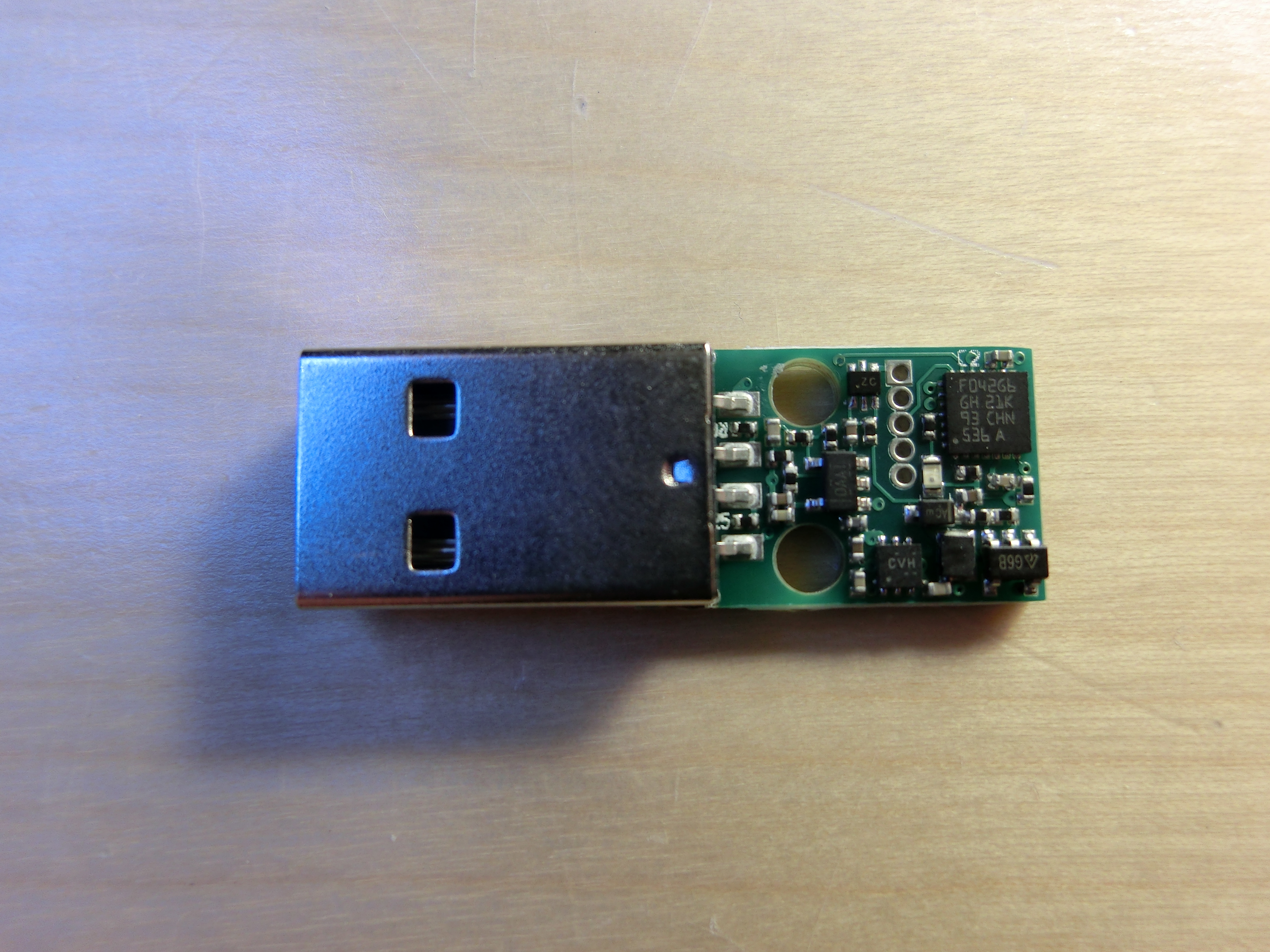
I'm pleased to announce that, at long last, the ChaosKey hardware random number generator described in talks at Debconf 14 in Portland and Debconf 16 in Cape Town is now available for purchase from Garbee and Garbee.

Keith Packard: chaoskey

ChaosKey v1.0 Released USB Attached True Random Number Generator ChaosKey, our random number generator that attaches via USB, is now available for sale from the altusmetrum store. We talked about this device at Debconf 16 last month Support for this device is included in Linux starting with version 4.1. Plug ChaosKey into your system and the driver will automatically add entropy into the kernel pool, providing a constant supply of true random numbers to help keep the system secure. ChaosKey is free hardware running free software, built with free software on a free operating system.

Joey Hess: Patreon

I've been funded for two years by the DataLad project to work on git-annex. This has been a super excellent gig; they provided funding and feedback on ways git-annex could be improved, and I had a large amount of flexability to decide what to work on in git-annex. Also plenty of spare time to work on new projects like propellor, concurrent-output, and scroll. It was an awesome way to spend the last two years of my twenty years of free software. That funding is running out. I'd like to continue this great streak of working on the free software projects that are important to me. I'd normally dip into my savings at this point and keep on going until some other source of funding turned up. But, my savings are about to be obliterated, since I'm buying the place where I've had so much success working distraction-free. So, I've started a Patreon page to fund my ongoing work. Please check it out and contribute if you want to. Some details about projects I want to work on this fall:

Elena 'valhalla' Grandi: The Cat Model of Package Ownership

The Cat Model of Package Ownership

Debian has been moving away from strong ownership of packages by package maintainers and towards encouraging group maintainership, for very good reasons: single maintainers have a bad bus factor and a number of other disadvantages.

When single maintainership is changed into maintainership by a small , open group of people who can easily communicate and sync with each other, everything is just better: there is an easy way to gradually replace people who want to leave, but there is also no duplication of efforts (because communication is easy), there are means to always have somebody available for emergency work and generally package quality can only gain from it.

Unfortunately, having such group of maintainers for every package would require more people than are available and willing to work on it, and while I think it's worth doing efforts to have big and important packages managed that way, it may not be so for the myriad of small ones that make up the long tail of a distribution.

Many of those packages may end up being maintained in a big team such as the language-based ones, which is probably better than remaining with a single maintainer, but can lead to some problems.

My experience with the old OpenEmbedded, back when it was still using monotone instead of git and everybody was maintaining everything, however, leads me to think that this model has a big danger of turning into nobody maintains anything, because when something needs to be done everybody is thinking that somebody else will do it.

As a way to prevent that, I have been thinking in the general direction of a Cat Model of Package Ownership, which may or may not be a way to prevent some risks of both personal maintainership and big teams.

The basic idea is that the my in my packages is not the my in my toys , but the my in my Cat, to whom I am a servant .

As in the case of a cat, if my package needs a visit to the vet, it's my duty to do so. Other people may point me to the need of such a visit, e.g. by telling me that they have seen the cat leaving unhealty stools, that there is a bug in the package, or even that upstream released a new version a week ago, did you notice?, but the actual putting the package in a cat carrier and bringing it to the vet falls on me.

Whether you're allowed to play with or pet the cat is her decision, not mine, and giving her food or doing changes to the package is usually fine, but please ask first: a few cats have medical issues that require a special diet.

And like cats, sometimes the cat may decide that I'm not doing a good enough job of serving her, and move away to another maintainer; just remember that there is a difference between a lost cat who wants to go back to her old home and a cat that is looking for a new one. When in doubt, packages usually wear a collar with contact informations, trying to ping those is probably a good idea.

This is mostly a summer afternoon idea and will probably require some refinement, but I think that the basic idea can have some value. Comments are appreciated on the federated social networks where this post is being published, via email (valid addresses are on my website http://www.trueelena.org/computers/articles/the_cat_model_of_package_ownership.html and on my GPG key http://www.trueelena.org/about/gpg.html) or with a post on a blog that appears on planet debian http://planet.debian.org/.

how small is small depends a lot on the size of the package, the amount of work it requires, how easy it is to parallelize it and how good are the people involved at communicating, so it would be quite hard to put a precise number here.

I've moved away from it because the boards I was using could run plain Debian, but I've heard that after the move to git there have been a number of workflow changes (of which I've seen the start) and everything now works much better.

Guido G nther: Debian Fun in July 2016

Debian LTS July marked the fifteenth month I contributed to Debian LTS under the Freexian umbrella. As usual I spent the 8 hours working on these LTS things: Other Debian stuff
Dirk Eddelbuettel: digest 0.6.10

A new release, now at version number 0.6.10, of the digest package is now on CRAN. I also just prepared the Debian upload. This release, just like the previous one, is once again the work mostly of external contributors. Michel Lang added length checks to sha1(); Thierry Onkelinx extended sha1() support and added more tests, Viliam Simko also extended sha1() to more types, and Henrik Bengtsson improved intervals and fixed a bug with file usage. CRANberries provides the usual summary of changes to the previous version.

This post by Dirk Eddelbuettel originated on his Thinking inside the box blog. Please report excessive re-aggregation in third-party for-profit settings.

John Goerzen: All Aboard

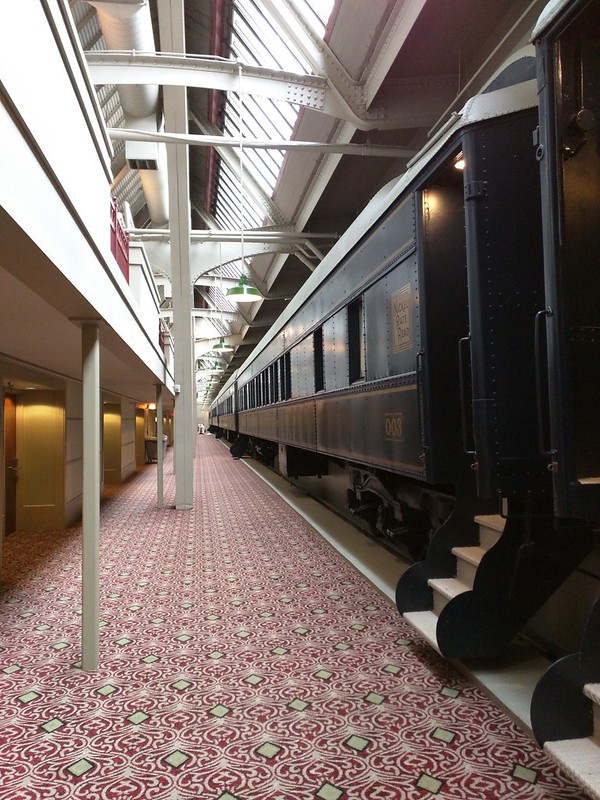
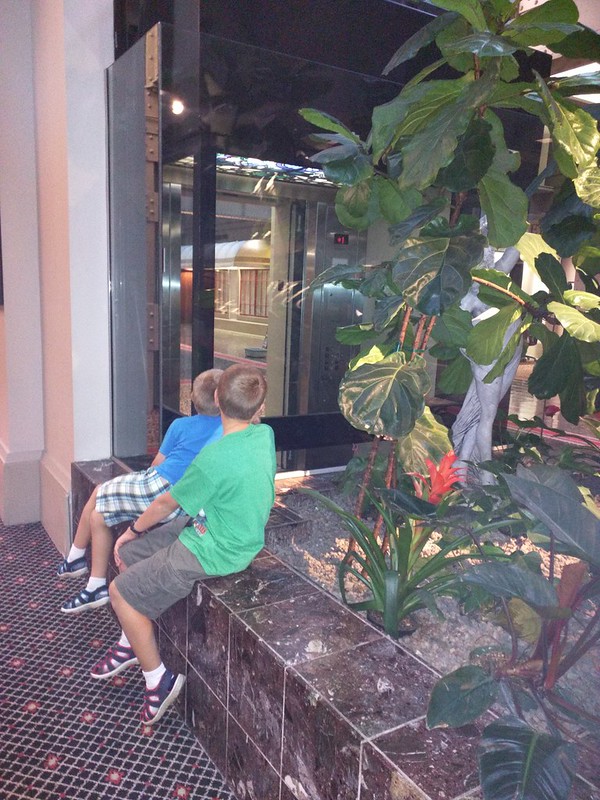
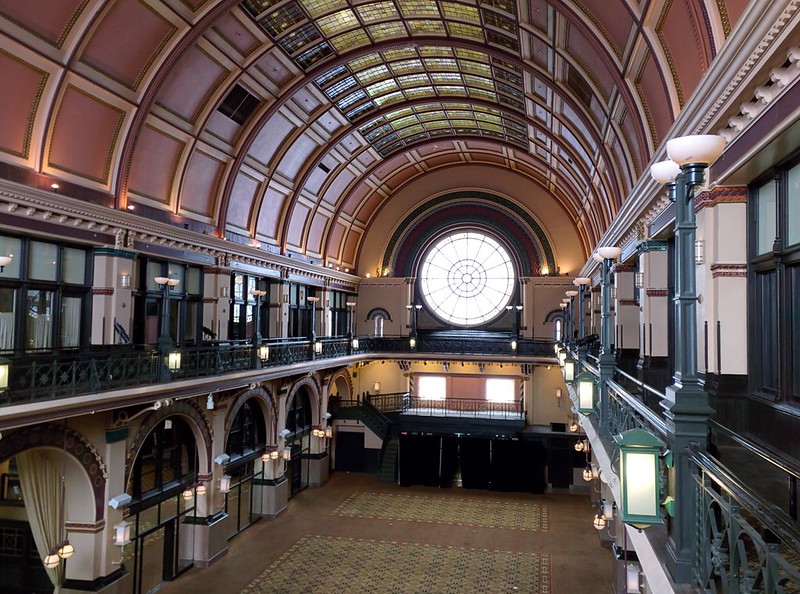
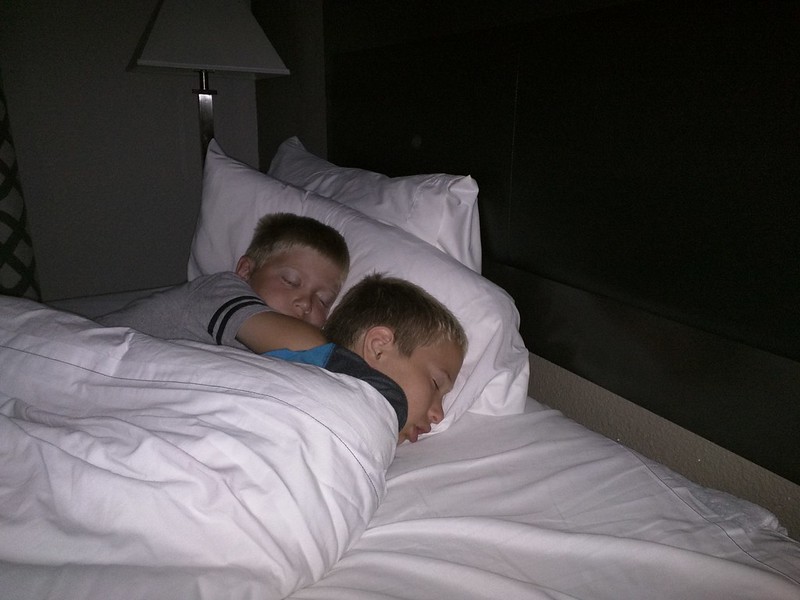
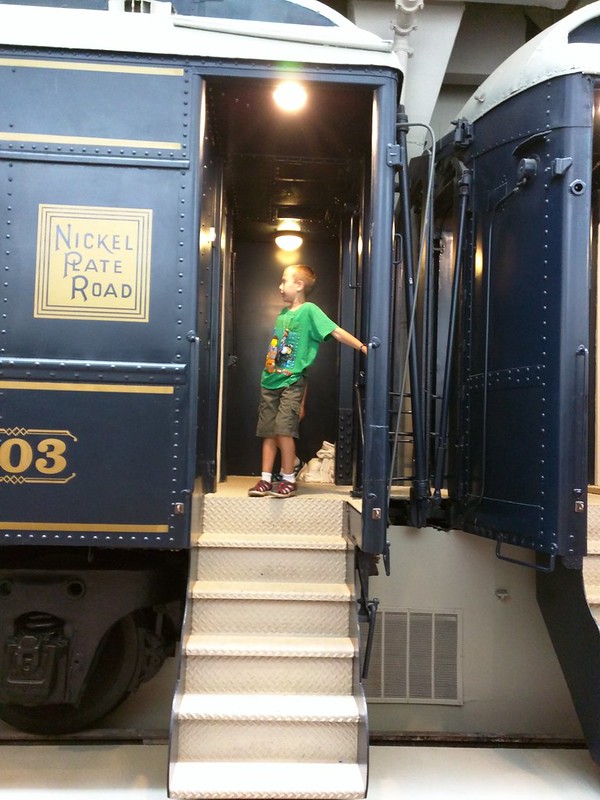
Aaaaaall Aboard! *chug* *chug* And so began a trip aboard our hotel train in Indianapolis, conducted by our very own Jacob and Oliver. IMG_20160703_101438 Because, well, what could be more fun than spending a few days in the world s only real Pullman sleeping car, on its original service track, inside a hotel? IMG_20160703_101520 We were on a family vacation to Indianapolis, staying in what two railfan boys were sure to enjoy: a hotel actually built into part of the historic Indianapolis Union Station complex. This is the original train track and trainshed. They moved in the Pullman cars, then built the hotel around them. Jacob and Oliver played for hours, acting as conductors and engineers, sending their train all across the country to pick up and drop off passengers. Opa! Have you ever seen a kid s face when you introduce them to something totally new, and they think it is really exciting, but a little scary too? That was Jacob and Oliver when I introduced them to saganaki (flaming cheese) at a Greek restaurant. The conversation went a little like this: Our waitress will bring out some cheese. And she will set it ON FIRE right by our table! Will it burn the ceiling? No, she ll be careful. Will it be a HUGE fire? About a medium-sized fire. Then what will happen? She ll yell OPA! and we ll eat the cheese after the fire goes out. Does it taste good? Oh yes. My favorite! It turned out several tables had ordered saganaki that evening, so whenever I saw it coming out, I d direct their attention to it. Jacob decided that everyone should call it opa instead of saganaki because that s what the waitstaff always said. Pretty soon whenever they d see something appear in the window from the kitchen, there d be craning necks and excited jabbering of maybe that s our opa! And when it finally WAS our opa , there were laughs of delight and I suspect they thought that was the best cheese ever. Giggling Elevators IMG_20160703_205544 Fun times were had pressing noses against the glass around the elevator. Laura and I sat on a nearby sofa while Jacob and Oliver sat by the elevators, anxiously waiting for someone to need to go up and down. They point and wave at elevators coming down, and when elevator passengers waved back, Oliver would burst out giggling and run over to Laura and me with excitement. Some history IMG_20160704_161550 We got to see the grand hall of Indianapolis Union Station what a treat to be able to set foot in this magnificent, historic space, the world s oldest union station. We even got to see the office where Thomas Edison worked, and as a hotel employee explained, was fired for doing too many experiments on the job. Water and walkways Indy has a system of elevated walkways spanning quite a section of downtown. It can be rather complex navigating them, and after our first day there, I offered to let Jacob and Oliver be the leaders. Boy did they take pride in that! They stopped to carefully study maps and signs, and proudly announced this way or turn here and were usually correct. 20160702_164754_Richtone(HDR) And it was the same in the paddleboat we took down the canal. Both boys wanted to be in charge of steering, and we only scared a few other paddleboaters. Fireworks IMG_20160704_220332 Our visit ended with the grand fireworks show downtown, set off from atop a skyscraper. I had been scouting for places to watch from, and figured that a bridge-walkway would be great. A couple other families had that thought too, and we all watched the 20-minute show in the drizzle. Loving brothers By far my favorite photo from the week is this one, of Jacob and Oliver asleep, snuggled up next to each other under the covers. They sure are loving and caring brothers, and had a great time playing together. IMG_20160702_071015

2 August 2016

Dirk Eddelbuettel: RcppGetconf 0.0.2

A first update for the recent RcppGetconf package for reading system configuration --- not unlike getconf from the libc library --- is now out. Almost immediately after I tweeted / blogged asking for help with OS X builds, fellow Rcpp hacker Qiang Kou created a clever pull request allowing for exactly that. So now we cover two POSIX systems that matter most these days --- Linux and OS X --- but as there are more out there, please do try, test and send those pull requests. We also added a new function getConfig() retrieving a single (given) value complementing the earlier catch-all function getAll(). You can find out more about RcppGetconf from the local RcppGetconf page and the GitHub repo. Changes in this release are as follows:
Changes in inline version 0.0.2 (2016-08-01)
  • A new function getConfig for single values was added.
  • The struct vars is now defined more portable allowing compilation on OS X (PR #1 by Qiang Kou).
Courtesy of CRANberries, there is a diffstat report. More about the package is at the local RcppGetconf page and the GitHub repo.

This post by Dirk Eddelbuettel originated on his Thinking inside the box blog. Please report excessive re-aggregation in third-party for-profit settings.

1 August 2016

Charles Plessy: Amazon cloud: refreshing my skills.

For a few years I did not attempt any serious task on the Amazon cloud. It took me a bit of time to get back my automatisms and adapt myself to the changes. In particular, the cheapest instances, t2.nano, are only accessible via virtual private clouds (VPC), and it was a bit difficult for me to find how to create a simple one. Perhaps this is because all AWS accounts created after March 18, 2013, automatically have a default VPC, and everybody else who needed their own simple VPC have created it a long time ago already. In the end, this was not complicated at all. This is probably why I could not find a tutorial. In brief, one needs first to create a VPC. If it is just for spawning an instance from time to time, the IP range does not matter much. Default VPCs are using 172.31.0.0/16, so let's do the same.
CIDR_BLOCK=172.31.0.0/16
aws ec2 create-vpc --cidr-block $CIDR_BLOCK
In the command's output, there is the VPC's identifier, that I paste by hand in a variable called VPC. The same pattern will be repeated for each command creating something. One can also find the VPC's identifier with the command aws ec2 describe-vpcs.
VPC=vpc-XXXXXXXX
Then, create a subnet. Again, no need for complications, in our simple case one can give the full IP range. I cut and paste the returned identifier in the variable SUBNET. In order that the instances receive a public IP address like in default VPCs and like in the usual behaviour of the VPC-less Cloud, one needs to set the attribute MapPublicIpOnLaunch.
aws ec2 create-subnet --vpc-id $VPC --cidr-block $CIDR_BLOCK
SUBNET=subnet-XXXXXXXX
aws ec2 modify-subnet-attribute --subnet-id $SUBNET --map-public-ip-on-launch 
Then, create a gateway (paste the identifier in GATEWAY) and attach it to the VPC.
aws ec2 create-internet-gateway
GATEWAY=igw-XXXXXXXX
aws ec2 attach-internet-gateway --internet-gateway-id $GATEWAY --vpc-id $VPC
A routing table was created automatically, and one can find its identifier via the command describe-route-tables. Then, create a default route to the gateway.
aws ec2 describe-route-tables
ROUTETABLE=rtb-XXXXXXXX
aws ec2 create-route --route-table-id $ROUTETABLE --destination-cidr-block 0.0.0.0/0 --gateway-id $GATEWAY
Of course, if one does not open the traffic, no instance can be contacted from outside... Here I open port 22 for SSH.
aws ec2 describe-security-groups
SECURITY_GROUP=sg-XXXXXXXX
aws ec2 authorize-security-group-ingress --group-id $SECURITY_GROUP --protocol tcp --port 22 --cidr 0.0.0.0/0
Other novelty, now Amazon distributes some Free tools for the command line, that are more comprehensive than euca2ools. Next, I will try again the Debian Installer in the Cloud.

Uwe Kleine-K nig: Fixing Debian bug #794266

After finally being able to fix Debian bug #794266 I want to thank those who made this possible: Some time ago my colleague Bj rn offered an Arietta G25 to me. After Jochen, another colleague, helped me to solder pin headers on it, this machine served as host computer for my tests. As I didn't have a machine with the relevant RTC chip, I contacted Seiko Instruments and they provided me a few chips including oscillators. It was again Jochen who then created a break-out board from these components that I could wire to my Arietta board. Finally Wolfram Sang's i2ctransfer helped me a lot to access and so understand the chip. It's has not landed in i2c-tools.git, but I hope this will change soon given that this is a really useful tool. A big thank you to all who helped me. It was fun and would have been less so without your efforts!

Shirish Agarwal: Doha and the past year in APT

A week has gone by and another small sharing about Doha and one package that quite a few of us use everyday but don t think much of them. Let s start with Doha with these two pictures which tells/shares a bit about what the Doha of today is like qatar-1 qatar-2 While I have more than a dozen snapshots of Doha, all of them show same thing, all are huge skyscrapers and overall Doha seems to be aping Dubai and is in a frenzy as World Cup 2022 is around the corner. We did see a few of the older places but these seemed to be more done for tourists rather than the real thing. We saw stuff like wooden_ship This was a picture taken by Ritesh Raj Saraff, a friend and a DD whom I met while I was going to Debconf. The place where this picture has been taken is known as a Souk or what we know as market-place. This was a place where you could get spices. Quite a few of the spices that we get and use in India were bought from Middle-East in the olden times. In fact, it has been argued that the whole Mughlai food that is part of Indian culture was imported from Middle-East when we were trading them before India or Akhand Bharat was invaded. What was interesting to both of us is that we could perceive that most of the buildings had a sort of fakeness to it, they tried to show that it had a lot of detailed work on the buildings but we could see it was all done recently so not that old as being led to believe. One of the other interesting bits that we came to know throughout our stay in Qatar that almost 80-90% of the staff we met inside Qatar airport as well as in the Souk were people from Asian sub-continent and more specifically from South India. I had few interesting conversations with some of the people who were managing the shops were that almost of them were just employees while the owners were Qataris . I could understand this as the distance and flight between Qatar and India is hardly 3 hours. It seemed very similar to how Mexicans look for work in United States. The most expensive thing there was water as it s desert other than housing and most workers seemed to have shared accommodation from anywhere between 5-15 people in one room. It s only the relative strength of the Qatari Rial which probably compels them to be there. The temperature was around 45 degrees with a bit of humidity as it s next to the Ocean. For all the money in the world, I wouldn t work there. It is true that you know your city s worth only when you go outside:) I do have some more stories about Qatar but that would have to wait for another day now. Also, I really don t want to talk much about this part as it s part depressing but probably would explore it a bit in a further blog-post. One of the more interesting topics that I attended was the apt talk . There are 3-4 tools in the Debian world i.e. apt, aptitude, apt-get, dpkg and dselect. More often than not people know aptitude and apt-get whereas the rest of the packages are not thought so much about. What I somewhat suspected about the history of apt was revealed to be true today, courtesy David K. julias-andreas-klose-year-in-apt You can see the talk/video about apt at http://meetings-archive.debian.net/pub/debian-meetings/2016/debconf16/The_past_year_in_APT.webm. I had been curious about apt,libapt,dpkg and the entire tool-chain which goes into updating packages and like. I had a couple of conversations here in India before on mail, in person and IRC as well as couple of conversations in South Africa as well before the APT talk where it was told that packages are not signed or it s not easy to figure out the integrity. Being a Debian fan-boy I could not believe this to be true. Hence I asked and to my dismay found it to be true . I also then asked the same with a bit more background on the mailing list as well and got to know that this has been a concern since 2005. As I do not have the requisite skills and the person would require probably knowledge of dpkg internals as well as have probably good social skills to have at least 1-2 DD s help her/im to work on it and have probably some server space where even some partial archive is re-built using debian packages which use dpkg-sig . I also had some concerns that even if somebody did do the work, it might come in the way of the reproducible builds concept where Neils shared ways in which it could be overcome. Having said the above, it is totally doable if somebody has the will, skills and the patience to do it. Just look at the amazing work done by the team which re-built almost all the archive using clang. See clang.debian.net for the amazing work that they have done. Now, one of the issues in India which comes in popularizing Debian or in fact any free software distribution in India is the bandwidth issue or rather the lack of it or how expensive it is. The situation for better lack of term is pathetic . While nothing can be done till the time the Govt. gives limited term oligopoly licenses to telecom operators and they have a cabal (cabal closed team where decisions and policies are made without any knowledge of and to other stakeholders.) we need to find ways to make the best of the situation. Anyways, while there are some ideas to tackle that but that s a long-term goal and I will share some aspects of it in probably another blog post. In the interim somethings can definitely be made better. Now one of the issues that is there for most people is getting the package updates. Before updating the packages, the package index needs to be updated. Now, both in home and work environments most people are cautious to update the package index. But many times, either due to bandwidth issues or some other issue which is outside your control, your package index is corrupted. I have put both the possible reasons of why and how the package index corruption takes place and a probable work-around of in the deity mail post. I do hope to put in a more coherent state by probably making smaller bug issues so they could be tackled or answered one by one. Any improvements would be better for stability of debian infrastructure only. If anybody does do the required work and need a guinea pig for testing, count me in. Just holler and share you will be working on this aspect and at least one of my workstations would definitely take part in seeing if its better or not. Even if you are able to just provide a way to make a copy of /var/lib/apt/lists after every successful update and do the comparison with time-stamp on next run and only change the copy when a successful update occurs, that will be a huge help in itself. Look forward to hearing form one and all.
Filed under: Miscellenous Tagged: #Debconf16, #feature-request, #Julian Andreas Klose, #shell-script ?, apt, aptitude

Bits from Debian: Debian and Tor Services available as Onion Services

We, the Debian project and the Tor project are enabling Tor onion services for several of our sites. These sites can now be reached without leaving the Tor network, providing a new option for securely connecting to resources provided by Debian and Tor. The freedom to use open source software may be compromised when access to that software is monitored, logged, limited, prevented, or prohibited. As a community, we acknowledge that users should not feel that their every action is trackable or observable by others. Consequently, we are pleased to announce that we have started making several of the various web services provided by both Debian and Tor available via onion services. While onion services can be used to conceal the network location of the machine providing the service, this is not the goal here. Instead, we employ onion services because they provide end-to-end integrity and confidentiality, and they authenticate the onion service end point. For instance, when users connect to the onion service running at http://sejnfjrq6szgca7v.onion/, using a Tor-enabled browser such as the TorBrowser, they can be certain that their connection to the Debian website cannot be read or modified by third parties, and that the website that they are visiting is indeed the Debian website. In a sense, this is similar to what using HTTPS provides. However, crucially, onion services do not rely on third-party certification authorities (CAs). Instead, the onion service name cryptographically authenticates its cryptographic key. In addition to the Tor and Debian websites, the Debian FTP and the Debian Security archives are available from .onion addresses, enabling Debian users to update their systems using only Tor connections. With the apt-transport-tor package installed, the following entries can replace the normal debian mirror entries in the apt configuration file (/etc/apt/sources.list):
  deb  tor+http://vwakviie2ienjx6t.onion/debian          jessie            main
  deb  tor+http://vwakviie2ienjx6t.onion/debian          jessie-updates    main
  deb  tor+http://sgvtcaew4bxjd7ln.onion/debian-security jessie/updates    main
Likewise, Tor's Debian package repository is available from an onion service :
  deb tor+http://sdscoq7snqtznauu.onion/torproject.org   jessie    main
Where appropriate, we provide services redundantly from several backend machines using OnionBalance. The Debian OnionBalance package is available from the Debian backports repository. Lists of several other new onion services offered by Debian and Tor are available from https://onion.debian.org and https://onion.torproject.org respectively. We expect to expand these lists in the near future to cover even more of Debian's and Tor's services.

Arturo Borrero Gonz lez: Huge work in the iptables debian package


Before I started contributing to the iptables package back in December 2015 it suffered from a numbers of problems so the package was clearly in very bad shape.

One of the first problems was the lack of VCS for the package, no git, not even svn. Of course this was easy to solve and I did it straight away importing iptables 1.4.21-2 into a git repository.

The 1.4.21-2 version was dated in May 2014. This is a lot of time for a package which is active upstream and which is installed in almost all the Debian systems out there.

The number of Debian bugs opened for the package was simply huge, and I cleaned the bugtracker as reported in the blogpost "Current status of iptables & nftables in Debian".

Netfilter project upstream released version 1.6.0 which includes the nftables-compat stuff (iptables on top of the nftables kernel engine, and also the translation tools). Adding this was not an easy task given the overall state of the package.

Also, users were asking for normal things, like Multi-Arch support (see #776041). Adding Multi-Arch support to iptables has been my personal packaging nightmare for a couple of months.

Michael Biebl, who is systemd Debian maintainer, required some changes in the iptables package as well (see #787480). This change asked for a package split to libiptc, libip4tc, libip6tc and libxtables-dev (instead of iptables-dev).
This binary package split was also required for a proper Multi-Arch support.

The situation has been clearly a huge challenge for me,: I made a lot of mistakes, I discovered how little I know about complex packaging, and I had to learn a lot about several stuff.
Probably some experts and experienced DD's could have solved the situation with more solvency, but at the end I enjoyed all the work and the learning :-)

All this changes required me about 60 commits to complete, in several uploads. The last one is 1.6.0-3 which is now in the NEW queue.

I would like to note that both Ana Guerrero and Michael Biebl invested a lot of time in reviewing and sponsoring the packages. Thanks you!

There are still work to be done, of course.

Ben Armstrong: Retiring as a Debian developer

This is a repost and update of my retirement letter sent privately to Debian last month, July 10, 2016. At that time I received many notes of appreciation and good wishes which I treasure. Now, I d like to say goodbye to the broader Debian community and, as well, indicate which of the cleanup items have since been addressed in strikethrough style and with annotations. Also, I d like to stay in touch with many of you, so I have added some comments oriented towards those of you who are interested in doing that after the letter.
When in 1995, on a tip from a friend, I installed Debian on my 386 at work and was enthralled with the results, I could not have foreseen that two years later, friends I had made on channel #debian would nudge me to become a Debian developer. Nor when that happened did I have any idea that twenty years later, I d consider Debian to be like family, the greatest free software community in the world, and would still be promoting it and helping people with it whenever I could. Debian quietly, unexpectedly became a part of what defines me. My priorities in life have changed over that time, though. I have shifted my attention to things that are more important to me in life, such as my family, my health and well-being physically and spiritually, and bringing all I can to bear on the task of preserving our local wilderness areas and trails. In the latter area, I m now bringing all of what Debian has helped shaped me to be to the table, launching some ambitious projects I hope will bear fruit in the coming years, and make a measurable contribution to help us hang onto our precious natural preserves where I live. Unfortunately, as I ve poured more time and energy into these things, I ve increasingly not been giving my packages the care they need. Nor do I have any roles or goals now for any of the Debian projects I was previously involved in. So, after much careful deliberation, and as much as it pains me to say it, it s time to retire as a Debian developer. It has been a great privilege to work with you, and to meet many of you in New York at Debconf 10. I plan to be around online, and will continue to take an interest in Debian, lending a hand when I can. Thanks for all of the fun times, for all that I ve learned, and for the privilege to make awesome things with you. I ll treasure this forever. So much for the soppy bits.  Now, business. These things remain to clean up upon my departure, and I d appreciate help from QA, and anyone else who can lend a hand. My packages are effectively orphaned, but I haven t the time to do any of the cleanup myself, so please speak up if you can help.
  1. Debian Jr.
    • O: junior-doc. The junior-doc package has been awaiting an overhaul by whoever revives the project since I gave it up years ago. I m still listed as maintainer and that should be changed to Debian Junior Maintainers <debianjr-maintainers@lists.alioth.debian.org> if they want it. Otherwise, it is orphaned.
    • I should also be dropped from Uploaders from debian-junior, the metapackages source. Fixed in git.
  2. Tux Paint. This is a very special package that deserves to go to someone who will love it and care for it well. There are three source packages in all:
    • O: tuxpaint
    • O: tuxpaint-config
    • O: tuxpaint-stamps
  3. O: xletters. This is a cute little typing practice game and needs a new maintainer.
  4. XPilot is co-maintained by Phil Brooke <pjb@debian.org>, so he should replace me as Maintainer. Phil said he ll pick up xpilot-ng and will also look at xpilot-extra.
    • xpilot-ng
    • O: xpilot-extra (recently removed from testing due to my neglect, and not co-maintained by Phil; it s unclear if anyone really uses this anymore)
  5. GTypist is co-maintained by Daniel Leidert <dleidert@debian.org> and should replace me as Maintainer.
  6. My ruby packages. A group of packages that I brought into Debian as dependencies of taskwarrior-web, which I never completed. Maybe they ll be useful in and of themselves, and maybe not. In any case, they are maintained by pkg-ruby-extras-maintainers, but I m the sole developer in Uploaders and should be removed: Fixed in git.
    • ruby-blockenspiel
    • ruby-parseconfig
    • ruby-rack-flash3
    • ruby-simple-navigation
    • ruby-sinatra-simple-navigation
    • ruby-term-ansicolor
    • ruby-versionomy
  7. Debian Live stuff: I am listed in Uploaders for live-manual (fixed in git) and debian-installer-launcher (fixed in git) and need to be removed.
  8. O: eeepc-acpi-scripts. The defunct Debian EeePC project has just this one package. Recently, the mailing list was asked about its status, and it was recently NMU d. To my knowledge, nobody from the original team remains to take care of it, so it needs a new maintainer. I should be removed from Uploaders, and since the Debian Eee PC Team no longer exists, it should be removed as maintainer. It is effectively orphaned unless someone speaks up.
There are also some Alioth projects / lists that are defunct that I ll need to talk to the Alioth admins about cleaning up in the coming days. One of these is <debian-eeepc-devel@lists.alioth.debian.org> and since it is still listed as the maintainer of eeepc-acpi-scripts, that needs to be sorted out before the list can be closed. Thanks again, and see you around!
Ben

Stay in touch For those of you who would like to stay in touch, here are some ways to do that:
  • Follow my blog: http://syn.theti.ca
    If you already do that, great! If not, welcome to my blog! For the past couple of years you may have noticed a decrease in technical content and increase in local trails and conservation oriented posts. You can expect more of the latter.
  • Say hi to me on irc: SynrG (also SynrGy) on irc.oftc.net (irc.debian.org) or irc.freenode.net.
    I still intend to hang out and offer support when I can, just no longer as a developer. Channel #debian-offtopic on either network is a good place to catch up with me socially.
  • Follow me on Facebook: https://www.facebook.com/SynrG
    For better or worse, a lot of the trails and conservation folks hang out here, and many of you in the Debian community are already my Facebook friends.
  • Look for my Bluff Trail posts on their site: https://wrweo.ca
    Providing tech support to this organization is where much of my time and energy is going these days. I post here once in a while, but do most of my work behind the scenes as a volunteer and, newly this year, as a board member.
Facebooktwittergoogle_plusredditpinterestlinkedinmail

Next.

Previous.