Search Results: "tar"

20 March 2013

Masayuki Hatta: Recipe for Debian Haskell packaging

The following is what I usually do when I want to debianize a Haskell stuff from Hackage. This is a personal recipe, by no means official procedure or such. I may be wrong, badly at that.
  1. Check pkg-haskell repository whether your intended package already exists or not. Somebody might work on it already.
  2. Find the webpage of your intended package at HackageDB, then download Cabal source package . Untar it. The tarball filename should be changed to fit the Debian source package convention. For example, if the original name is something like foobar-1.0.tar.gz, then it should be haskell-foobar_1.0.orig.tar.gz.
  3. File ITP. reportbug is your friend.
  4. Run cabal-debian in untared dir:
     $ cabal-debian --debianize --quilt
    
    We do have the upstream tarball, so use quilt. See http://wiki.debian.org/UsingQuilt. It might give you warnings about changelog. debian/changelog doesn t exist yet, so ignore it.
  5. Now read http://wiki.debian.org/Haskell/CollabMaint/Processes and http://wiki.debian.org/Haskell/CollabMaint/PackageTemplate carefully. Then do things as they say. These two are short, but well-written instructions. Edit the generated debian/control appropriately. Do not forget to make your debian/copyright machine-friendly. See http://www.debian.org/doc/packaging-manuals/copyright-format/1.0/.
  6. Test whether your package is flawless and really buildable. Do lintian. Use pbuilder.
     $ lintian haskell-foobar_1.0-1_amd64.changes
     # pbuilder --build haskell-foobar_1.0-1.dsc
    
  7. Read http://wiki.debian.org/Haskell/CollabMaint/DarcsBasic. Darcs is quite easy to use, and you don t have to be the master of Darcs to merely debianize things anyway. Basically, what I usually do is
     $ darcs record -a; darcs push --repo=debian
    
    Darcs is well-suited to Haskell-related development, but seems you can use Git, too.
  8. Change debian/changelog. UNRELEASED in the first line should be unstable or experimental . Do not forget to close ITP.
  9. Finally, do
     $ debuild -tc; debcommit -r; debrelease; darcs push --repo=debian
    
    That s all folks!

DebConf team: DebConf13 matching fund (Posted by Didier Raboud)

As part of the DebConf13 fundraising effort, a generous sponsor, Brandorr Group, has proposed to start a matching fund in USD for DebConf13; in place through the end of April 30th. The rules are quite simple: For details, please see our Monetary support from individuals page, which also has a short url, for convenience: http://deb.li/dc13donate. Help welcome As always, the DebConf team is looking for volunteers. Some jobs need technical skills, but many DebConf tasks are about working to deadlines on non-technical issues (e.g. fundraising, budgeting, talk scheduling). You can see more information about some of the jobs to be done on the DebConf wiki. Please do think about getting involved and sharing your ideas with us, to help us make DebConf an even more useful event for Debian in the future. We look forward to welcoming you to Vaumarcus!

Kartik Mistry: New laptop or how to teach tech to anyone? Part 1

* So, we got new laptop last week. The entire plan was to introduce my wife into tech world or atleast in Debian and/or OpenSouce world. I visited home for one of this and other personal reason(s) [Expect next post on this!]. My wife reported her first bug (installation-report, with help from me) which was closed by mighty bubulle! I handed over couple of freely available Python books and we started with codecademy s Python track. So far, things are good, but being really non-tech person, I m currently working as support system for her. I ve used KDE as desktop. Machine runs on latest kernel from experimental due to issues with hardware mentioned here. I was not able to explain IRC in much depth, so we re using non-free methods like Google Talk for communicating and reporting. Wish us luck! :) I ll report Part 2 when things will be enough to report the progress.

19 March 2013

Michal Čihař: Libravatar support in Weblate

For some time, Weblate was showing avatars for users. Just as I've discovered Libravatar - free and federated alternative to Gravatar, I thought it would be better replacement. Quickly looking at their website, it seems that they transparently provide all avatars from Gravatar as well, so the migration seems to be pretty much painless. Basic replacement to use their server is just matter of changing base URLs, however to support federated behavior, you have to install pyLibravatar. Weblate in Git now supports both these ways. While implementing the client side, I did also setup my own instance of Surrogator to provide avatars for some of my domains. Surprisingly this worked fine without problems, but let's see how much used this will actually become.

Filed under: English Phpmyadmin Weblate 2 comments Flattr this!

Sune Vuorela: Simple Libravatar service

So, since recently bugs.debian.org has started using libravatar avatars. Not yet the federated service, but that s supposedly in the works. But for that, one of course need to run each own service. Which I wanted to do. In a simple way. So I did it.
_avatars._tcp.pusling.com. 43200 IN SRV 10 10 80 static.pusling.com.
and in my root dir for that one I have source/ and avatar/
$ ls
avatar source
In source, I have default.png which I m serving and a series of avatars for various email addresses
$ ls source/
debian@pusling.com default.png
and then I have a simple script to generate the right file names:
#! /bin/sh (cd avatar;
ls while read file ; do [ -L $file ] && rm $file ; done
)
for i in source/*@* ; do ln -s ../$i avatar/$(echo -n $(basename $i) sha256sum sed s/-// ) ; done
for i in source/*@* ; do ln -s ../$i avatar/$(echo -n $(basename $i) md5sum sed s/-// ) ; done
and the last piece of magic to get everything to work:
$ cat avatar/.htaccess
ErrorDocument 404 /source/default.png
ForceType image/png <Files index.html >
ForceType text/html
</Files>
and a set of index.html files created with touch . So there you go. A simple libravatar service, ignoring some pieces of the spec, but it should be good enough for most people. I might save my rants about the libravatar spec for another day. But it involves implementing a complete redirecting service and scaling of images. When will debian.org and kde.org start providing avatar services?

18 March 2013

Richard Hartmann: Bee happy

Finally.. My bee box has arrived. Initially I had planned to build it myself, but with current time constraints and in light of the fact that the commercial variant is built in a sheltered workshop, I decided to go for a pre-built one. The bee box is designed to give bees a natural habitat and allow them to get through the winter without the need for artificial sugar. Harvest is limited to about 15 kg in a good year as opposed to up to 50 kg in commercial beehives, but this method of beekeeping is less stressful for the bees. The trick is that there are two sections in every bee box; starting in the second year, you open the second section as soon as the bees have started to run out of space. As that's done relatively late in May, the bees will mainly build honey-only non-larvae honeycombs. During harvest, you remove only those secondary honeycombs; as a result, the bees will not need to defend their larvae and thus be a lot more relaxed. As those bees are under supervision of a human with access to oxalic acid, it's trivial to protect those bees against infestations by varroa destructor and to keep them safe form mice during winter. Bees are incredibly important for nature's cycle, so this is a hobby with a lot of positive impact on your local flora, and subsequently fauna. And hey.. free honey!

Hideki Yamane: Monthly magazine and Ubuntu Server


Recently, I've got two books. One is "Software Design" as monthly Debian article, and another is "Ubuntu Server (Ubuntu Server practical bible)" by Fumihito Yoshida (hito, who is a member of Ubuntu Japanese LoCo (and I'm same Loco member, too).

Well, it's bit a hard to write "hot" topic since it's paper magazine, I should write an article as possible (magazine would be published, then next deadline comes 2 or 3 days after that...), anyway I'm enjoying to write about Debian :-)


Also I've got a "Ubuntu Server " - it means "hey, you should put review to the web!!!" - okay, hito. I'll do so! :)

It probably targets "beginners" but "practical" as named and worth for non-beginners, too. If you want to try set up servers, this would help you a lot. However, if you just want "Copy & Paste" thing, this book is not suitable for you. google it (but we cannot assume search result as best suitable one, and most of that lucks "why you should do this operation", of course). This book shows process of thinking and background for set up servers.

I like "conclusion first, then show its reason and other methods" style, but sometimes not in this book, it frustrated me a bit. But anyway, explorations may be fun.

This book doesn't cover "cloud", but he says "if sales is good, I'll write about it". I'll be glad to review it.

Daniel Pocock: Switzerland Glacier Express

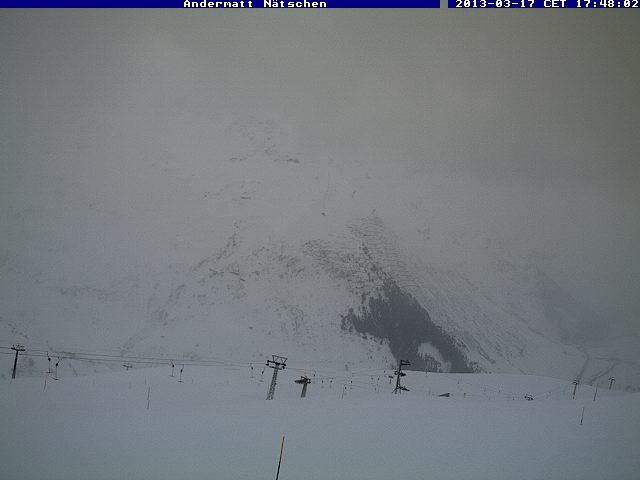
With many people coming to visit this year, both for DebConf13 and holidays, I'm going to start sharing some Swiss travel tips here in the blog. One of Switzerland's most popular tourist promotions is the Glacier Express railway. Here are the facts and a cool video. Avoid tickets/itineraries with fixed dates for visiting the mountains. The full Glacier Express journey is about 6 hours, and if it is cloudy or foggy, it is 6 hours in a train just like any other train. Some days really are cloudy and you won't see a single mountain. Try and make sure you have several flexible days in Switzerland so you can go up the mountains when the weather is optimal. Check the weather using the live webcam service Below is a typical webcam image for a bad day (I was up there Saturday skiing and it was perfect, Sunday was every tourist's nightmare). Compare this picture with the video further down: You can find a live feed like this for most Swiss mountain destinations with a web search Regular passenger trains run on the same route You don't need to buy an expensive Glacier Express' ticket. A regular passenger train does the same route every hour. No fixed reservation is necessary either and you can hop off and back on again along the way at many little stops. Oberalp Pass, at 2000 meters, is a good place to stop and hike (up to the peaks if you are keen, down to Andermatt if you want an easy walk with breathtaking views) What's more, the expensive trains are fully sealed and you can't open the windows. The regular trains do let you open the windows, so you can fully immerse yourself in the experience like this riding down from Natschen to Andermatt (1,500m): <video controls="" height="340" poster="http://danielpocock.com/sites/danielpocock.com/files/train-poster.png" width="560">
<source src="http://danielpocock.com/sites/danielpocock.com/files/DSC_1776.mp4" type="video/mp4"></source>
<source src="http://danielpocock.com/sites/danielpocock.com/files/DSC_1776.webm" type="video/webm"></source>
</video> To plan an itinerary, you can check Swiss train timetables at the official web site http://www.sbb.ch/en

Gerfried Fuchs: Backports Integrated Into The Main Archive

Dear users and supporters of the backports service! The Backports Team is pleased to announce the next important step on getting backports more integrated. People who are reading debian-infrastructure-announce will have seen that there was an archive maintenance last weekend: starting with wheezy-backports the packages will be accessible from the regular pool instead of a separate one, and all backports uploads will be processed through the regular upload queue (including those for squeeze-backports and squeeze-backports-sloppy). For Users What exactly does that mean for you? For users of wheezy, the sources.list entry will be different, a simple substitute of squeeze for wheezy won't work. The new format is:
deb http://ftp.debian.org/debian/ wheezy-backports main
So it is debian instead of debian-backports, and offered through the regular mirror network. Feel invited to check your regular mirror if it carries backports and pull from there. For Contributers What does it mean for contributing developers? Uploads for backports are no longer to be pushed to backports-master but to ftp.upload.debian.org, like any other regular package. Also, given that the packages are served from the same archive install there is no need to include the original tarball in the upload any longer because the archive knows it (Squeeze and beyond). Also, given that the upload goes to the same upload queue, there is only one keyring used anymore, so no more pain with expired or replaced keys. We though still keep the rule of adding your UID to an ACL list (this also includes DM additions). This is mostly only to give us the chance to remind you that uploads to backports are directly available for installation onto stable systems and you thus should take special care there. We carefully tried to take over the old ACLs, in case you can't upload anymore, please tell us so we can look into the issue. I've mentioned wheezy-backports (and squeeze-backports-sloppy) a few times here already, and you might wonder when it will be available. Technically, it is available from now on. Practically, while you could already upload to it, the set up of the buildd network is more painful than expected, so please allow the Buildd Team some days for setting them up. The upload rules for wheezy-backports are the same: packages that are in the next suite are accepted. Given that Jessie isn't created yet, we want you to think about whether the package you want to upload will go into Jessie final, and that you are taking a closer look once Jessie is created and the package entered there about the upgradeability. For the time until the suite is available, you can see this as relaxed upload rule. The same goes for squeeze-backports-sloppy: packages from two suites after Squeeze are acceptable, which turns it into the same relaxed rule as wheezy-backports above. Please also keep in mind that uploads to squeeze-backports-sloppy usually should be accompanied by uploads to wheezy-backports so people are able to upgrade from squeeze-backports-sloppy to wheezy with wheezy-backports. Thanks Finally, we want to thank the FTP-Master Team for their fine work on making this happen. The documentation on backports-master has been updated, and in case of any doubt or question, feel free to ask them on either the debian-backports mailinglist, or in case of sensitive topics ask us directly. Enjoy!
Rhonda for the Backports Team

/debian permanent link Comments: 1 Flattr this

16 March 2013

Lucas Nussbaum: Ideas from the -vote@ DPL election discussions

After one week of campaign on -vote@, many subjects have been mentioned already. I m trying here to list the concrete, actionable ideas I found interesting (does not necessarily mean that I agree with all of them) and that may be worth further discussion at a less busy time. There s obviously some amount of subjectivity in such a list, and I m also slightly biased ;) . Feel free to point to missing ideas or references (when an idea appeared in several emails, I ve generally tried to use the first reference). On the campaign itself, and having general discussions inside Debian: On getting new users and contributors to Debian: Infrastructure, processes, releases: Relationships with upstreams/downstreams: This list could be moved to wiki.d.o if others find sufficiently useful to help maintaining it.

Stefano Zacchiroli: bits from the DPL for February 2013 and a half

Dear project members, here's another report of DPL activities, this time for a period longer than usual (February + 1st week of March), so that the next one will be at the very end of the current DPL term. Highlights Appointments DPL helpers Two more DPL helpers IRC meetings have happened, minutes and logs of both are available. Assets Events Past At the beginning of February, I've attended FOSDEM 2013, together with many other Debian people. I didn't have any specific talk this year, but it's been a chance to talk F2F about several ongoing issues (see logs), and help mediating in some conflicts. I've also accepted the invitation to participate in the GNOME Advisory Board meeting, together with Laurent Bigonville of our GNOME team. No report of that has been prepared as of yet (sorry about that), but we have both reported "live" to the rest of the team on IRC. Future Miscellaneous A couple of months ago I've mentioned that I had filed an application, as Debian representative, to participate in a working table to define software procurement rules for the Italian public administration. Good news: my application has been accepted, together with those of other well-known FOSS communities and organizations (e.g. KDE, FSFE). I'll keep you posted of how it goes. Let's go back to elect a new DPL and release Wheezy now,
Cheers.
PS the day-to-day activity logs for February and March 2013 are available at the usual place master:/srv/leader/news/bits-from-the-DPL.txt.20130 2,3

Steve Kemp: Handling bookmarks?

I've a collection of about 500 bookmarks which I've barely touched for a few years. I started organizing them late the other night, because I'd been off work sick for two days and that was about the most I felt up for doing with a computer. The intention was to "tidy" them, and then setup some way of syncing them across browsers/computers. In the end I didn't like any of the syncing plugins I could find - xmarks, etc - so I decided to take a step backwards. I'd exported my bookmarks to HTML page, via firefox, before I started, and then later in a fit of pique I deleted the whole damn lot of them. So now a few years worth of bookmarks are stored in a single HTML file. But wait, we can use revision control can't we? We can host that file on github/similar. We can rely upon merges to deal with conflicts - simple if we just add lines to the end, or delete lines. Maybe that's the best way to store bookmarks? I updated the bookmark file to read:
<ul>
<li tags="debian, personal"><a href="http://www.debian-administration.org/">Debian Admin</a></li>
..
</ul>
Adding "tags" to the LI-container and then some simple jQuery code gave me the ability to search/filter the bookmarks and auto-populate tags. A small example placed online here: The obvious comment is that this makes adding new bookmarks a bit harder, but we'll see.. The javascript works in the browsers I tested, and for those that have none the bookmarks will just be a simple unordered list which should be universal. I expect the javascript could be improved by a real developer.

Russ Allbery: On (not) drinking

Captain Awkward, which is still the best advice column on the Internet, just posted an entry about someone being pestered to drink after saying that they don't drink. As another one of those people who just don't drink, but not for any specific reason that people seem to accept, I felt like blathering a bit more about that. This is mostly about me rather than about the thread over there, so I figured I'd do it on my own journal. First, I completely agree with the response that it's no one else's business why you do or don't drink, and people who persist in trying to get you to drink (or do anything else, no matter how innocuous) after you have clearly told them no are being rude and have forfeited the right to further conversation. But it also really frustrates me to see that people have to cope with that situation, particularly since I suspect it's gendered. My personal experience (as a man, and one who has a fairly firm way of expressing myself naturally) is that I say I don't drink and that's the end of it. Occasionally someone will ask me why. I've never had anyone pester me beyond that. I think the age of the letter writer (22) has something to do with this, but I suspect gender sadly also has something to do with this. People seem to be much more willing to tell women what to do and not take no for an answer. It's unbelievably rude when people do that. Don't do that. If you decide you can pester someone about their personal choices because of their gender (and, for that matter, their age, or any other reason), you deserve to get your head handed to you on a plate. Second, I wonder if some of the reason why I don't run into problems with this is that I work on a college campus. The latter means that there's a lot of surrounding culture around drinking and dealing with drinking, such as the university policy that any party have EANABs (Equally Attractive Non-Alcoholic Beverages) available as well. There's a bit of a cultural understanding that pushing people into drinking isn't okay. Third, since people do occasionally ask why I don't drink, or assume that anyone who doesn't drink is doing so for religious reasons or because they're an alcoholic, or might object to them drinking, here are a few reasons why I don't drink. It may be useful information in case you run into more people in the world like me. So, that's me. It makes no difference at all to me if other people drink. Enjoy! You won't offend me, there isn't any overtone to it, I'm not being judgemental when I say I don't drink, and it's not a dangerous topic or anything. There are probably others like me. If you run into us, all you have to say after "no thanks, I don't drink" is "oh, okay."

15 March 2013

Eddy Petri&#537;or: Appdirs from pypi is retarded

The XDG standard says user-specific data files should be written [in] $XDG_DATA_HOME which defaults to $HOME/.local/share.

Appdirs explicitly breaks XDG_DATA_HOME specification and returns a path based on $XDG_CONFIG_HOME, ~/.config/<appname> instead of ~/.local/share/<appname> for user_data_dir. Although the spec is as clear as day, the authors of appdirs say this is 'subject to some interpretation'.

No, it's not, read the damn spec!

http://standards.freedesktop.org/basedir-spec/basedir-spec-latest.html


The irony is that initially they got it right, but decided to break the standard some two years ago.

Thank you appdirs authors for ignoring a perfectly clear standard just because you *think* 'in practice, Linux apps tend to store their data in ~/.config/<appname>'.


Dear appdirs authors, if some people break the law it doesn't mean the law is broken. And if *you*think* some apps do not conform to a standard, it does mean *at*all* that you should not, either. More than that, if some applications decide on their own they consider some things config data and you'd classify those as 'application data', that's their business, and is not your place to decide to break the standard for everybody. Standards exist for a reason.

BTW, your software is worthless to me now and I decided NOT to use it because of this idiotic decision of yours.

Hideki Yamane: pbuilder/cowbuilder and piuparts failed

Today, I've failed to create pbuilder's base.tgz and cowbuilder's base.cow, and log says as below

Get:1 http://ftp.jp.debian.org sid Release.gpg [836 B]
Hit http://ftp.jp.debian.org sid Release
Ign http://ftp.jp.debian.org sid Release
Hit http://ftp.jp.debian.org sid/main amd64 Packages/DiffIndex
Hit http://ftp.jp.debian.org sid/main Translation-en
Fetched 836 B in 0s (3011 B/s)
Reading package lists...
W: GPG error: http://ftp.jp.debian.org sid Release: The following signatures were invalid: BADSIG AED4B06F473041FA Debian Archive Automatic Signing Key (6.0/squeeze) <ftpmaster debian.org="">
I: Obtaining the cached apt archive contents</ftpmaster>
"The following signatures were invalid: BADSIG" ?

apt (0.9.7.8) unstable; urgency=criticial

* SECURITY UPDATE: InRelease verification bypass
- CVE-2013-1051

[ David Kalnischk ]
* apt-pkg/deb/debmetaindex.cc,
test/integration/test-bug-595691-empty-and-broken-archive-files,
test/integration/test-releasefile-verification:
- disable InRelease downloading until the verification issue is
fixed, thanks to Ansgar Burchardt for finding the flaw
Maybe this cause it (just wild guess).

And piuparts also failed.


8m16.5s DEBUG: Starting command: ['chroot', '/tmp/tmpivurbJ', 'eatmydata', 'umount', '/proc']
8m16.5s DUMP:
umount: /proc: device is busy.
(In some cases useful info about processes that use
the device is found by lsof(8) or fuser(1))
8m16.5s DEBUG: Command failed (status=1), but ignoring error: ['chroot', '/tmp/tmpivurbJ', 'eatmydata', 'umount', '/proc']
8m16.5s DEBUG: Starting command: ['rm', '-rf', '--one-file-system', '/tmp/tmpivurbJ']
8m16.6s DUMP:
rm: skipping '/tmp/tmpivurbJ/proc', since it's on a different device
8m16.6s ERROR: Command failed (status=1): ['rm', '-rf', '--one-file-system', '/tmp/tmpivurbJ']
rm: skipping '/tmp/tmpivurbJ/proc', since it's on a different device

8m16.7s DEBUG: Starting command: ['chroot', '/tmp/tmpivurbJ', 'umount', '/proc']
8m16.8s DUMP:
chroot: failed to run command 'umount': No such file or directory


It mounts binfmt_misc mount under /proc and try to umount /proc without umount it again, again and again... then failed. What causes this annoying behavior?

Please let me know.

MJ Ray: Debian Project Leader 2013 election campaign links: part 1

This is basically a link-post to the Debian Project Leader election email discussions on GMANE s blog-style interface to debian-vote. After only 3 days of the 21, there s already a pageful, so if I don t start collecting links now, I ll probably miss some. Right or wrong, I ve grouped these into three topics: The Job
  1. Why do you think you are a good candidate for DPL (10 Mar 2013)
  2. How do you plan to represent Debian externally? (10 Mar 2013)
  3. about a DPL board (12 Mar 2013)
  4. DPL term duration (12 Mar 2013)
  5. Work balance and traveling (12 Mar 2013)
  6. trying to do awesome and risking to fail (11 Mar 2013)
  7. To Lucas: how do you plan to push your ideas (12 Mar 2013)
  8. All candidates quotes for the press if you win (13 Mar 2013)
Money
  1. using debian funds for Debian s hardware infrastru (12 Mar 2013)
  2. Usage of Debian s Money (12 Mar 2013)
  3. Debian s relationship with money and the economy (12 Mar 2013)
Project Management
  1. getting new people to Debian (10 Mar 2013)
  2. Free Software challenges and Debian role (11 Mar 2013)
  3. Development and technical issues and challenges (10 Mar 2013)
  4. Are there problematic infrastructure or processes in Debian? (12 Mar 2013)
  5. to Moray: encourage teams to take interns (11 Mar 2013)
So, what do you think are the key points or differences? Leave me a comment, or get involved in the discussions. Campaigning ends and voting begins 30/31 March.

14 March 2013

Richard Hartmann: The day the Reader died

...we stopped the singing. This may be irony:
No More Google Reader
from Google Operating System by Alex Chitu
via What's Hot in Google Reader

but the topic at hand remains serious. This is a stark reminder of why it's important to be able to get your data out of cloud services at a moment's notice and why you should always keep local backups of important data. Thankfully, Google is quite fair about this, as opposed to a lot of other large players. (As a side note, export of full data should be doable, but come with another layer of security like a grace period, password confirmation, verification email, or other means. Imagine someone gains temporary access to your account and exports all your digital life at once. And yes, I know how that relates to IMAP.) Google Reader has felt like a second class citizen for quite some time now, the removal of features to push Google+ and the slow updates for Android were two signs that didn't forebode well (Vim's spelling correction does not know "forbode", how weird is that)(turns out I'm simply stupid, see comments; thanks Jim). I can see how this move may make sense from Google's POV even though I am sad to see an old companion go. Anyway, the stats page of two of my accounts show how sadly I will miss Google Reader in two simple lines:
Since January 24, 2010 you have read a total of 59,253 items.
Since February 20, 2011 you have read a total of 215,285 items.

Farewell, my friend. PS: Maybe those petitions will sway them, but I won't get my hopes up. PS: Speaking of Google, I found this gem today; TMI.

Don Armstrong: libravatar for the BTS (and boring encoding fixes)

While working on fixing a few encoding problems that I managed to introduce to the BTS almost half a year ago, I took a side bit of coding, and introduced libravatar support to the BTS. Every e-mail now has an avatar to the right which should correspond to the sender. Libravatar is a federated service, which means that if you control your domain, you can serve your own icons. It also automatically falls back to gravatar, so if you're using that service, things should "just work". Hopefully this will be primarily amusing, and people won't abuse it. More importantly, but much less fun, the double encoding problems (where mails would get double-encoded if any of the headers contained non-us-ascii text), and mojibake wontfix icon ( ) should be fixed now. If you see any additional cases of this, please report them to owner@bugs.debian.org.

Matthias Klumpp: Tanglu

Hi everyone! Today I make an announcement I thought I would never ever make. But things changed. Discussion about this has a long history, starting as a non-serious suggestion at DesktopSummit 2011, continued with people on IRC, but it was decided back then that it wouldn t be worth the effort. This has changed too, and a small team has formed to work on it. We hereby announce Tanglu, a new Debian-based-Linux distribution. A new logo?Why do we need another one? Let me explain the concepts of that distro: Tanglu will be based on Debian Testing and follow the Debian development closely. It will have a 6-months release-cycle and it s target audience are Linux desktop users. We will make installing and setting up the distro as easy as possible. Tanglu will be usable for both developers of upstream software and the average Linux user and Linux newbie. This is possible because in our opinion developers and users don t have different needs for a desktop system. Both kinds of users like a polished desktop which just works . We will, hwever, not apply any kind of fancy modification on upstream software, we will basically just distribute what upstream created, so users can get an almost pure GNOME and KDE experience. Tanglu is designed to be able to solve the issue that Debian is frozen for a long time and Debian Developers can t make new upstream versions available for testing easily. During a Debian freeze, DDs can upload their software to the current Tanglu development version and later start the new Debian cycle with already tested packages from Tanglu. The delta between Tanglu and Debian should be kept as minimal as possible. However, Tanglu is not meant as experimental distribution for Debian, so please upload experimental stuff to Experimental. Only packages good enough for a release should go into Tanglu. Ideally, Tanglu and Debian should be working well together in mixed environments, where you for example have Debian servers and multiple Tanglu desktops with the new software, targeted at desktop user. Since the differences between Tanglu and Debian should not be very high, administering both systems should be very easy (if you know Debian). Tanglu will be an open project, driven by community. At the beginning of each cycle, people can make suggestions for release goals they want to implement (similar to Fedora, but without FESCo). These proposals are discussed in public and are rejected if there are major technical concerns. If consensus about a certain proposal is lacking, a vote is done for it. The proposal can be accepted with absolute majority. If this does not happen, the proposal is postponed for the next release, where people can vote for it again. If nobody wants that function, it is rejected. In general, decisions made by Debian are superior and have to be followed. We don t think we know every package and every software better than the original upstream. That s why it makes much sense to rely on feedback from others and to have a community-based and peer-reviewed distribution, instead of secretly developing stuff and dumping it on the community. Tanglu will have a highly predictable set of features, defined at the beginning of a cycle, so you will know what you can expect from the next release as soon as possible and plan for it. Tanglu will make it easy to deploy applications for it. It will contain a software-center, similar to what Ubuntu has. We will also try to establish a solution for a Linux-AppCenter , a place for Linux applications, which will be open not only for Tanglu, but can be implemented in any other distribution too. Possible income will flow back into development of the platform. Now, let s answer the FQA (Future Questions Asked): Why don t you contribute to Debian directly and create yet another distribution? First of all, we contribute to Debian ;-) And for me, I can say that I will contribute to Debian even more. The point is that Debian can not cover all possible use-cases, and with Tanglu we want to make a distro which solves this. You might ask why we have to create a new distro for that, instead of creating improvements inside Debian? Creating a new distro allows us to do stuff we can never do in Debian. For example, we will include proprietary firmware in that distro, we will make installations of proprietary stuff possible easily (but don t ship with it by default) and we will have a time-based release cycle. These are already things which are a no-go for Debian, and that s fine. We don t want Debian to support these cases, as it is already a great distribution. We want to offer a distro as close to Debian as possible, but with a few modifications for use-cases which are not covered by Debian itself. Of course we will participate in DEX. If Debian Developers contribute to Tanglu, freezes will take even longer! This is an often-heard concern, it comes up on every mailinglist discussion about continuing development while freeze. I would disagree here, packaging new upstream stuff is not slowing down testing and improving of packages in Testing. Also, Tanglu is an offer for Debian developers to participate (we will sync privileges for their packages) we don t expect anyone to work on it, but as we think DDs know their packages best, we will make it possible for them to participate without extra barriers. We hope that Tanglu can add value to Debian and that Debian cycles can start with better-tested packages. You said you are a small team you cannot develop a whole distribution with it! Let s put that to the test! ;-) All people working on this are well aware of the issue that the project can not survive without much community-involvement on the long run. But we see a chance that many people are interested in it and that there is a high demand for it. At the beginning, we will just start with a small set of packages. We will also sync many packages from Ubuntu, to reduce workload. For example, it is planned to use the Ubuntu-Kernel and KDE packaging. By doing this, we keep the workload at the beginning low. We also reduce duplicate work with that. We even have some possible sponsors for the new distribution. But nothing is set in stone yet, so just wait for it to happen. :) Why not participate in Arch, OpenSUSE $other_distro? These are not Debian ;-) . I know, it sounds odd, but if you like the Debian way of doing things, you want to use a Debian-based distribution. There is nothing wrong with OpenSUSE. And Debian has issues too. But we want to be close to Debian and use it s tools and way of doing things. I hate you!!! You are doing it wrong!! The project is useless!

Well, that s fine. But there is no reason for hating us. If you dislike our idea, there are basically two options: First, you hate us but the project is successful. In that case, you have been wrong with hate, as there are definitely people who liked the project and contributed to it. Second, you hate us and we fail. In this case, there is no reason for hate, as the project will just vanish and you don t have to worry about it. So hating it would ve been just a big waste of energy. Also keep in mind that forking is a way to keep development healthy and to adapt software to new use-cases which it didn t target before. And we are not introducing incompatibilities here (like e.g. writing our own display server could). Instead, we want to stay close to Debian and reuse as much code as possible. Which desktop will you use? Everyone can add a new desktop to Tanglu, as long as the desktop-environment is present in Debian. Long term, we will have to offer Linux-newbies a default flavour, probably by setting a default download on the website. But as long as there is a community for a given desktop-environment, the desktop is considered as supported. At the beginning, we will focus on KDE, as many people have experience with it. But adding vanilla GNOME is planned too. Can you say something about the software used in Tanglu? Yes, but this is still in flow, so I can t promise final decisions here. On the server, side, we will try to use the Dak for repository management, as soon as we have enough server capacity. We will also use the standard Debian repository GUI and basically reuse most of the software there, to diverge less from Debian. The distribution itself will use a Linux Kernel from Ubuntu and systemd as the primary init system, as well as the login manager logind. It will be based on current Debian Testing with some fresh packages from Unstable and Experimental. We might also use the Ubuntu driver packages and KDE packaging. We expect to have a very rough start with the first release, but there will be enough time to polish Tanglu. Nice idea! How can I help? Well, you can help with basically anything at time from writing manuals, over designing logos and pages to administering a webserver and create packages. We are at an early stage of development at the moment, but we wanted to go public with it as soon as possible, to include the community and receive feedback so we can make that distro community-centric from the beginning. Most of the infrastructure is currently in progress too. So, if you want to get started with Tanglu, subscribe to our mailinglist tanglu-devel and write a mail to it, intruducing yourself. We can then include you in the loop. Generally, if you want to get access to our machines, a trusted GPG-signature will help a lot. If you want to talk to us, join #tanglu-devel or Freenode! Most discussions are currently happening there. And that s it! Tanglu will be awesome!

Some other projects of mine will develop a bit slower because I am now involved in Tanglu. But nothing will stop, and there is some pretty cool stuff coming for both GNOME and KDE (and I still have to implement DEP-11 for Debian). :)

Joerg Jaspert: zsh config - and prompt

As most people that are using that funny grey on black thing with the blinking white box AKA a commandline, I do have a heavily configured shell. zsh in my case. Some while ago my old configuration for it started to annoy me and so I set out to redo it. With the basic requirement to be flexible and able to adjust to various zsh versions (back as far as Lenny). I ve set out and looked how others do it and took the (I hope) best bits and put them together in a way I like it. Maybe others want to pick from me, so here I describe a little, maybe someone is interested First - the config is completly inside .zsh. The only thing directly in my $HOME is a symlink from $HOME/.zshenv to $HOME/.zsh/zshenv.home. All in one place, nicer this way. The zshenv just sets ZDOTDIR, so zsh then uses the .zsh itself. Next I am using modules . Well, actually everything is splitted out in small(er) files, so its way easier to maintain. And to overwrite stuff wherever I need to. So my .zshrc just loads those module files - and then goes and checks if it finds the same file inside a series of subdirectories. Those subdirectories are based on the hostname, the kernel name, the username, the domain name and the name of the distribution of the system. And a number of combinations of those. That system allows me, for example, to have a set of aliases defined only on Debian systems (like those to do with apt-get & co). Or define some extra variables if I login to the host franck, domain debian.org. Or whatever more. I m also on the way of doing something similar for all my dotfiles. While I was working at that I finally got fed up with the fact that my prompt, which is based on Phil! s wasn t doing what I wanted it on various of the hosts I access. Thankfully someone pointed me at a change to the grml zsh config: Frank Terbeck rewrote their prompt to make use of the zstyle system. Now that got me going, I like the idea of having the whole prompt easily configurable and changeable. My prompt always has shown slight differences depending on where the shell runs, which meant I had to carefully craft PS1 for every such change, and when one changes something one had to check all the places to adjust them too. No longer. I took Franks work and extended it for me. I wanted to still have a design matching my old prompt (minus colors, I changed color themes anyways), but with full flexibility the zstyle system can offer here. Now I am at a point where As an example, on the ftp-master host my prompt, while otherwise being the same as everywhere else, contains one extra item - displaying the current status of the archive (dinstall). If you want to try it, the setup file is available, but note that I don t give any warranty. :) Works for me . I load it in my Prompts module, while having the prompt setup file in my function path. The 4 commented lines, my testcase, are a nice example of a custom token, though a real life one, the setup for the ftp-master prompt with the one extra item can be found over here. Comments? Bugfixes? Enhancements? Update: Got asked for an example how to use my prompt to fake another. So here is what you need to do to use my prompt setup to imitate the prompt clint, as delivered with zsh:
autoload promptinit && promptinit
zstyle ':prompt:ganneff' vcs_info true
# Alternatively you can set whatever you like it to be.
zstyle ':prompt:ganneff' set_vcs_info_defaults true
zstyle ':prompt:ganneff' colors true
## no right prompt
zstyle ':prompt:ganneff:right:setup' use-rprompt false
## color of brackets depending on variable
zstyle ':prompt:ganneff:*:items:openbracket' pre '$ $ SSH_CLIENT+"$ PR_YELLOW " :-"$ PR_RED " '
zstyle ':prompt:ganneff:*:items:openbracket' post '$ PR_NO_COLOR '
zstyle ':prompt:ganneff:*:items:closebracket' pre '$ $ SSH_CLIENT+"$ PR_YELLOW " :-"$ PR_RED " '
zstyle ':prompt:ganneff:*:items:closebracket' post '$ PR_NO_COLOR '
zstyle ':prompt:ganneff:*:items:openanglebracket' pre '$ $ SSH_CLIENT+"$ PR_YELLOW " :-"$ PR_RED " '
zstyle ':prompt:ganneff:*:items:openanglebracket' post '$ PR_NO_COLOR '
zstyle ':prompt:ganneff:*:items:closeanglebracket' pre '$ $ SSH_CLIENT+"$ PR_YELLOW " :-"$ PR_RED " '
zstyle ':prompt:ganneff:*:items:closeanglebracket' post '$ PR_NO_COLOR '
## extra date format, and its color
zstyle ':prompt:ganneff:*:items:date' token '%D %a %y/%m/%d %R %Z '
zstyle ':prompt:ganneff:*:items:date' pre '$ PR_CYAN '
## pts. %l instead of %y, also color again
zstyle ':prompt:ganneff:*:items:pts' token '%l'
zstyle ':prompt:ganneff:*:items:pts' pre '$ PR_GREEN '
zstyle ':prompt:ganneff:*:items:pts' post '$ PR_NO_COLOR '
## host ends with :
zstyle ':prompt:ganneff:*:items:host' token '%m:'
## and a different style for the rc level
zstyle ':prompt:ganneff:*:items:rc' token '%(?..[%?%1v] )'
zstyle ':prompt:ganneff:*:items:rc' pre ''
## change color for other parts that differ to my default
zstyle ':prompt:ganneff:*:items:user' pre '$ PR_GREEN '
zstyle ':prompt:ganneff:*:items:host' pre '$ PR_GREEN '
zstyle ':prompt:ganneff:*:items:at' pre '$ PR_GREEN '
zstyle ':prompt:ganneff:*:items:path' pre '$ PR_GREEN '
zstyle ':prompt:ganneff:*:items:history' pre ''
## Show the shell level in a different way
zstyle ':prompt:ganneff:*:items:shell-level' pre ''
zstyle ':prompt:ganneff:*:items:shell-level' token 'zsh%(2L./$SHLVL.) '
## And history is just a bold number. Lazy here, not using pre and post
zstyle ':prompt:ganneff:*:items:history' token '%B%h%b '
## And the last part in prompt, a # or % depending on privileges
## Using standard zsh tokens for bold
zstyle ':prompt:ganneff:*:items:privileges' pre '%B'
zstyle ':prompt:ganneff:*:items:privileges' post '%b'
## Now there are two parts not defined by default, so lets create them
## Both are simple existing variables, no need for extra precmd functions
## system info
zstyle ':prompt:ganneff:extra:ostype' pre '$ PR_CYAN '
zstyle ':prompt:ganneff:extra:ostype' post '$ PR_NO_COLOR '
zstyle ':prompt:ganneff:extra:ostype' token "$ MACHTYPE /$ OSTYPE /$(uname -r)"
## zsh version
zstyle ':prompt:ganneff:extra:zshvers' pre '$ PR_CYAN '
zstyle ':prompt:ganneff:extra:zshvers' post '$ PR_NO_COLOR '
zstyle ':prompt:ganneff:extra:zshvers' token "$ ZSH_VERSION "
zstyle ':prompt:ganneff:left:full:setup' items \
    openbracket date closebracket openbracket pts closebracket openbracket ostype closebracket \
    openbracket zshvers closebracket newline openanglebracket user at host \
    path closeanglebracket newline \
    shell-level space history rc space vcs privileges space
prompt ganneff
And if you now tell me Uh, thats so much more than just saying /prompt clint/ , then you are right. But then: This way is flexible. As I wrote above, my prompt on the ftpmaster host is different. Actually, my prompt on all machines inside the domain debian.org differs, by having
zstyle ':prompt:ganneff:*:items:host' pre '$ PR_YELLOW '
in the Prompts definition for domain:debian.org. And thats enough to show me im on a .debian.org machine by a yellow hostname, instead of my default red. On the ftpmaster host I have the additional few lines: # Want one more piece in my prompt here, dinstall status zstyle :prompt:ganneff:left:full:setup items \ ulcorner line openparentheses user at host pts closeparentheses line history \ line dinstall line shell-level line flexline openparentheses path closeparentheses line urcorner newline \ llcorner line rc openparentheses time closeparentheses line vcs line change-root pipe space
zstyle ':prompt:ganneff:extra:dinstall' pre '$ PR_CYAN '
zstyle ':prompt:ganneff:extra:dinstall' post '$ PR_NO_COLOR '
zstyle ':prompt:ganneff:extra:dinstall' token '$DINSTALL'
zstyle ':prompt:ganneff:extra:dinstall' precmd jj_update_dinstall
zmodload zsh/mapfile
jj_update_dinstall ()  
    DINSTALL="$ $ (z)$ (f)mapfile[/srv/ftp.debian.org/web/dinstall.status] [2] [3,99] "
 
And woo, thats simple. I think. (There ought to be a way to just easily add the item at a defined place in the items zstyle, but meh, too lazy to look).

Next.

Previous.