Search Results: "sto"

3 November 2011

John Goerzen: Greece part 4: Food and Shopping

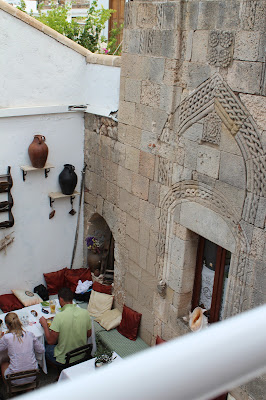
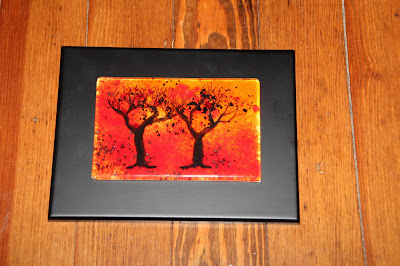
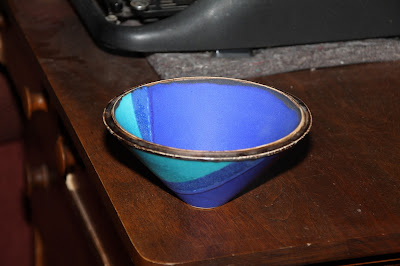
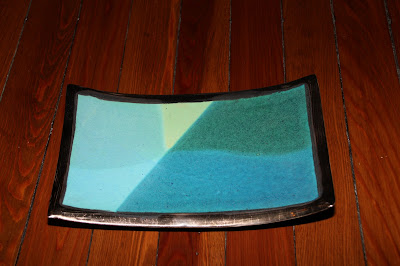
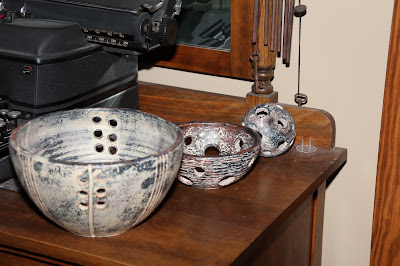
See also parts 1, 2, and 3. I am a person that enjoys food that s different from what s at home, and Rhodes didn t disappoint. Terah and I used to live close to an excellent Greek restaurant in Indianapolis, so we were already familiar in some way with the food. But there isn t any Greek restaurant at all in the Wichita area, so we missed it. Our favorite restaurant on Rhodes was Kalypso of Lindos. Everything there was just excellent, starting with the saganaki, one of my favorite Greek appetizers. I had yogurt with honey there for dessert both times we visited, a surprisingly tasty desert. Like many restaurants in Lindos, Kalypso had the option of eating on the rooftop, or at ground level. We ate on the roof, which had a nice view of the Lindos Acropolis. Being outdoors, there were sometimes cats around. This kitten enjoyed playing games with my shoestrings for awhile. Kalypso is at a 17th century captain s house. Here s a view of it from the rooftop: We, of course, had the chance to eat at quite a few different places during our visit, and I d go on way too long if I mentioned them all. Terah particularly enjoyed the gelaterie.gr ice cream shop in the square in Rhodes. We liked our lunch at Maria s Taverna in Lindos and enjoyed chatting with the staff there. I recently talked about shopping in Mexico, and perhaps learned a thing or two from that. I won t say we never buy them, but in general we don t buy souvenirs like t-shirts, plastic things made in China, etc. We prefer to buy local. Those items tend to be higher quality, more interesting, and we like to support the local economy. We also don t have lots of room for things, so we try to choose carefully. So it was something of a surprise to Terah, and perhaps even to me, when I suggested we go shopping one day. Terah typically enjoys shopping a lot more than I do. Anyhow, off we went to Lindos. One of the first things that had caught our eye in Lindos was the shop selling glass. But it wasn t just any glass; it appeared to be made with some sort of layered process, and has a distinctly three-dimensional feel to it. As you move around, it looks like the background shifts. We wound up with this item, which was made in Athens: By the time we visited Lindos specifically for shopping, we had a good feel for when the busy times of day were, so we could avoid them. It gave us the opportunity to visit with people and when they weren t busy, many shopkeepers liked to chat. I enjoy hearing people s stories and we heard several. One ceramics shop the Musa Shop -caught Terah s eye. They had such incredible and beautiful pieces outside that we just had to go in. We wound up with two pieces from there, both in shades of blue: Both remind me of the Aegean Sea and the deep blue sky of Rhodes. And then, as we were walking along, I pointed inside a shop and said to Terah, Hey, those look different. We went in, and eventually wound up buying these: The appearance, and even feel, of them is unlike anything I d seen. Quite interesting. And seeing those particular items in the Lakis Place shop led to making some new friends I ll write about it in the next post.

Michal Čihař: Photo gallery, finally

In last weeks, I've finally managed to create my personal gallery, where I could present selection of my photographs. This task was outstanding on my todo list for pretty long time, the major obstacle being selecting photos which to present there. During my sickness few weeks ago, I finally went through most of my photos and chosen the ones which I think are worth presenting. Still I did not manage to go through photos from half year spent in Japan, so these will be added sometimes later. Also most of the pictures miss descriptions, though I'm (slowly) fixing this. From technical side, the gallery is being generated using lazygal with custom theme. You can check the gallery on photos.cihar.com, I hope you will like it :-).

Filed under: English Photography 1 comments Flattr this!

2 November 2011

Jon Dowland: Greece (Dodecanese islands)

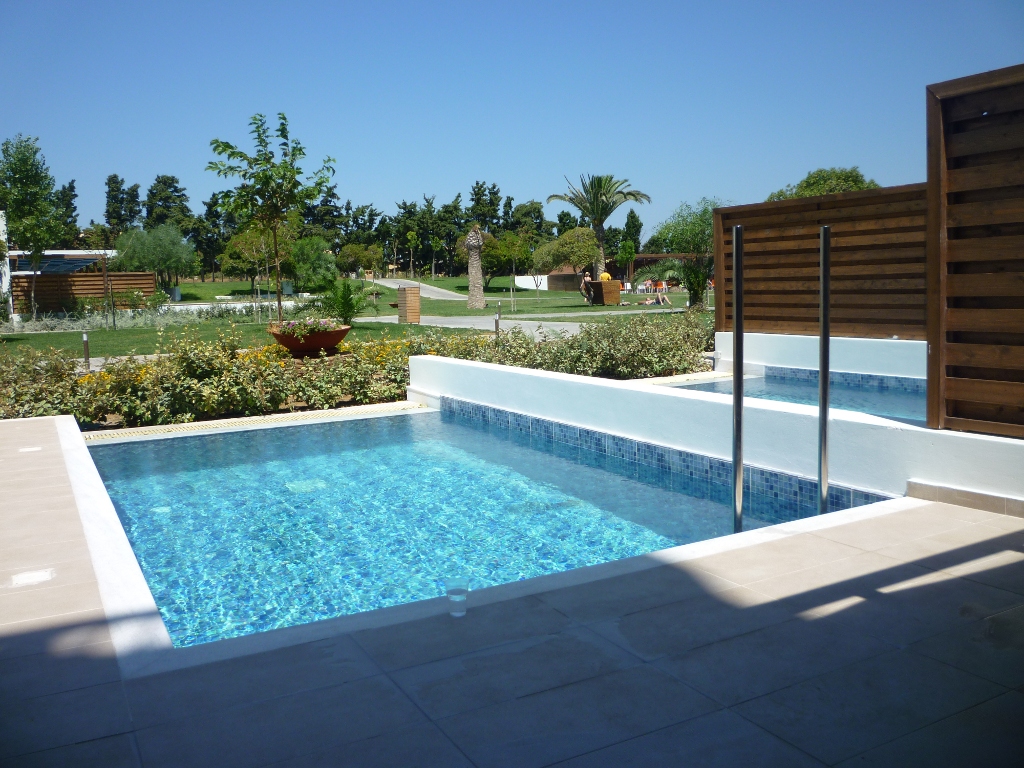
private pool in Kos private pool in Kos
In August 2010, Sarah and I had a lovely (but short) week-long holiday in Rhodes, Greece. We thoroughly enjoyed it but I didn't document it here. When John Goerzen was looking for European holiday destinations earlier this year, I had no hesitation in recommending Rhodes. I am surprised and delighted that John took up my suggestion and loved it too! See John's holiday blogging for more on this beautiful place. This year we wanted to take a two-week holiday and have a similar experience again. We ended up choosing Kos, Greece. Kos was, perhaps not surprisingly, quite similar to Rhodes. We were based in "Hotel Oceanis" in Psalidi, on the north-east side, about ten minutes bus journey from Kos town. The hotel was very relaxing with plenty of space. It's based on the sea-side and has two public pools: the large main one and a smaller (but seemingly deeper) one adjacent to a snack bar. We were very lucky to find that the hotel had put is in a room with a private swimming pool! In total, we had four separate places to swim in the hotel. Kos town was similar to Rhodes town, but not quite as "historic" feeling. It was a bit larger/more spread-out. Some areas of the town are quite lively but we always managed to find pleasant and quiet places to eat and drink together. We had twice as much time and took advantage of that by hiring a car and visiting the rest of the island. In particular we loved the beach in Mastichari (middle-North), which had quite turbulent rolling waves. "Sunny beach" on the south coast was absolutely packed with holiday makers, but was none-the-less worth the look. All in all, my first two experiences of Greek islands were wonderful. One day, I'm sure we will return to (at least) Rhodes, but we may leave it for a while and see what the rest of the world has to offer in the mean time.

Andrew McMillan: Teaching our children to lie

My son is being encouraged to lie. It's a fairly regular occurrence around here, and I'm sure you've seen it yourself. It's that checkbox on the website you're visiting where you say "Yes, I am over X years of age".

How could you not trust this child?

It's well-known that there are 10 year olds on Facebook, and everyone agrees that they lied to get those accounts, but nobody really cares much. Facebook don't care. Facebook just see another pair of eyeballs, and another node in their social graph, but actually Fraser, Max (and even Heather) aren't nodes on that particular graph. Today's annoyance was that Fraser's Youtube account has been blocked. That just seems silly. It's an open website where anyone can read pretty much anything, except that to have an account on there you have to be older than X years (I haven't bothered to discover how old X is - it's not relevant). So it seems there's this website, worth many billions of dollars and these guys can only control the functionality available to signed up members with an "on/off" switch. Is it bad if under 12 year olds post comments in a public forum? Oh, we should not let them create accounts then. Is it bad if under 8 year olds see soft porn? Oh, if we stop them creating accounts they'll be safe from that! What about the 14 year old with the videos of her cat? Well we definitely, definitely don't want that! That's ludicrous! Can these people not design a website to accept a child? Someone who might want to log into the website just like mummy and daddy do? Then, when the honest child is logged in, perhaps the account can be linked to a parent's account, or perhaps it could just be restricted in different ways. Let's see what they say an account on Youtube offers you:
  1. Subscribe to your favorite channels.
  2. Rent or purchase top Hollywood movies
  3. Save videos to watch later
  4. Get recommendations based on what you've watched
  5. Share videos you like on Facebook, Twitter, and more
  6. Find your Facebook, Yahoo, Hotmail and Gmail contacts on YouTube
  7. Watch private videos from friends and family
OK, so as far as I can see:
  1. Might be useful to any age person, and is entirely innocuous in the context of the
    content of Youtube which is available to anonymous visitors of any age.
  2. Well, Fraser wouldn't be able to pay, since he doesn't have anything to pay
    with. I guess he could steal my credit card, but if he's already at that level
    of skullduggery then some silly checkbox would be "child's play" to his lying
    skillz.
  3. Entirely innocuous.
  4. Seems pretty innocuous too.
  5. Presumably he wouldn't because 10 year old's can't have identities. And this
    functionality could easily be restricted, in any case
  6. And if there are no relationships, there are no friends. Maybe there is family,
    which is fine, I guess. I think the risks here are controllable.
So there's plenty of value to a 10 year old in having an account. There's nothing that most reasonable parents would be concerned about, if there was a clear policy of limited functionality in place that parents could see and have confidence in. The Youtube thing actually seems to be related to (maybe) to Google's recent push towards "identity". Children younger than X are not allowed to have an on-line identity, because they might run amok on the intarwebs. Or see scary stuff. Or something. And yet, by denying them an account, they are removing any ability to actually apply a level of control that reflects the presumed maturity (since, after all, age is no more a direct measure of maturity than height). Truly though, what totally pisses me off about this situation, is that Fraser associated a bunch of channels with his Youtube account, and he receives a weekly digest of the activity. Unfortunately we can't log in to turn it off.

1 November 2011

Steve Kemp: Slaughter is at the cross-roads

There are many system administration and configuration management tools available, I've mentioned them in the past and we're probably all familiar with our pet favourites. The "biggies" include CFEngine, Puppet, Chef, BFG2. The "minis" are largely in-house tools, or abuses of existing software such as fabric. My own personal solution manages my home network, and three dedicated servers I pay for in various ways. Currently I've been setting up some configuration "stuff" for a friend and I've elected to manage some of the setup with this system of my own, and I guess I need to decide what I'm going to do going forward. slaughter is well maintained, largely by virtue of not doing too much. The things it does are genuinely useful and entirely sufficient to handle a lot of the common tasks - and because the server-side requirement is a HTTP server, and the only client-side requirement is CRON it is trivial to deploy. In the past I've thought of three alternatives that would make it more complex: Each approaches have their appeal. I like the idea of only executing GPG-signed policies, and that would be trivial if there was a real server in place. It could also use SSL because that's all you need for security (ha!). On the other hand using rsync allows me to trivially implement the only missing primitive I actually miss at times - the ability to recursively download and install a remote directory tree. (I solve this problem by downloading a .tar file and unpacking it. Not good. Doesn't cope with template expansion and is fiddlier than I like). In the lifetime of the project I think I've had 20-50 feature requests or comments, which suggests it might actually be used by 50-100 people. (Ha! Optimism) In the meantime I'll keep a careful eye on the number of people who download the tarball & the binary packages... ObQuote: "I have vermin to kill. " - Kill Bill

Sylvain Beucler: Build a SFML project with CMake

[Latest version of these instructions can be found at the SFML Wiki] CMake allows your project to be built in various environments, including command-line make, Code::Blocks project files, Eclipse project files, etc. It's used in SFML 2.0. In this tutorial we'll write a simple CMake configuration file with centralized version numbering, and see how to integrate SFML in it. The source files First, create a cmake_modules directory and copy FindSFML.cmake in it. FindXXXX is automatically searched by CMake's find_package command. Then create a main.cpp, for instance:
#include "config.h"
#include <iostream>
#include <SFML/Window.hpp>
using namespace std;
int main(int argc, char* argv[])  
  cout << "Version " << myproject_VERSION_MAJOR << "." << myproject_VERSION_MINOR << endl;
  sf::Window screen(sf::VideoMode(800, 600), "myproject");
  bool running = true;
  while (running)  
    screen.Display();
   
 
We use a config.h file that is built by CMake, let's also create a config.h.in file:
#define myproject_VERSION_MAJOR @myproject_VERSION_MAJOR@
#define myproject_VERSION_MINOR @myproject_VERSION_MINOR@
And place your project license (such as the GNU GPL) in a file named COPYING. CMake configuration Let's describe our project configuration in the CMakeLists.txt file:
cmake_minimum_required(VERSION 2.6)
project(myproject)
# Set version information in a config.h file
set(myproject_VERSION_MAJOR 1)
set(myproject_VERSION_MINOR 0)
configure_file(
  "$ PROJECT_SOURCE_DIR /config.h.in"
  "$ PROJECT_BINARY_DIR /config.h"
  )
include_directories("$ PROJECT_BINARY_DIR ")
# Define sources and executable
set(EXECUTABLE_NAME "myproject")
add_executable($ EXECUTABLE_NAME  main.cpp)
# Detect and add SFML
set(CMAKE_MODULE_PATH "$ CMAKE_SOURCE_DIR /cmake_modules" $ CMAKE_MODULE_PATH )
find_package(SFML 1.6 REQUIRED system window graphics network audio)
target_link_libraries($ EXECUTABLE_NAME  $ SFML_LIBRARIES )
# Install target
install(TARGETS $ EXECUTABLE_NAME  DESTINATION bin)
# CPack packaging
include(InstallRequiredSystemLibraries)
set(CPACK_RESOURCE_FILE_LICENSE "$ CMAKE_SOURCE_DIR /COPYING")
set(CPACK_PACKAGE_VERSION_MAJOR "$ myproject_VERSION_MAJOR ")
set(CPACK_PACKAGE_VERSION_MINOR "$ myproject_VERSION_MINOR ")
include(CPack)
The interesting part is:
# Detect and add SFML
set(CMAKE_MODULE_PATH "$ CMAKE_SOURCE_DIR /cmake_modules" $ CMAKE_MODULE_PATH )
find_package(SFML 1.6 REQUIRED system window graphics network audio)
target_link_libraries($ EXECUTABLE_NAME  $ SFML_LIBRARIES )
Compilation To build with Make and the GCC compiler on the command-line:
cd build/  # a separate directory so we can easily remove all the CMake work files
cmake ..  # generate Makefile's
make
To create Code::Blocks project files:
cmake .. -G "CodeBlocks - Unix Makefiles"
and open project.cbp with Code::Blocks. Installation CMake supports the classic:
make install
It also supports DESTDIR, useful in packaging:
make install DESTDIR= pwd /myworkdir
You can also define CMAKE_INSTALL_PREFIX when invoking cmake to change the default install path (/usr/local under Unix). DESTDIR would still override this setting. Packaging You then can use cpack to make a project release:
# Binary package:
cpack -C CPackConfig.cmake
# Source package:
cpack -C CPackSourceConfig.cmake
You will get a nice myproject-1.0.tar.gz, among others. Further information
$ cmake --help-variable CMAKE_SOURCE_DIR
cmake version 2.8.5
  CMAKE_SOURCE_DIR
       The path to the top level of the source tree.
       This is the full path to the top level of the current CMake source
       tree.  For an in-source build, this would be the same as
       CMAKE_BINARY_DIR.

Bernhard R. Link: File ownership and permissions in Debian packages

As you will know, every file on a unixoid system has some meta-data like owner, group and permission bits. This is of course also true for files part of some Debian package. And it is not very surprising that different files should have different permissions. Or even different owners or groups. Which file has which settings is of course for the package maintainer to decide and Debian would not be Debian if there were not ways for the user to give their own preferences and have them preserved. This post is thus about how those settings end up in the package and what is to be observed when doing it. As you will also have heard, a .deb file is simply a tar archive stored as part of an ar archive, as you can verify by unpacking a package manually:
$ ar t reprepro_4.8.1-1_amd64.deb
debian-binary
control.tar.gz
data.tar.gz
$ ar p reprepro_4.8.1-1_amd64.deb data.tar.gz   gunzip   tar -tvvf -
drwxr-xr-x root/root         0 2011-10-10 12:05 ./
drwxr-xr-x root/root         0 2011-10-10 12:05 ./etc/
drwxr-xr-x root/root         0 2011-10-10 12:05 ./etc/bash_completion.d/
-rw-r--r-- root/root     19823 2011-10-10 12:05 ./etc/bash_completion.d/reprepro
drwxr-xr-x root/root         0 2011-10-10 12:05 ./usr/
drwxr-xr-x root/root         0 2011-10-10 12:05 ./usr/share/
--More--
(For unpacking stuff from scripts, you should of course use dpkg-deb --fsys-tarfile instead of ar gunzip. Above example is about the format, not a recipe to unpack files). This already explains how the information is usually encoded in the package: A tar file contains that information for each contained file and dpkg is simply using that information. (As tar stores numeric owner and group information, that limits group and owner information to users and groups with fixed numbers, i.e. 0-99. Other cases will be covered later.) The question for the maintainer is now: Where is the information which file has which owner/group/permissions in the .tar inside the .deb, and the answer is simple: It's taken from the files to be put into the .deb. This means that package tools could simply be implemented first by simply calling tar and there is no imminent need to write you own tar generator. It also means that the maintainer has full control and does not have to learn new descriptive languages or tools to change permissions, but can simply put the usually shell commands into debian/rules. There are some disadvantages, though: A normal user cannot change ownership of files and one has to make sure all files have proper permissions and owners. This means that dpkg-deb -b (or the usually used wrapper dh_builddeb) must be run in some context where you could change the file ownership to root first. This means you either need to be root, or at least to fake being root by using fakeroot. (While this could be considered some ugly workaround, it also means upstream's make install is run believing to be root, which also avoids some -- for a packager -- quite annoying automatisms in upstream build scripts assuming a package is not installed system wide if not installed as root). Another problem are random build host characteristics changing how files are created in the directory later given to dpkg-deb -b. For example an umask which might make all files non-world-readable by default. The usual workaround is to first fix up all those permissions. Most packages use dh_fixperms for this, which also sets executable bits according to some simple rules and has some more special cases so that the overall majority of packages does not need to look at permissions at all. So using some debhelper setup, every special permissions and all owner/group information for owner groups with fixed numbers only needs to be set using the normal command line tools between dh_fixperms and dh_builddeb. Everything else happens automatically. Note that games is a group with fixed gid. So it is not necessary (and usually a bug) to change group-ownership of files withing the package to group games in maintainer scripts (postinst,...). If a user wants to change permissions or ownership of a file, dpkg allows this using the dpkg-statoverride command. This command essentially manages a list of files to get special treatment and ownership and permission information they should get. This way a user can specify that files should have different permissions and this setting is applied if a new version of this file is installed by dpkg. Being a user setting especially means, that packages (that means their maintainer scripts) should not usually use dpkg-statoverride. There are two exceptions, though: Different permissions based on interaction with the user (e.g. asking question with debconf) and dynamically allocated users/groups with dynamic id. In both cases one should note that settings to dpkg-statoverride are settings of the user, so the same care should be given as to files in /etc, especially one should never override something the user has set in there. (I can think of no example where calling dpkg-statoverride --add without dpkg-statoverride --list in some maintainer script is not a serious bug: Either you override user settings or you are using debconf as a registry. Moral To recap, your package is doing something wrong if:

Philipp Kern: Useful Firefox extensions

Many people around me switched to Chrome or Chromium. I also used it for a bit, but I was a bit disappointed about the extensions available. To show why, here's a list of the extensions I've currently installed:
If Firefox on Android were quicker to start and faster overall, I might even use it there. But as-is it's not very useful. Sadly this also means that I can't use Firefox Sync on my phone and as I don't use Chrome on my desktop I also can't use Chrome to Phone. So I usually go and build a QR code on my laptop and read that with Android's Barcode Scanner.

Of course I'm actually using Iceweasel and I'm very grateful for Mike Hommey's efforts to track the release channel on mozilla.debian.net.

Francois Marier: Adding X-Content-Security-Policy headers in a Django application

Content Security Policy is a proposed HTTP extension which allows websites to restrict the external content that can be displayed by visiting web browsers. By expressing a set of rules to be enforced by the browser, a website is able to prevent the injection of outside resources by malicious users.

While adding support for the March 2011 draft in Libravatar, I looked at three different approaches.

Controlling the headers in the applicationThe first approach I considered was to have the Django application output all of the headers, which is what the django-csp module does. Unfortunately, I need to be able to vary the policy between pages (the views in Libravatar have different requirements) and that's one of the things that hasn't been implemented yet in that module.

Producing the same headers by hand is fairly simple:
response = render_to_response('app/view.html')
response['X-Content-Security-Policy'] = "allow 'self'"
return response
but it would mean adding a bit of code to every view and/or writing a custom wrapper for render_to_response().

Setting a default header in ApacheIdeally, I'd like to be able to set a default header in Apache using mod_headers and then override it as needed inside the application.

The first problem with this solution is that it's not possible (as far I can tell) for a Django application to override a header set by Apache:
The second problem is that mod_headers doesn't have an action that adds/sets a header only if it didn't already exist. It does have append and merge actions which could in theory be used to add extra terms to the policy but it unfortunately uses a different separator (the comma) from the CSP spec (which uses semi-colons).

Always set headers in ApacheWhile I would have liked to get the second approach working, in the end, I included all of the CSP directives within the main Apache config file:
Header set X-Content-Security-Policy: "allow 'self'; options inline-script; img-src 'self' data:"

<Location /account/confirm_email>
Header set X-Content-Security-Policy: "allow 'self'; options inline-script; img-src *"
</Location>

<Location /tools/check>
Header set X-Content-Security-Policy: "allow 'self'; options inline-script; img-src *"
</Location>
The first Header call sets a default policy which is later overriden based on the path to the Django view that's being used.

Related technologiesIf you are interested in Content Security Policy, you may also want to look into Application Boundaries Enforcer (part of the NoScript Firefox extension) for more security rules that can be supplied by the server and enforced client-side.

It's also worth mentioning the excellent Request Policy extension which solves the same problem by letting users whitelist the cross-site requests they want to allow.

31 October 2011

Gregor Herrmann: RC bugs 2011/43

a bit late & short (I was travelling the last days) but here it is: the recent update of my RC bug acitivities:

Rapha&#235;l Hertzog: The promising OpenMediaVault failed its debut as free software project

Volker Theile is well known for his work on FreeNAS. But at one point, he decided to give up on it and to restart from scratch but this time based on Debian (instead of FreeBSD). OpenMediaVault is the name of this new Debian based product. Here s how he defines the project:
OpenMediaVault is the next generation network attached storage (NAS) solution based on Debian Linux. It contains services like SSH, (S)FTP, SMB/CIFS, DAAP media server, RSync, BitTorrent client and many more. Thanks to the modular design of the framework it can be enhanced via plugins. OpenMediaVault is primarily designed to be used in home environments or small home offices, but is not limited to those scenarios. It is a simple and easy to use out-of-the-box solution that will allow everyone to install and administrate a Network Attached Storage without deeper knowledge.
Even though all the work was private, he managed to attract an important following, and I must say that I was looking forward to this project. He regularly blogged on his progress, sharing some good-looking video of the resulting product (example here). The first public release (Version 0.2, codenamed Ix) happened on October 17th. I have yet to try it but I took a look on the website. As a Debian developer, I was keen on seeing the source code and how the project was managed. The GPLv3 license is presented as an important feature and I was expecting a well-managed open source project. The fact that it was a private one-man project up to now did not bother me, we re quite used to the scratch your itch kind of start for free software projects. Enough to say is that I have been very disappointed. First you come across a contributor agreement, it s frowned upon by many free software developers. But why not, maybe he bought the argument of Mark Shuttleworth and wants to give it a try. But then I looked at the subversion repository, it s obvious that it s just a dumping ground of files that are managed somewhere else in another repository. A bit like Android which is not developed in the open but released as a whole from time to time. But the worst was yet to be found on the licensing page:
Beside being freely available for personal end-users, System Builders and System Integrators, in general Installers, require a commercial license for OpenMediaVault.
Besides the fact that I m still not sure what this means, I would like to know how he reconciles this requirement with the terms of the GPLv3. It s a shame that a so promising project ends up being a disaster from a free software perspective. Have you tried OpenMediaVault already? If yes, I d be glad to read your thoughts in the comments.

9 comments Liked this article? Click here. My blog is Flattr-enabled.

Christian Perrier: New update about Debian Installer localization

(live from Mangalore, India, where I had a great time at the MiniDebconf India, Mangalore edition. Full report to come out soon) One more "full 100%" since last publication: Russian. Kudos to Yuri Kozlov for his very longstanding commitment to Debian localization efforts in his language. Today, I sent yet another nagging mail for level 1. If your language is not in the 100% list below, then you should start worrying about what the translator in charge is doing. Wheezy release is planned for "sometime in 2012" and it's never too early to start being the jerk who shakes the tree (Doh, I have 79 translation efforts to handle, remember!). So, I know that some oldtimer translators who always update at the last minute will be grumpy about me sending these nagging mails in advance. Sorry in advance for this, guys (you know who you are...:-)). I'm very fine with last minute updates....but this is not what will stop mefrom nagging the Debian l10n crowd anyway. Full stats are here Status for D-I level 1 (core D-I files): Status for D-I level 2 (packages that have localized material that may appear during default installs, such as iso-codes, tasksel, etc.): Status for D-I level 3 (packages that have localized material that may appear during non-default installs, such as win32-loader) So, full 100% completeness (hall of fame) for: Persian (fa), French (fr), Portuguese (pt), Russian

Russell Coker: Links October 2011

Ron has written an interesting blog post about the US as a lottery economy [1]. Most people won t win the lottery (literally or metaphorically) so they remain destined for poverty. Tim Connors wrote an informative summary of the issues relating to traffic light timing and pedestrians/cyclists [2]. I have walked between Southgate and the Crown Casino area many times and have experienced the problem he describes many times. Scientific American has an interesting article about a new global marketplace for scientific research [3]. The concept is that instead of buying a wide range of research equipment (and hiring people to run it) you can outsource non-core research for a lower cost. Svante P bo gave an interesting TED talk about his work analysing human DNA to determine prehistoric human migration patterns [4]. Among other things he determined that 2.5% of the DNA from modern people outside Africa came from the Neandertals. Lisa wrote an informative article about Emotional Support Animals (as opposed to Service Animals such as guide dogs) for disabled people [5]. It seems that the US law is quite similar to Australian law in that reasonable accommodations have to be made for disabled people which includes allowing pets in rental properties even if such pets aren t officially ESAs. Beyond Zero Emissions has an interesting article about electricity prices which explains how wind power forces prices down [6]. This should offset the new carbon tax . Problogger has an article listing some of the ways that infographics can be used on the web [7]. This can be for blog posts or just for your personal understanding. Petter Reinholdtsen wrote a handy post about ripping DVDs which also explains how to do it when the DVD has errors [8], I haven t yet ripped a DVD but this one is worth noting for when I do. Miriam has written about the Fantastic Park ICT training for 8-12yo kids [9]. It s run in Spain (and all the links are in Spanish but Google Translation works well) and is a camp to teach children about computers and robotics using Lego Wedo among other things. We need to have more of these things in other countries. The Atlantic Cities has an interesting article comparing grid and cul-de-sac based urban designs [10]. Apparently the cul-de-sac design forces an increase in car use and therefore an increase in fatal accidents while also decreasing the health benefits of walking. Having lived in both grid and cul-de-sac based urban areas I have personally experienced the benefits of the grid based layout. Sarah Chayes wrote an interesting LA Times article about governments being taken over by corruption [11]. She argues that arbitrary criminal government leads to an increase in religious fundamentelism. Michael Lewis has an insightful article in Vanity Fair about the bankruptcy of US states and cities [12]. Ben Goldacre gave an interesting TED talk about bad medical science [13]. He starts with the quackery that is published in tabloid newspapers and then moves on to deliberate scientific fraud by medical companies. Geoff Mulgan gave an interesting TED talk about the Studio Schools in the UK which are based around group project work [14]. The main thing I took from this is that the best method of teaching varies by subject and by student. So instead of having a monolithic education department controlling everything we should have schools aimed at particular career paths and learning methods. Sophos has an interesting article about the motion sensors of smart phones being used to transcribe keyboard input based on vibration [15]. This attack could be launched by convincing a target to install a trojan application on their phone. It s probably best to regard your phone with suspicion nowadays. Simon Josefsson wrote a good article explaining how to use a GPG smart-card to authenticate ssh sessions with particular reference to running backups over ssh [16]. C ran wrote a good article explaining how to use all the screen space when playing DVDs on a wide screen display with mplayer [17]. Charles Stross has an informative blog post about Wall St Journal circulation fraud [18]. Apparently the WSJ was faking readership numbers to get more money from advertisers, this should lead to law suits and more problems for Rupert Murdoch. Is everything associated with Wall St corrupt?

30 October 2011

Dominique Dumont: Config::Model: How to test configuration models

Hello With Config::Model, configuration models are created to validate configuration data. But, before that, how can we validate a model ? This has long been a sore spot of Config::Model. During its development, I ve progressively enhanced a test script to tests the various models (and their corner cases) shipped with Config::Model. This script is able to test several models with several subtests. Currently, more that 400 unit tests are done on 5 models and about 50 configuration files. Which is great, but usable only inside Config::Model distribution. Which is not so great So I ve bitten the bullet and created a new Config::Model::Tester class from this test script. This new class is shipped with Config::Model 1.260 (also available on Debian/sid). For instance, let s see how this tester is used to test Xorg model (shipped in Config::Model::Xorg). Xorg features a small test file (t/model_test.t):
use warnings;
use strict;
use Config::Model::Tester ;
use ExtUtils::testlib;
my $arg = shift   '';
my $test_only_model = shift   '';
my $do = shift ;
run_tests($arg, $test_only_model, $do) ;
The xorg files to test are specified by t/model_tests.d/xorg-test-conf.pl:
$conf_file_name = "xorg.conf" ;
$conf_dir = "etc/X11" ;
$model_to_test = "Xorg" ;
@tests = (
      name => 'fglrx',  ,
      name => 'modern',  ,
      name => 'vesa',  ,
      name => 'xorg',  ,
      name => 'xorg-ati',  ,
);
1;
And the xorg.conf files are there:
$ ls t/model_tests.d/xorg-examples/
fglrx  modern  vesa  xorg  xorg-ati
Here s the output of the xorg-ati subtest:
$ perl -Ilib t/model_tests.t x xorg xorg-ati
ok 1 - compiled
# Beginning xorg test (t/model_tests.d/xorg-test-conf.pl)
# xorg uses Xorg model on file xorg.conf
# Beginning subtest xorg xorg-ati
ok 2 - Copied xorg example xorg-ati
ok 3 - Read wr_root/test-xorg-ati/etc/X11/xorg.conf and created instance with init() method with warning check
ok 4 - Ran dump_tree
ok 5 - Dumped xorg config tree in full mode
ok 6 - Dumped xorg config tree in custom mode
ok 7 - xorg write back done
ok 8 - Created instance xorg-test-xorg-ati-w
ok 9 - Dumped xorg 2nd config tree in custom mode
ok 10 - compare original xorg custom data with 2nd instance custom data
ok 11 - check that original xorg file was not clobbered
# End of subtest xorg xorg-ati
# End of xorg test
1..11
Now, it s quite easy to create non regression tests for bug triggered by err, unexpected, configuration files: Just drop the file in the example directory and edit the *-test-conf.pl file. This saves a lot of typing. All the best

29 October 2011

Charles Plessy: Everything in Git

Saturday started well, reading two stimulating articles on Planet_Debian. One about GitTogether2011, and the other about the use of Git in the Baserock company. I like a lot the idea of using Git beyond source code management. This article is itself distributed via a network of Git repositories. For the Debian package I develop and that are maintained with Git, I started some time ago to store their build logs in a branch that I called meta. Since sbuild can filter some variable chains in its logs, the command git diff --word-diff=color became a nice tool to inspect the difference between two package builds. Here is for instance the update I made this morning for bedtools: we can see that -D_FORTIFY_SOURCE=2 is not passed anymore, and that consequently the -Wunused-result warnings disappeared. Another advantages of storing build logs is simply to make available information that was not previously: buildd.debian.org contains the build logs for every architecture except the one used by the package maintainer, often one of the most popular architectures, because the uploads combine source and binary packages. This problem will be solved when our archive will automatically rebuild the binary packages uploaded with the source packages, but it will not be entirely solved as it is still possible to upload binary packages alone. In the meta branch of my Git repositories, the logs are kept side-to-side for every architecture. I am unsure if that the best layout, but for the moment I am uncomfortable with having too many parallel branches. I am starting to automate the work with the logs, for instance with that small script to gather them from buildd.debian.org.
#!/bin/bash
BASEURL=buildd.debian.org:/srv/buildd.debian.org/db
PACKAGE=$1
shift
for version in "$*"
do
  scp $BASEURL/$ PACKAGE:0:1 /$PACKAGE/$ version /* .
  for arch in $(ls *bz2   sed 's/_.*//g')
    do bzcat $ arch *bz2 > $ arch .log
    rm $ arch _*_log.bz2;
  done
done
exit

Joey Hess: GitTogether2011

I attended the Git Together earlier this week. I was tenative about this, since I'm not really much of a git developer; all my git work is building stuff on top of it. It turned out great though. At first it seemed like one of those parties where you don't know anyone. But then I got to reconnect with Avery Pennarun for the first time since DebConf 2, and got to know Jonathan Nieder better, and it was also nice to see Jelmer Vernooij. And the core developers were also very welcoming. Junio Hamano knew of my work (and I am in awe of his), and Jeff King thinks my take on SHA1 security issues has value, and has been expanding on it. Shawn Pearce managed the unconference subtly and well. Lots of very smart people. At one point I found myself accross the table from Android's lead developer. I was very happy that everything I think needs improvement in git was discussed during the unconference:

28 October 2011

Lars Wirzenius: On the future of Linux distributions

Executive summary Debian should consider: Introduction I've taken a job with Codethink, as part of a team to develop a new embedded Linux system, called Baserock. Baserock is not a distribution as such, but deals with many of the same issues. I thought it might be interesting to write out my new thoughts related to this, since they might be useful for proper distributions to think about too. I'll hasten to add that many of these thoughts are not originally mine. I shamelessly adopt any idea that I think is good. The core ideas for Baserock come from Rob Taylor, Daniel Silverstone, and Paul Sherwood, my colleagues and bosses at Codethink. At the recent GNOME Summit in Montreal, I was greatly influenced by Colin Walters. This is also not an advertisment for Baserock, but since my of my current thinking come from that project, I'll discuss things in the context of Baserock. Finally, I'm writing this to express my personal opinion and thoughts. I'm not speaking for anyone else, least of all Codethink. On the package abstraction Baserock abandons the idea of packages for all individual programs. In the early 1990s, when Linux was new, and the number of packages in a distribution could be counted on two hands in binary, packages were a great idea. It was feasible to know at least something about every piece of software, and pick the exact set of software to install on a machine. It is still feasible to do so, but only in quite restricted circumstances. For example, picking the packages to install a DNS server, or an NFS server, or a mail server, by hand, without using meta packages or tasks (in Debian terminology), is still quite possible. On embedded devices, there's also usually only a handful of programs installed, and the people doing the install can be expected to understand all of them and decide which ones to install on each specific device. However, those are the exceptions, and they're getting rarer. For most people, manually picking software to install is much too tedious. In Debian, we've realised this a great many years ago, and developed meta packages (whose only purpose is to depend on other packages) and tasks (solves the same problem, but differently). These make it possible for a user to say "I want to have the GNOME desktop environment", and not have to worry about finding every piece that belongs in GNOME, and install that separately. For much of the past decade, computers have had sufficient hard disk space that it is no longer necessary to be quite so picky about what to install. A new cheap laptop will now typically come with at least 250 gigabytes of disk space. An expensive one, with an SSD drive, will have at least 128 gigabytes. A fairly complete desktop install uses less than ten gigabytes, so there's rarely a need to pick and choose between the various components. From a usability point of view, choosing from a list of a dozen or two options is much easier than from a list of thirty five thousand (the number of Debian packages as I write this). This is one reason why Baserock won't be using the traditional package abstraction. Instead, we'll collect programs into larger collections, called strata, which form some kind of logical or functional whole. So there'll be one stratum for the core userland software: init, shell, libc, perhaps a bit more. There'll be another for a development environment, one for a desktop environment, etc. Another, equally important reason, to move beyond packages is the problems caused by the combinatorial explosion of packages and versions. Colin Walters talks about this very well. When every system has a fairly unique set of packages, and versions of them, it becomes much harder to ensure that software works well for everyone, that upgrades work well, and that any problems get solved. When the number of possible package combinations is small, getting the interactions between various packages right is easier, QA has a much easier time to test all upgrade paths, and manual test coverage improves a lot when everyone is testing the same versions. Even debugging gets easier, when everyone can easily run the same versions. Grouping software into bigger collections does reduce flexibility of what gets installed. In some cases this is important: very constrainted embedded devices, for example, still need to be very picky about what software gets installed. However, even for them, the price of flash storage is low enough that it might not matter too much, anymore. The benefit of a simpler overall system may well outweigh the benefit of fine-grained software choice. Everything in git In Baserock, we'll be building everything from source in git. It will not be possible to build anything, unless the source is committed. This will allow us to track, for each binary blob we produce, the precise sources that were used to bulid it. We will also try to achieve something a bit more ambitious: anything that affects any bit in the final system image can be traced to files committed to git. This means tracking also all configuration settings for the build, and the whole build environment, in git. This is important for us so that we can reproduce an image used in the field. When a customer is deploying a specific image, and needs it to be changed, we want to be able to make the change with the minimal changes compared to the previous version of the image. This requires that we can re-create the original image, from source, bit for bit, so that when we make the actual change, only the changes we need to make affect the image. We will make it easy to branch and merge not just individual projects, but the whole system. This will make it easy to do large changes to the system, such as transitioning to a new version of GNOME, or the toolchain. Currently, in Debian, such large changes need to be serialised, so that they do not affect each other. It is easy, for example, for a GNOME transition to be broken by a toolchain transition. Branching and merging has long been considered the best available solution for concurrent development within a project. With Baserock, we want to have that for the whole system. Our build servers will be able to build images for each branch, without requiring massive hardware investment: any software that is shared between branches only gets built once. Launchpad PPAs and similar solutions provide many of the benefits of branching and merging on the system level. However, they're much more work than "git checkout -b gnome-3.4-transition". I believe that the git based approach will make concurrent development much more efficient. Ask me in a year if I was right. Git, git, and only git There are a lot of version control systems in active use. For the sake of simplicity, we'll use only git. When an upstream project uses something else, we'll import their code into git. Luckily, there are tools for that. The import and updates to it will be fully automatic, of course. Git is not my favorite version control system, but it's clearly the winner. Everything else will eventually fade away into obscurity. Or that's what we think. If it turns out that we're wrong about that, we'll switch to something else. However, we do not intend to have to deal with more than one at a time. Life's too short to use all possible tools at the same time. Tracking upstreams closely We will track upstream version control repositories, and we will have an automatic mechanism of building our binaries directly from git. This will, we hope, make it easy to follow closely upstream development, so that when, say, GNOME developers make commits, we want to be able to generate a new system image which includes those changes the same day, if not within minutes, rather than waiting days or weeks or months. This kind of closeness is greatly enhanced by having everything in version control. When upstream commits changes to their version control system, we'll mirror them automatically, and this then triggers a new system image build. When upstream makes changes that do not work, we can easily create a branch from any earlier commit, and build images off that branch. This will, we hope, also make it simpler to make changes, and give them back to upstream. Whenever we change anything, it'll be done in a branch, and we'll have system images available to test the change. So not only will upstream be able to easily get the change from our git repository, they'll also be easily verify, on a running system, that the change fixes the problem. Automatic testing, maybe even test driven development We will be automatically building system images from git commits for Baserock. This will potentially result in a very large number of images. We can't possibly test all of them manually, so we will implement some kind of automatic testing. The details of that are still under discussion. I hope to be able to start adding some test driven development to Baserock systems. In other words, when we are requested to make changes to the system, I want the specification to be provided as executable tests. This will probably be impossible in real life, but I can hope. I've talked about doing the same thing for Debian, but it's much harder to push through such changes in an established, large project. Solving the install, upgrade, and downgrade problems All mainstream Linux distributions are based on packages, and they all, pretty much, do installations and upgrades by unpacking packages onto a running system, and then maybe running some scripts from the packages. This works well for a completely idle system, but not so well on systems that are in active use. Colin Walters again talks about this. For installation of new software, the problem is that someone or something may invoke it before it is fully configured by the package's maintainer script. For example, a web application might unpack in such a way that the web server notices it, and a web browser may request the web app to run before it is configured to connect to the right database. Or a GUI program may unpack a .desktop file before the executable or its data files are unpacked, and a user may notice the program in their menu and start it, resulting in an error. Upgrades suffer from additonal problems. Software that gets upgraded may be running during the upgrade. Should the package manager replace the software's data files with new versions, which may be in a format that the old program does not understand? Or install new plugins that will cause the old version of the program to segfault? If the package manager does that, users may experience turbulence without having put on their seat belts. If it doesn't do that, it can't install the package, or it needs to wait, perhaps for a very long time, for a safe time to do the upgrade. These problems have usually been either ignored, or solved by using package specific hacks. For example, plugins might be stored in a directory that embeds the program's version number, ensuring that the old version won't see the new plugins. Some people would like to apply installs and upgrades only at shutdown or bootup, but that has other problems. None of the hacks solve the downgrade problem. The package managers can replace a package with an older version, and often this works well. However, in many cases, any package maintainer scripts won't be able to deal with downgrades. For example, they might convert data files to a new format or name or location upon upgrades, but won't try to undo that if the package gets downgraded. Given the combinatorial explosion of package versions, it's perhaps just as well that they don't try. For Baserock, we absolutely need to have downgrades. We need to be able to go back to a previous version of the system if an upgrade fails. Traditionally, this has been done by providing a "factory reset", where the current version of the system gets replaced with whatever version was installed in the factory. We want that, but we also want to be able to choose other versions, not just the factory one. If a device is running version X, and upgrades to X+1, but that version turns out to be a dud, we want to be able to go back to X, rather than all the way back to the factory version. The approach we'll be taking with Baserock relies on btrfs and subvolumes and snapshots. Each version of the system will be installed in a separate subvolume, which gets cloned from the previous version, using copy-on-write to conserve space. We'll make the bootloader be able to choose a version of the system to boot, and (waving hands here) add some logic to be able to automatically revert to the previous version when necessary. We expect this to work better and more reliably than the current package based one. Making choices Debian is pretty bad at making choices. Almost always, when faced with a need to choose between alternative solutions for the same problem, we choose all of them. For example, we support pretty much every init implementation, various implementations of /bin/sh, and we even have at least three entirely different kernels. Sometimes this is non-choice is a good thing. Our users may need features that only one of the kernels support, for example. And we certainly need to be able to provide both mysql and postresql, since various software we want to provide to our uses needs one and won't work with the other. At other times, the inability to choose causes trouble. Do we really need to support more than one implemenation of /bin/sh? By supporting both dash and bash for that, we double the load on testing and QA, and introduce yet another variable to deal with into any debugging situation involving shell scripts. Especially for core components of the system, it makes sense to limit the flexibility of users to pick and choose. Combinatorial explosion d j vu. Every binary choice doubles the number of possible combinations that need to be tested and supported and checked during debugging. Flexibility begets complexity, complexity begets problems. This is less of a problem at upper levels of the software stack. At the very top level, it doesn't really matter if there are many choices. If a user can freely choose between vi and Emacs, and this does not add complexity at the system level, since nothing else is affected by that choice. However, if we were to add a choice between glibc, eglibc, and uClibc for the system C library, then everything else in the system needs to be tested three times rather than once. Reducing the friction coefficient for system development Currently, a Debian developer takes upstream code, adds packaging, perhaps adds some patches (using one of several methods), builds a binary package, tests it, uploads it, and waits for the build daemons and the package archive and user-testers to report any problems. That's quite a number of steps to go through for the simple act of adding a new program to Debian, or updating it to a new version. Some of it can be automated, but there's still hoops to jump through. Friction does not prevent you from getting stuff done, but the more friction there is, the more energy you have to spend to get it done. Friction slows down the crucial hack-build-test cycle of software development, and that hurts productivity a lot. Every time a developer has to jump through any hoops, or wait for anything, he slows down. It is, of course, not just a matter of the number of steps. Debian requires a source package to be uploaded with the binary package. Many, if not most, packages in Debian are maintained using version control systems. Having to generate a source package and then wait for it to be uploaded is unnecessary work. The build daemon could get the source from version control directly. With signed commits, this is as safe as uploading a tarball. The above examples are specific to maintaining a single package. The friction that really hurts Debian is the friction of making large-scale changes, or changes that affect many packages. I've already mention the difficulty of making large transitions above. Another case is making policy changes, and then implementing them. An excellent example of that is in Debian is the policy change to use /usr/share/doc for documentation, instead of /usr/doc. This took us many years to do. We are, I think, perhaps a little better at such things now, but even so, it is something that should not take more than a few days to implement, rather than half a decade. On the future of distributions Occasionally, people say things like "distributions are not needed", or that "distributions are an unnecessary buffer between upstream developers and users". Some even claim that there should only be one distribution. I disagree. A common view of a Linux distribution is that it takes some source provided by upstream, compiles that, adds an installer, and gives all of that to the users. This view is too simplistic. The important part of developing a distribution is choosing the upstream projects and their versions wisely, and then integrating them into a whole system that works well. The integration part is particularly important. Many upstreams are not even aware of each other, nor should they need to be, even if their software may need to interact with each other. For example, not every developer of HTTP servers should need to be aware of every web application, or vice versa. (It they had to be, it'd be a combinatorial explosion that'd ruin everything, again.) Instead, someone needs to set a policy of how web apps and web servers interface, what their common interface is, and what files should be put where, for web apps to work out of the box, with minimal fuss for the users. That's part of the integration work that goes into a Linux distribution. For Debian, such decisions are recorded in the Policy Manual and its various sub-policies. Further, distributions provide quality assurance, particularly at the system level. It's not realistic to expect most upstream projects to do that. It's a whole different skillset and approach that is needed to develop a system, rather than just a single component. Distributions also provide user support, security support, longer term support than many upstreams, and port software to a much wider range of architectures and platforms than most upstreams actively care about, have access to, or even know about. In some cases, these are things that can and should be done in collaboration with upstreams; if nothing else, portability fixes should be given back to upstreams. So I do think distributions have a bright future, but the way they're working will need to change.
Kai Wasserb ch: Google recommends using OpenStreetMaps/OpenLayers

Maybe you've already heard, that Google is starting to charge a fee for using the Maps API (Google may decide you're an non-profit organization and waive the fees). That is, in my opinion, Google telling you to look for better alternatives. And thanks to the awesome effort of the OpenStreetMaps community, there is such an alternative. Thus today's addition to the mini-tips series will tell you, how you get an OpenStreetMaps-powered map on your website.
  1. First you need to determine the coordinates, where you want to center, the map. You can do this with OpenRouteService.org. Just search for the address, right-click on the marker highlighting the result, and set it as e.g. your start point, that'll give you the coordinates in the start field on the left. Alternatively you can just move your pointer over a place on the map and have a look at the lower right corner, where the current coordinates for the pointer position are displayed.
  2. Then you need to add a few things to the website, where the card is to be shown:
    • Include the OpenLayers script in the <head> of your webpage:
      <script src="http://www.openlayers.org/api/OpenLayers.js" type="text/javascript" />
      
    • Add a short ECMAScript snippet right after that, which will initialize your map:
      function osmInit()  
        document.getElementById("ol_map").style.display = 'block';
        var lonLat = new OpenLayers.LonLat(13.376096, 52.518598) // Center of the map
        .transform(
          new OpenLayers.Projection("EPSG:4326"),   // transform from WGS 1984
          new OpenLayers.Projection("EPSG:900913")  // to Spherical Mercator Projection
        );
        var map = new OpenLayers.Map("ol_map");
        var osmlayer = new OpenLayers.Layer.OSM();
        map.addLayer(osmlayer);
        map.setCenter(lonLat,
          16 // Zoom level
        );
       
      
      The first line is not needed, but I find it nice to hide the map on default, in case the user has disabled ECMAScript they haven't a large empty area somewhere on the website. The first line changes then the display value from "none" to "block". The rest is, I hope, already explained by the code itself.
    • Now only two more changes are needed, first you need to add onload="osmInit();" to your <body> tag. And afterwards an element (say a <p>) with the ID ol_map somewhere in the website <body>. You should set a width and height for that tag (style is your friend), otherwise the map might be bigger than you like.
  3. Done. Enjoy your free (not just as in free beer) map!
You can, of course, customize your map further by adding additional layers and changing the available options (e.g. the zoom level). If you would want to mark a location on your map, you'd need to add something like
var markers = new OpenLayers.Layer.Markers("POI1");
map.addLayer(markers);
markers.addMarker(new OpenLayers.Marker(lonLat));
to your ECMAScript snipped after you added the OpenStreetMaps layer. These three lines would mark the location given by the variable lonLat. For further information, you can check out the OpenStreetMaps wiki and the OpenLayers documentation. In case you wonder, where my coordinates from this example point, you can check. Oh, and don't forget to consider a donation to OpenStreetMaps, so the project can pay the bills for its servers.

Gunnar Wolf: The book: Available for sale

This is an update to my last post regarding the Construcci n Colaborativa del Conocimiento book. The book is, as we have repeatedly stated, available online for download Both as a full PDF or chapter by chapter. In the website you will also find videos of all of the conferences held. But holding a printed book in your hands is just a different experience, isn't it? :-) Anyway, I said I would give here an update on how to get your hands on it. The main venue would be through my University's e-store. I recommend it to anybody interested in buying the book in Mexico. The book's list price is MX$300 (around US$27), but it is currently sold at half price I don't know how long will that price be offered. On the other hand, we also uploaded it to the lulu.com self-publishing service. Of course, given I have not seen the printed results, I cannot assure you the resulting product will be of the same quality as the one we got here, but I have a couple of books I have bought at lulu, and their quality is quite acceptable. So, you can also buy it from lulu.com. Note the 20% discount it shows will be permanent That's what I would get as an author, a payment I decided to forefit given we are 11 authors and it would be unfair to collect it all myself. So, the price at lulu.com is US$12.64 plus shipping Very similar to the price at UNAM. Enjoy!

Russell Coker: Desktop Equivalent Augmented Reality

Augmented reality is available on all relatively modern smart phones. I ve played with it on my Android phone but it hasn t delivered the benefits that I hoped, there is a game where you can walk through a virtual maze which didn t work for me, and a bunch of programs which show me the position of stars, pizza restaurants, and other things which are cool but not really useful. It has been proven that larger screen size can make a surprising difference in productivity for increasing monitor size. The general concept seems to be that ideally everything you are thinking about at one time should be on the screen at once. I m not aware of any research comparing phones to desktop monitors but it is obvious that some tasks become extremely difficult or nearly impossible when attempted on the tiny screen of a phone. One significant example is coding. One noteworthy thing about coding is that the amount of typing is often quite small when compared to the amount of time spent looking at code, so the lack of good keyboard options on phones isn t always a serious problem. The iPhone 4 has a resolution of 640*960 which seems to be the best available phone resolution (with 480*854 being the highest resolution that is available in many phones). The Dell Streak at 5 inches seemed to have the largest screen in a phone, but they have stopped selling them. It seems that the largest screen available in a phone is about 4.2 inches. Probably the minimum that would be considered usable for development would be a resolution of about 1280*1024 and a screen size of about 14 inches, while opinion will vary a lot about this I think that the vast majority of programmers will agree that the bigger tablet computers and Netbooks (at about 10 inches and something like 1366*768 resolution) are well below the minimum size. It seems to me that a possible solution to this problem involves using augmented reality to provide a virtual desktop that is significantly larger and which has a significantly higher resolution. The advantage of augmented reality over merely scrolling is that it should allow faster and more reliable seeking for the section of virtual desktop that is of interest, and seek speed is probably the bottleneck with small monitors. One problem for this would be turning corners when on public transport, but the camera button could be used to reset the current phone position to be the middle of the viewing area, if the process of resetting the angle is fast enough it wouldn t be a great distraction. I don t think that a mobile phone will ever be a great device for software development and I don t think that the places where a serious computer isn t available are good places to work. But sometimes I get inspiration for tracking down a difficult bug when on the move and it would be really good to be able to read the code immediately. I won t have any time to work on such things myself. I m just publishing the idea in case someone who likes it happens to have a lot of spare time

Next.

Previous.