
X bitmaps vs OpenGL
Of course, you all know that X started life as a monochrome window
system for the VS100. Back then, bitmaps and rasterops were cool; you
could do all kinds of things simple bit operations. Things changed,
and eventually X bitmaps became useful only off-screen for clip masks,
text and stipples. These days, you ll rarely see anyone using a
bitmap everything we used to use bitmaps for has gone all
alpha-values on us.
In OpenGL, there aren t any bitmaps. About the most bitmap-like
object you ll find is an A8 texture, holding 8 bits of alpha value for
each pixel. There s no way to draw to or texture from anything where
each pixel is represented as a single bit.
So, as Eric goes about improving Glamor, he got a bit stuck with
bitmaps. We could either:
- Support them only on the CPU, uploading copies as A8 textures when
used as a source in conjunction with GPU objects.
- Support them as 1bpp on the CPU and A8 on the GPU, doing fancy
tracking between the two objects when rendering occurred.
- Fix the CPU code to deal with bitmaps stored 8 bits per
pixel.
I thought the latter choice would be the best plan directly share
the same object between CPU and GPU rendering, avoiding all
reformatting as things move around in the server.
Why is this non-trivial?
Usually, you can flip formats around with reckless abandon in X, it
has separate bits-per-pixel and depth values everywhere. That s how we
do things like 32 bits-per-pixel RGB surfaces; we just report them as
depth 24 and everyone is happy.
Bitmaps are special though. The X protocol has separate (and overly
complicated) image formats for single bit images, and those have to be
packed 1 bit per pixel. Within the server, bitmaps are used for
drawing core text, stippling and creating clip masks. They re the
lingua franca of image formats, allowing you to translate between
depths by pulling a single plane out of a source image and painting
it into a destination of arbitrary depth.
As such, the frame buffer rendering code in the server assumes that bitmaps
are always 1 bit per pixel. Given that it must deal with 1bpp images
on the wire, and given the history of X, it certainly made sense at
the time to simplify the code with this assumption.
A blast from the past
I d actually looked into doing this before. As part of the
DECstation
line, DEC built the MX
monochrome frame buffer board, and to save money, they actually
created it by populating a single bit in each byte rather than packed
into 8 pixels per byte. I have this vague memory that they were able
to use only 4 memory chips this way.
The original X driver for this exposed a depth-8 static color format
because of the assumptions made by the (then current) CFB code about
bitmap formats.
Jim Gettys wandered over to MIT while the MX frame buffer was in
design and asked how hard it would be to support it as a monochrome
device instead of the depth-8 static color format. At the time, fixing
CFB would have been a huge effort, and there wasn t any infrastructure
for separating the wire image format from the internal pixmap
format. So, we gave up and left things looking weird to applications.
Hacking FB
These days, the amount of frame buffer code in the X server is
dramatically less; CFB and MFB have been replaced with the smaller
(and more general) FB code. It turns out that the number of places
which need to deal with individual bits in a bitmap are now limited to
a few stippling and CopyPlane functions. And, in those functions, the
number of individual read operations from the bitmap are few in
number. Each of those fetches looked like:
bits = READ(src++)
All I needed to do was make this operation return 32 bits by pulling
one bit from each of 8 separate 32-bit chunks and merge them
together. The first thing to do was to pad the pixmap out to a 32 byte
boundary, rather than a 32 bit boundary. This ensured that I would
always be able to fetch data from the bitmap in 8 32-bit chunks. Next,
I simply replaced the READ macro call with:
    bits = fb_stip_read(src, srcBpp);
    src += srcBpp;
The new fb_stip_read function checks srcBpp and packs things together
for 8bpp images:
/*
 * Given a depth 1, 8bpp stipple, pull out
 * a full FbStip worth of packed bits
 */
static inline FbStip
fb_pack_stip_8_1(FbStip *bits)
    FbStip      r = 0;
    int         i;
    for (i = 0; i < 8; i++)
        FbStip  b;
        uint8_t p;
        b = FB_READ(bits++);
#if BITMAP_BIT_ORDER == LSBFirst
        p = (b & 1)   ((b >> 7) & 2)   ((b >> 14) & 4)   ((b >> 21) & 8);
        r  = p << (i << 2);
#else
        p = (b & 0x80000000)   ((b << 7) & 0x40000000)
            ((b << 14) & 0x20000000)   ((b << 21) & 0x10000000);
        r  = p >> (i << 2);
#endif

    return r;

/*
 * Return packed stipple bits from src
 */
static inline FbStip
fb_stip_read(FbStip *bits, int bpp)

    switch (bpp)
    default:
        return FB_READ(bits);
    case 8:
        return fb_pack_stip_8_1(bits);
It turns into a fairly hefty amount of code, but the number of places
this ends up being used is pretty small, so it shouldn t increase the
size of the server by much. Of course, I ve only tested the LSBFirst
case, but I think the MSBFirst code is correct.
I ve sent the patches to do this to the xorg-devel mailing list, and
they re also on the depth1 branch in my repository
git://people.freedesktop.org/~keithp/xserver.git
Testing
Eric also hacked up the test suite to be runnable by piglit, and I ve
run it in that mode against these changes. I had made a few mistakes,
and the test suite caught them nicely. Let s hope this adventure helps
Eric out as he continues to improve Glamor.

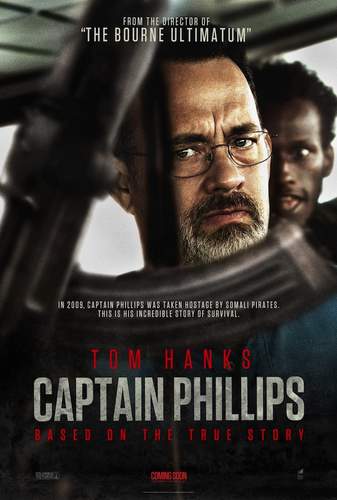 Somalia's chief exports appear to be morally-ambiguous Salon articles about piracy and sophomoric evidence against libertarianism. However, it is the former topic that Captain Phillips concerns itself with, inspired by the hijacking of the Maersk Alabama container ship in 2009.
What is truth? In the end, Captain Phillips does not rise above Pontius Pilate in providing an answer, but it certainly tries using more refined instruments than irony or leaden sarcasm.
This motif pervades the film. Obviously, it is based on a "true story" and brings aboard that baggage, but it also permeates the plot in a much deeper sense. For example, Phillips and the US Navy lie almost compulsively to the pirates, whilst the pirates only really lie once (where they put Phillips in greater danger).
Notice further that Phillips only starts to tell the truth when he thinks all hope is lost. These telling observations become even more fascinating when you realise that they must be based on the testimony of the, well, liars. Clearly, deception is a weapon to be monopolised and there are few limits on what good guys can or should lie about if they believe they can save lives.



 One of my pet projects in Debian is the


 Recently, North Tyneside Council circulated the beginnings of a regional
development plan. This consisted of a detailed map of the borough, complete
with various areas marked out as sites for potential housing development.
Included amongst the sites for potential development was Whitley Bay Ice
Rink and the surrounding leisure facilities: a football pitch, a cricket
pitch, and more.
Whitley Bay Ice Rink has been a fixture in the cultural history of the region
and it would be a terrible shame if it were to close. Many people seemed to
agree: a petition calling for the site to be excluded from the plan received
over 7,000 signatures. Residents were also able to write comments on the plan
itself. The specific paragraph for the Ice Rink had attracted over 100 comments
when I looked at it on the last day that comments were open. I hurredly
put together one of my own:
 Last night it seems the so called


 Your turn now
 I d be delighted to have your opinions in the comments of this blog post.

 Thanks to all those who provided comments, especially
 I immediately sent them an email to alert them to the fault and ask for the duplicate transaction to be corrected. Normally, when a company makes a mistake, it would be fixed within a couple of days and certainly never reach my blog.
Instead of getting a helpful reply, I was astonished to receive this:
 Note: exact amounts and account numbers concealed
The form is relatively clear: I authorised a monthly payment (Periodicite: mensuel) with the first (Premiere) payment on 30.12.2013 and then, or so I believed (and still do) a following payment (ensuite) on the 31st of each month, with the last payment at the end of November, for 12 payments in total. Simple, right? Where it says ensuite le 31, I sincerely believe that means the second payment is on 31 January, but Postfinance seem to be arguing that I meant the 31 December: just one day, rather than one month, after the first payment.
Delaying tactics
I replied to their email, telling them explicitly that I had authorized a monthly payment only and demanding the immediate return of the duplicate payment.
When I got their next reply, I didn't know what to think:
 Using customers as unpaid QA testers
Many leading financial organisations have experienced teams of developers, QA testers, and comprehensive regime of simulation/testing with paid participants to ensure their systems are reliable and as friendly and accurate as possible. Here, it feels like PostFinance has skipped all that, deploying a form that is ambiguous at best and they are using real customers like me to test the system and report the bugs.
Normally organisations pay me for doing that very same task as part of my job as a software engineer. Not only have Postfinance taken almost 200 CHF of my money, but they have wasted my time with their strategy of fobbing me off and at the same time they are probably sending my feedback to their developers instead of paying a QA tester to check their systems.
You be the judge
What is your opinion?
 Having decided to take a fortnight off, between
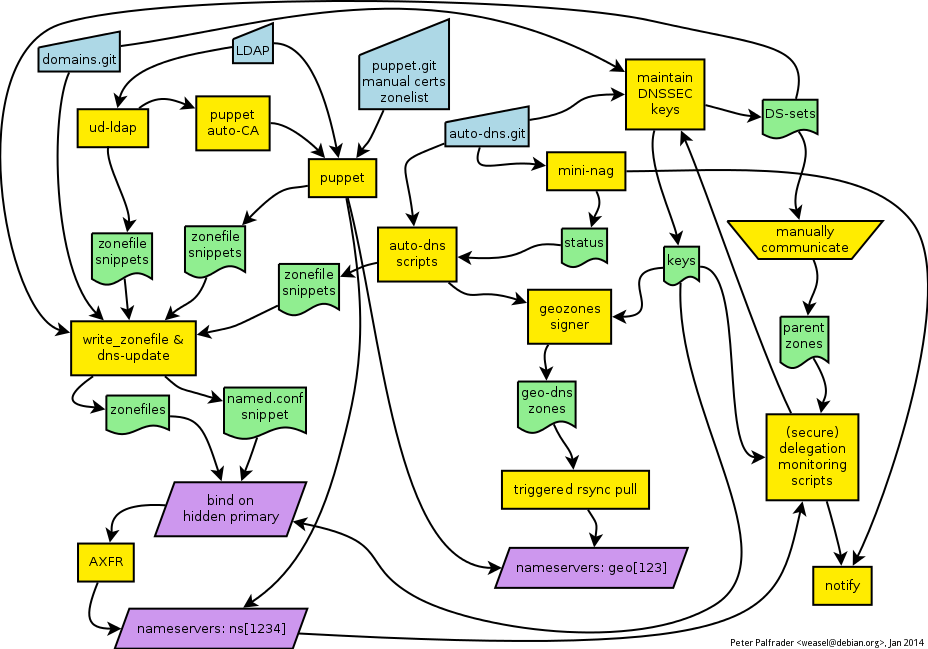 Figure 1: The Debian DNS Rube Goldberg Machine.
Once all the individual pieces of source information have been
collected, the
 Ruby has a reputation for being slow. But there s slow, and then there s
three seconds to show the help for a fairly command line program . That s
not slow, that s ridiculous. The