Search Results: "ana"

27 March 2009

David Welton: CodingHorror and Open Source Economics

Jeff Atwood writes about the economics of open source software: http://www.codinghorror.com/blog/archives/001247.html Well, he actually doesn't say as much, but that's what it's about. Someone really ought to do a book about this subject. I have some ideas - any takers? It's always tough to write about because there's so much material. It's a topic that is near and dear to my heart - almost 10 years ago, I joined the Free Software Business mailing list, as I got curious about the intersection of free software and business, and how the whole thing worked. I've learned a lot in the meantime, including a stint at Linuxcare, which was one of the Linux companies during the dot com boom, and am still fascinated by the subject. Before we get started, let's reiterate something:
  • It's clear that open source software works. There's just no doubt about it - it's been through ups and downs, the dot com boom and bust, and it will trundle happily (well, as happy as anyone is with this economy) through the recession too.
That point bears repeating. Everything else needs to take it into consideration. Could it work better? Differently? Perhaps, but it does work, so you need to understand it very well before you fiddle with it. Jeff writes:
for the average user? Heck, how realistic is this for the average programmer? Even if you're the type of macho, gung-ho programmer who can master an alien code base just to get some small pet feature or bugfix in -- do you honestly have the kind of time it would take to do that? Sometimes, when people say this:
The source code is freely available. If you feel so strongly about this bugfix/tweak/feature/plugin, why don't you code it yourself?
They're really saying this:
F**k you.
Which is of course a terrible analysis of open source, and its pros and cons. I wrote the following comment on Hacker News:
Heck, how realistic is this for the average programmer? ...
"Actually, I have submitted lots of (mostly small and inconsequential) bugs and minor features over the years, to projects such as the Linux Kernel, Tcl, Erlang, Ruby, Rails, Apache, and probably lots of others I'm forgetting right now. I actually enjoy it quite a bit, come to think of it - there's something cool about diving in and studying something new and different, and a thrill that comes with nailing the bug. Sometimes, the knowledge required to actually fix it is too much, and you have to settle for sending in a good bug report, but in other cases it's very much possible to hack up quick, useful things despite not knowing much about the system in question. And, no, I'm not really that great a programmer... I'd consider myself fairly average." And I know I'm not alone, as I see similar sorts of people in Debian and the Apache Software Foundation. Debian, infact, is all about those kinds of tweaks to improve the operating system as a whole. And this sort of exchange goes on all the time, as evidenced by the huge success of a large number of open source projects. Now, granted, most projects are really driven by one or a few really committed hackers, who do the lion's share of the work. However, that large network of people who contribute, test, document, and suggest is certainly important to any open source project. As long as we're looking at my anecdote, let's look at it in a bit more depth - most of those projects are developer tools or closely related. A cynic might note that Jeff comes from the world of Microsoft, where the core developer tools are provided by a company and 'giving back' is limited to payments and bug reports. But leaving that be, I think the enormous success of stuff like Ruby, Perl, PHP, Python, Tcl, Apache, Linux, GCC, and on and on and on indicates that, at least in terms of stuff that developers share between one another, open source works. However, there are problems, one of which is that he (or, in unfortunately rather rarer cases, she) who writes the code does not necessarily get the money. And without money, he or she who writes the code must dedicate themselves to some means to actually accumulate a bit of money in order to pay for living expenses. Most likely, this is time taken away from the open source project, which is a loss for all the people who benefit from it. Proprietary software solves this feedback loop in a neater way (generally) - companies that create good products get money for their efforts, which can then be reinvested in development. Jeff suggests that "sponsorship seems like a constructive way for people who are unable or unwilling to write code to affect the direction of a project.", which is ok as far as it goes, and more or less works here and there, but hopefully he's not thinking about trying it on a larger scale. This sort of thing has been tried before, and never really seems to take off. Part of the problem is that it can work on a person-to-person basis, but is almost impossible to standardize in a way that it makes sense to have some kind of clearinghouse that operates as a business. There are simply too many factors - what kind of open source project it is, what motivates the people behind it, how the transaction costs of defining a specification, monitoring the results, sending money and so on compare to the actual value of a fix... the list goes on. Ultimately, it's a nice idea, but it doesn't seem to work out too well in practice. Anyway, while it's a good thought on Jeff's part, at the end of the day, it is fairly evident that he doesn't have a lot of first hand knowledge of open source business and economics. That said, to some degree, open source took everyone by surprise, and, lacking the nice, simple feedback loop that proprietary software has, can be a lot more difficult to get a handle on. I find it quite pleasant that way - it attracts both hard-headed business types and social-experiment idealist visionaries; both huge corporations (IBM!) and a huge number of individuals; both people who have gotten quite wealthy from open source as well as most of the rest of us who manage to make ends meet but still love it. It's not something that's easy to pigeonhole, and as such it's hard enough to figure out the many ways in which it does work, let alone figure out how to improve on it. Stay tuned for further installments: Software Economics - Public Goods

David Welton: Software Economics - Public Goods

To look at the economics of open source software, you have to start with the economics of software as a category, both proprietary and open source. Note: it should be perfectly obvious to everyone that open source software works, and works quite well for some things. This article is more about understanding the how and they why. Just to avoid any confusion... If you look at software as a product, it has a couple of defining characteristics: What do you get when you combine something that's "non excludable" and "non rivalrous"? In economics, these are known as "public goods": http://en.wikipedia.org/wiki/Public_good - read the whole thing if you have a few minutes, it's what I'll be talking about. As per the article, "The Problem" as it were, is the free rider problem. Let's stop and look at a contrived example: Bob is an ex-dentist and really knows what it would take to write a great program for managing a dentist's office (or pick your own example... it's contrived, don't quibble about the details). He's also a good programmer, with the skills necessary to implement the program. He talks to a few of his dentist friends, and they're enthusiastic about the whole thing. Let's look at a few scenarios of how things might play out: Bob values his time at 10 dollars an hour, and it will take him 100 hours to complete the project, meaning the whole project would cost about 1000 dollars. One way things could work is that he could find a dentist friend who needs this program, and bill him 1000$ for his time and services, bang out the code, and release it as open source software. Bob gets his money, the dentist gets his code... and all the other dentists in town get it for free, which is bound to make the dentist who shelled out the money a bit irritated, given that he's a human, not a homo-economus, and doesn't like paying and see others get the same thing for free. Let's introduce another variable: the software is only really worth 200$ to the dentist - any more than that and yeah, it's helpful, but not worth that much money (And please stay with me, I know it's contrived, but keep in mind that the situation *is* possible, even if the numbers might be different). That means that if Bob wants 1000$ for his time, but the dentist will only pay 200$, then no transaction will occur! The software won't get written, Bob won't get any money, and the dentist will be worse off because he won't have the nice program, and neither will his dentist colleagues. One way things might still work is if the dentist rounds up some friends and they all contribute a bit, however, that's kind of a pain in the neck for everyone concerned - the dentist doesn't want to get into the software business and spend a bunch of time trying to chase his friends for money, and even if 10 dentists contribute, the ideal position to be in his the 11th guy, who pays nothing, and still gets the software for free. So it's in everyone's interests to not return the dentist's calls in the hope of being the 11th guy. Also, none of them gets the software until they're all on board. So, how to resolve this problem? The wikipedia page talks about introducing an exclusion mechanism, which in this case would be a copyright system so that Bob can sell a copy of his software for 100$ and be sure that it won't be open to everyone to use. This way, the dentists get the software for 100$ less than they value it at (200$), and as soon as Bob signs up an 11th dentist, he's making more than his time/materials costs, and is therefore coming out ahead! The dentists all know that they're paying the same price, so have no reason to grumble about free riders. In short, everyone is pretty happy. Of course, in the real world, things don't play out like that all the time. There are problems with the simplified example above, some of which are very evident: the cost of enforcing copyright laws, in an age when copying is extremely easy, is very high and potentially very intrusive. However, "intellectual property" is, by and large, a compromise solution that has had positive aspects, especially when you ignore the outliers like Microsoft, and look at all kinds of niche software vendors, who make a nice living, create good products, and have happy, satisfied customers. If you look at the other solutions to the free rider problem listed on the wikipedia page, we can see how they might be applied to the world of software. None of these solutions is perfect, and all, including exclusion in the form of intellectual property laws, or simply doing nothing at all, have problems of their own. Due to the very nature of software, this is somewhat inevitable, and the best we can do is come up with good compromises, and continue to reevaluate them as technology and society change (this is something that needs to happen with IP laws, for instance).

John Goerzen: Peace

Today over lunch, I and 6 others went to visit Grandma. She was in her room, looking better physically today than yesterday. When I walked in, I said brightly, Hi Grandma! She took my hand warmly, and said to me, Now I don t think we ve met. Who are you? I knew that moment would happen someday, but still was surprised when it happened. Mom told her that we were there to tell her we love her. Grandma counted out the seven of us, and said, All these wonderful people here to tell that to ME? That s Grandma still there! It was a difficult moment. Many of us were tearful, and Grandma was sick enough that she sometimes lost the battle to stay awake. But we were all glad it was happening. Mom thought it right (me too) that she should tell Grandma about the latest word from the doctors. The conversation went, in part, something like this, with my mom addressing her mother: My Mom: Mom, the doctors say your heart is probably wearing out. My Grandma: *shrug* Yeah. My Mom: And your body is probably tiring out too. My Gramdma: Yes it is. I m 94. It s not that Grandma was depressed or anything. Just that she had long ago been at peace with the idea of death, and actually told us more than once that the was rather surprised that she has lived to be as old as she has. So it wasn t frightening or surprising to her to confront her own mortality. To her, it was a fact, and an obvious one at that. My brother brought along Grandma s old Bible. She had given it to him a few years ago. It was filled with highlights and handwritten notes from cover to cover. She had carefully analyzed it, and when she bought a new Bible, had carefully copied the notes to it. My brother read to her two passages that she had highlighted:Psalm 23: (which she has noted as a favorite of many Christians ) and Numbers 6:24-26. He then held her hand and said a prayer with her. Then he said a blessing for her, and as he was getting to the end, she interrupted, saying the last word for him: forever! She still had her sense of humor, and made us all laugh several times. She said, as she always has when any of us stop by to visit, how happy she is that we came by, and what a wonderful family she has. She said several times Danke sch n, Danke sch n, Danke sch n! (Thank you, thank you, thank you! she had made sure to teach a few German words to all of us as kids.) When it was time to go, she got lots of hugs from us, and made a point to tell each of us individually thank you for coming! As we walked down the hall, I was reminded of her old tradition going back many years. Whenever we would leave her house, she d wave to us from the porch. And, if it was dark, we d turn on the car light and wave back. Since she s been in the nursing home, she ll wave to us from her doorway as we walk down the hall. And, sure enough, today s visit ended with her waving to us from her doorway with both hands (as she always does) and a big smile. We all waved back with a smile as we walked away, too. I don t know if this will be the last goodbye with her, but if it is, I can t think of a better one.

26 March 2009

Sven Mueller: Apache SSL oddity

If you ever have the problem described below, you have to realize that Apache HTTPD is selecting the SSL certificate (and/or key) not based on you VirtualHost definition, but based on the ServerName in the current context. This means that you have two virtual hosts with the same ServerName, but on two different IPs, and are wondering why the wrong key (and/or certificate) is used, it might be because of this. Assume we have the following (simplified) configuration:
<VirtualHost a.b.c.d:443>
ServerName a.b.c.d
SSLCertificateFile /etc/ssl/certs/a.b.c.d_443.pem
SSLCertificateKeyFile /etc/ssl/certs/a.b.c.d_443-key.pem
</VirtualHost>
<VirtualHost a.b.c.d:444>
ServerName a.b.c.d
SSLCertificateFile /etc/ssl/certs/a.b.c.d_444.pem
SSLCertificateKeyFile /etc/ssl/certs/a.b.c.d_444-key.pem
</VirtualHost>

(note: This happened to me when wanting to open a SSL server for subversion on a host that also had Apache run as a reverse/application proxy for some specific application that managed its own CA) Both VirtualHosts will use the very same certificate and key (as far as I was able to tell, but at least the same key), in my case that of the specific application (which was(is?), in its way, broken regarding SSL). This might as well be a bug or a design decision (AKA feature), I don t know. However the workaround that worked for us was to change one of the server names to something else (since it seems it is unused anyway, unless the apache decides to generate a self-refering URL, which it certainly won t do for the reverse/application proxy part). Update: Fixed formatting on configuration sample to make it clear this is not about namebased virtual hosts.

John Goerzen: Time

When I was a child, I was learning to play piano. My parents didn t have one at the time, but my grandparents did. Every evening, we d go over to their house so I could practice. I suspect I was more interested in other things most of the time, though whether Grandma has some cherry moos in her fridge, or whether Grandpa would play chess with me or do something fun in his workshop. Grandma would often be in her curlers, and we d often leave her in the evening saying goodbye in the pink fluorescent lights she had shining on her plants by the door. Other times, we d just go to visit, or I d ride my bike over. I liked helping Grandma cook or bake peppernuts. And when I was trying to learn chess from Grandpa, and Grandma thought he was being too hard on me, she d say something to him in German and I d magically start winning. Grandma volunteered at a local thrift store weaving rugs. These were made by hand on old looms in a traditional way, mainly out of donated clothes and drapes that were too tattered to sell. My mom used to drop me off with grandma while she went shopping. I maybe brought my lunch, and watched grandma, until one time I asked her if I could help. She let me, and eventually the store manager told grandma that I ought to be able to work on my own loom. Pretty soon we had a routine down: in summer, Grandma would pick me up at home, I d read a computing magazine in the car to town, and work at a loom side-by-side with Grandma. That lasted until I got too busy in high school. But ever since then, Grandma delighted in telling this whole story almost every time she saw me, and she remembered word for word what the store manager said something I never quite could remember. I remember watching Grandma care for my brothers when they were sick, or helping out my parents with whatever they needed help with. We had a tradition for a number of years of spending New Year s Eve at Grandma and Grandpa s house, and going back home the next morning. The three of us boys slept in a cold upstairs room, but we didn t care because the bed had more layers on it than we could count, and an electric blanket besides. When my Grandpa Klassen passed away in 1990, Grandma missed him but didn t get too worked up about it. She was convinced that he was in a better place, and appeared to be at peace with it. Death was a normal part of life to her, and it didn t surprise her that it happened. In the last few years, Grandma s health has been failing. Her knees have been bothering her for years, and she has also been struggling with dementia for a few years. It s been hard on me to visit her, because in some ways she hasn t been the same person I remember for awhile now, and in other ways she s exactly the same. Lately she hasn t always remembered where I live, or what Terah and Jacob s names are, we knew to expect that and are respectful of the situation. For years now, Grandma has been saying, I don t know why the Good Lord doesn t take me up to be with him yet. My bags are packed and I m ready! Last time I saw her, I mentioned that we used to do weaving together, and she couldn t remember. That was a sure sign to me that things had taken a turn for the worse. Our last several visits have ended with a big hug, and her still iron grip on my hand, with her saying, Thank you for coming! My family is so good to me. We love each other! She s been battling infections and heart problems the past few weeks. This evening, I got an email from my mom saying It s time to say our goodbyes. She had been to see Grandma today, and Grandma still managed to tell her, We love each other. As much as time has changed her in the past few years, she s still there, the same loving Grandma as ever.

25 March 2009

Adrian von Bidder: Web Applications

While I'm not terrible happy with Oracle (what decade is it? Have a look at Oracle's default sql commandline tool and you're right back when I wasn't even born. Commandline history? Tab completion? Even just navigation with the arrow keys in the commandline? The future is really cool... Yes, I'm sure nobody seriously uses sqlplus), they just scored on this: I needed to download one of their products. I tried to create an account, saw that I already had one, had the password reset and mailed to me (extra point for not just sending me the old one) and signed in, getting a page where I could confirm my data (address data and subscription to their various newsletters), and hit the continue button that was at the bottom, whereupon the application still remembered that I wanted to download the file and immediately delivered the requested file. The fact that I didn't remember having an account highlights that their I don't want email from Oracle option really does mean exactly that. I really did not get a single email from them. All this is extremely trivial. Sadly, it makes me happy that there is at least one company that actually manages to do this, which goes entirely against my experience with other vendors' web jungles.

Ana Beatriz Guerrero Lopez: Are you from the past?

I have found today someone who spents an average of 12 hours every day working with the computer, and who has never heard about twitter. He keeps insisting he comes from the future.

24 March 2009

Jordi Mallach: GNOME 2.24 in Debian unstable, and the road ahead

GNOME 2.26 was released last week, and I couldn't help adding myself to the long list of celebrating posts in Planet GNOME. Looking at the release notes, it looks like this release adds a good number of very visible features, and also keeps improving on ongoing transitions like gvfs.

The Debian GNOME team is obviously not ignoring this fact and started to work very hard on updating GNOME for squeeze as soon as the lenny freeze was over. First, the new versions of GLib and GTK+ were uploaded to unstable, and managed to transition to testing very easily. The rest of GNOME 2.24 bits, which had been patiently waiting on experimental for months, has been uploaded with care not to disrupt any of the many transitions the Debian release team is currently dealing with. You can have a quick glance at how things are going in our 2.24 status page, but the summary is that most of GNOME 2.24 is in unstable, with a few notable exceptions which are held back by ongoing testing transitions. Namedly, evolution-data-server is trying to trickle into testing, which is in turn holding the final bits: gnome-panel, nautilus and related packages, but we think this will be over soon. As soon as GNOME 2.24 is safe in squeeze, we'll immediately turn our focus to the new GNOME 2.26 release. Our initial plan is to package the trivial bits and leaf packages which can't break stuff for unstable, and herd the more complex modules via experimental, to avoid breaking unstable at all. There are some exceptions; we plan to keep gnome-session 2.22 in unstable/testing until 2.26.1 is released to avoid getting a broken session saving in Debian. People might wonder why we insist on hitting what would seem a dead horse by first dealing with 2.24 and not 2.26 directly. The main reason is that these packages had been ready for a long time, and were in good shape to transition to testing quickly and with little pain. Preparing 2.26 directly would mean throwing away a lot of hours of packaging and polishing effort, and it's not like we're releasing squeeze any time soon anyway. Enjoy the hopefully not too bumpy road to 2.26!

MJ Ray: Making infrastructure organisations more resilient Taunton 20 March 2009

Last Friday, I spent most of the day at this NAVCA ICT event in Taunton. (There s another similar one in York this Friday if you re interested.) The event was a sandwich, with a Steve Bridger social media session as the filling between workshop halves.
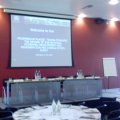
platform
Conference I went to the workshop for support workers. I m not sure whether it was quite the right label, but the others were for managers/trustees and for accidental technical supporters, which definitely weren t. There seemed to be at least three other ICT specialists there, so I wasn t the only one. The best thing about the workshop was the mix of specialists and generalists. I was really interested in what the generalists had to say, but sadly the workshop was more of a lecture and I don t feel I got as much out as I could. I d be interested to know if that was the same for other participants. I m not sure what I thought of Steve Bridger s session. It was a difficult one: the strange mix of an audience was all together, the room felt pretty warm and it stood between us and lunch. I had trouble concentrating but posted a few updates to identi.ca about it. The worst thing was all the needless promotion of certain companies products. They didn t talk about blogging and syndication, they talked about Blogger and Google Reader; they didn t talk about photo-sharing, they talked about Flickr; they didn t talk about spreadsheets, they talked about Excel. Nevertheless, I left the event feeling really positive about other ICT specialists, with some hope that the generalists were getting it and quite impressed by the people I met from the other tracks. It was pretty good to help someone towards the autosuspend setting on their GNOME-based netbook within ten minutes of arriving, too. I ve just updated software.coop with Richard Stallman s explanation of why proprietary software is a social problem, to see if that helps put the community-based view across. I ll look again at some of the grant-funded resources mentioned and see if we can improve them, but I d welcome any comments from the voluntary and community sector about how best to do that.

23 March 2009

Clint Adams: Let us see what markdown mangles

certtool --generate-privkey > cakey.pem
echo 'cn = exampleCA' > ca.tmpl
echo 'ca' >> ca.tmpl
echo 'cert_signing_key' >> ca.tmpl
echo 'expiration_days = 732' >> ca.tmpl
certtool --generate-self-signed --load-privkey cakey.pem \
  --template ca.tmpl --outfile cacert.pem
for i in host1.example.org host2.example.org host3.example.org
do
certtool --generate-privkey > $i-key.pem
echo 'organization = Example' > server.tmpl
echo 'unit = Messaging' >>server.tmpl
echo "cn = $i" >> server.tmpl
echo 'email = postmaster@example.org' >> server.tmpl
echo 'expiration_days = 366' >> server.tmpl
#    echo 'tls_www_server' >> server.tmpl
echo 'encryption_key' >> server.tmpl
echo 'signing_key' >> server.tmpl
echo "dns_name = $i" >> server.tmpl
certtool --generate-certificate --load-privkey $i-key.pem \
  --load-ca-certificate cacert.pem --load-ca-privkey cakey.pem \
  --template server.tmpl --outfile $i.pem
done

Jaldhar Vyas: New Laptop

Today is my 38th birthday. (Chronologically that is. It was on Thursday by tithi.) As a present I got an Acer Extensa EX 4630-3922 laptop. I added an extra 2GB of RAM to the listed configuration and still managed to spend less than $500. It came with Windows Vista but shrinking that to a minimum and installing Linux (Kubuntu Intrepid) on it was completely uneventful. Now the next step will be to learn about Xen or KVM (Who's winning these days?) so I can add Debian Lenny and RHEL 5.2 to the mix. The only complaint I have so far is the anemic battery life which barely reaches 2.5 hours though perhaps that might improve with a bit of tweaking.

22 March 2009

Jeff Bailey: Citibank

Apparently Citibank doesn't even trust Citibank.

Citi Mastercard took my minimum monthly payment out of my account despite me having paid the account down to zero, so had to issue me a refund check. It's drawn on the Royal Bank of Canada.

Awesome. =)

21 March 2009

Meike Reichle: Chemnitz Linux Days 2009

This is my fourth CLT report and they surely are becoming repetitive! But every good event deserves a good report, so here goes: Contrary to previous years we already arrived on Friday this year. Since we were also not up for another stint with the gym (Aaah the sissifying effects of marriage!) we booked a room with a nice little guesthouse about 15 bus-minutes from the venue. The conference was great as ever: I usually visit the CLT mostly for networking but I also managed to see a few talks. I moderated the session on High Performance and got to see three very nice talks on GPU programing, cluster computing and parallel programming. This year also featured the first talk on (the lack of) women in Free Software. Unusually enough this one was even given by a man. I was quite curious about that talk, which was (how fitting!) scheduled in direct succession to my own. I am kind of torn on that topic myself. On one hand women in Free Software is a topic that is very important to me and deserves any attention it can get. On the other hand instead of talking about how evenly capable women are in Free Software I'd rather just demonstrate it, for instance by giving a good Free Software related talk. And instead of talking about how there should be more women in Free Software I'd rather just be one and try to encourage others with my example. The usual quota of female speakers at linux events is somewhere between 2-4% and I just don't like the idea of having a conference with n men talking about Free Software and 1 woman talking about women. I've had these settings before and it just doesn't sit well with me. Because of this I was quite please to find the topic being tackled by a man this time.
The talk itself, in my impression, left a few open issues though. It was rather brief and focussed mainly on stating the usual numbers, asserting that the Women in FLOSS movement wasn't about affirmative action or discriminating men and explaining how women feel discriminated by sexist behaviour and advertising and how objection to such things should not be mistaken as prudery. It's general advice on how to improve the quota of women in FLOSS mostly boiled down to the linuxchix slogan "Be Polite. Be Helpful.". What I missed most was practical advice to projects wishing to attract more female contributors, such as mentoring programs or low-threshold entry points. Also I felt that the talk lacked a real motivation beyond "gender balance is a Good Thing". However, I was glad the topic finally found its way into the CLT as well and I had a couple of very interesting discussions afterwards. Concerning my own talk I was rather satisfied as well. Attendance was - as usually in Chemnitz - very good, according to the organisers I got around 200 people. Since I designed the talk as a collaborative project and its feedback was predominantly good I'll continue developing it with the feedback I got and submit it again to other events. I think the topic is very worthwile and there's still a lot in it. Some people asked for a more collaborative way of contributing their thoughts and ideas so I'll just create a wiki to collect the new ideas. I'll of course announce it here as soon as it's in place. The slides and audio recording (both German) are as usually available from the talks page at CLT or my own talks section.

Russell Coker: Feeds and Banning from Planets

Stewart Smith has written about the removal of a blog from Planet Linux Australia [1] due to publishing a list of URLs that the Australian government wants to censor. The first point I want to make is that even if you had a list with thousands of entries that are not likely to offend anyone or incur any legal liability then it s still not suitable for syndication on most Planet feeds. The correct thing to do is to have a paragraph describing the list and why people would want to read it and then use the MORE feature of your blog so that the rest isn t in the RSS feed. If you use Wordpress which seems to have the MORE function broken then that would mean hosting the list somewhere else. In regard to the specific post, in a comment on Stewart s post Matt suggests that the Planet software somehow filter out certain blog posts. I am not aware of any way of doing that apart from through code changes, Matt could submit some patches to allow that sort of thing. One thing that would be really good would be to have an exclusion tag or category in a blog feed. So you for example you could have feed URLs such as /feed/lca which would be configured to list all posts without the tag not-lca. Another way for a blogger to do this would be to use Yahoo pipes [2]. The people who run a Planet should be prepared to take any feed URL. It would not be difficult for a blogger to create a pipe that excludes all items that have NSFW in the title (or any other possible way of listing them). A final option is to have multiple blogs. I have a blog for documents that I regularly update [3]. Many of those documents had been plain HTML files edited with vi for years before I started blogging. But Wordpress is a reasonable CMS and as I use it for blogging it made sense to use it for other documents too. Wordpress has no good option for managing two types of documents, ones that are date-based (regular blog posts with the date in the URL) and non-date based (which change periodically and have different date stamps). There are Wordpress pages, but the support for having moderate numbers of pages is not great. Also on my document blog I will often have articles appear new regularly as I change the date when updating them. Anyone is welcome to subscribe to the feed for my document blog if they are interested in seeing new versions of the documents, but I expect that most people don t want to. The Debian Wordpress package (as of last time I used it) and my fork of the Debian Wordpress package have great support for multiple blogs. There is Wordpress-MU for bulk blog hosting, but that is only designed for people who want to run something like LiveJournal or Blogger. If you just want a few blogs for friends and relatives then the regular Debian Wordpress package will do the job well. Some bloggers maintain two blogs, one for public things and another for close friends and relatives (people who ARE interested in what they ate for breakfast). Having one blog for the NSFW material would be a reasonable thing to do for certain bloggers. Finally while I doubt that someone who runs a Planet installation faces any legal liability, there is also the issue of a PR liability. From a PR perspective I think it s best for the reputation of Linux users in Australia for certain things to not appear on Planet Linux Australia. That said it would be good if there was a process for removing and reinstating blogs that was publicly documented. There will obviously be many differences of opinion as to what is too risky to allow on the Planet so we should expect that from time to time feeds will be temporarily removed. When that happens what does a blogger have to do to be done to be syndicated again? Update: A comment has revealed a way of filtering out RSS feeds via the feed URLs used by wordpress. A URL such as /feed/cat=-X will give a feed of all articles that don t contain category number X. Multiple categories can be specified when separated by commas. So this allows Wordpress users to exclude their NSFW category from Planet Linux Australia.

20 March 2009

Russell Coker: Choosing a Server for CPU Intensive work

A client is considering some options for serious deployment of some CPU intensive work. The options that are being considered include cloud computing (Amazon EC2 [1]), virtual machines (Slicehost [2] and Linode [3]), and purchasing servers to install in racks at various locations. I can t disclose the criteria that will determine when each of those three options will be used (I expect that we will end up using all of them). But my research on the prices of various servers will hopefully be useful to someone. For the server vendor I chose Dell. I believe that HP offers slightly better quality hardware than Dell, but they cost more and are more difficult to deal with (I can t even get a price online). For this project I will be using a bunch of redundant servers (in a similar concept to the Google server array) so I m not going to be overly bothered about losing a server occasionally - therefore the slight benefit that HP offers for reliability does not make up for the expense. Dell has some 1RU servers that have two CPU sockets and allow eight CPU cores. It seems that the best value that Dell offers for a server without RAID (the entire server is redundant) is a PowerEdge SC1435 that has two Opteron 2352 quad-core CPUs running at 2.1GHz, 4G of RAM, a 1TB SATA disk, and a Broadcom PCIe Gig-e card for $3,816.50. That machine gives an option of 2.3GHz CPUs for an extra $621.50, I am not sure that increasing the clock speed by almost 10% for a 16% increase in system price is a good idea. The second best option was a PowerEdge 1950 III that has two Xeon E5420 2.5GHz quad-core CPUs with 12M of cache, 4G of RAM and a 1TB SATA disk for $4,302.30. The Intel option has 3 years of support included while the AMD option included 1 year of support and needed at least an extra $990 for 3 years of support. So it seems that if 3 years of support is desired then the Intel based server becomes significantly cheaper and is probably a better option. Dell s 2RU and 4RU servers are of no interest if you want CPU performance. The 2RU servers only support two processors and the 4RU servers only support four processors. So it s a ratio of 2 processors per RU for 1RU servers vs one processor per RU for 2RU and 4RU servers, and the 2RU and 4RU servers are a lot more expensive too. I am investigating the Dell blade server. Blade servers are great for CPU density and good for management. The Dell blade enclosure M1000e takes 10RU of space and supports 16 half-height blades or 8 full-height blades. The Dell M905 blade supports four AMD quad-core processors for a total of 128 cores in 10RU, there are also half-height blades that support two quad-core processors for the same CPU density. So in terms of CPU density it s an average of 12.8 cores per RU for the blade server vs 8 cores per RU for 1RU servers. While I haven t got a complete price yet, it seems that four CPUs suitable for the M905 will cost about as much as four 1RU servers. So the 1RU systems are definitely better value for money than the blade server. The difference is the management cost. N servers that have two CPUs will be more work than N/2 servers that have four CPUs, but on the other hand blade servers require some specialised skills to run them (which I don t have) and that might also cause problems. I don t think that blades will be part of this project.

Chris Lawrence: How not to do data analysis

io9 presents a chart that purports to show that shark-jumping has an effect on television ratings. I ll freely concede that Battlestar Galactica has had its, er, weaker moments, but the chart doesn t actually show that creatively weak episodes had any effect whatsoever on the ratings that can be distinguished from the underlying, secular downward trend in ratings. Since I had about 300 more important things to do, I decided to analyze the data myself. First, I reentered the ratings data from here into an OpenOffice.org spreadsheet and then identified the shark-jump episodes with a dummy variable, with the help of IMDB. I then created two new variables: a simple ratings difference variable for each episode, and a dummy variable to indicate whether or not an episode immediately followed an identified shark-jump. I then converted to a CSV file, opened R, and estimated a linear regression: Delta = a + b(FollowShark). While the effect of an episode following a shark-jump was negative (about 0.025 ratings points), the effect was not statistically significant (p 0.736, two-tailed). Throwing out Razor and The Passage, to focus on episodes io9 says showed ratings losses improves the coefficient to about -0.042 ratings points, but it is still not significant (p 0.613, two-tailed). So, the moral of the story: the episodes identified may have been shark jumps, but they didn t seem to have a discernible effect on the ratings of subsequent episodes. And, besides, any analysis that doesn t identify the crapfest known as Black Market as a shark-jumping incident isn t worth taking seriously to begin with.

Bear in mind that TV ratings themselves leave something to be desired; variations of several tenths of a ratings point are within the expected margin of measurement error.

19 March 2009

Uwe Hermann: Using Debian GNU/Linux on the Lenovo IdeaPad S9e netbook

TuxMobil - Linux on Laptops, Notebooks, PDAs and Mobile Phones Lenovo Ideapad S9e netbook I recently got my hands on a Lenovo IdeaPad S9e netbook for a short amount of time (I don't own it), so I did a few tests with Debian unstable (more or less Lenny right now) and a Linux 2.6.28 kernel on it, see results below. The machine type is 4187-42G, and it features an Intel Atom N270 CPU (with HyperThreading) at 1.6 GHz, 1 GB of DDR2 RAM, an 80 GB SATA drive, an 8.9" WSVGA 1024x600 (glossy) screen, VGA port, LAN, wifi, bluetooth, 2xUSB, SD card slot, PCI ExpressCard slot, built-in microphone, and a webcam. BIOS You can enter the BIOS by pressing F2, the boot menu by pressing F12 during boot. Booting from USB works fine on this netbook. There's a Splashtop installation on the netbook (called "Lenovo Quickstart" here) which you can disable in the BIOS. Installation There's no CD-ROM drive, so the simplest way is to use a USB thumb drive for installation. Here's how you can prepare one containing a Lenny installer (assuming your USB thumb drive is /dev/sda):
  $ wget http://cdimage.debian.org/debian-cd/5.0.0/i386/iso-cd/debian-500-i386-netinst.iso
  $ wget http://ftp.nl.debian.org/debian/dists/lenny/main/installer-i386/current/images/hd-media/boot.img.gz
  $ gunzip boot.img.gz
  $ dd if=boot.img of=/dev/sda1
  $ mount -t vfat /dev/sda1 /mnt
  $ cp debian-500-i386-netinst.iso /mnt
  $ umount /mnt
If the above USB thumb drive doesn't boot correctly (which it did not in my case: GRUB error 17) it's probably because of a messed-up MBR. This is how you can fix it:
  $ apt-get install mbr
  $ install-mbr /dev/sda
 Lenovo Ideapad S9e Debian installation Then insert the USB thumb drive in the Lenovo IdeaPad S9e, choose USB boot in the BIOS, and start the installer. Most of the process works as usual, the only small difference is that you might want to load the "parted" installer module in order to resize the Windows-partition on the disk (if you want to keep it) to make space for Linux. The second (fat32) partition seems to keep a restore image and/or the Splashtop stuff, not sure. Audio Works out of the box using the snd_hda_intel driver. The hardware is onboard audio in the southbridge (82801G / ICH7) and uses the Realtek ALC269 codec. If some programs don't have working audio, try modprobe snd-pcm-oss. Built-in microphone Untested so far. Bluetooth Works out of the box using the bluetooth and btusb driver. The laptop's Bluetooth device is USB-attached internally and shows up in lsusb as:
  $ lsusb
  Bus 003 Device 002: ID 0a5c:2150 Broadcom Corp.
  $ dmesg
  usb 3-2: Product: BCM2046 Bluetooth Device
After modprobe btusb you can use hcitool / hciconfig etc. as usual, and/or enable more related stuff with /etc/init.d/bluetooth start. Sensors The lm-sensors script detects the lm75, eeprom, i2c-dev, and i2c_i801 modules. The following is the 'sensors' output:
  $ sensors
  acpitz-virtual-0
  Adapter: Virtual device
  temp1:       +36.0  C  (crit = +95.0  C)    
The hard drive temperature can be viewed with:
  $ hddtemp /dev/sda
  /dev/sda: FUJITSU MHZ2080BH G1: 44  C
HPET The Intel ICH7 southbridge in this laptop supports High Performance Event Timers (HPET) which allows for more power savings and thus improved battery life.
  $ dmesg   grep -i hpet
  ACPI: HPET 3F6E1E41, 0038 (r1 INTEL  CALISTGA  6040000 LOHR       5A)
  ACPI: HPET id: 0x8086a201 base: 0xfed00000
  hpet clockevent registered
  HPET: 3 timers in total, 0 timers will be used for per-cpu timer
  hpet0: at MMIO 0xfed00000, IRQs 2, 8, 0
  hpet0: 3 comparators, 64-bit 14.318180 MHz counter
You can check the wakeups-per-second with powertop. SD card slot Works out of the box. It seems to be attached via USB internally (usb-storage driver).
  $ lsusb
  Bus 001 Device 004: ID 0bda:0158 Realtek Semiconductor Corp. Mass Stroage Device
PCI ExpressCard slot Untested so far. ACPI Works fine, see comments for "acpitool" output. Network card Works out of the box using the tg3 driver.
  $ modprobe tg3
  tg3.c:v3.94 (August 14, 2008)
  tg3 0000:02:00.0: PCI INT A -> GSI 16 (level, low) -> IRQ 16
  tg3 0000:02:00.0: setting latency timer to 64
  eth0: Tigon3 [partno(BCM95906) rev c002 PHY(5906)] (PCI Express) 10/100Base-TX Ethernet 00:11:22:33:44:55
  eth0: RXcsums[1] LinkChgREG[0] MIirq[0] ASF[0] WireSpeed[0] TSOcap[0]
  eth0: dma_rwctrl[76180000] dma_mask[64-bit]
Touchpad Works out of the box, both in X as well as in the console using gpm.
  $ dmesg
  Synaptics Touchpad, model: 1, fw: 7.2, id: 0x1c0b1, caps: 0xd04731/0xa40000
Suspend-to-disk and suspend-to-RAM I'm using the hibernate Debian package. You can explicitly force the usage of either method in /etc/hibernate/hibernate.conf by uncommenting the respective lines.
  TryMethod disk.conf
  # TryMethod ram.conf
Suspend does not yet work out of the box, however, as the machine is unknown:
  $ s2ram -n
  Machine unknown
  This machine can be identified by:
      sys_vendor   = "LENOVO                          "
      sys_product  = "418742G         "
      sys_version  = "Lenovo                  "
      bios_version = "14CN51WW  "
  See http://suspend.sf.net/s2ram-support.html for details.
After a few test I found that s2ram -f -a 3 works fine (tested from console only so far). Now this needs to be integrated upstream and in the Debian package (I'll file a bug report). Update: Submitted bug #520848, and an email to the upstream mailing list. Wireless There doesn't seem to be a mainline driver for the Broadcom BCM4312 wifi card in the laptop, yet:
  $ lspci -nn
  05:00.0 Network controller [0280]: Broadcom Corporation BCM4312 802.11b/g [14e4:4315] (rev 01)
Neither the b43 nor the b43legacy drivers work as of 2.6.28. For now, one of two possible options is to build a (partly non-free) driver provided by Broadcom from source (option 2 would be to use ndiswrapper, I guess, but that's untested):
  $ wget http://people.debian.org/~adamm/kernel/linux-kbuild-2.6.28_2.6.28-0.1_i386.deb
  $ dpkg -i linux-kbuild-2.6.28_2.6.28-0.1_i386.deb (currently needed in unstable due to bug #518115)
  $ apt-get install build-essential linux-headers-2.6.28-1-686
  $ mkdir temp; cd temp
  $ wget http://www.broadcom.com/docs/linux_sta/hybrid-portsrc-x86_32-v5_10_79_10.tar.gz
  $ tar xfvz hybrid-portsrc-x86_32-v5_10_79_10.tar.gz
  $ make -C /lib/modules/ uname -r /build M= pwd  clean
  $ make -C /lib/modules/ uname -r /build M= pwd  modules
If that worked, you can load the driver via:
  $ rmmod bcm43xx; rmmod b43; rmmod b43legacy (you could also permanently blacklist these modules)
  $ modprobe ieee80211_crypt_tkip
  $ insmod ./wl.ko
  $ dmesg
  wl: module license '' taints kernel.
  wl 0000:05:00.0: PCI INT A -> GSI 18 (level, low) -> IRQ 18
  wl 0000:05:00.0: setting latency timer to 64
  eth1: Broadcom BCM4315 802.11 Wireless Controller 5.10.79.10
You can now run iwconfig, iwlist, etc. from the command line, or use some GUIs such as kwifimanager. In order to disable wireless, run:
  $ rmmod wl
So far, I only tested WEP (but not WPA). CPU frequency scaling Works out of the box using the acpi_cpufreq driver. Use cpufreq-set -c 0 -g performance if you need full CPU power, cpufreq-set -c 0 -g powersave otherwise. Use -c 1 to do the same with the other CPU/core. PC speaker Works fine out of the box using the pcspkr module, tested with beep. Graphics card Works out of the box using the intel X.org driver.
  $ xrandr
  Screen 0: minimum 320 x 200, current 1024 x 600, maximum 1024 x 1024
  VGA disconnected (normal left inverted right x axis y axis)
  LVDS connected 1024x600+0+0 (normal left inverted right x axis y axis) 195mm x 113mm
     1024x600      60.0*+
     800x600        60.3  
     640x480        59.9  
  TV disconnected (normal left inverted right x axis y axis)
DRI works out of the box with the (mainline, open-source) driver:
  $ glxinfo   grep direct
  direct rendering: Yes
If you attach an external monitor or projector, you can enable it using xrandr as usual:
  $ xrandr --output VGA --auto
You can also use a dual-head setup by adding this to your "Screen" section in /etc/X11/xorg.conf:
  SubSection "Display"
    Virtual 2048 2048
  EndSubSection
After restarting the X server, you can play with xrandr and move the external screen (VGA) "below" the laptop's LCD screen (LVDS) for a simple dual-head setup. The GUI tools arandr or grandr are probably a bit simpler to use than plain command line xrandr. USB Works fine, of course. The only small problem is that there are only two USB ports, more would have been better. Disk drive Works fine, it's an 80 GB SATA drive. Webcam Works out of the box using the uvcvideo driver.
  $ lsusb
  Bus 001 Device 005: ID 5986:0141 Acer, Inc
  $ modprobe uvcvideo
  uvcvideo: Found UVC 1.00 device Lenovo EasyCamera (5986:0141)
  input: Lenovo EasyCamera as /devices/pci0000:00/0000:00:1d.7/usb1/1-3/1-3:1.0/input/input9
  usb 1-3: New USB device found, idVendor=5986, idProduct=0141
  usb 1-3: New USB device strings: Mfr=3, Product=1, SerialNumber=0
  usb 1-3: Product: Lenovo EasyCamera
  usb 1-3: Manufacturer: BISON Corporation
You can use luvcvideo for webcam viewing. Battery Lasts for ca. 3.5 hours, probably less if the system is under high load. Special keys Fn+CursorUp / Fn+CursorDown (brightness), Fn+ESC (enable/disable webcam), Fn+F1 (sleep mode), Fn+F2 (enable/disable TFT backlight), Fn+F6 (enable/disable thouchpad), Fn+F7 (Num lock), Fn+F8 (scroll lock), and Fn+F11 (F12 key) all work fine. Fn+F3, Fn+F5, Fn+F9, Fn+F10, and all other special keys are untested. LEDs The power, disk activity, CAPS lock, Num lock, and battery charging LEDs all work fine out of the box. lspci -tvnn
  -[0000:00]-+-00.0  Intel Corporation Mobile 945GME Express Memory Controller Hub [8086:27ac]
           +-02.0  Intel Corporation Mobile 945GME Express Integrated Graphics Controller [8086:27ae]
           +-02.1  Intel Corporation Mobile 945GM/GMS/GME, 943/940GML Express Integrated Graphics Controller [8086:27a6]
           +-1b.0  Intel Corporation 82801G (ICH7 Family) High Definition Audio Controller [8086:27d8]
           +-1c.0-[0000:02]----00.0  Broadcom Corporation NetLink BCM5906M Fast Ethernet PCI Express [14e4:1713]
           +-1c.1-[0000:03-04]--
           +-1c.2-[0000:05]----00.0  Broadcom Corporation BCM4312 802.11b/g [14e4:4315]
           +-1d.0  Intel Corporation 82801G (ICH7 Family) USB UHCI Controller #1 [8086:27c8]
           +-1d.1  Intel Corporation 82801G (ICH7 Family) USB UHCI Controller #2 [8086:27c9]
           +-1d.2  Intel Corporation 82801G (ICH7 Family) USB UHCI Controller #3 [8086:27ca]
           +-1d.3  Intel Corporation 82801G (ICH7 Family) USB UHCI Controller #4 [8086:27cb]
           +-1d.7  Intel Corporation 82801G (ICH7 Family) USB2 EHCI Controller [8086:27cc]
           +-1e.0-[0000:06]--
           +-1f.0  Intel Corporation 82801GBM (ICH7-M) LPC Interface Bridge [8086:27b9]
           +-1f.1  Intel Corporation 82801G (ICH7 Family) IDE Controller [8086:27df]
           +-1f.2  Intel Corporation 82801GBM/GHM (ICH7 Family) SATA IDE Controller [8086:27c4]
           \-1f.3  Intel Corporation 82801G (ICH7 Family) SMBus Controller [8086:27da]
cat /proc/cpuinfo See comments. Resources All in all it's a really nice hardware, and it works (more or less) flawlessly without much hassle with recent distros/kernels. Update 2009-03-22: Updated various sections, added more info. Added resources section.

Russell Coker: The Cost of Car Crashes

An article from 1999 suggested that car crashes caused a financial loss in OECD countries equivalent of 2% of their entire economies [1]. An article from the Sydney Morning Herald in 2001 gave a conservative estimate of the cost of a road fatality at $1.5 million [2], it also notes that due to different analysis methods American transport economists derived a figure of $5.5 million. $1.5 million in 2001 adjusted for CPI would be close to $2 million now. Currently that $2M cost is an externality of the car industry. Most of it is paid by the government, IE we all pay for it through our taxes. This means that there is little financial incentive for drivers and car companies to make the roads safer. Many of the attempts to legislate road safety fail due to the legal system being unable to manage the rapidly changing range of vehicles on the market. The insurance companies have very detailed analysis of the relative safety of vehicles, so it seems that the only sensible way of enforcing safe driving is through economic measures implemented via insurance. I believe that for every person who is killed or seriously injured on the road a fine of $2M should be levied. Every driver should be compelled to have insurance to cover such fines (driving without insurance should be illegal). Then the government could cease being involved in regulating what types of car someone can drive. If someone who is less than 25 years old can get insurance for a turbo-charged car then it probably means that a statistical analysis suggests that the combination of driver and vehicle is likely to be reasonably safe (EG there are many turbo-charged cars on the market that are not particularly fast). Now this will increase the car insurance costs for everyone, but it will decrease the amount of general tax money that is spent on issues related to road fatalities, which would allow the income tax rates to be decreased. This means that any tax-payer who has a good driving record and who drives a type of car that tends not to be crashed could expect to save money overall. Any tax-payer who doesn t drive a car would save even more money. But the main point of this idea is to increase road safety by forcing bad cars and drivers off the road. Currently defective cars are only removed from the road if police notice something unsafe about them and cite them for being unroadworthy - this only happens if it s a problem which can be observed from outside the vehicle (EG worn tires or broken lights). In some states elderly drivers have no requirement for periodic health checks to determine their ability to drive, I know of one case of a woman who was certified as legally blind, ordered a white cane, and then drove home afterwards! I m sure that insurance companies would implement whatever tests are necessary to reduce the risk of being hit by multiple $2M fines from a single crash.

18 March 2009

Alexander Reichle-Schmehl: Slides from CLT talk available

The slides from my talk at the Chemnitzer Linux-Tage are now available. As promised I added additional screenshots of the parts I showed directly. Again many thanks for showing up in my talk and the feedback I got so far! Update: I should mention, that the topic was Projektmanagement mit Subversion und Trac and the talk as well as the slides are in German.

Next.

Previous.