Search Results: "ed"

2 January 2017

Ross Gammon: Happy New Year My Free Software activities in December 2016

So that was 2016! Here s a summary of what I got up to on my computer(s) in December, a check of how I went against my plan, and the TODO list for the next month or so. With a short holiday to Oslo, Christmas holidays, Christmas parties (at work and with Alexander at school, football etc.), travelling to Brussels with work, birthdays (Alexander & Antje), I missed a lot of deadlines, and failed to reach most of my Free Software goals (including my goals for new & updated packages in Debian Stretch the soft freeze is in a couple of days). To top it all off, I lost my grandmother at the ripe old age of 93. Rest in peace Nana. I wish I could have made it to the funeral, but it is sometimes tough living on the other side of the world to your family. Debian Ubuntu Other Plan status & update for next month Debian Before the 5th January 2017 Debian Stretch soft freeze I hope to: For the Debian Stretch release: Ubuntu Other

Santiago Garc a Manti n: ScreenLock on Jessie's systemd

Something I was used to and which came as standard on wheezy if you installed acpi-support was screen locking when you where suspending, hibernating, ... This is something that I still haven't found on Jessie and which somebody had point me to solve via /lib/systemd/system-sleep/whatever hacking, but that didn't seem quite right, so I gave it a look again and this time I was able to add some config files at /etc/systemd and then a script which does what acpi-support used to do before Edit: Michael Biebl has sugested on my google+ post that this is an ugly hack and that one shouldn't use this solution and instead what we should use are solutions with direct support for logind like desktops with built in support or xss-lock, the reasons for this being ugly are pointed at this bugEdit (2): I've just done the recommended thing for LXDE but it should be similar for any other desktop or window manager lacking logind integration, you just need to apt-get install xss-lock and then add @xss-lock -- xscreensaver-command --lock to .config/lxsession/LXDE/autostart or do it through lxsession-default-apps on the autostart tab. Oh, btw, you don't need acpid or the acpi-support* packages with this setup, so you can remove them safely and avoid weird things. The main thing here is this little config file: /etc/systemd/system/screenlock.service [Unit] Description=Lock X session Before=sleep.target [Service] Type=oneshot ExecStart=/usr/local/sbin/screenlock.sh [Install] WantedBy=sleep.target This config file is activated by running: systemctl enable screenlockAs you can see that config file calls /usr/local/sbin/screenlock.sh which is this little script: #!/bin/sh # This depends on acpi-support being installed # and on /etc/systemd/system/screenlock.service # which is enabled with: systemctl enable screenlock test -f /usr/share/acpi-support/state-funcs exit 0 . /etc/default/acpi-support . /usr/share/acpi-support/power-funcs if [ x$LOCK_SCREEN = xtrue ]; then . /usr/share/acpi-support/screenblank fi The script of course needs execution permissions. I tend to combine this with my power button making the machine hibernate, which was also easier to do before and which is now done at /etc/systemd/logind.conf (doesn't the name already tell you?) where you have to set: HandlePowerKey=hibernateAnd that's all.

Markus Koschany: My Free Software Activities in December 2016

Welcome to gambaru.de. Here is my monthly report that covers what I have been doing for Debian. If you re interested in Android, Java, Games and LTS topics, this might be interesting for you. Debian Android Debian Games Debian Java Debian LTS This was my tenth month as a paid contributor and I have been paid to work 13,5 hours on Debian LTS, a project started by Rapha l Hertzog. In that time I did the following: Non-maintainer uploads

Dimitri John Ledkov: Ubuntu Archive and CD/USB images complete migration to 4096 RSA signing keys


Enigma machine photo by Alessandro Nassiri [CC BY-SA 4.0], via Wikimedia Commons

Ubuntu Archive and CD/USB image use OpenPGP cryptography for verification and integrity protection. In 2012, a new archive signing key was created and we have started to dual-sign everything with both old and new keys.

In April 2017, Ubuntu 12.04 LTS (Precise Pangolin) will go end of life. Precise was the last release that was signed with just the old signing key. Thus when Zesty Zapus is released as Ubuntu 17.04, there will no longer be any supported Ubuntu release that require the 2004 signing keys for validation.

The Zesty Zapus release is now signed with just the 2012 signing key, which is 4096 RSA based key. The old 2004 signing keys, where were 1024 DSA based, have been removed from the default keyring and are no longer trusted by default in Zesty and up. The old keys are available in the removed keys keyring in the ubuntu-keyring package, for example in case one wants to verify things from old-releases.ubuntu.com.

Thus the signing key transition is coming to an end. Looking forward, I hope that by 18.04 LTS time-frame the SHA-3 algorithm will make its way into the OpenPGP spec and that we will possibly start a transition to 8096 RSA keys. But this is just wishful thinking as the current key strength, algorithm, and hashsums are deemed to be sufficient.

1 January 2017

Russ Allbery: 2016 Book Reading in Review

So, I did not accomplish my reading goal for 2016 (reading and reviewing more books in 2016 than I did in 2015). Many things contributed to that, but the root cause was that I didn't make enough time for reading. Much of the time that could have gone to reading went to playing Hearthstone (a good thing) and obsessing over the 2016 US election (mostly a waste of time and particularly energy, although I'm not sure I could have stopped). That said, I did get quite a lot of reading done at the end of the year, and I'm hoping to keep up that momentum for next year. In 2016, I did a lot of re-reading and comfort reading. I'm probably going to continue with some of the re-reading in 2017, since I'm enjoying it, but my reading goal for the year is to get back to reading award nominees and previous award winners. There's so much great new stuff being published that I want to discover. I'm not going to set an explicit goal around number of books, but I am going to make an effort to carve out more time in my schedule for reading books (and less for reading on-line news). This was another year with two 10 out of 10 books. One of them was a re-read: Lord of Emperors, the second book of Guy Gavriel Kay's Sarantine Mosaic. (I also re-read the first book this year, Sailing to Sarantium, and gave it a 9.) I like nearly all of Kay's historical fantasies, but this duology is one of my personal favorites. The second 10 out of 10 book was a complete surprise: A Man Called Ove by Fredrik Backman (translated by Henning Koch). My mother found this book and suggested it to me, and I loved every moment of it. I will definitely be reading more of Backman's work. There were two more fiction standouts this year: Digger by Ursula Vernon, and The Philosopher Kings by Jo Walton. The first is a graphic novel about a wombat who is trying to make her way home from an unexpected detour into a mess of magic and gods. The second is the middle book in a trilogy about an attempt to construct Plato's Just City and all of the philosophical and social problems that ensue (with some bonus science fiction and fantasy elements). Both of them are excellent. Walton is consistently one of my favorite authors, and Ursula Vernon was my great discovery of a new author to read this year. (Not that I've followed through on that much, the year in reading being what it was, but I will be doing so.) My favorite non-fiction book of the year continues my interest in time management in general and Mark Forster's approaches in particular. Secrets of Productive People was the last book I reviewed this year (just a coincidence, not any intentional attempt to set things up for next year) and the best version of his overall approach to date. If you've not read any of Forster based on my previous recommendations, this is a good place to start. Also worth mentions were Jeffrey Toobin's The Run of His Life, on the O.J. Simpson case, and Andrew Groen's The Empires of EVE, on the history of player empires in the EVE Online MMORPG. I Kickstarted the latter and didn't regret it. The full analysis includes some additional personal reading statistics, probably only of interest to me.

Tim Retout: Happy New Year!

Happy New Year! Apparently I failed to write a blog entry in all of 2016, and almost all of 2015. Probably says something profound about the rise of social media, or perhaps I was just very busy. I bet my writing has suffered. I have spent the last few days tidying up and clearing out clothes, bits of paper, and wires. I think there's light at the end of the tunnel.

Lucy Wayland: The Red Shoes

Just been watching the video for Kate Bush The Red Shoes (I have actually seen the 1948 film). I came to a strange realisation. Activism, especially LGBTQ activism, is like the Red Shoes. When you put them on, you dance their dance, and you can never take them off. I wonder how many other people have had this happen to them, and understand.

Junichi Uekawa: Tried writing an app with WebAudio.

Tried writing an app with WebAudio. I haven't found a way to easily write musical things with this, and so far I have only saw raw Hz and msec waiting kind of APIs. Feels pretty raw. My test app that asks you what note was played is here.

Joey Hess: p2p dreams

In one of the good parts of the very mixed bag that is "Lo and Behold: Reveries of the Connected World", Werner Herzog asks his interviewees what the Internet might dream of, if it could dream. The best answer he gets is along the lines of: The Internet of before dreamed a dream of the World Wide Web. It dreamed some nodes were servers, and some were clients. And that dream became current reality, because that's the essence of the Internet. Three years ago, it seemed like perhaps another dream was developing post-Snowden, of dissolving the distinction between clients and servers, connecting peer-to-peer using addresses that are also cryptographic public keys, so authentication and encryption and authorization are built in. Telehash is one hopeful attempt at this, others include snow, cjdns, i2p, etc. So far, none of them seem to have developed into a widely used network, although any of them still might get there. There are a lot of technical challenges due to the current Internet dream/nightmare, where the peers on the edges have multiple barriers to connecting to other peers. But, one project has developed something similar to the new dream, almost as a side effect of its main goals: Tor's onion services. I'd wanted to use such a thing in git-annex, for peer-to-peer sharing and syncing of git-annex repositories. On November 13th, I started building it, using Tor, and I'm releasing it concurrently with this blog post.
git-annex's Tor support replaces its old hack of tunneling git protocol over XMPP. That hack was unreliable (it needed a TCP on top of XMPP layer) but worse, the XMPP server could see all the data being transferred. And, there are fewer large XMPP servers these days, so fewer users could use it at all. If you were using XMPP with git-annex, you'll need to switch to either Tor or a server accessed via ssh.
Now git-annex can serve a repository as a Tor onion service, and that can then be accessed as a git remote, using an url like tor-annex::tungqmfb62z3qirc.onion:42913. All the regular git, and git-annex commands, can be used with such a remote. Tor has a lot of goals for protecting anonymity and privacy. But the important things for this project are just that it has end-to-end encryption, with addresses that are public keys, and allows P2P connections. Building an anonymous file exchange on top of Tor is not my goal -- if you want that, you probably don't want to be exchanging git histories that record every edit to the file and expose your real name by default. Building this was not without its difficulties. Tor onion services were originally intended to run hidden websites, not to connect peers to peers, and this kind of shows.. Tor does not cater to end users setting up lots of Onion services. Either root has to edit the torrc file, or the Tor control port can be used to ask it to set one up. But, the control port is not enabled by default, so you still need to su to root to enable it. Also, it's difficult to find a place to put the hidden service's unix socket file that's writable by a non-root user. So I had to code around this, with a git annex enable-tor that su's to root and sets it all up for you.
One interesting detail about the implementation of the P2P protocol in git-annex is that it uses two Free monads to build up actions. There's a Net monad which can be used to send and receive protocol messages, and a Local monad which allows only the necessary modifications to files on disk. Interpreters for Free monad actions can chose exactly which actions to allow for security reasons. For example, before a peer has authenticated, the P2P protocol is being run by an interpreter that refuses to run any Local actions whatsoever. Other interpreters for the Net monad could be used to support other network transports than Tor.
When two peers are connected over Tor, one knows it's talking to the owner of a particular onion address, but the other peer knows nothing about who's talking to it, by design. This makes authentication harder than it would be in a P2P system with a design like Telehash. So git-annex does its own authentication on top of Tor. With authentication, users would need to exchange absurdly long addresses (over 150 characters) to connect their repositories. One very convenient thing about using XMPP was that a user would have connections to their friend's accounts, so it was easy to share with them. Exchanging long addresses is too hard. This is where Magic Wormhole saved the day. It's a very elegant way to get any two peers in touch with each other, and the users only have to exchange a short code phrase, like "2-mango-delight", which can only be used once. Magic Wormhole makes some security tradeoffs for this simplicity. It's got vulnerabilities to DOS attacks, and its MITM resistance could be improved. But I'm lucky it came along just in time. So, it takes only installing Tor and Magic Wormhole, running two git-annex commands, and exchanging short code phrases with a friend, perhaps over the phone or in an encrypted email, to get your git-annex repositories connected and syncing over Tor. See the documentation for details. Also, the git-annex webapp allows setting the same thing up point-and-click style. The Tor project blog has throughout December been featuring all kinds of projects that are using Tor. Consider this a late bonus addition to that. ;) I hope that Tor onion services will continue to develop to make them easier to use for peer-to-peer systems. We can still dream a better Internet.
This work was made possible by all my supporters on Patreon.

Russ Allbery: Review: Secrets of Productive People

Review: Secrets of Productive People, by Mark Forster
Publisher: Teach Yourself
Copyright: 2015
ISBN: 1-4736-0885-6
Format: Kindle
Pages: 289
Regular readers of my reviews will know that Mark Forster is my favorite writer on time management and productivity. That's mostly because of his flexible toolkit approach that talks about theory and overall goals and then describes multiple ways to get there, rather than presenting a single system that will solve all your problems. There are a lot of writers who explain productivity tips and tricks or describe systems that work for them. There are fewer who can explain why those tricks work (and why they sometimes don't work), and even fewer who can put them into a meaningful analytical framework for thinking about productivity. Forster has several books, but they're a mixed bag. His clearest and most coherent book prior to this one was Do It Tomorrow. Secrets of Productive People is organized differently, chopped up in to small bite-sized chunks with synopses to an extent that it felt a bit choppy to me, but apart from that it's the closest I've seen to an updating of Do It Tomorrow. His other books can be slight (The Pathway to Awesomeness) or downright weird (How to Make Your Dreams Come True). I still have a soft spot for Do It Tomorrow, and I like how it was organized a bit better than this one, but I think Secrets of Productive People has become my new recommendation for where to start with Forster. Secrets of Productive People is divided into five sections: The basics of productivity, the productive attitude, productive projects, aids to productivity, and productivity in action. Each part is divided into several small chapters, which open with a generous helping of quotes about some productivity topic (and I'm going to go back and save some of those), present some easily-digestible related set of thoughts (usually with an exercise), and conclude with a summary. Each chapter is about the length of a long blog post. I think this structure interferes with developing an idea at greater length, but it does make for good reading material in an environment where you're regularly interrupted or only have five or ten minutes. I think I've mentioned in every review that Forster won me over by being willing to talk about the problems with attempting to do too much, not just presenting a system to allow one to accomplish more. Some other books, such as David Allen's famous Getting Things Done, seem to assume you already know what you need to get done, or will easily be able to figure that out when you think for a while, and just need a system to manage all the things you've decided to do. Forster takes the opposite approach, and this book is the clearest yet on this point: most productivity problems are not from being insufficiently efficient, but from doing the wrong things and too many things. You don't need more time; everyone gets the same amount of time. You need to do the right things with the time you have, and that usually means doing fewer things. Readers of Forster's previous books will recognize many of the themes here. Some of the techniques from Do It Tomorrow and some of the exercises from Get Everything Done show up again here. But Forster has streamlined and focused the advice, discarded some things, made his task management recommendations less elaborate and more focused, and spends much more time hammering home the point that the only prioritization that really matters is whether you commit to doing something or don't. The specific task management system he recommends here is one of the variations he's been talking about in his blog and is much simpler than the Do It Tomorrow system: pick five tasks, work on them until you've finished three of them, and then refill to five tasks. I've been using it since reading this book, replacing one of Forster's more elaborate systems from his blog, and it's surprisingly effective. He breaks down in some detail why this works and how to extract additional useful feedback information from it, and now I want to do some of the additional exercises he describes. (That said, I'm still dubious about his advice to not keep any larger to-do list and only rely on your analysis at the time of refilling the list to decide what to do. I use this system with a supplemental, longer list of ideas for future tasks, and that works better for me, although I do have to fight forming a sense of obligation about the things on the longer list. David Allen still has a point that if you don't write down a complete inventory of the things you're worrying about, your brain will try to obsess over them to keep from forgetting them.) The productive projects section told me some things I needed to hear about time commitments. Projects take regular, focused attention, and starting numerous things without giving them that attention is much worse than doing far fewer things but doing them regularly and reliably. I think Forster's coaching on focus and persistence is very valuable; the trick, of course, is building up your willpower for it and learning to say no. This is in-line with recent psychological analysis of multi-tasking and its various negative effects. The working to-do list capped at five things provides enough variety to mentally shift gears if one runs out of steam on some specific project while maintaining enough focus to not leave things behind half-done. The productivity aids section provides a more random collection of tips and tricks, many of which I've seen before in his previous books. I've mostly not tried these, so can't say much about how effective they are, but Forster's ideas almost always sound interesting and plausible. I thought the weakest part of the book was the last section, on applied productivity. Here, Forster takes various life areas (exercise, parenting, finances, writing, etc.) and talks about how the principles of this book can be applied to them. Each area could be a book in itself, and the short essay format of these chapters doesn't do justice to large topics. The result is a rather repetitive section that just stresses analysis, metrics, and repeated, focused attention all valid points, but ones you can pick up from the previous chapters. I don't think these case studies added much value. Do It Tomorrow is still my favorite Forster book to read, but I think Secrets of Productive People is now the best and most polished overview of his time management and productivity approach. If you're interested in this topic and not already sick of Forster from my previous recommendations, this would be a great place to start. I got a lot out of it even with all the time management reading I've previously done, and will probably re-read sections of it and try more of the exercises. Rating: 9 out of 10

Sam Hartman: 2016

I was in such a different place at the beginning of 2016: I was poised to continue to work to help the world find love. Professionally, I was ready to make a much needed transition and find new projects to work on. The year 2016 sucked. It feels like the year was filled with many different versions of the universe saying "Not interested in what you have to offer." At the beginning of the year, I had the energy to try and reach across large disagreements and help find common ground even when compromise was not possible. Now, my blog lies fallow because I cannot find the strength to be vulnerable enough to write what I would choose to say. Certainly a lot of the global changes of the last year have felt like a strong rejection of the world I'd like to see. However, many of the rejections have been personal. Beyond that, most of the people who stood as pillars of support in my life, together helping me find the strength to be vulnerable, are no longer available. When the universe sends such strong messages, it's a good idea to ask whether you are on the right path. I certainly have discovered training I need and things I need to improve in order to avoid making costly mistakes that hurt others. However, among the rejections were clear demonstrations of the value of reaching out with love and compassion. Besides, this is what I'm called to do. It's what I want to do. I certainly will not force it on anyone. But it looks like the next few years may be a hard struggle to find pockets of people interested in that work, finding people who will choose love even in the current world, along with some difficult training to learn from challenges of the last year. Amongst all this, my life if filled with love. There are new connections even as old connections are strained. There is always the hope of finding new ways to connect when the old ones are no longer right. I will rebuild and regain safety. I have the tools to do that. The process is just long and complicated.

31 December 2016

Enrico Zini: Links for January 2017

systemd: Masking units [archive]
A good explanation of the three level of "stopping" a service in systemd, with a focus on masking.
How Skype fixes security vulnerabilities
This post describes my fruitless effort to convince Microsoft employees that Their service is vulnerable, and the humiliation one has to go through should One s account be blocked by a hacker. This is a story of ignorance, pain and Despair.
Mapping the Shadows of New York City: Every Building, Every Block
You re looking at a map of all of the shadows produced by thousands of buildings in New York City over the course of one day. This inverted view tells the story of the city s skyline at the ground level.

Steve Kemp: So I'm gonna start doing arduino-things

Since I've got a few weeks off I've decided I need to find a project, or two, to occupy me. Happily the baby is settling in well, mostly he sleeps for 4-5 hours, then eats, before the cycle repeats. It could have been so much worse. My plan is to start exploring Arduino-related projects. It has been years since I touched hardware, with the exception of building a new PC for myself every 12-48 months. There are a few "starter kits" you can buy, consisting of a board, and some discrete components such as a bunch of buttons, an LCD-output screen, some sensors (pressure, water, tilt), etc. There are also some nifty little pre-cooked components you can buy such as: The appeal of the former is that I can get the hang of marrying hardware with software, and the appeal of the latter is that the whole thing is pre-built, so I don't need to worry about anything complex. Looking over similar builds people have made, the process is more akin to building with Lego than real hardware-assembling. So, for the next few weeks my plan is to : The end result should be that I will be able to listen to music in my living room. Albeit in a constrained fashion (if I want to change the music I'll have to swap out the files on the SD-card). But it's something that's vaguely useful, and something that I think is within my capability, even as a beginner. I'm actually not sure what else I could usefully do, but I figured I could probably wire up a vibration sensor to another wireless board. The device can sit on the top of my washing machine: There's probably more to it than that, but I expect that a simple vibration sensor will be sufficient to allow me to get an alert of some kind when the washing machine is ready to be emptied - and I don't need to poke inside the guts of the washing machine, nor hang reed-switches off the door, etc. Anyway the only downside to my plan is that no doubt shipping the toys from AliExpress will take 2-4 weeks. Oops.

Jonathan McDowell: IMDB Top 250: Complete. Sort of.

Back in 2010, inspired by Juliet, I set about doing 101 things in 1001 days. I had various levels of success, but one of the things I did complete was the aim of watching half of the IMDB Top 250. I didn t stop at that point, but continued to work through it at a much slower pace until I realised that through the Queen s library I had access to quite a few DVDs of things I was missing, and that it was perfectly possible to complete the list by the end of 2016. So I did. I should point out that I didn t set out to watch the list because I m some massive film buff. It was more a mixture of watching things that I wouldn t otherwise choose to, and also watching things I knew were providing cultural underpinnings to films I had already watched and enjoyed. That said, people have asked for some sort of write up when I was done. So here are some random observations, which are almost certainly not what they were looking for.

My favourite film is not in the Top 250 First question anyone asks is What s your favourite film? . That depends a lot on what I m in the mood for really, but fairly consistently my answer is The Hunt for Red October. This has never been in the Top 250 that I ve noticed. Which either says a lot about my taste in films, or the Top 250, or both. Das Boot was in the list and I would highly recommend it (but then I like all submarine movies it seems).

The Shawshank Redemption is overrated I can t recall a time when The Shawshank Redemption was not top of the list. It s a good film, and I ve watched it many times, but I don t think it s good enough to justify its seemingly unbroken run. I don t have a suggestion for a replacement, however.

The list is constantly changing I say I ve completed the Top 250, but that s working from a snapshot I took back in 2010. Today the site is telling me I ve watched 215 of the current list. Last night it was 214 and I haven t watched anything in between. Some of those are films released since 2010 (in particular new releases often enter high and then fall out of the list over a month or two), but the current list has films as old as 1928 (The Passion of Joan of Arc) that weren t there back in 2010. So keeping up to date is not simply a matter of watching new releases.

The best way to watch the list is terrestrial TV There were various methods I used to watch the list. Some I d seen in the cinema when they came out (or was able to catch that way anyway - the QFT showed Duck Soup, for example). Netflix and Amazon Video had some films, but overall a very disappointing percentage. The QUB Library, as previously mentioned, had a good number of DVDs on the list (especially the older things). I ended up buying a few (Dial M for Murder on 3D Bluray was well worth it; it s beautifully shot and unobtrusively 3D), borrowed a few from friends and ended up finishing off the list by a Lovefilm one month free trial. The single best source, however, was UK terrestrial TV. Over the past 6 years Freeview (the free-to-air service here) had the highest percentage of the list available. Of course this requires some degree of organisation to make sure you don t miss things.

Films I enjoyed Not necessarily my favourite, but things I wouldn t have necessarily watched and was pleasantly surprised by. No particular order, and I m leaving out a lot of films I really enjoyed but would have got around to watching anyway.
  • Clint Eastwood films - Gran Torino and Million Dollar Baby were both excellent but neither would have appealed to me at first glance. I hated Unforgiven though.
  • Jimmy Stewart. I m not a fan of It s a Wonderful Life (which I d already watched because it s Lister s favourite film), but Harvey is obviously the basis of lots of imaginary friend movies and Rear Window explained a Simpsons episode (there were a lot of Simpsons episodes explained by watching the list).
  • Spaghetti Westerns. I wouldn t have thought they were my thing, but I really enjoyed the Sergio Leone films (A Fistful of Dollars etc.). You can see where Tarantino gets a lot of his inspiration.
  • Foreign language films. I wouldn t normally seek these out. And in general it seems I cannot get on with Italian films (except Life is Beautiful), but Amores Perros, Amelie and Ikiru were all better than expected.
  • Kind Hearts and Coronets. For some reason I didn t watch this until almost the end; I think the title always put me off. Turned out to be very enjoyable.

Films I didn t enjoy I m sure these mark me out as not being a film buff, but there are various things I would have turned off if I d caught them by accident rather than setting out to watch them. I ve kept the full list available, if you re curious.

Chris Lamb: Free software activities in December 2016

Here is my monthly update covering what I have been doing in the free software world (previous month):
Reproducible builds

Whilst anyone can inspect the source code of free software for malicious flaws, most software is distributed pre-compiled to end users. The motivation behind the Reproducible Builds effort is to permit verification that no flaws have been introduced either maliciously or accidentally during this compilation process by promising identical results are always generated from a given source, thus allowing multiple third-parties to come to a consensus on whether a build was compromised. This month:
I also made the following changes to our tooling:
diffoscope

diffoscope is our in-depth and content-aware diff utility that can locate and diagnose reproducibility issues.

  • Optimisations:
    • Avoid unnecessary string manipulation writing --text output (~20x speedup).
    • Avoid n iterations over archive files (~8x speedup).
    • Don't analyse .deb s twice when comparing .changes files (2x speedup).
    • Avoid shelling out to colordiff by implementing color support directly.
    • Memoize calls to distutils.spawn.find_executable to avoid excessive stat(1) syscalls.
  • Progress bar:
    • Show current file / ELF section under analysis etc. in progress bar.
    • Move the --status-fd output to use JSON and to include the current filename.
  • Code tidying:
    • Split out the try.diffoscope.org client so that it can be released separately on PyPI.
    • Completely rework the diffoscope and diffoscope.comparators modules, grouping similar utilities into their own modules, etc.
  • Miscellaneous:
    • Update dex_expected_diffs test to ensure compatibility with enjarify 1.0.3.
    • Ensure that running from Git will always use that checkout's Python modules.
    • Add a simple profiling framework.

strip-nondeterminism

strip-nondeterminism is our tool to remove specific non-deterministic results from a completed build.

  • Makefile.PL: Change NAME argument to a Perl package name.
  • Ensure our binaries are available in autopkgtest tests.

try.diffoscope.org

trydiffoscope is a web-based version of the diffoscope in-depth and content-aware diff utility. Continued thanks to Bytemark for sponsoring the hardware.

  • Show progress bar and position in queue, etc. (#25 & #26)
  • Promote command-line client with PyPI instructions.
  • Increase comparison time limit to 90 seconds.

buildinfo.debian.net

buildinfo.debian.net is my experiment into how to process, store and distribute .buildinfo files after the Debian archive software has processed them.

  • Added support for version 0.2 .buildinfo files. (#15)

Debian
Debian LTS

This month I have been paid to work 13 hours on Debian Long Term Support (LTS). In that time I did the following:
  • "Frontdesk" duties, triaging CVEs, etc.
  • Issued DLA 733-1 for openafs, fixing an information leak vulnerability. Due to incomplete initialization or clearing of reused memory, directory objects could contain 'dead' directory entry information.
  • Issued DLA 734-1 for mapserver closing an information leakage vulnerability.
  • Issued DLA 737-1 for roundcube preventing arbitrary remote code execution by sending a specially crafted email.
  • Issued DLA 738-1 for spip patching a cross-site scripting (XSS) vulnerability.
  • Issued DLA 740-1 for libgsf fixing a null pointer deference exploit via a crafted .tar file.

Debian Uploads
  • redis:
    • 3.2.5-5 Add RunTimeDirectory=redis to systemd .service files.
    • 3.2.5-6 Add missing Depends on lsb-base for /lib/lsb/init-functions usage in redis-sentinel's initscript.
    • 3.2.6-1 New upstream release.
    • 4.0-1 & 4.0-rc2-1 New upstream experimental releases.
  • aptfs: 0.9-1 & 0.10-1 New upstream releases.


Debian FTP Team

As a Debian FTP assistant I ACCEPTed 107 packages: android-platform-libcore, compiz, debian-edu, dehydrated, dh-cargo, gnome-shell-extension-pixelsaver, golang-1.8, golang-github-btcsuite-btcd-btcec, golang-github-elithrar-simple-scrypt, golang-github-pelletier-go-toml, golang-github-restic-chunker, golang-github-weaveworks-mesh, golang-google-genproto, igmpproxy, jimfs, kpmcore, libbio-coordinate-perl, libdata-treedumper-oo-perl, libdate-holidays-de-perl, libpgobject-type-bytestring-perl, libspecio-library-path-tiny-perl, libterm-table-perl, libtext-hogan-perl, lighttpd, linux, linux-signed, llmnrd, lua-geoip, lua-sandbox-extensions, lua-systemd, node-cli-cursor, node-command-join, node-death, node-detect-indent, node-domhandler, node-duplexify, node-end-of-stream, node-first-chunk-stream, node-from2, node-glob-stream, node-has-binary, node-inquirer, node-interpret, node-is-negated-glob, node-is-unc-path, node-lazy-debug-legacy, node-lazystream, node-load-grunt-tasks, node-merge-stream, node-object-assign-sorted, node-orchestrator, node-pkg-up, node-resolve-from, node-resolve-pkg, node-rx, node-sorted-object, node-stream-shift, node-streamtest, node-string.prototype.codepointat, node-strip-bom-stream, node-through2-filter, node-to-absolute-glob, node-unc-path-regex, node-vinyl, openzwave, openzwave-controlpanel, pcb-rnd, pd-upp, pg-partman, postgresql-common, pybigwig, python-acora, python-cartopy, python-codegen, python-efilter, python-flask-sockets, python-intervaltree, python-jsbeautifier, python-portpicker, python-pretty-yaml, python-protobix, python-sigmavirus24-urltemplate, python-sqlsoup, python-tinycss, python-watson-developer-cloud, python-zc.customdoctests, python-zeep, r-cran-dbitest, r-cran-dynlm, r-cran-mcmcpack, r-cran-memoise, r-cran-modelmetrics, r-cran-plogr, r-cran-prettyunits, r-cran-progress, r-cran-withr, ruby-clean-test, ruby-gli, ruby-json-pure, ruby-parallel, rustc, sagemath, sbuild, scram, sidedoor, toolz & yabasic. I additionally filed 4 RC bugs against packages that had incomplete debian/copyright files against jimfs, compiz, python-efilter & ruby-json-pure.

Sean Whitton: Burkeman on time management

Burkeman: Why time management is ruining our lives Over the past semester I ve been trying to convince one graduate student and one professor in my department to use Inbox Zero to get a better handle on their e-mail inboxes. The goal is not to be more productive. The two of them get far more academic work done than I do. However, both of them are far more stressed than I am. And in the case of the graduate student, I have to add items to my own to-do list to chase up e-mails that I ve sent him, which only spreads this stress and tension around. The graduate student sent me this essay by Oliver Burkeman about how these techniques can backfire, creating more stress, tension and anxiety. It seems to me that this happens when we think of these techniques as having anything to do with productivity. Often people will say use this technique and you ll be less stressed, more productive, and even more productive because you re less stressed. Why not just say use this technique and you ll be less anxious and stressed ? This is a refusal to treat lower anxiety as merely a means to some further end. People can autonomously set their own ends, and they ll probably do a better job of this when they re less anxious. Someone offering a technique to help with their sense of being overwhelmed need not tell them what to do with their new calm. It might be argued that this response to Burkeman fails to address the huge sense of obligation that an e-mail inbox can generate. Perhaps the only sane response to this infinite to-do list is to let it pile up. If we follow a technique like Inbox Zero, don t we invest our inbox with more importance than it has? Like a lot of areas of life, the issue is that the e-mails that will advance truly valuable projects and relationships, projects of both ourselves and of others, are mixed in with reams of stuff that doesn t matter. We face this situation whenever we go into a supermarket, or wonder what to do during an upcoming vacation. In all these situations, we have a responsibility to learn how to filter the important stuff out, just as we have a responsibility to avoid reading celebrity gossip columns when we are scanning through a newspaper. Inbox Zero is a technique to do that filtering in the case of e-mail. Just letting our inbox pile up is an abdication of responsibility, rather than an intelligent response to a piece of technology that most of the world abuses.

Russ Allbery: Review: Magician's Gambit

Review: Magician's Gambit, by David Eddings
Series: The Belgariad #3
Publisher: Del Rey
Copyright: June 1983
Printing: February 1990
ISBN: 0-345-33545-7
Format: Mass market
Pages: 305
Magician's Gambit is the third book of the Belgariad, and although it's the best, you probably can't start here. Too much setup has already happened by this point of the story. In retrospect, it's my memories of this book that led me to hang on to this series all these years and pick it up for a re-read. Garion has finally gotten past his whining (mostly), the party puts Ce'Nedra in a hole and leaves her there for a bunch of the book, and the characters finally do something concrete (and significant) in advancement of the plot. Eddings does a good job of avoiding the series problem of saving up all the climactic moments for the end of the story and instead adds a very good middle climax to the story that wraps up the main plot line of the first three books. I think this is also the book that best displays the interestingly quirky ways that Eddings approaches the epic fantasy genre. (Now to figure out how to talk about them without spoiling the story....) One of my favorite bits in this series is the dry voice in the back of Garion's head. I don't want to say too much about it, since discovering the nature of that voice slowly over the series is part of the fun. But this is the book where most of that mystery is revealed, and it's a rather different spin on the wise advisor trope. Garion has more than the usual number of mentor figures, and like many books of this type they function partly as plot devices to force the story down the correct path. One of the things that makes plot devices irritating is that they feel forced on the story from outside. Eddings here pulls a trick to embed that device inside the story, so it feels less like the hand of the author and more like an aspect of the mythology. I'm not sure it would work for everyone, and the execution isn't that sophisticated, but it's entertained me every time I read this series. It helps that the voice is an interesting character in its own right, and one of the few characters in the book who takes Garion seriously and explains things to him. By comparison, Belgarath and Polgara are still annoyingly high-handed and uncommunicative (particularly Polgara). Another highlight of this book is a lovely interlude in Belgarath's home, where we meet some of his colleagues (Beldin is a delight) and Garion finally starts experimenting with his own power. I mostly read this series for the supporting characters, not for Garion, who spends far too much time whining and most of the rest of the time being just neutrally there. But in this book Eddings finally gives him some moments of real awe and discovery, using one of my favorite approaches to the powerful chosen one character: making normally-hard things easy but normally-easy things unintuitive because they think about magic differently than anyone else. Most of the moments when Garion does something that shouldn't be possible are highlights. We also get nearly the final characters for Garion's band, and they're good ones. Relg is mostly amusing in some of his later reactions to specific characters and is a bit tedious in this book, but Errand is a unique idea and one of my favorite characters of the series. He fits well with the tendency of this series to not take itself, or power, or mythology, too seriously. Eddings avoids the trap of making everything Significant and Fraught; characters snark and do things on a whim, power has funny side effects, and the most powerful object in the story is treated in a way that has one both laughing and flinching at the same time. (It's a nice twist on and homage to some of the trappings around the One Ring, while making it far more light-hearted.) There are a few things I could complain about (the gender stereotyping between Garion and Ce'Nedra is so strong, for instance), but they're more minor here than in previous books. I enjoy reading about characters doing things they're very good at, and there's quite a lot of that here. (That said, I do feel like I should mention somewhere that one of the characters is very good at killing Murgos, who are supposedly human. I suppose it wouldn't be epic fantasy without a bit of casual genocide, and to be fair the Murgos in question are mostly trying to track down and kill the party, but the way that's played partly for laughs gets distasteful if one thinks about it too much.) This series is at its best when it balances dramatic prophecy with irreverent poking, gives the protagonists moments of odd and very human joy (Garion's colt!), and celebrates the unlikely and unexpected collection of people (or fable characters) who are drawn together by the story. I think this book hits those notes well, and although the flaws of the previous books are still there, they're muted and don't get as much screen time. Instead, we get some fun foreshadowing, a sense of power and growth, a few moments of delight and awe, and a lot of the sort of exasperated wise-cracking common to experienced people who trust each other and are working together on something hard. Magician's Gambit, and this whole series, will not be to everyone's taste, but it's the first book of the series I can comfortably recommend if you like this sort of thing. Followed by Castle of Wizardry. Rating: 8 out of 10

30 December 2016

Antoine Beaupr : My free software activities, November and December 2016

Debian Long Term Support (LTS) Those were 8th and 9th months working on Debian LTS started by Raphael Hertzog at Freexian. I had trouble resuming work in November as I had taken a long break during the month and started looking at issues only during the last week of November.

Imagemagick, again I have, again, spent a significant amount of time fighting the ImageMagick (IM) codebase. About 15 more vulnerabilities were found since the last upload, which resulted in DLA-756-1. In the advisory, I unfortunately forgot to mention CVE-2016-8677 and CVE-2016-9559, something that was noticed by my colleague Roberto after the upload... More details about the upload are available in the announcement. When you consider that I worked on IM back in october, which lead to an upload near the end of November covering around 80 more vulnerabilities, it doesn't look good for the project at all. Of the 15 vulnerabilities I worked on, only 6 had CVEs assigned and I had to request CVEs for the other 9 vulnerabilities plus 11 more that were still unassigned. This lead to the assignment of 25 distinct CVE identifiers as a lot of issues were found to be distinct enough to warrant their own CVEs. One could also question how many of those issues affect the fork, Graphicsmagick. A lot of the vulnerabilities were found through fuzzing searches that may not have been tested on Graphicsmagick. It seems clear to me that a public corpus of test data should be available to test regressions and cross-project vulnerabilities. It's already hard enough to track issues withing IM itself, I can't imagine what it would be for the fork to keep track of those issues, especially since upstream doesn't systematically request CVEs for issues that they find, a questionable practice considering the number of issues we all need to keep track of.

Nagios I have also worked on the Nagios package and produced DLA 751-1 which fixed two fairly major issues (CVE-2016-9565 and CVE-2016-9566) that could allow remote root access under certain conditions. Fortunately, the restricted permissions setup by default in the Debian package made both exploits limited to information disclosure and privilege escalation if the debug log is enabled. This says a lot about how proper Debian packaging can help in limiting the attack surface of certain vulnerabilities. It was also "interesting" to have to re-learn dpatch to add patches to the package: I regret not converting it to quilt, as the operation is simple and quilt is so much easier to use. People new to Debian packaging may be curious to learn about the staggering number of patching systems historically used in Debian. On that topic, I started a conversation about how much we want to reuse existing frameworks when we work on those odd packages, and the feedback was interesting. Basically, the answer is "it depends"...

NSS I had already worked on the package in November and continued the work in December. Most of the work was done by Raphael, which fixed a lot of issues with the test suite. I tried to wrap this up by fixing CVE-2016-9074, the build on armel and the test suite. Unfortunately, I had to stop again because I ran out of hours and the fips test suite was still failing, but fortunately Raphael was able to complete the work with DLA-759-1. As things stand now, the package is in better shape than in other suites as tests (Debian bug #806639) and autopkgtest (Debian bug #806207) are still not shipped in the sid or stable releases.

Other work For the second time, I forgot to formally assign myself a package before working on it, which meant that I wasted part of my hours working on the monit package. Those hours, of course, were not counted in my regular hours. I still spent some time reviewing mejo's patch to ensure it was done properly and it turned out we both made similar patches working independently, always a good sign. As I reported in my preliminary November report, I have also triaged issues in libxml2, ntp, openssl and tiff. Finally, I should mention my short review of the phpMyAdmin upload, among the many posts i sent to the LTS mailing list.

Other free software work One reason why I had so much trouble getting paid work done in November is that I was busy with unpaid work...

manpages.debian.org A major time hole for me was trying to tackle the manpages.debian.org service, which had been offline since August. After a thorough evaluation of the available codebases, I figured the problem space wasn't so hard and it was worth trying to do an implementation from scratch. The result is a tool called debmans. It took, obviously, way longer than I expected, as I experimented with Python libraries I had been keeping an eye on for a while. For the commanline interface, I used the click library, which is really a breeze to use, but a bit heavy for smaller scripts. For a web search service prototype, I looked at flask, which was also very interesting, as it is light and simple enough to use that I could get started quickly. It also, surprisingly, fares pretty well in the global TechEmpower benchmarking tests. Those interested in those tools may want to look at the source code, in particular the main command (using an interesting pattern itself, __main__.py) and the search prototype. Debmans is the first project for which I have tried the CII Best Practices Badge program, an interesting questionnaire to review best practices in software engineering. It is an excellent checklist I recommend every project manager and programmer to get familiar with. I still need to complete my work on Debmans: as I write this, I couldn't get access to the new server the DSA team setup for this purpose. It was a bit of a frustrating experience to wait for all the bits to get into place while I had a product ready to test. In the end, the existing manpages.d.o maintainer decided to deploy the existing codebase on the new server while the necessary dependencies are installed and accesses are granted. There's obviously still a bunch of work to be done for this to be running in production so I have postponed all this work to January. My hope is that this tool can be reused by other distributions, but after talking with Ubuntu folks, I am not holding my breath: it seems everyone has something that is "good enough" and that they don't want to break it...

Monkeysign I spent a good chunk of time giving a kick in the Monkeysign project, with the 2.2.2 release, which features contributions from two other developers, which may be a record for a single release. I am especially happy to have adopted a new code of conduct - it has been an interesting process to adapt the code of conduct for such a relatively small project. Monkeysign is becoming a bit of a template on how to do things properly for my Python projects: documentation on readthedocs.org including a code of conduct, support and contribution information, and so on. Even though the code now looks a bit old to me and I am embarrassed to read certain parts, I still think it is a solid project that is useful for a lot of people. I would love to have more time to spend on it.

LWN publishing As you may have noticed if you follow this blog, I have started publishing articles for the LWN magazine, filed here under the lwn tag. It is a way for me to actually get paid for some of my blogging work that used to be done for free. Reports like this one, for example, take up a significant amount of my time and are done without being paid. Converting parts of this work into paid work is part of my recent effort to reduce the amount of time I spend on the computer. An funny note: I always found the layout of the site to be a bit odd, until I looked at my articles posted there in a different web browser, which didn't have my normal ad blocker configuration. It turns out LWN uses ads, and Google ones too, which surprised me. I definitely didn't want to publish my work under banner ads, and will never do so on this blog. But it seems fair that, since I get paid for this work, there is some sort of revenue stream associated with it. If you prefer to see my work without ads, you can wait for it to be published here or become a subscriber which allows you to get rid of the ads on the site. My experience with LWN is great: they're great folks, and very supportive. It's my first experience with a real editor and it really pushed me in improving my writing to make better articles that I normally would here. Thanks to the LWN folks for their support! Expect more of those quality articles in 2017.

Debian packaging I have added a few packages to the Debian archive:
  • magic-wormhole: easy file-transfer tool, co-maintained with Jamie Rollins
  • slop: screenshot tool
  • xininfo: utility used by teiler
  • teiler (currently in NEW): GUI for screenshot and screencast tools
I have also updated sopel and atheme-services.

Other work Against my better judgment, I worked again on the borg project. This time I tried to improve the documentation, after a friend asked me for help on "how to make a quick backup". I realized I didn't have any good primer to send regular, non-sysadmin users to and figured that, instead of writing a new one, I could improve the upstream documentation instead. I generated a surprising 18 commits of documentation during that time, mainly to fix display issues and streamline the documentation. My final attempt at refactoring the docs eventually failed, unfortunately, again reminding me of the difficulty I have in collaborating on that project. I am not sure I succeeded in making the project more attractive to non-technical users, but maybe that's okay too: borg is a fairly advanced project and not currently aimed at such a public. This is yet another project I am thinking of creating: a metabackup program like backupninja that would implement the vision created by liw in his A vision for backups in Debian post, which was discarded by the Borg project. Github also tells me that I have opened 19 issues in 14 different repositories in November. I would like to particularly bring your attention to the linkchecker project which seems to be dead upstream and for which I am looking for collaborators in order to create a healthy fork. Finally, I started on reviving the stressant project and changing all my passwords, stay tuned for more!

Chris Lamb: My favourite books of 2016

Whilst I managed to read almost sixty books in 2016 here are ten of my favourites in no particular order. Disappointments this year include Stewart Lee's Content Provider (nothing like his stand-up), Christopher Hitchens' And Yet (his best essays are already published) and Heinlein's Stranger in a Strange Land (great exposition, bizarre conclusion). The worst book I finished, by far, was Mark Edward's Follow You Home.



https://images-eu.ssl-images-amazon.com/images/P/B010EAQLV2.01._PC__.jpg Animal QC Gary Bell, QC Subtitled My Preposterous Life, this rags-to-riches story about a working-class boy turned eminent lawyer would be highly readable as a dry and factual account but I am compelled to include it here for its extremely entertaining style of writing. Full of unsurprising quotes that take one unaware: would you really expect a now-Queen's Counsel to "heartily suggest that if you find yourself suffering from dysentery in foreign climes you do not medicate it with lobster thermidor and a bottle of Ecuadorian red?" A real good yarn.

https://images-eu.ssl-images-amazon.com/images/P/B0196HJ6OS.01._PC__.jpg So You've Been Publically Shamed Jon Ronson The author was initially recommended to me by Brad but I believe I started out with the wrong book. In fact, I even had my doubts about this one, prematurely judging from the title that it was merely cashing-in on a fairly recent internet phenomenon like his more recent shallow take on Trump and the alt-Right but in the end I read Publically Shamed thrice in quick succession. I would particularly endorse the audiobook version: Ronson's deadpan drawl suits his writing perfectly.
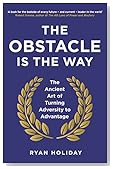
https://images-eu.ssl-images-amazon.com/images/P/B00IX49OS4.01._PC__.jpg The Obstacle is the Way Ryan Holiday Whilst everyone else appears to be obligated to include Ryan's recent Ego is the Enemy in their Best of 2016 lists I was actually taken by his earlier "introduction by stealth" to stoic philosophy. Certainly not your typical self-help book, this is "a manual to turn to in troubling times". Returning to this work at least three times over the year even splashing out on the audiobook at some point I feel like I learned a great deal, although it is now difficult to pinpoint exactly what. Perhaps another read in 2017 is thus in order
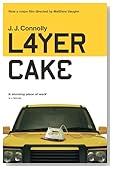
https://images-eu.ssl-images-amazon.com/images/P/071563335X.01._PC__.jpg Layer Cake J.J. Connolly To judge a book in comparison to the film is to do both a disservice, but reading the book of Layer Cake really underscored just how well the film played to the strengths of that medium. All of the aspects that would not have worked had been carefully excised from the screenplay, ironically leaving more rewarding "layers" for readers attempting the book. A parallel adaption here might be No Country for Old Men - I would love to read (or write) a comparative essay between these two adaptions although McCarthy's novel is certainly the superior source material.
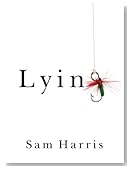
https://images-eu.ssl-images-amazon.com/images/P/B00G1SRB6Q.01._PC__.jpg Lying Sam Harris I've absorbed a lot of Sam Harris's uvre this year in the form of his books but moreover via his compelling podcast. I'm especially fond of Waking Up on spirituality without religion and would rank that as my favourite work of his. Lying is a comparatively short read, more of a long essay in fact, where he argues that we can radically simplify our lives by merely telling the truth in situations where others invariably lie. Whilst it would take a brave soul to adopt his approach his case is superlatively well-argued and a delight to read.
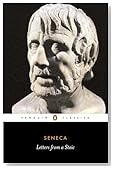
https://images-eu.ssl-images-amazon.com/images/P/0140442103.01._PC__.jpg Letters from a Stoic Seneca

Great pleasure is to be found not only in keeping up an old and established friendship but also in beginning and building up a new one. Reading this in a beautifully svelte hardback, I tackled a randomly-chosen letter per day rather than attempting to read it cover-to-cover. Breaking with a life-long tradition, I even decided to highlight sections in pen so I could return to them at ease. I hope it's not too hackneyed to claim I gained a lot from "building up" a relationship with this book. Alas, it is one of those books that is too easy to recommend given that it might make one appear wise and learned, but if you find yourself in a slump, either in life or in your reading habits, it certainly has my approval.


https://images-eu.ssl-images-amazon.com/images/P/B00BHD3TIE.01._PC__.jpg Solo: A James Bond Novel William Boyd I must have read all of the canonical Fleming novels as a teenager and Solo really rewards anyone who has done so. It would certainly punish anyone expecting a Goldeneye or at least be a little too foreign to be enjoyed. Indeed, its really a pastiche of these originals, both in terms of the time period, general tone (Bond is more somber; more vulnerable) and in various obsessions of Fleming's writing, such as the overly-detailed description of the gambling and dining tables. In this universe, 007's restaurant expenses probably contributed signifcantly to the downfall of the British Empire, let alone his waistline. Bond flicking through a ornithological book at one point was a cute touch
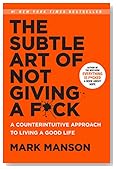
https://images-eu.ssl-images-amazon.com/images/P/B019MMUA8S.01._PC__.jpg The Subtle Art of Not Giving A F*ck Mark Manson Certainly a wildcard to include here and not without its problems, The Subtle Art is a curious manifesto on how to approach life. Whilst Manson expouses an age-old philosophy of grounding yourself and ignoring the accumulation of flatscreen TVs, etc. he manages to do so in a fresh and provocative "21st-centry gonzo" style. Highly entertaining, at one point the author posits an alternative superhero ("Disappointment Panda") that dishes out unsolicited and uncomfortable truths to strangers before simply walking away: "You know, if you make more money, that s not going to make your kids love you," or: "What you consider friendship is really just your constant attempts to impress people." Ouch.
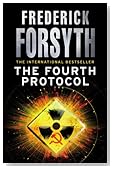
https://images-eu.ssl-images-amazon.com/images/P/B004ZLS5RK.01._PC__.jpg The Fourth Protocol Frederick Forsyth I have a crystal-clear memory from my childhood of watching a single scene from a film in the dead of night: Pierce Brosnan sets a nuclear device to detonate after he can get away but a double-crossing accomplice surreptitiously brings the timetable forward in order that the bomb also disposes of him Anyway, at some point whilst reading The Fourth Protocol it dawned on me that this was that book. I might thus be giving the book more credit due to this highly satisfying connection but I think it stands alone as a superlative political page-turner and is still approachable outside the machinations of the Cold War.
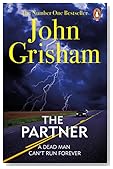
https://images-eu.ssl-images-amazon.com/images/P/B003IDMUSG.01._PC__.jpg The Partner John Grisham After indulging in a bit too much non-fiction and an aborted attempt at The Ministry of Fear, I turned to a few so-called lower-brow writers such as Jeffrey Archer, etc. However, it was The Partner that turned out to be a real page-turner for somewhat undefinable reasons. Alas, it appears the rest of the author's output is unfortunately in the same vein (laywers, etc.) so I am hesitant to immediately begin others but judging from various lists online I am glad I approached this one first.
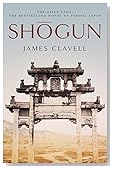
https://images-eu.ssl-images-amazon.com/images/P/B00D3J2QKC.01._PC__.jpg Shogun: The First Novel of the Asian saga James Clavell Despite its length, I simply couldn't resist returning to Shogun this year although it did fatigue me to the point that I have still yet to commence on its sequel, Tai-Pan. Like any good musical composition, one is always rewarded by returning to a book and I took great delight in uncovering more symbolism throughout (such as noticing that one of the first words Blackthorne learns in Japanese is "truth") but also really savouring the tragic arcs that run throughout the novel, some beautiful phrases ("The day seemed to lose its warmth ") and its wistful themes of inevitability and karma.

Andreas Metzler: I am wondering

I am wondering how many years it is going to take me to stop expecting snow below 2000m in December. This has now been the third year in a row with basically zero snow until christmas up to the top of the mountains around here. (And this year it is not going to change anymore, there might be a tiny bit of snow on January 3, but not enough to ride a board on.) I should have grown accustomed to it, but I have not managed yet, it still feels like a let-down. some illustrations.

Next.

Previous.

