Search Results: "ron"

24 March 2010

John Goerzen: Trip part 1: Kansas to Indiana

Note: This post was written March 12, and posting was delayed until our return home. This is the first part of our trip: driving from Kansas to Indiana with Jacob and Oliver. From Indiana, we ll be flying to Germany while the boys stay with their grandparents. We normally don t like long road trips. Our preferred way to travel is by train. By air is second, and car is last. But this time, driving was all that made sense. We planned to make the 11-hour drive in two days to give the boys more of a chance to get out of the car and run around. It s always a bit demoralizing heading east from our place. You drive at highway speeds for an hour and are barely one county over. We left at about noon and made it as far as Kansas City before our first stop much to our surprise. We ate at a Cracker Barrel there. Afterwords, Jacob loved running in front of the restaurant. IMG_2507 Meanwhile, Oliver chilled on a wooden bench. IMG_2494 Jacob was excited to find this chair. He said Here is a chair just the size of me! IMG_2489 We spent the night in a hotel on the eastern edge of the metro area. Then Thursday hit the road again. We stopped for a mid-morning snack, then ate lunch at Pizza Hut. Jacob ran around in the grass outside again. Jacob invented a new game with me. He d ask, How will we get there? I was supposed to guess. With a pickup? No With a boat? No Eventually he d come up with a silly answer: We ll ride a pile of bricks there! or We ll ride on top of a stop sign! Then he d sit there laughing for a little bit. Pretty soon: Hey dad. How will we get there? We had a few toy-throwing episodes, but overall Jacob did very well. Oliver did even better. He slept a good part of the way, and happily watched Jacob for most of the rest. The car trip went well. This morning, it s time to get ready to head to the airport, and to break the news to Jacob that we ll be gone for a few days. We ve learned that he worries a lot about change if he knows about it too much in advance, finding it hard to process and understand, so we ll tell him after he wakes up this morning. Then off to the airport for our flight to Newark. Then we get to sit around in New Jersey for a few hours before our 7.5-hour flight to Hamburg.



23 March 2010

Joerg Jaspert: GSoC

Googles Summer of Code has Debian participating again. And this year I wrote a proposal on my own, to try and see if there is a student out there interested in taking it on. It is easy described, writing a SmartUploadServer and should also fit into the timeline of a GSoC project, at least the server itself. Adapting the upload tools in Debian should also be easy, depending on various decisions taken for the SUS (oh hey, who thought of Windows now?). Especially if one manages to have existing protocols for the transfer and not invent an own one. There are more things available to code all around the archive. Most of them are hard to put into a GSoC project, for example a dak code cleanup doesn t sound all that good. And actually requires more insight, the above Upload Server is a nice self-contained project. It should and has to use parts of dak code and be integrated, but all in all you do not need much prior knowledge there. One other GSoC proposal I like and would want to participate (in the mentors view) is the one from Marc about DeveloperPackageRepositories. His current proposal is limited on the buildd site, I am interested in the archive side of it. Much of what is required for this is actually already there in the code, at least functionality to support it, it just requires glue around it to make it work. And I think such kinds of repositories would be a nice thing to have. This whole thing, as nice as it sounds, has one drawback: I had to create a google account. Evil thing, evil bad data miners over there. I m pretty unhappy with that fact, as I have survived without one for a nice long time. But given my position in this part of Debian (there are only 2 people who currently can change the code that actually runs the archive, for example) I think letting this opportunity pass by would have been the wrong decision. Now it only needs a student to take it! :)

Daniel Kahn Gillmor: Avoiding erroneous OpenPGP certifications

i'm aware that people don't always take proper measures during mass OpenPGP keysignings. Apparently, some keys even get signed with no one at the keysigning present speaking for that key (for example, if the key was submitted to the keysigning via online mechanisms beforehand, but the keyholder failed to show up). Unverified certifications are potentially erroneous, and erroneous certifications are bad for the OpenPGP web of trust. Debian and other projects rely on the OpenPGP web of trust being reasonable and healthy. People should make a habit of doing proper verifications at keysignings. People who make unverified certifications should probably be made aware of better practices. So for future keysignings, i may introduce a key to the set under consideration and see what sort of OpenPGP certifications that key receives. I won't pretend to hold that key in person, won't speak for it, and it won't have my name attached to it. But it may be on the list. Depending on the certifications received on that key (and the feedback i get on this blog post), i'll either publish the list of wayward certifiers, or contact the certifiers privately. Wayward certifiers should review their keysigning practices and revoke any certifications they did not adequately verify. Remember, at a keysigning party, for each key: After the keysigning, when you go to actually make your OpenPGP certifications: Feedback welcome! Tags: keysigning, openpgp, tip

22 March 2010

Russell Coker: Links March 2010

Blaise Aguera y Arcas gave an exciting demonstration of new augmented reality mapping software from Microsoft that combines video (including live video) with static mapping data and pictures [1]. This is a significant advance over current mapping systems such as Google Earth but it s not released yet either. It will be interesting to see whether Google or Microsoft gets this released first. The New York Review of Books has an insightful atricle by Garry Kasparov about human/computer chess [2]. It s surprising the degree to which a combination of human and computer chess playing can give a good result. Amateur human chess players plus regular PCs can beat grandmasters with computers or high-end computers with human help. It s apparently the quality of human-computer interaction that determines the quality of play. But the article contains a lot more, I recommend reading it. Daniel Kahneman gave an interesting TED talk about the difference between experiential and memory happyness [3]. As the concept of the moment is so short (about 3 seconds) apparently most people try to optimise their actions for the best memories of being happy. But to do so requires some different strategies. For example a two week vacation gives a memory that s not much different from a one week vacation. Therefore it seems that you would be better off staying in a five star hotel for a week than a four star hotel for two weeks, and eat dinner at a Michelin Star restaurant at least once per holiday even if it means eating at McDonalds on other occasions due to lack of funds. Temple Grandin gave an interesting TED talk The World Needs all Kinds of Minds [4] which mostly focussed on teaching children who are on the Autism spectrum. She is concerned that autistic children won t end up where they belong in Silicon Valley . Anupam Mishra gave an interesting TED talk about how the people of India s Golden desert built structures to harvest and store water [5]. Some of their ideas should be copied in Australia, due to mismanagement and stupidity Australians are failing to survive in much more hospitable places. Michael Tieman wrote an insightful and well researched article about the OSI s rejection of the IIPA s attacks on Open Source [6]. This is worth reading by anyone who wants to make a business or social case for free software. Mark Shuttleworth wrote an interesting post about the new visual style for Ubuntu and Canonical [7]. Apparently this includes the creation of a new font set which will be available for free use. Divorced Before Puberty an informative New York Times article by Nicholas Kristof about the links between treatment of women and terrorism [8]. The New York Times has an interesting article on Human Flesh Searches on the Internet in China [9]. It s basically crowds targetting people to find private information and harass them (similar to what some griefers are known for doing on the English-language part of the Internet). But they seem more interested in vigilante justice than lulz. The New York Times has an informative article about the Cult of Scientology (Co$) [10]. Among other interesting news it suggests that the number of cult victims in the US has dropped from 55,000 to 25,000 in the 2001-2008 time period. Senator Xenophon has called for an inquiry into the crimes committed by the cult and a review of it s tax-exempt status [11]. As always Xenu.net is the authoritative source for information on the Cult of Scientology AKA the Church of Scientology. The New York Times has an interesting article about formally studying the skills related to school teaching [12]. It largely focuses on Doug Lemov s Taxonomy of Effective Teaching describes 49 techniques that improve school results and some other related research. The article also mentions that increasing teacher salaries is not going to help much due to the large number of teachers, it s only professions that employ small numbers of people that can potentially have their overall skills improved by increasing salaries. Andy Wingo wrote an interesting article about Julius Caesar [13] based on the book The Assassination of Julius Caesar: A People s History of Ancient Rome by Michael Parenti. It seems that Caesar was more of a populist than a despot. Interesting article in The Register about the Large Hadron Collider (LHC) [14]. Apparently one 3.5TeV proton beam has as much energy as a British aircraft carrier running at 8 knots.

Christian Perrier: Amazing week in Khon Kaen for Thailand MiniDebconf

I'm now on my way back from The first miniDebCamp and miniDebconf that happened from March 13th to March 19th in Khon Kaen, Thailand. This even was organized locally by a team of very motivated Thai Debian enthusiasts and contributors, such as Theppitak Karoonboonyanan (*the* Thai DD), Neutron Soutmun, Kitt Tientanopajai, and all those whose name I'm not remembering as of now (I hope they won't mind). The even had kinda the structure of DebConfs, with a few days of "Debcamp" to begin. See the full schedule. We were hosted in Khon Kaen University (KKU), one one the most famous universities in Thailand, a small "town in town" in a city with a few hundred thousand inhabitants (dunno exactly). Lodging was done in a hotel located inside the university. Interestingly, the hotel was also hosting youg students participating to "Summer Camps" (apparently training systems to get good school results) gving to all this a very young atmosphere. The hacking lab and talks location was a 30-seat room in the university library, and meals were brought in there very efficiently, with the very specific way that Thai people have to transport each and every kind of meal (in small plastic bags closed by rubber). I arrived only in the 3rd day because I had commitments at home that made it impossible to me to come for the first day. During these days, people have been very busy hacking and participating to the Bug Squashing Party. During that BSP, about 50 bugs have been touched, without about 15 or so closed. Other non Thai attendees were Andrew Lee from TW, Paul Wise from AU, Daiki Ueno and Yukiharu Yabuki from JP. Organizers were expecting some attendees from neighbouring countries such as Laos, Vietnam or Cambodia. Unfortunately, none of them could come, including Anousak Soupavanh, leader of Lao free software localization efforts, who I was very impatient to meet. Transport difficulties, or visa problems, do not make things easy in that part of the world. On Wednesday we had a "DayTrip" as it is common for such event. We went abotu 50 km away from Khon Kaen, to visit a nice place, close to a dam lake, and climbed a hill surrounded by a big temple and a giant Buddha statue. Then we had a wonderful lunch in a fish restaurant in the very specific Thai way to share stuff: everything is on the table and you pick your food here and there, at you rconvenience. Of course, local advice before trying apparently innocent food is always worth it because the fire might be hidden anywhere (for instance in that soja plate which I tried and that set my mouth as a burning hell for 20 minutes). The journey ended by a visit of a great temple in Khon Kaen and, very noticeably by a dinner in a very popular barbecue restaurant in "all you can eat" style for...100Bath (so, about 2.5 euros). Maybe only vegetarian people had more trouble enjoying the meal as it was mostly made of various meat (and sea food). The talk days were very intense, at least in my opinion. Probably because I ended up giving four talks, some of them completely improvised (about IP-over-DNS, which I was using at the hotel and about which many wanted to learn a little bit more, and GPG keysigning processes). It turned out that the GPG talk was well received and, discussing with Paul later on, we agreed that such a talk, mostly meant to explain the DOs and DON'Ts For good GPG keys signing, could be a good idea even for Debconfs. There were also a few talks about local initiatives and efforts to develop (and not only promote) free software. We have no recordings of these talks as we were infortunately missing some video recording installation (maybe next time, Thep) just like the miniConf that was happening in Panama at about the same time was having. Due to local regulation on the university network, we had some limitations with Internet access (some firewalling that for instance was preventing SIP to work properly, which made a video-conference with a japanese user group fail, unfurtunately). The event ended in a round table discussion about ideas to organize something bigger in the future. The local community in Thailand has apparently the energy, maybe ressources and local support to be able to organize a slightly bigger event as first try (somethign like an Asian DebConf or something similar, targeting mostly Asian contributors and about 50-100 people. Thailand seems to be a good target to host such event, with many things being relatively inexpensive (and not only beer!). And they even think about possibly hosting a Debconf at some time in the future (actually, Martin Krafft should also be credited for bringing this idea). That isn't as crazy as it seems and, provided that potential organizers start involving themselves in the current Debconfs, everything seems to be possible. After all, if we look back to 2005, only one person (hello, Safir) was seriously thinking that Debconf could really happen in Bosnia and Herzegovina, right? After this week (followed by 2.5 days of sightseeing in Bangkok for me, plus a small meeting today with local Thai Linux corporate users and IT company owners), I feel like the mood in Asia about Debian development is high and full of potential. The miniconf last year in Taiwan was already a good success, by establishing a good connection between people.....we need to keep that alive and, hopefully, there will be other miniconfs in this part of the world. And, well, if I can be there, I'll be there.

Wouter Verhelst: N900 back!

So, a short while ago, the battery of my N900 had run flat. As in, completely, utterly flat. In itself, that's no big deal -- you connect it to a power outlet, wait until it's gone past the low-battery charging bits, then boot and use as usual. Except that it wouldn't. I'd recently installed a firmware update from Nokia (which contained some bug fix that I really was waiting for), and now the bloody thing wouldn't boot. Rather than do the low-battery charging dance, it thought the battery had enough power that it could just go ahead and boot. Of course it was wrong, so whenever I powered it on, it would sit there fore 30 seconds, try to boot, fail, power off for about a second, and start over. I left it like that for a night, but it didn't recharge. Needless to say, that was quite annoying. So I sent it in for repair, and today there was a package in the mail, containing my (repaired) N900. They'd reflashed it. A reasonable course of action, I guess, but of course that meant all data was gone. Good thing it has a backup application, and good thing I stored those backups on an external micro-SD card. Restoring those back-ups was a breeze; they'd also stored the contents of sources.list and have done something akin to "dpkg --get-selections", since now the application manager kindly asks me whether I wish to reinstall the applications that I had installed. Cute. At any rate, I'm very happy I finally got rid of this awful Samsung "cellphone". It's a SGH-C140 that I had as a replacement until my N900 got back, but there was something very very wrong with it; I don't know whether it's a design flaw or just a wear-and-tear issue (these replacement phones aren't usually handled in the best possible way), but it managed to lose connection to the network every once in a while. So people who would call me would immediately get my voicemail, and then they'd be angry with me later because I was unavailable. Well, duh. Anyway, that's over now. Whee.

Andrew McMillan: The cost of crap

For several years now we've been buying our groceries online. It's worked well, and for the last couple of christmases I remember Heather adding a six-pack into the pre-christmas order so she could pull it out and hand it off to the delivery guy. Fair enough too, because he was their front-line man. He was the guy who had to actually meet the customer, and even if only for two minutes face time, the impression he gave with his cheery "seeya mate" on the way out, and his always-happy smile, was that getting the groceries delivered was fun. Well that ongoing encouragement has gone now. His surly replacement who moans about having to carry the boxes up a flight of stairs does nothing to promote a repeat experience, and he brings into sharp focus the disadvantages of online grocery ordering: sometimes the wrong thing is substituted, or sent. Or the fruit doesn't travel quite so well as it does with the personal loving kindness we supply in our own padded wagon. Two visits from the new guy, and we're back to driving to the supermarket ourselves, patrolling the aisles once more in a cereal haze of consumer demand. Distress-purchasing done, and back to the car A.S.A.P. Carrying our own boxes up the stairs. I hate it, which is why I promoted the idea that we try this online grocery thing a few years ago, and it's worked just fine until this sullen bastard came along and destroyed the fun. I wonder how the company feels? Do they realise what this person is doing to their customers? Will they notice, and if they do, will they even be able to tell where the source of the problem is? In these days of increasing online experience, customer service is still important, if not more important than ever before.

21 March 2010

C.J. Adams-Collier: IronRuby continuous integration back online

We haven t done much work on keeping the continuous integration (CI) machines online, and there haven t been any new builds since November of 09. I should set Nagios to remind us when things get off track or something. The recent acceptance of the DLR into Debian and our intention to get the next release produced has inspired me (and maybe others) to get things back up. Ivan and I put a couple of Hudson instances up recently that you can reach via hudson-windows.colliertech.org and hudson-linux.colliertech.org. The linux instance is dropping new builds of IronRuby to http://dlrci.colliertech.org/ironruby/. I expect we can tweak the build script a bit and have it also produce IronPython builds. This would hypothetically drop the builds to http://dlrci.colliertech.org/ironpython/. Ivan mentioned that we may get CNAME records which would activate the windows-builds.ironruby.net and linux-builds.ironruby.net hosts as well. Note that these builds are being produced from the linux branch of git://github.com/casualjim/ironruby.git Thanks for your work on this, Ivan!

Robert Collins: LibrePlanet 2010 day 3

Free network services A discussion session led by Bradley Kuhn, Mako & Matt Lee : Libre.fm encouraged last.fm to write an API so they didn t need to screen scrape; outcome of the network services story still unknown netbooks without local productivity apps might now work, most users of network office apps are using them because of collaboration. We have a replacement for twitter status.net, distributed system, but nothing like facebook [yet?]. Bradley says like the original GNU problem, just start writing secure peer to peer network services to offer the things that are currently proprietary. There is perhaps a lack of an architectural vision for replacing these proprietary things: folk are asking how we will replace the cloud aspects of facebook etc tagging photos and other stuff around the web, while not using hosted-by-other-people-services. I stopped at this point to switch sessions the rooms were not in sync session time wise. Mentoring in free software Leslie Hawthorne: Projector not working, so Leslie carried on a discussion carried on from the previous talk about the use of sexual themes in promoting projects/talk content and the like. This is almost certainly best covered by watching the video. A few themes from it though: We then got Leslies actual talk. Sadly I missed the start of it I was outside organising security guards because we had (and boy it was ironic) a very loud, confrontational guy at the front who was replying to every statement and the tone in the room had gotten to the point that a fight was brewing. From where I got back: Chris Ball, Hanna Wallach, Erinn Clark and Denise Paolucci Recruiting/retaining women in free software projects. Not a unique problem to women things that make it better for women can also increase the recruitment and retention of men. Make a lack of diversity a bug; provide onramps small easy bugs in the bug tracker (tagged as such), have a dedicated womens sub project and permit [well behaved :) ] men in there helps build connections into the rest of the project. Make it clear that mistakes are ok. On retention recognise first patches, first commits in newsletters and the like. Call out big things or long wanted features by the person that helped. Regular discussion of patches and fixes rather than just the changelog. CMU did a study on undergrad women participation in CS : Lack of confidence preceeds lack of interest/partipation . Engagement with what they are doing is a key thing too. Women are consistently undervaluing their worth to the free software community . Its the personal touch that seems to make a huge difference . More projects should do a code of conduct kudos to Ubuntu for doing it Chris Ball. I found the mentoring and women-in-free-software talks to have extremely similar themes which is perhaps confirmation or something but it wasn t surprising to me. They were both really good talks though! And thats my coverage of LibrePlanet I m catching a plane after lunch :( . Its a good low-key conference, and well put together.

Gunnar Wolf: Baroque spam, repetition ad nauseam

Sitting at my hotel room in Tijuana, about to hit the bed, quite tired because of a nice, long walk I will write more about tomorrow, I have been listening for at least five minutes to a long, stupid infomerciative spam in the History Channel: A fountain pen, a five-point pen, and three other pen-like implements (plus extra and extra and extra things... They are listing a case with 63 implements now!) Now, what is the hook into getting somebody to call for a classy pen? Elegance, of course! Just for the sake of this exercise, the spam continues to be played. And yes, it's only been two short paragraphs. But believe me, I am very tired, and trying to get some coherent English out of my brain is not as easy as it could. Elegance, I said, right? Good. How do you convey elegance to TV spam/infomercials? Well, what's more classy and refined than a 30 second sample of Haydn? Man, Haydn is *so* classy that the viewer will not even notice the snippets of blabber have incoherent redaction. Anyway... Spam goes on. I cannot stand any more repetitions of this 30 Haydn seconds. They are stronger than me. And that old lady says that anybody is writing in their computer now I will only write with my fountain pen from now on! I will surely follow her wise advise! (STOP IT WITH THE STUPID HORN!)

Russell Coker: Citing Wikipedia

A meme that has been going around is that you can t cite Wikipedia. You can t Cite Wikipedia Academically Now it s well known and generally agreed that you can t cite Wikipedia for a scientific paper or other serious academic work. This makes sense firstly because Wikipedia changes, both in the short term (including vandalism) and in the long term (due to changes in technology, new archaeological discoveries, current events, etc). But you can link to a particular version of a Wikipedia page, you can just click on the history tab at the top of the screen and then click on the date of the version for which you want a direct permanent link. The real reason for not linking to Wikipedia articles in academic publications is that you want to reference the original research not a report on it, which really makes sense. Of course the down-side is that you might reference some data that is in the middle of a 100 page report, in which case you might have to mention the page number as well. Also often the summary of the data you desire simply isn t available anywhere else, someone might for example take some facts from 10 different pages of a government document and summarise them neatly in a single paragraph on Wikipedia. This isn t a huge obstacle but just takes more time to create your own summary with references. When Wikipedia is Suitable The real issue however is how serious the document you are writing is and how much time you are prepared to spend on it. If I m writing a message to a mailing list or a comment on a blog post then I probably won t bother reading all the primary sources of Wikipedia pages, it would just waste too much of my time. Wikipedia is adequate for the vast majority of mailing list discussions. If I m discussing several choices for software with some colleagues we will probably start by reading the Wikipedia pages, if one option doesn t appear to have the necessary features (according to Wikipedia) then we may ask the vendor if those features are really missing and if so whether they will be added in the next version but we may decide that we don t really need the features in question and modify our deployment plans. Many business decisions are made with incomplete data, time is money and there often isn t time to do everything you want to do. Using Wikipedia as a primary source for business decisions is a way of trading off a little accuracy for a huge time saving. This is significantly better than the old fashioned approach of comparing products by reading their brochures companies LIE in their advertising! When writing blog posts the choice of whether to use Wikipedia as a reference depends on the point that you are trying to make and how serious the post is. If the post isn t really serious or contentious or if the Wikipedia reference is for some facts that are not likely to be disputed then Wikipedia will probably do. For some posts a reference to a primary source will be better. A blog post that references data that is behind a pay-wall (such as a significant portion of academic papers and news articles) is practically of less use than a post that cites Wikipedia. In most cases Wikipedia references free primary sources on the Internet (although it does sometimes refer to dead tree products and data that is behind a pay-wall). In the minority of cases where the primary references for a Wikipedia page are not available for free on the Internet there will be people searching for freely available references to replace the non-free ones. So if you refer to a Wikipedia page with non-free references a future reader might find that someone has added free references to it. The Annoying People One thing that often happens is that an Internet discussion contains no references for anything it s all just unsupported assertions. Then if anyone cites Wikipedia someone jumps in with you can t cite Wikipedia . If you want to criticise Wikipedia references then please first start by criticising people who state opinions as fact and people who provide numbers without telling anyone where they came from! The Guinness Book of Records (now known as Guinness World Records ) was devised as a reference to cite in debates in pubs [1]. It seems that most of the people who dismiss references to Wikipedia on the net would prefer that Internet debates have lower requirements for references than a pub debate. When Wikipedia is cited in an online discussion it is usually a matter of one mouse click to check the references for the data in question. If Wikipedia happens to be wrong then anyone who cares can correct it. Saying the Wikipedia page you cited had some transcription errors in copying data from primary sources and some of the other data was not attributed, I ve corrected the numbers and noted that it contains original research would be a very effective rebuttal to an argument that relies on data in Wikipedia. Saying you can t cite Wikipedia means little, particularly if you happen to be strongly advocating an opposing position while not providing any references. If one person cites an academic paper and someone else cites Wikipedia then it seems reasonable to assume that the academic paper is the better reference. But when it s a choice between Wikipedia and no reference then surely Wikipedia should win! Also references to non-free data are not much good for supporting an argument, that s really just unverified claims as far as most people can determine therefore the issue becomes how much the person citing the non-free reference can be trusted to correctly understand and summarise the non-free data. Also it has to be considered that not all primary sources are equal. Opinion pieces should be considered to have a fairly low value and while they are authoritative for representing the opinion of the person who wrote them they often prove little else unless they happen to cite good references which brings them to the same level as Wikipedia. The main benefit for linking to opinion pieces is that it saves time typing and gives a better product for the readers it s sometimes easier to find someone else expressing an opinion well than to express it yourself. So please, don t criticise me for citing Wikipedia unless others in the discussion are citing better references. If most people are not citing any references or only citing opinion pieces then a Wikipedia page may be the best reference that is being provided!

C.J. Adams-Collier: More DLR work

Ivan put up a hudson server on our winders box. Ankit helped me figure out the IronRuby xbuild build problems. I should probably try it on IronPython, too. I sent the ironruby-core list a patch to fix some case sensitivity issues. Some time in the near future, I m going to get together a bug report for the compiler and send it off to Marek. But I m tired and Scarlet s got a friend doing the sleep-over thing tonight. So. Later ;) P.S., can you believe that nobody registered a11y.com before now? Crazy talk. P.P.S., does anyone out there in gnome land have a ruby app they want to test for compatibility with IronRuby?

20 March 2010

Robert Collins: LibrePlanet 2010 Day 2

John Gilmore keynote What do we do next, having produced a free software system for our computers? Perhaps we should aim at Windows? Wine + an extended ndiswrapper to run other hardware drivers + a better system administration interface/resources/manuals. However that means knowing a lot about windows internals something that open source developers don t seem to want to do. We shouldn t just carry on tweaking its not inspiring; whats our stretch goal? Discussion followed reactos, continue integrating software and people with a goal of achieving really close integration: software as human rights issue! Desktop paradigm needs to be replaced : need to move away from a document based desktop to a device based desktop. Concern about the goal of running binary drivers for hardware: encourages manufacturers to sell hardware w/out specs; we shouldn t encourage the idea that that is ok. Lots of concern about cloning, lots of concern about what will bring more freedom to users, and what it will take to have a compelling vision to inspire 50000 free software hackers. Free software in cars lots of safety issues in .e.g brake controllers, accelerators. Eben Moglen We re at the inflection point of free software because any large scale global projects these days are not feasible without free software. Claims that doing something that scales from tiny to huge environment requires us A claim I would (sadly) dispute. Lots of incoming and remaining challenges. Entirely clear that the patent systems relationship to technology is pathological and dangerous that I agree with! Patent muggings are a problem patent holders are unhappy with patents granted to other people :) . Patent pools are helping slowly as they grow. Companies which don t care about the freedom aspect of GPLv3 are adopting it because of the patent protection aspects. Patent system is at the head of the list of causes-of-bad-things affecting free software. SFLC is building coalitions outside the core community to protect the interests of the free software community. We are starting to be taken for granted at the high end of mgmt in companies that build on free software. We face a problem in the erosion of privacy. We need to build a stack, running on commodity hardware that runs federated services rather than folk needing centralised services. Marina Zhurakhinskaya on GNOME Shell: Integrates old and new ideas in an overall comprehensive design. Marina ran through the various goals of the shell growing with users, being delightful, starting simply so new users are not overwhelmed. The activities screen looks pretty nice ;) The workspace rearrangement UI is really good. The notifications thing is interesting; you can respond to a chat message in-line in the notification. Richard Stallman on Software as a Service he presented verbally the case made in the paper. Some key quotes All your data on a server is equivalent to total spyware I think this is a worst-case analogy; it suggests that you can never trust another party: kindof a sad state of paranoia to assume that all network servers are always out to get you all the time. And I have to ask should we get rid of Savannah then (because all the data is stored there) the argument for why Savannah is not SaaS is not convincing: its just file storage, so what makes it different to e.g. Ubuntu One? If there is a server and only a little bit of it is SaaS, perhaps just say don t worry about it because that little bit is often the hardest bit to replace. Lets write systems for collaborative word process that don t involve a central server abiword w/the sharing plugin ? :) RMS seems to be claiming that someone else sysadmining a server for you is better than someone else sysadmining a time-shared server for you: I don t actually see the difference, unless you re also asserting that you ll always have root over your own machine . The argument seems very fuzzy and unclear to me as to why there is really a greater risk in particular when there is a commercial relationship with the operator (as opposed to, say, an advertising supported relationship).

Alejandro Rios P.: MiniDebconf at Panama (day Two)

Yesterday began the central america and caribbean MiniDebconf at Panama. Over 50 people from Mexico, Belice, Nicaragua, Guatemala, Costa Rica, Salvador, Colombia and Venezuela, among others, are here to share experiences around Free Software and Debian contributions. All this is possible to several sponsors from Panama and SPI, and the hard work from many people, specially Anto Recio, Mauro Rosero, Carolina Flores, Gunnar Wolf and the local team.

More info(in spanish), including live streaming url can be found on: http://softwarelibre.ca/wiki/MiniDebconf2010

update: Also, on a personal note, I'll take the chance of this event to start my transition to a stronger gpg key, so If you have signed my old one, please take a look at: http://people.debian.org/~alerios/key-transition-2010-03-20.txt

19 March 2010

Robert Collins: LibrePlanet GNU Hackers Meetup

GNU Hackers meetups are a face to face meeting to balance the online collaboration that GNU maintainers and contributors do all the time. These are a recent (since 2007) thing, and are having a positive effect within GNU and the FSF. The LibrePlanet 2010 GNU Hackers meetup runs concurrent with the first day of LibrePlanet. We started with some project updates: Felipe Sanches presented his list of things that should be on the high priority project list: lunch John Eaton on Octave. John compared the octave contributors 30 or so over the years, and never more than 2 at a time. The Proprietary product Matlab that Octave is very similar to has 2000 staff working at the company producing it. Users seem to expect the two products to be equivalent, and are disappointed that Octave is less capable, and that the community is not as able to do the sort of support that a commercial organisation might have done. Octave would like to gain some more developers and be able to educe users more effectively convert more to become developers. Rob Myers, the chief GNU webmaster gave a description of his role: The webmasters deal with adding new content, dealing with mail to webmaster@, which can be queries for the GNU project, random questions about CDs, and an endless flood of spam. The webmasters project is run as a free software project the site is in CVS (yes CVS), visible on Savannah. Templates could be made nicer and perhaps move to a CMS. Aubrey Jaffer on cross platform. There is a thing called Water which is meant to replace all the different languages used in web apps generates html, css, alters the DOM, does what you d do with javascript. So there is a Water -> backend translator that outputs Java for servers, C# for windows, and so on. (I think, this wasn t entirely clear). He went on to talk about many of the internals of a thing called Schlep which is used as a compiler to get scheme code running in C/C#/Java so as to make it available to Water backends in different environments. Matt Lee spoke about GNU FM GNU FM is a free last.fm site. The site is running at http://libre.fm/. 24ish devs, but stalle after 6 months whats next? Matt has started GNU Social to build a communication framework for GNU projects to talk to each other e.g. for each GNU FM site to communicate on the back end, with a particular focus on doing social functionality groups, friendships, personal info. The wiki page needs ideas! GNU advisory board discussion too much to capture, but focused GNU wide issues things like how projects get contributors, contributions, coordination. Teams were a big discussion point, bug trackers how to coordinate teams followed up of that, and there is s GNU Source Release Collection project to do coordinated releases of GNU software that are all known to work together.

Aigars Mahinovs: Latvijas pavasara Ubuntu Bug Jam un Installest 27.03.2010

The following is an invitation to the Latvian Ubuntu Bug Jam (in Latvian) sent for a bit of a wider circulation to catch people that monitor Planet Debian, but not Planet Ubuntu.lv. 27. mart LU Linux centr notiks divi pas kumi vien Ubuntu Global Bug Jam Latvijas da a un installfests. Global Bug Jam ir pas kums, kur piedal ties ir aicin ti interesenti, speci listi, studenti, lai mekl tu k das Ubuntu Lucid Lynx test anas versij . Cilv ki, kas grib uzzin t par Ubuntu Linux, vai kuri grib atrisin t k du konkr tu probl mu ar Ubuntu Linux tiek aicin ti n kt uz pas kuma otro da u no pulksten 14:00 l dz 16:00. Pas kuma b s kafija un bulci as ar Accenture atbalstu. Ubuntu Global Bug Jam ir glob ls pas kums, kura m r is ir iepaz stin t programm t jus un tulkot jus ar r kiem, kas tiek lietoti, lai labotu probl mas Ubuntu oper t jsist m un ar izlabot p c iesp jas liel ku skaitu probl mu s laik . Izstr d t ji, kas grib labot Ubuntu probl mas vai iem c ties k labot Ubuntu probl mas, tiek aicin ti ierasties 12:00 un palikt l dz 16:00. Installfest pas kuma sada tiek aicin ti visi eso ie Ubuntu lietotaji, kuriem ir k das konkr tas probl mas un ar cilv ki, kas tikai v l interes jas par Ubuntu Linux. Ja jums ir konkr ta probl ma ar Ubuntu Linux ir ieteicams atnest uz pas kumu savu datoru, kur o probl mu var atk rtot, lai pas kum eso ie programm t ji var tu noteikt s probl mas iemeslu un pal dz tu no nov rst. Installfests s ksies 14:00 un turpin sies l dz 16:00. Ubuntu ir bezmaksas, uz Linux balst ta pilna apjoma oper t jsist ma jebkuram person lajam datoram, serverim un portat vajai iek rtai. T s standarta komplekt iek autas visas nepiecie am s programmas, lai str d tu ar tekstiem, att liem, elektronisko pastu un Internetu, k ar j s varat instal t papildus programmat ru da diem nol kiem. Pasaul to obr d jau lieto vair k k 8 miljoni cilv ku, un to leg li bez maksas var lietot gan m j s, gan komerci l s un nekomerci l s organiz cij s. LU Linux Centrs ir izveidots Latvijas Universit tes Datorikas fakult t . Linux Centra darb bas m r i ir: populariz t atv rt pirmkoda (Open Source) programmat ras, tai skait , Linux oper t jsist mas un citu atv rto tehnolo iju iesp jas un priek roc bas; piedal ties LU studiju proces un stenot lieti o IKT p t jumu projektus, tajos izmantojot un att stot atv rt s tehnolo ijas; sekm t APP pieejam bu Latvij un pasaul .

MJ Ray: Co-ops at the North Somerset Initiative

On Wednesday, I went to a meeting of the Business Initiative for North Somerset for Cooperatives-SW (our regional cooperative cooperative). It was the first time anyone from the cooperative and mutual sector was present.
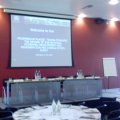
platform
Conference Bank of England The first speaker was Geoff Harding from the Bank of England, who talked through topics in their agents summary and related news. One interesting graph showed a steep rise in the percentage of household income being saved. Answers to questions suggested that more of that goes to mutuals and building societies, but they find it difficult to be competitive while the banks are keen to increase their balances. There was mention of employment hoarding businesses short-time working, redeploying or shutting down temporarily to keep trained workers under contract, rather than make them redundant and rehire later. People from both the Federation of Small Businesses and the Hoteliers Association made strong comments about the banks claiming to government that they are willing to lend, but still offering deeply unattractive depth-of-recession rates and terms. If the regional agents get details of such cases, they pass them to the central bank. South West Regional Development Agency The second main speaker was Ann O Driscoll, who covers business development for the West of England (what many people call CUBA Councils that Used to Be Avon). She introduced their four strategic priorities:-

  1. Low Carbon Economy apparenly our region has good wind, wave and solar experience. However, Vestas were mentioned and I know that when Vestas closed the UK s only wind turbine blade factories in August 2009, the RDAs were criticised for not acting against the subsidy-chasing, socially irresponsible conduct of Vestas and related companies continue to worry workers. If Vestas is one of the praised companies, I wonder whether we re attracting sustainable work to the region. On a related note, North Somerset Council and NS Enterprise Agency are organising a Climate Change forum on 1st April, but it s at Cadbury House Hotel, which is awkward to get to except by car: no footpath to the door, a mile-and-a-half walk along a busy road from a train station, bad roads for biking, wheelbending speedhumps on the drive, I can t remember if there is bicycle parking and its website doesn t say
  2. Successful Businesses SWRDA funds our rather poor Business Link service. Does someone in the South West have some good news about Business Link? If so, please leave a comment on this article.
  3. Prosperous Places intervention in areas like south Bristol or central Weston.
  4. United Approach co-ordinating with other regional groups.
The main activities introduced were: The questions were fascinating, except for mine. The best one was probably about the forthcoming election and the Conservatives pledge to shut down the RDAs and Business Links. The answer was that much of the work will still need to be done somehow, so it s more a question of who will do it, rather than what the name on the door says. So I don t think axing RDAs is going to achieve more than shuffling people between organisations. When allowed to ask a question, I got too excited and ranted a bit about how the Co-operative Group s co-operative enterprise hub is doing work that Business Link should have been funding, but the RDA doesn t understand social enterprise and treats it as a ghetto service. I ll try to take that up in a more coherent form later. Overview I think Cooperatives-SW were invited to the North Somerset Initiative largely because of pressure from software.coop for co-ops to be represented better in the Local Strategic Partnership, which has treated us badly. NSI holds one of the three business places on the partnership board, with the other two being held by NSEA and Bristol International Airport. I think it s a bit off that a private company and an enterprise agency are both represented by other groups and also have their own board seats while co-ops don t even have a collective seat, so that pressure for a representative organisation for co-operatives and mutuals to have a board place (in line with national government guidance) should continue, useful though the NSI meetings seem to be. The other thing which would really help is some funding for co-operative business development specialists to work in North Somerset at strategic tasks like this, instead of it being left to ordinary workers from other sectors. I don t know where that funding will come from and until then, I ll continue to try my best. We need to make sure that local strategy at least does no harm to the sector.

René Mayorga: MiniDebConf Panam 2010

Finally, after almost 6 months of planing, this event is coming and will be start tomorrow, this is really great, There was a first attempt, and an idea to do a local(central-america based) Debian gathering on 2007 IIRC, now it will happen :) (almost 3 years later and at the same country). There was a lot of things that actually change since the fitst attempt, now Central-america has a more strong FLOSS Community, and now this event is possible, and it will happen this weekend yay! I really need to say thanks to Anto, Mauro Rosero, David, Caro and Gunnar, but I realize that doing all the orga stuffs was hard, I was quite involved since January, and I really say that you need a lot of work and energy to make a small event like this happen, but right now while I still sitting at home trying to finish to prepare my talks I realize that there was a lot of hard work put on this from everyone, and I m really happy to attend this gathering, also I hope that this event do something good on the local FLOSS people, since we have quite nice people here, but they are afraid to contribute, this is the chance to work together and push a bit to get more contributors from central-america.

18 March 2010

C.J. Adams-Collier: IronRuby on OS X

We had a visitor on #ironruby today asking for help getting IR running on his mac. I gave him the following directions, and they seemed to work aside from one glitch. I tested them on my wife s mac, and it worked for me, too. Install Mono You can grab the Mono .dmg from go-mono.com. This will install the framework and put the required programs (mono, xbuild) in your PATH. Fetch the IronRuby source Since Jim Deville likes macs, I m sure more recent versions will work, but this is the one we ve recently packaged up for Debian and tested on Ubuntu. If you want to be certain that the IronRuby code you write on Debian works on OS X, then you should probably build from the same version of the source. You should probably also install version 2.4.3 of Mono, but that may be more effort than it s worth ;) http://github.com/mletterle/ironruby/tarball/20090805+git.e6b28d27 Unpack the tarball Open up a terminal and unpack the thing you just downloaded:

$ mkdir ~/src/
$ cd ~/src/
$ tar xfz ~/Desktop/mletterle-ironruby-e6b28d2.tar.gz
$ cd mletterle-ironruby-e6b28d2/
Build IronRuby At this point, you should be able to build the IronRuby assemblies using xbuild. I don t recommend using rake, as it has some dependencies, and I m not a fan of dependencies.

$ xbuild /p:TreatWarningsAsErrors=false Merlin/Main/Languages/Ruby/Ruby.sln
<snip/>
Build succeeded.
	 2817 Warning(s)
	 0 Error(s)
Time Elapsed 00:00:28.8378230
Run the IronRuby interactive interpreter Our guest mentioned that he was using a terminal with a white background. Do note that the font color of the interactive interpreter (aka Read-Eval-Print Loop or REPL) is white, so if you re using a white background, you might want to change it. IIRC, there is a way to change the font color using a configuration setting. Figuring it out is left as an exercise for the reader.

$ mono Merlin/Main/Bin/Debug/ir.exe
IronRuby 0.9.0.0 on 2.6.3 (tarball Wed Mar 10 18:18:12 MST 2010)
Copyright (c) Microsoft Corporation. All rights reserved.
>>> 1+2
=> 3
>>> exit()
Extra credit: IronPython The tarball you downloaded also included the source to IronPython. The procedure to build/run IronPython is pretty similar to IronRuby. Build IronPython Unlike IronRuby s .sln, this version of IronPython s .sln does not have a default configuration parameter, so we need to specify it with the /p:Configuration=Debug argument.

$ xbuild /p:TreatWarningsAsErrors=false /p:Configuration=Debug Merlin/Main/Languages/IronPython/IronPython.sln
<snip/>
	 69 Warning(s)
	 0 Error(s)
Time Elapsed 00:00:38.8057450
Run the IronPython interactive interpreter IronPython has a REPL interface like IronRuby s. Or is it the other way around? Anyway, here s an example.

$ mono .//Merlin/Main/Bin/Debug/ipy.exe
IronPython 2.6 Beta 2 DEBUG (2.6.0.20) on .NET 2.0.50727.1433
Type "help", "copyright", "credits" or "license" for more information.
>>> 1+2
3
>>> ^D

17 March 2010

Gustavo Noronha Silva: WebKitGTK+ 1.1.90 is out!

We re coming close to GNOME 2.30 release date, and we are getting ready to branch a stable release off of WebKit s svn trunk in preparation for that. The idea of the stable branch is to try to maintain, and improve stability, with no additional features going in. Speaking of features, though, if you ve been paying attention you will have noticed WebKitGTK+ has come a long way, now. We came from not having basic features such as download support or openning links in new tabs, a more-or-less working HTML5 media implementation, and very few or missing in action developers to a thriving project, that gets more, and more attention, and contributors every day, with advanced features available, and rocking HTML5 media support that leaves little to be desired. It s been just over one year since we started rolling mostly bi-weekly releases, each adding more awesome features. There are still many issues, and we are not always equipped as a team to handle all the specifics of the engine ourselves, but I am really happy with the progress we ve made, and really thankful for the support my employer Collabora has given all the way for this to happen, including the early work on plugins, and many other things before my time as a contributor. When I switched to using Epiphany with the WebKit backend as my default browser back in January 2009, that meant having to deal with a whole lot of misbehaviour, and work-around a lot of painful brokeness. These days I enjoy a snappy, functional browser that makes me happy. If you haven t done so yet, go download, and test the newest Epiphany, with the latest WebKitGTK+, and help us make the GNOME 2.30 s web browser rock even more!

Next.

Previous.