Search Results: "mak"

23 September 2012

Gregor Herrmann: RC bugs 2012/38

during the last week, I've worked on the following RC bugs:

22 September 2012

Vasudev Kamath: Weekly Log - 22092012

After thinking a while I thought I should record my weekly FLOSS work and I'm starting by this week. This week I'm on vacation and in home town so I could give bit more time for my FLOSS activity. So here it goes this weeks work Bug Squashing
Both these packages are uploaded to unstable first RC bug was related to Debian Installer hence was unblocked before we could file unblock-request. Kartik filed an unblock-request and adsb unblocked it happily and both the packages landed in unstable. New Packages
Both these packages will be backported once Wheezy freezes. One pending wnpp is left on Debian-IN which I've left for Kartik to finish ;-). Font Package Helper I bumped version on dh-make-font[1] to 0.3 now it accepts upstream URL with -u, --upstream switch this will be placed in Homepage: field of control file and in Source: field of copyright file. Probably I need to think of introducing xz compression to original source tarball where upstream is not giving any tarball and probably rewrite it using Perl so it can get included dh-make package. Already a bug filed to get it included in dh-make package 658154. [1] http://anonscm.debian.org/gitweb/?p=debian-in/dh-make-font.git;a=summary Misc and Learnings
Well that is it for this week. Hopefully I will have new stuffs to put up here for the next week, till then Cya.

Russell Coker: Changing Phone Prices in Australia

18 months ago when I signed up with Virgin Mobile [1] the data transfer quotas were 200MB on the $29 per month plan and 1.5G on the $39 per month plan. About 4 months ago when I checked the prices the amounts of data had gone up on the same plans (2.25G for $39 per month from memory). Now $39 per month gets only 500MB! It seems that recently Virgin has significantly reduced their value for money. Virgin does have an option to pay an exgtra $10 per month for 2GB of data which gets you 2GB per month if you sign up for 24 months. That is reasonably good value, when I first signed up with Virgin I paid $39 per month to get extra data transfer, now I could use the $29 plan for phone access and spend $10 per month on data with a Wifi gateway device. On top of this the phone plans aren t nearly as good value as they used to be. When I signed up with Virgin the Sony Ericsson Xperia X10 was free on a $29 plan, at the time that was a hell of a phone. I believe that the Samsung Galaxy S3 currently occupies a similar market position to the one that the Xperia X10 did 18 months ago so it shouldn t be much more expensive. But Virgin are offering the Galaxy S3 for $21 extra per month over 24 months on the $29 plan a total cost of ($29+$21)*24==$1200 while offering the same amount of calls and data transfer for $19 per month ($19*24==$456) when you don t get a phone this makes the price of a Galaxy S3 $1200-$456==$744 while Kogan [2] sells the same phone for $519 + postage! The cheapest phone that Virgin is offering is a Galaxy S2 for $5 per month on a $29 plan which when compared to $19 per month for the same plan without a phone makes the phone cost ($5+$10)*24==$360. Kogan sells the Galaxy S2 for $399 so there s a possibility of a Virgin plan saving some money over buying a phone from Kogan. But given the choice of $360 for a Galaxy S2 from Virgin and the Kogan prices of $839 for a Galaxy Note 2, $349 for a Galaxy Nexus, $469 for a Galaxy Note, $529 for a Galaxy S3, and $219 for a HTC One V I find it difficult to imagine that anyone would think that the $360 Galaxy S2 is the best option. I ve previously investigated dual-sim phones for cheap calls and data [3] but they didn t seem like good value at the time because the free phones offered by the telcos used to be a good deal. Now it seems that none of the telcos are offering good deals on phones so with my needs the way to go would be to buy a Samsung Galaxy S3 or Samsung Galaxy Note 2 from Kogan, and get the $19 plan from Virgin probably with a $10 per month extra fee to get an extra 2GB of data. For my wife the best option would be to keep using the Xperia X10 on a $19 per month plan as she doesn t seem to have any problem with the Xperia X10 that justifies spending hundreds of dollars. I idly considered getting a portable Wifi-3G device to use a cheap pre-paid 3G data option ($10 per month) and a cheap phone plan without data (maybe $10 per month), but decided that it s not worth the effort. The Virgin $19 plan gives me free calls to my wife and lots of calls to other numbers (more than I can use) and an extra $10 gives me all the data transfer I need. To use a Wifi-3G device would involve buying such a device and the hassle of carrying it and using it, that wouldn t save money for at least a year and would be annoying. The sudden decrease in data quotas is a real concern though. It s an indication that the telco cartel in Australia is pushing prices up, that s not a good sign. LTE is nice, but 3G with better quotas would be more generally useful to me. Related posts:
  1. Dual SIM Phones vs Amaysim vs Contract for Mobile Phones Currently Dick Smith is offering two dual-SIM mobile phones for...
  2. Virgin Refunds Me $200 Virgin Mobile Excessive Billing In my previous post about the...
  3. A Mobile Phone for Sysadmin Use My telco Three have just offered me a deal on...

21 September 2012

Kartik Mistry: KDE Needs You!

* KDE Randa Meetings and make a donation! Click here to lend your support to: KDE Randa Meetings and make a donation at www.pledgie.com ! I know that my contributions to KDE is minimal at this stage, but hey I m doing my part this time for sure!

20 September 2012

Matthew Garrett: UEFI Bootkits

The Register covered a story on a UEFI-based attack on Windows 8. It's actually covering this technical writeup, which is a discussion of a proof of concept implementation of an attack on the Windows 8 kernel from the firmware environment. The first approach they describe is pretty straightforward, in that they simply patch the Windows bootloader directly. Since this is what's reading the kernel off disk and launching it, patching that code means you can modify the kernel in-place and run it with built-in privilege elevation exploits.

The second approach is a little more interesting, and is based on their observation that the UEFI ExitBootServices() function is called after the kernel is loaded but before it's executed. UEFI calls are simply function pointers, so if you can run code in the firmware environment it's trivial to simply replace the function pointer with one to code of your own which does whatever you want before calling the original code. This makes it pretty straightforward to add a hook that gets run when ExitBootServices() is called, finds the kernel, patches it and then continues on its way. Since the kernel is patched after it's been read, this gets around any kind of signature checking that the bootloader might carry out.

But both these cases have something in common: they rely on the ability to run arbitrary code in the firmware environment, and that's precisely the thing that UEFI Secure Boot prevents. A system with a correct implementation of Secure Boot isn't vulnerable to the described attacks, but it's fairly unsurprising that running UEFI without Secure Boot is vulnerable. UEFI on its own doesn't provide any additional security. You're as vulnerable to bootkits as you are with BIOS.

So this isn't really a story about a surprising vulnerability. It's a story about someone taking the logical step of implementing a bootkit on top of UEFI, which is what everyone should have been expecting all along. Computers that are configured to run arbitrary code will run arbitrary code, and if that arbitrary code happens to modify your kernel so your credit card details are automatically posted to pastebin, well, that's a plausible outcome.

comment count unavailable comments

19 September 2012

Stefano Zacchiroli: bits from the DPL for August 2012

DPL August report, posted on d-d-a a while ago (yep, I forgot to blog it up to now!, sorry for the oldies).
Dear project members, August has been a month with a good deal of vacations for many of us, including yours truly. Therefore the monthly report of DPL activities will be briefer than usual. Which is good, as it'll leave all my readers more time to do NMUs and fix RC bugs! Ongoing discussions Assets Core teams Legal and RC fun Hardware See? It's been quick(er)! Talk to you here next month, with a much lower count of Wheezy RC Bugs on the horizon, hopefully.
Cheers.
PS the boring day-to-day activity log for August 2012 is available at master:/srv/leader/news/bits-from-the-DPL.txt.201208

Russ Allbery: Debian Policy 3.9.4.0

I just uploaded Debian Policy 3.9.4.0, which includes the implementation of the Technical Committee decision to make build-arch and build-indep mandatory targets and which significantly reworks the section on shared libraries. Nothing here is release-critical for wheezy, and uploads targeted for wheezy should not attempt to update packaging for a new version of Policy. I went into some more detail on debian-devel-announce. The version number probably should have been 3.10.0.0 given the build-arch and build-indep changes and the work on symbols files. Ah well. Here's the upgrading checklist:
2.4
New tasks archive section.
4.9
build-arch and build-indep are now mandatory targets in debian/rules.
5.6.26
New section documenting the Vcs-* fields, which are already in widespread use. Note the mechanism for specifying the Git branch used for packaging in the Vcs-Git field.
7.1
The deprecated relations < and > now must not be used.
7.8
New Built-Using field, which must be used to document the source packages for any binaries that are incorporated into this package at build time. This is used to ensure that the archive meets license requirements for providing source for all binaries.
8.6
Policy for dependencies between shared libraries and other packages has been largely rewritten to document the symbols system and more clearly document handling of shared library ABI changes. symbols files are now recommended over shlibs files in most situations. All maintainers of shared library packages should review the entirety of this section.
9.1.1
Packages must not assume the /run directory exists or is usable without a dependency on initscripts (>= 2.88dsf-13.3) until the stable release of Debian supports /run.
9.7
Packages including MIME configuration can now rely on triggers and do not need to call update-mime.
9.11
New section documenting general requirements for alternate init systems and specific requirements for integrating with upstart.
12.5
All copyright files must be encoded in UTF-8.

18 September 2012

Francois Marier: Advice to newcomers and veterans of the Free and Open Source software communities

A few months ago, a collection of essays called Open Advice was released. It consists of the things that seasoned Free and Open Source developers wish they had known when they got started. The LWN book review is the best way to get a good feel for what it's about, but here are the notes I took while reading it:

16 September 2012

Gregor Herrmann: RC bugs 2012/37

I didn't get very far this week with my RCBW efforts, but luckily we have BSPs going on :) Here's my short list:

Russell Coker: Servers in the Office

I just had a conversation with someone who thinks that their office should have no servers. The office in question has four servers, an Internet gateway/firewall system, the old file server (and also Xen server), the new file server, and the VOIP server. The Internet gateway system could possibly be replaced by a suitably smart ADSL modem type device, but that would reduce the control over the network and wouldn t provide much of a benefit. The VOIP server has to be a separate system for low latency IMHO. In theory you could use a Xen DomU for running Asterisk or you could run Asterisk on the Dom0 of the file/Xen server. But that just makes things difficult. A VOIP server needs to be reliable and is something that you typically don t want to touch once it s working, in this case the Asterisk server has been a few more years without upgrades than the Xen server. An Asterisk system could be replaced by a dedicated telephony device which some people might consider to be removing a server, but really a dedicated VOIP server device is just as much of a server as a P4 running Asterisk but with greater expense. A major advantage of a P4 running Asterisk is that you can easily replace the system at no cost if there is a hardware problem. Having two file servers is excessive for a relatively small office. But running two servers is the common practice when one server is being replaced. The alternative is to just immediately cut things over which has the potential for a lot of people to arrive at work on Monday and find multiple things not working as desired. Having two file servers is a temporary problem. File Servers The first real problem when trying to remove servers from an office is the file server. ADSL links with Annex M can theoretically upload data at 3Mb/s which means almost 400KB/s. So if you have an office with a theoretically perfect ADSL2+ Annex M installation then you could save a 4MB file to a file server on the Internet in not much more than 10 seconds if no-one else is using the Internet connection. Note that 4MB isn t THAT big by today s standards, the organisation in question has many files which are considerably bigger than that. Large files include TIFF and RAW files used for high quality image processing, MS-Office documents, and data files for most accounting programs. Saving a 65MB quick-books file in 3 minutes (assuming that your Annex M connection is perfect and no-one else is using the Internet) would have to suck. Then there s the issue of reading files, video files (which are often used for training and promotion) are generally larger than 100MB which would be more than 30 seconds of download time at ADSL2+ speed but if someone sends an email to everyone in the office saying please watch this video then the average time to load it would be a lot more. Through quickly examining my collection of Youtube downloads I found a video which averaged 590KB/s, if an office using a theoretically perfect ADSL2+ connection giving 24Mb/s (3MB/s) download speed had such a file on a remote file server then a maximum of five people could view it at one time if no-one else in the office was using the Internet. Now when the NBN is connected (which won t happen in areas like the Melbourne CBD for at least another 3 years) it will be possible to get speeds like 100Mb/s download and 25Mb/s upload. That would allow up to 20 people to view videos at once and a 65MB quick-books file could be saved in a mere 22 seconds if everyone else was idle. Of course that relies on the size of data files remaining the same for another 3 years which seems unlikely, currently no Youtube videos use resolutions higher than 1920*1080 (so they don t take full advantage of a $400 Dell monitor) and there s always potential for storing more financial data. I expect that by the time we all have 100Mb/25Mb speeds on the NBN it will be as useful to us as 24Mb/3Mb ADSL2+ Annex M speeds are today (great for home use but limited for an office full of people). There are of course various ways of caching data, but all of them involve something which would be considered to be a server and I expect that all of them are more difficult to install and manage than just having a local file server. Of course instead of crunching the numbers for ADSL speeds etc you could just think for a moment about the way that 100baseT networking to the desktop has been replaced by Gigabit networking. When people expect each workstation to have 1000Mb/s send and receive speed it seems quite obvious that one ADSL connection shared by an entire office isn t going to work well if all the work that is done depends on it. Management could dictate that there is to be no server in the office, but if that was to happen then the users would create file shares on their workstations so you would end up with ad-hoc servers which aren t correctly managed or backed up. That wouldn t be an improvement and technically wouldn t achieve the goal of not having servers. Home Networking Without Servers It is becoming increasingly common to have various servers in a home network. Due to a lack of space and power and the low requirements a home file server will usually be a workstation with some big disks, but there are cheap NAS devices which some people are installing at home. I don t recommend the cheap NAS devices, I m merely noting that they are being used. Home entertainment is also something that can benefit from a server. A MythTV system for recording TV and playing music has more features than a dedicated PVR box. But even the most basic PVR ($169 for a 1TB device in Aldi now) is still a fairly complex computer which would probably conflict with any aim to have a house free of servers. The home network design of having a workstation run as a file and print server can work reasonably well as long as the desktop tasks aren t particularly demanding (IE no games) and the system doesn t change much (IE don t track Debian/Testing or otherwise have new versions of software). But this is really something that only works if you only have a few workstations. Running an office without servers seems rather silly as it seems that none of my friends are able to have a home without a server. Running Internet Services Hypothetically speaking if one was to run an office without servers then that would require running all the servers in question on the Internet somewhere. For some things this can work better than a local server, for example most of my clients who insist on running a mail server in their office would probably get a better result if they had a mail server running on Linode or Hetzner or one of the Hosted Exchange offerings if they want a Windows mail sever. But for a file server if you were to get around the issue of bandwidth required to access the files in normal use there s the issue of managing a server (which is going to take more effort and expense than for a server on the LAN). Then there s the issue of backups. In my previous post about Hard Drives for Backup [1] I considered some of the issues related to backing data up over the Internet. The big problem however is a complete restore, if you have even a few dozen gigs of data that you want to transfer to a remote server in a hurry it can be a difficult problem. If you have hundreds of gigs then it becomes a very difficult problem. I m sure that I could find a Melbourne based Data Center (DC) that gives the option of bringing a USB attached SATA disk for a restore but even that case would give a significant delay when compared to backing things up on a LAN. If a server on the office LAN breaks in the afternoon my client can make arrangements to let me work in their office in the evening to fix it, but sometimes DCs don t allow 24*7 access and sometimes when they do allow access there are organisational problems that make it impossible when you want it (EG the people at the client company who are authorised become unavailable). The Growth of Servers Generally it s a really bad idea to build a server that has exactly the hardware you need. The smart thing to do is to install more of every resource (disk, RAM, CPU, etc) than is needed and to allow expansion when possible (EG have some RAM slots and drive bays free). No matter how well you know your environment and it s users you can get surprised by the way that requirements change. Buying a slightly bigger server at the start costs hardly any money but upgrading a server will cost a lot. Once you have a server that s somewhat over-specced you will always find other things to run on it. Many things could be run elsewhere at some cost, but if you have unused hardware then you may as well use it. Xen and other virtualisation systems are really good in this regard as they allow you to add more services without making upgrades difficult. This means that it s quite common to have a server that is purchased for one task but which ends up being used for many tasks. Anyone who would aspire to an office without servers would probably regard adding extra features in such a manner to be a problem. But really if you want to allow the workers to do their jobs then it s best to be able to add new services as needed without going through a budget approval process for each one. Conclusion There probably are some offices where no-one does any serious file access and everyone s work is based around a web browser or some client software that is suited to storing data on the Internet. But for an office where the workers use traditional Office software such as MS-Office or Libre-Office a file server is necessary. Some sort of telephony server is necessary no matter how you do things. If you have a traditional telephone system then you might try not to call the PABX a server , but really that s what it is. Then when the traditional phone service becomes too expensive you have to consider whether to use Asterisk or a proprietary system, in either case it s really a server. In almost every case the issue isn t whether to have a server in the office, but how many servers to have and how to manage them. Related posts:
  1. Planning Servers for Failure Sometimes computers fail. If you run enough computers then you...
  2. a good security design for an office One issue that is rarely considered is how to...
  3. Efficiency of Cooling Servers One thing I had wondered was why home air-conditioning systems...

15 September 2012

Andrea Veri: Manage your website through Git

Ever wondered how you can update your website (in our case a static website with a bunch of HTML and PHP files) by committing to a Git repository hosted on a different server? if the answer to the previous question is yes, then you are in the right place. The scenario: - Website hosted on server A.
- Git repository hosted on server B. and a few details about why would you opt for maintaining your website through Git:
  1. You need multiple people to access the static content of your website and you also want to maintain all the history of changes together with all the Git s magic.
  2. You think using an FTP server is not secure enough.
  3. You think giving out SSH access or more permissions on the server to multiple users it s not what you want. (also using scp will overwrite the files directly with all its consequences)
the setup, on server A: 1. Clone the Git repository over the directory that your Web server will serve.
cd /srv/www.domain.com/http && sudo git clone http://git.example.com/git/domain.git
2. Grab the needed package:
apt-get install fishpolld or yum install fishpolld
3. Set up a topic (called website_update) that will call a git pull each time the repository hosted on server B receives an update. (the file has to be placed into the /etc/fishpoll.d directory)
#!/bin/bash
PATH="/usr/local/sbin:/usr/local/bin:/sbin:/bin:/usr/sbin:/usr/bin"
WEBSITEDIR="/srv/www.domain.com/http"
if [ -d "$ WEBSITEDIR " ]; then
cd "$ WEBSITEDIR "
else
echo "Unable to access theme directory. Failing."
exit 1
fi
git pull
4. Add a little configuration file that will enable the website_update s topic at daemon s startup. (you should name it website_update.conf)
[fishpoll]
on_start = True
5. Open the relevant port on Iptables so that server A and server B can communicate as expected, the daemon runs over port 27527.
-A INPUT -m state --state NEW -m tcp -p tcp -s server-B-IP --dport 27527 -j ACCEPT
6. Start the daemon. (by default, logs are sent to syslog but you can run the daemon in Debug mode by using the -D flag)
sudo /etc/init.d/fishpolld start or sudo systemctl start fishpolld.service or sudo /usr/sbin/fishpolld -D
and on server B: 1. Grab the needed package:
apt-get install fishpoke or yum install fishpoke
2. Configure the relevant Git hook (post-update, located into the hooks directory) and make it executable.
#!/bin/sh
echo "Triggering update of configuration on server A"
fishpoke server-A-IP-or-DNS website_update
Finally test the whole setup by committing to the repository hosted on server B and verify your changes being sent live on your website!

Eddy Petri&#537;or: Why a lack of skepticism is dangerous...

Some of my Romanian readers might know that for the last two years I've got involved in the skeptical movement to such a degree that I am a co-producer of a bi-weekly podcast on science and skepticism (in Romanian) called Skeptics in Romania . Some might even be regular listeners of the show.

(There isn't much to see now visually on the site, but me and the other people behind the project have some ongoing plans to change that.)

In spite of our modest site, up until now we had some successes, one of them being the publication of an article on us in a known Romanian printed publication and another being the invitation to a live show face to face with Oreste Teodorescu, a well known Romanian mysticist and woo promoter.

During that live show we managed to show a demonstration (video below, in Romanian) of how astrology gives the impression of working, without actually working, and, taking into account we had no prior TV camera experience and that it was a live show, I think we managed an honourable presence.


<iframe allowfullscreen="allowfullscreen" frameborder="0" height="315" src="http://www.youtube.com/embed/y5OG1q8_3Ro" width="420"></iframe>

We also have a series of interviews in English with some really interesting people: Dr. Eugenie Scott, Prof. Christopher French, Prof. Edzard Ernst, Samantha Stein and others. We did these interviews at Denkfest 2011, in Zurich, and we integrated the translated (voice over) interviews in our podcast. The conlusion is that most of our activities revolve around the podcast, so let me tell you more about that.

The podcast has a somewhat fixed structure, it starts with a conversation between ourselves, then we have a segment on the history of science, technology, skepticism and woo, and then we have a segment called The dangers of not being skeptical . In this segment we present cases of people who lost their lives, their health, their money or any combination of the former because they were duped into some scam, science-y sounding non-science, unfounded claim or some other woo.

Having lost recently my brother-in-law to a form of cancer known as Hodgkin lymphoma, I became especially sensitive about miracle-cure claims for cancer, and this section of the show has lately seen its fair share of such cases. Honestly, if there could be a way to prosecute the irresponsible, ignorant and/or cynical people promoting all sorts of quack "therapies", especially for cancer*, I would really like to see it happen. But there isn't, and we're trying the best accessible approach, informing the public.

During my brother-in-law's last two years of his life, he went through lots of chemotherapy and radiotherapy sessions, repeated periods of hospitalisation, and lots of drugs. This is the best of what we currently have for treating and curing most forms of cancer, and too many times this isn't enough. I can't even imagine how stressful and discouraging it must feel when the best of what we have doesn't help.

Here is where the desperation and hopes of patients and their families meet the purely irresponsible cynical or ignorant promoters of woo and quack therapies. Because it takes either an ignorant or a really cynical (I really feel this word isn't enough) person to prey on the suffering of other people to make easy money under the false pretence of offering a cure.

It almost happened to my brother-in-law and his family, because they almost went for some herbal concoction promoted as a cancer cure on some forum, blog or page of a seller of this fake therapy. It was really hard for me to make them understand why using such a product it not advisable, not even in parallel with the medical treatment due its possible counter effect or interactions with the real medical treatment, without them getting the wrong idea that I wasn't trying to help. While trying to be brief and informative not to lose their attention, I told them how "natural" doesn't necessarily mean "good" (uranium, lead and Irukandji's venom are all natural), and how plants are drugs because they all contain chemical substances (and no, "chemical" does not mean "human made" or "artificial") which could interact with the medical treatment.


But most people don't even have the chance of having close by a person with a more science-leaning thought process and a skeptical mind. Those unfortunate people are the most vulnerable people and constitute the biggest chunk of the victims of baseless pseudo-cures or pseudo-treatments.

On our last show, I presented the case of Yvonne Main, a cancer suffering patient who mistook an invasive carcinoma for a cyst, and irdologist Ruth Nelson for a real healthcare giver.

Yvonne Main, died from an invasive carcinoma
after seeking help from a iridologist,
and delaying real medical treament for 18 months


Yvonne, after seeking medical advice from a person that essentially promotes the dead idea of guessing diseases by looking at the eyes**, used natural treatments for about 18 months and, after all this time, her carcinoma grew to a size of 10 to 11 cm, eating through her skull and causing damage which was later attempted to be countered through bone transplant from her ribs.

Ruth Nelson wasn't prosecuted in any way and continues her practice of quackery unharmed.

This is not the only case, nor even one case from a select few where woo and quackery lead to grave consequences for patients. There are many, many more; they're so many that even after splitting them in categories they seem too many per category, especially when you realise these are only the findings of, essentially, a single man:


http://www.whatstheharm.net/


This is part of what I have been doing in the last few years, instead of working on Debian. Is it a good thing? Is it a bad thing? Maybe it's good. I want to know what do you think?


* you will, most likely, never hear such a promoter of non-therapies say that there isn't just one cancer, and that, in fact, cancer is a name for a certain family of diseases which are all called cancer - that's a first sign that you might be dealing with quack
** probably in the line of thought that the eyes are the gates to the soul so they must tell something significant about health

13 September 2012

Keith Packard: Altos1.1

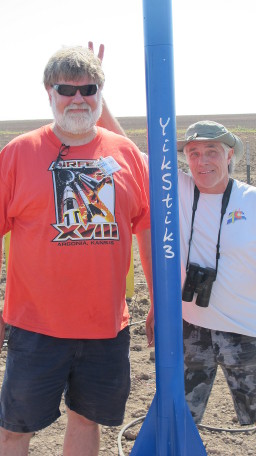
AltOS 1.1 Bug fixes and some nice new features Bdale and I are pleased to announce the release of AltOS version 1.1. AltOS is the core of the software for all of the Altus Metrum products. It consists of cc1111-based micro-controller firmware and Java-based ground station software. We ve spent the last flying season chatting with people flying TeleMetrum and TeleMini boards and they came up with some great ideas to add to the system. AltOS Firmware Features and fixes There are bug fixes in both ground station and flight software, so you should plan on re-flashing both units at some point. However, there aren t any incompatible changes, so you don t have to do it all at once. New features: Bug fixes: AltosUI Easier to use AltosUI has also seen quite a bit of work for the 1.1 release. There aren t any huge new features, but some activities are restructured to make them easier to navigate. And, of course, we ve fixed a bunch of bugs. New features: User interface changes: Bug fixes:
Gunnar Wolf: Great online course available: Securing Digital Democracy , by J. Alex Halderman

I was pointed at a great online course If you are into e-voting analysis (or, more broadly, into democratic processes' history, evolution and future), I strongly suggest you to take a look at Securing Digital Democracy . Just the name of the teacher should be enough to make it interesting: University of Michigan professor J. Alex Halderman, the guy who has analized/hacked several electronic booths, and one of the clearest, smartest voices to explain what should we require of a voting system and how electronic booths are the worst fit for any purpose. The course is delivered through Coursera; I have found Coursera to be an effective, usable, unobtrusive platform So much I even signed up for another course. I am not so happy with online courses requiring to wait so much between lessons, but after all, it tries to mimic what we see at "regular" (i.e. classroom) teaching settings. And, after all, we autodidacts are still a minority. The course in question started ten days ago, but you can still perfectly join. Each week has two lessons, worth of approximately 40 minutes of video each, and are "graded" through a quiz. Lets see how this evolves.

MJ Ray: Business As Mutual conference, Anglia Ruskin Uni, 12 Sep

image Here s a summary of what happened at this conference. Opening address. Keynote from Nick Hurd MP, @minforcivsoc. Lot less money around. Called canals and rivers trust the biggest social enterprise. Blames lack of large social enterprises on culture, leadership and access to capital. First Big Society Capital investments announced tomorrow. Questions (and responses) about what had changed in commissioning (determination?), something about accountability in health I think but I didn t hear (more public scrutiny), other models besides worker-led (gov is agnostic, but that s just the type of mutuals so far), and capital renewal (gov is challenging the banks with Big Society Bank). This is going to get a bit long, so click through to our site to read what the other the speakers had to say and what that block of flats in the picture has to do with it Still here? Good! Harriet Hounsell from John Lewis Partnership was next. What s the Right level of profit? Structure of the partnership. The registry seems like the member services function and a bit more. Partner suggestions make a real difference. Beliefs have been tested. Recession hit us. Vivian Woodall, the co-operative phone, back to how it started. He knew people working for NGOs with high international phone bills. Bulk buy. Solid steady growth. Paid all tax. Living our cooperative values. Employee council and profit-shared. Adoption of new brand. Questions to both on redundancies (debate openly, try to redeploy, ultimately division of responsibilities: managers manage staff levels, not members), and being rejected as too small to help other social enterprises (ask why? Try local level instead of head office?), plus praise for John Lewis. Then there was coffee, workshops, lunch, workshops and coffee. I don t think I should report all of that, so a quick comment on the venue at Anglia Ruskin Uni Cambridge: is the Lord Ashcroft it s named after the same one who said it was legal to attack Iraq? Anyway Based on the workshops, I don t think our co-op will do SROI accounting any time soon (needs too much people time) and I m little the wiser on leadership. Some people are intrigued by collective management and cooperative working, though. The closing keynote was Wayne Hemingway, formerly of Red or Dead and now of Hemingway Design. He gave a quick history of himself and of those two enterprises and a bit of an entertaining ramble around. He seemed very much from the business end and how to use business to benefit society, but I ve not really looked at his companies before. I probably should do, as they ve a regeneration project in Lynn (pictured: before Wayne). Then it was the closing address, the thanks (yes, thanks to the workers and sponsors) and then time to head for the exit. It s a shame that some people who made good points during the keynotes (coop party!) left quickly instead of staying to chat.

12 September 2012

Martin F. Krafft: A black day for democracy

Today was a black day for democracy in Germany. The German constitutional court ruled in favour of the European Stability Mechanism. In combination with last week s announcement by the European Central Bank to purchase government bonds without limits (breaking the No-Bail-Out clause at the core of their mandate more obviously and irreversably than ever before), the German people have lost a good deal of democracy today. Why? you may ask because from now on, fiscal and financial policy will be made in Brussels, by people enjoying full immunity, but who are not elected democratically by the European people, let alone the Germans, and they will freely decide over who has to pay and be liable for whom. I am talking about people like Klaus Regling, who was already involved the very first time the Maastricht Criteria were violated. He is now at the front of the largest and most powerful financial weapon ever conceived. With immunity. And people like Mario Draghi, whom I would possibly call the most corrupt person I know. His announcement to save the Euro at whatever cost accidentally came only a day before his motherland Italy had to go to the market for more money and was able to place a bond at such ridiculously low interest rates that anyone who s kept up to speed with Italy s development had to rightfully ask how that was possible. While in the past, for whatever reason, the European people have let the ECB get by saying that they are not bailing out countries when they buy bonds on the secondary market (wtf!), they have finally dropped that restriction (the law). And as of today, the ESM is ready to go, along with the fiscal pact. Germany is now liable for more than quarter of all of the Eurozone s past and future debts. And no citizen will be able to have any more influence in this, or reverse it. Budget, fiscal policy and currency control are forever gone. Not that parliamentarian democracies were ever direct. Yet, in the past, one could at least vote for those people whose promises one was inclined to believe the most. You can still do that in the future, but those people won t be able to influence fiscal or financial policy anymore. There is no way back. The ESM and its employees enjoy full immunity, and the ESM is forever-binding. There is no exit clause. Thanks to the ECB s law breaking and the ESM, which I consider highly unconstitutional, at least in Germany, Eurozone-countries may refinance their debts at interest rates that are in no way related to their ability to pay back loans. All other countries foremost Germany are henceforth liable for others debts. The fundamental rule of the EU that no country would have to stand up for another country, is gone with the wind. Within an hour, the markets reacted. Germany, which previously had to pay negative interest (a sign of stability) saw interests on its bond shoot up. And Spain, Portugal, Greece and others who couldn t previously refinance their old debts, are now getting fresh money cheaper than ever. Spain s president Rajoy today didn t even bother beating around the bush anymore, he s now going to apply for fresh money but won t bother with any saving schemes or other restructurings. Monti in Italy has suggested the same. Wouldn t you take money if you were offered it for free, without the need to pay it back? This is more than inflation, in my opinion. What is currently happening in Europe is active depreciation of individual wealth. Our heads of state are actively working against the people. The Euro has lost all credibility and everyone knows it. It is only a question of time until it will tremble and fall. Meanwhile, the market celebrates and continues their gambles while they still can, on the backs of our currency and our wealth. Most affected are the people who have savings in Euros, whose life insurances are decreasing in worth and who cannot afford to diversify into other asset classes or currencies. On the other hand, those who let their money do the work are being saved. Whoever previously invested into bonds of struggling states, hoping to reap massive interest gains, is now proven right. Brussels has eliminated the risk factor. What kind of message does this send??? Hands up if you thought that our politicians are even interested in closing the rapidly widening gap between rich and poor. Really? That s naive. The Eurozone is corrupt, and our currency has never been as virtual as today. Nobody can say whether saving the Euro at all cost is the right thing and noone knows whether what s currently happening is just bad. I would have wished that our politicians had taken the crisis as an incentive to fix the system in the interest of the people and with a long-term focus: But on the contrary! Europe s policiticans are making it crystal clear that the foundation upon which it was built, the laws and rules, the promises and guarantees, no longer apply. The people were not asked. The promises once made were broken. Our politicians have ruled over our heads. More debts are being made, and more debts to pay off debts, and so on. It s long gotten out of control, now the process is institutionalised. I feel sorry for our kids. I find it irresponsible what is being done to them (in addition to the way we rape the environment). I also feel deeply with the people in the struggling countries who are being screwed by the crisis and are not at fault. What our politicians are doing is unfortunately not going to help long term. The problems are just postponed, and with every day, the inevitable crash will be more painful. I am sorry. Today is a black day for democracy. We have lost souvereignity. We have lost control over our currency. We have lost our budget rights. And I have lost my faith in the last instance of the German government that I trusted. As of today, I know that the German constitutional court is nothing more than a puppet in the hands of the politicians (who are themselves puppets of Brussels and the banks). The limit they imposed (Germany s liability must not increase beyond 190 billion Euros without the federal parliament s consent) is worthless. Soon the politicians will explain to us why it s inevitable that we must raise this limit. Not that the people could prevent it, but still I had hoped for a fundamental ruling. They should not have touched numbers. The EU had a no-bailout-clause from day one. It was conditional from the start. If one of the fundamental principles of a contract is broken, the contract becomes invalid. Not only did I expect the court to rule against socialised debt, I would have wished them to go a step further. The German national bank gave up control over the currency to the ECB only because the ECB incorporated the principles of the German national bank. Once the ECB overturned those principles, Germany should have reclaimed their souvereignity. But noone else in Europe would have wanted that. Merkel became a puppet herself. I am grateful that our daughter has dual citizenship. NP: Porcupine Tree: Live at Atlanta 2010

11 September 2012

Russell Coker: Back to the Xperia X10

10 months ago I was given a Samsung Galaxy S Android phone [1] to replace my Sony Ericsson Xperia X10. I also installed Cyanogenmod on it (here is a more detailed comparison of the phones with a focus on liberty [2]). But now I m using the Xperia X10 again. Hardware Reliability Some time ago a friend told me that he bought a Sony phone in preference to a Samsung phone because he didn t think that Samsung phones were reliable enough. I assured him that Samsung phones would be fine if you used a gel-case, but now I m not so sure. My mother in law has a Samsung Galaxy S which now has a single crack across the face, it doesn t appear that her phone was dropped, maybe it just bent a bit it s a fairly thin phone. My Galaxy S started crashing over the last few months and now many applications will crash any time I use 3G networking. Currently my Galaxy S is working well as a small Wifi tablet and hasn t crashed since I replaced the SIM with one that has expired. I wish that phone designers would make mode solid products with bigger batteries. The fact that the Xperia X10 weighs maybe 20g more than the Galaxy S (according to Wikipedia) isn t a problem for me. Even with the Mugen Power 1800mah battery [4] to replace the original 1500mah battery it s still nowhere near the limit of the phone mass that I m prepared to carry. Sony Upgrades Some time ago Sony released an Android 2.3.3 image for the Xperia X10. There is no Cyanogenmod image for the Xperia X10 because it has been locked down which greatly limits what can be done. Also Sony has a proprietary backup program on their Android 2.1 image which isn t supported on Android 2.3.3 this inspired my post about 5 principles of backup software [3]. Due to this pain I didn t even try to upgrade the Xperia X10 phones for me and my wife until recently. Before upgrading the Xperia X10 phones I was unable to use my wife s phone. The phone didn t seem to like recognising my touch so long touch actions (such as unlocking the phone) were almost impossible for me. I think that this is due to the fact that I have fairly dry skin which presumably gives me a higher capacitance. After the upgrade both phones are usable for me, so presumably either Sony or Google upgraded the algorithms for recognising touch to work better with varying screen quality. Comparing the Galaxy S and the Xperia X10 When I first started running Cyanogenmod on the Galaxy S I noticed that it was a lot faster than the Xperia X10 but I didn t know why. It was documented that there had been performance improvements in Android 2.2. Now that I m running Android 2.3.3 on the Xperia X10 I know that the performance difference is not due to the Android version. It could be due to Cyanogenmod optimisations or Sony stupidity, but it s most likely due to hardware differences. The Galaxy S has more RAM and storage which allows installing and running more applications. Now that I m using the Xperia X10 for the bare minimum applications (phone calls, SMS, camera, email, ssh, and web browsing) it works quite well. I still play games on the Galaxy S and use it for more serious web browsing via Wifi. I think that the value I m getting from the Galaxy S as a tiny wifi tablet is greater than the money I might get from selling a partially broken phone that s been obsoleted by two significantly better models. Conclusion The camera on the Xperia X10 is significantly better than the one on the Galaxy S, so going back to a phone that has a great camera is a real benefit. But being slow and locked down is a real drag. I was tempted to buy a Samsung Galaxy Note or Galaxy S3, but it seemed like a bad idea to buy a phone given that my contract comes up for renewal in about 6 months which means I ll be offered a free phone which while not really free is still going to be cheaper than buying a phone outright. Also in future given the low opinion I m now getting of smart phone reliability I ll try and keep a small stock of spare Android phones to cover the case of broken phones. Related posts:
  1. Galaxy S vs Xperia X10 and Android Network Access Galaxy S Review I ve just been given an indefinite loan...
  2. CyanogenMod and the Galaxy S Thanks to some advice from Philipp Kern I have now...
  3. Liberty and Mobile Phones I own two mobile phones at the moment, I use...

10 September 2012

Christian Perrier: Three languages reach 100% translation for po-debconf in wheezy (de,ru,sv)

After several months of effort by the i18n team (and quite a bit from /me), some NMUs, a lot of help by the release team to accept many unblocks, we finally reached 100% translation for debconf screens, in wheezy, for three languages. And, no, French is not among them (yet). The first to reach this heaven are Russian, German and Swedish with translations for all translatable debconf screens for packages in Debian testing (which will become the next Debian release). Three more languages (French, Czech and Portuguese) are waiting for one package to reach testing and another (Spanish) is waiting for three packages. We should then soon reach 7 complete languages. David Pr vot is even trying to get Danish as complete as possible, but it requires pushing for about 15 packages, with many NMUs and unblocks to ask. I started this work in early April, so it took about SIX months to reach this and be ableto happily make a lot of noise about such achievement. You have no idea how it is appreciated by translators....so you maybe have a better idea why I can be so noisy when some uncoordinated upload (for instance with modified localized material) breaks this... We'll have much more news about achievements in l10n for wheezy in the upcoming weeks. We had a lot of things that deserve some trumpets, bells or whistles..:-)

Vincent Sanders: I thought San Diego must be Heaven on earth...It seemed to me the best spot for building a city I ever saw.

I think perhaps Alonzo Horton overstated the case but San Diego was a perfectly pleasant place to spend a week. Recently I was fortunate and attended the Linux Plumbers conference (and bits of Kernel Summit) and as on previous occasions there were some interesting sessions and some less helpful diversions.

Melodie went along with me, our first trip away together without the kids in a long time. We did the tourist thing for a few days including the USS Midway aircraft carrier tour (recommended) and the harbour boat tour (also recommended).

The conference was co-located with several other events and there seemed to be a lot of people around not connected with KS or LPC. For me the hallway track was, as usual, much more rewarding and I got to catch up with several old friends and make some new acquaintances. A lot of my colleagues were about attending the Gstreamer and Linuxcon conferences so there was the obligatory work evening event (which was pizza and beer, just done brilliantly).

A track that did stand out for me was the Clang / LLVM presentations. They gave an excellent overview of their progress towards making the Kernel compile with their tools, such innovation appears to be making both projects stronger.

One thing that occurred to me was the blandness of KS and LPC this time, usually there are at least some loud disagreements but I failed to attend even one session where there was more than small differences which were quickly resolved.

Perhaps such conferences, like the majority of people attending them, are becoming middle aged and a little complacent. An observation like that does make me wonder where the next change will come from and what it will look like. Just as open source software (including Linux) has disrupted the proprietary software industry in the last decade what will come along and disrupt us? Or is open source the end of the line and we will just continue to evolve?


9 September 2012

Gregor Herrmann: RC bugs 2012/36

highlight of the week: I "wrote" (i.e. copypasted) my first patch in haskell some days ago :) apart from that, nothing exciting:

Next.

Previous.